The Everything Bundle
All 87 packs, every single page we make, including the personalised My Name Pack.
£24.99
Flybrite Shop · poster packs
A matching family of 870 warm, beautifully simple A4 pages for the home-ed corner: learning posters, colour-by-number, phonics and handwriting, times tables, money and time, nature study, story prompts, maps, wellbeing journals and a pack personalised with your child's name. Filter by age and print at home in minutes.
Bundle & save
All 87 packs, every single page we make, including the personalised My Name Pack.
870 pages · £434.13 bought separately · personalised with your child’s name
Algebra, geometry, statistics, ratio and negative numbers, 50 pages of secondary maths for age 11 plus.
50 pages · £24.95 bought separately
Cells, atoms, forces, electricity and the periodic table, 50 pages of secondary science for age 11 plus.
50 pages · £24.95 bought separately
Shakespeare, essay writing, poetry, advanced grammar and persuasive writing, 50 pages for age 11 plus.
50 pages · £24.95 bought separately
The World Wars, Ancient Rome, Ancient Egypt, world geography and climate, 50 pages for age 11 plus.
50 pages · £24.95 bought separately
Budgeting, study skills, critical thinking, Python coding and debating, 50 pages of life skills for age 11 plus.
50 pages · £24.95 bought separately
Christmas, Halloween, Easter and Valentine activities, 40 pages of celebration all year round.
40 pages · £19.96 bought separately
First French, Spanish and German together, a warm introduction to three languages.
30 pages · £14.97 bought separately
Handwriting formation, coding, printable games and staying safe, 40 pages of skills for life.
40 pages · £19.96 bought separately
Grammar, spelling, reading comprehension and word searches, the full English toolkit.
40 pages · £19.96 bought separately
Addition, multiplication, fractions, measurement and puzzles, 50 pages of number confidence.
50 pages · £24.95 bought separately
The human body, space, materials, plants, habitats and experiments, 60 pages of wonder.
60 pages · £29.94 bought separately
History, significant people, world religions, art, music and cooking together in one download.
60 pages · £29.94 bought separately
Phonics, flashcards and cursive handwriting together, the early-reading essentials.
30 pages · £14.97 bought separately
Money and time plus every times table, the practice that builds real-world number confidence.
20 pages · £9.98 bought separately
Nature study, story writing, growth-mindset wall art, maps and a wellbeing journal in one download.
50 pages · £24.95 bought separately
The original 50 wall posters: literacy, maths, science, our world and feelings.
50 pages · £24.95 bought separately
All 50 colour-by-number pages: classics, dinosaurs, animals, vehicles and celebrations.
50 pages · £24.95 bought separately
Letter tracing and first words: 20 pages from pencil control to little sentences.
20 pages · £9.98 bought separately
Chore charts, counting activities and the personalised My Name Pack together.
30 pages · £14.97 bought separately · personalised with your child’s name
Secure Stripe checkout · instant download · or pick single packs of 10 for £4.99 below
Letters, days, months, colours and first words, the reading-corner essentials.
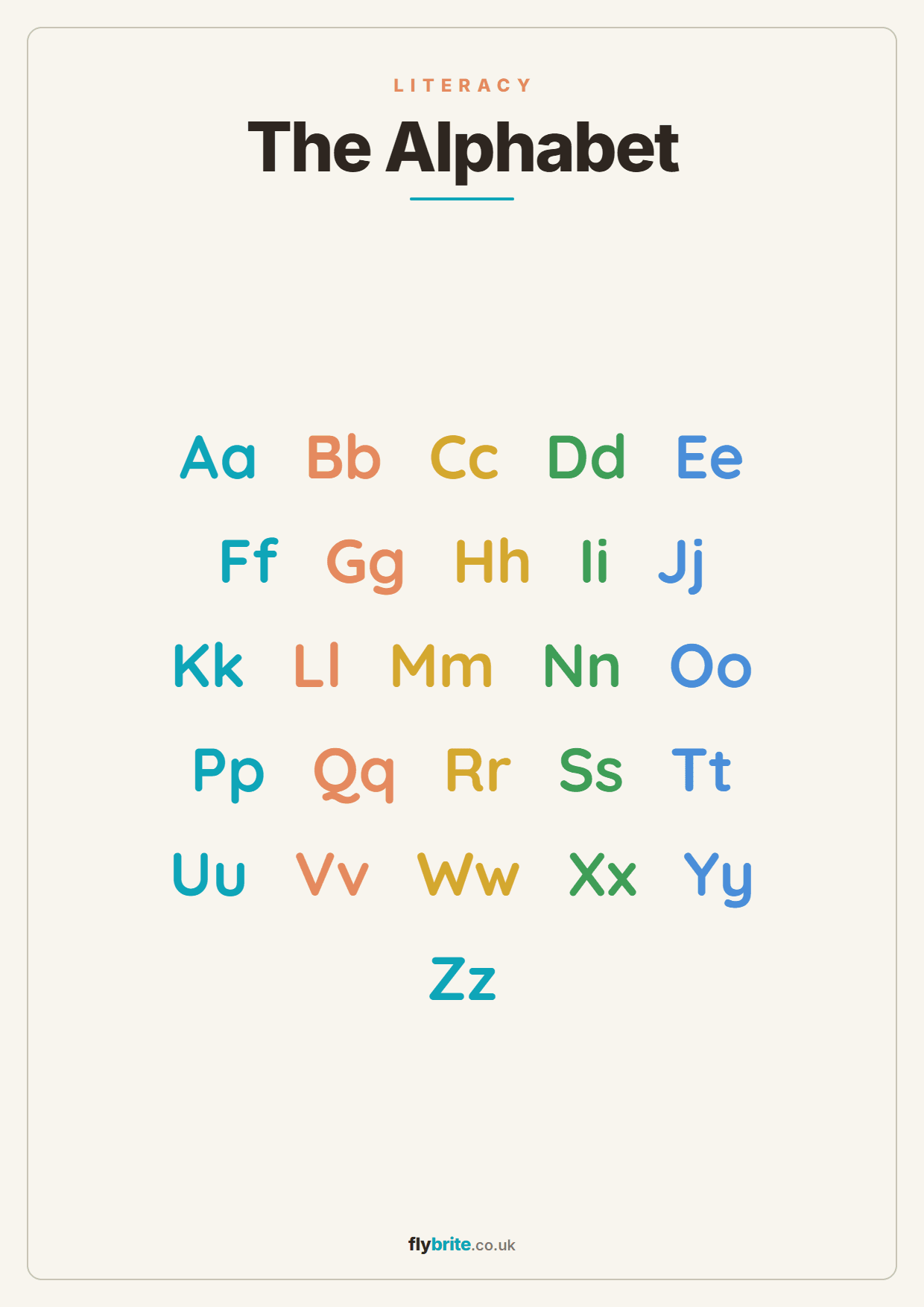
All 26 letters, upper and lower case, in warm rainbow colour.
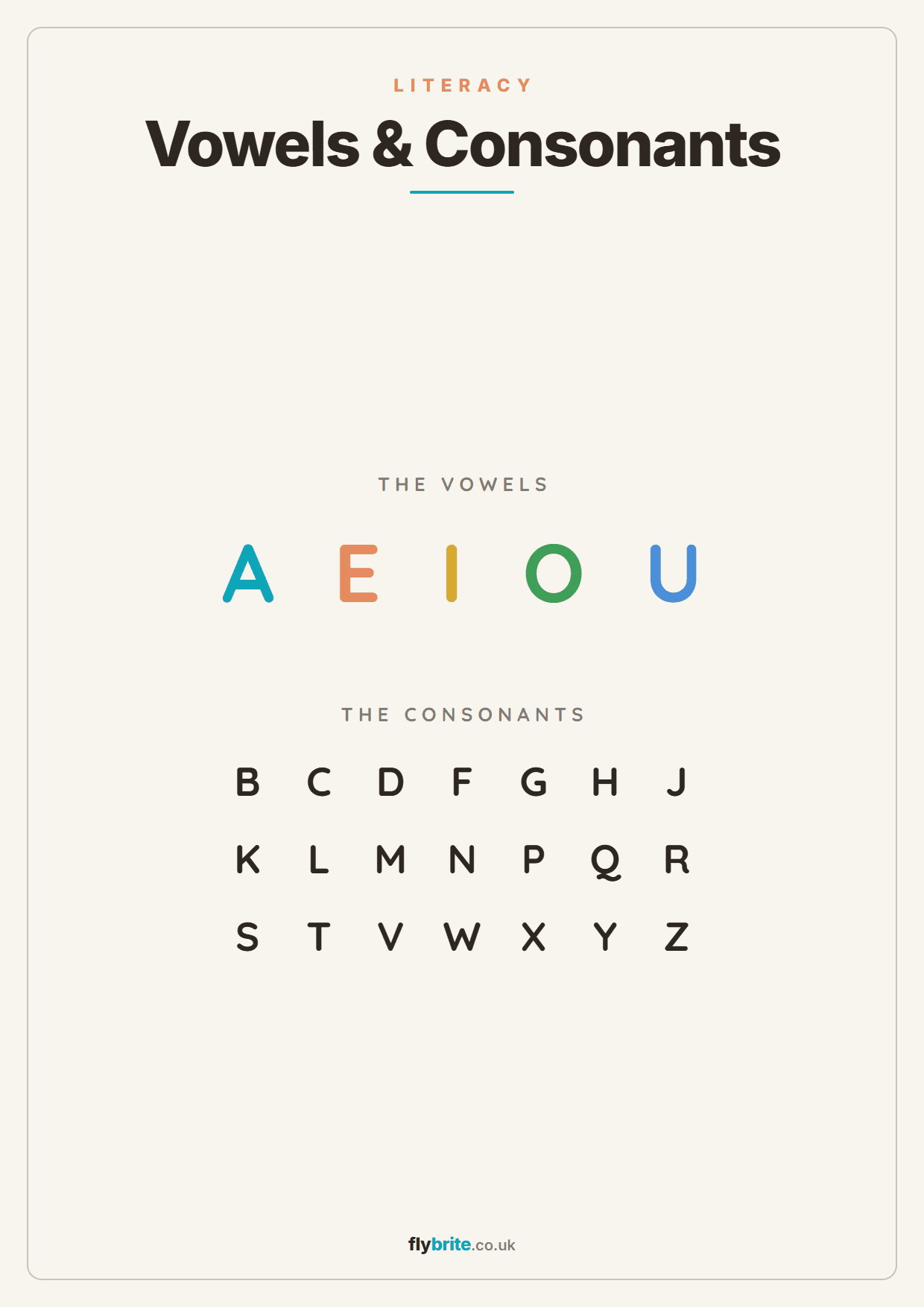
Five friendly vowels and their 21 consonant companions, sorted at a glance.

Monday to Sunday in soft colour pills, ready for your morning routine.

All twelve months, numbered and named, for little calendar keepers.
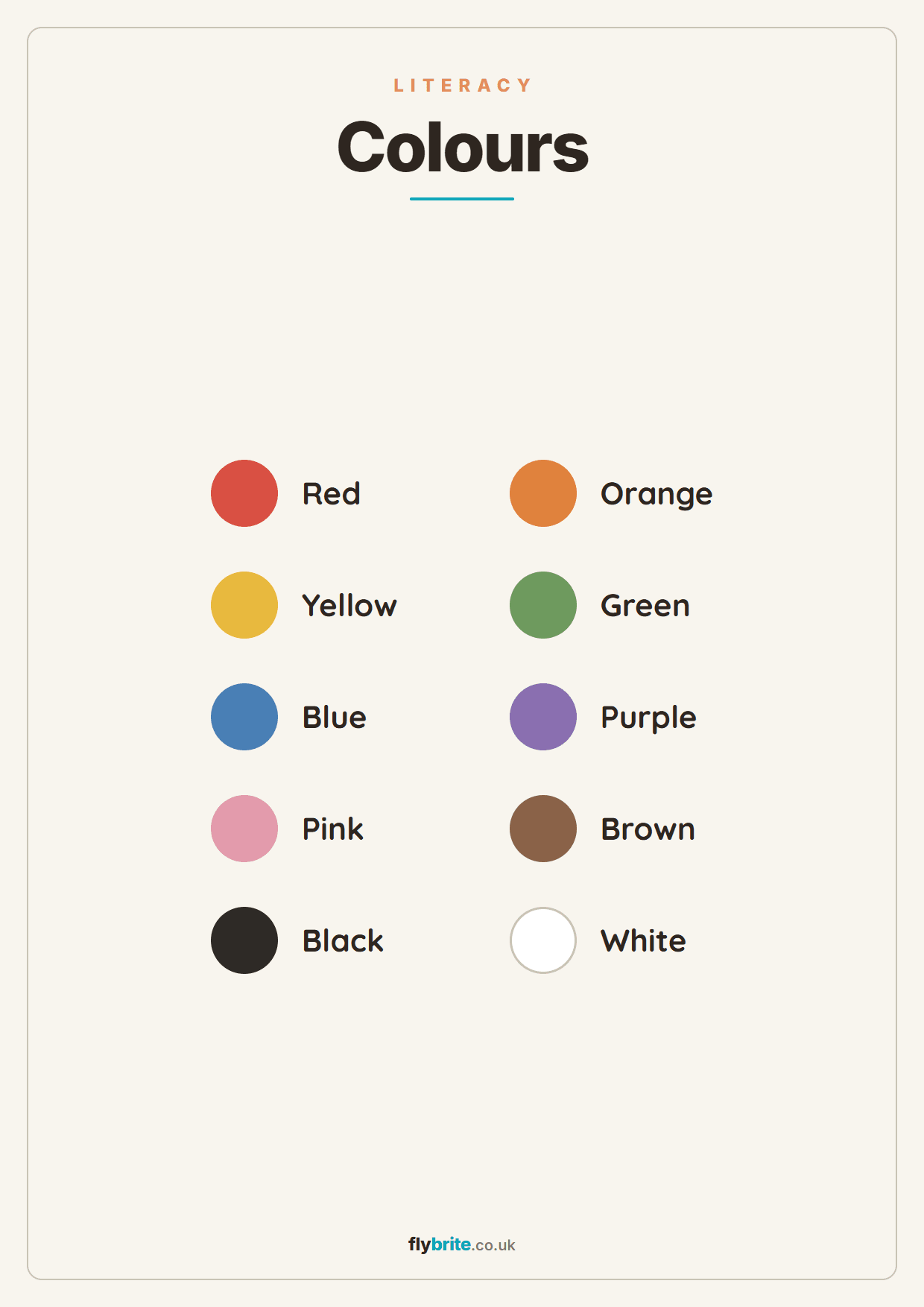
Ten everyday colours with big friendly dots to point at and name.
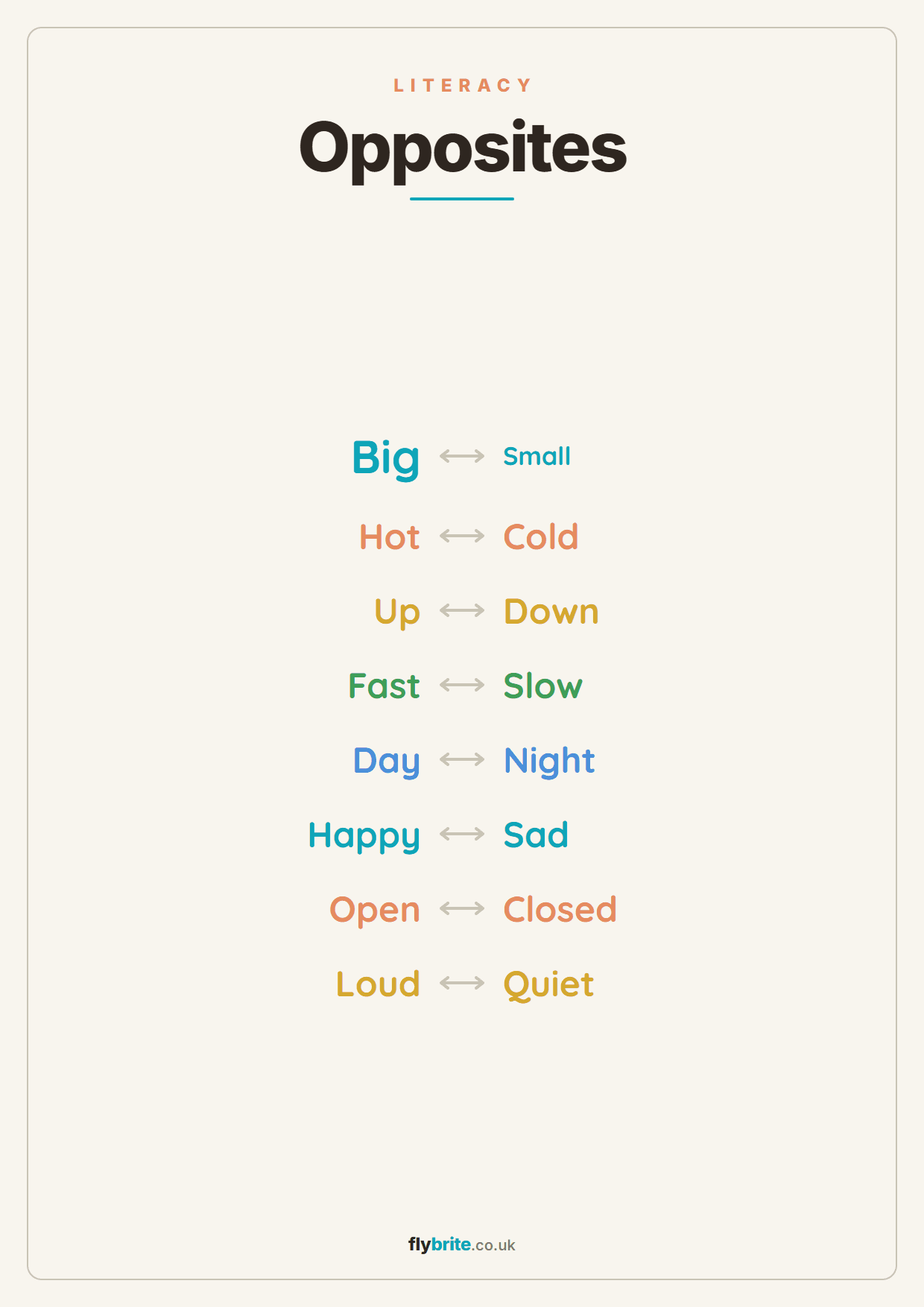
Eight pairs of opposites that make sense the moment you see them.
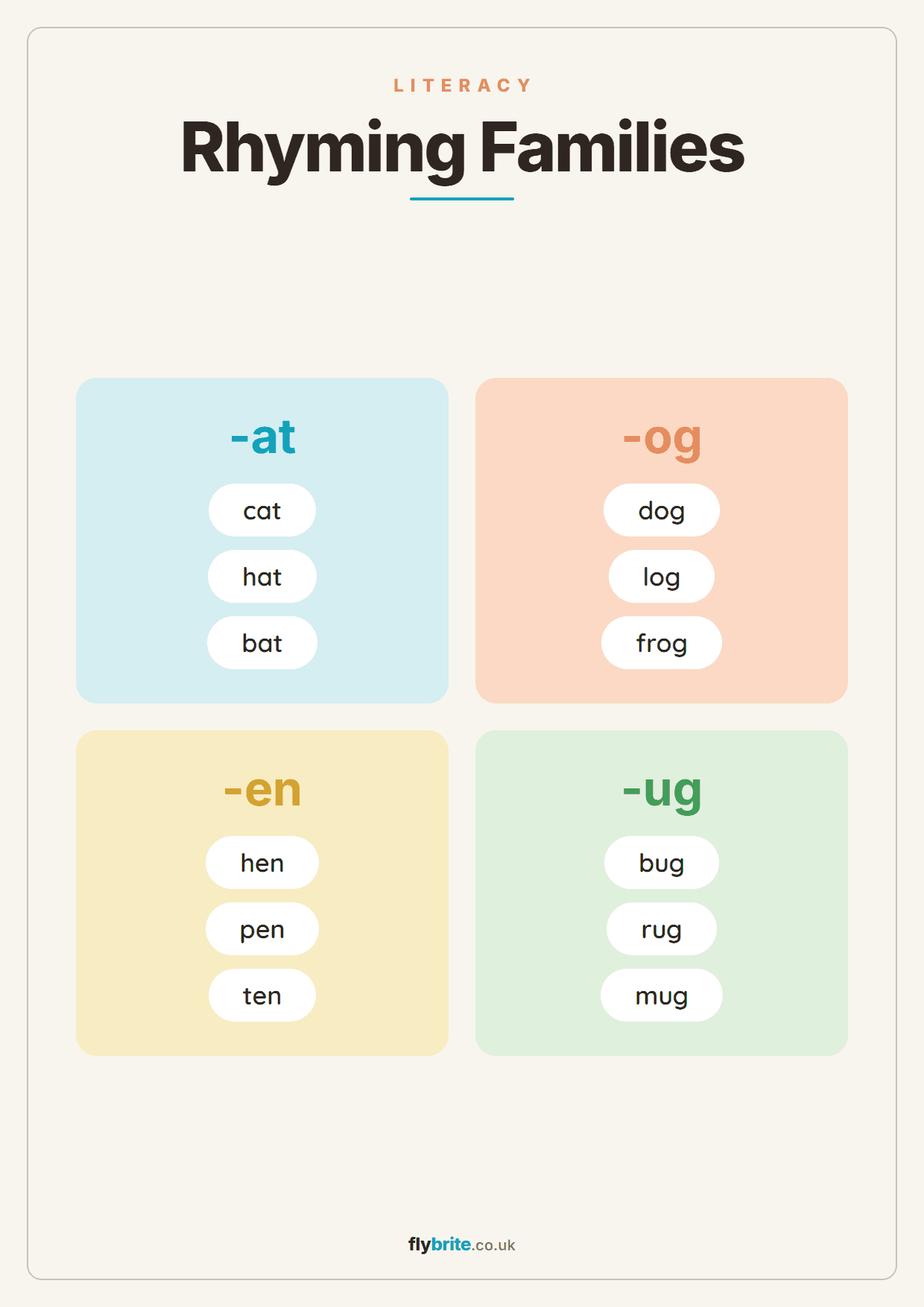
Four word families that turn first phonics into a rhyming game.
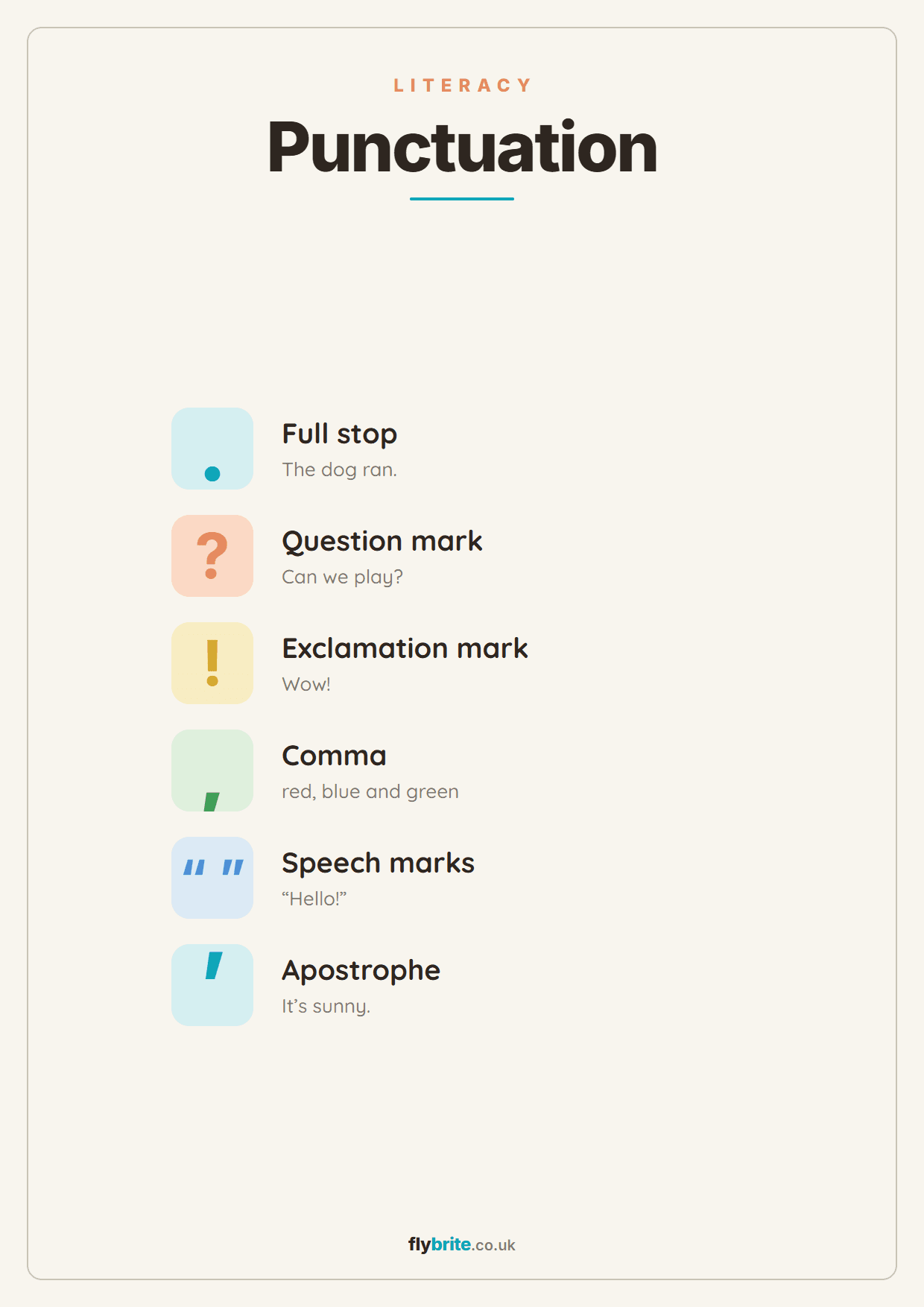
Six little marks that do big jobs, each with a simple example.
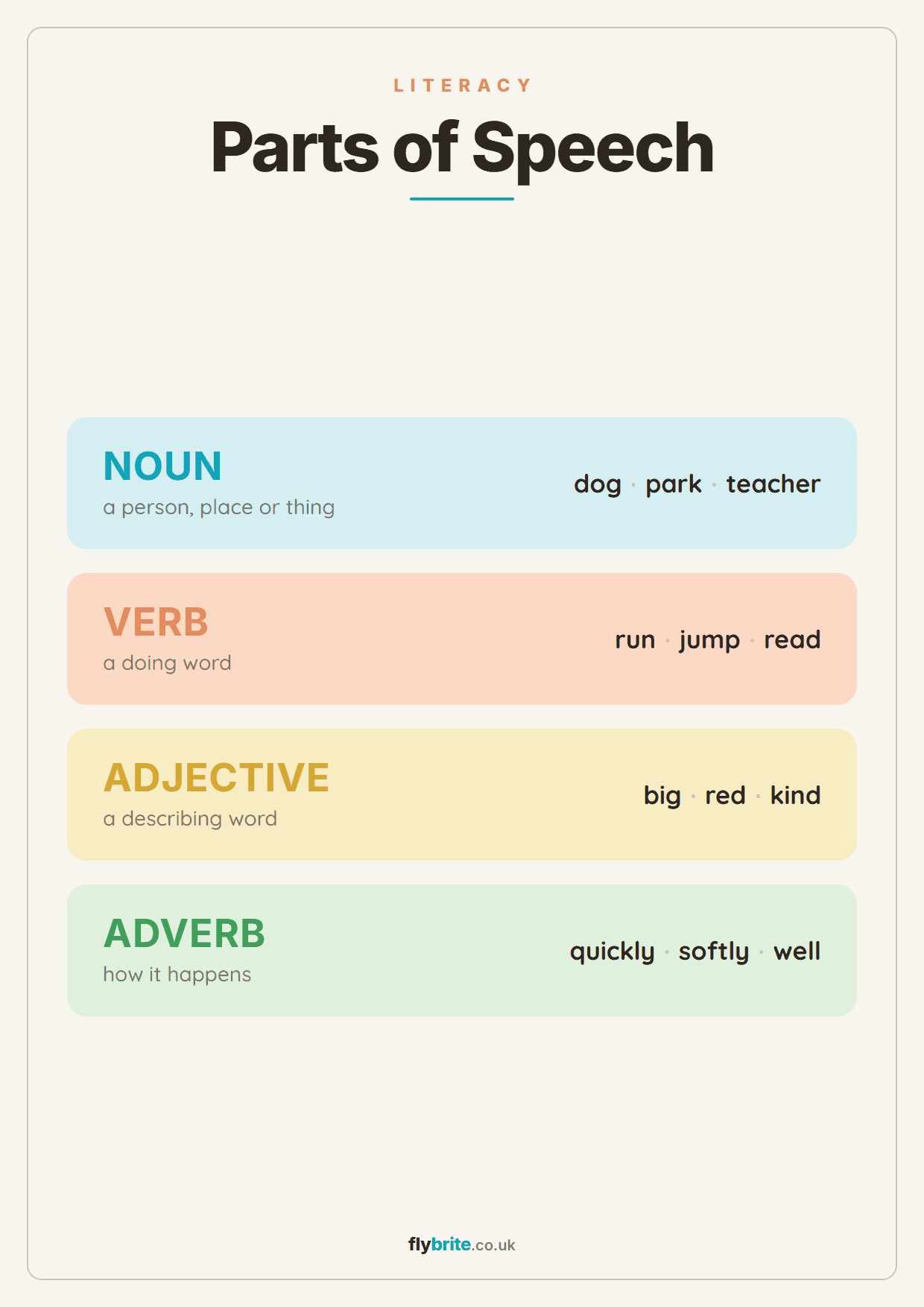
Nouns, verbs, adjectives and adverbs explained in plain, friendly words.
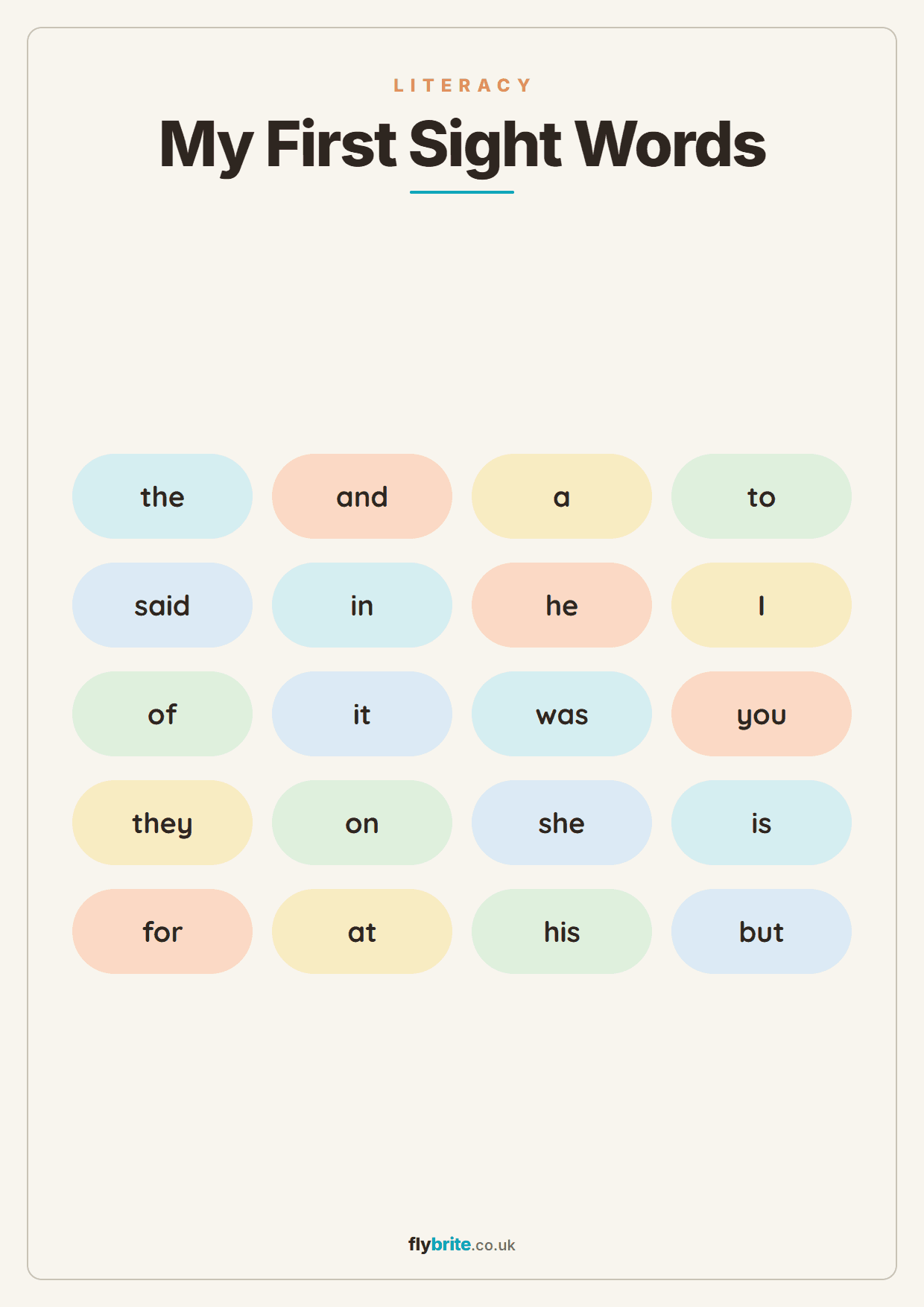
Twenty of the very first words young readers meet again and again.
Counting, shapes, times tables and telling the time, from first numbers to fluency.
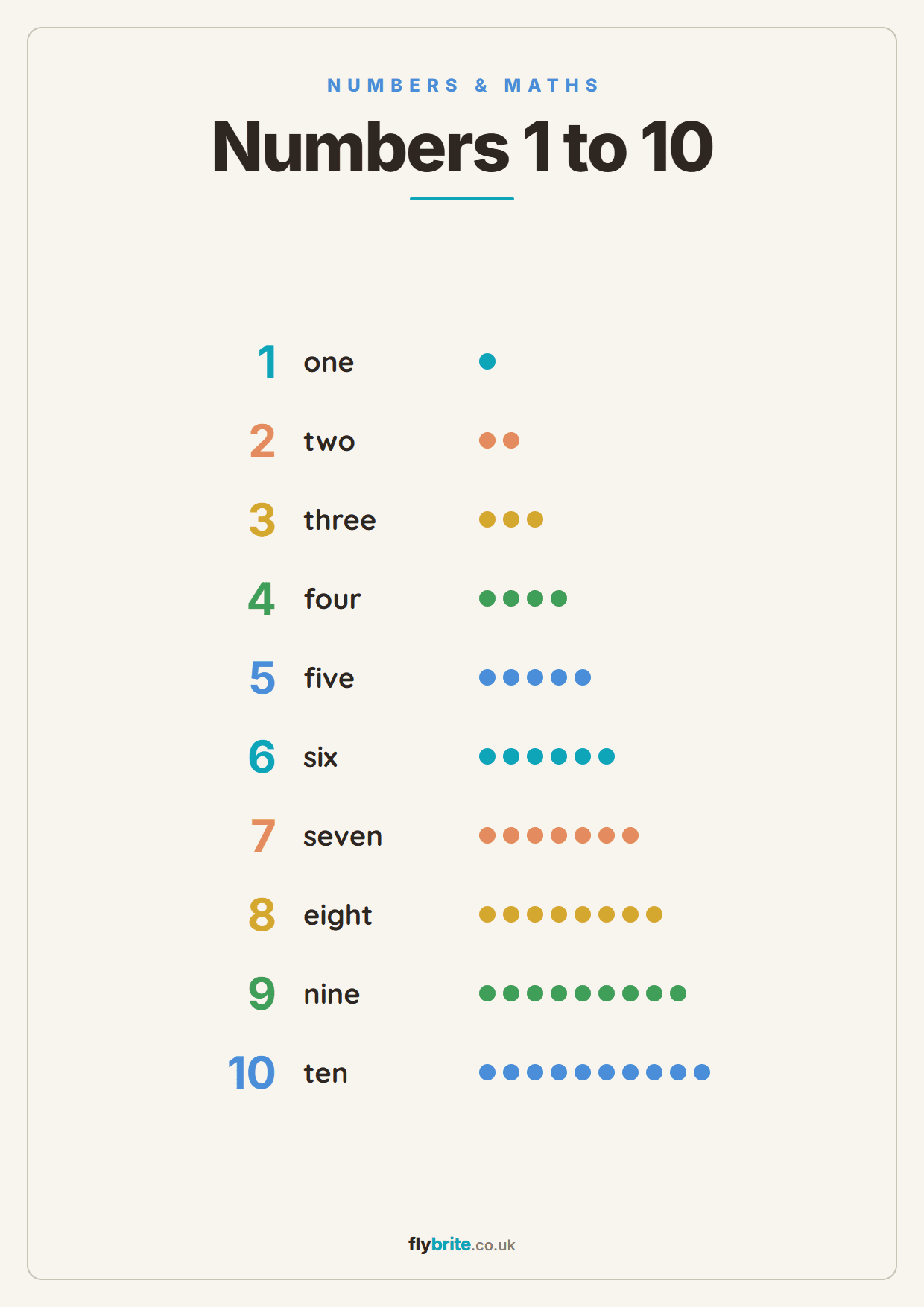
Numerals, number words and counting dots from one to ten, made for pointing and counting together.
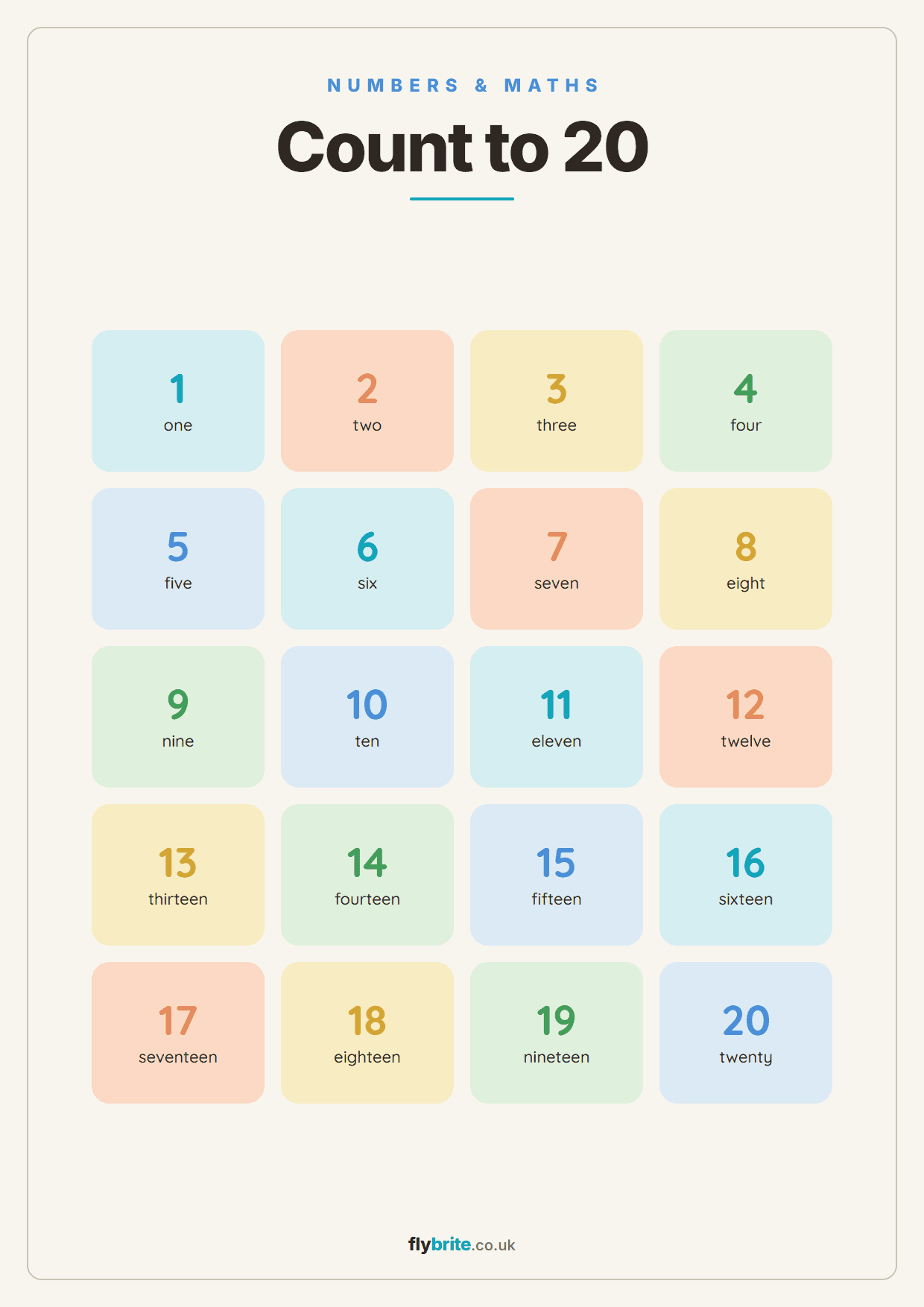
Twenty cheerful number tiles that carry confident little counters past ten.
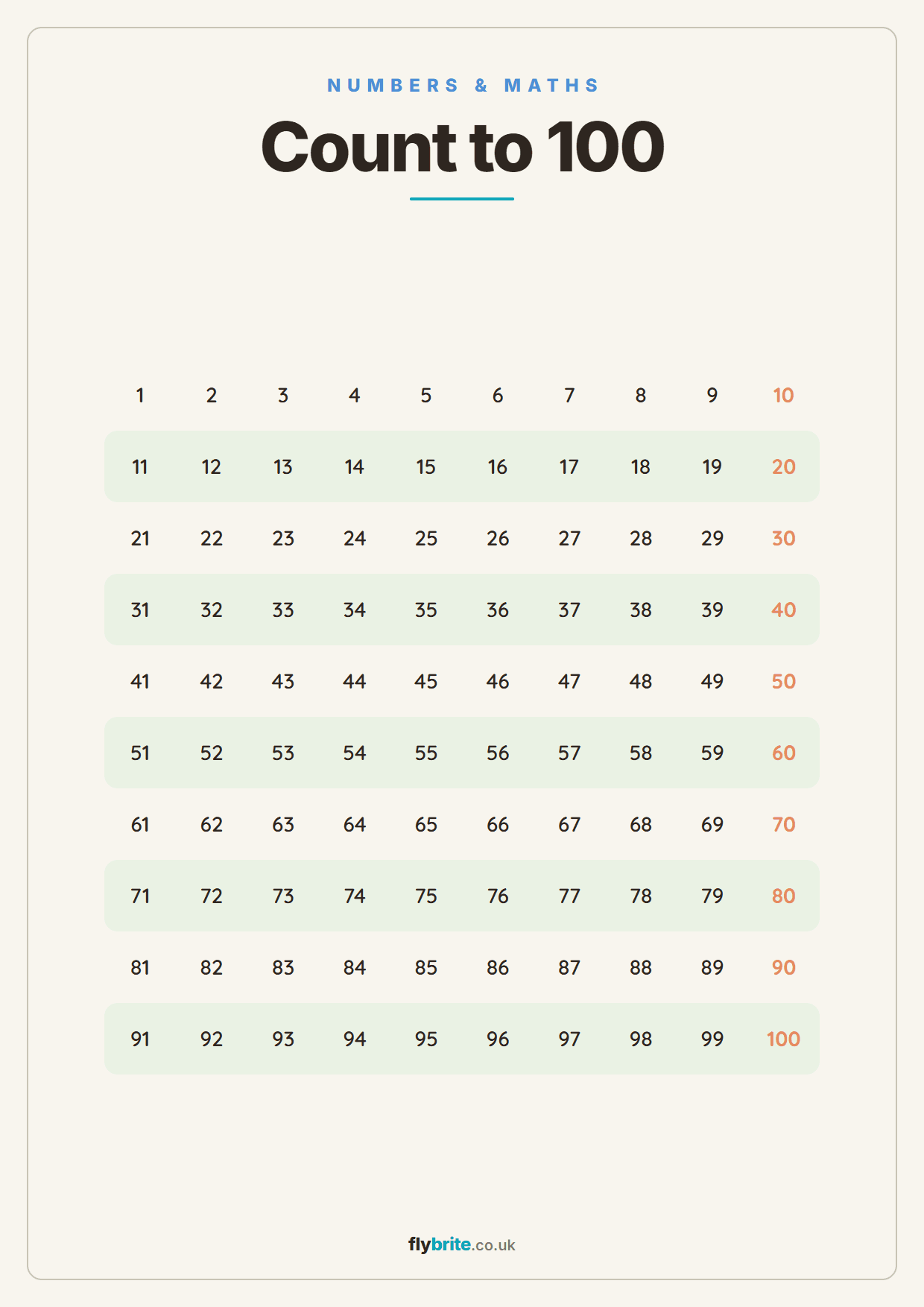
The classic hundred square in soft heritage colour, with every multiple of ten picked out to celebrate.
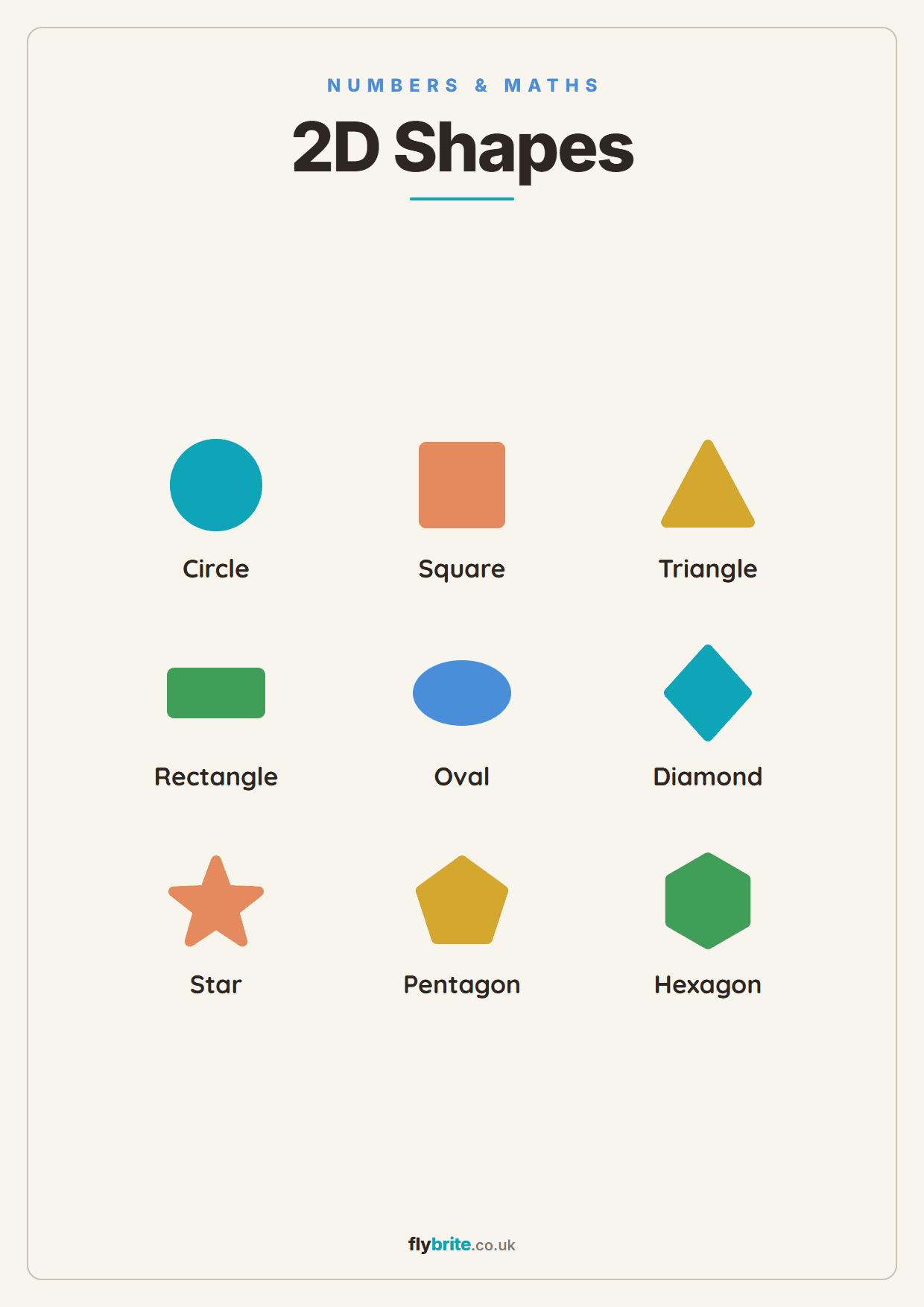
Nine friendly shapes to name, trace and go hunting for around the house.
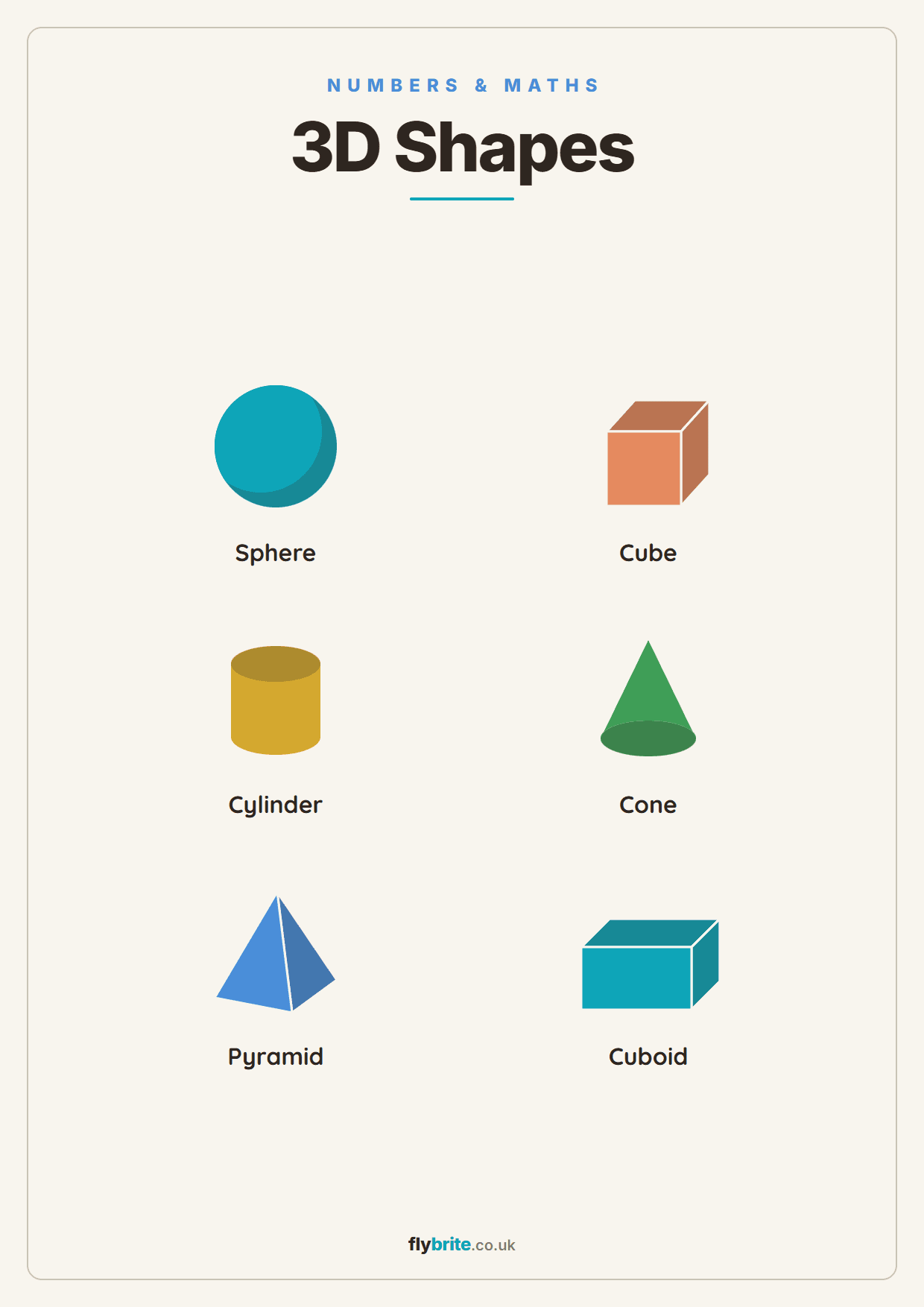
Six solid shapes from sphere to cuboid, ready for junk-modelling chat and everyday maths talk.
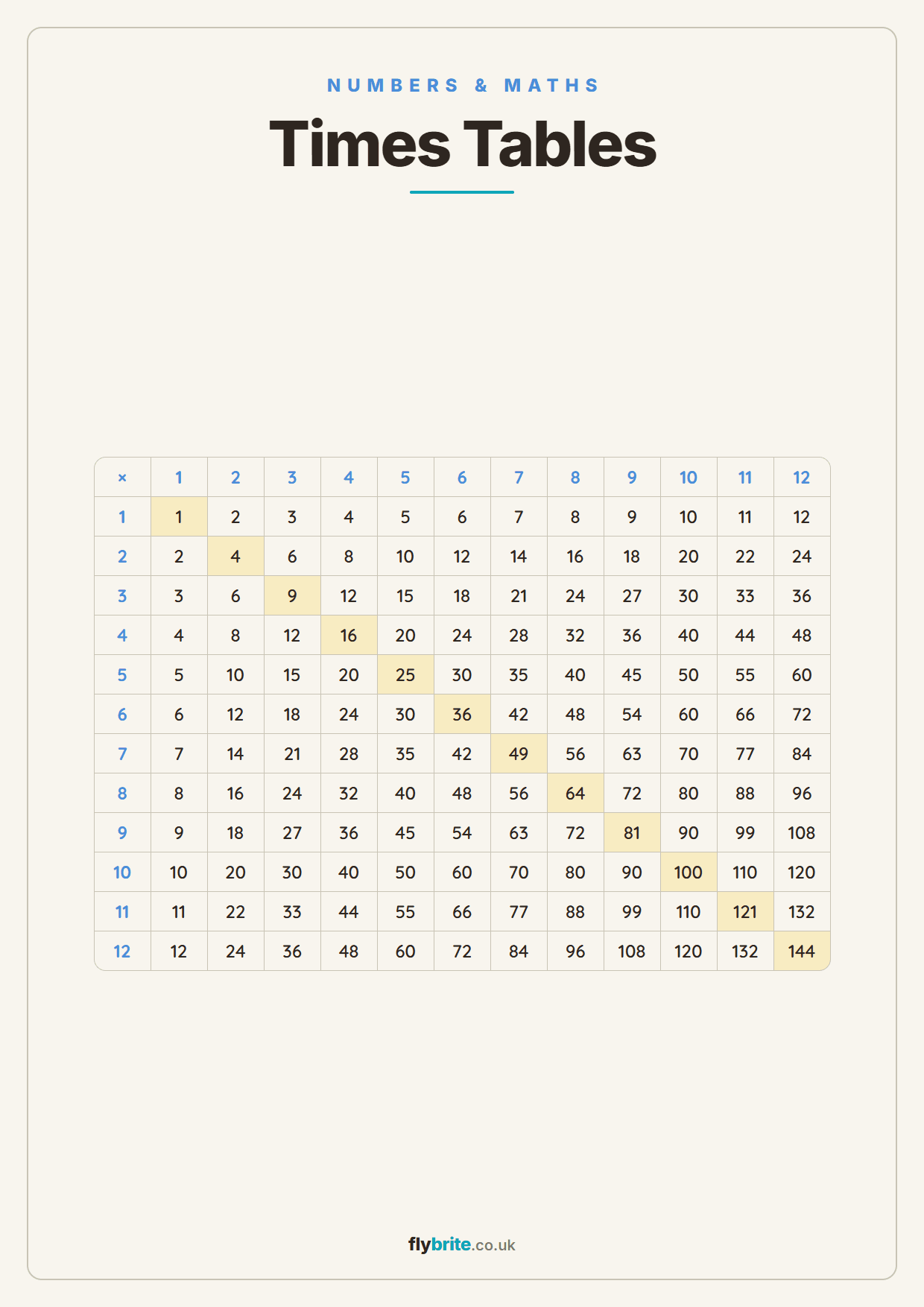
Every times table from 1 to 12 in one calm grid, with the square numbers gently highlighted.
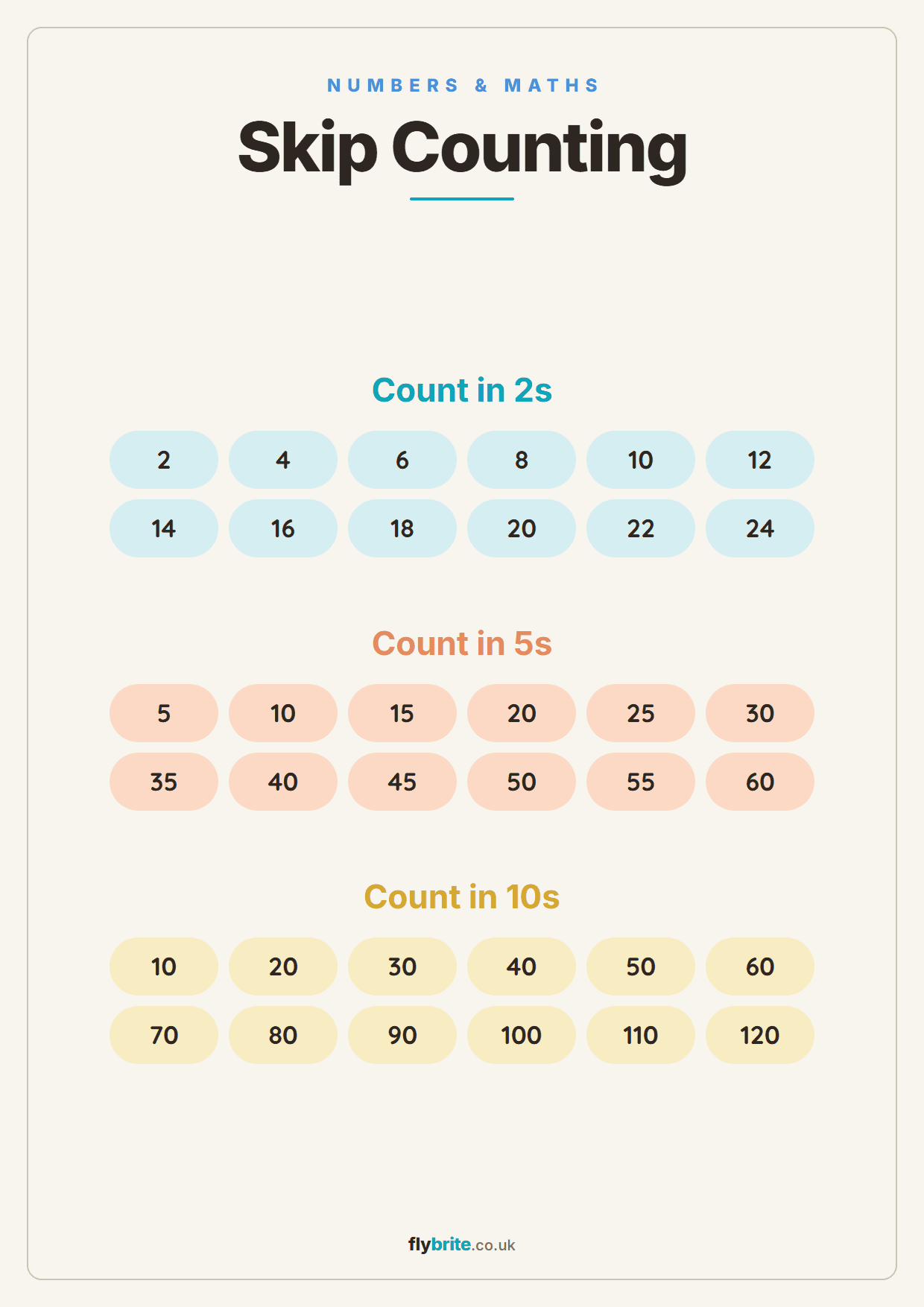
Stepping-stone numbers in 2s, 5s and 10s that make skip counting feel like a game.

All the pairs that make ten, shown as sums and colour-matched counting dots.
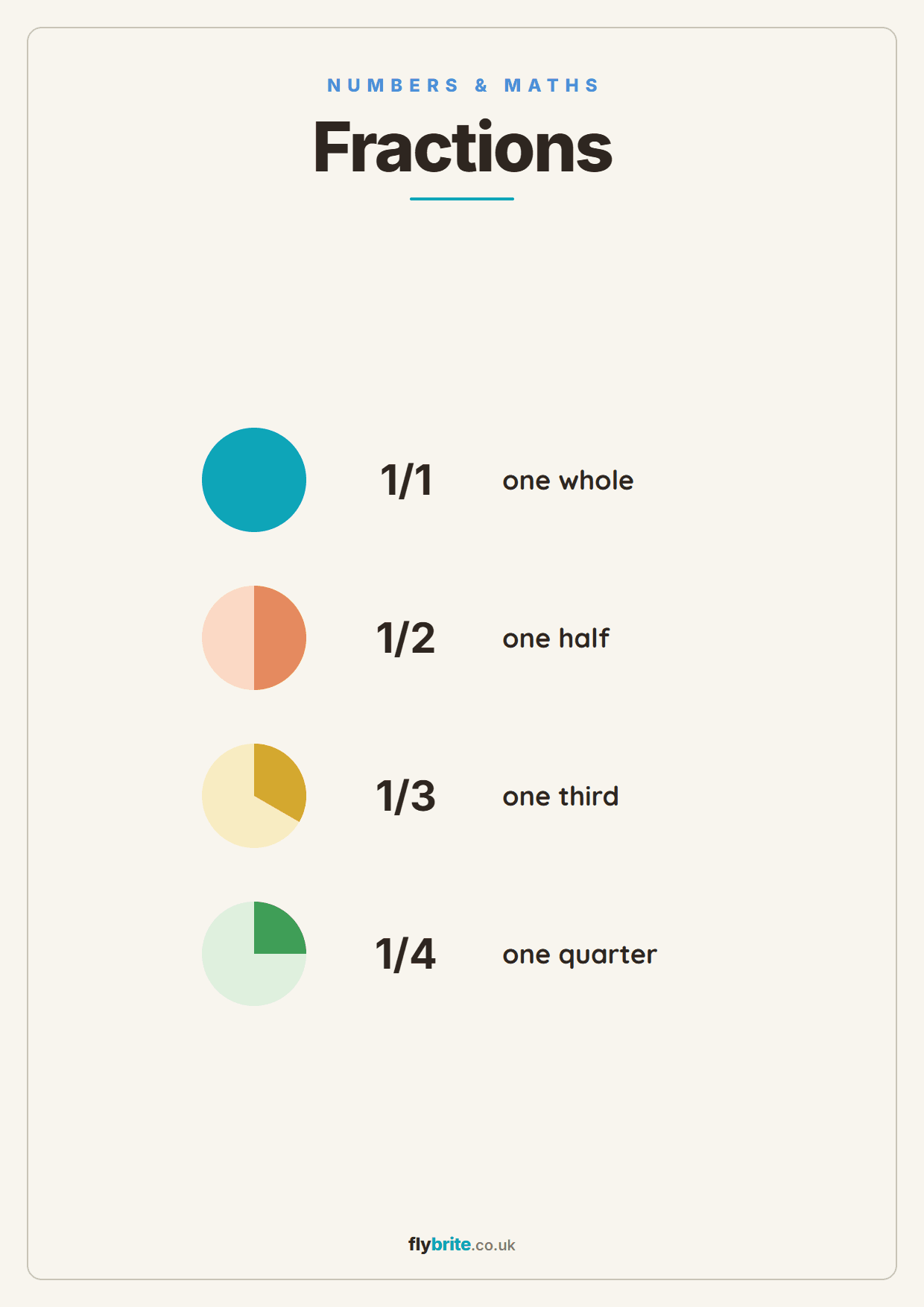
Wholes, halves, thirds and quarters as friendly pie slices, the gentlest first step into fractions.
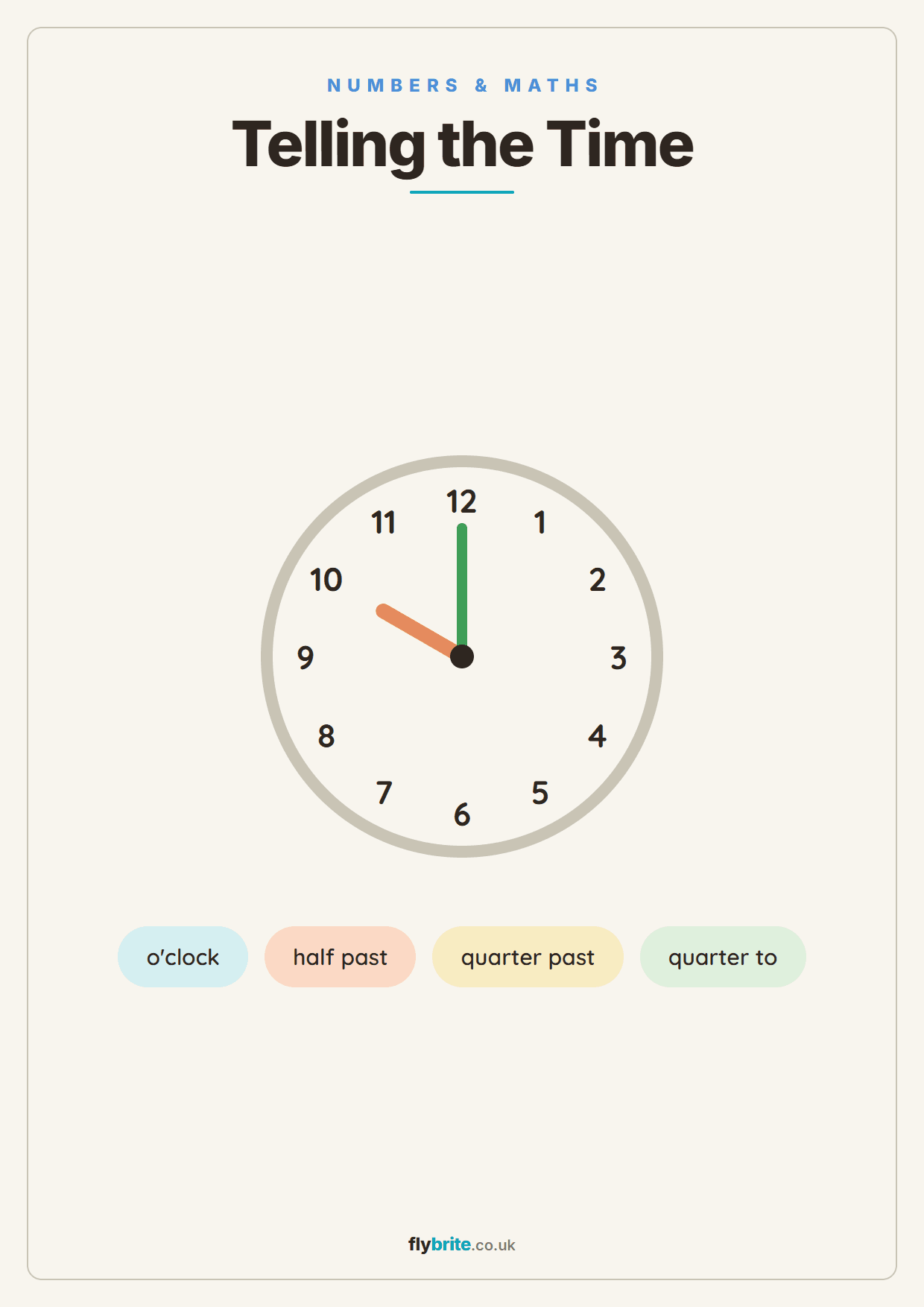
A big warm clock face showing ten o'clock, with the four telling-time phrases children meet first.
Seasons, weather, life cycles, the moon and the solar system, wonder for the walls.
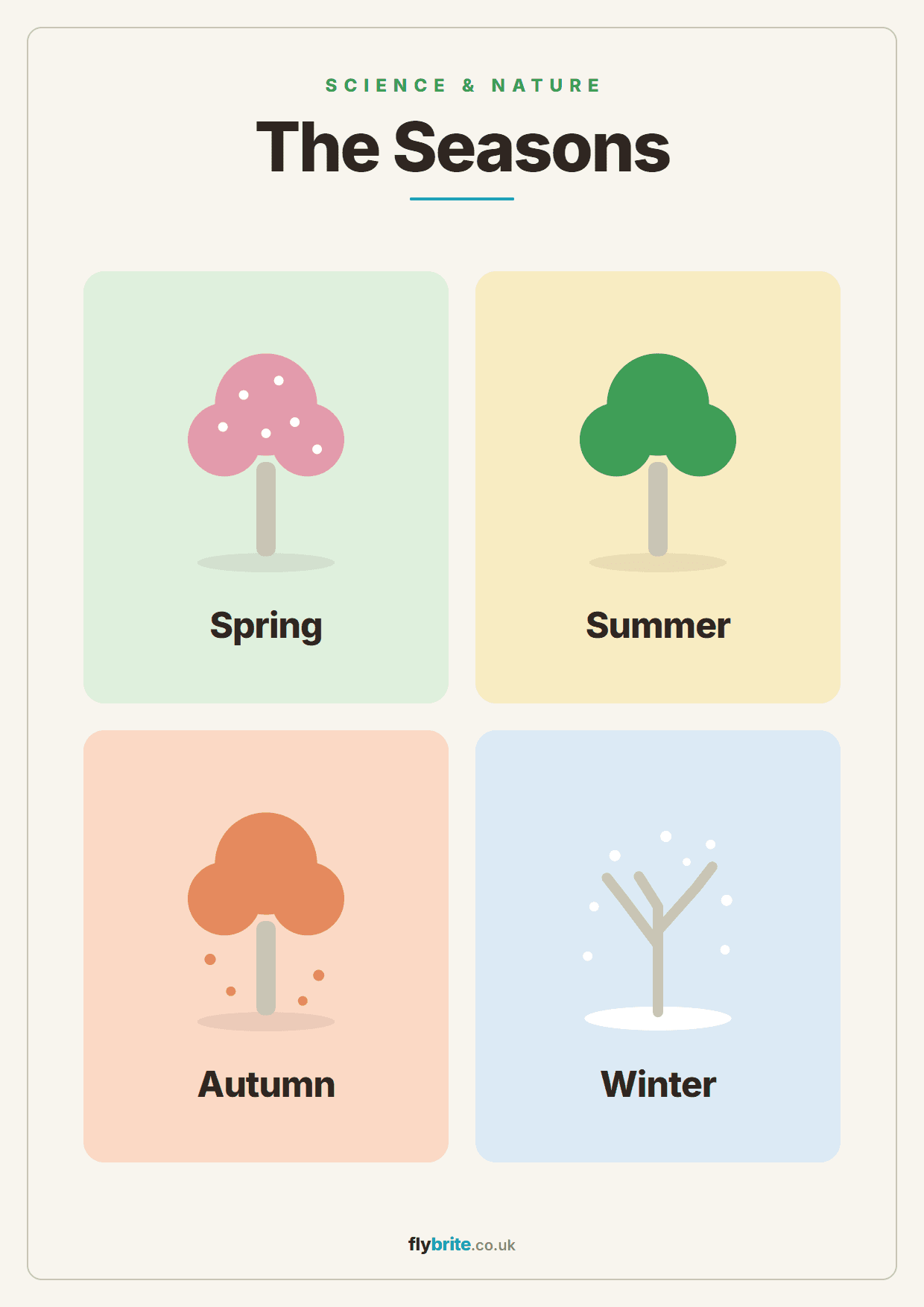
Four little trees to watch the year turn, one season at a time.
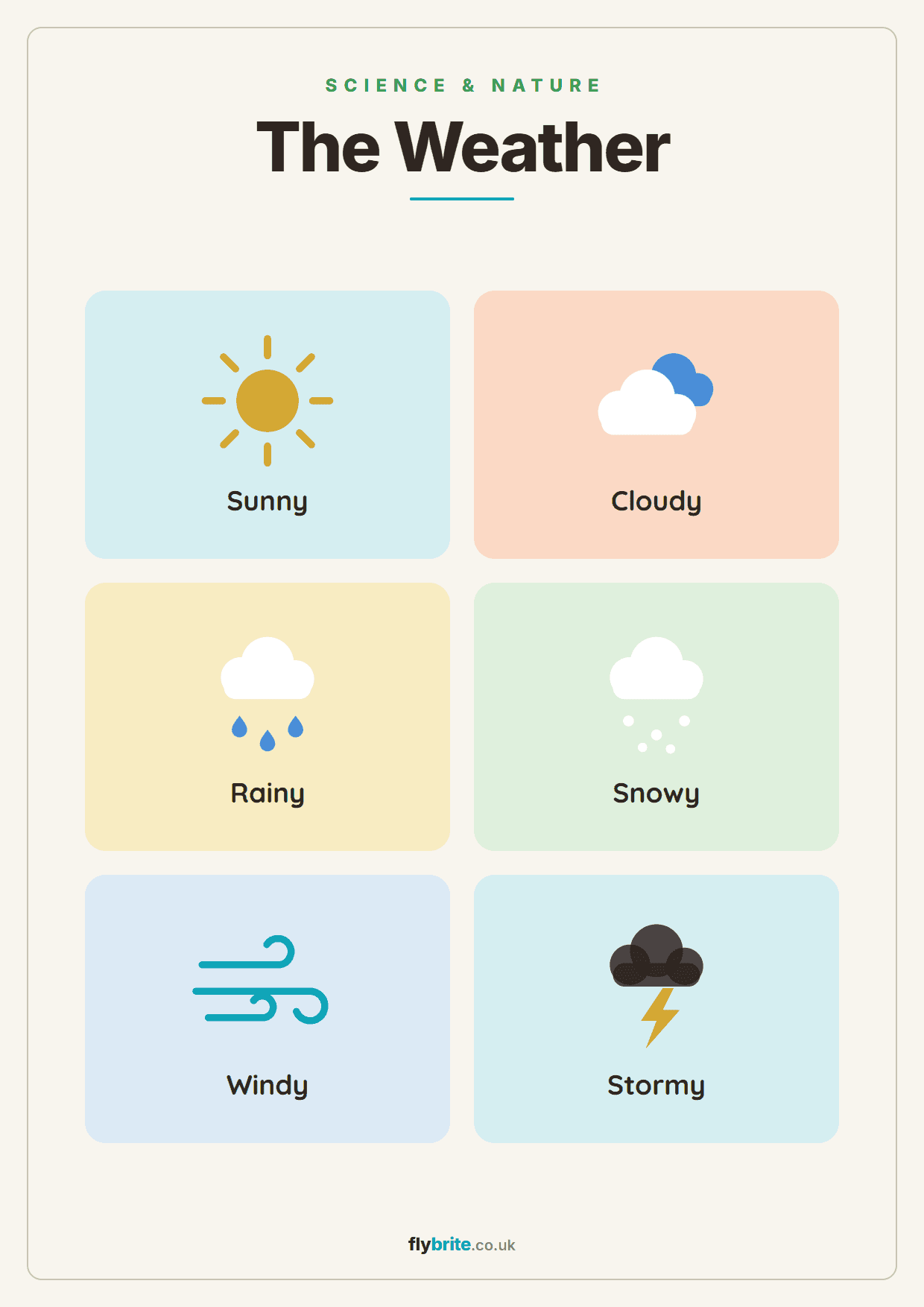
Six friendly skies to spot, so little forecasters can name today.
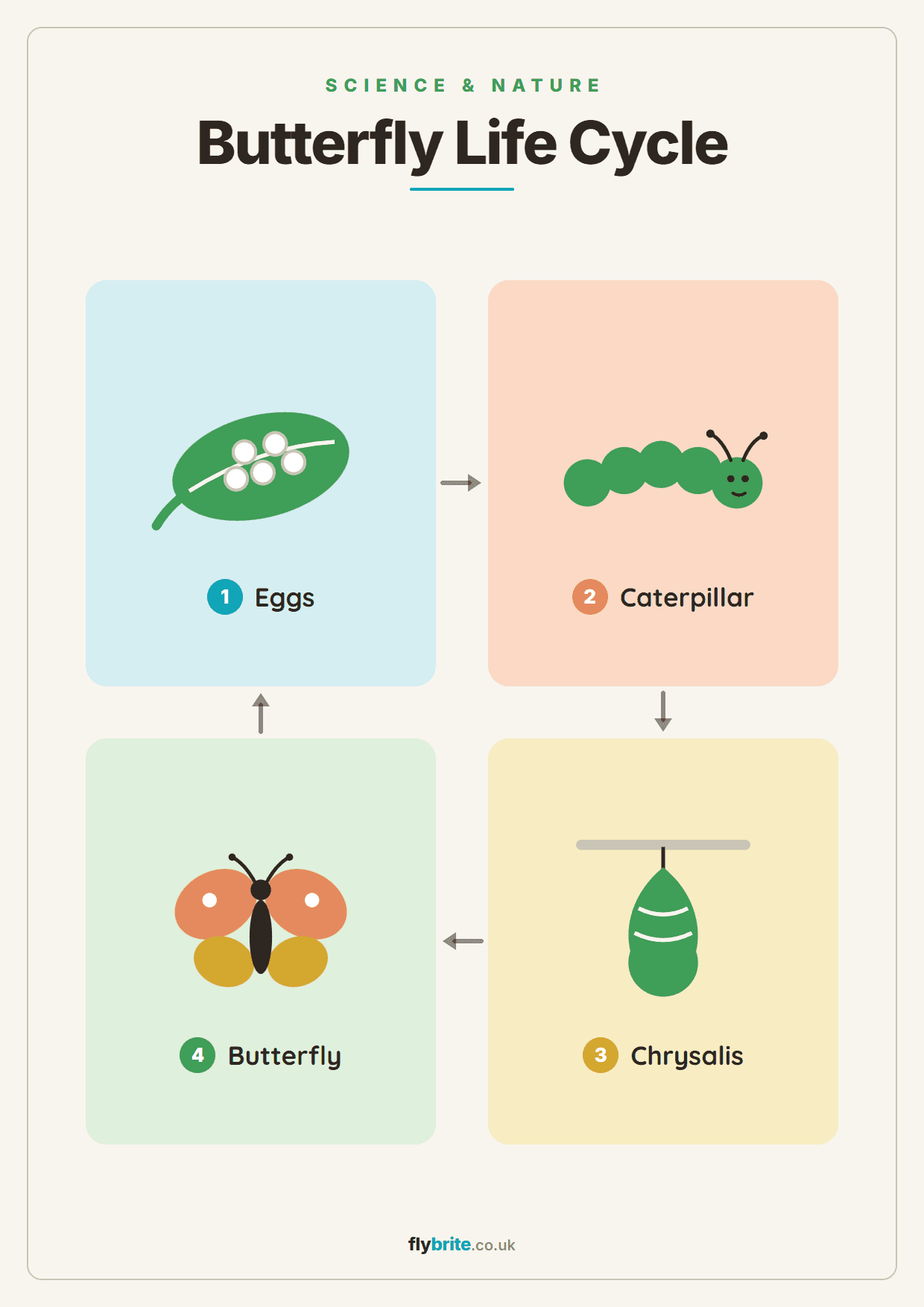
From tiny egg to fluttering wings, the whole journey in four gentle steps.
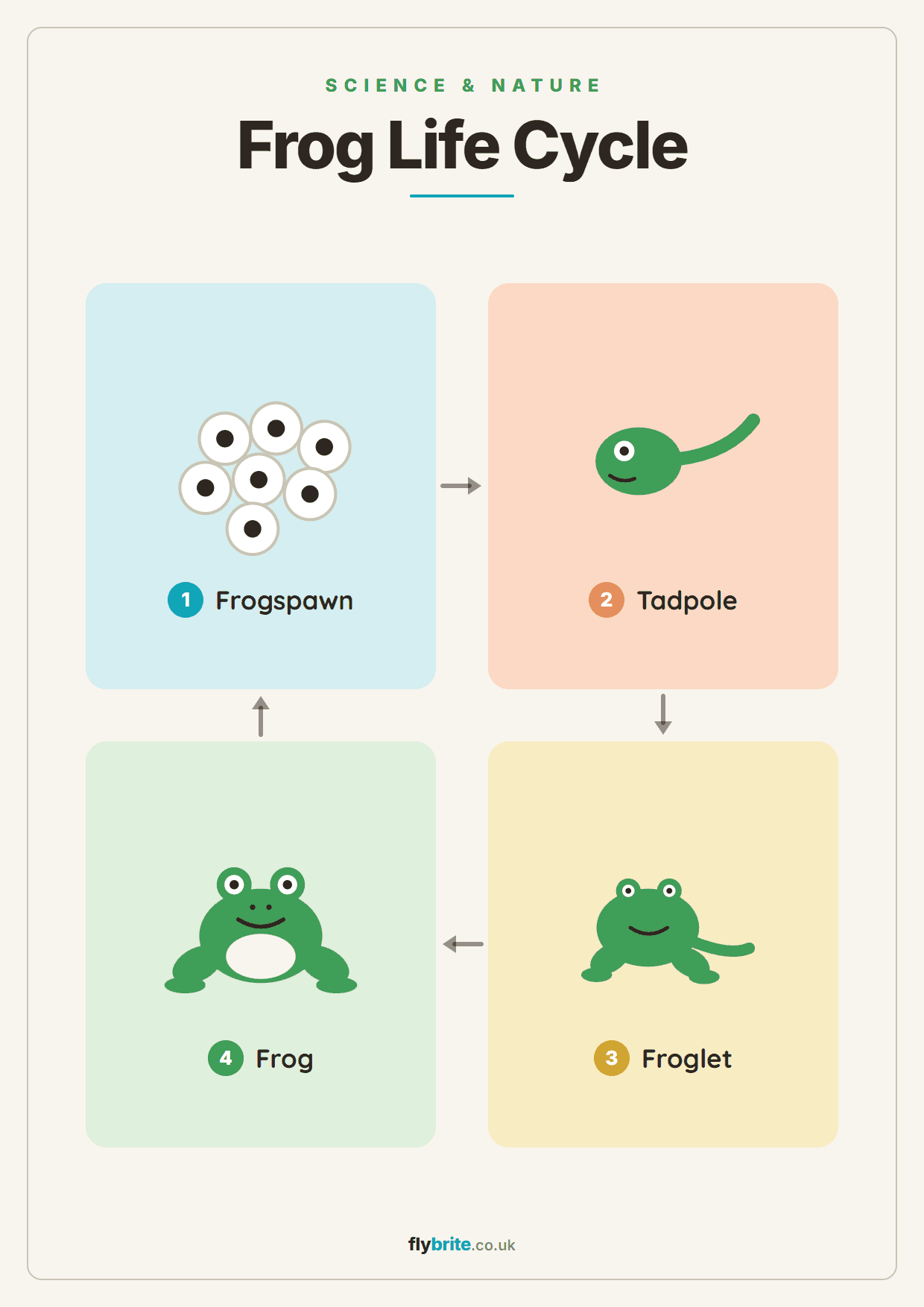
Follow the pond from frogspawn to full-grown frog in four splashy stages.
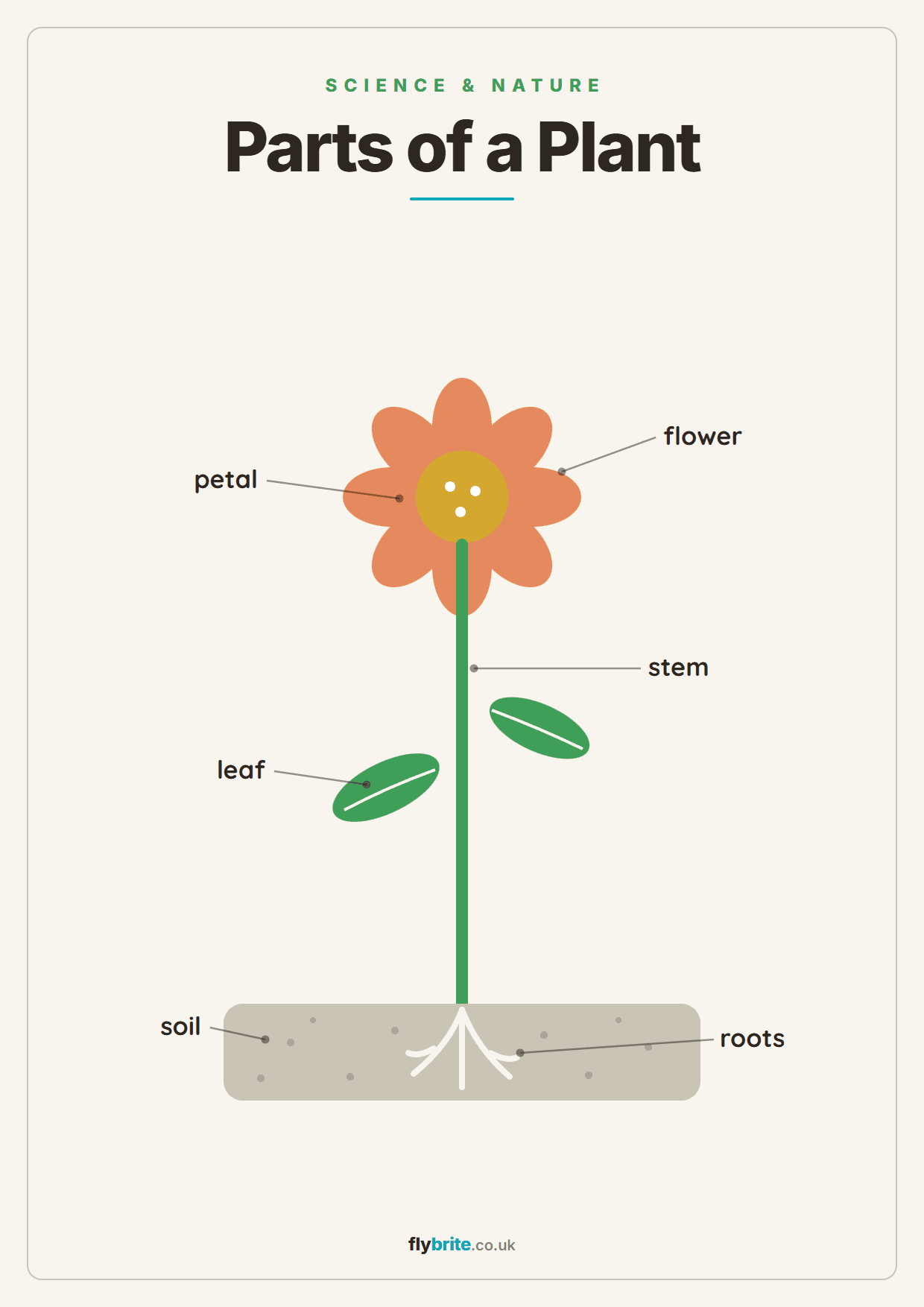
A cheerful bloom with every part labelled, from petal to root.
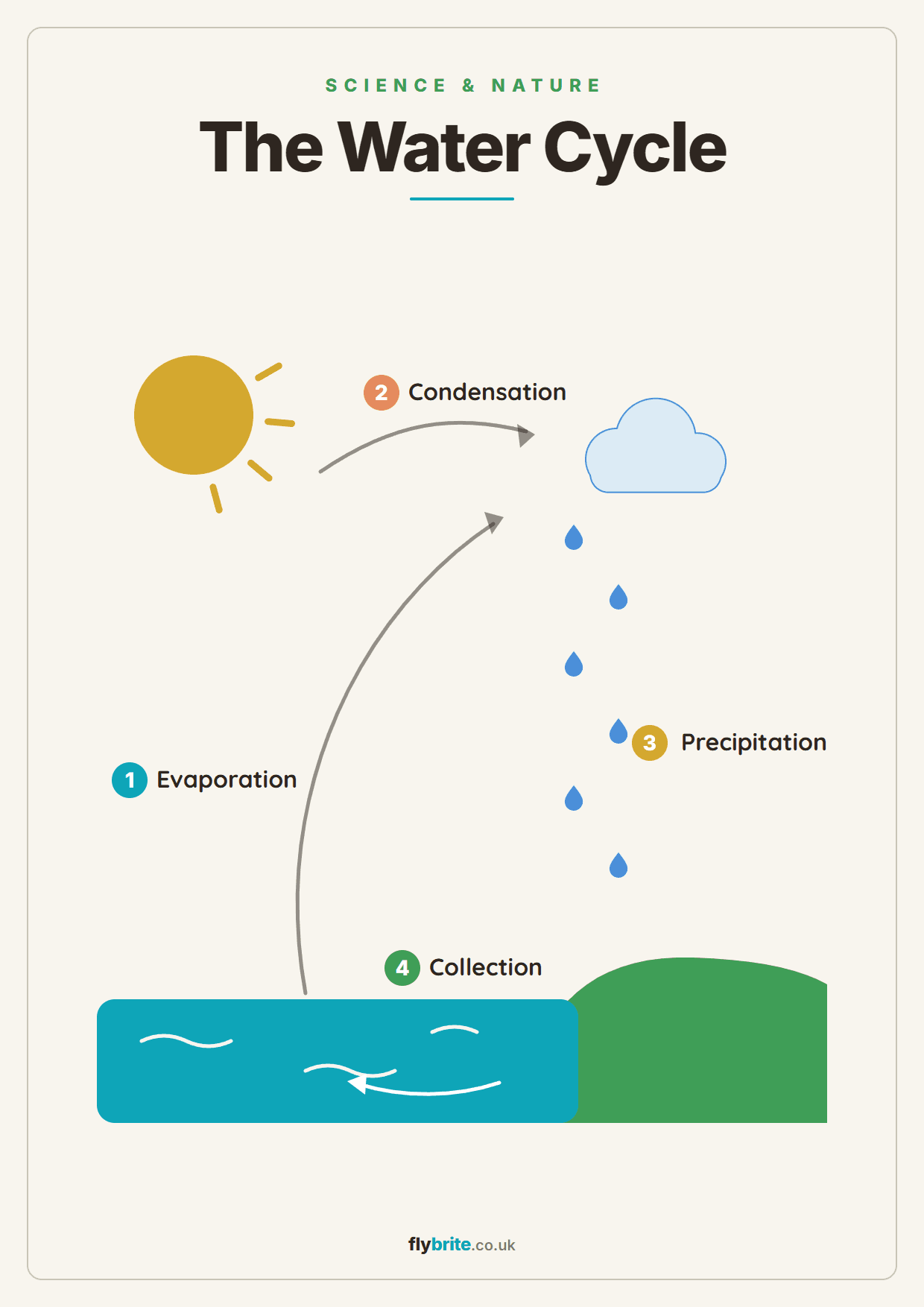
Round and round the rain goes, with four numbered steps to follow.

Eight little moons to spot from the window, from new to full and back.
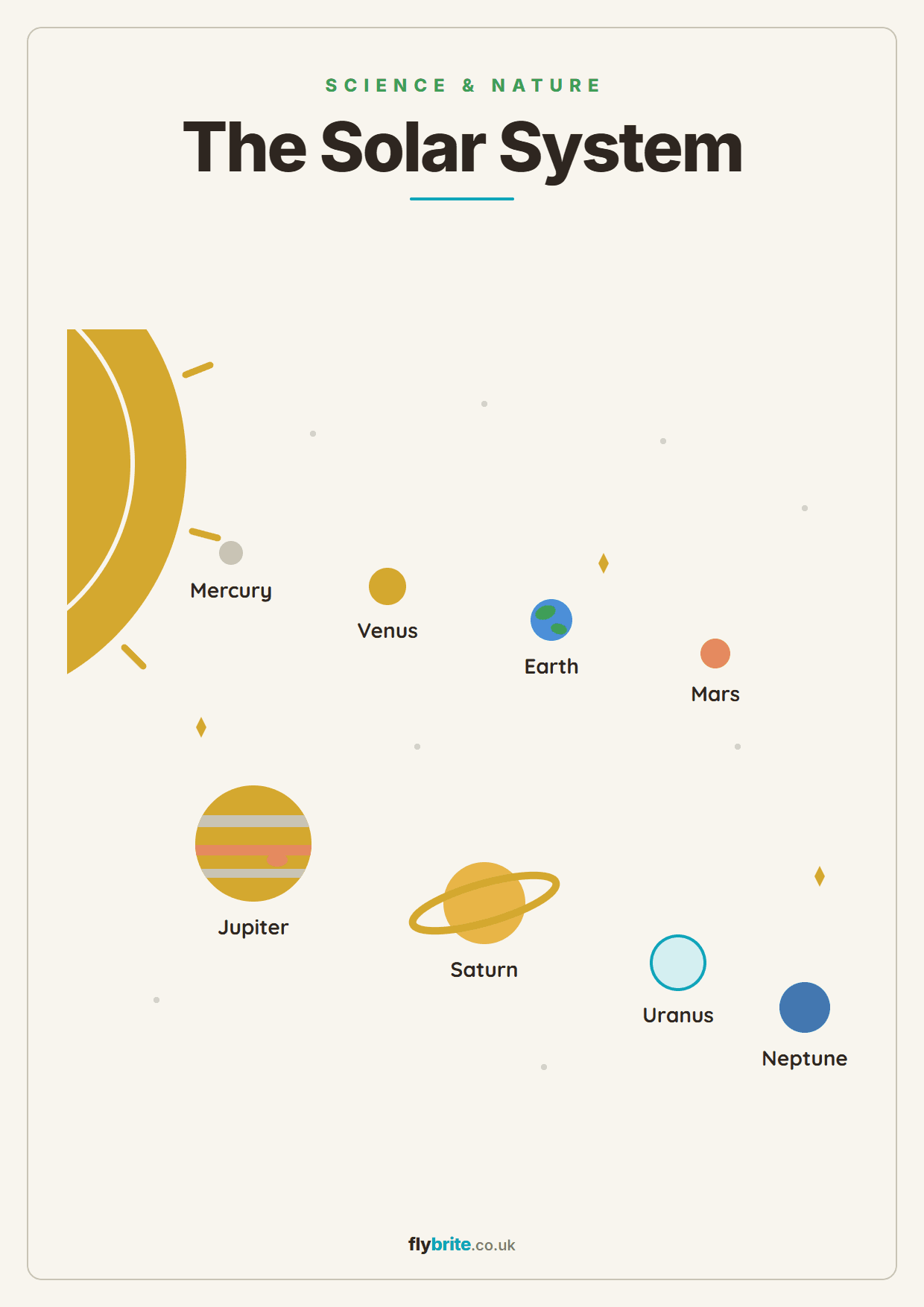
All eight planets lined up beside our sunny star, ready to name.
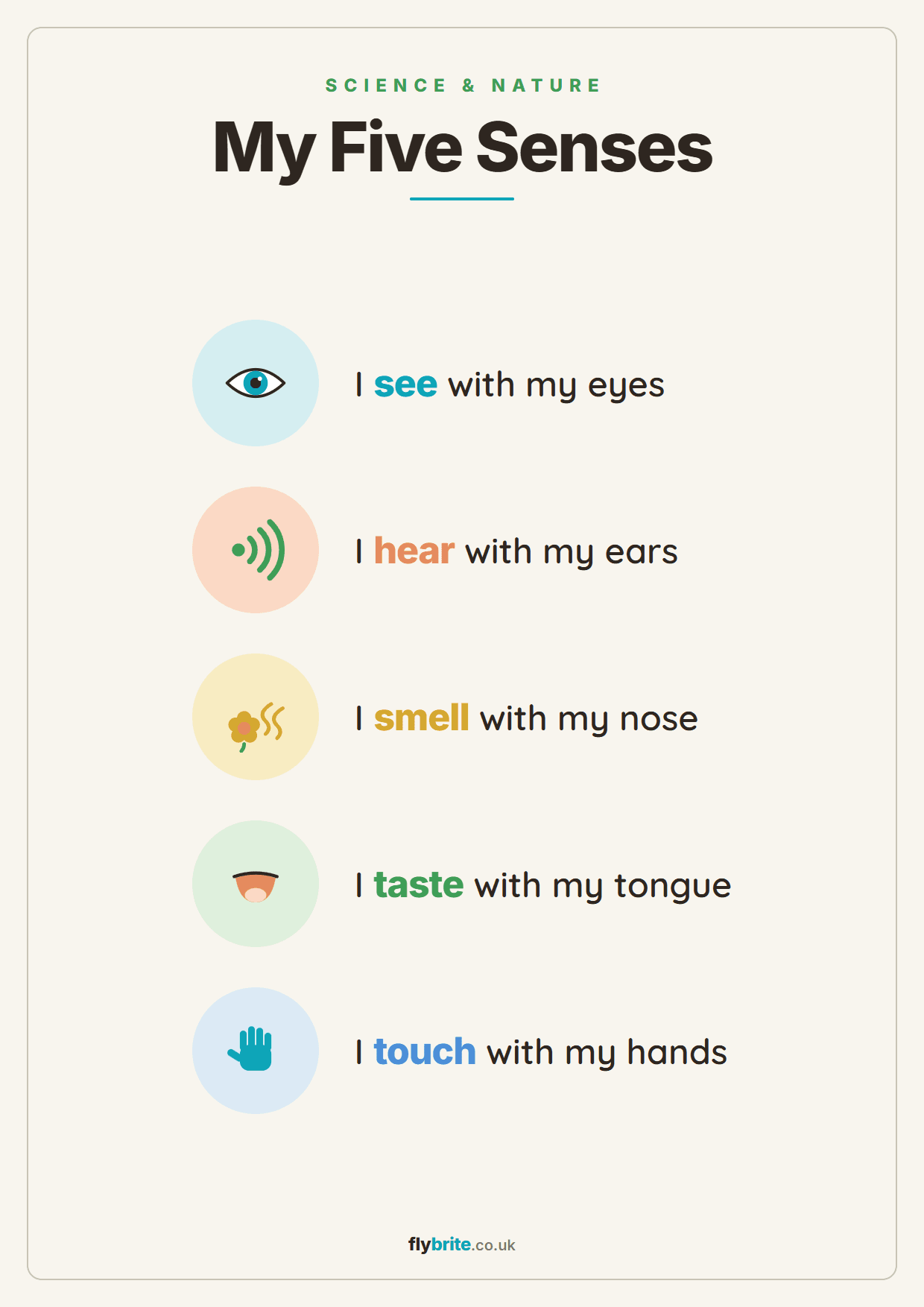
Five gentle reminders of all the ways little ones explore the world.
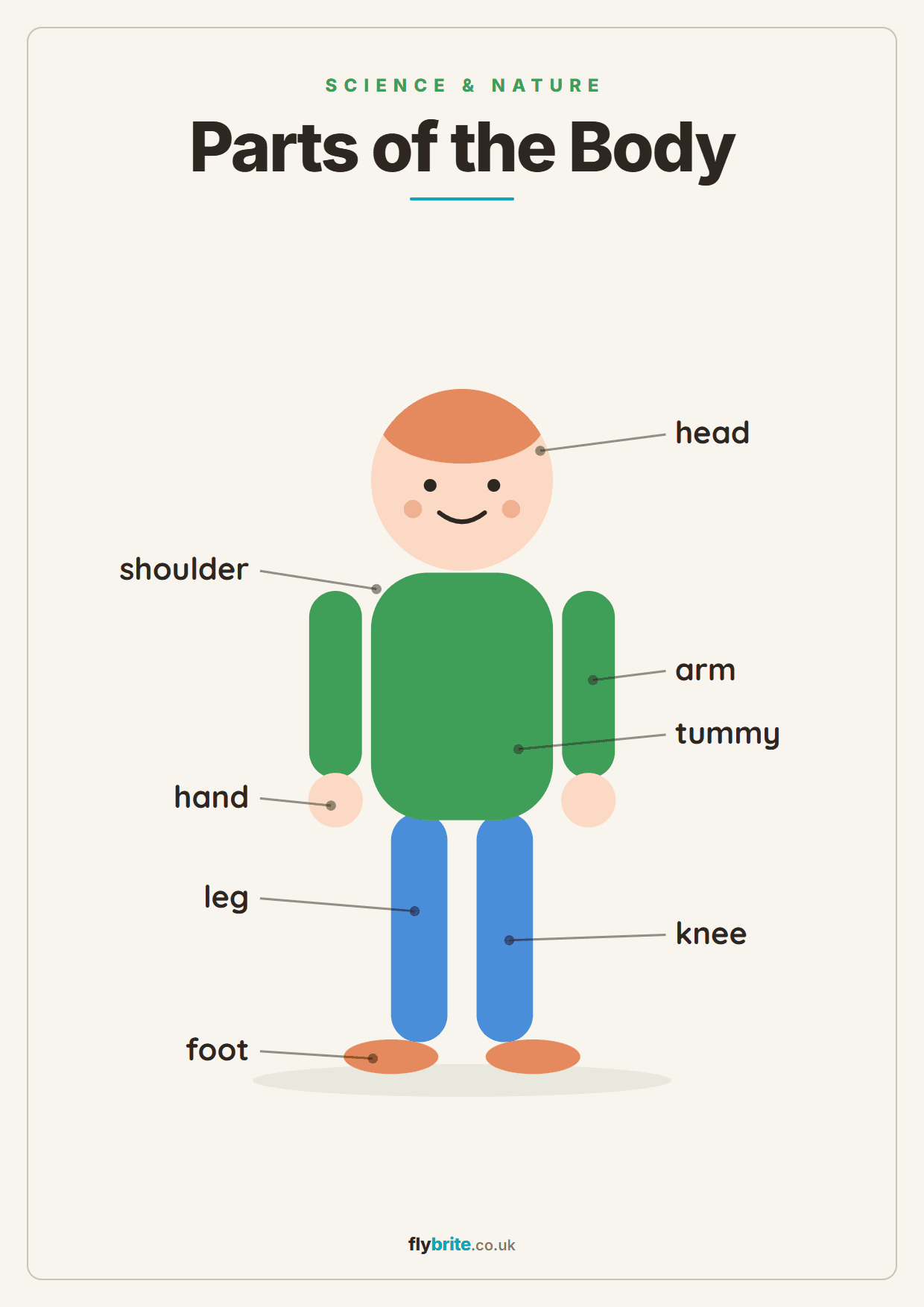
A friendly little figure with every part labelled, from head to toe.
Continents, oceans, coins, food and everyday knowledge for curious explorers.
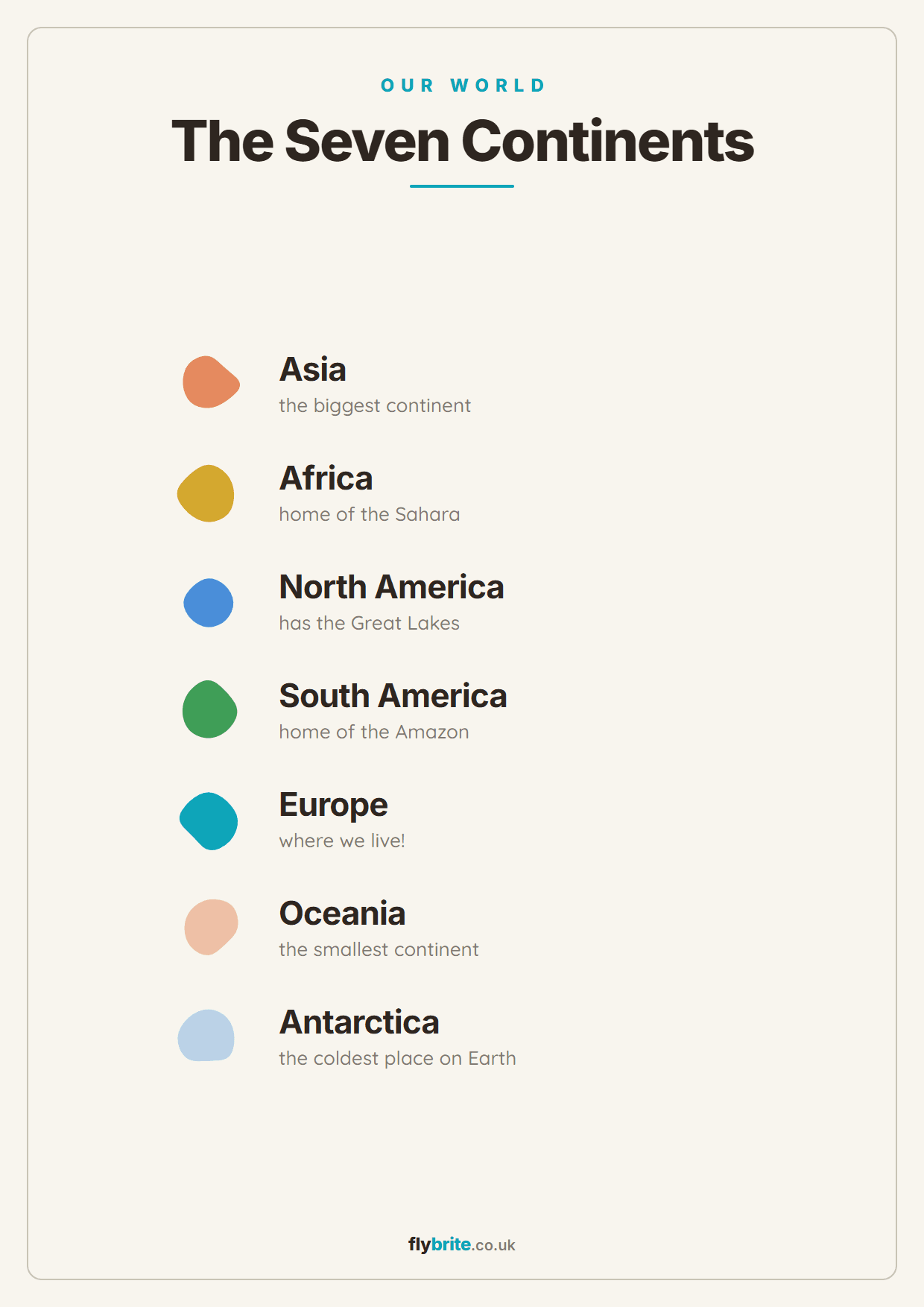
A friendly first look at the seven continents, each with a little fact to remember.
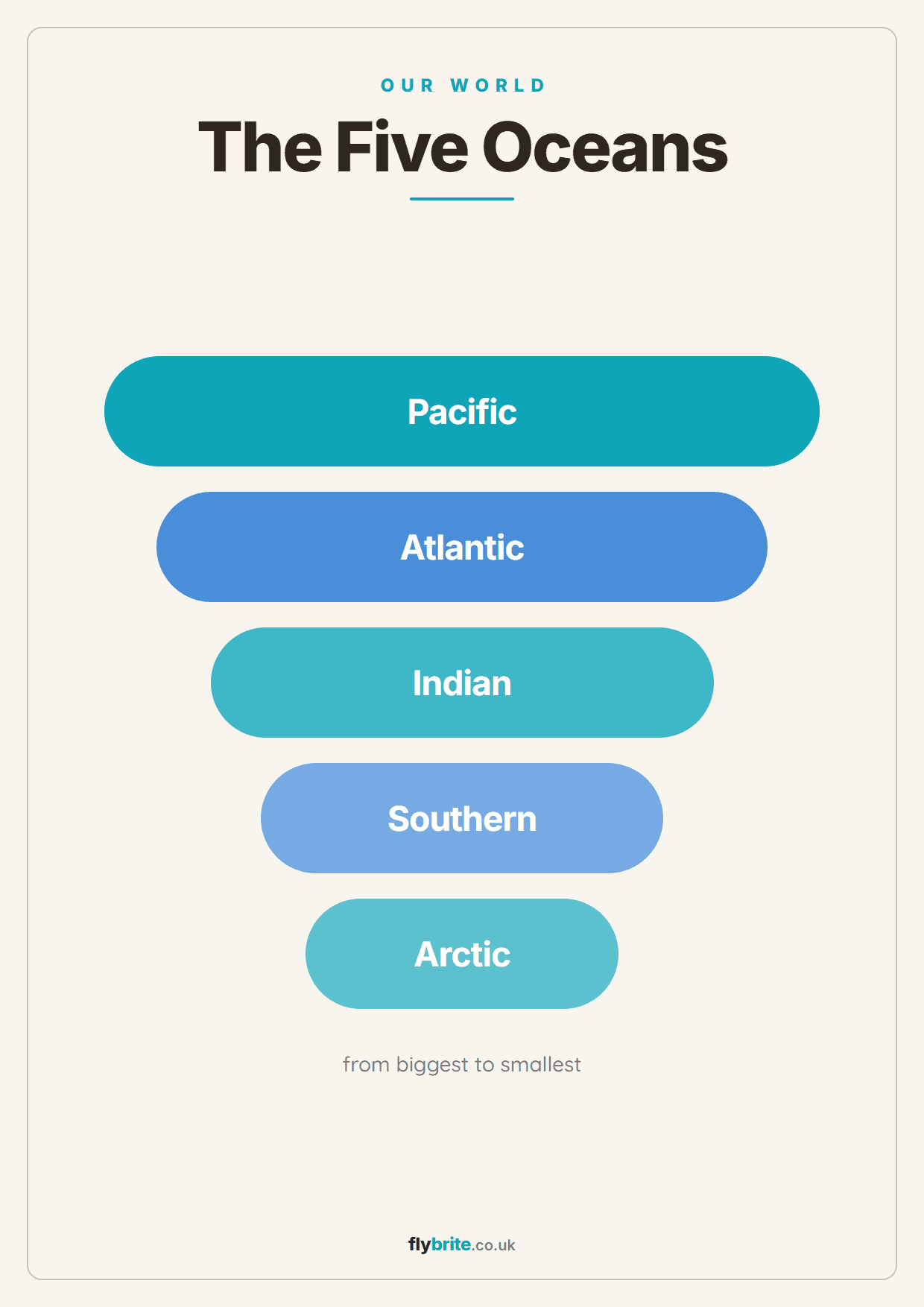
All five oceans stacked from biggest to smallest in calming shades of blue.
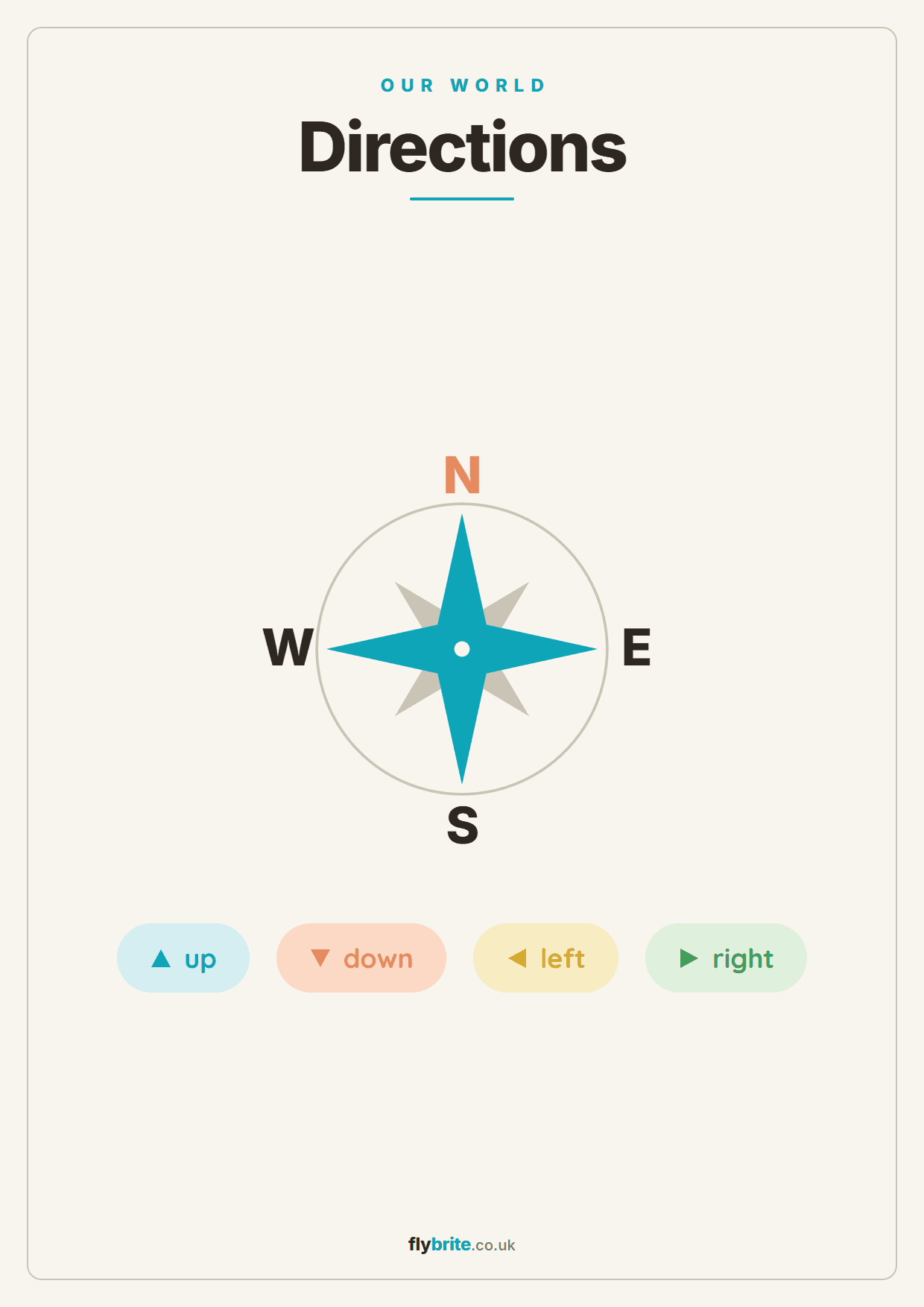
A classic compass rose to help little navigators find north, south, east and west.
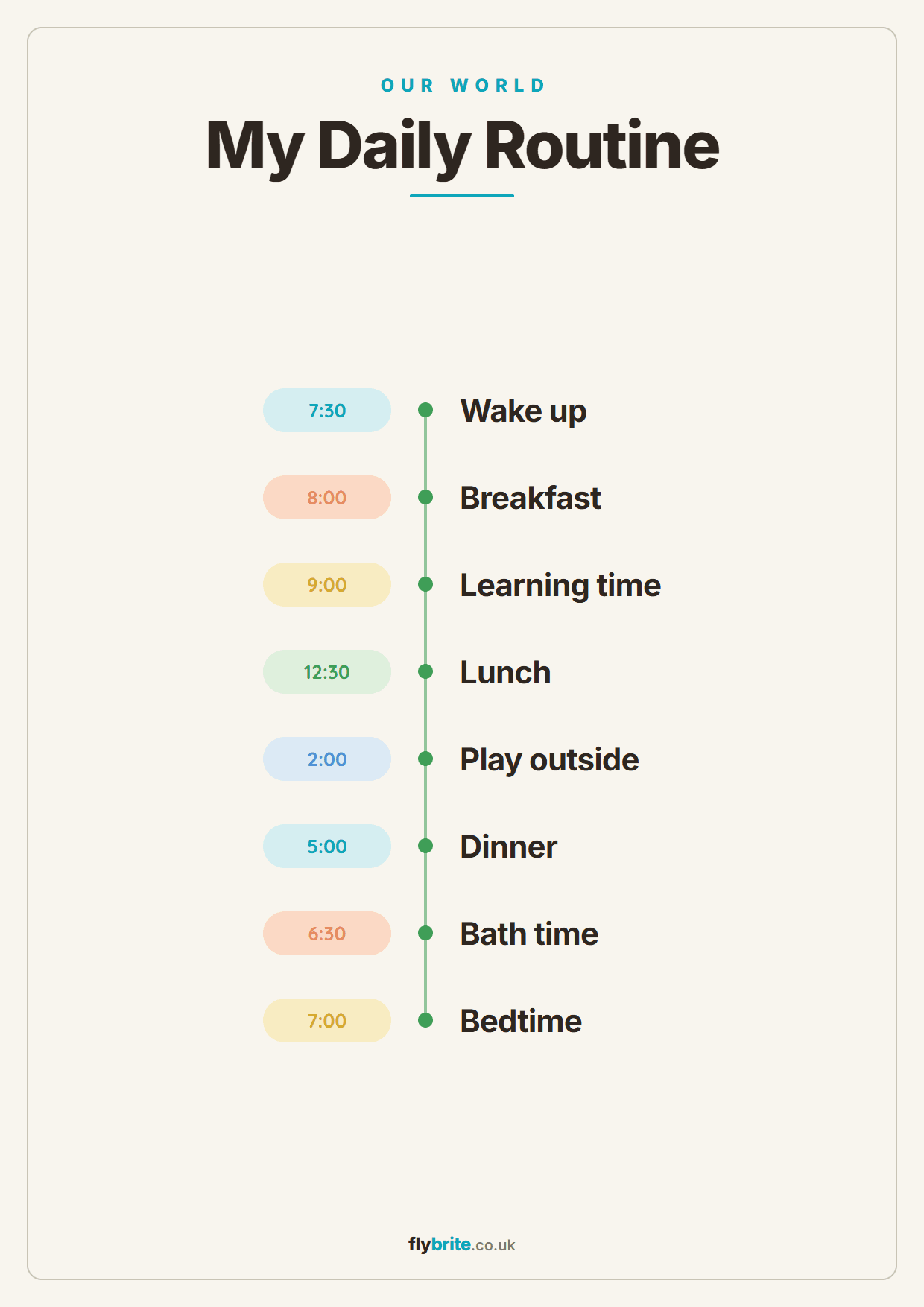
A gentle rhythm for the day, from wake up to bedtime.
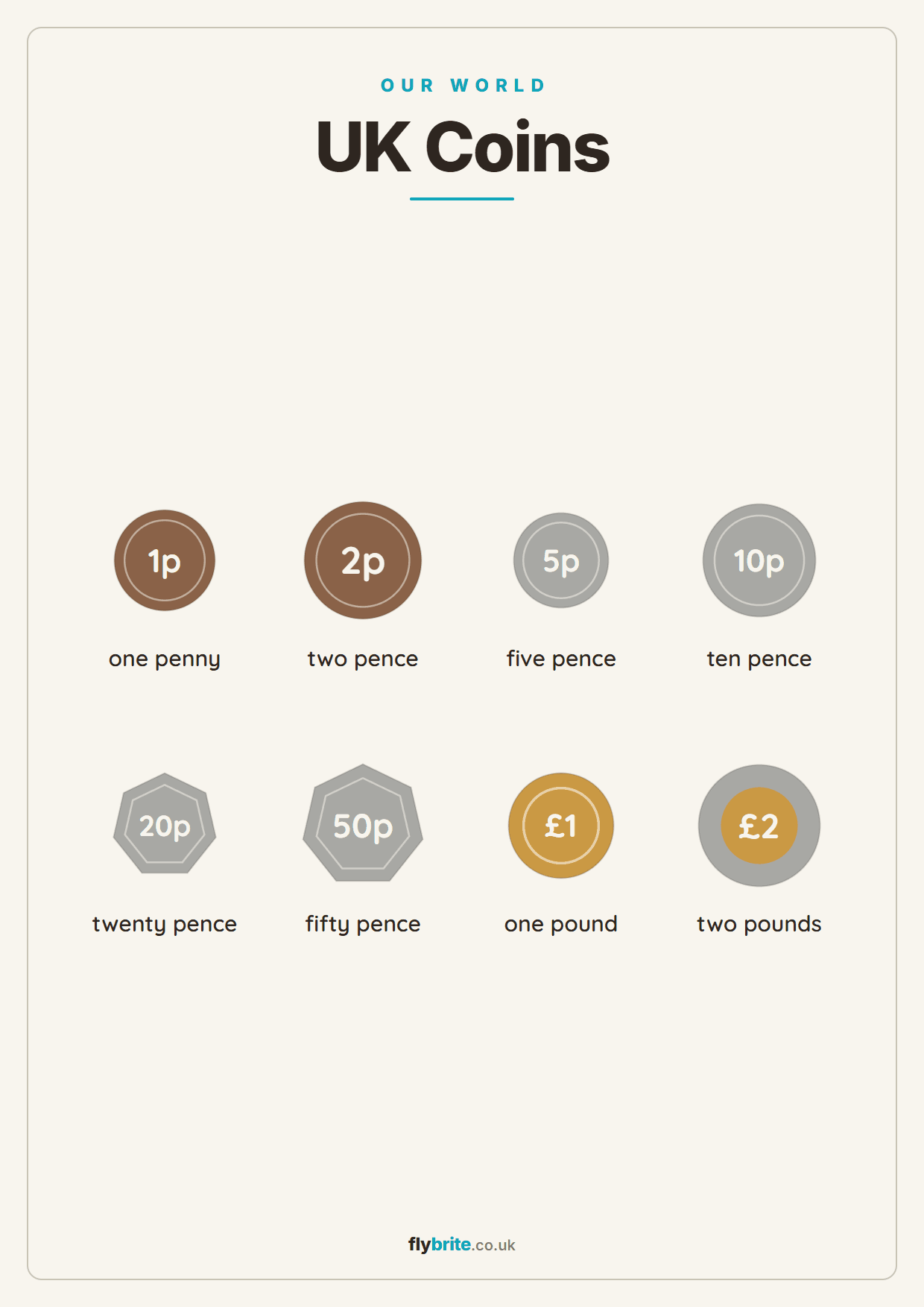
Every UK coin from 1p to £2, sized for little hands learning to count money.
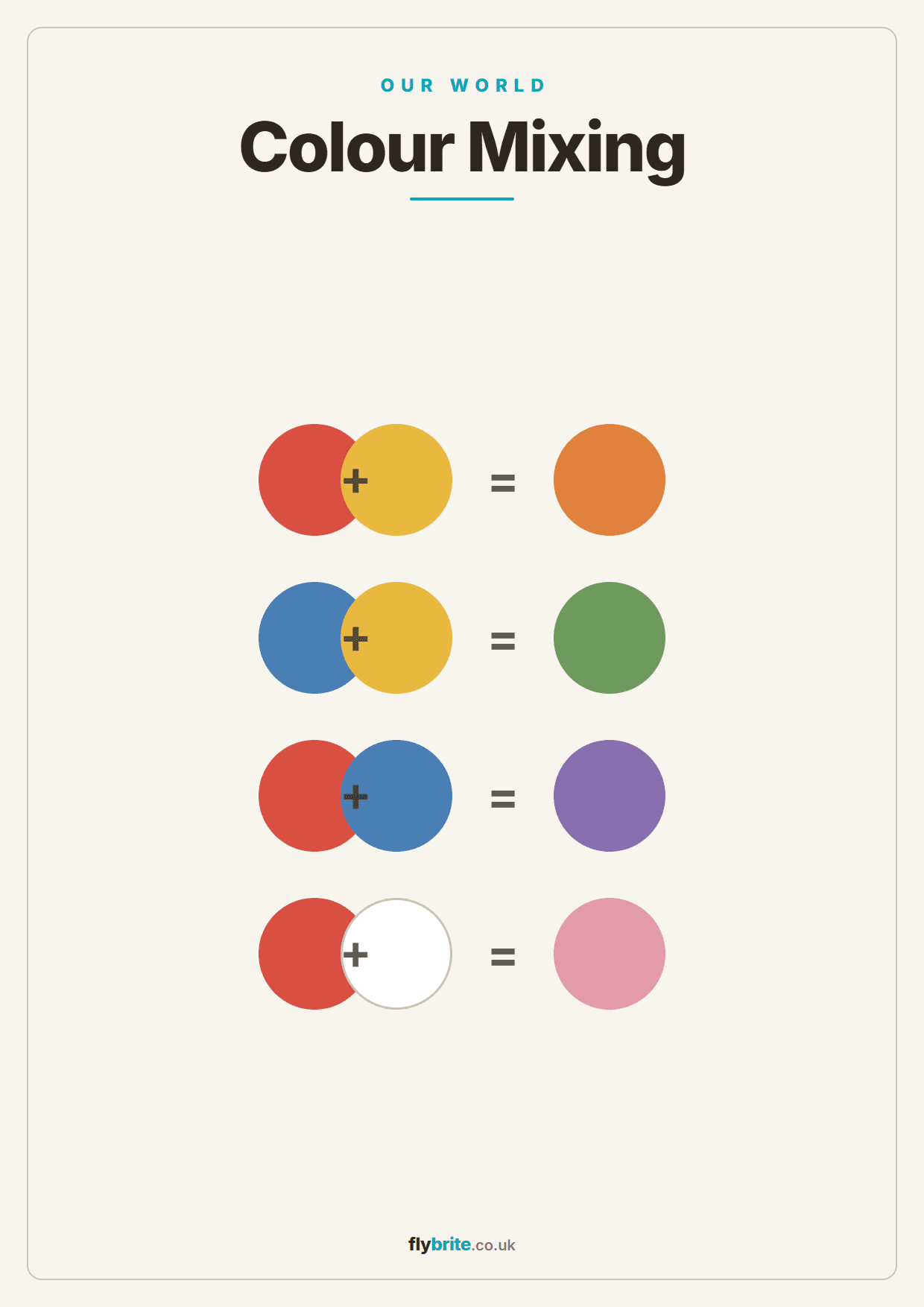
Watch colours come to life with four simple mixing recipes.
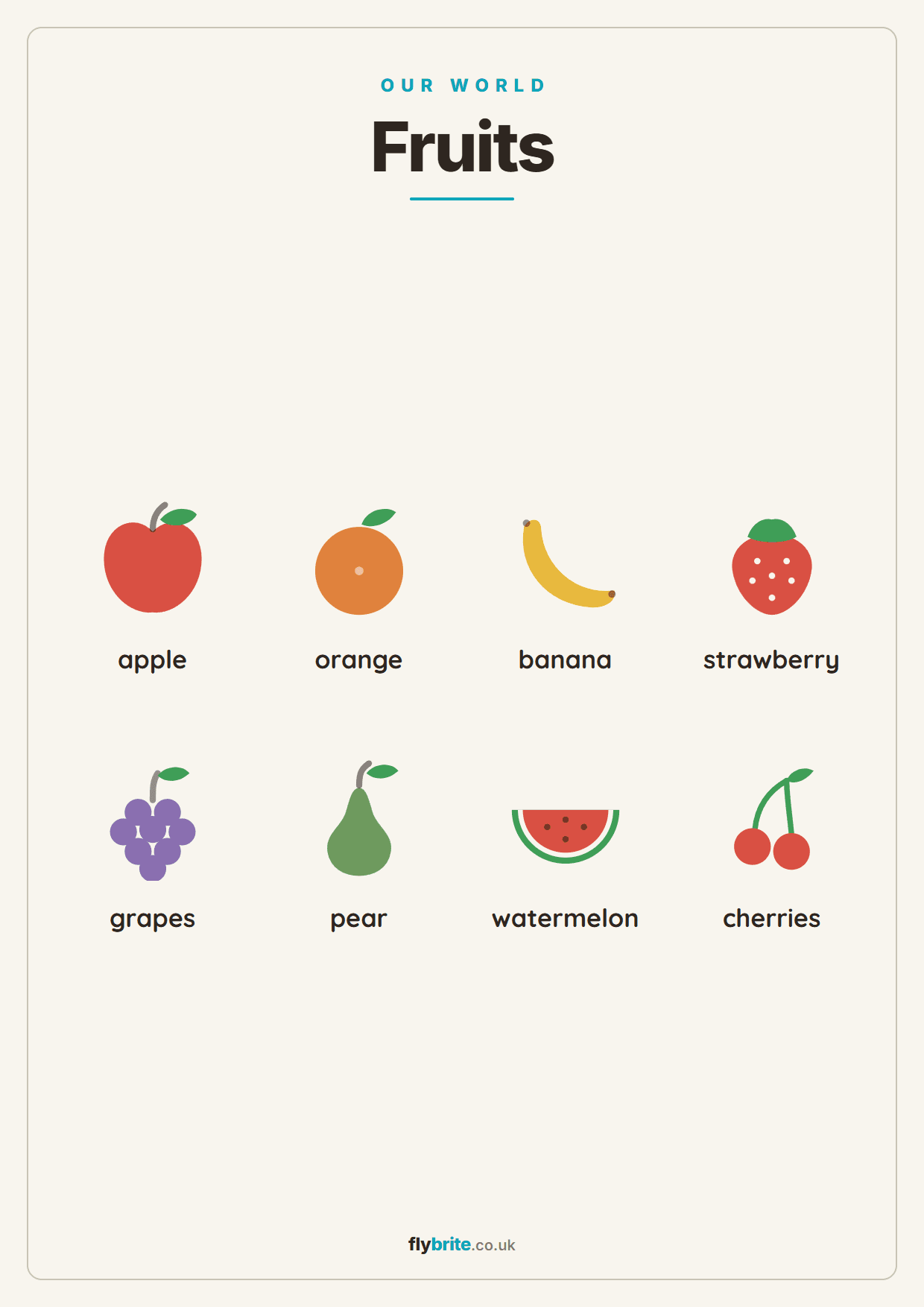
Eight favourite fruits in warm, friendly colours to name and know.
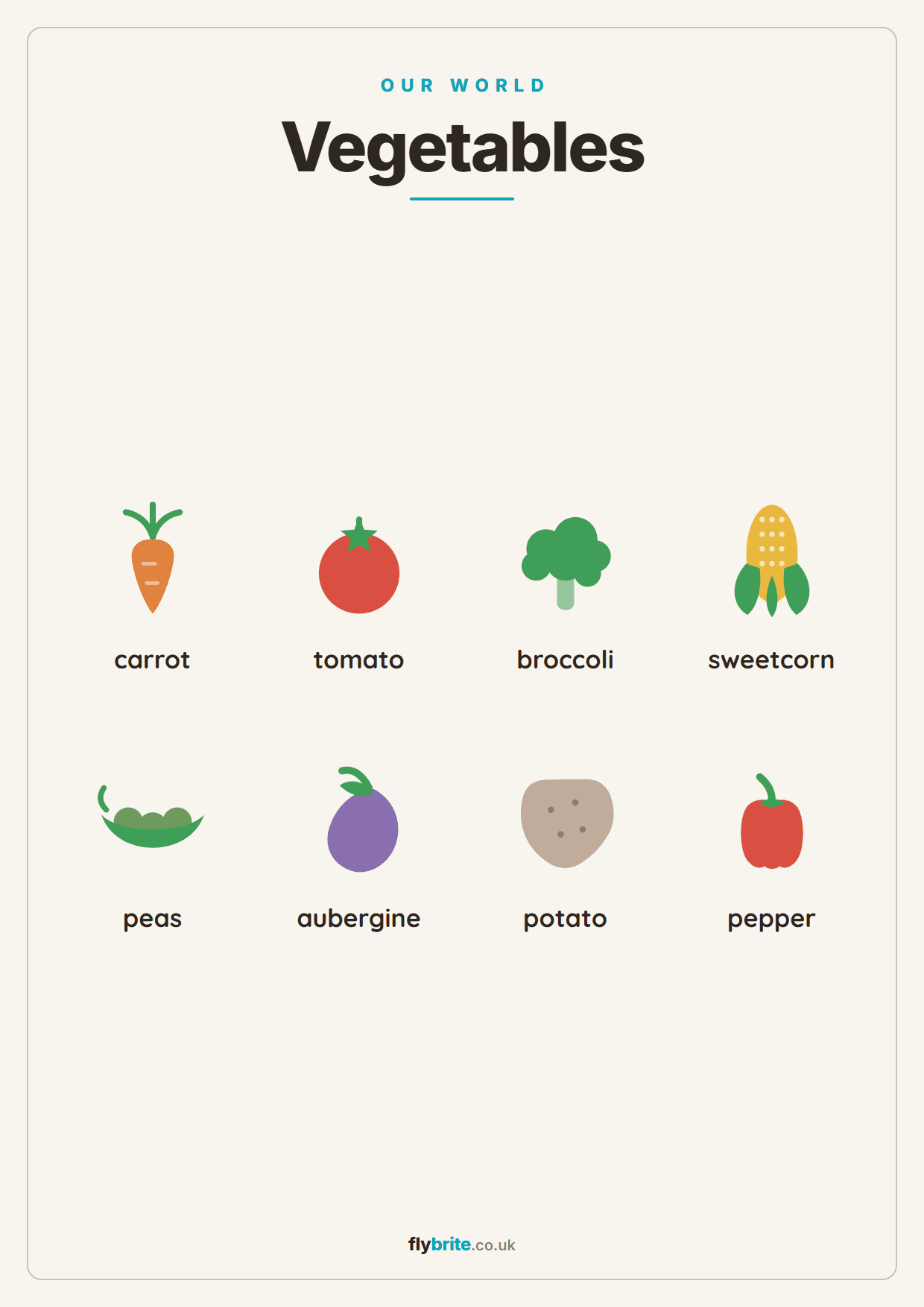
Eight everyday vegetables to spot on the plate and name at the table.
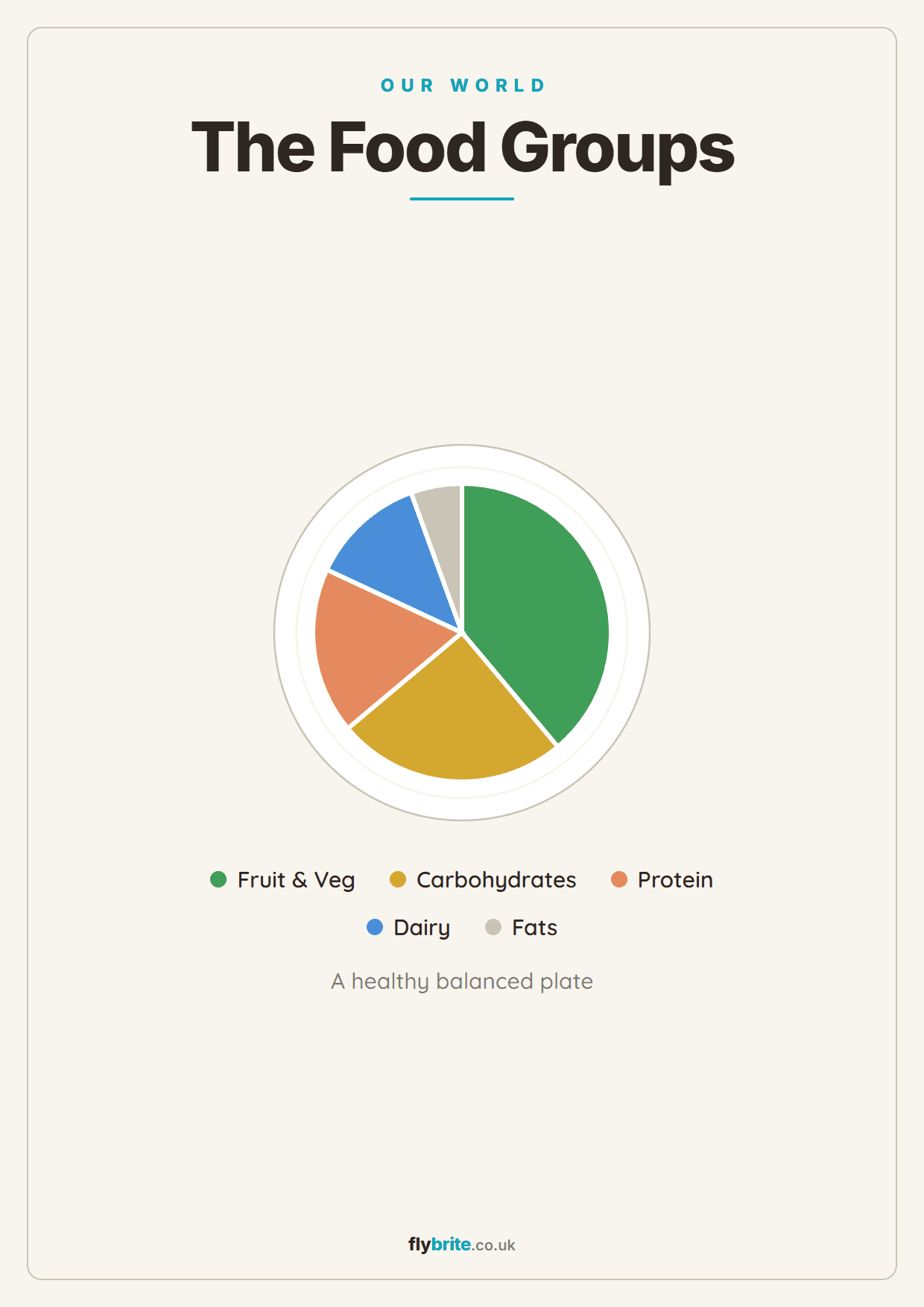
A healthy balanced plate showing the five food groups at a glance.
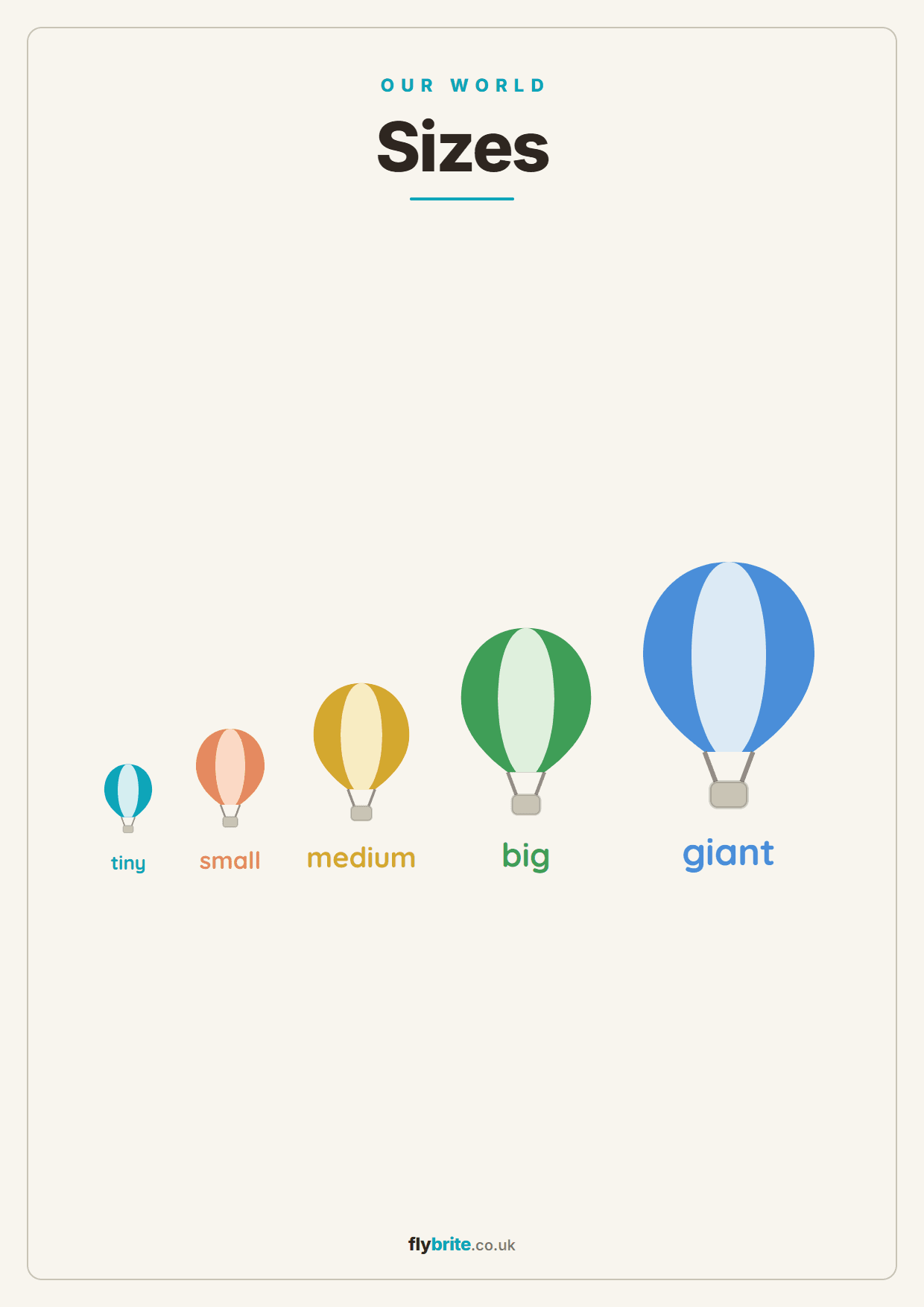
Five hot-air balloons floating from tiny to giant, perfect for learning size words.
Emotions, calming tools, affirmations, plus editable charts, planners and certificates.
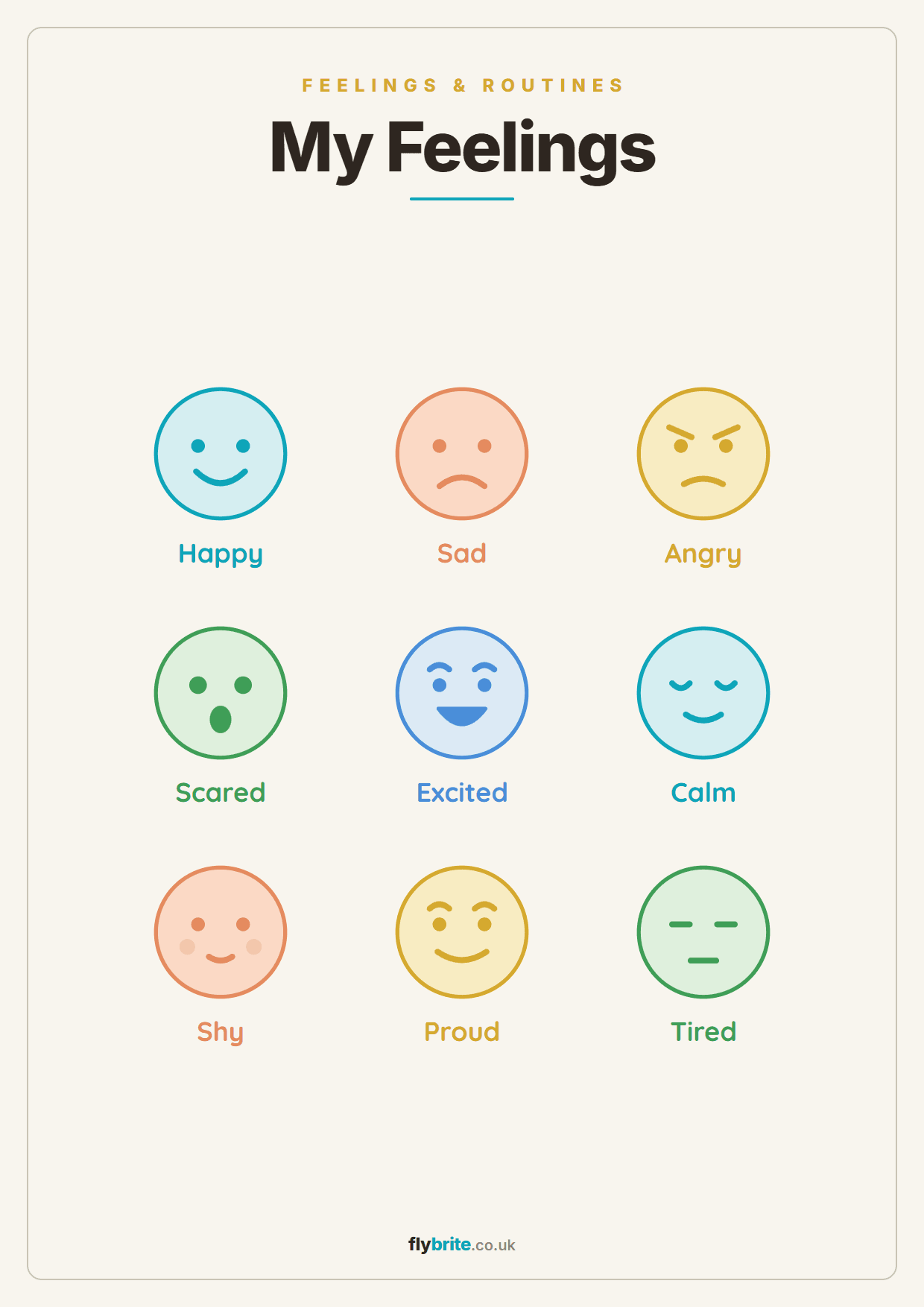
Nine friendly faces that help little ones point to exactly how they feel.
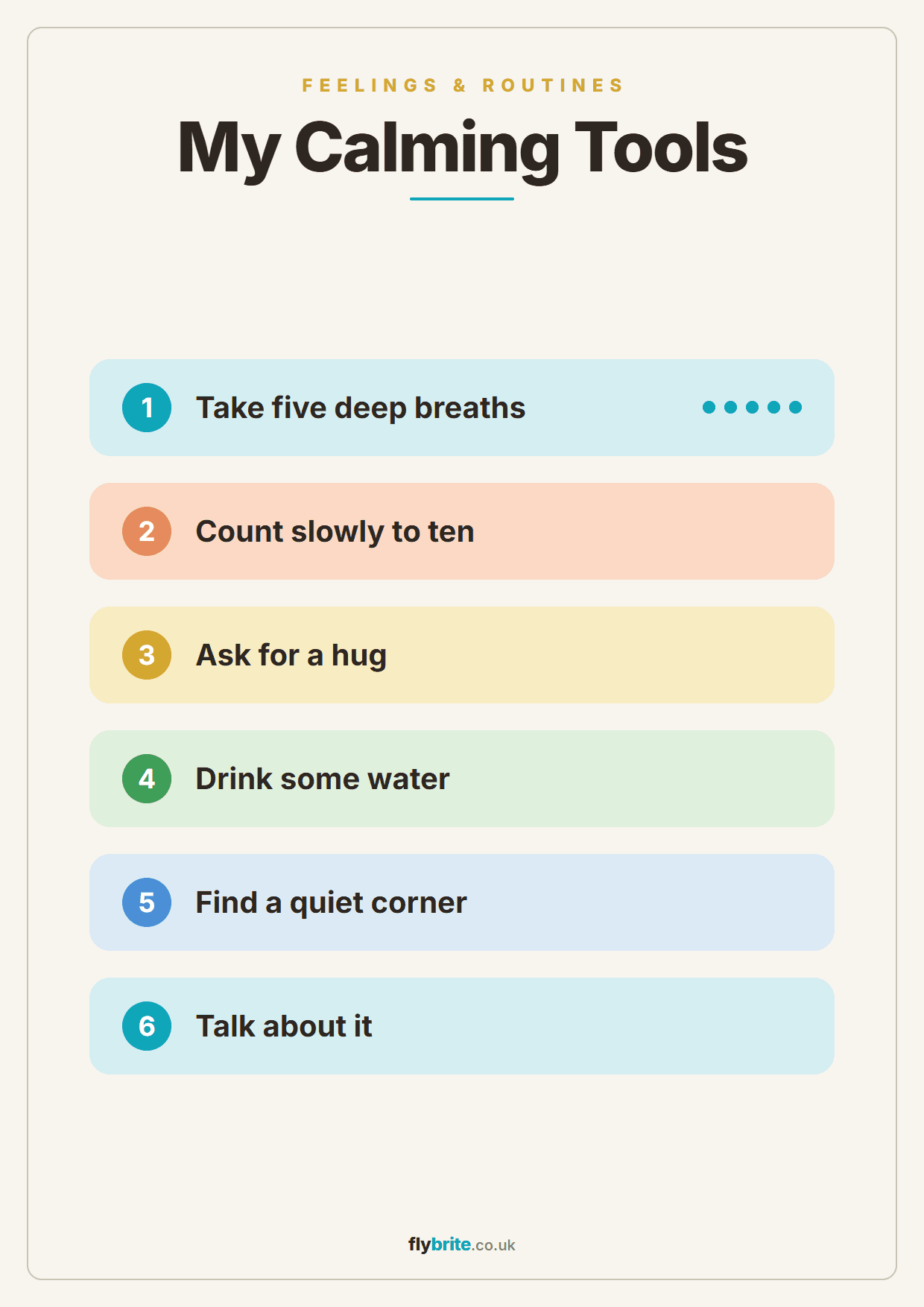
Six gentle, practical ways back to calm for the wobbly moments.
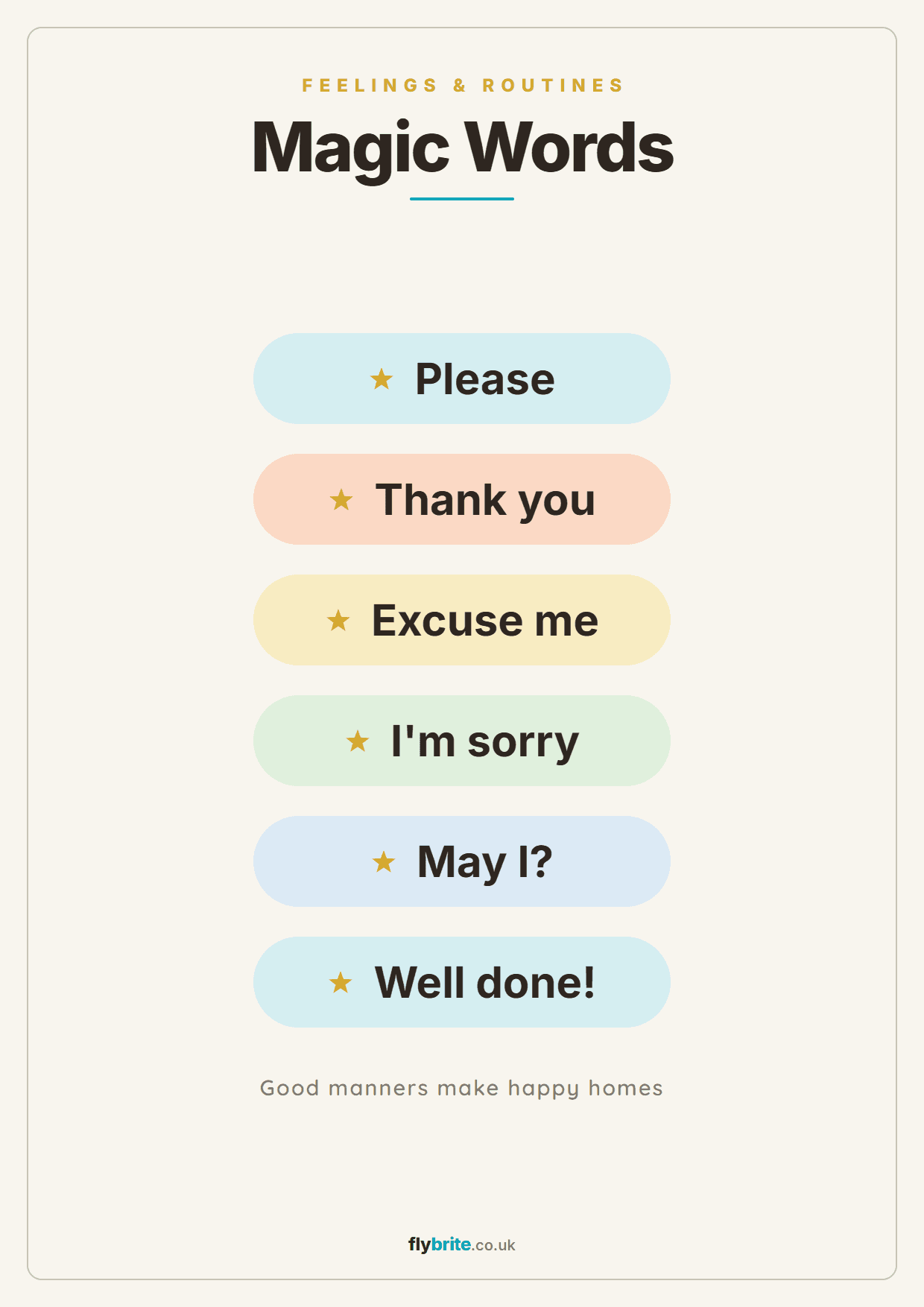
The six magic phrases of good manners, each with its own golden star.

Turns every "I can't" into a brave "not yet" and helps growing brains keep going.
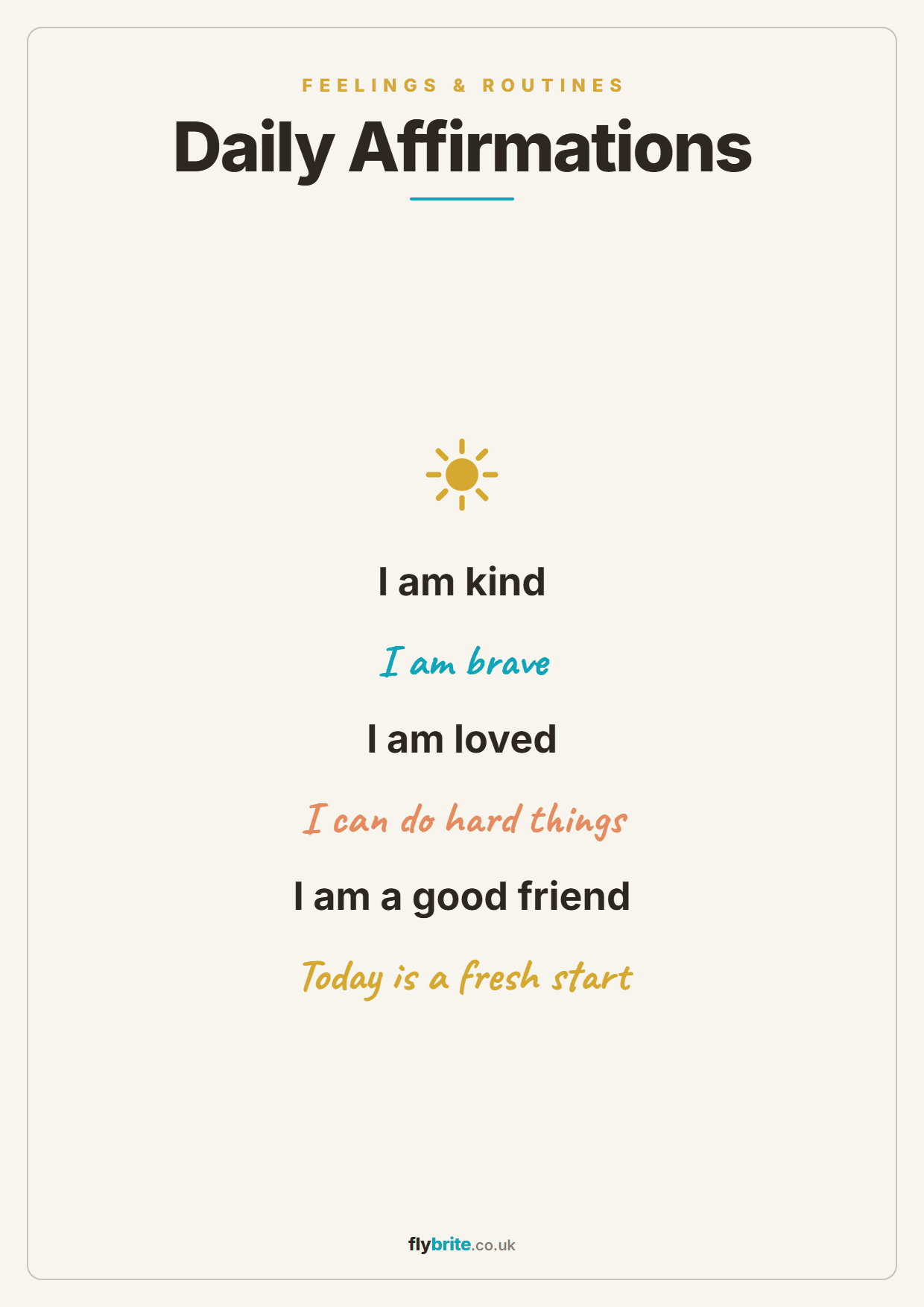
Six sunny lines to say out loud each morning, brave, kind and loved.
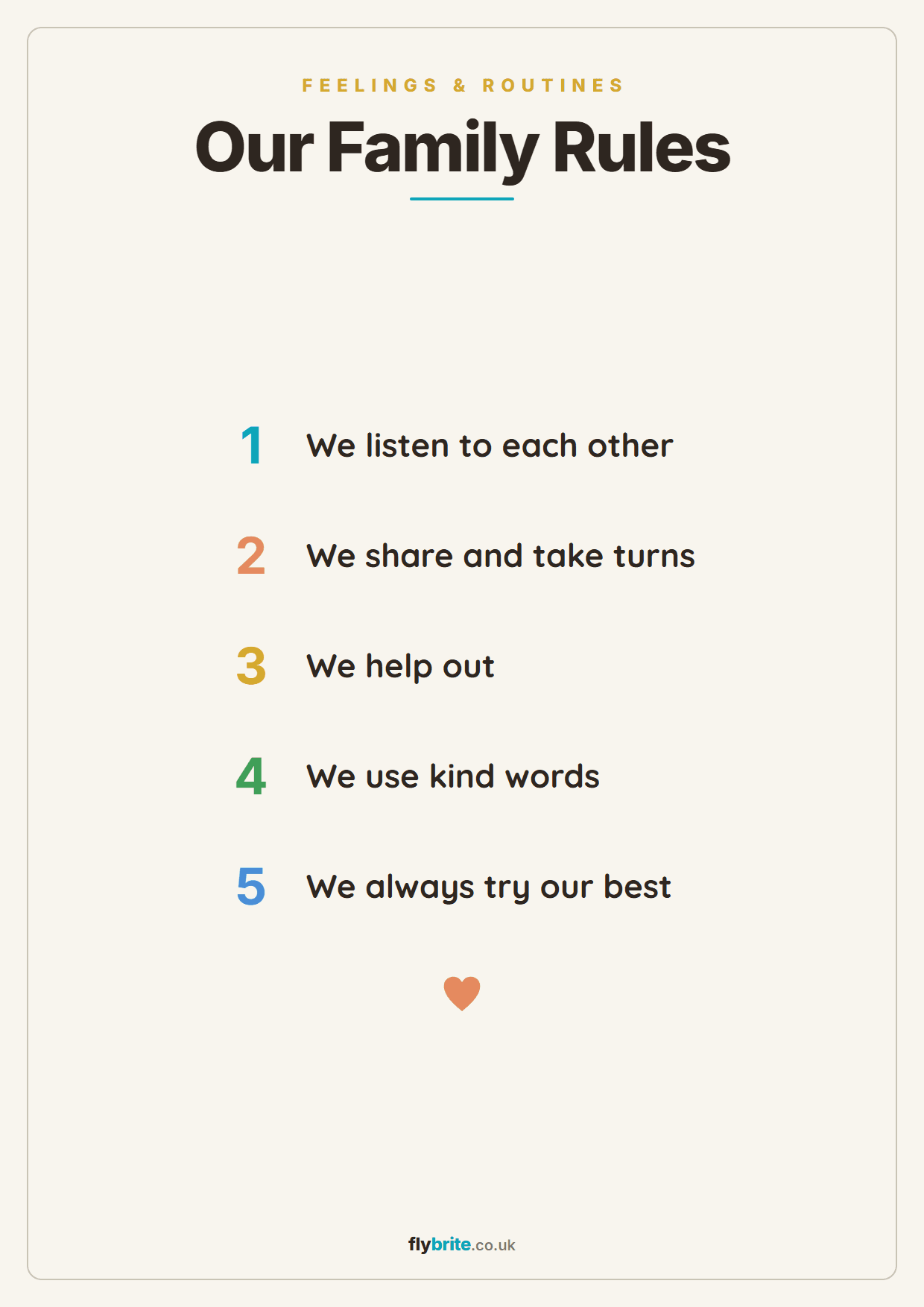
Five warm rules for the hallway wall, written the way families talk.
 Type or write in
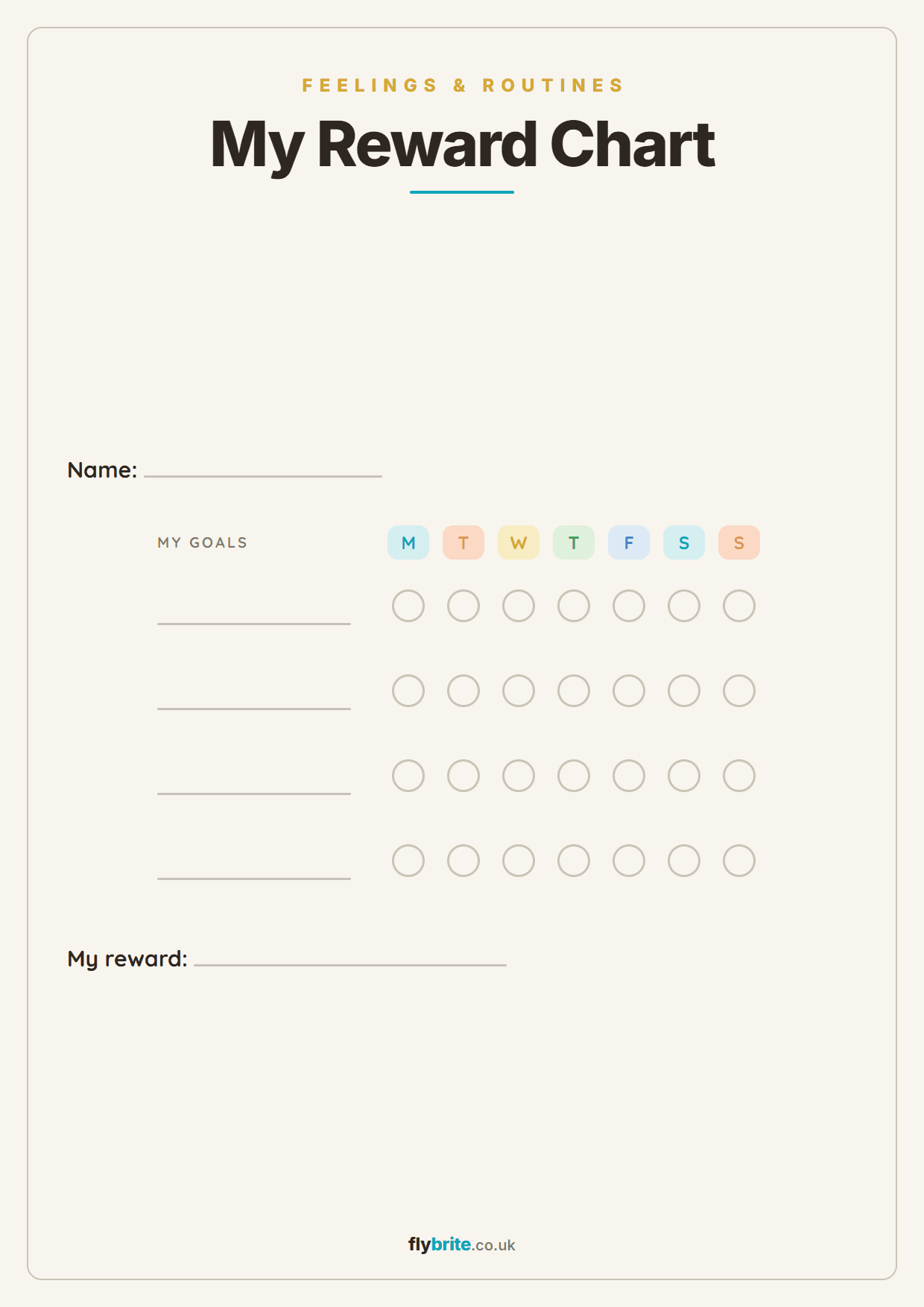
Write in four goals, sticker each day, and choose the reward together.
 Type or write in
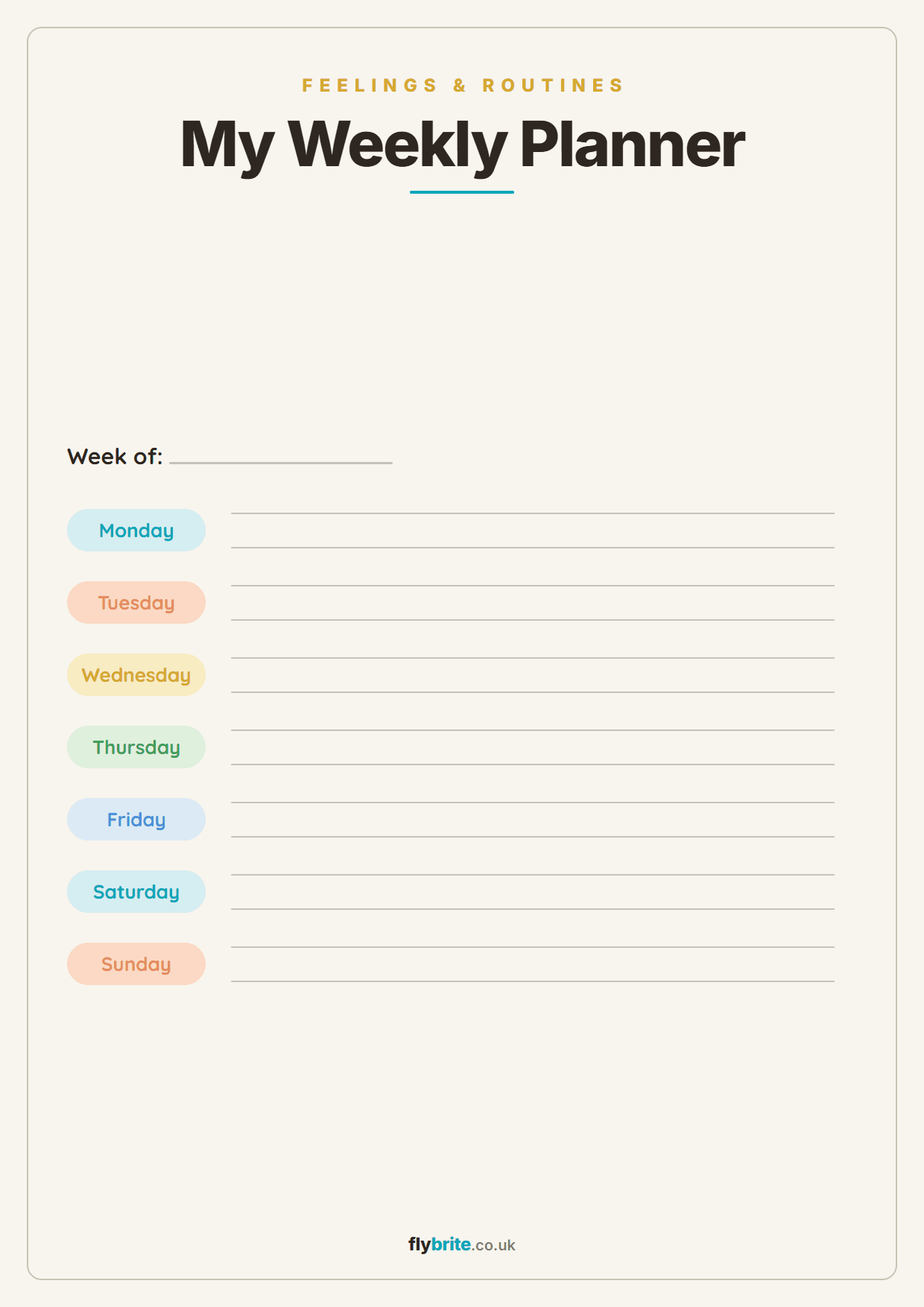
A write-in week at a glance, with room for plans every day from Monday to Sunday.
 Type or write in
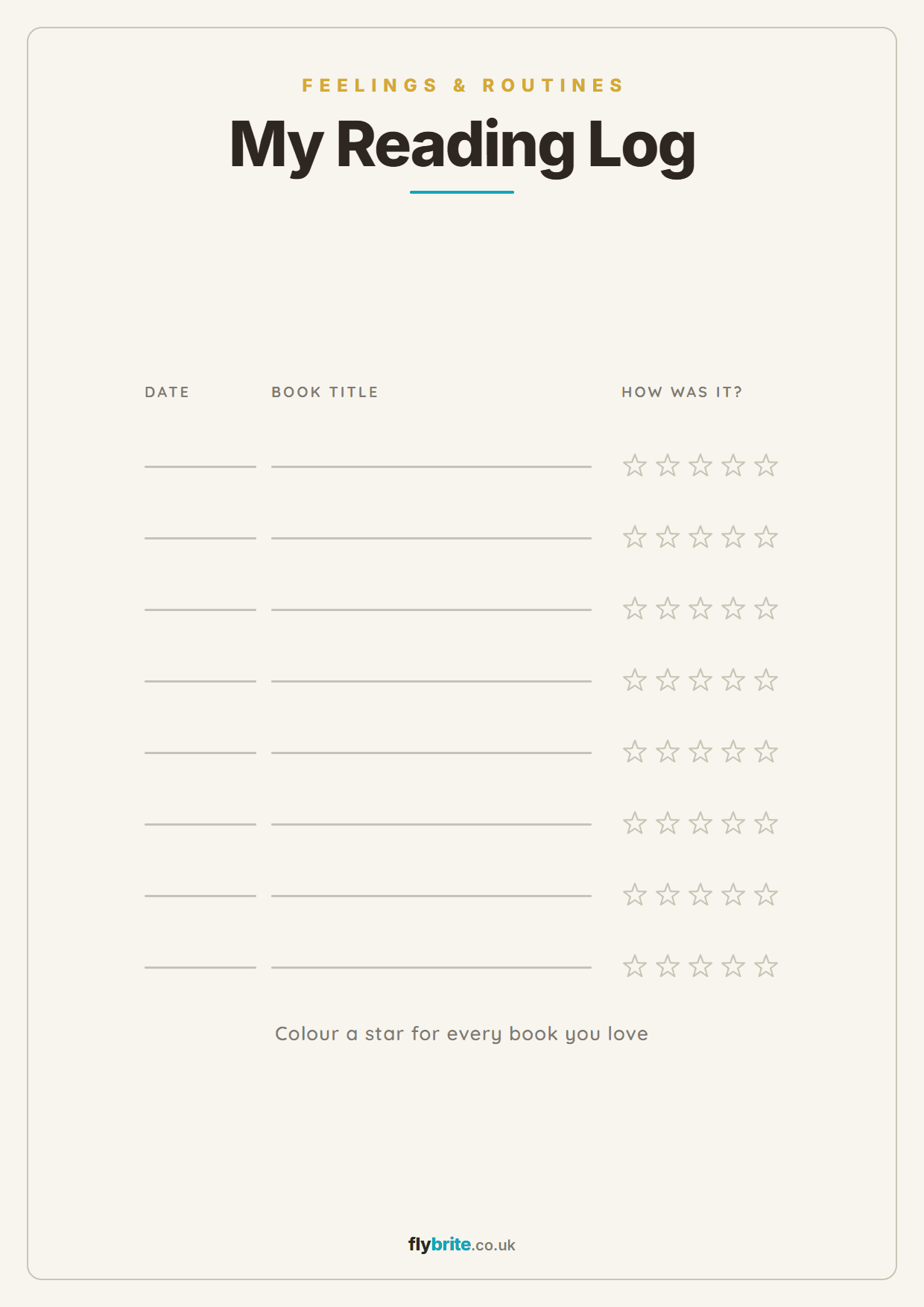
Note down every book you share and colour in a star for the ones you love.
 Type or write in
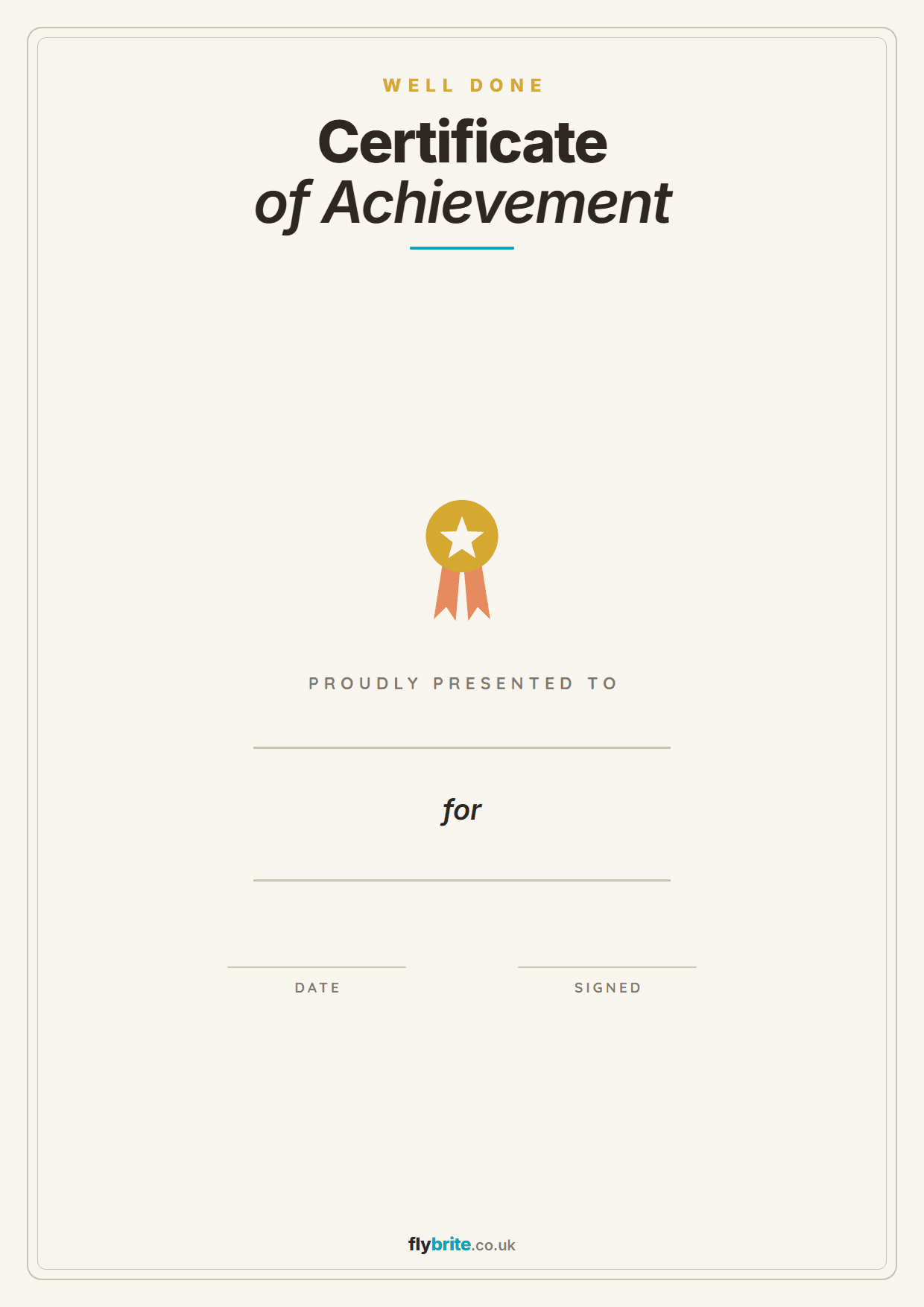
A wall-worthy certificate ready to fill in whenever someone does something brilliant.
Editable chore charts, routines, rotas, tokens and reward coupons that make helping out a game.
 Type or write in
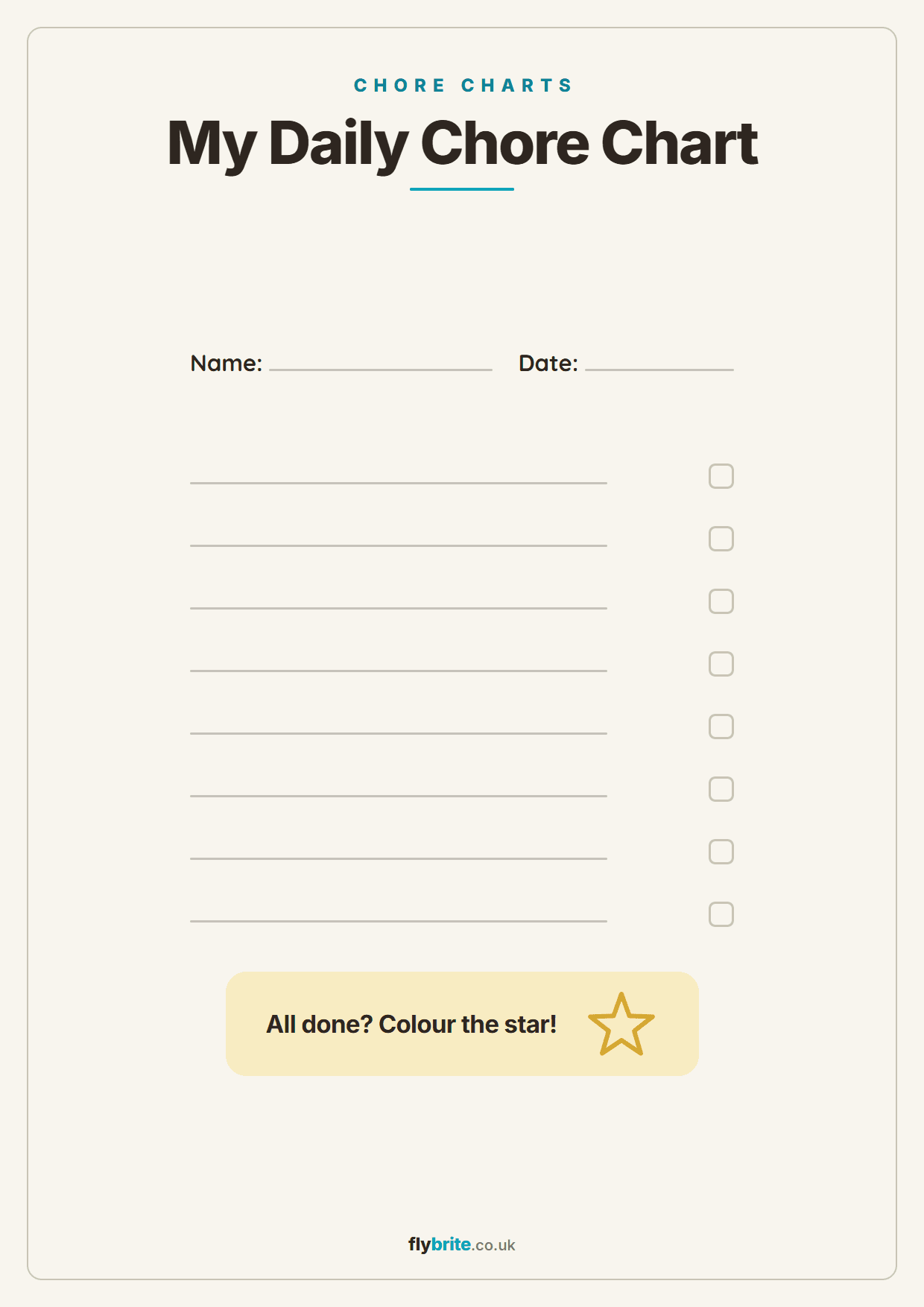
Eight write-in chores for the day, with a big golden star to colour when everything is done.
 Type or write in
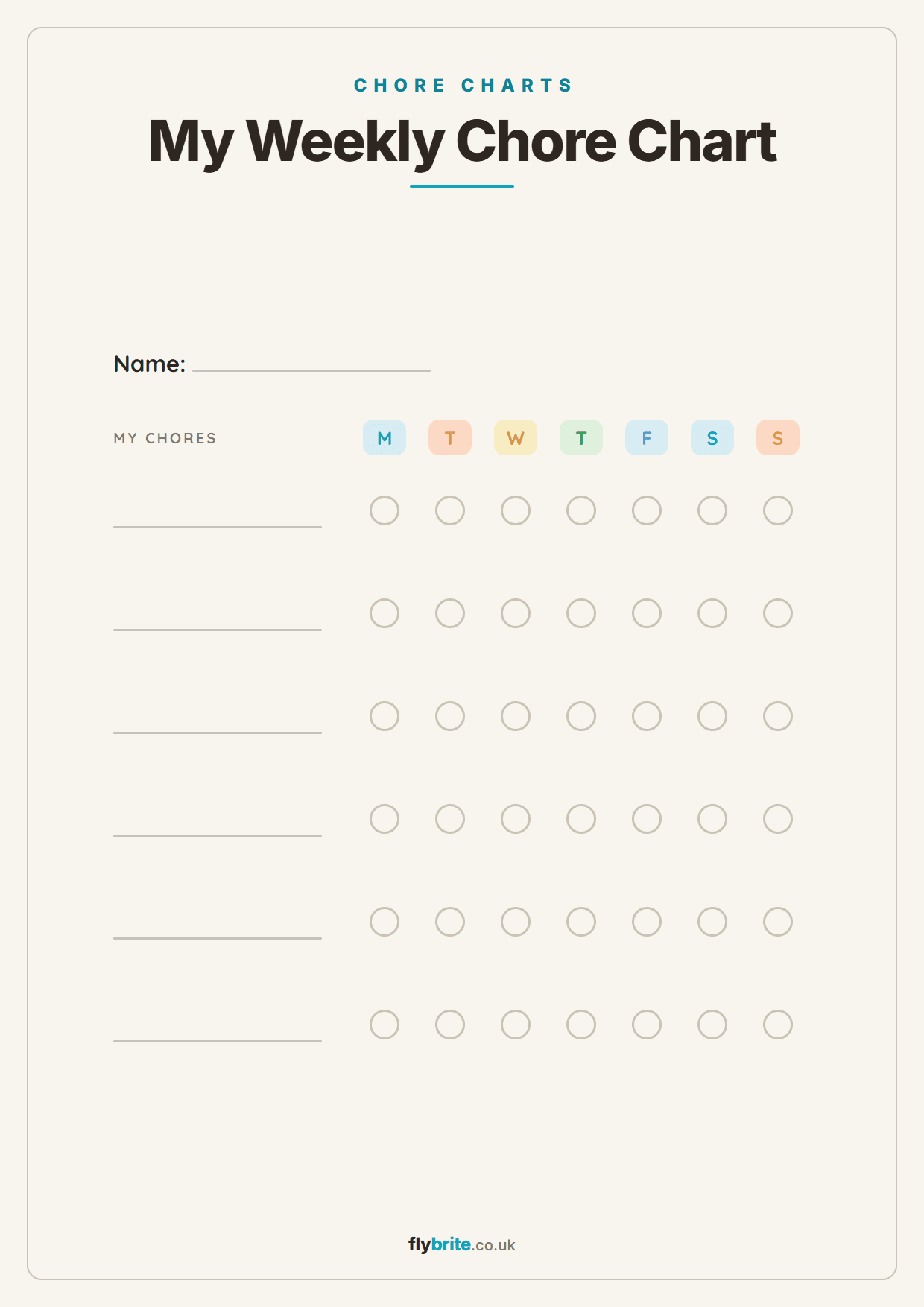
A whole week of chores at a glance, write them in on Monday and tick off every single day.
 Type or write in
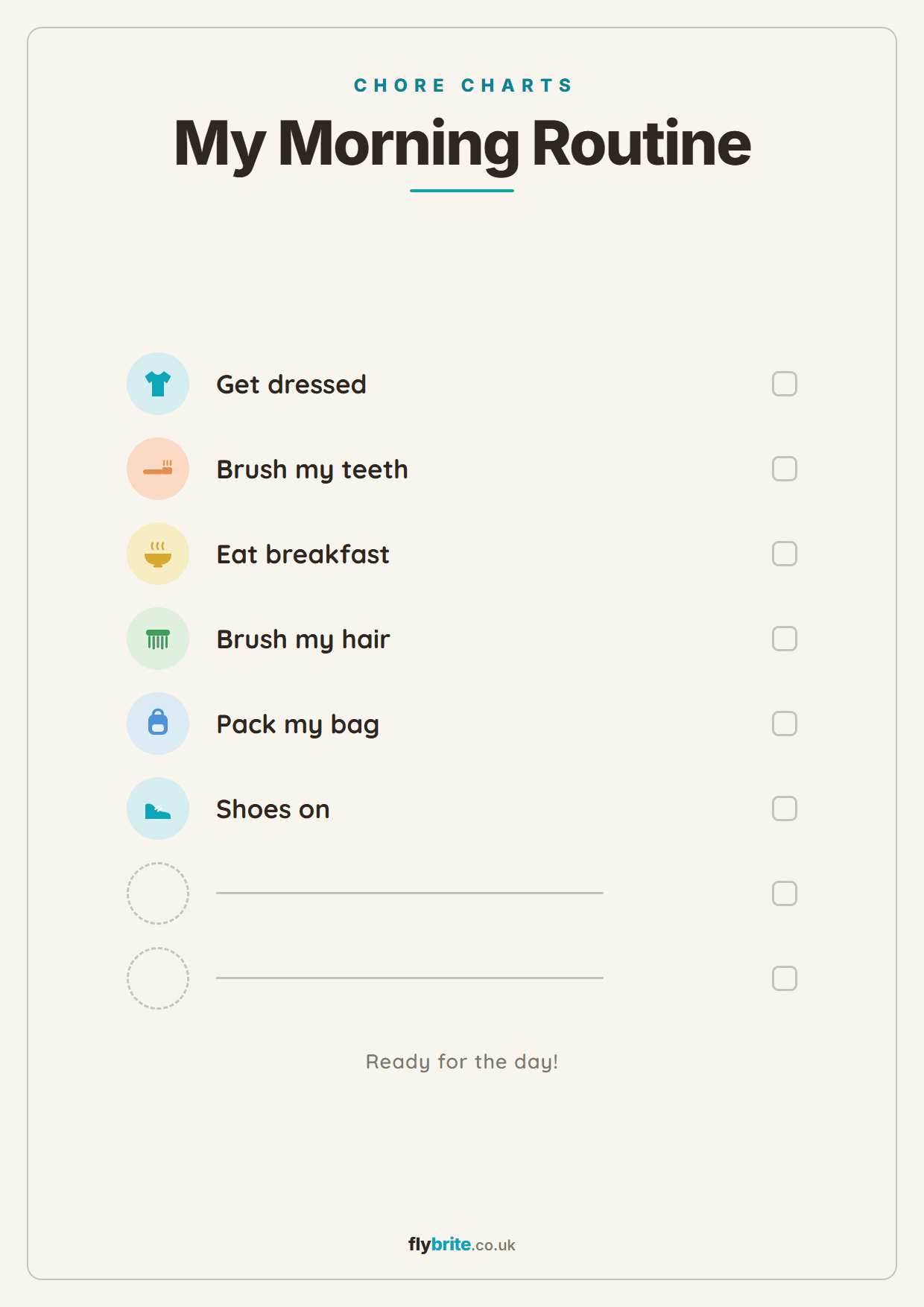
Six friendly picture steps to get everyone out of the door smoothly, plus two lines for your own.
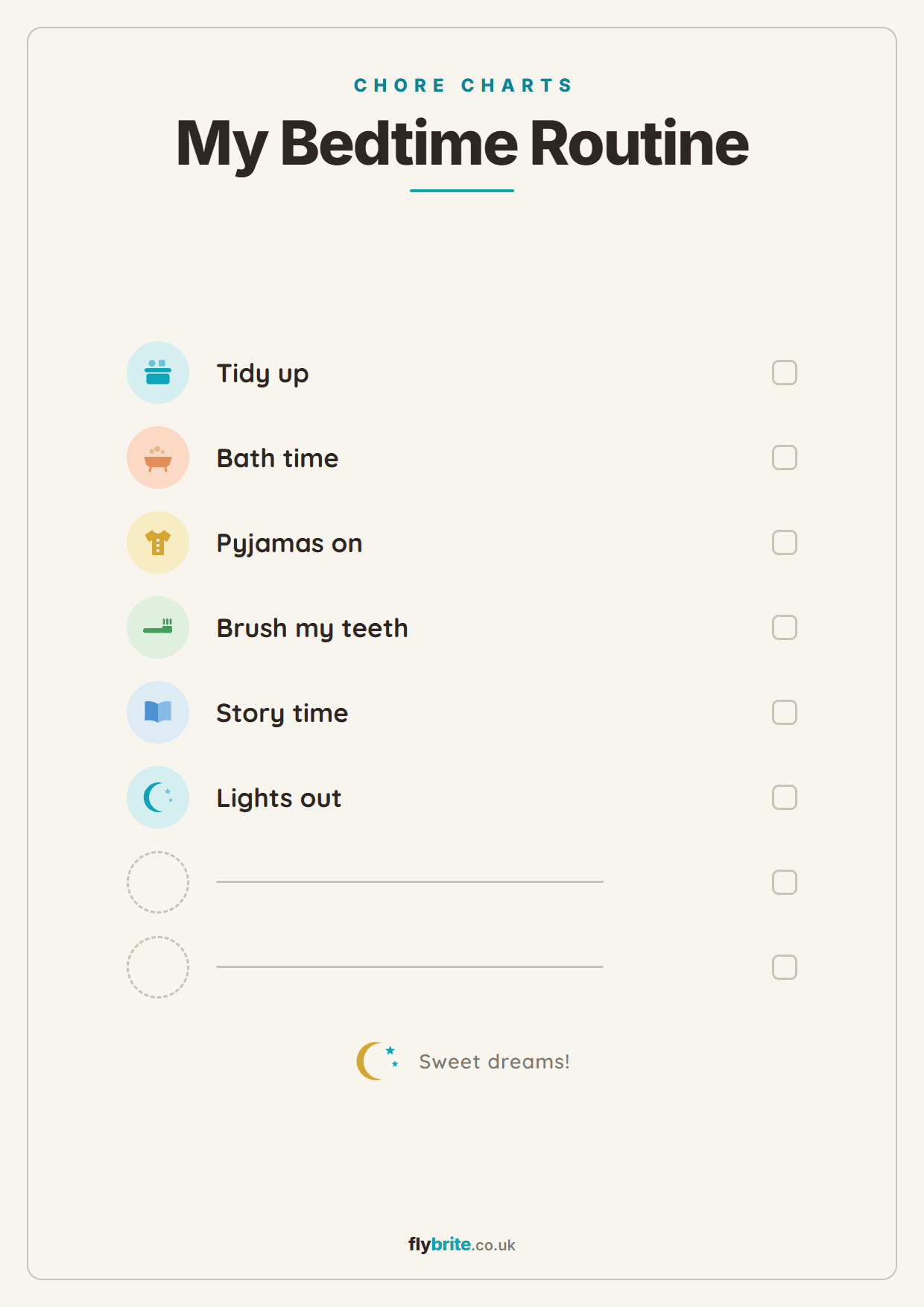 Type or write in
A calm picture path to bedtime, from tidy-up all the way to lights out and sweet dreams.
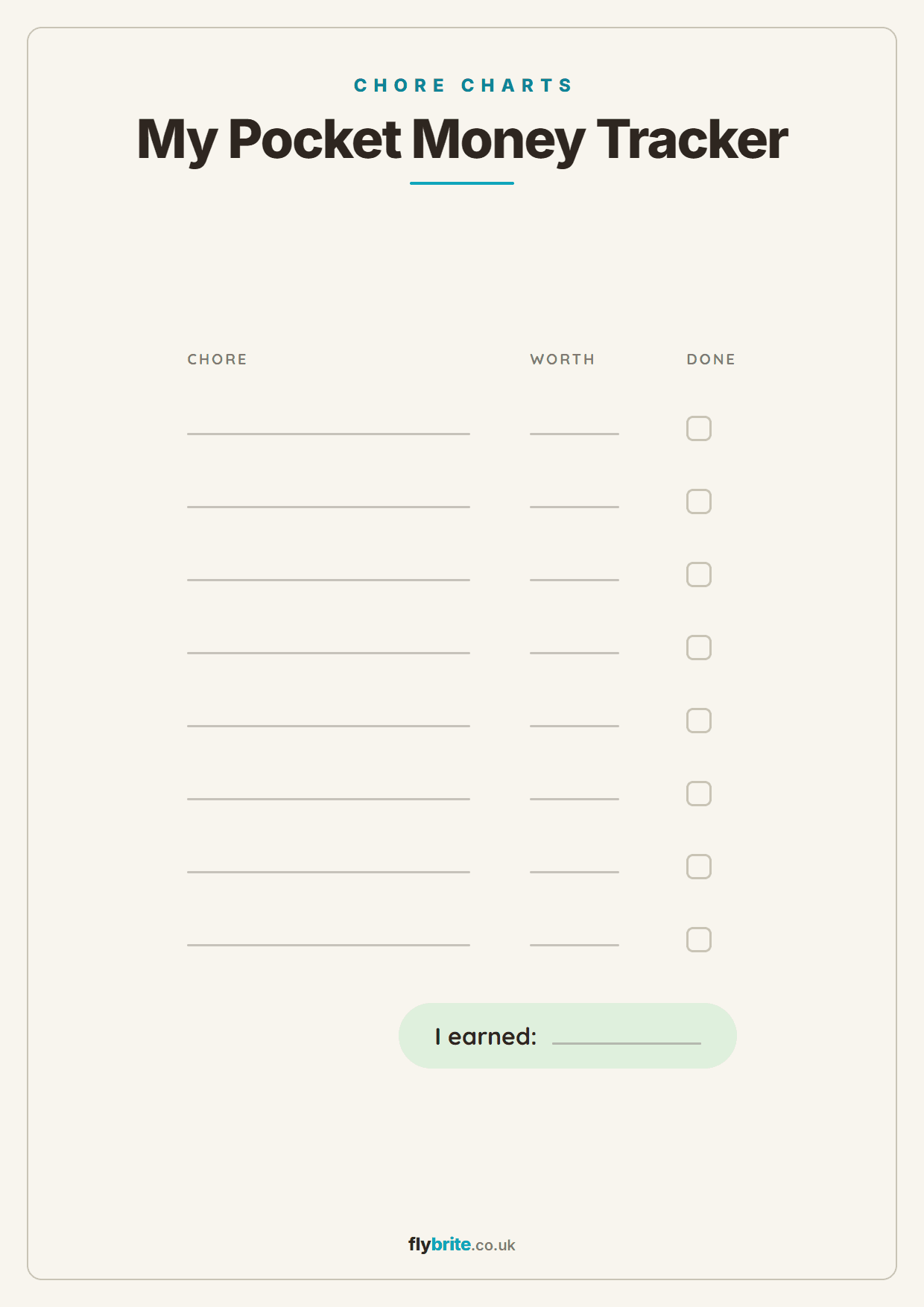 Type or write in
Write in each chore and what it is worth, tick it off, and watch the pocket money add up.
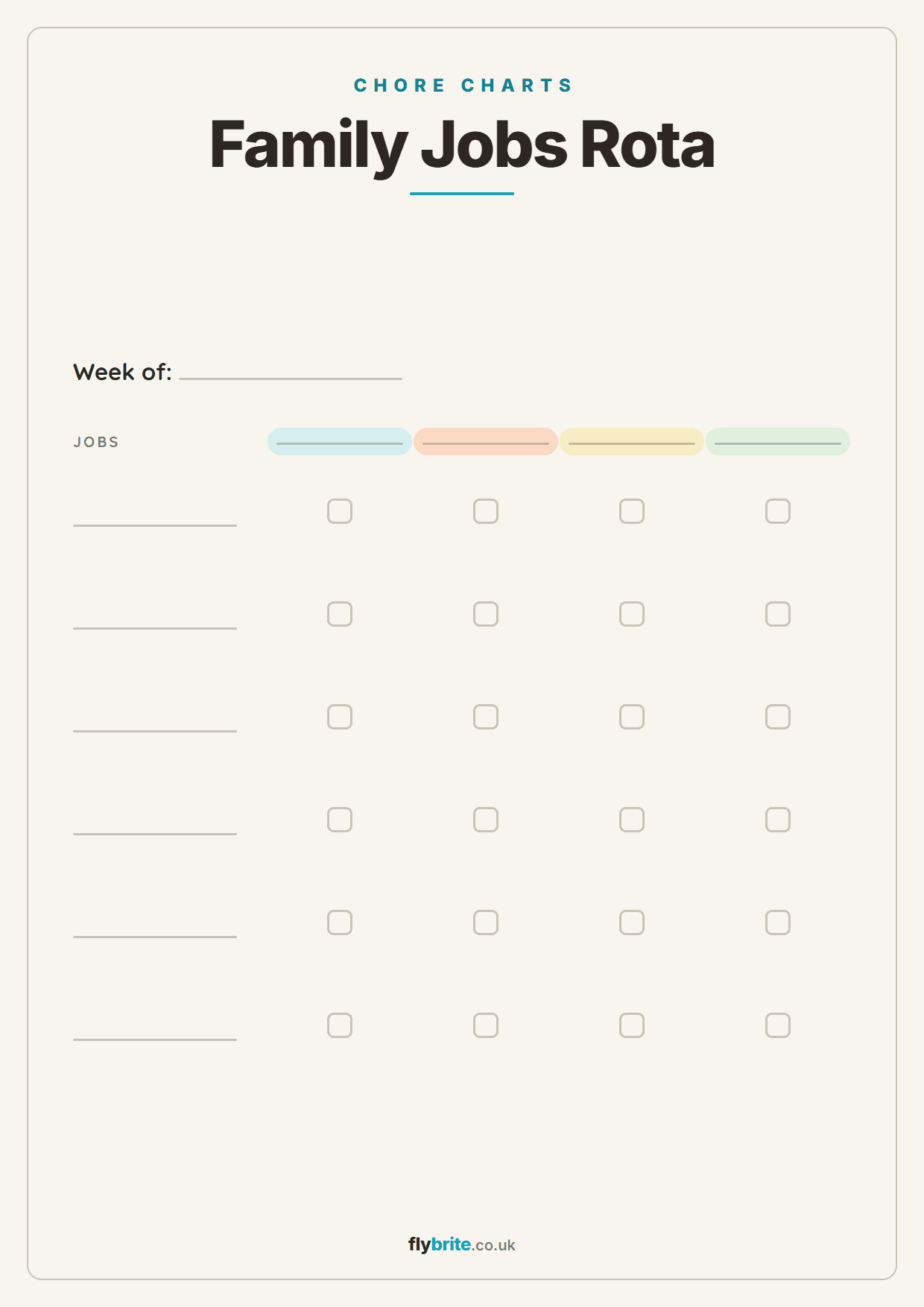 Type or write in
Everyone on one chart, write in the names and the jobs, then share the week out fairly.
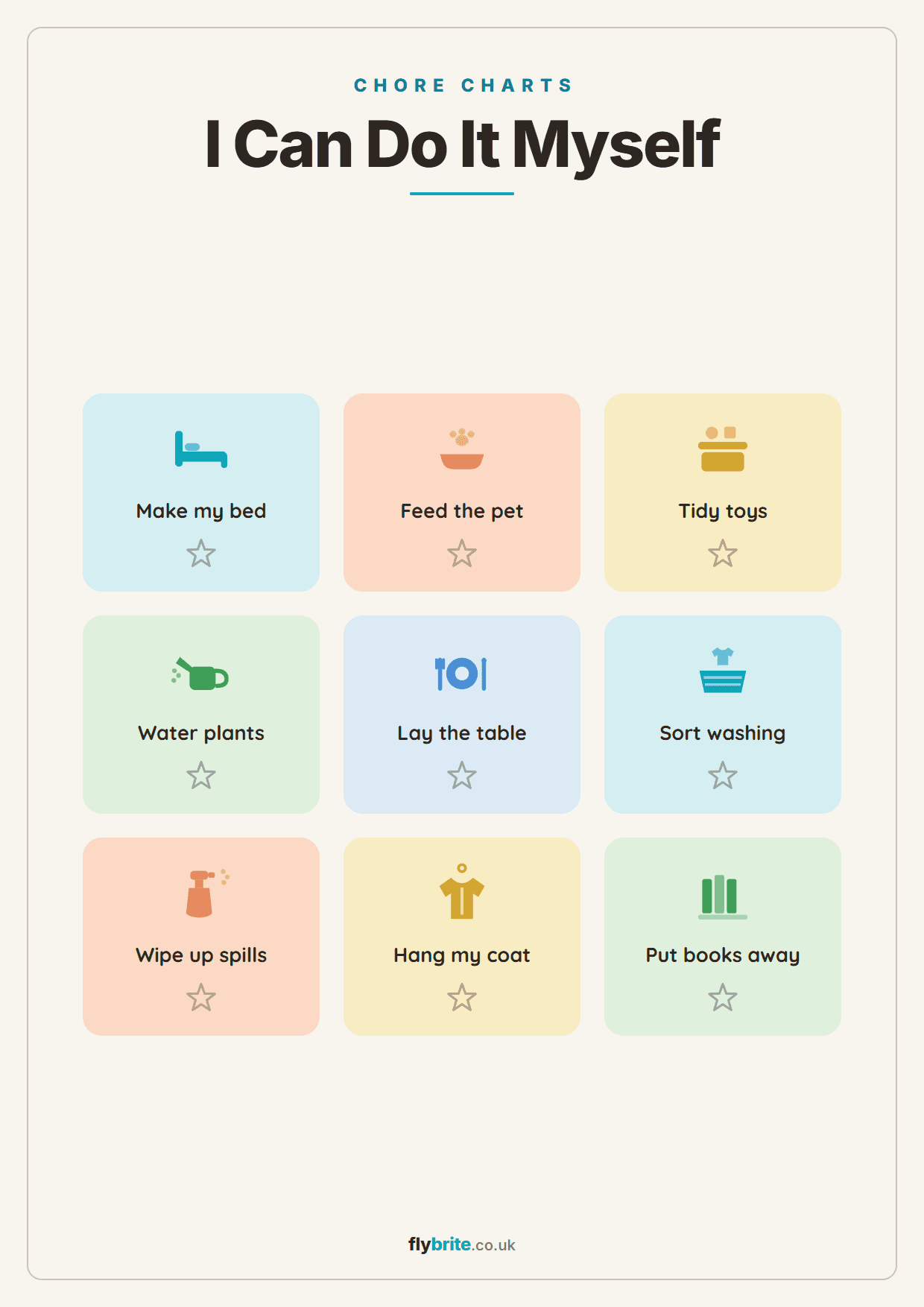 Type or write in
Nine little jobs children can proudly own, each with a star to colour in when it is done.
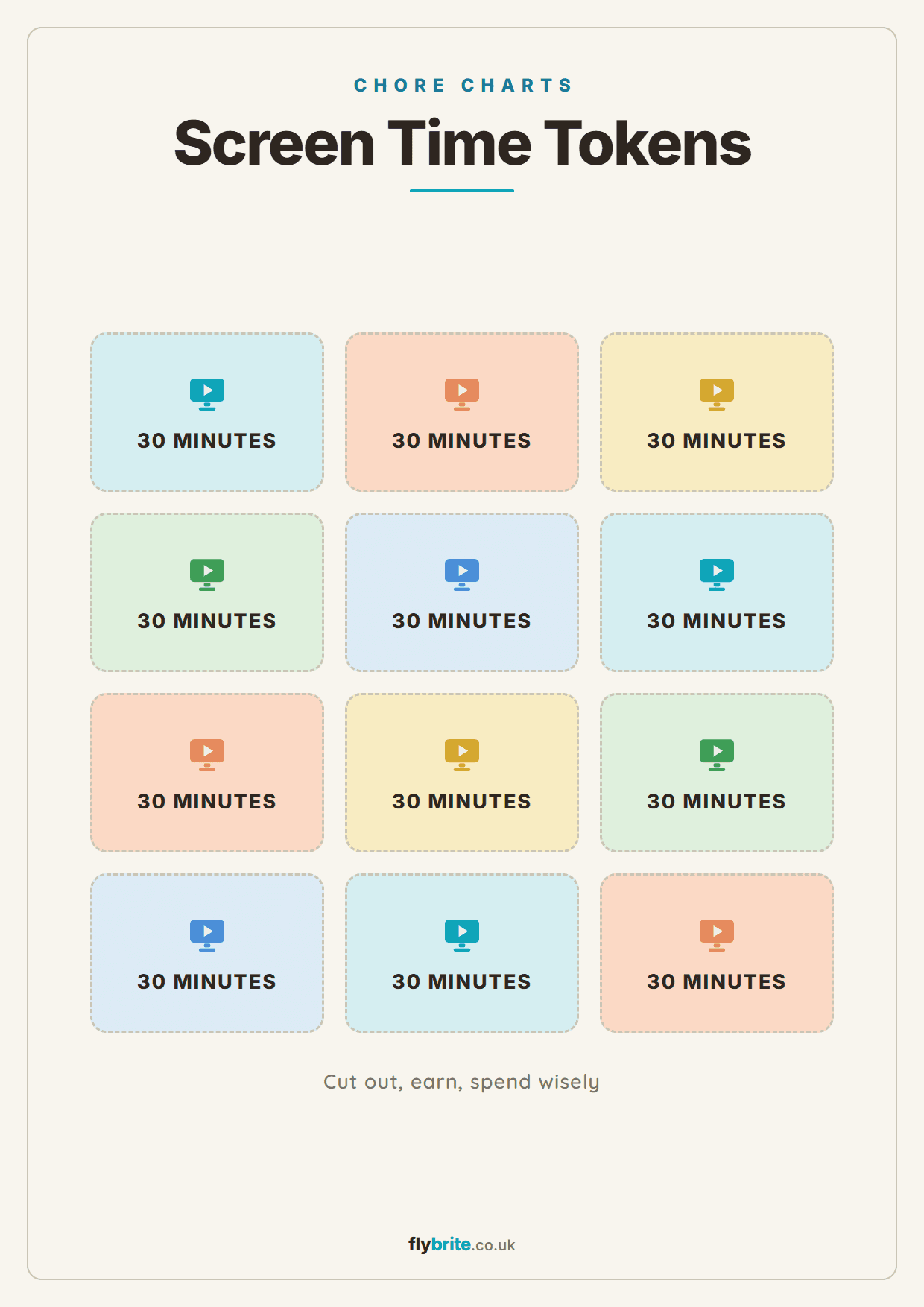
Twelve cut-out tokens that turn screen time into something earned, saved and spent wisely.
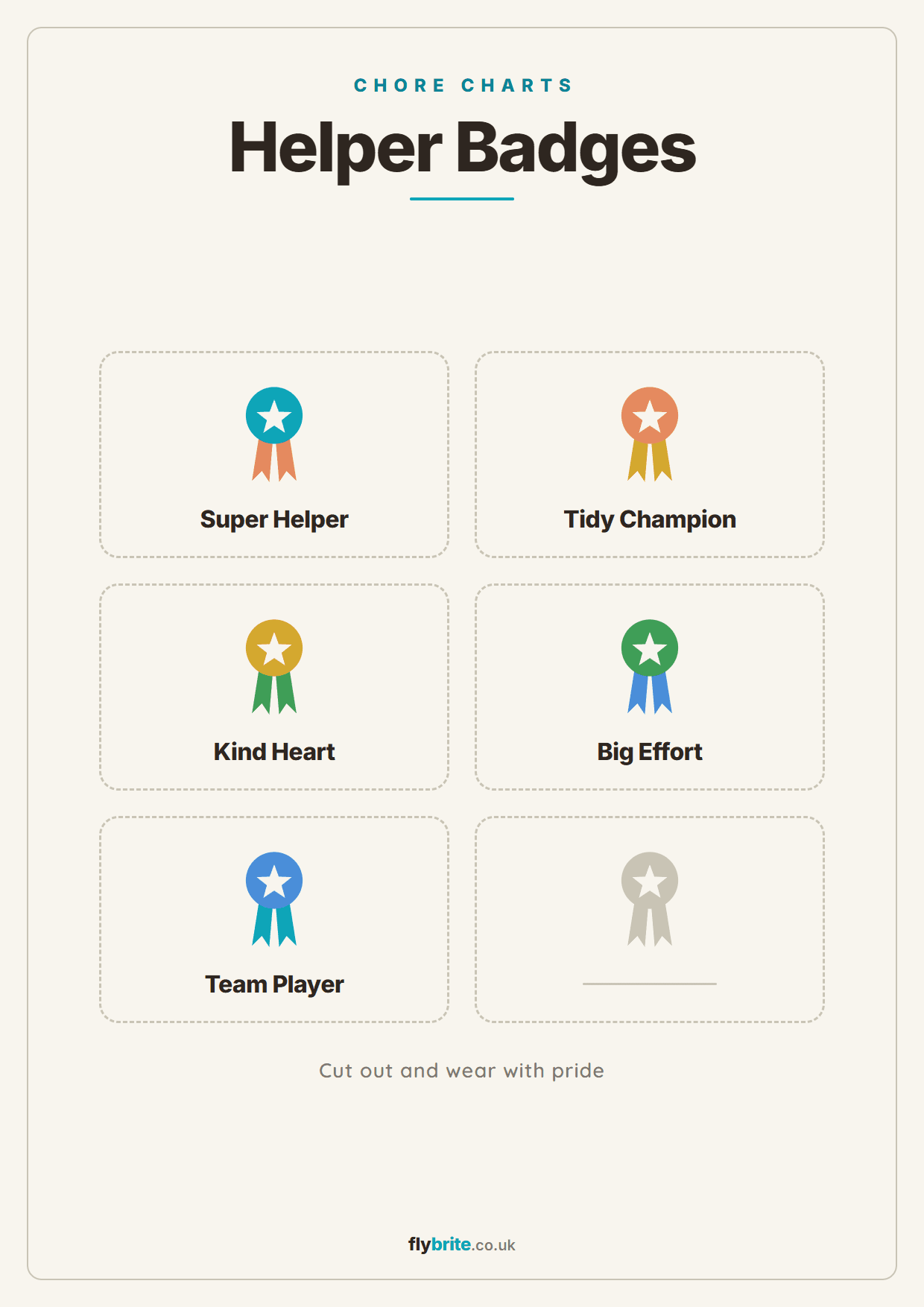 Type or write in
Six wearable badges to cut out and award whenever somebody helps out brilliantly.
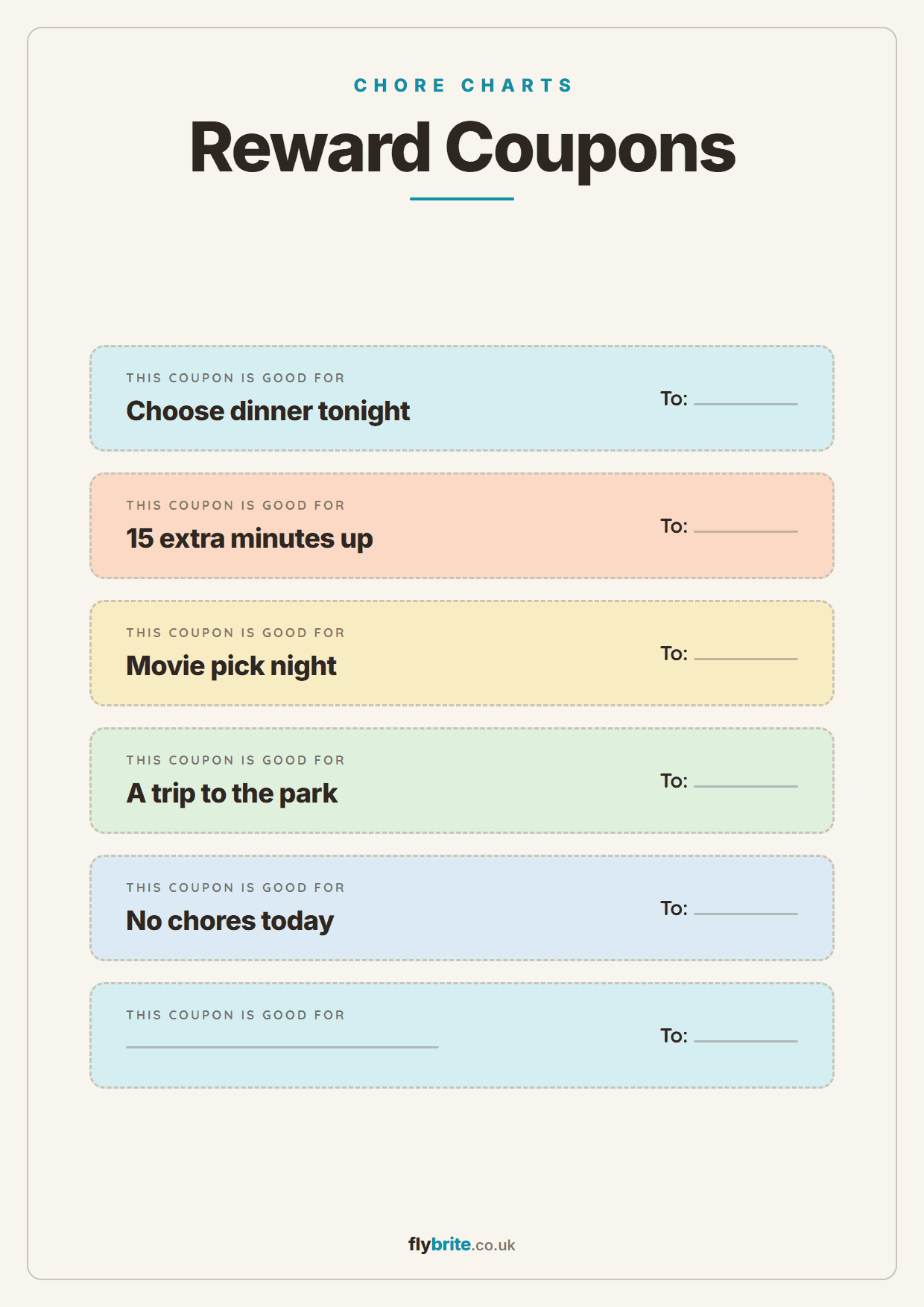 Type or write in
Six little coupons to fill in, cut out and trade for treats that mean more than money.
Ten friendly colour-by-number pictures, quiet-time favourites that sneak in number practice.
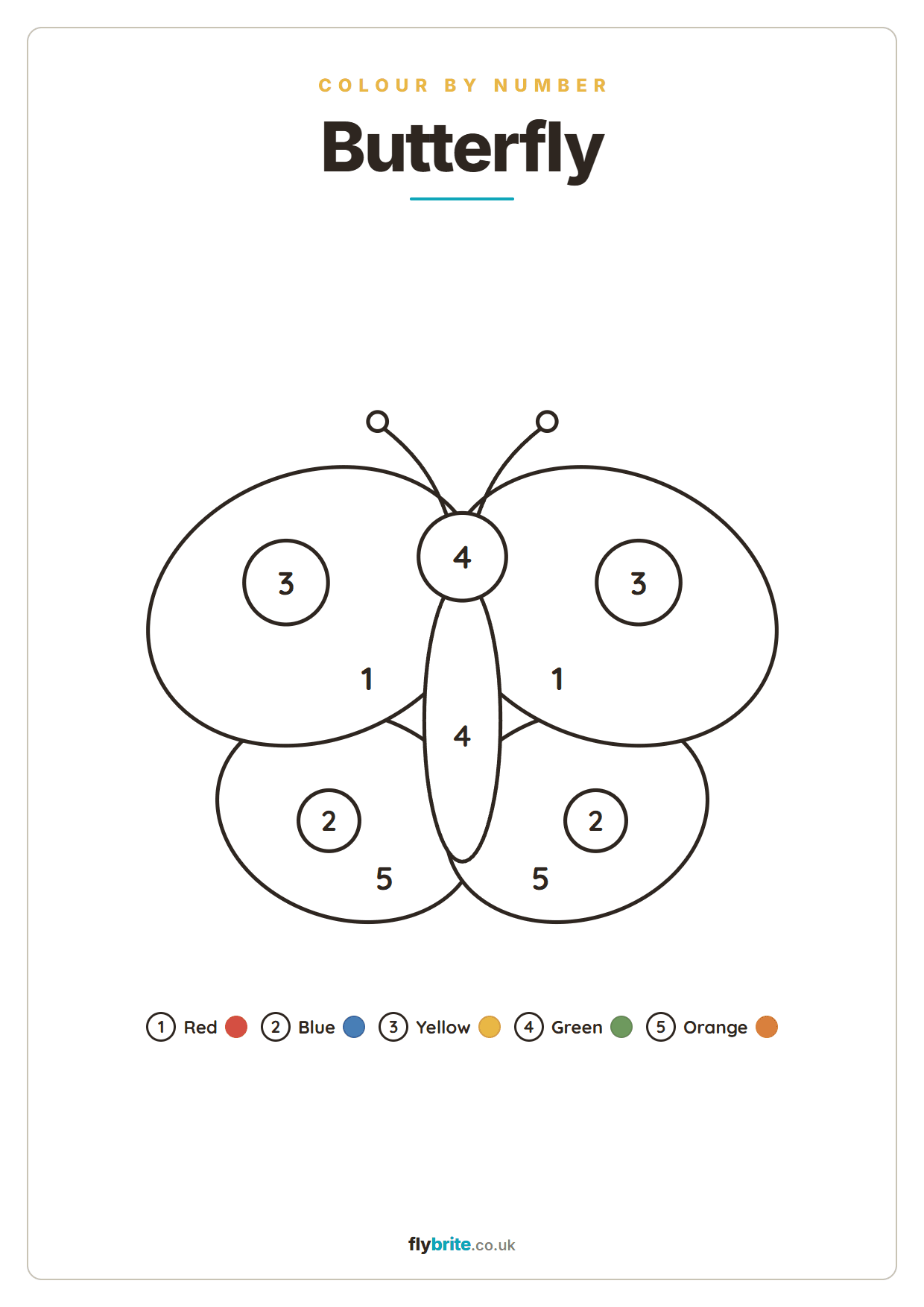
A big friendly butterfly with spotted wings, ready for a first splash of colour.

A happy little fish blowing bubbles above the waves, numbered for small hands.

A cheerful potted flower with six fat petals to fill in, one number at a time.
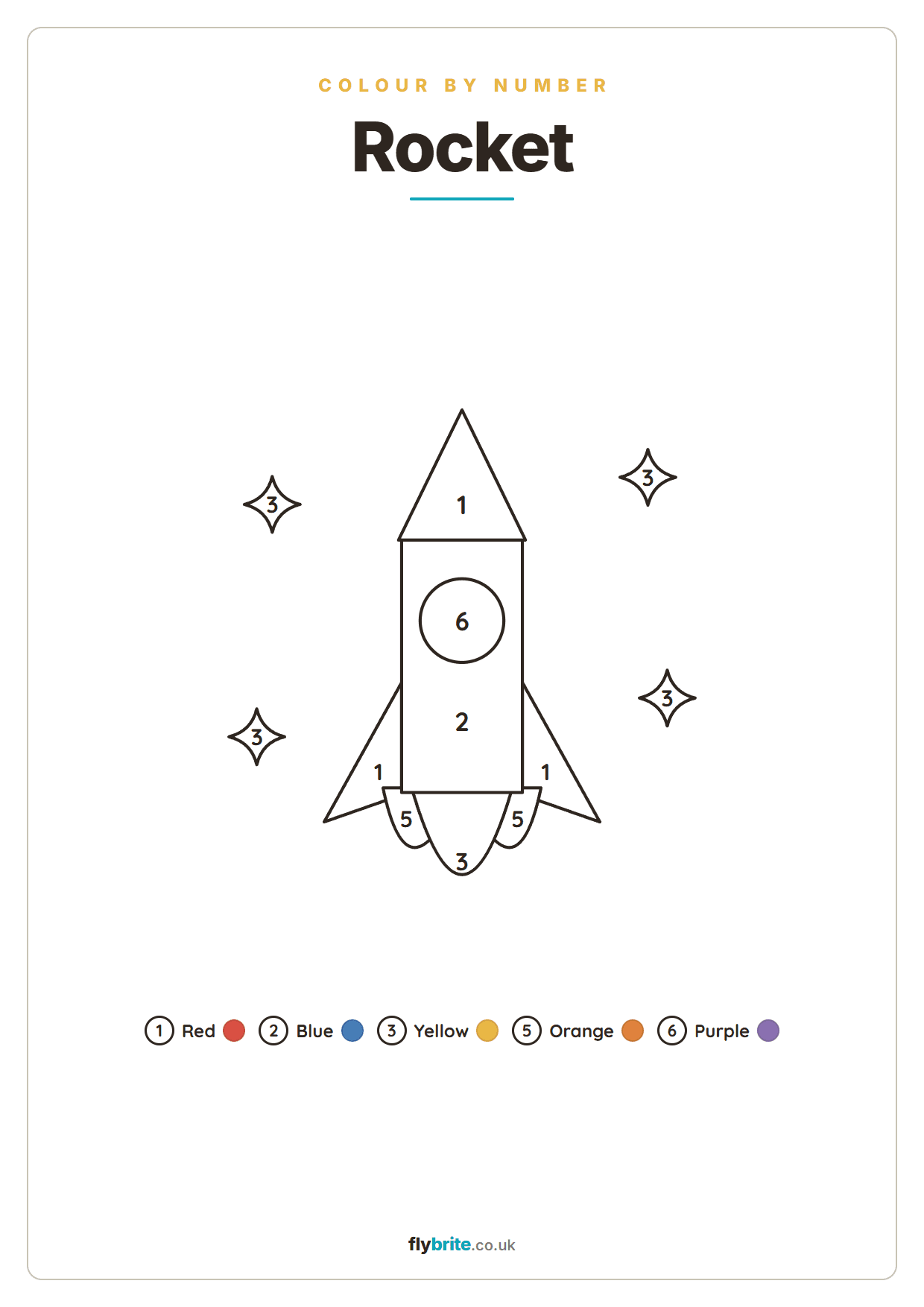
A rocket roaring for the stars, with flames and sparkles to bring to life.

A cosy little house under a smiling sun, waiting for its colours.

A little sailboat bobbing over the waves with the sun up high.
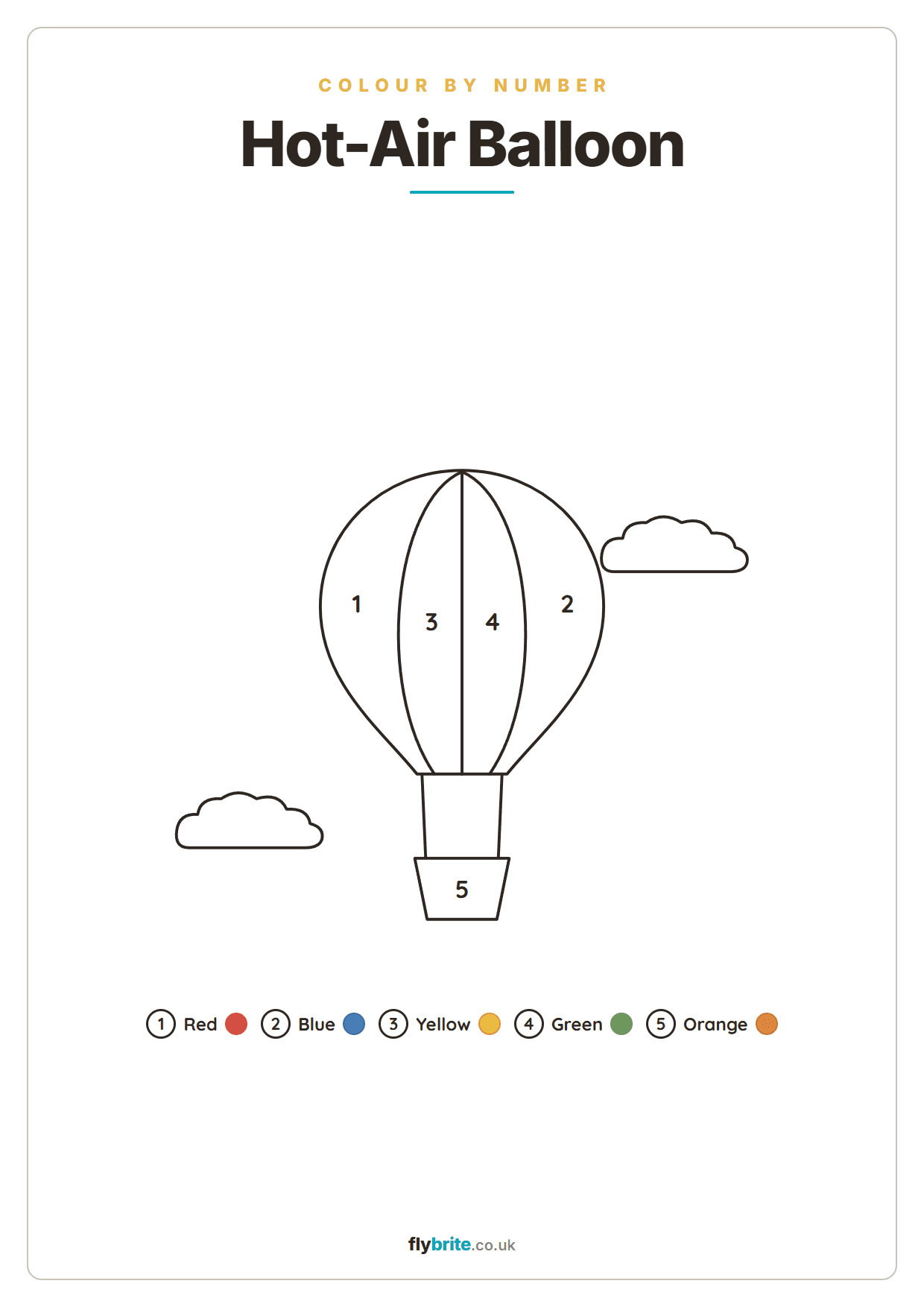
A hot-air balloon drifting through the clouds, one bright panel at a time.
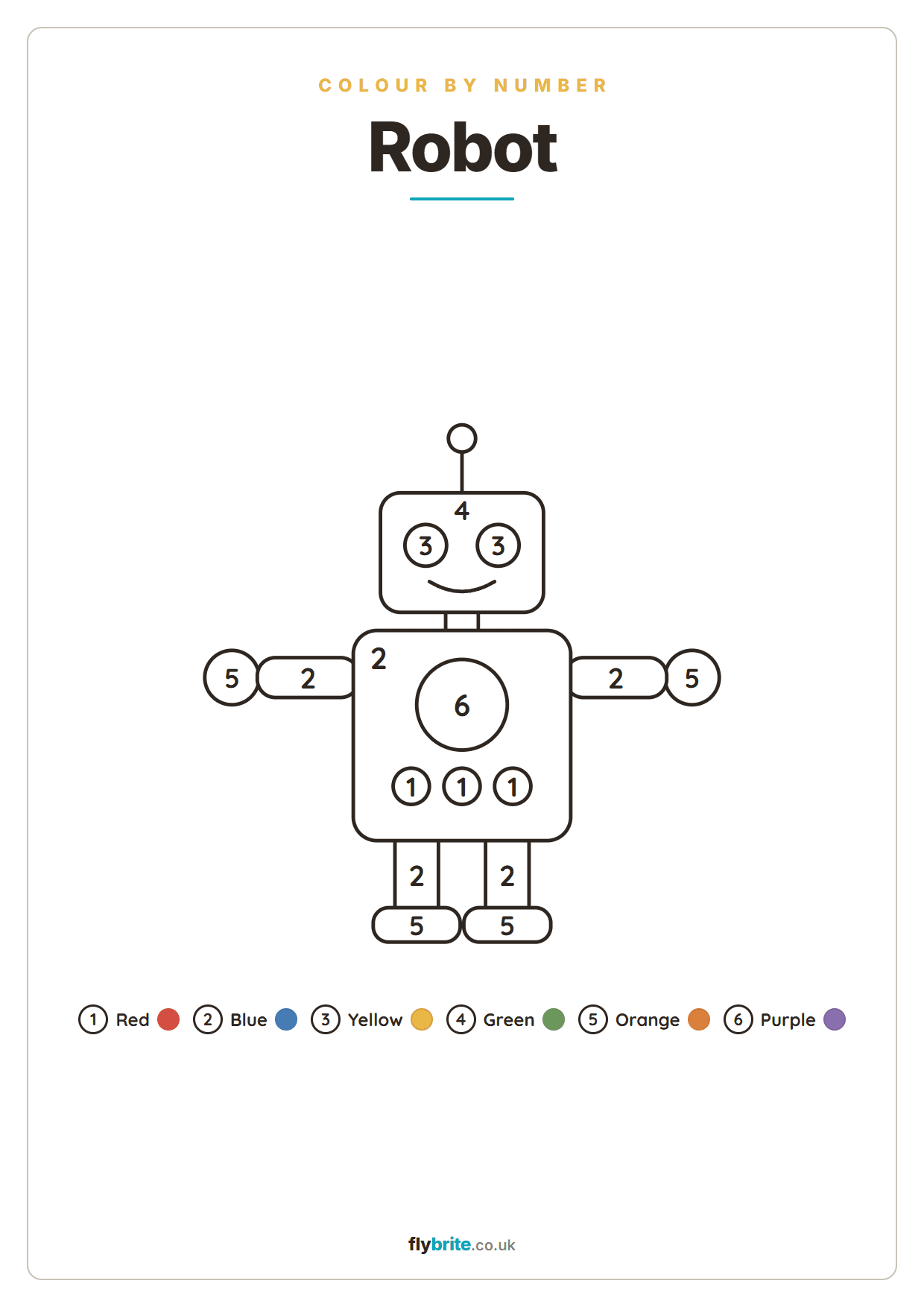
A friendly robot with dials and buttons that uses every colour in the key.
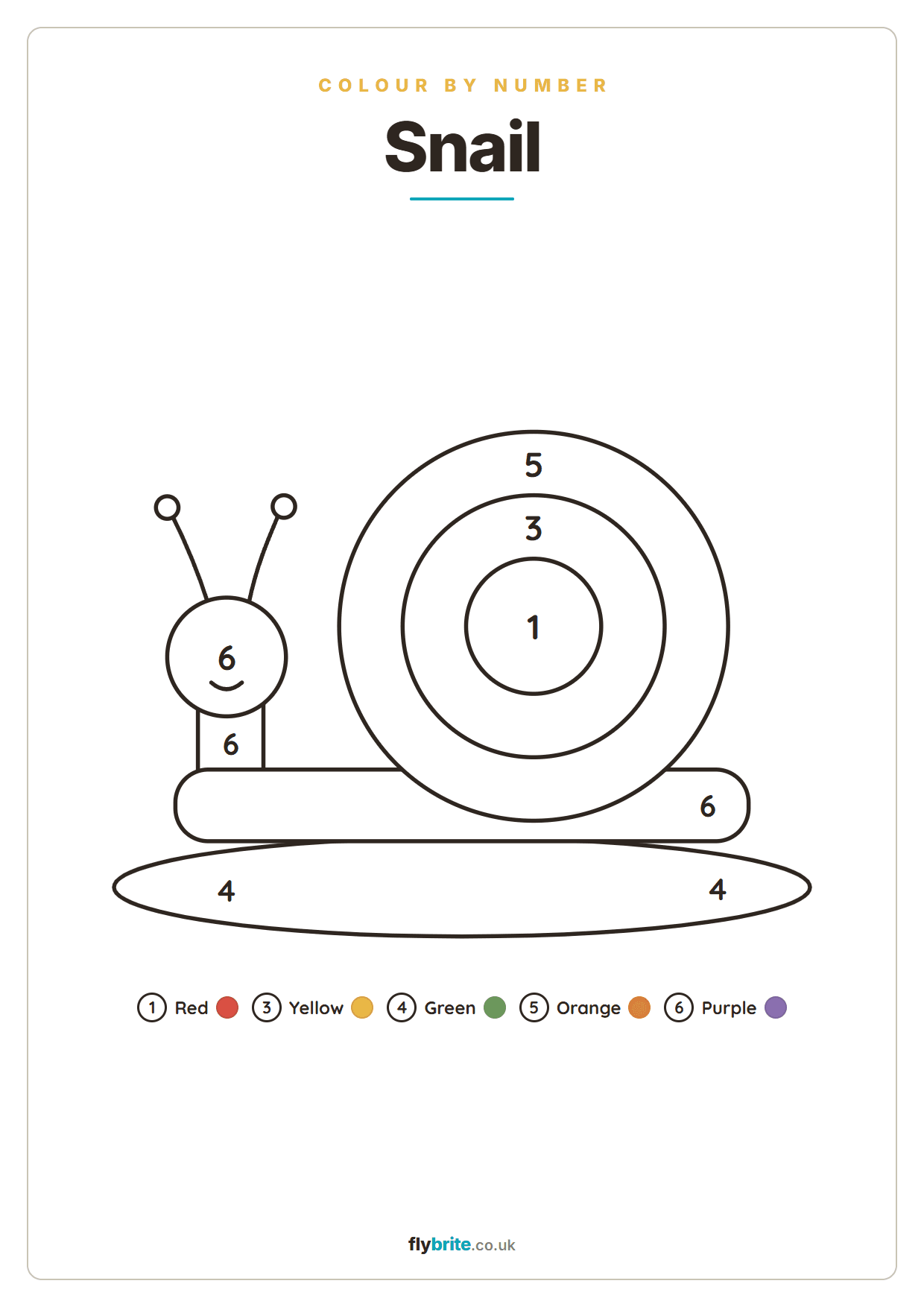
A slow, smiley snail with a swirly shell to colour ring by ring.

A big four-band rainbow with fluffy clouds and falling raindrops.
Ten roar-some colour-by-number dinosaurs, from T-Rex to a hatching nest.

A big friendly T-Rex with stomping legs and back spikes, ready to roar into colour.
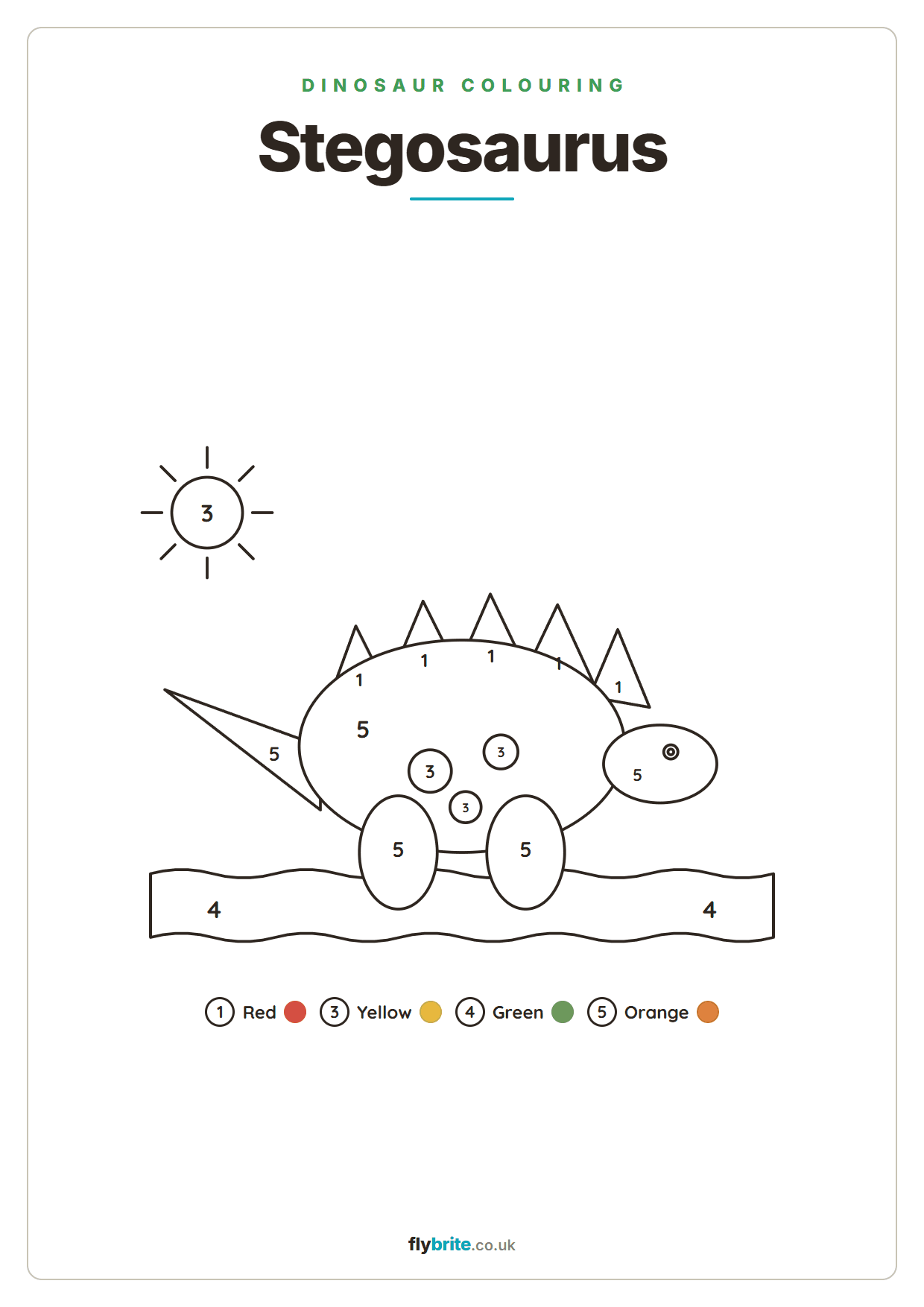
A gentle Stegosaurus with a row of pointy back plates to colour one by one.
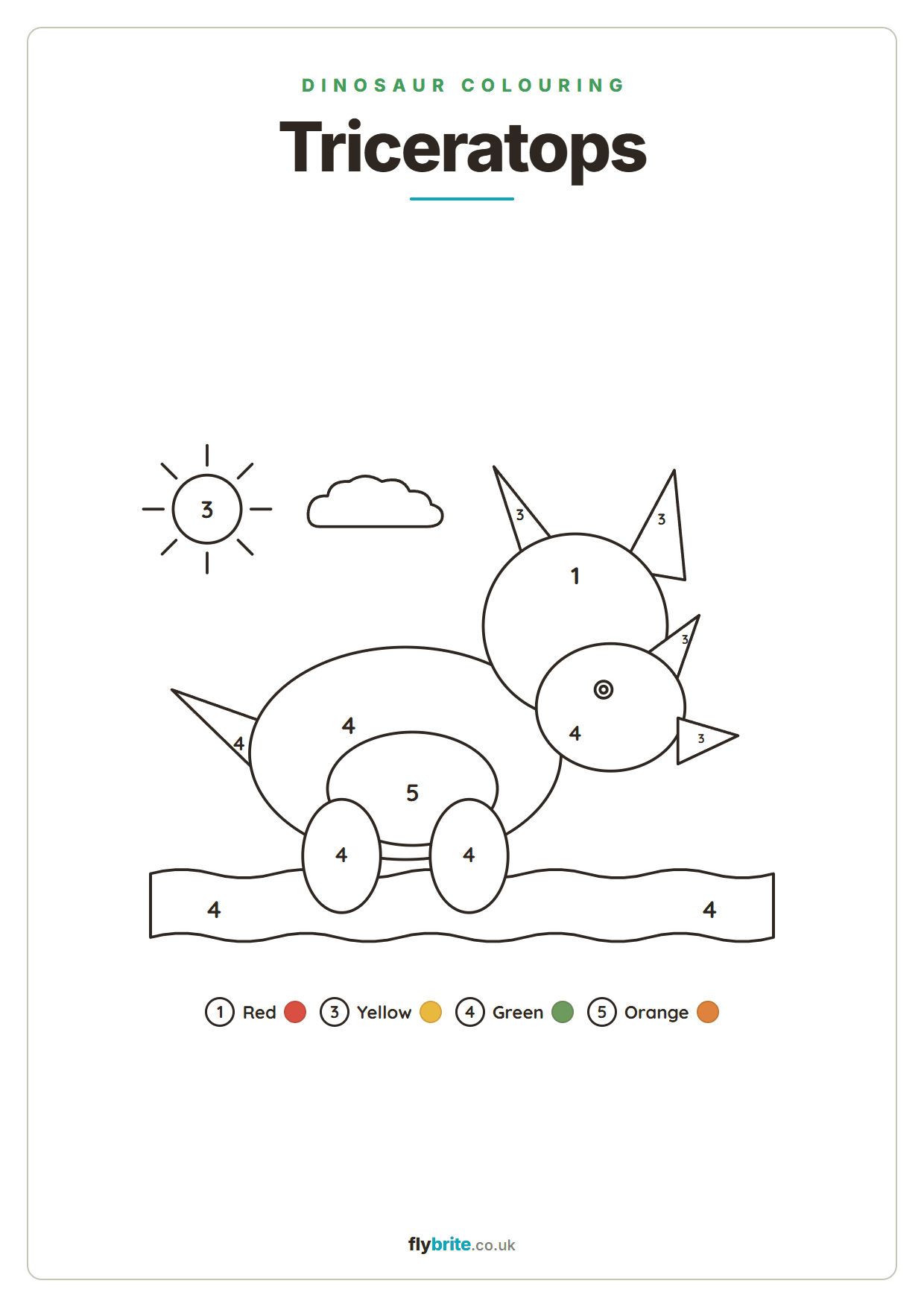
A smiling Triceratops with a great big frill and three horns to bring to life.
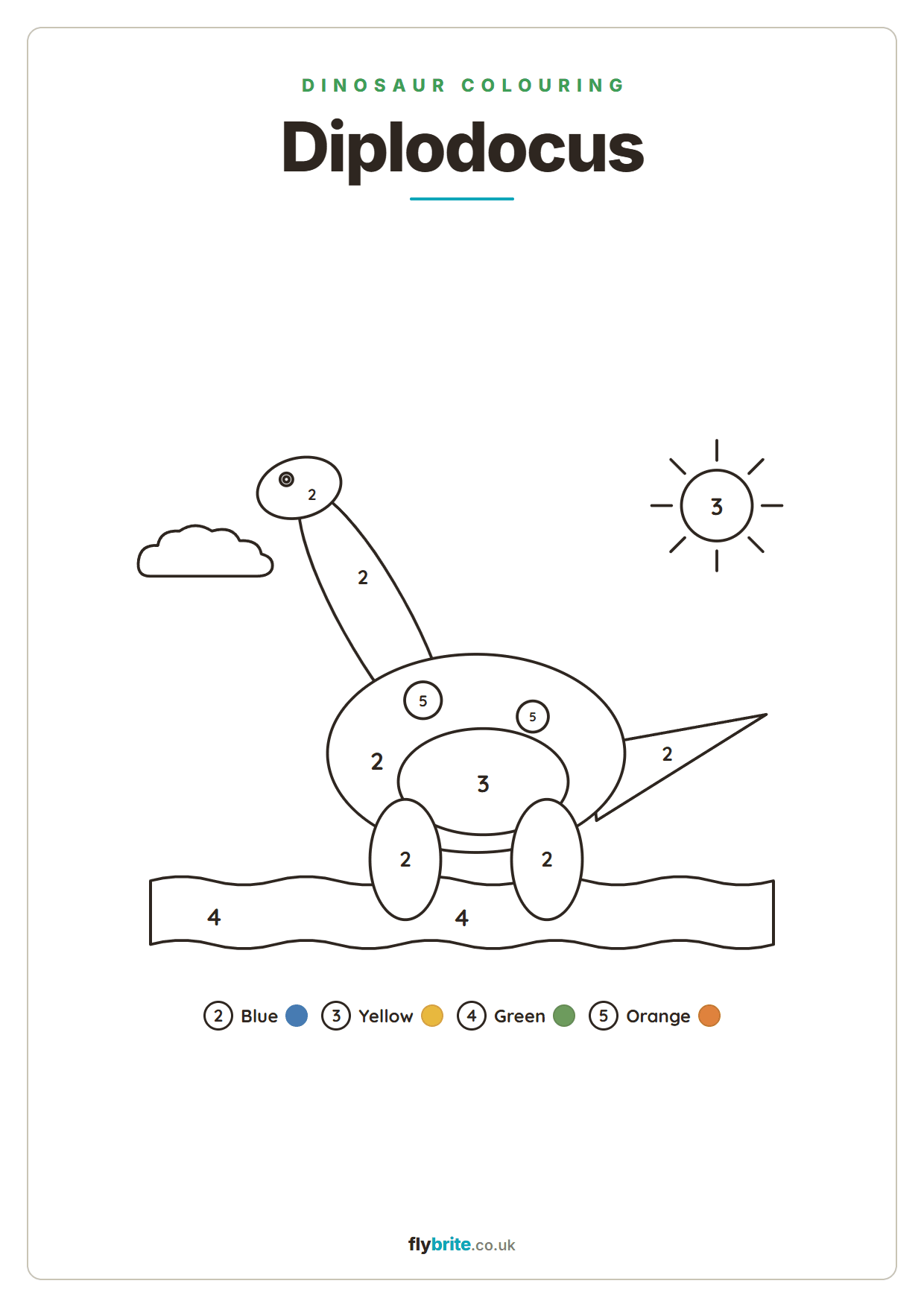
A long-necked Diplodocus reaching for the clouds, numbered for small hands.

A soaring Pterodactyl gliding over the waves on wide, wonderful wings.
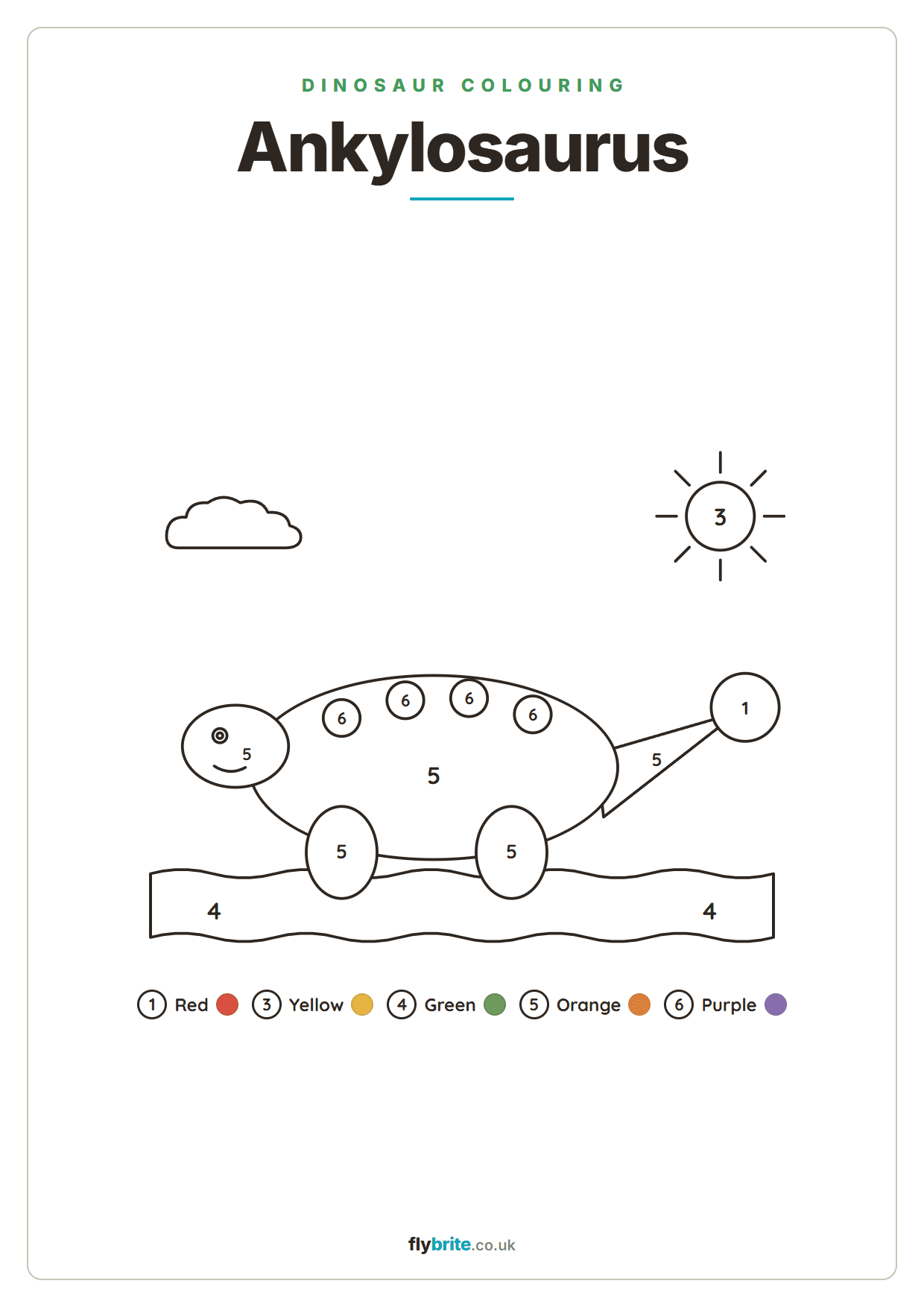
A sturdy Ankylosaurus with bumpy back armour and a mighty club tail.
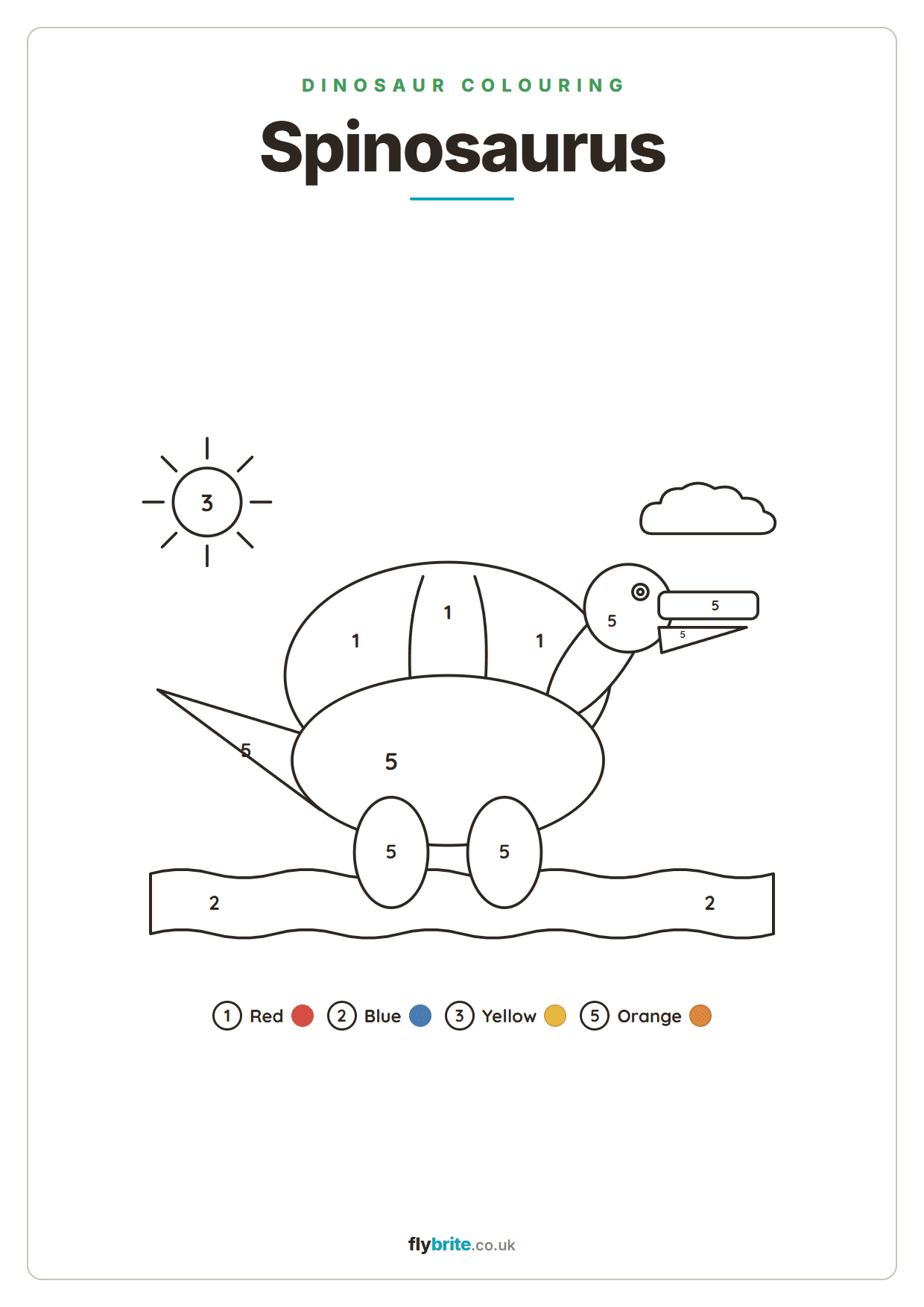
A splashy Spinosaurus by the water, showing off the huge sail on its back.

A speedy Velociraptor with stripes down its back, dashing across the page.

A cosy nest of spotty dinosaur eggs, with one little hatchling saying hello.

A rumbling volcano, a swaying palm tree and a little dinosaur out for a wander.
Ten friendly colour-by-number animals, from a proud lion to a spouting whale.

A big smiley lion with a mane of petals to colour, one number at a time.
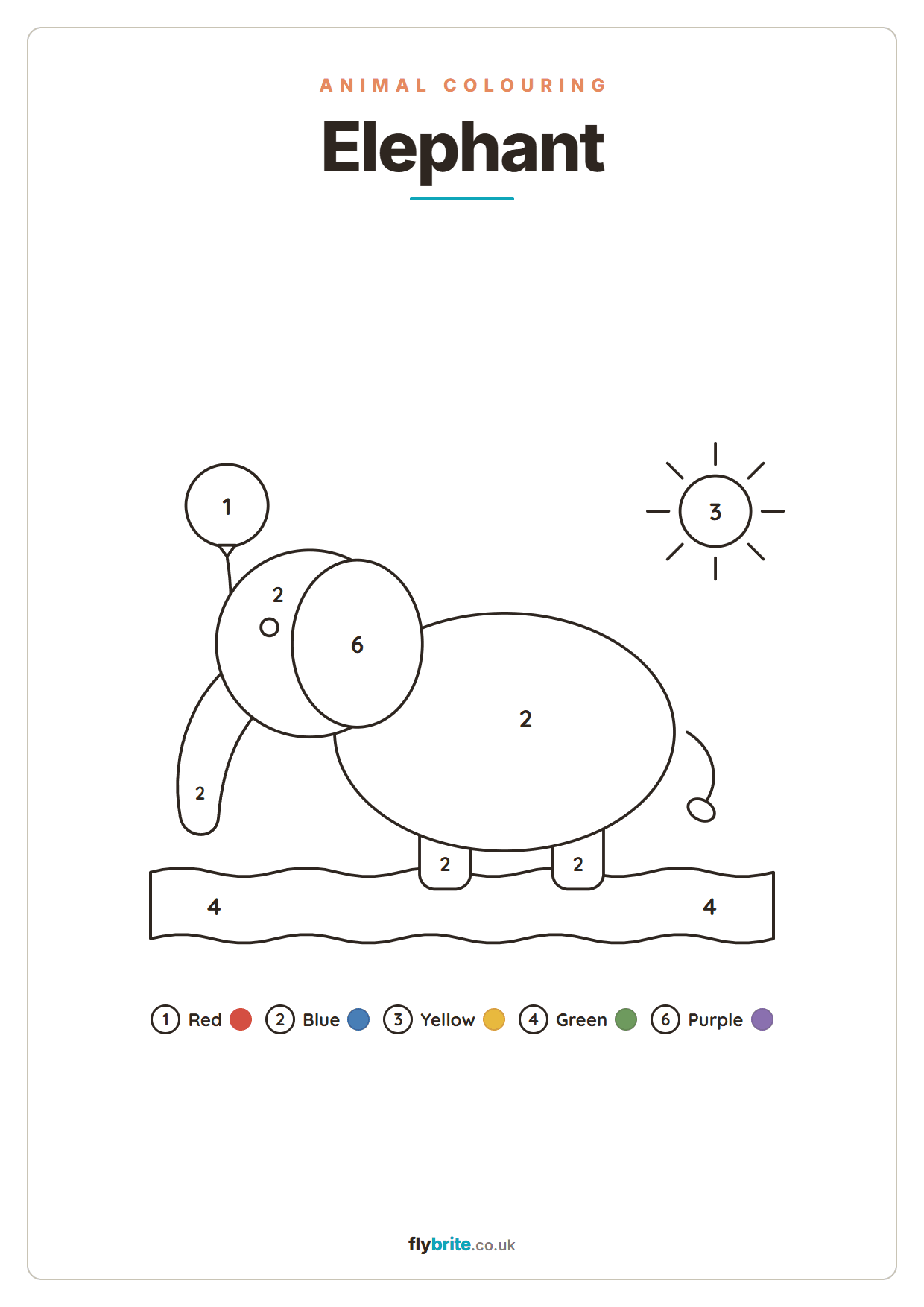
A gentle elephant holding a balloon on a string, numbered for small hands.

A tall friendly giraffe with patch spots to fill in and a little bird to greet.
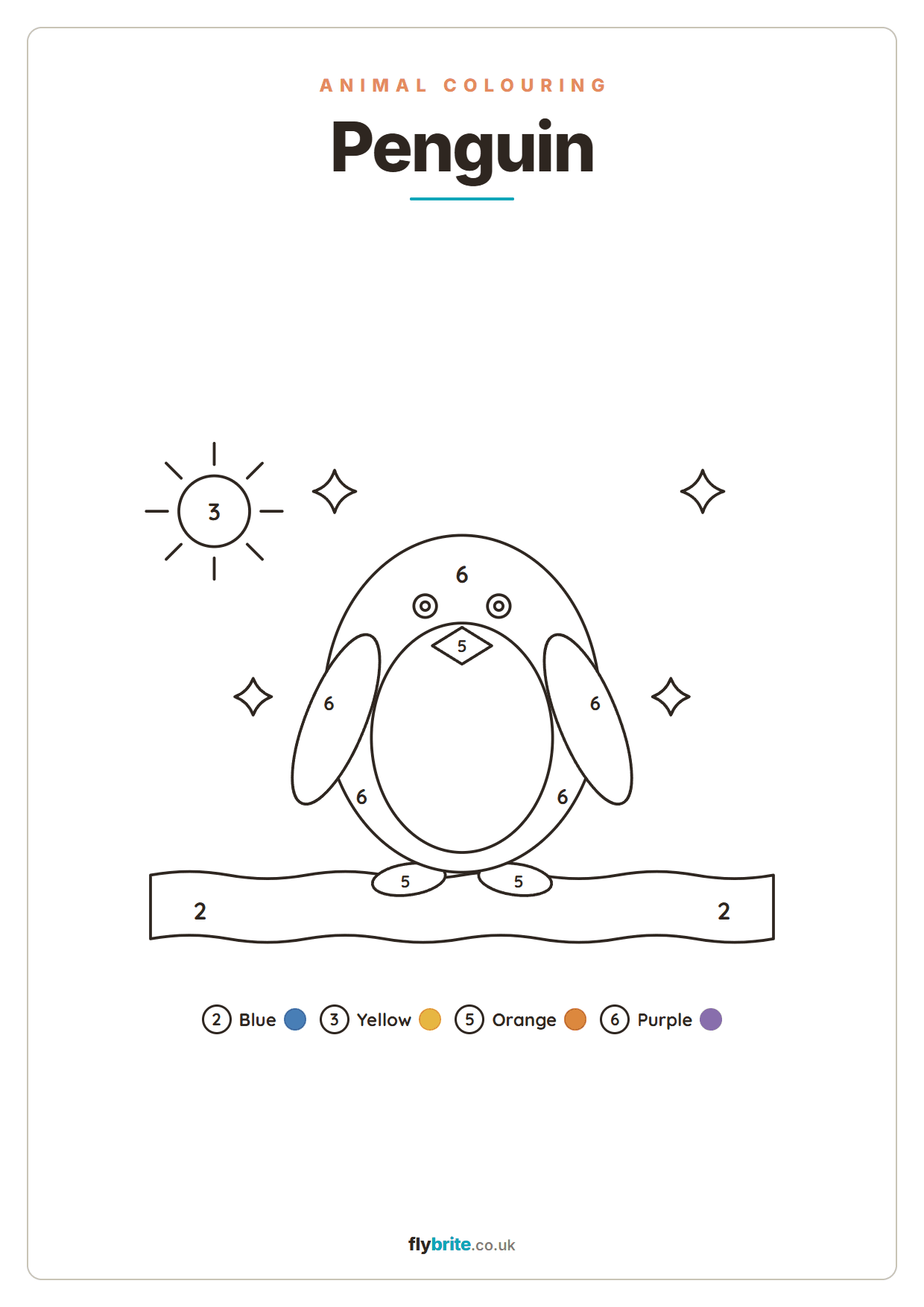
A round happy penguin on the ice with snowflakes sparkling all around.
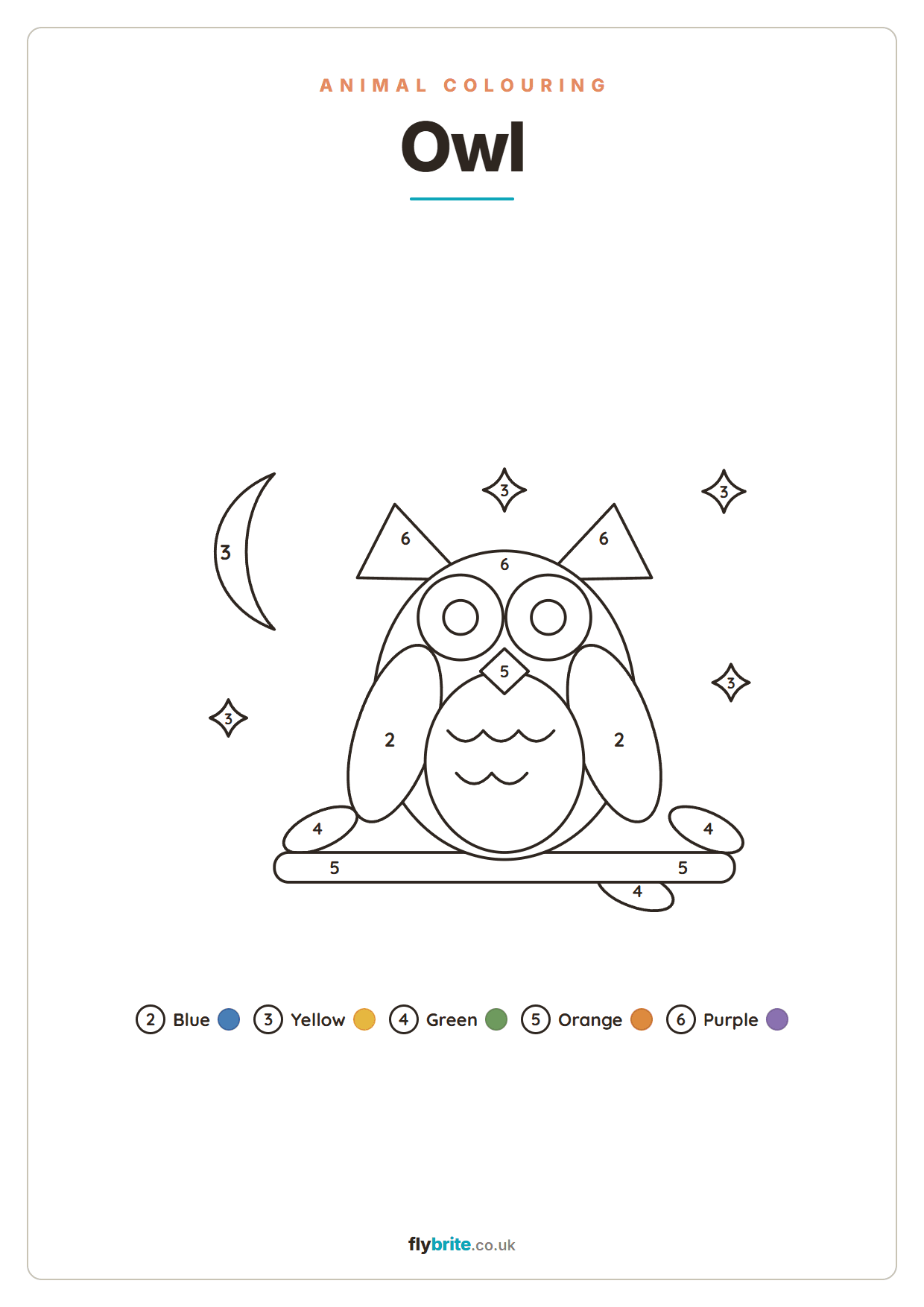
A wide-eyed owl on a leafy branch under the moon and stars.

A cheeky sitting fox with a swishy tail and daisies in the meadow.
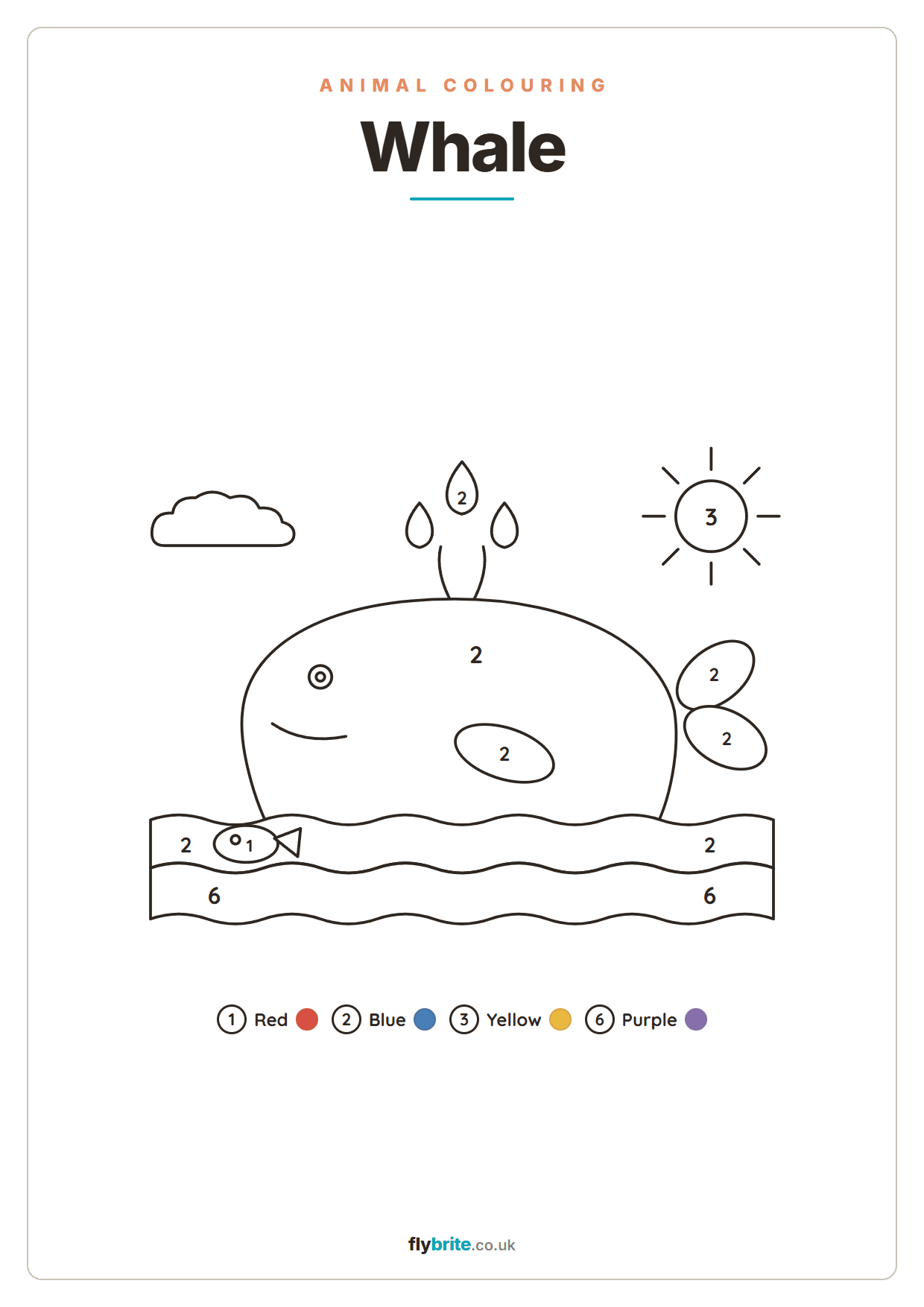
A splashy whale with a spout of drops and a little fish friend in the waves.
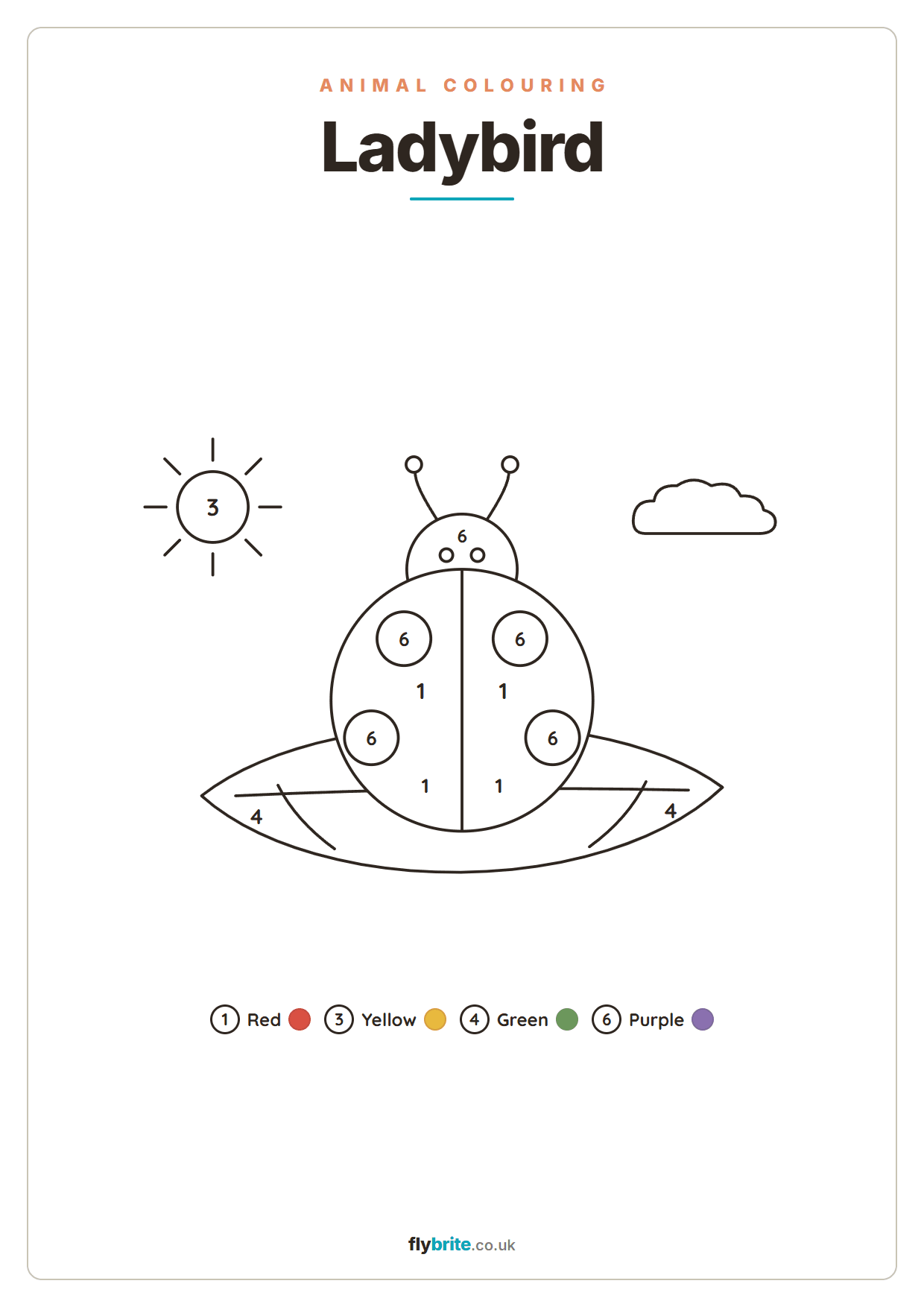
A spotty ladybird resting on a big green leaf in the sunshine.

A whiskery cat on a cosy mat with a ball of yarn to chase.
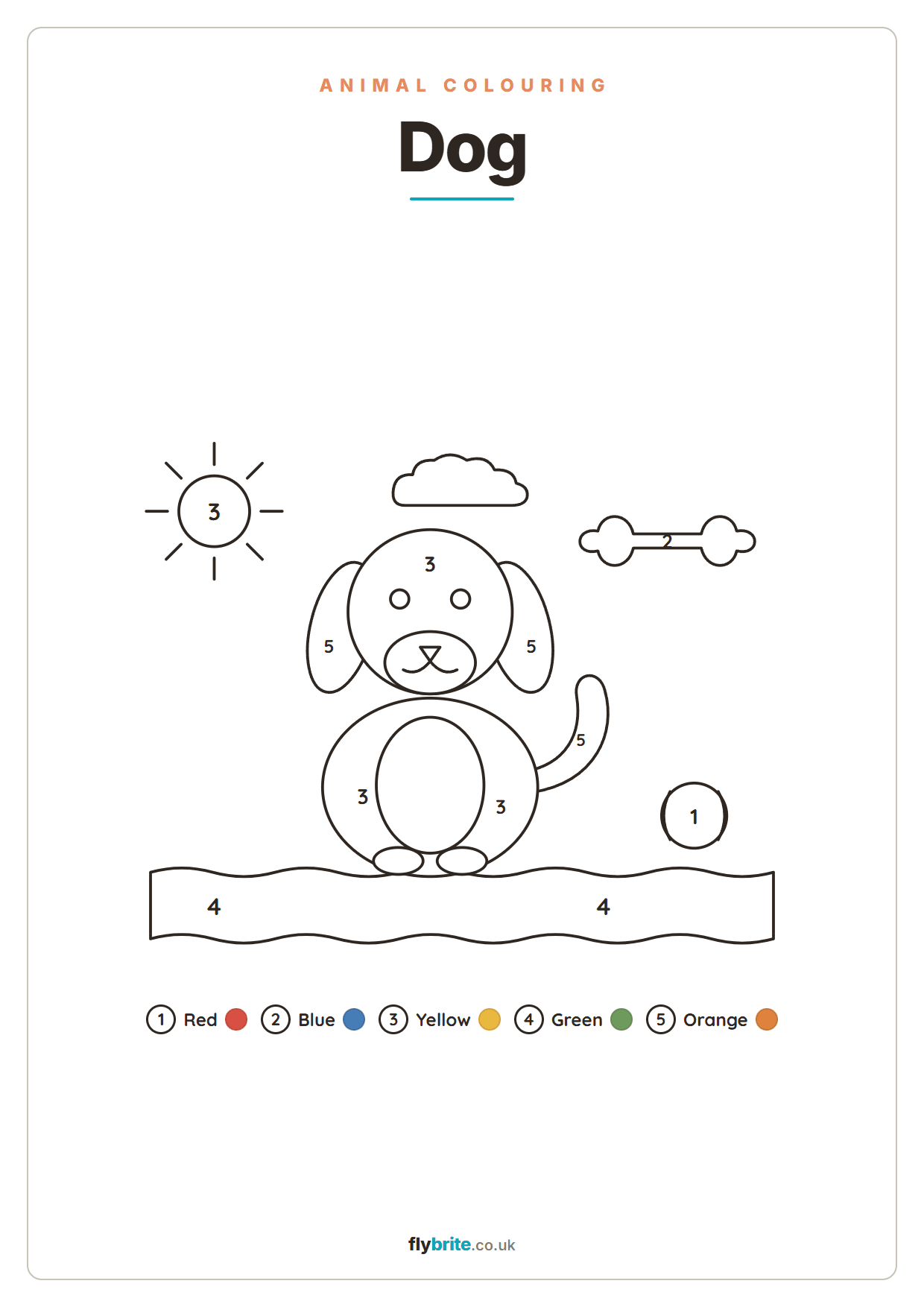
A waggy-tailed dog with a bone and a bouncy ball, ready for playtime.
Ten colour-by-number machines that go: diggers, rockets, fire engines and a friendly UFO.
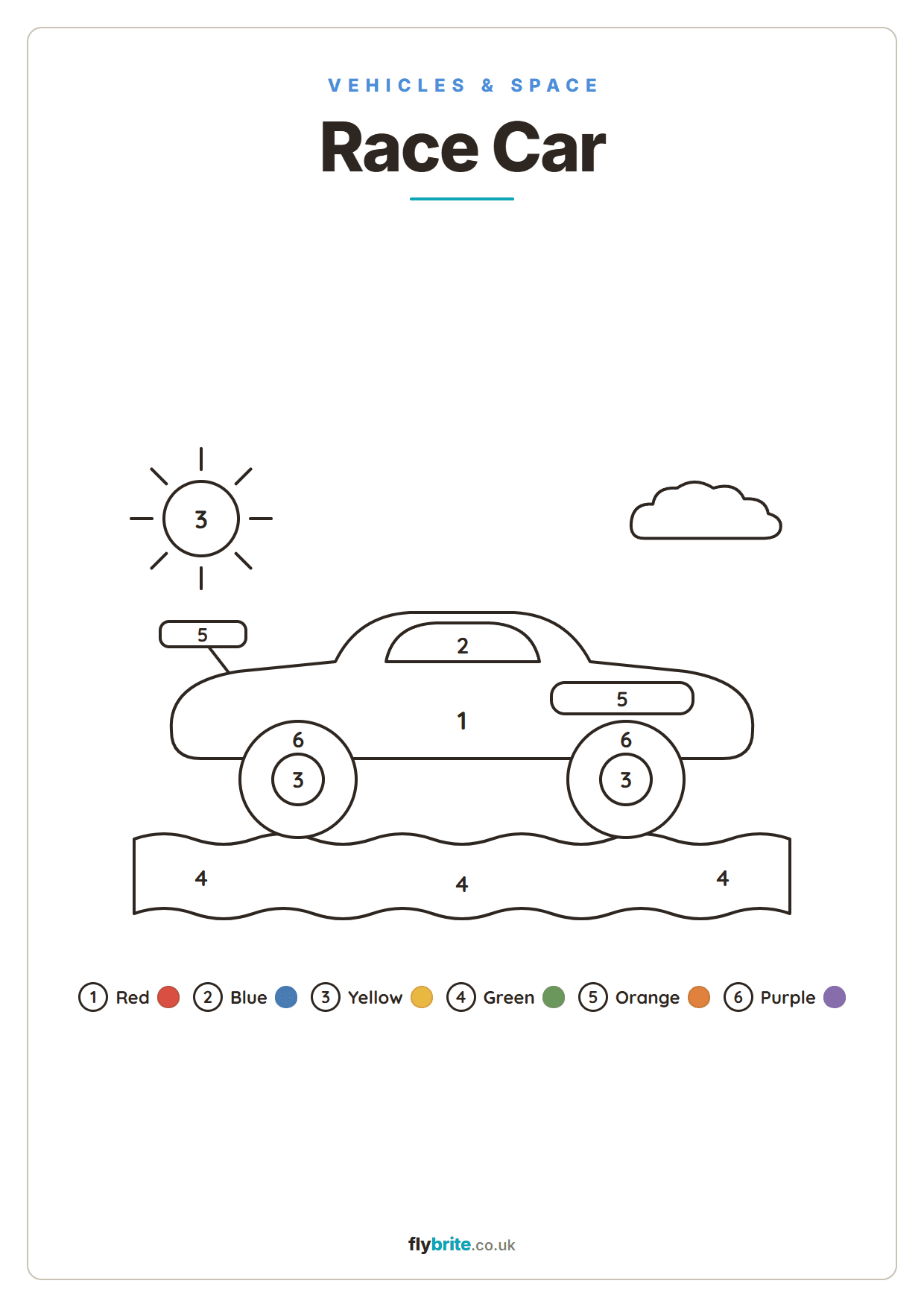
A speedy race car with a big spoiler, zooming past the sun towards the finish line.

A big friendly fire engine with a long ladder, ready to race to the rescue.

A chunky farm tractor with one huge wheel, chugging along beside the field.

A puffing steam train pulling its carriage along the track, whistle at the ready.
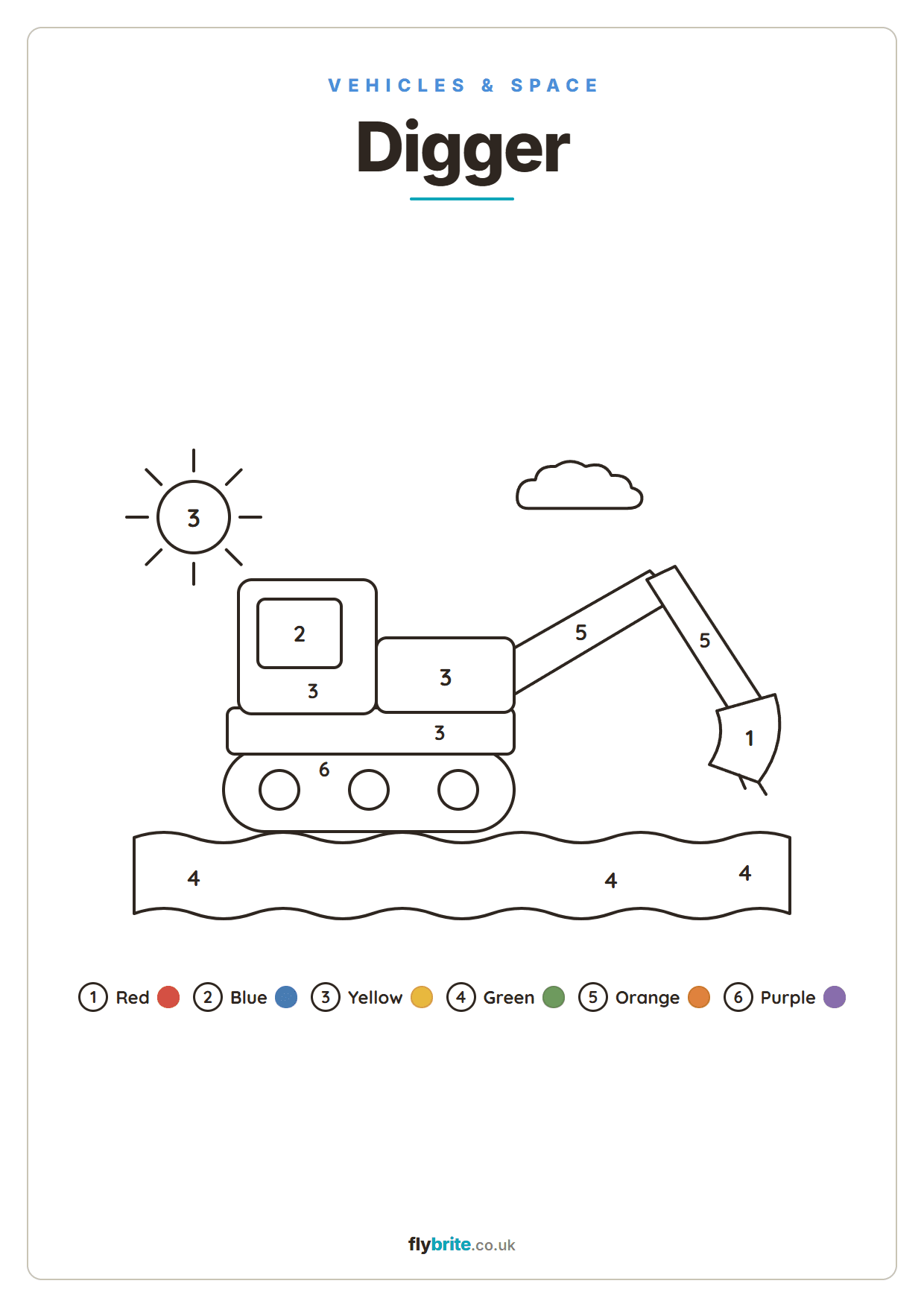
A busy digger with a great big bucket, scooping up the ground one colour at a time.
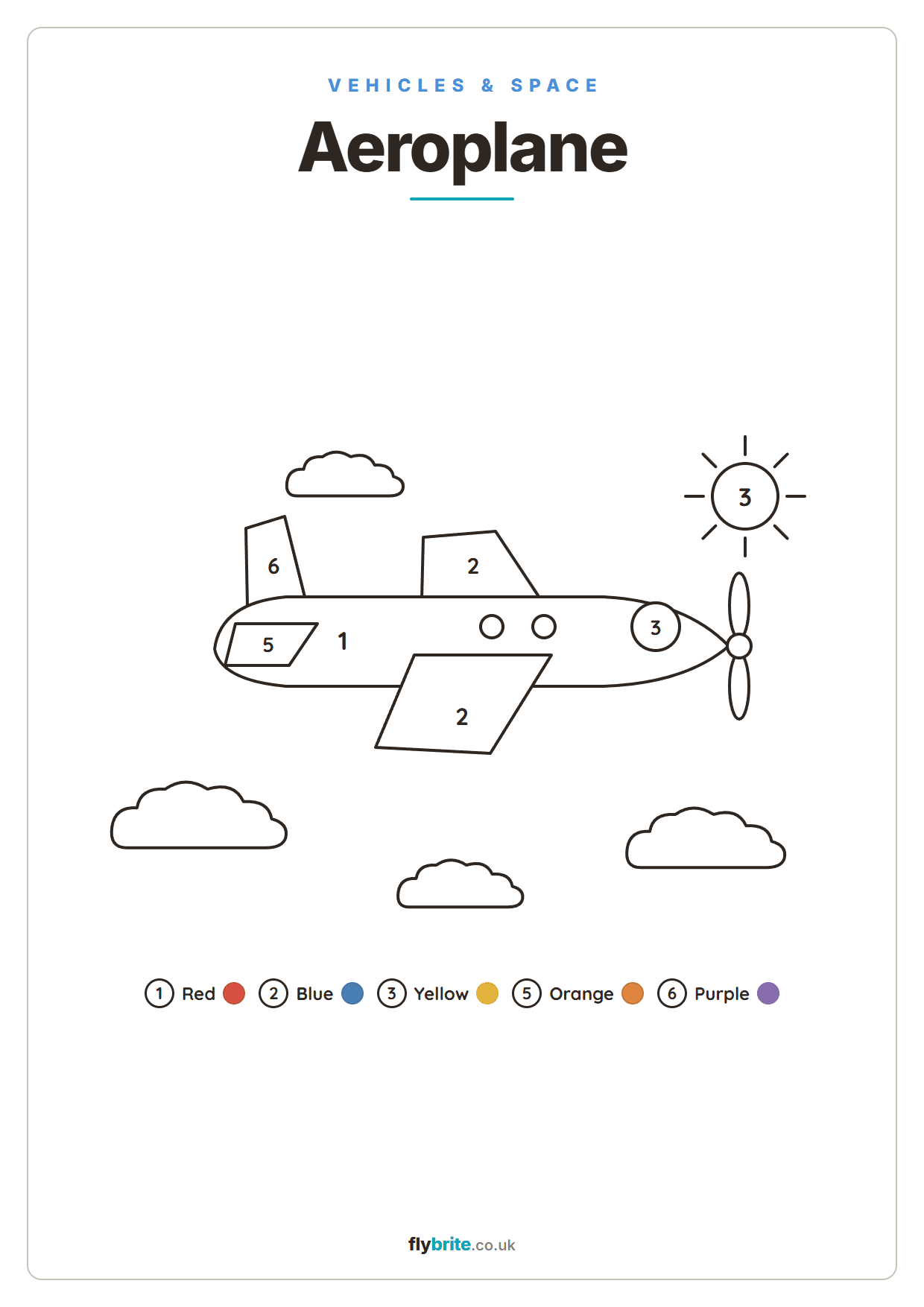
A cheerful little aeroplane with a spinning propeller, sailing between the clouds.

A round-windowed submarine deep under the sea, with a fish and a trail of bubbles.
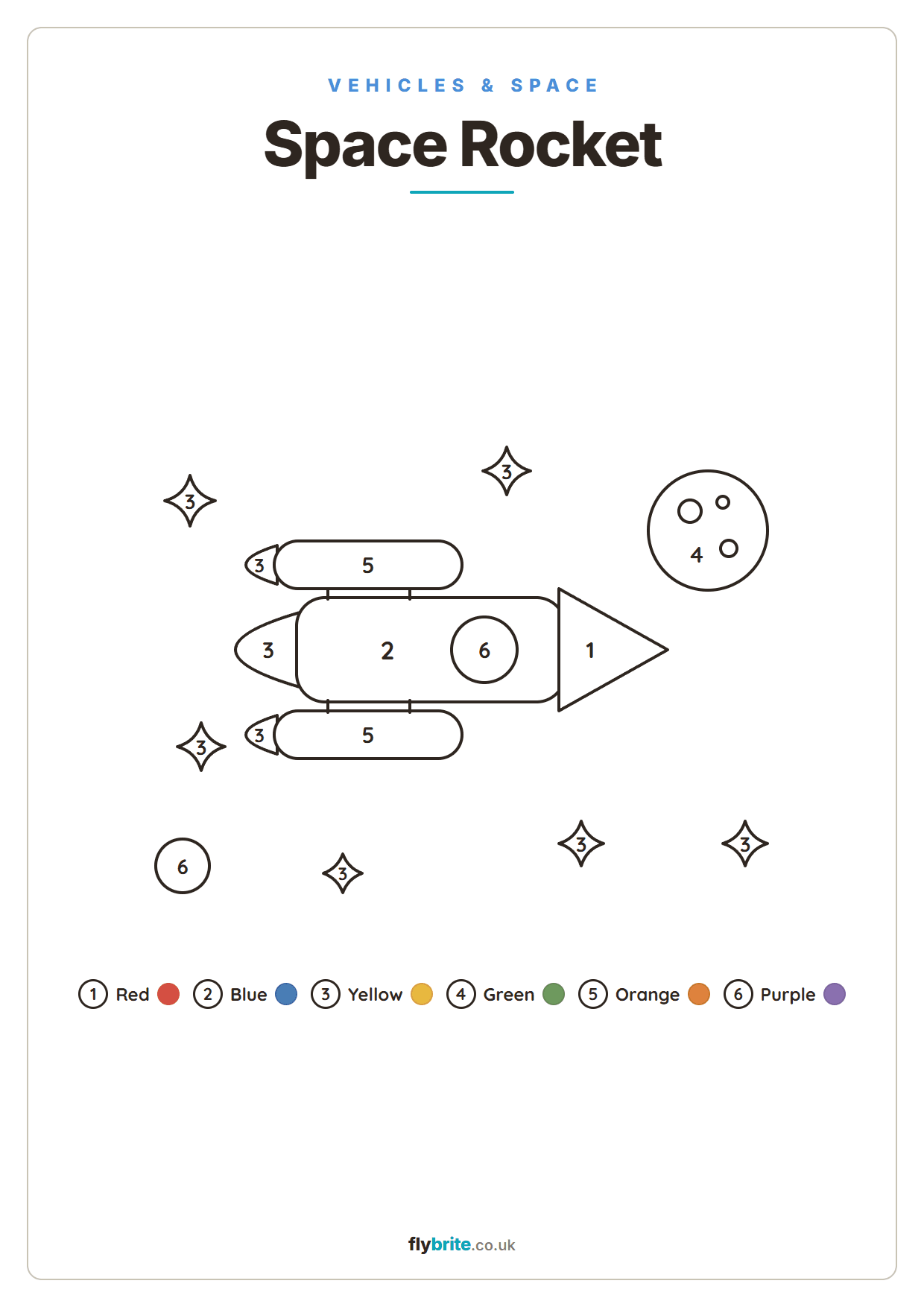
A side-on space rocket with twin boosters, blasting past a planet and the stars.
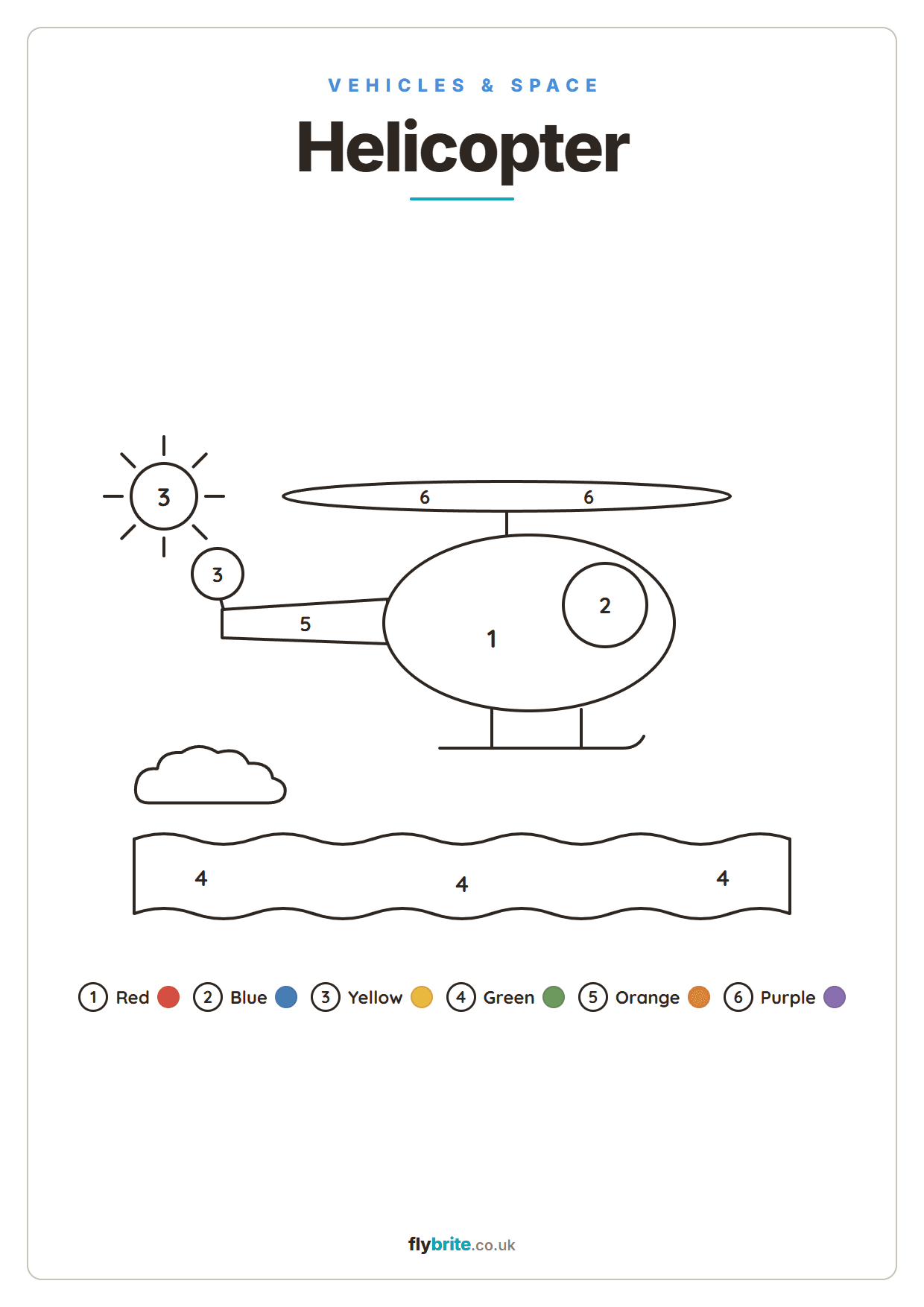
A happy helicopter with whirring rotor blades, hovering high above the grass.

A hovering flying saucer beaming down to say hello to a friendly little alien.
Ten colour-by-number pages for the moments children love, from birthdays to snow days.

A birthday cake with candles and bunting, ready to colour before the party starts.

A Christmas tree hung with baubles and topped with a star, numbered for little decorators.

Three patterned Easter eggs tucked in a basket, waiting for their colours.

A plump autumn pumpkin with falling leaves to colour, lobe by lobe.

A cheery snowman in a hat and scarf, out in the falling snowflakes.

A sunny beach day with a sandcastle, bucket and spade, numbered for small hands.

A spring garden of tulips with a busy bee buzzing by.

A fireworks night sky bursting with colour above the rooftops.
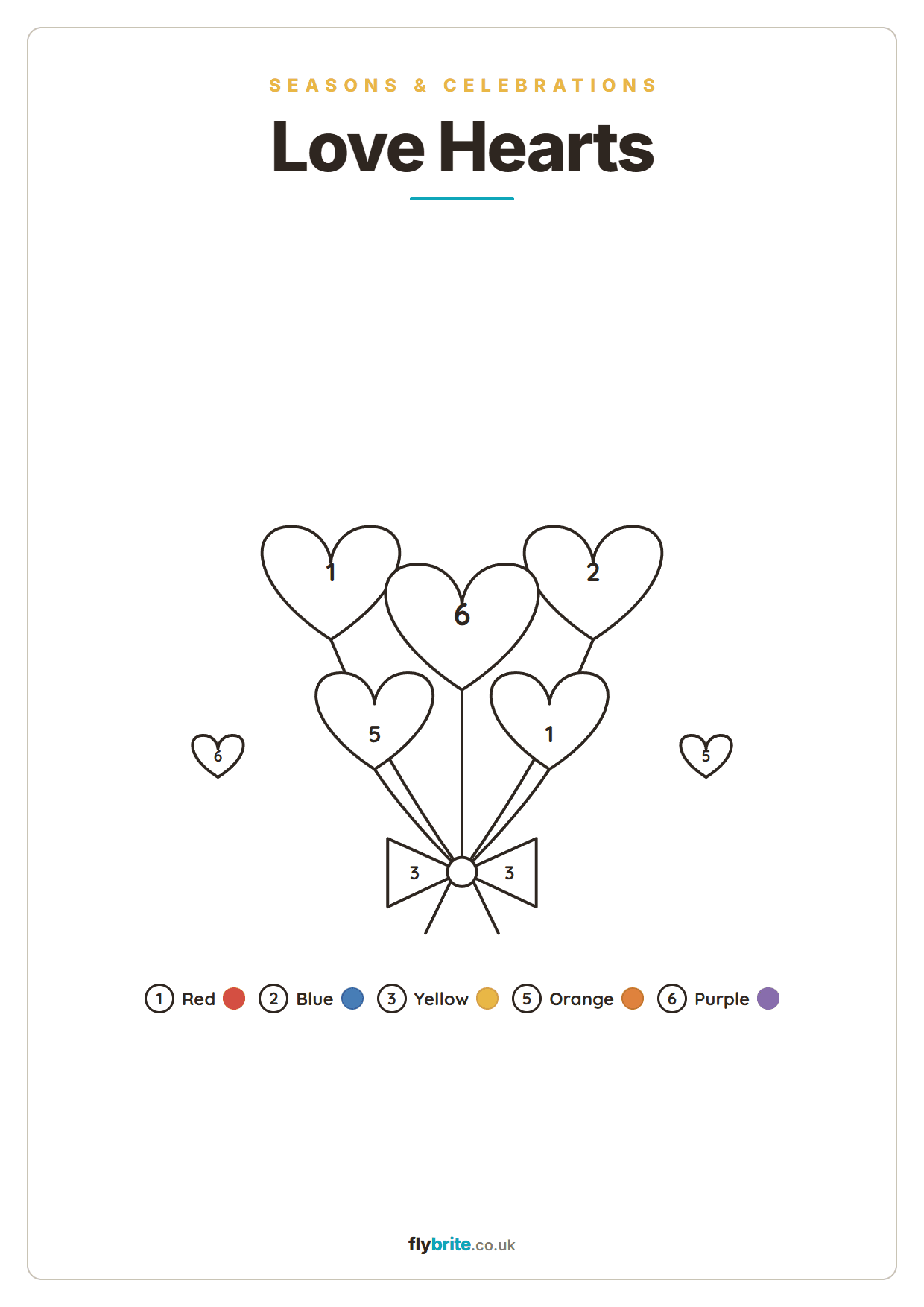
A bunch of heart balloons tied with a bow, full of love to colour.

A rainy day umbrella with wellies and puddles to splash with colour.
Dashed letters, guide lines and starting dots, the gentle way into handwriting.

Big bright examples of a, b and c with dashed letters to trace and empty lines to try your own.

Steady pencil practice for d, e and f, from traced letters to confident solo tries.

Trace g, h and i on proper handwriting guides, with a green dot showing where to start.

Loops and tall sticks for j, k and l, with fading letters that gently hand over the pencil.

Practise m, n and o with dashed letters that slowly fade until your child writes alone.
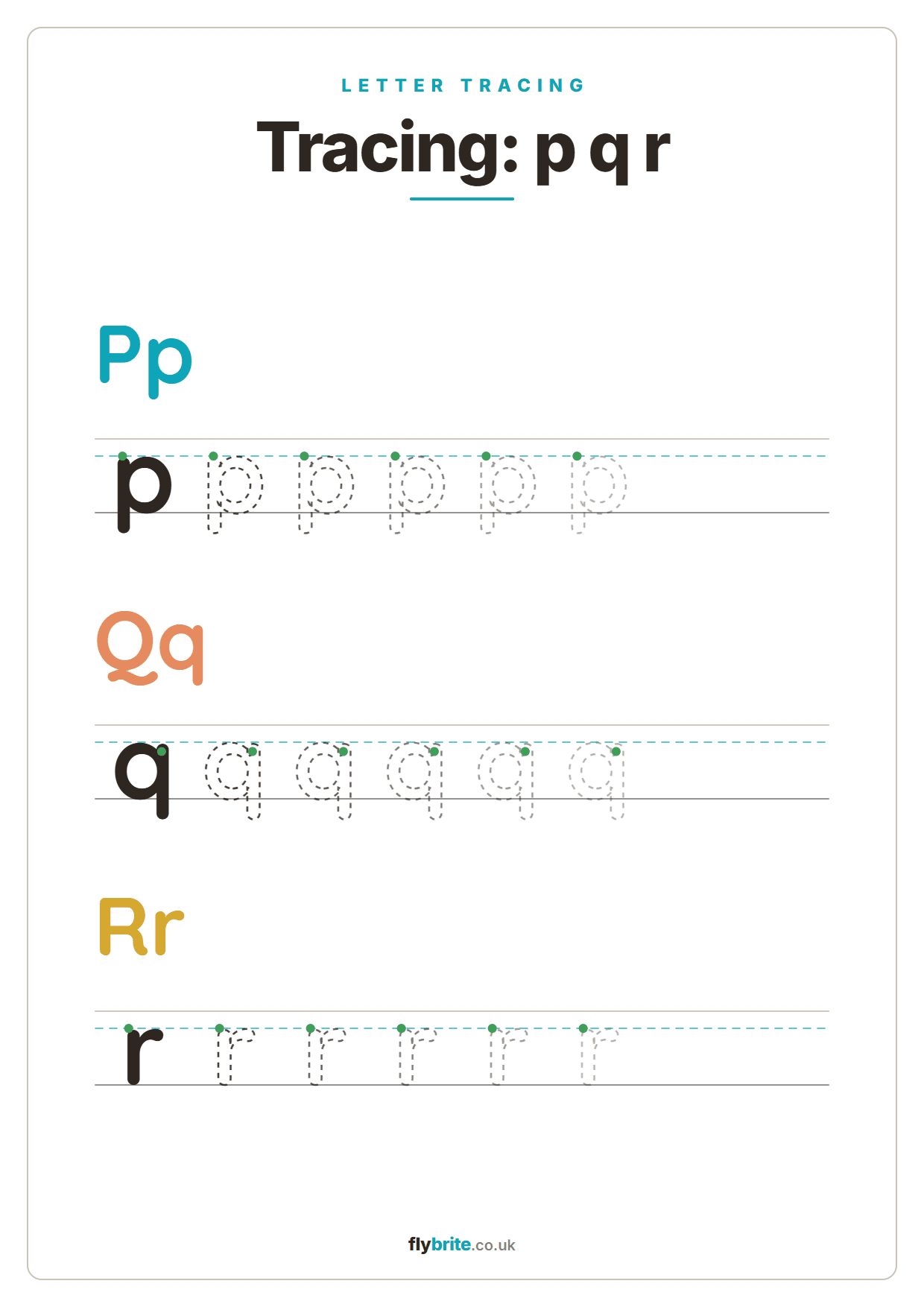
Round tummies and little tails, p, q and r on tidy guide lines with starting dots.

Three more friendly letters, s, t and u, traced first and then written all by yourself.
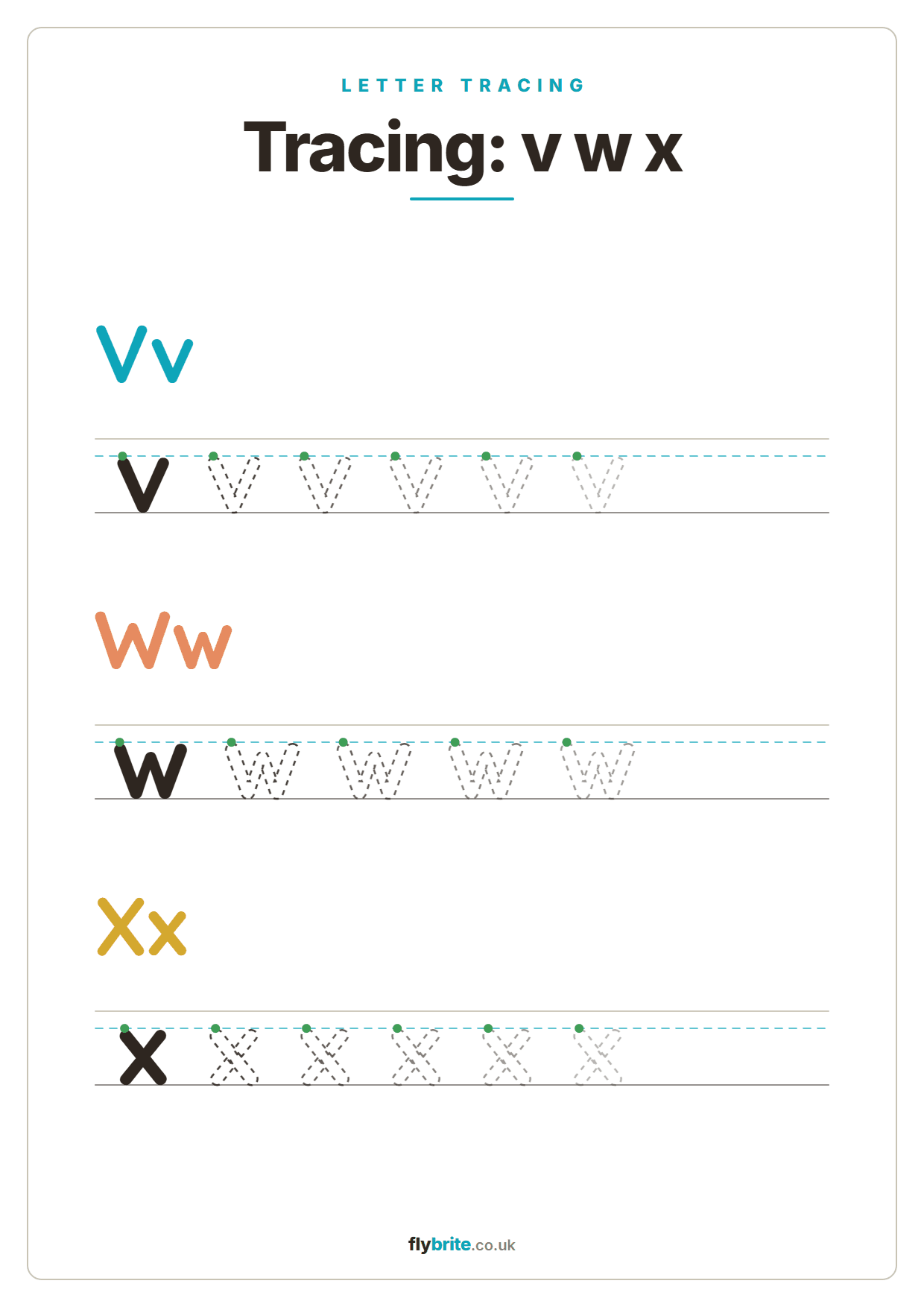
Zigzag practice for v, w and x, with fading dashes and plenty of room for solo writing.
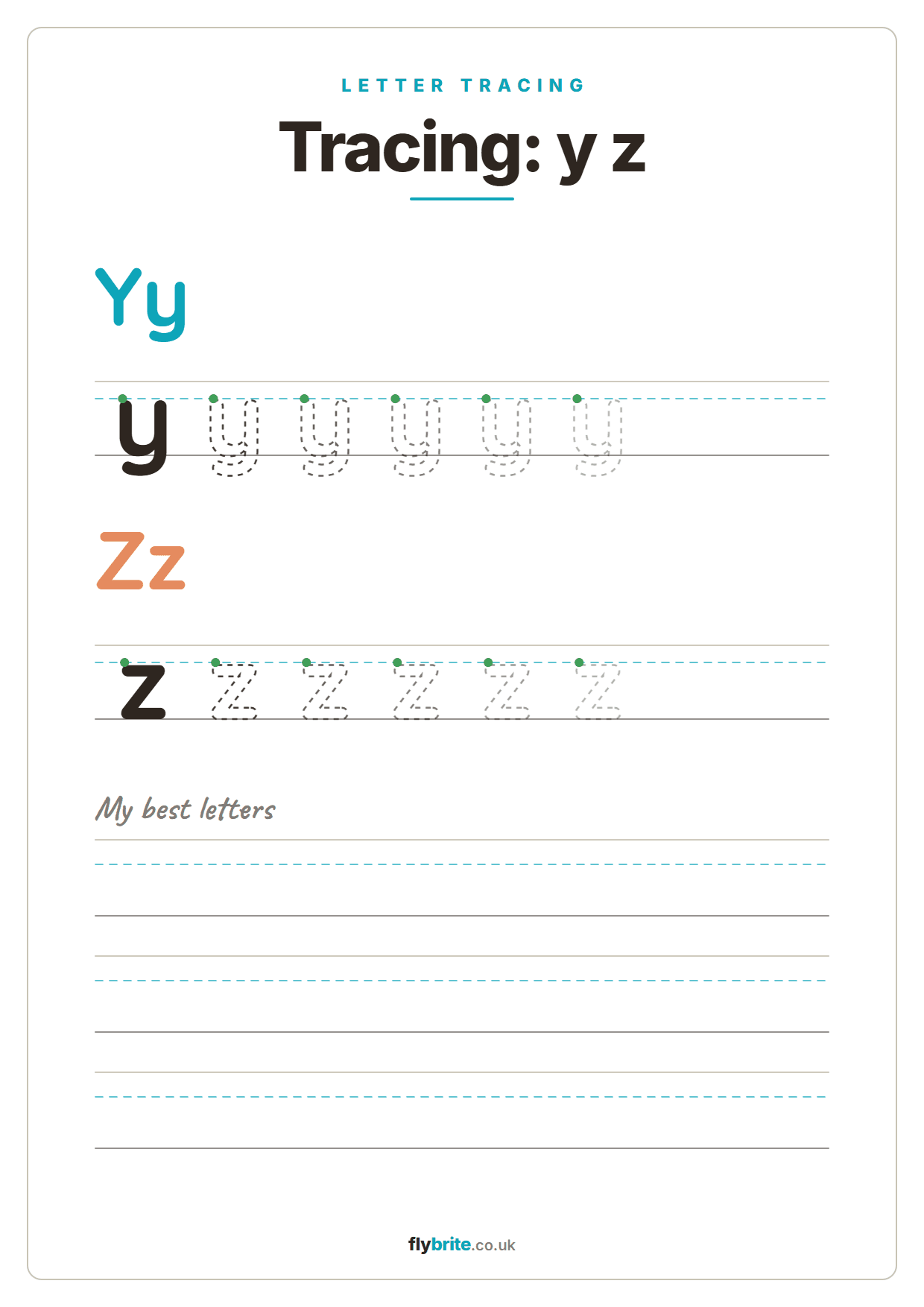
Finish the alphabet with y and z, then fill the best-letters lines with your favourites.
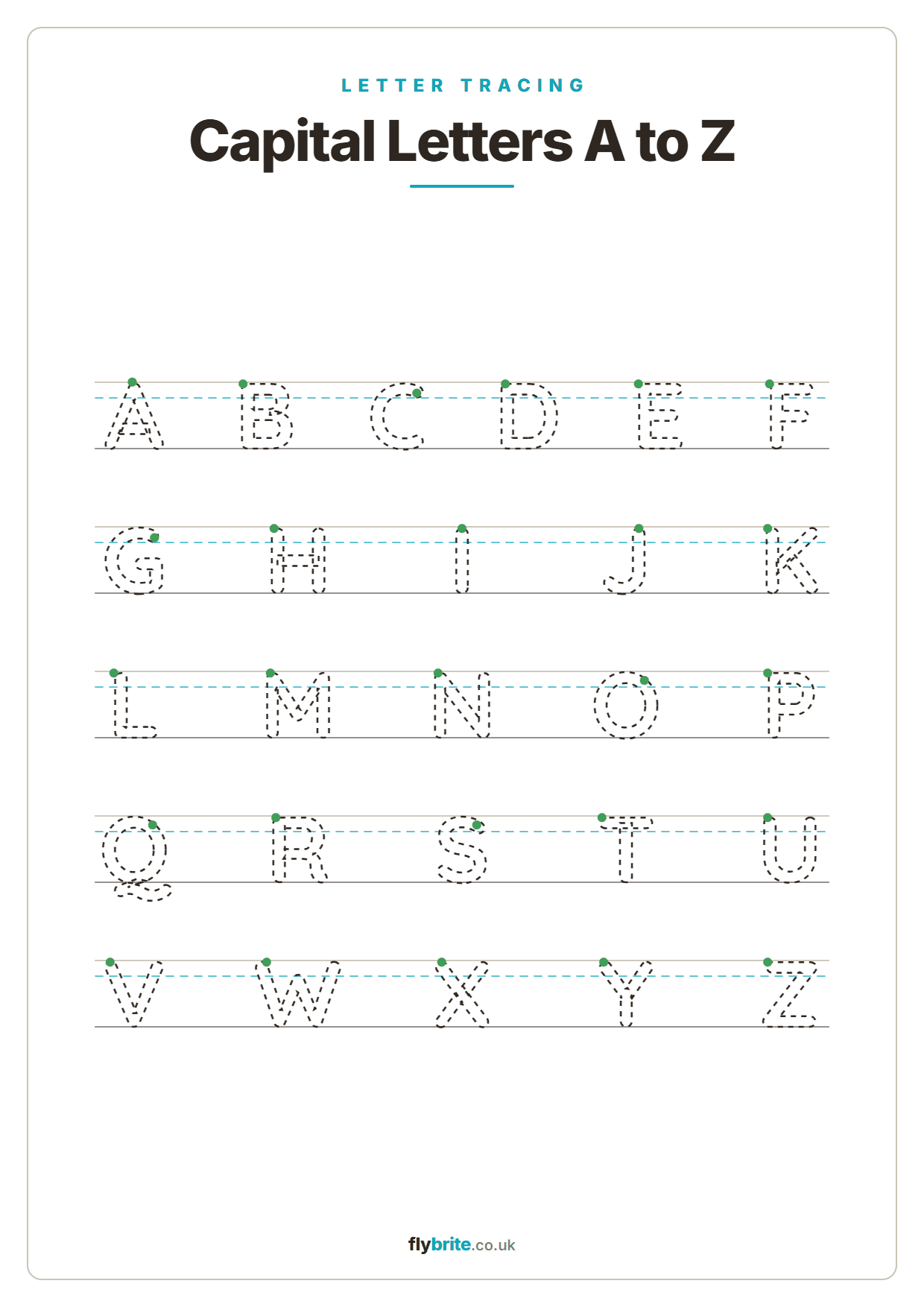
All twenty six capital letters on guide lines, ready to trace from A right through to Z.
Pencil-control patterns and first words to trace, from colours to little sentences.
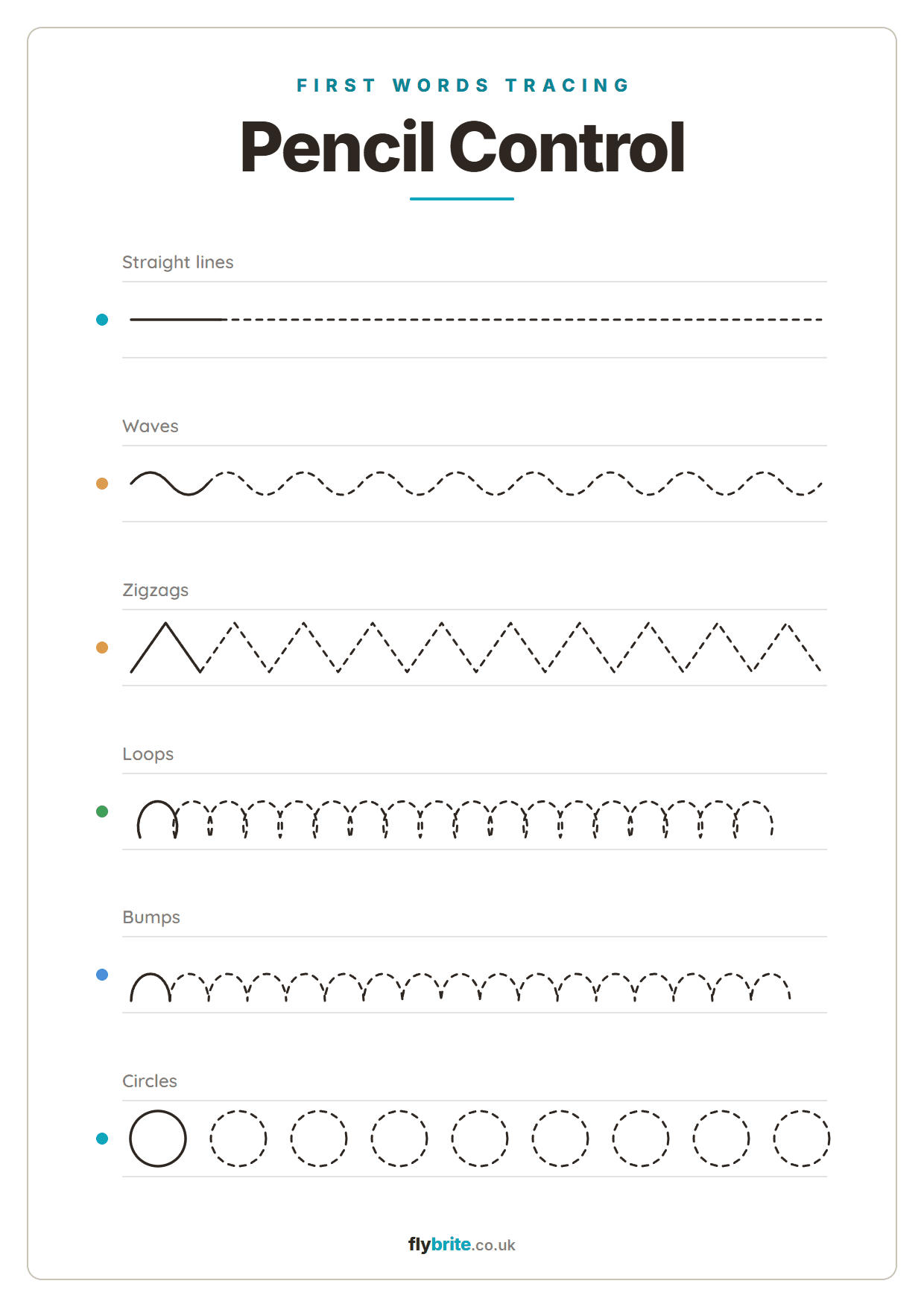
Warm-up lines, waves, loops and circles that build steady little hands before letters begin.
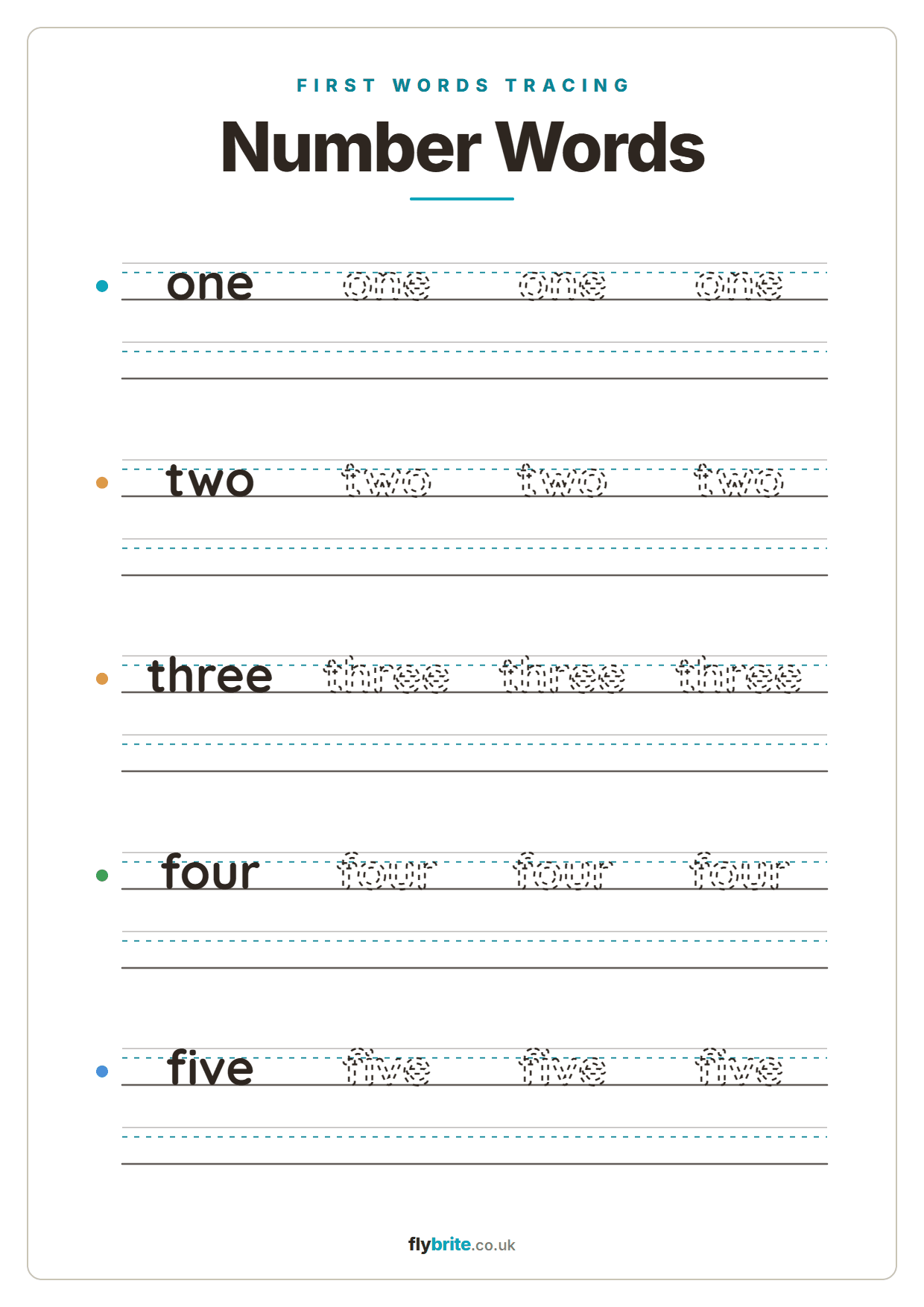
Trace one to five in words, with a bold example to copy and an empty line to try alone.
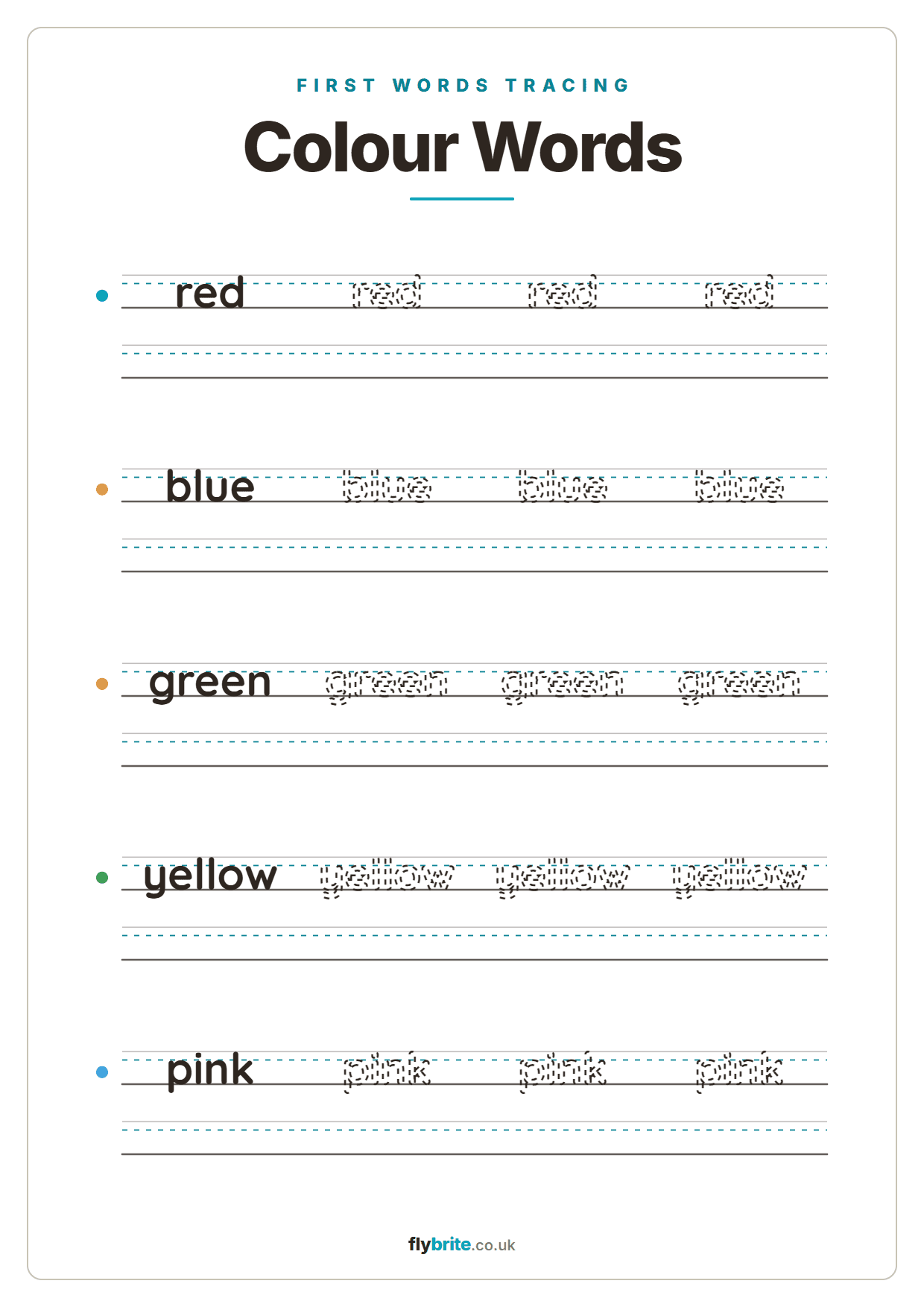
Five favourite colour words to trace on proper handwriting guides, from red to pink.
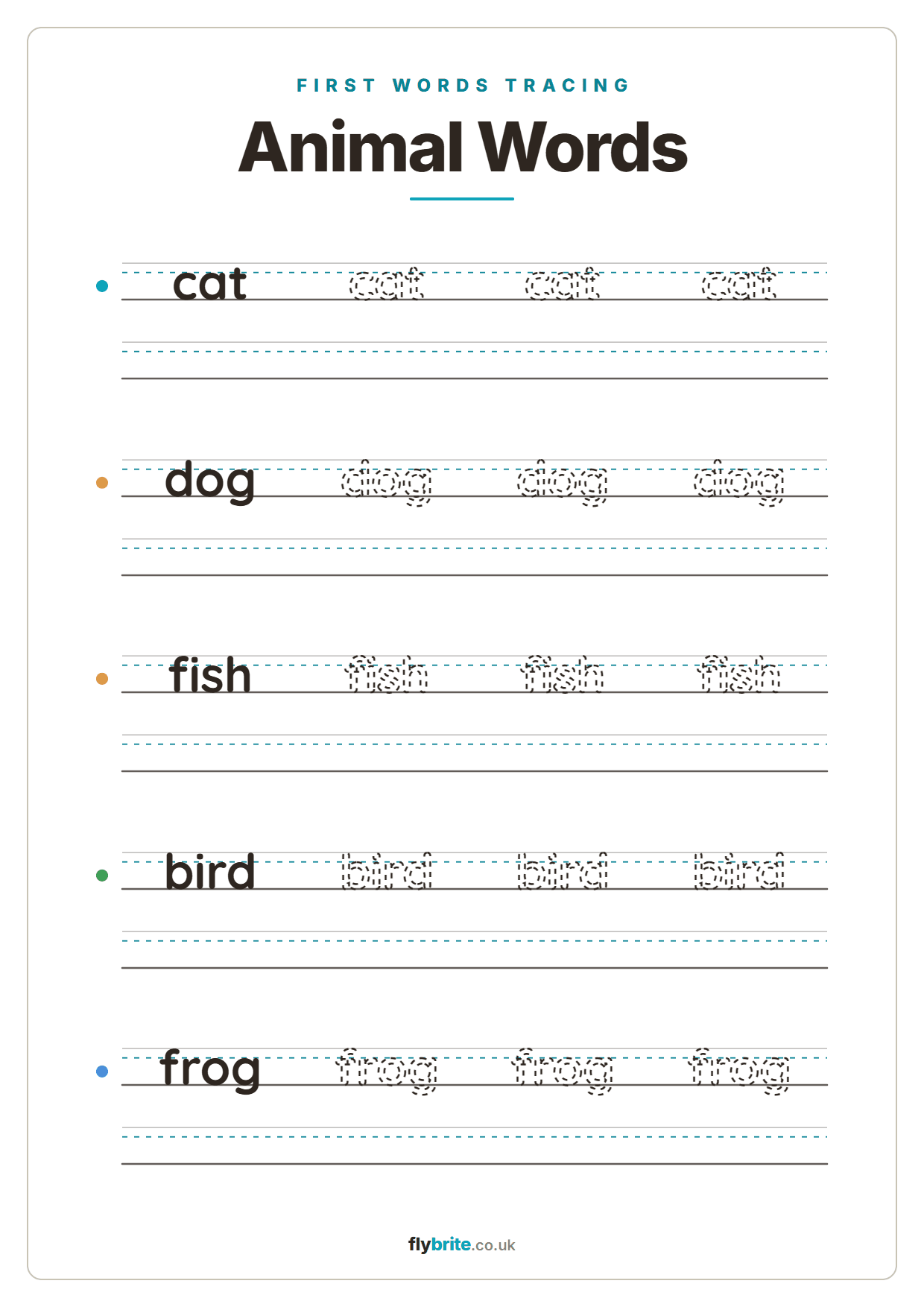
Cat, dog, fish, bird and frog, five friendly animal words to trace and then write alone.
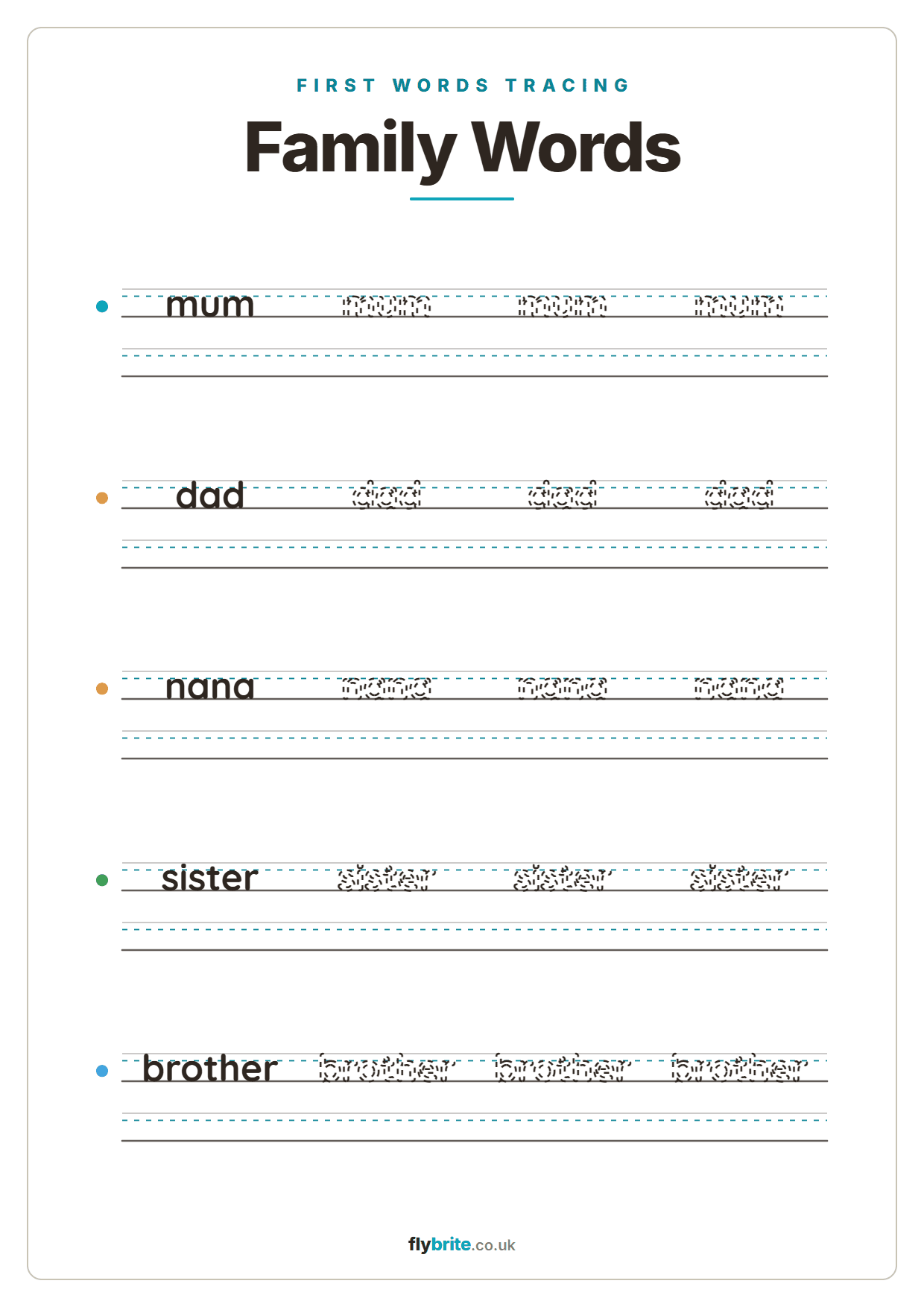
The people they love best, mum to brother, traced in their very own handwriting.
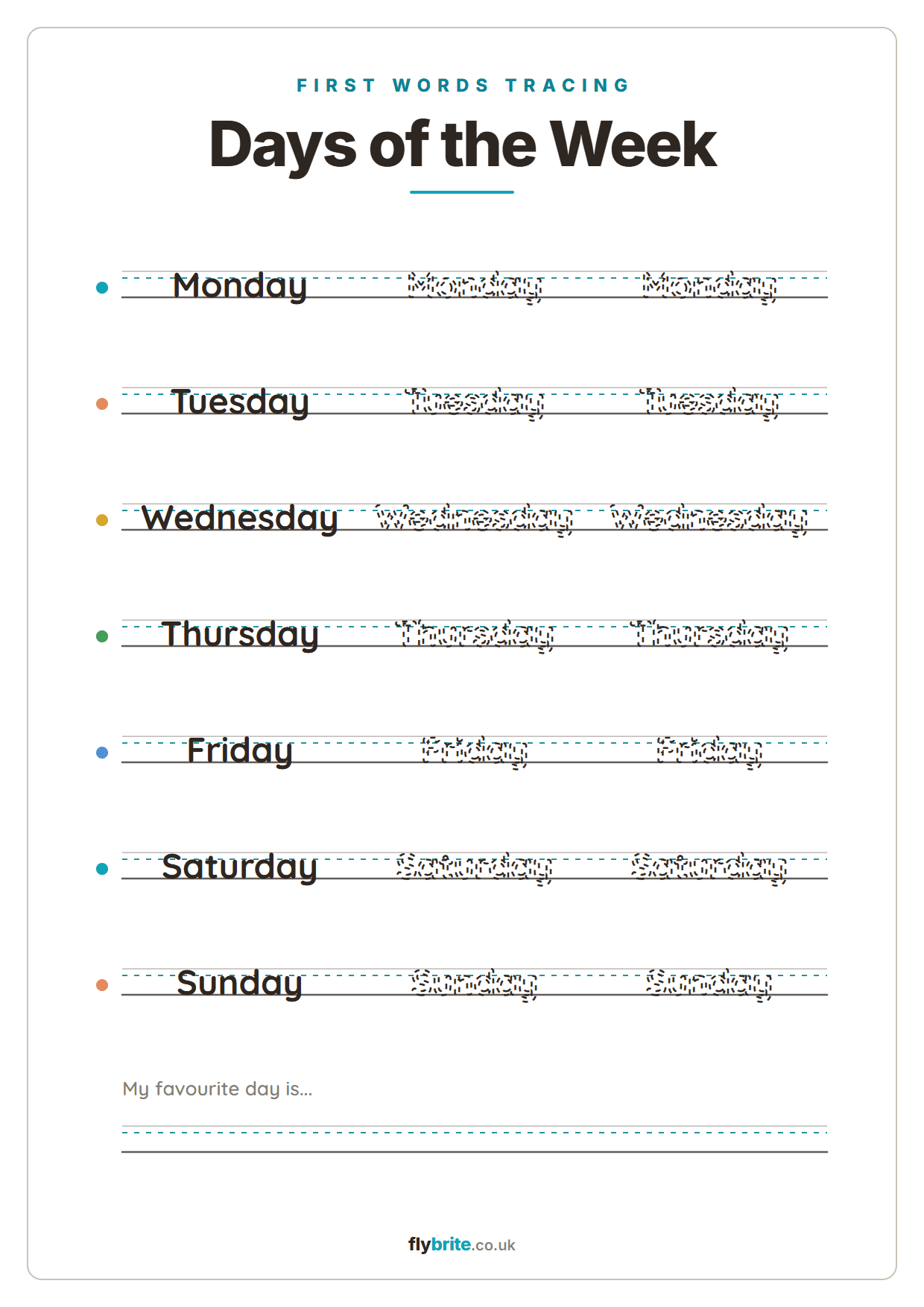
All seven days of the week to trace, one neat row at a time, plus a favourite-day line.
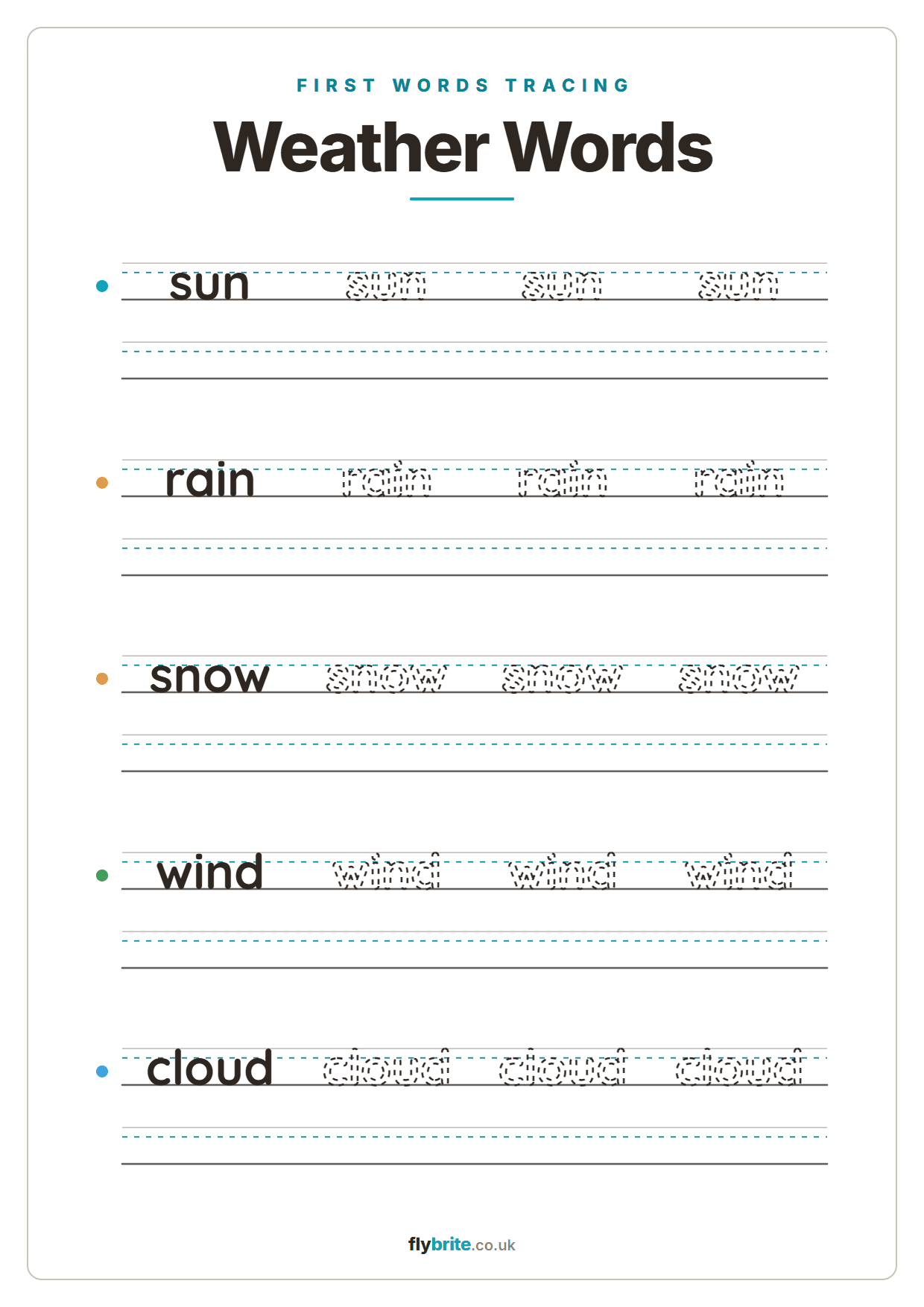
Sun, rain, snow, wind and cloud, ready to trace whatever the day brings.
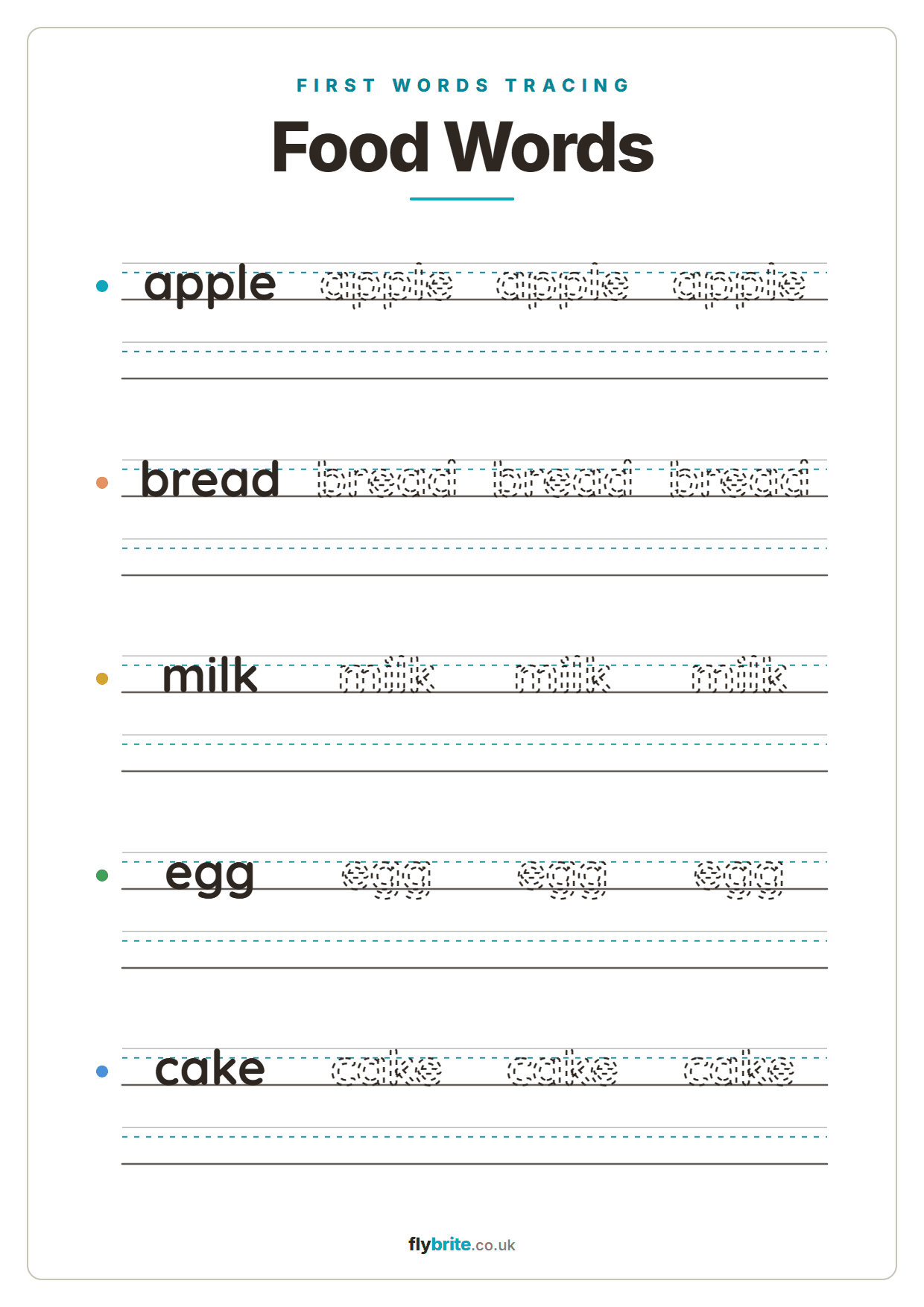
Five tasty food words to trace before snack time, from apple to cake.
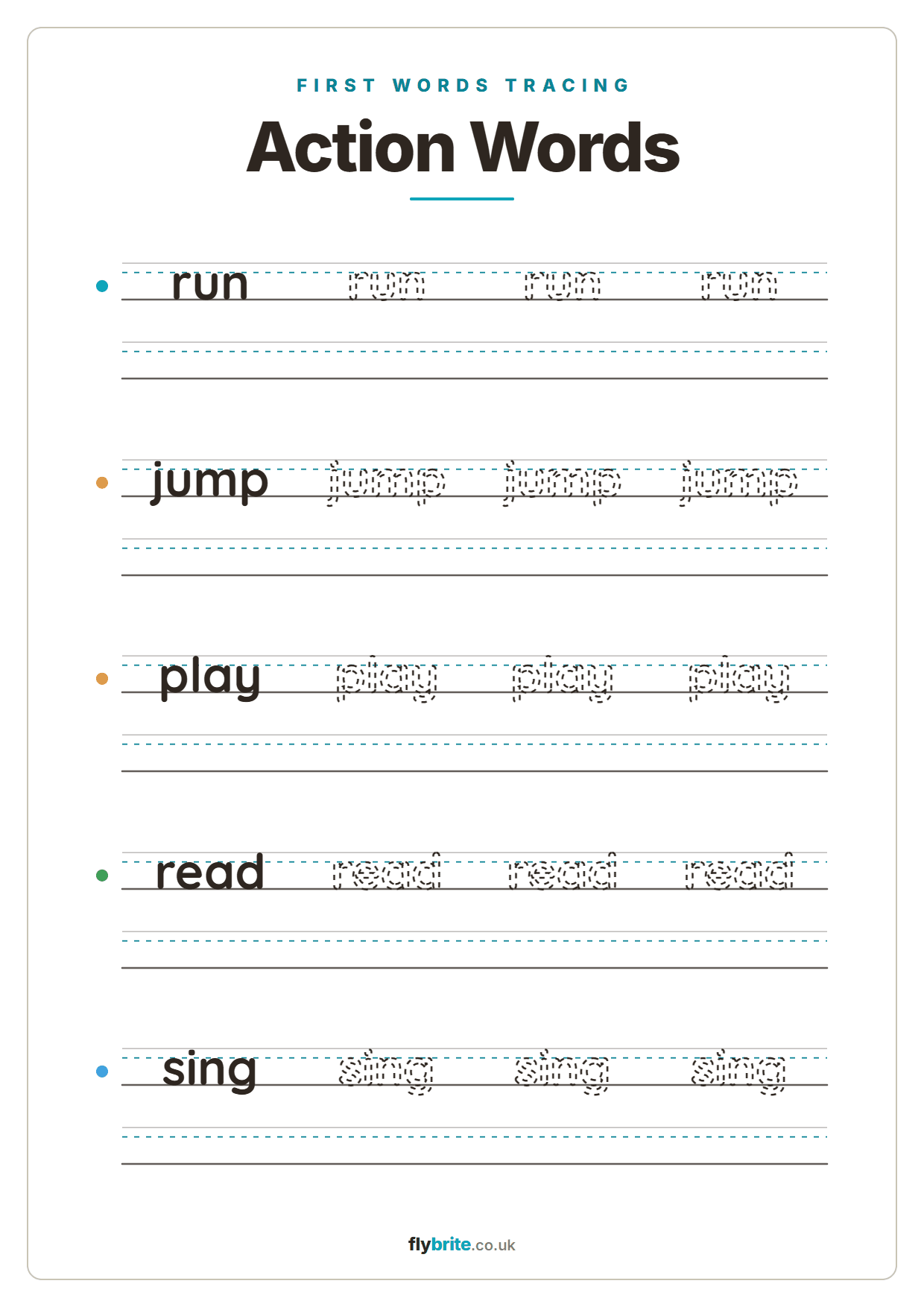
Run, jump, play, read and sing, busy little doing words to trace.
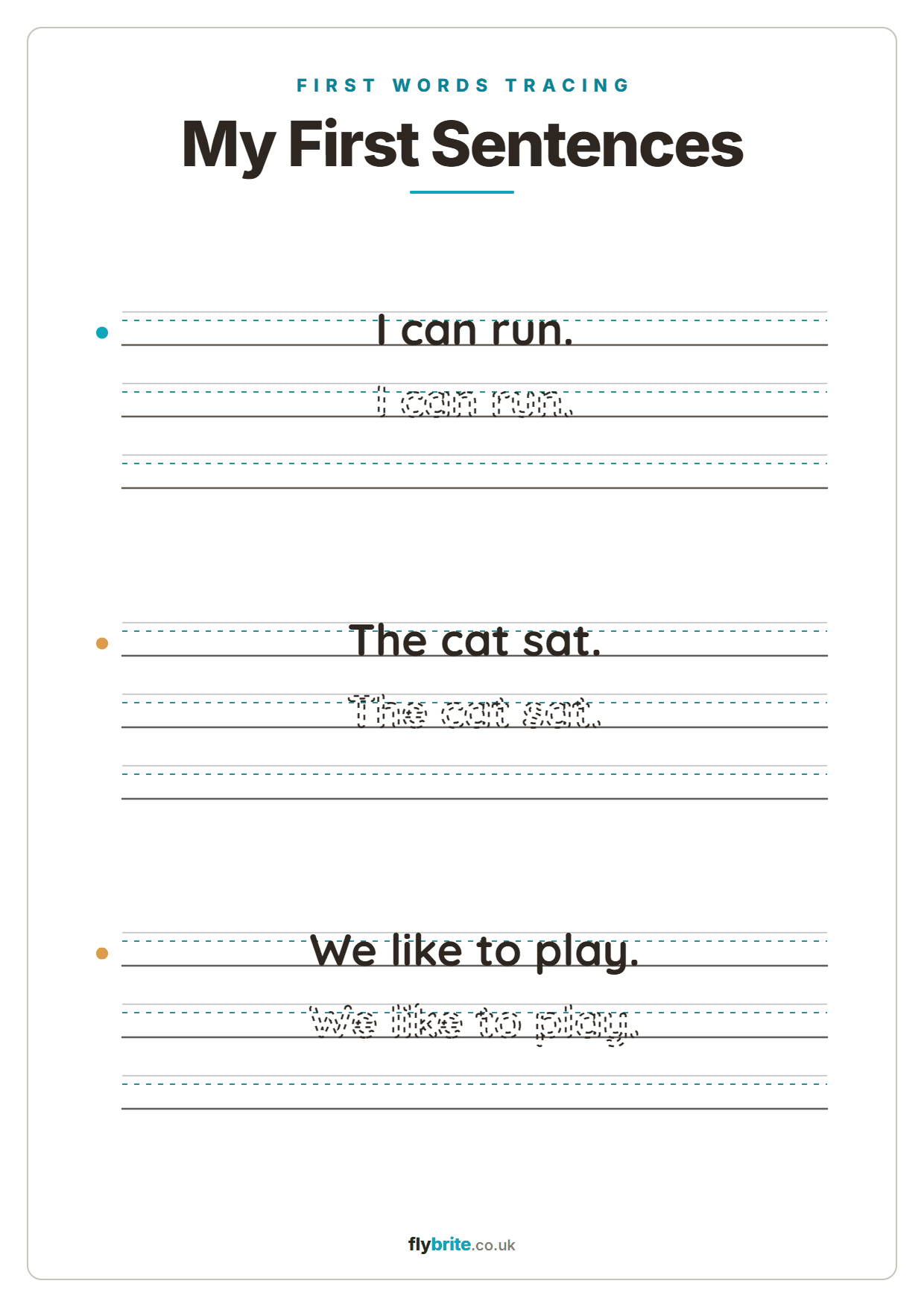
Three proud first sentences to trace, then a clear line to write them all by themselves.
Count, circle, match and graph: playful worksheets that make numbers stick.

Three poorly teddies in cosy scarves, each waiting for a little helper to count their spots.
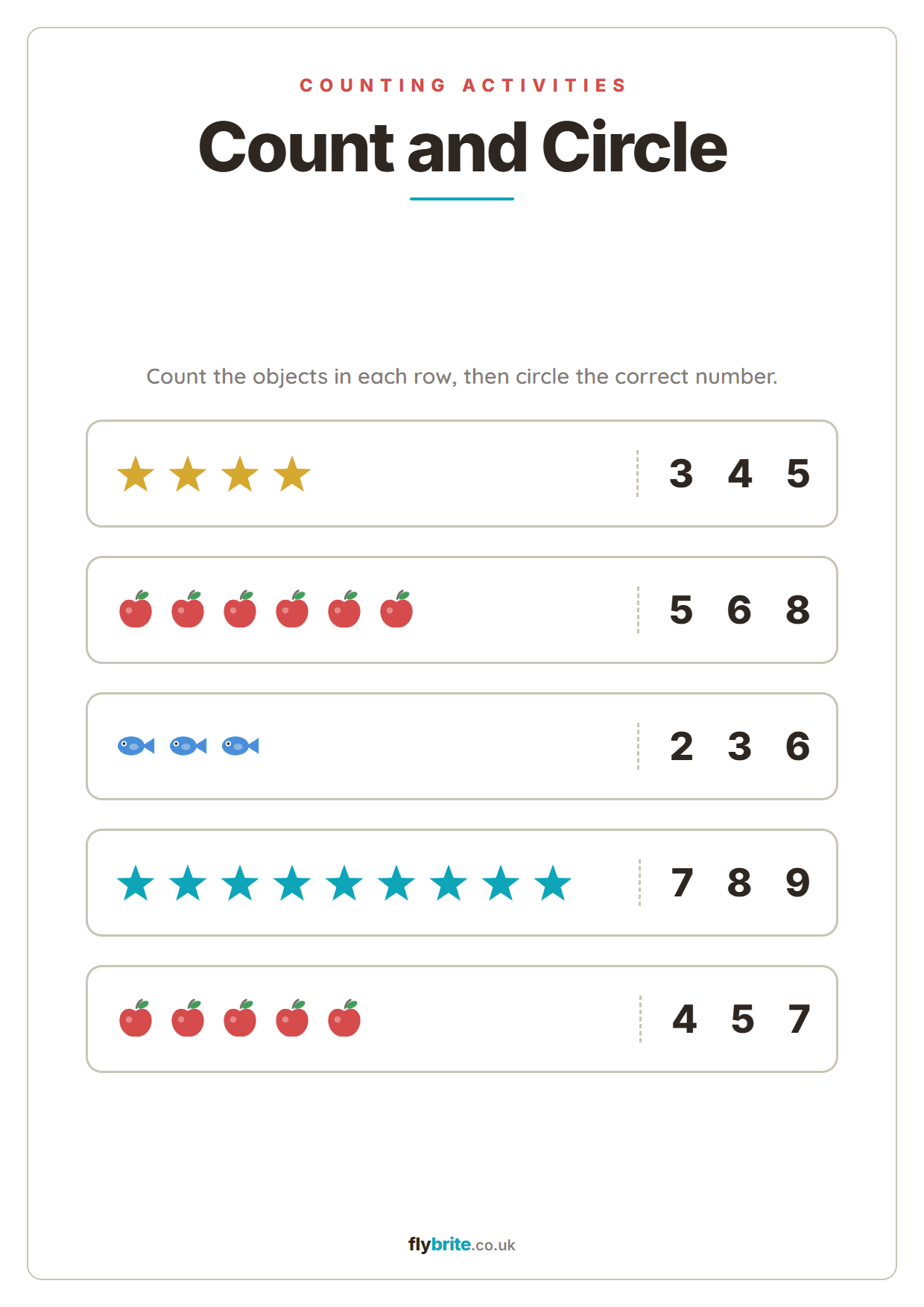
Rows of stars, apples and fish to count carefully before circling the right number.

Twenty friendly dots that join up into a big shining star, lovely first pencil practice.
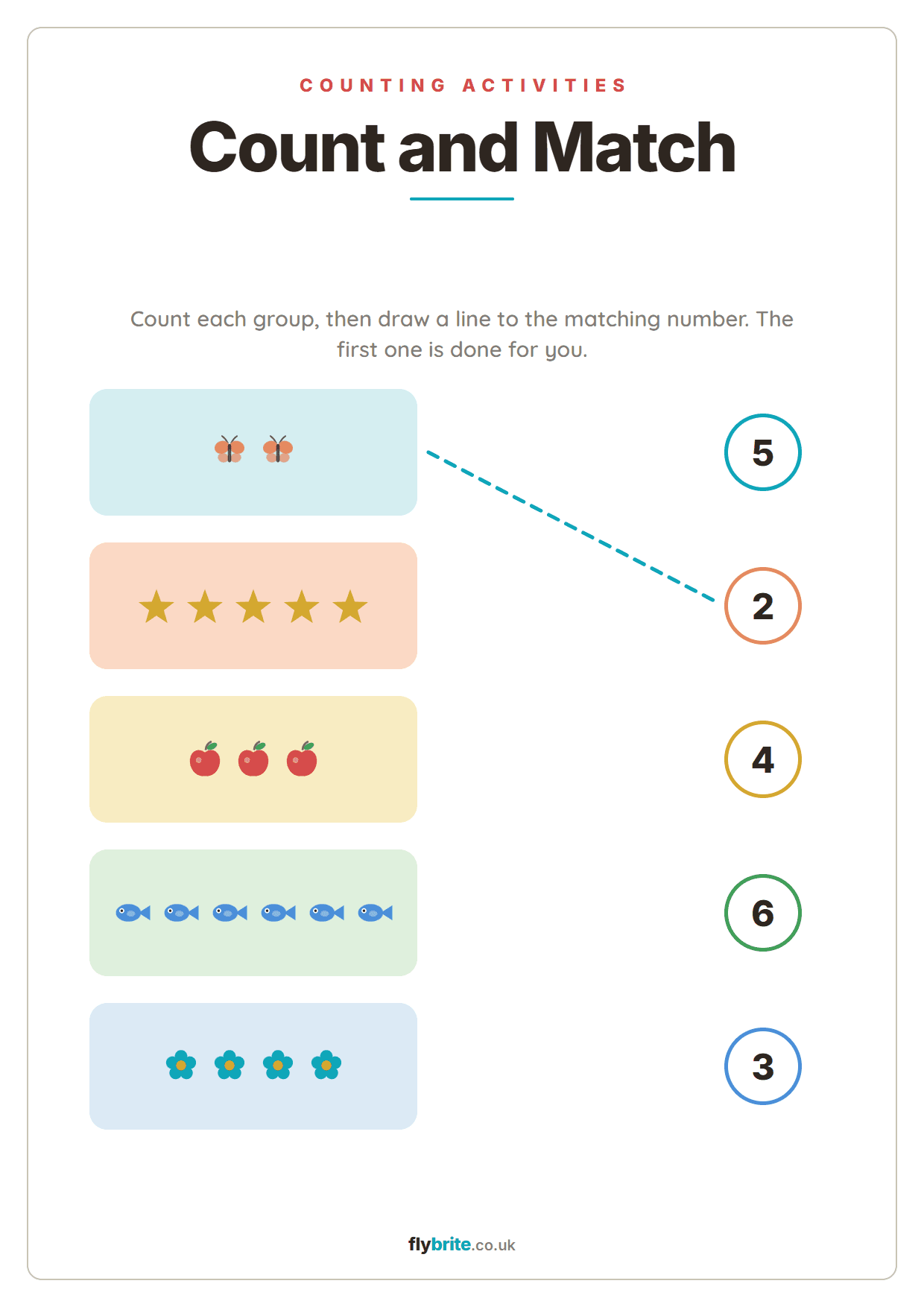
Count each little group and draw a line to its matching number, with a helping hand to start.
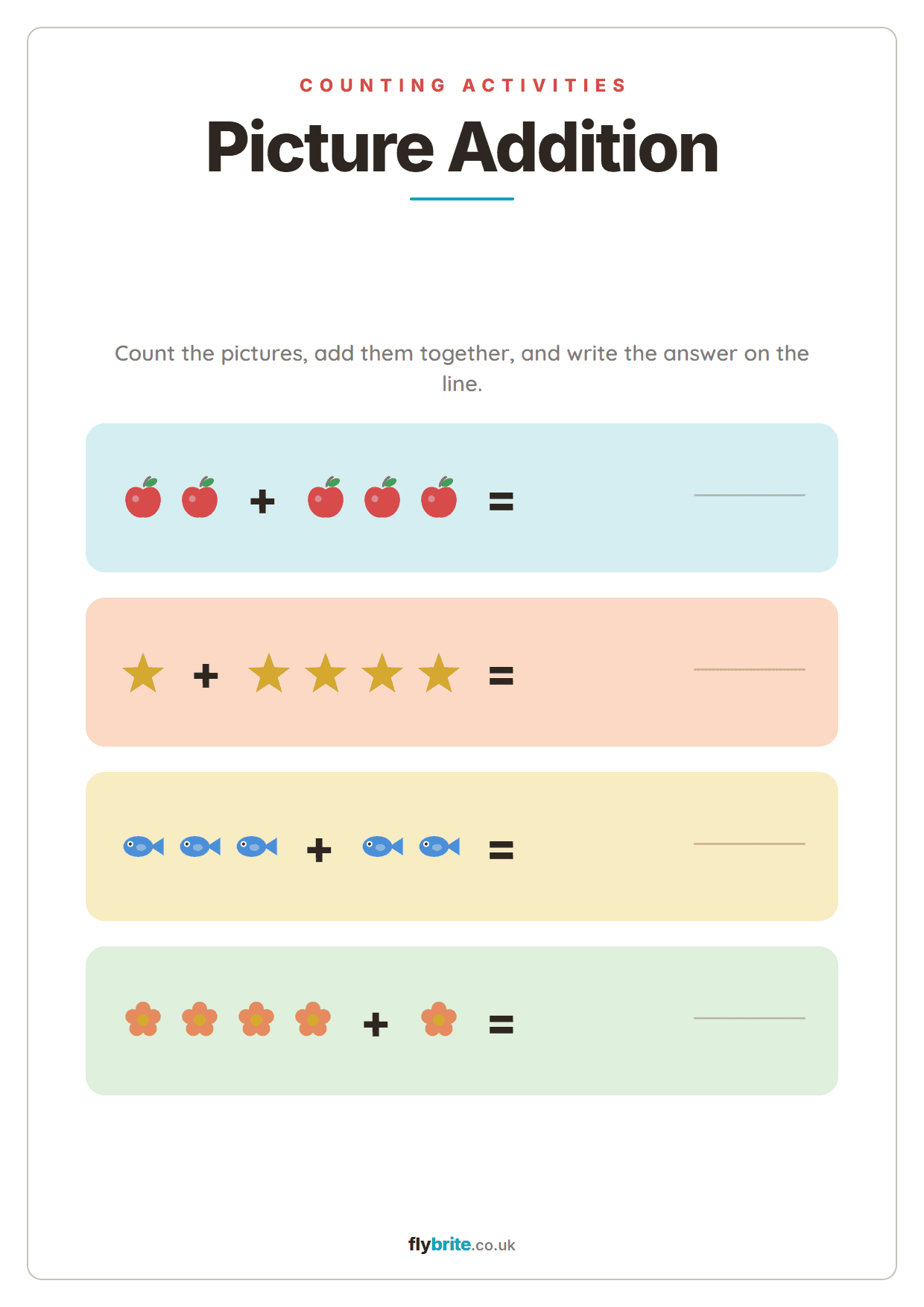
First sums made friendly, with pictures to count on every row before writing the answer.
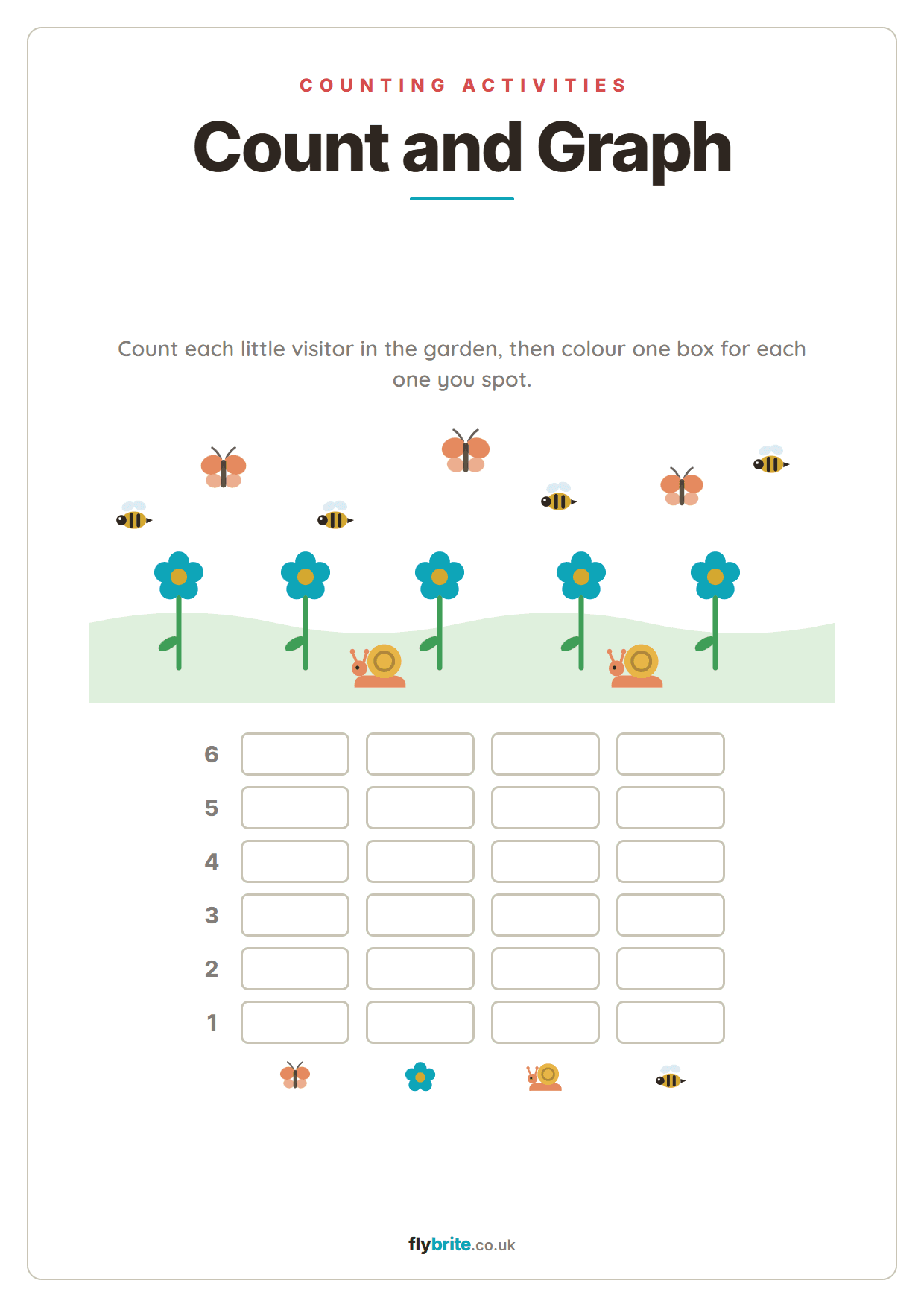
A busy little garden to count, with a first bar chart to colour in creature by creature.
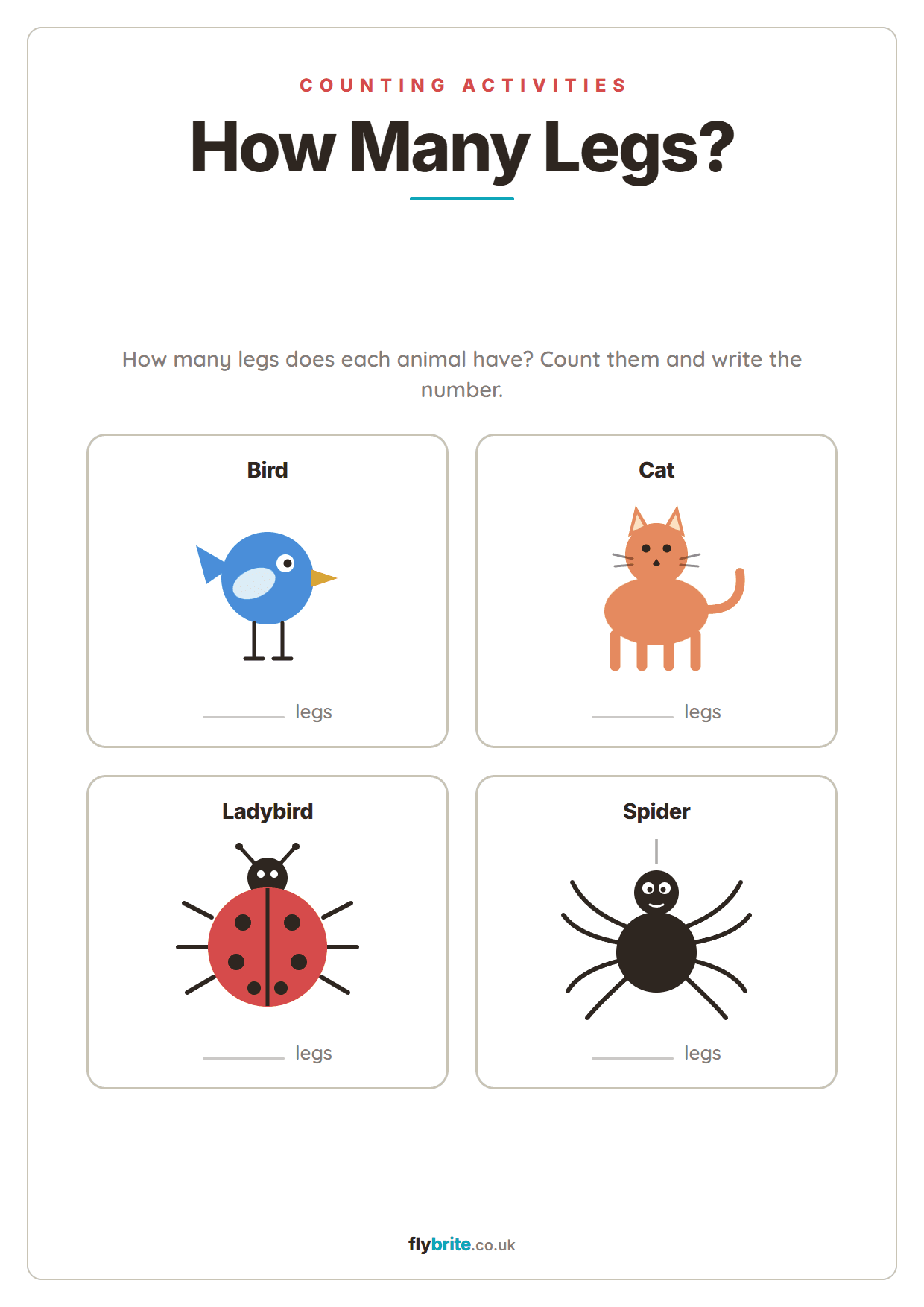
From two bird legs to eight spider legs, a giggly first step into counting in groups.
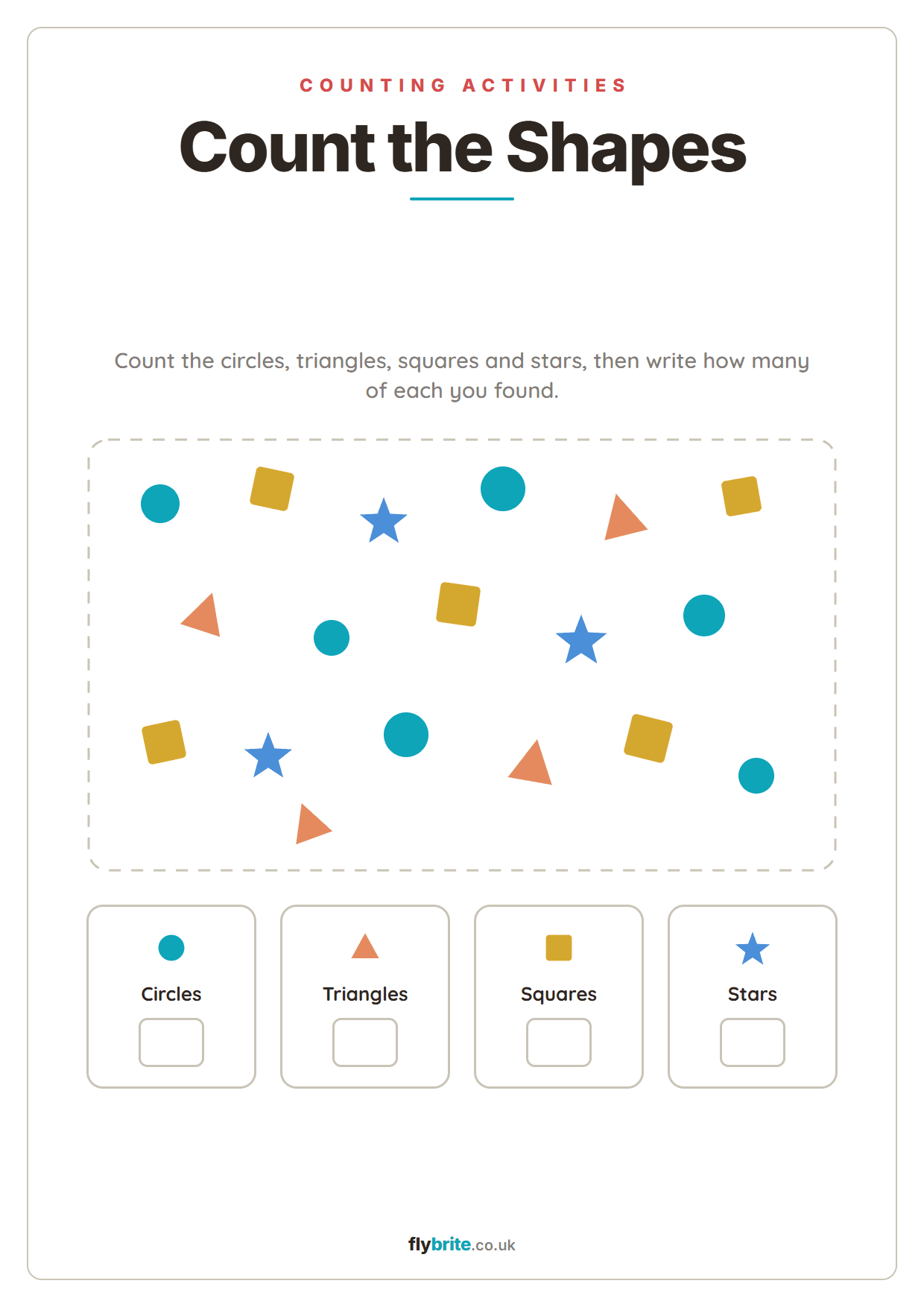
A cheerful jumble of circles, triangles, squares and stars to hunt, count and tally up.
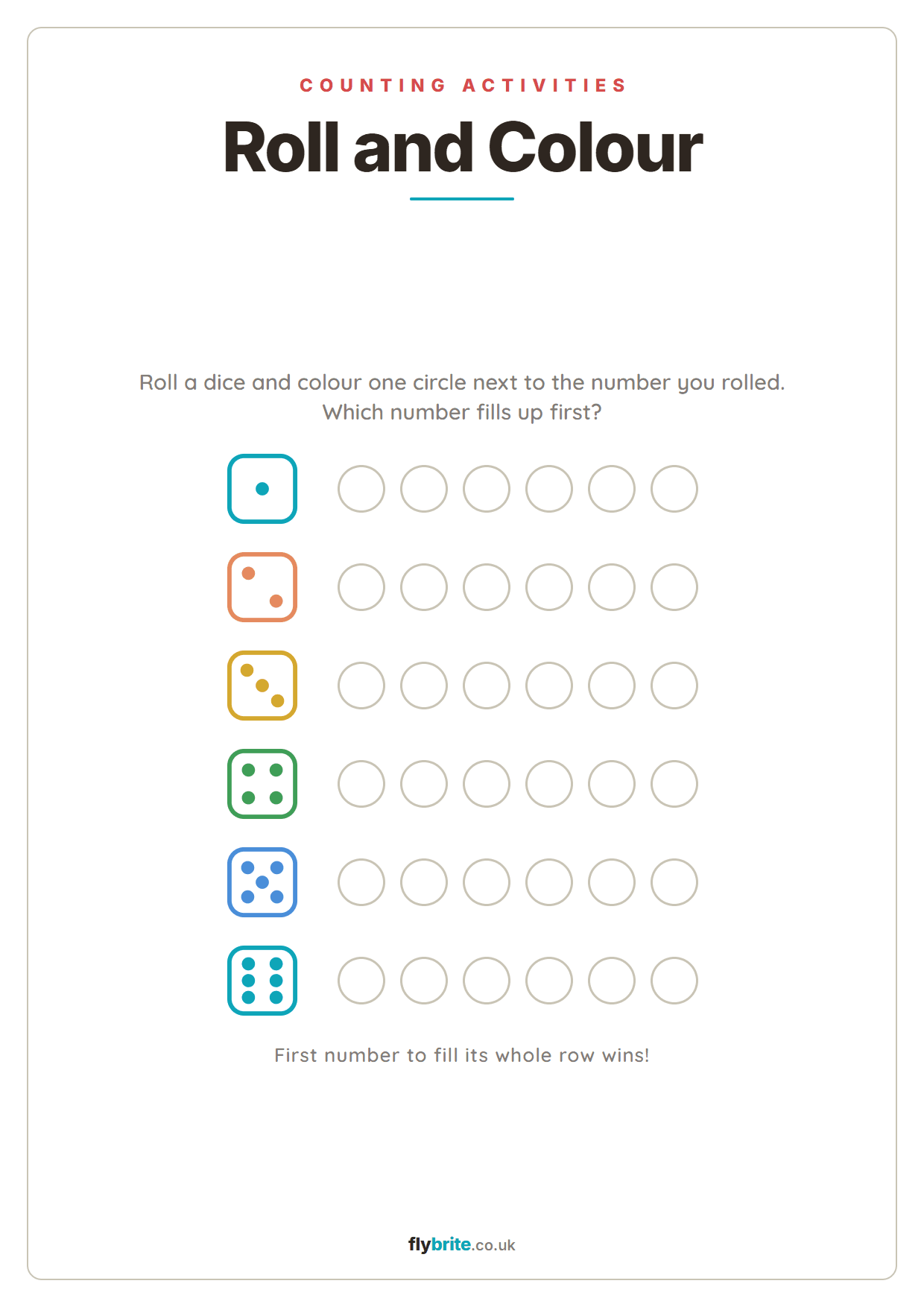
A roll-and-colour dice race that sneaks counting practice into a proper little game.
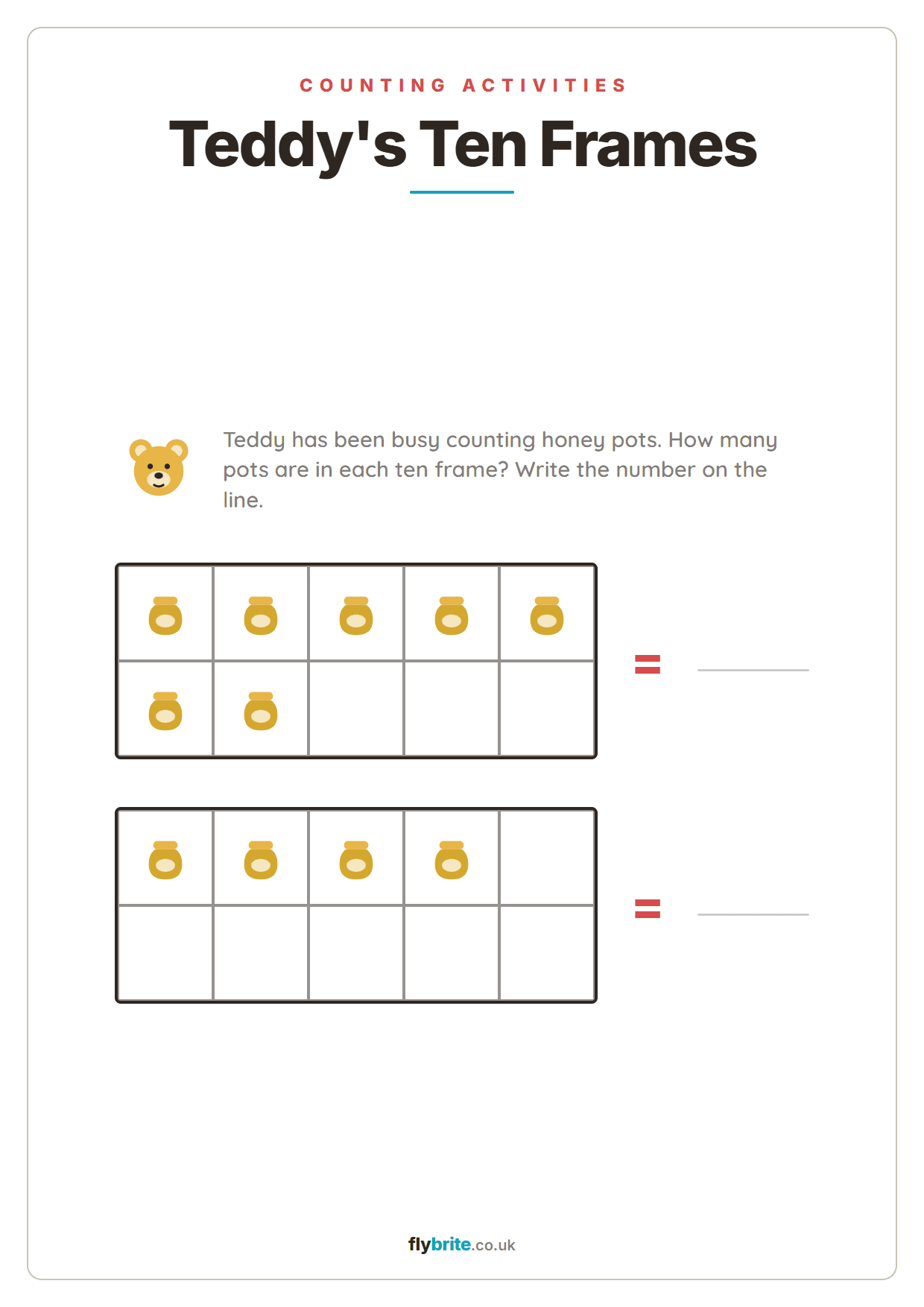
Teddy's honey pots tucked into ten frames, a gentle introduction to numbers up to ten.
Ten pages built around your child's own name, personalised free at checkout.
 Type or write in
A big space for your child's name up top, then five guided lines to trace it until it flows.
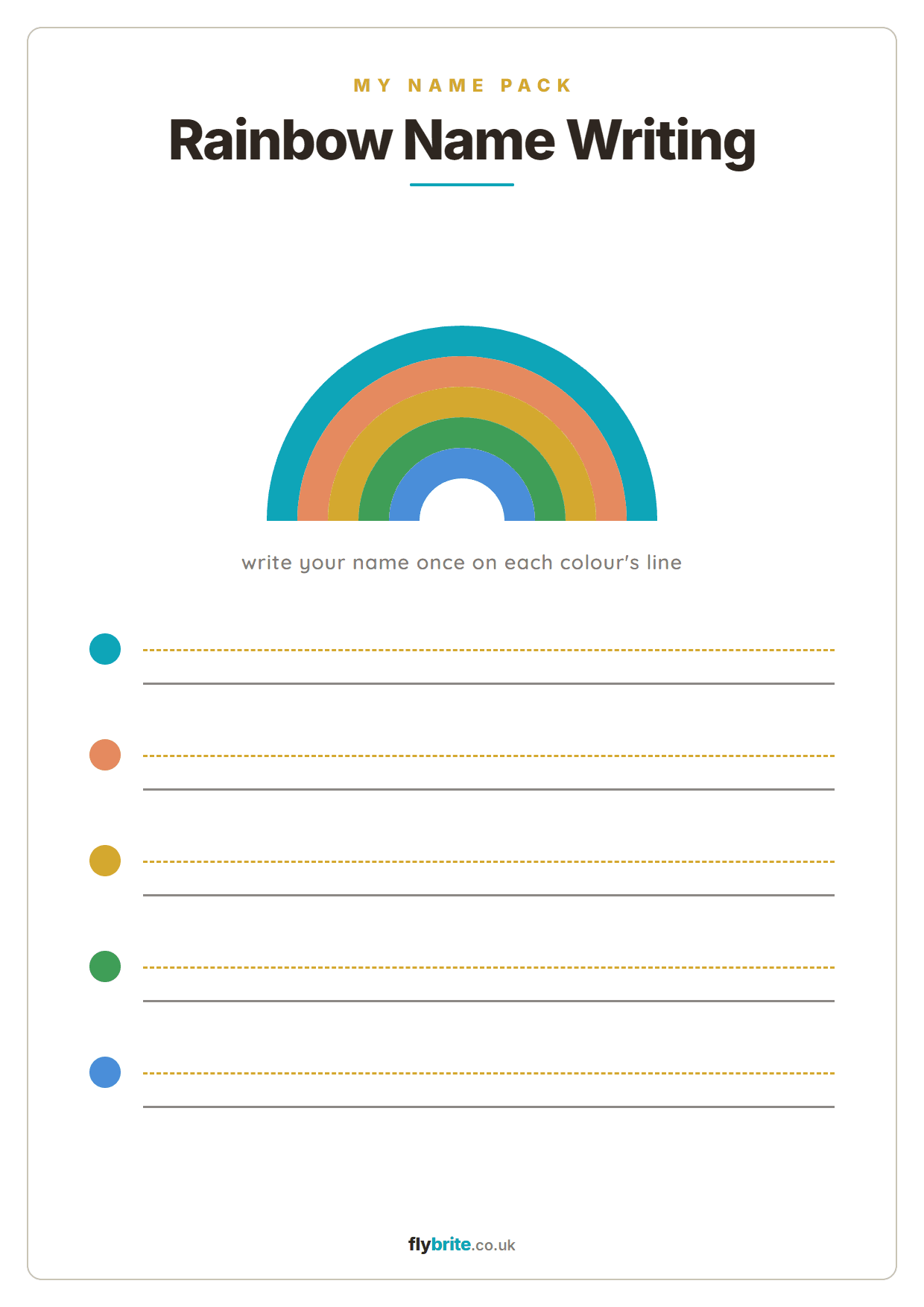 Type or write in
Write your name once on every colour's line and watch a whole rainbow of practice appear.
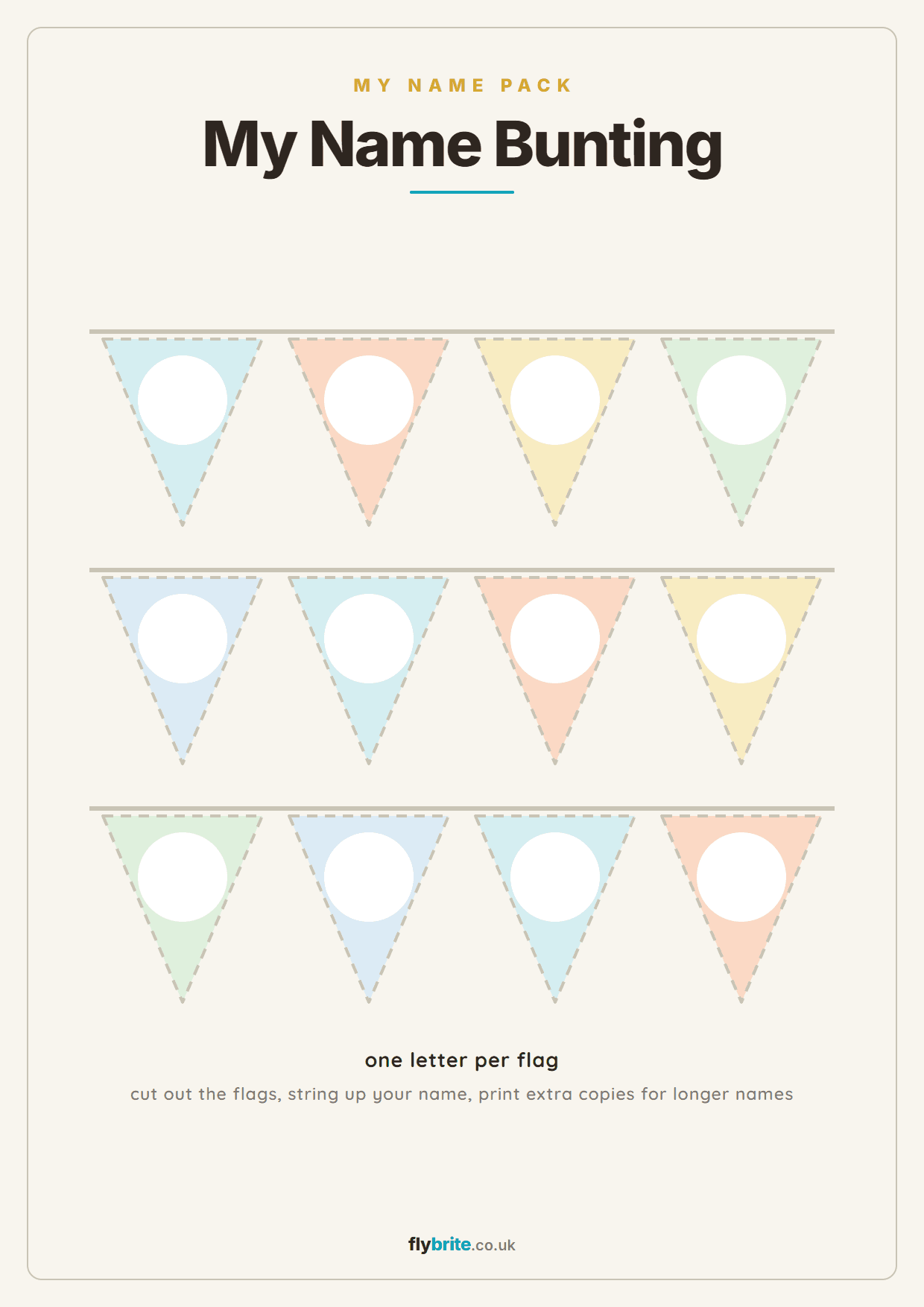 Type or write in
Cut out the flags, add one letter to each, and string your name across the bedroom wall.
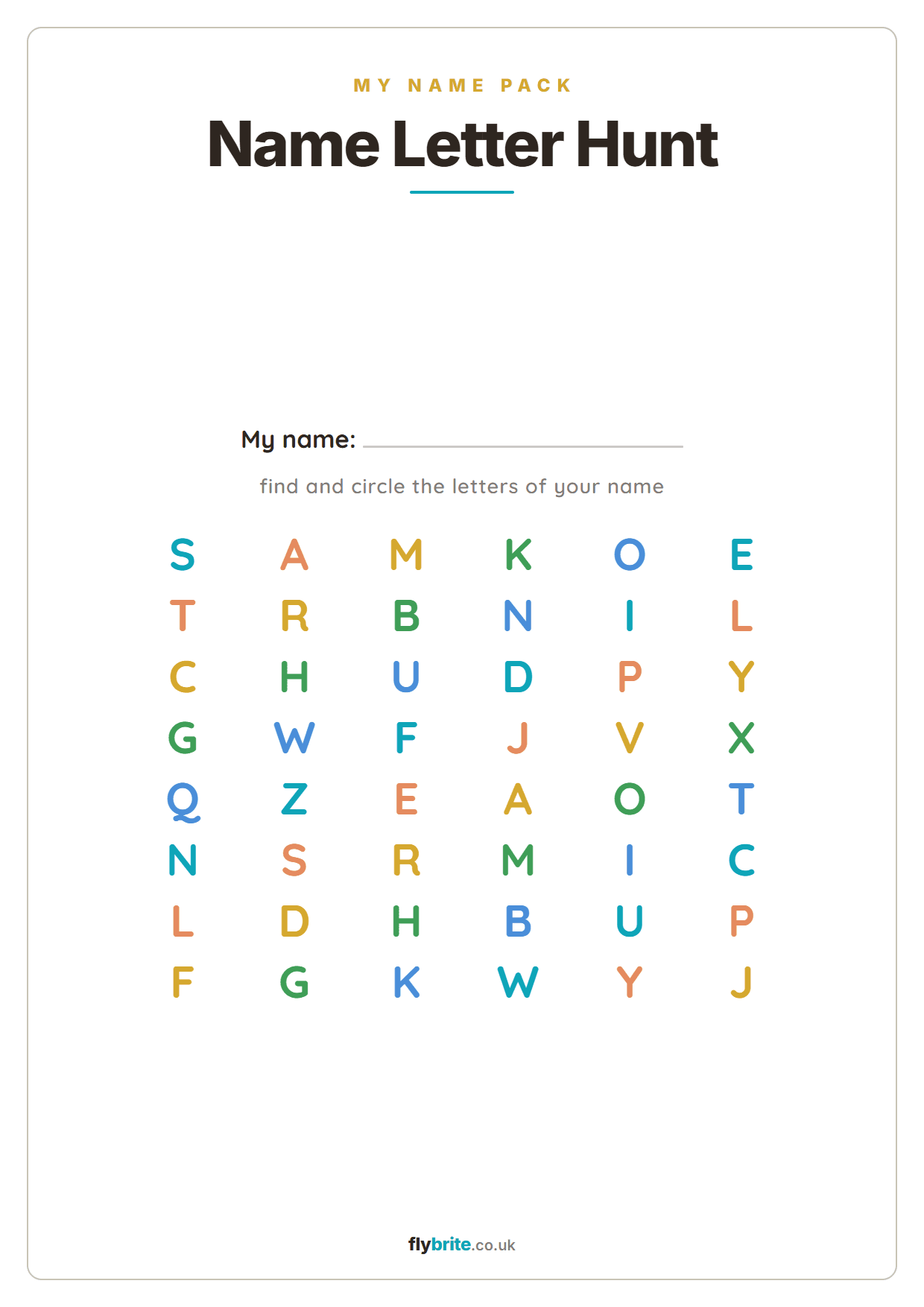 Type or write in
A page full of colourful letters to search, circling every letter of your own name.
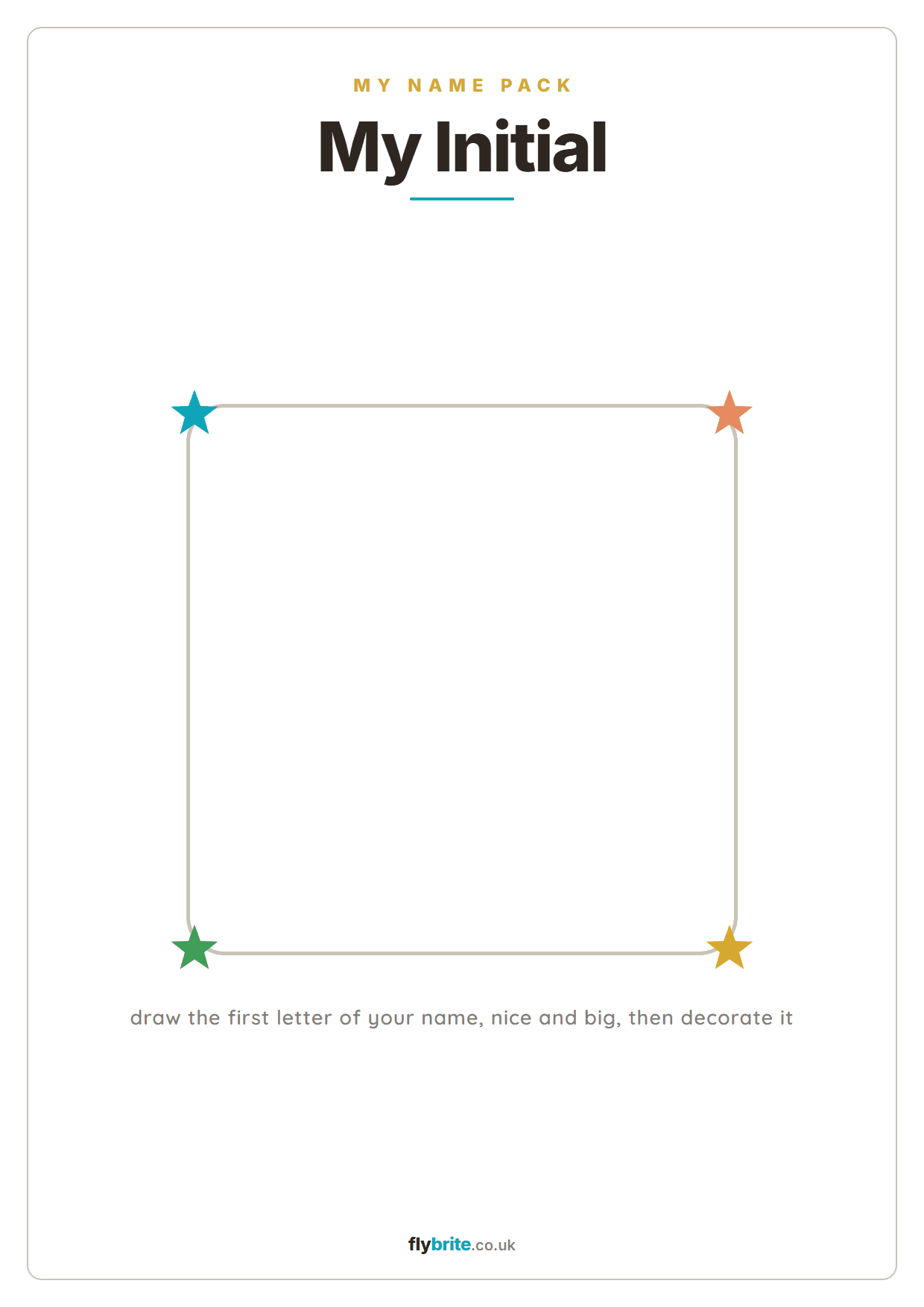 Type or write in
One huge frame to draw the very first letter of your name, then decorate it however you like.
 Type or write in
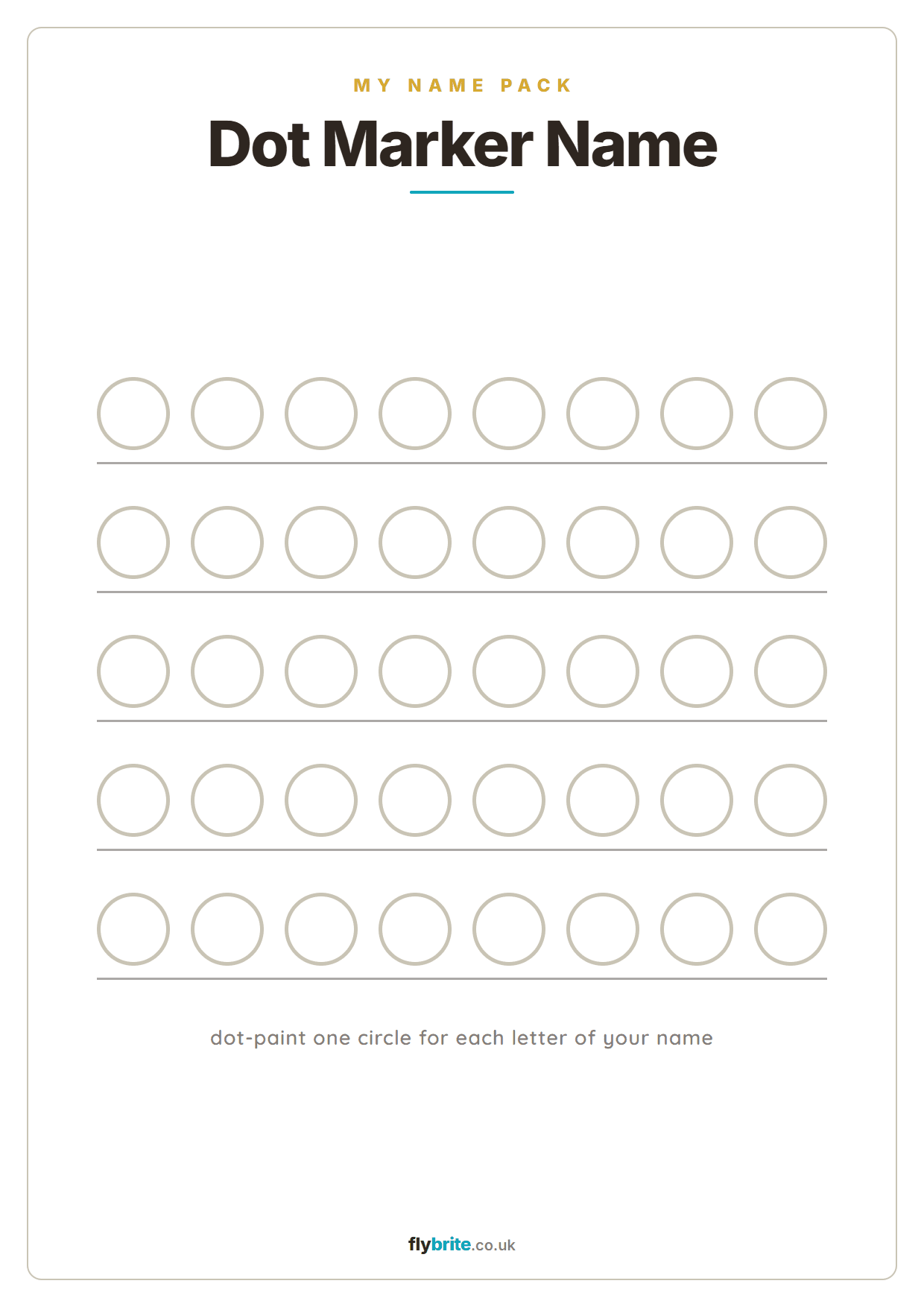
Dot-paint one circle for every letter of your name, a lovely first step before pencils.
 Type or write in
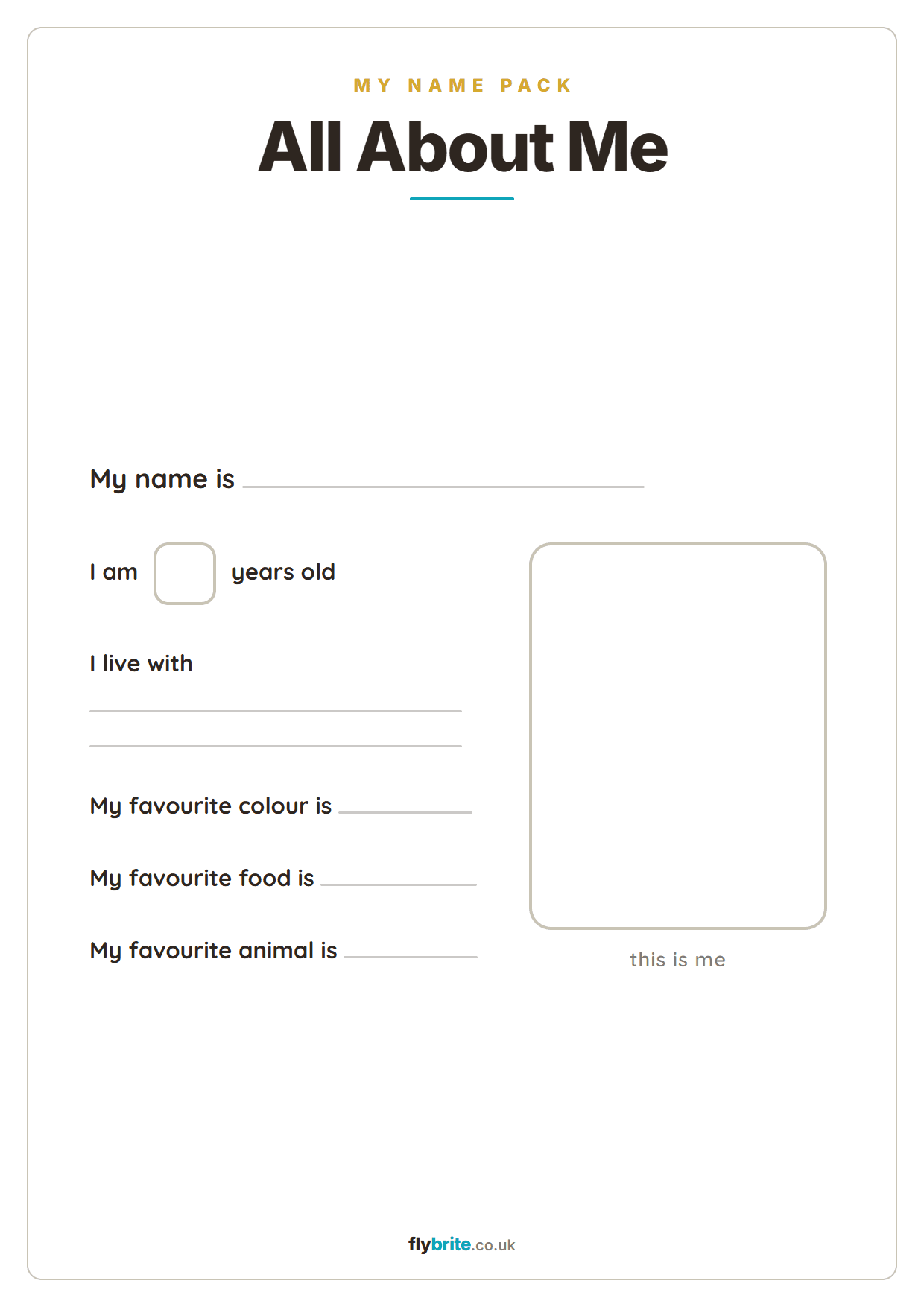
Name, age, favourites and a self-portrait, a keepsake page all about your child.
 Type or write in
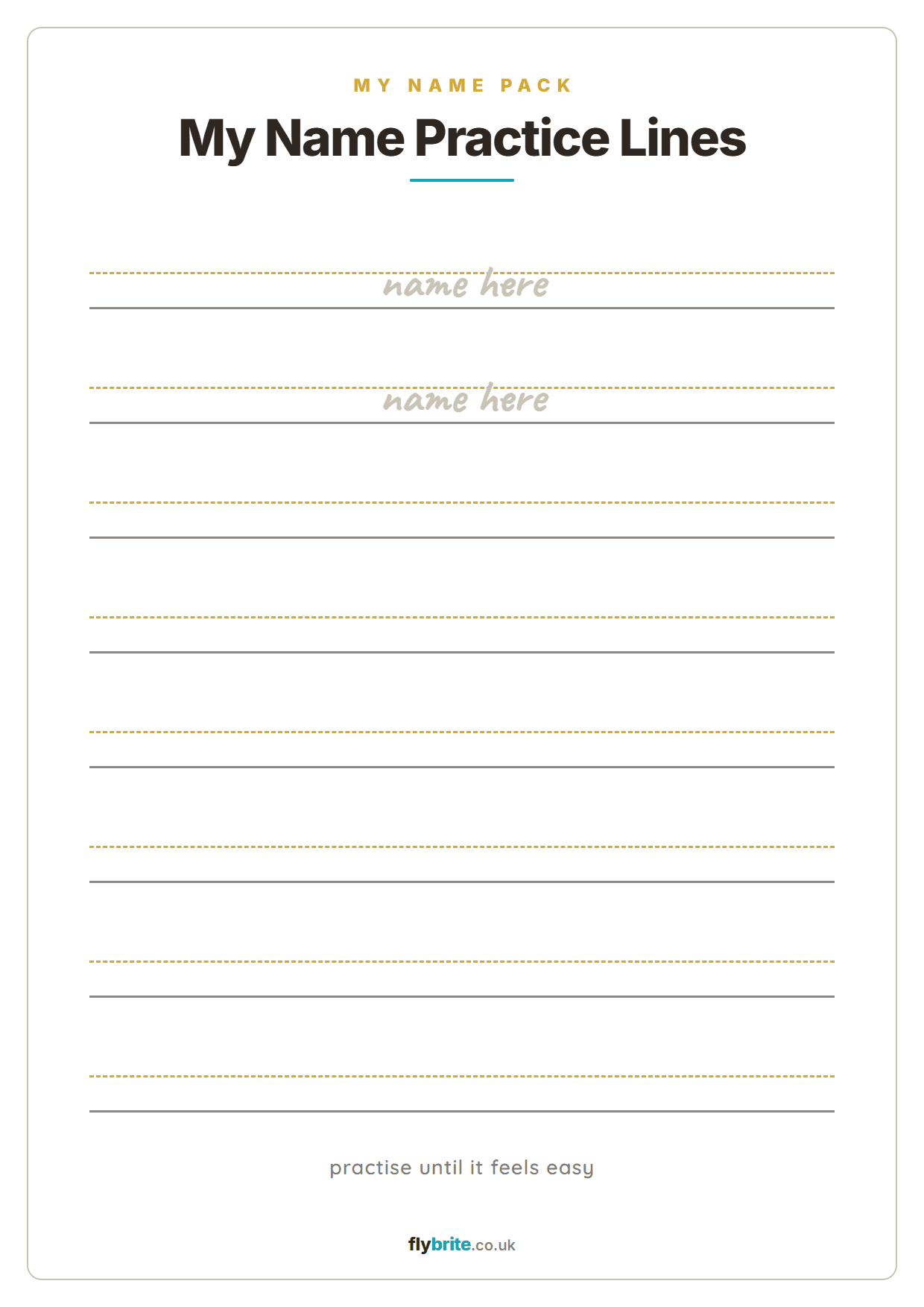
Eight full-width handwriting lines for name practice, with friendly hints on the first two.
 Type or write in
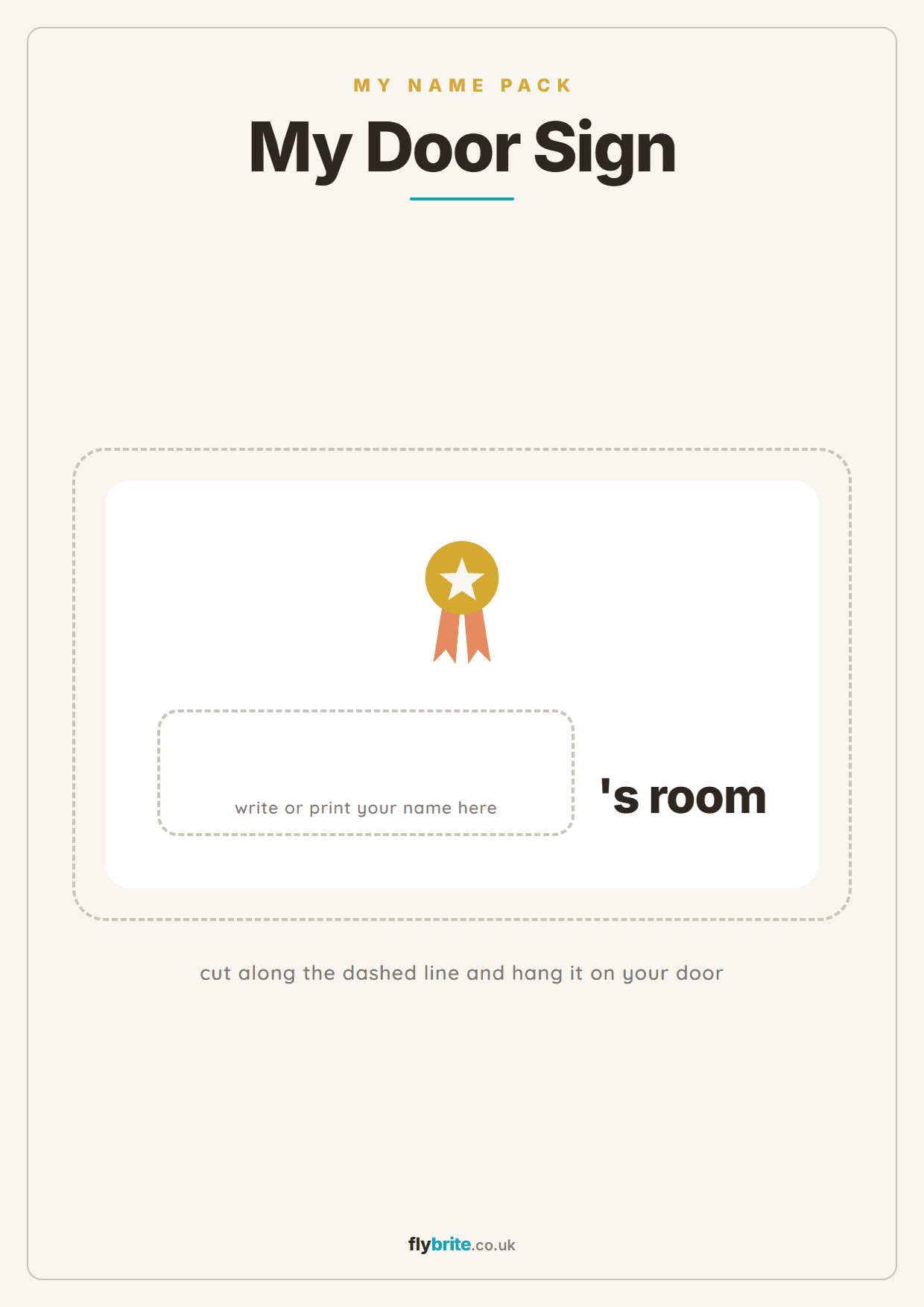
A cut-out door plaque with a rosette and a proud blank band ready for your child's name.
 Type or write in
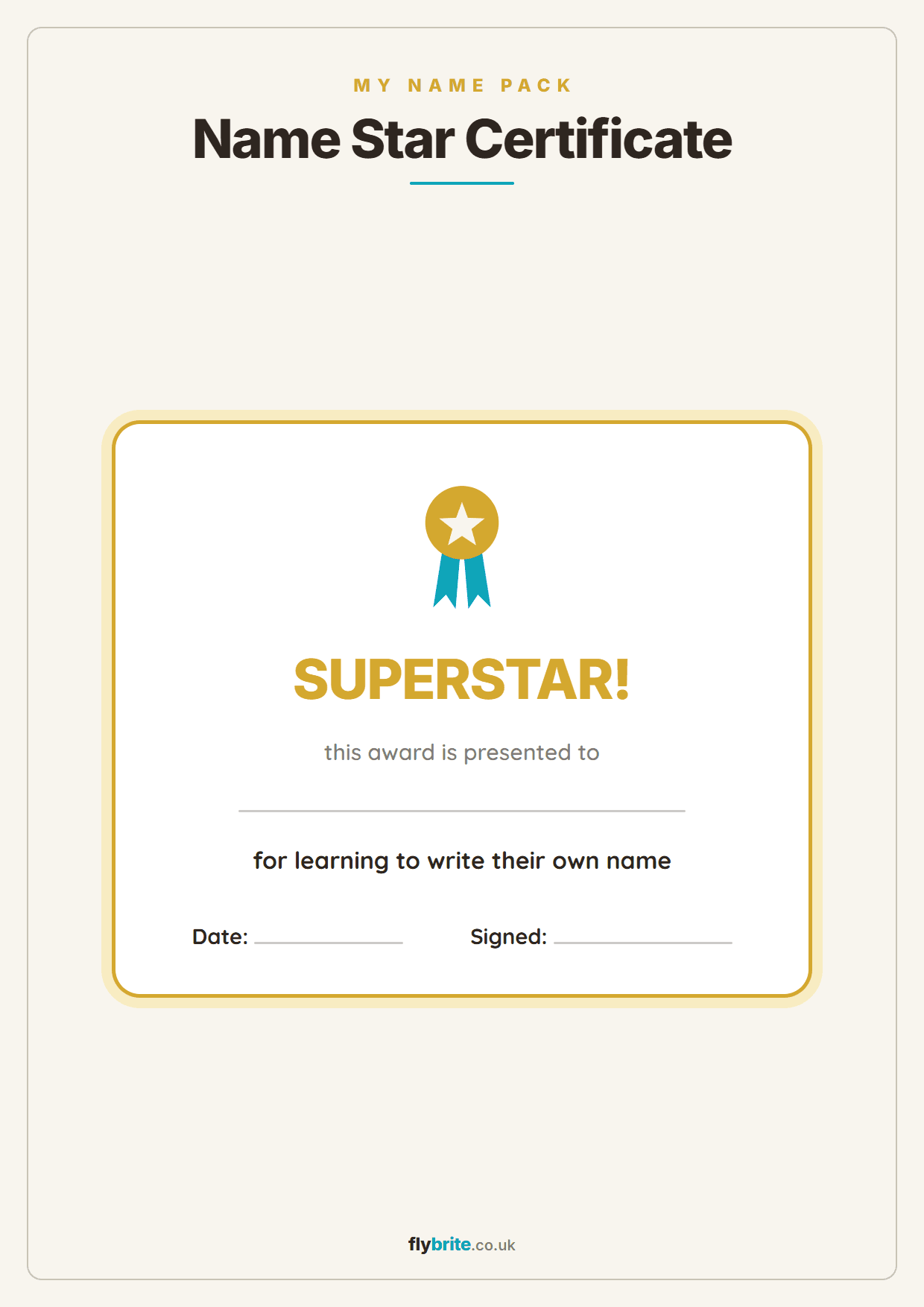
A golden superstar award to fill in and sign the day your child first writes their own name.
Ten themed mazes that grow trickier with every age band, from first paths to proper puzzlers.
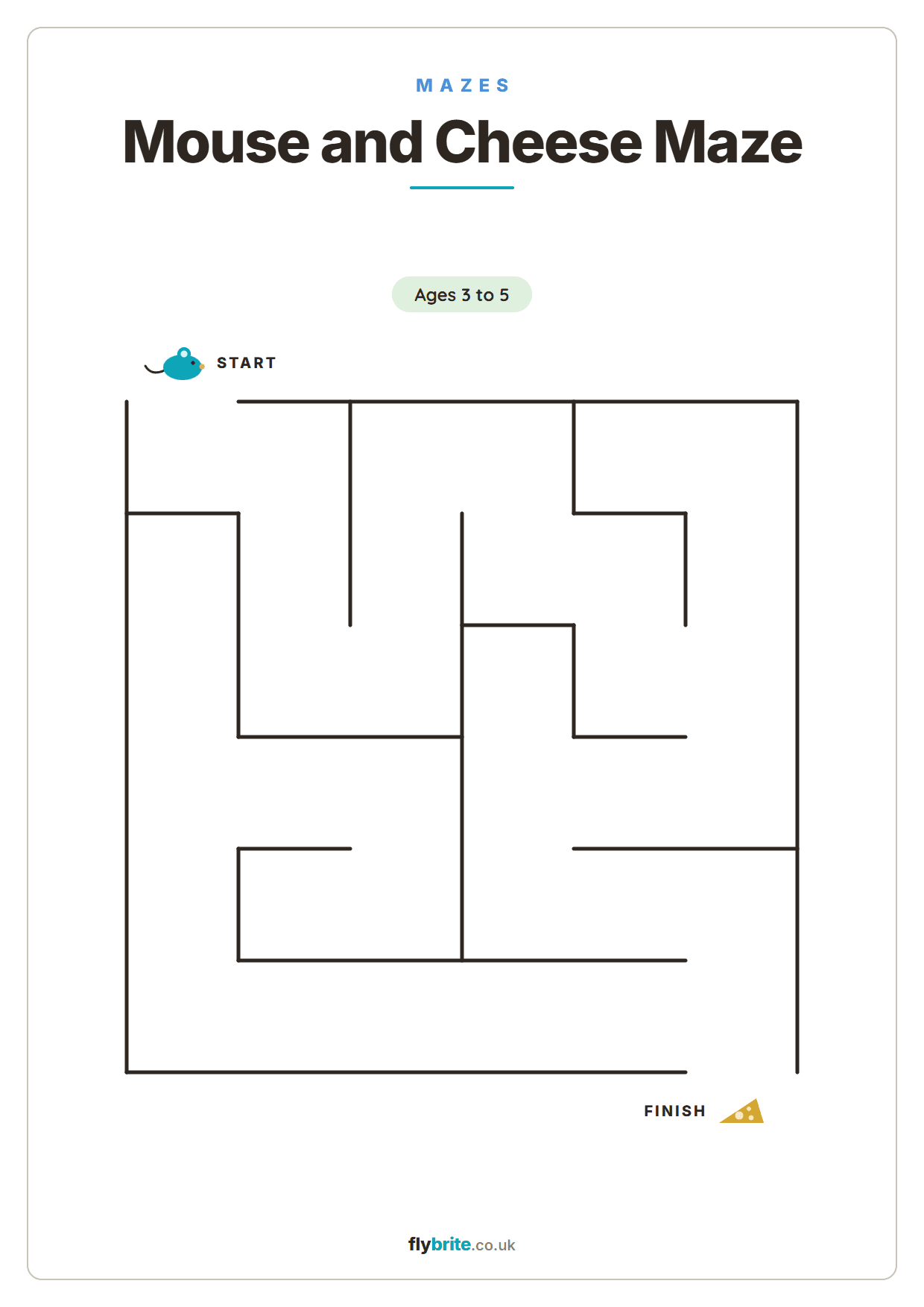
Help the little mouse find a winding way through to that lovely wedge of cheese.

A gentle first maze that guides a busy bee safely down to her flower.
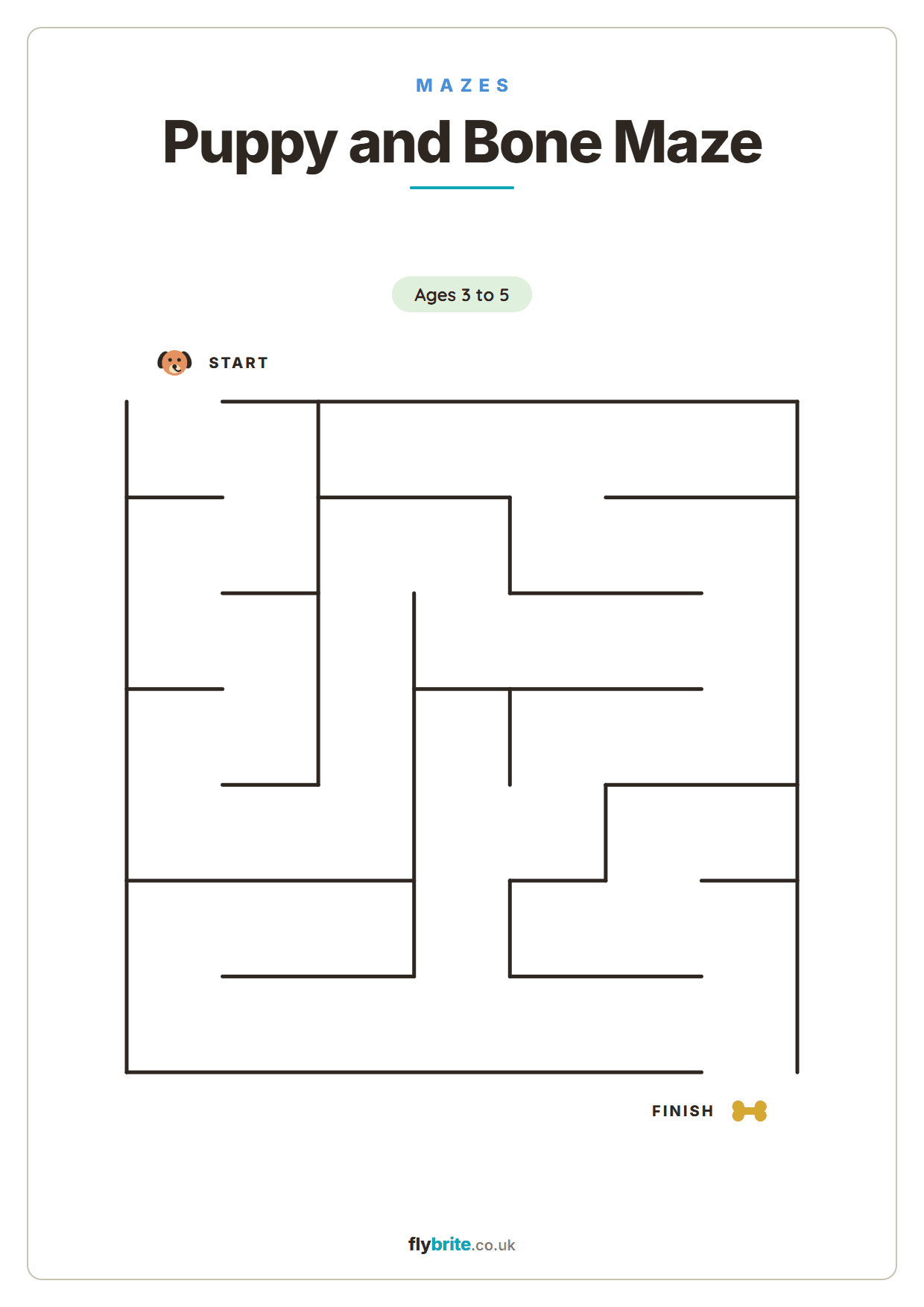
Trace a path through the twists so the puppy can dig up his favourite bone.
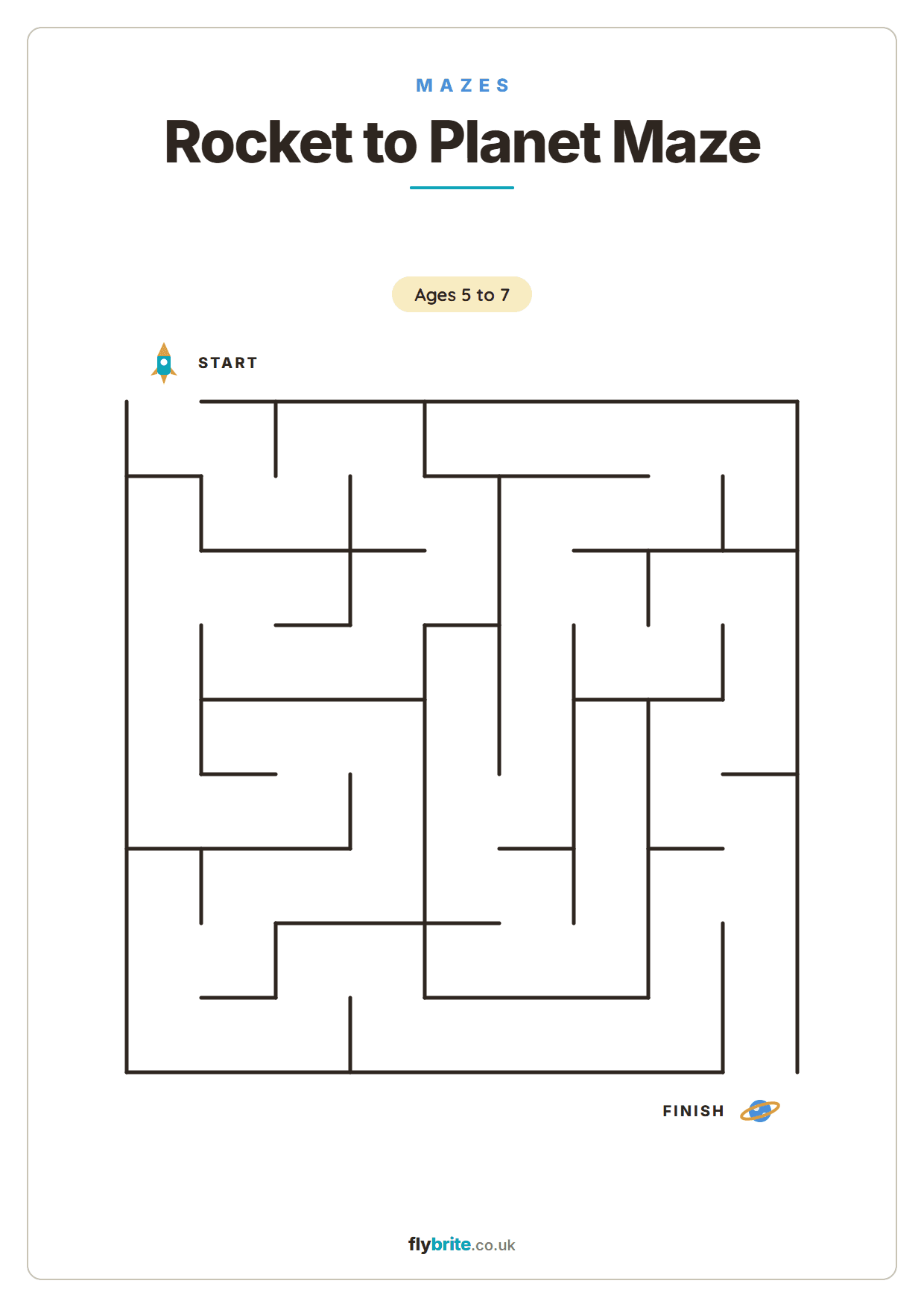
Steer the rocket through the tangle and blast off all the way to the planet.
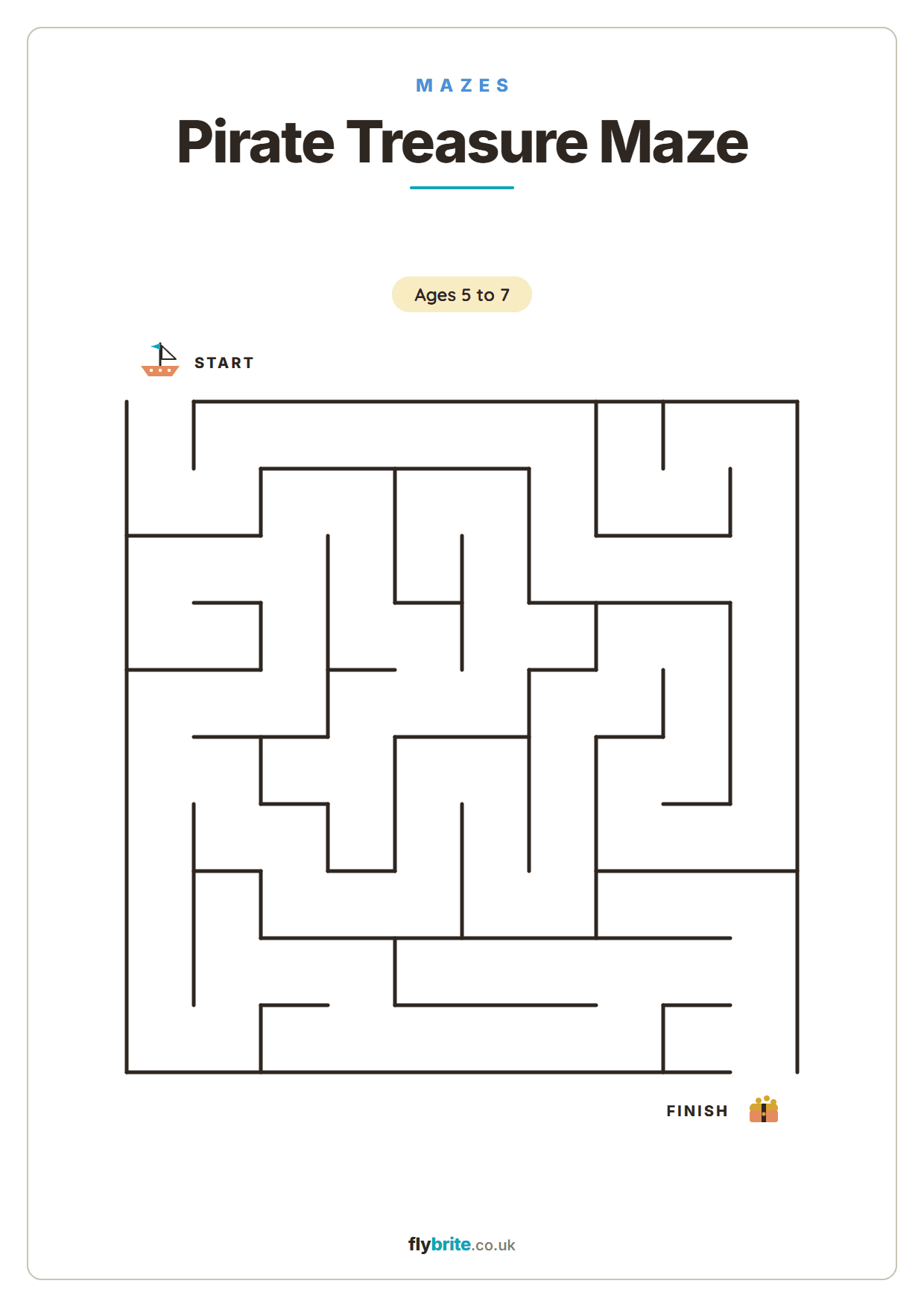
Sail the pirate ship through tricky turns to reach the buried treasure.
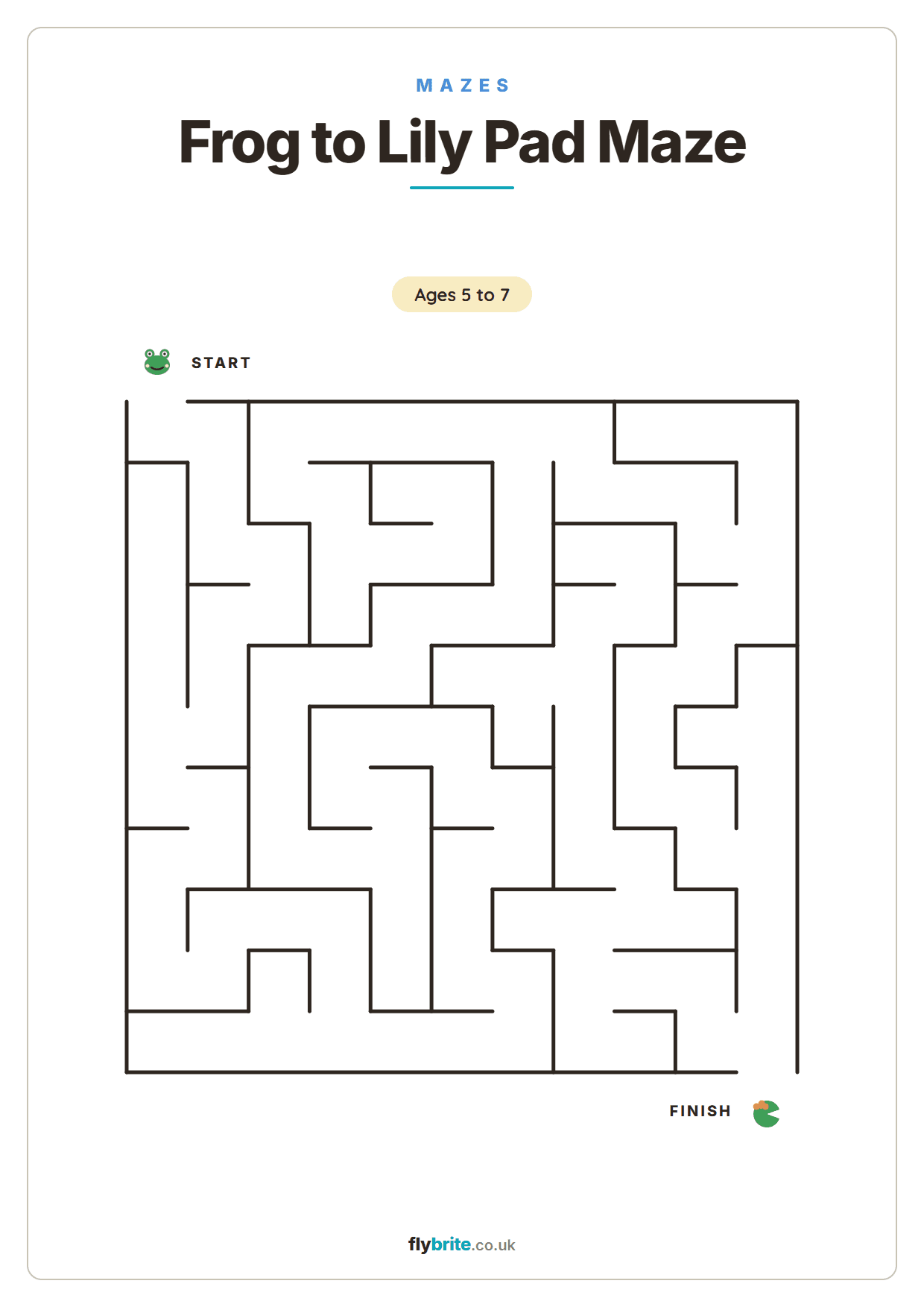
Hop the frog along the winding water paths until he lands on his lily pad.
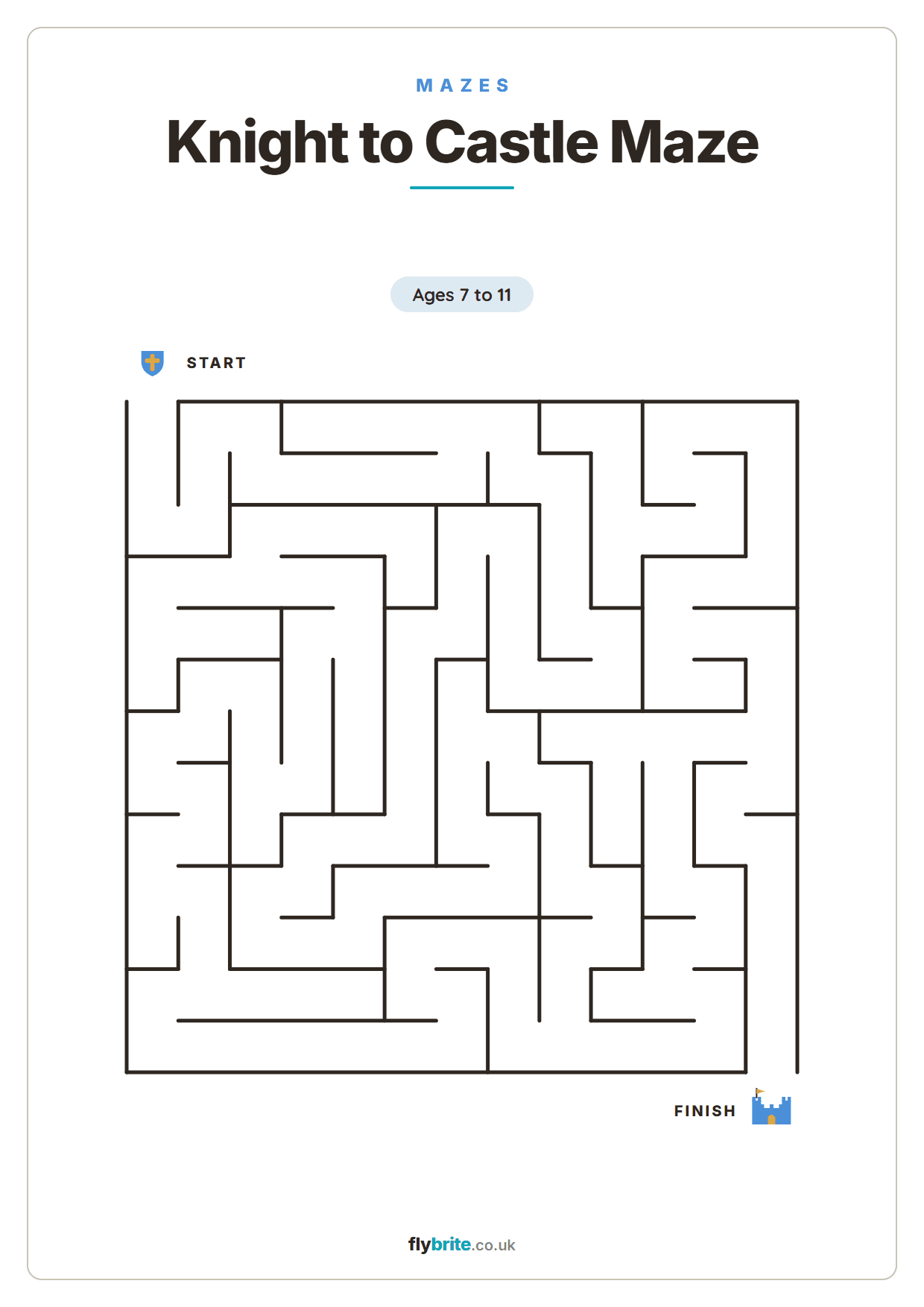
Guide the brave knight through the winding grounds and home to the castle keep.
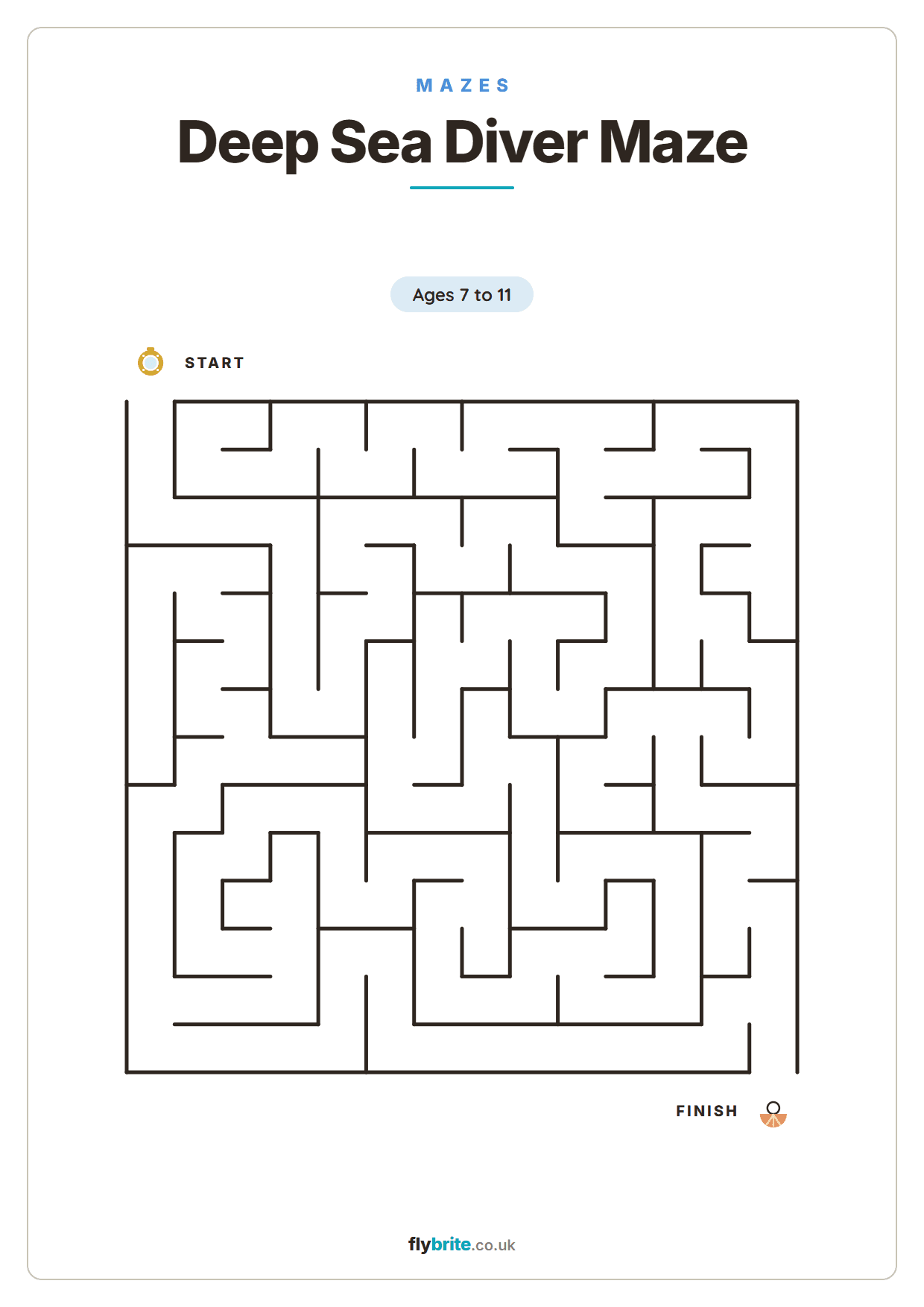
Dive deep and wiggle through the currents to find the pearl on the seabed.
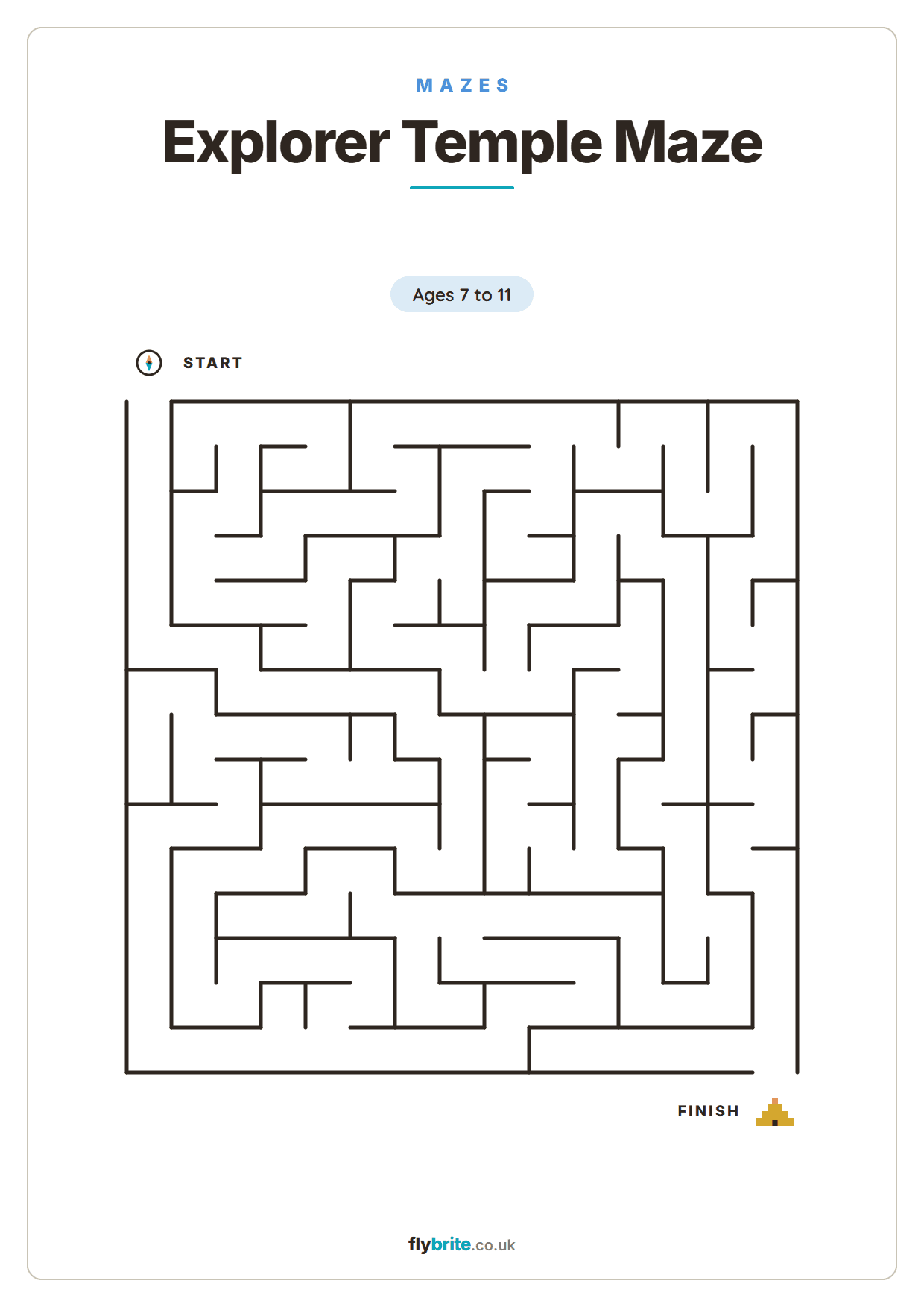
Lead the explorer along the hidden trail to the lost temple, compass in hand.
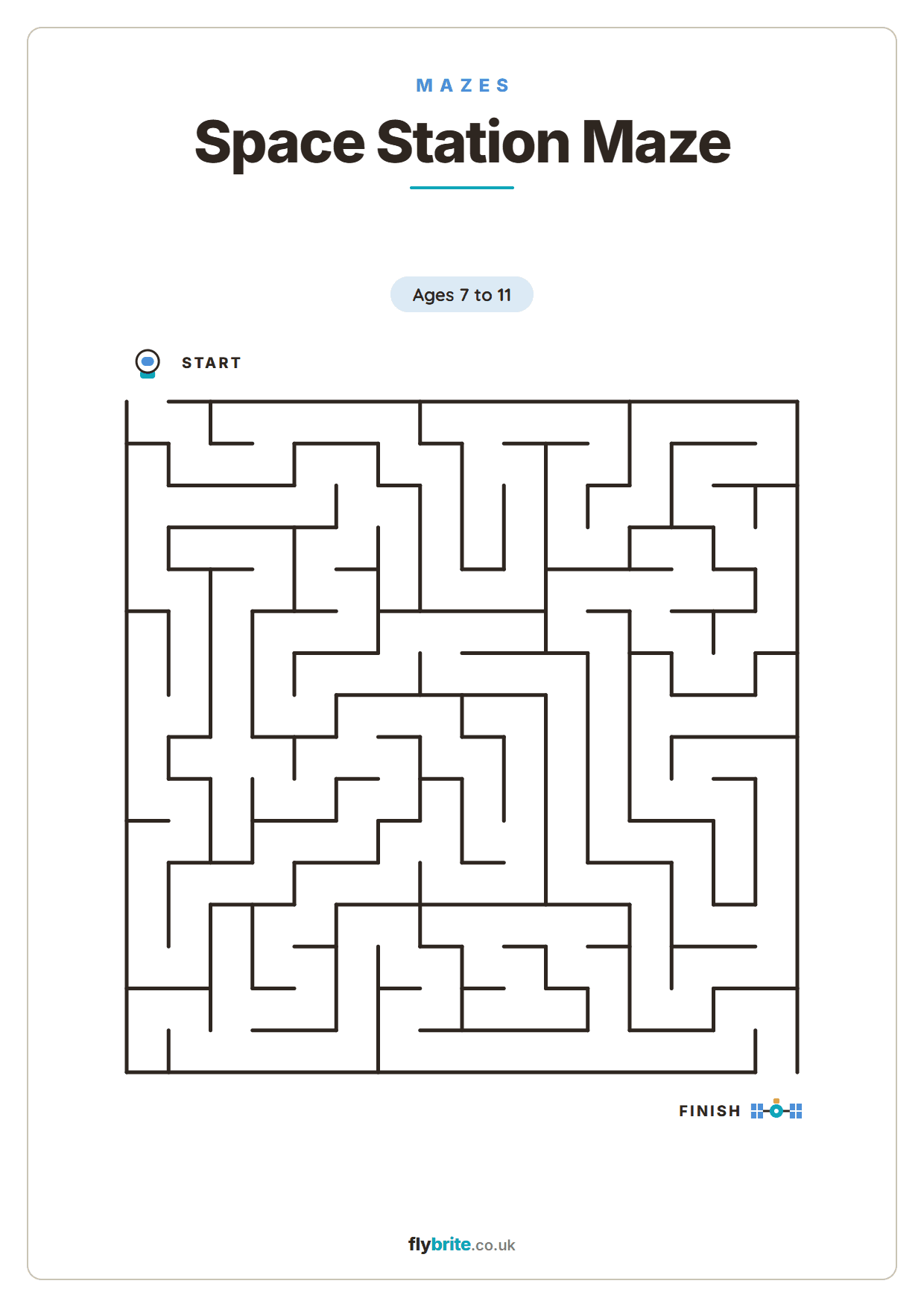
Plot a careful course through deep space and dock safely at the station.
Editable planning pages for every age band, from gentle daily rhythms to proper revision timetables.
 Type or write in
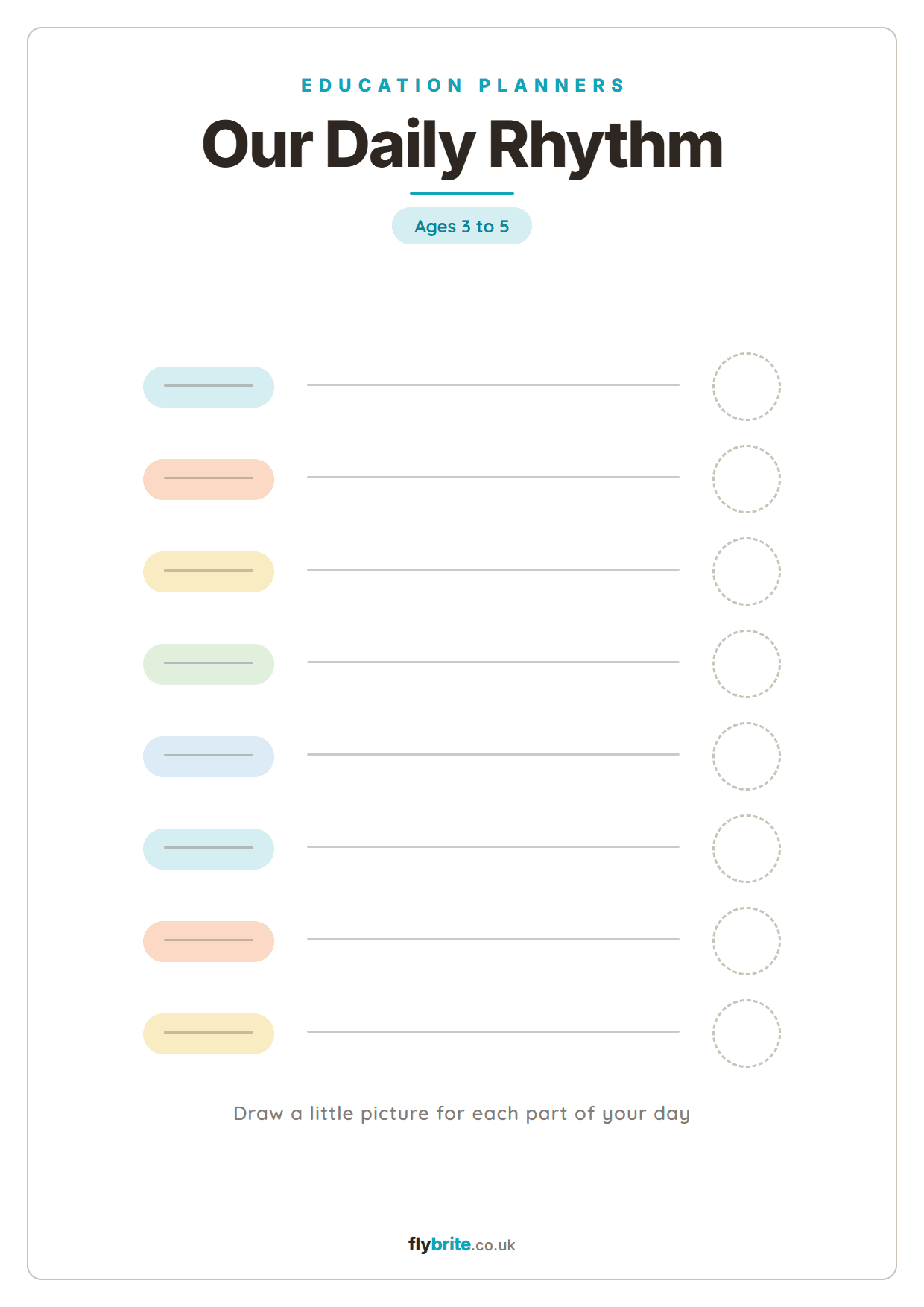
A gentle first planner for little ones, with a time, a plan and a tiny picture to draw for each part of the day.
 Type or write in
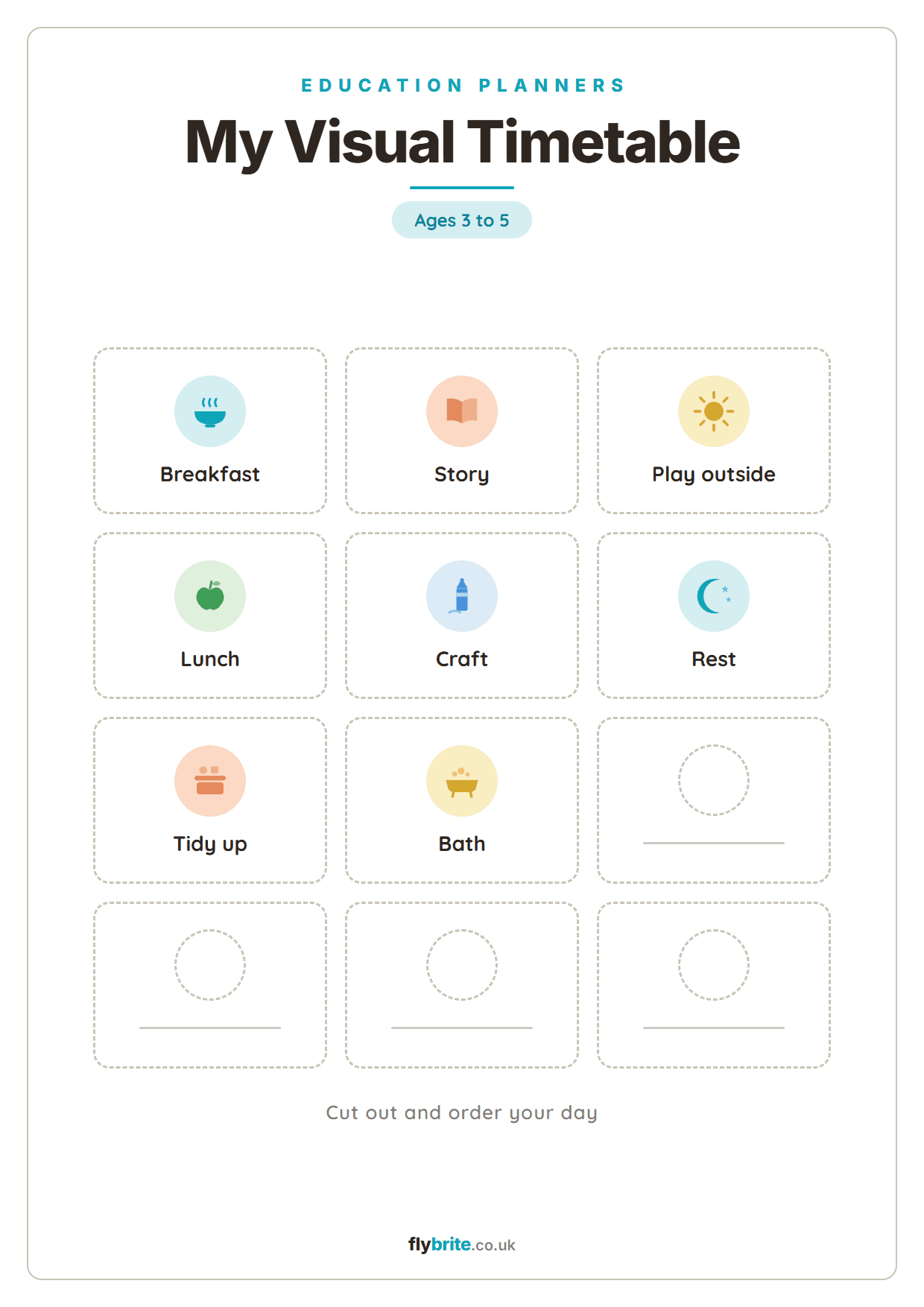
Twelve cheerful cards to cut out and shuffle so your little one can see their whole day at a glance.
 Type or write in
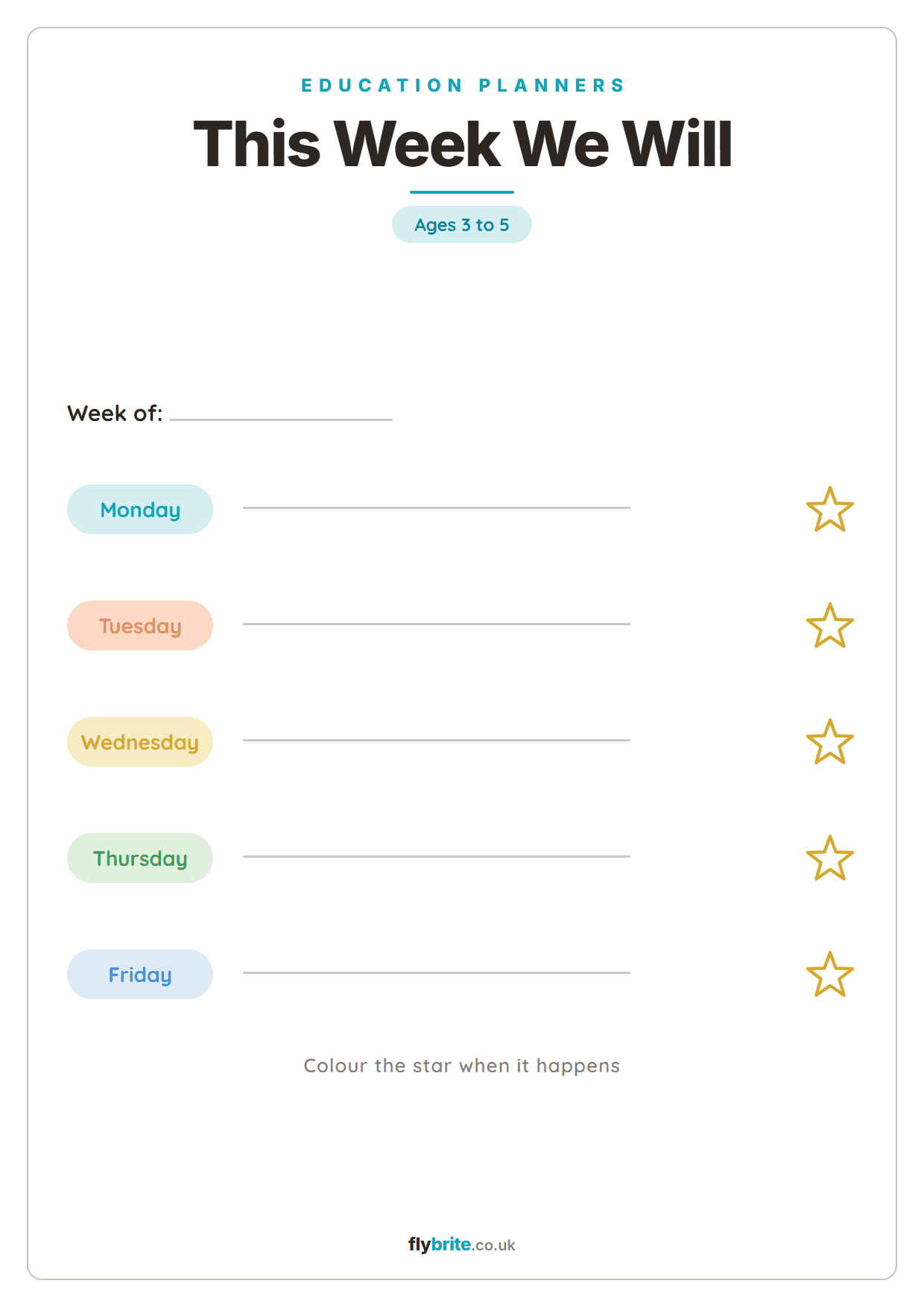
Five big hopeful lines for the week ahead, with a golden star to colour every time one happens.
 Type or write in
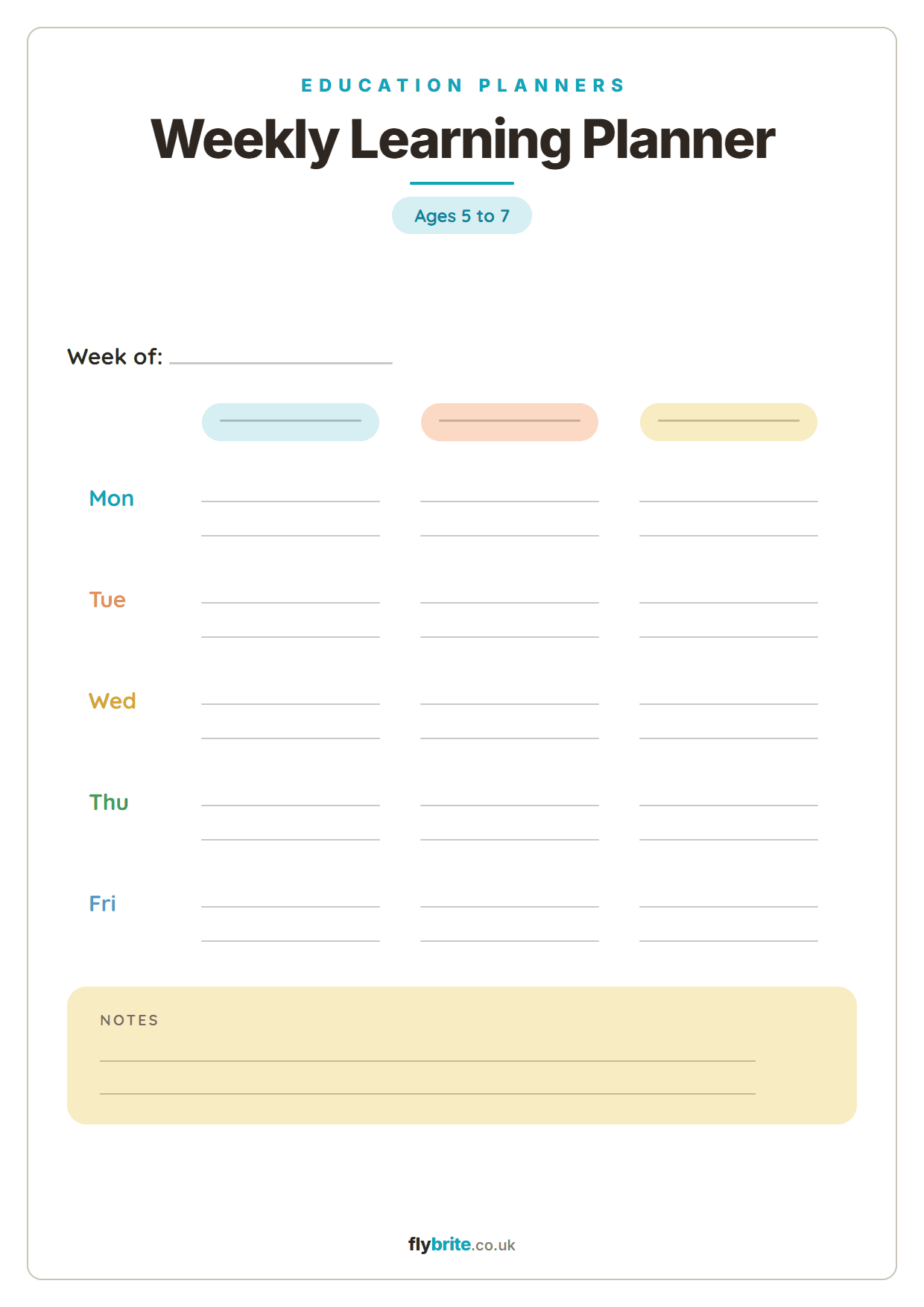
A friendly first timetable, write your three subjects across the top and plan Monday to Friday in minutes.
 Type or write in
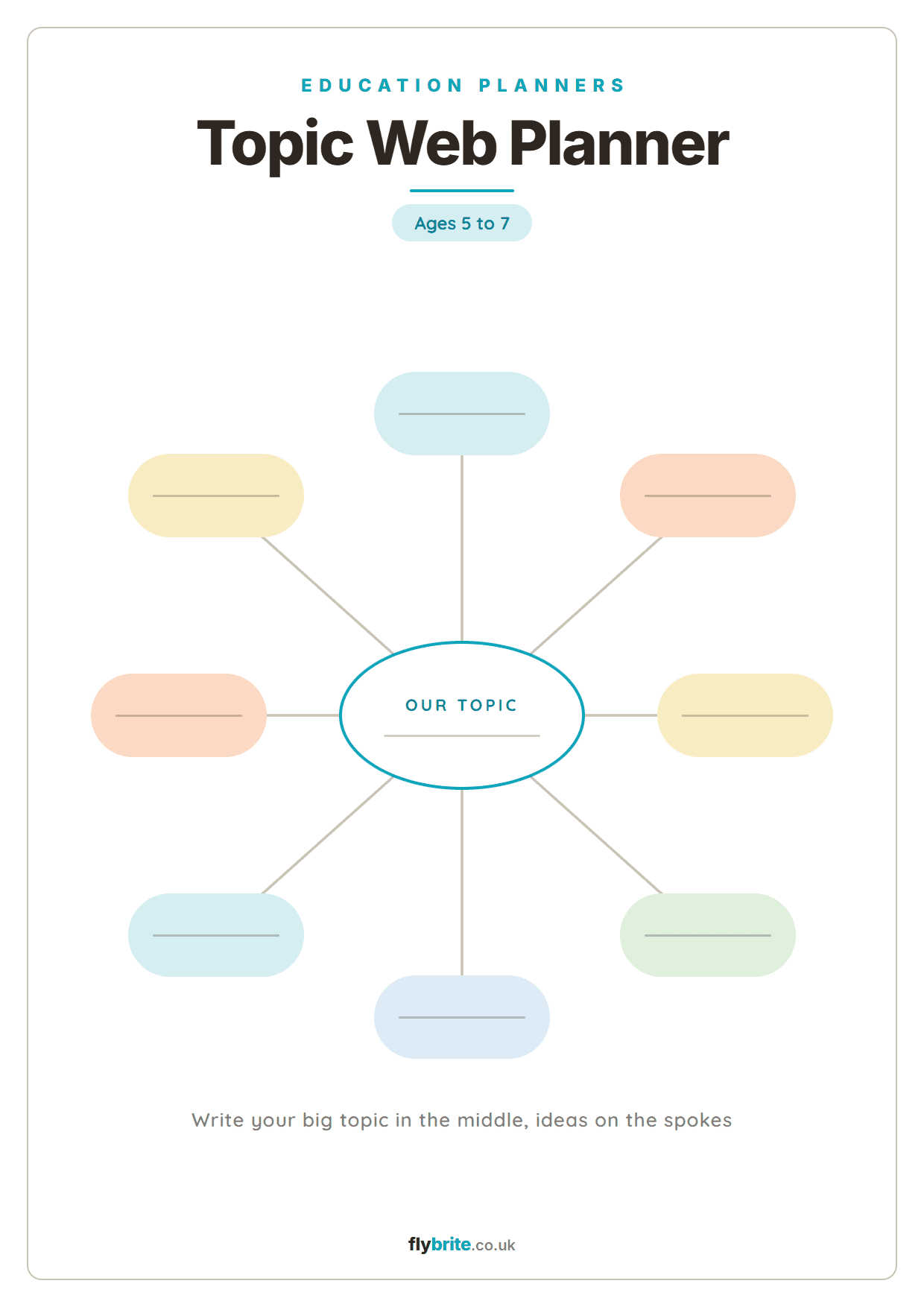
Pop your big topic in the middle and let the ideas branch out along eight busy spokes.
 Type or write in
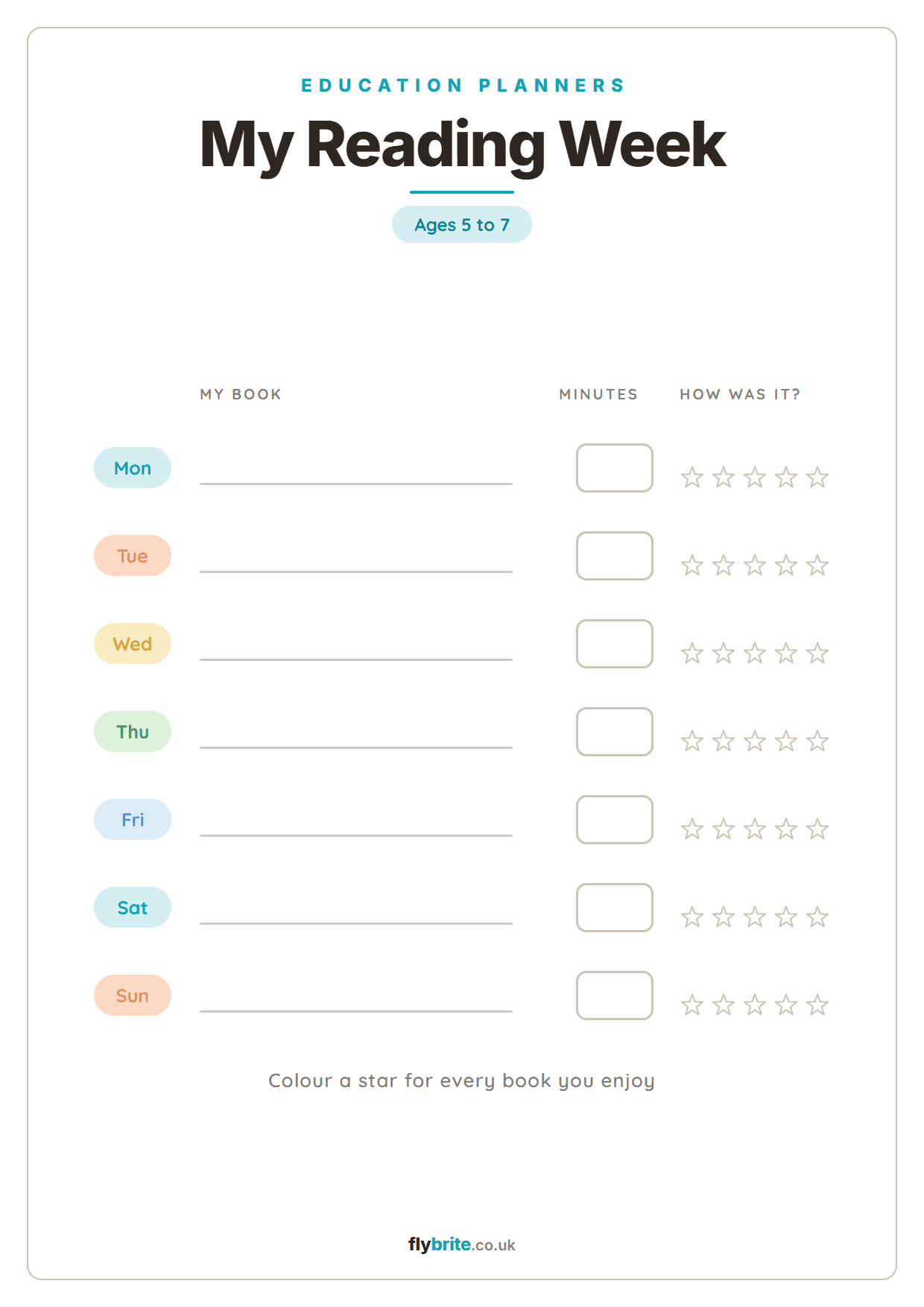
Track a whole week of stories, with space for the book, the minutes read and a row of stars to colour.
 Type or write in
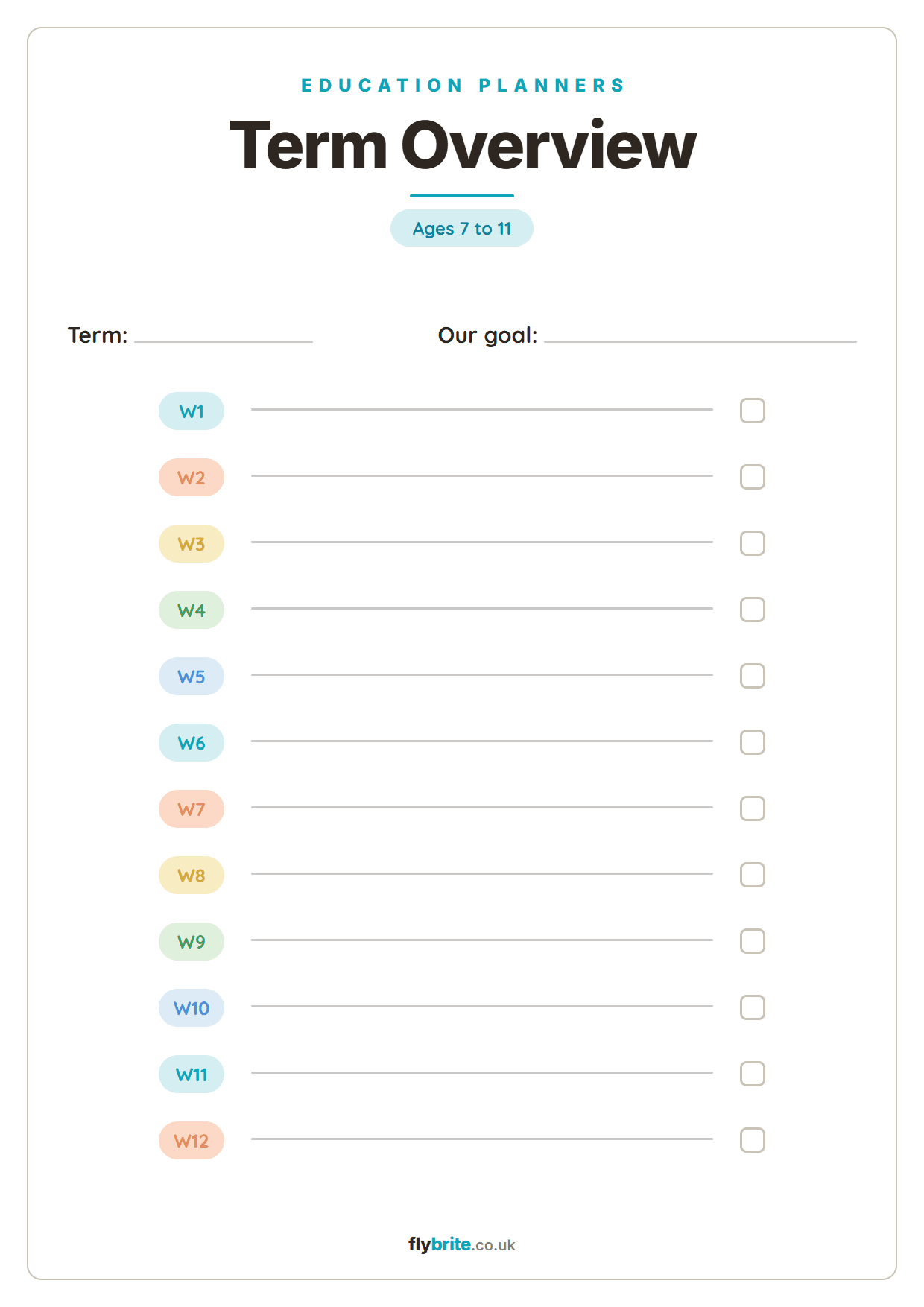
The whole term on one page, twelve weeks of focus with a satisfying tick for every week done.
 Type or write in
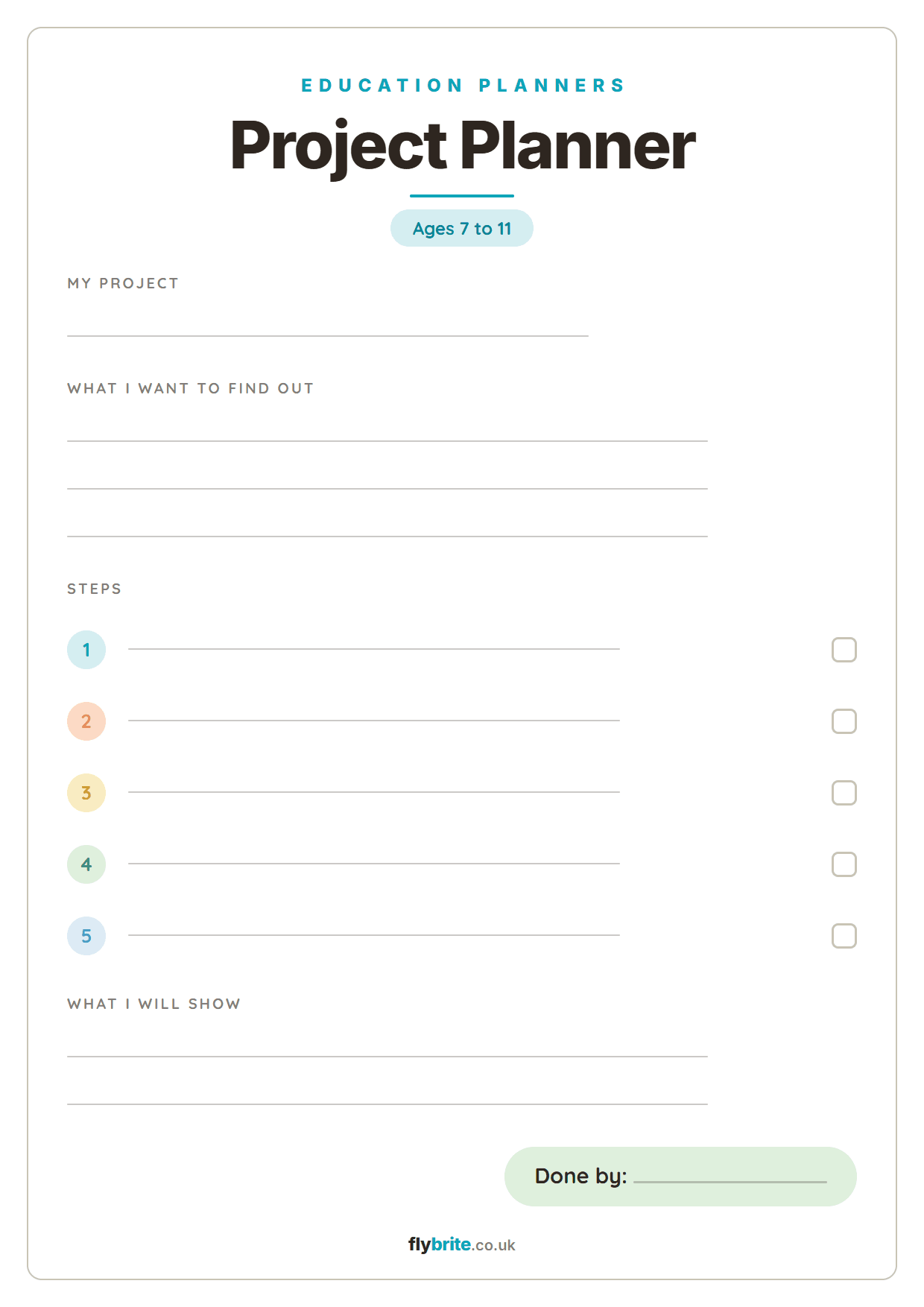
Plan a proper project from big idea to proud finish, with steps to tick and a date to aim for.
 Type or write in
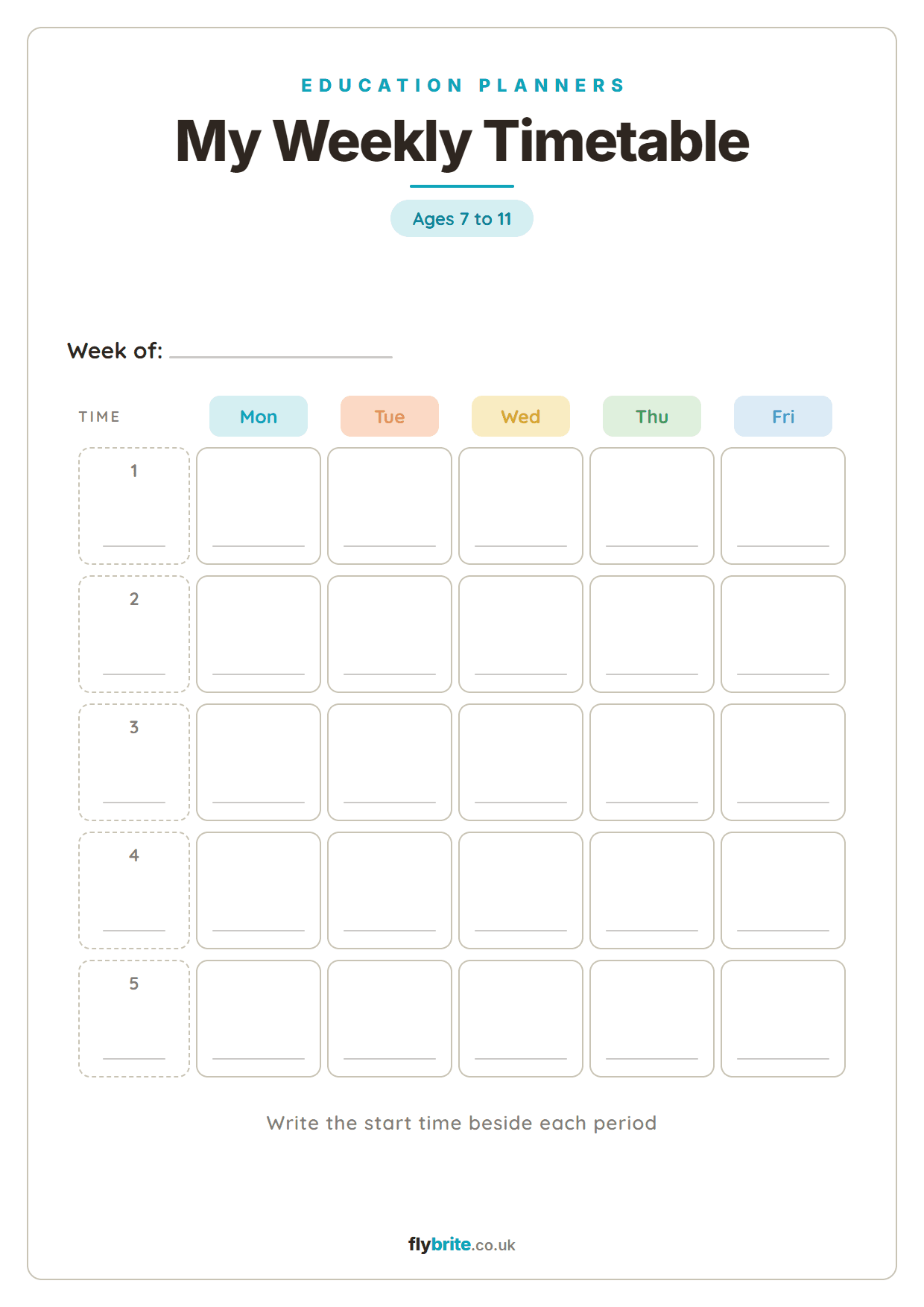
A clean five-period timetable to fill in together, so older children always know what comes next.
 Type or write in
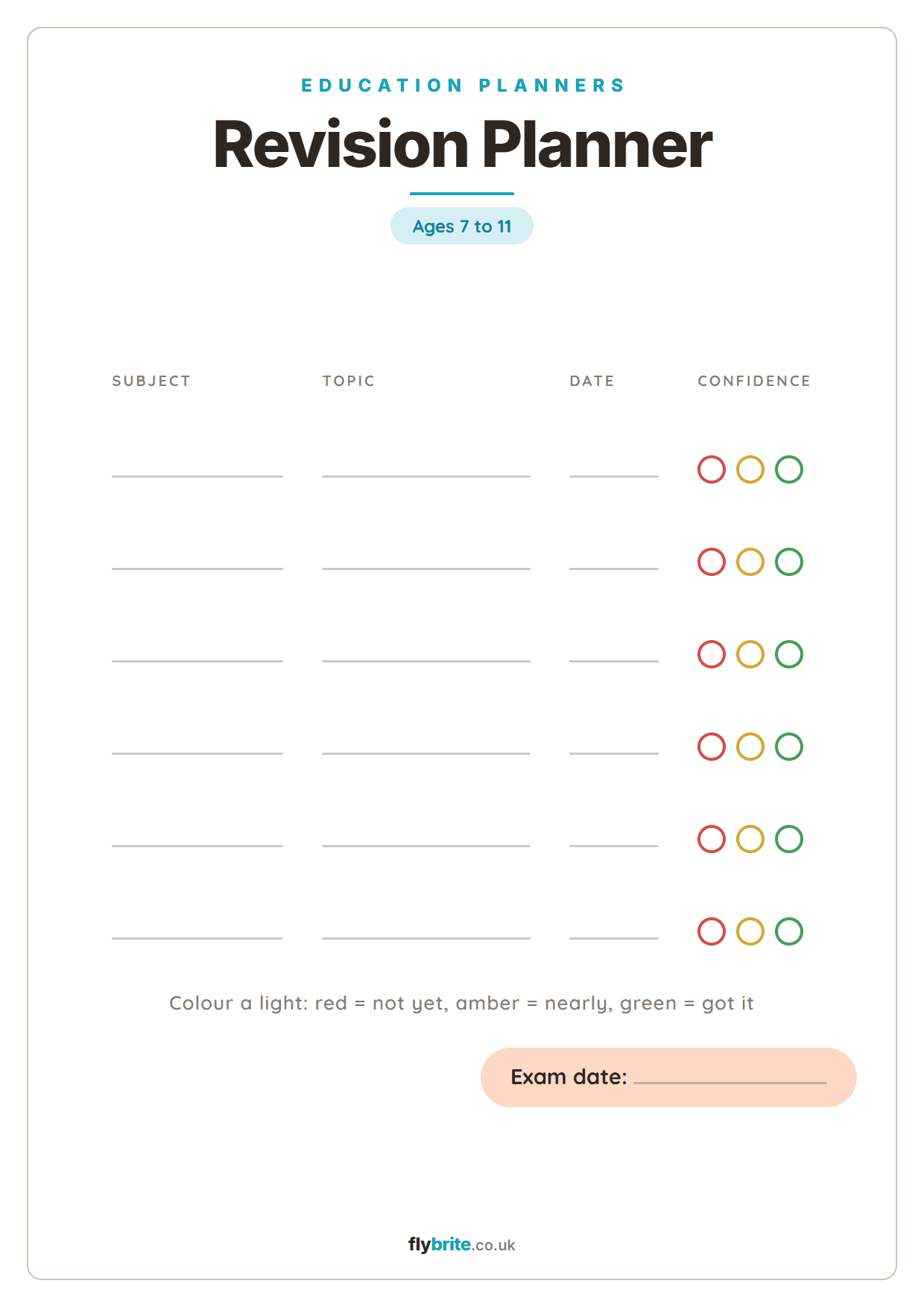
Plan revision like a pro, list your subjects and topics then colour the traffic lights as confidence grows.
Cut-out alphabet, number, shape and sight-word flashcards for games, walls and quick recall.
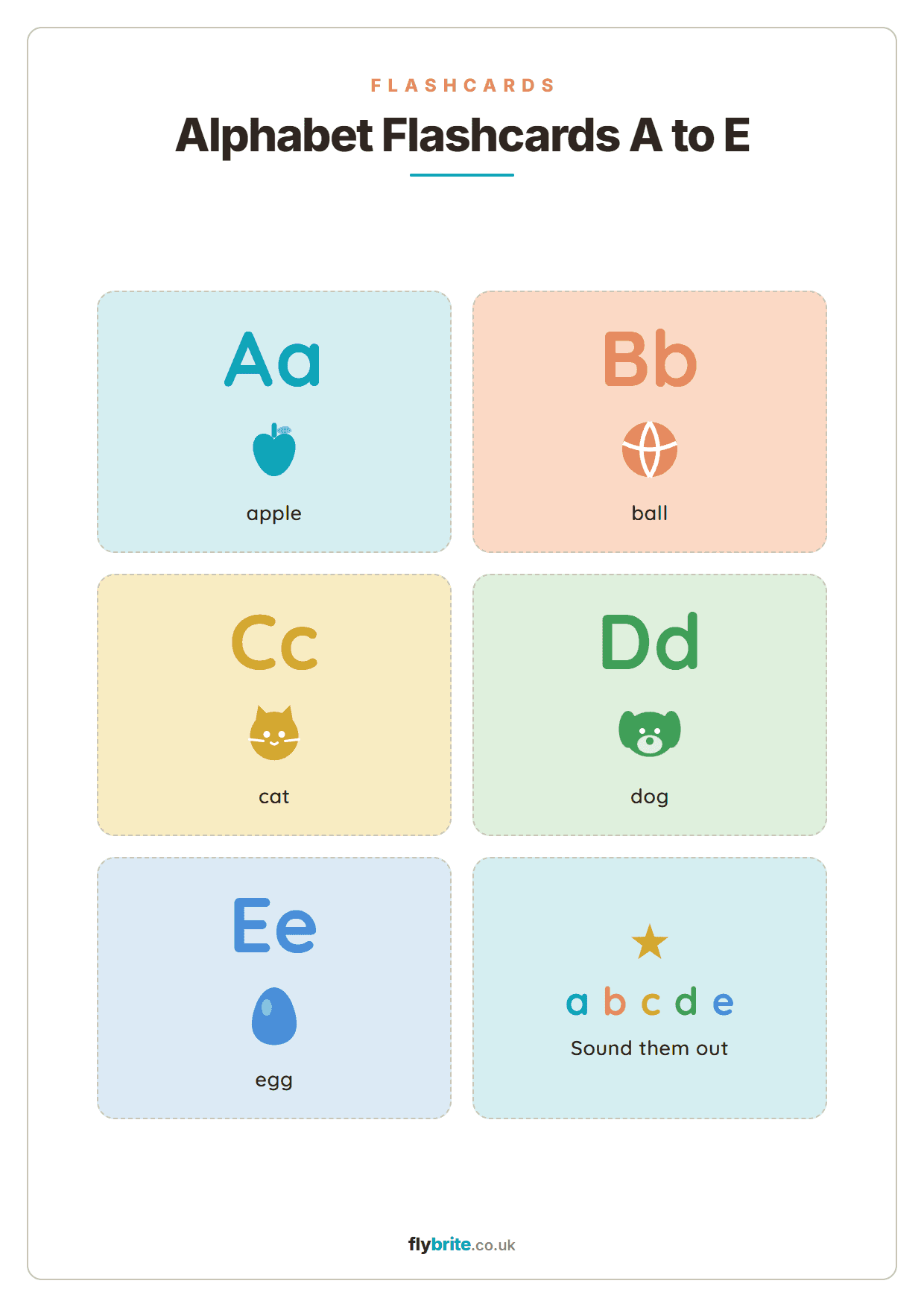
Five bright cut-out cards for A to E, each with a friendly picture to name and sound out.

Cut-out cards for F to J, from a happy fish to a jar of jam, ready for first sounds.
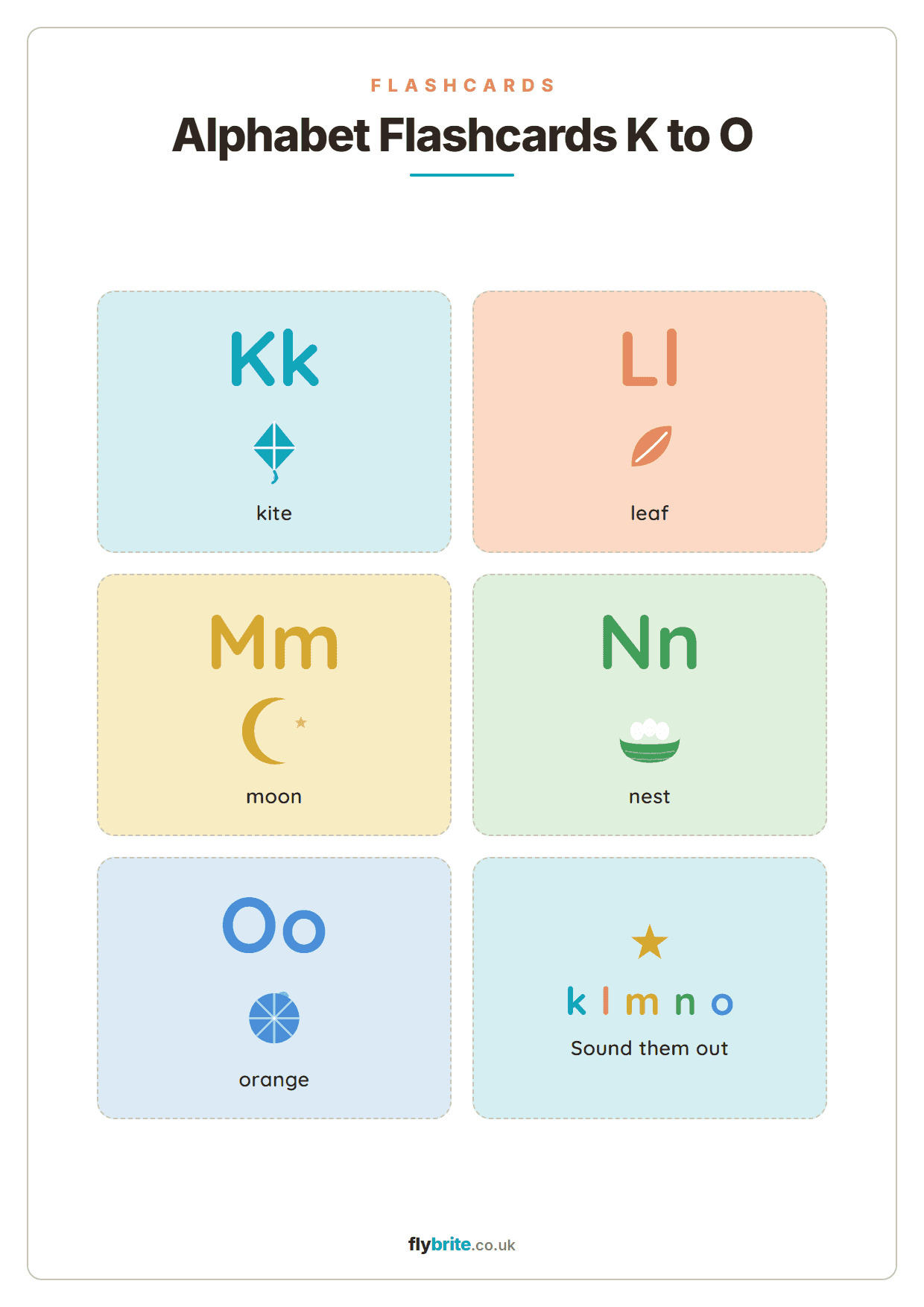
Cut-out cards for K to O, with a kite, a leaf and a slice of orange to talk about.
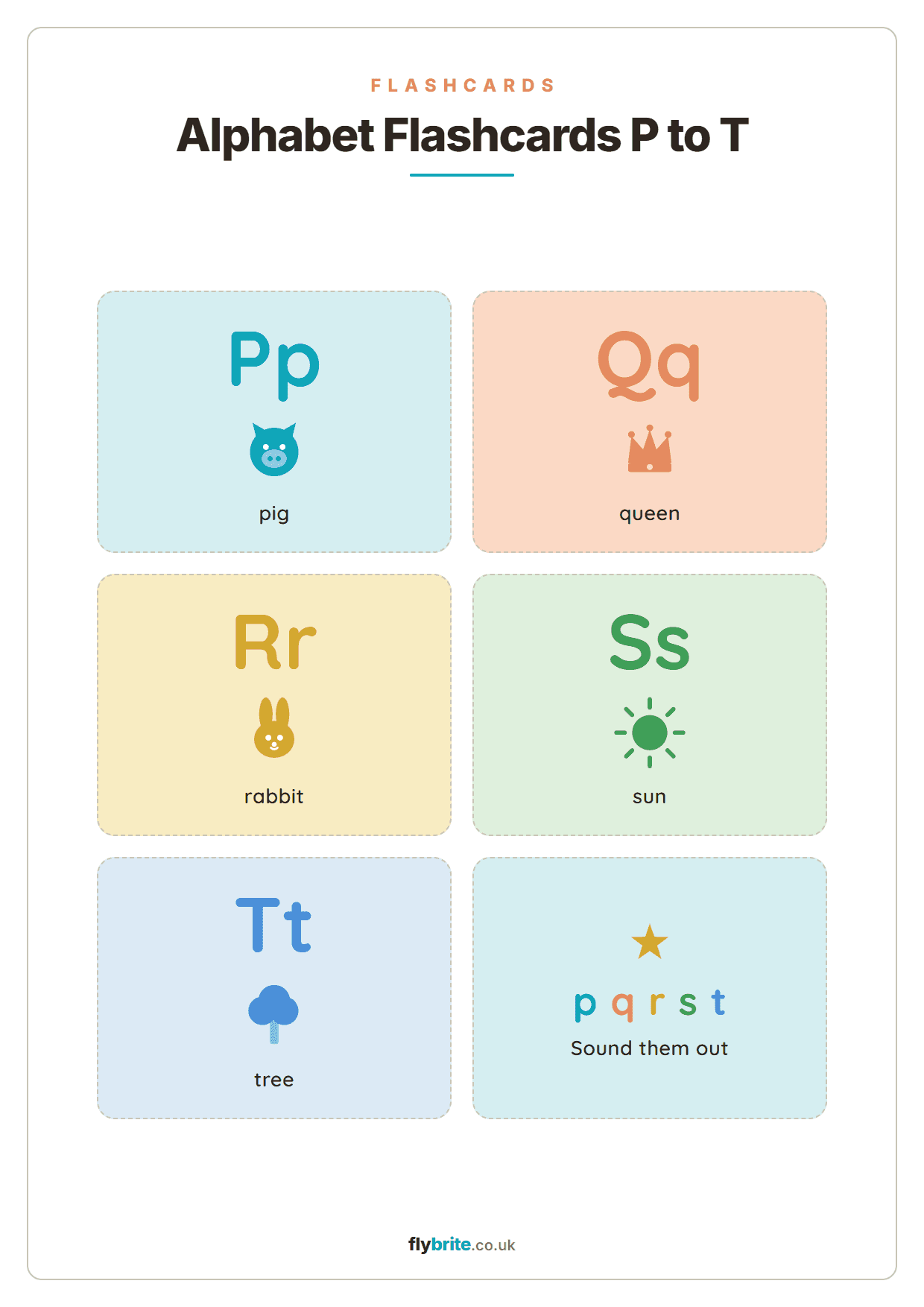
Cut-out cards for P to T, from a little pig to a leafy tree, one sound at a time.
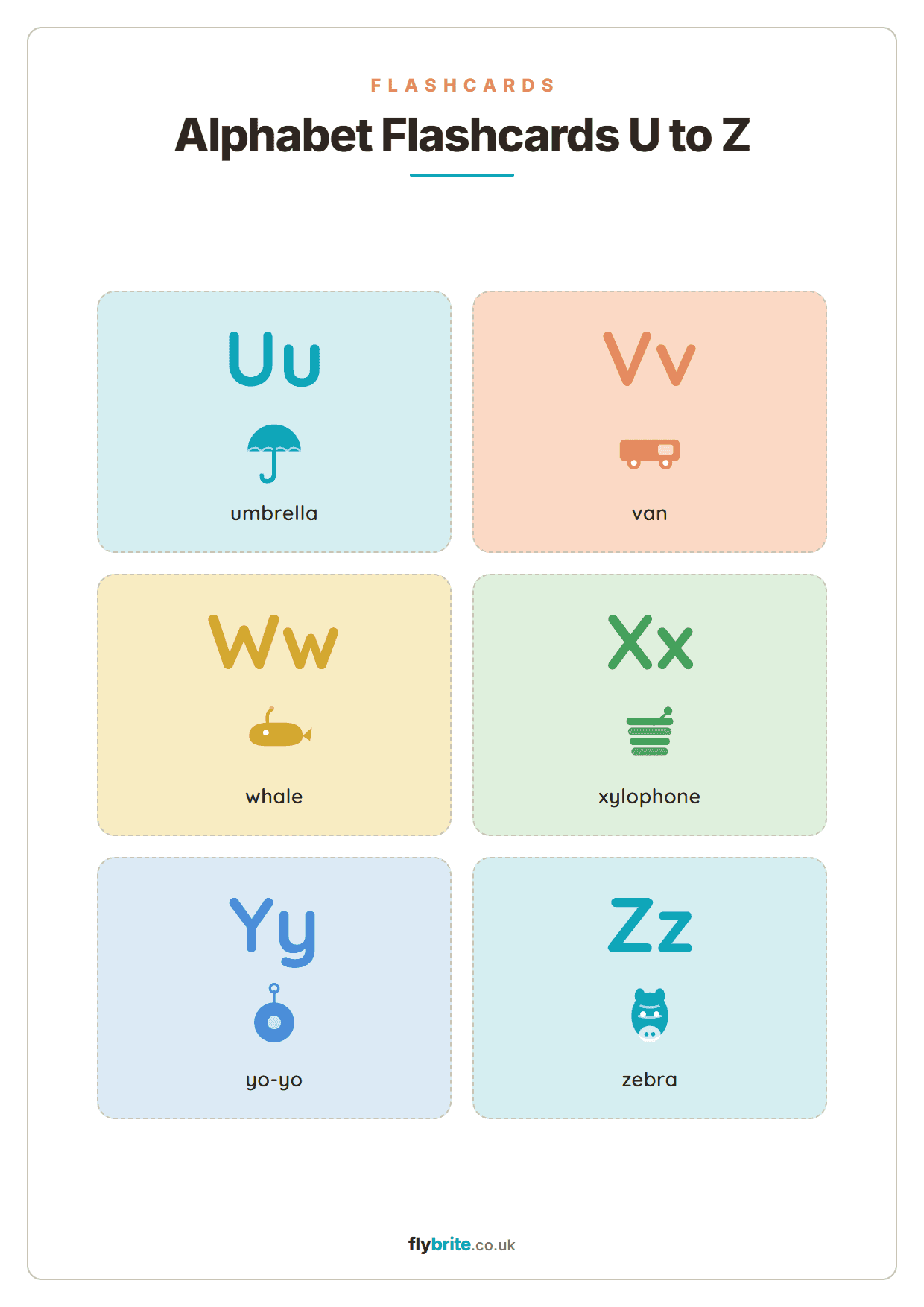
The last six cut-out cards, U to Z, finishing the alphabet with an umbrella, whale and zebra.
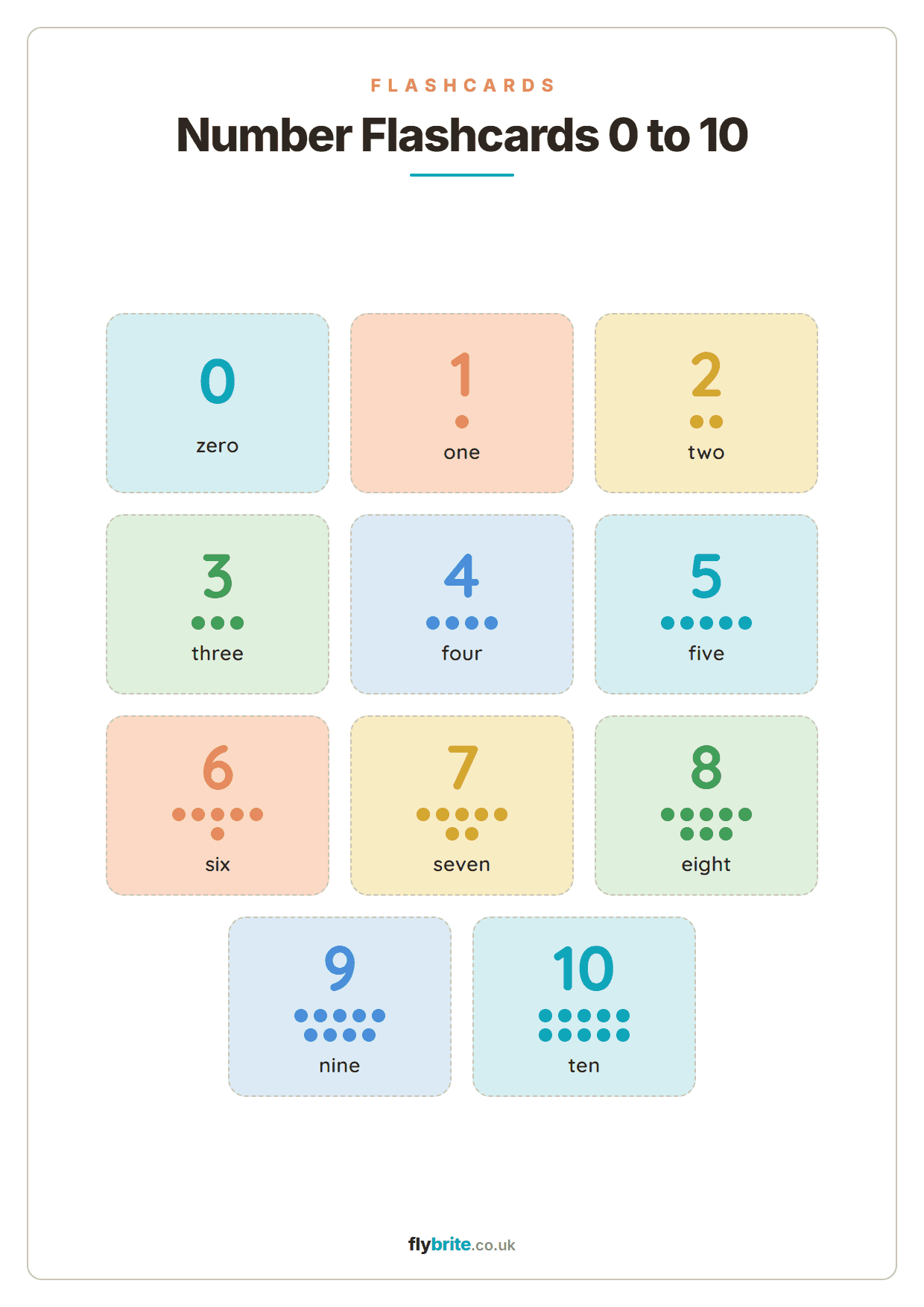
Cut-out cards for 0 to 10, each numeral paired with that many dots to count and check.
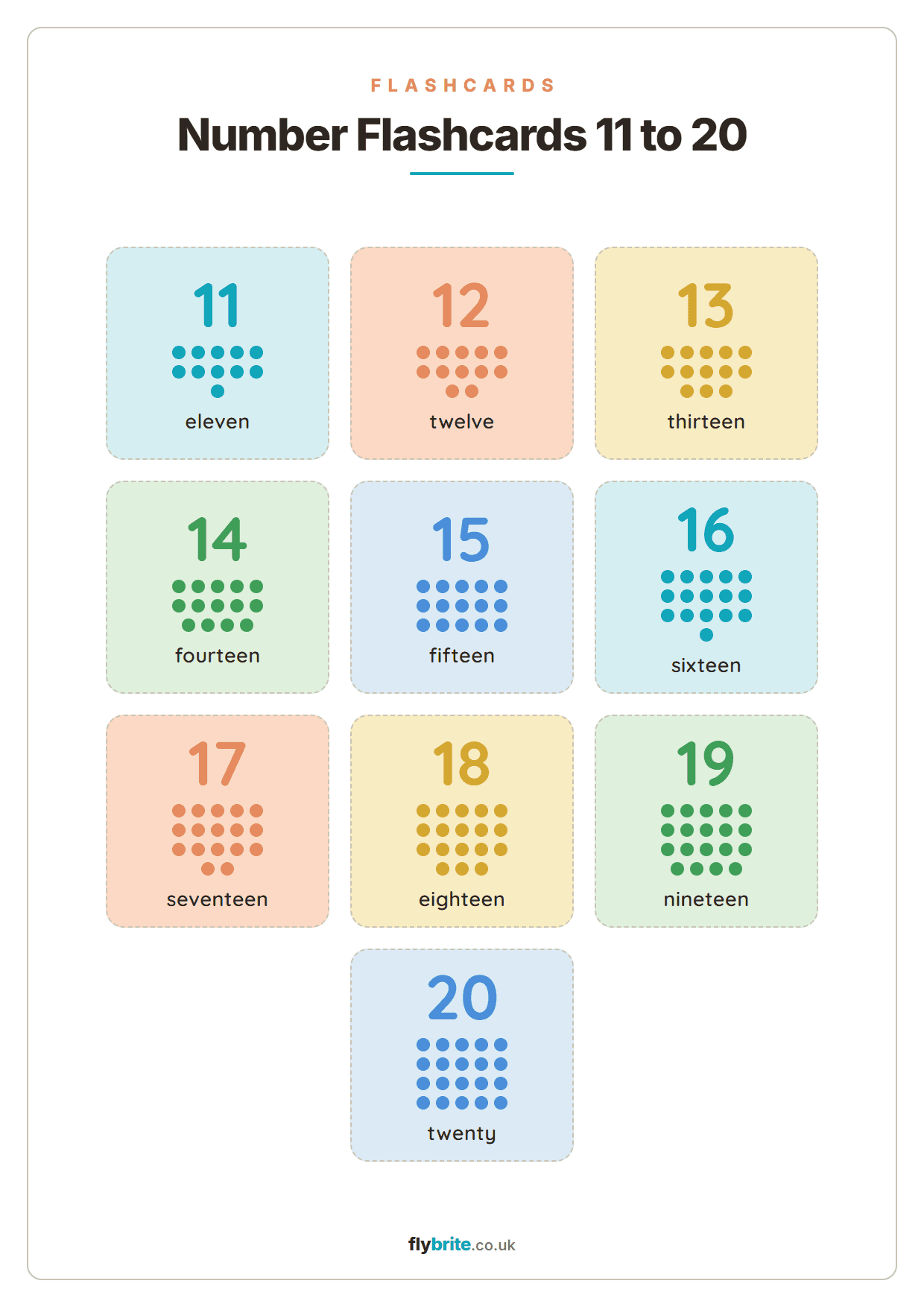
Cut-out cards for 11 to 20, with counting dots in neat rows of five for bigger numbers.
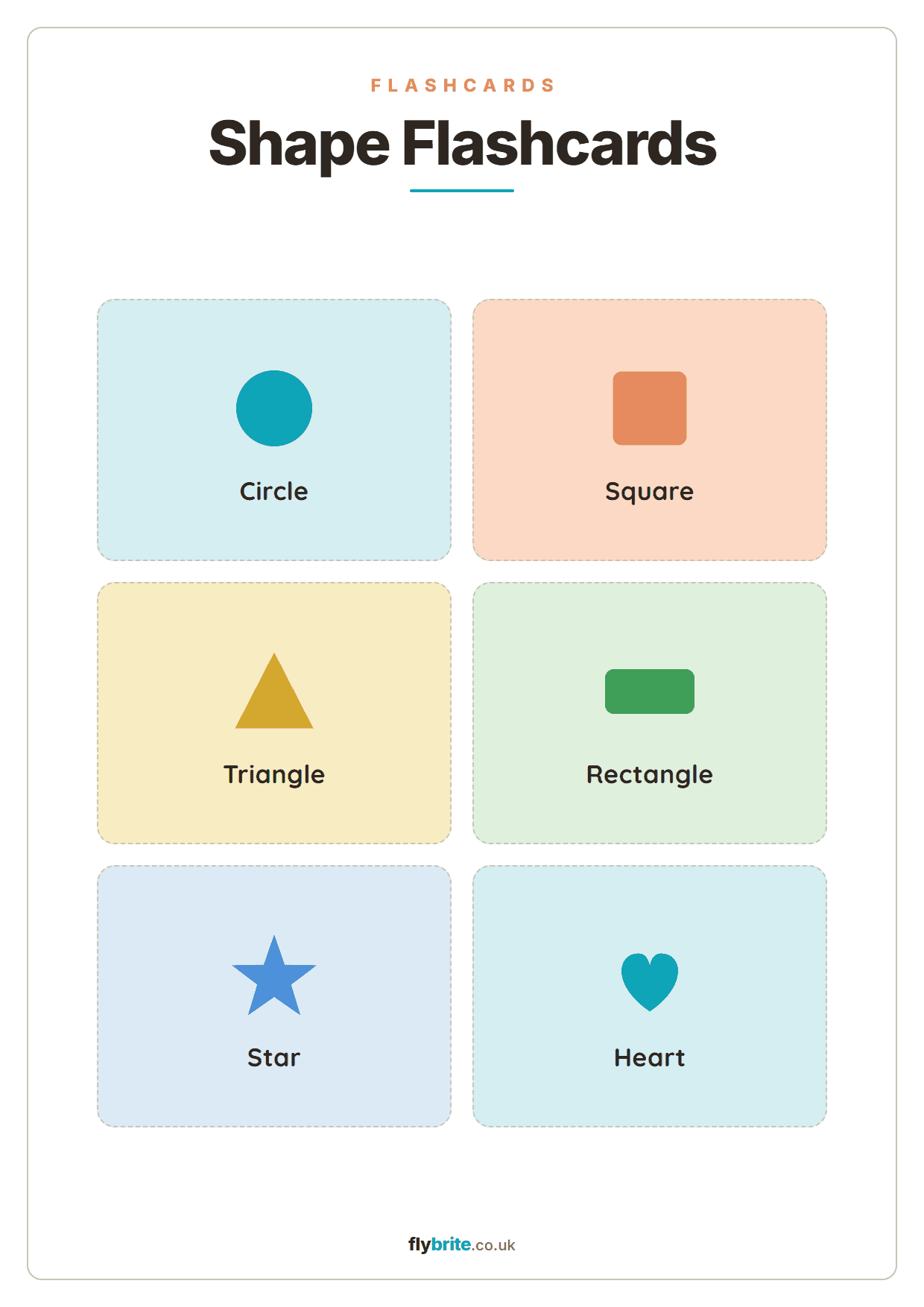
Six cut-out cards for the first shapes, from circle to heart, big and bold to name and match.
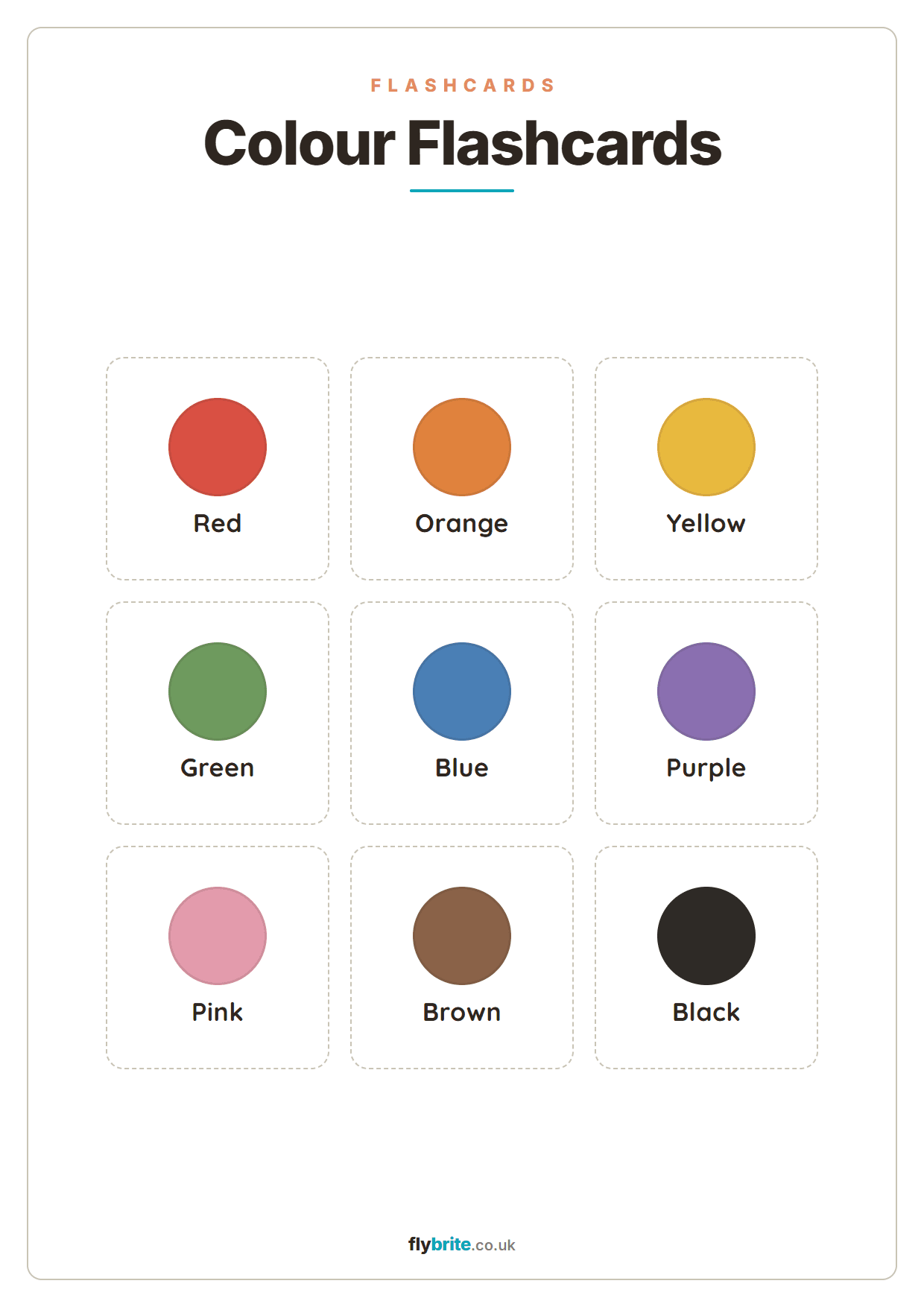
Nine cut-out cards for the everyday colours, each a clear swatch with its name to learn.
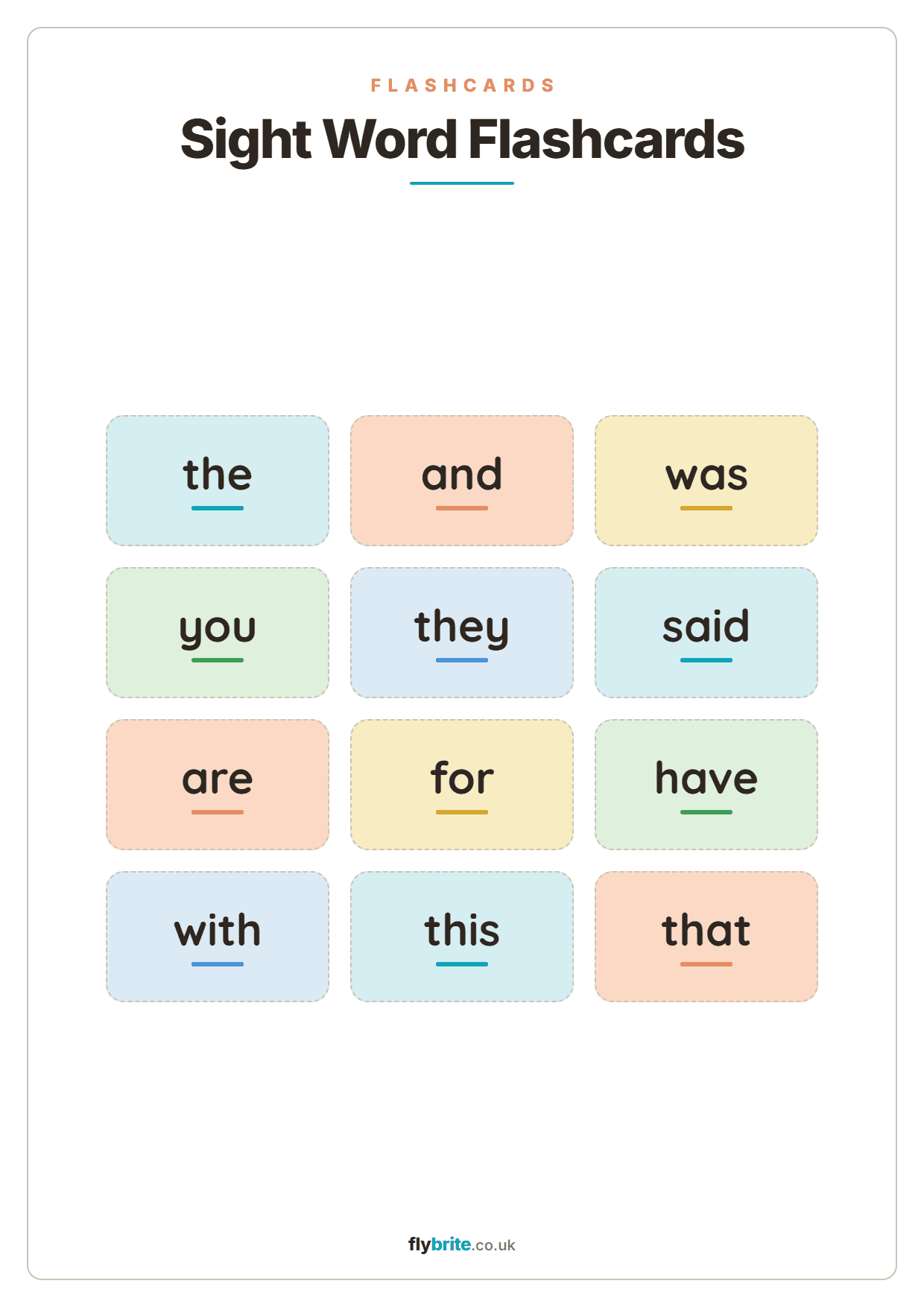
Twelve cut-out cards for common sight words, the tricky little words early readers meet most.
Initial sounds, CVC words, digraphs, blends and tricky words, the building blocks of early reading.
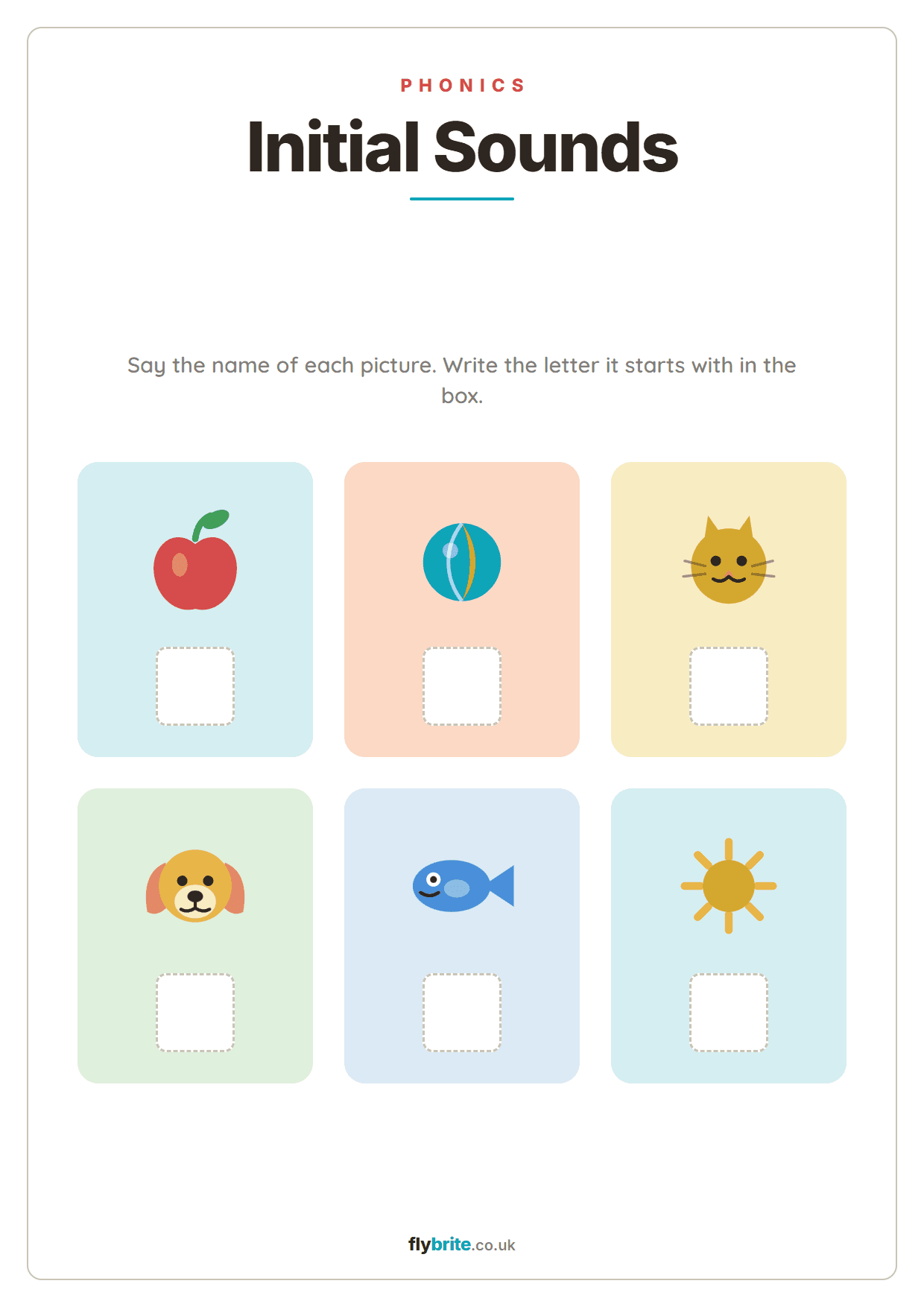
Six friendly pictures for a first go at hearing and writing the sound each word starts with.
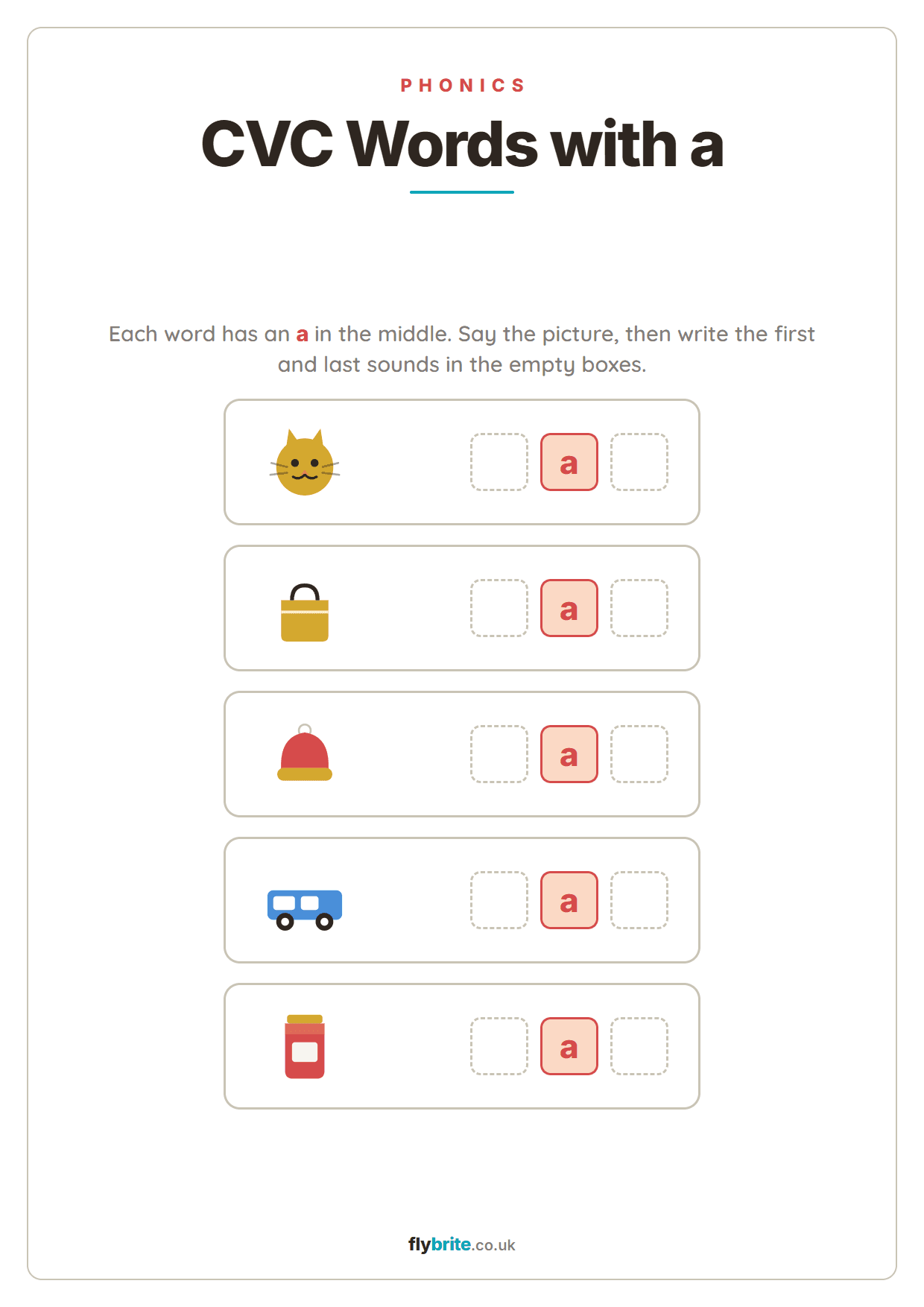
Cat, bag and hat, gentle first three-letter words with the middle a already filled in.

Hen, bed and pig, sounding out short e and short i words one box at a time.
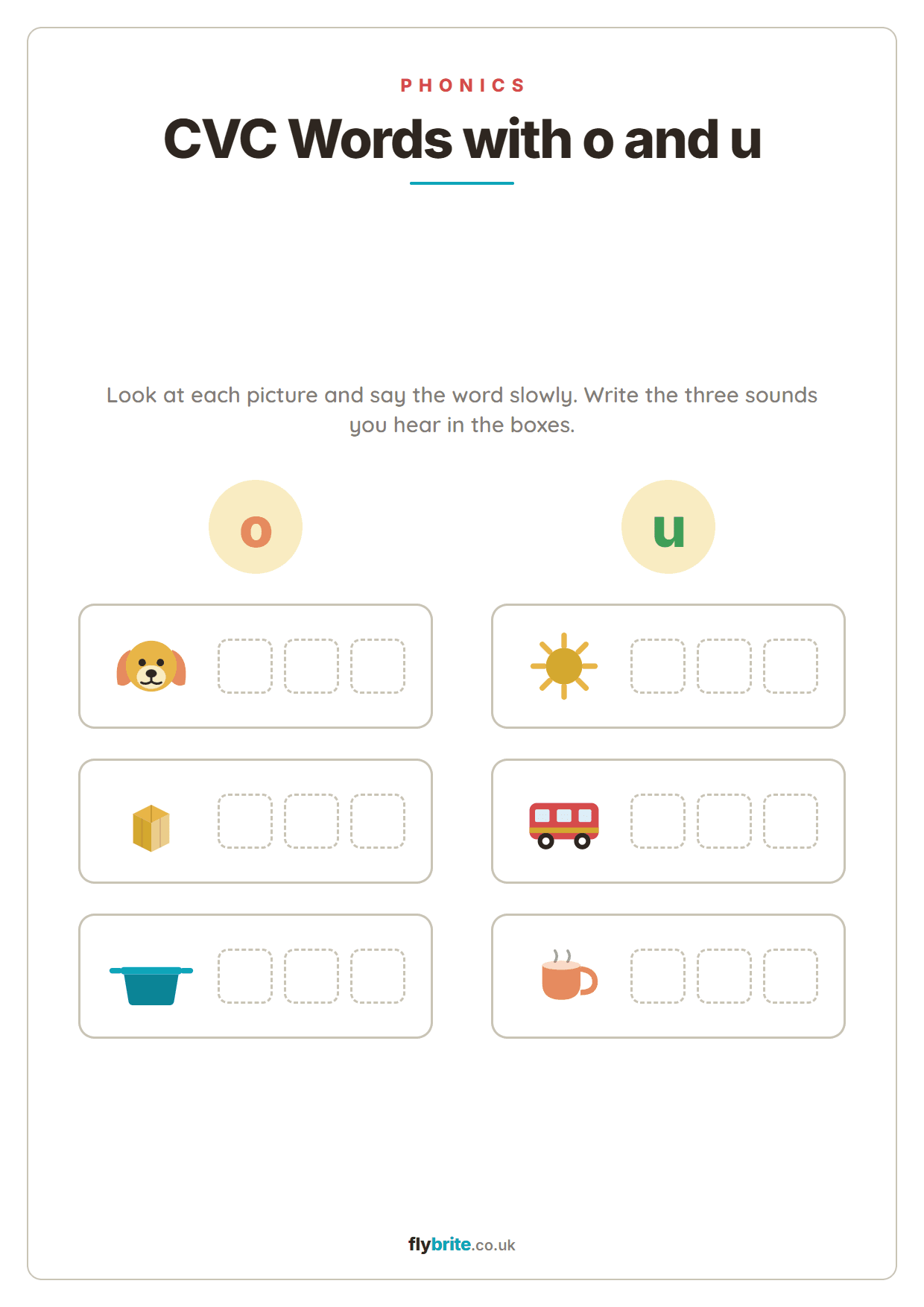
Dog, box, bus and cup, practising short o and short u sounds with picture cues.
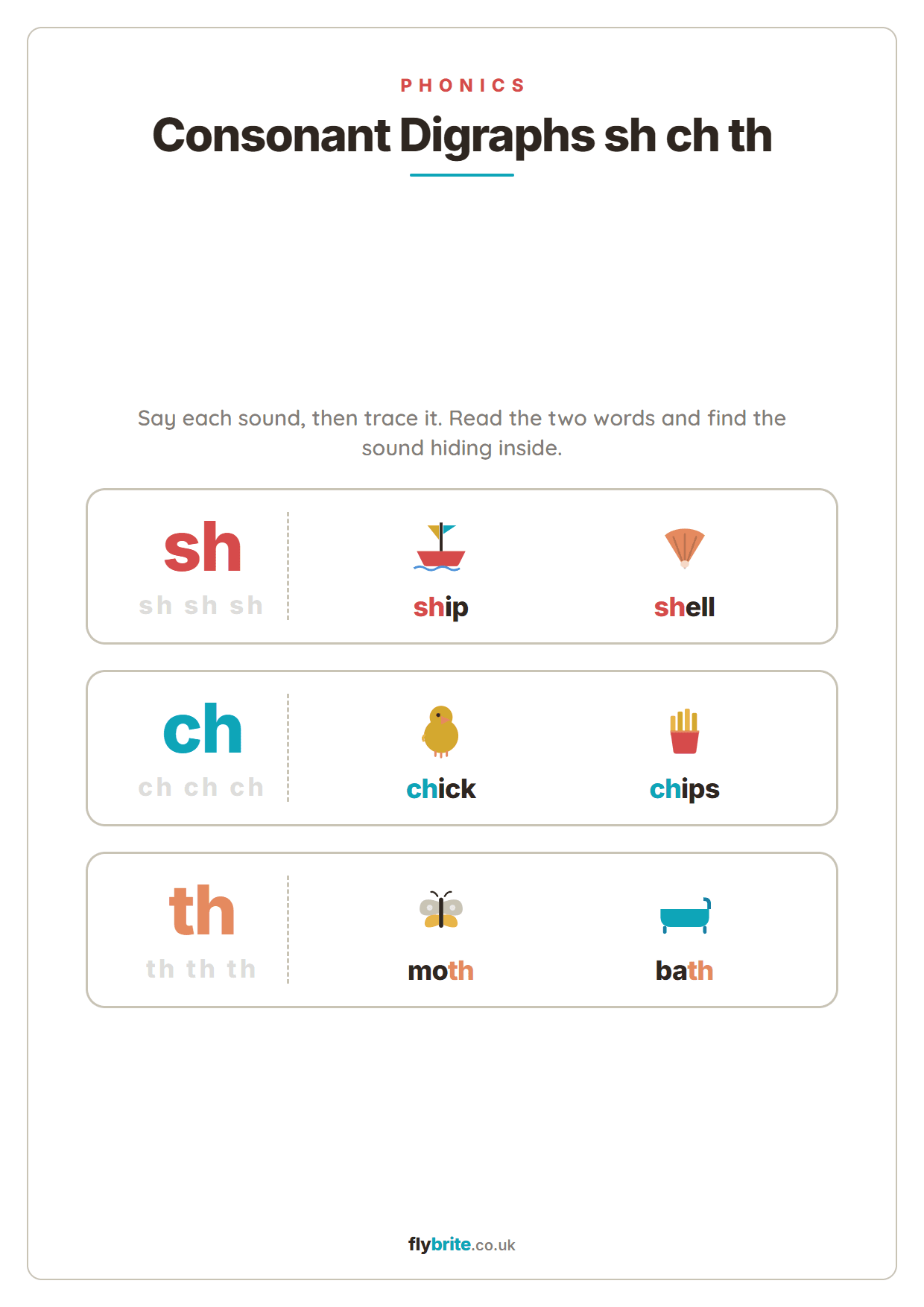
Two letters, one sound, meeting sh, ch and th through ships, chicks and cosy baths.
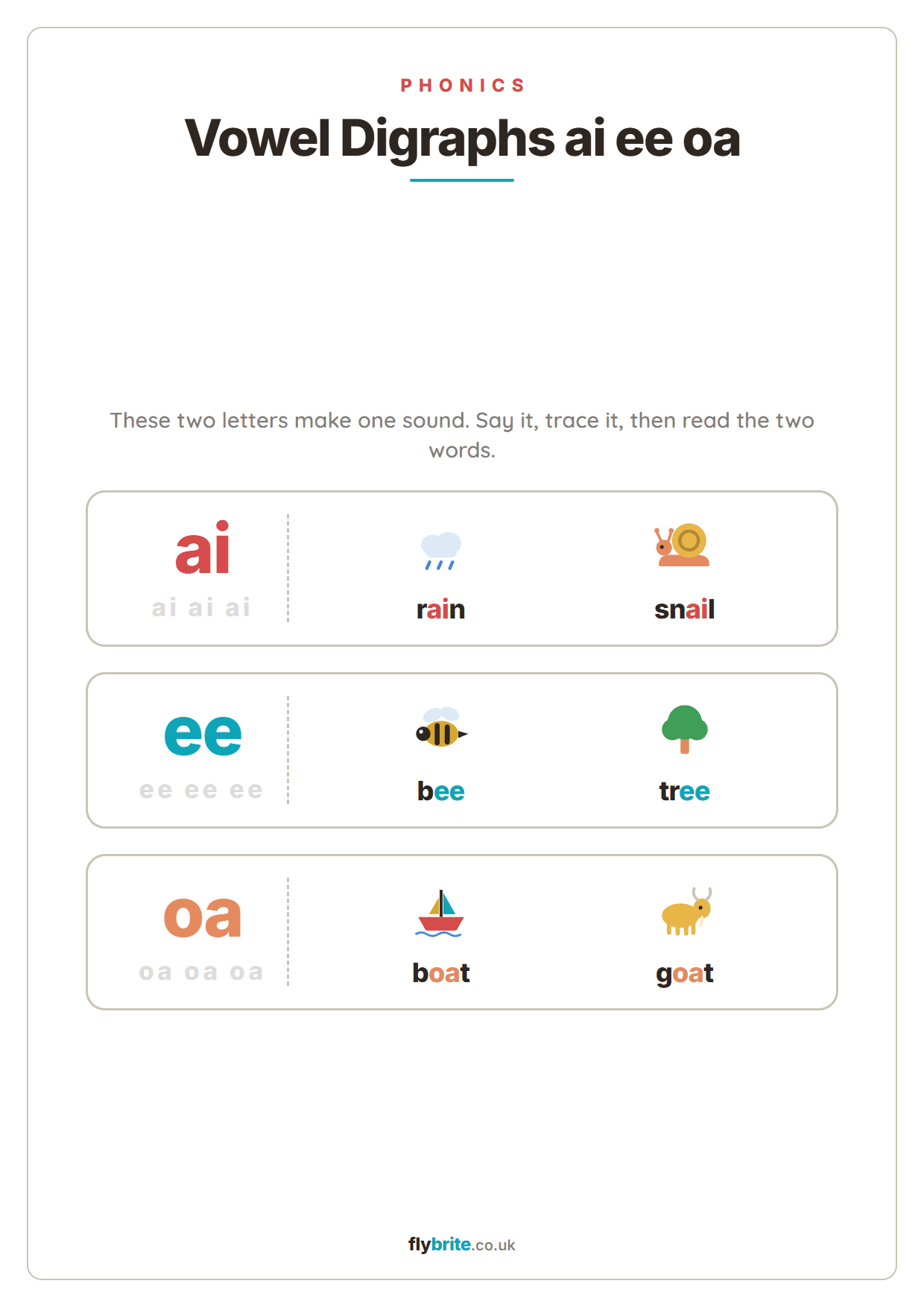
Rain, bees and boats bring the ai, ee and oa sounds to life for growing readers.
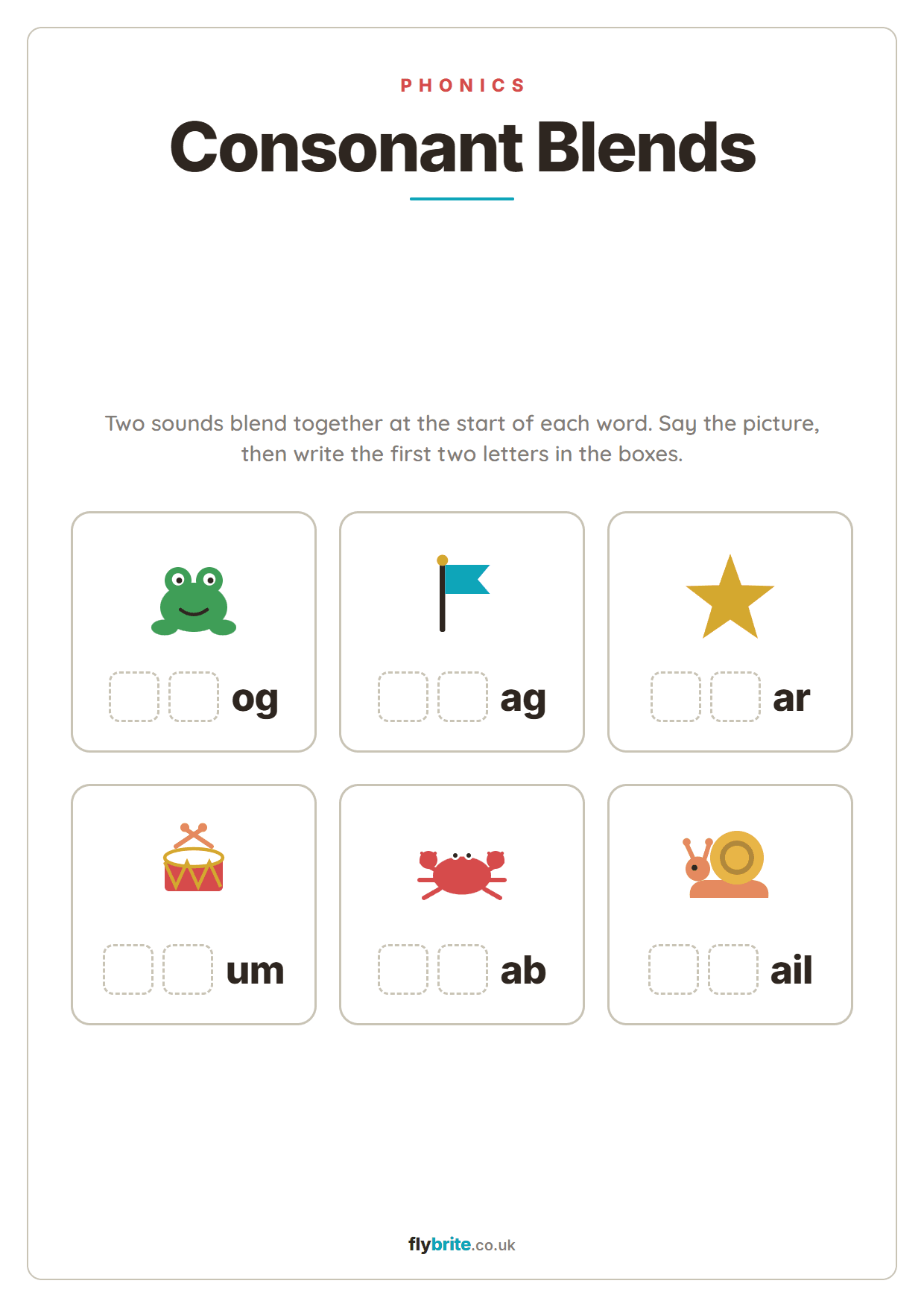
Frog, flag and star, hearing two sounds blend together at the start of a word.
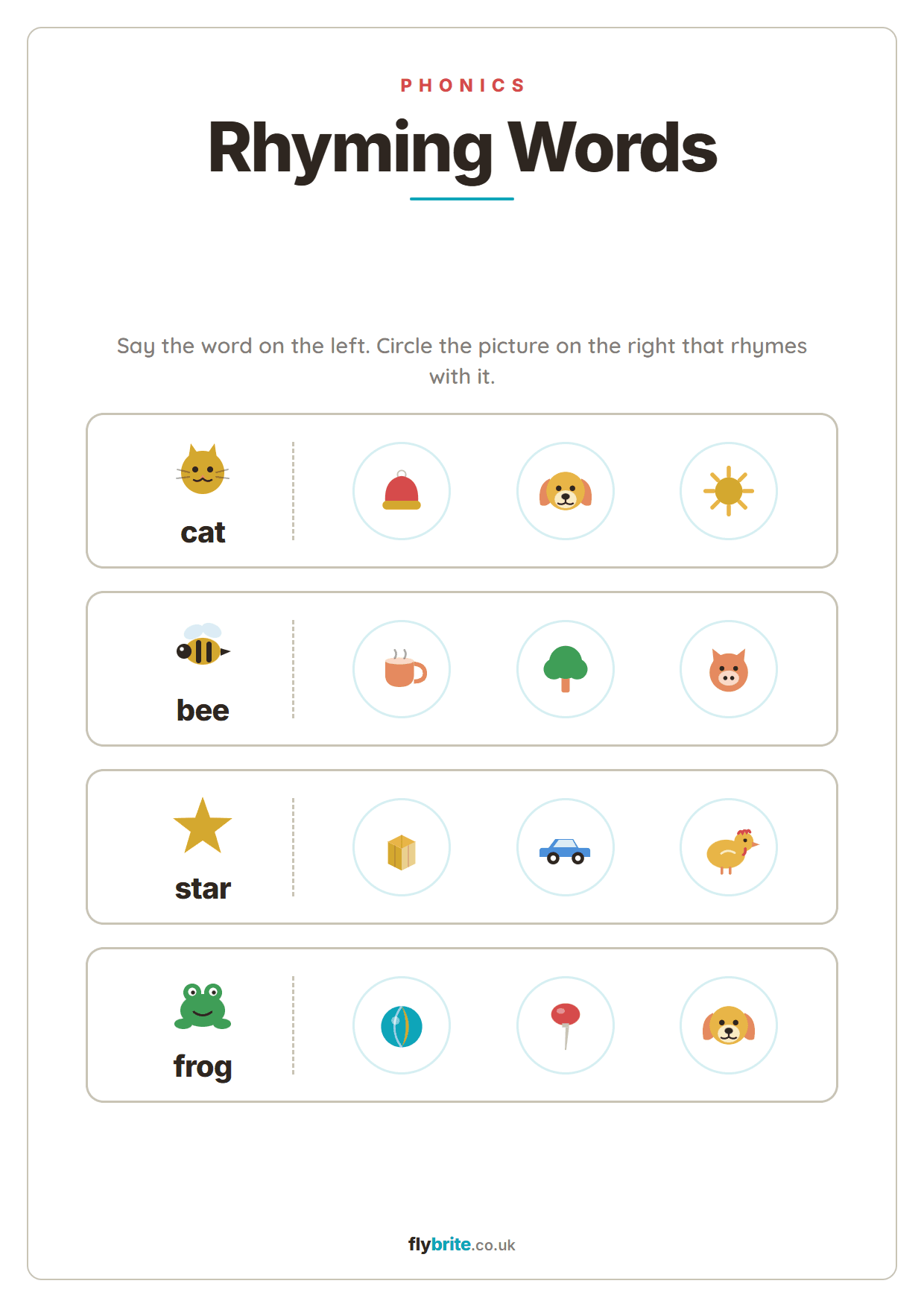
A playful listening game, circling the picture that rhymes with cat, bee, star and frog.
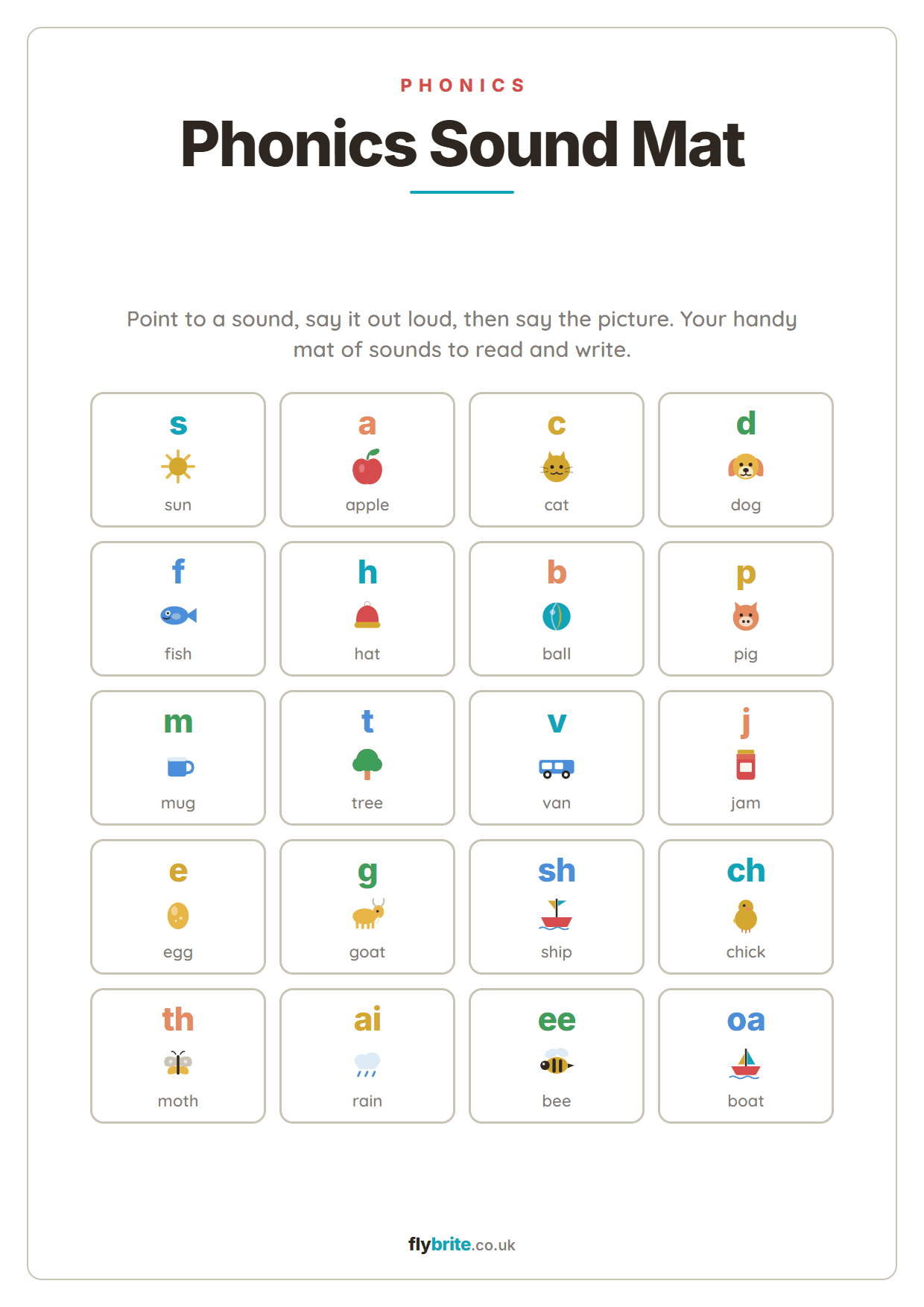
A handy reference mat of twenty sounds with picture cues, lovely beside any reading or writing.
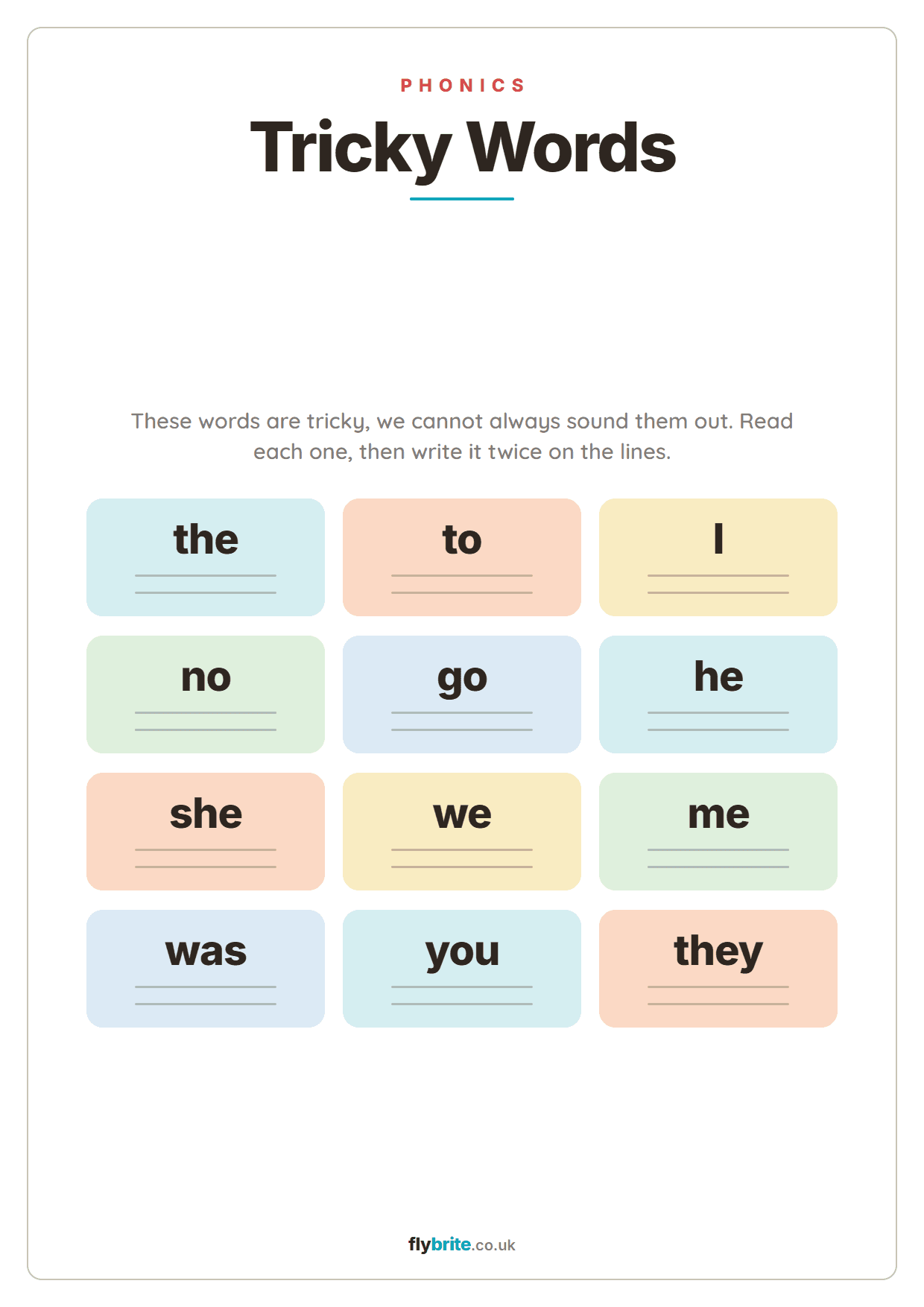
The words we cannot always sound out, read and written twice to help them stick.
Joined-up letters, capitals and words to trace, the natural next step after print handwriting.

Eight joined-up letters from a to h, traced on proper guide lines then written all by yourself.

Keep the flow going with i to p, dashed cursive letters that gently fade until the pencil is yours.

Finish the joined-up alphabet, q right through to z, one tidy tracing row at a time.
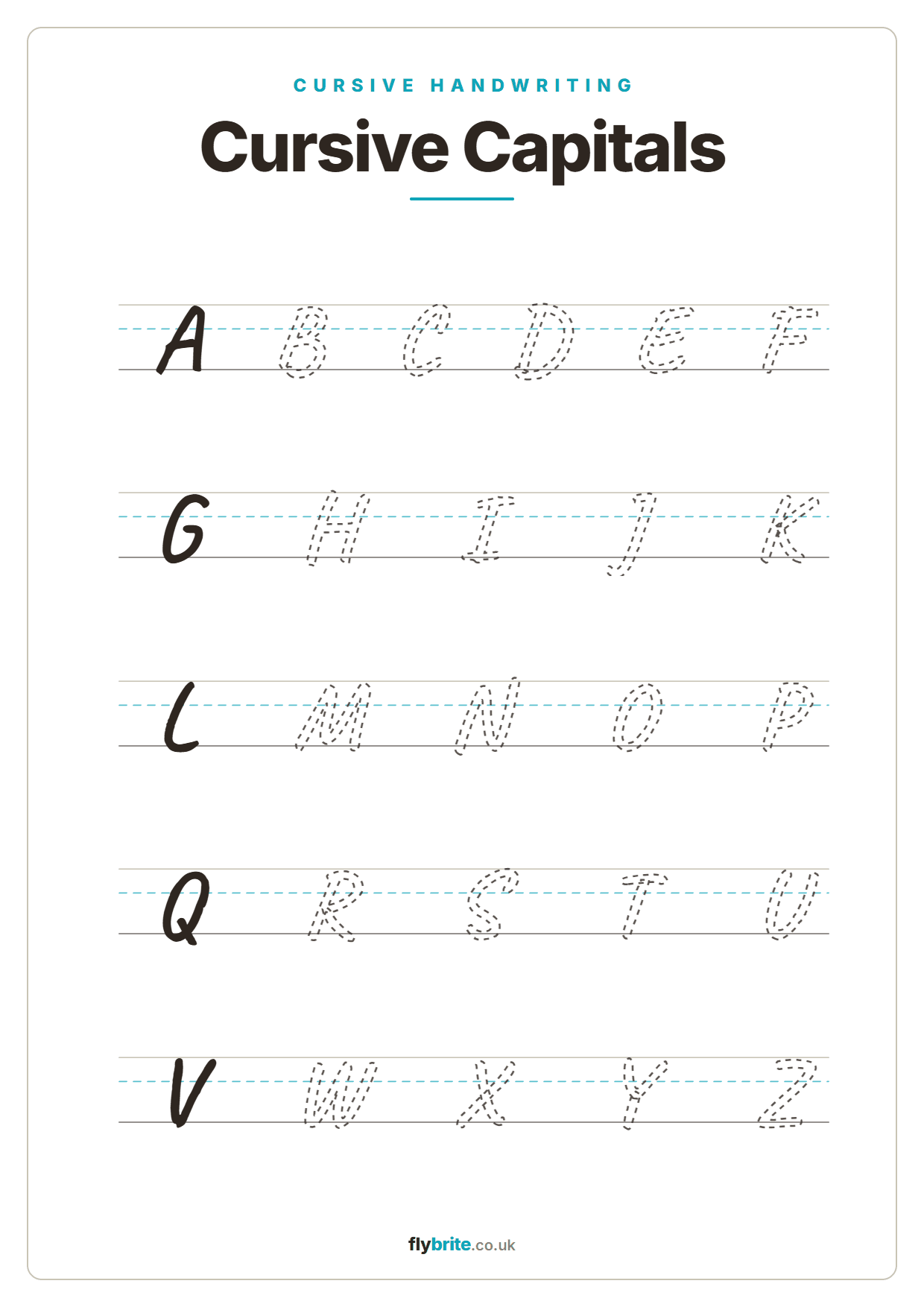
All twenty six capital letters in a flowing cursive hand, ready to trace from A to Z.
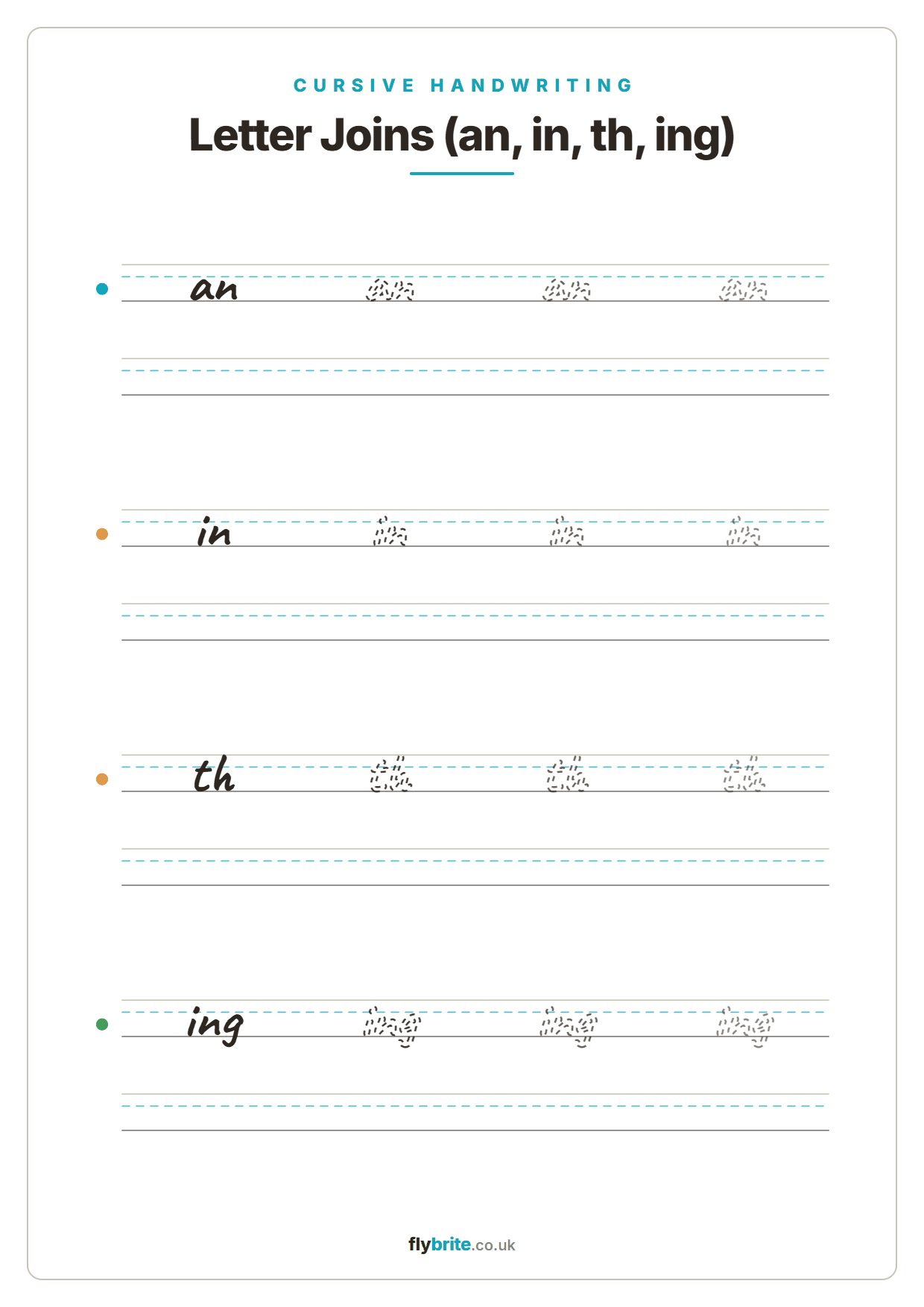
The four joins that unlock cursive, an, in, th and ing, traced big before you write them alone.
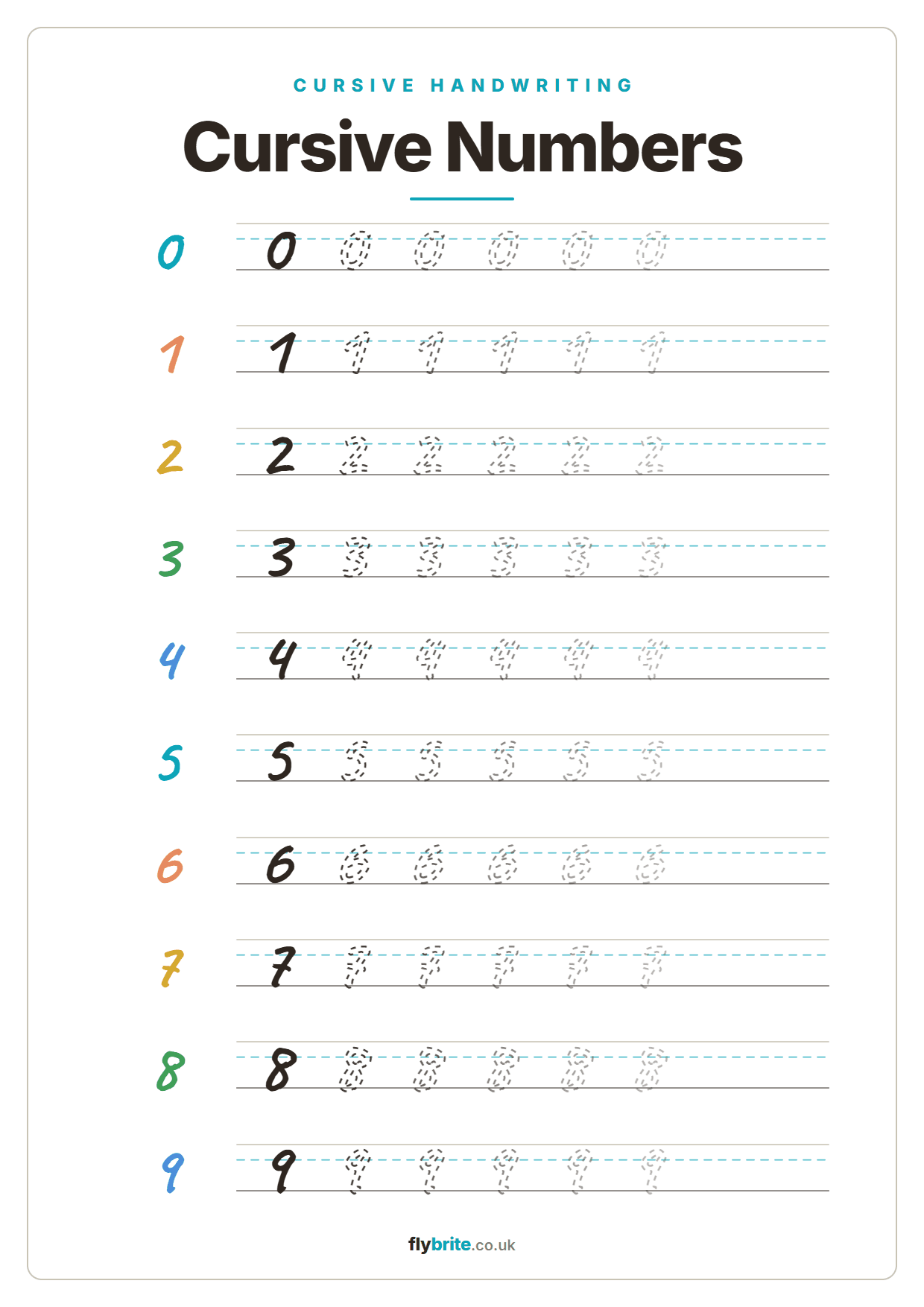
Numbers zero to nine in a neat joined style, with a bold example and fading letters to trace.
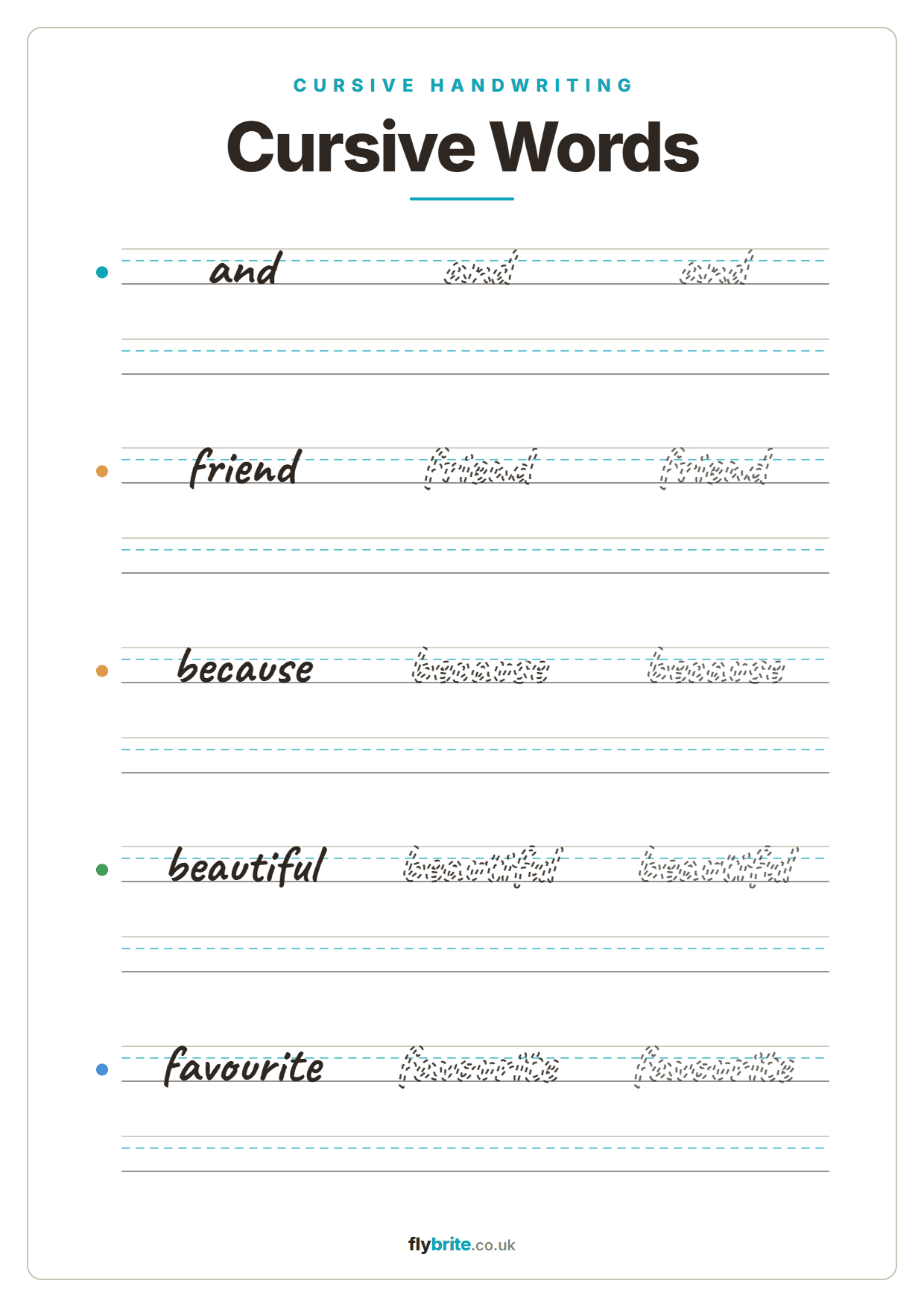
Five favourite words to join up, from friend to beautiful, traced first then written on your own.
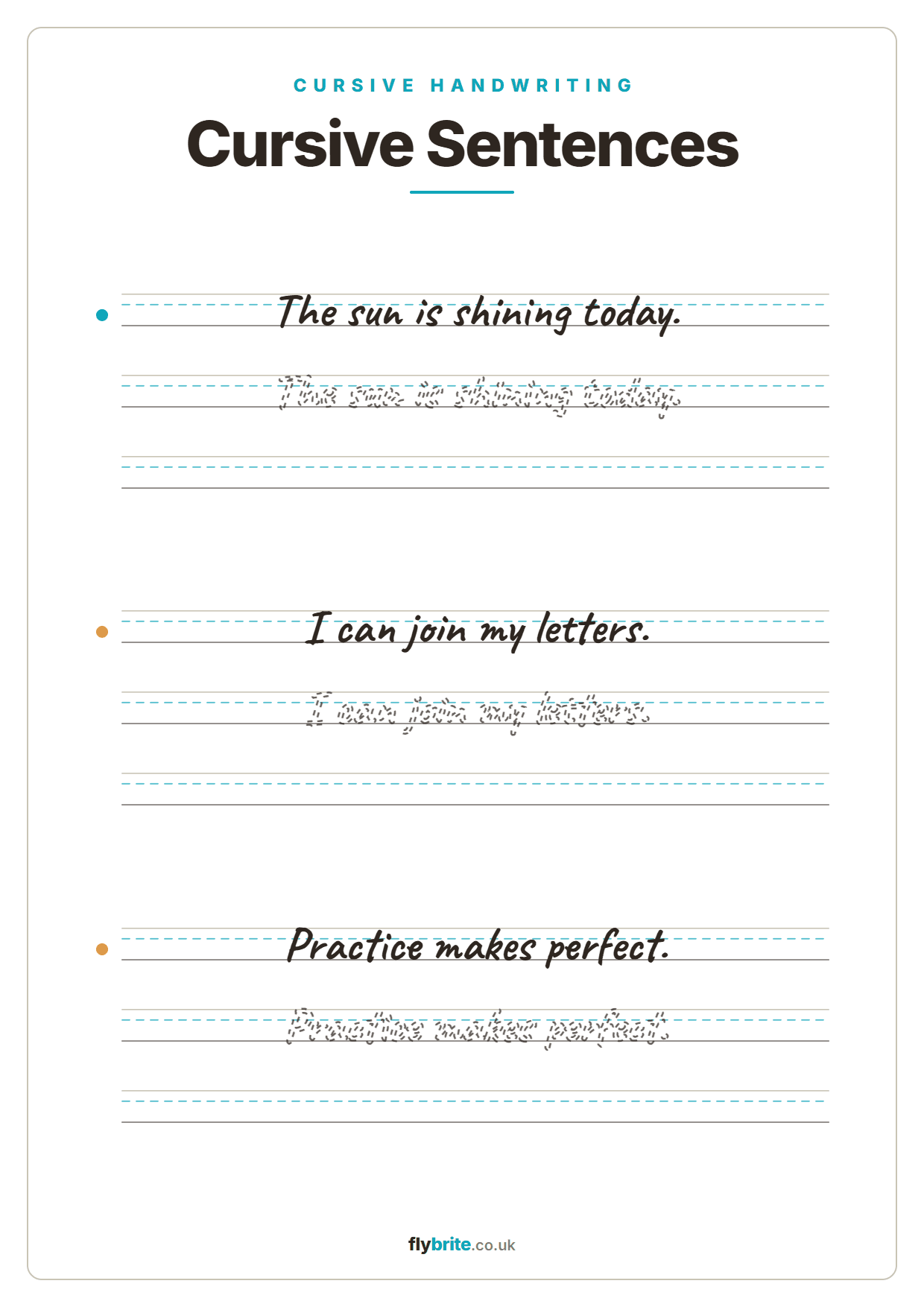
Three cheerful sentences to trace in cursive, then a clear line to write each one by yourself.
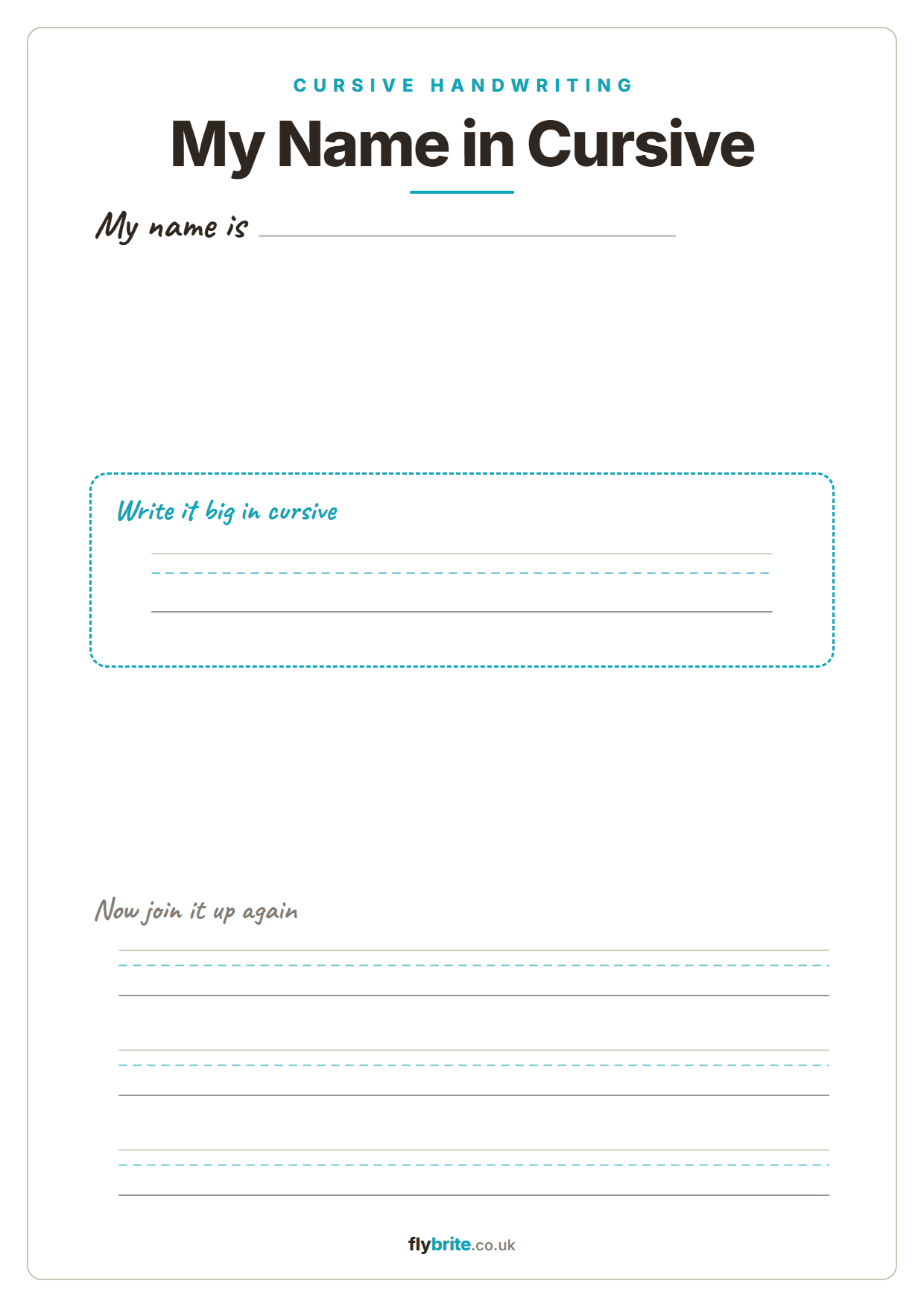 Type or write in
A special sheet to write your own name in beautiful joined-up handwriting, with room to practise.
Blank handwriting guides with a dashed midline, ready for whatever joined-up words you like.
UK coins, giving change and telling the time, the everyday maths children use for life.
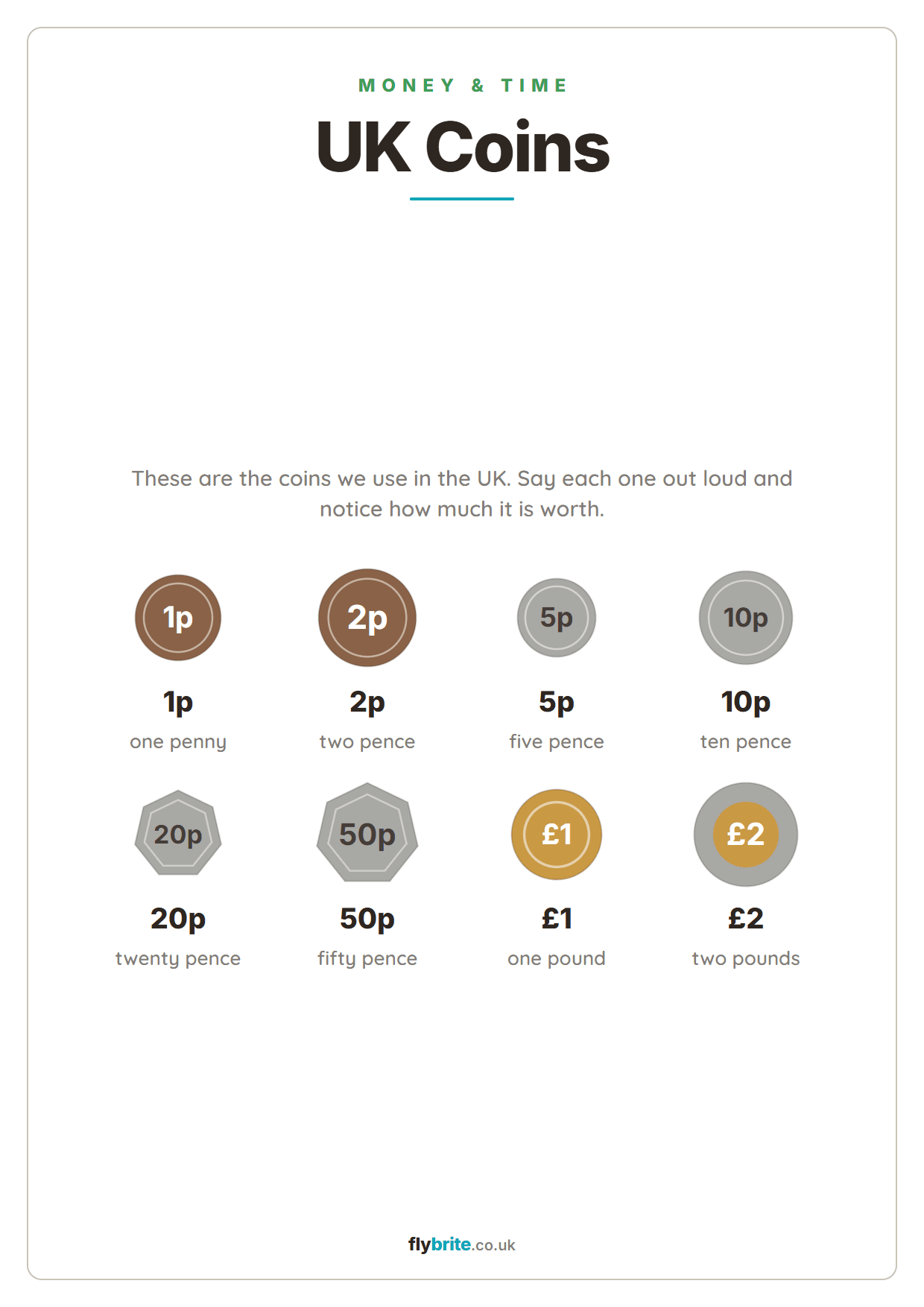
Every UK coin from 1p to £2, labelled and sized for little hands learning about money.
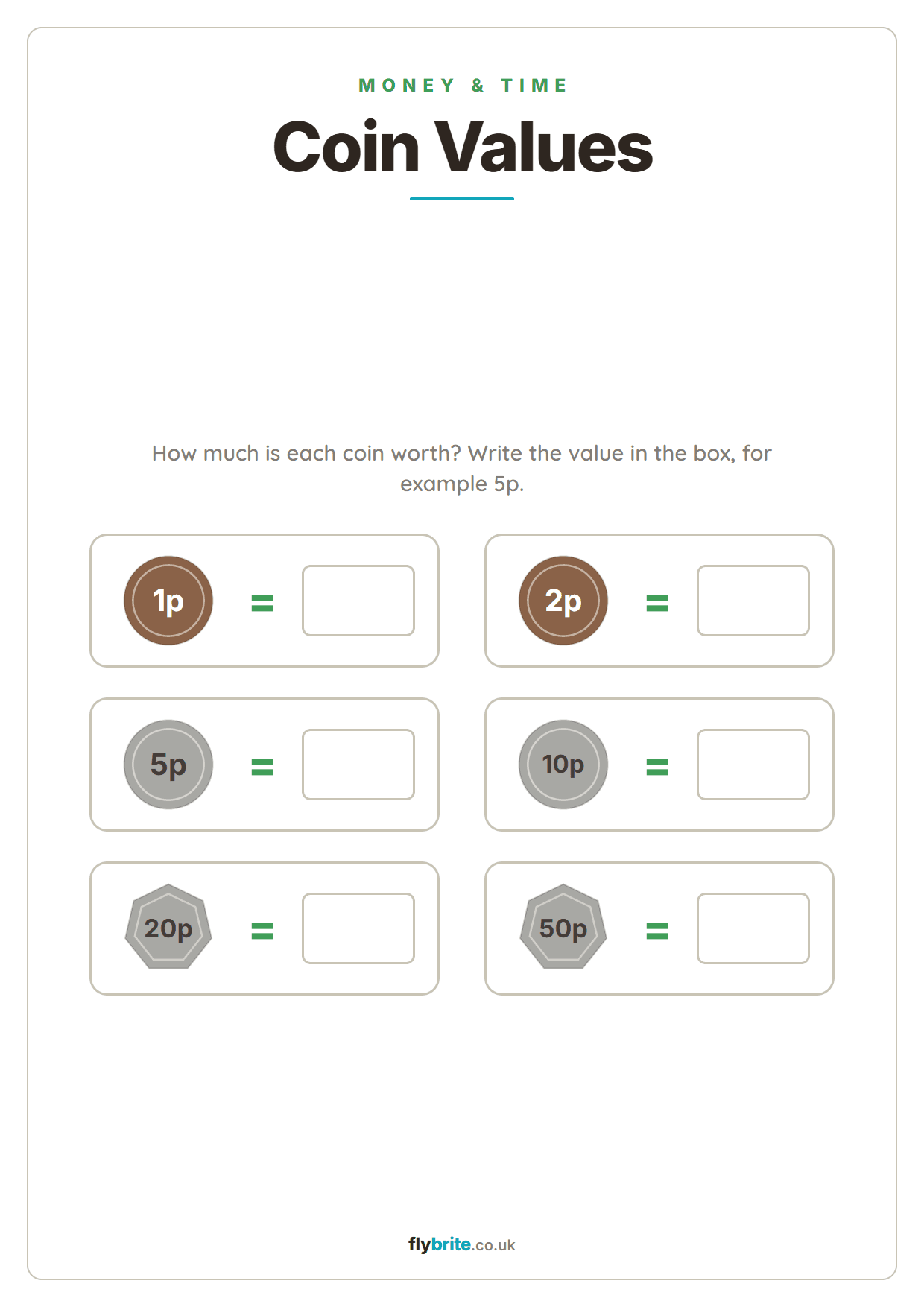
A gentle first check, name each coin and write down exactly how many pence it is worth.
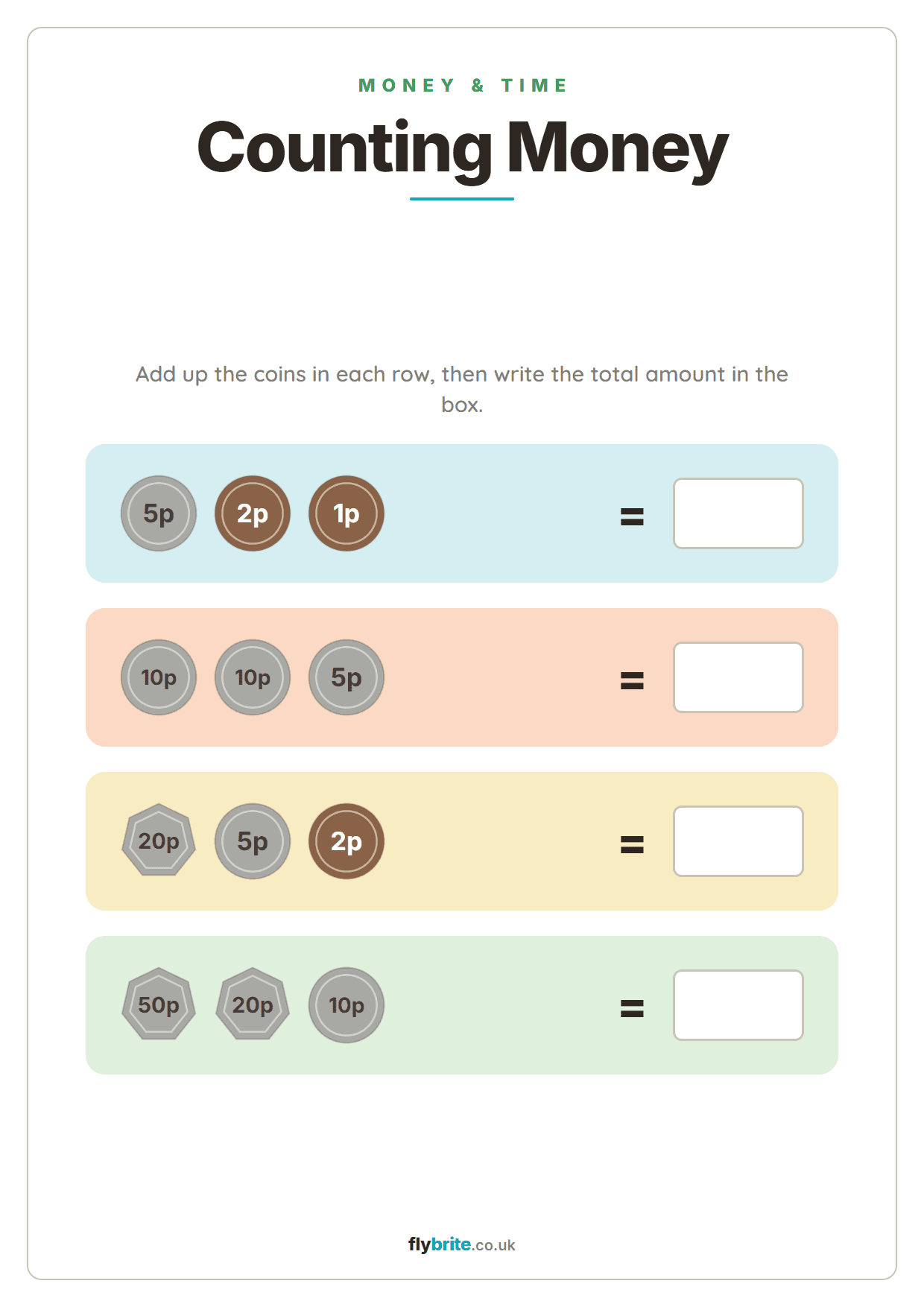
Little groups of coins to add up, with a total box to fill in on every colourful row.
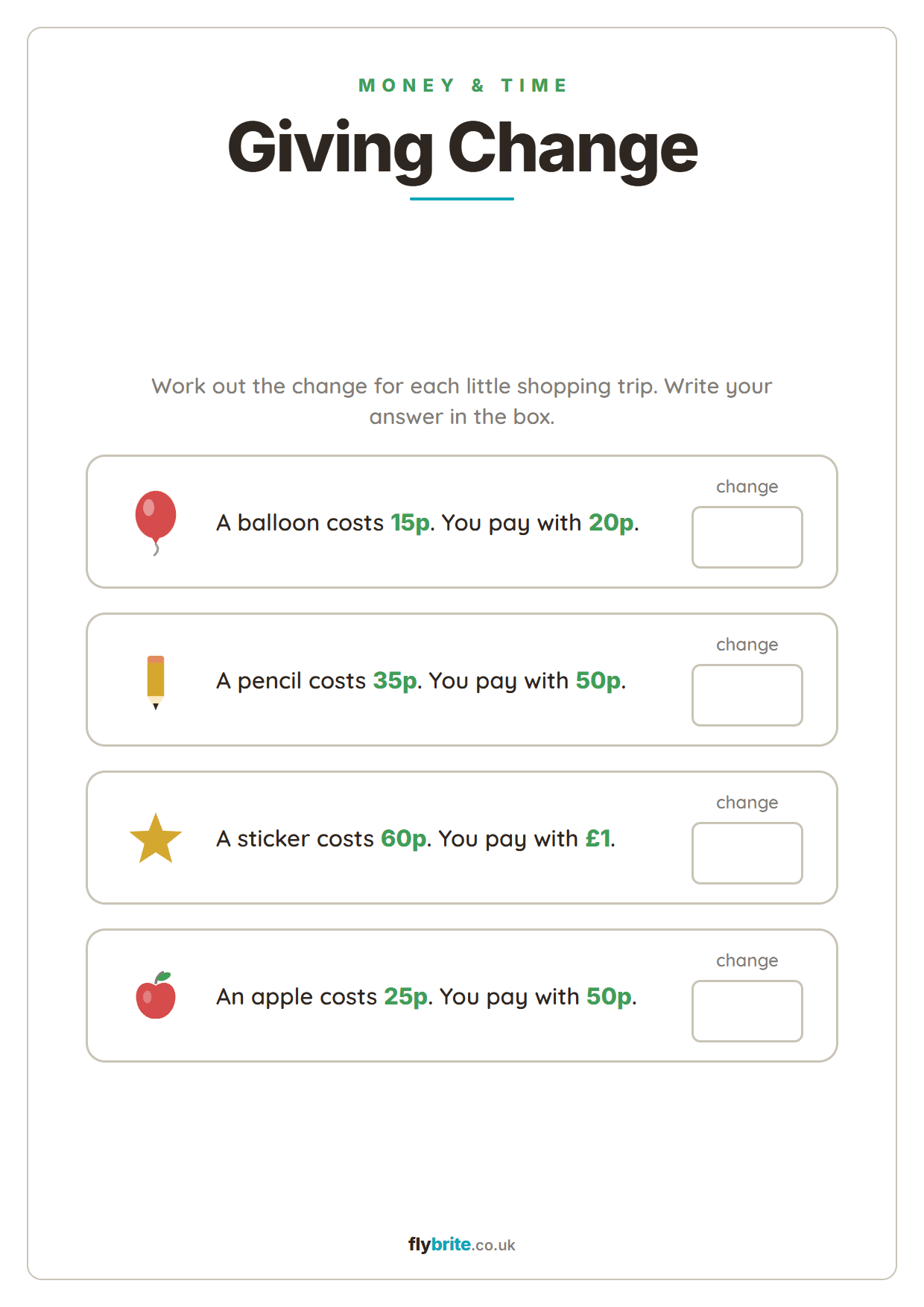
Four friendly shopping trips that turn subtraction into working out the change.
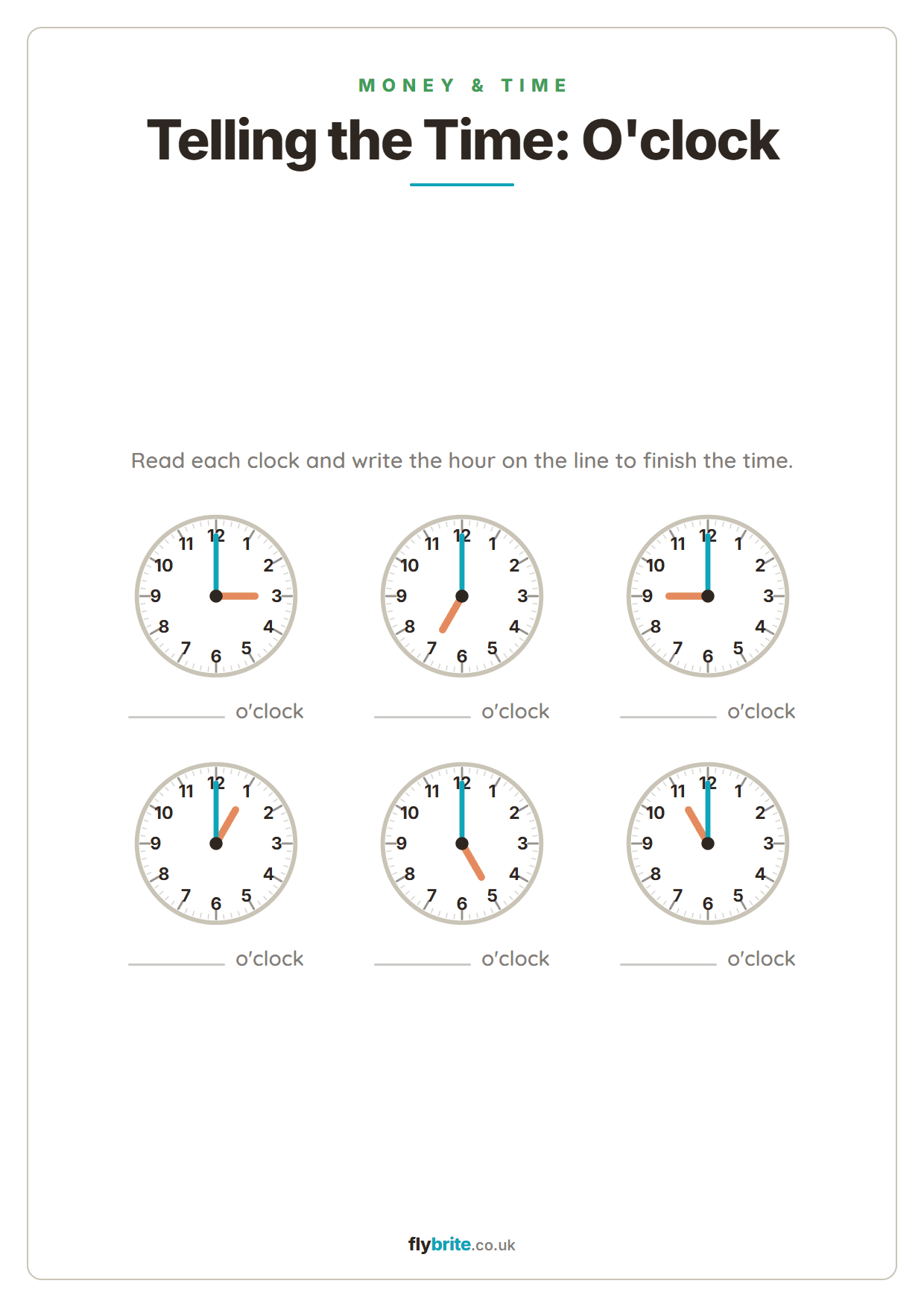
Six warm clock faces on the hour, ready for a first go at reading the time.
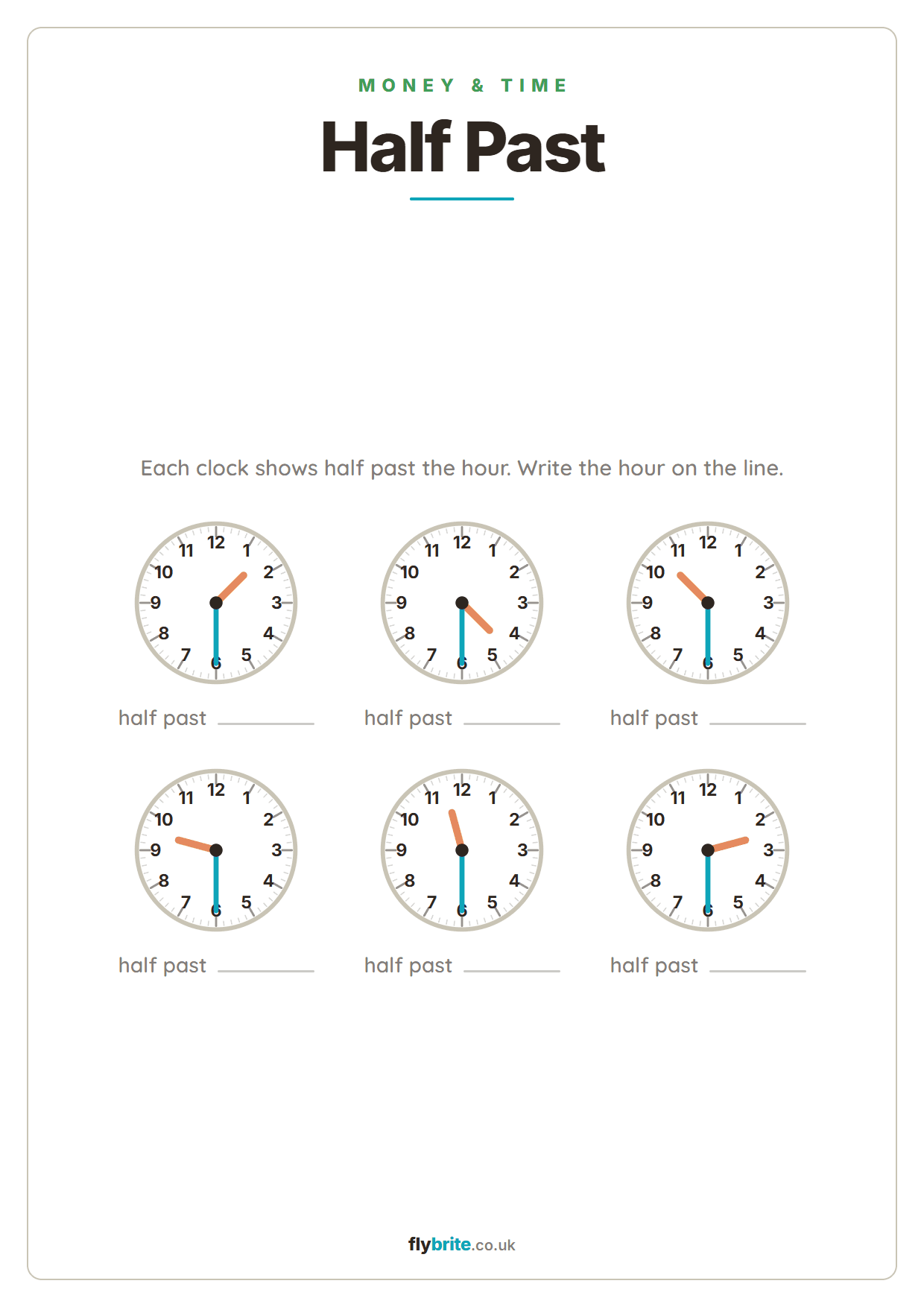
The next step after o'clock, six clocks showing half past for the hour hand to spot.
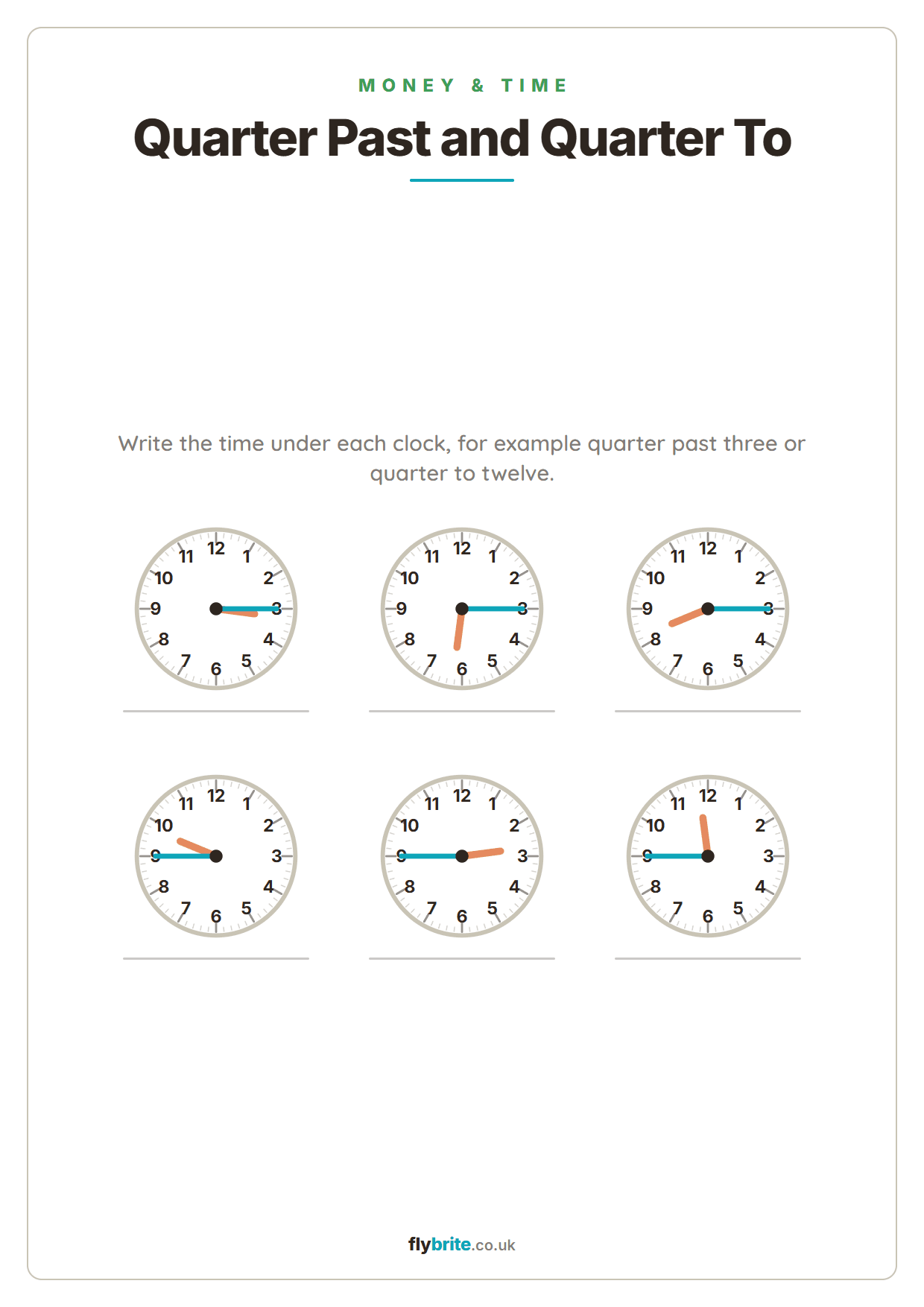
Reading the quarters, six clocks that mix quarter past and quarter to for more confident tellers.
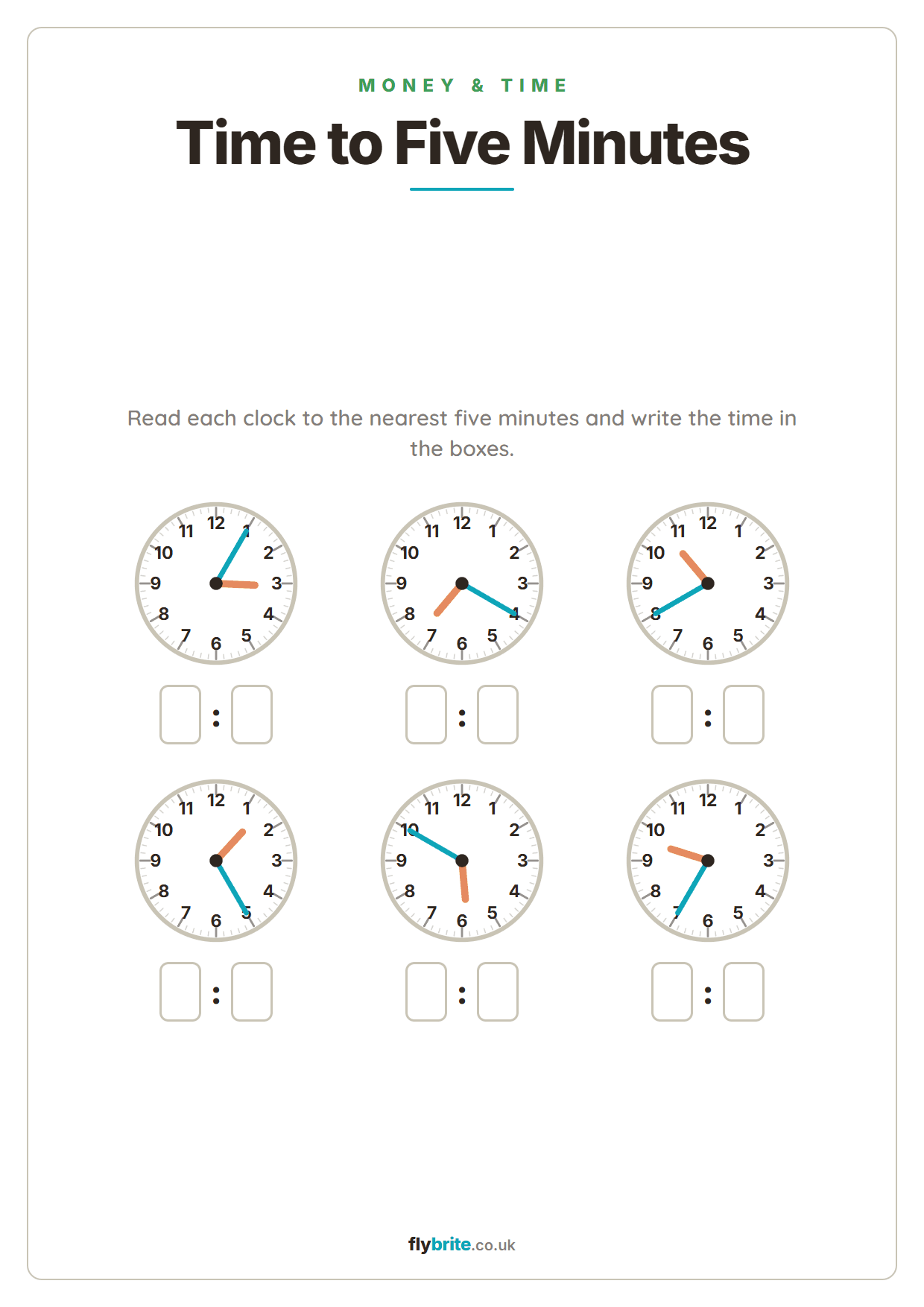
Reading right round the clock in fives, then writing each time in tidy digital boxes.
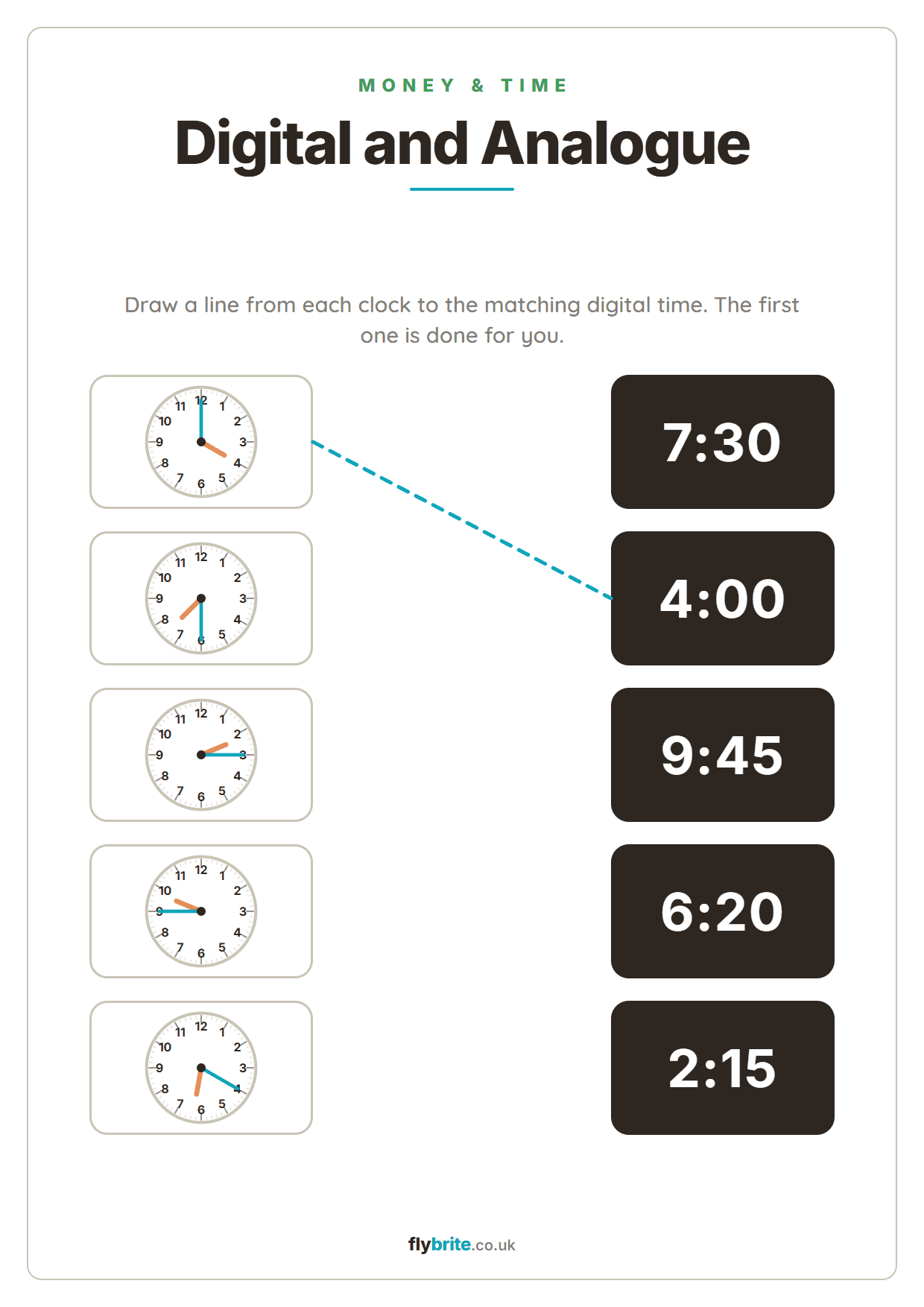
Match each clock face to its digital time, with the first pairing drawn in to start.
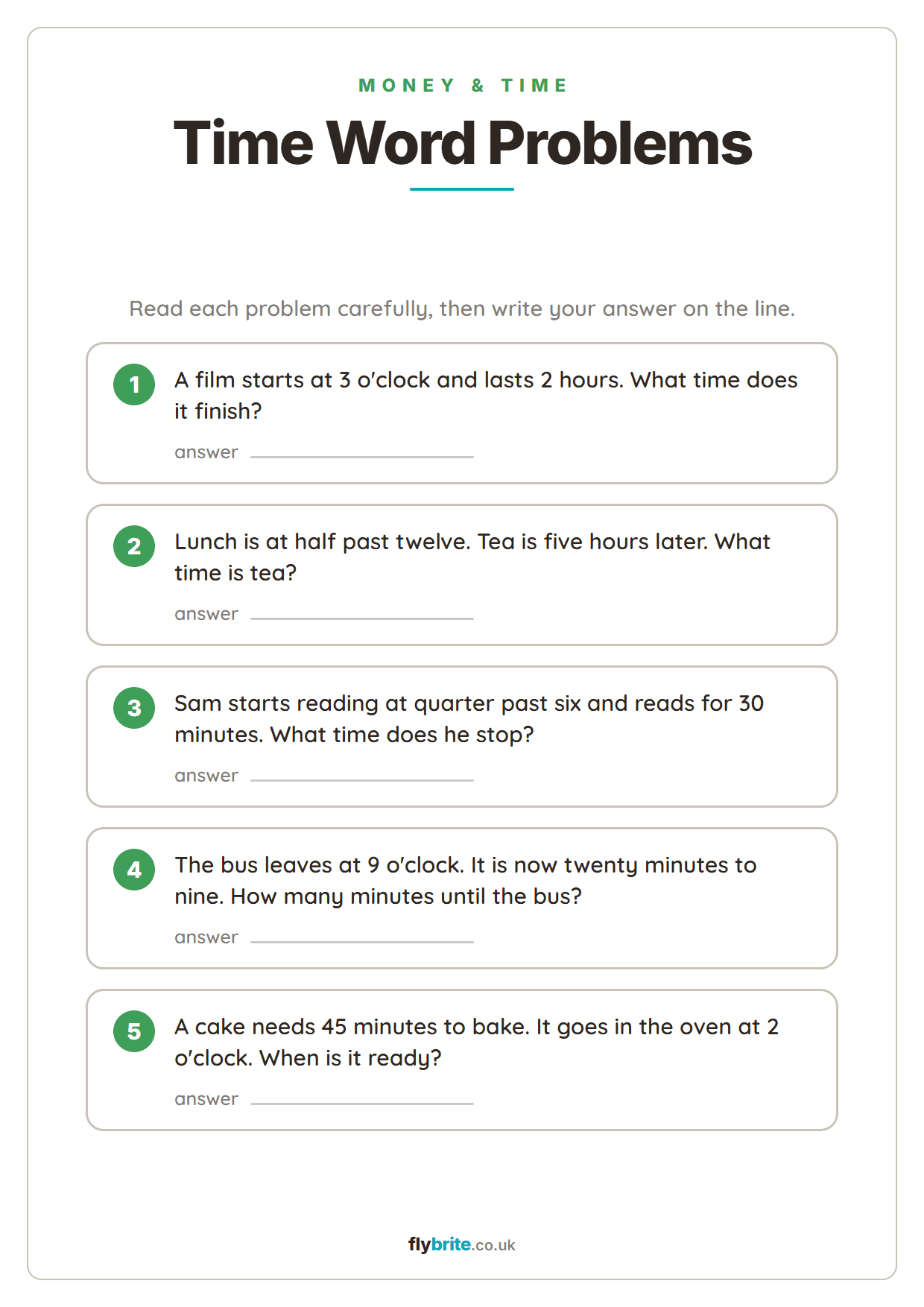
Five everyday time puzzles, from film lengths to bus times, to work out and write down.
A practice sheet for every table from 2 to 12, plus mixed pages to build quick recall.
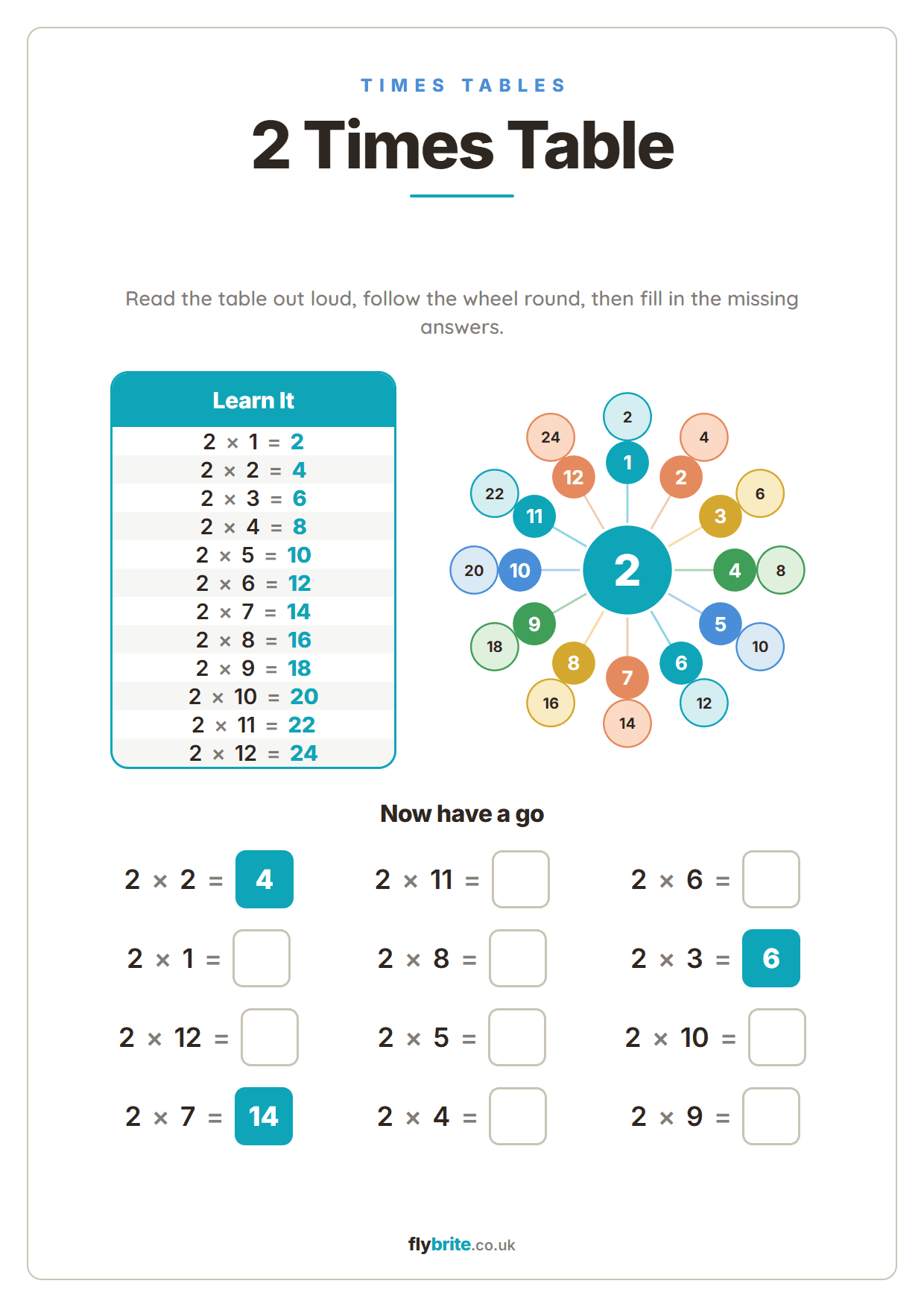
The twos, shown once to learn, spun round a colourful wheel, then a gentle write-in for practice.
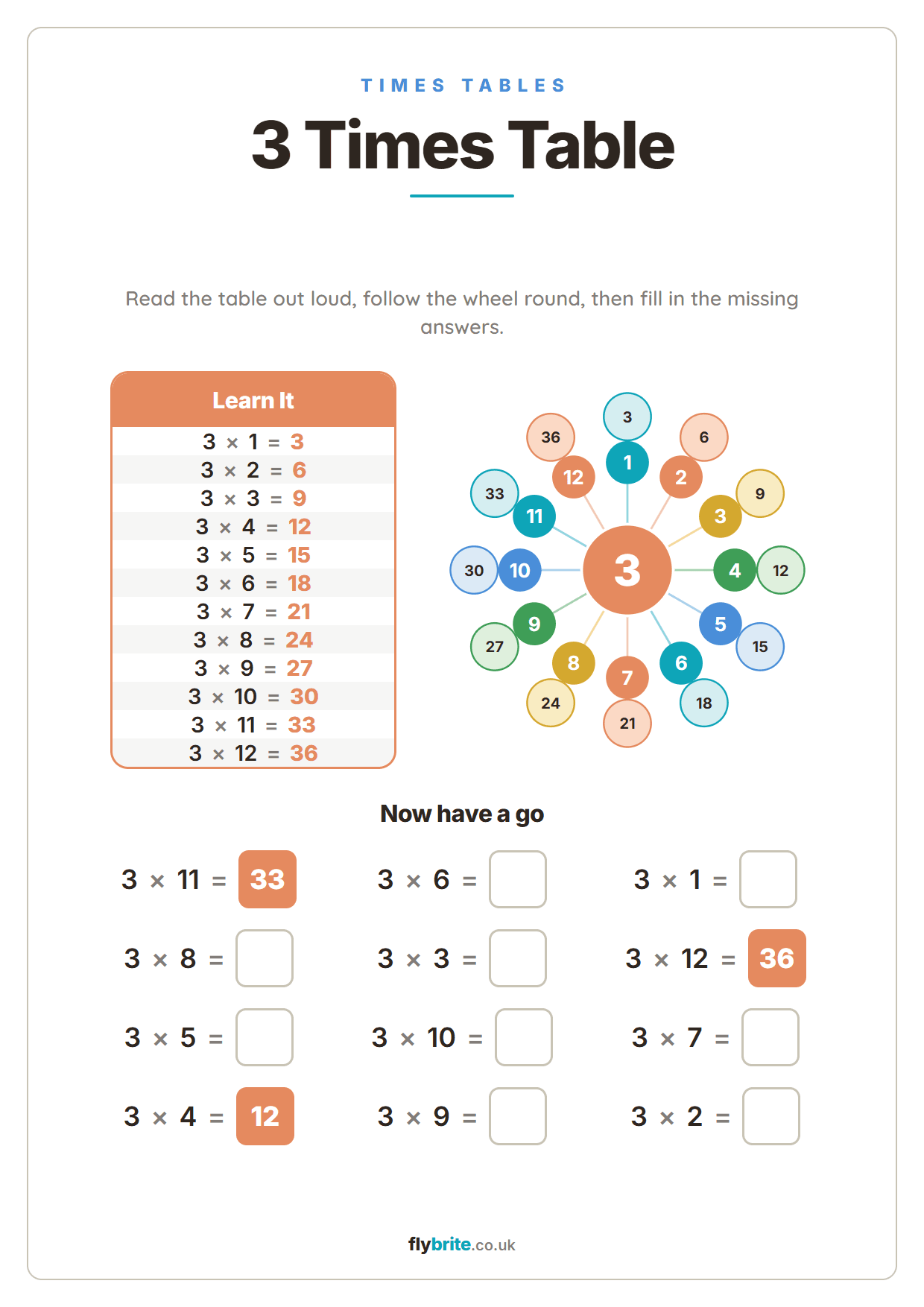
The threes at a glance, with a bright multiplication wheel and a write-in grid to test the memory.
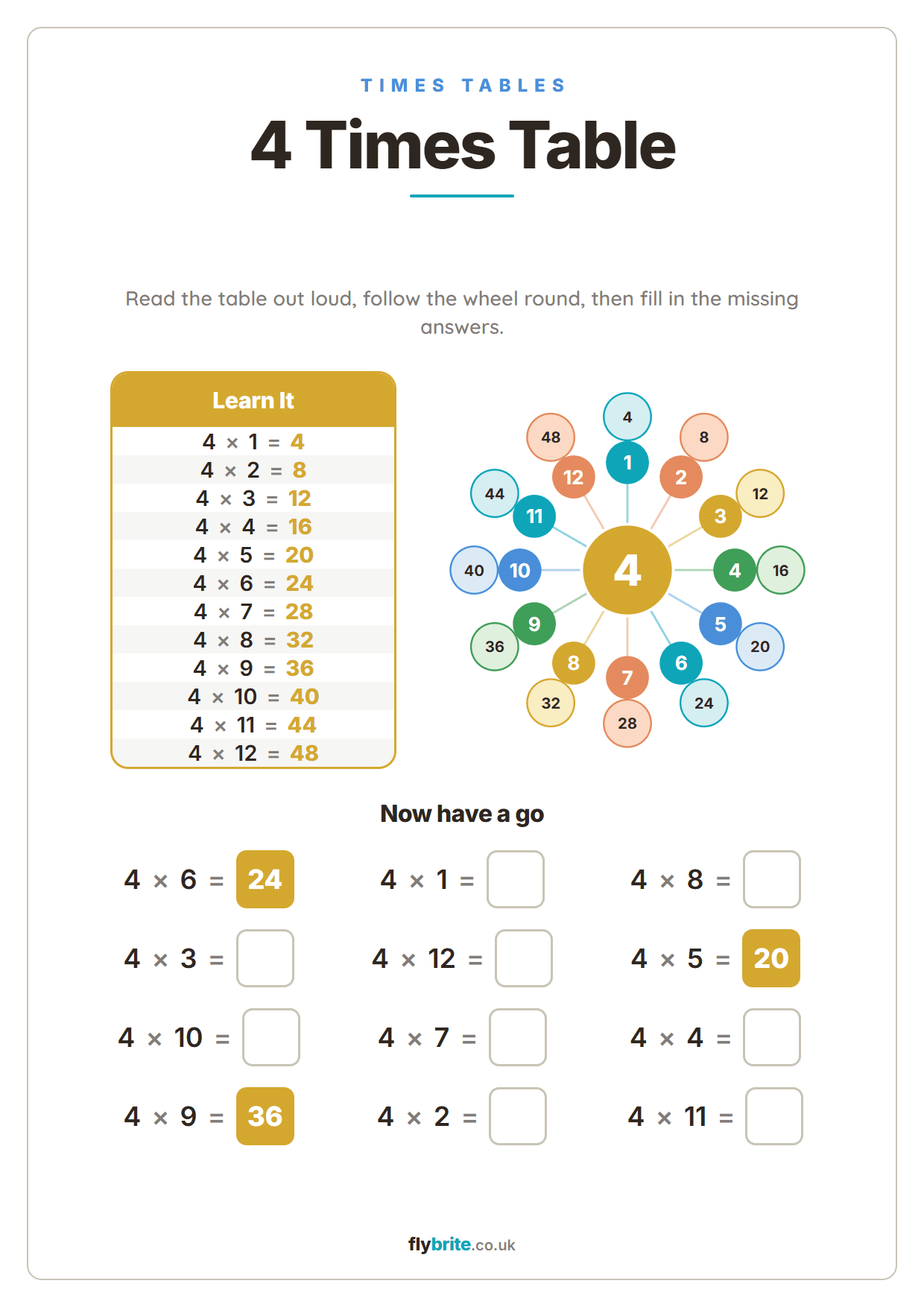
The fours laid out clearly, a spin-round wheel to picture them, and boxes to fill in the answers.
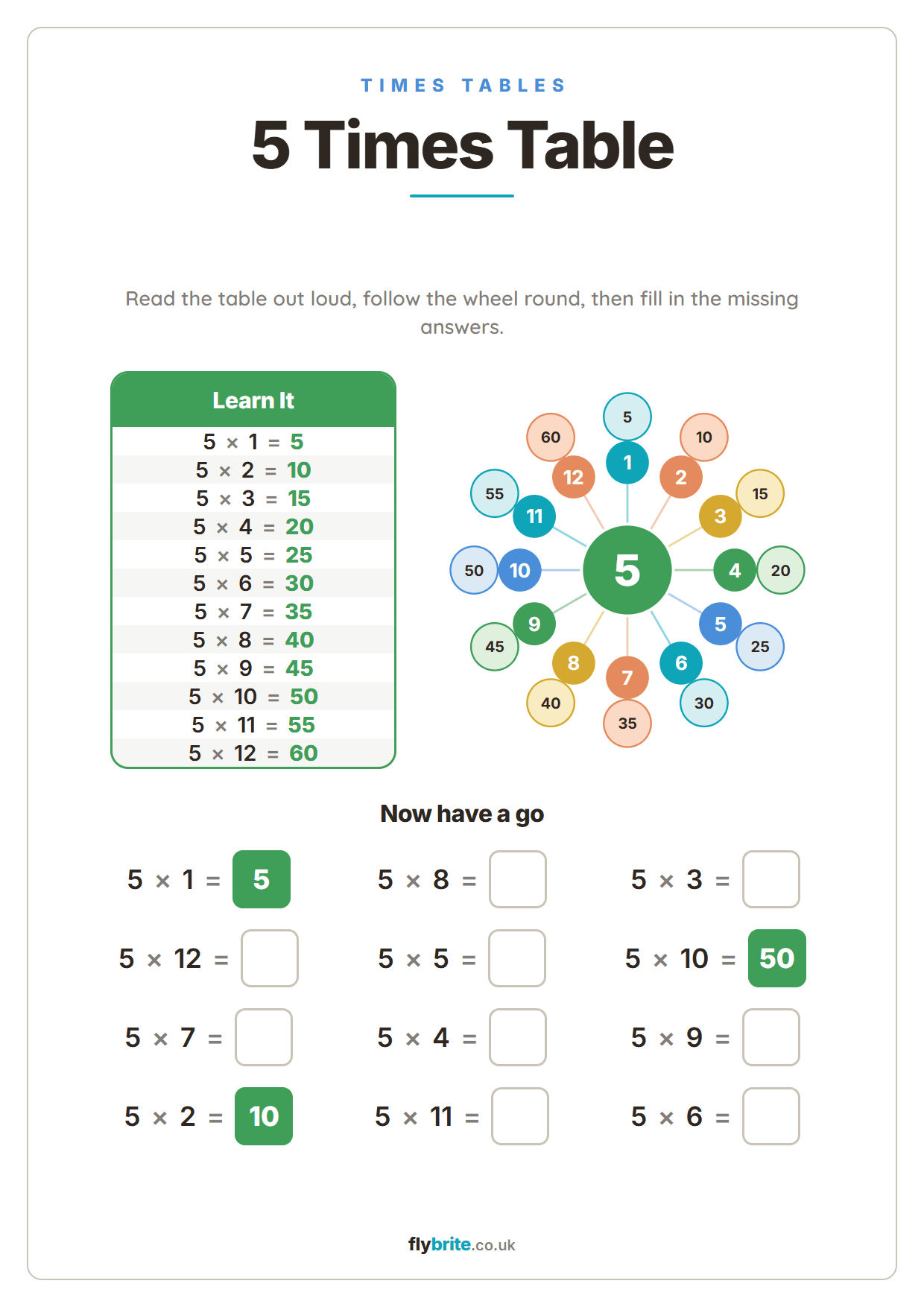
The friendly fives, one of the first tables children master, with wheel and write-in practice.
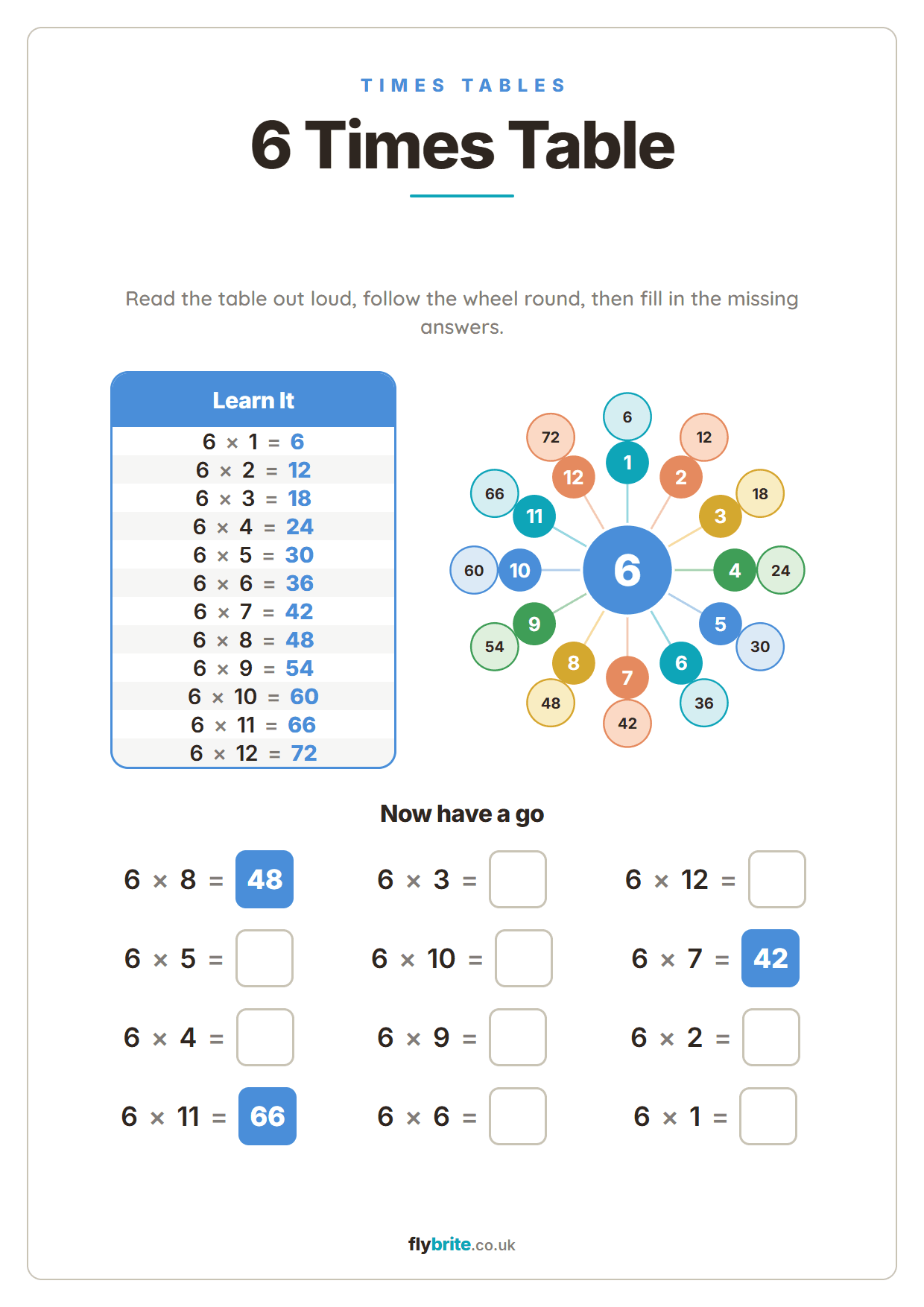
The sixes to learn and to test, with a colourful wheel and a calm grid of answers to complete.
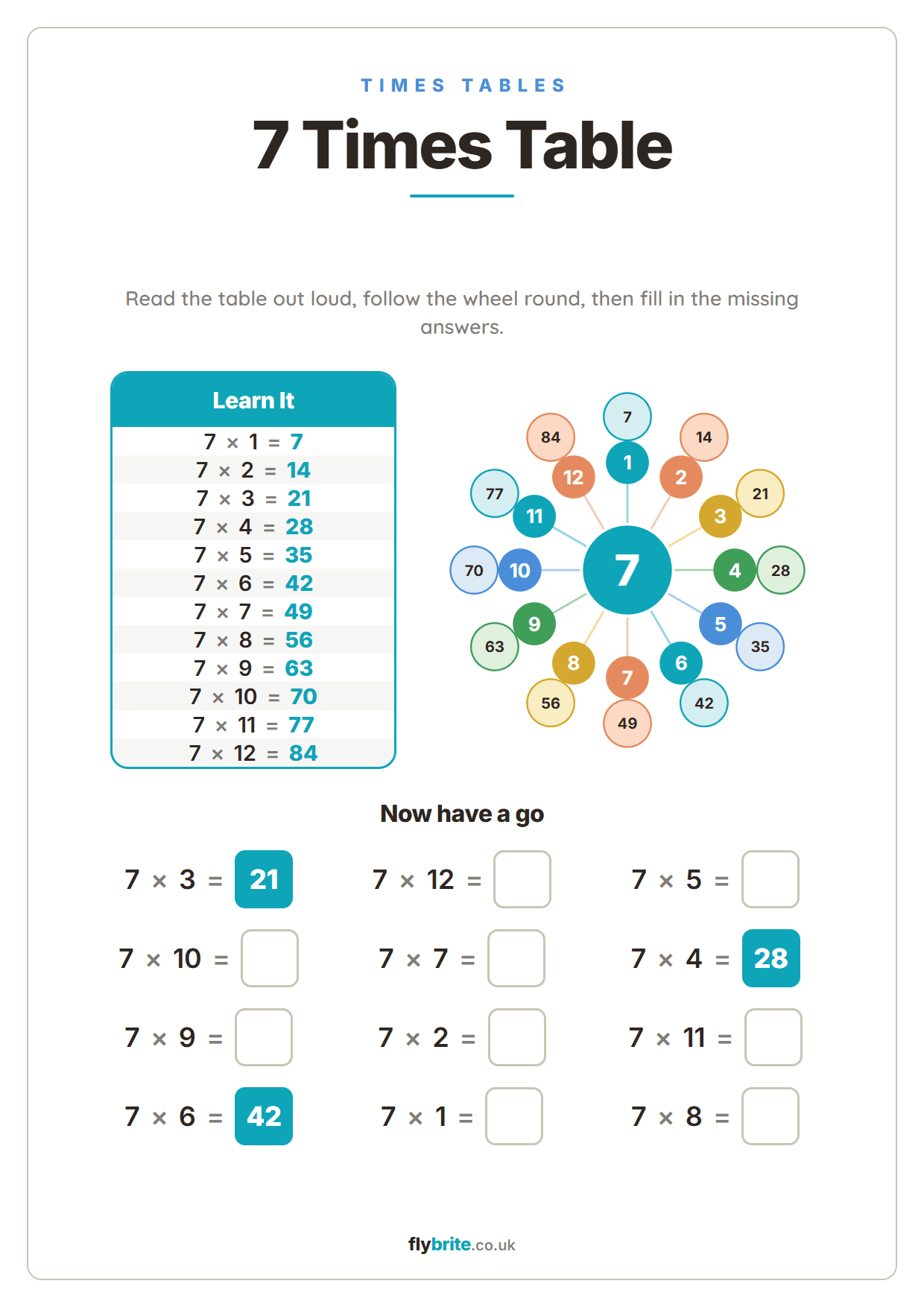
The trickier sevens made friendlier, shown once, spun on a wheel, then practised in write-in boxes.
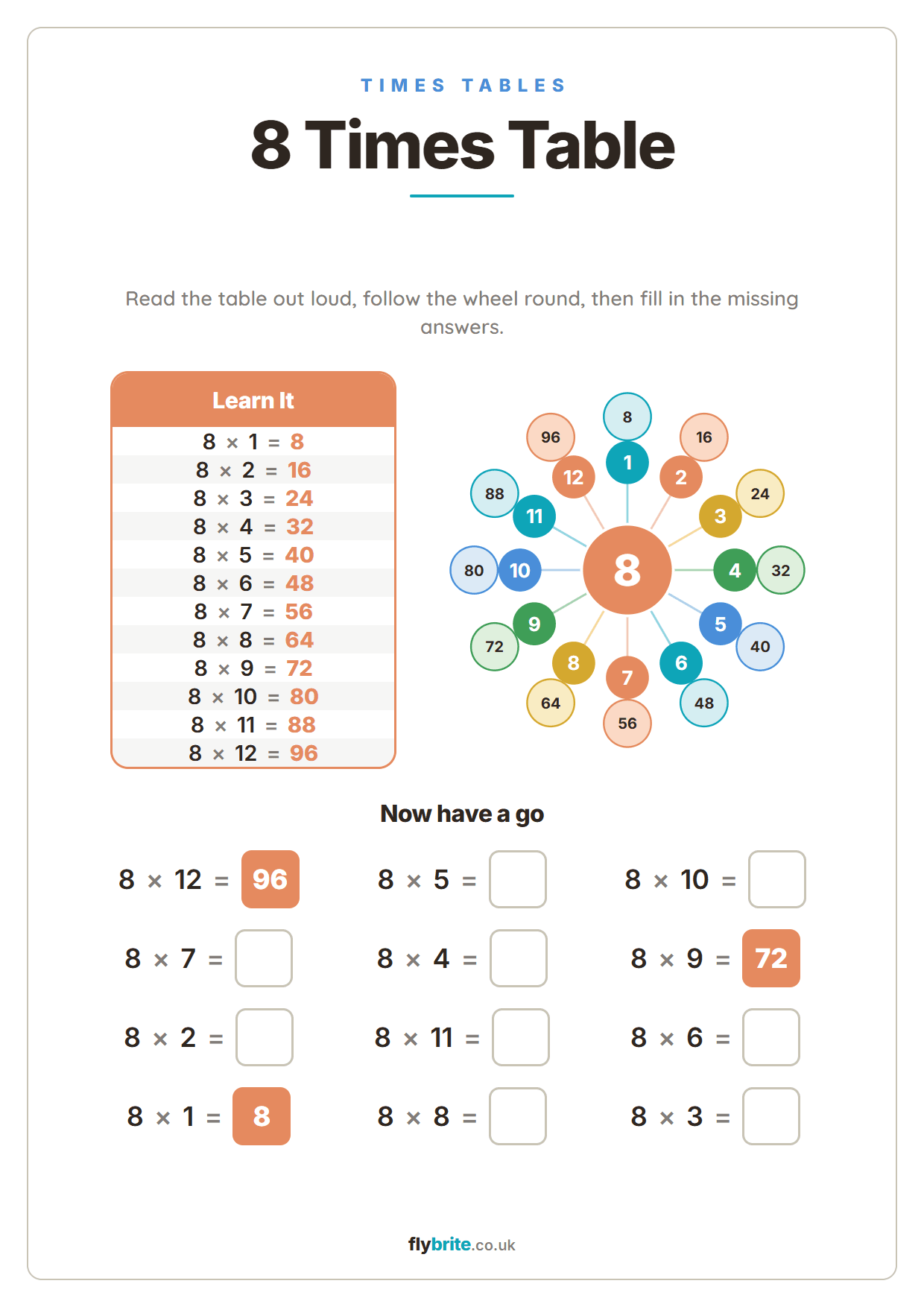
The eights all in one place, with a bright multiplication wheel and a write-in grid to build recall.
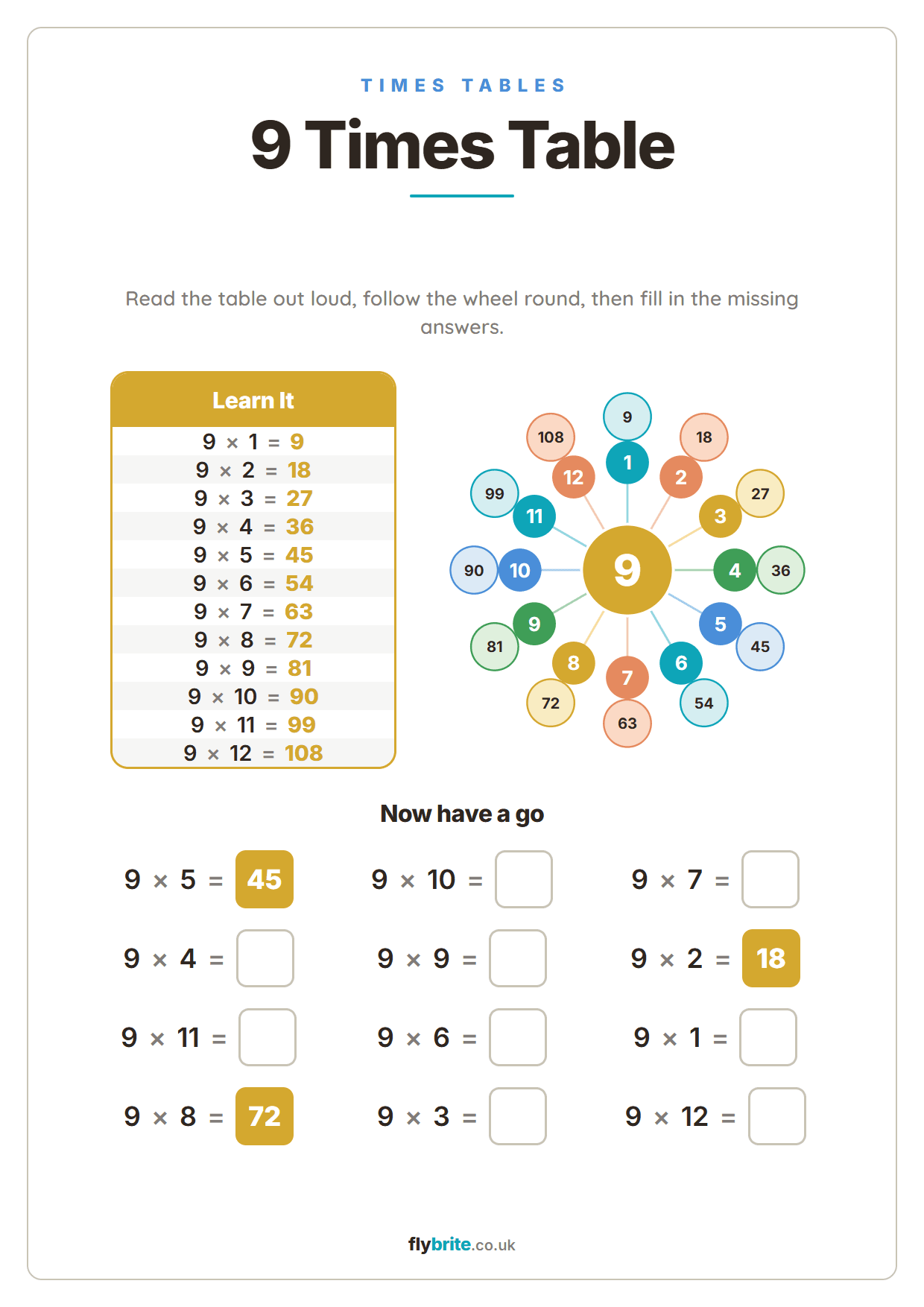
The nines to learn by heart, with a colourful wheel and a gentle grid of answers to fill in.

The tens, elevens and twelves side by side, three little wheels, and mixed write-in practice.
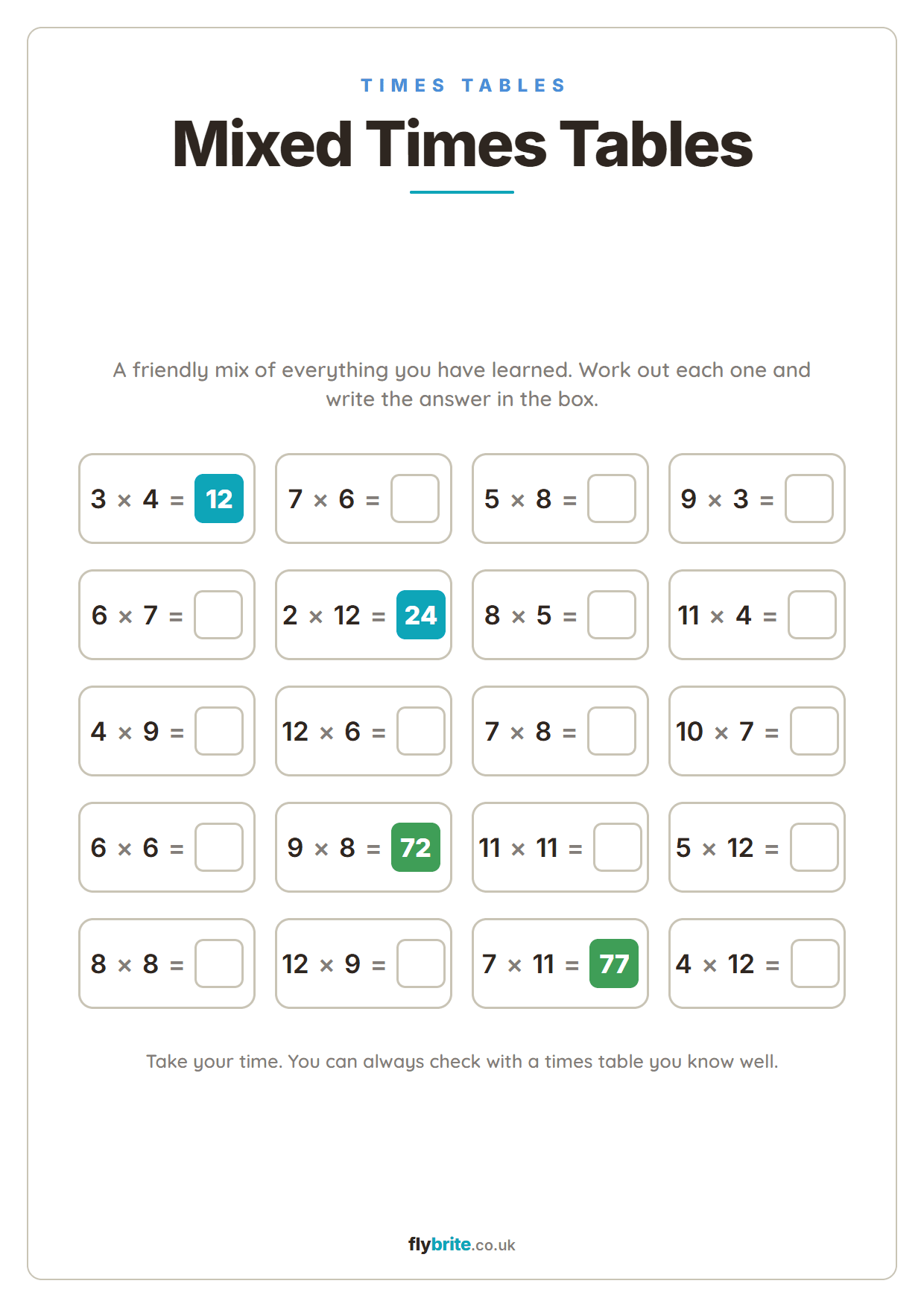
A random mix of every table in one write-in grid, the perfect check that it has all stuck.
Scavenger hunts, bug and bird spotting, pond dipping and nature journalling for learning outdoors.
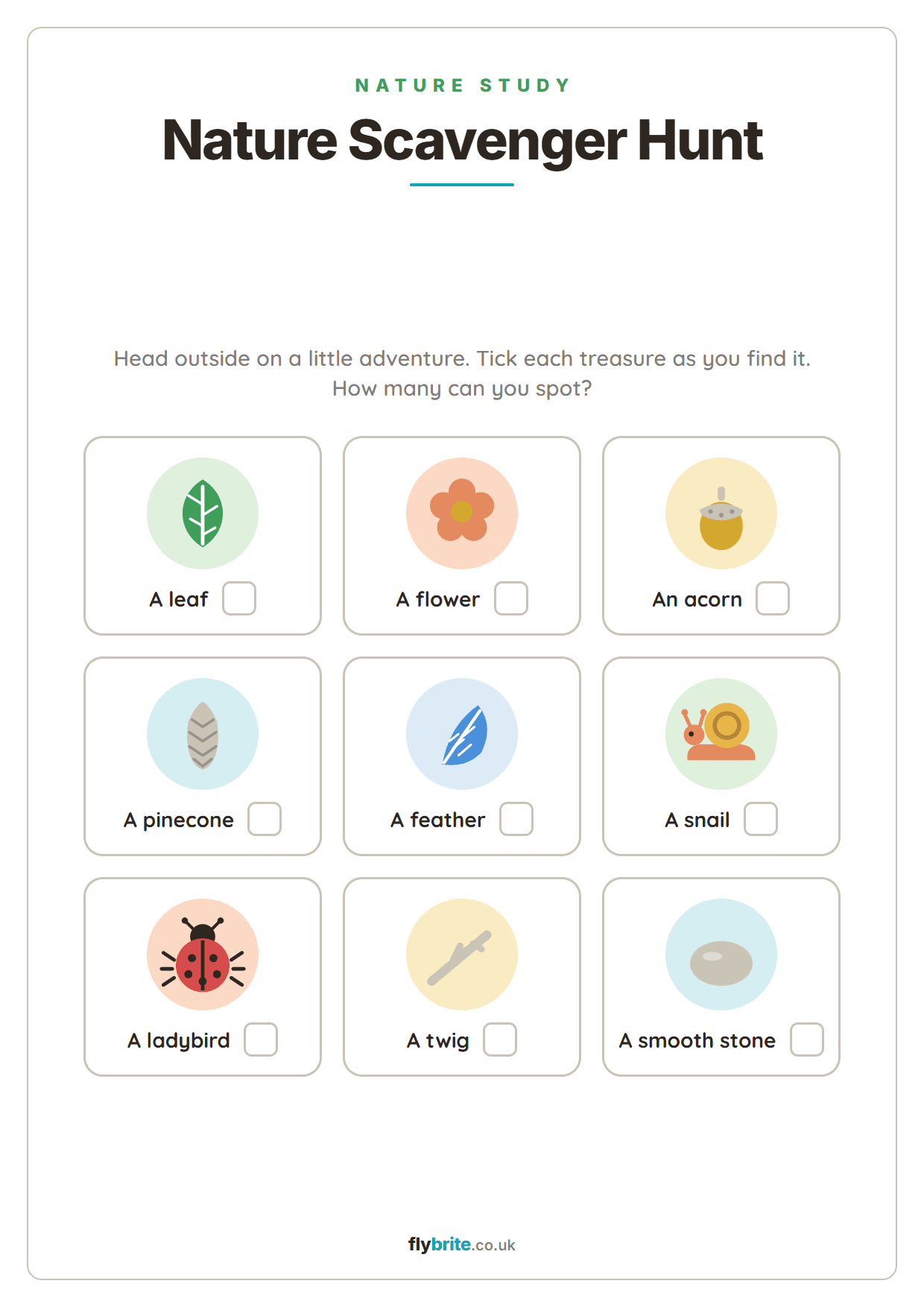
A garden treasure hunt for little explorers, tick off each leaf, feather and snail as you find it.
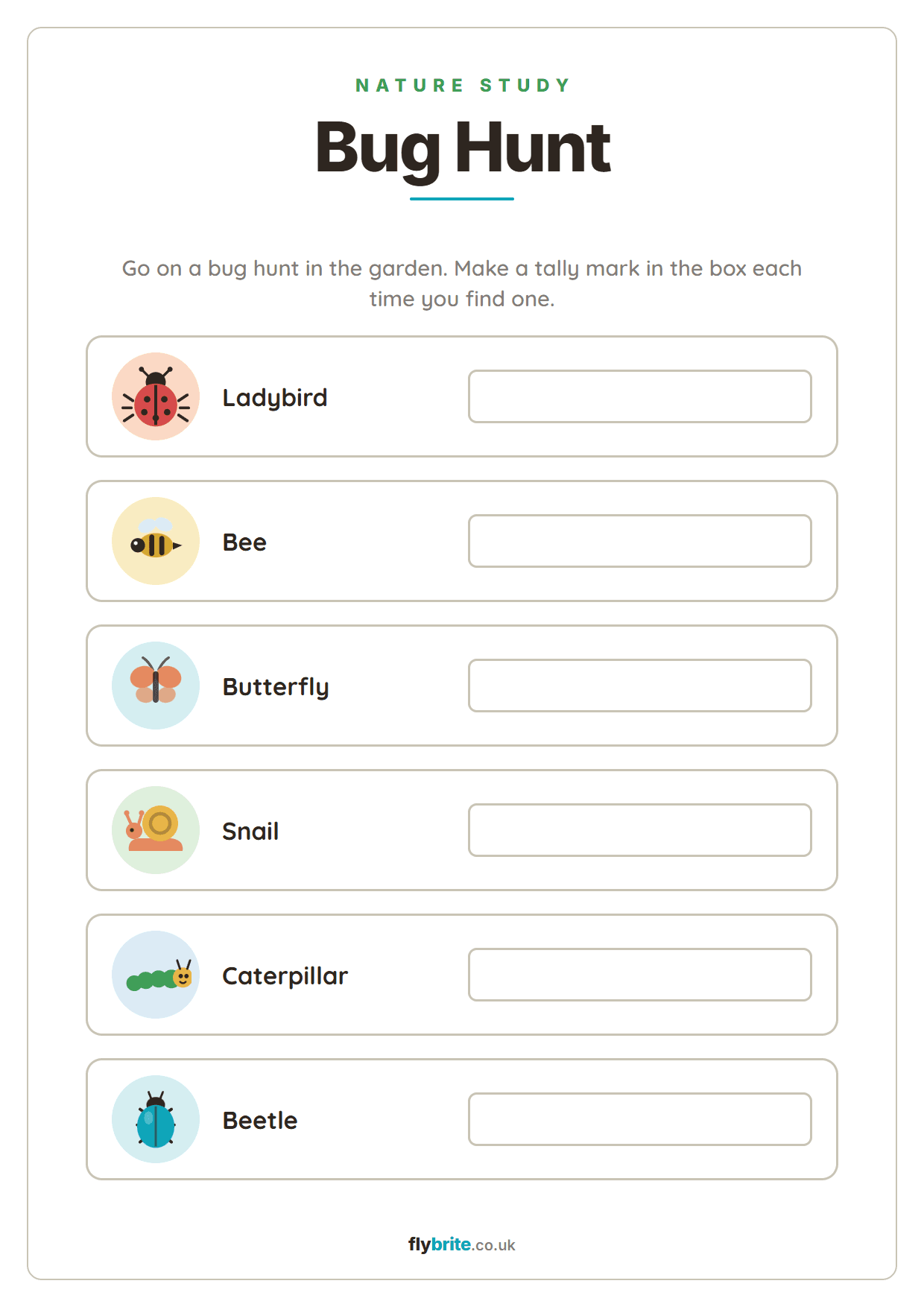
Head into the garden with your magnifying glass and tally up every buzzing, crawling bug you meet.
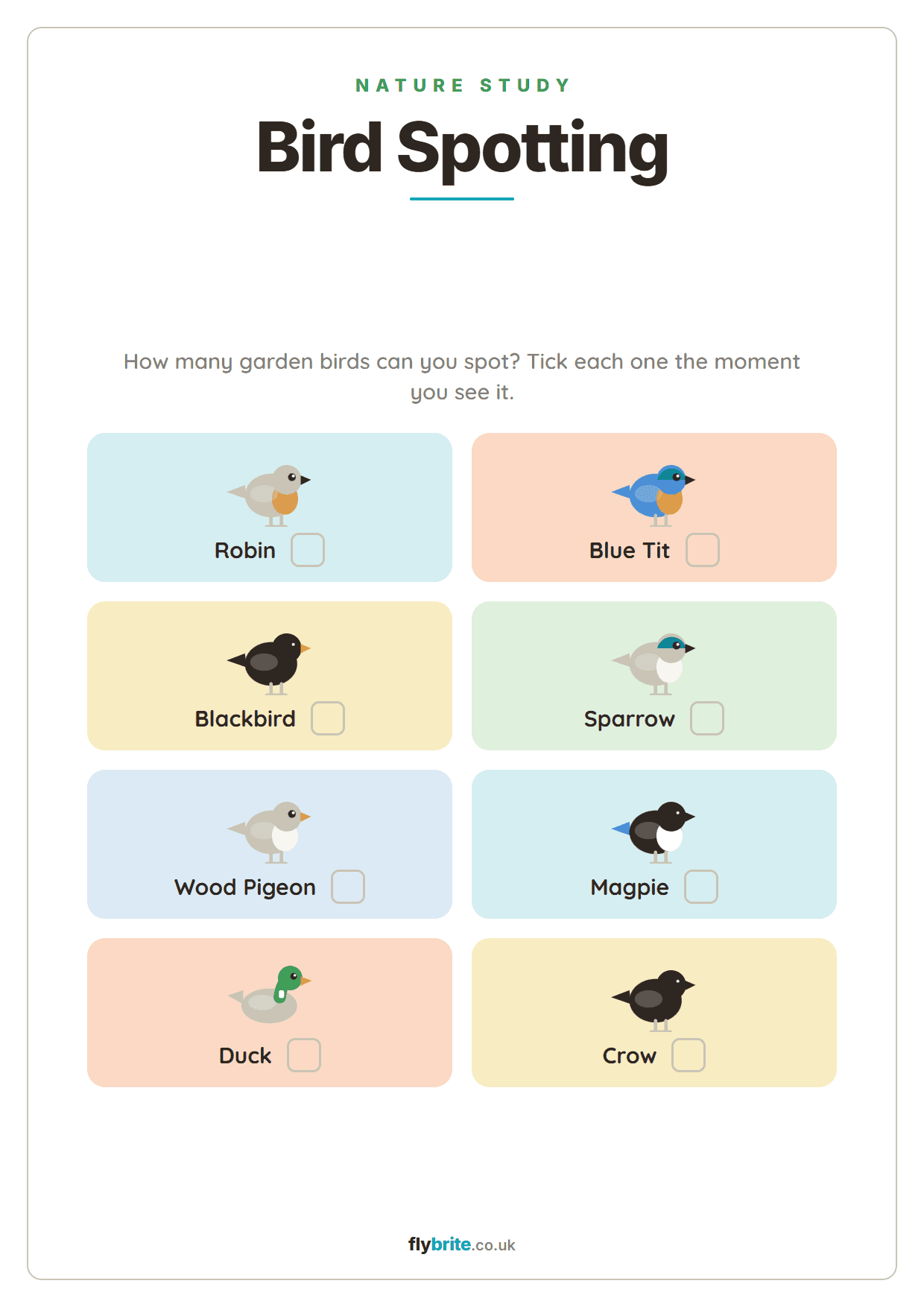
A cheerful spotting sheet for the garden birds, from the robin to the blackbird, tick each one you see.

Match each leaf to the tree it fell from, a lovely first step into naming our native trees.
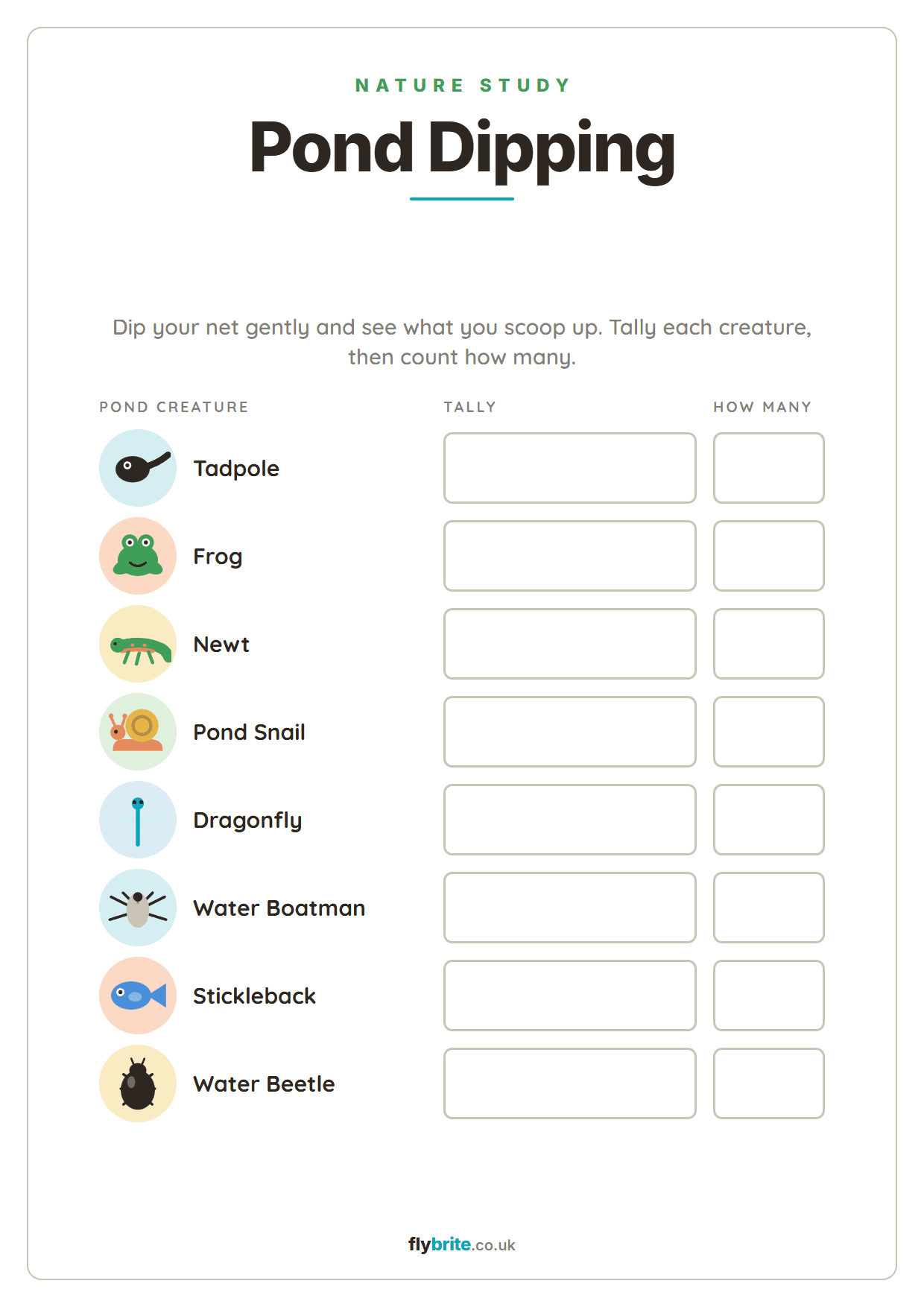
A proper pond dipping record sheet, count the tadpoles, newts and pond snails you scoop up.
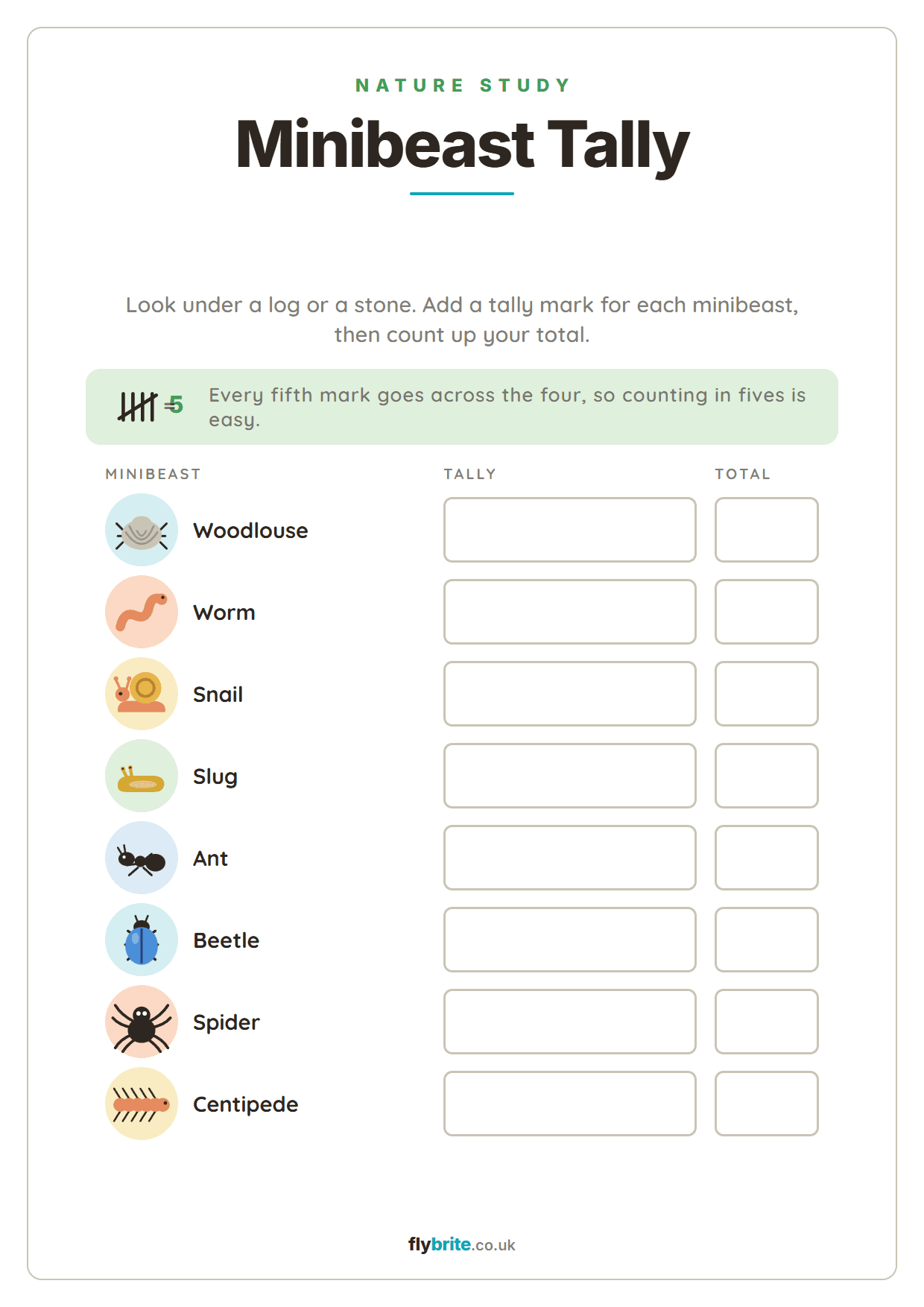
Lift a log or a stone and tally the minibeasts underneath, then count up your grand total.
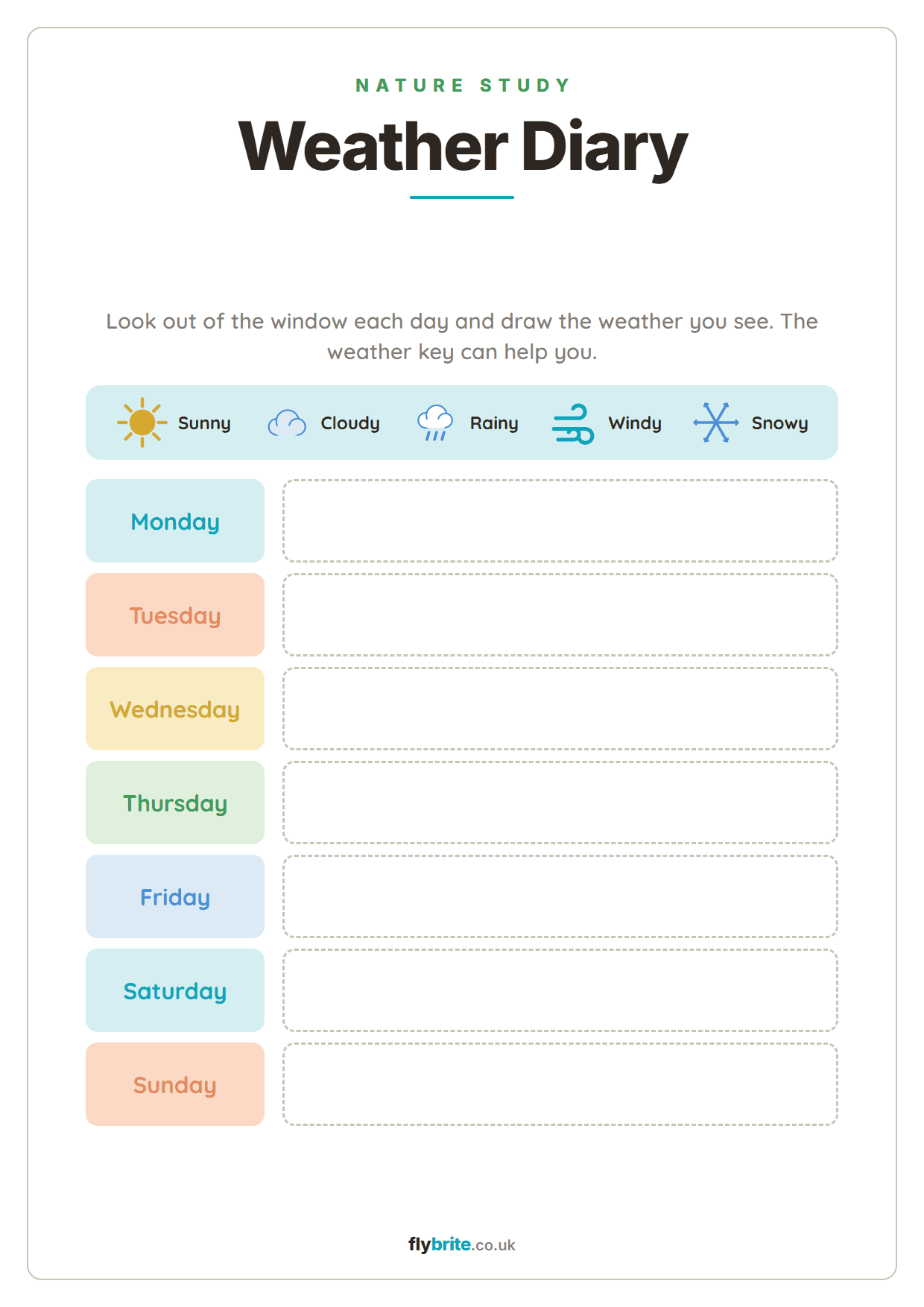
A full week of weather to watch and draw, one little window box for every day.
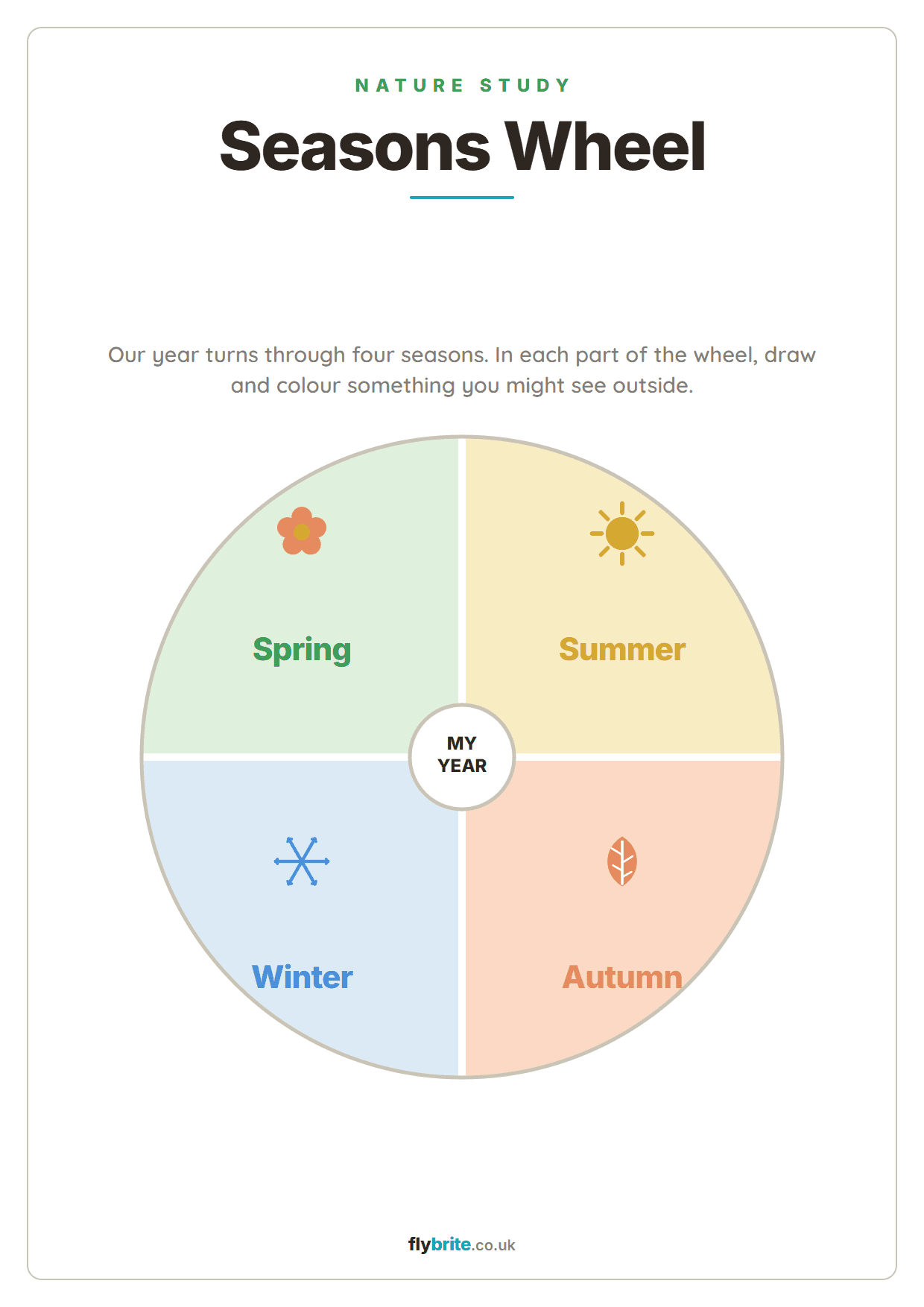
A four part wheel of the year for tiny hands to draw and colour, one season at a time.
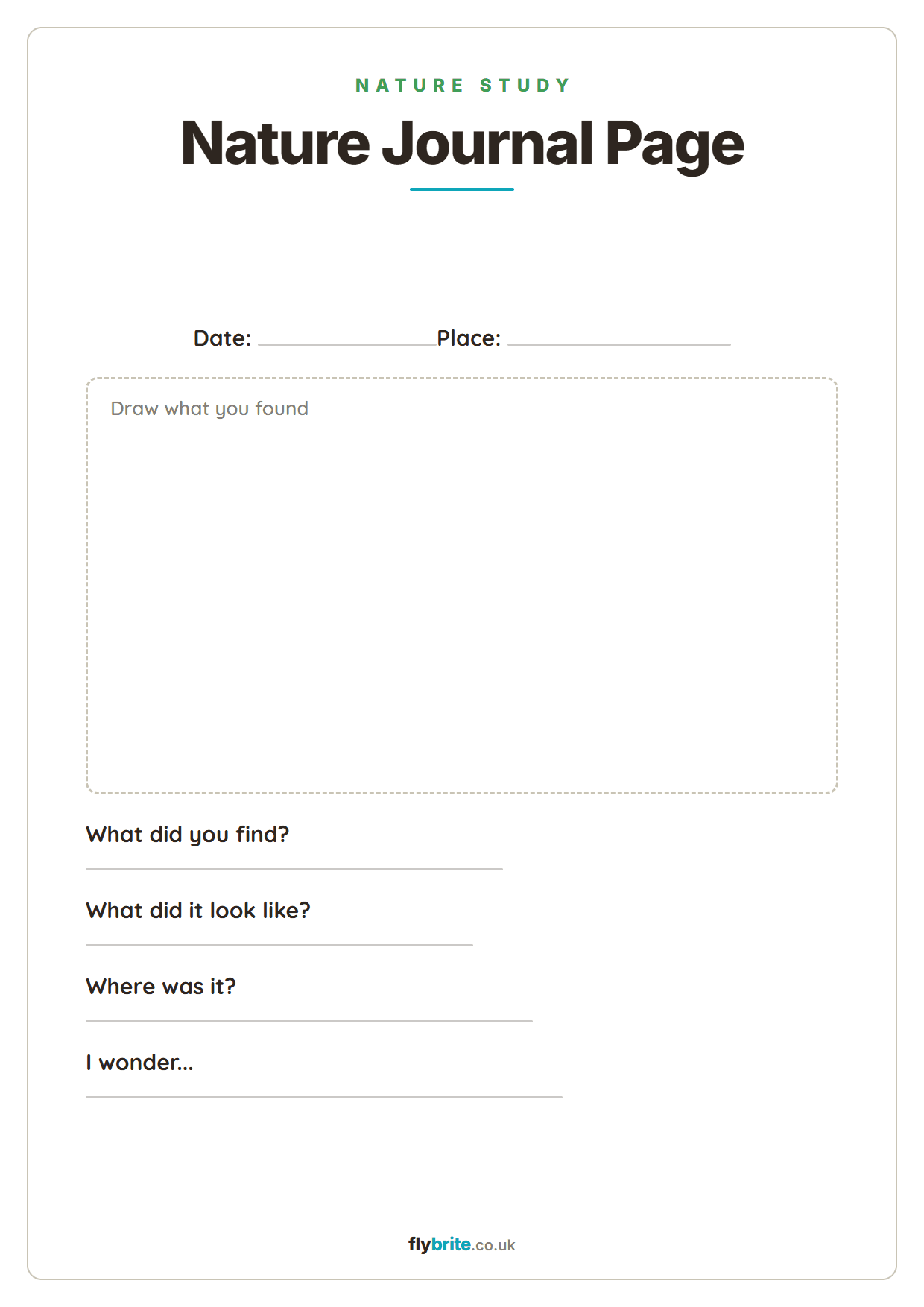 Type or write in
A beautiful blank journal page to draw a find and jot down everything you noticed about it.
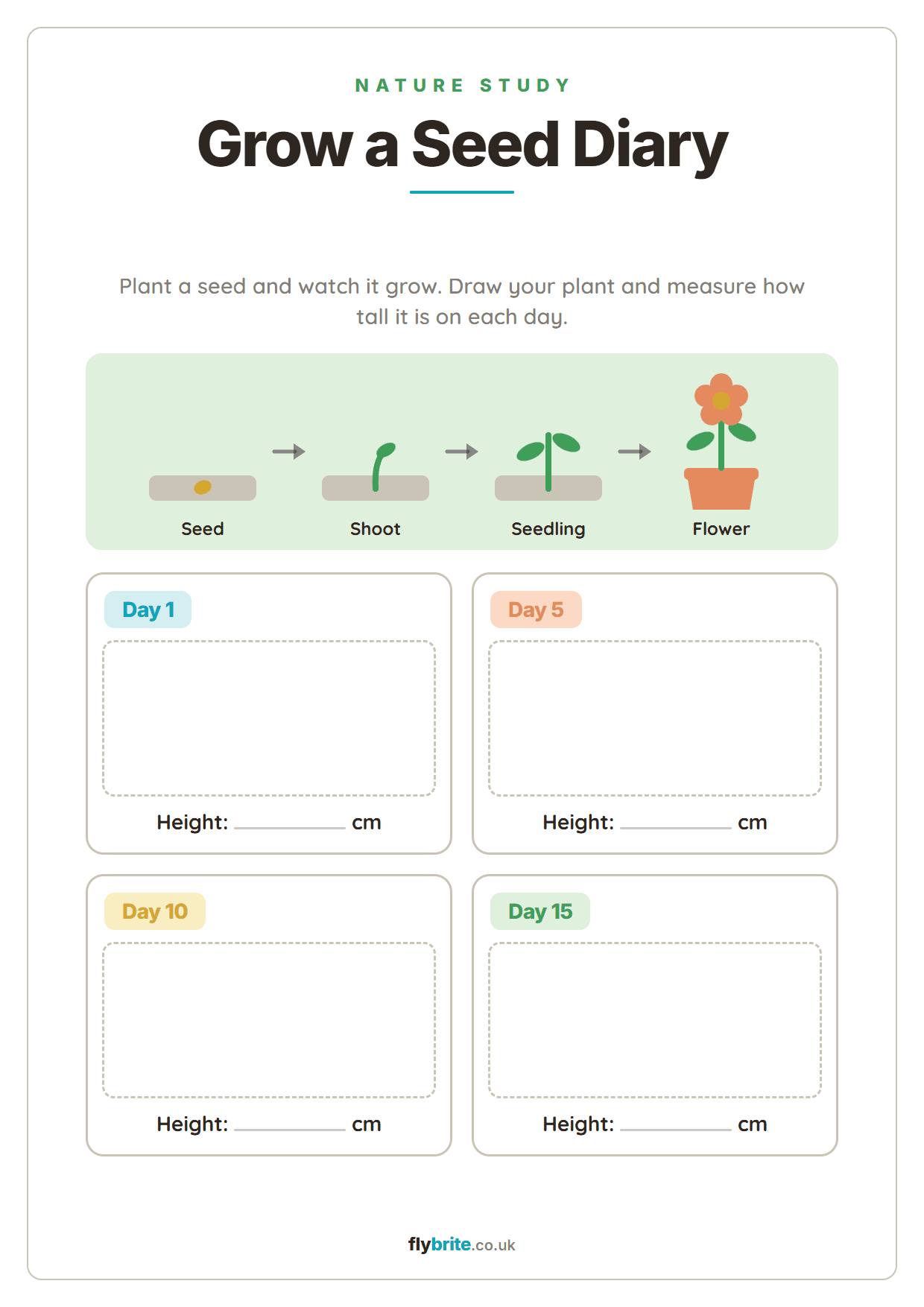 Type or write in
Plant a seed and keep a diary as it grows, drawing and measuring your little plant week by week.
Story starters, picture prompts, comic strips and book reports that get pencils moving.
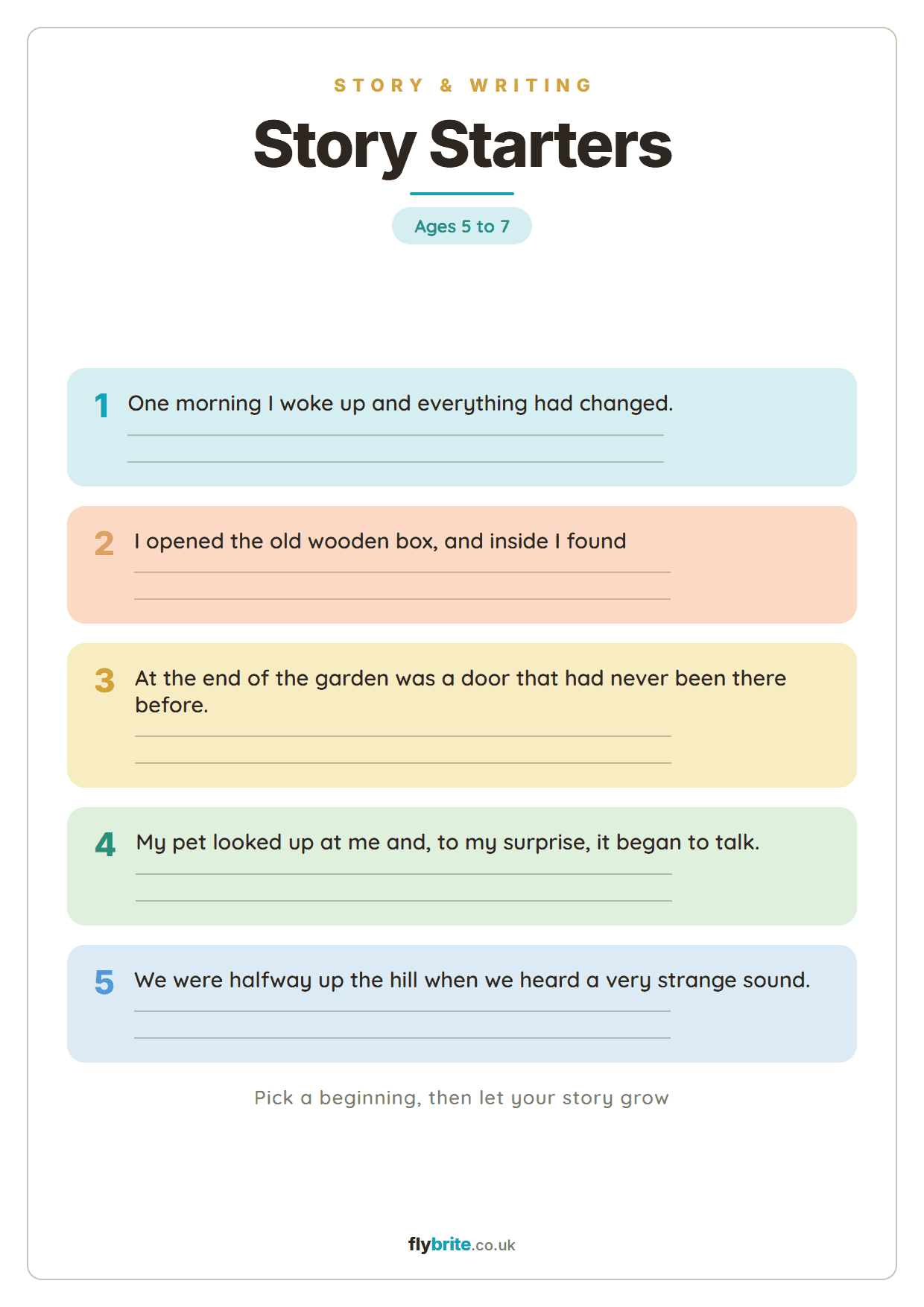 Type or write in
Five tempting first lines to spark a story, each with cosy ruled space to carry the tale onwards.
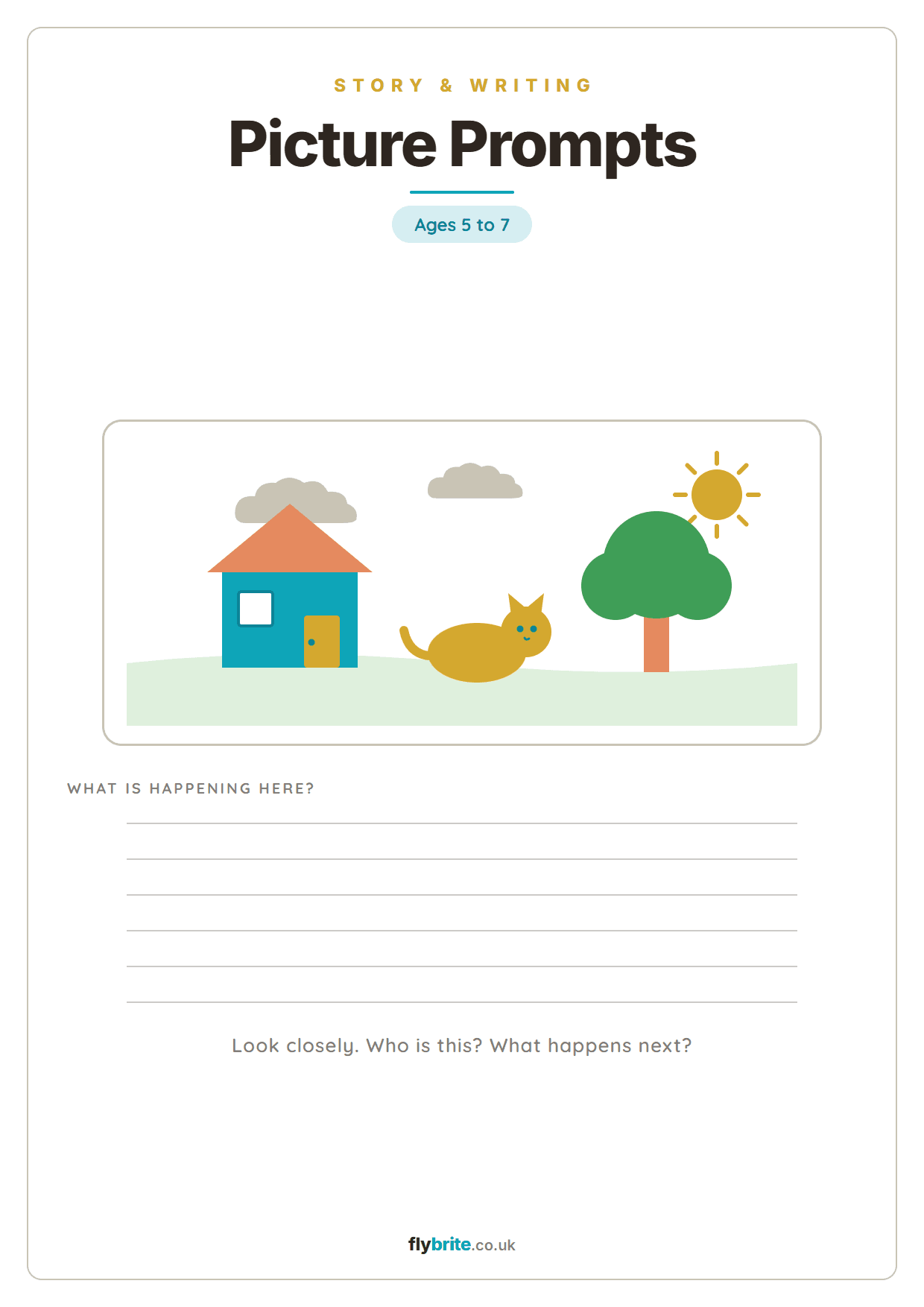 Type or write in
A friendly little scene to study and puzzle over, with generous lines to write down the story it hides.
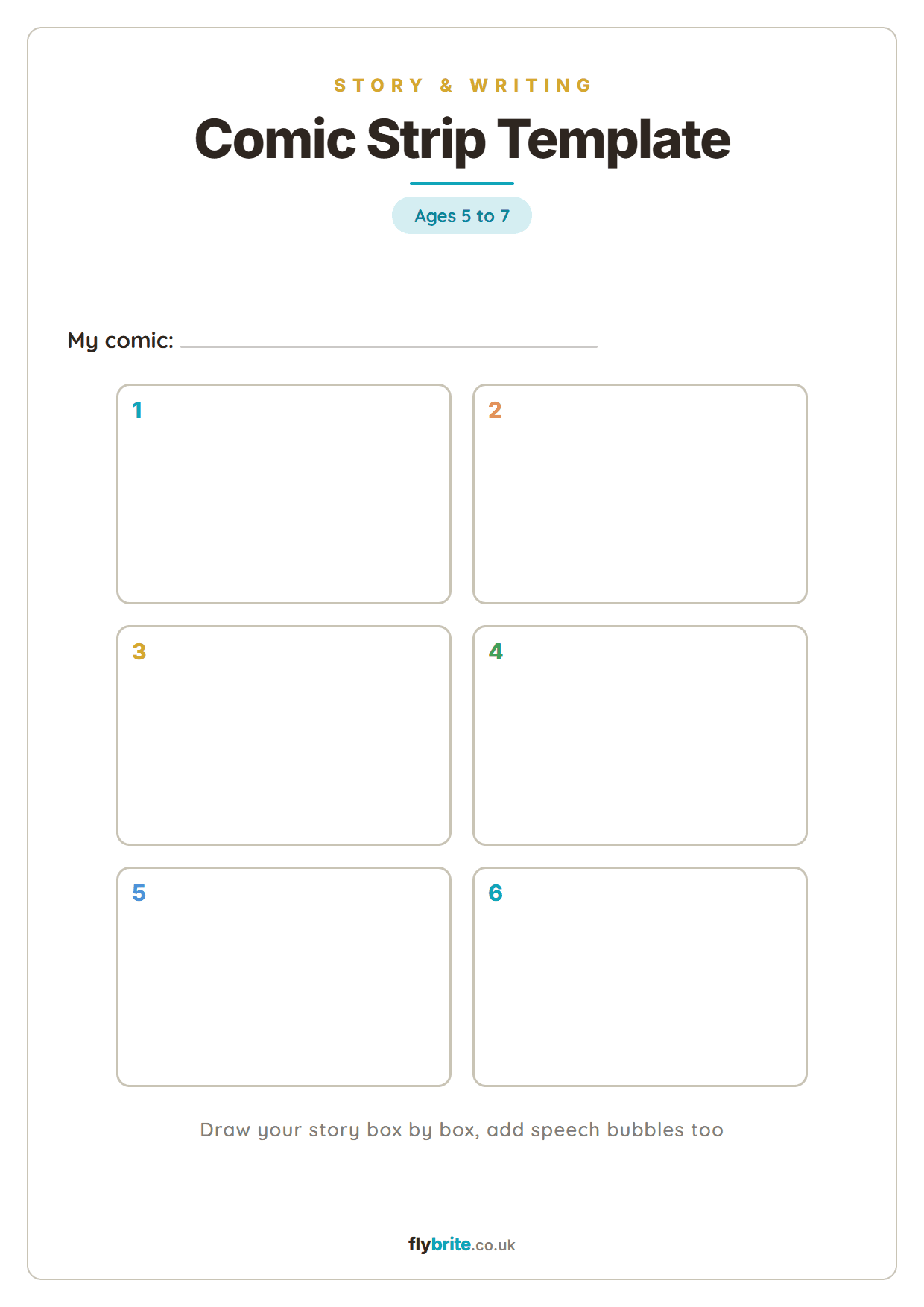 Type or write in
Six clean panels waiting for a hand-drawn adventure, speech bubbles and all.
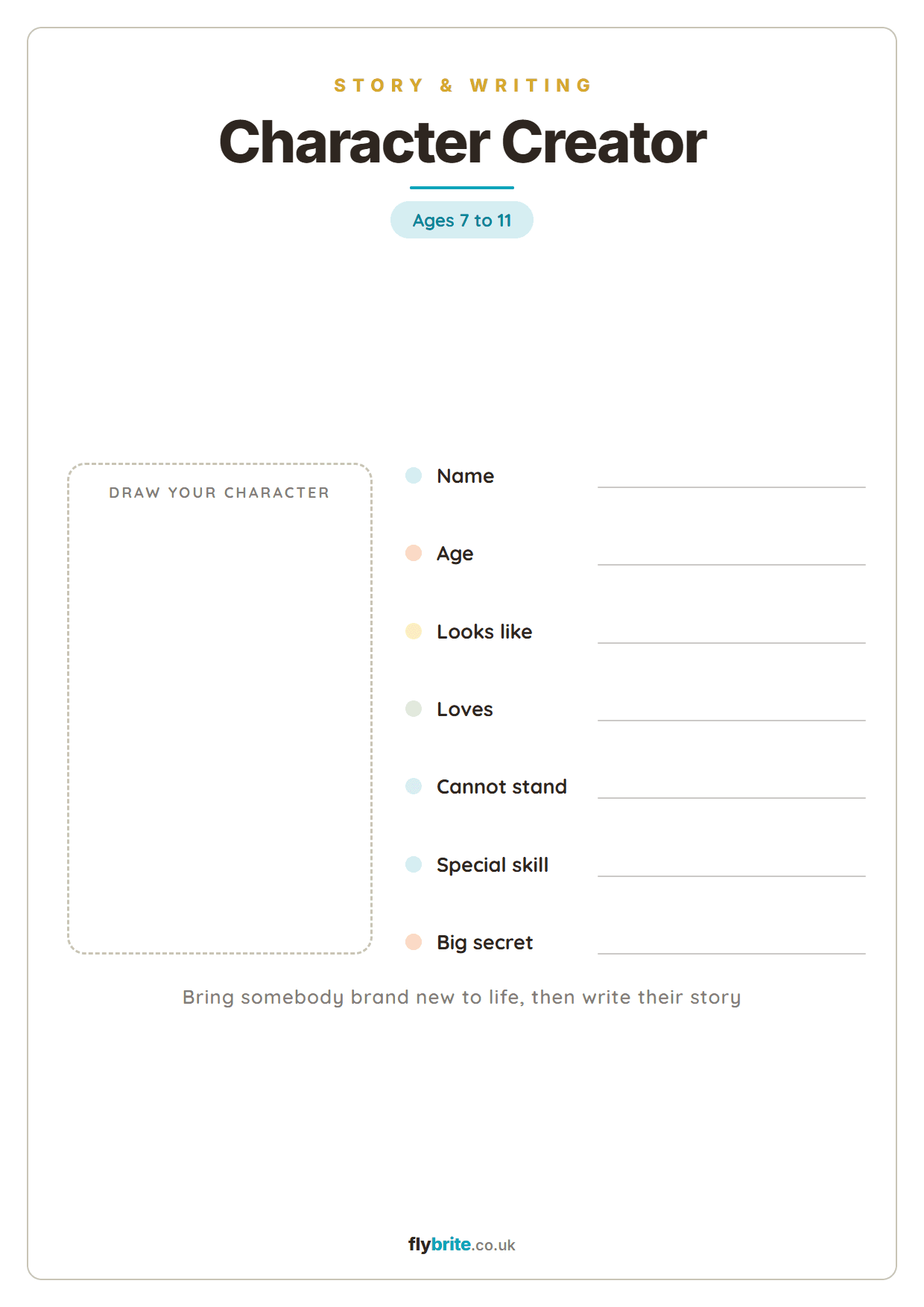 Type or write in
Design a hero or a villain from scratch, draw their face then fill in every telling detail.
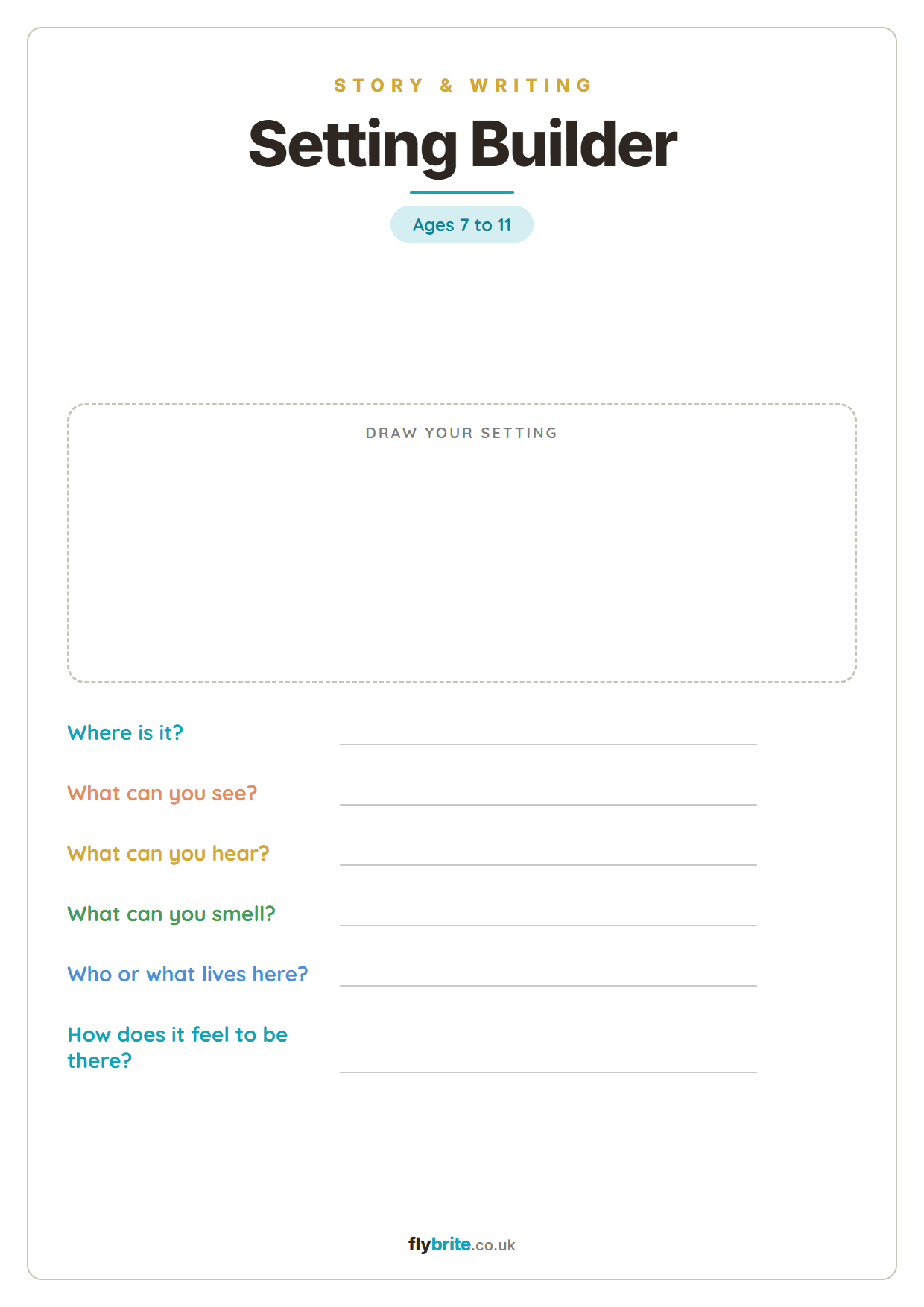 Type or write in
Dream up a whole new place, sketch it out then bring it alive through all five senses.
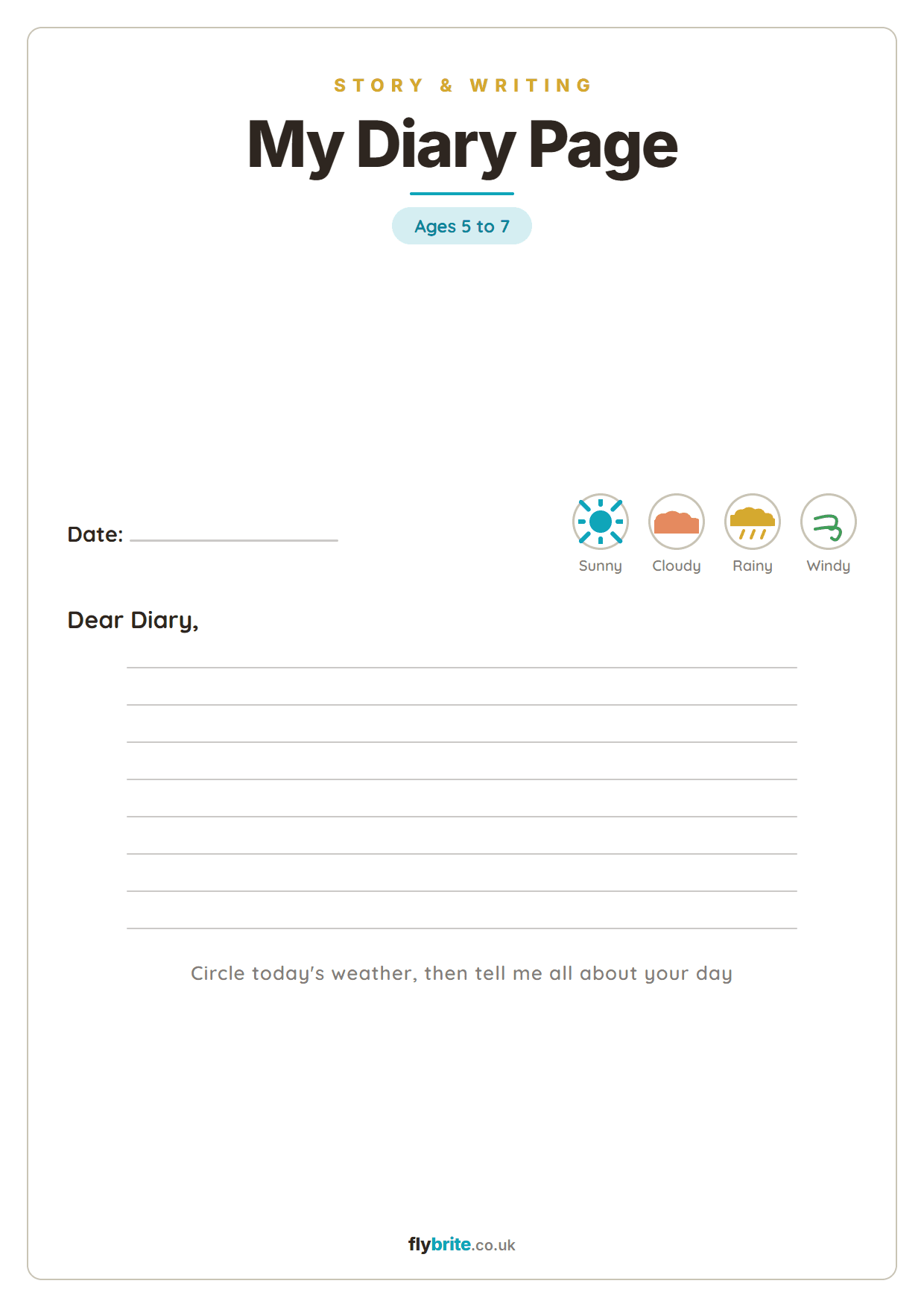 Type or write in
A warm dear-diary page with the date, a weather to circle and plenty of room for the day just gone.
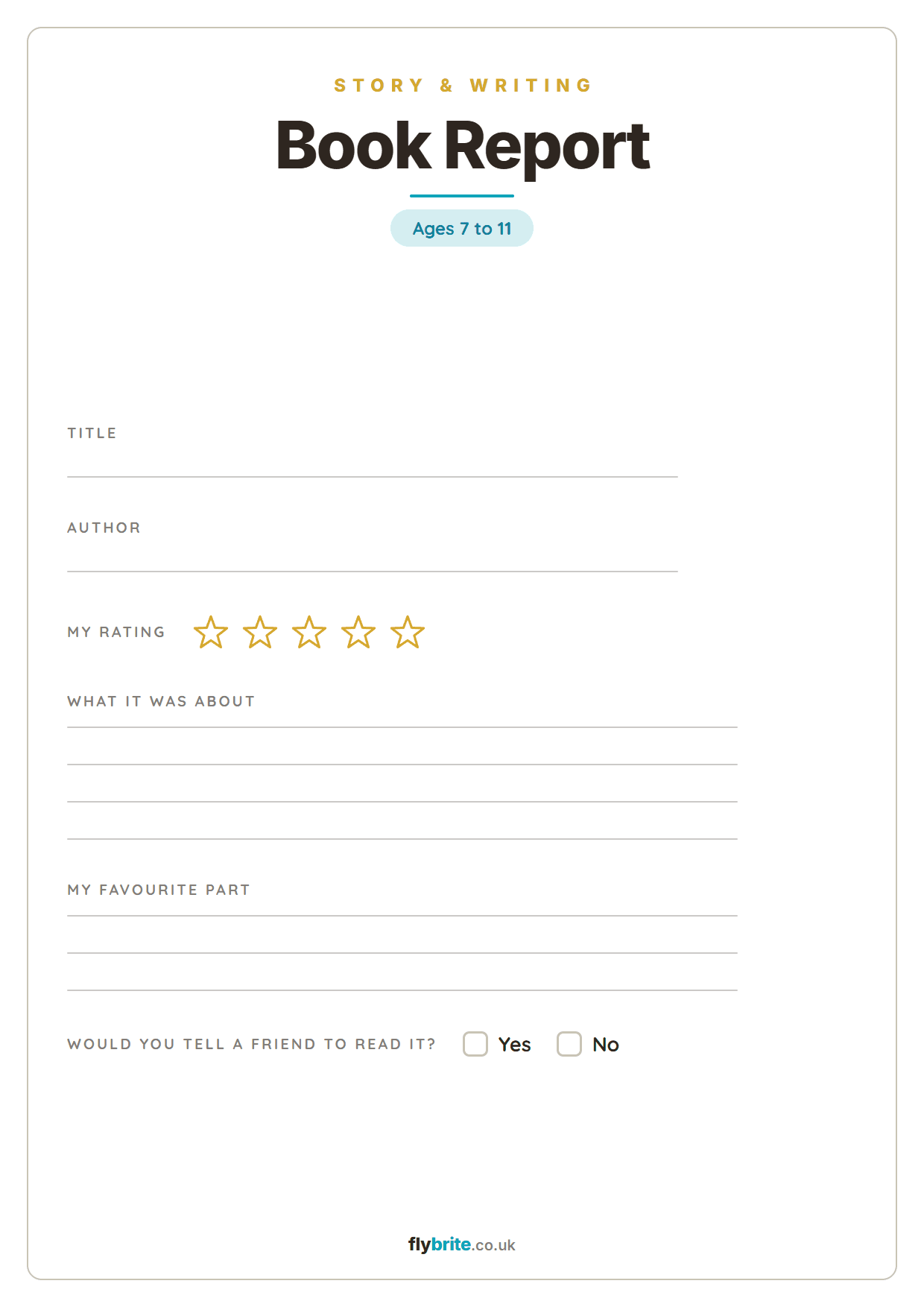 Type or write in
A proper little book review, star the read, sum up the story and say whether a friend should pick it up.
 Type or write in
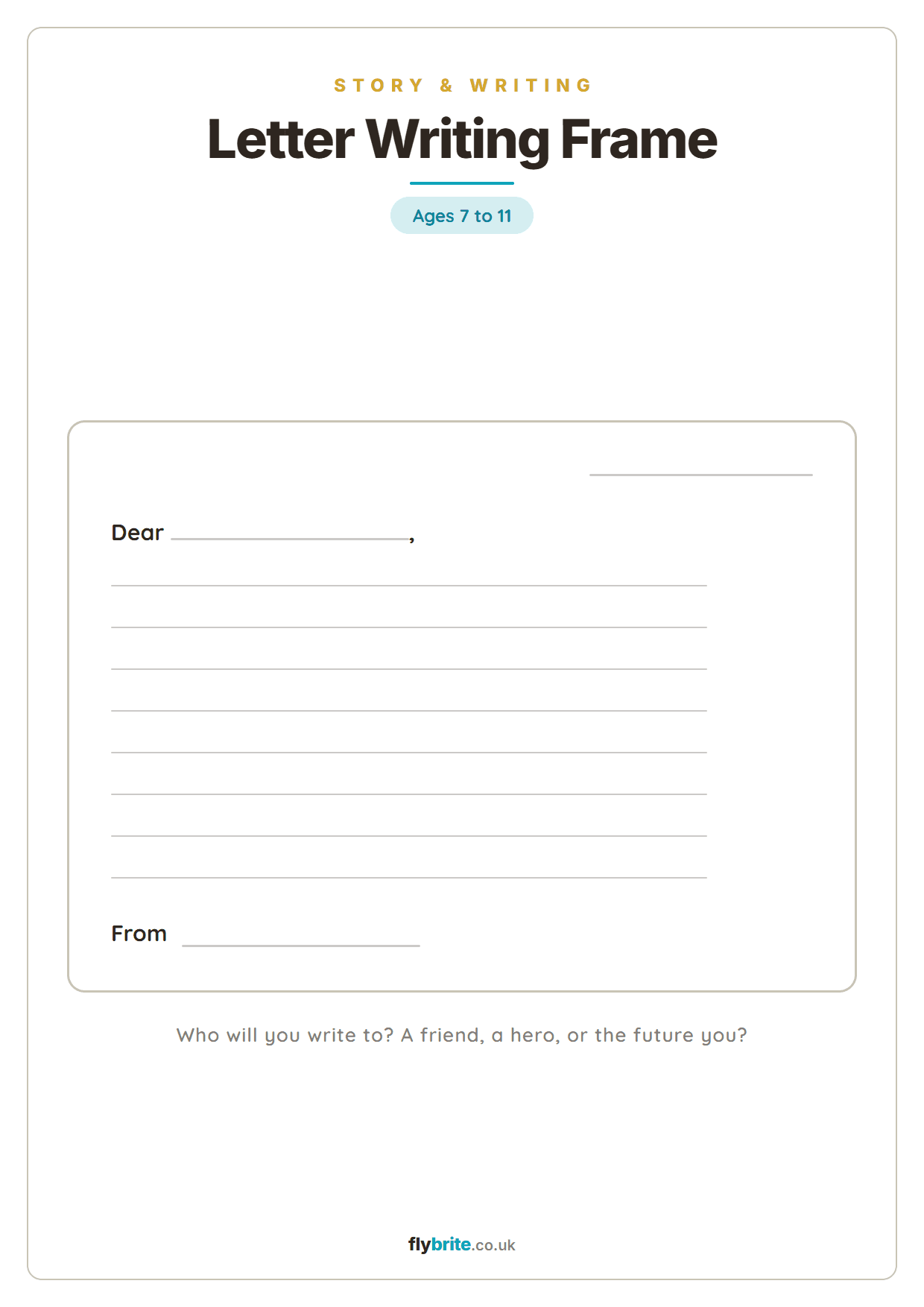
A gentle guided frame for a real letter, from the date at the top to a warm signed-off ending.
 Type or write in
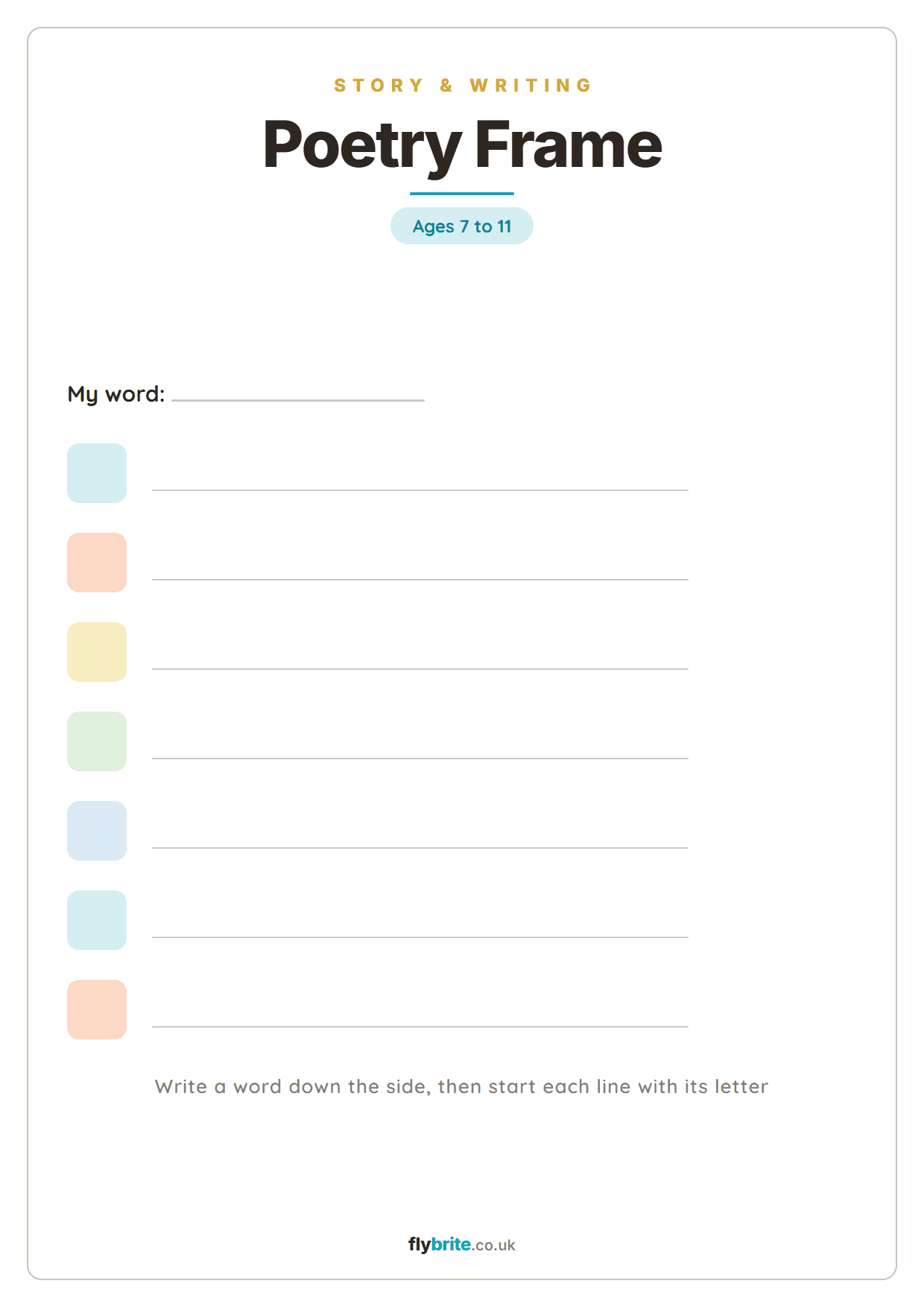
A friendly acrostic frame, pick a word and let a line of poetry bloom from every letter.
 Type or write in
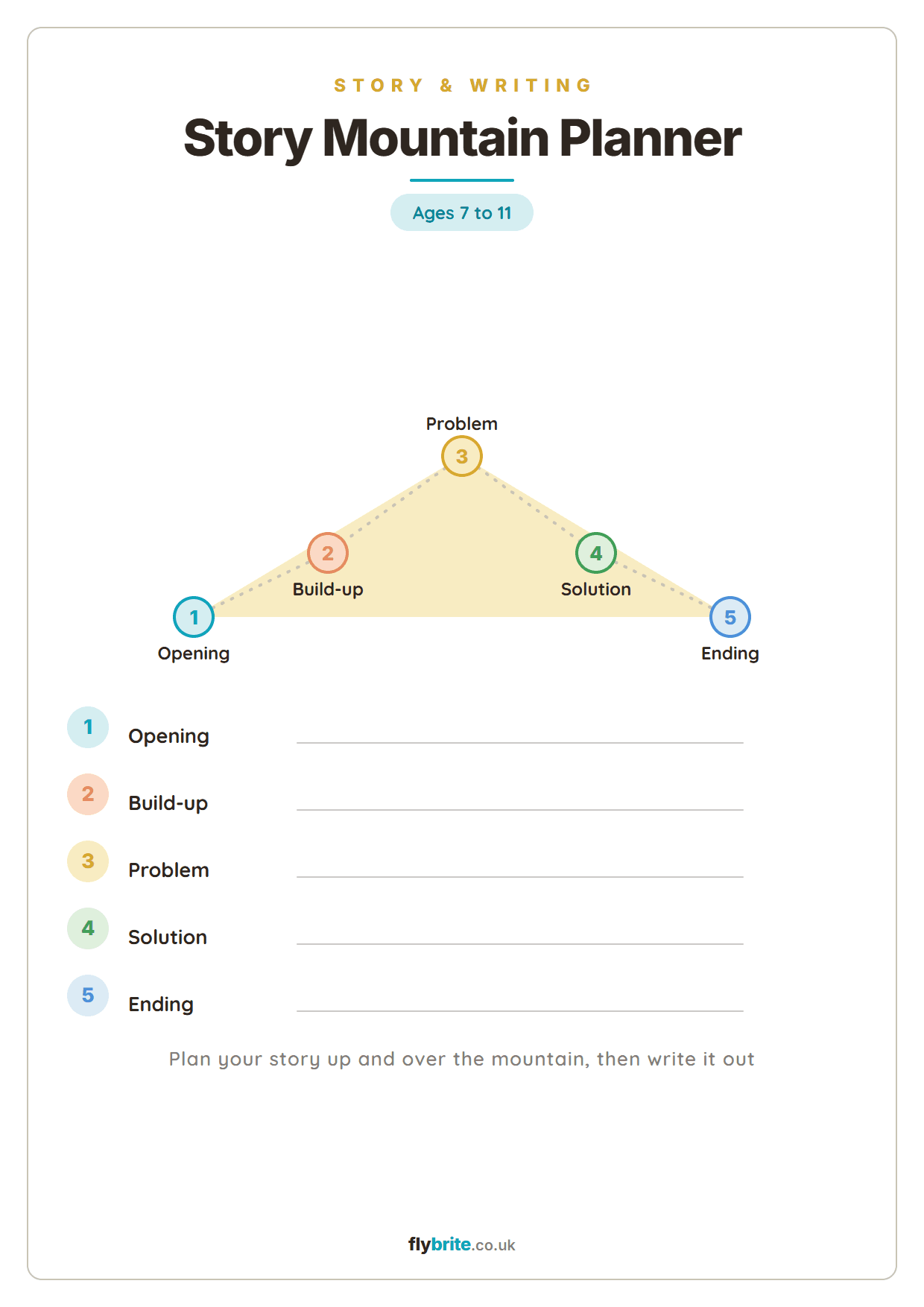
Plan a whole story arc up and over the mountain, from calm opening to problem, solution and ending.
Ten warm motivational posters for the learning corner, kind words children can read every day.
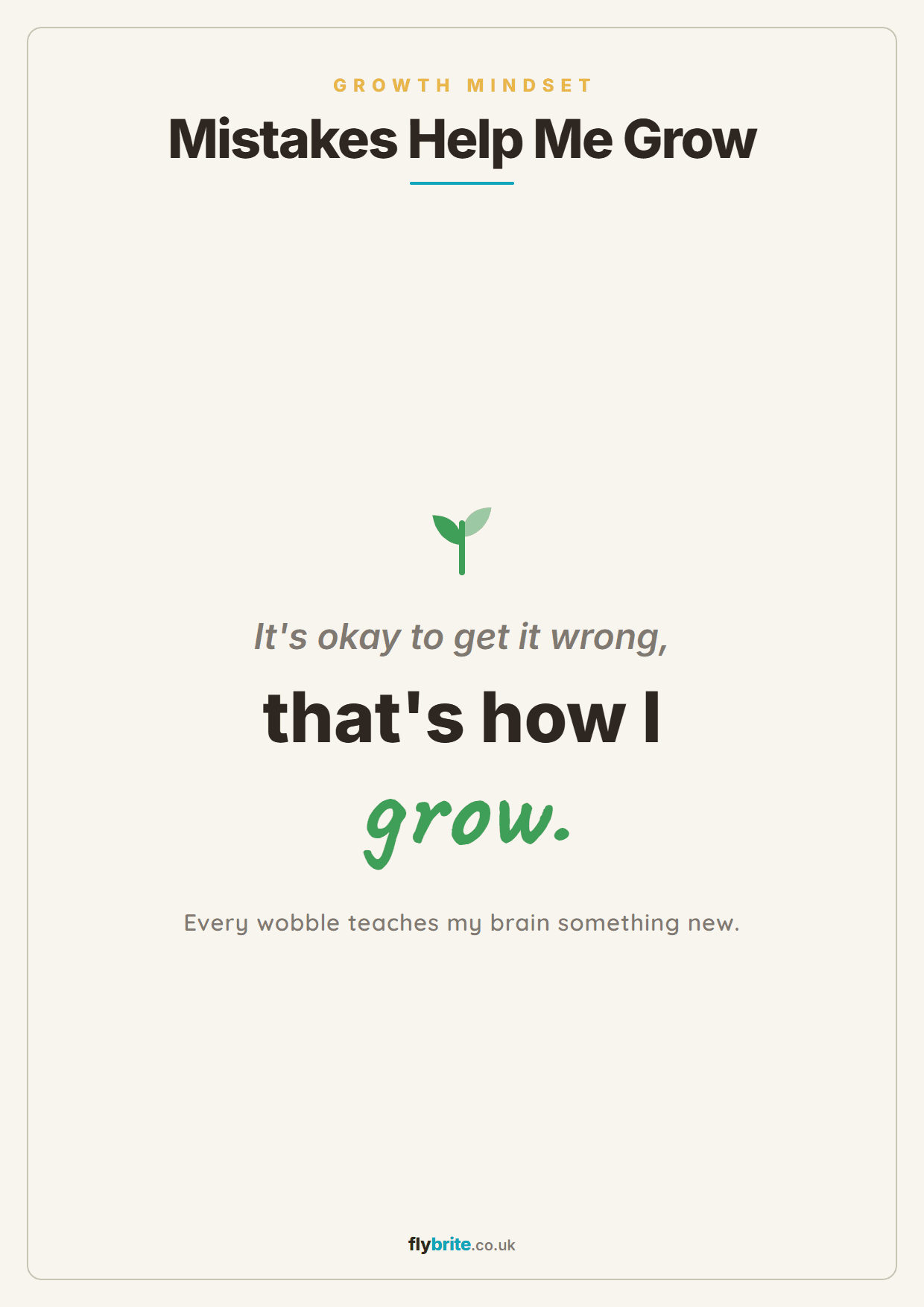
A gentle reminder that every mistake is really just a step towards growing.
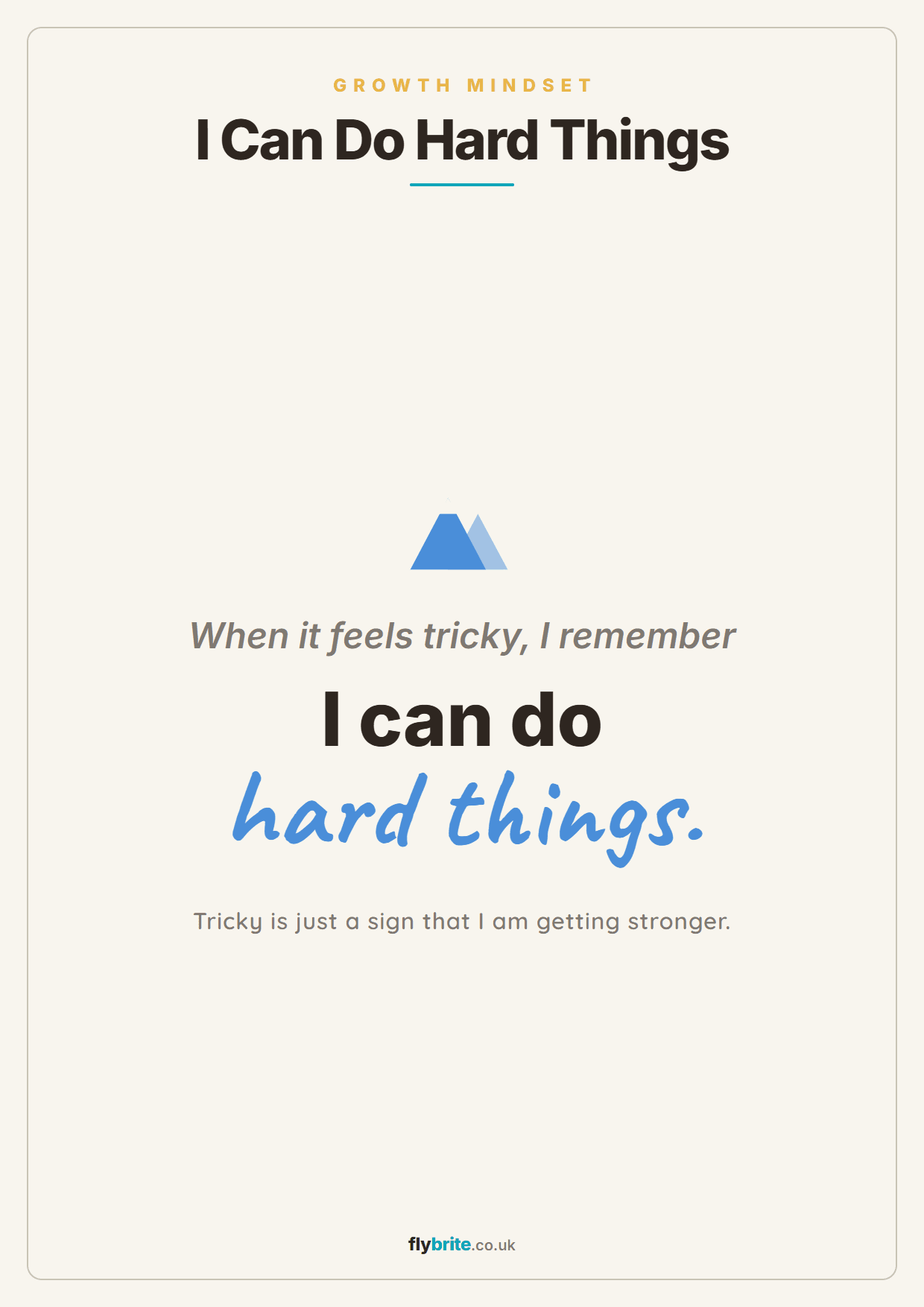
A brave little affirmation for the days that feel too big to tackle.
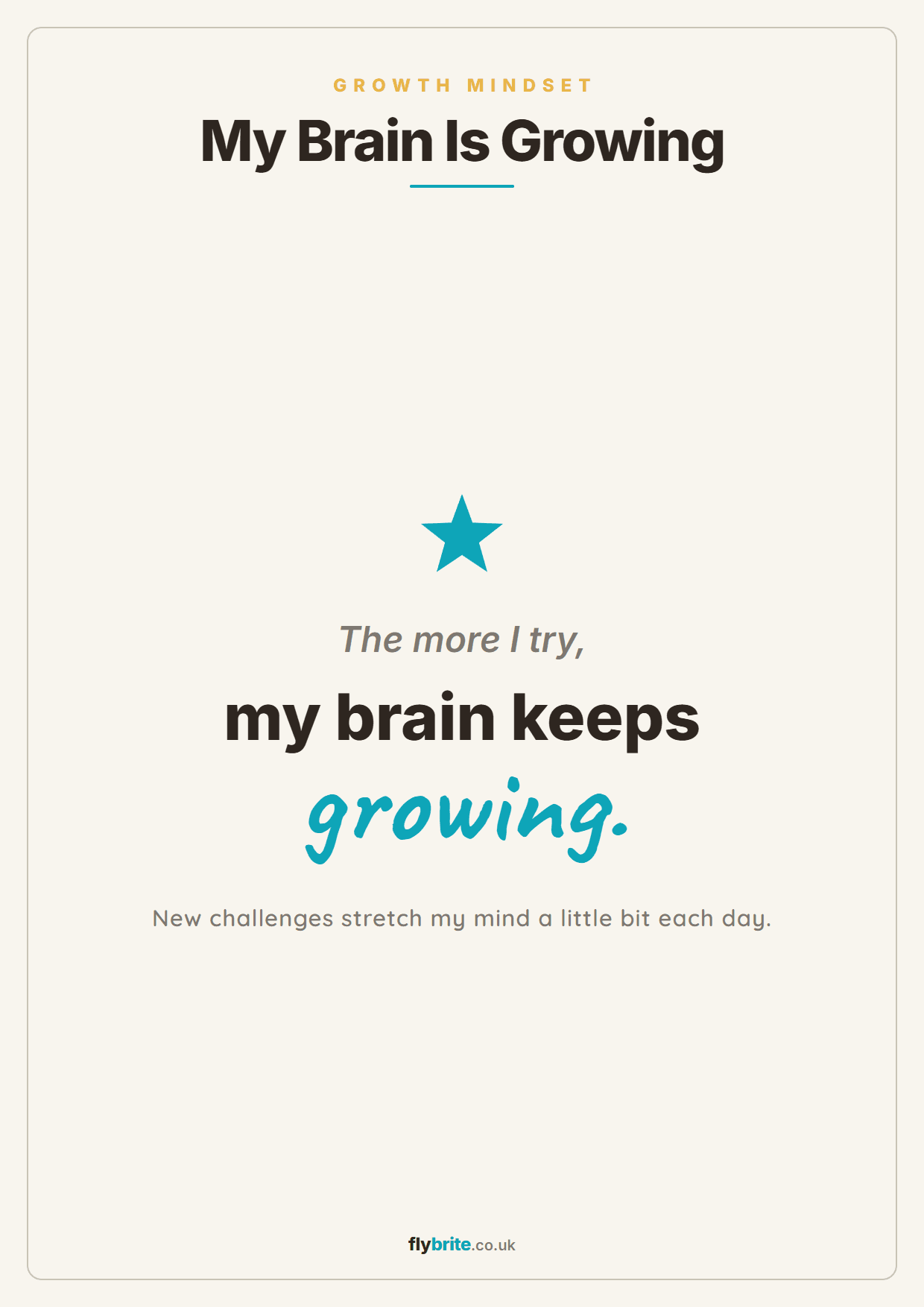
Celebrates the everyday magic of a stretching, learning, growing brain.
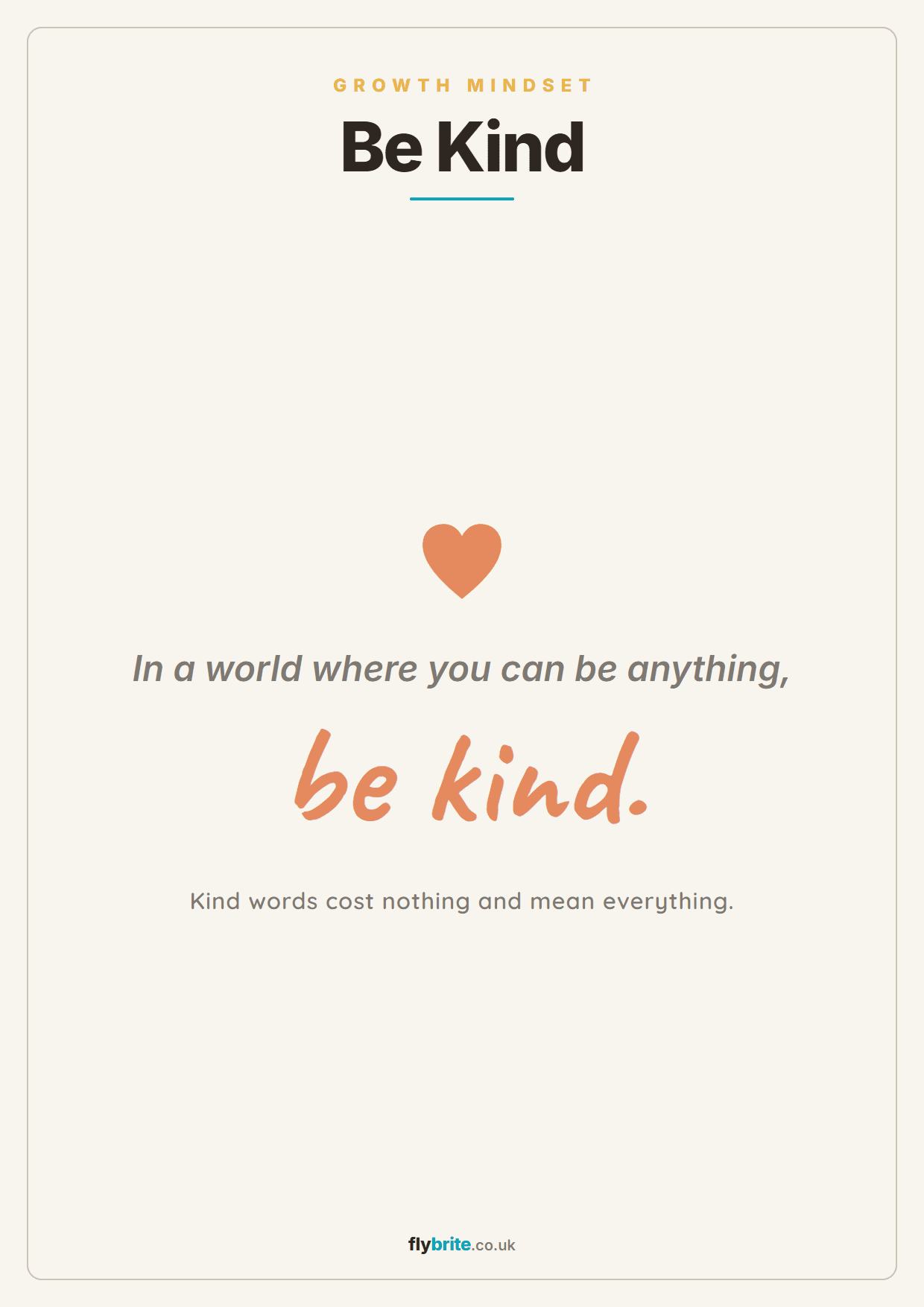
Two small words with a big heart, ready for the hallway wall.
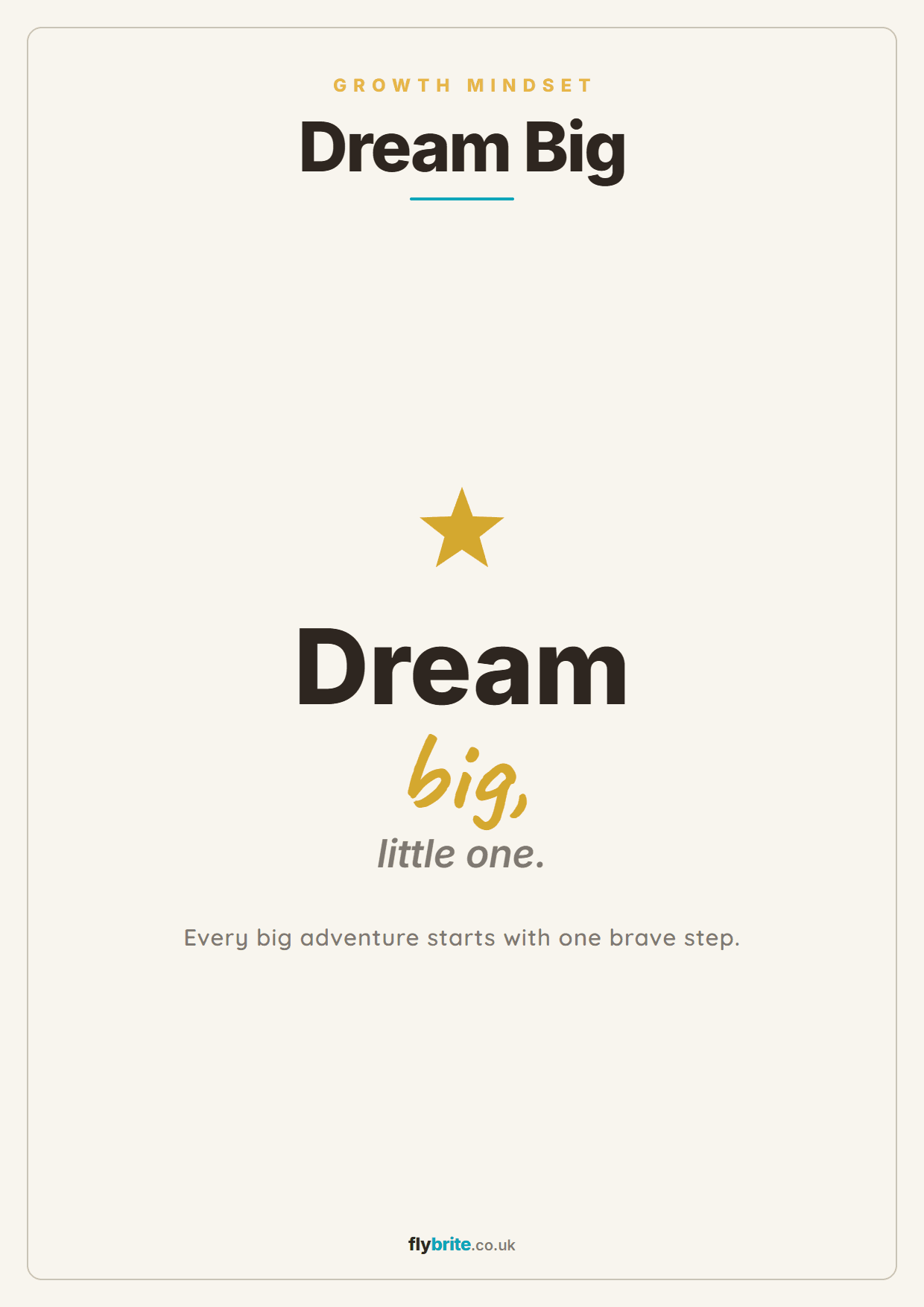
An encouraging print for little dreamers with great big ideas.
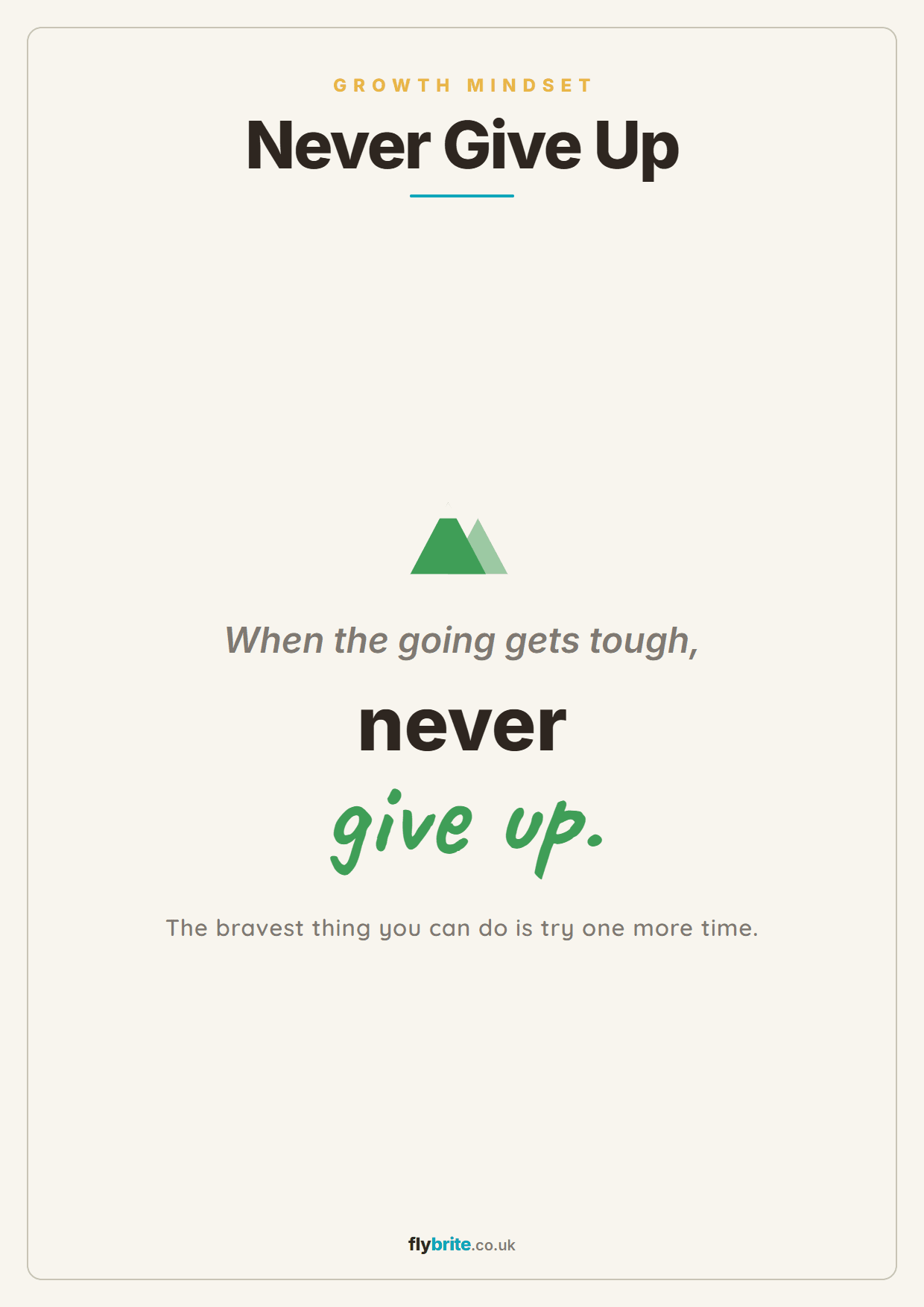
Quiet courage for the wobbly moments, when giving up feels easiest.
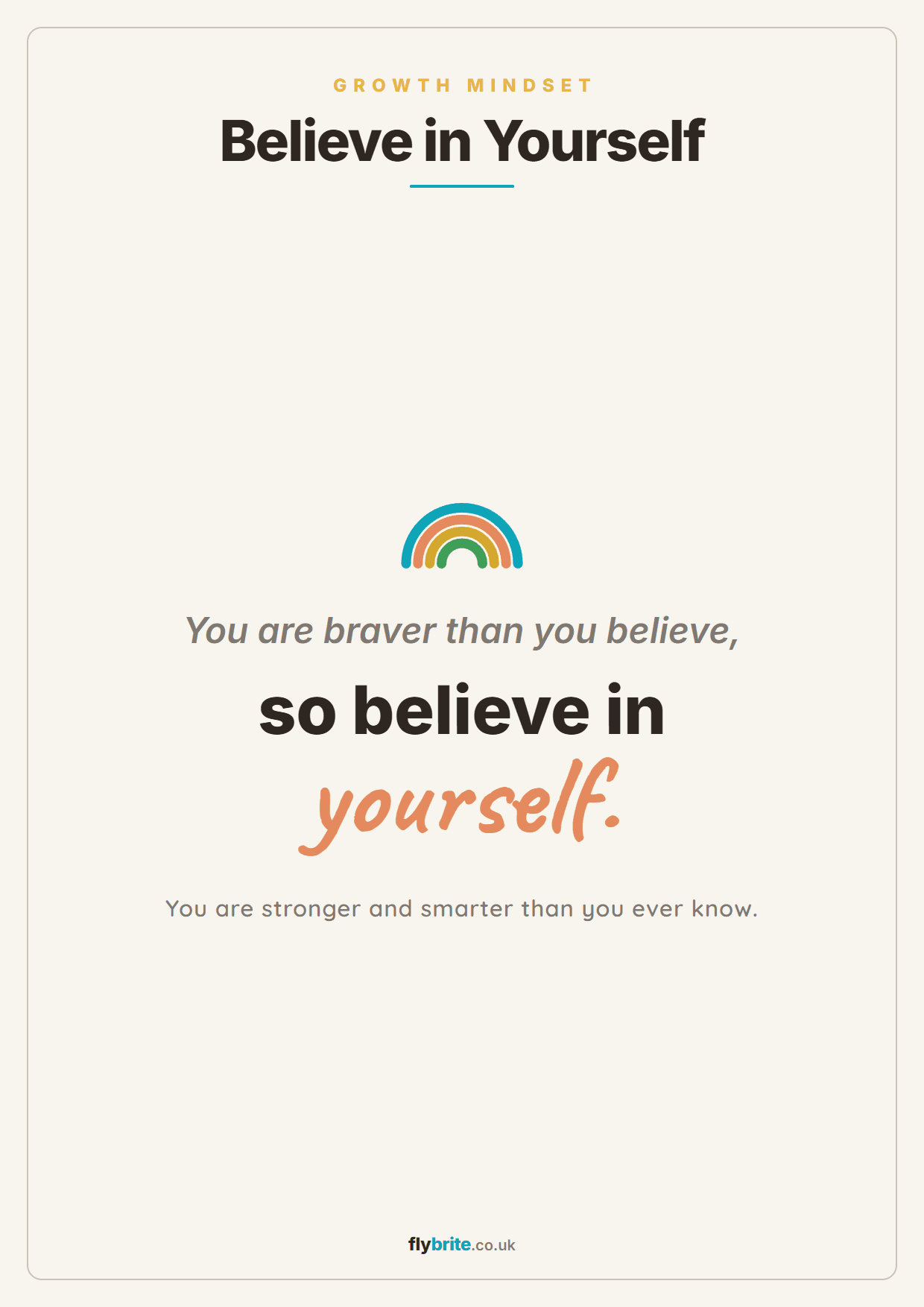
A warm nudge of self-belief for every child who doubts themselves.
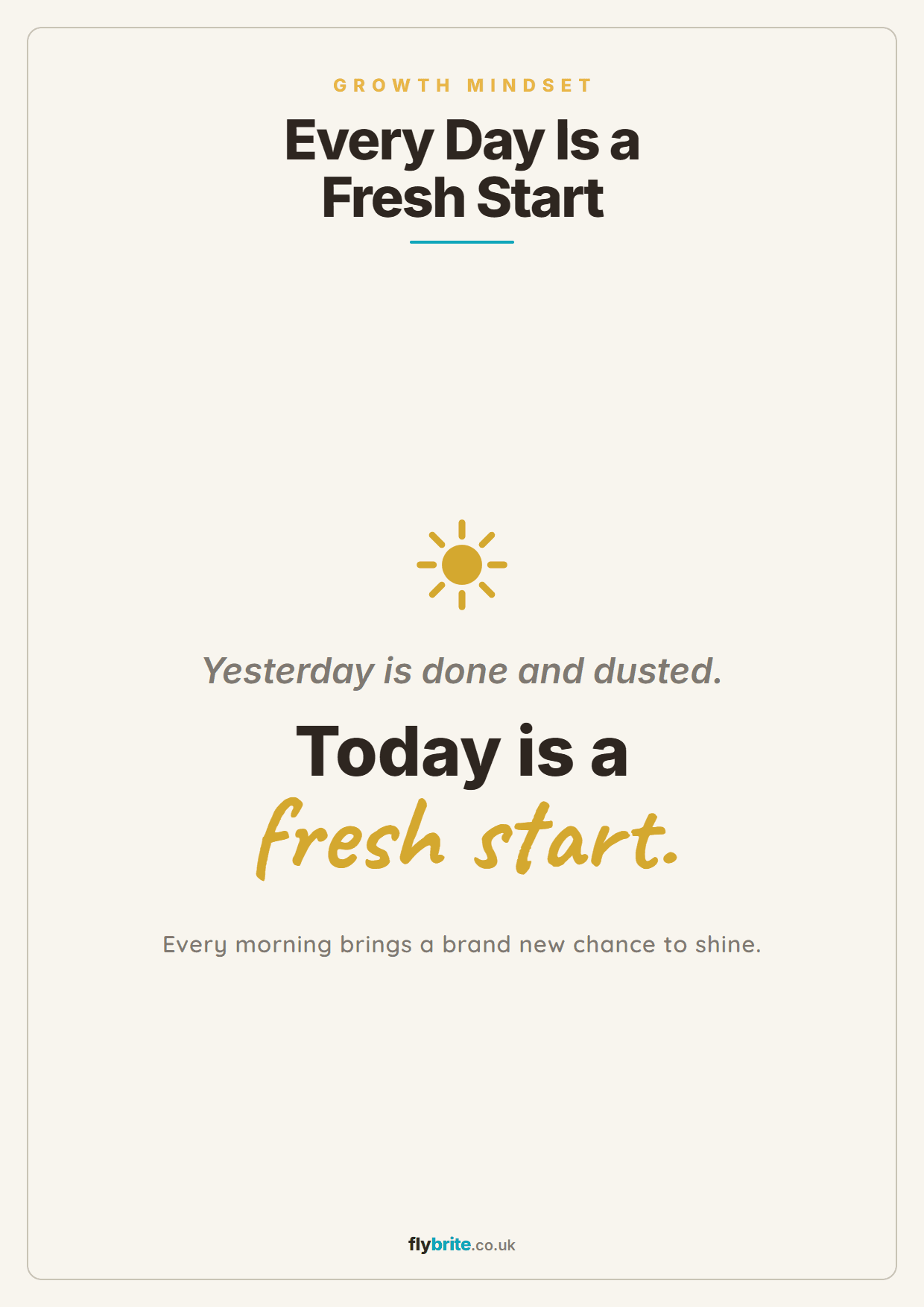
A hopeful morning reminder that today is a clean, bright page.
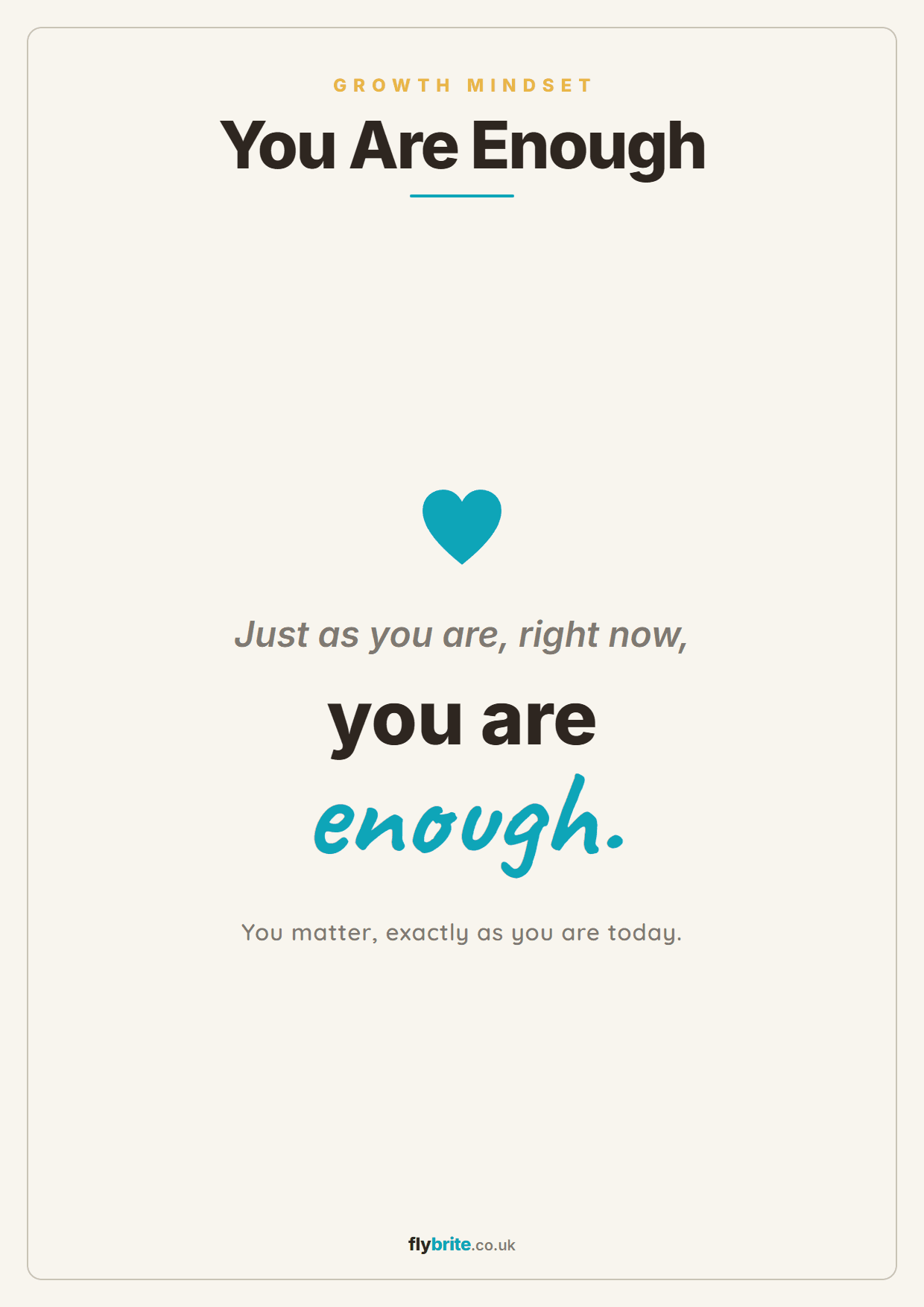
A tender reminder that your child is more than enough, just as they are.
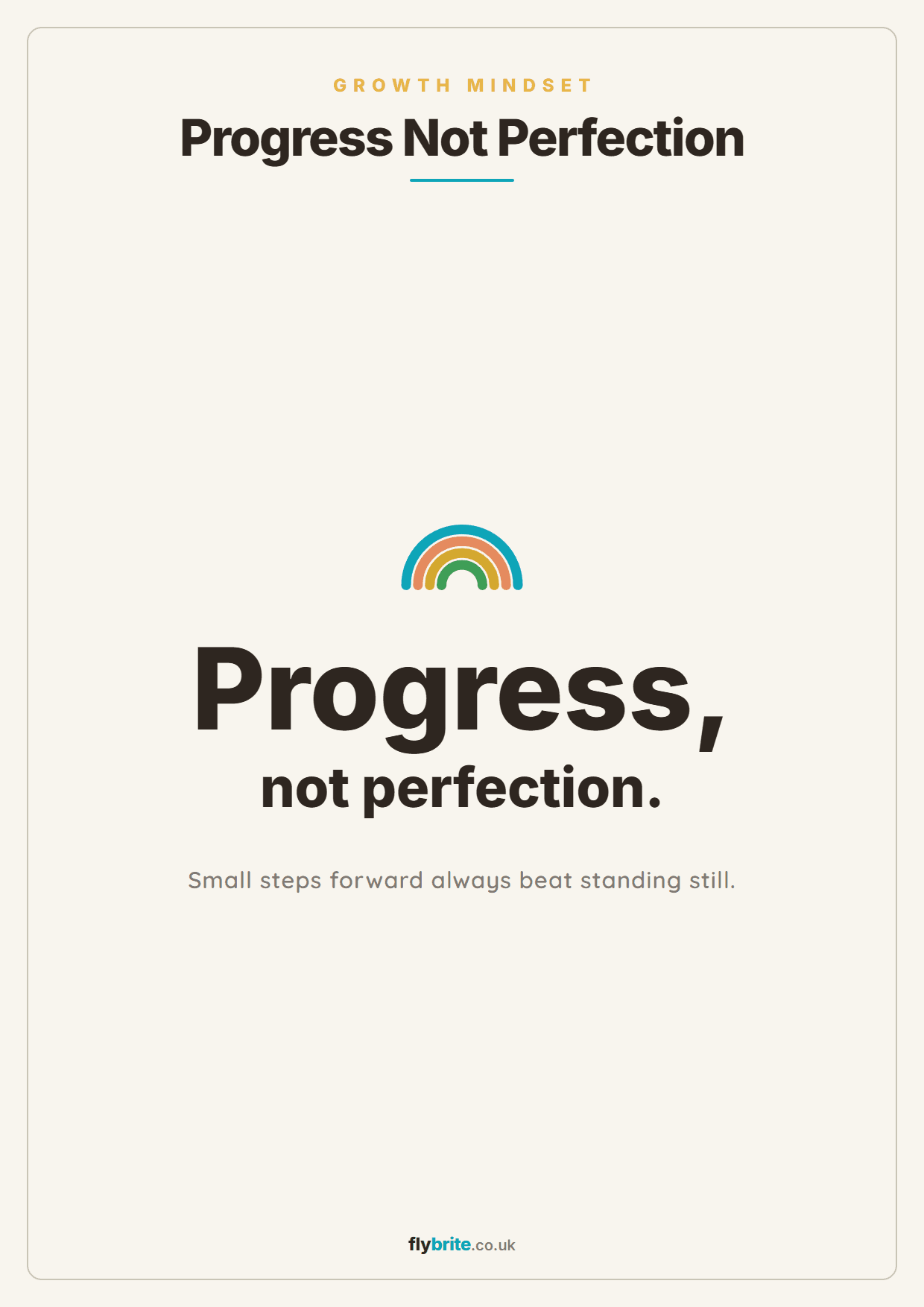
For older children learning that steady progress always beats being perfect.
UK and world maps, continents, flags and landmarks for curious young geographers.

The four nations of the United Kingdom in friendly colour, each with its capital city marked by a star.
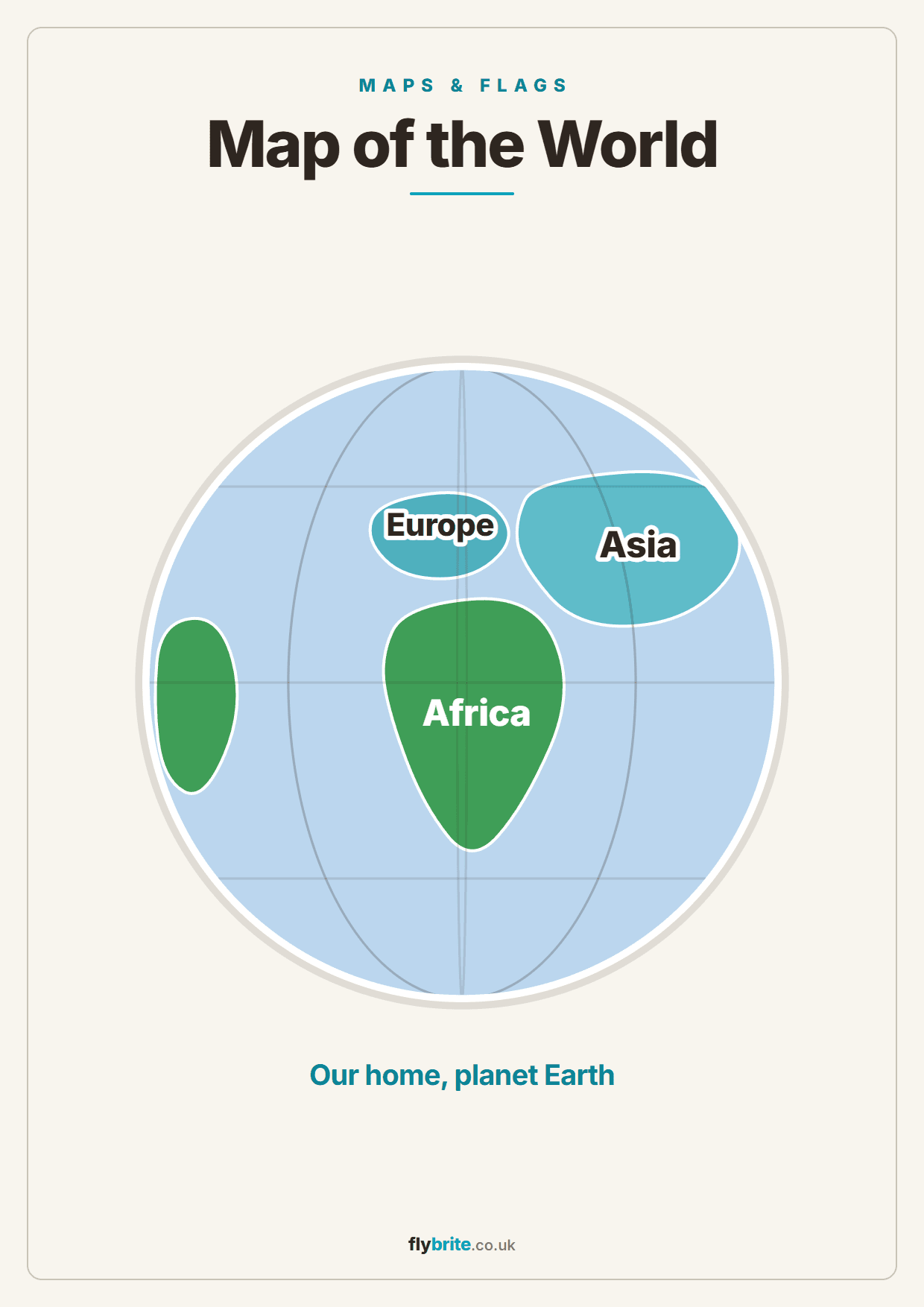
A friendly little globe of planet Earth, with the great continents named on the land and sea.
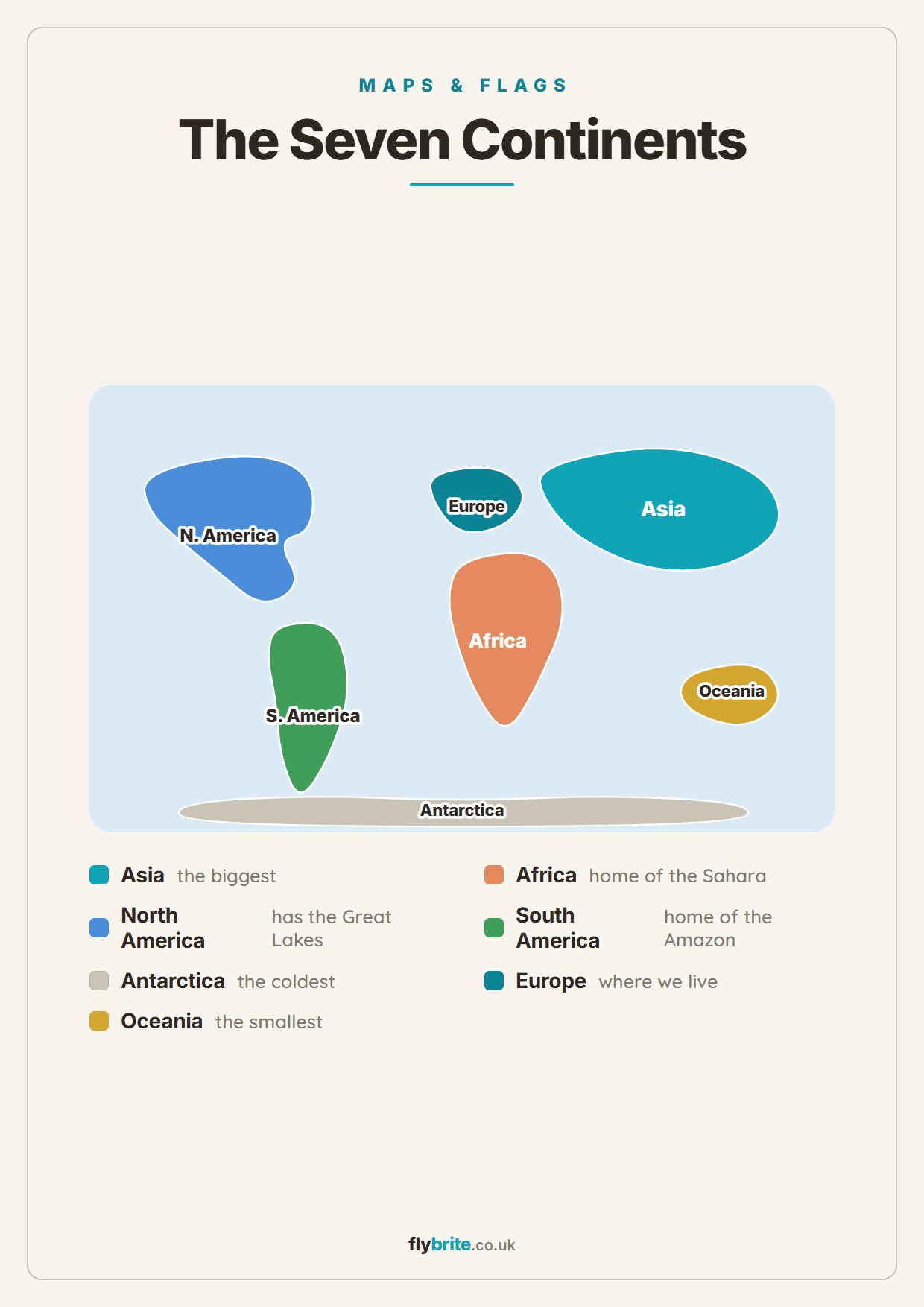
Every continent in its own bright colour, mapped and named, with a little fact to remember each one by.
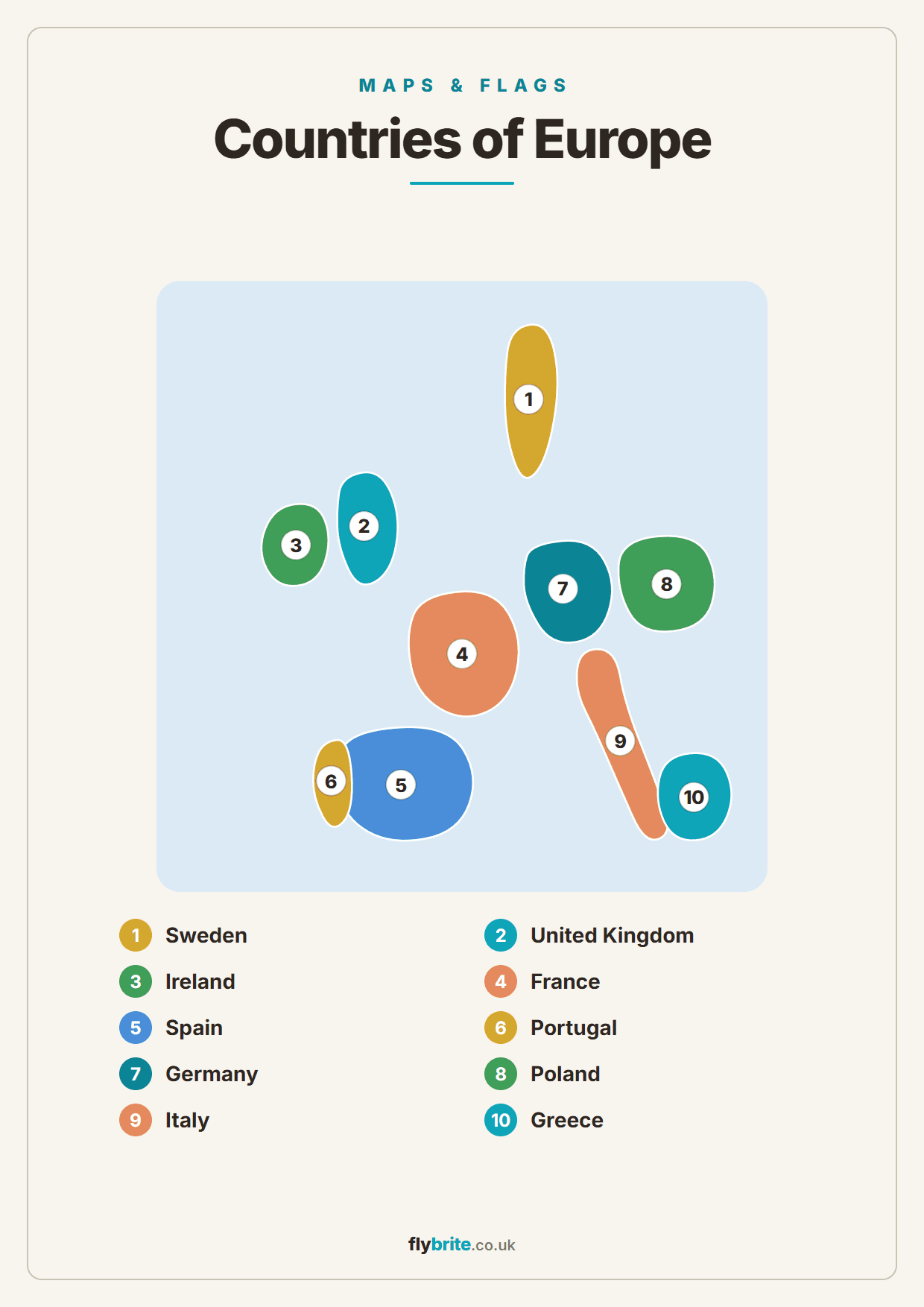
Ten European countries mapped and numbered, from the boot of Italy to the islands of Britain and Ireland.

Twelve flags from around the globe in their true colours, each one named for spotting and sorting.
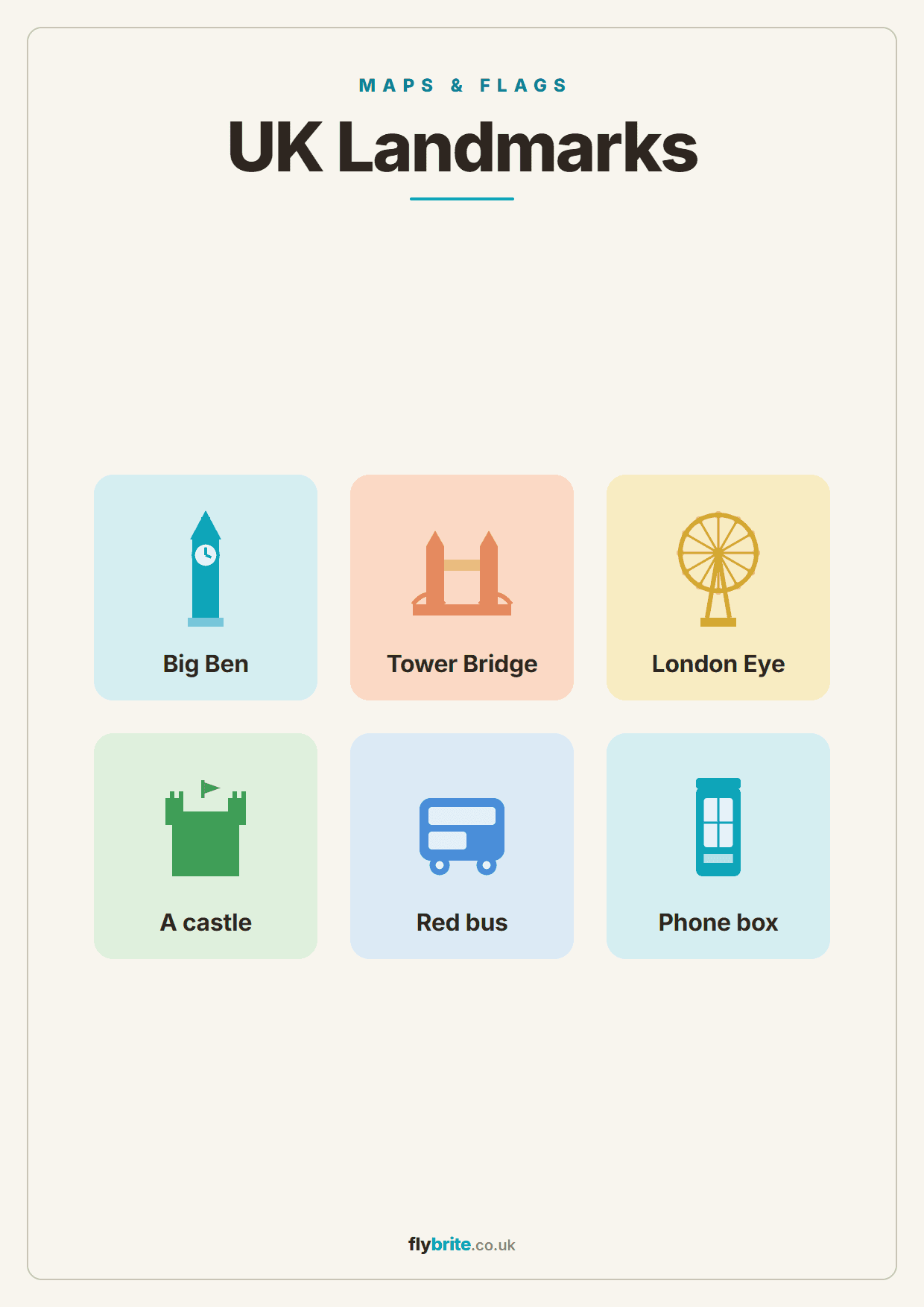
Six much-loved British landmarks as cheerful flat icons, from Big Ben to a bright red bus.
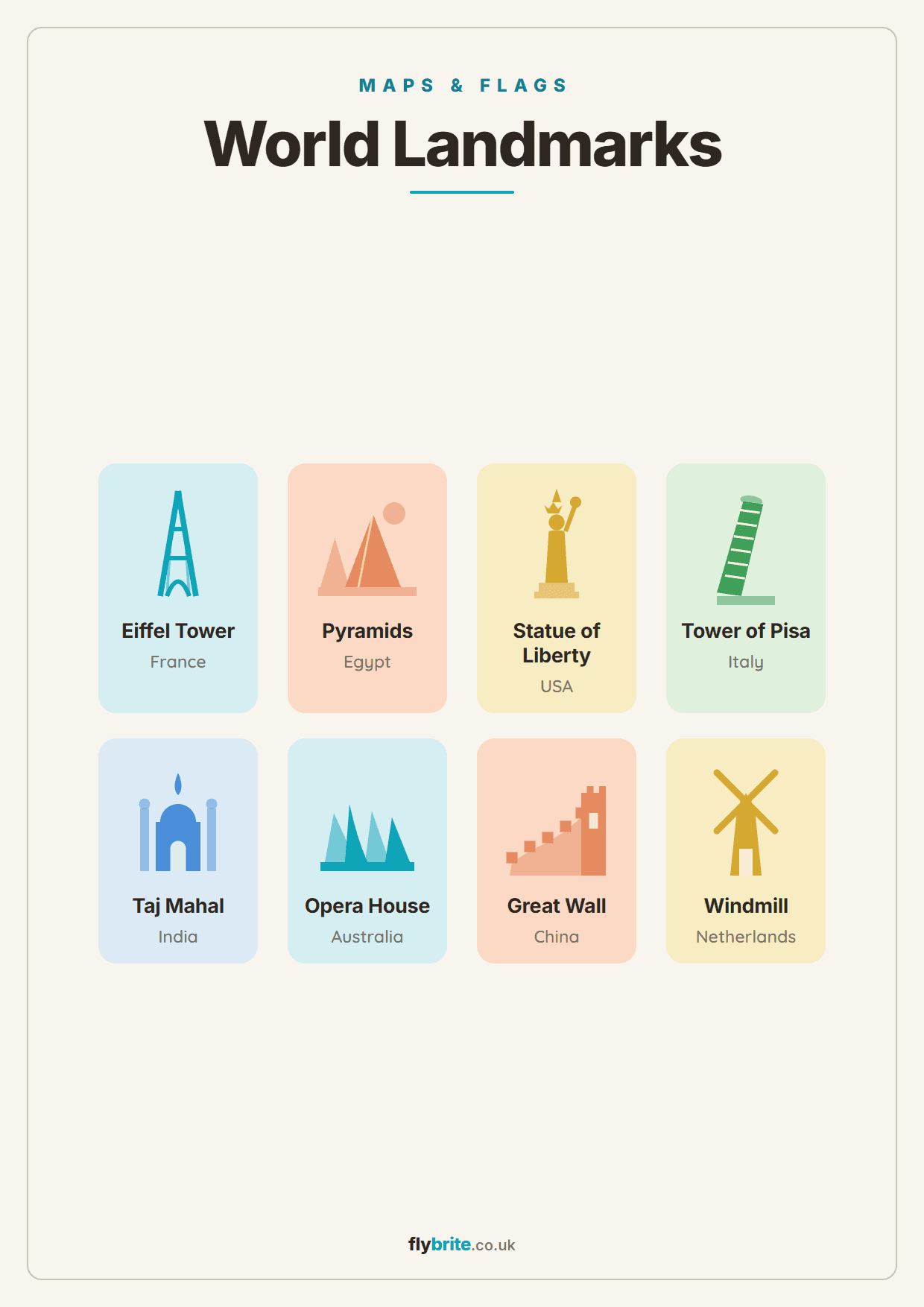
Eight famous landmarks from around the world, each labelled with the country it calls home.
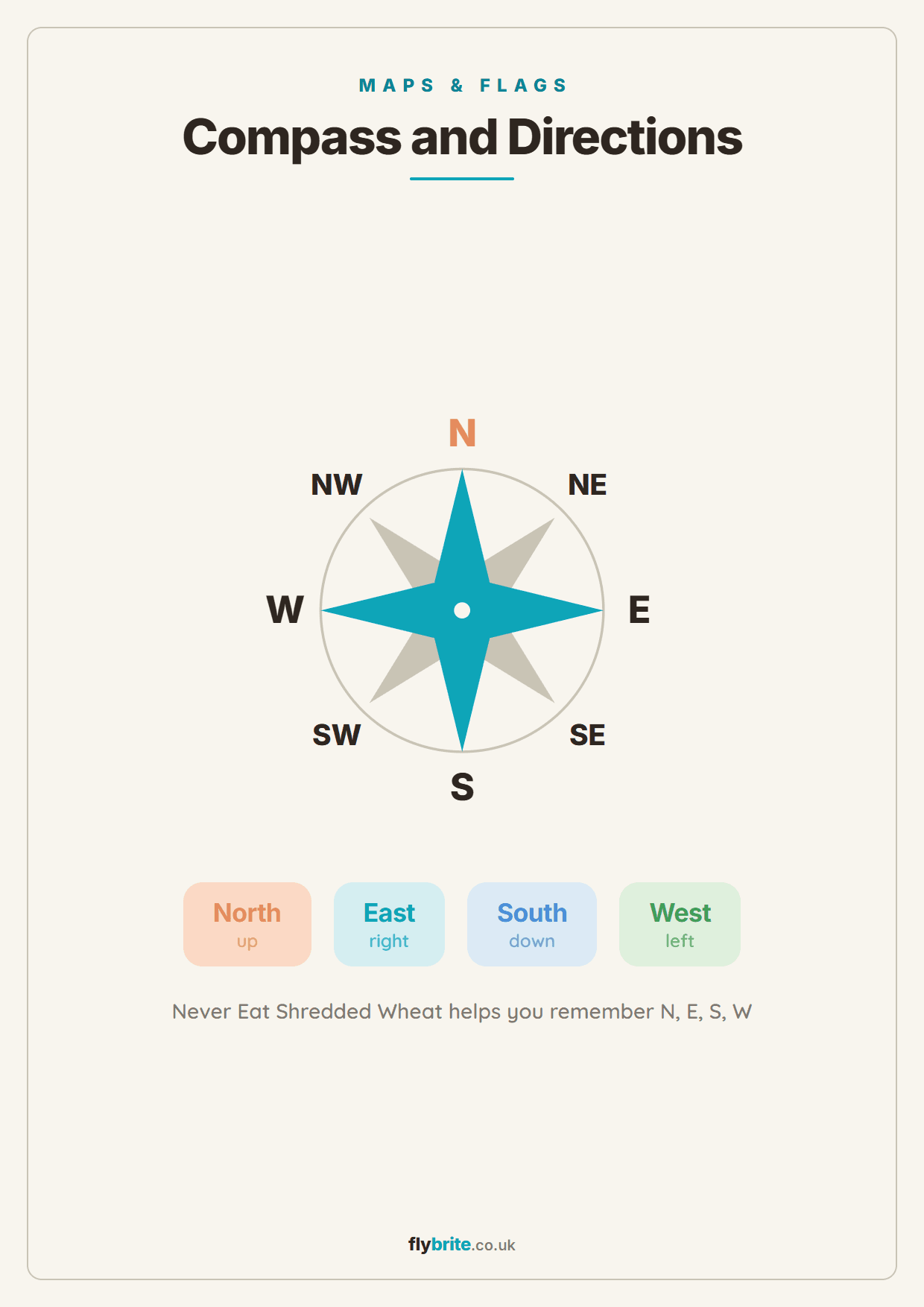
A proper eight-point compass rose, naming north, south, east, west and every point between.
 Type or write in
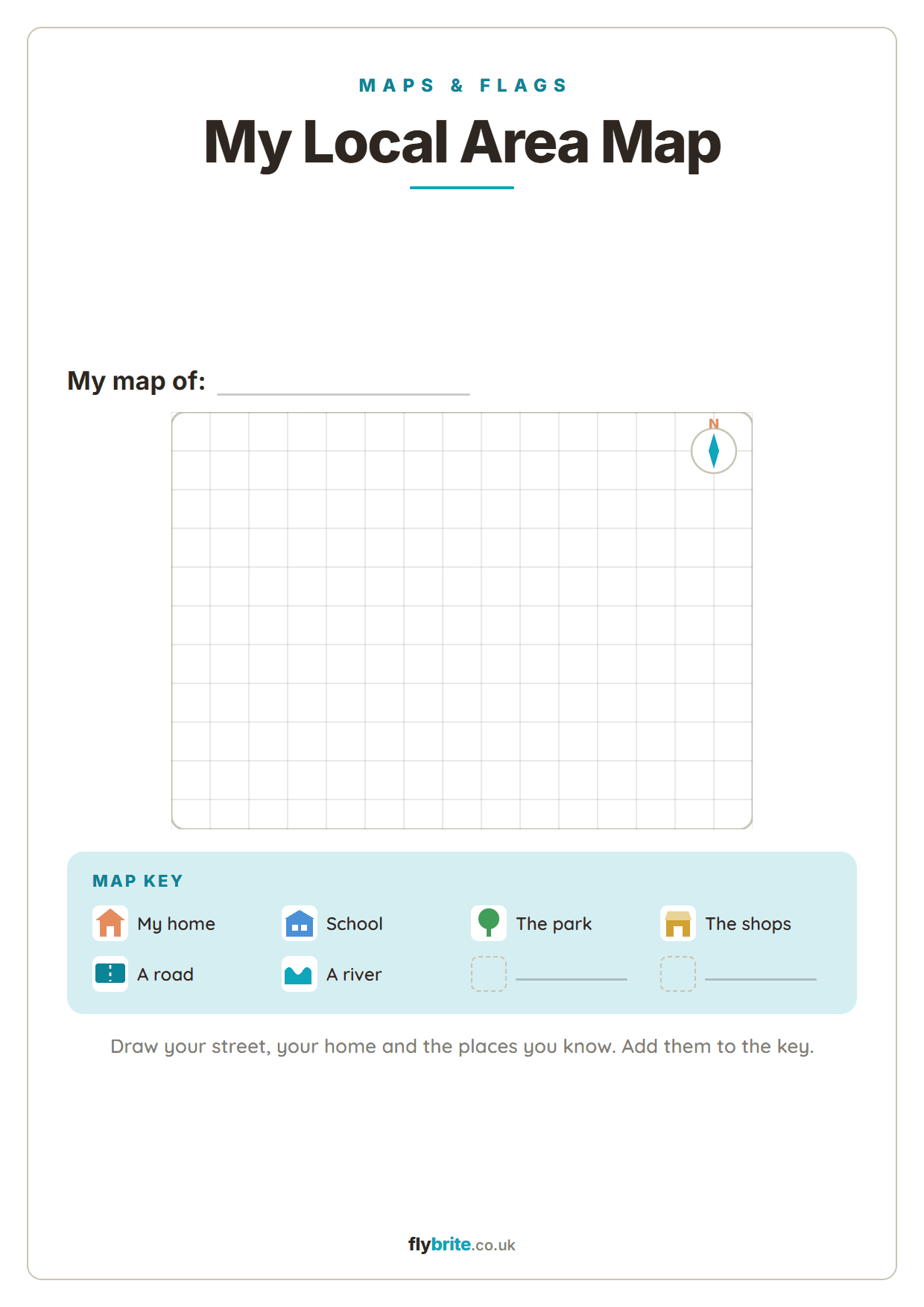
A blank grid and a make-your-own key, ready for a young cartographer to map their street and neighbourhood.
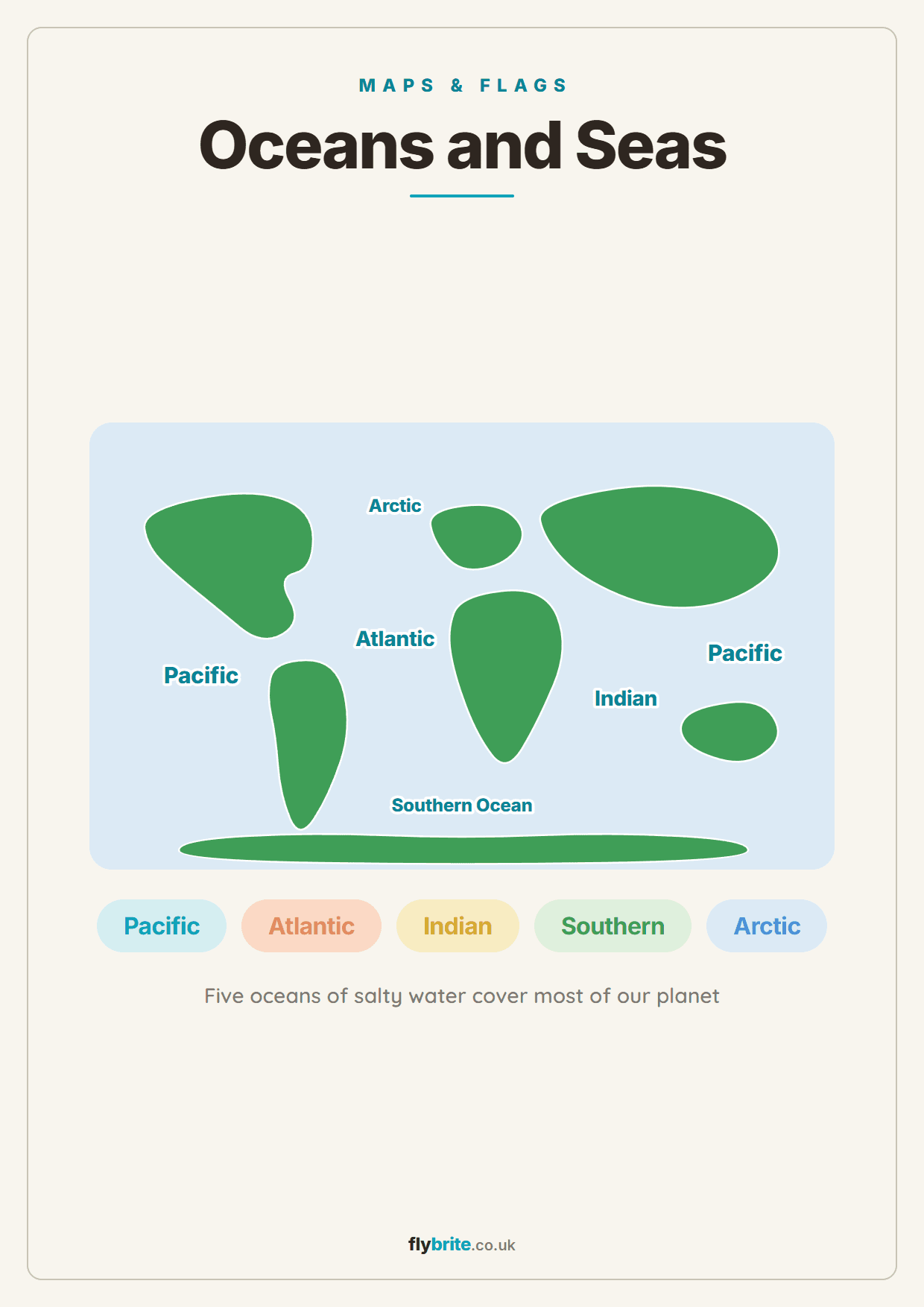
A simple world map showing where the five great oceans wrap around our watery blue planet.
Gratitude, feelings check-ins, mindful breathing and calm-down plans for happy, settled days.
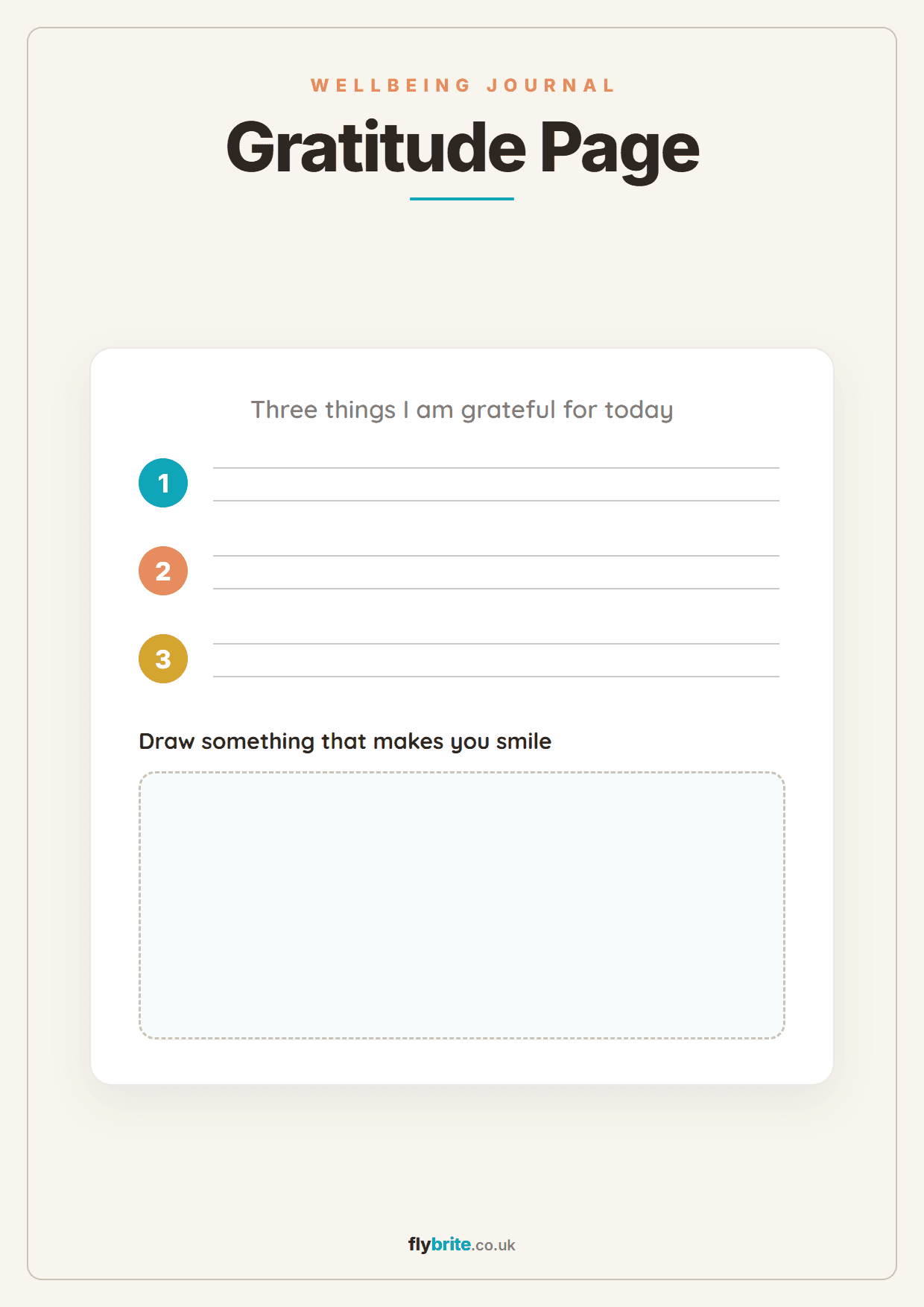 Type or write in
Three little lines for the good things of the day, plus a box to draw a smile.
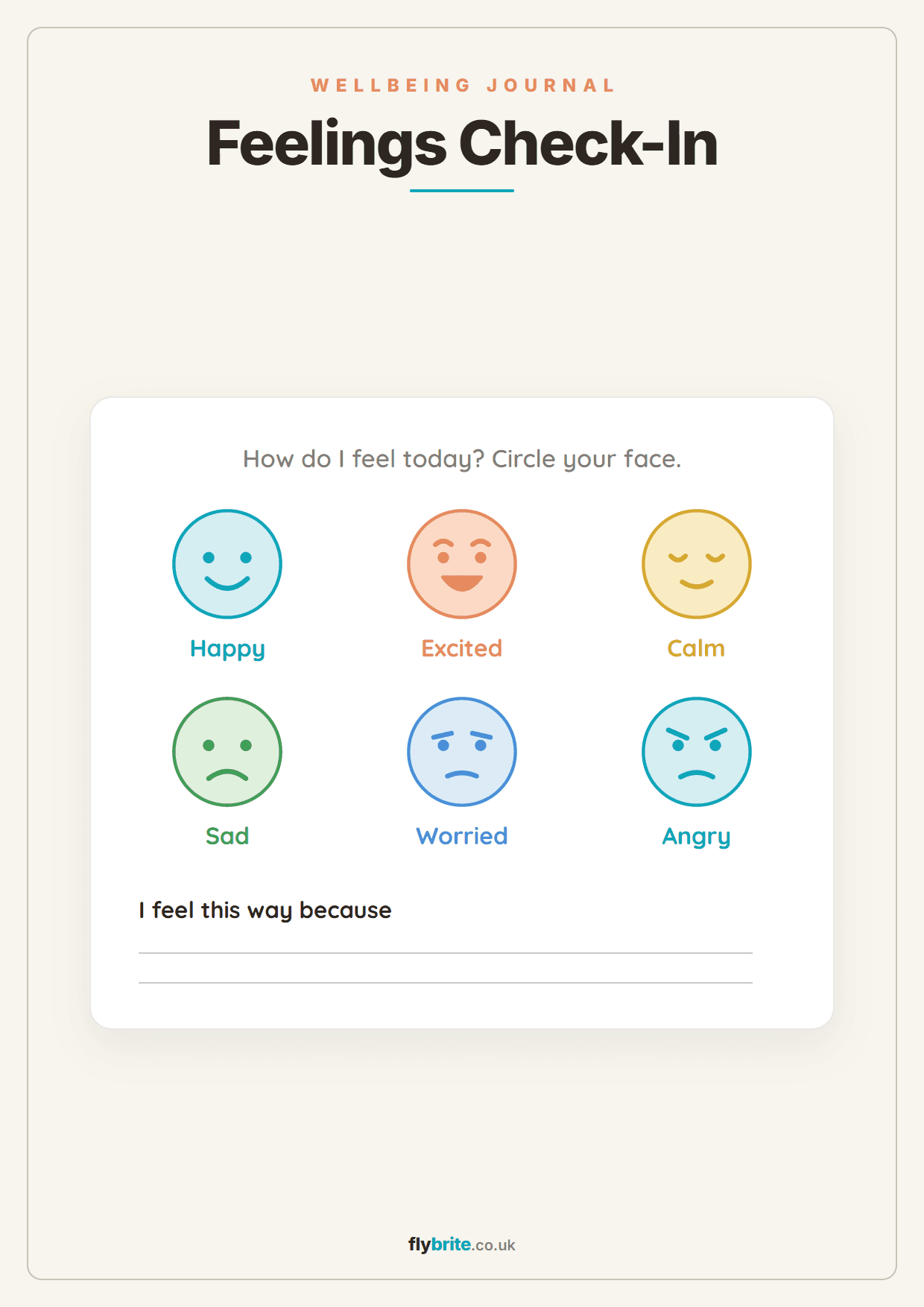 Type or write in
Six friendly faces to circle, with a line to tell someone why you feel that way.
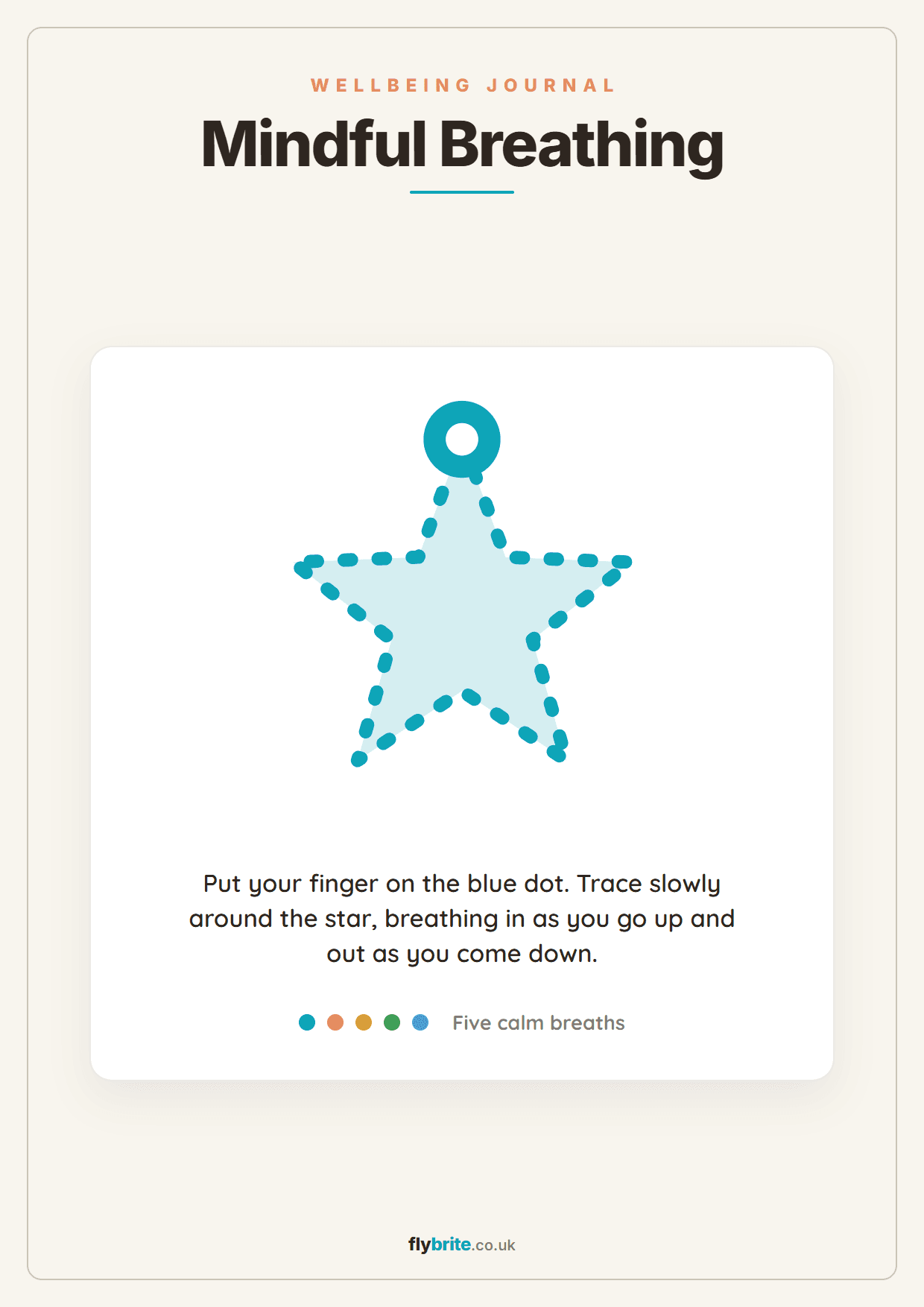 Type or write in
A calm star to trace with one finger, breathing in on the way up and out on the way down.
 Type or write in
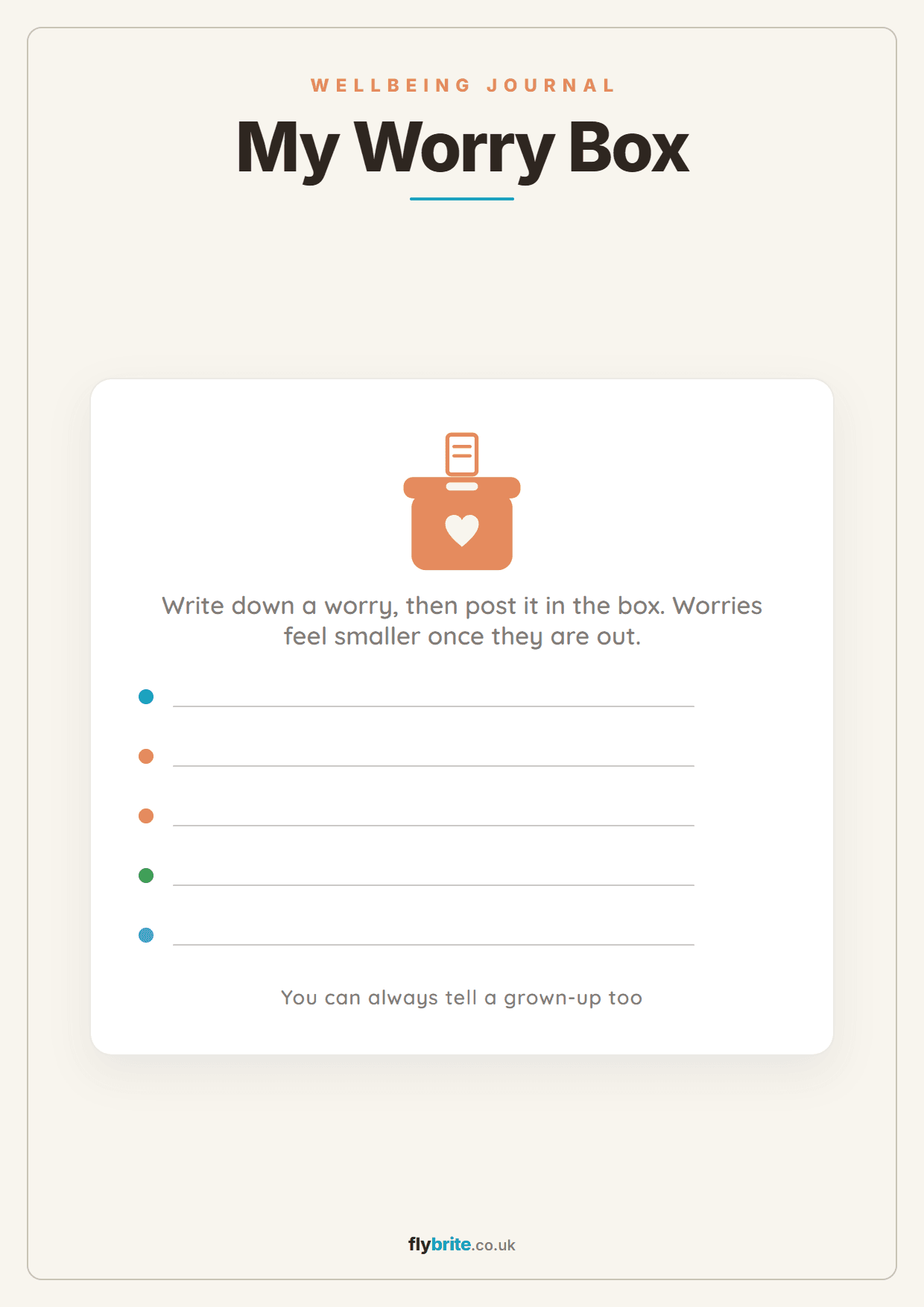
A friendly posting box for worries, with room to write them down and let them go.
 Type or write in
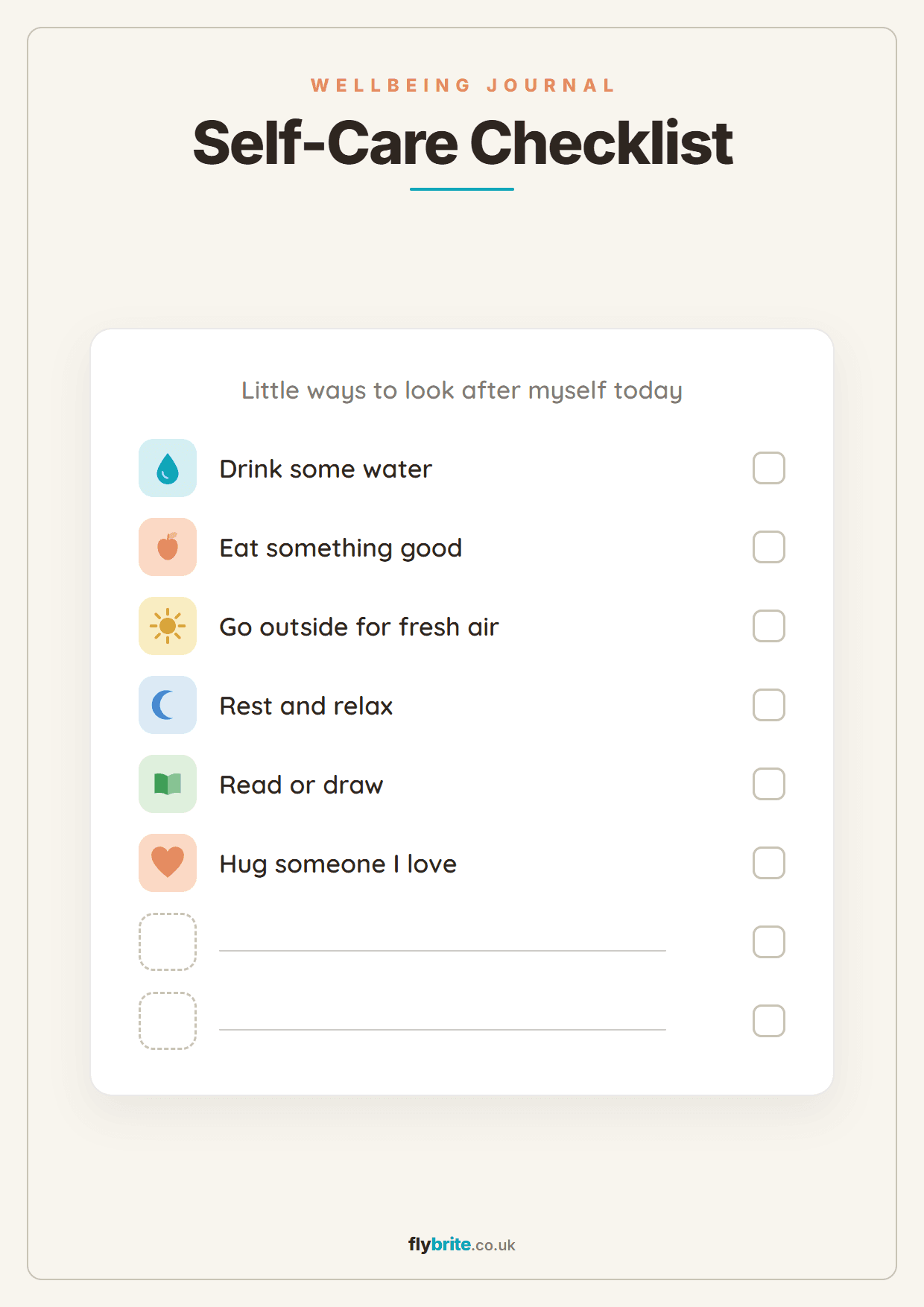
Six gentle self-care jobs to tick off, with two blank lines for your own.
 Type or write in
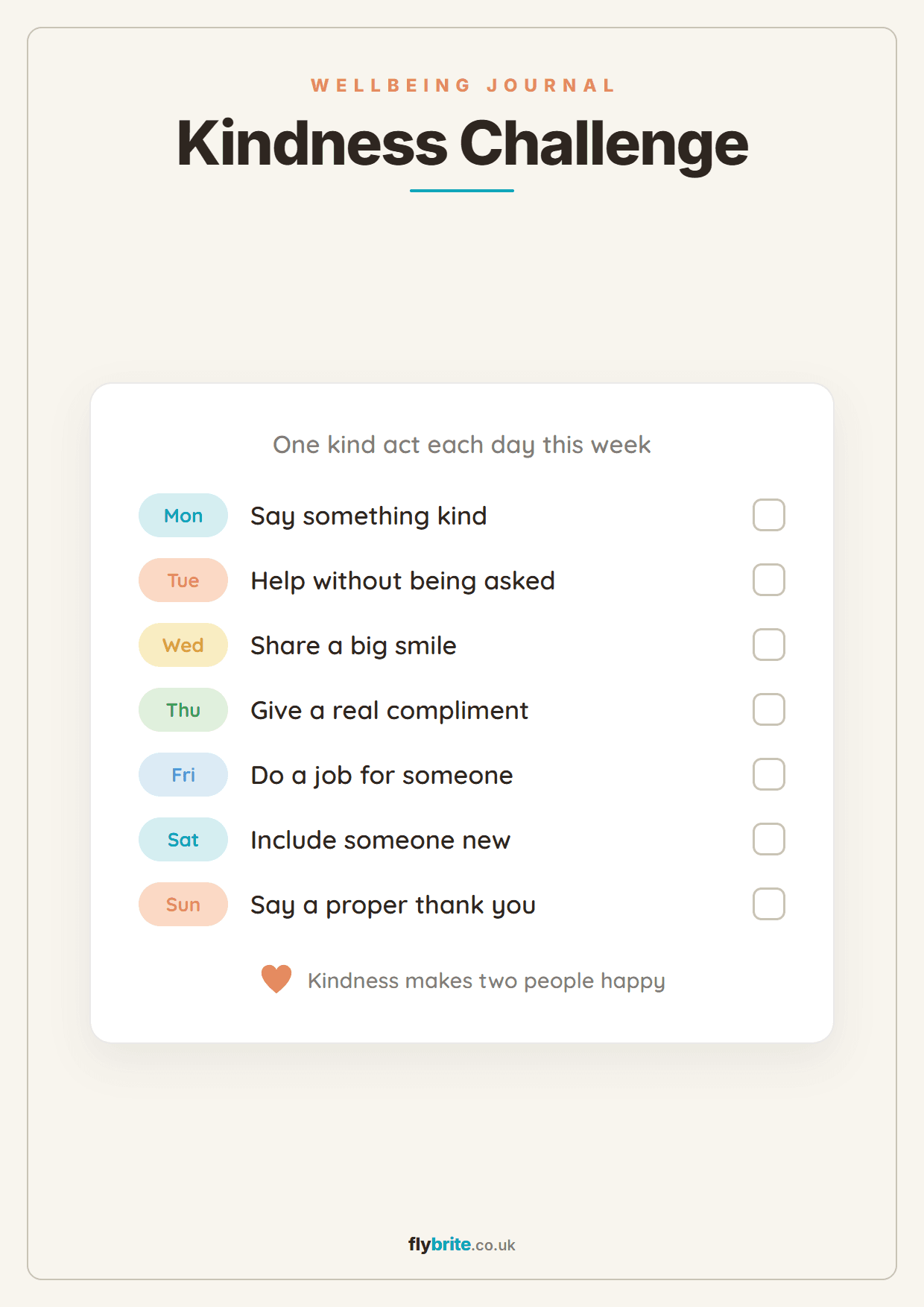
Seven small acts of kindness, one for every day, each with a box to tick.
 Type or write in
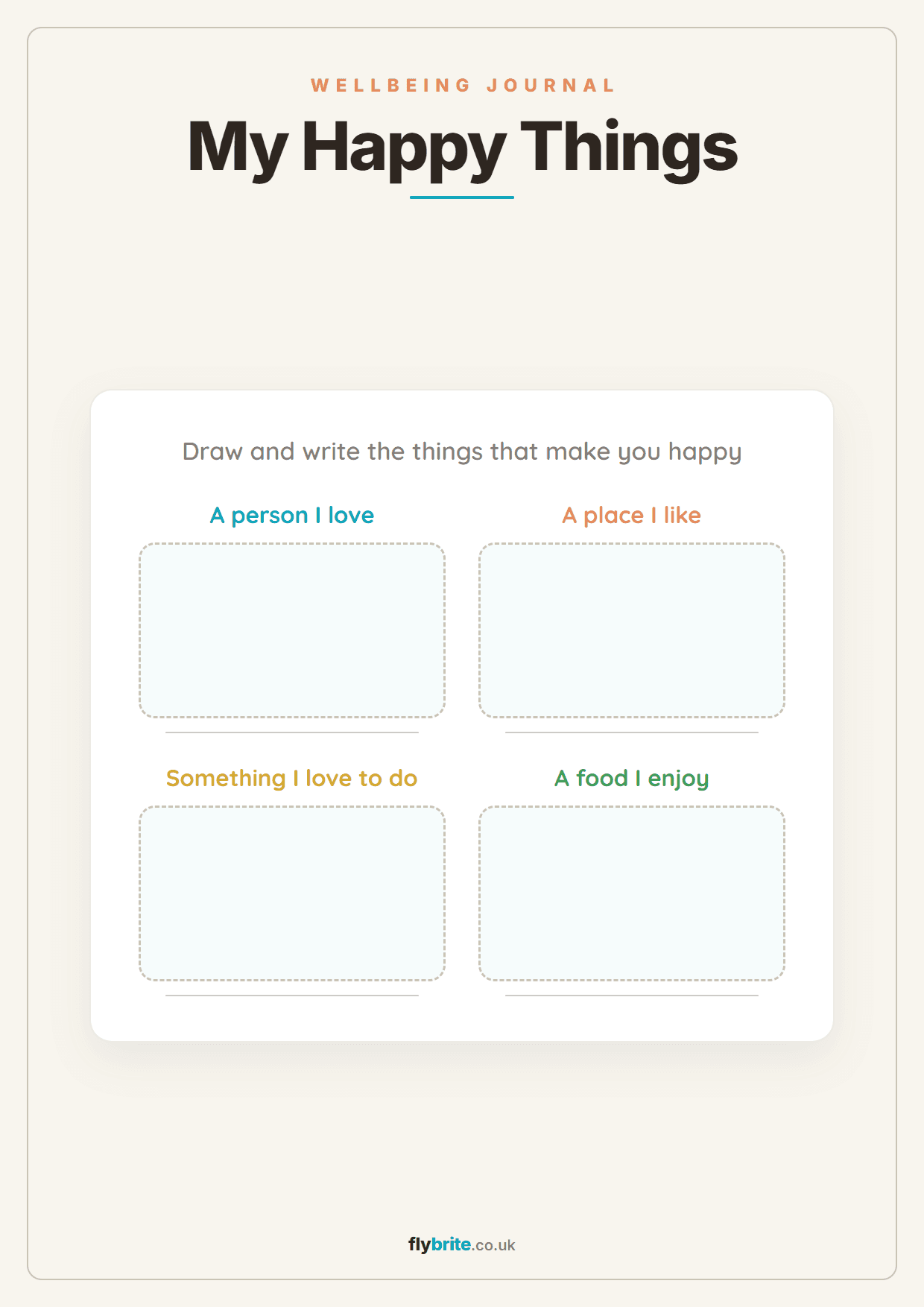
Four boxes to draw and name the people, places and things that spark real joy.
 Type or write in
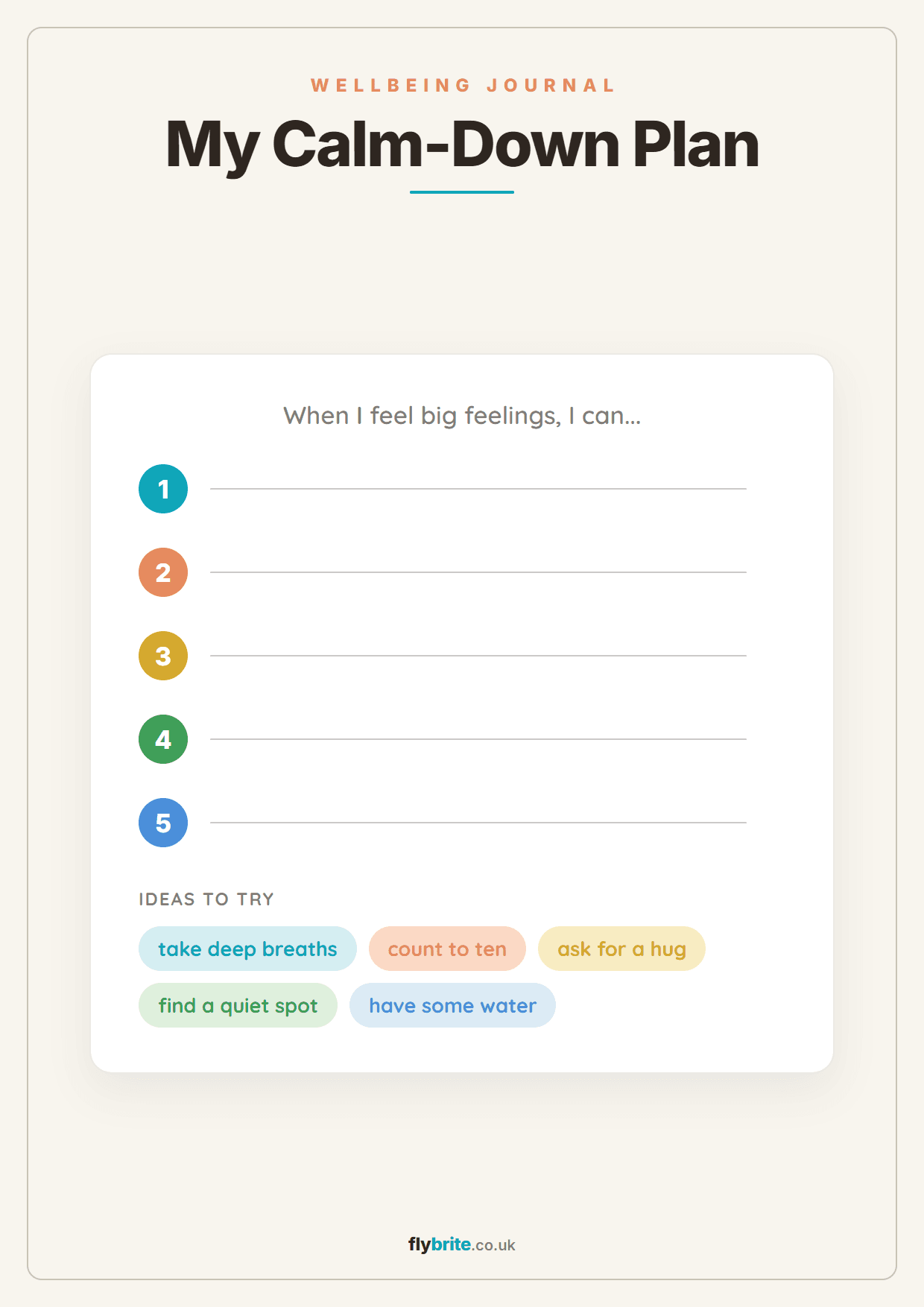
Five steps to write together for the wobbly moments, with a strip of ideas to borrow.
 Type or write in
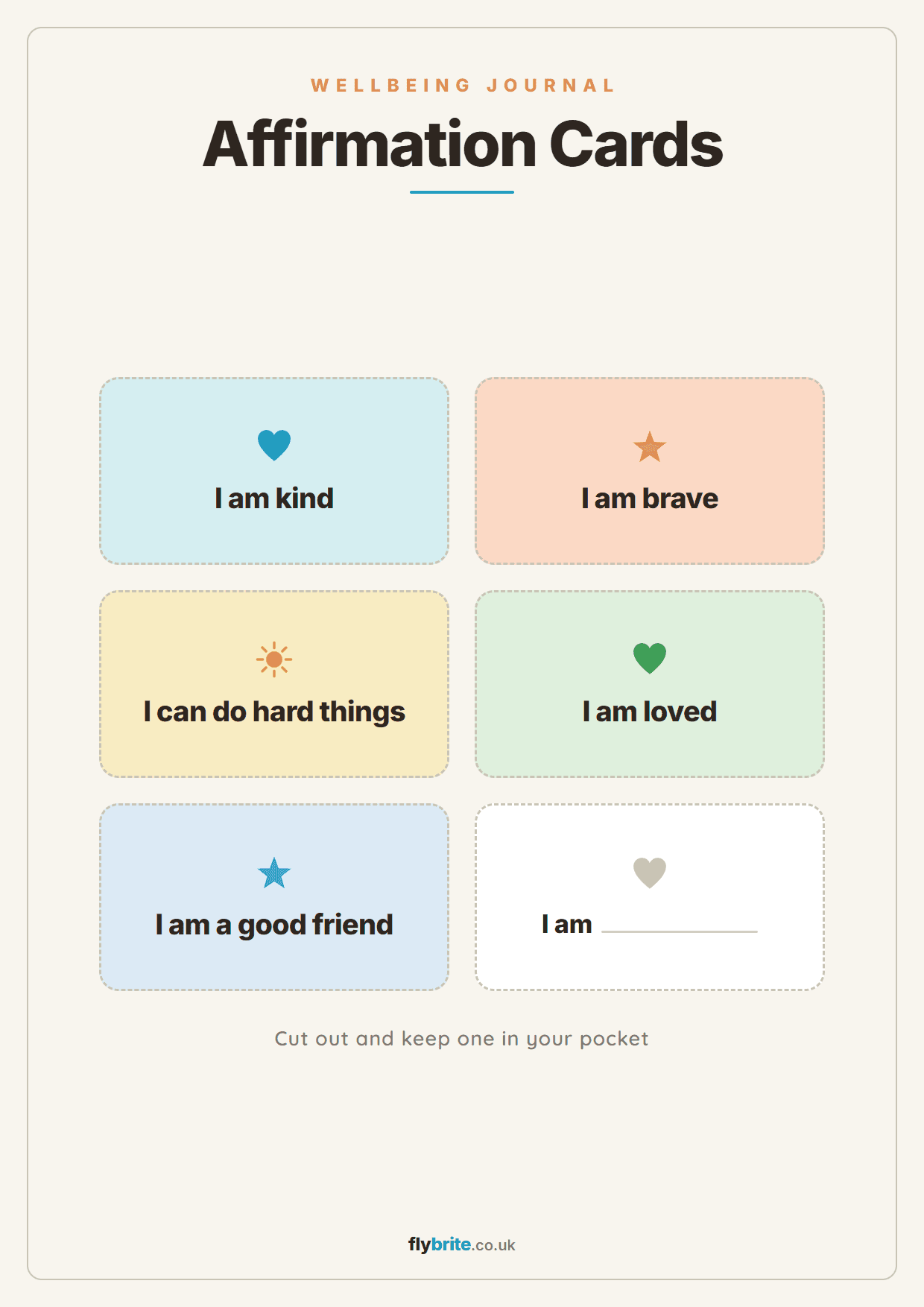
Six cut-out cards of kind words to keep in a pocket, with a blank one to fill in.
 Type or write in
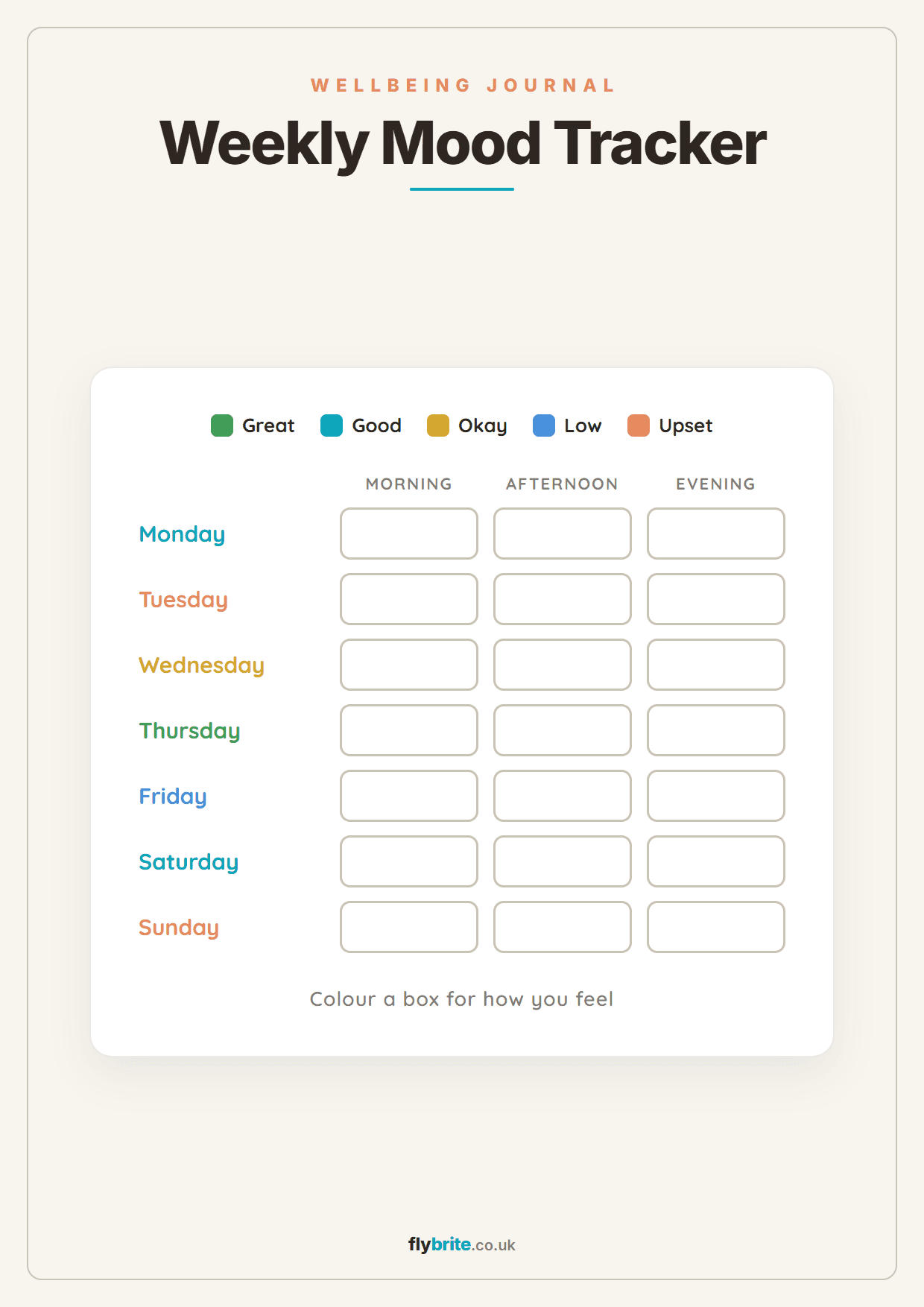
A whole week to colour in, morning to evening, with a five-colour mood key.
Nouns, verbs, adjectives, tenses and punctuation, the nuts and bolts of good writing.
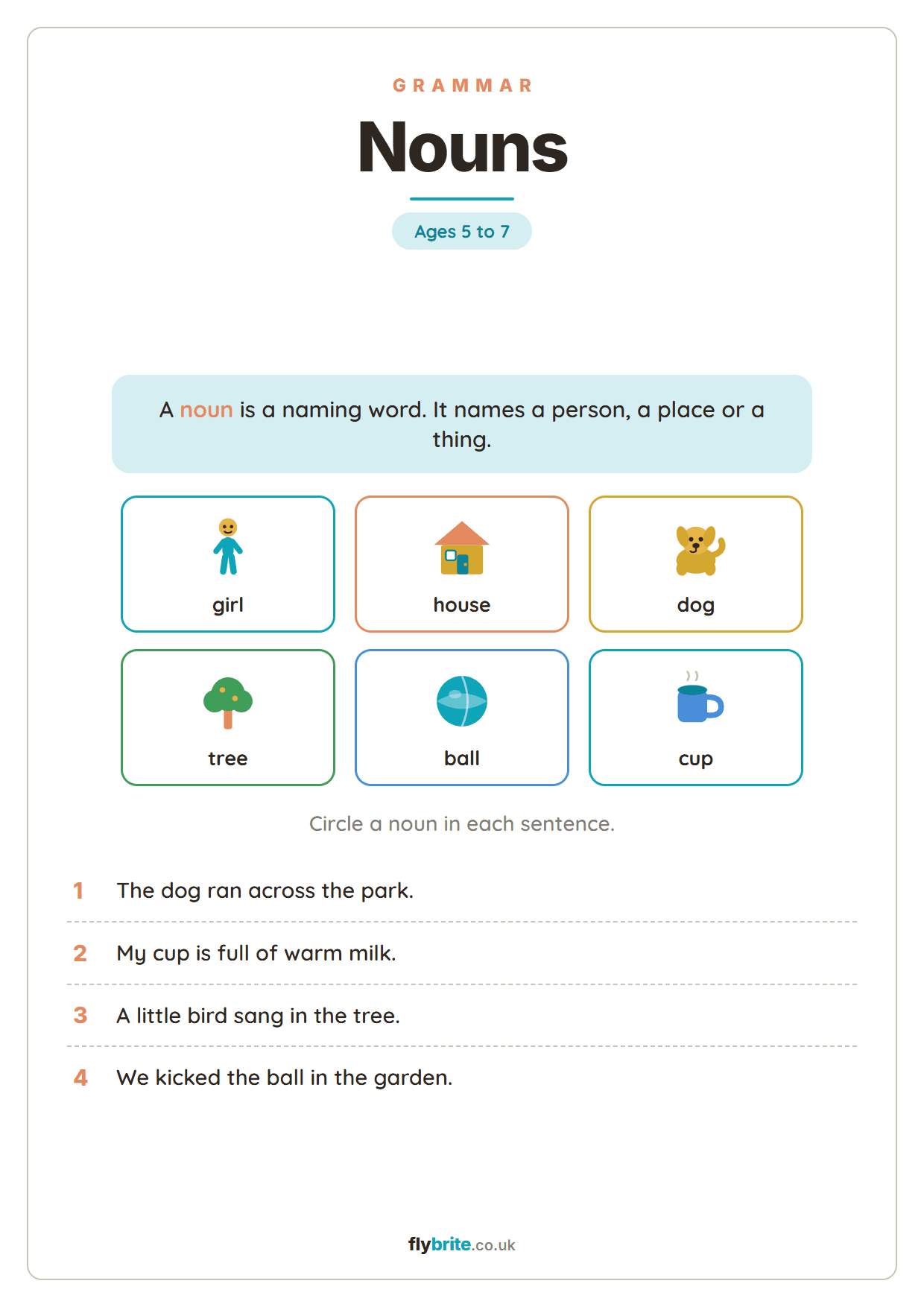
A warm first look at naming words, with a picture bank of nouns to know and cosy sentences to hunt through.
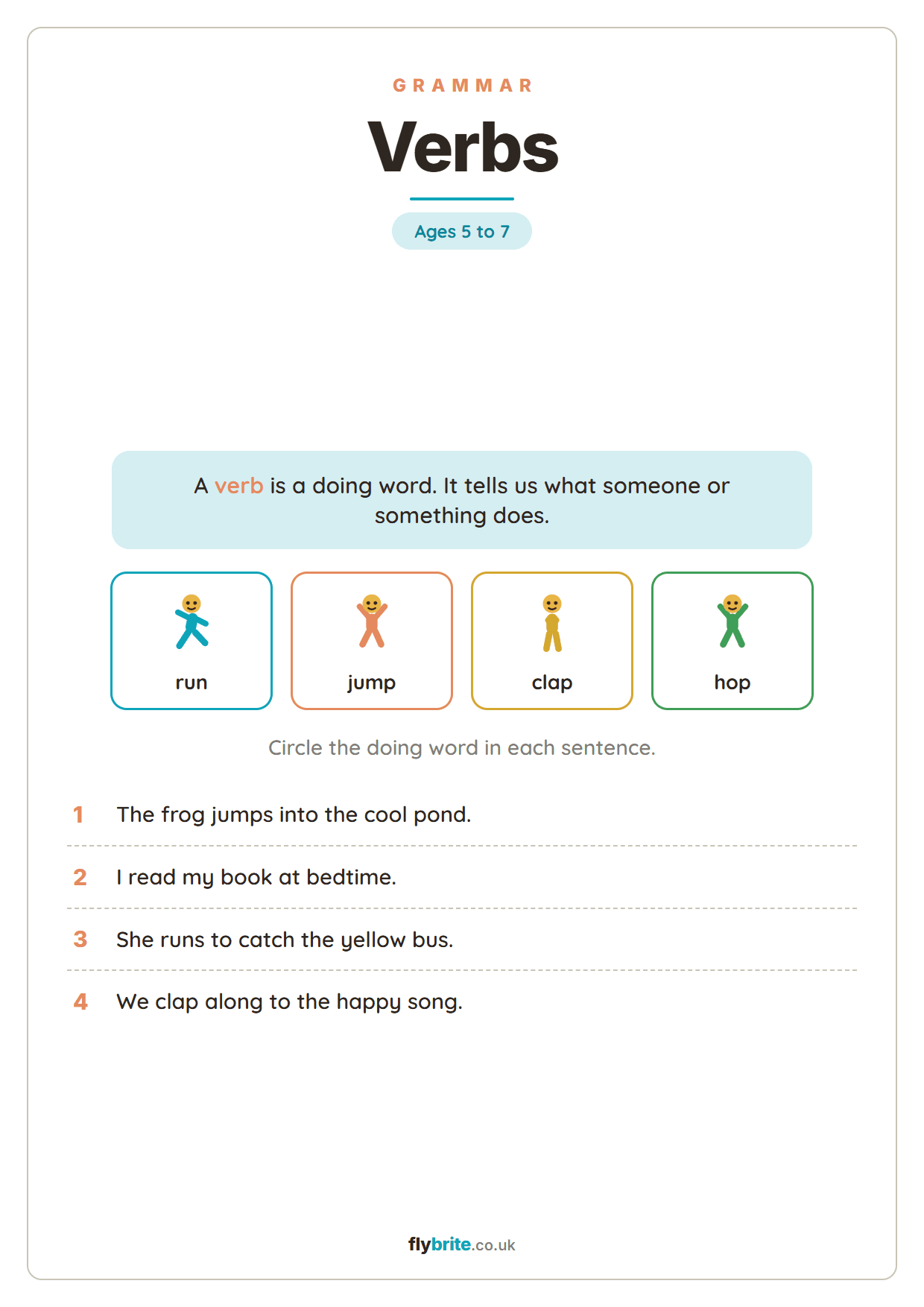
Doing words brought to life by little figures running, jumping and clapping, then a spot-the-verb sentence game.
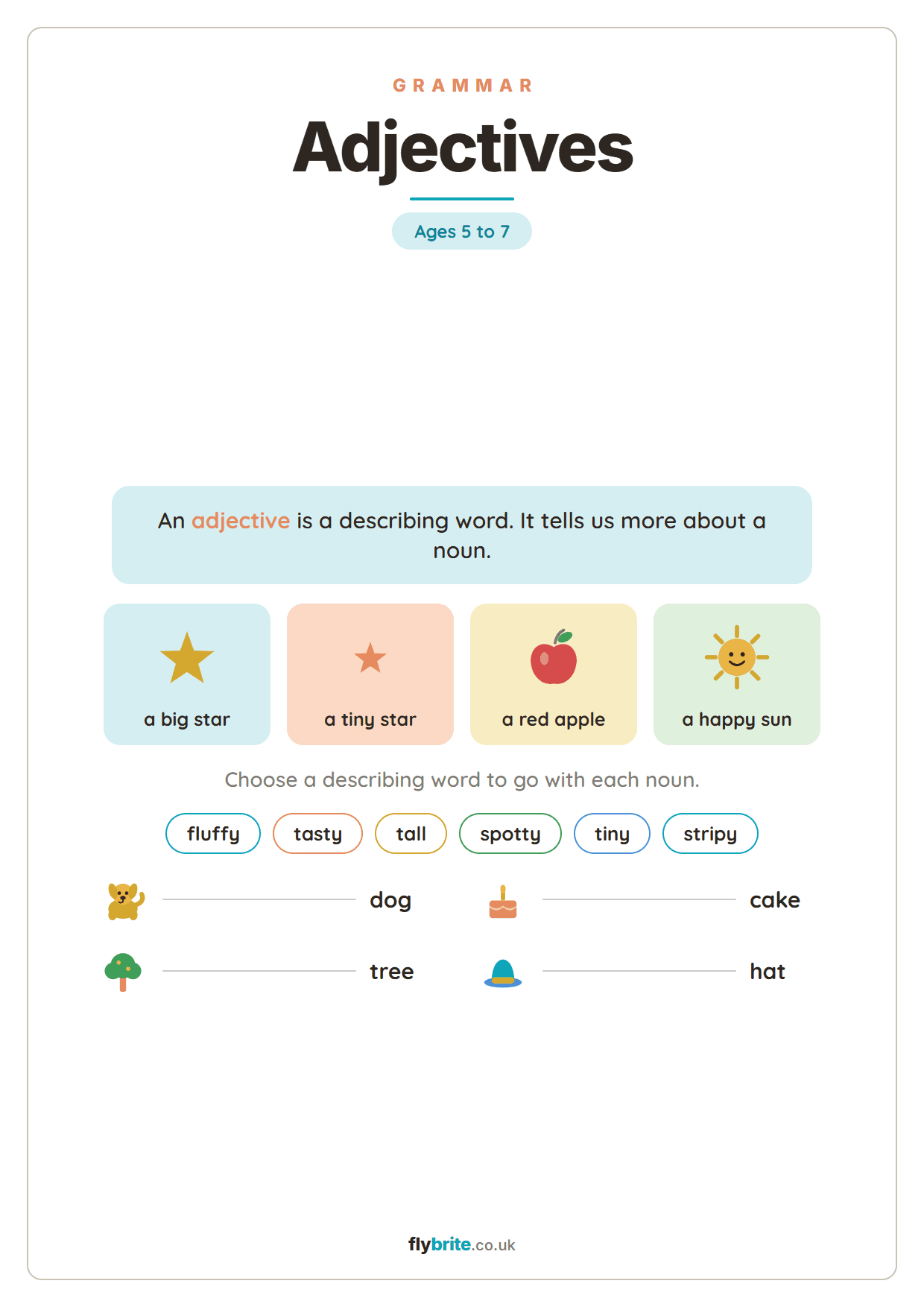
Describing words that make a noun sparkle, with picture examples and a word bank to pick from.
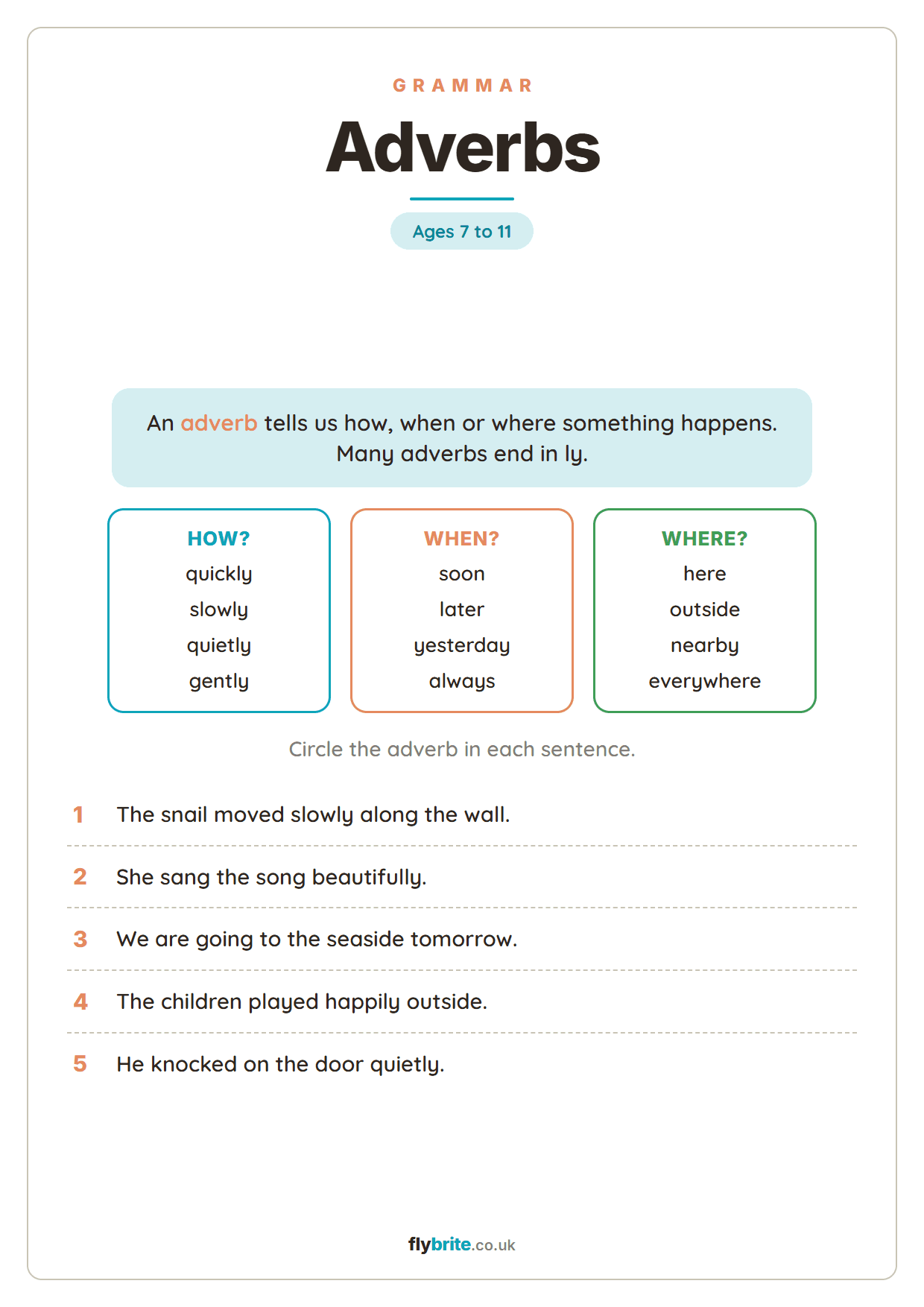
How, when and where words sorted into tidy columns, then five sentences to read closely and circle.
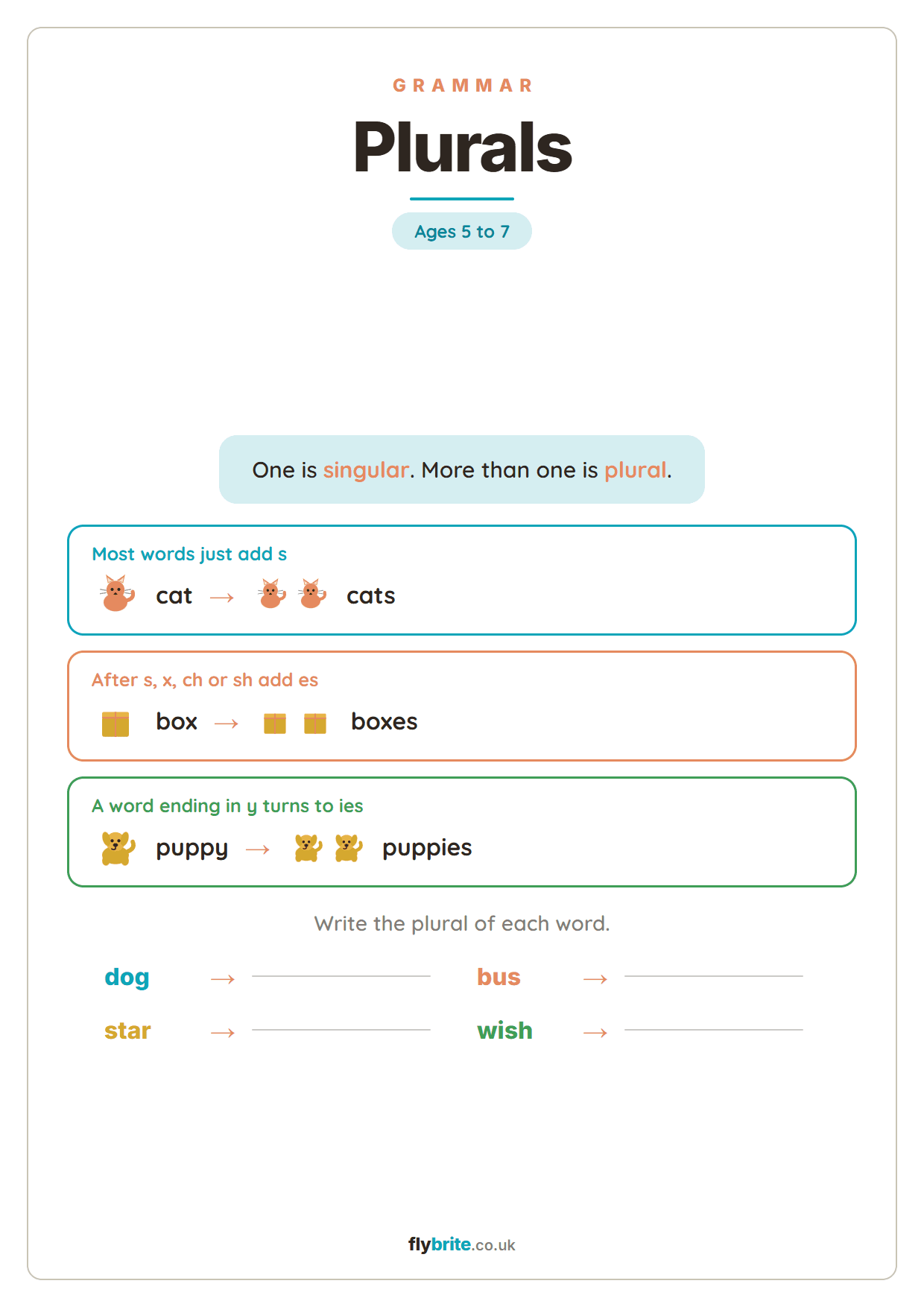
One becomes many with three friendly rules, from add an s to the tricky y that turns to ies.
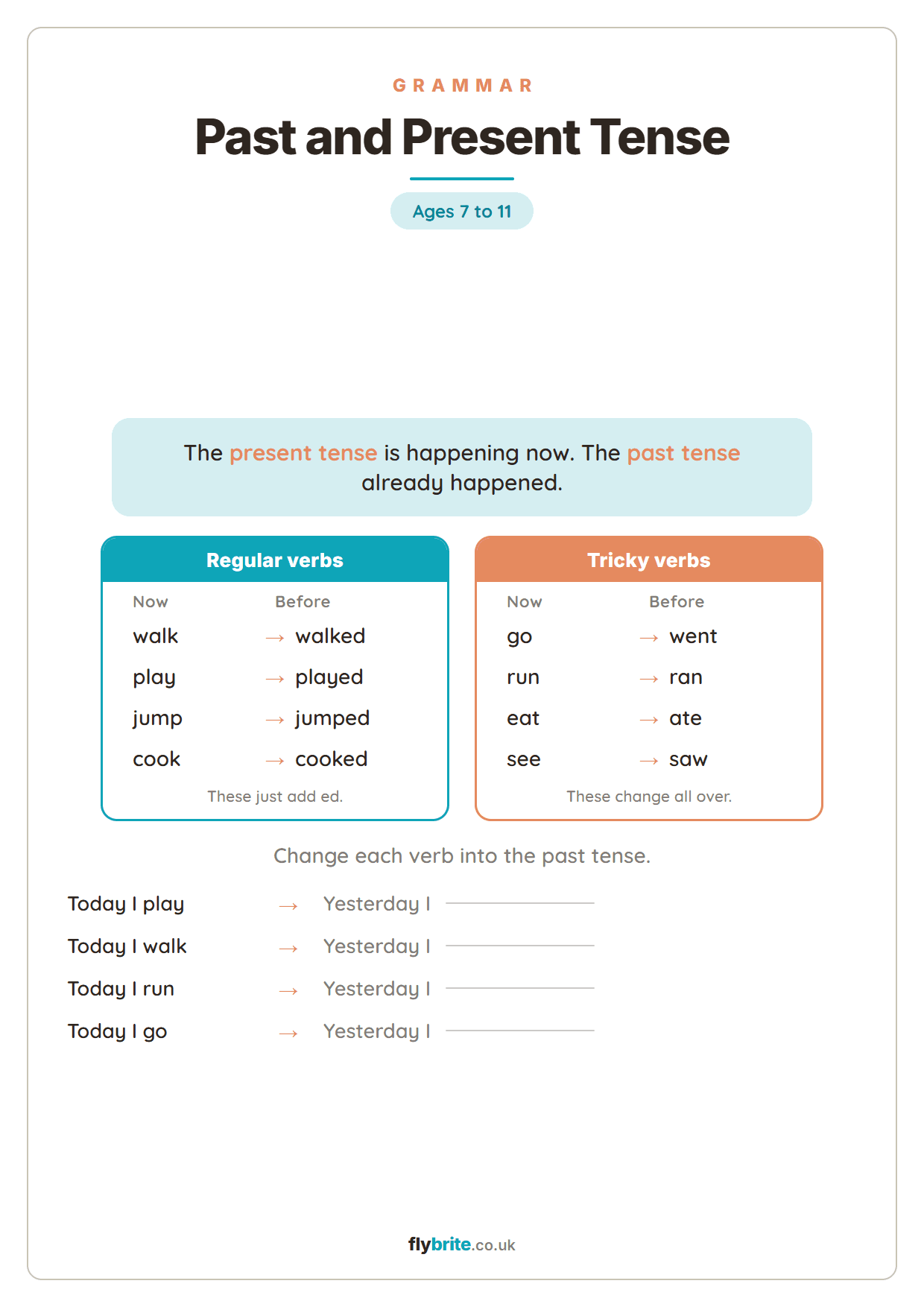
Now and before laid side by side, with regular verbs, a few tricky ones, and a table to complete.

The four kinds of sentence with the end mark that gives each one away, then boxes to fill in.
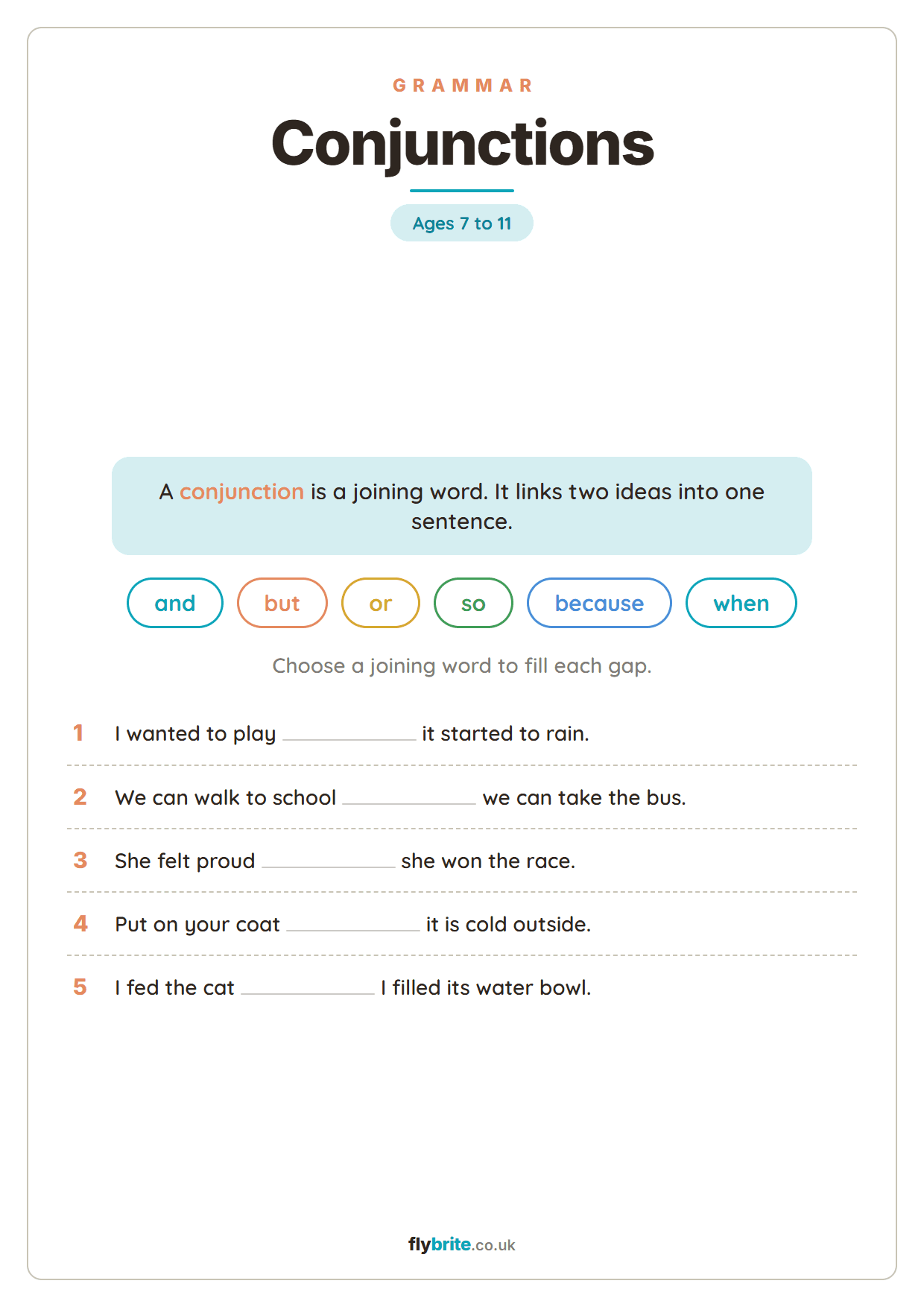
Joining words that stitch two ideas together, with a word bank and gaps to fill in your own way.
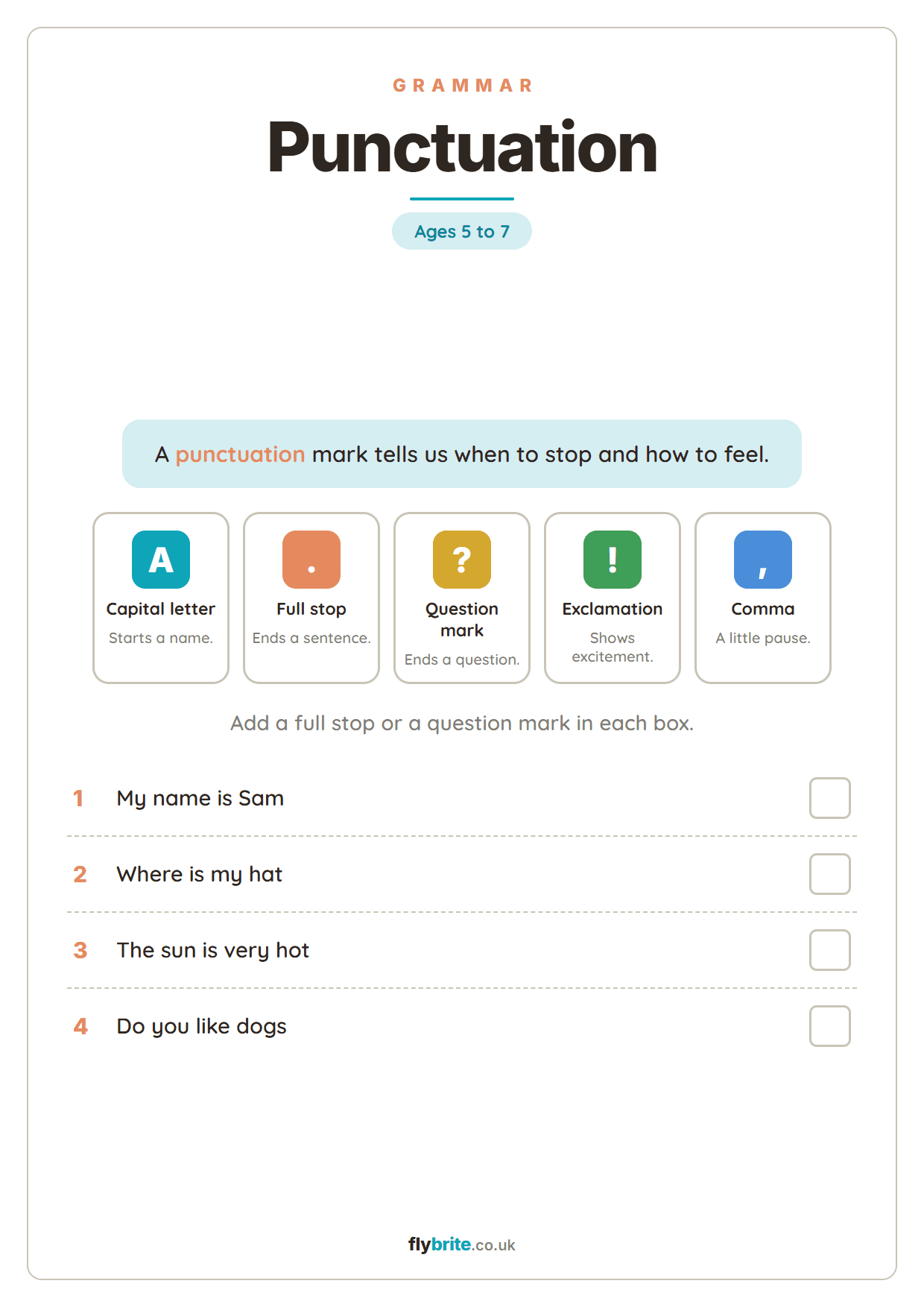
Five friendly marks that help us read, from the capital letter to the comma, then sentences to finish.
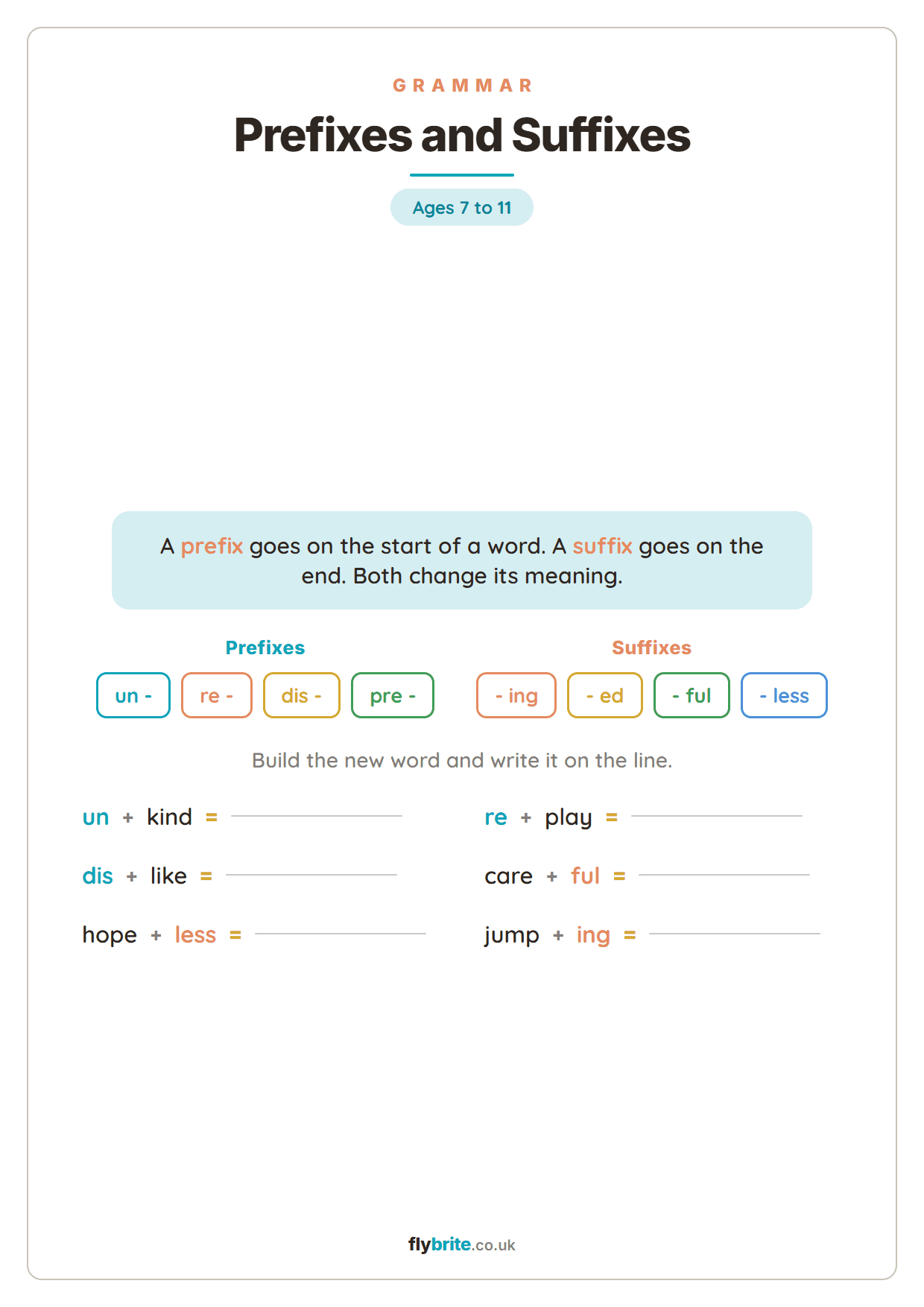
Little word parts that change a meaning, added to the start or the end, with new words to build and write.
Look-cover-write-check lists, word games and common exception words for confident spellers.

Twelve cheerful long a words to read, say and write, a friendly first spelling list for the week.

Twelve long i words gathered into one tidy list, ready to practise a little each day.
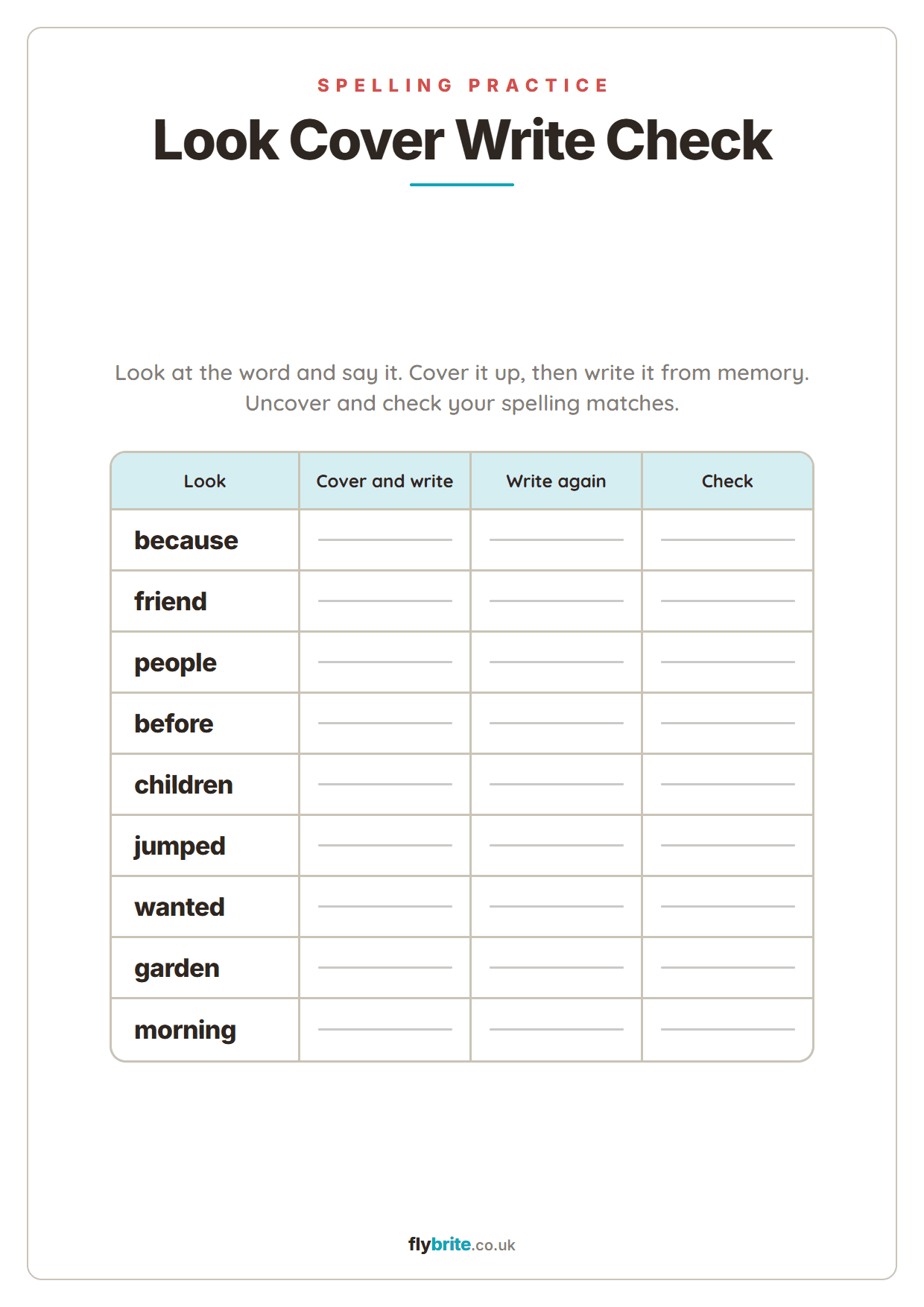
The classic spelling method laid out in ruled columns, look, cover, write it from memory, then check.
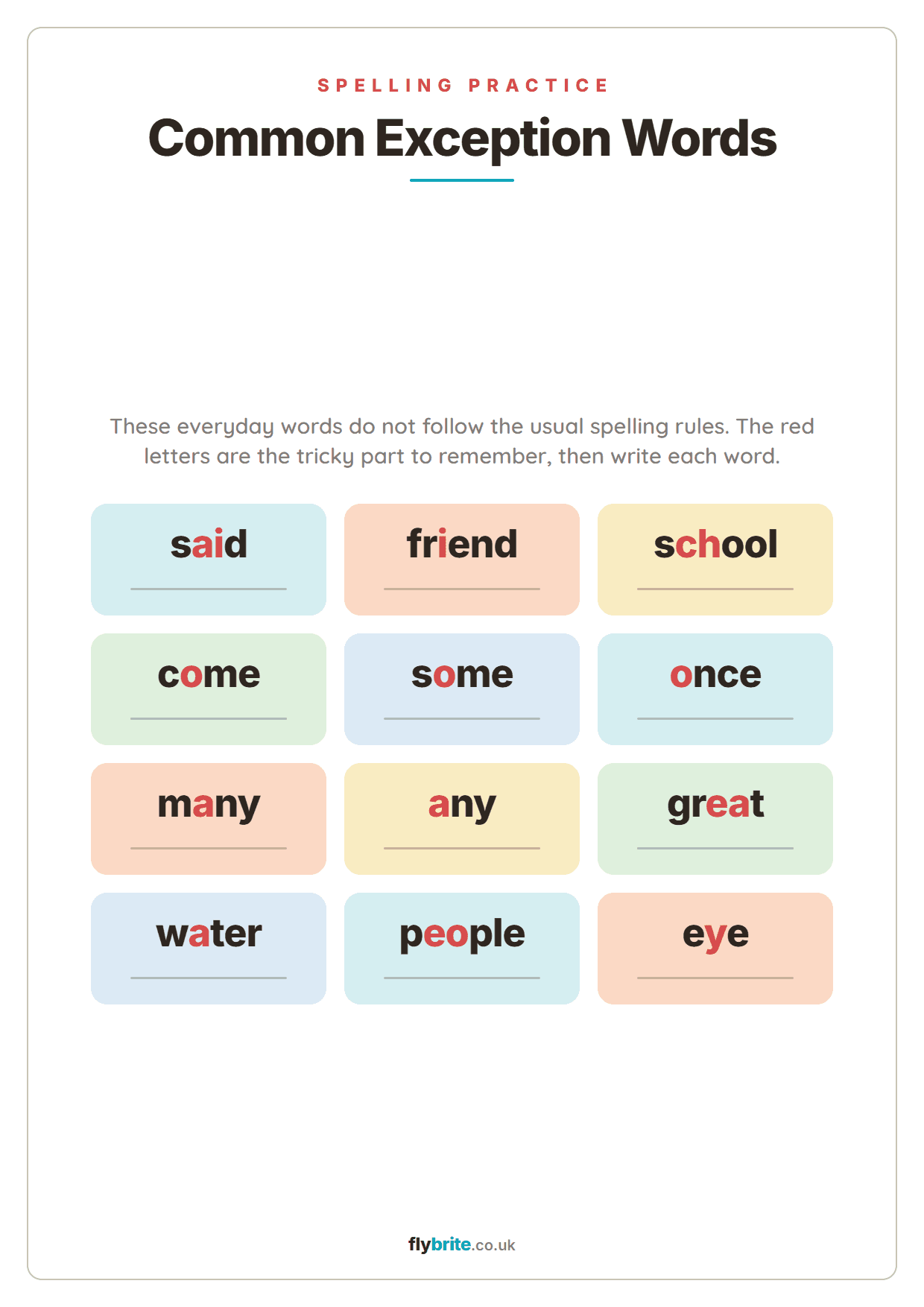
Twelve everyday words that break the rules, with the tricky letters picked out in red to remember.
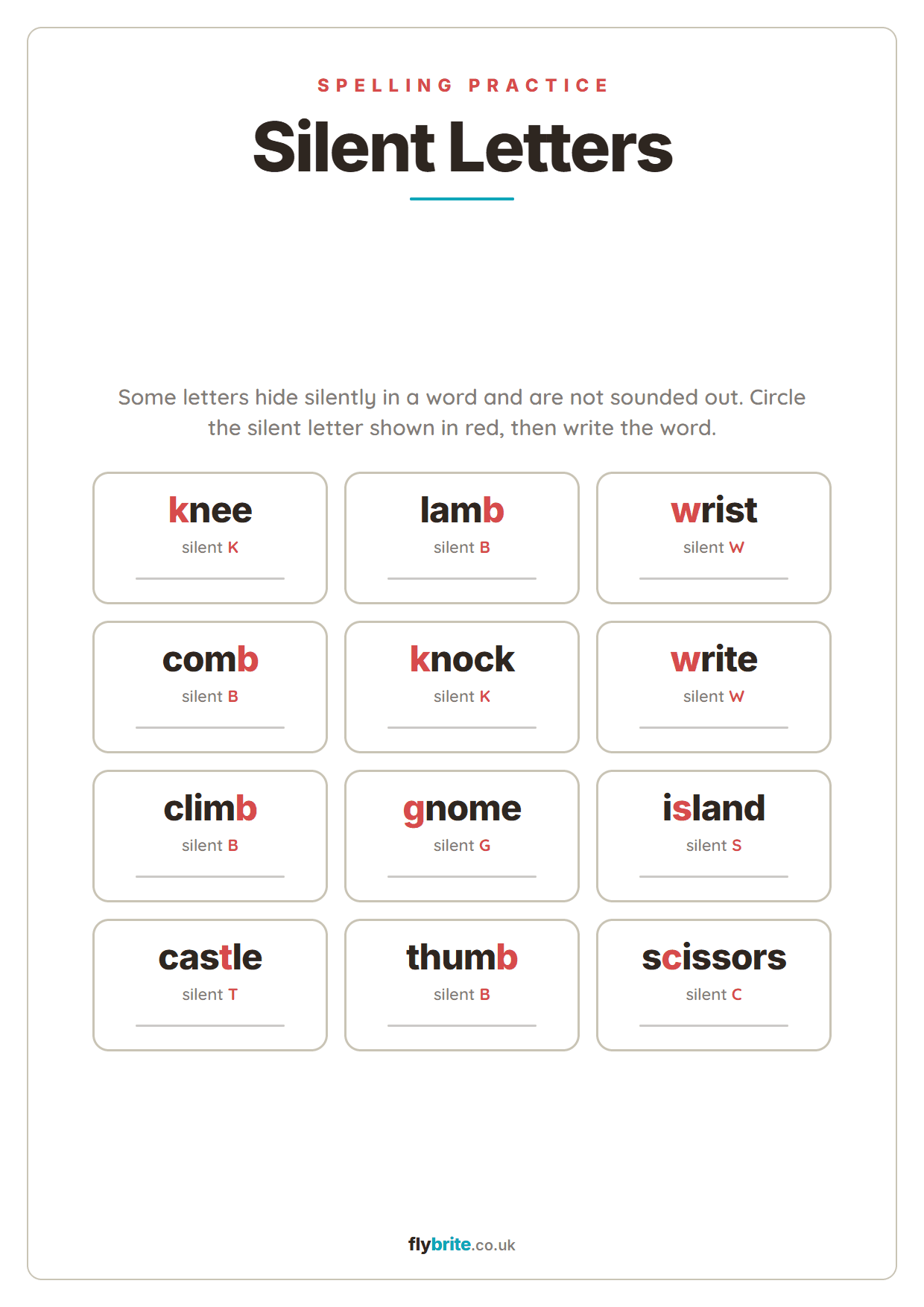
From the silent k in knee to the silent b in lamb, spotting the letters that hide without a sound.
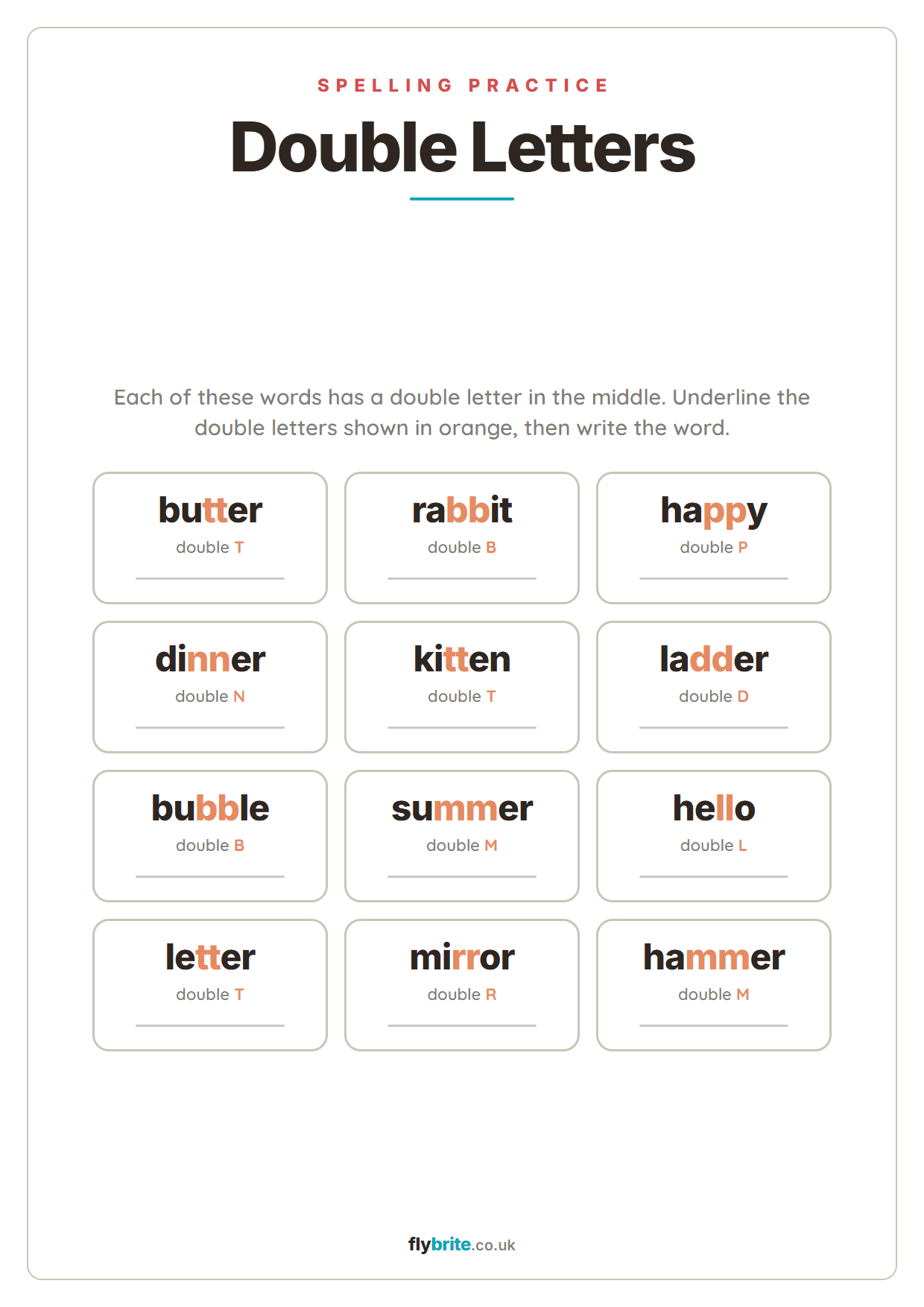
Butter, rabbit and happy, learning to hear where a letter doubles up in the middle of a word.
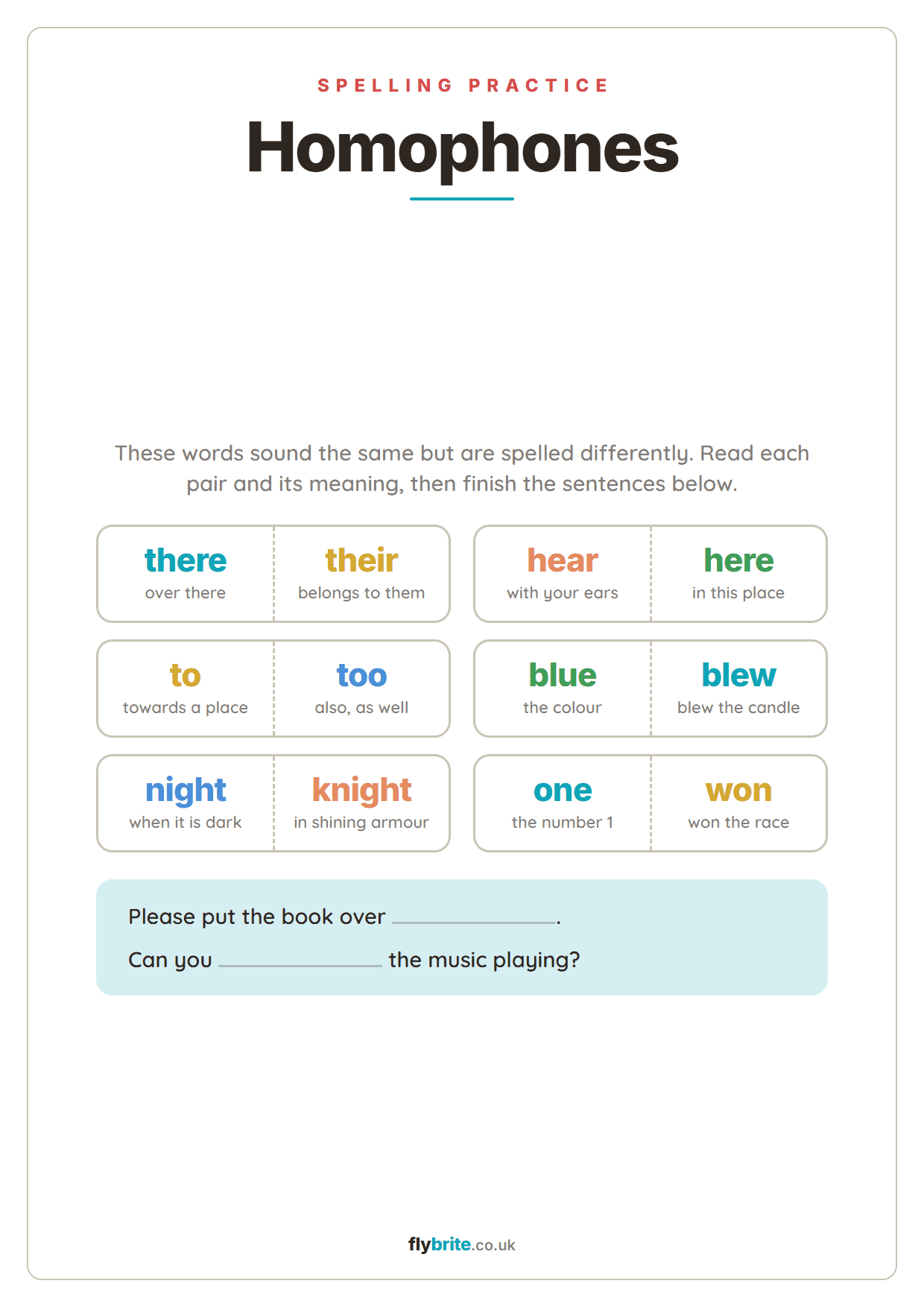
Words that sound alike but are spelled apart, like there and their, with meanings and sentences to try.
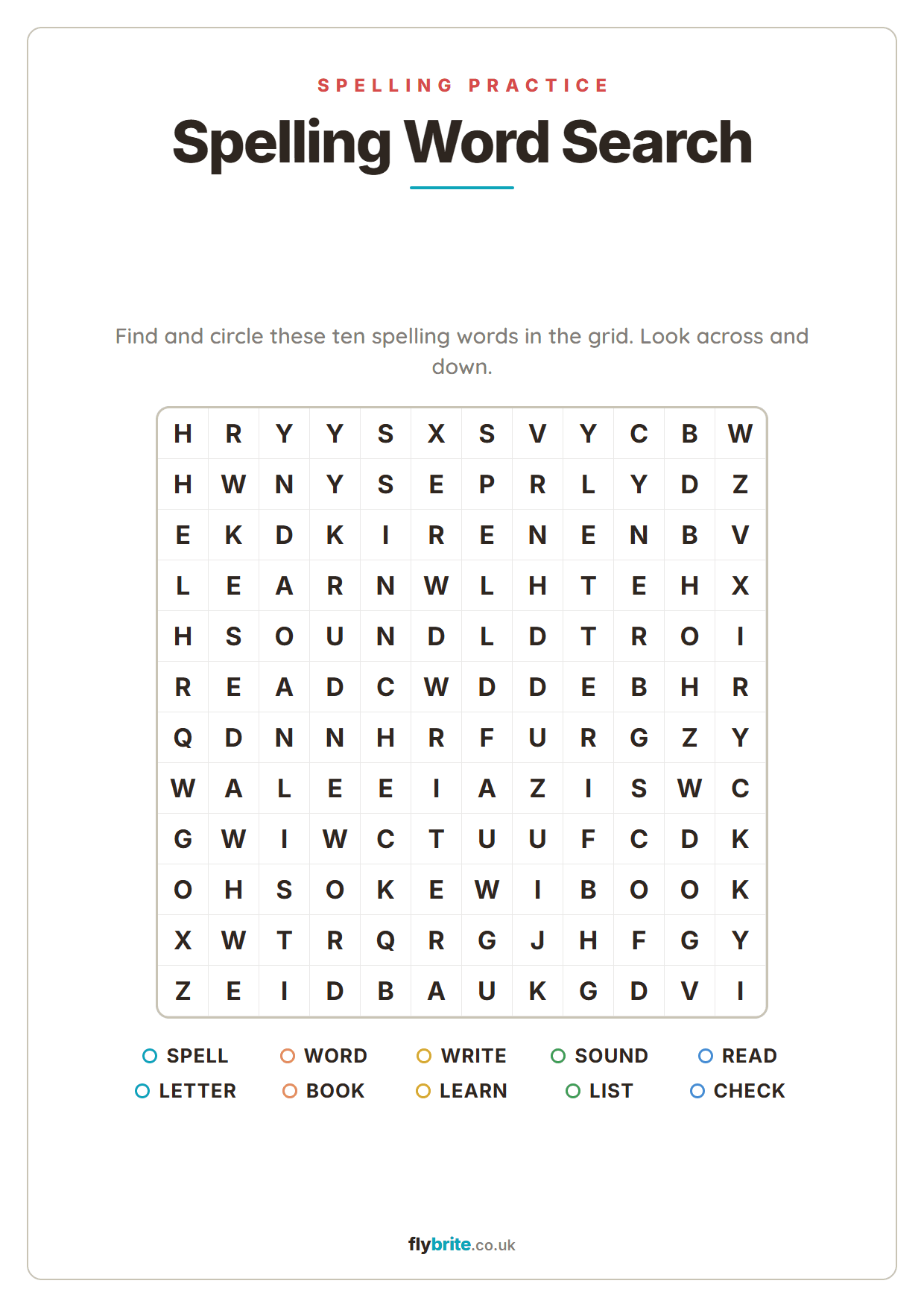
Ten spelling words tucked into a proper grid to hunt across and down, puzzling practice that feels like play.
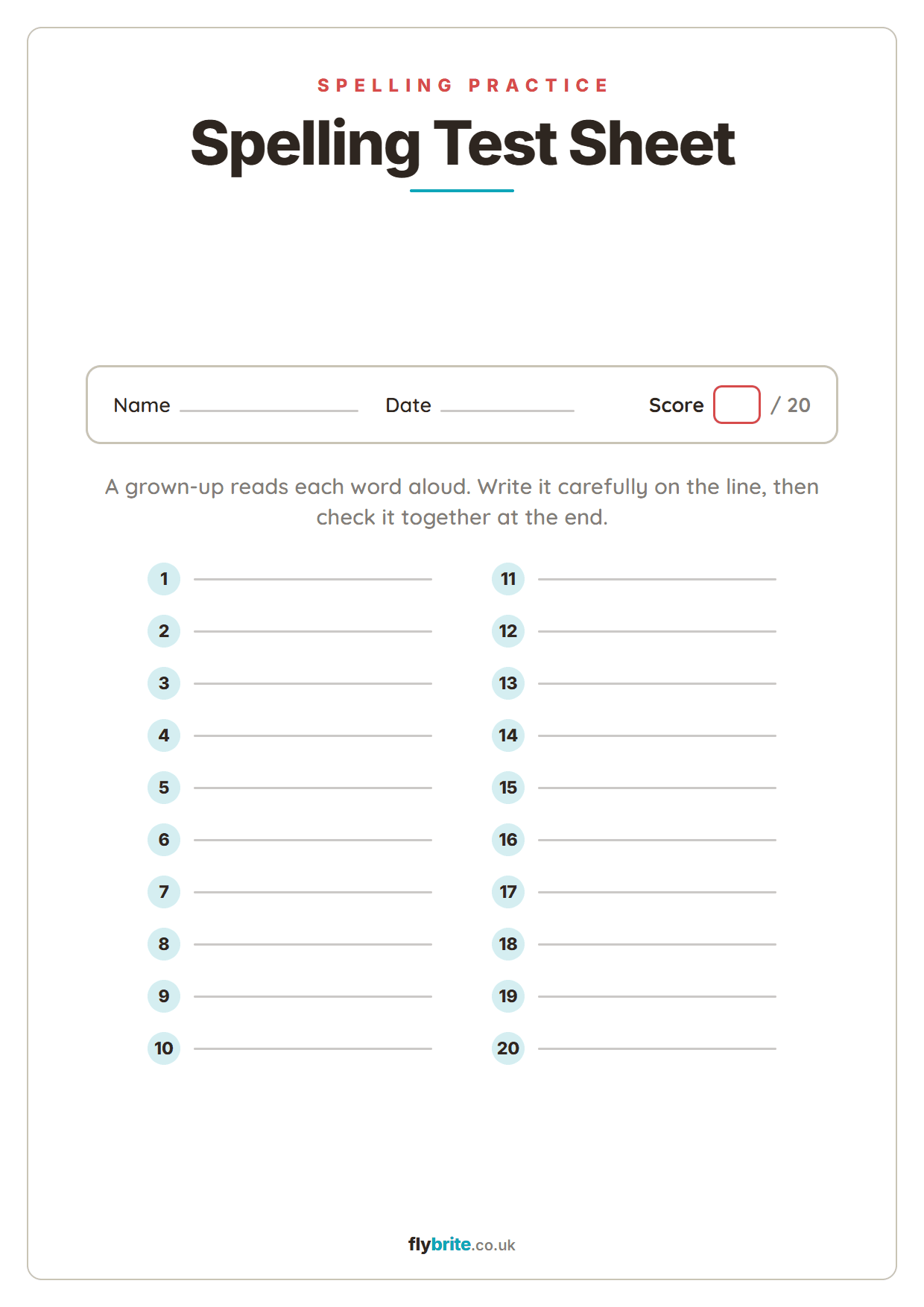 Type or write in
A clean twenty word test sheet with room for a name, a date and a score, ready for a grown-up to read aloud.
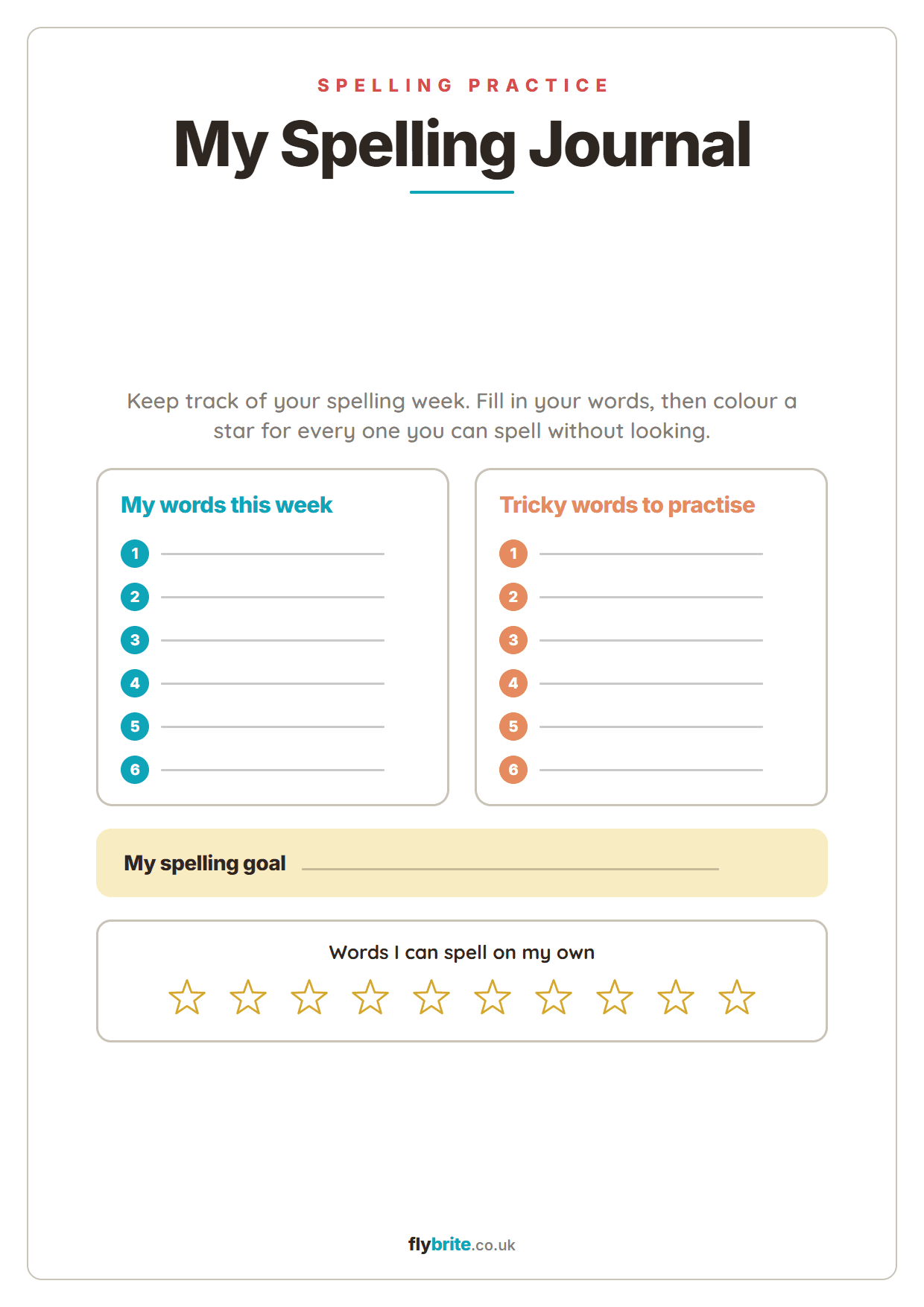 Type or write in
A warm weekly journal to jot new words, note the tricky ones and colour a star for every spelling mastered.
Short, warm reading passages with questions, building understanding one story at a time.
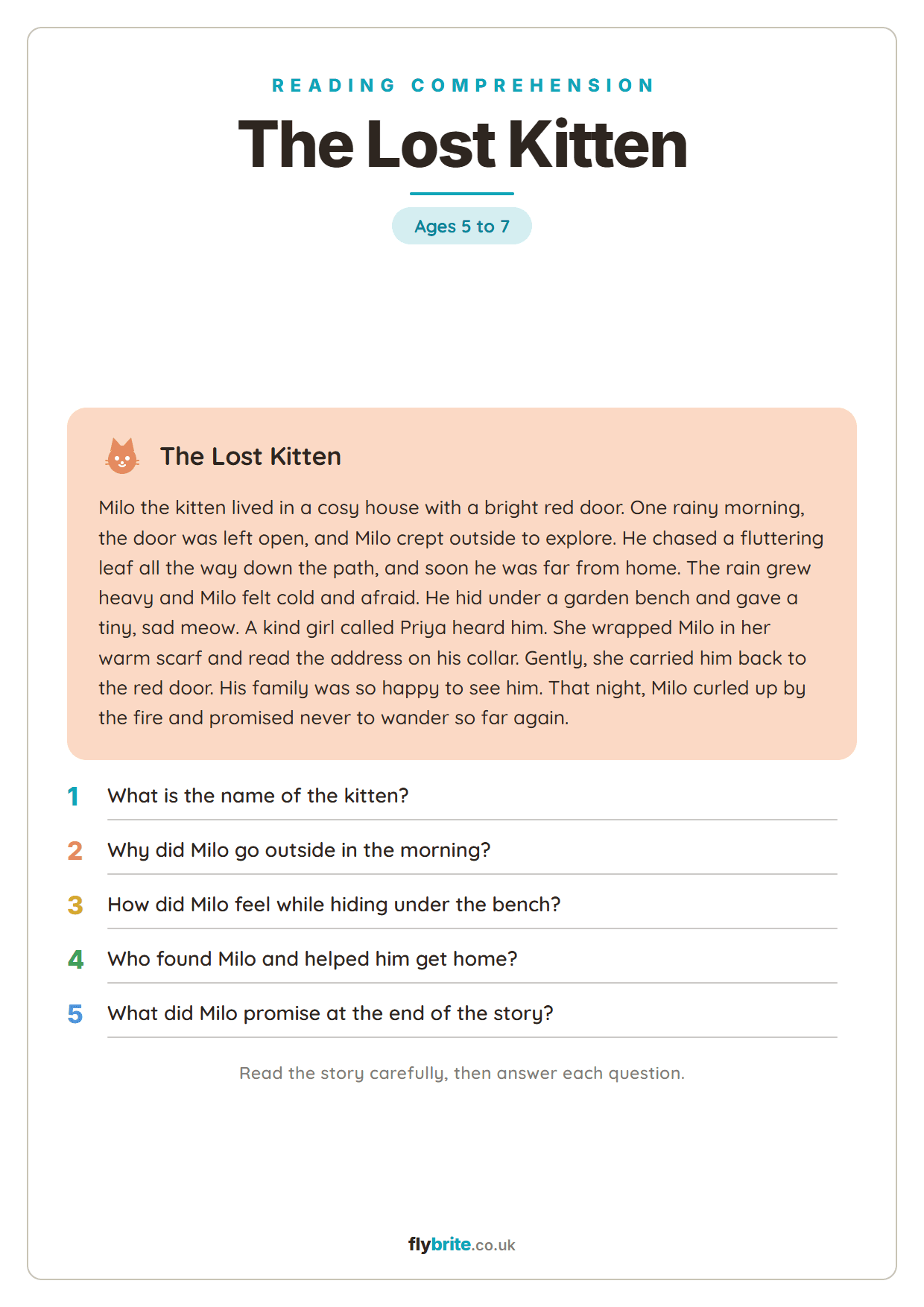
A cosy first-reader story about a wandering kitten, with five gentle questions and room to write each answer.

A warm little tale about patience and growing, with five clear comprehension questions and write-in lines.
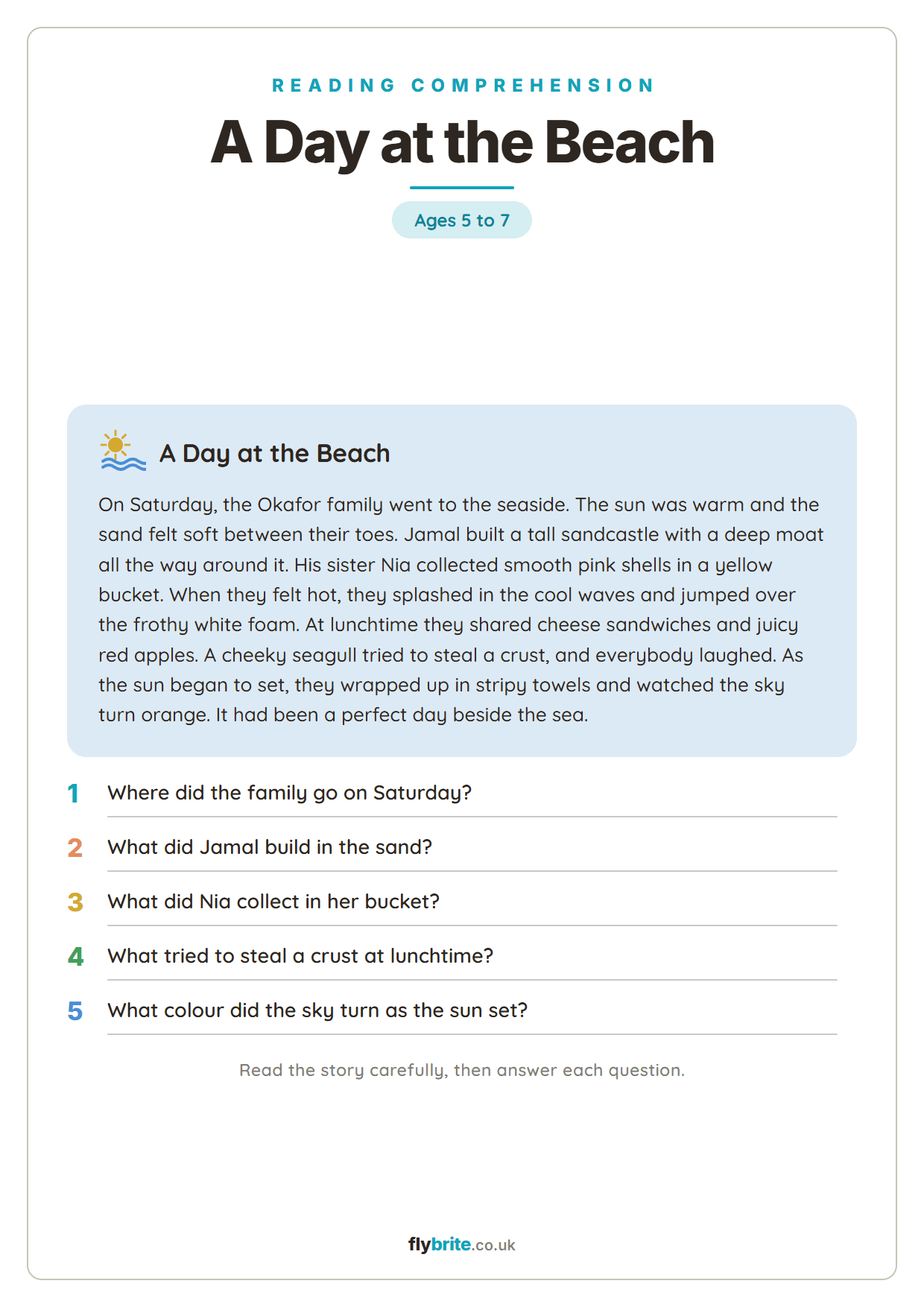
A sunny seaside story for new readers, followed by five friendly questions with space to answer.
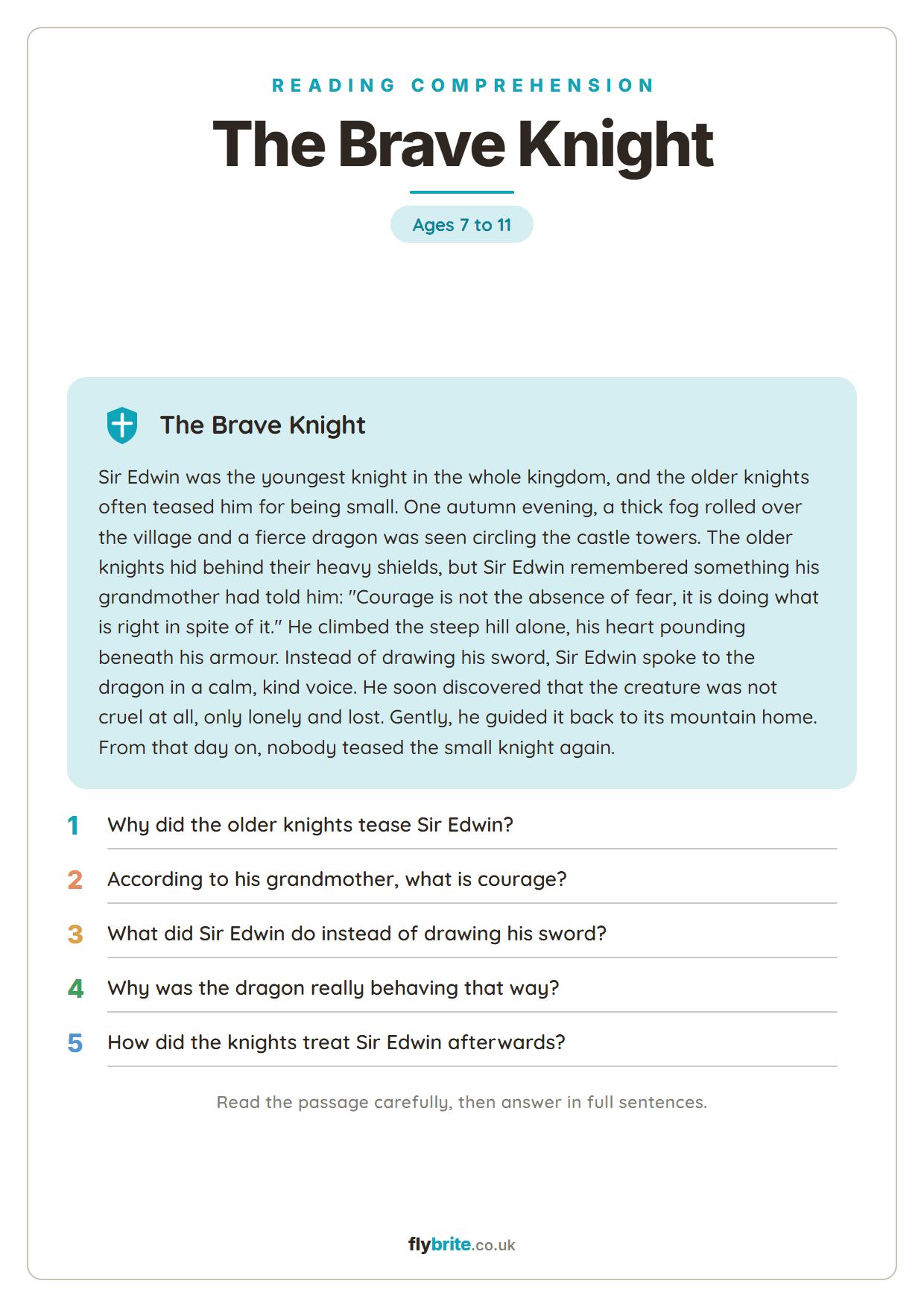
A short story about courage and kindness, with five questions that reward reading between the lines.
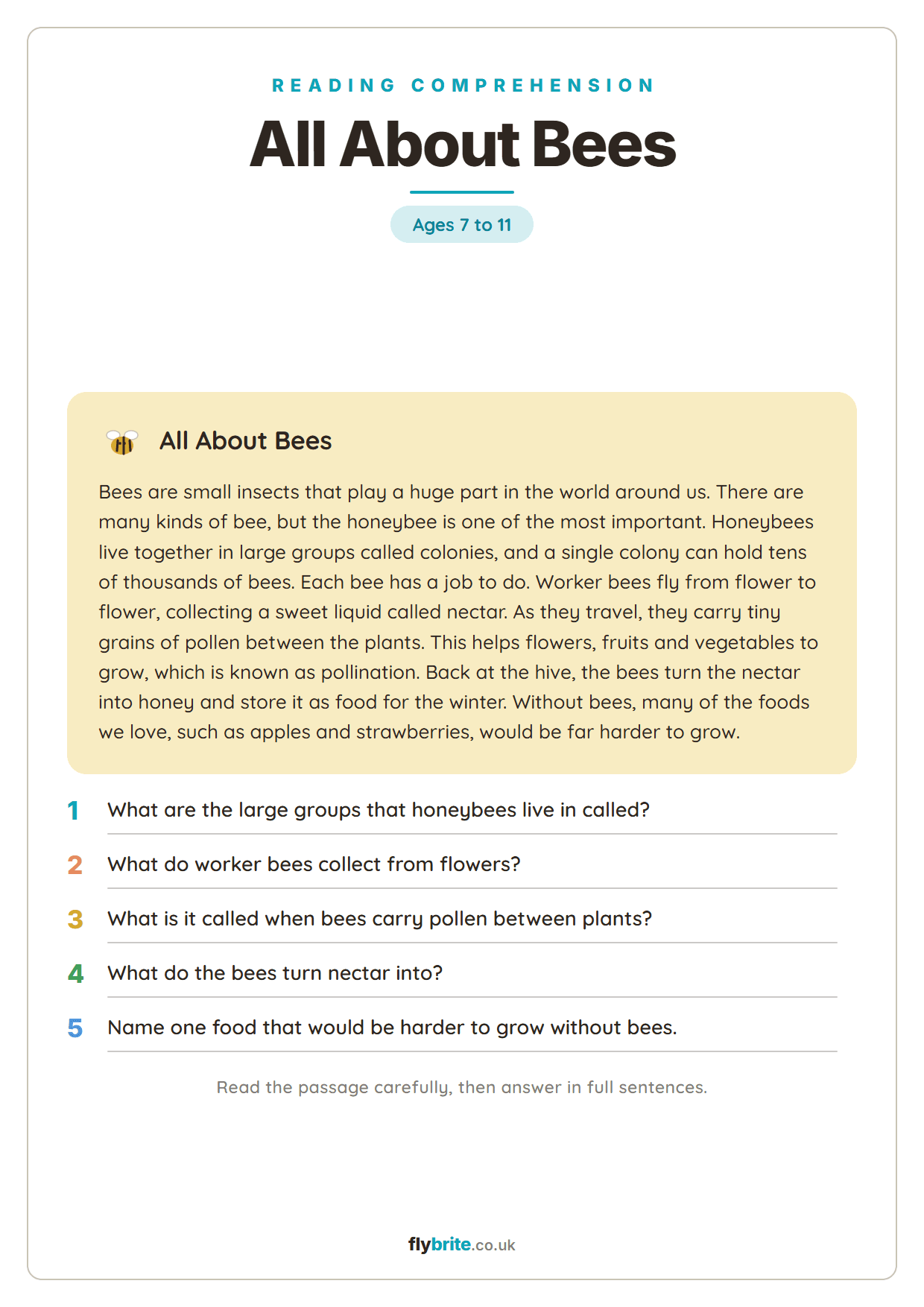
A non-fiction passage all about honeybees and pollination, with five fact-finding questions.
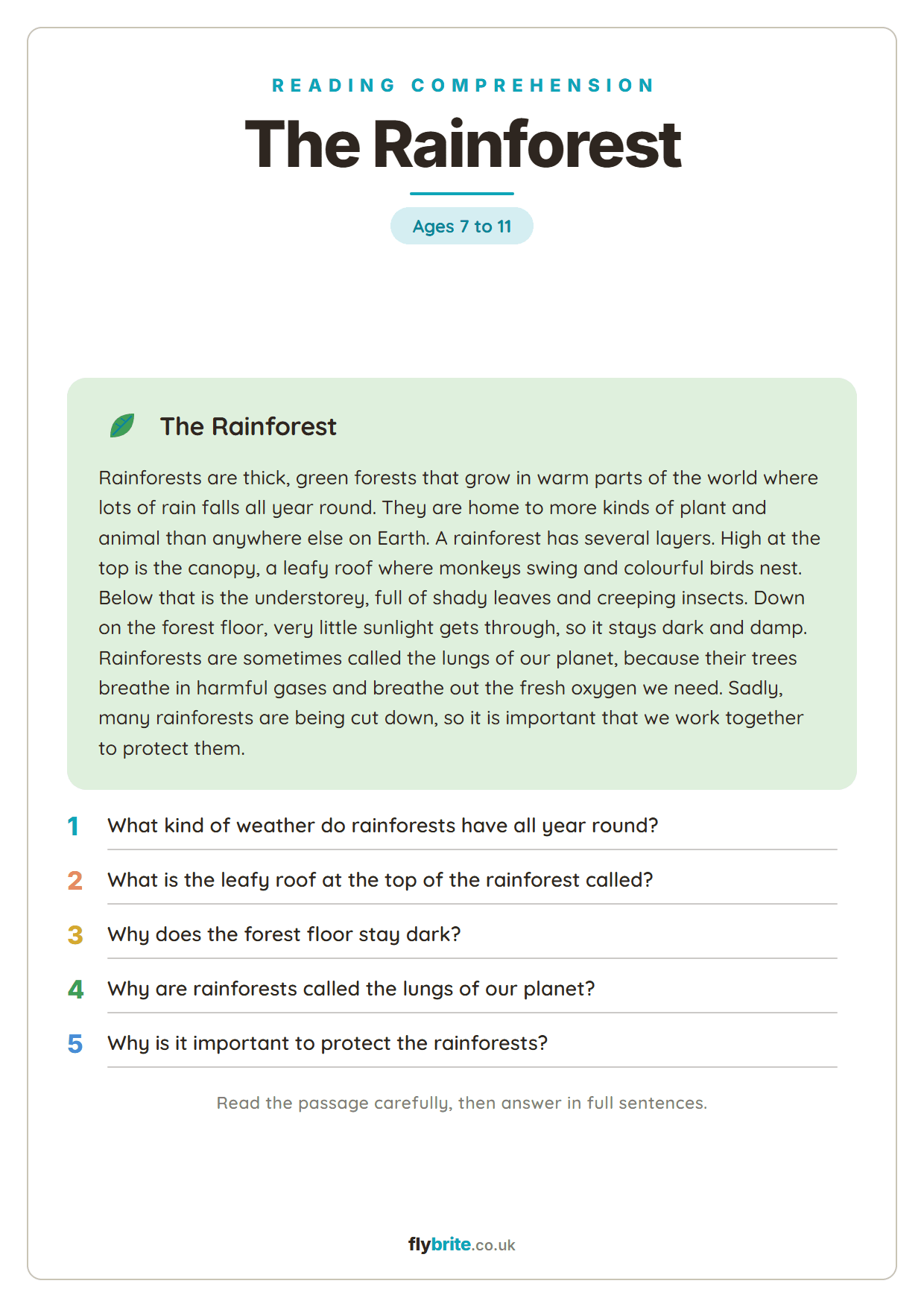
An information passage on rainforest layers and why they matter, with five comprehension questions.

A true story of Apollo 11 and the first steps on the Moon, followed by five questions with answer lines.
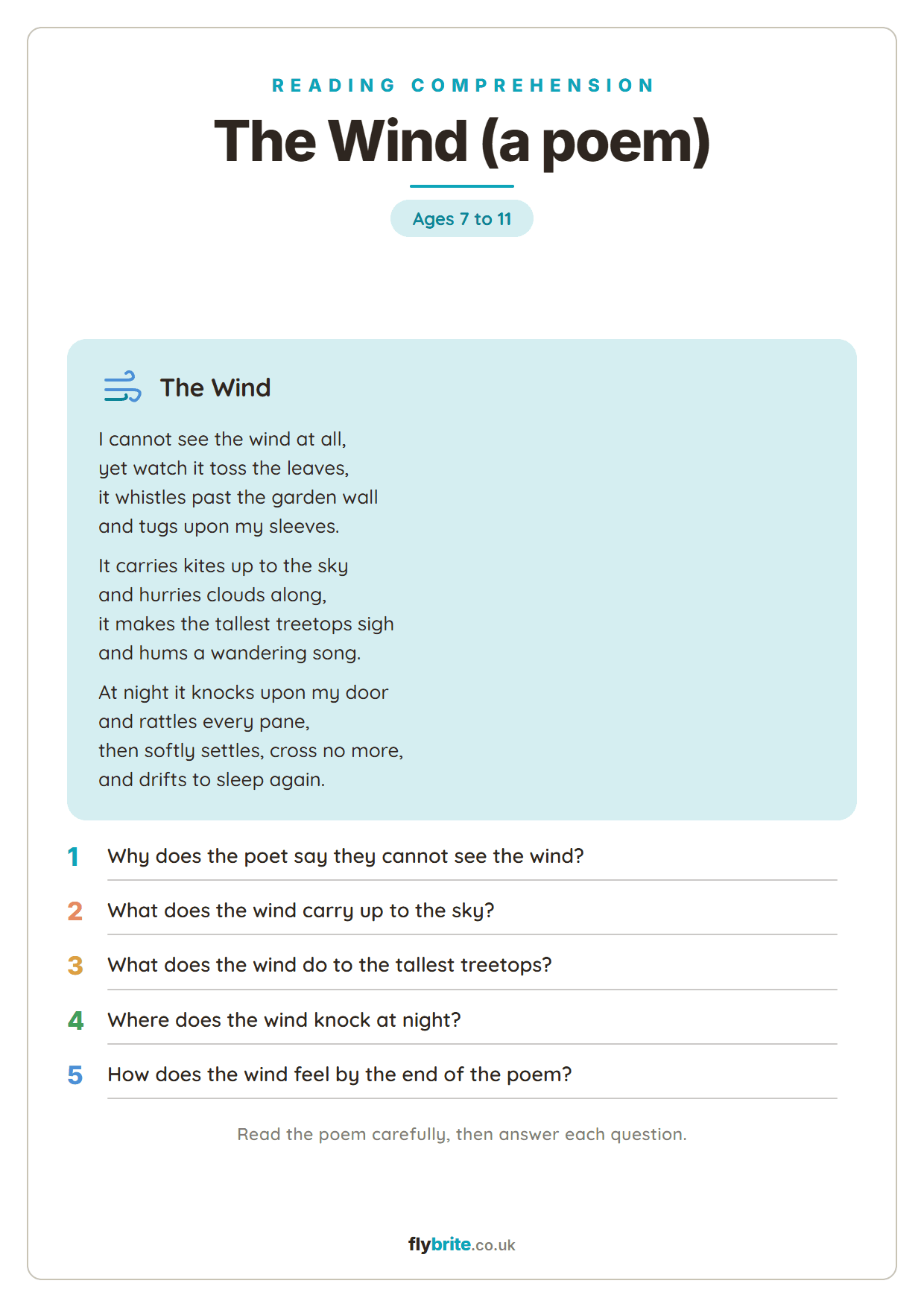
An original three-verse poem about the wind, with five questions that explore its words and feelings.

A step-by-step recipe for jam tarts, read as a set of instructions, with five ordering and detail questions.

A warm letter to read and understand, with five questions and cosy write-in lines for each answer.
Ten themed word searches that make vocabulary and spotting patterns pure fun.
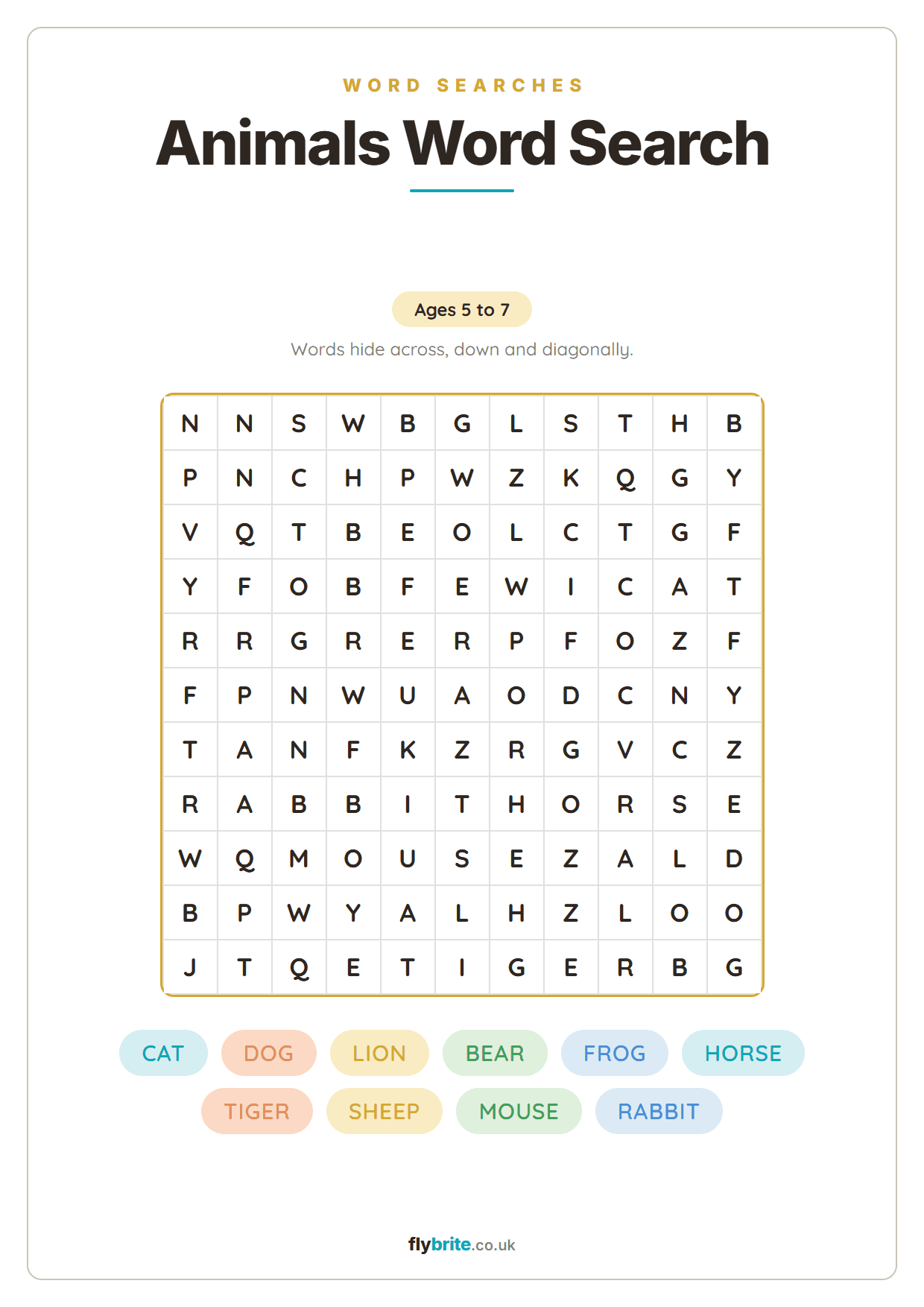
Ten friendly animals are hiding in the letters, waiting for sharp young eyes to round them up.
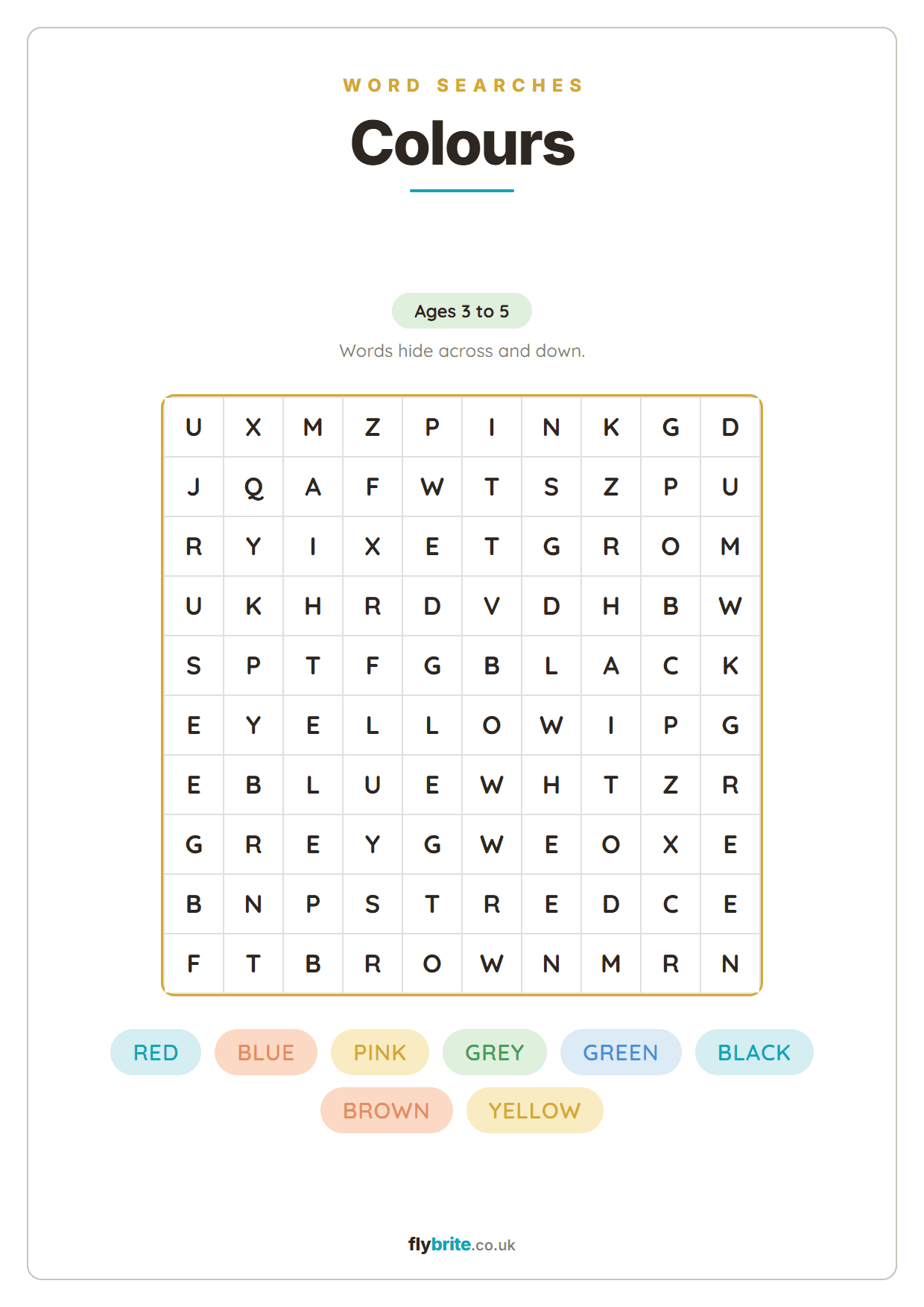
A gentle first word search, with eight favourite colours tucked in straight across and down.
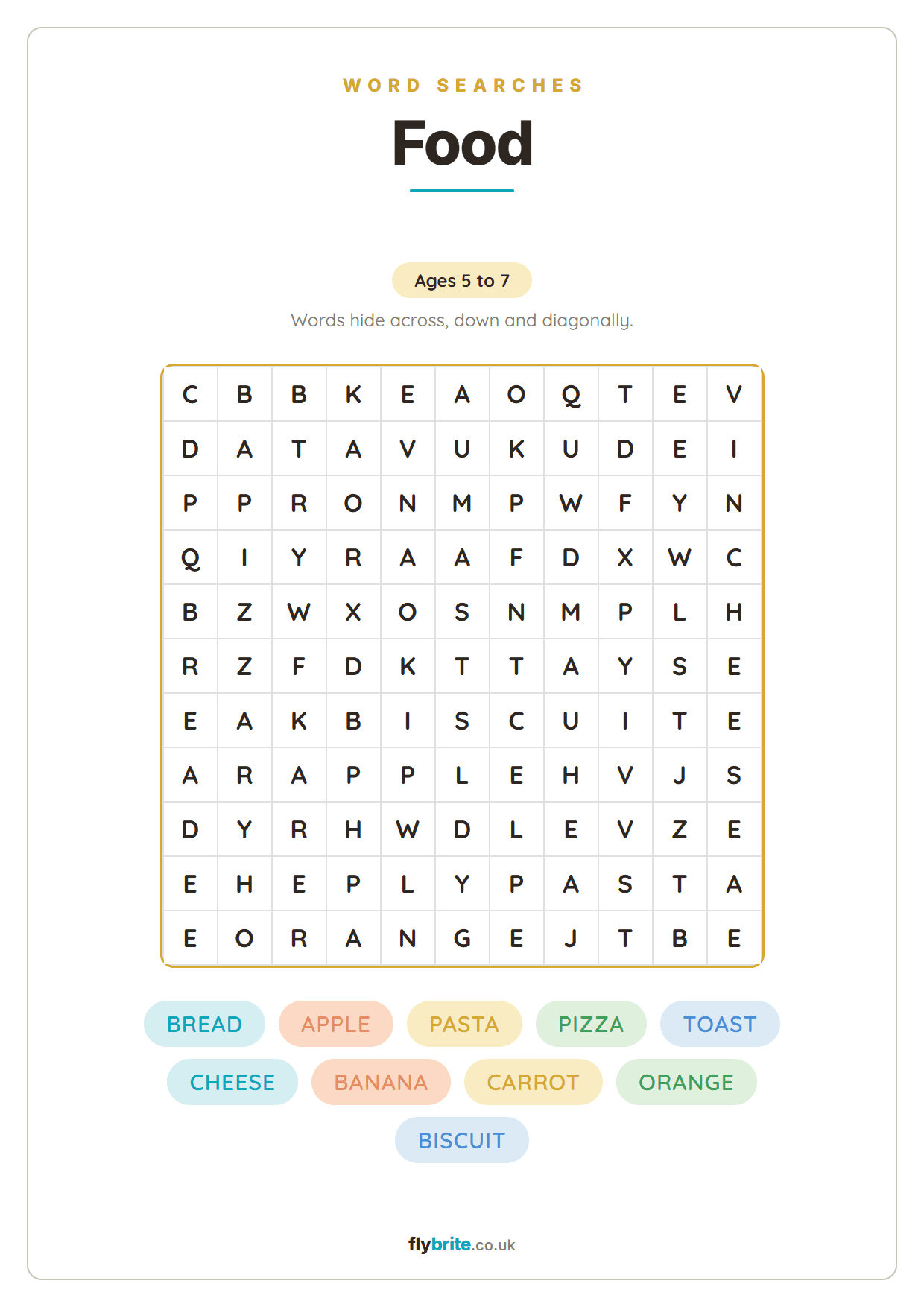
Ten tasty things to eat are mixed into the grid, ready to spot at snack time.
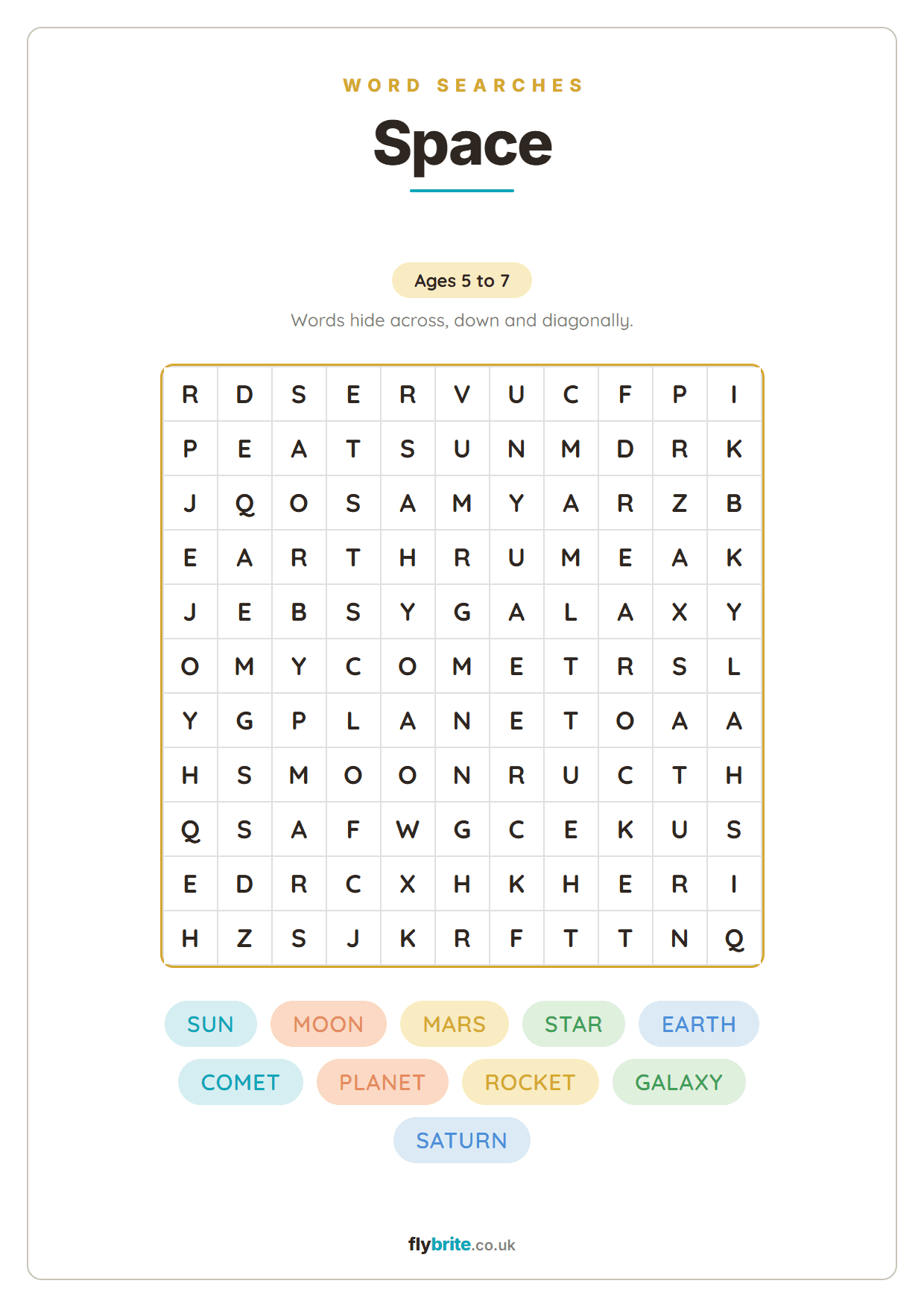
Blast off and find ten wonders of space hiding among the stars of letters.
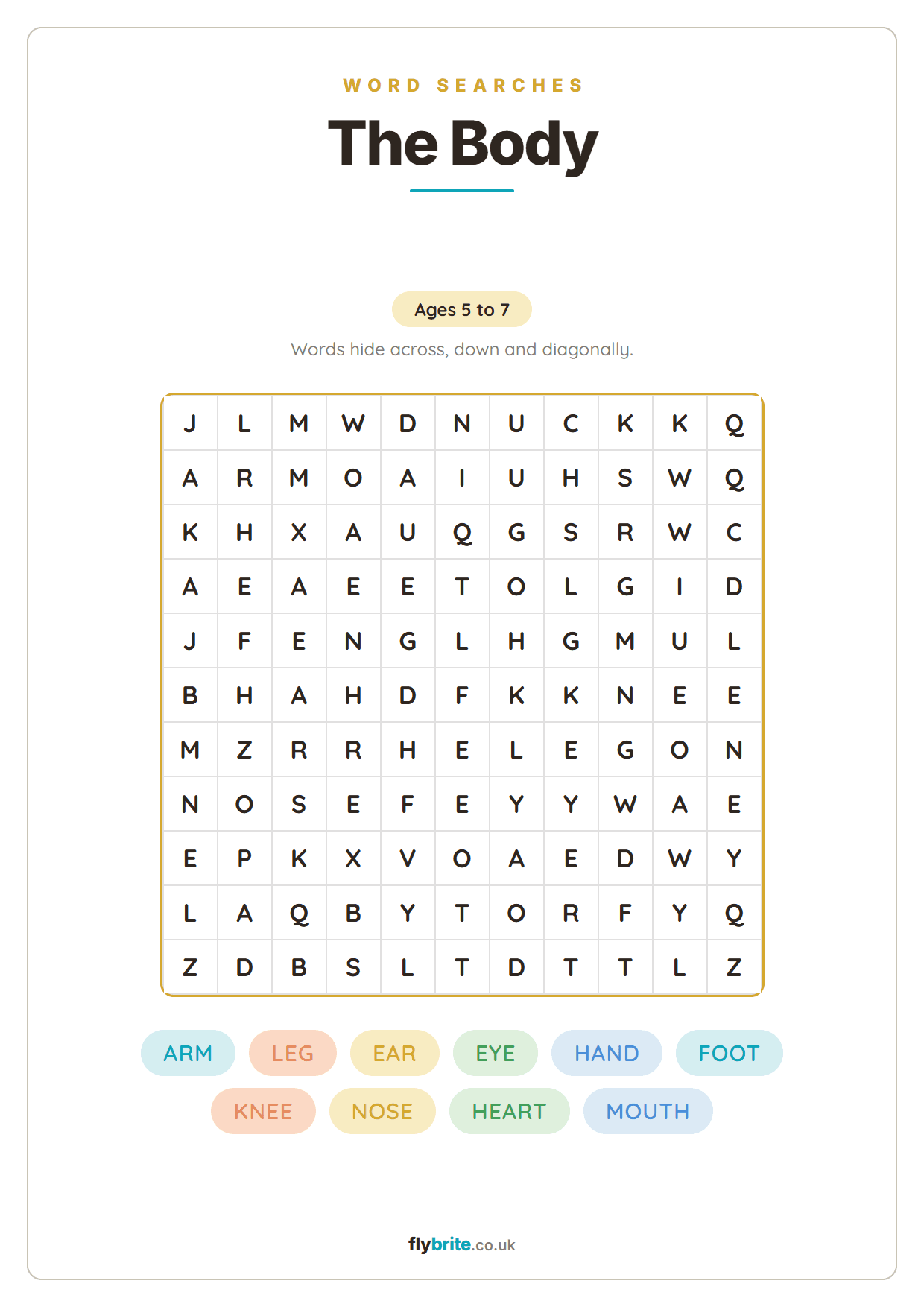
Ten parts of the body are hidden in the puzzle, from head to toe and everywhere between.
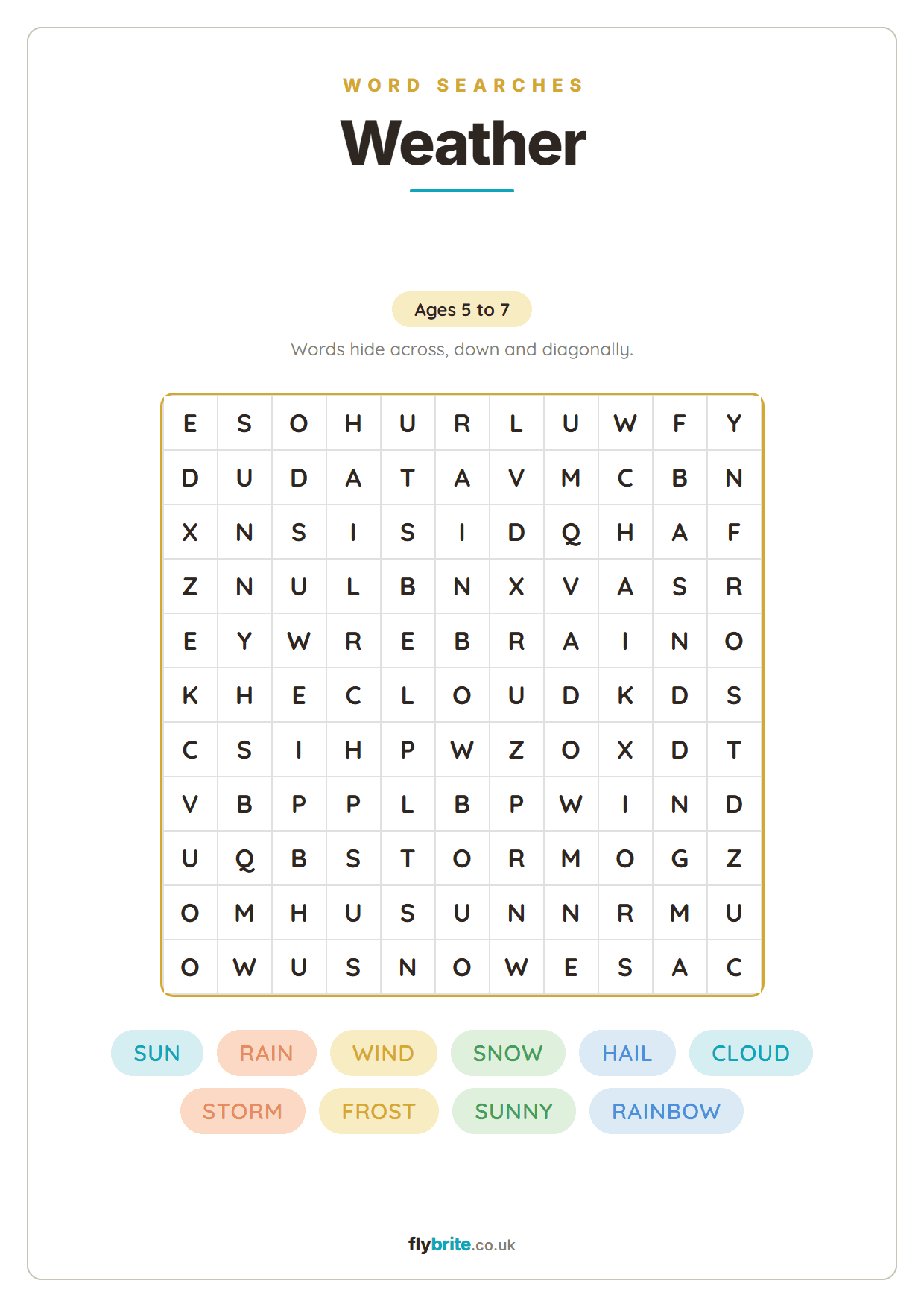
Sunshine to storms, ten kinds of weather are waiting to be found in the letters.
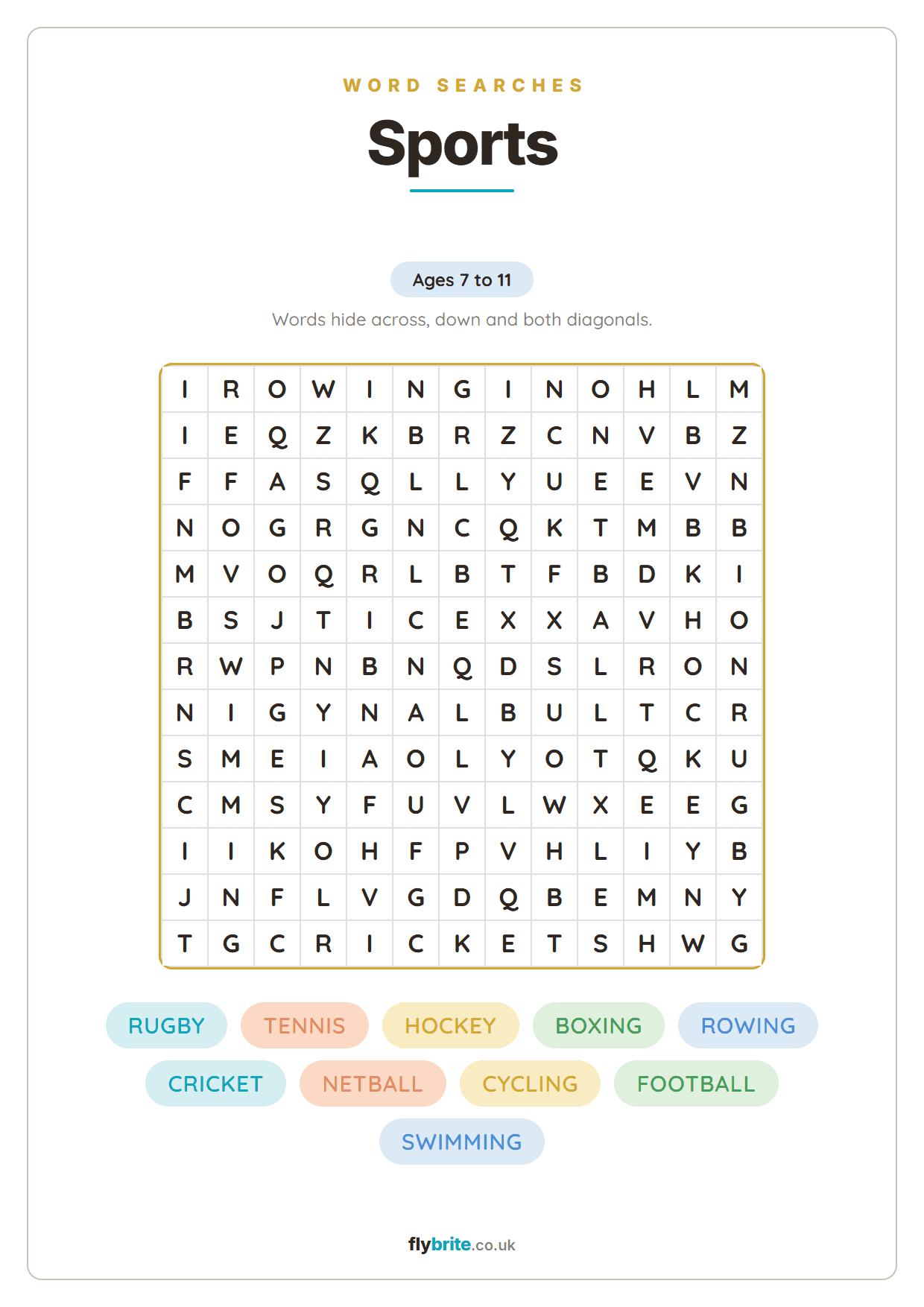
A trickier grid with diagonals, packed with ten sports for keen puzzlers to track down.
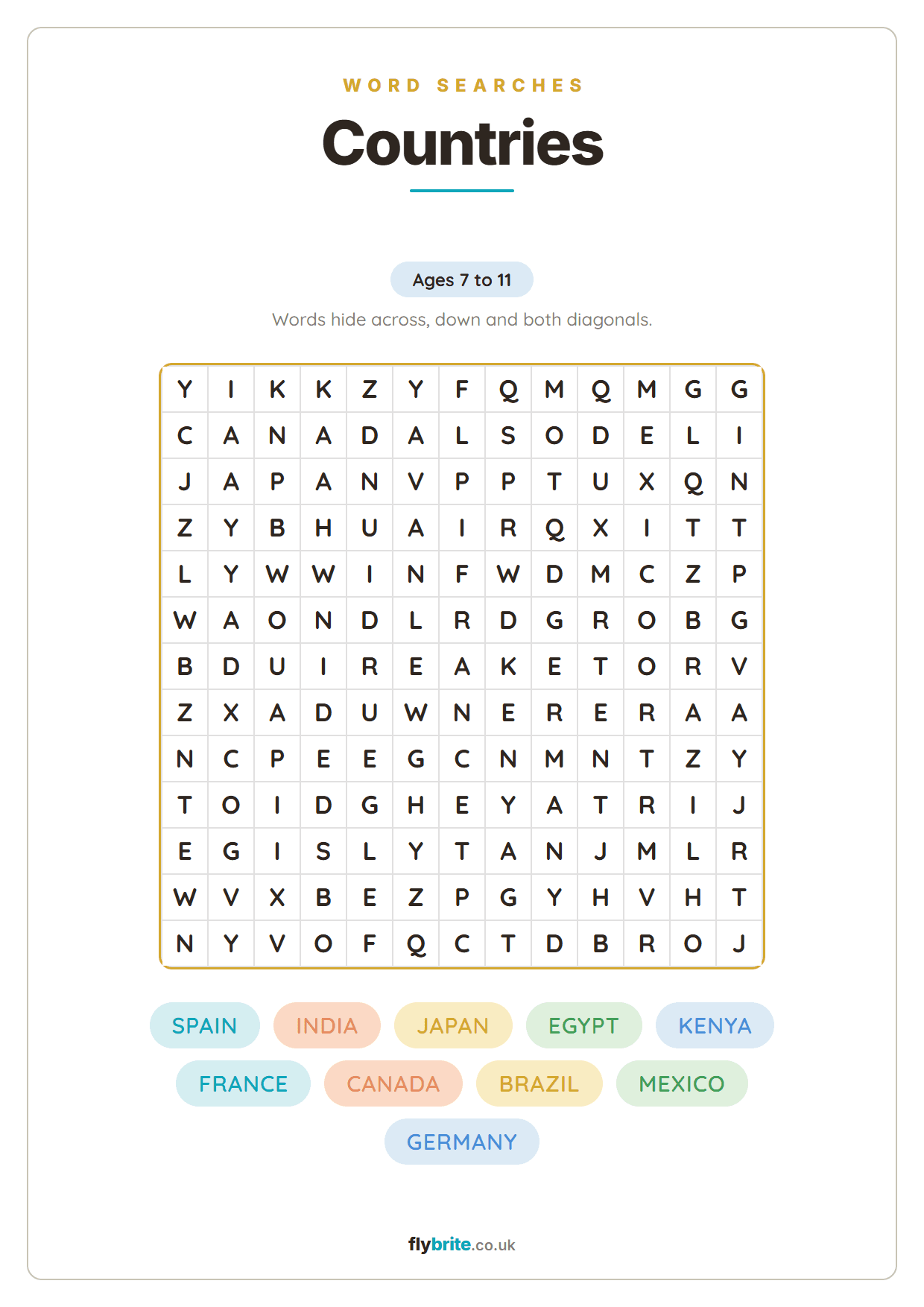
Ten countries from around the world are hidden across, down and slantwise for older explorers.
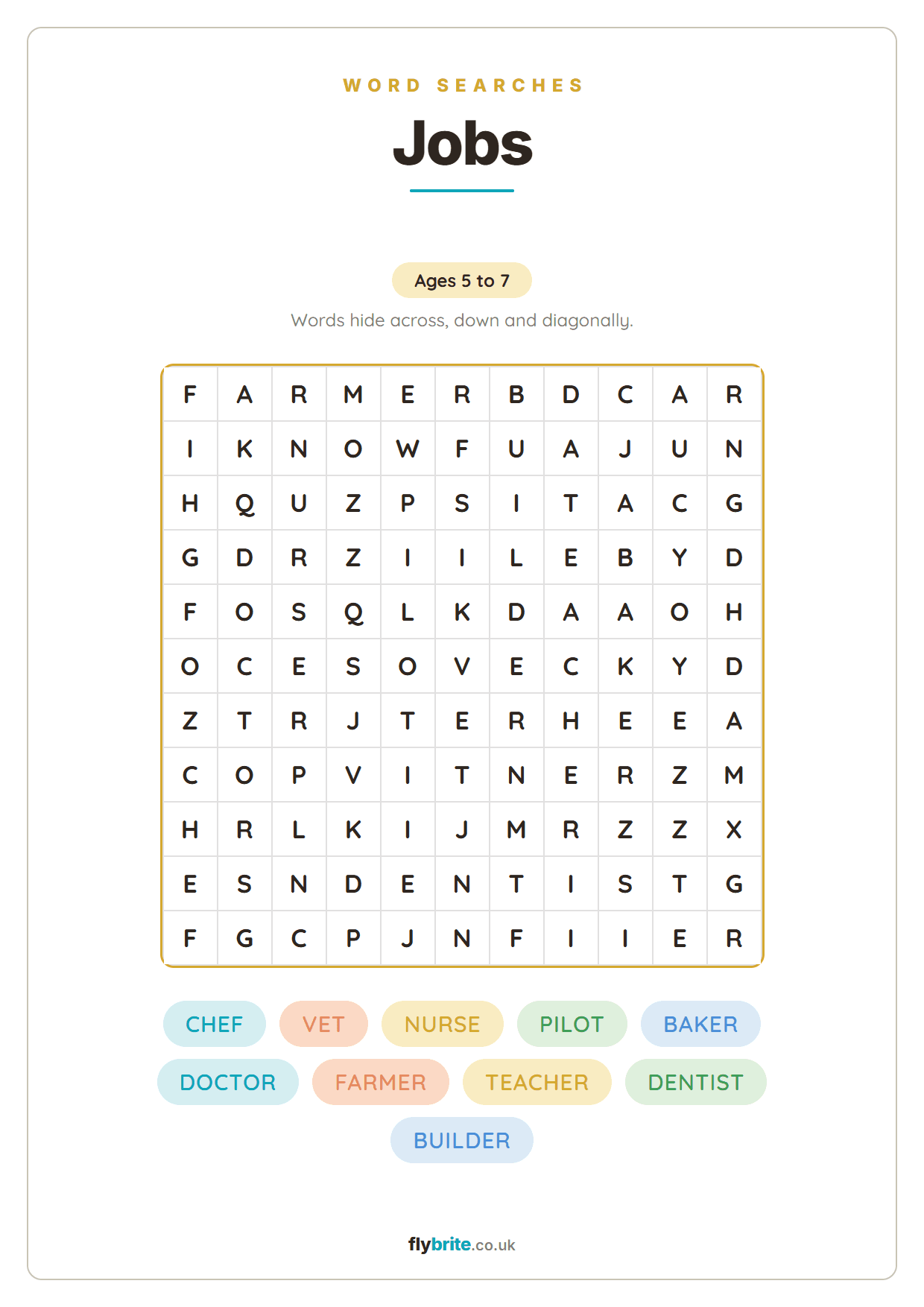
Ten jobs people do are tucked into the grid, from the baker to the pilot.

Dive in and discover ten sea creatures hiding in the waves of letters.
Number lines, column methods and word problems that make adding and taking away click.
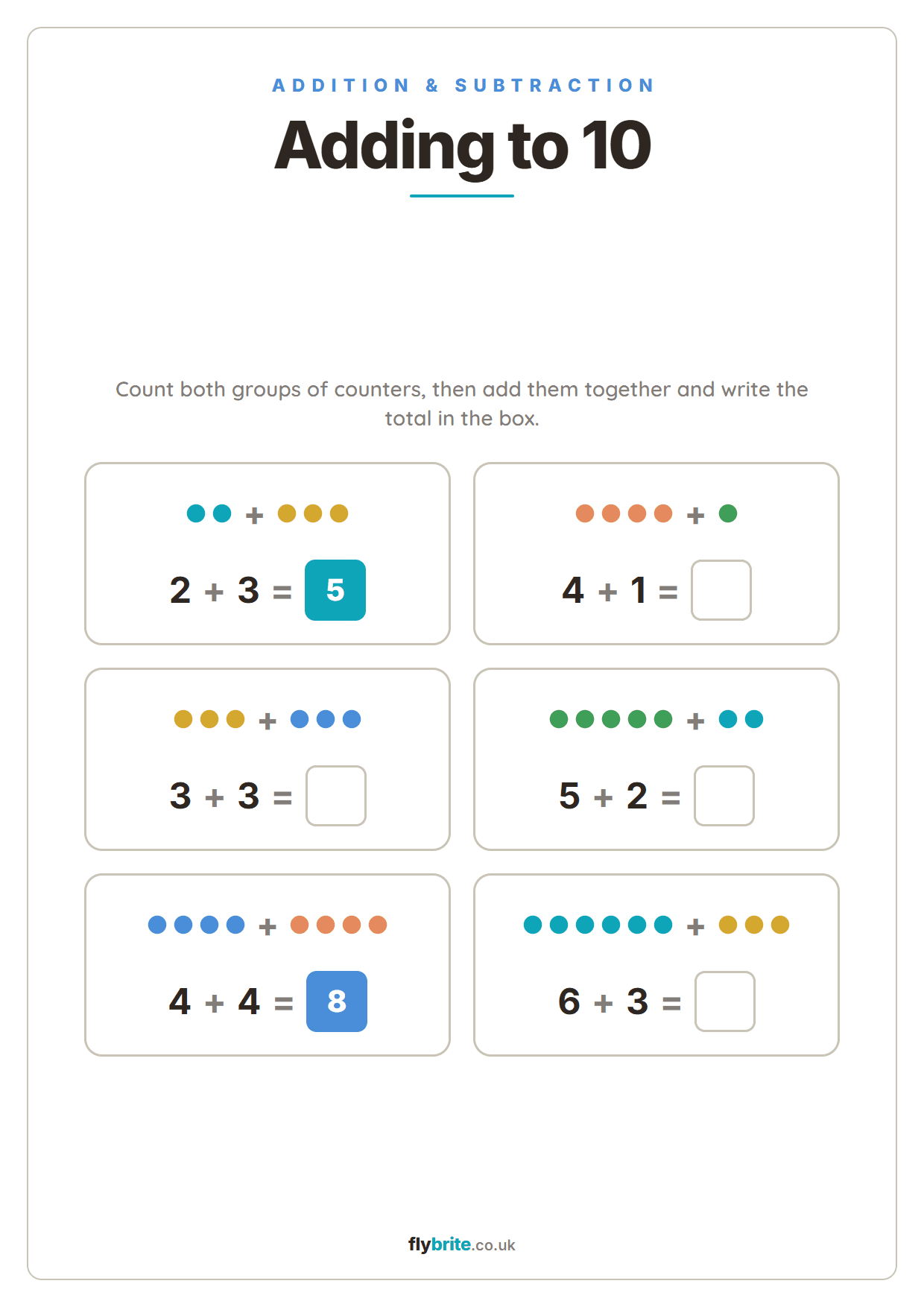
First sums with counters to touch and count, adding two little groups and writing the total.
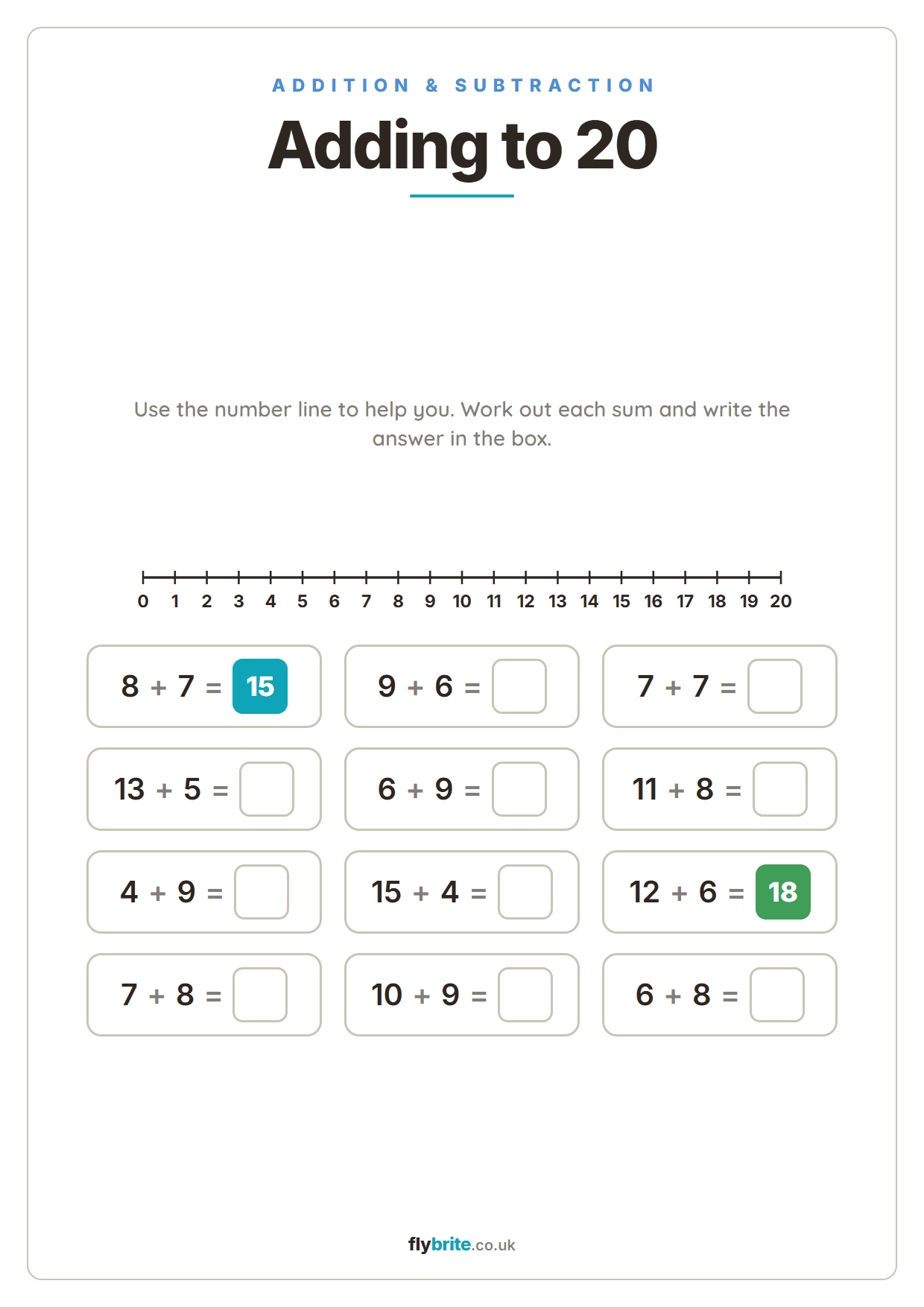
Twelve friendly sums within twenty, with a number line at the top to lean on while you add.
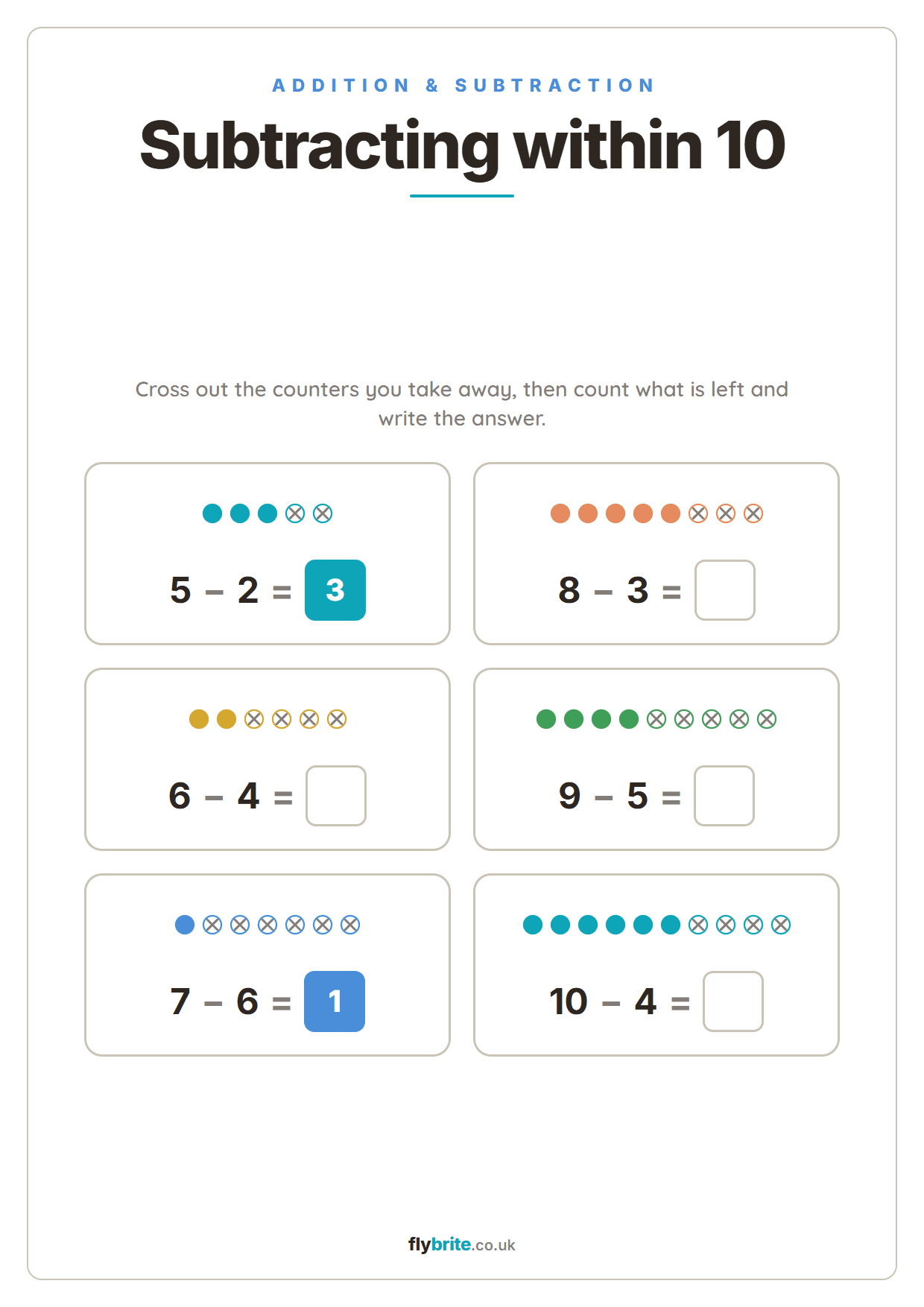
Take-away made clear: cross out the counters, count what is left, and write the answer.
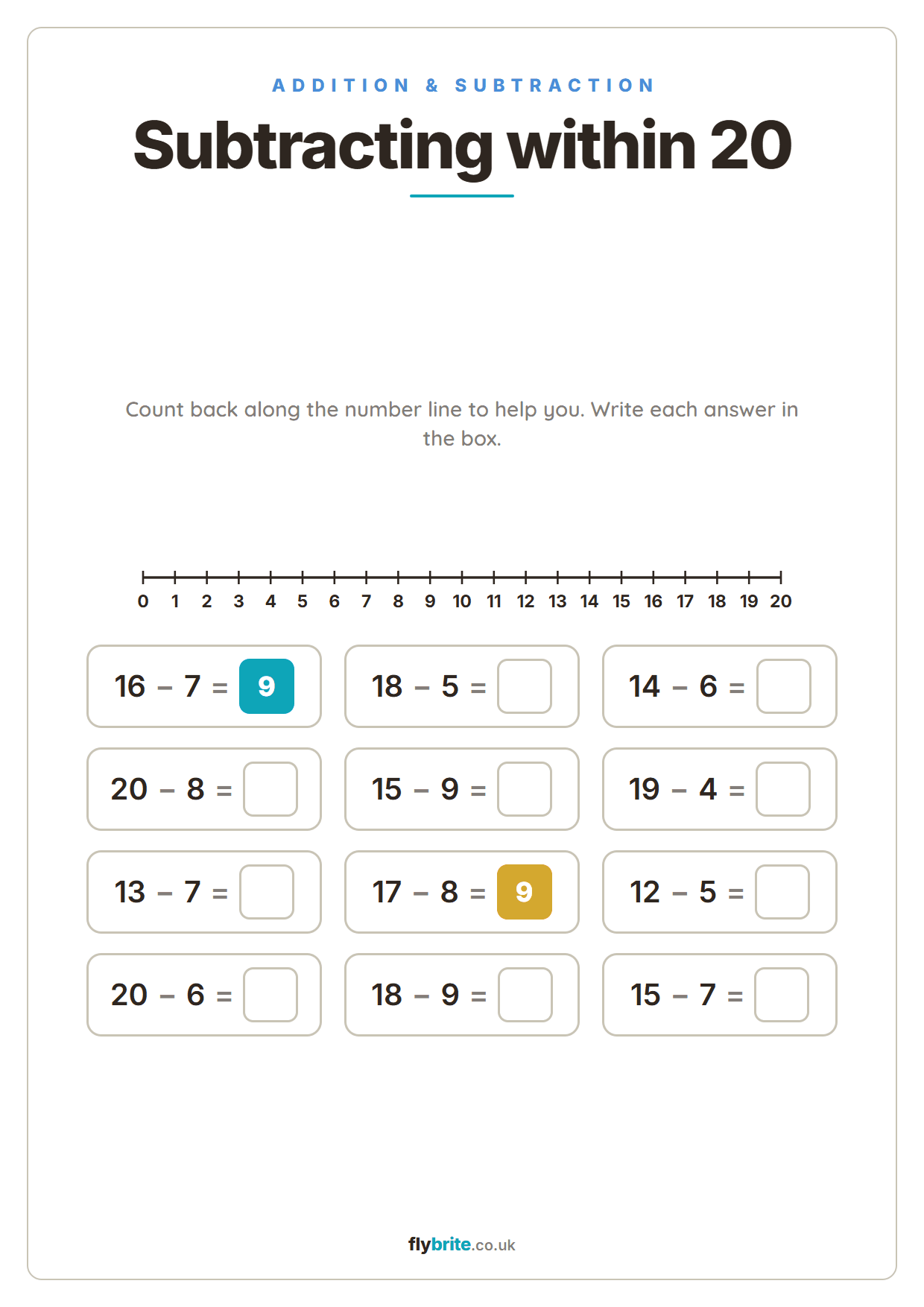
Twelve take-away sums within twenty, with a number line to count back along as you work.
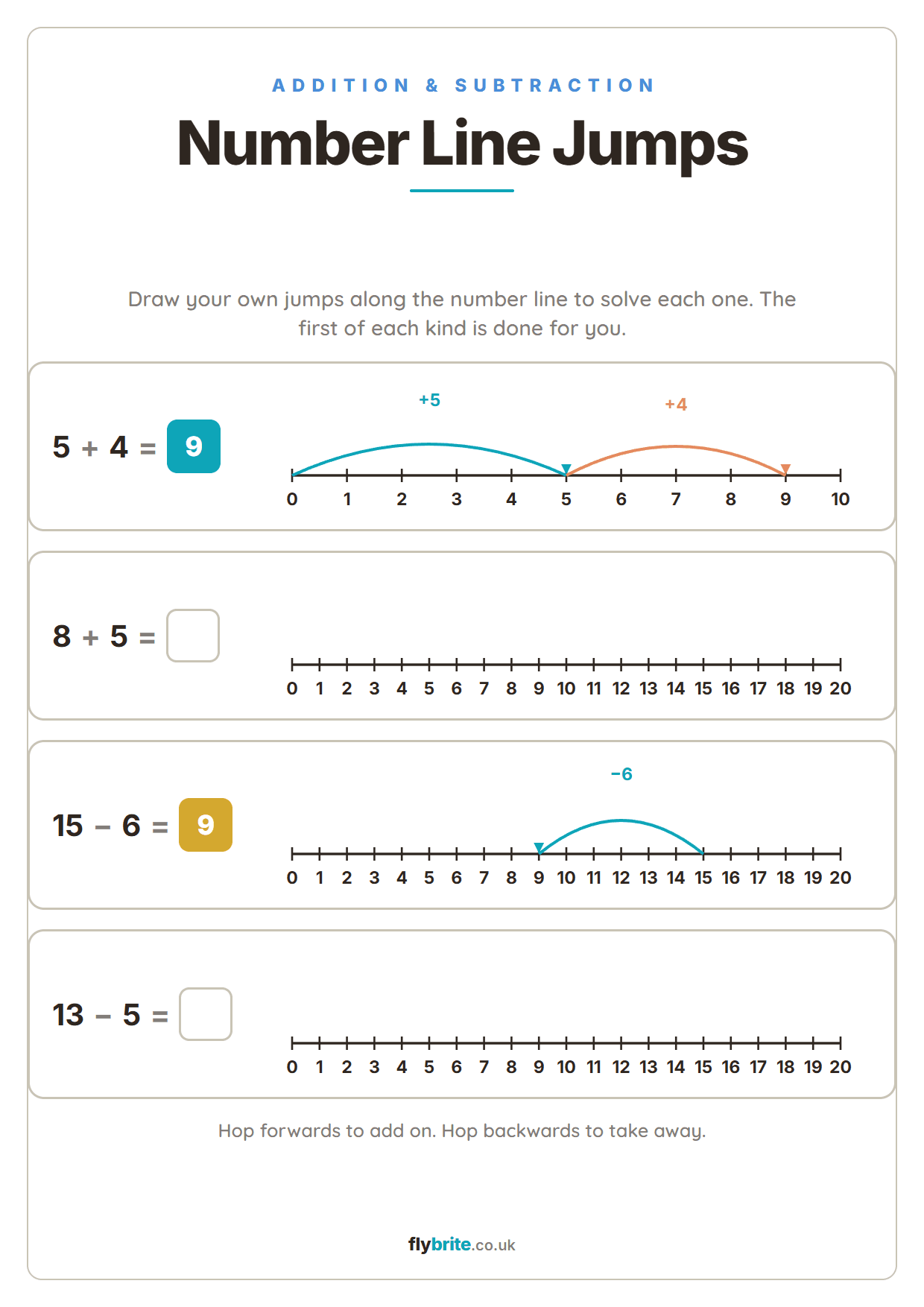
Hop forwards to add and back to subtract, drawing each jump along a friendly number line.
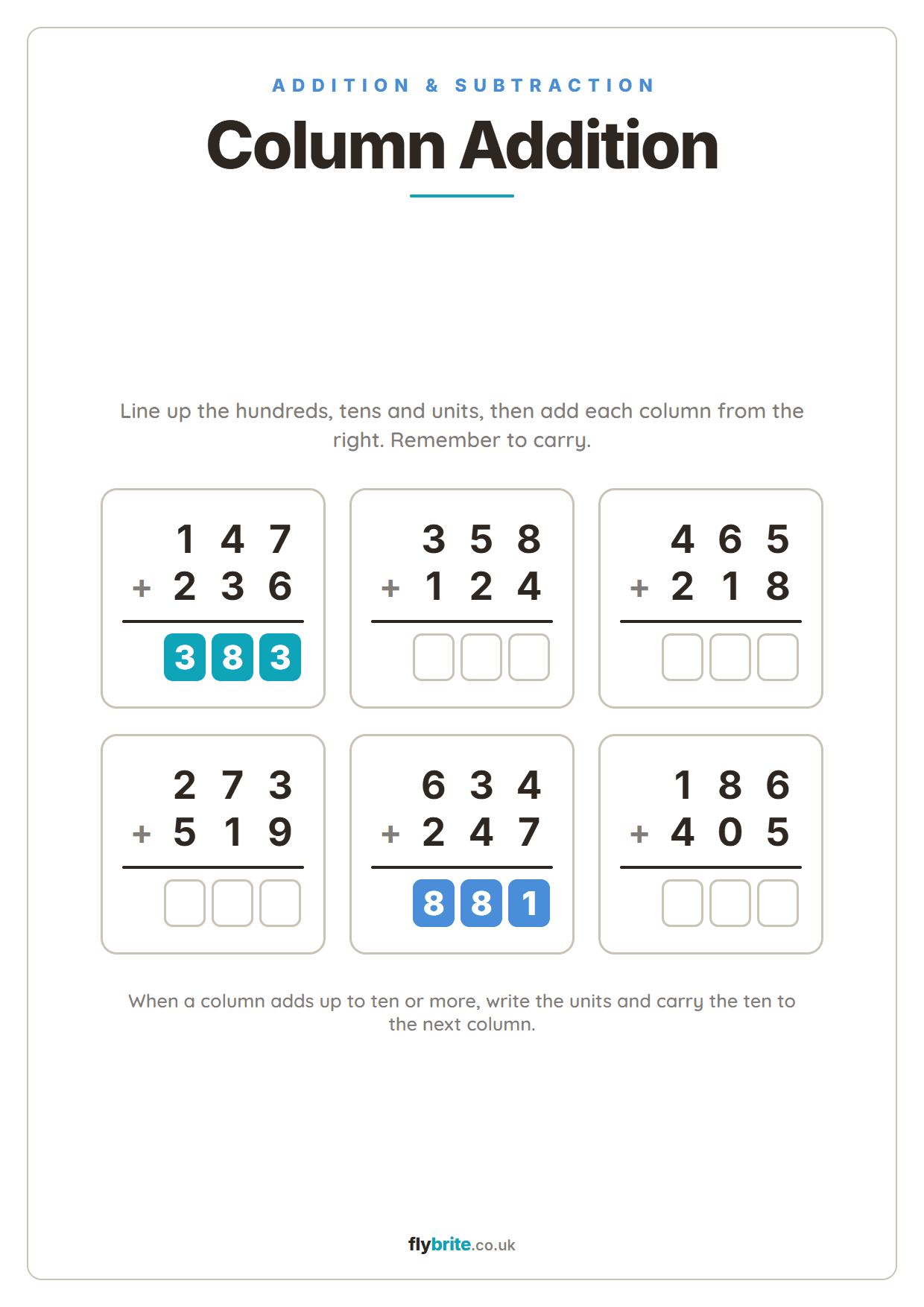
Three-digit sums set out in neat columns, carrying tens the proper way with worked examples.
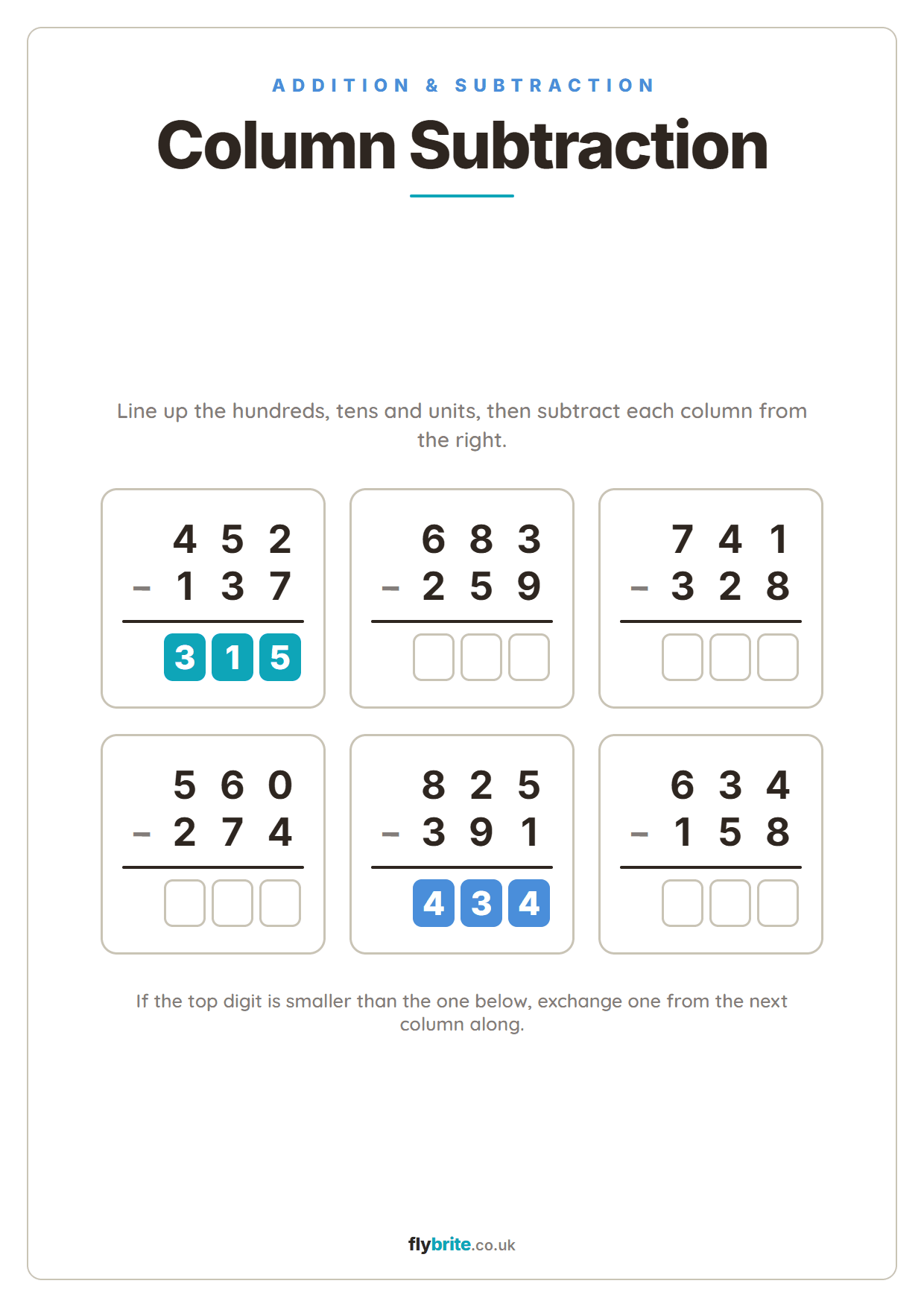
Three-digit take-aways in tidy columns, subtracting from the right with worked examples to copy.
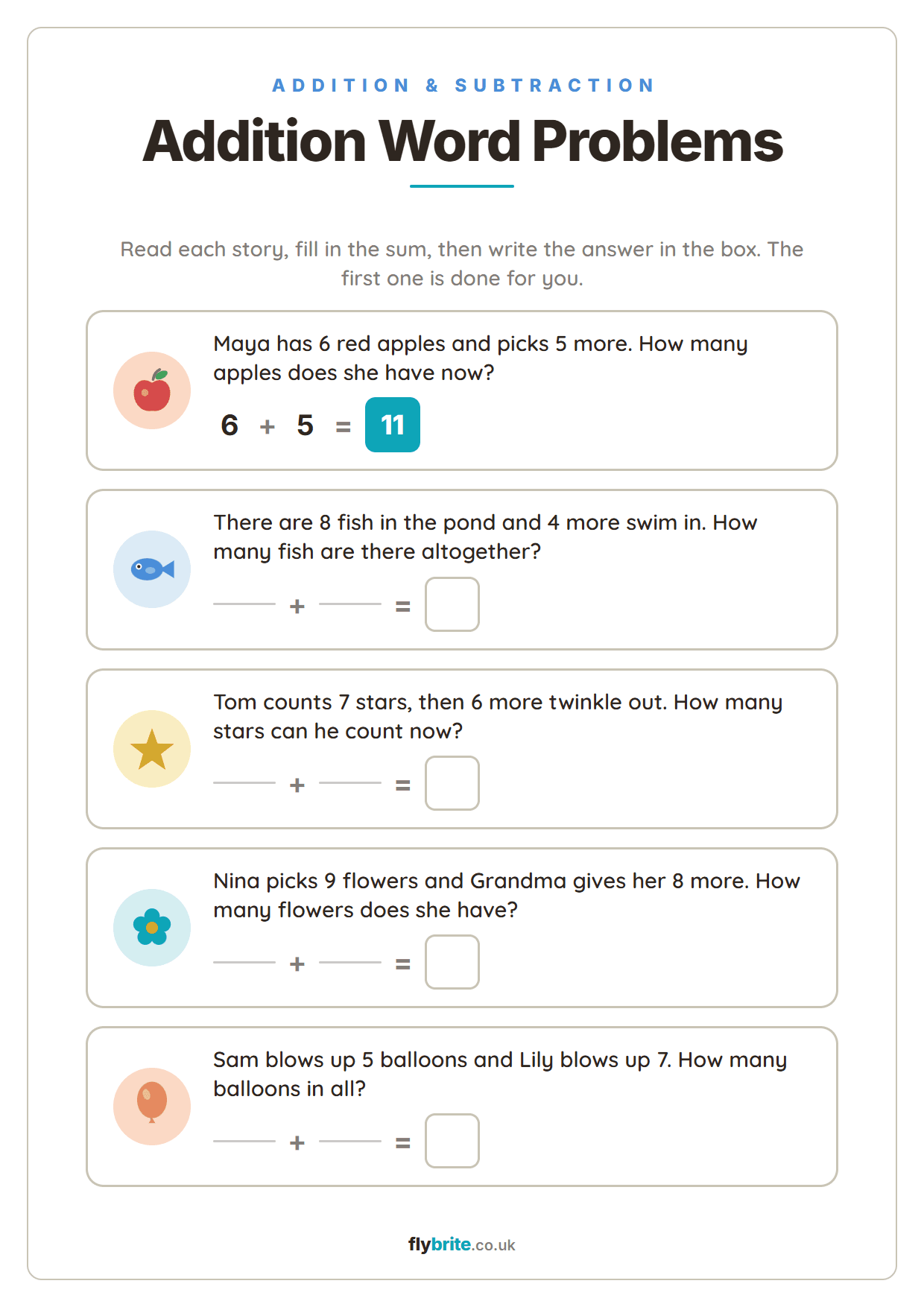
Five little maths stories to read, turn into a sum, and solve, one done to show the way.
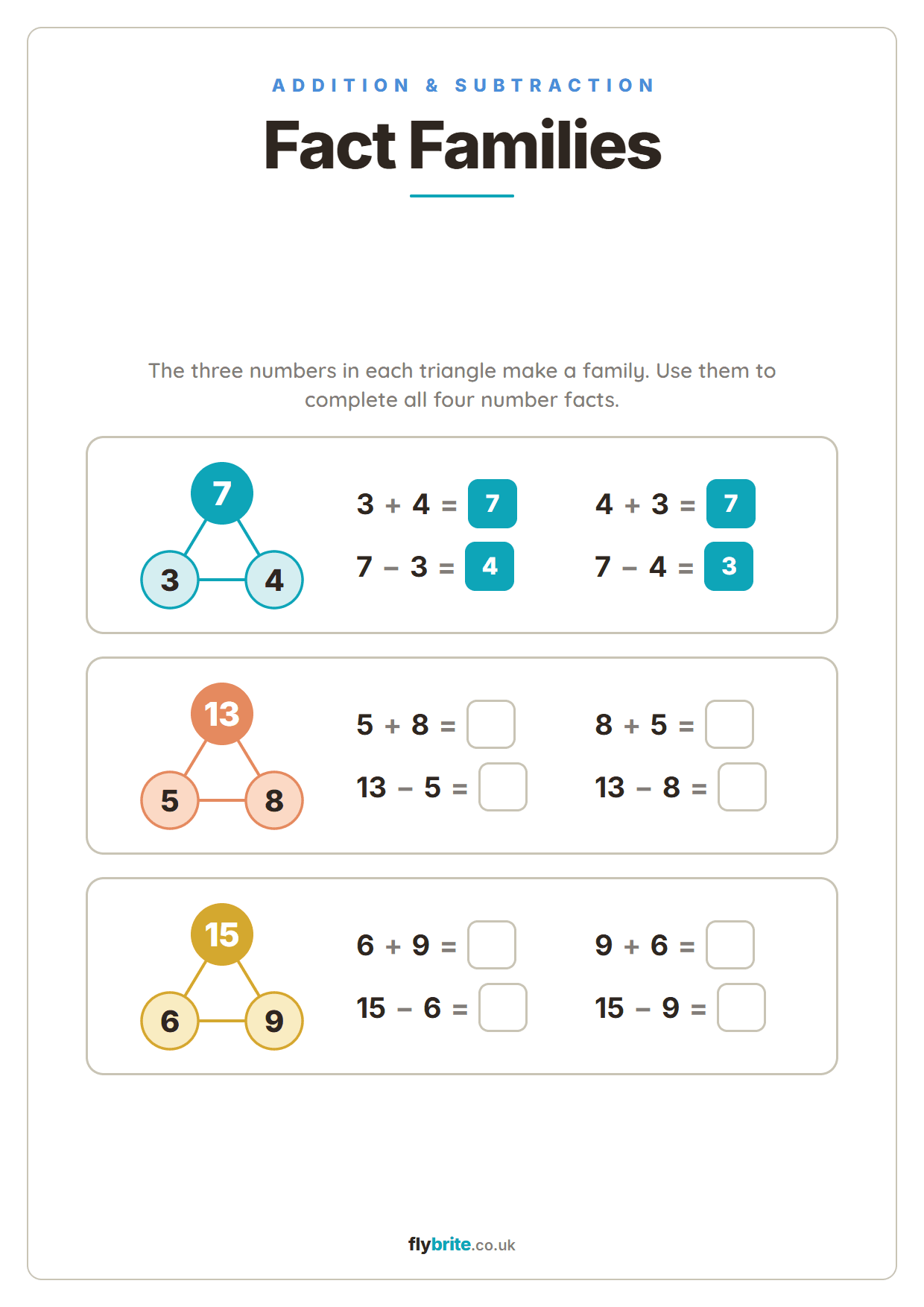
Number-bond triangles where three numbers make four facts, two adding and two taking away.
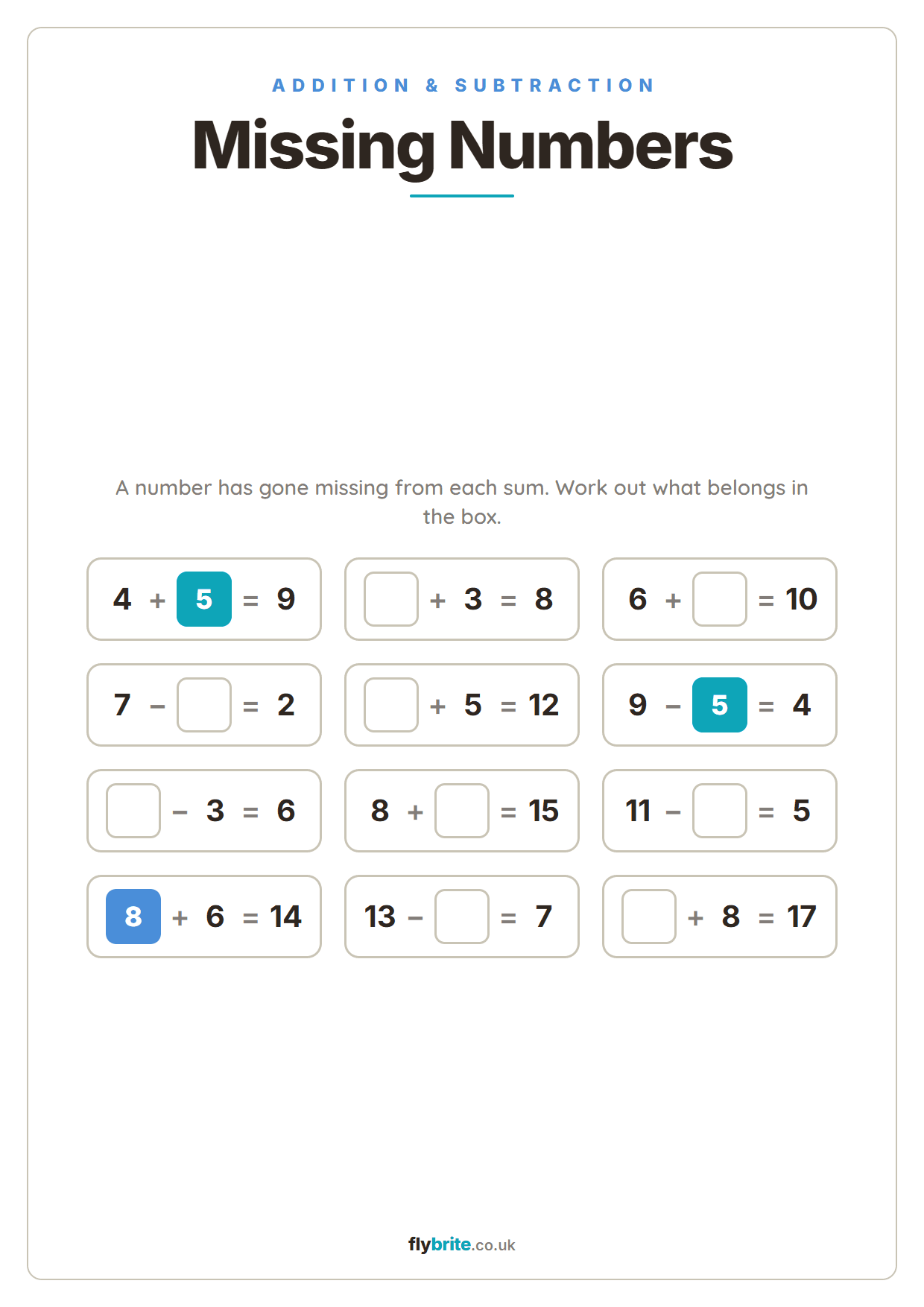
Twelve sums with a number missing from each, a gentle first taste of solving for the unknown.
Arrays, grouping, long multiplication and sharing, the next step beyond times tables.
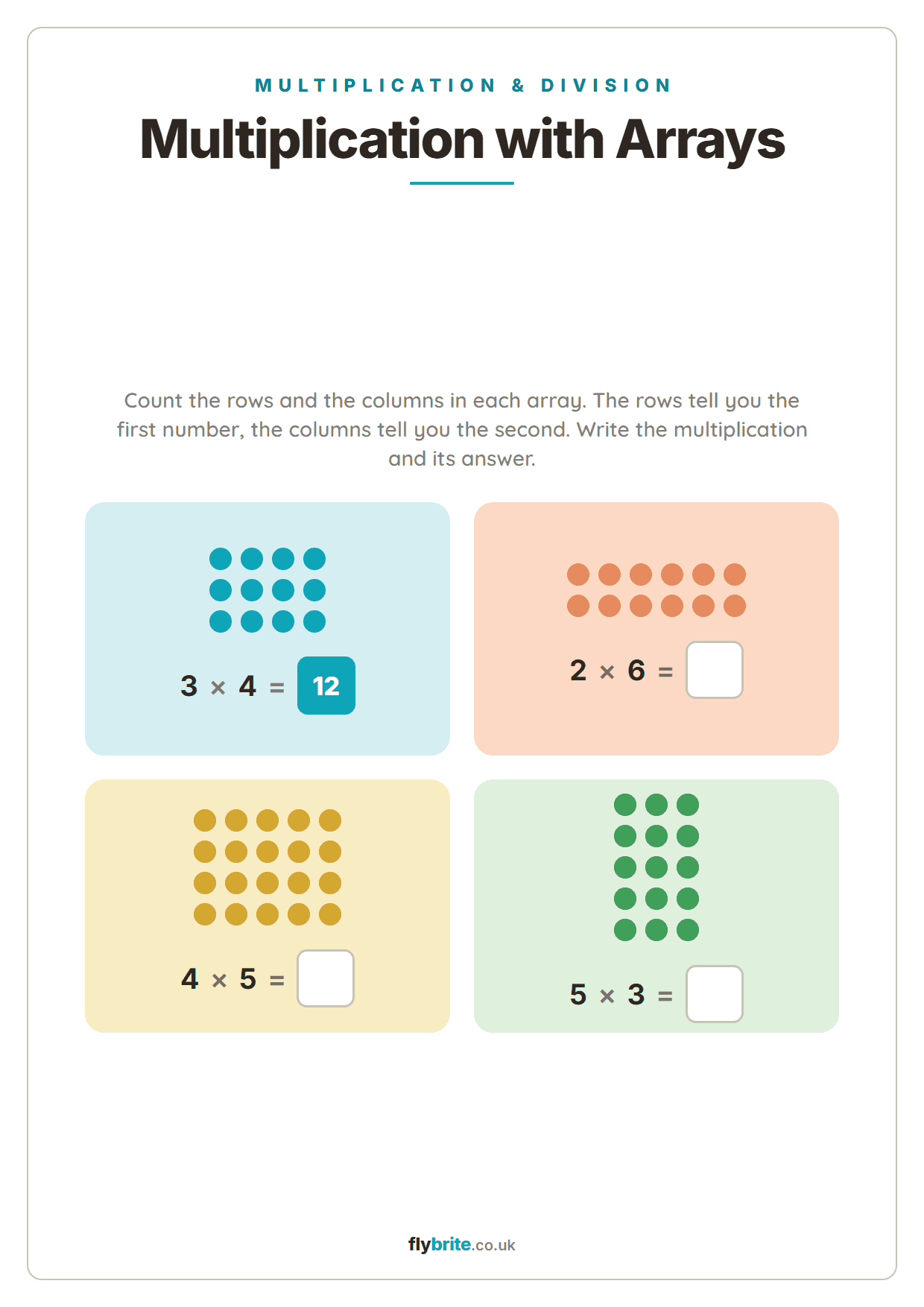
Rows and columns of friendly dots that turn counting into a first multiplication, ready to write in.
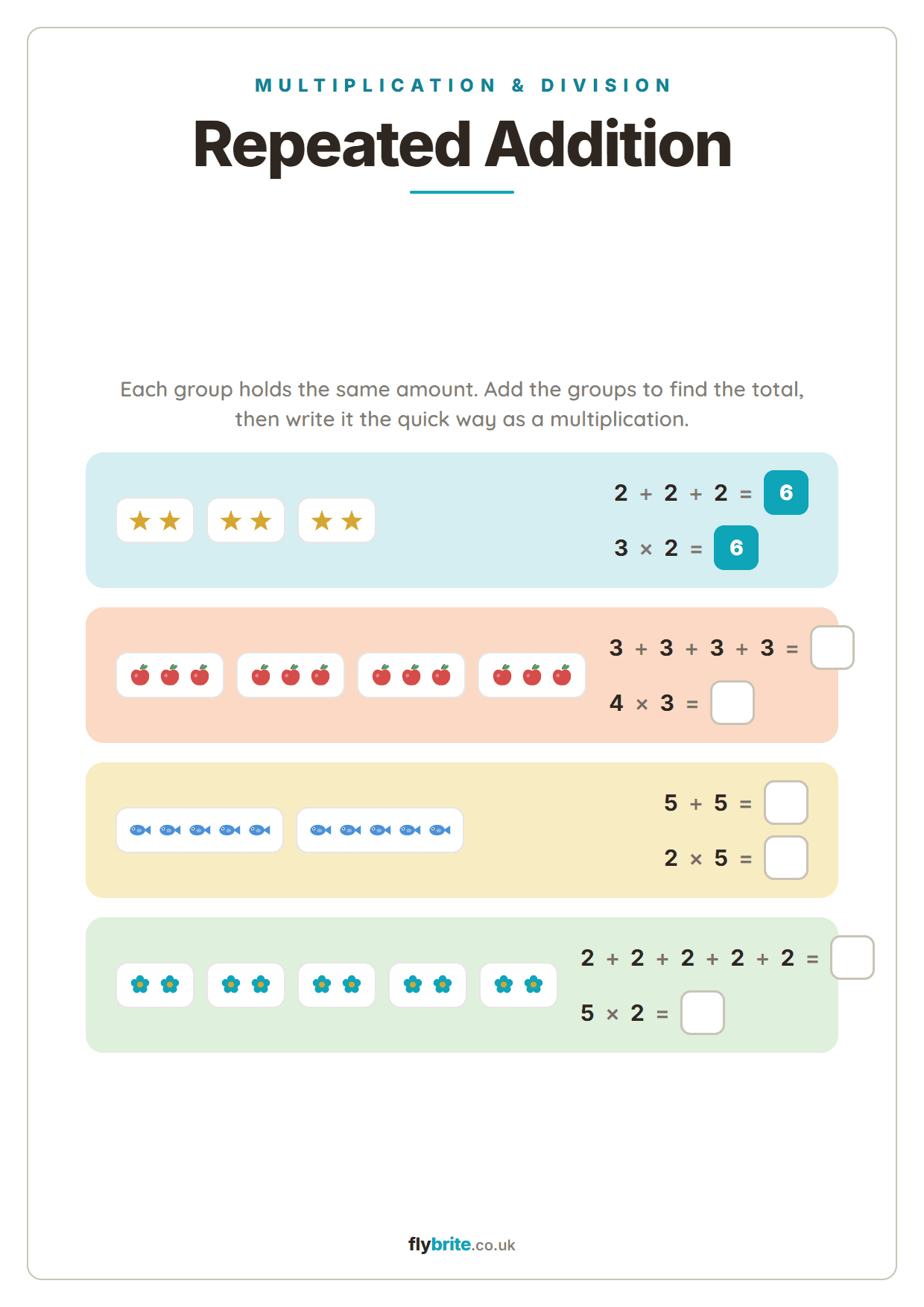
See how equal groups add up, then write each one the quick way as a multiplication.

The place value trick for tens and hundreds, shown once then practised across a bright grid.
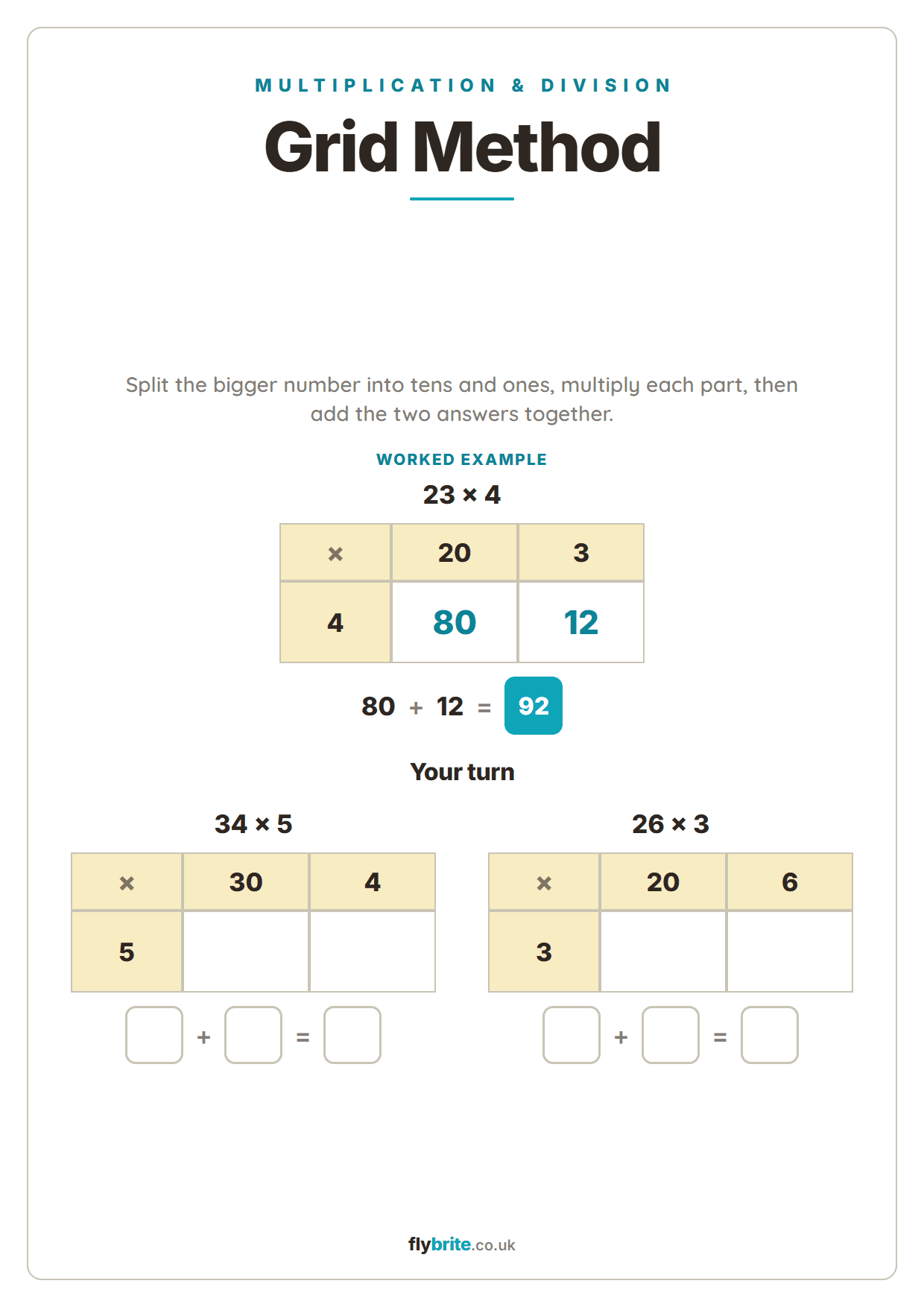
The grid method laid out clearly, one worked example and two to try with the parts split for you.
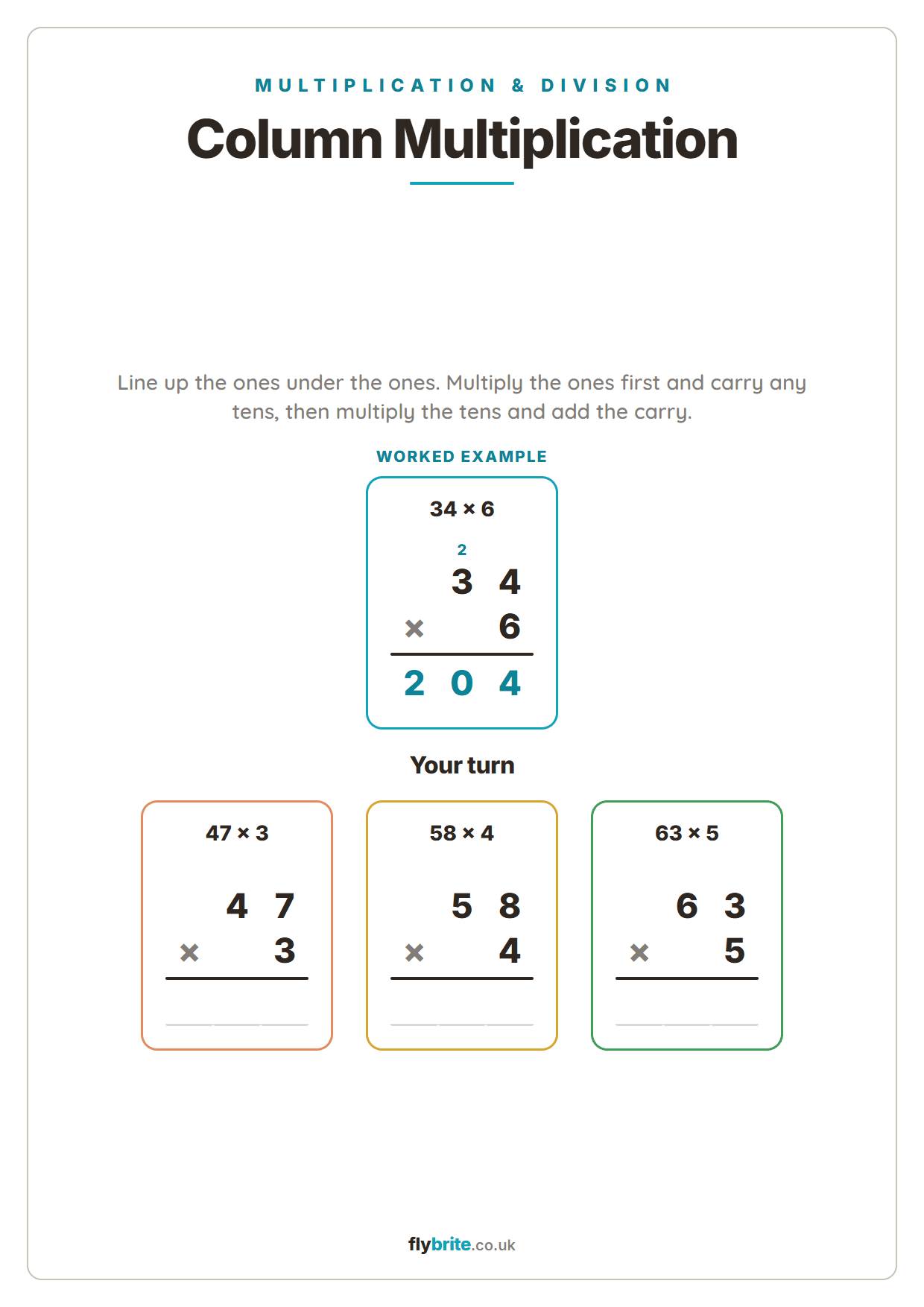
Column multiplication with a fully worked sum and neat frames to line up your own digits.
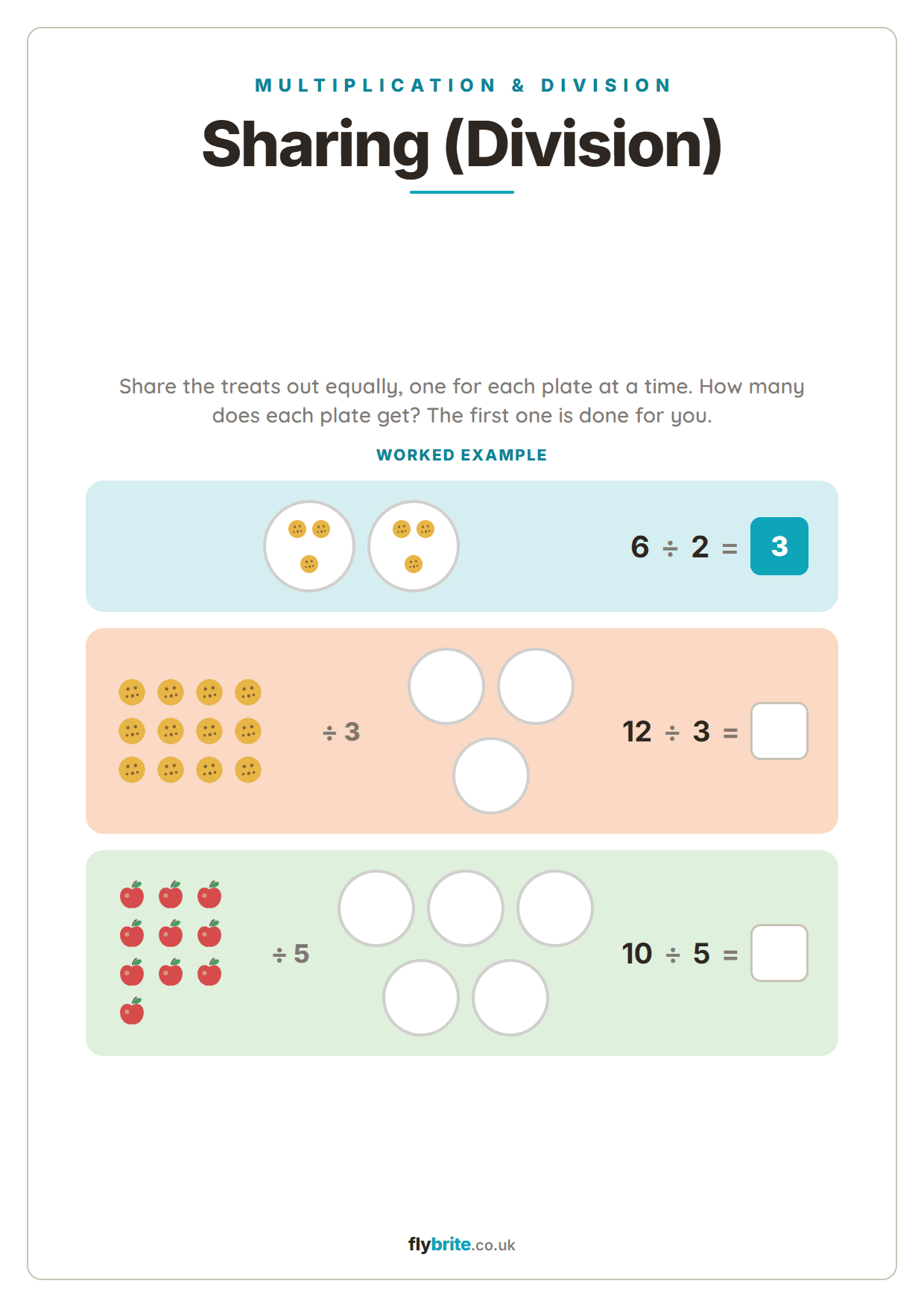
Share the treats equally between the plates, a gentle first look at division that makes sense.
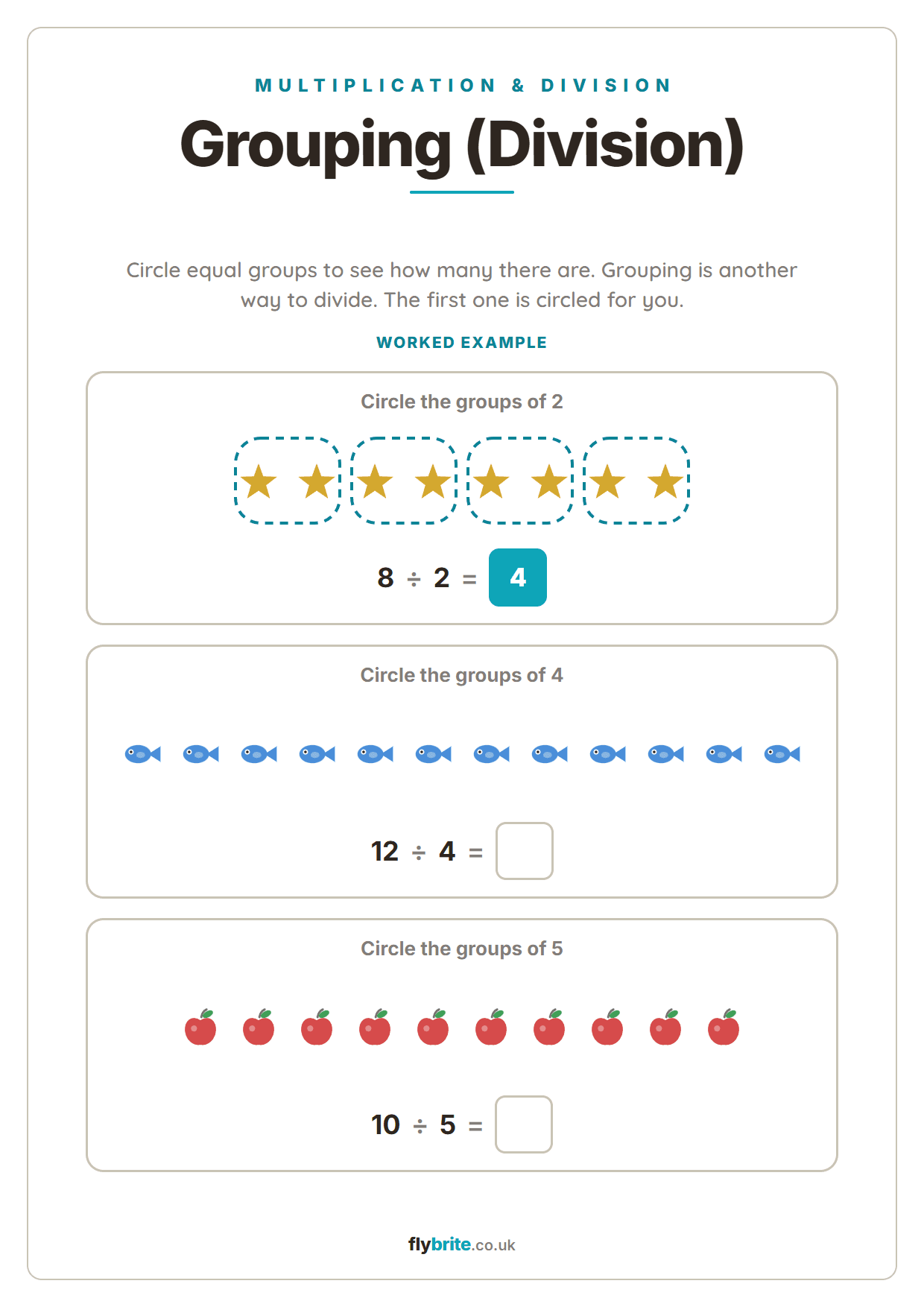
Circle equal groups to find how many there are, the grouping way into dividing up.
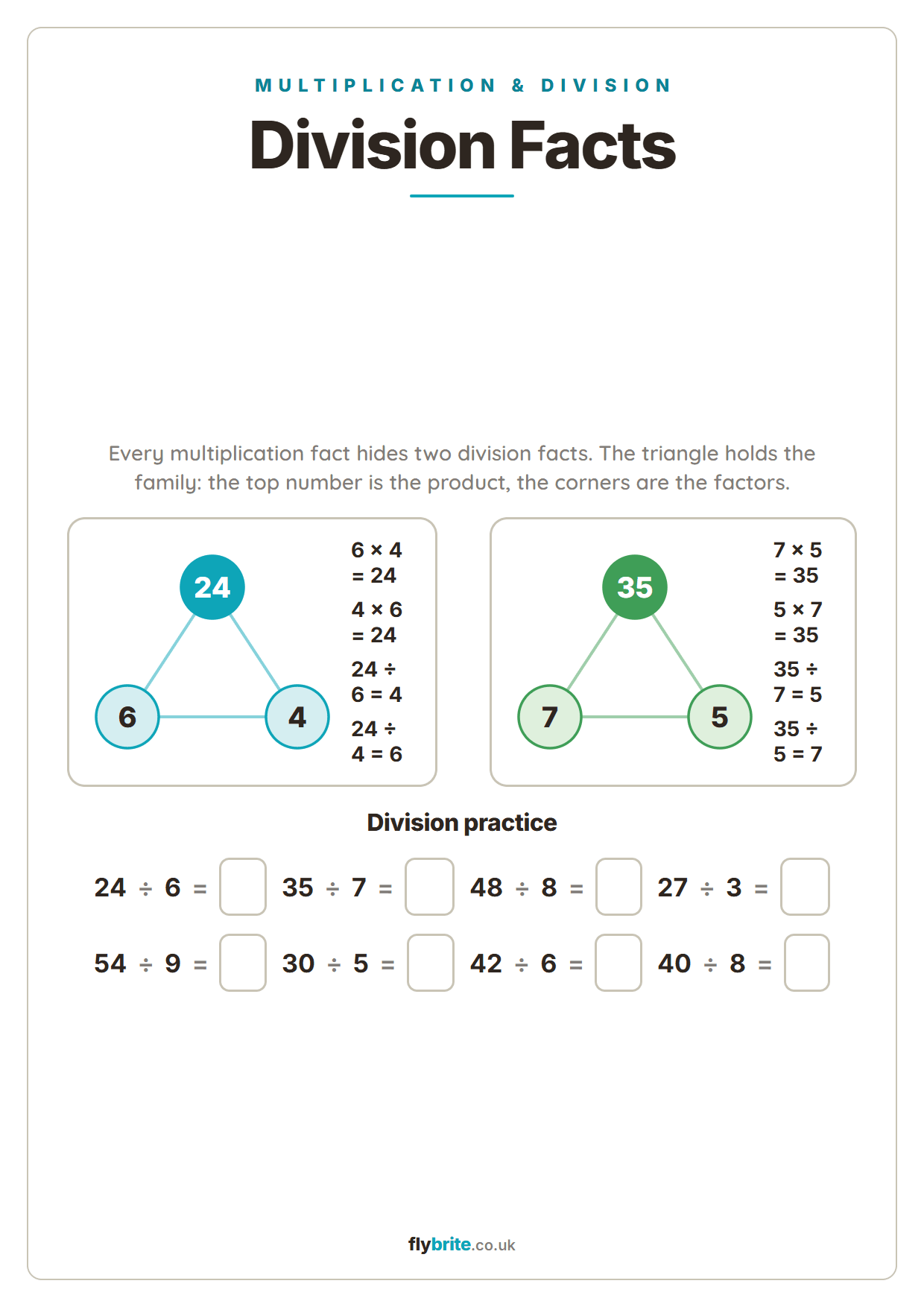
Fact family triangles that show how times tables and division facts belong together.
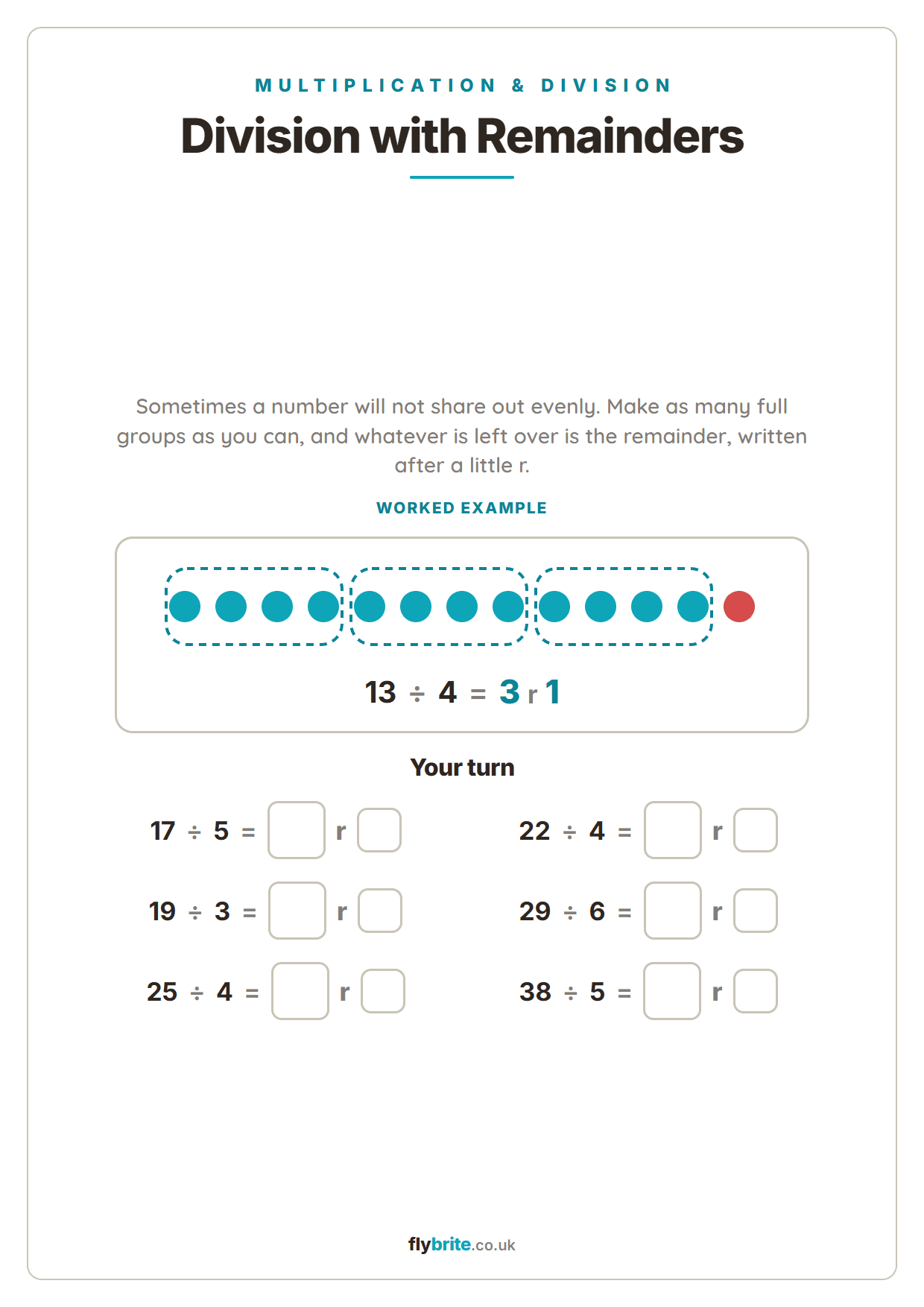
Division that does not divide evenly, with a worked example and a grid of remainders to solve.
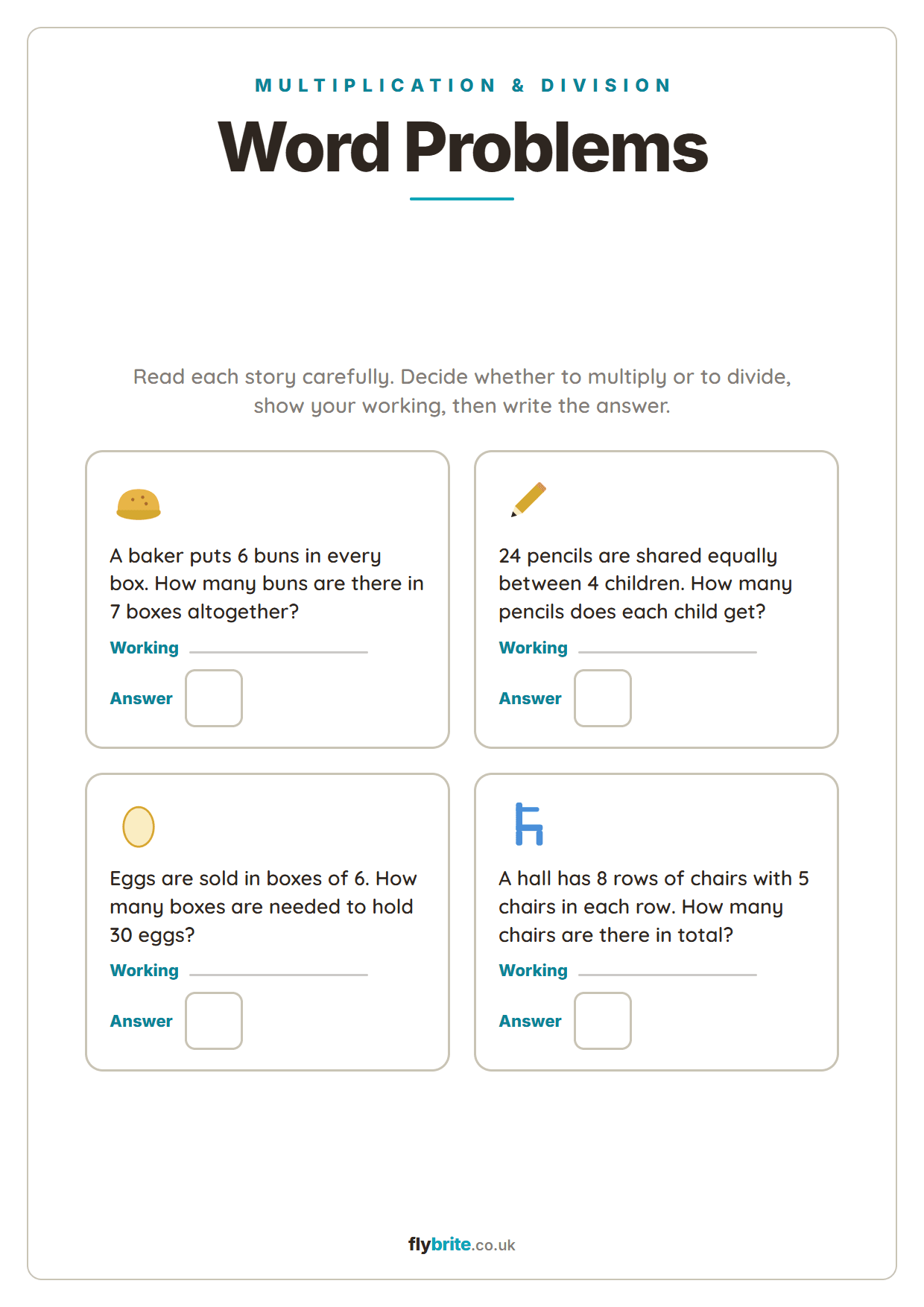
Four everyday story problems that mix multiplying and dividing, with room to show your working.
Halves and quarters through to decimals and percentages, made friendly and visual.
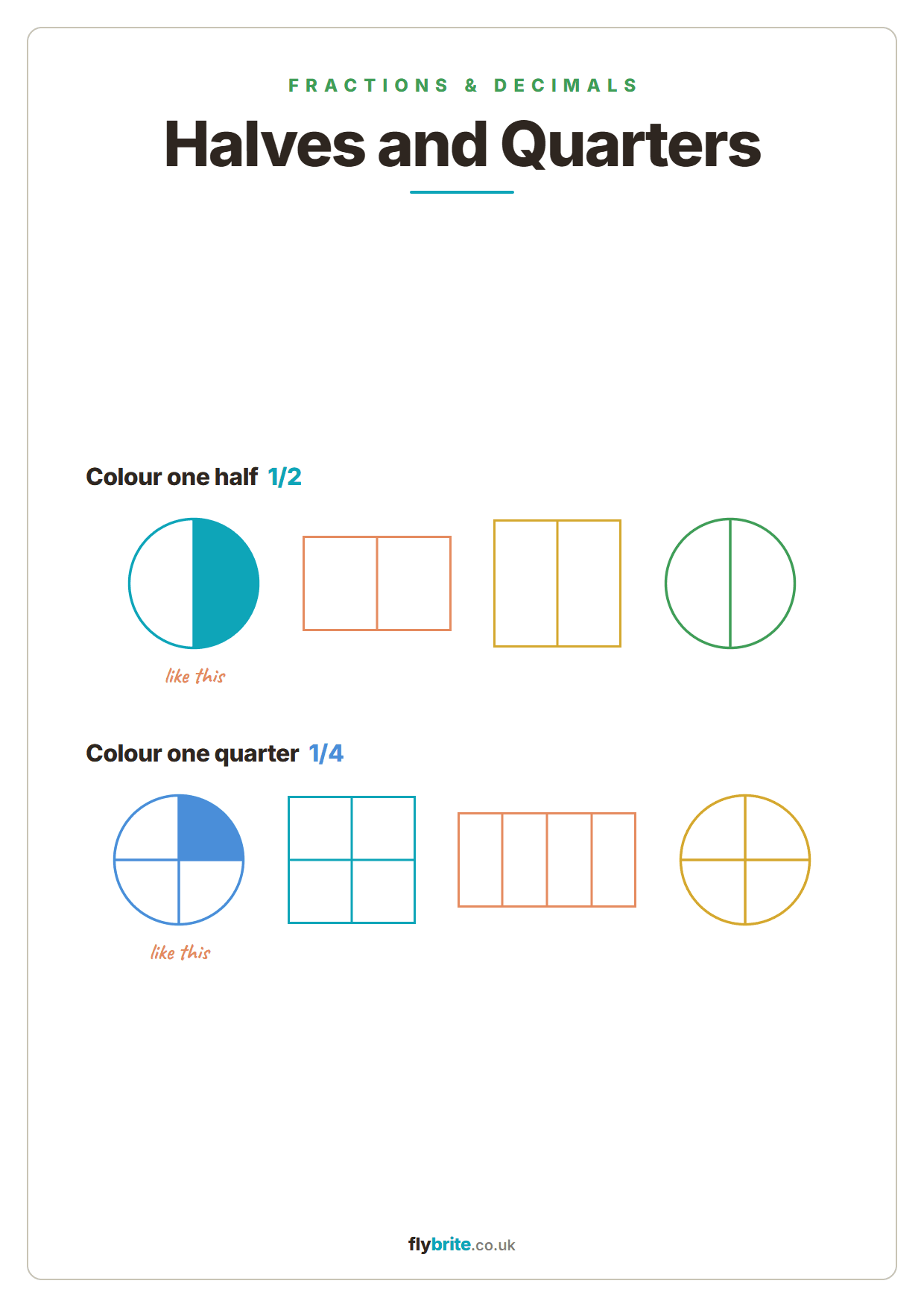
A gentle first fractions page, colouring one half and one quarter of friendly shapes.
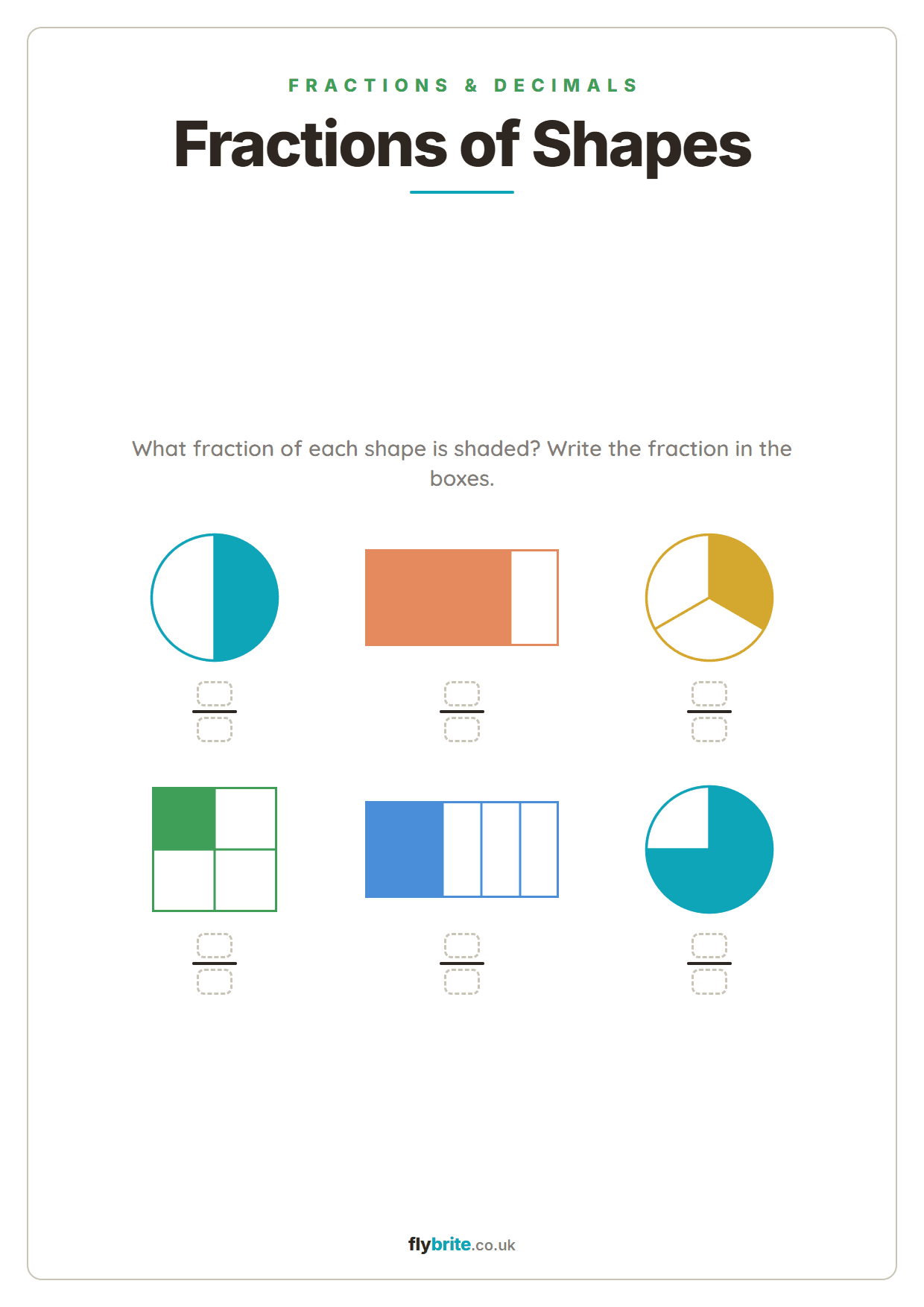
Count the shaded parts of each pie and bar, then write the fraction it shows.
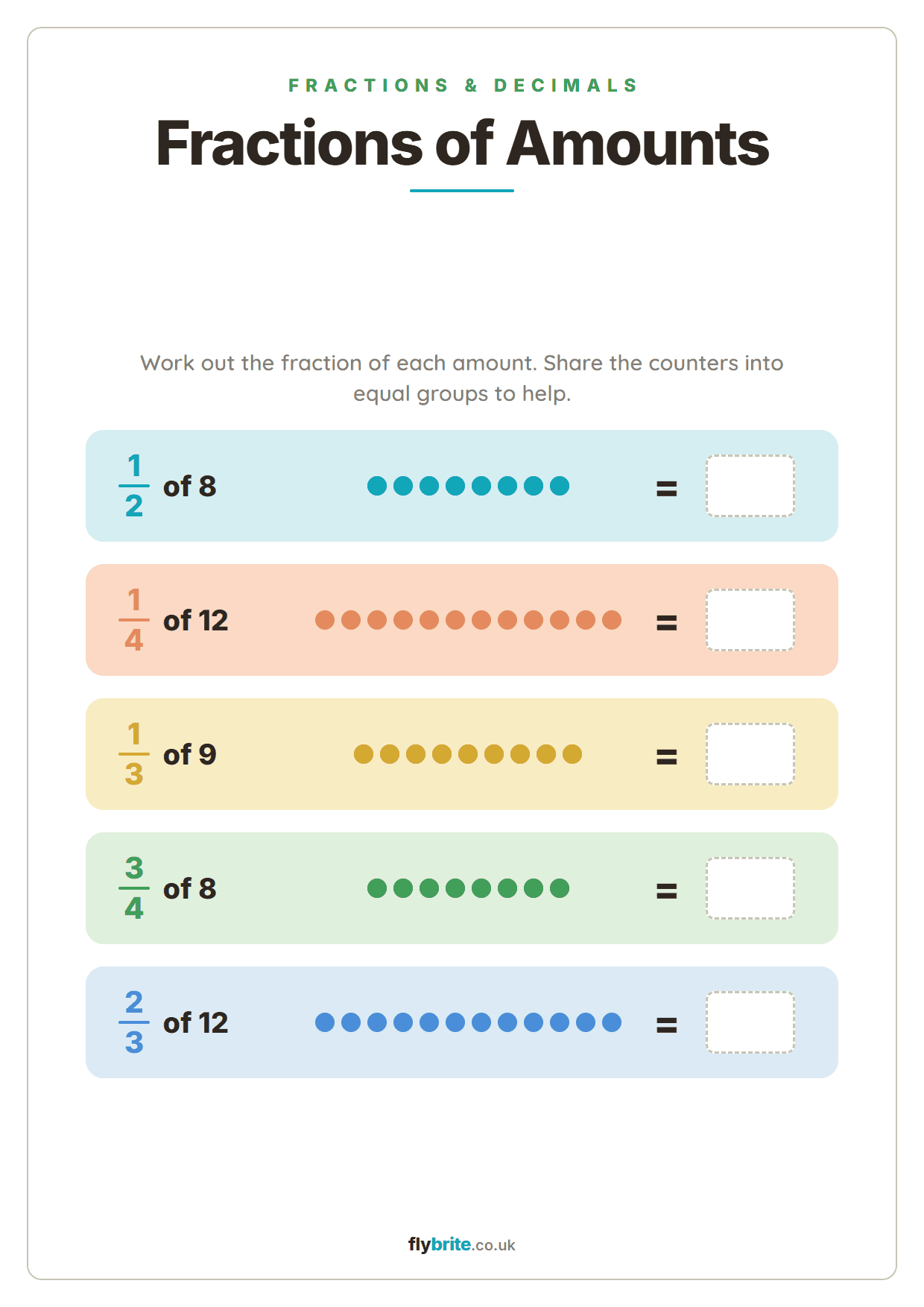
Sharing counters into equal groups to find fractions of numbers, from a half to three quarters.
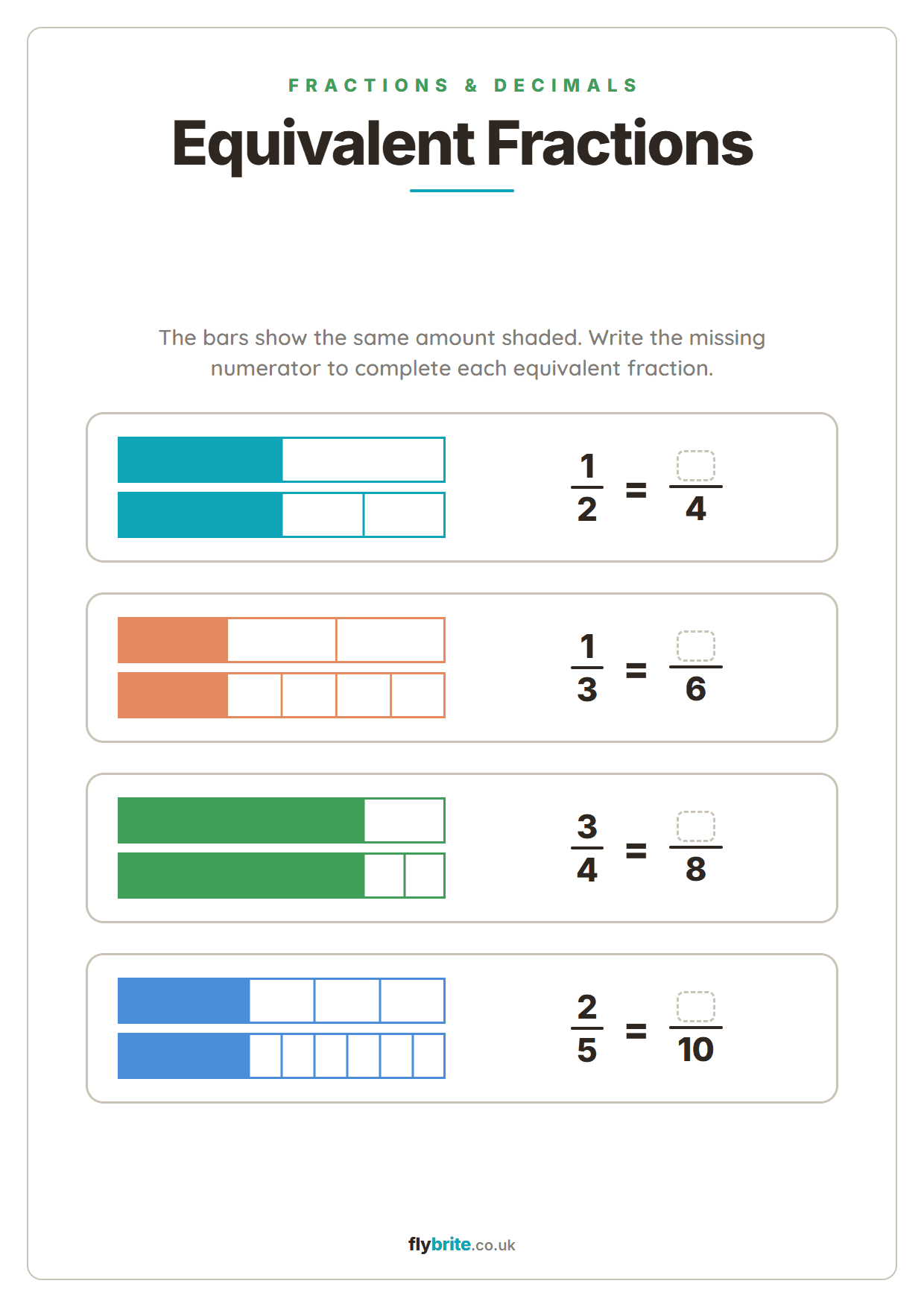
Matching bars that show equal amounts, with the missing numerator to fill in each time.
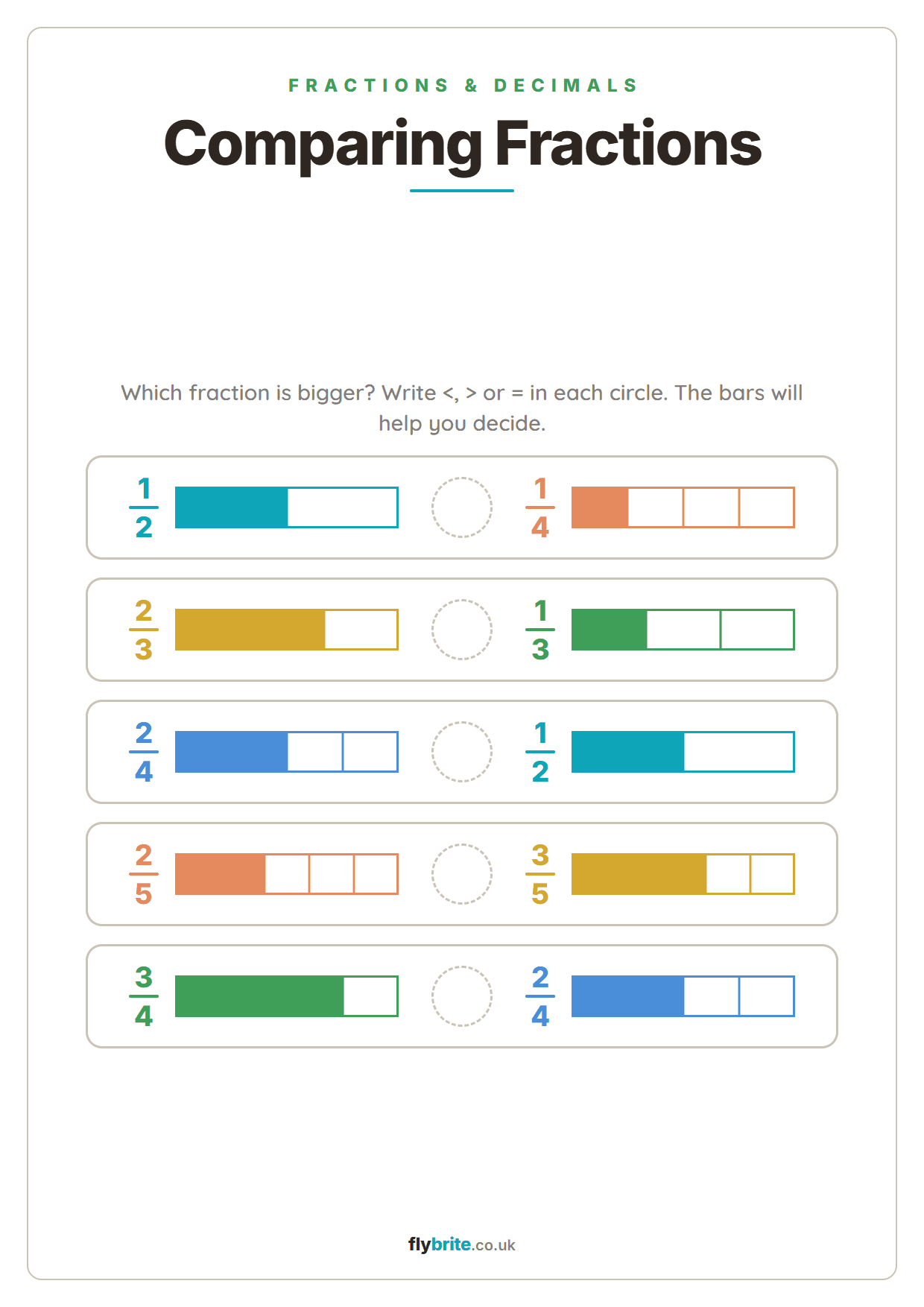
Two shaded bars side by side, deciding which fraction is bigger with less than and greater than.
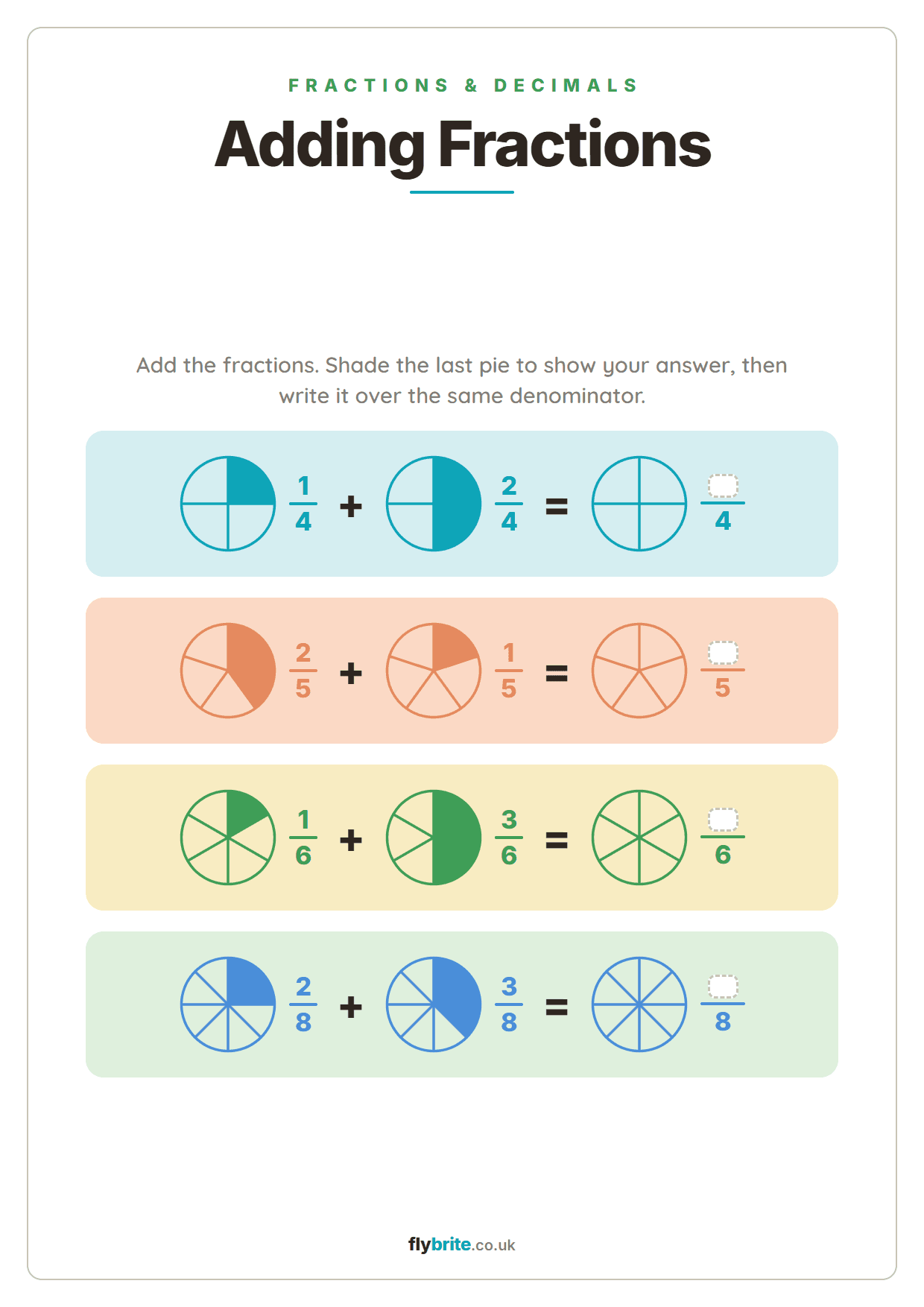
Adding fractions with the same denominator, shading friendly pies to picture each answer.
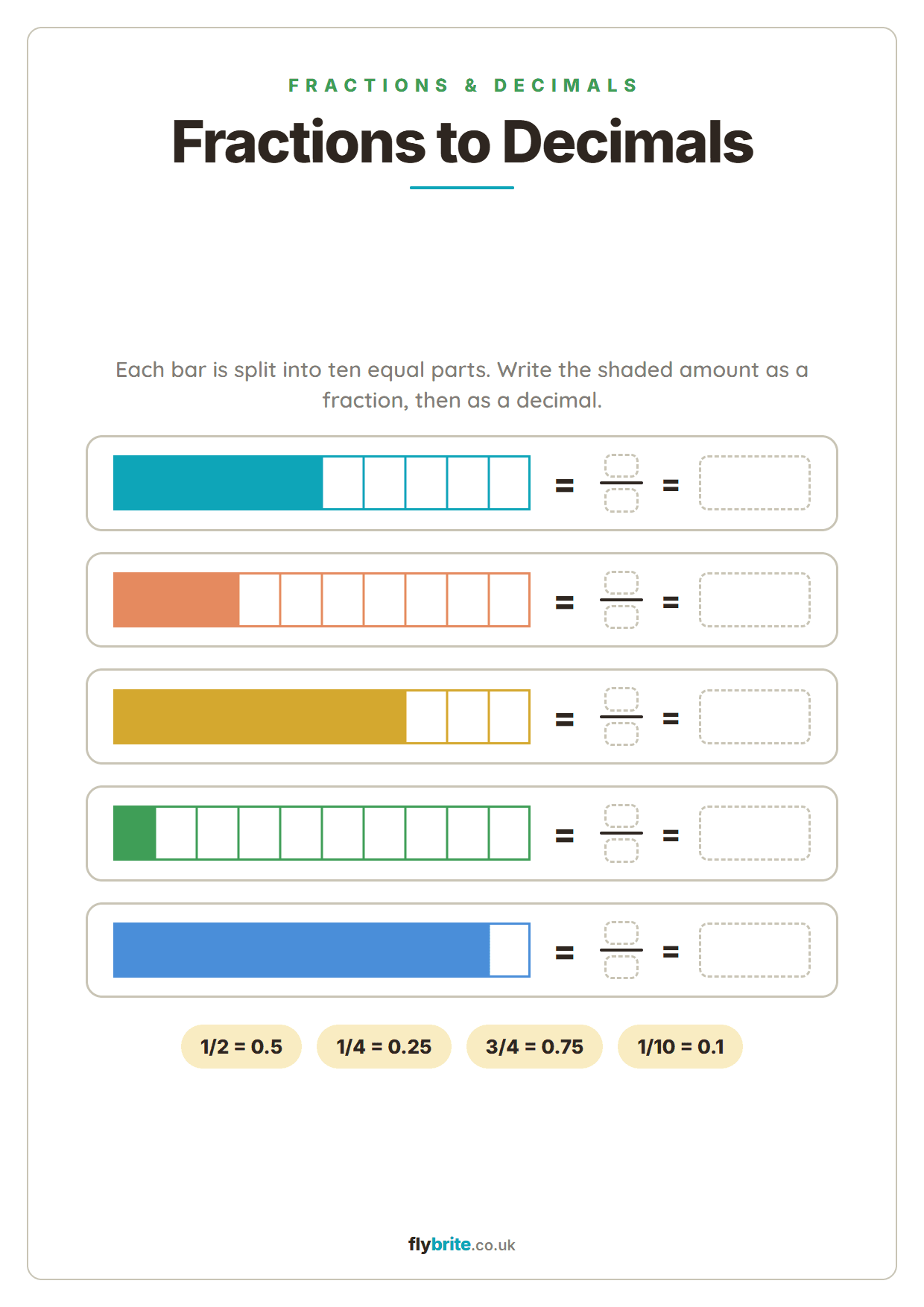
Turning tenths into decimals, with a handy key of the fractions children meet most.
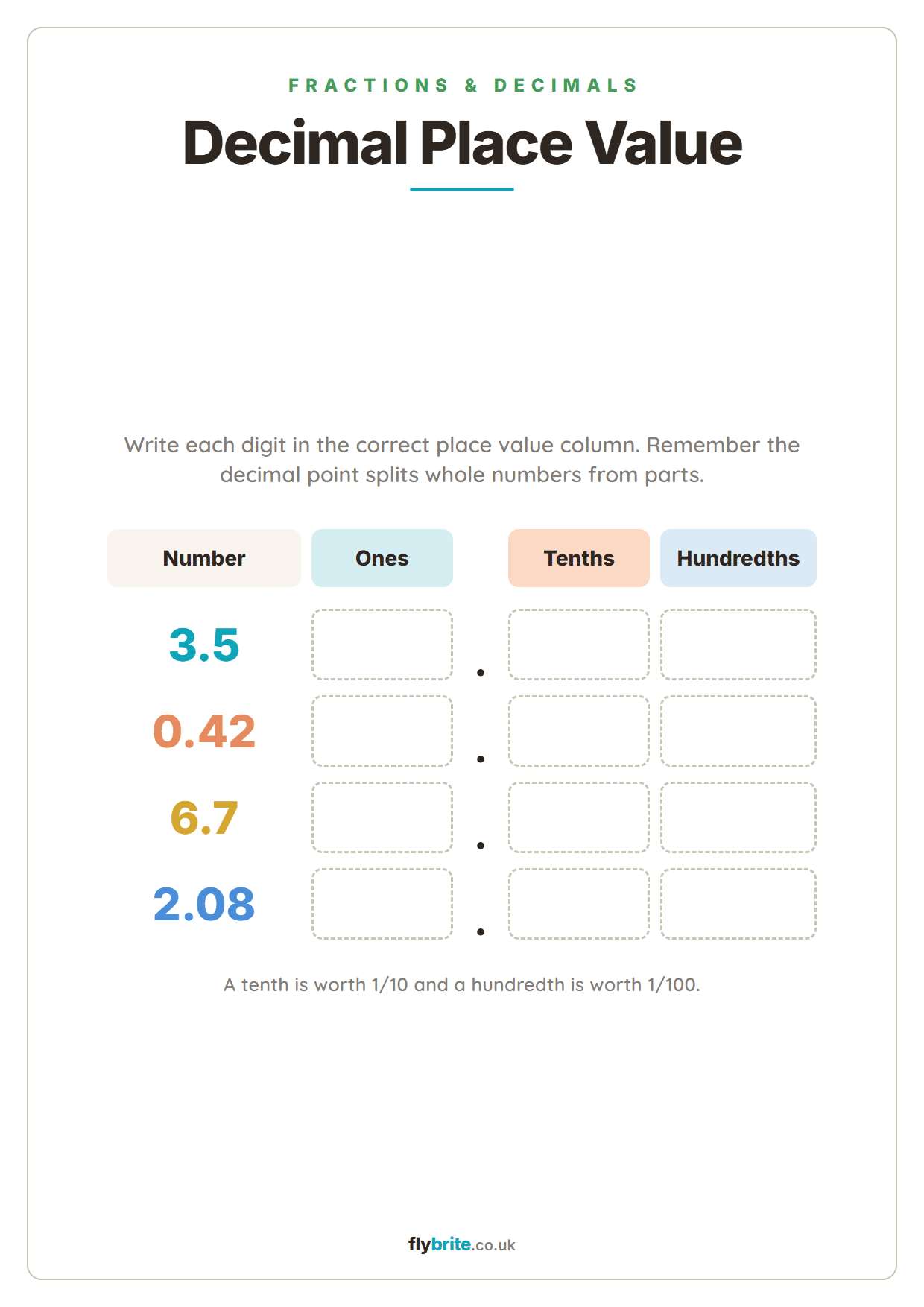
A clear place value chart for ones, tenths and hundredths, ready to fill in digit by digit.
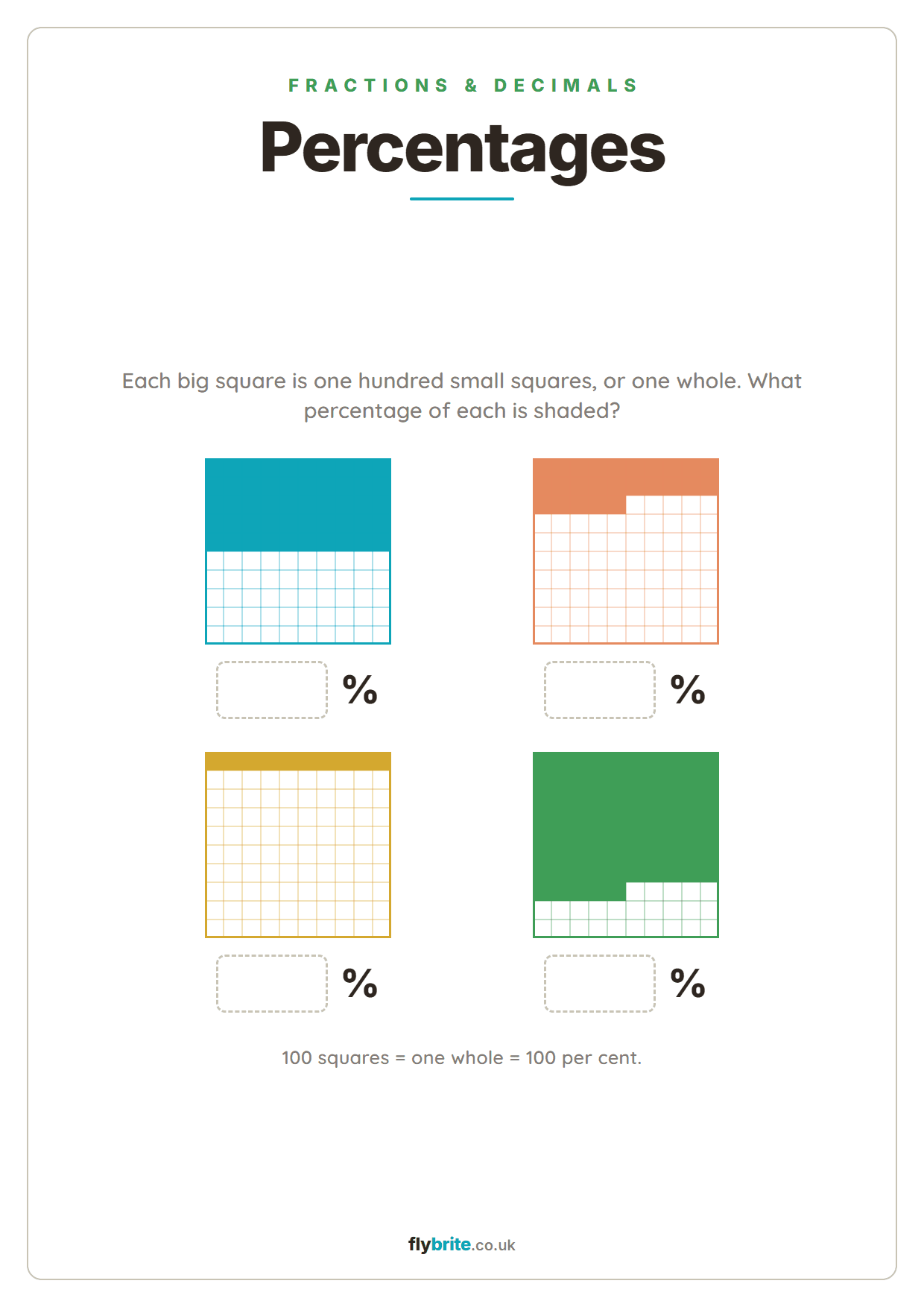
Hundred squares to read as percentages, linking parts of one hundred to everyday per cents.
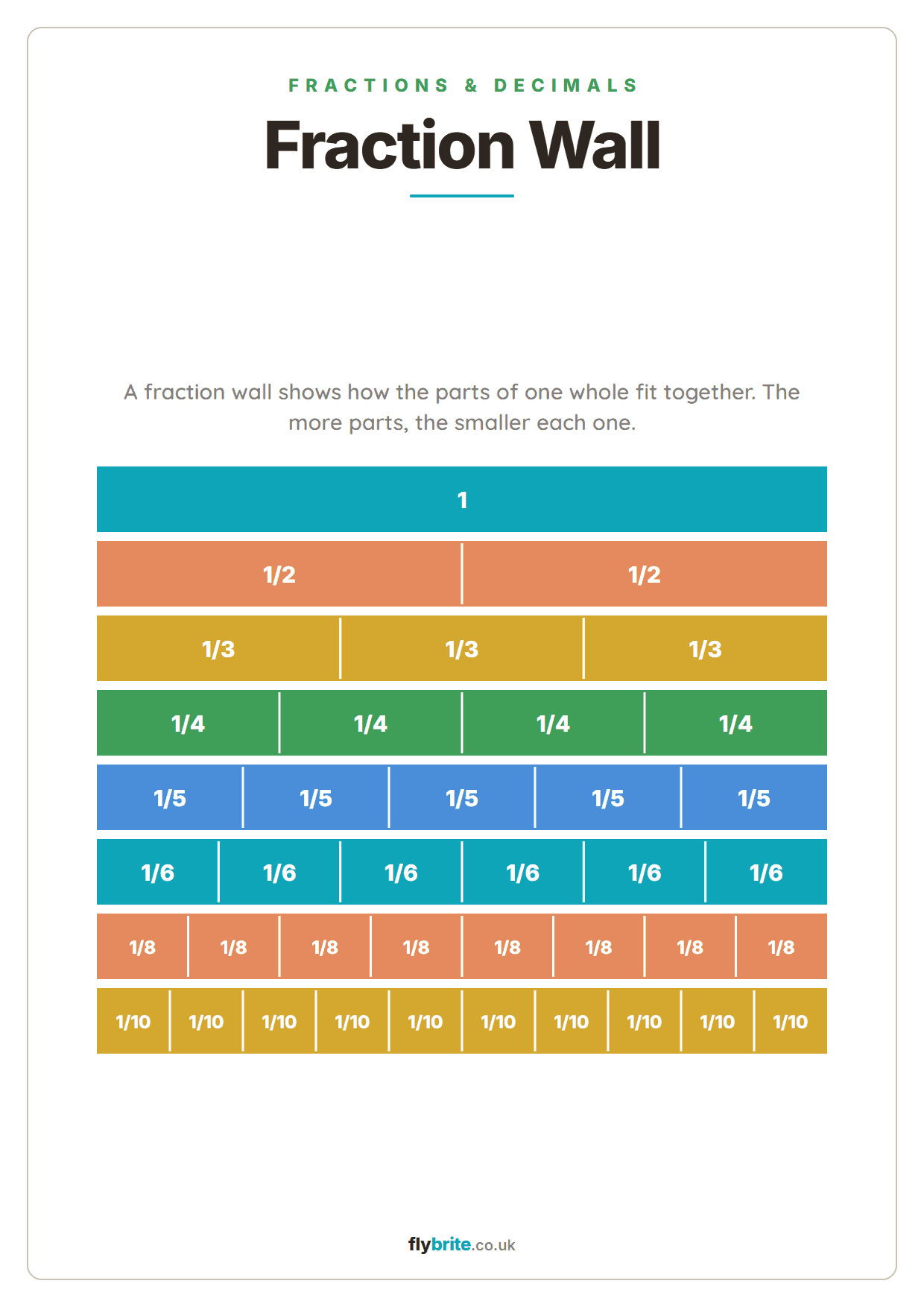
A colourful fraction wall from one whole down to tenths, a lovely reference to keep on the wall.
Length, weight, capacity and temperature, the maths children measure out in real life.
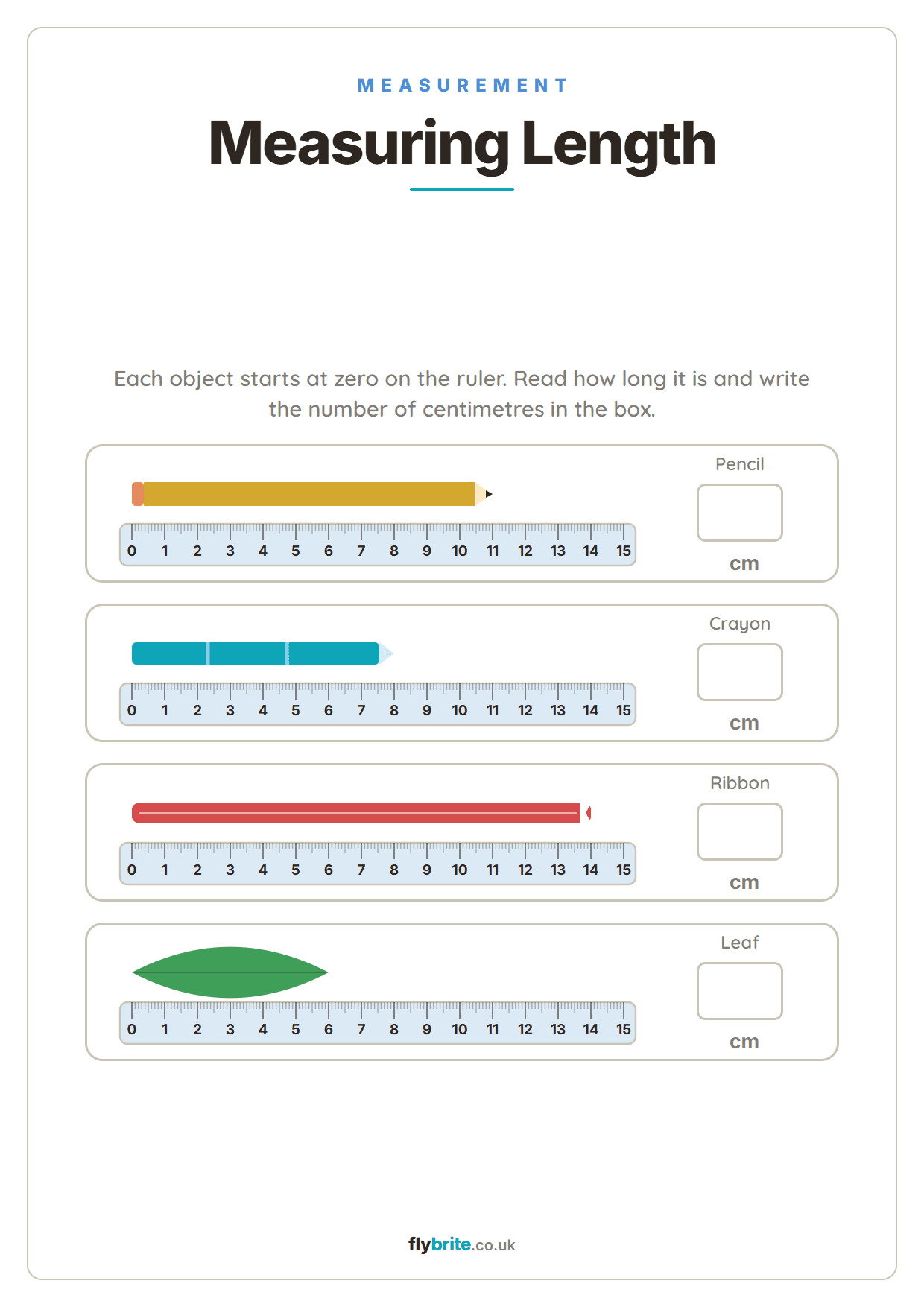
Everyday objects laid neatly along a ruler, ready for a first go at reading centimetres.
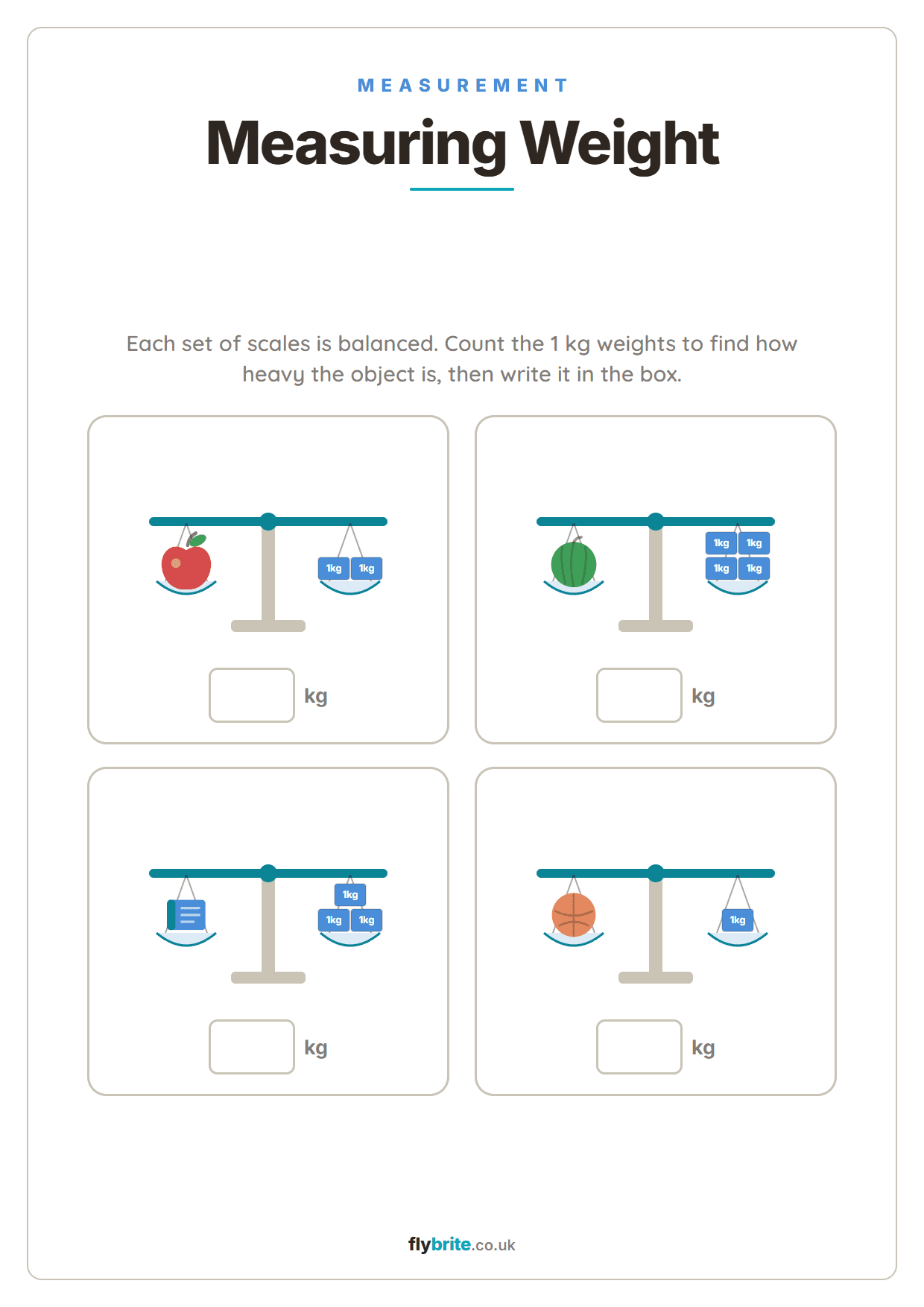
Balanced scales and stacks of 1 kg weights that turn weighing into friendly counting.
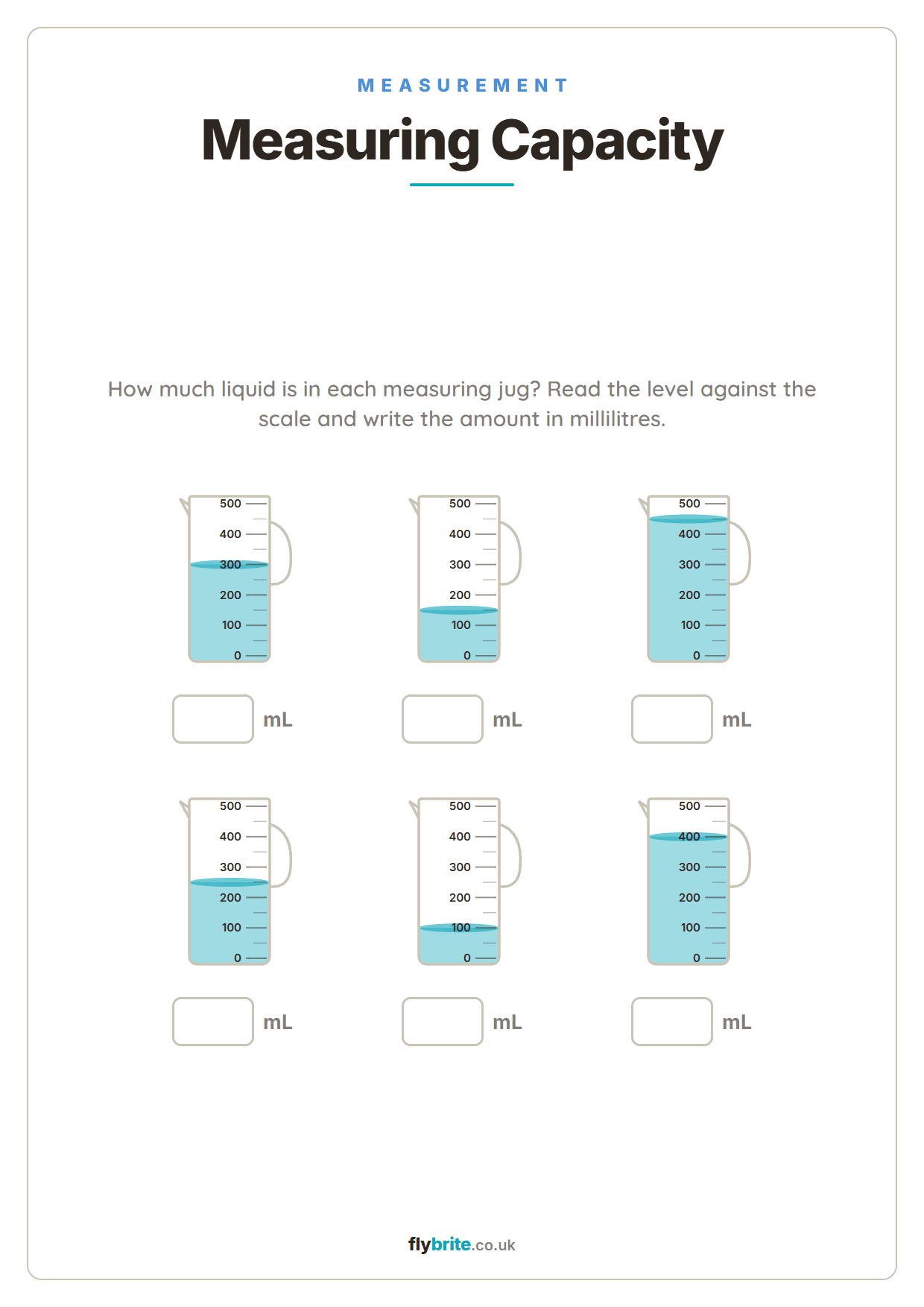
Six measuring jugs filled to different levels, a gentle first look at millilitres.
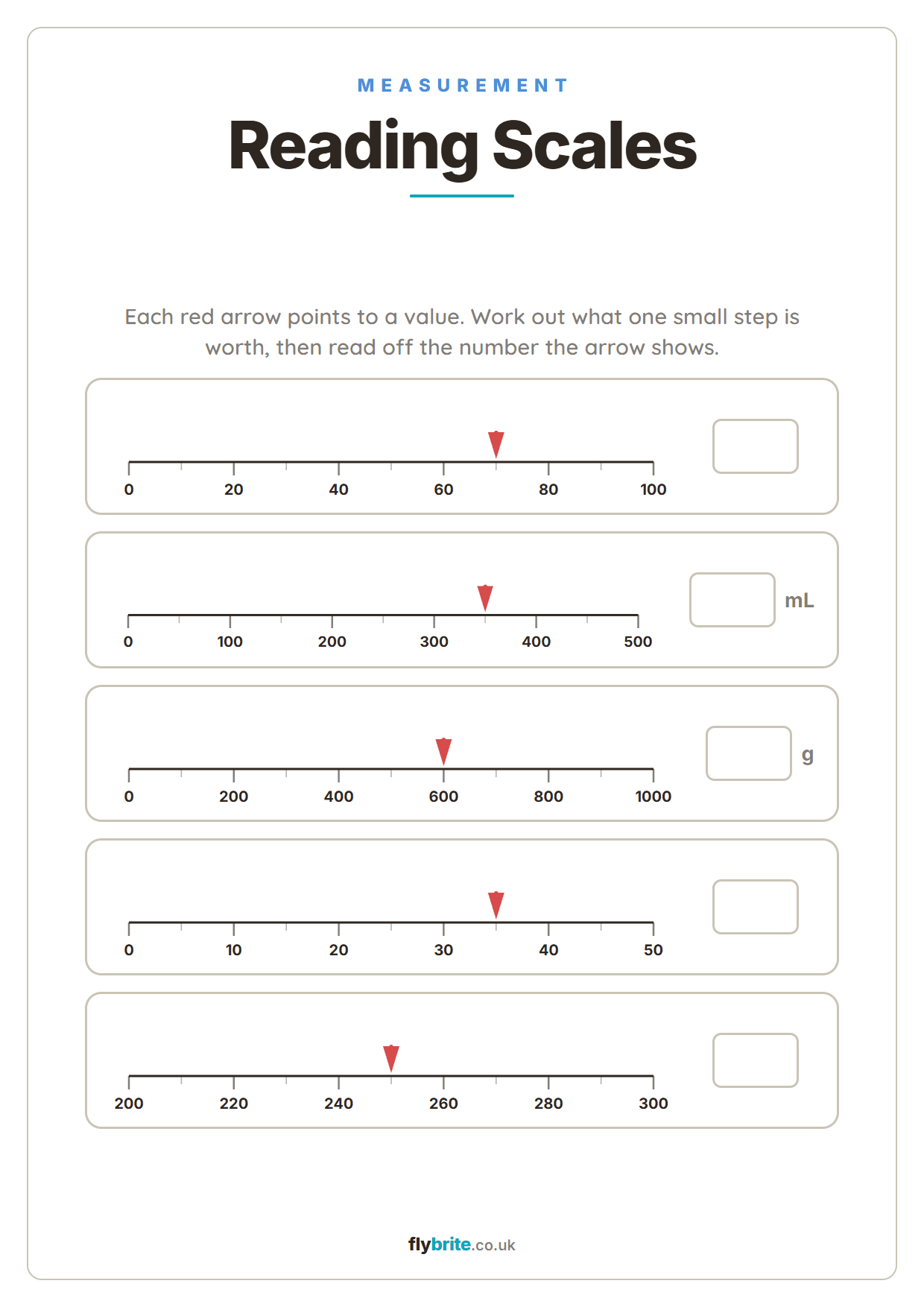
Pointer scales with clever little intervals to work out, building real reading confidence.
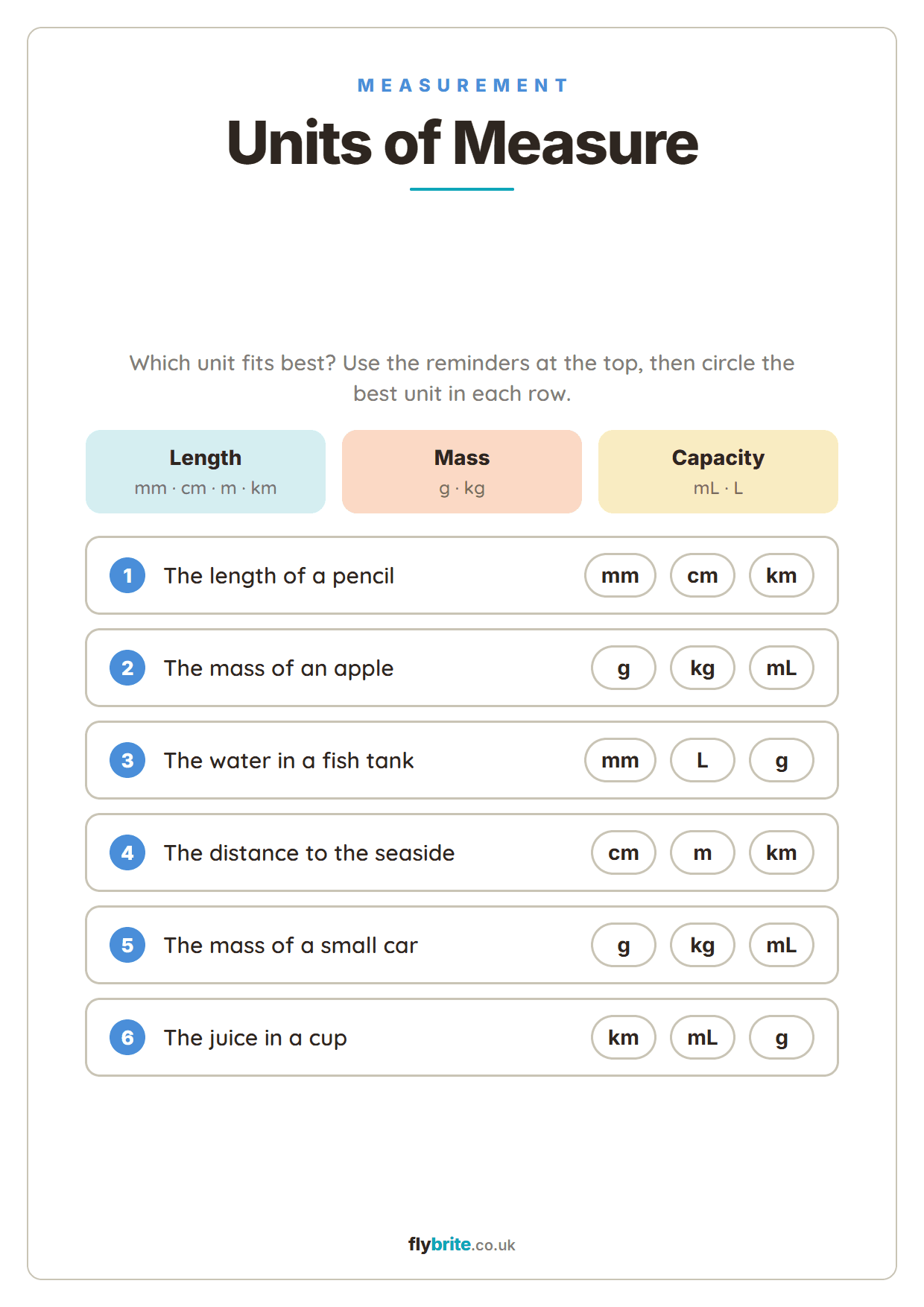
Choosing between millimetres, kilograms and litres, a tidy sorting of everyday units.
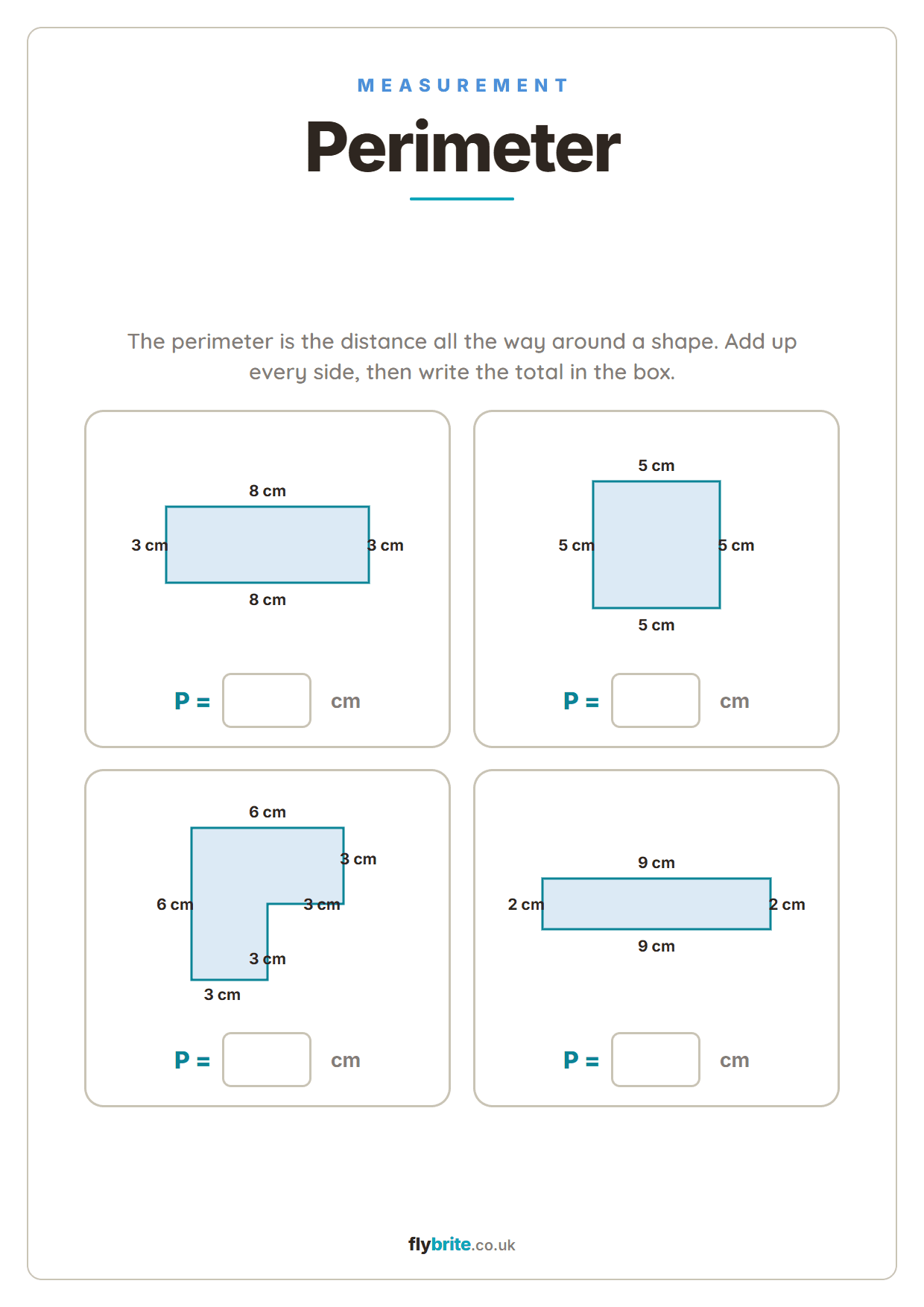
Four labelled shapes to walk around side by side, adding up the distance all the way round.
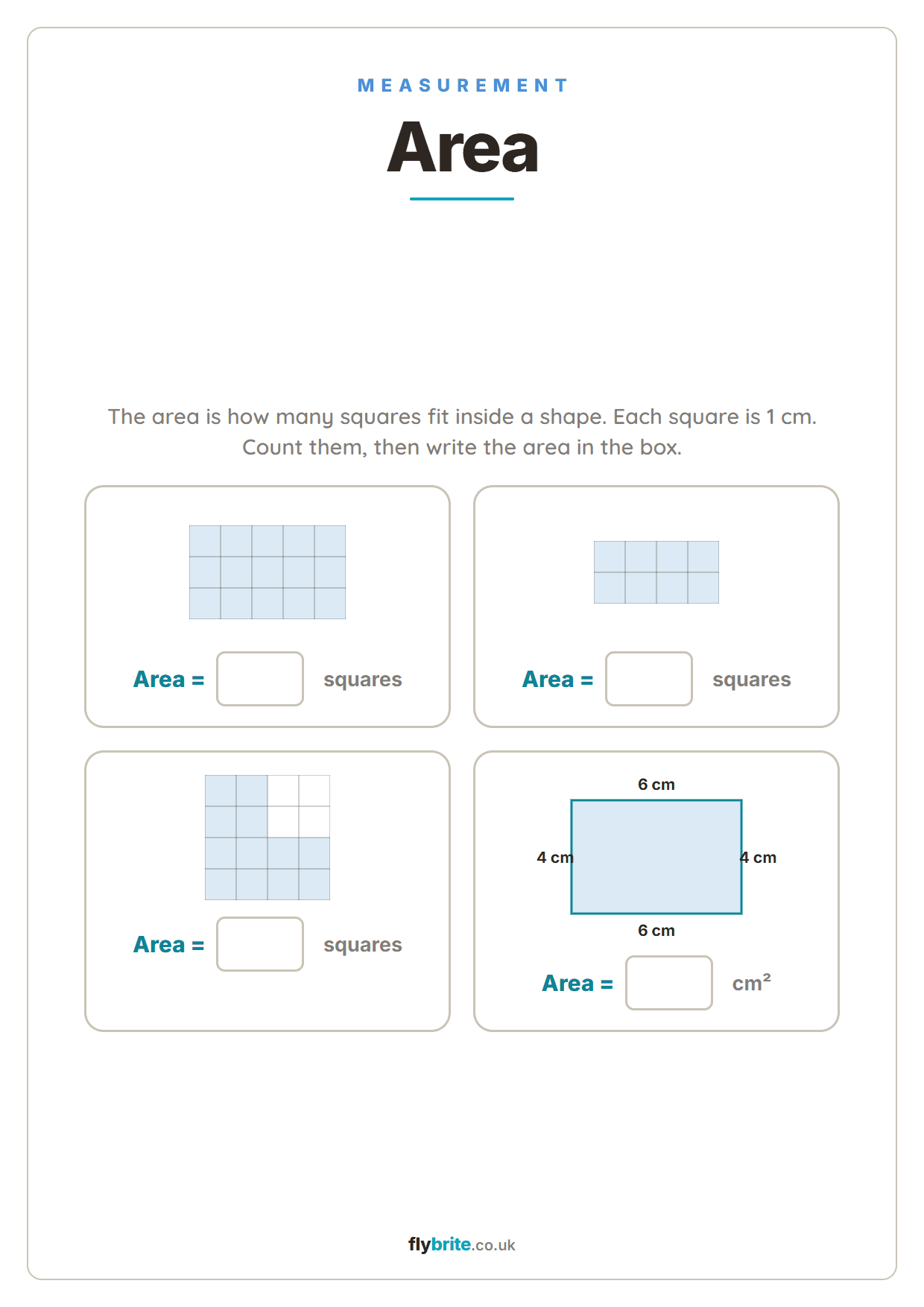
Shapes on a centimetre grid to count square by square, before meeting length times width.
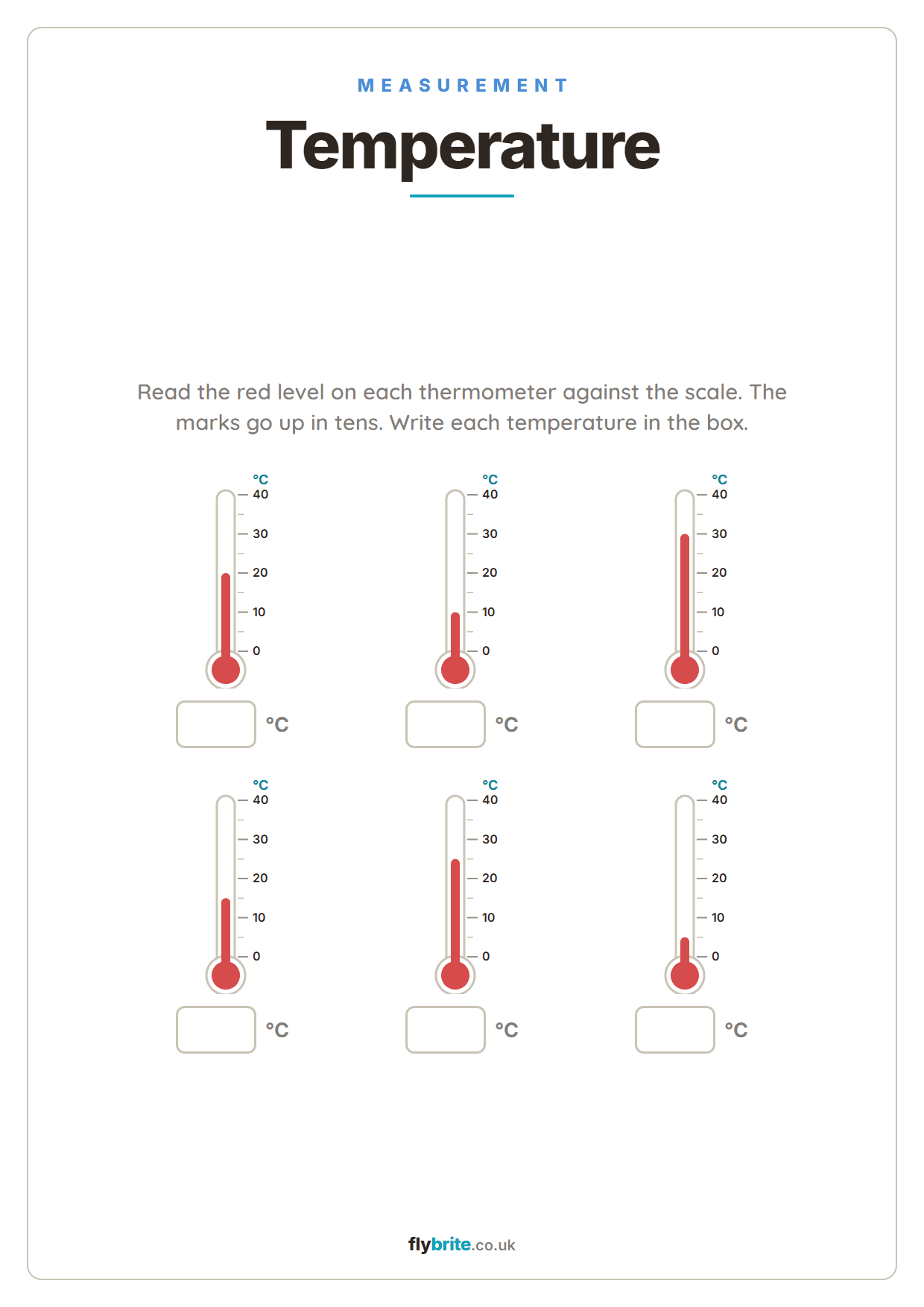
Six warm thermometers to read in tens, a lovely first taste of degrees Celsius.
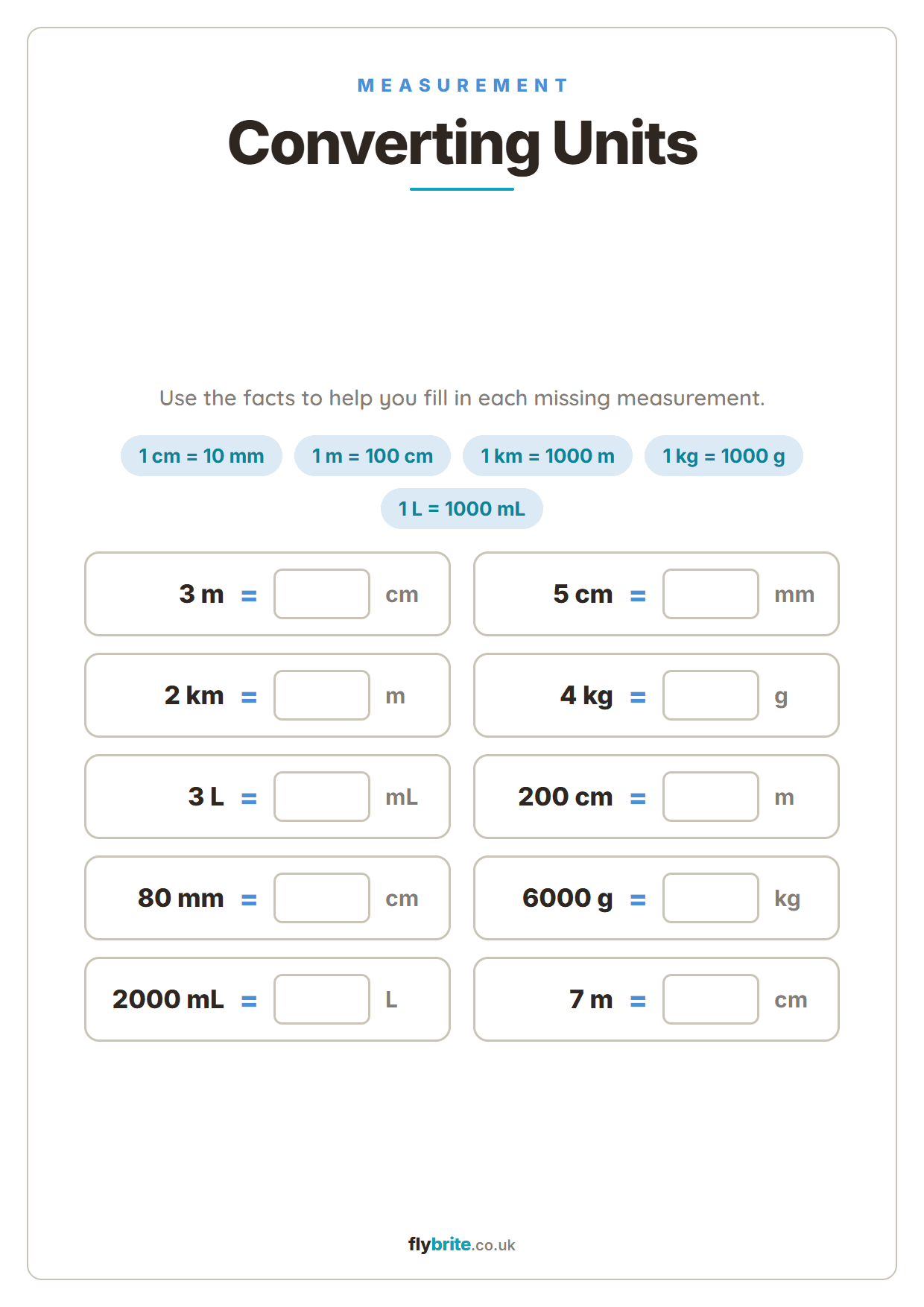
Handy conversion facts up top, then ten swaps between centimetres, metres, grams and litres.
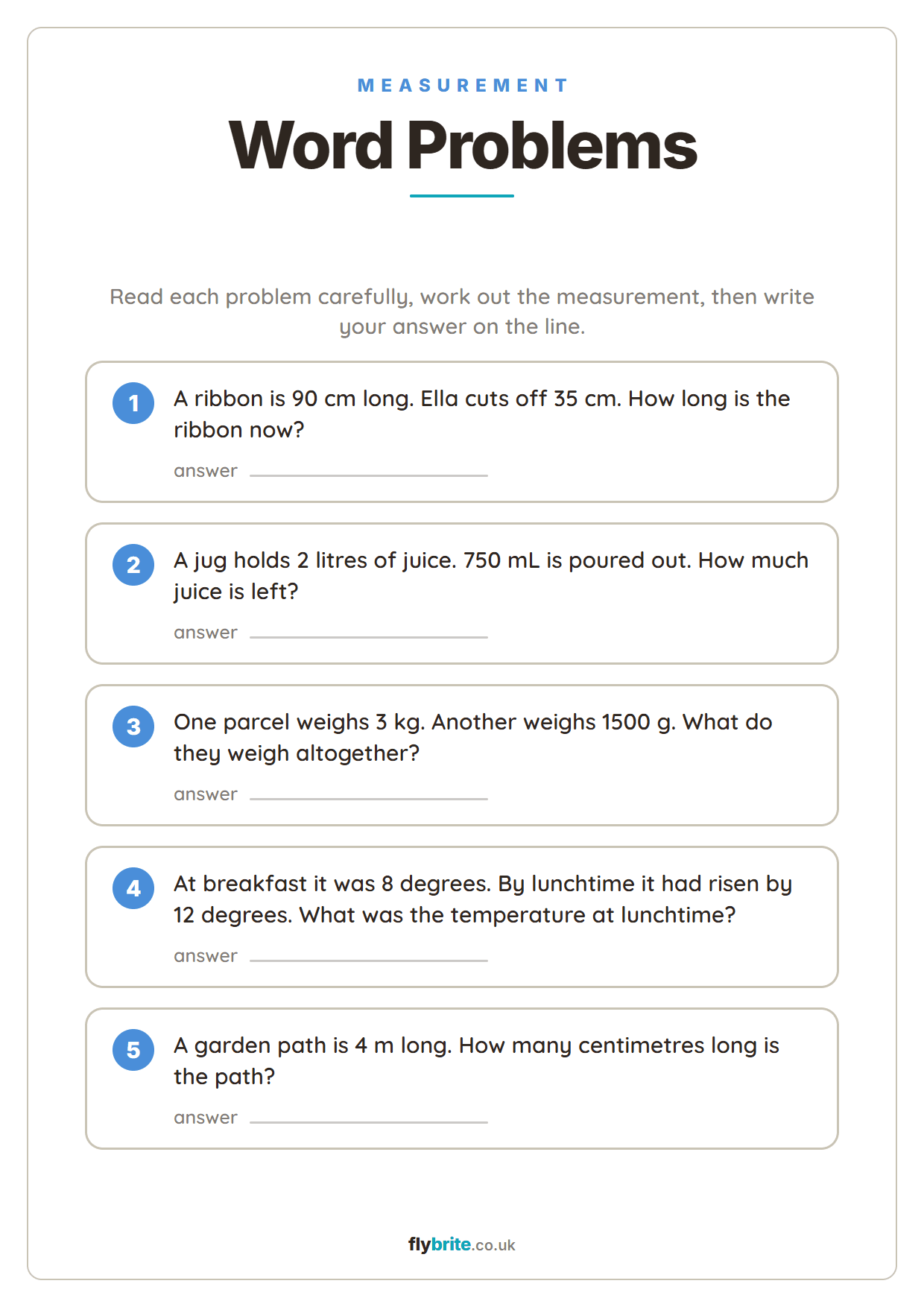
Five everyday measuring puzzles across length, weight, capacity and temperature to solve.
Number sudoku, magic squares and brain teasers that make problem-solving a treat.
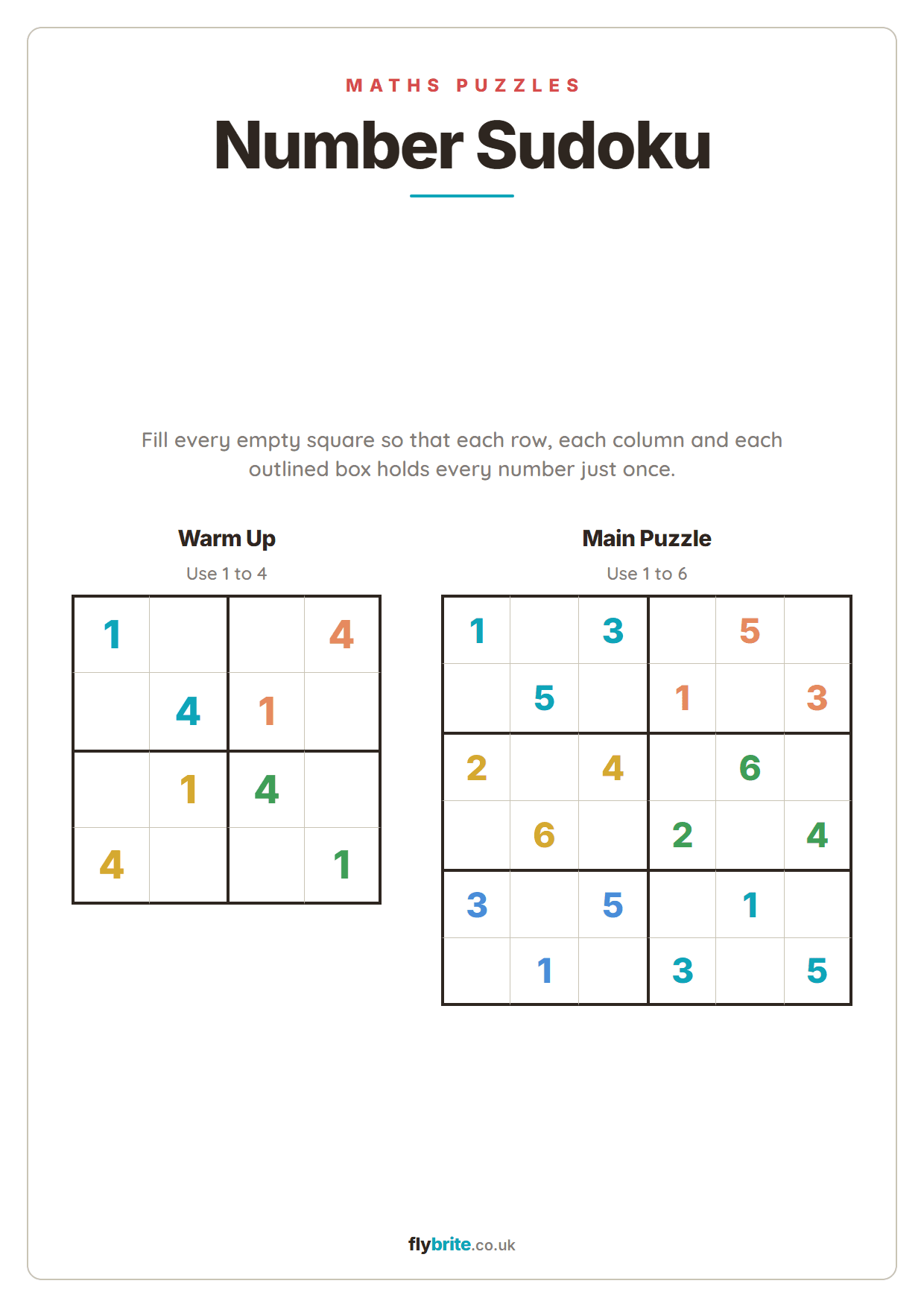
A gentle 4 by 4 to warm up and a 6 by 6 challenge, each row, column and box holding every number just once.
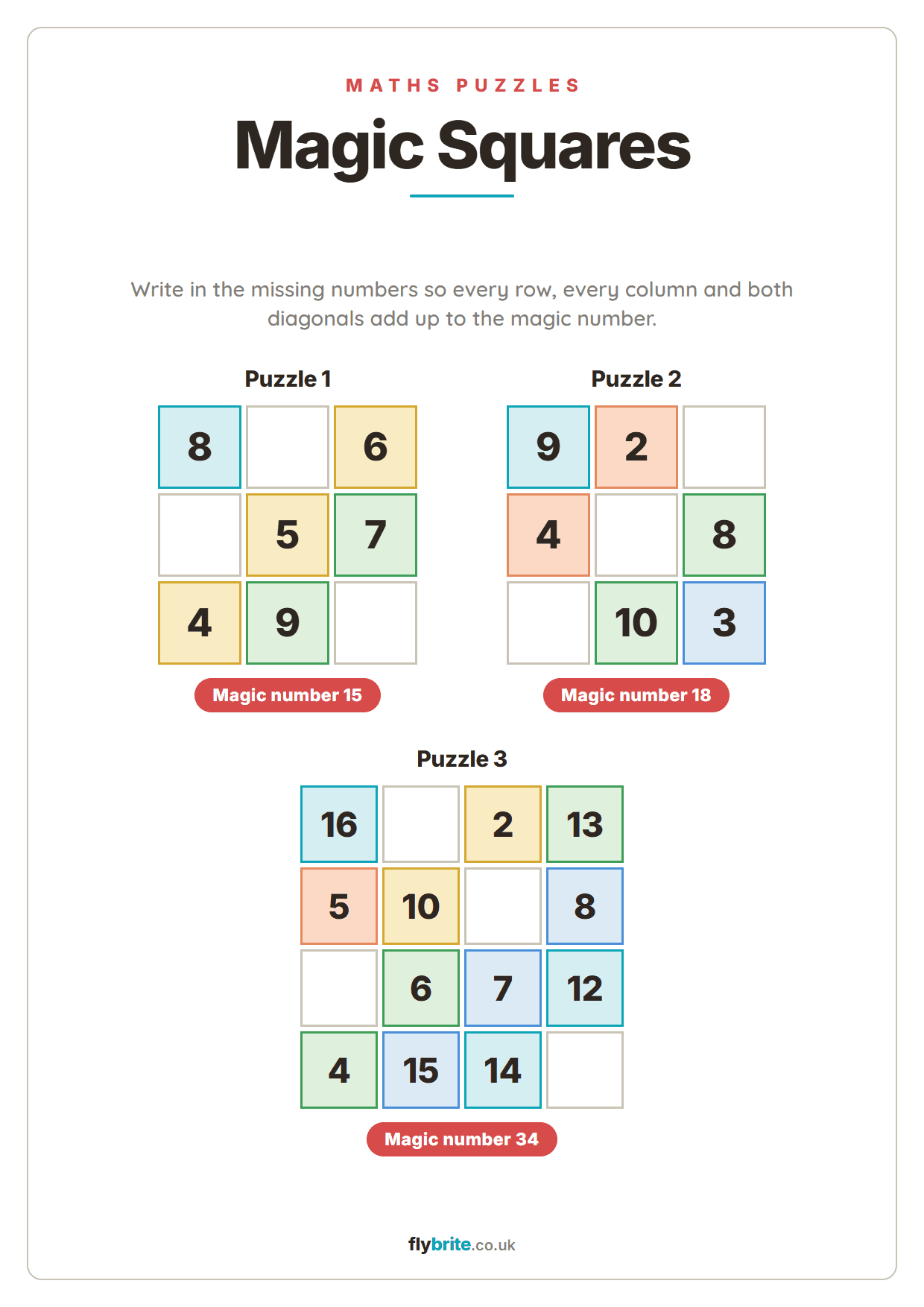
Fill in the missing numbers so every row, column and diagonal adds up to the same magic number.
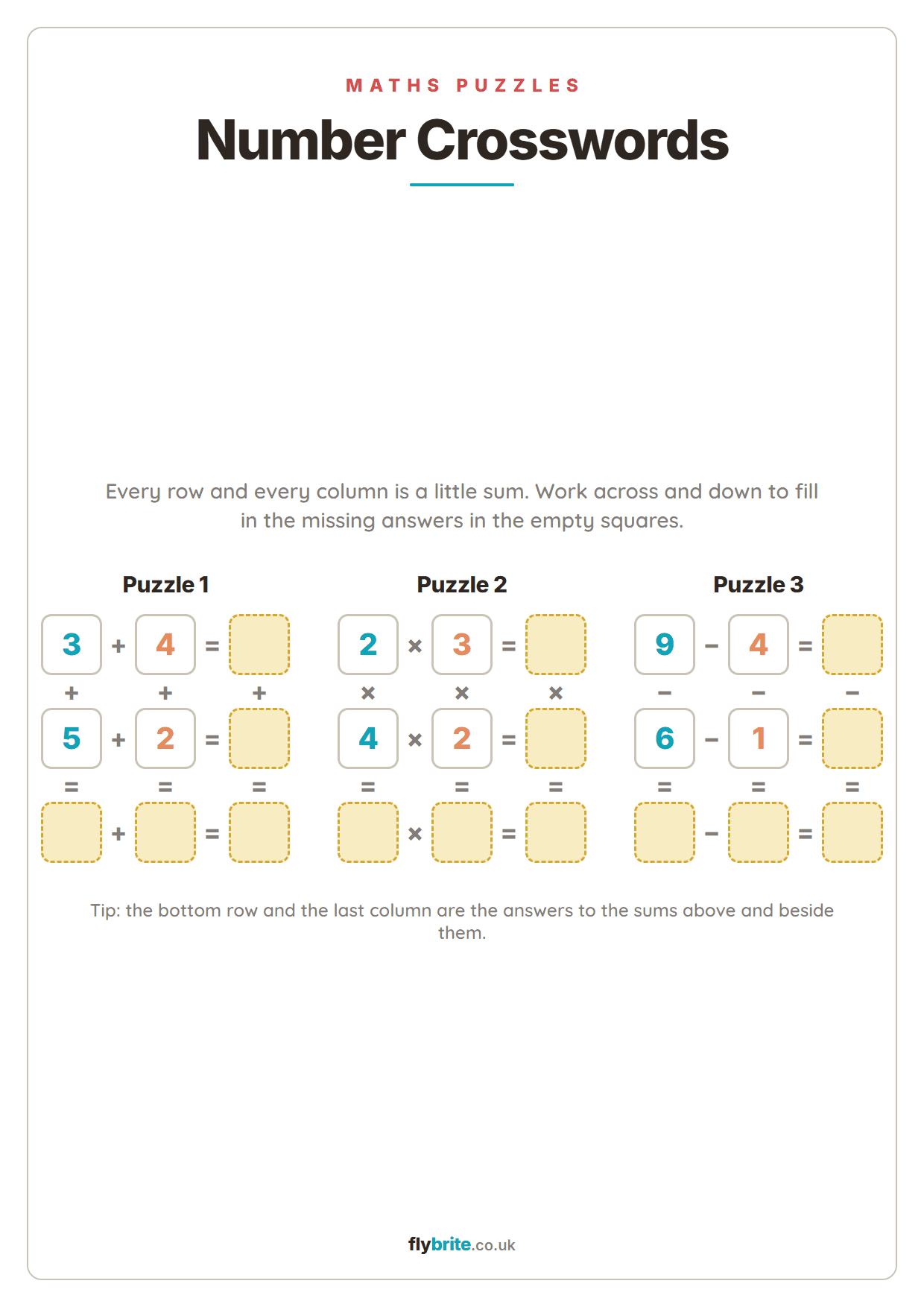
Little criss cross sums where every row and every column has to add up, a proper puzzle for busy minds.
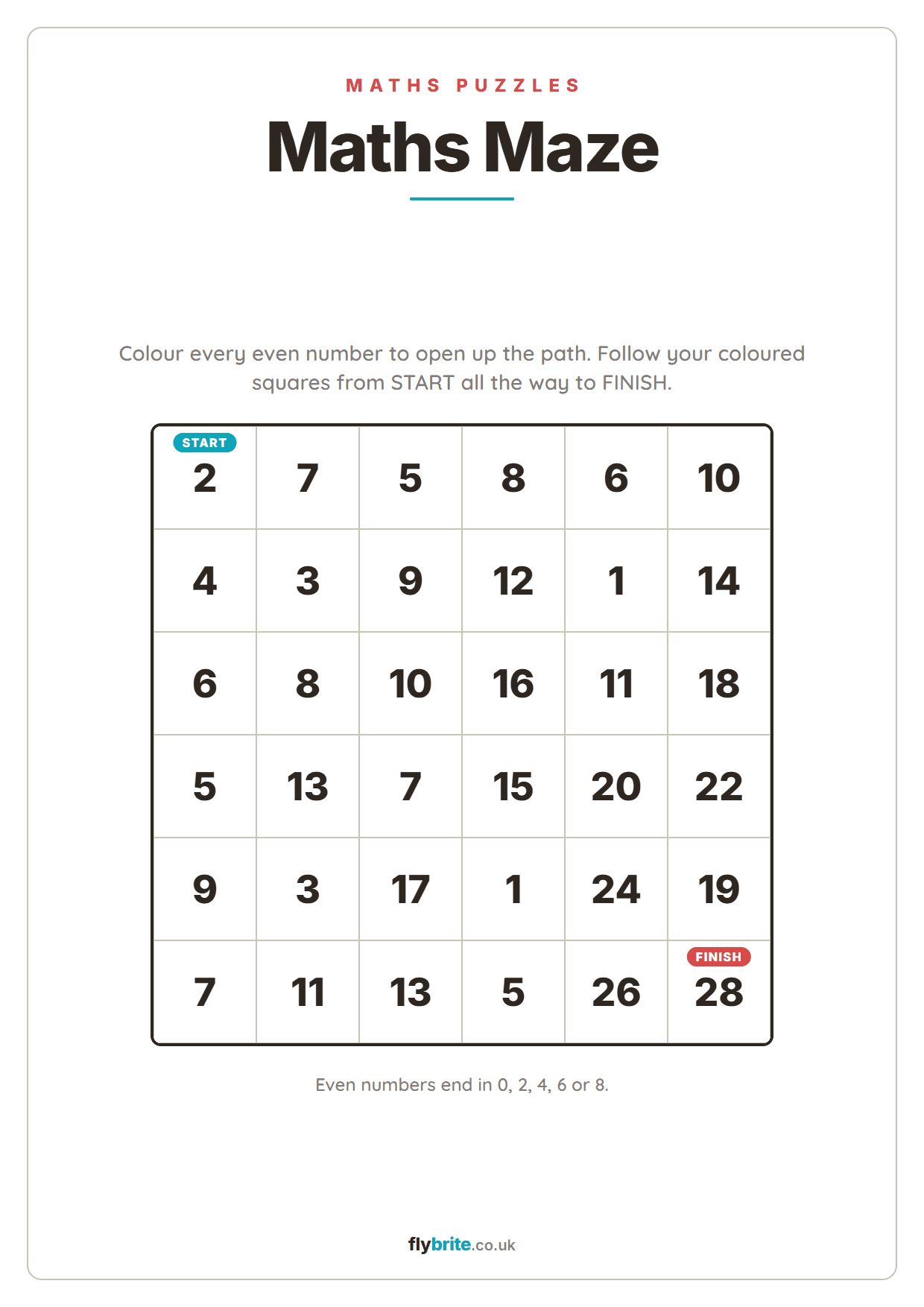
Colour every even number to open up a winding path from start all the way to finish.
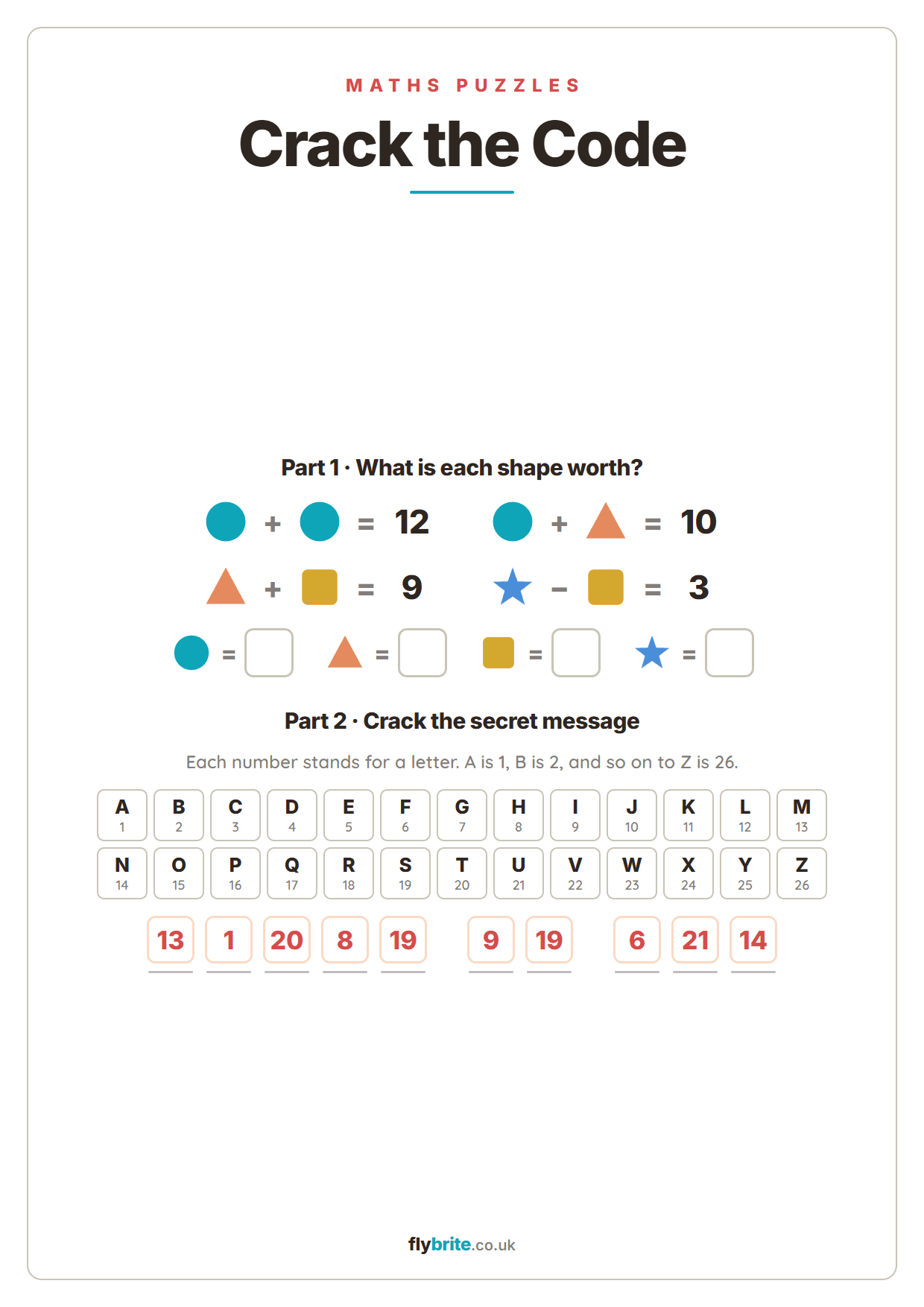
Work out what each shape is worth, then crack the secret number code to reveal a cheerful hidden message.
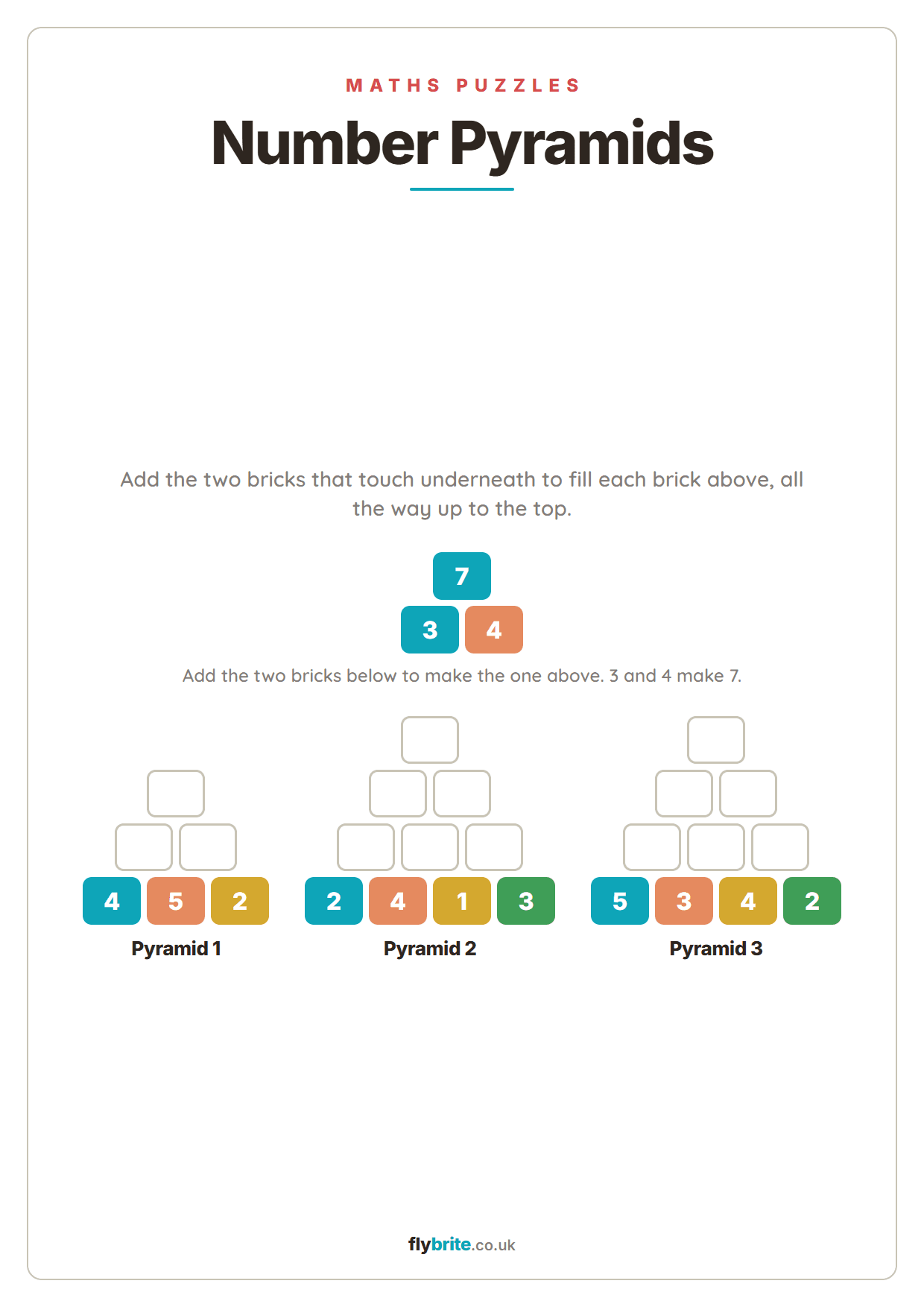
Add the two bricks below to build each one above, all the way up to the top of the pyramid.
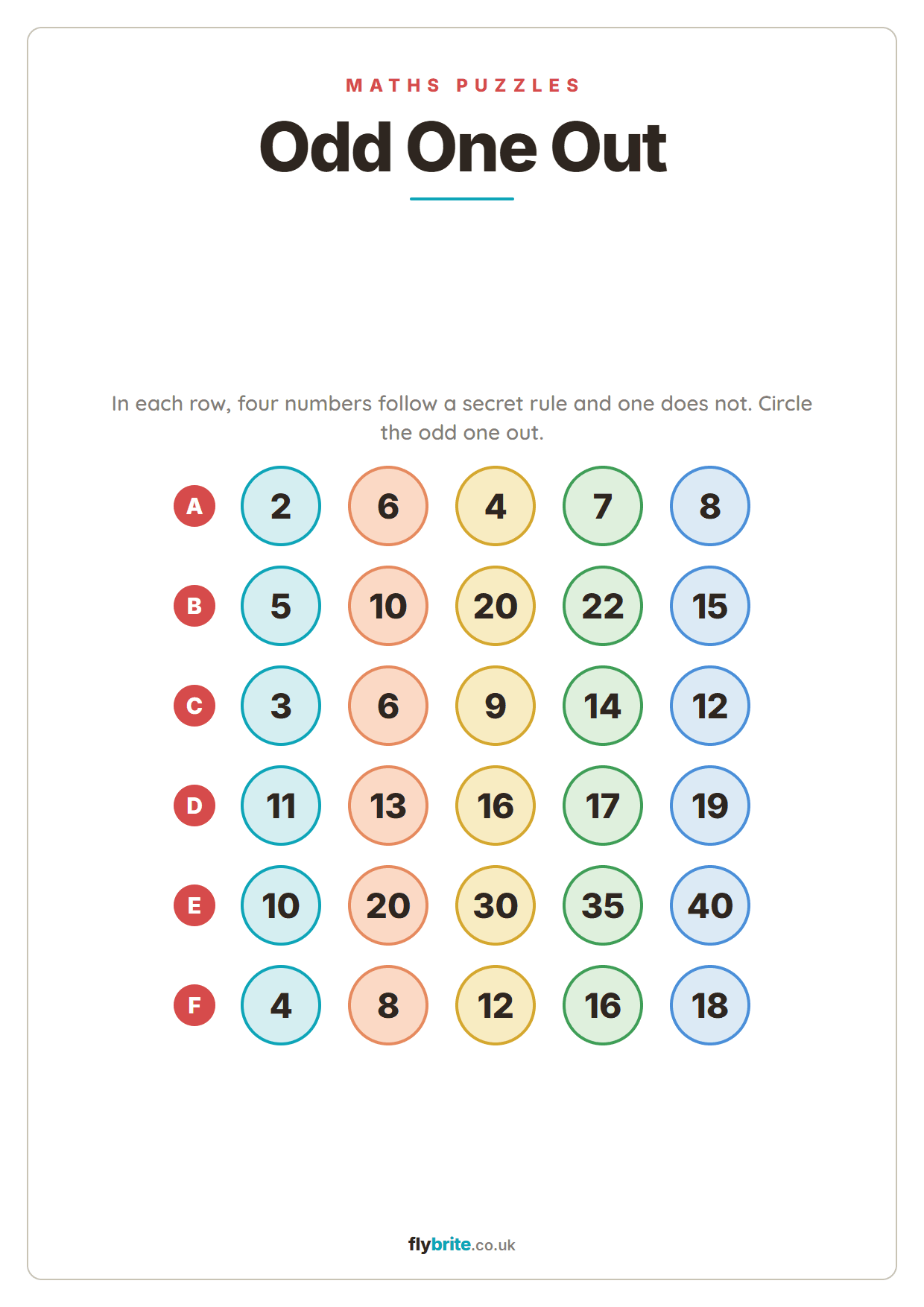
Six friendly rows of numbers, can your little one spot and circle the one that does not belong?
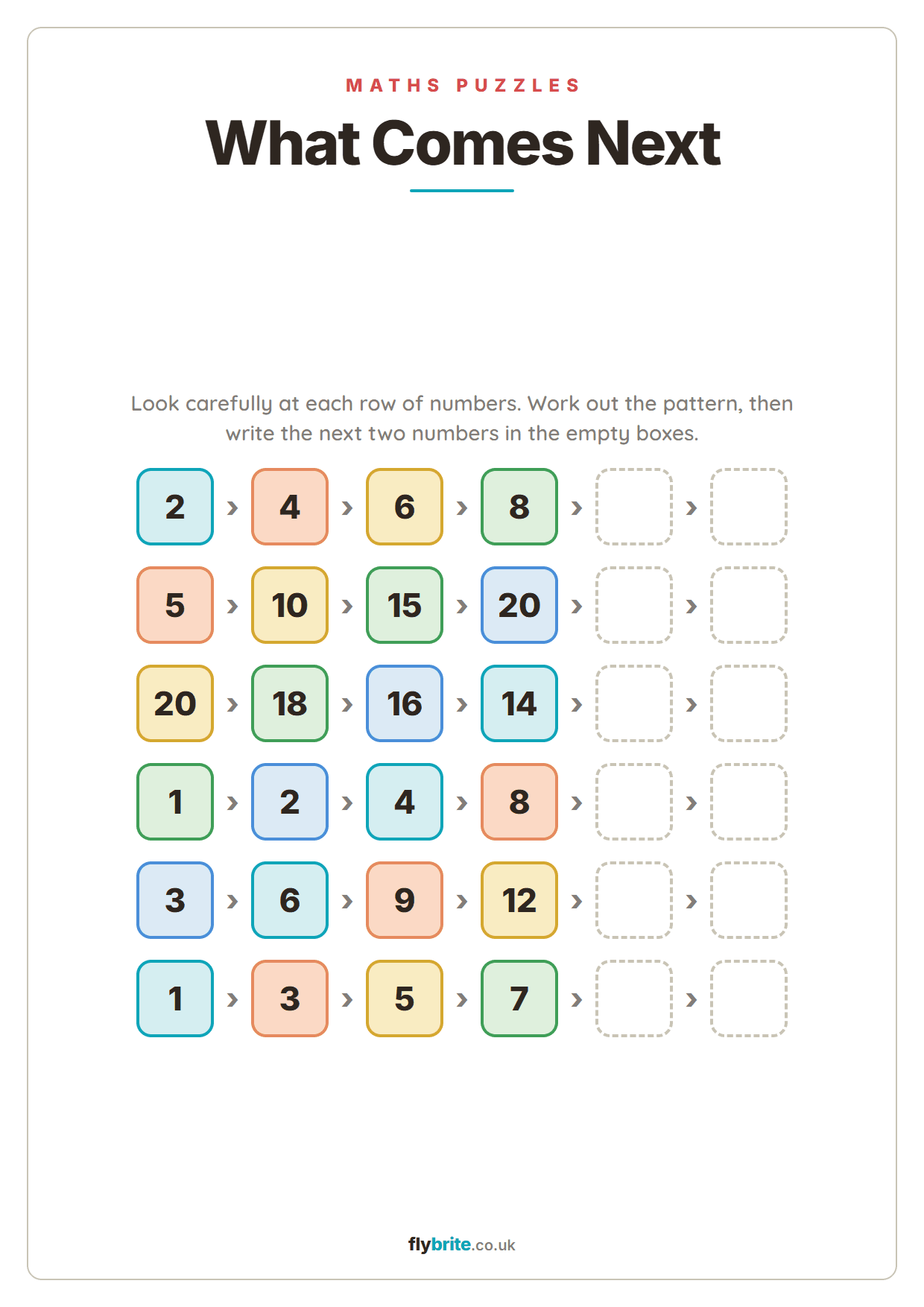
Follow each number pattern carefully, then write the next two numbers in the sequence.
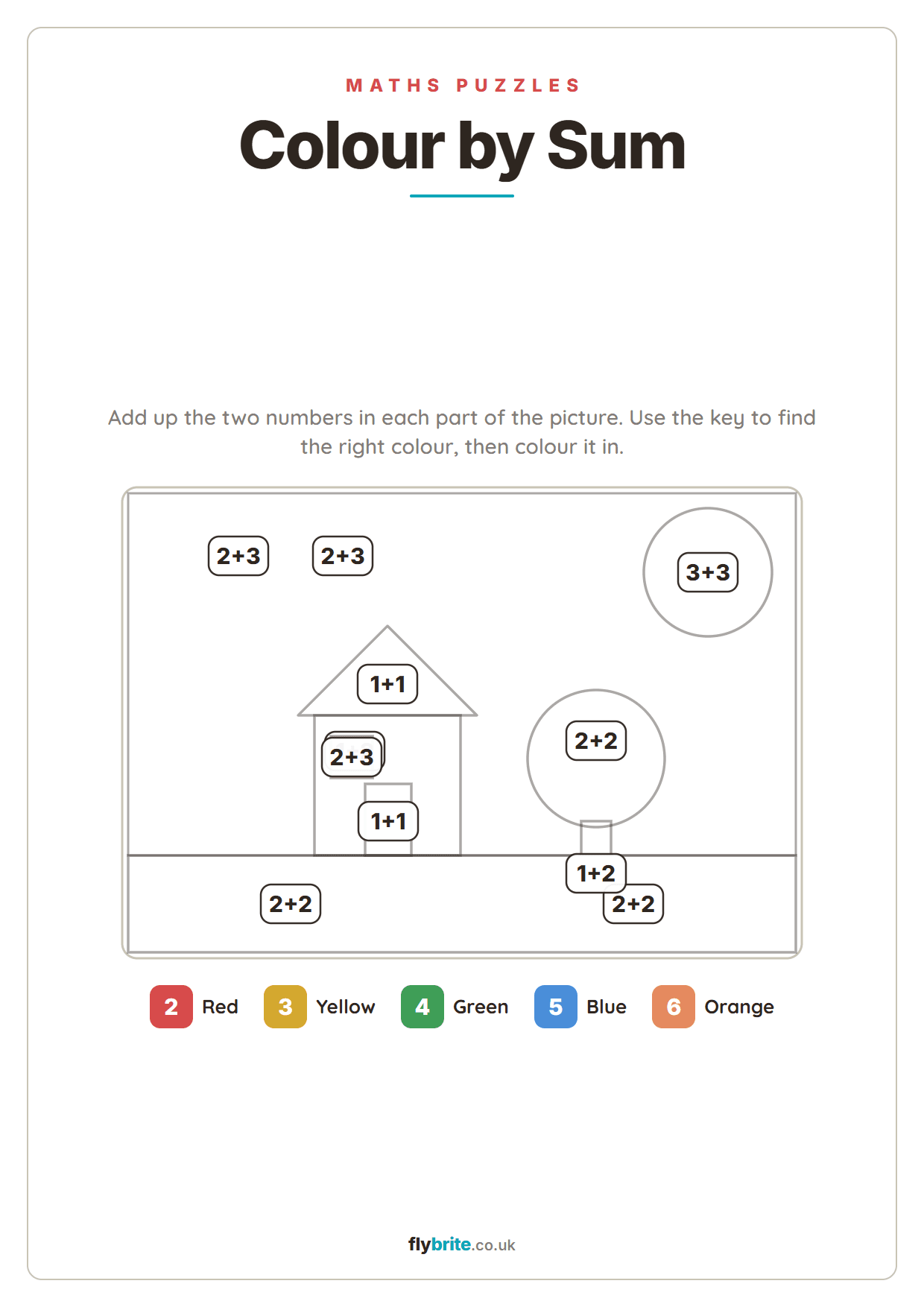
Solve each little sum, match the answer to a colour, and watch a sunny picture slowly appear.
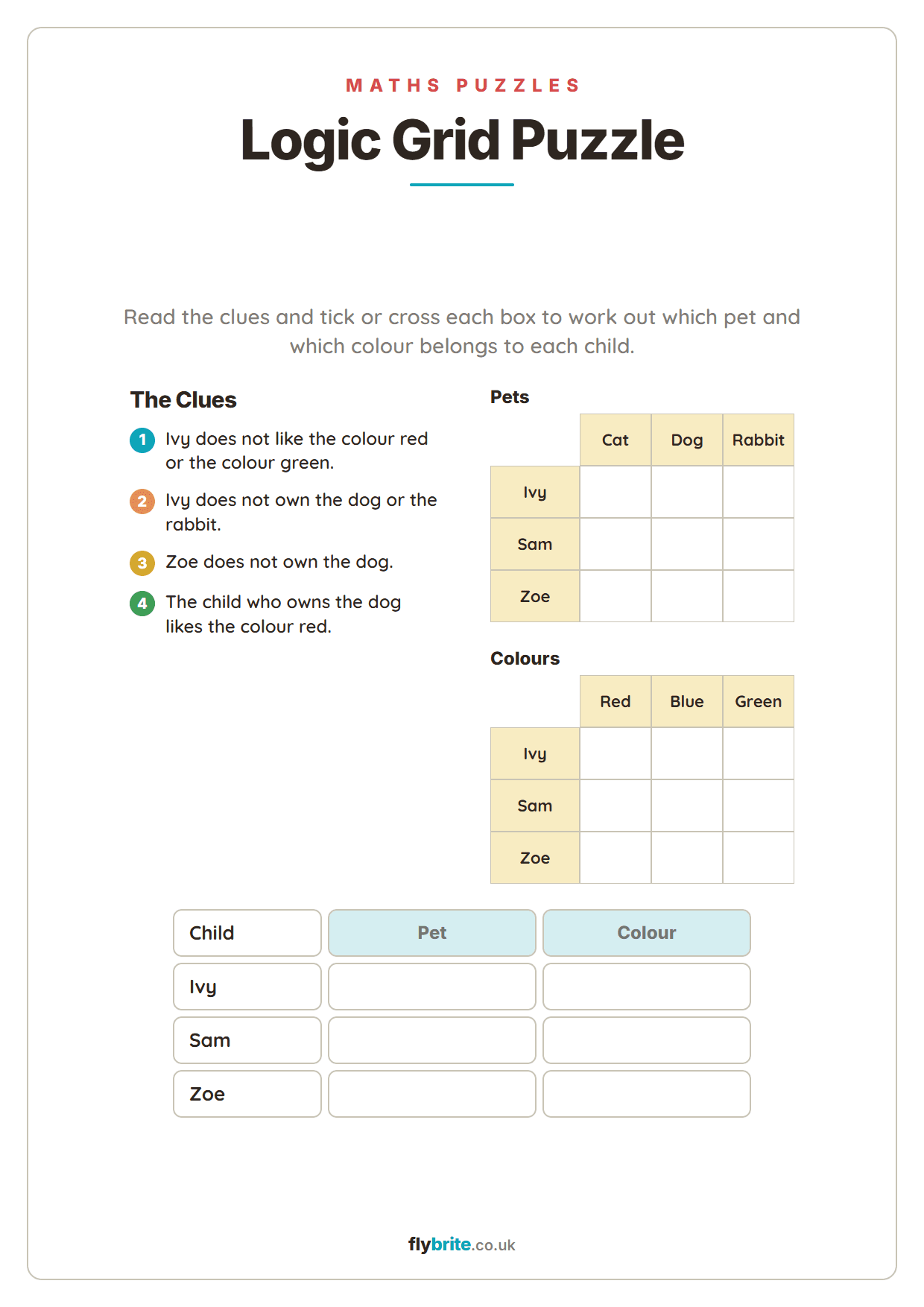
Read the clues, tick the boxes, and use careful thinking to work out who owns which pet.
Skeleton, organs, senses, teeth and digestion, labelled diagrams for young scientists.
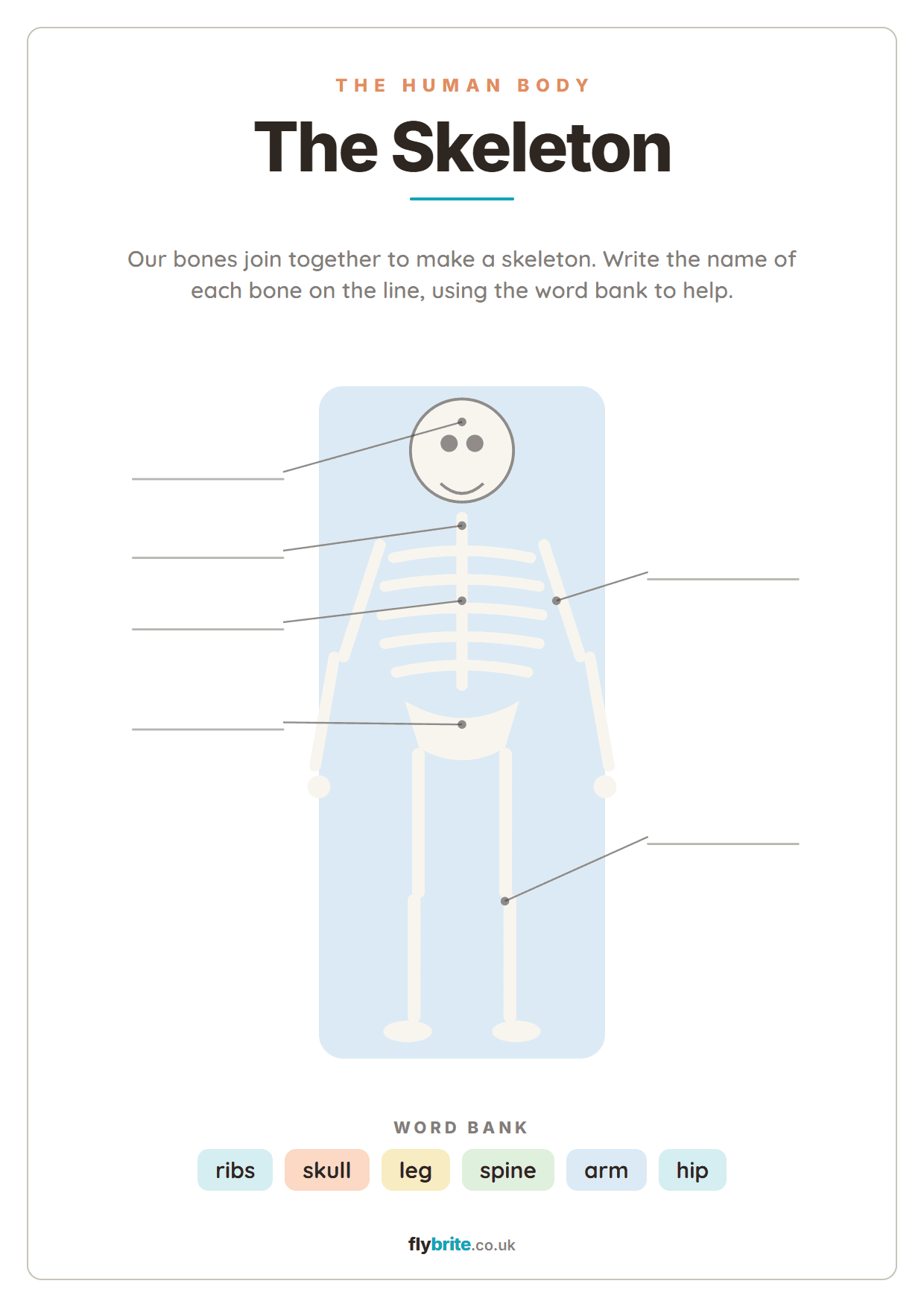
A friendly skeleton to label bone by bone, from the top of the skull to the tips of the toes.
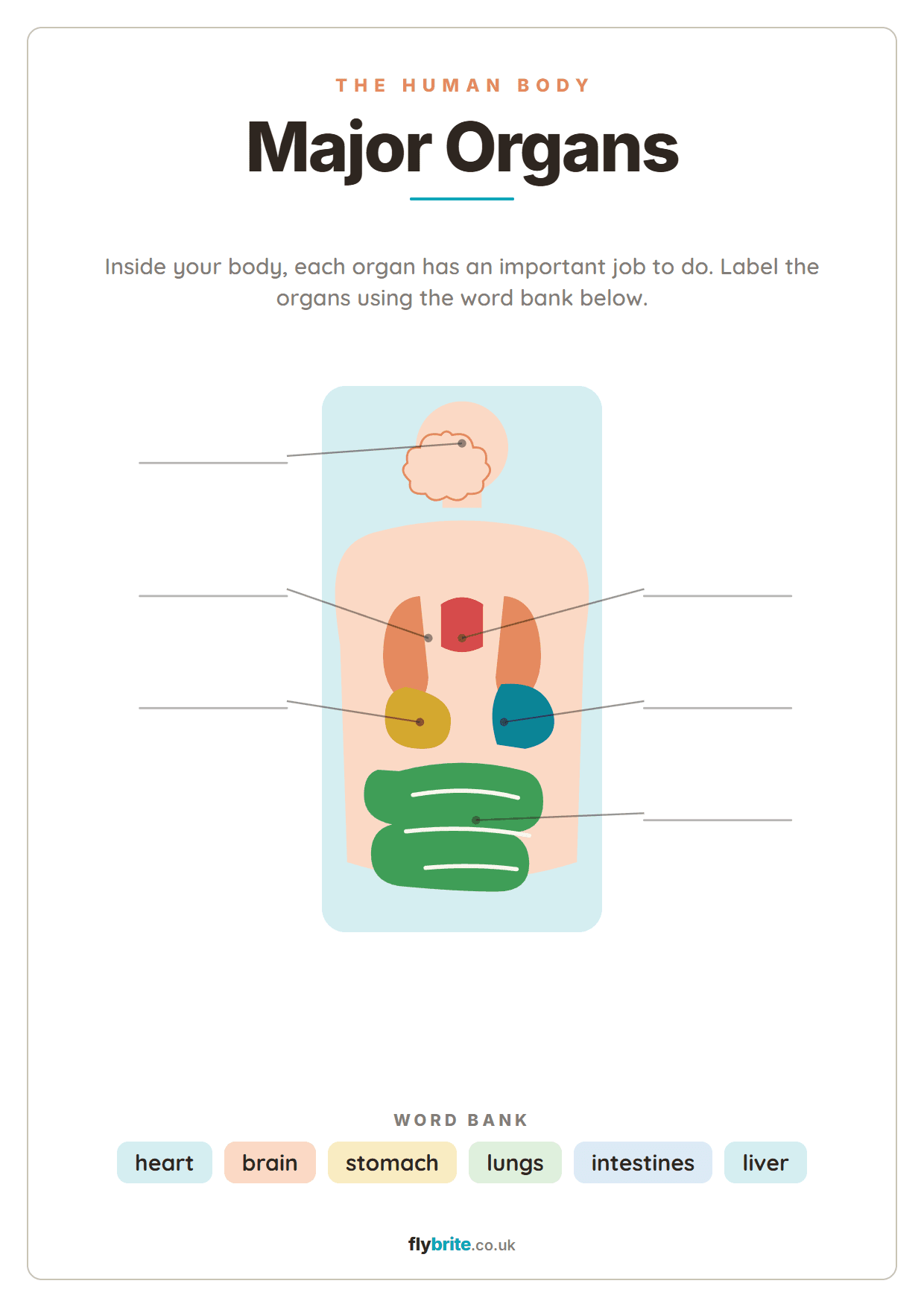
A cutaway of the body with its busy organs to name, each one doing its own quiet job.
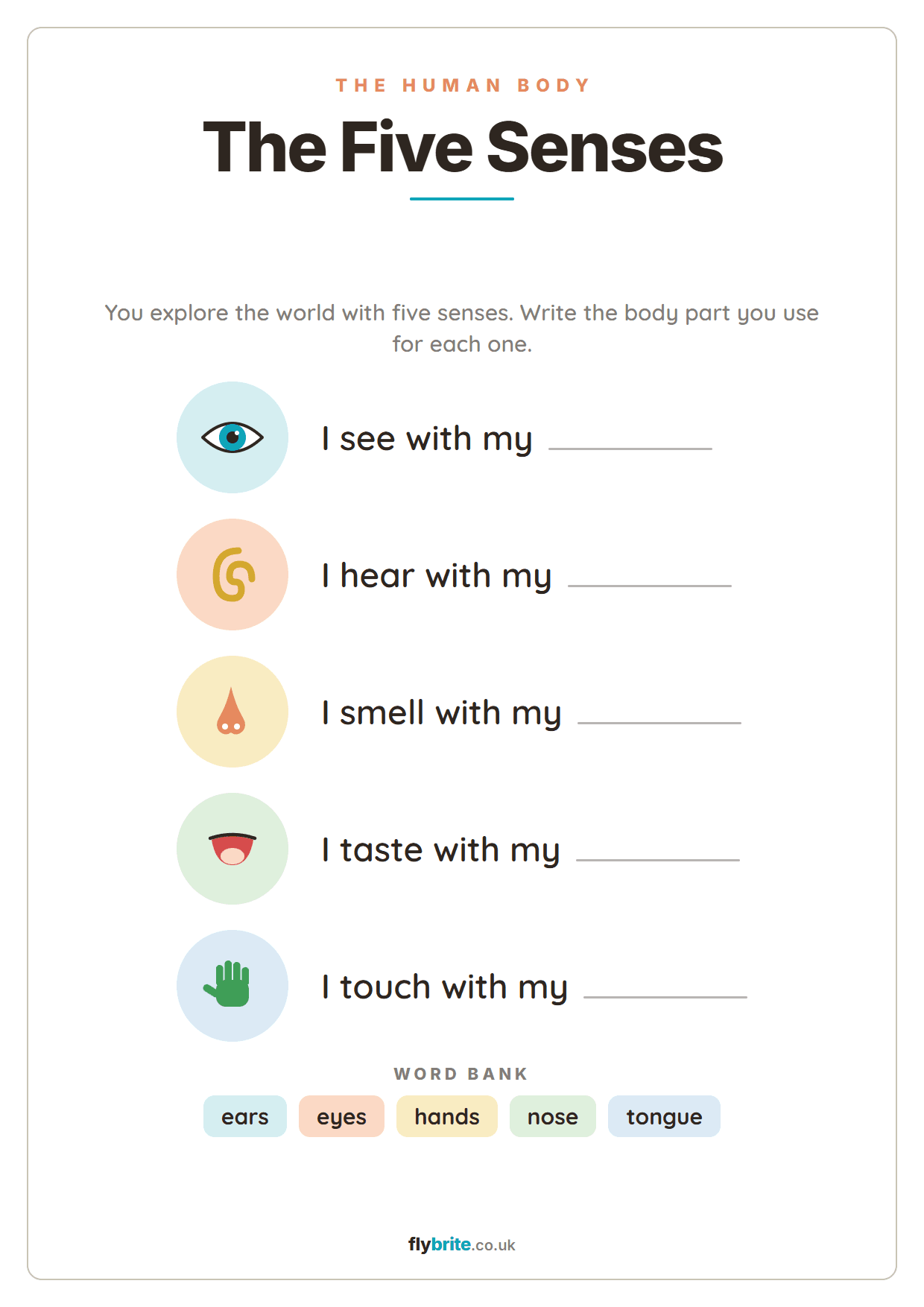
Five gentle prompts for little ones to name the body part behind each of their senses.
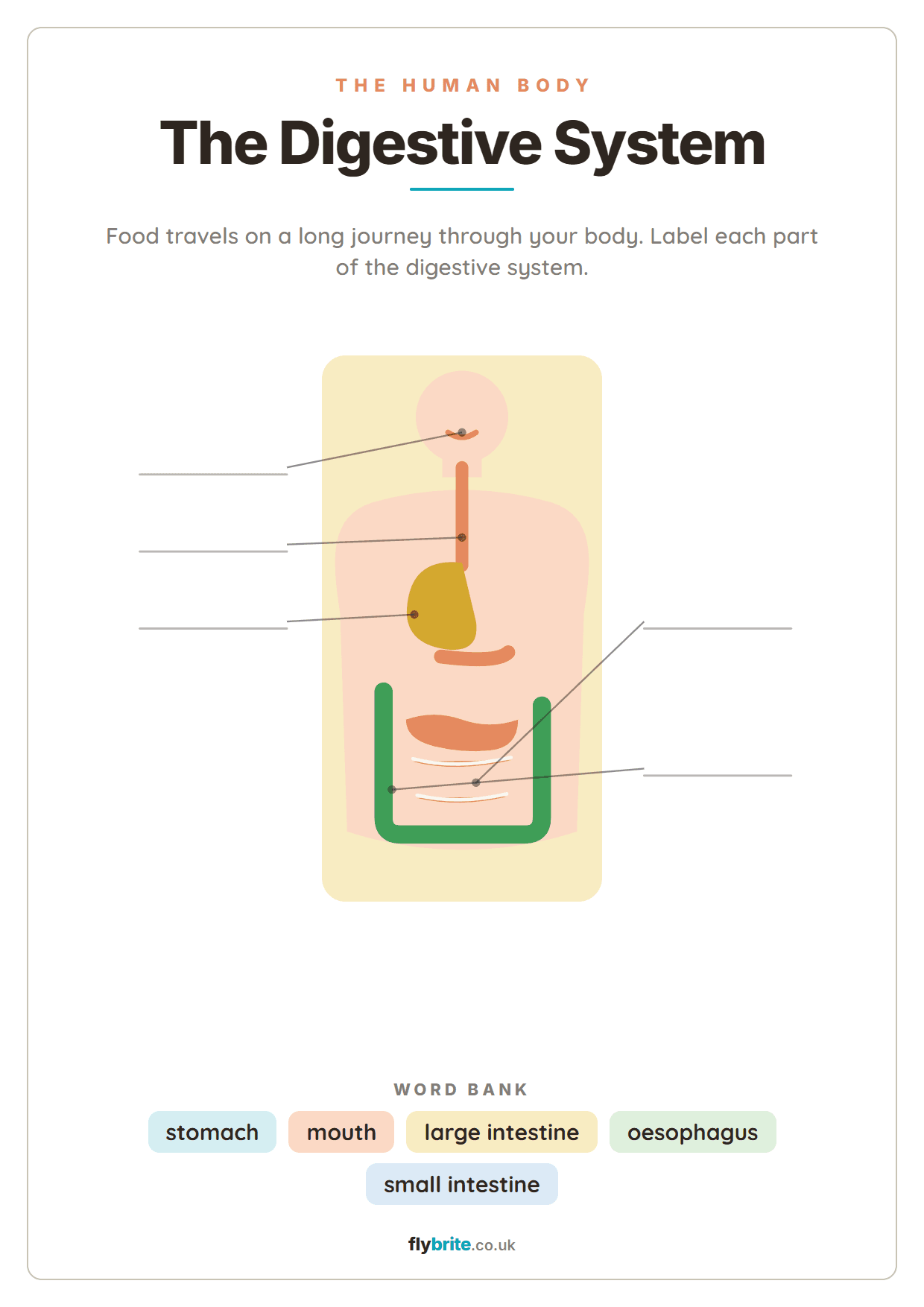
Follow a mouthful of food on its long journey and label every stop along the way.
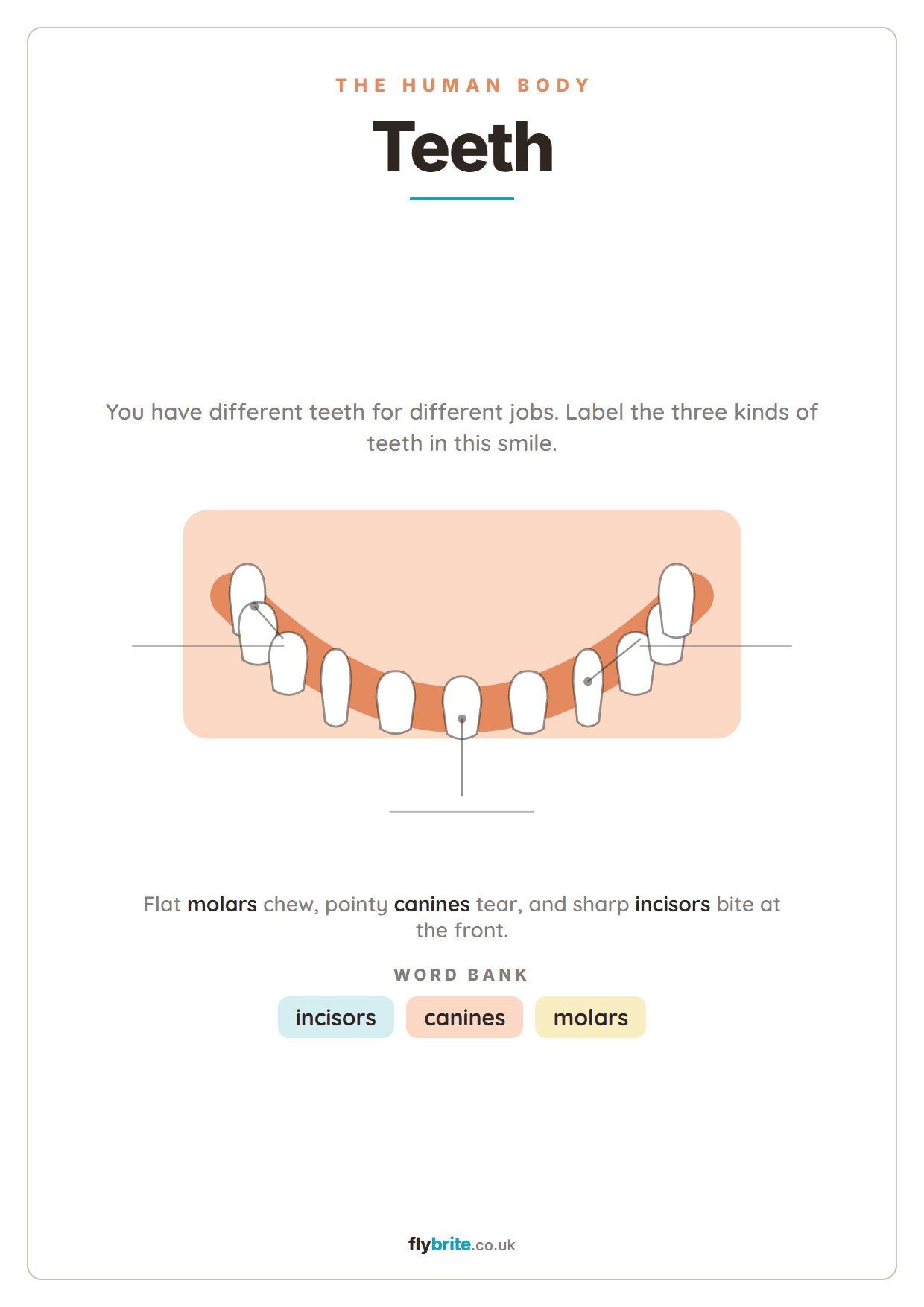
A big cheerful smile for naming the three kinds of teeth and the jobs they each do.
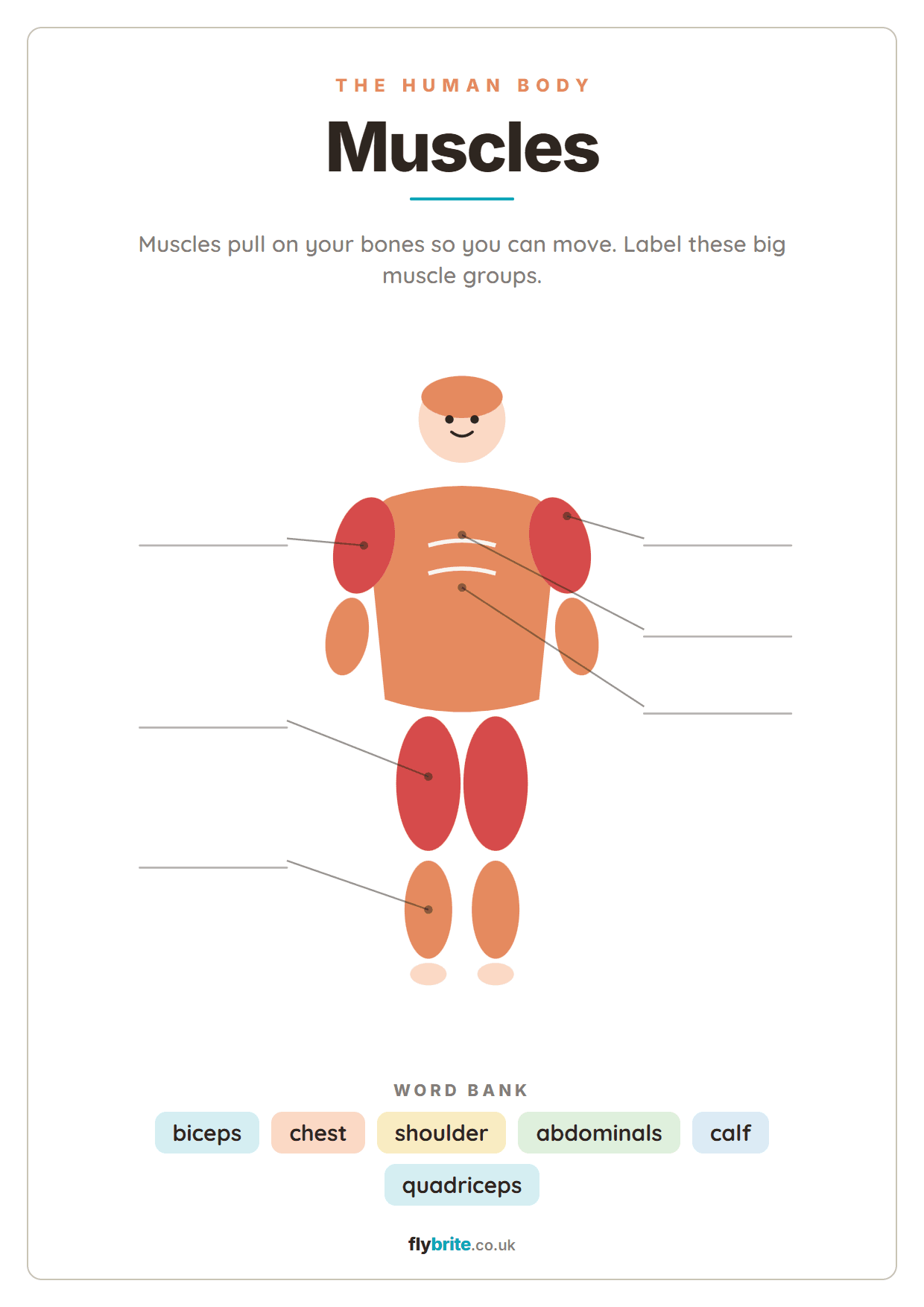
Meet the big muscle groups that pull on your bones, ready to be labelled one by one.
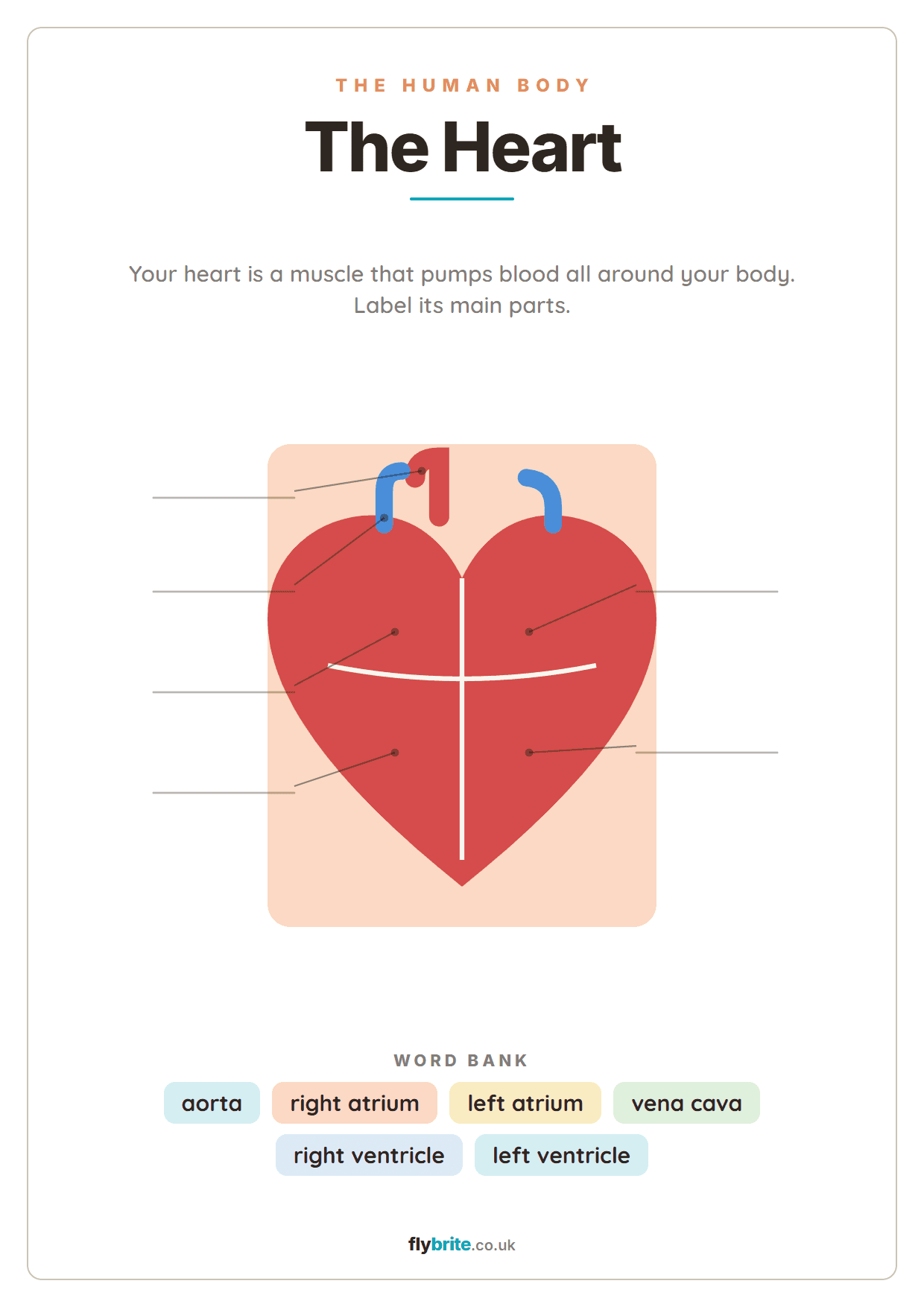
A clear look inside the hardest working muscle you own, with every chamber to name.
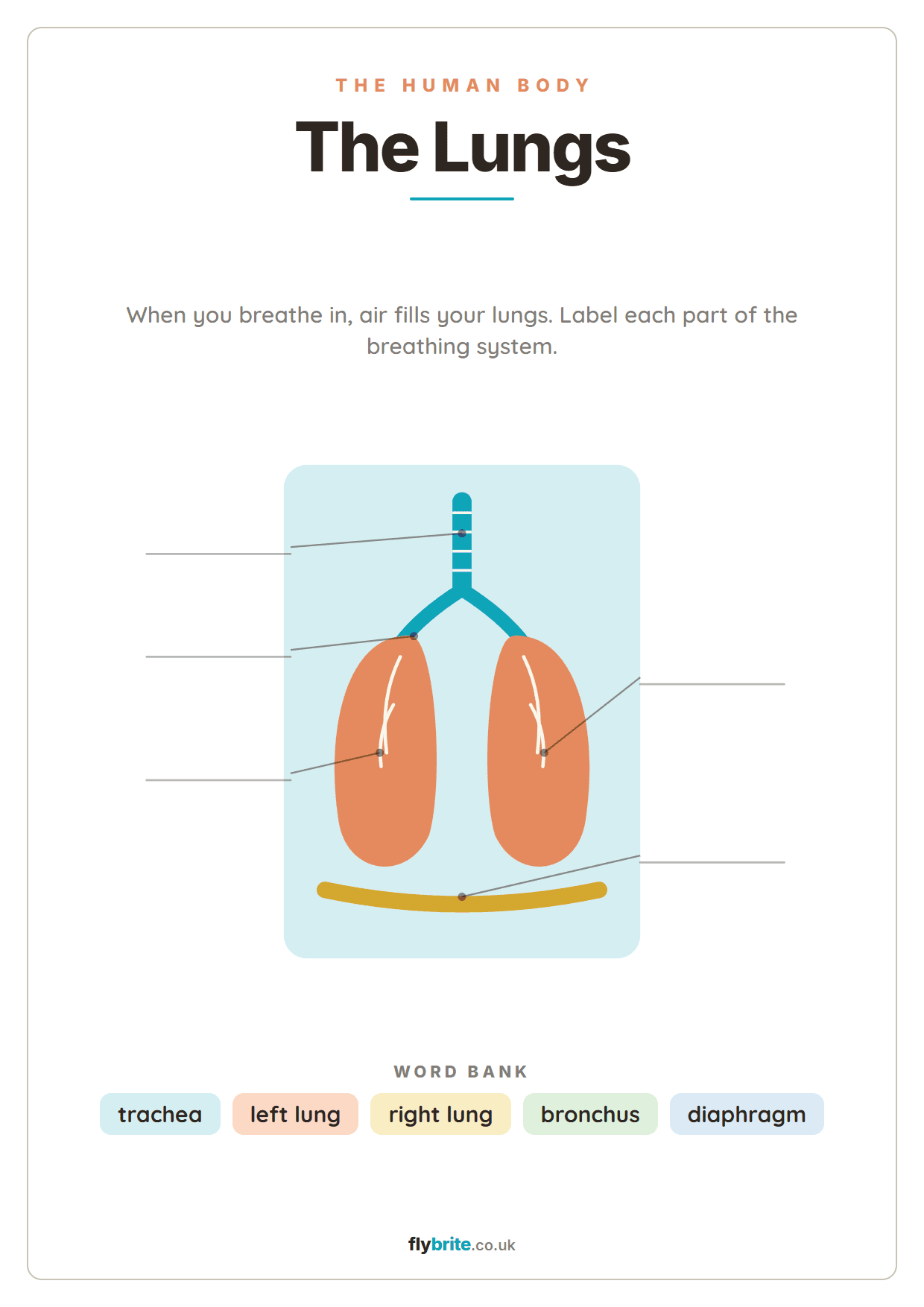
Trace the path of a breath from the trachea to the lungs and label the whole system.
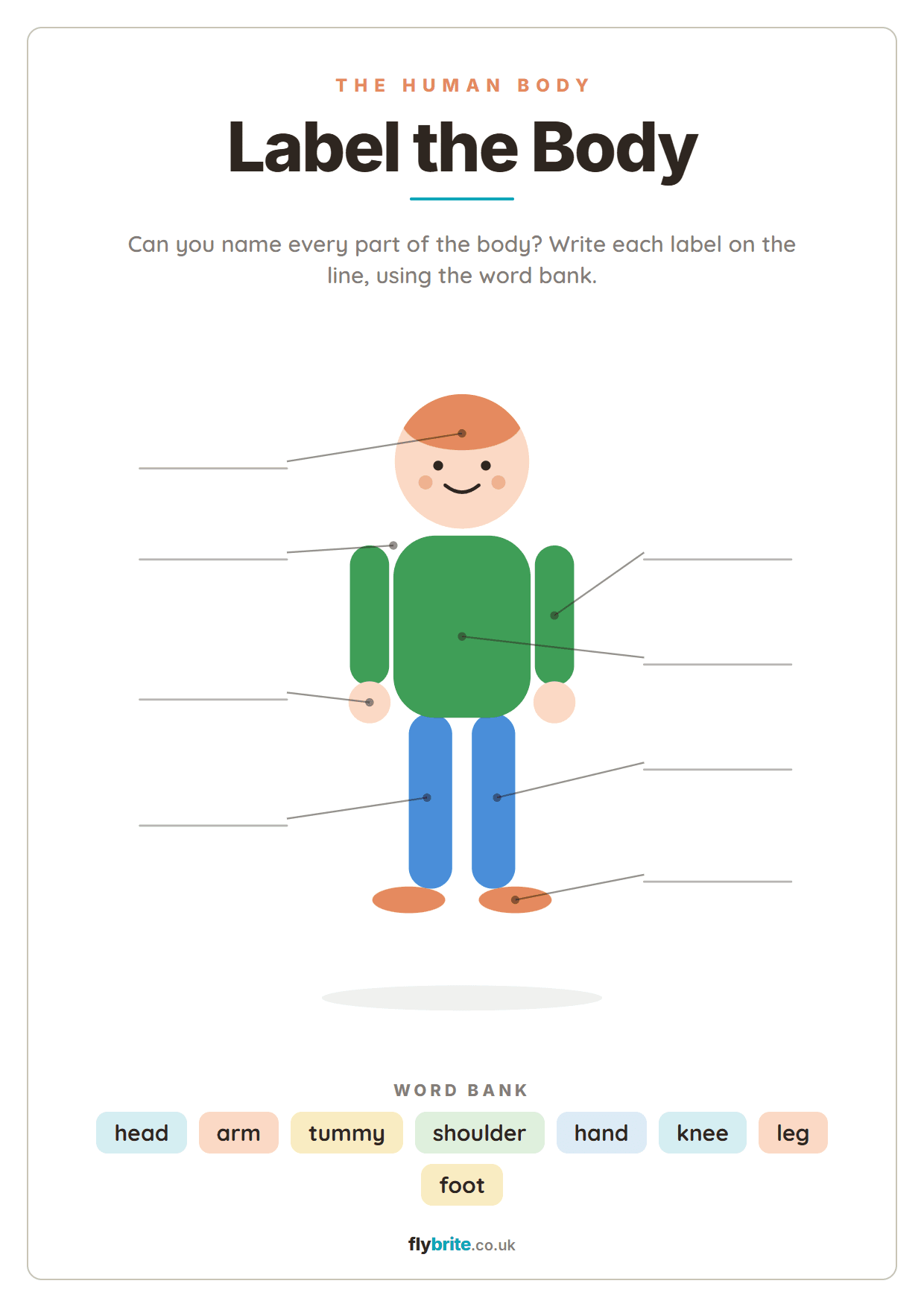
A friendly little figure with eight blanks to fill, from head and shoulders to knees and toes.
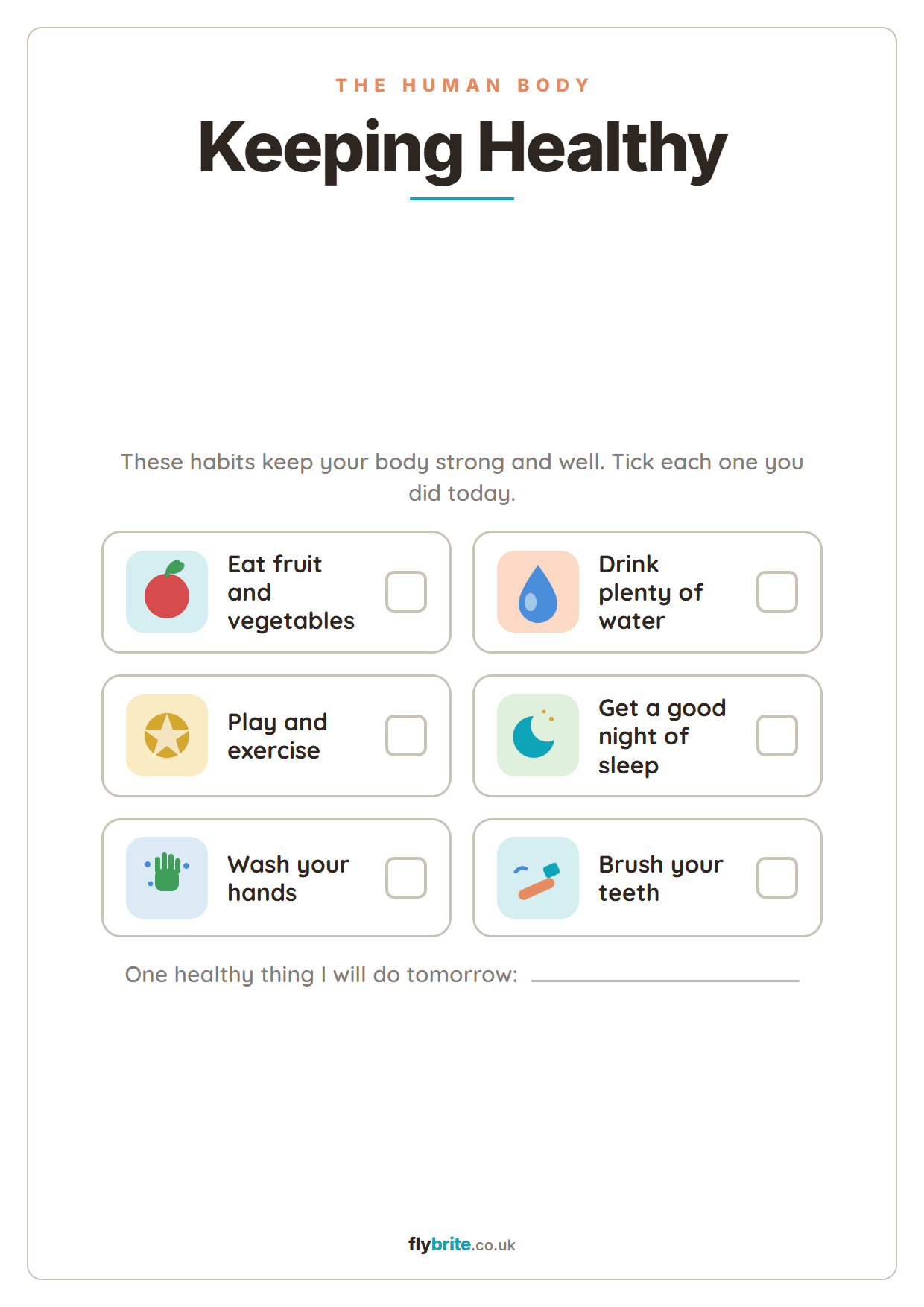
Six happy habits to tick off, a warm little reminder of the ways we look after ourselves.
Planets, the Moon, stars and astronauts, wonder-filled worksheets about our universe.
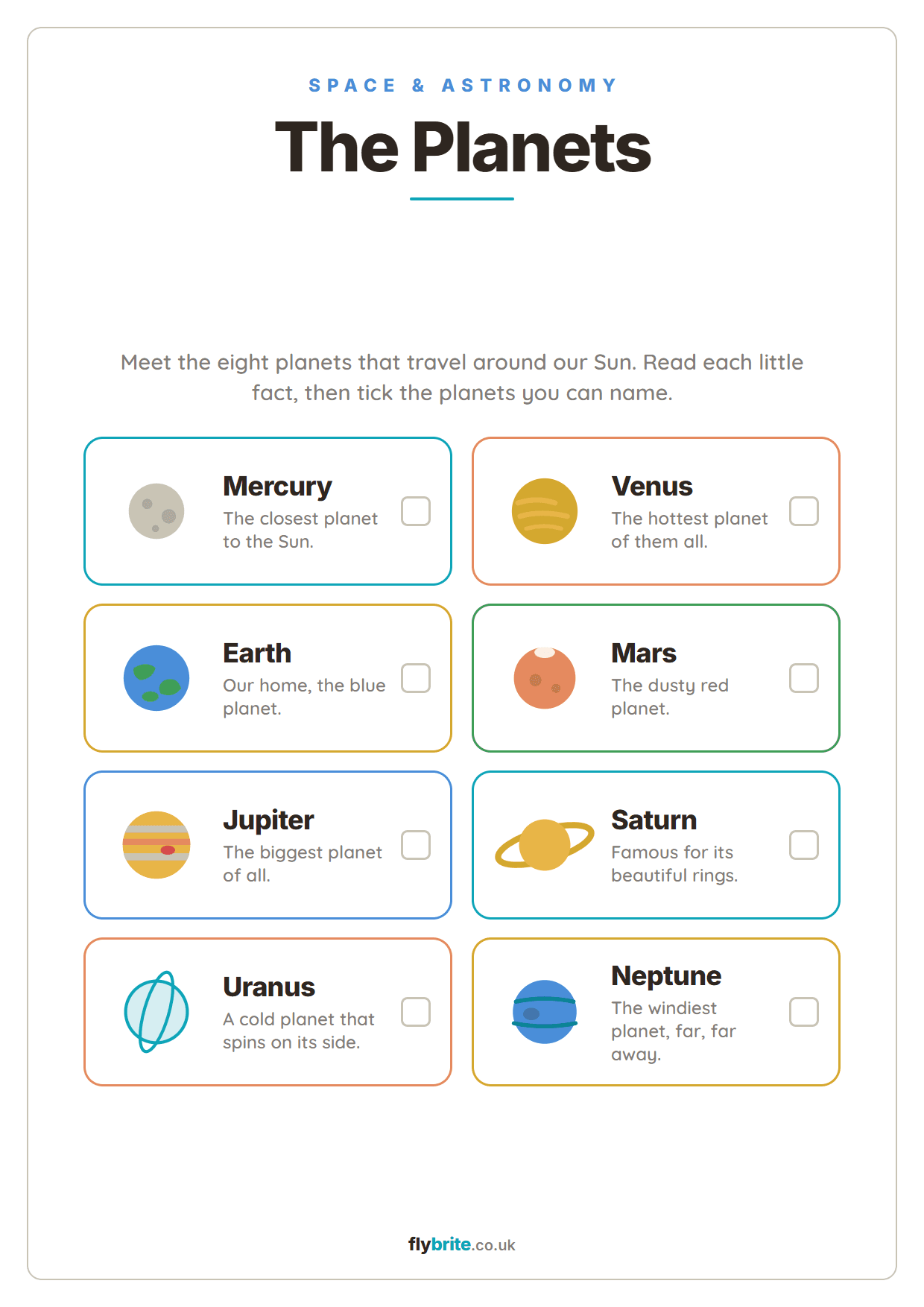
The whole family of planets in one friendly chart, each with a fact to learn and tick off.
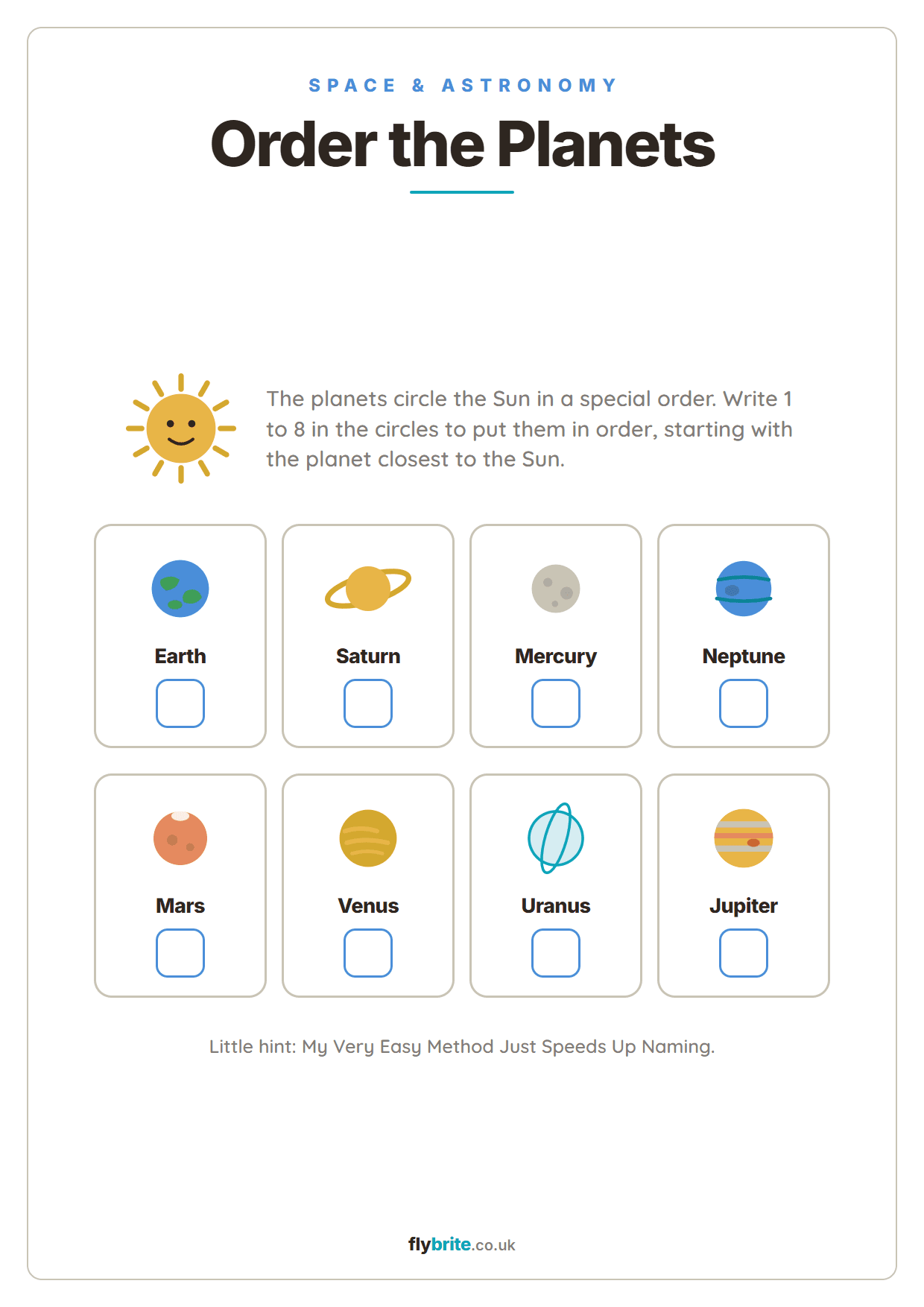
A gentle sorting puzzle: number the eight planets in order out from the Sun.
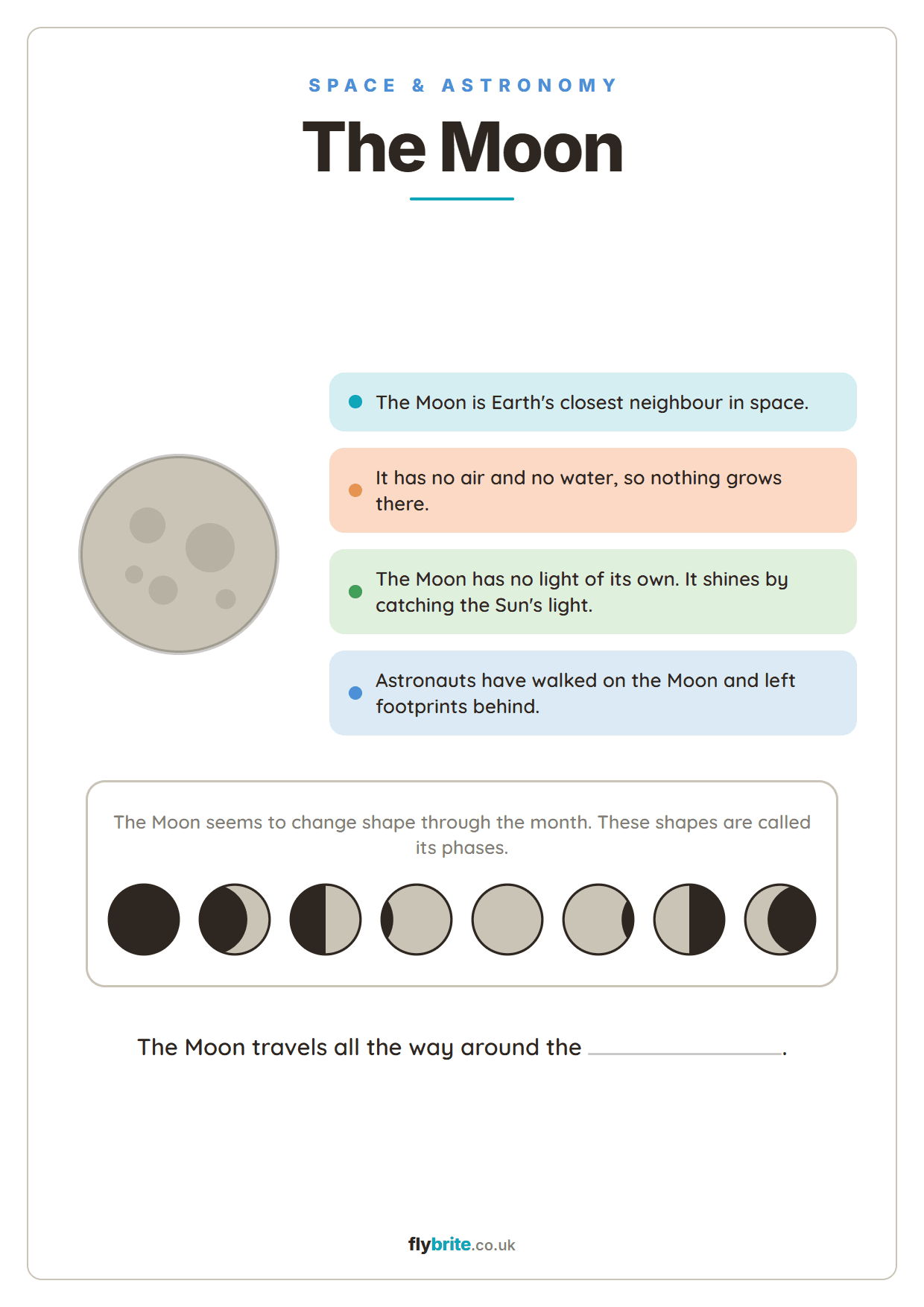
Four cosy facts about our nearest neighbour, plus all eight phases to spot from the window.
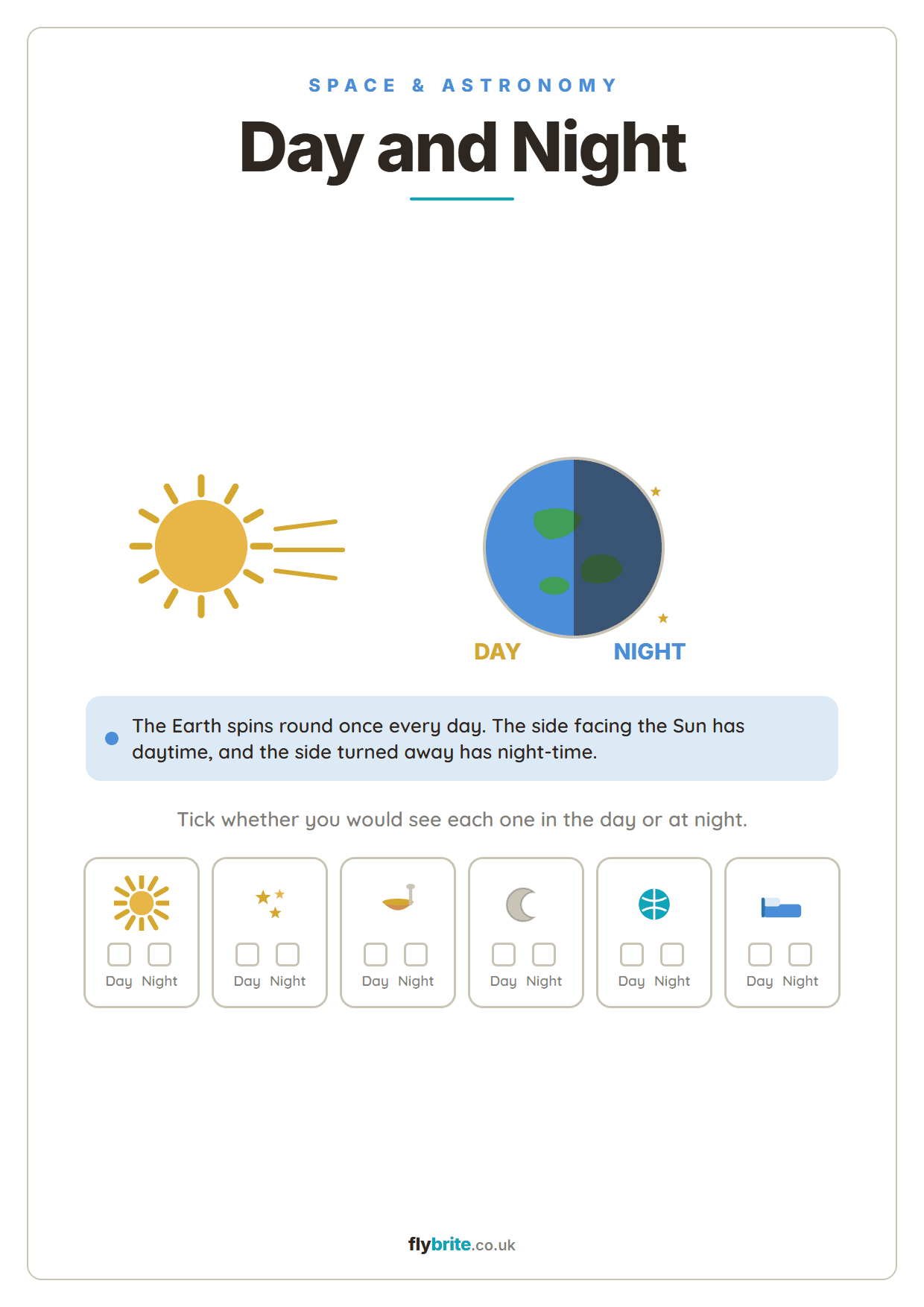
A spinning-Earth diagram and a tick-the-box sort for what happens by day and by night.
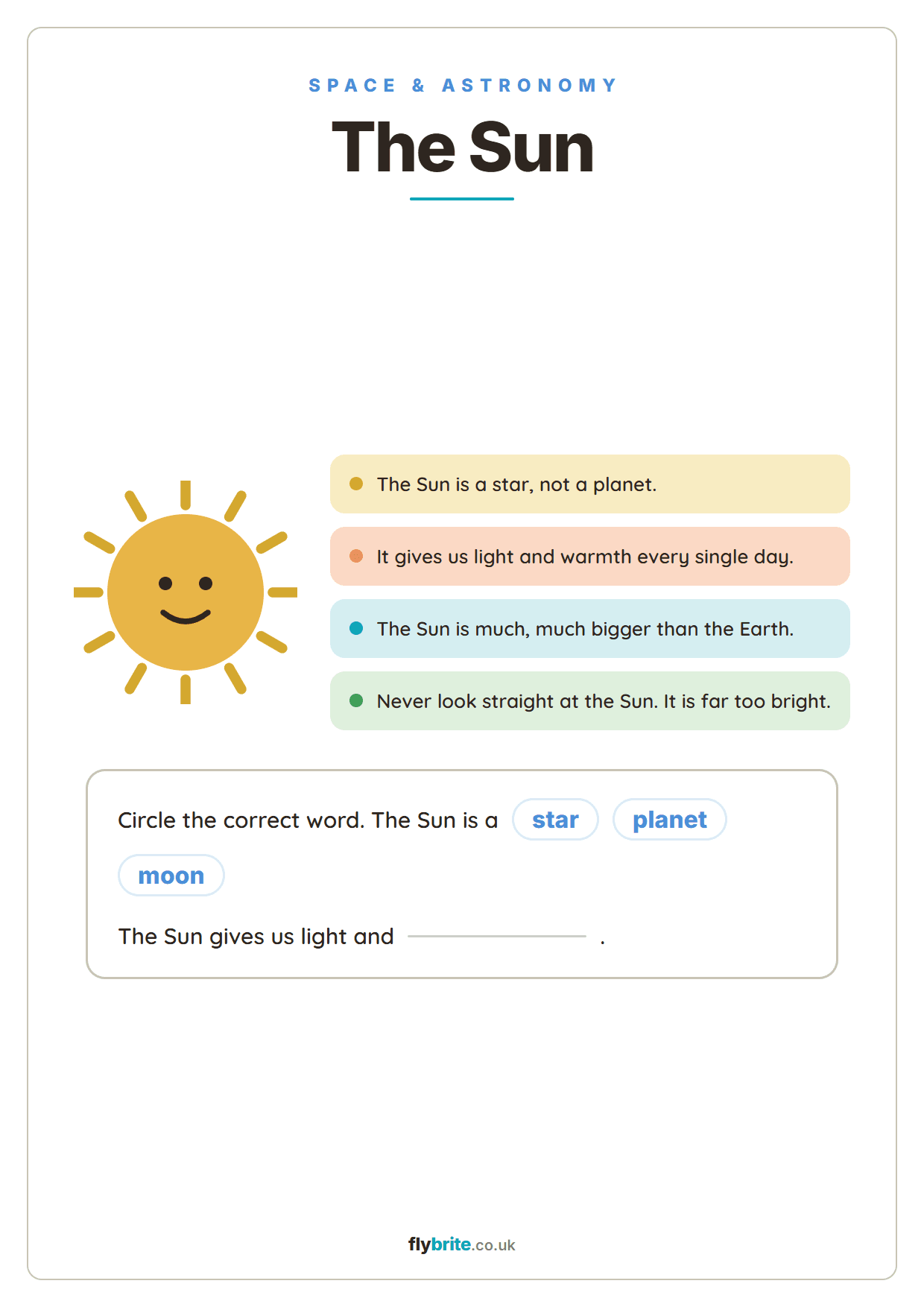
Our nearest star, with four warm facts and a circle-and-write activity to finish.
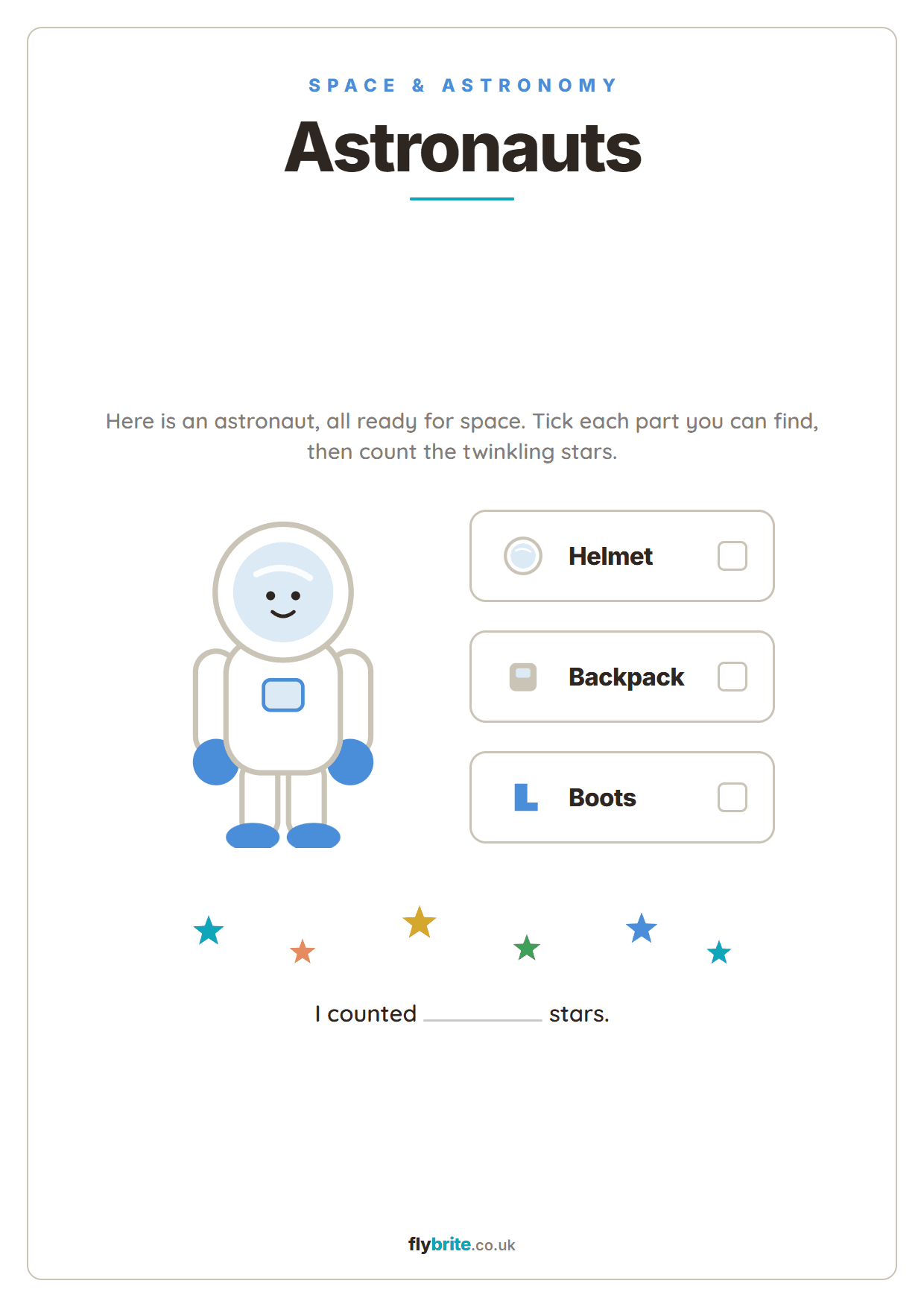
A friendly astronaut for little ones to explore, with parts to tick and stars to count.
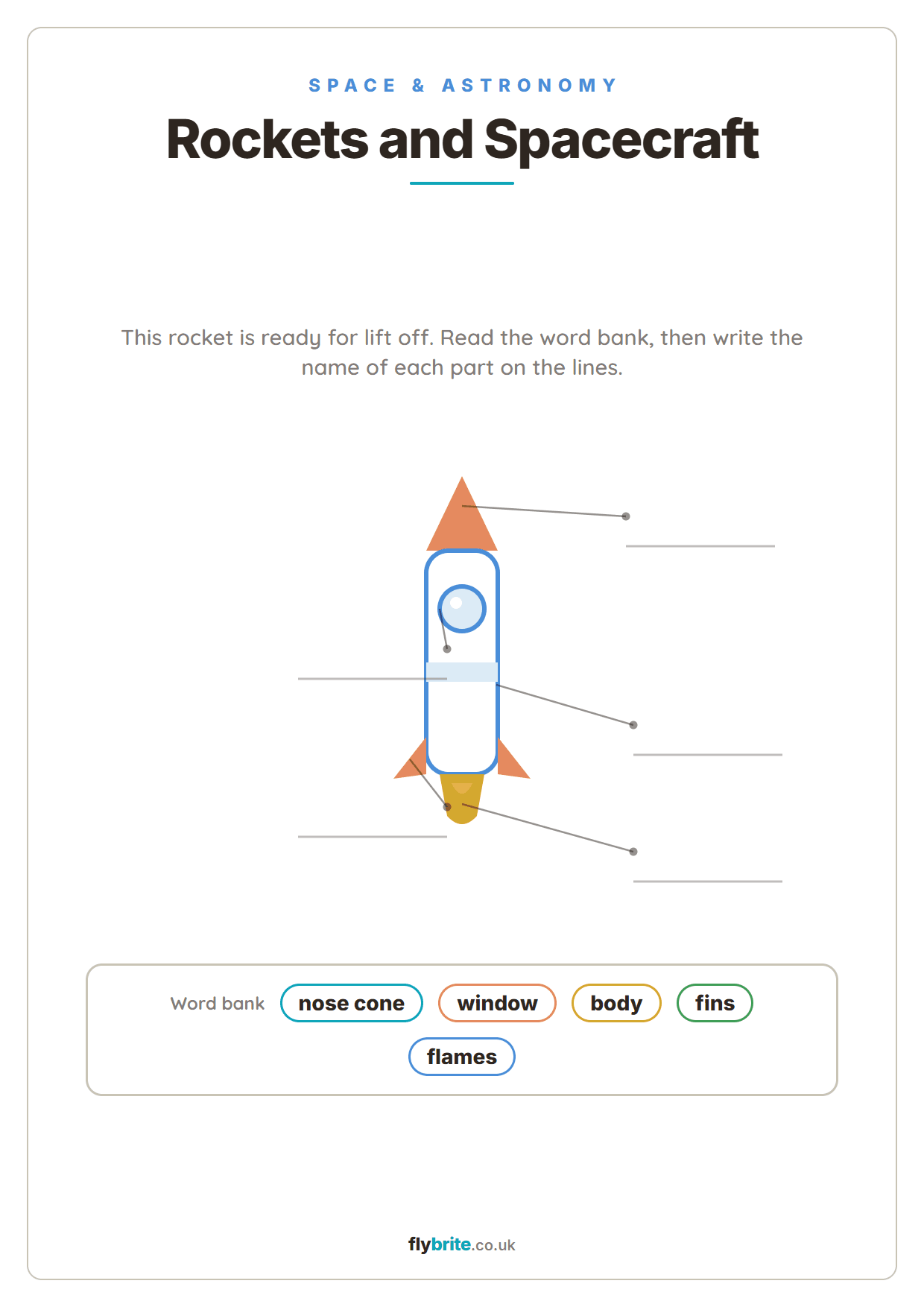
Label the parts of a lift-off rocket using the word bank, nose cone to flames.
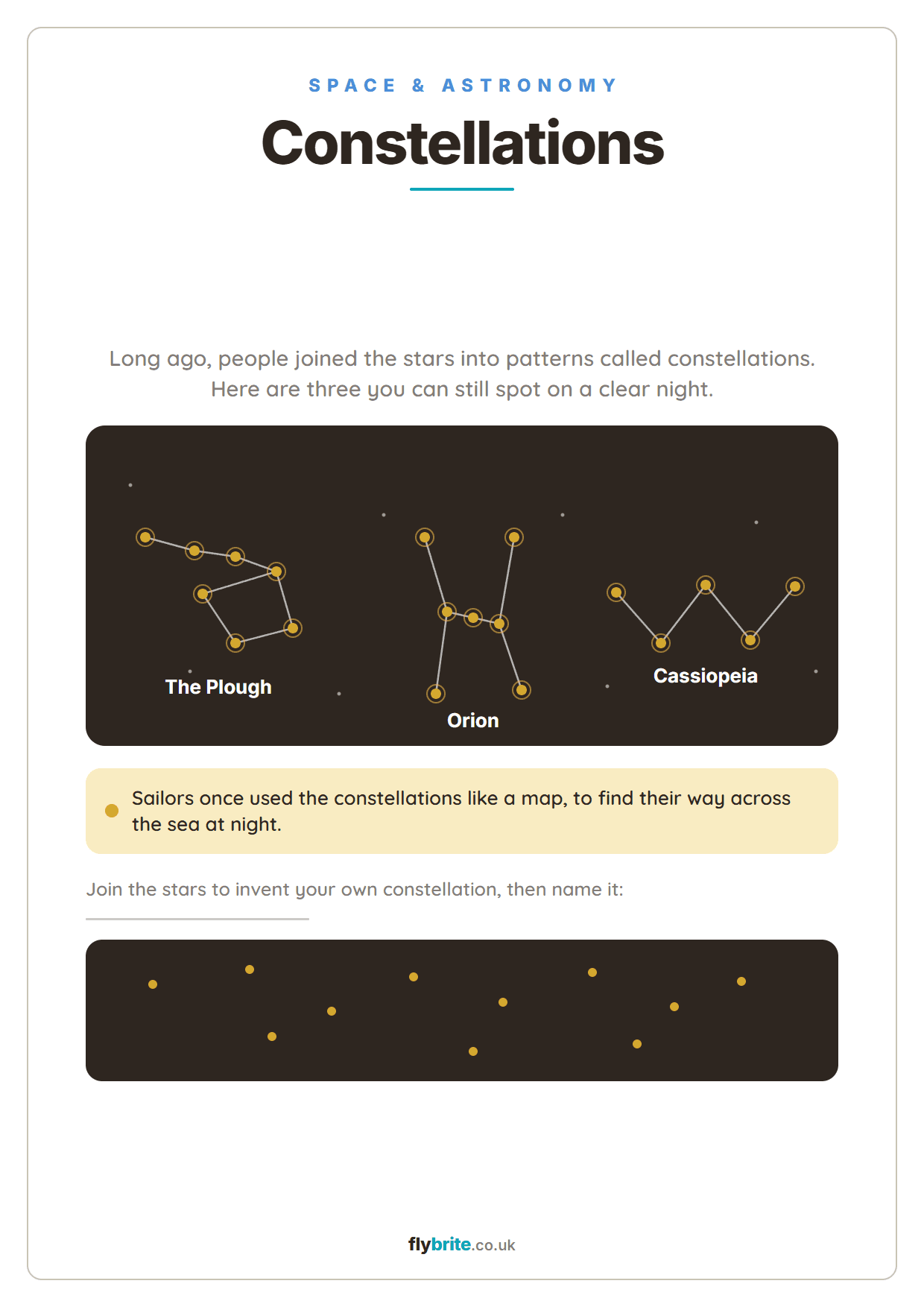
Three real star patterns to recognise, then join the dots to invent one of your own.
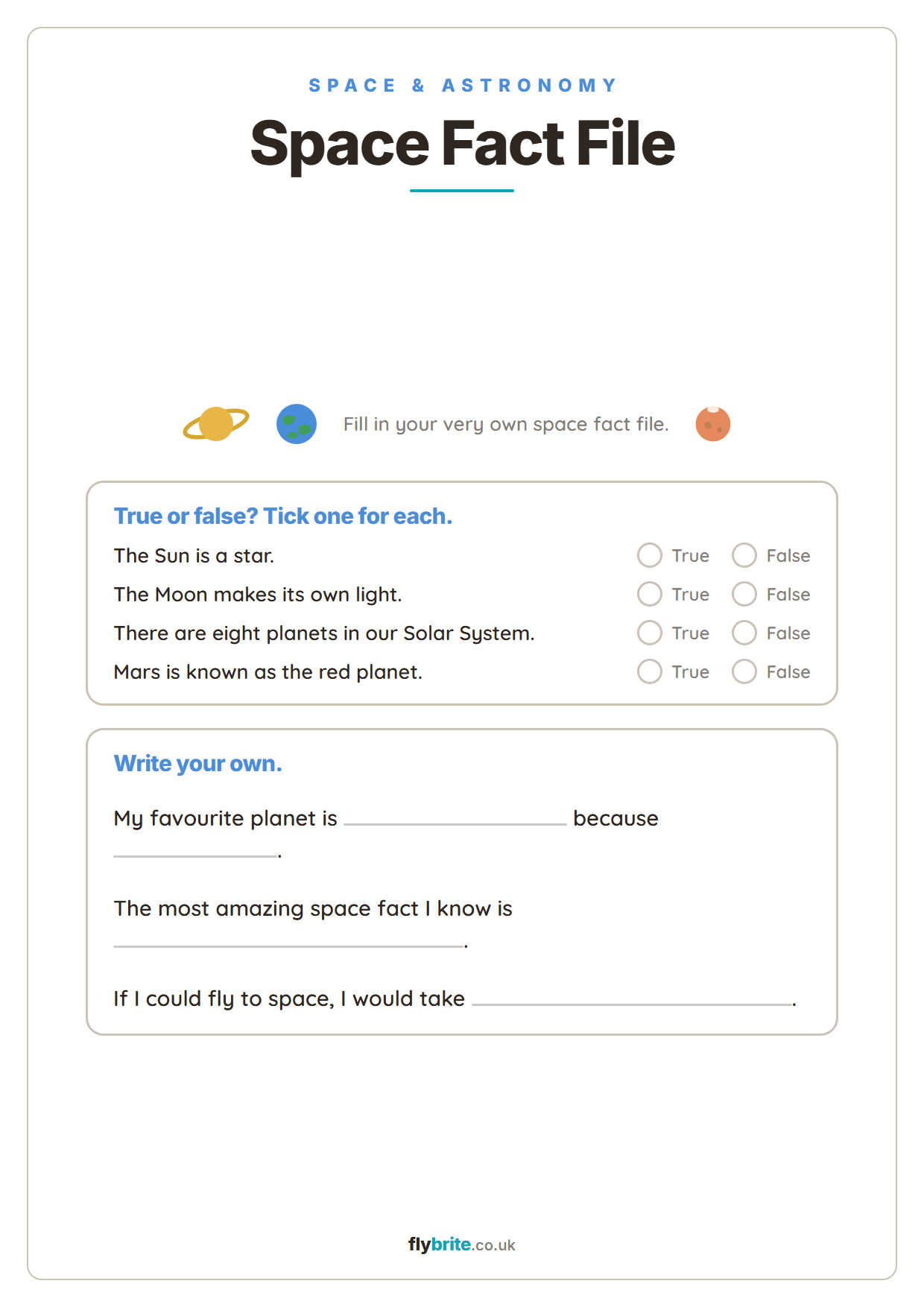
A proper little research page: true-or-false ticks and write-in prompts for space fans.
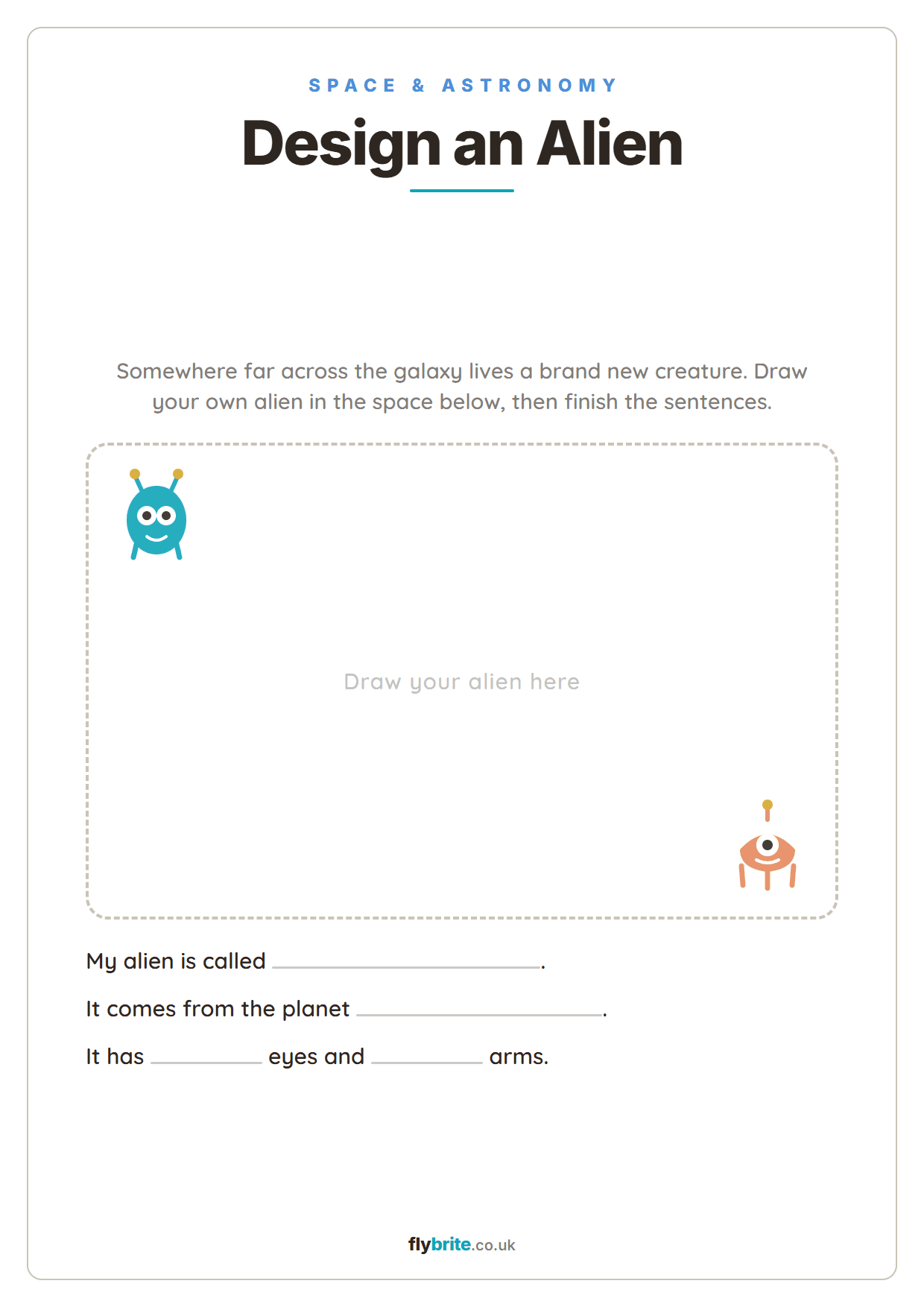 Type or write in
A big blank space to draw a brand new alien, with sentences to finish about your creation.
Solids, liquids and gases, everyday materials and their properties, sorted and explored.
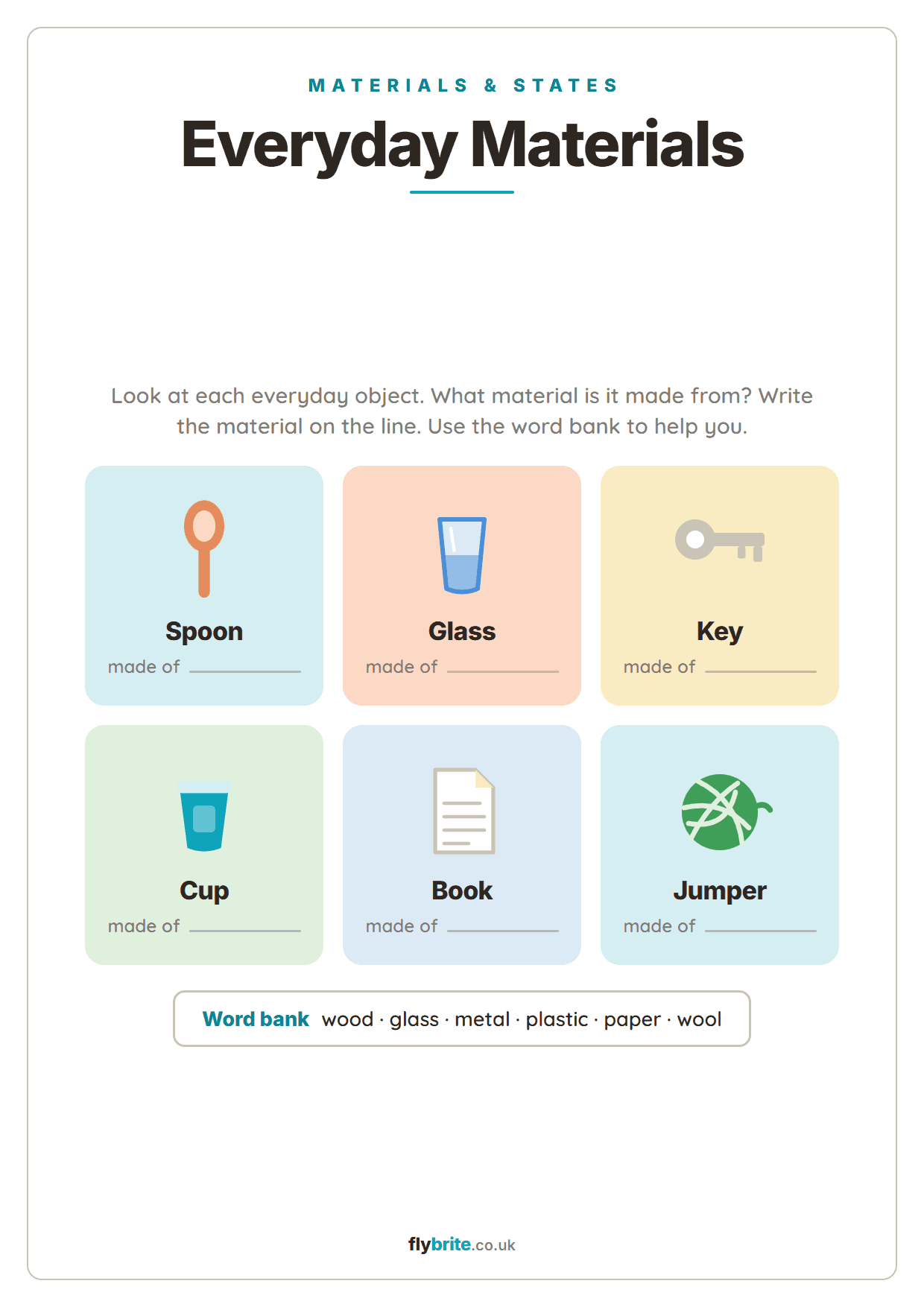
Six everyday objects to name the material for, from a wooden spoon to a woolly jumper.
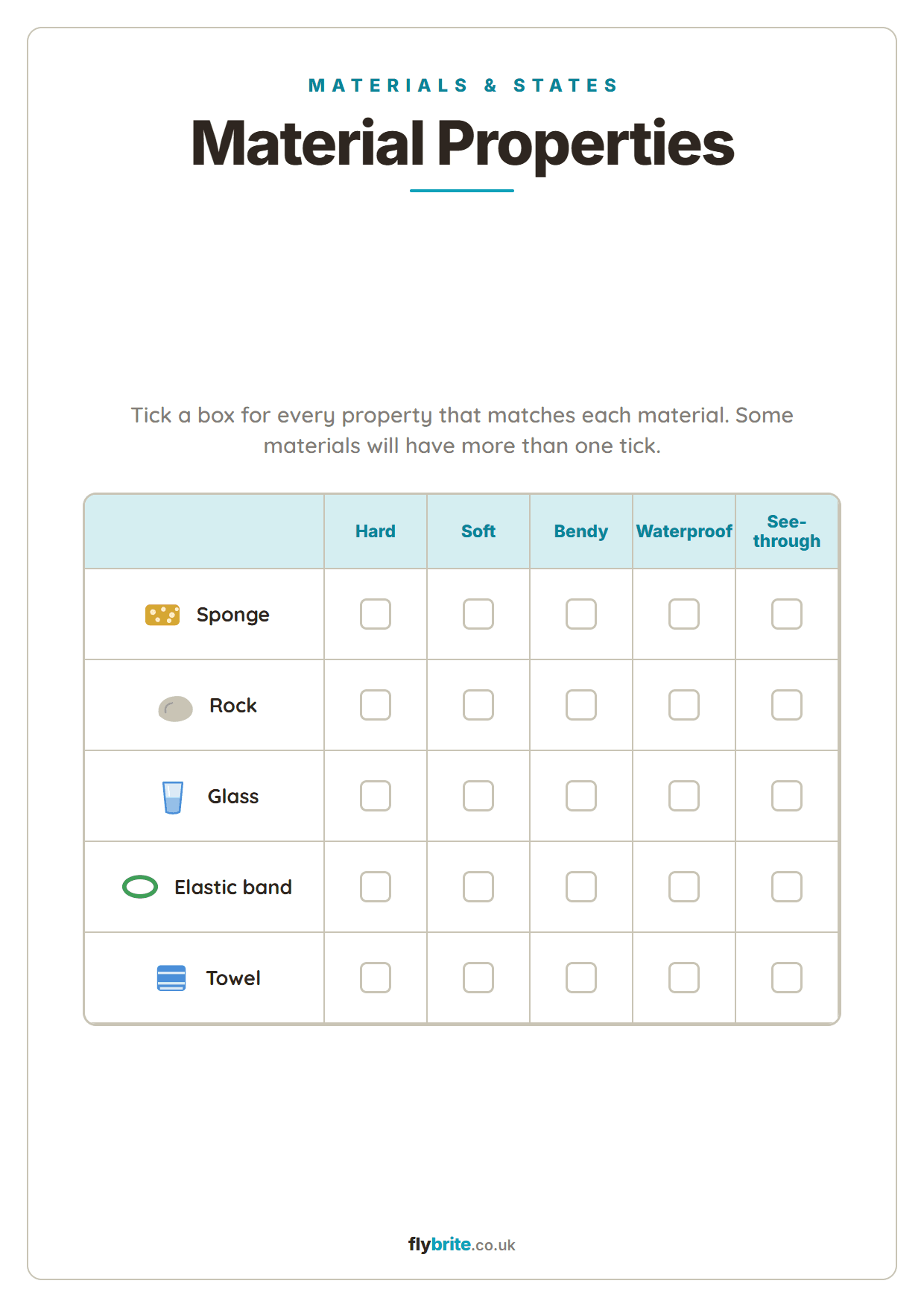
A friendly tick-box table for spotting whether a material is hard, soft, bendy or waterproof.
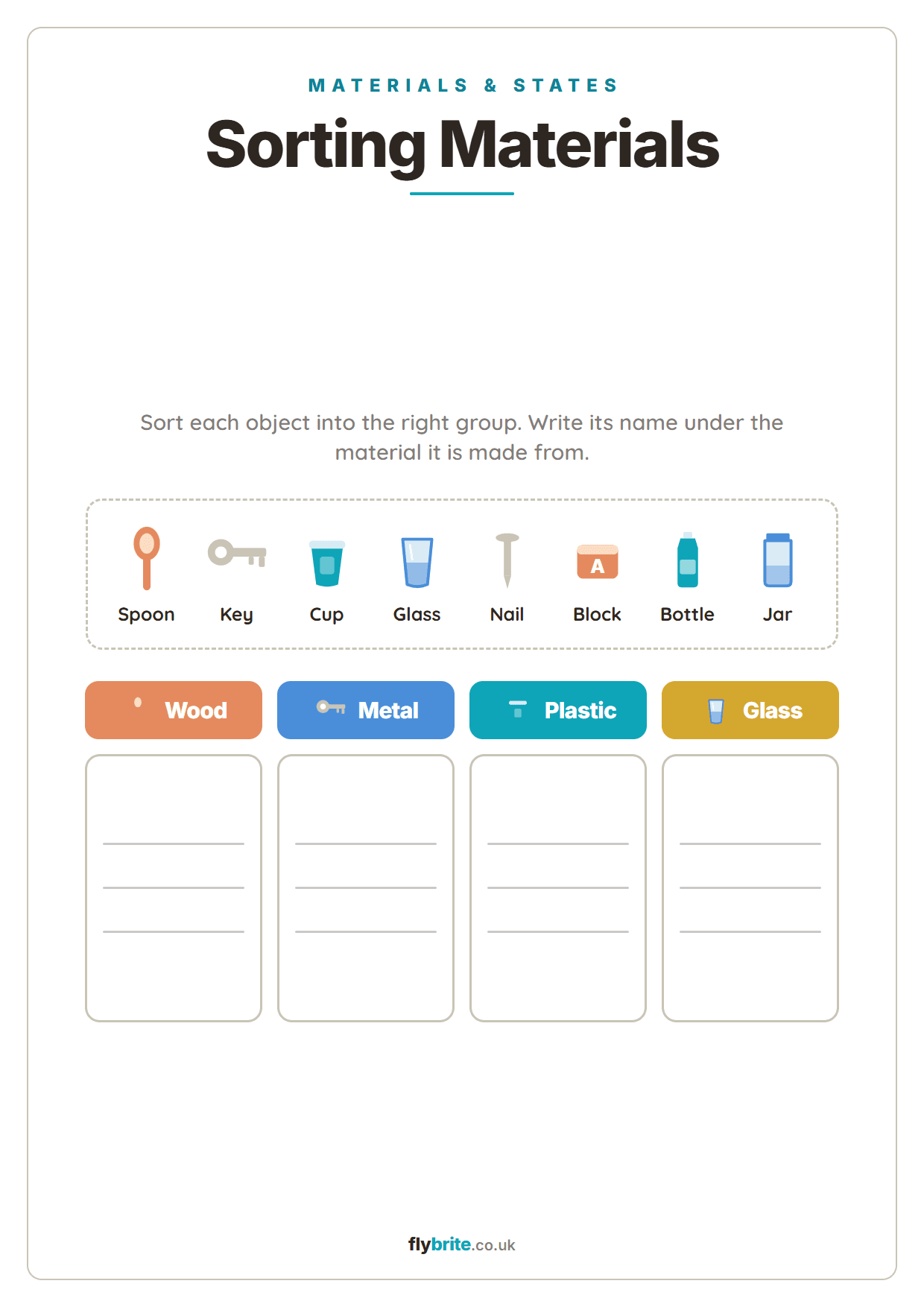
An object bank to sort into wood, metal, plastic and glass, lovely hands-on science.
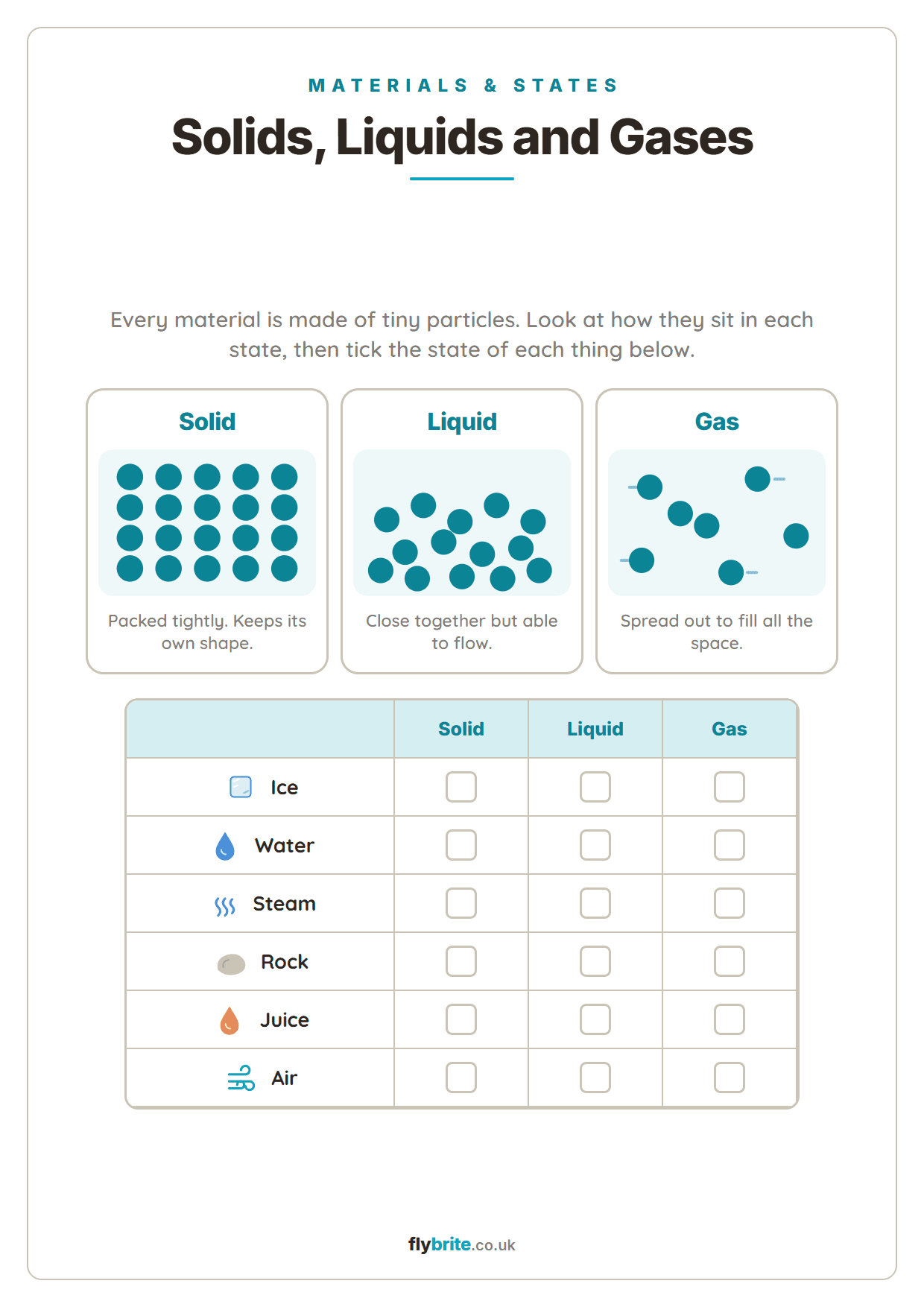
Particle pictures for solids, liquids and gases, with a tick-the-state table to finish.
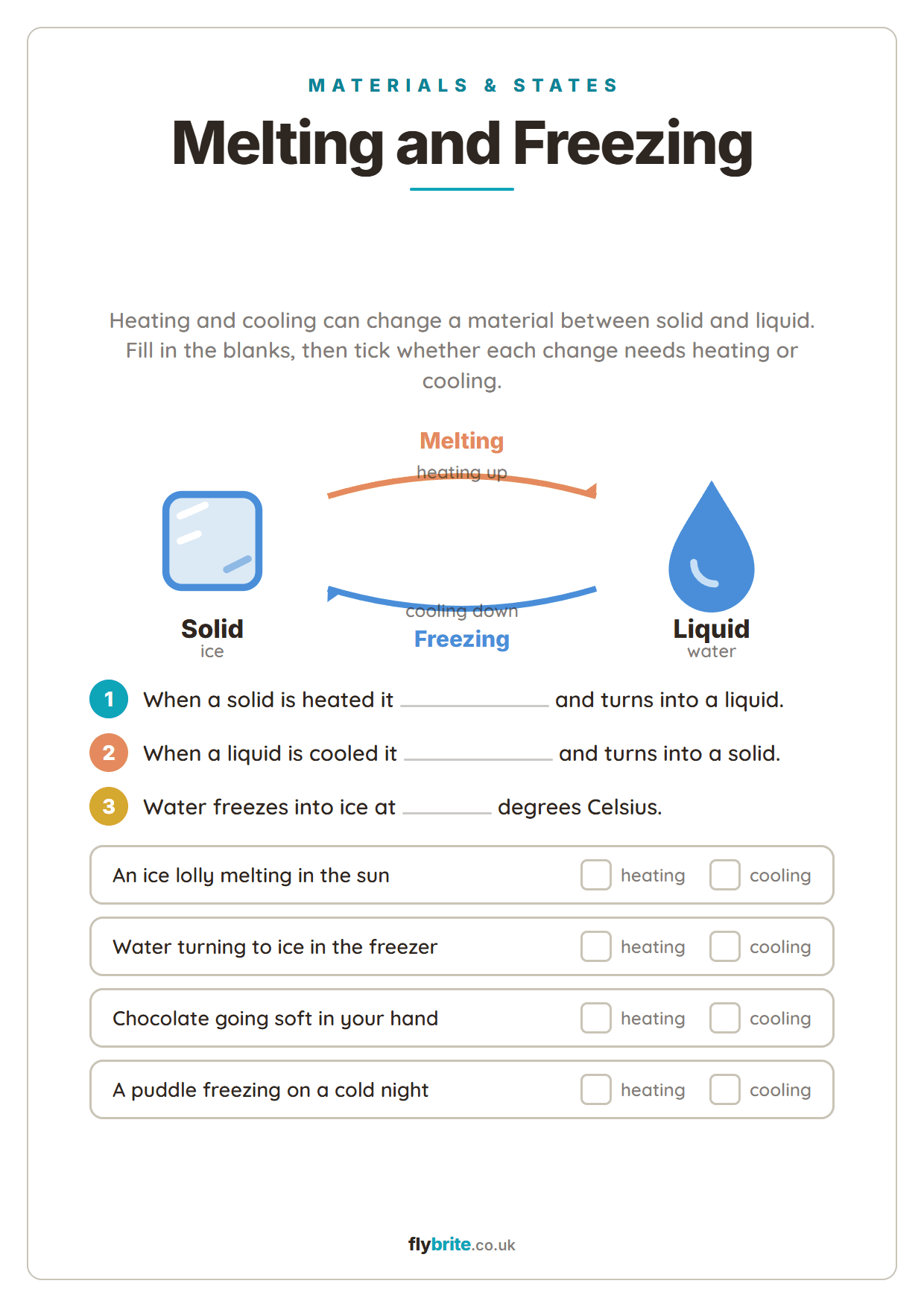
Watch ice melt and water freeze, then fill in what heating and cooling do.

The water cycle told through changing states, with four stages to label.
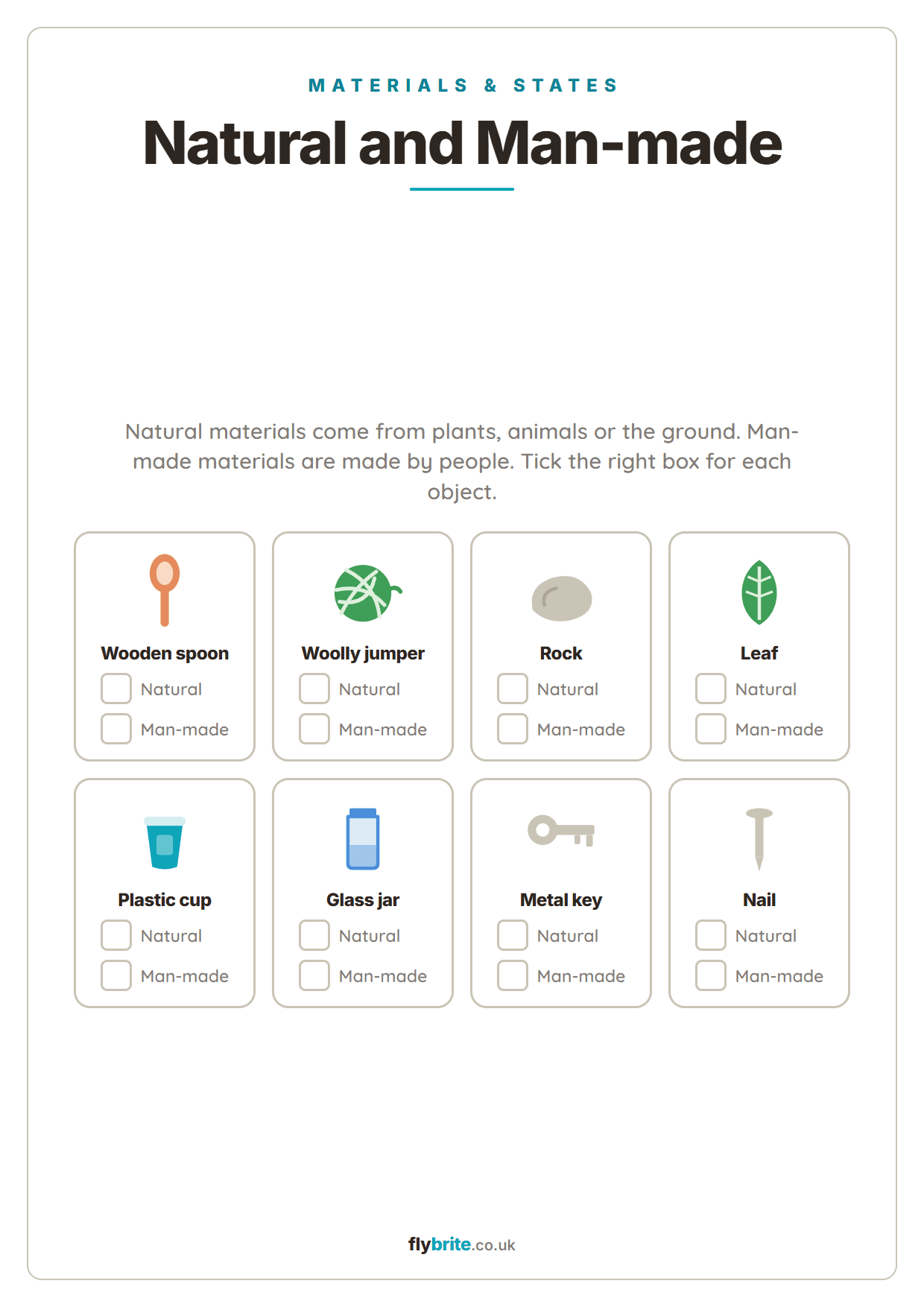
Sort everyday things into natural and man-made with a simple tick for each.
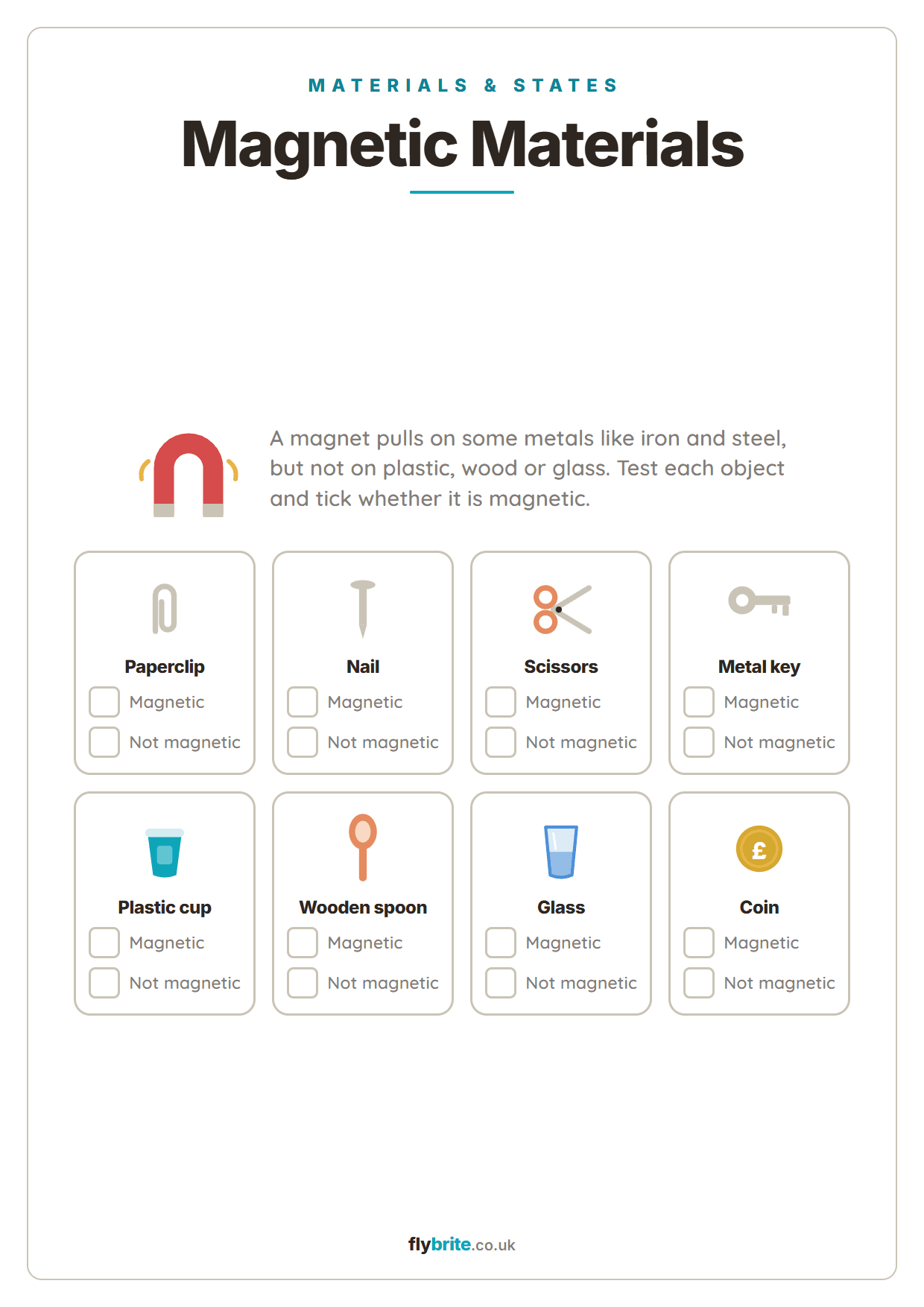
A horseshoe magnet and a set of objects to test, magnetic or not.
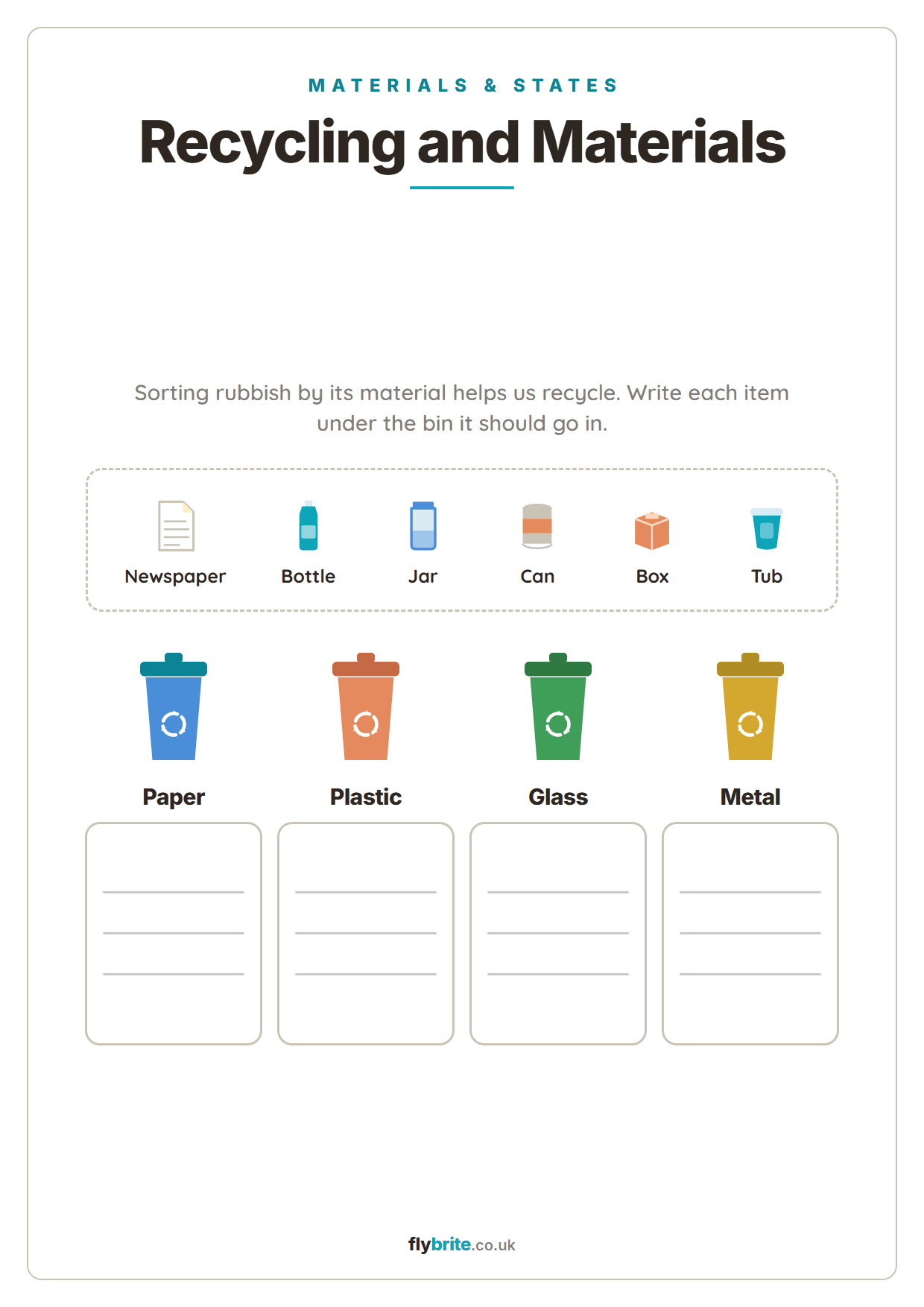
Sort the recycling into paper, plastic, glass and metal bins, tidy and kind to the planet.
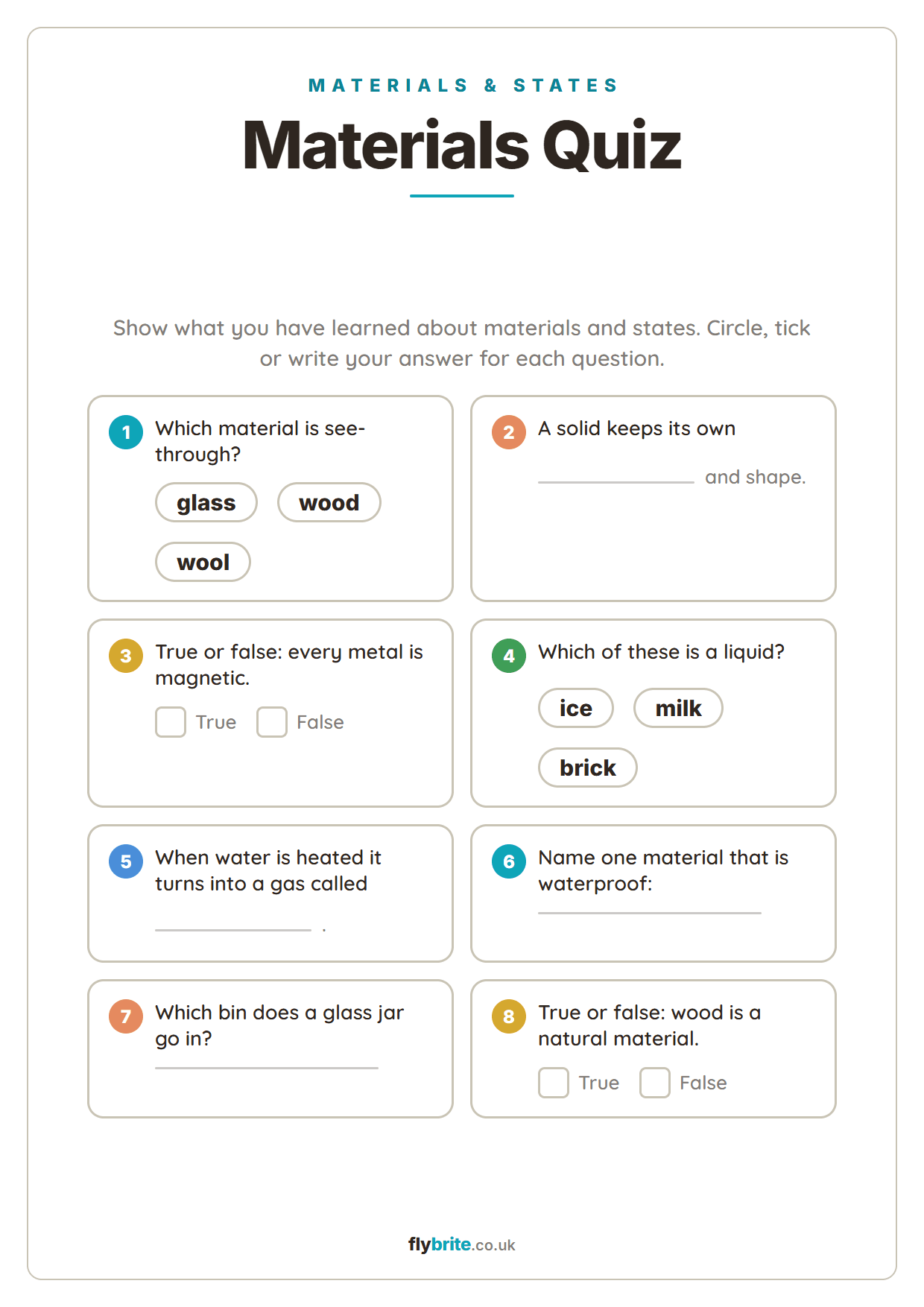
A gentle end-of-topic quiz to show off everything learned about materials and states.
Parts of a plant, life cycles and what seeds need, the science of growing things.
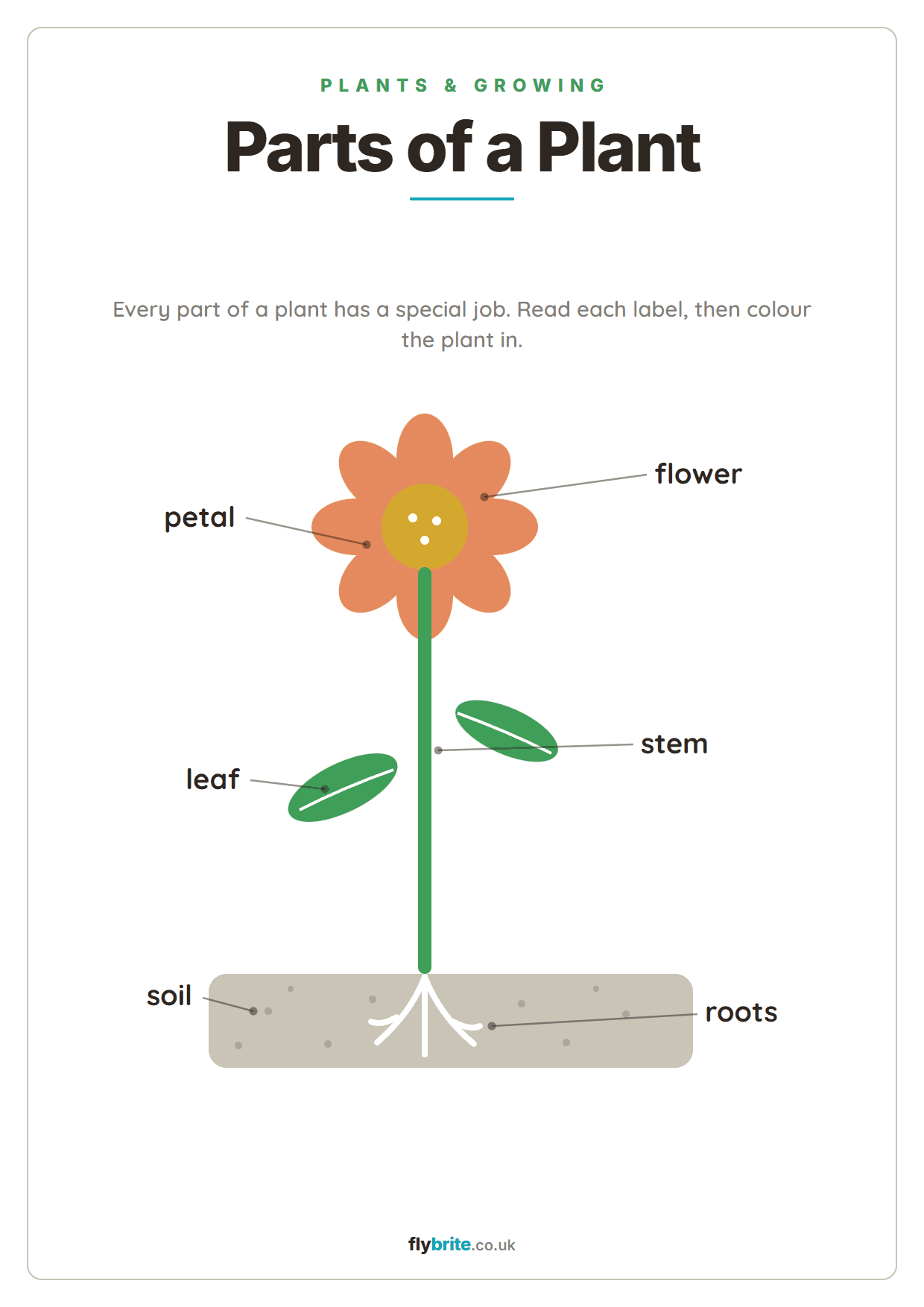
A cheerful labelled plant to colour in, naming every part from petal to root.
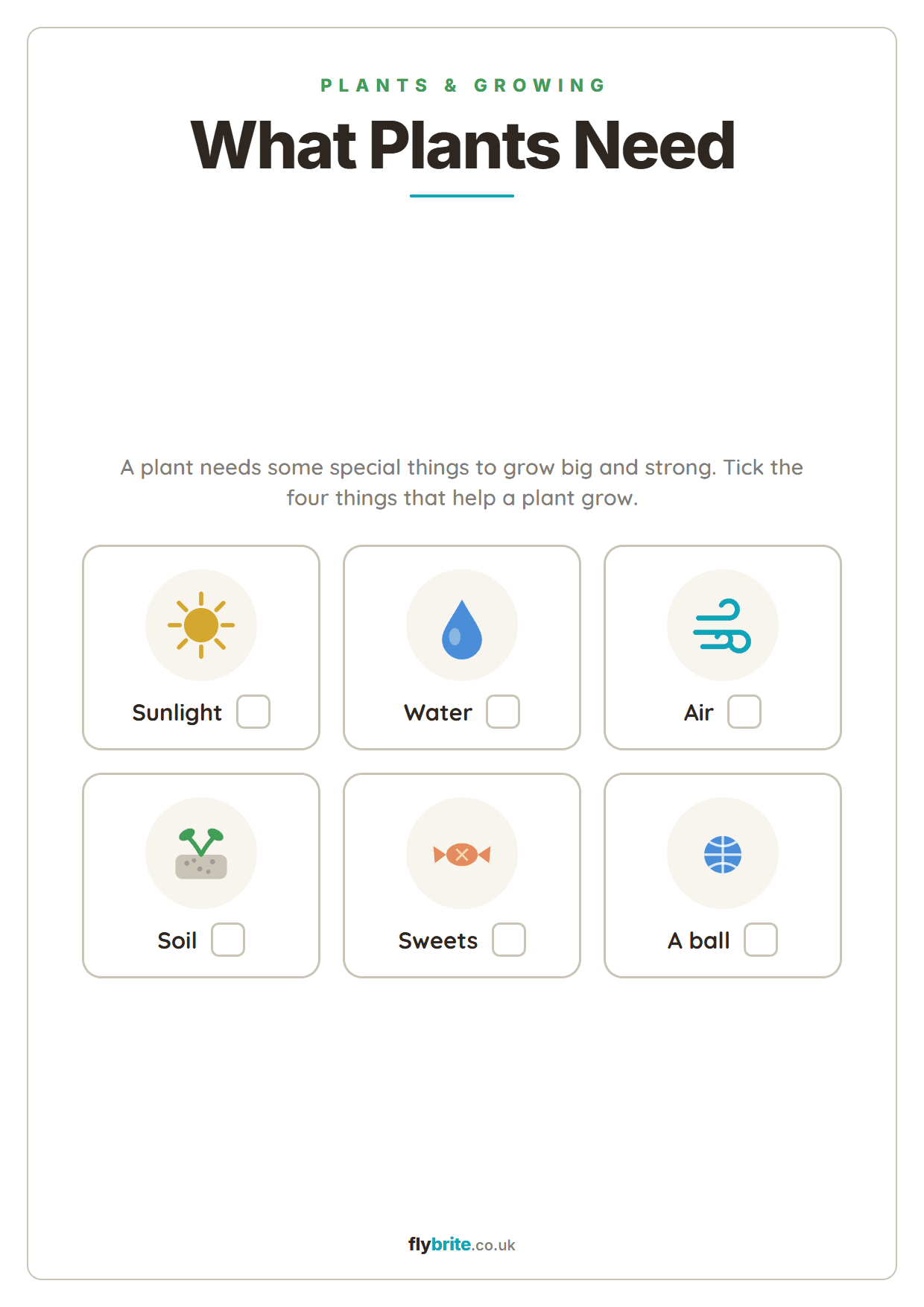
A friendly tick sheet to sort the four things every plant needs to grow.
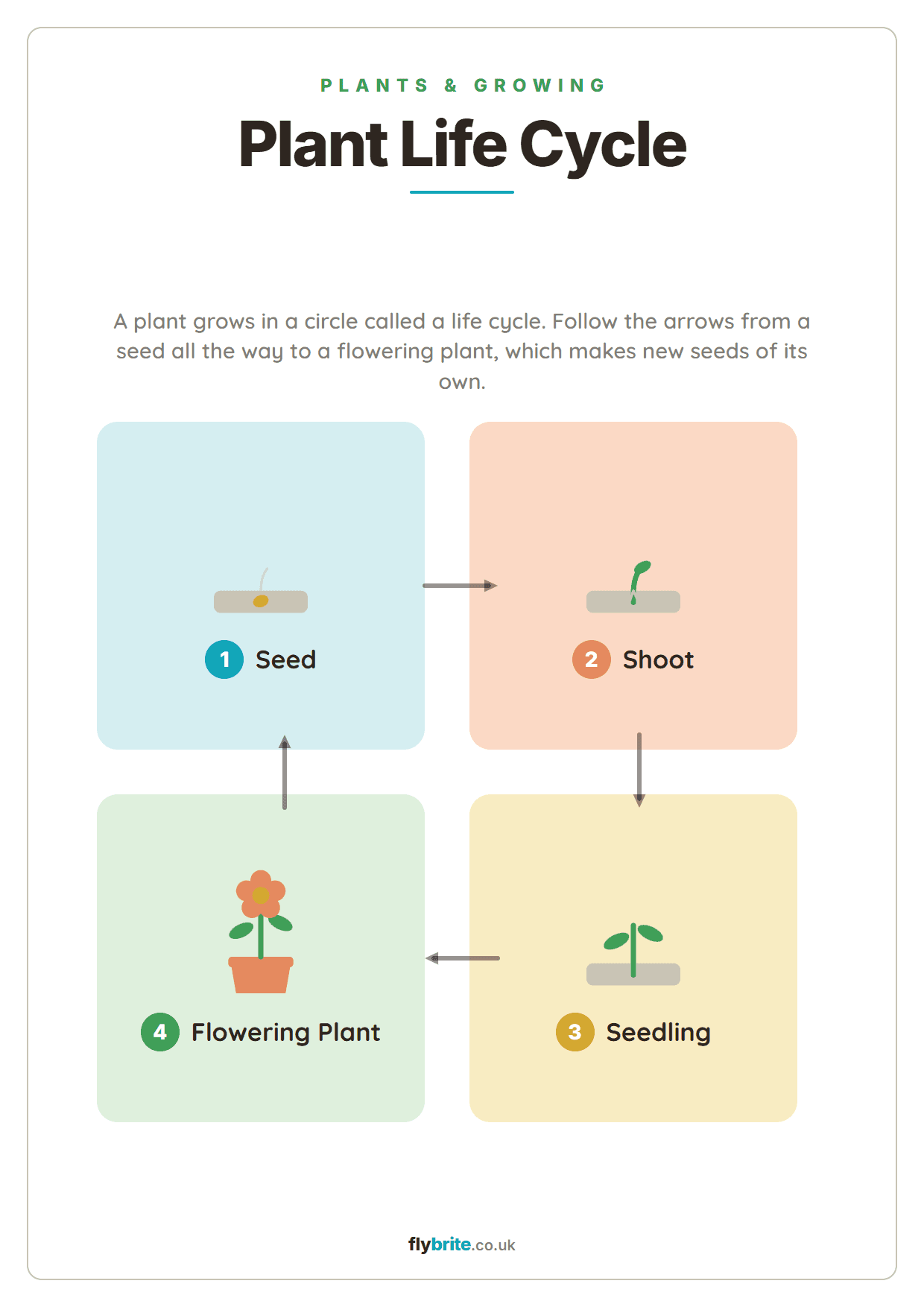
Follow a little seed all the way round to a flowering plant in four gentle stages.
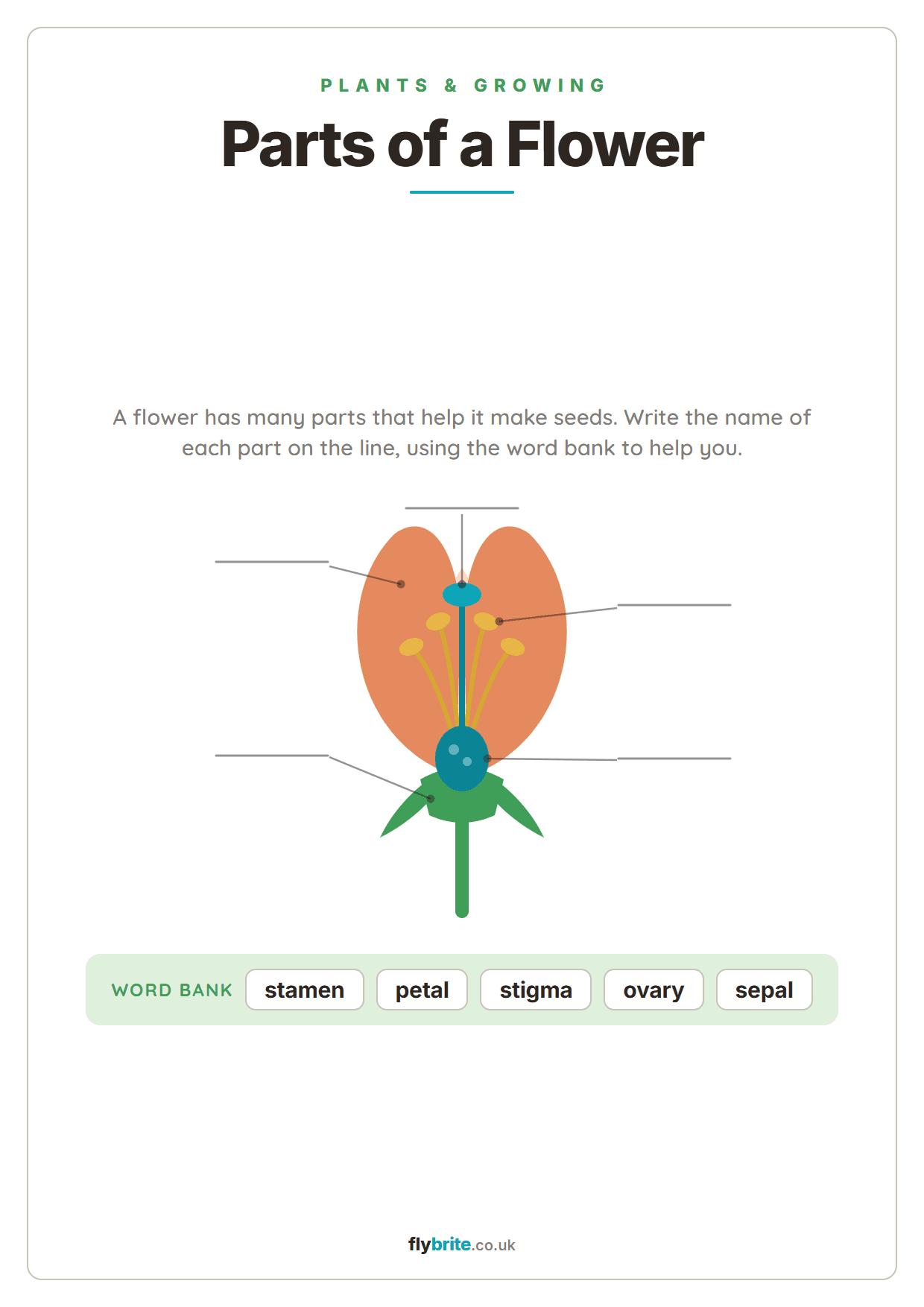
A label-it worksheet for the inside of a flower, with a word bank to help.
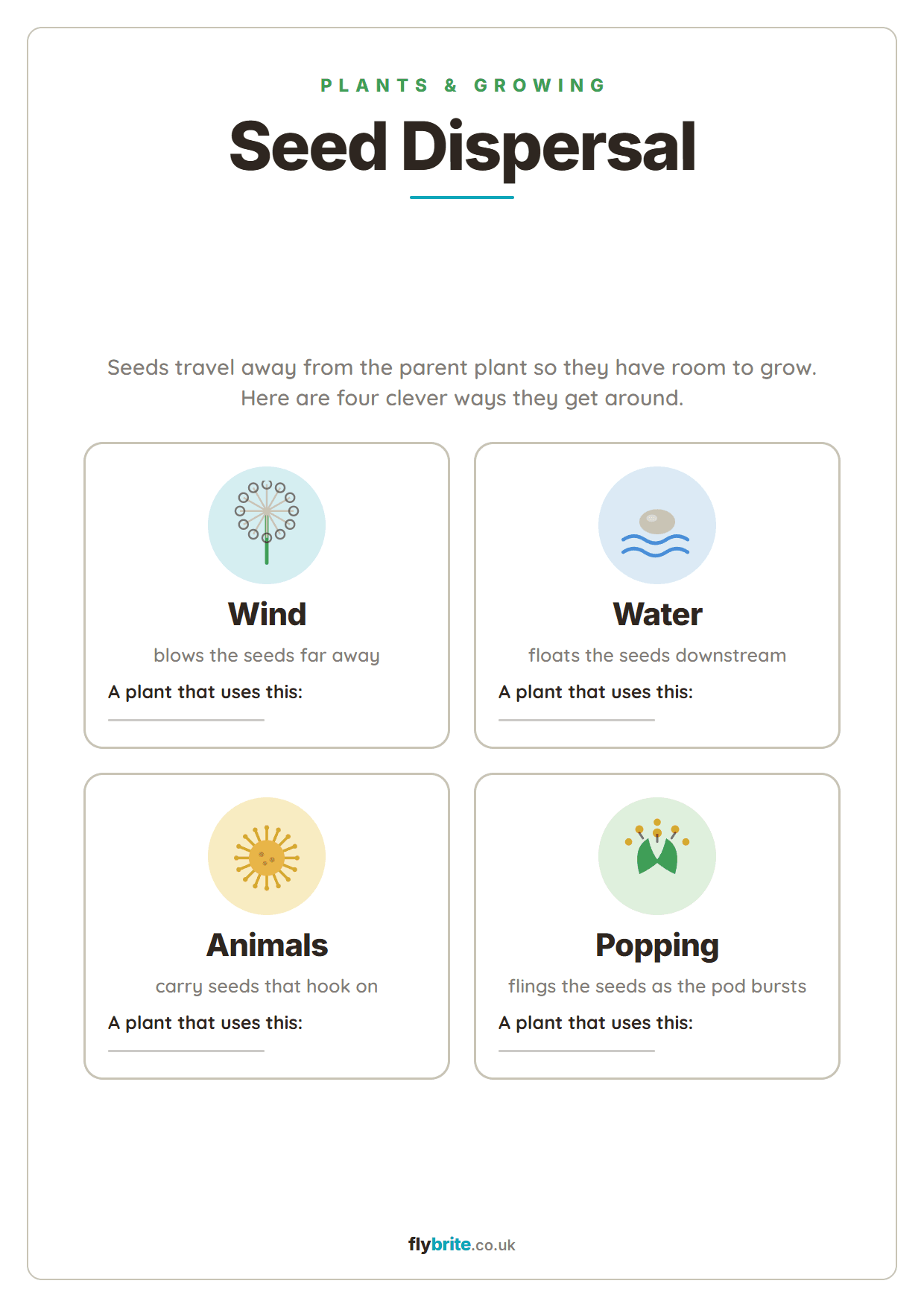
Four clever ways seeds travel, from wind and water to hitching a ride on an animal.
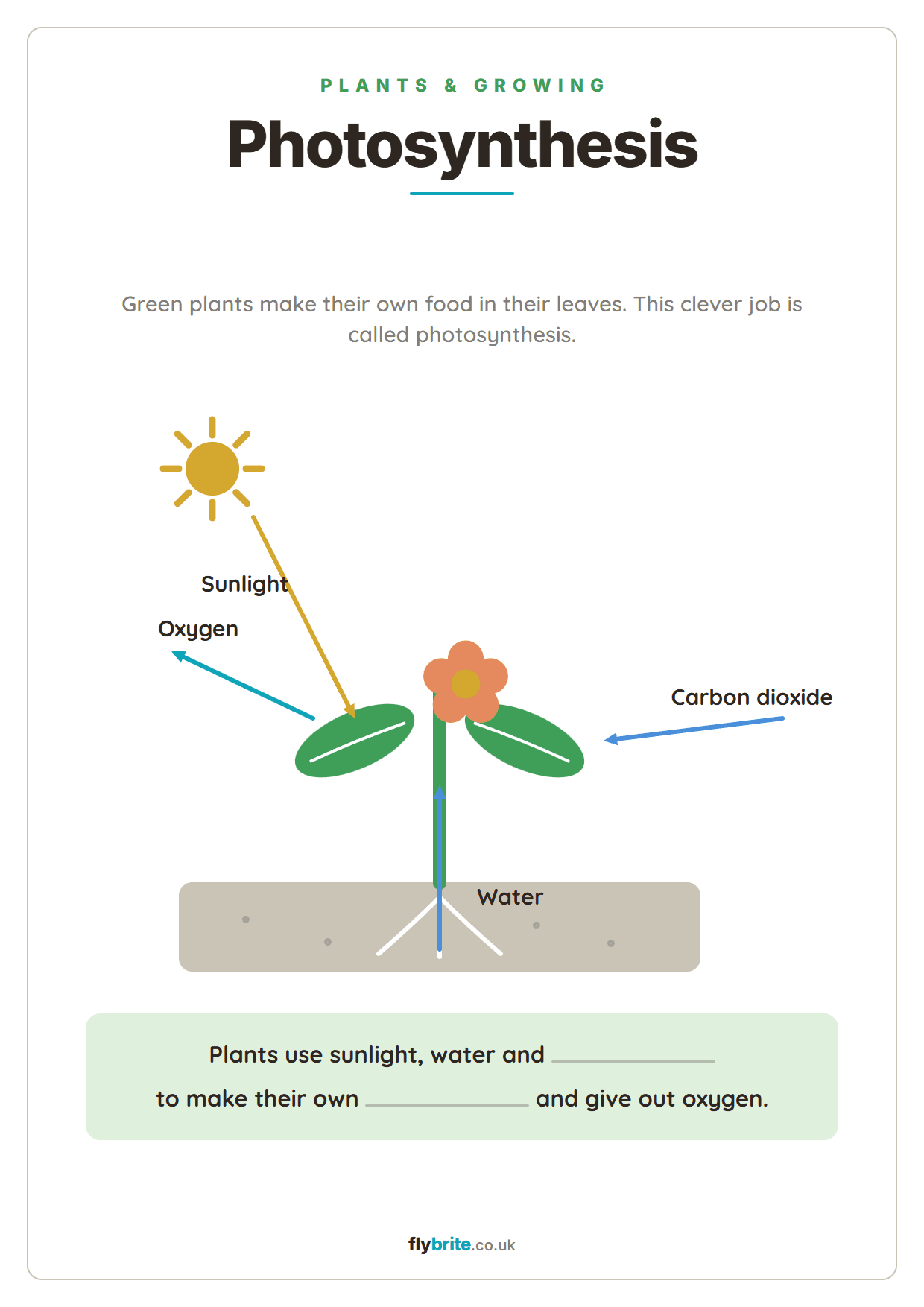
A clear diagram of how a green leaf makes its own food, with a sentence to finish.
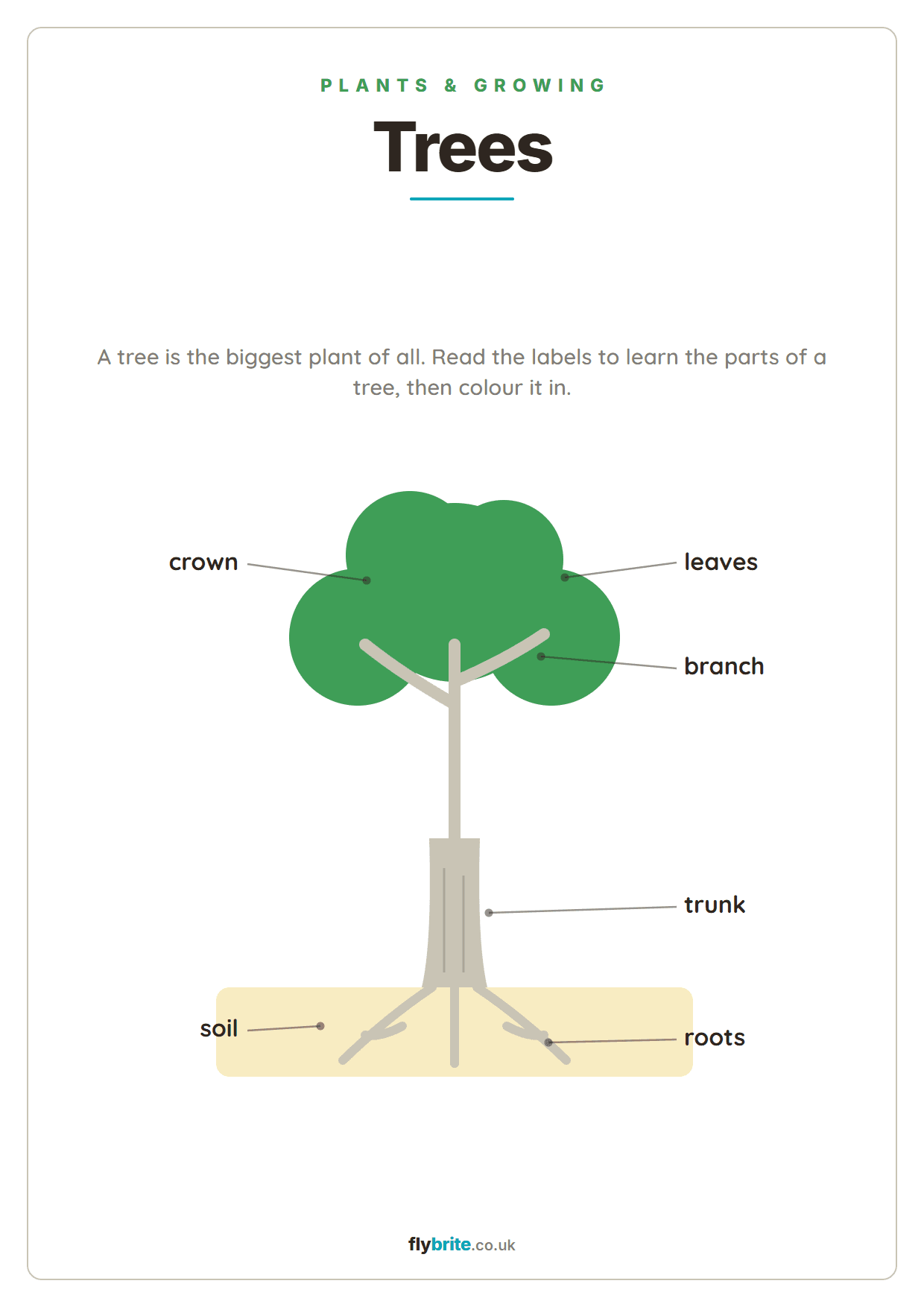
The parts of a tree labelled on a leafy diagram, ready to read and colour.
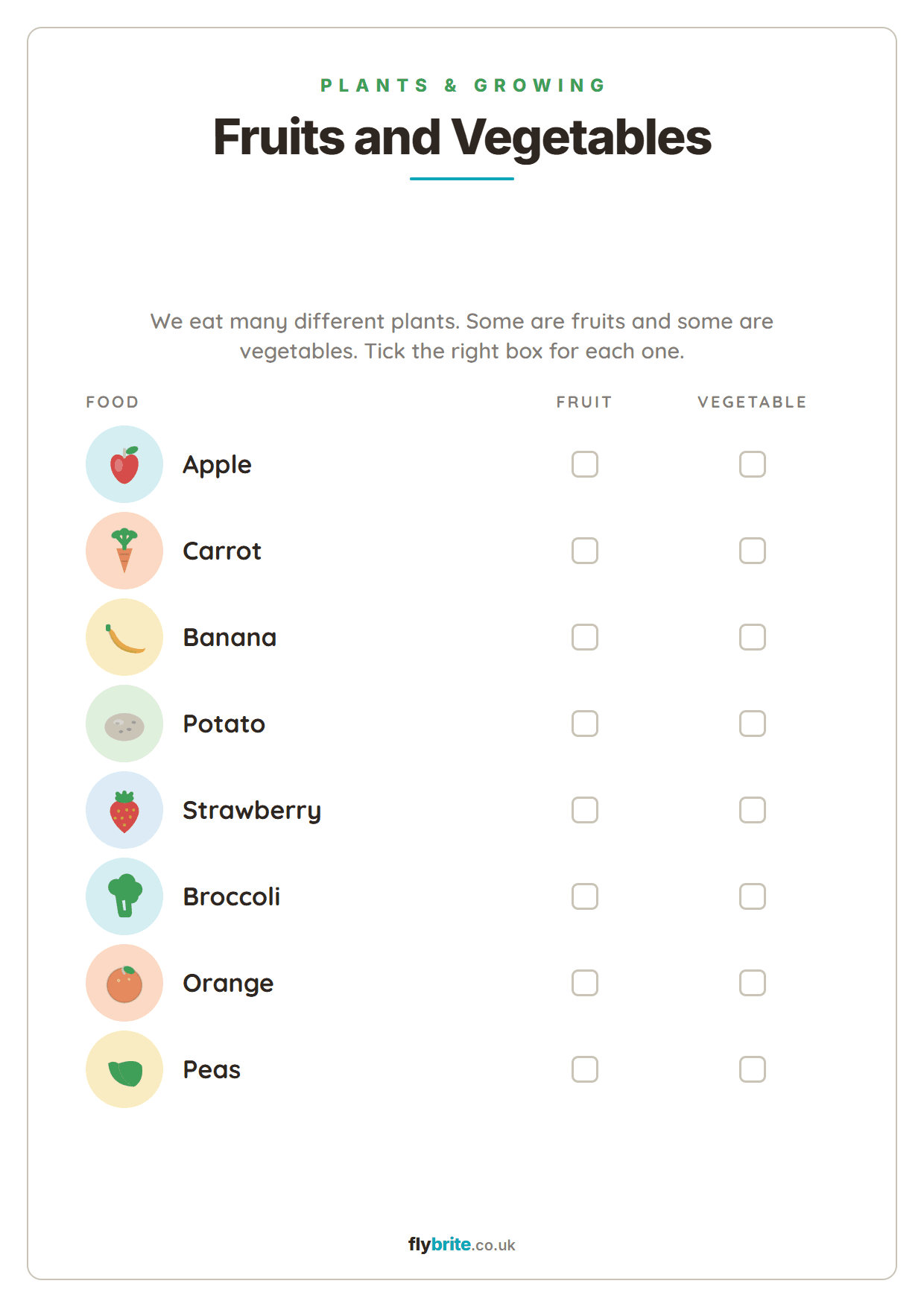
A colourful sorting sheet, tick each food as a fruit or a vegetable.
 Type or write in
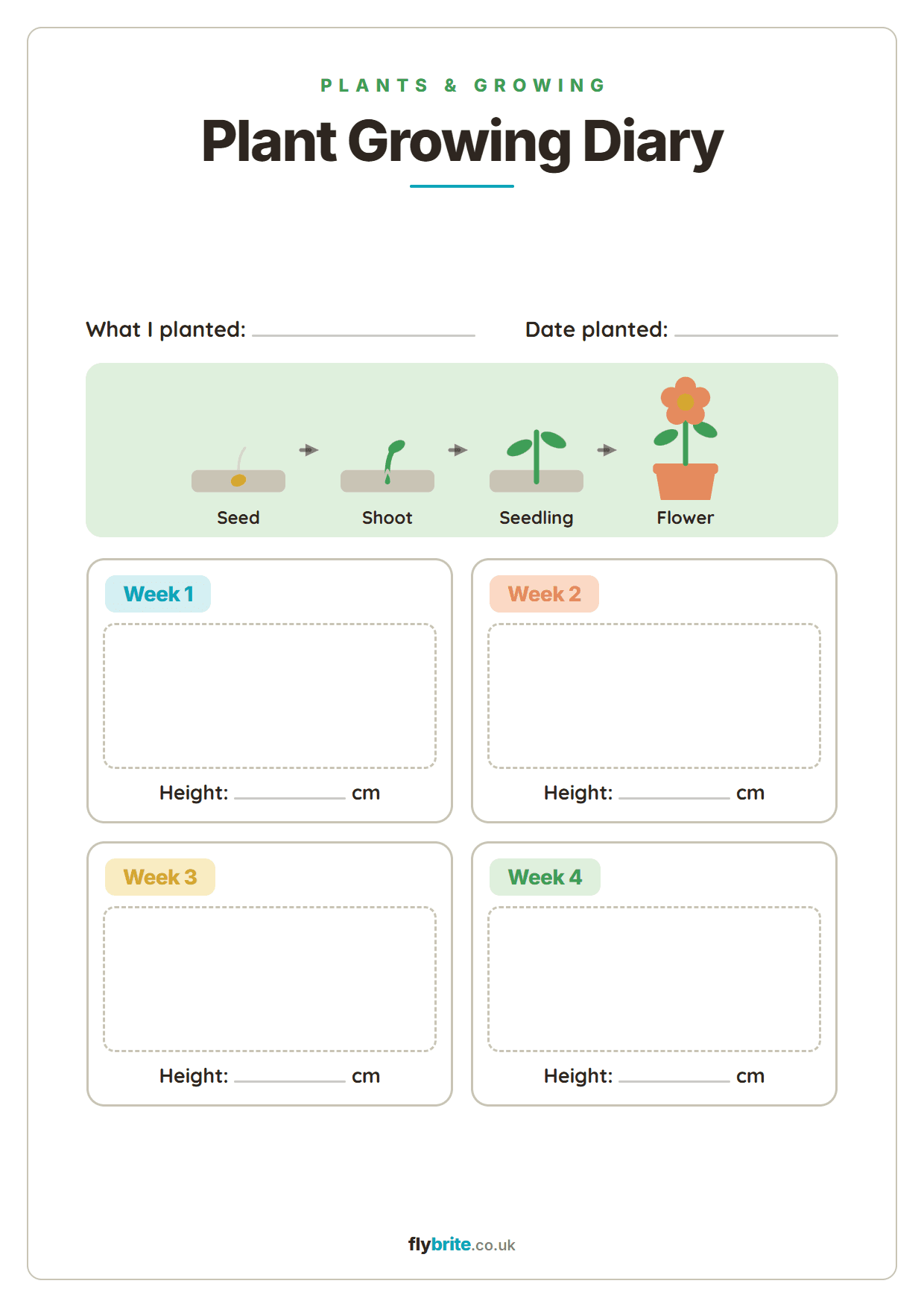
Plant a seed and keep a diary, drawing and measuring your little plant week by week.
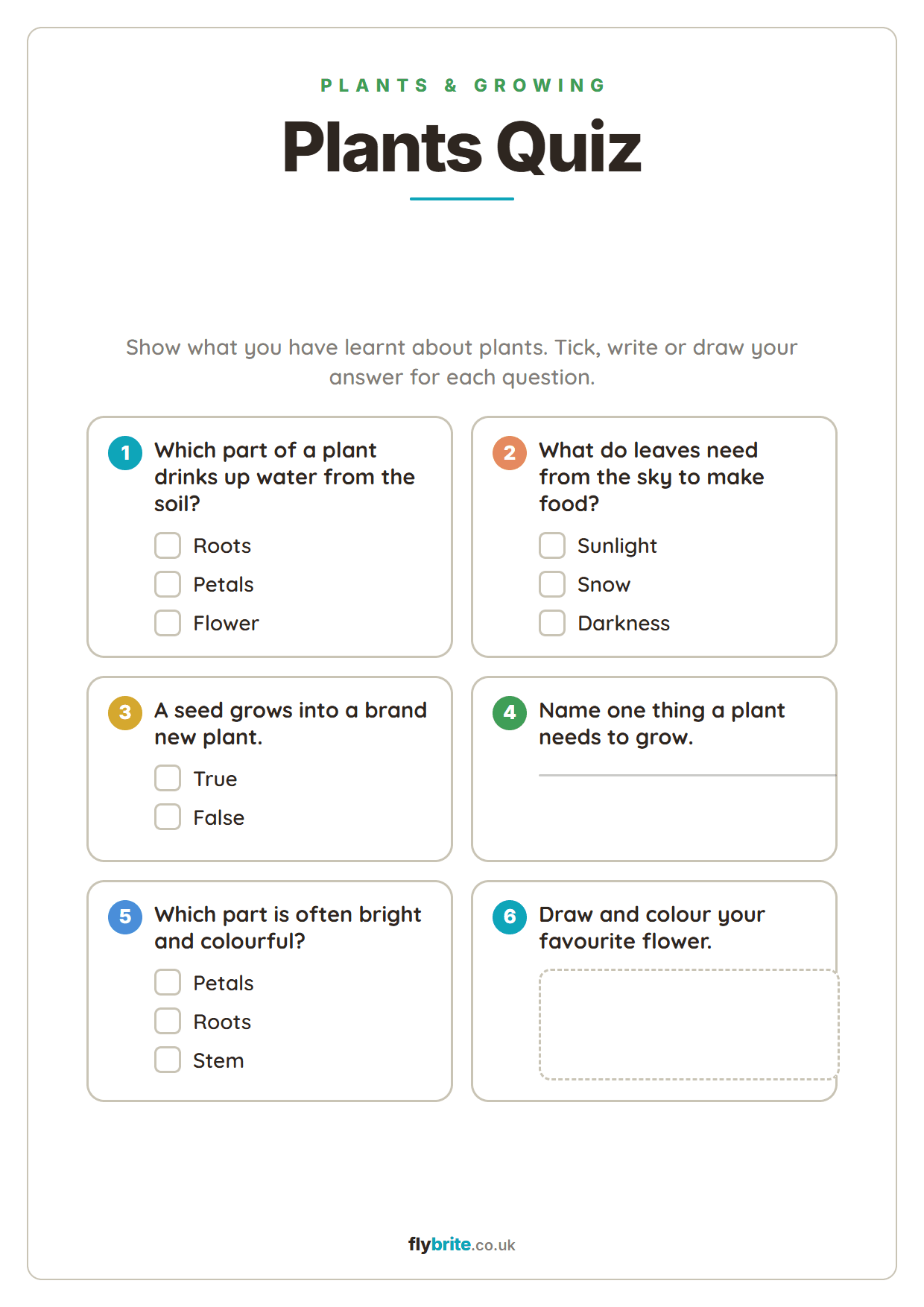
A gentle recap quiz to show off everything learnt about plants and growing.
Habitats, classification and food chains, how living things fit together in the wild.
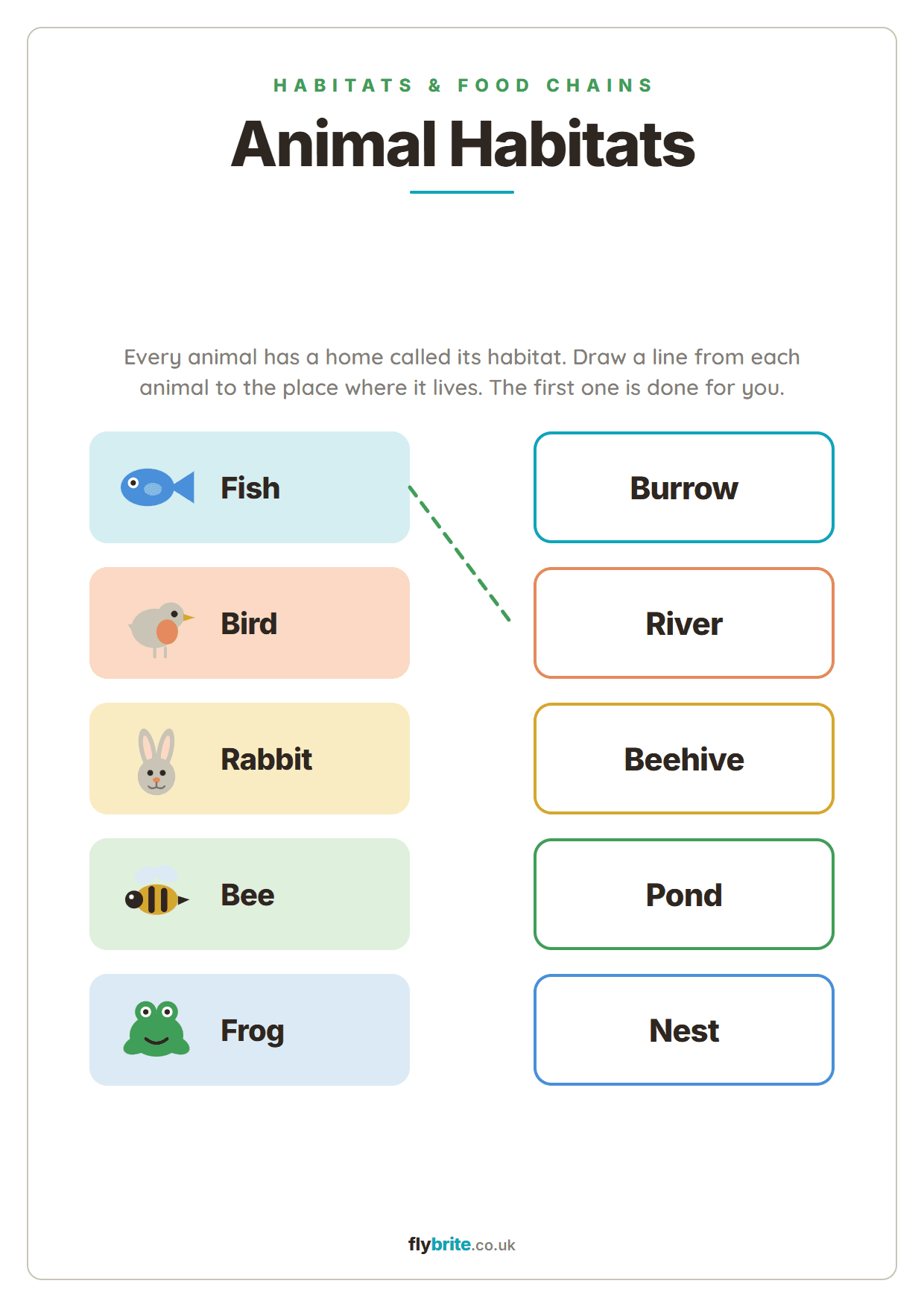
A gentle first sort of who lives where, drawing a line from each animal to the habitat it calls home.
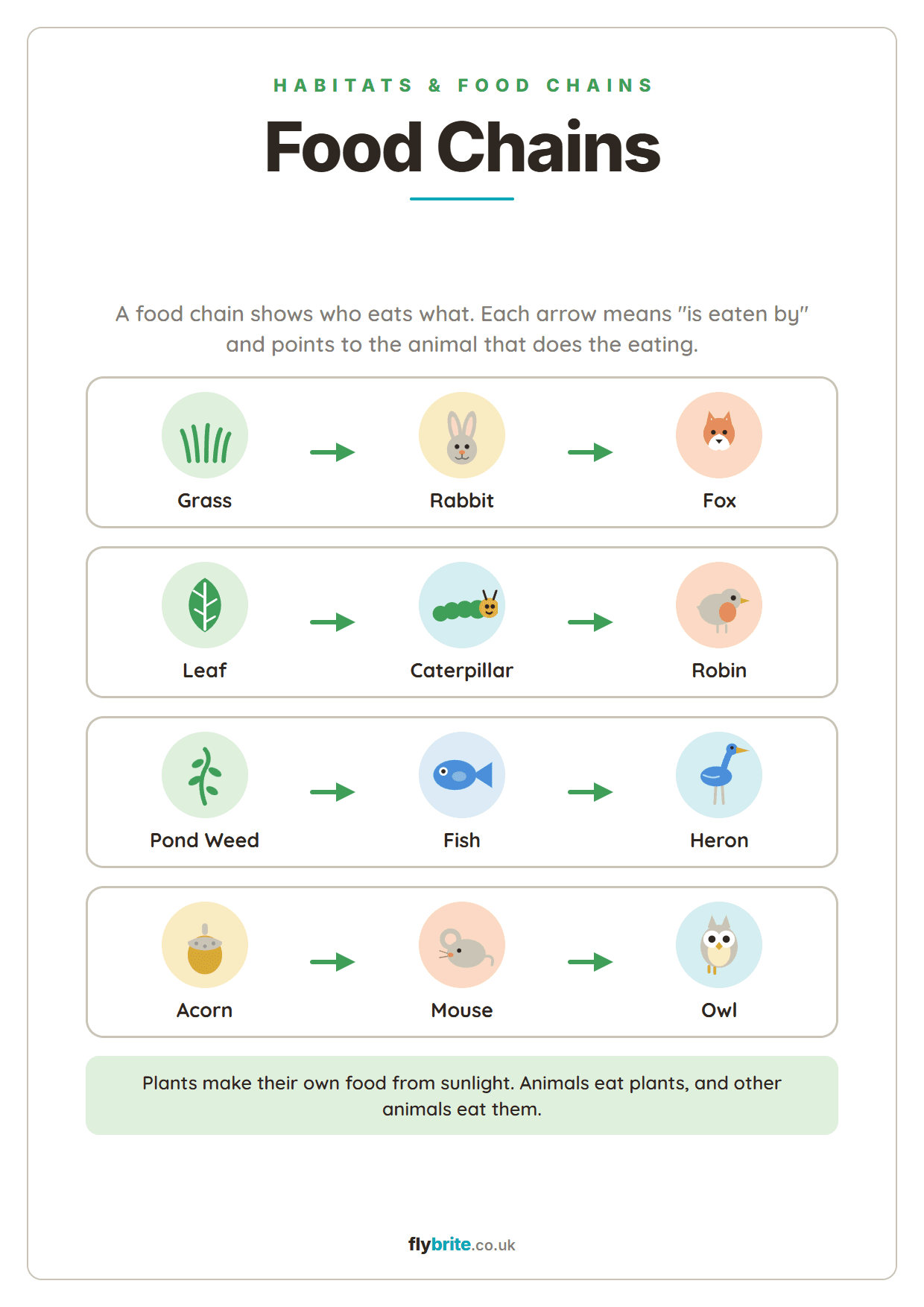
Four friendly food chains with arrows, showing how sunshine, plants and animals feed one another.
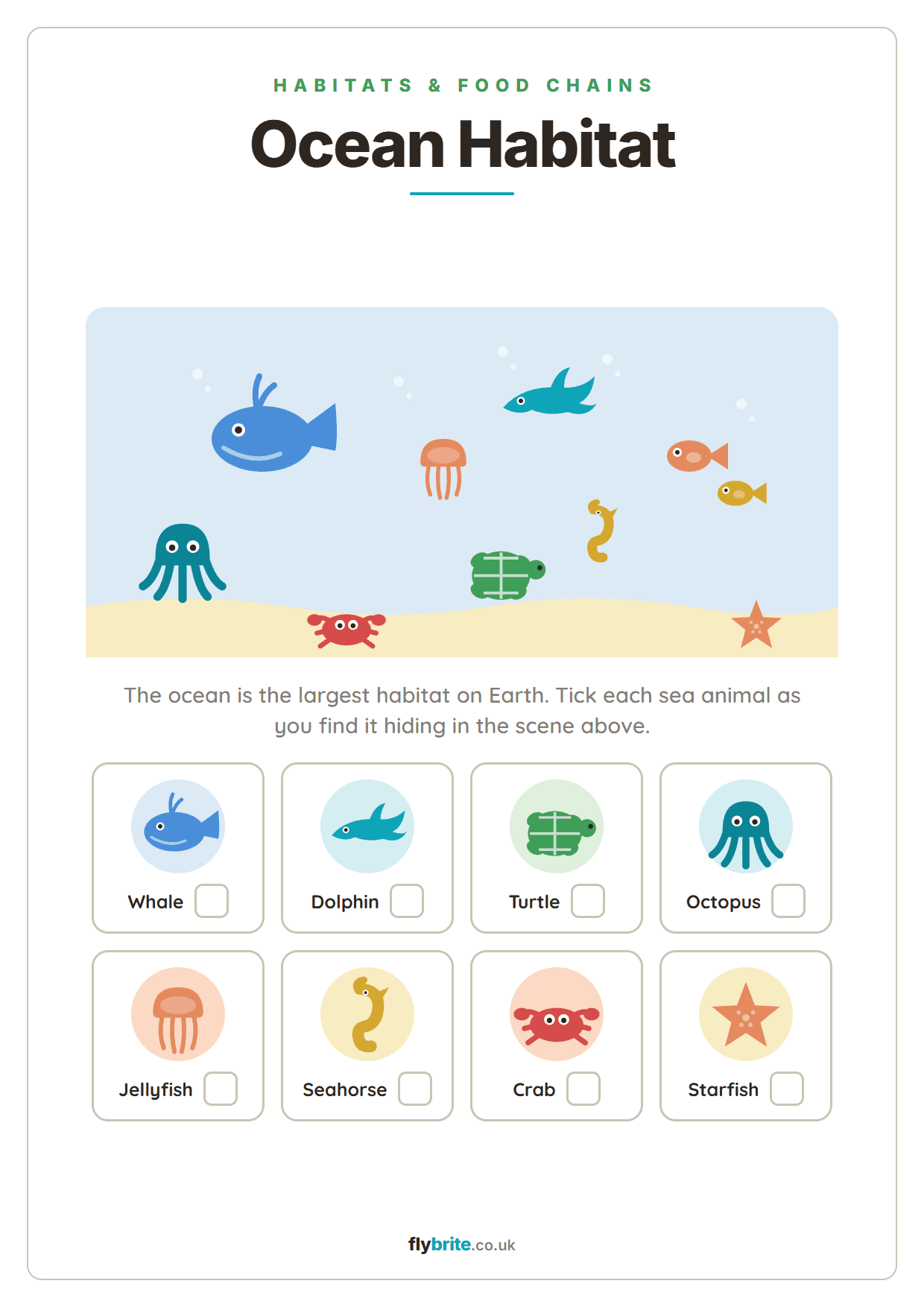
A busy underwater scene to explore, ticking off the whale, turtle, octopus and more as you find them.
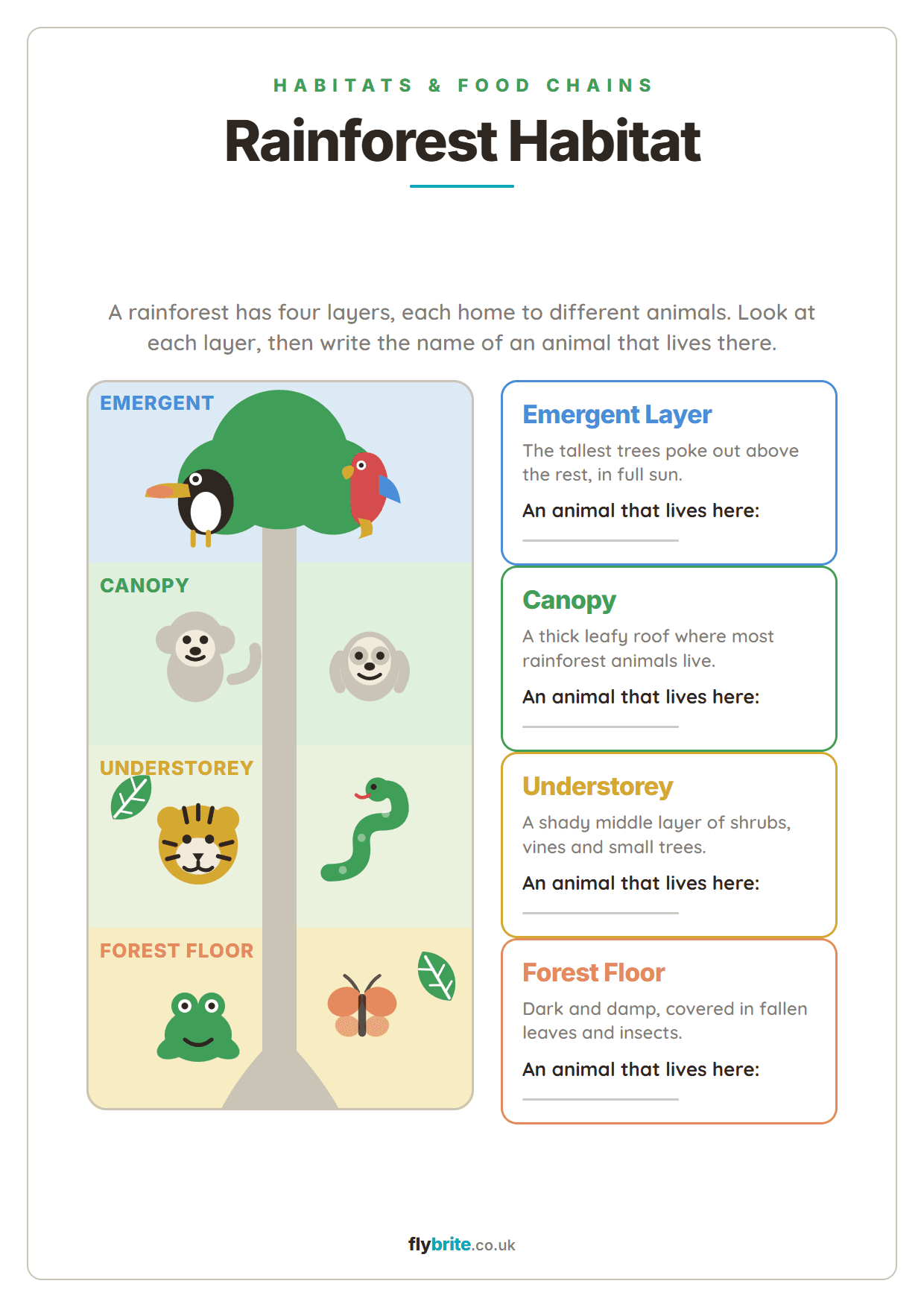
Explore the four layers of the rainforest, from the sunny emergent tops to the shady forest floor.
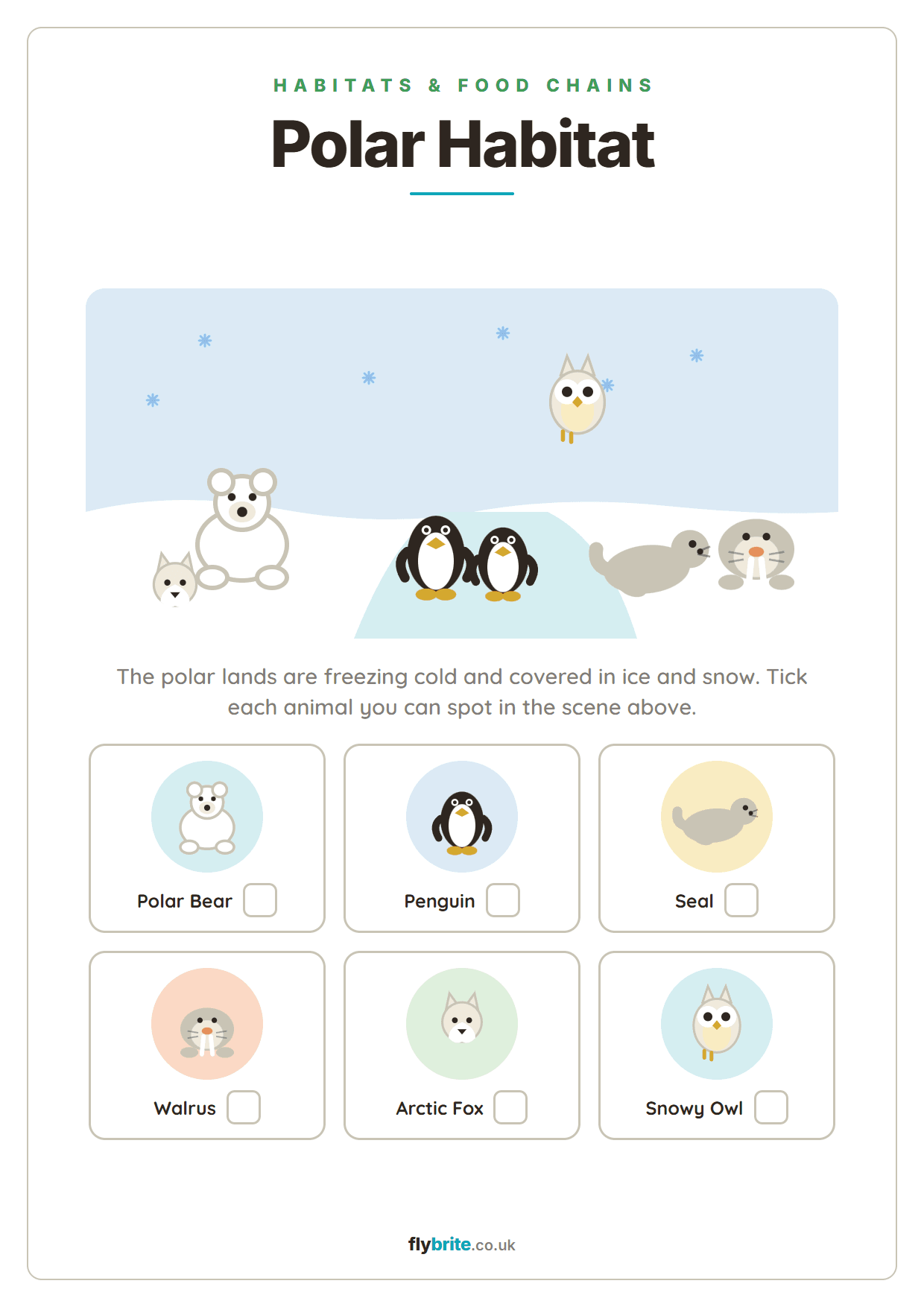
A frosty polar scene of ice and snow, with polar bears, penguins and seals to spot and tick.
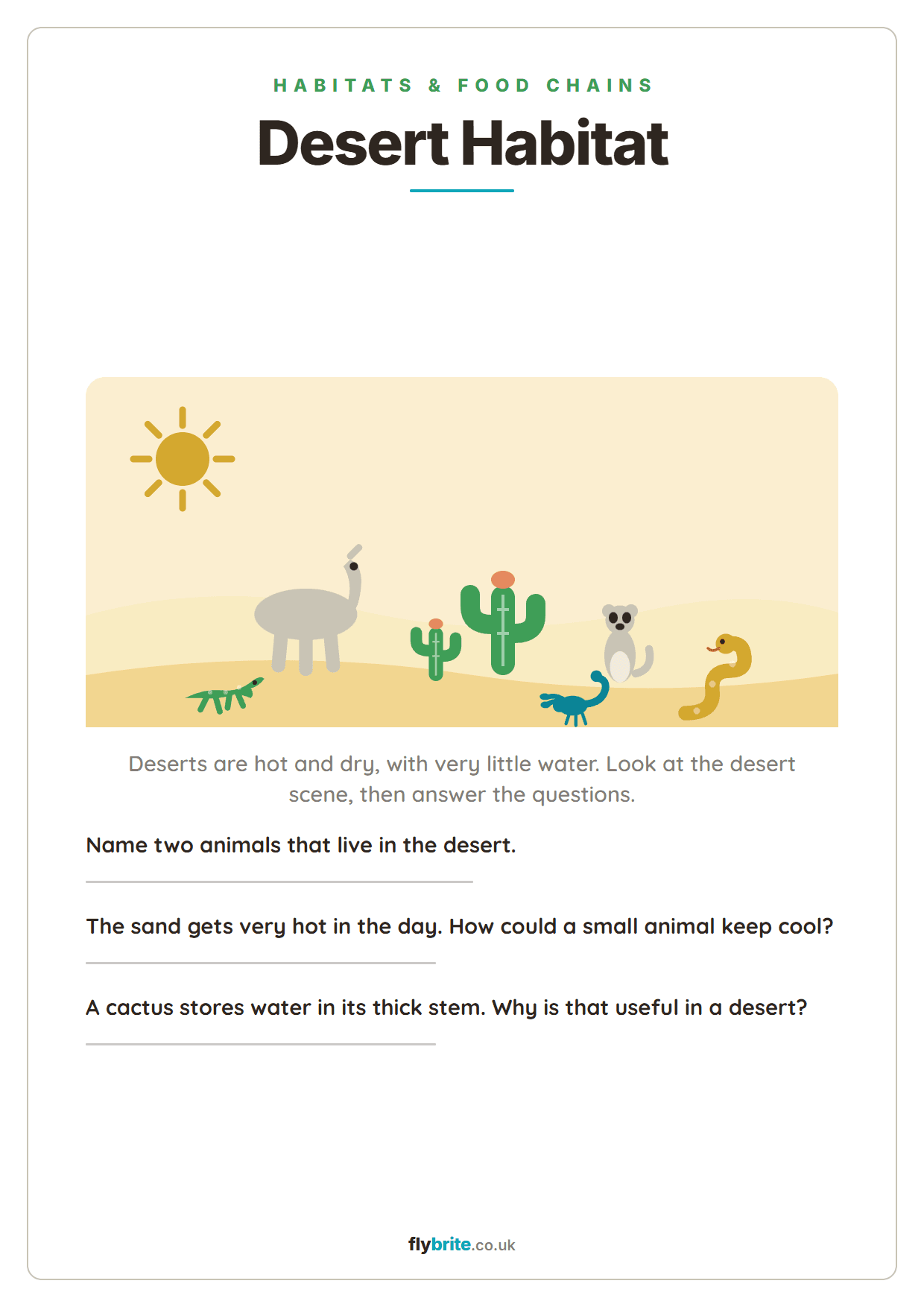
A sun-baked desert scene with thinking questions about how animals and plants survive the heat.
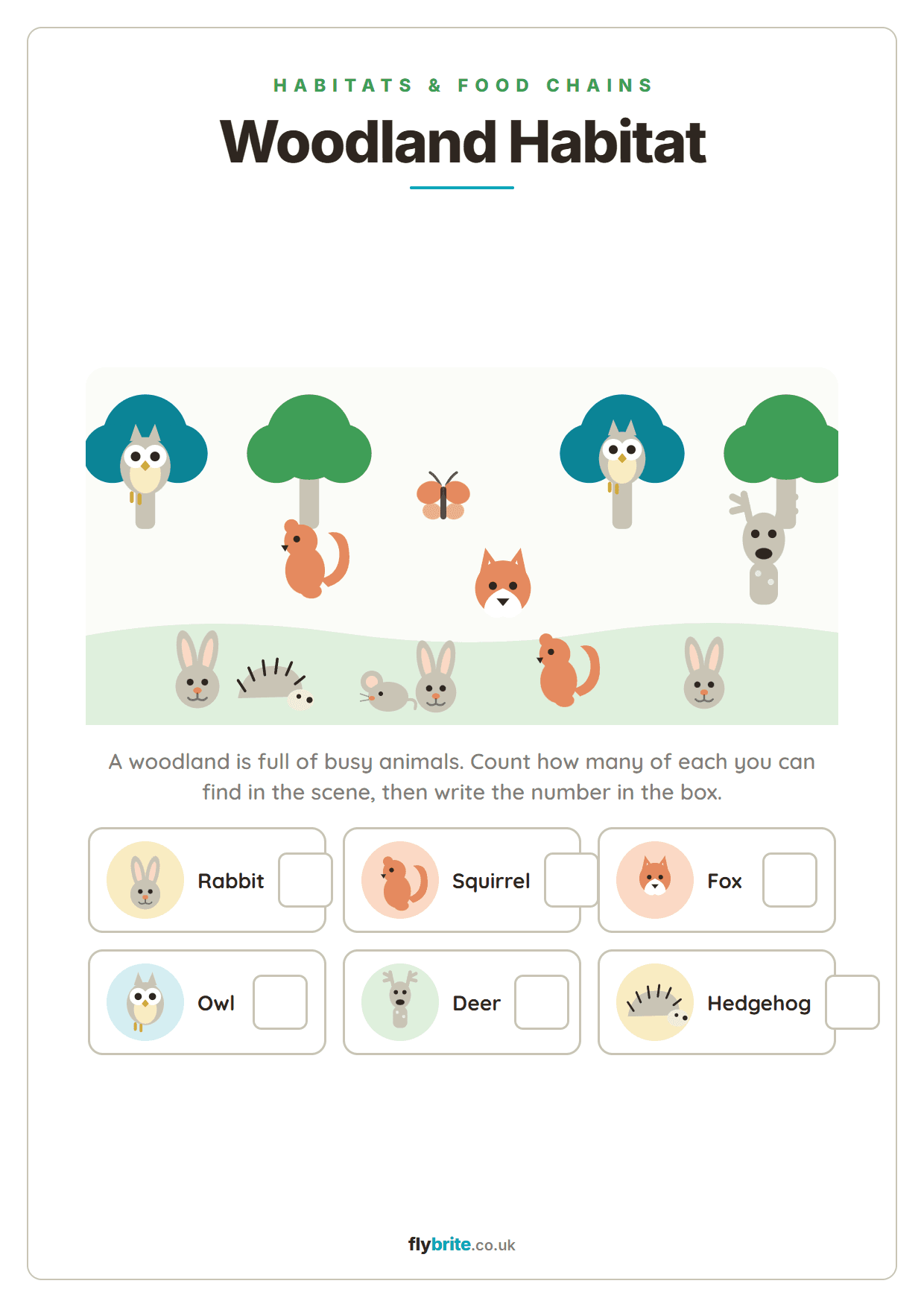
A leafy British woodland alive with rabbits, foxes and owls to count, one animal at a time.
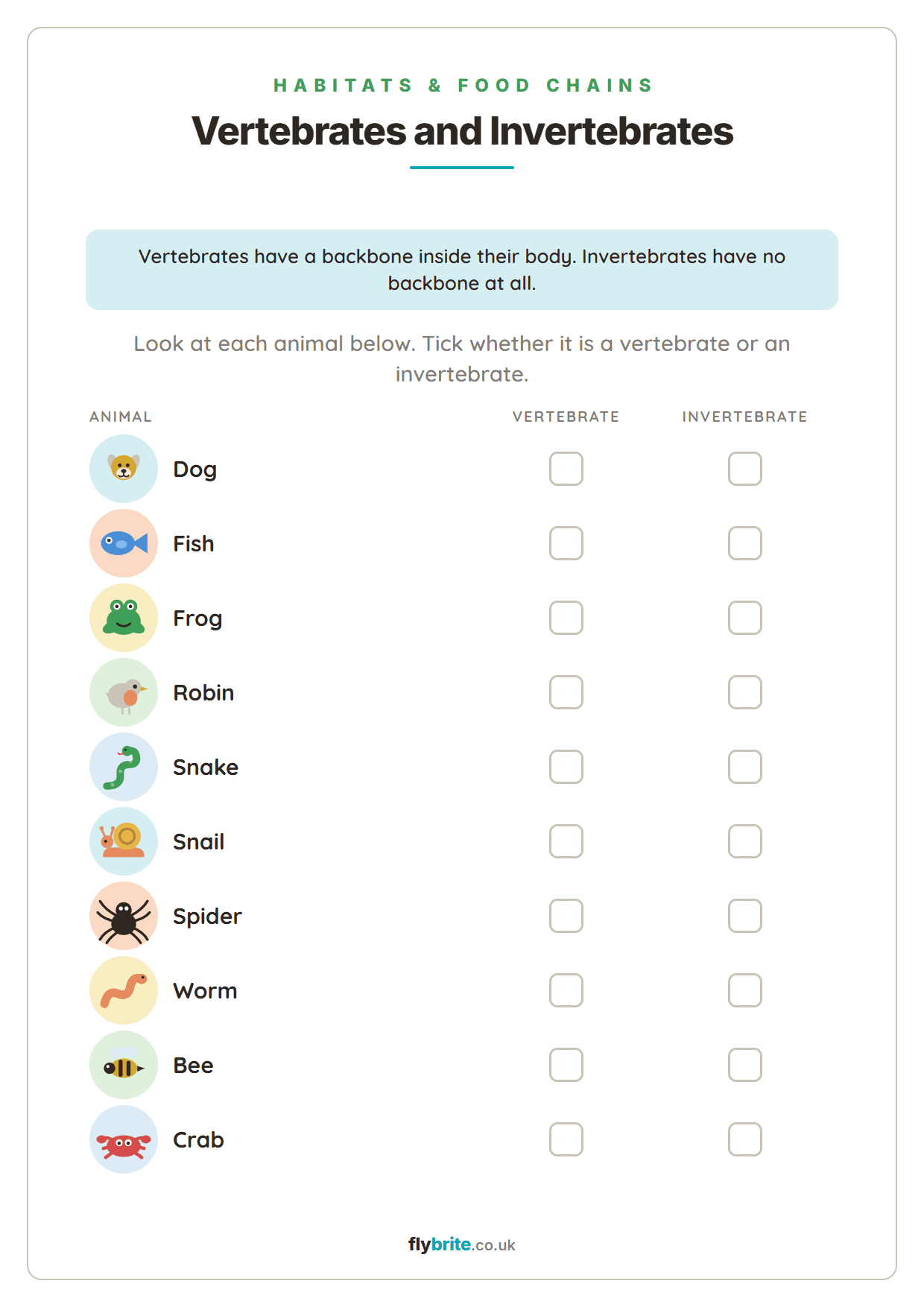
A clear sorting sheet for the big divide in the animal kingdom, backbone or no backbone.
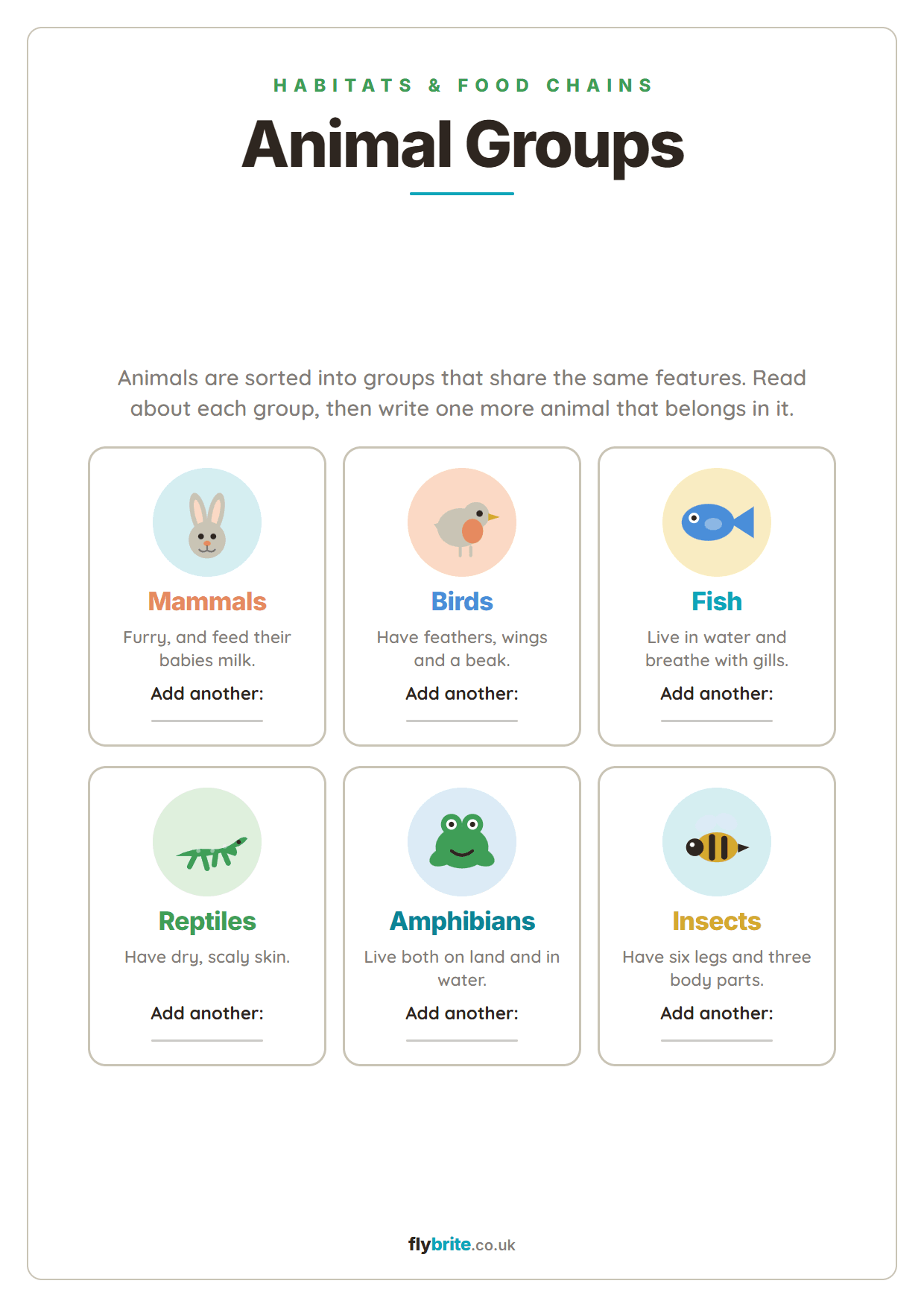
The six great animal groups on one page, from mammals to insects, with room to add your own.
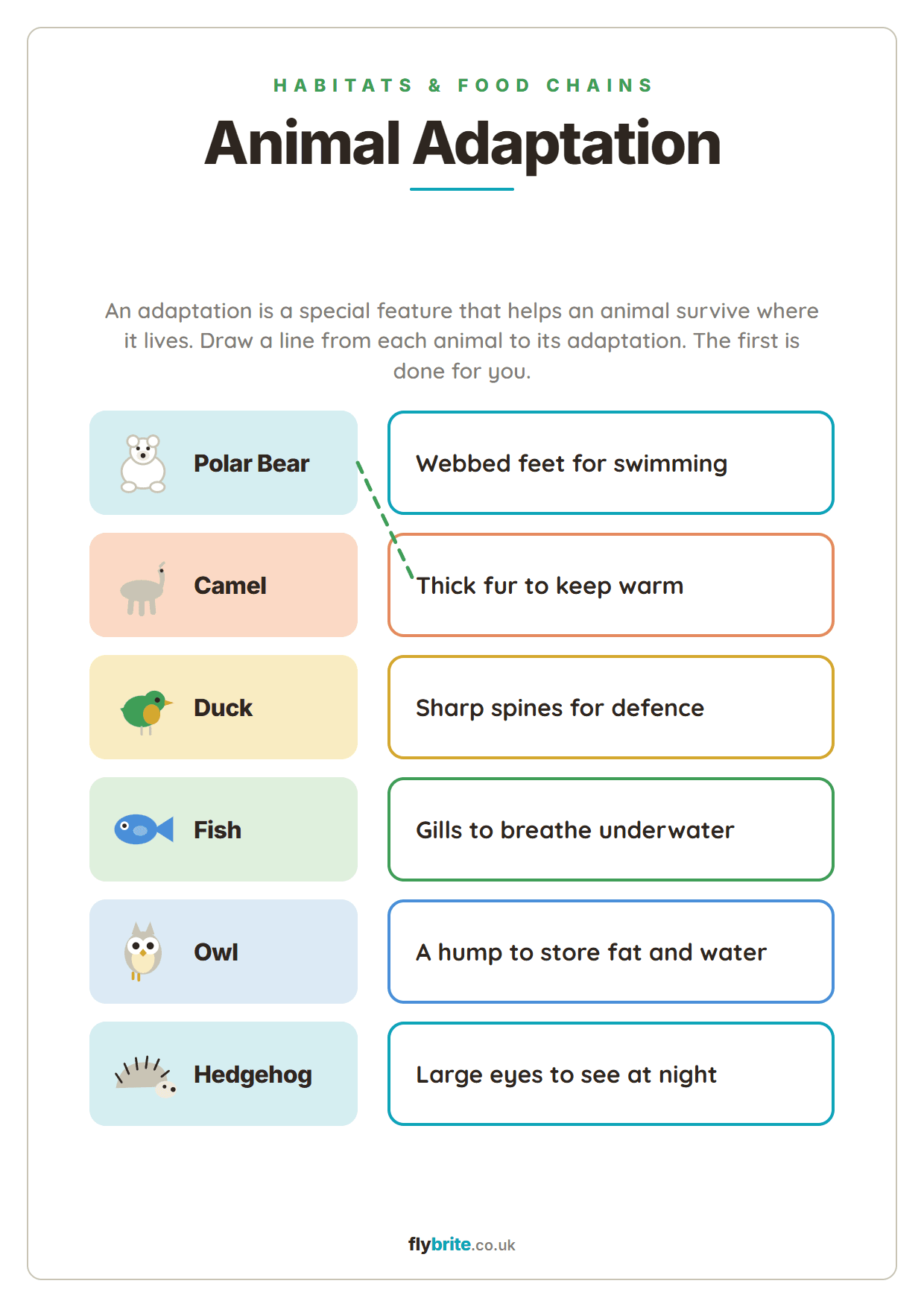
Match each animal to the clever adaptation that helps it survive, from thick fur to webbed feet.
Ten safe kitchen-science experiment cards with a method and a why-it-works.
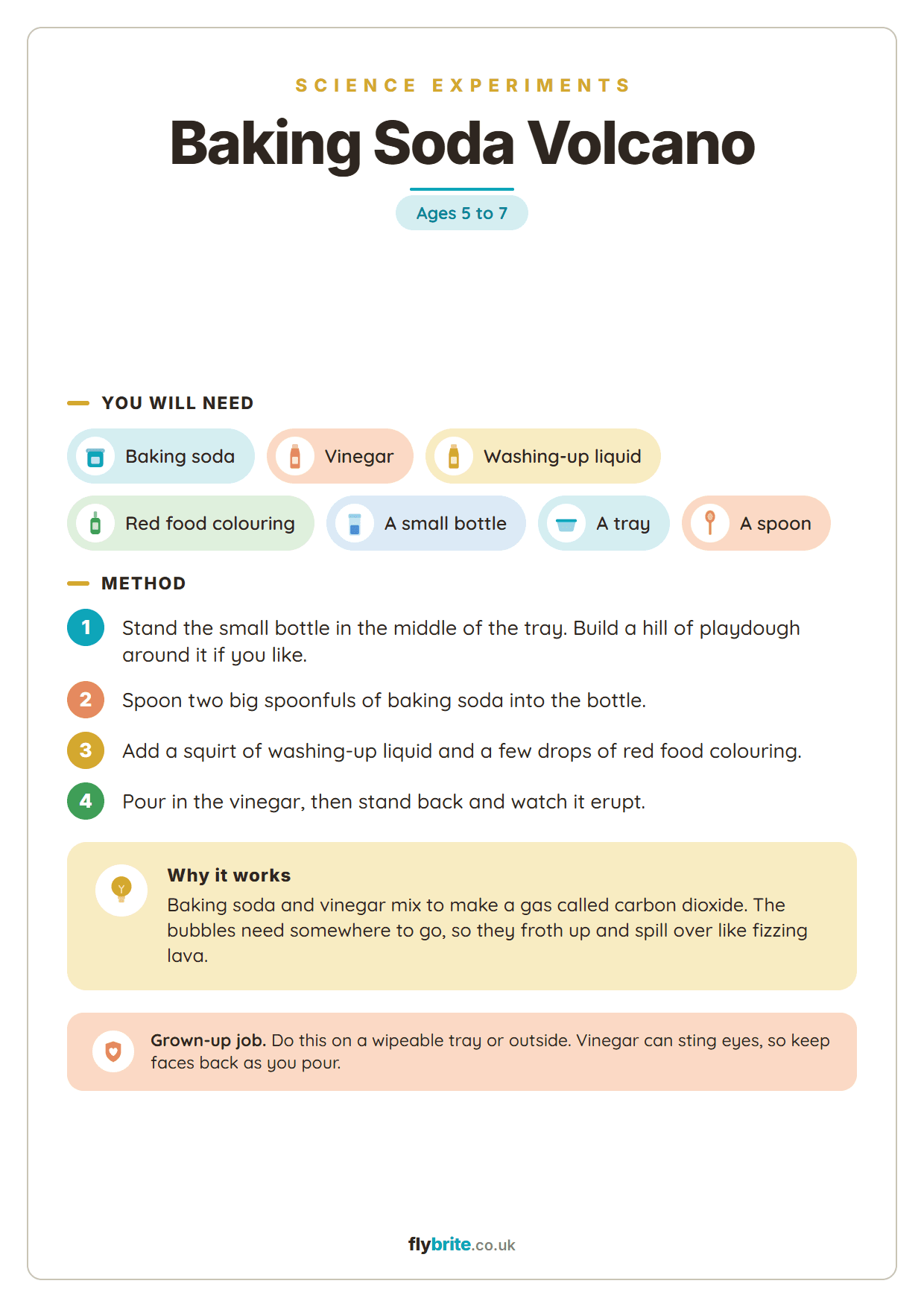
The classic fizzing eruption in a tray, with red lava that bubbles up and over on cue.
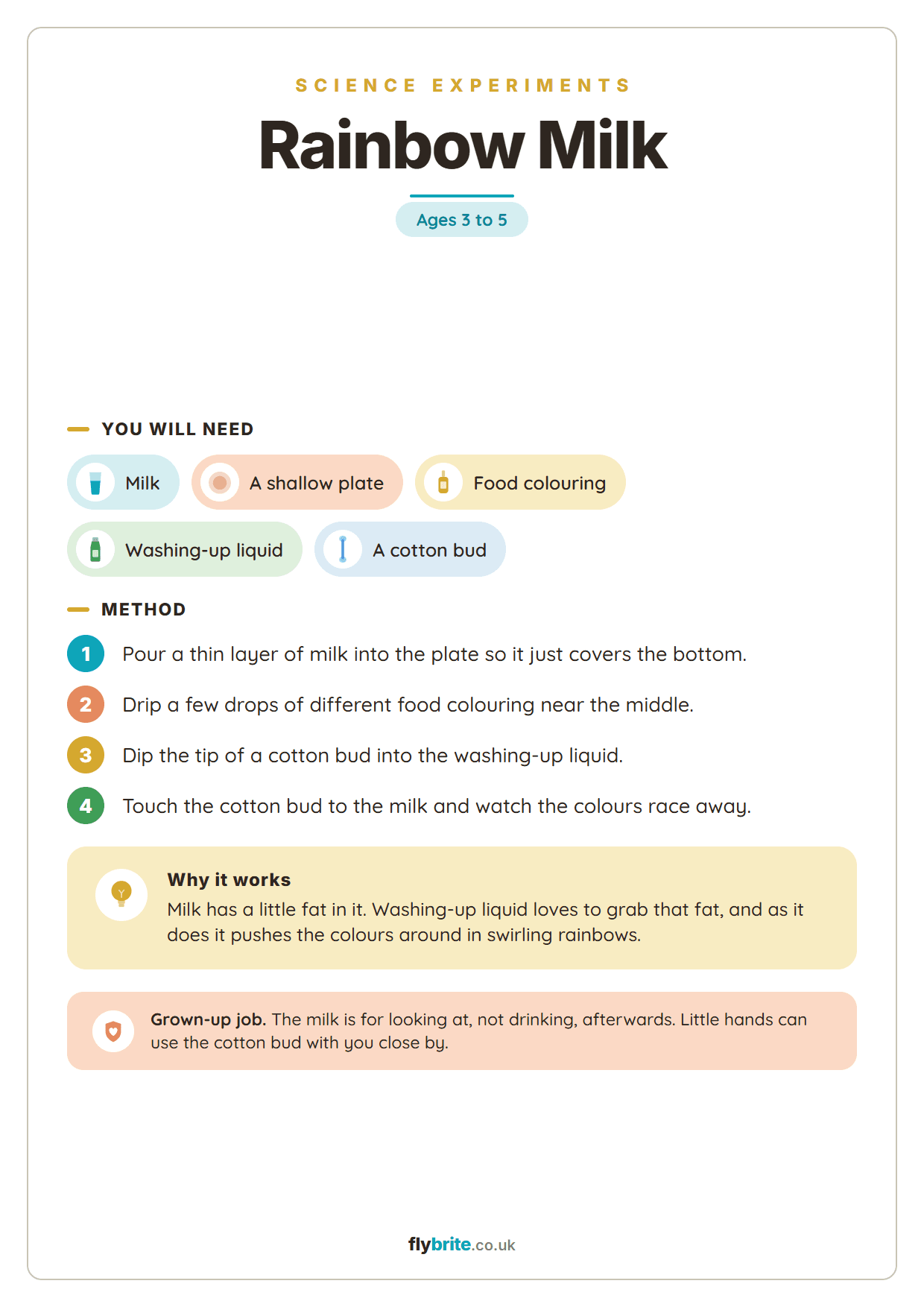
One touch of washing-up liquid sends food colouring swirling into a bright, moving rainbow.
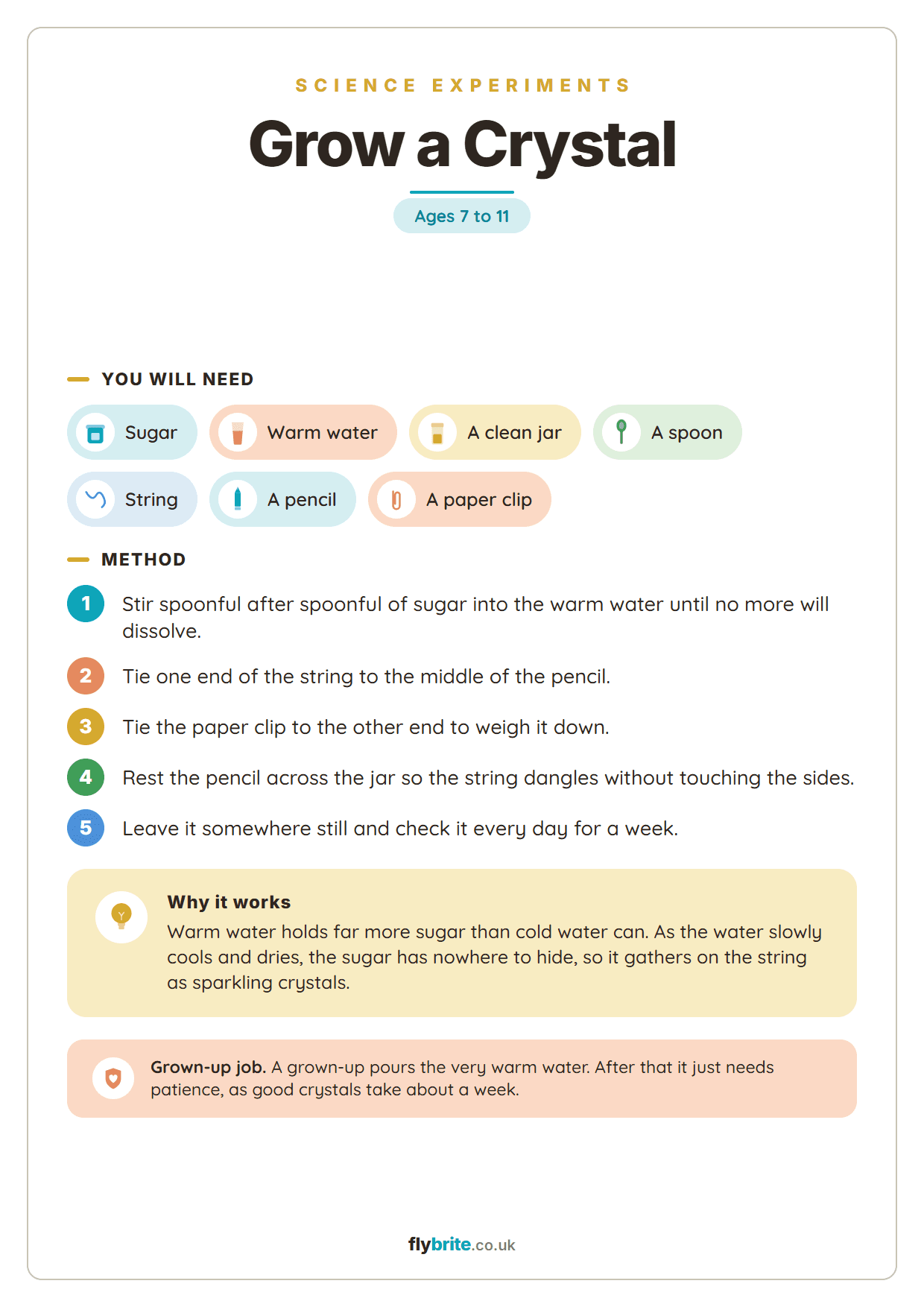
A week of patience turns a jar of sweet water into a sparkling crystal you can keep.
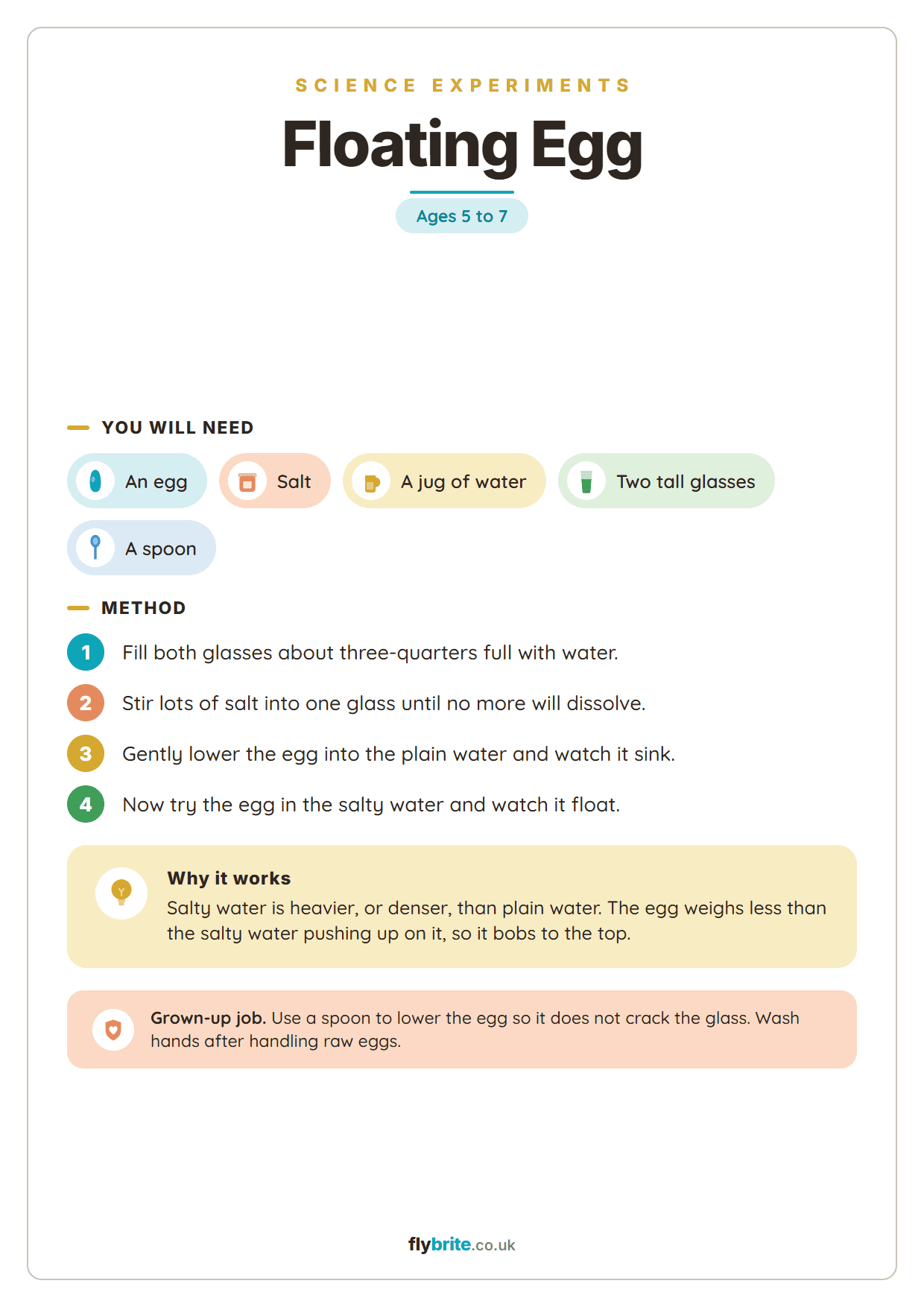
An egg that sinks in plain water bobs right back up once a little salt joins in.
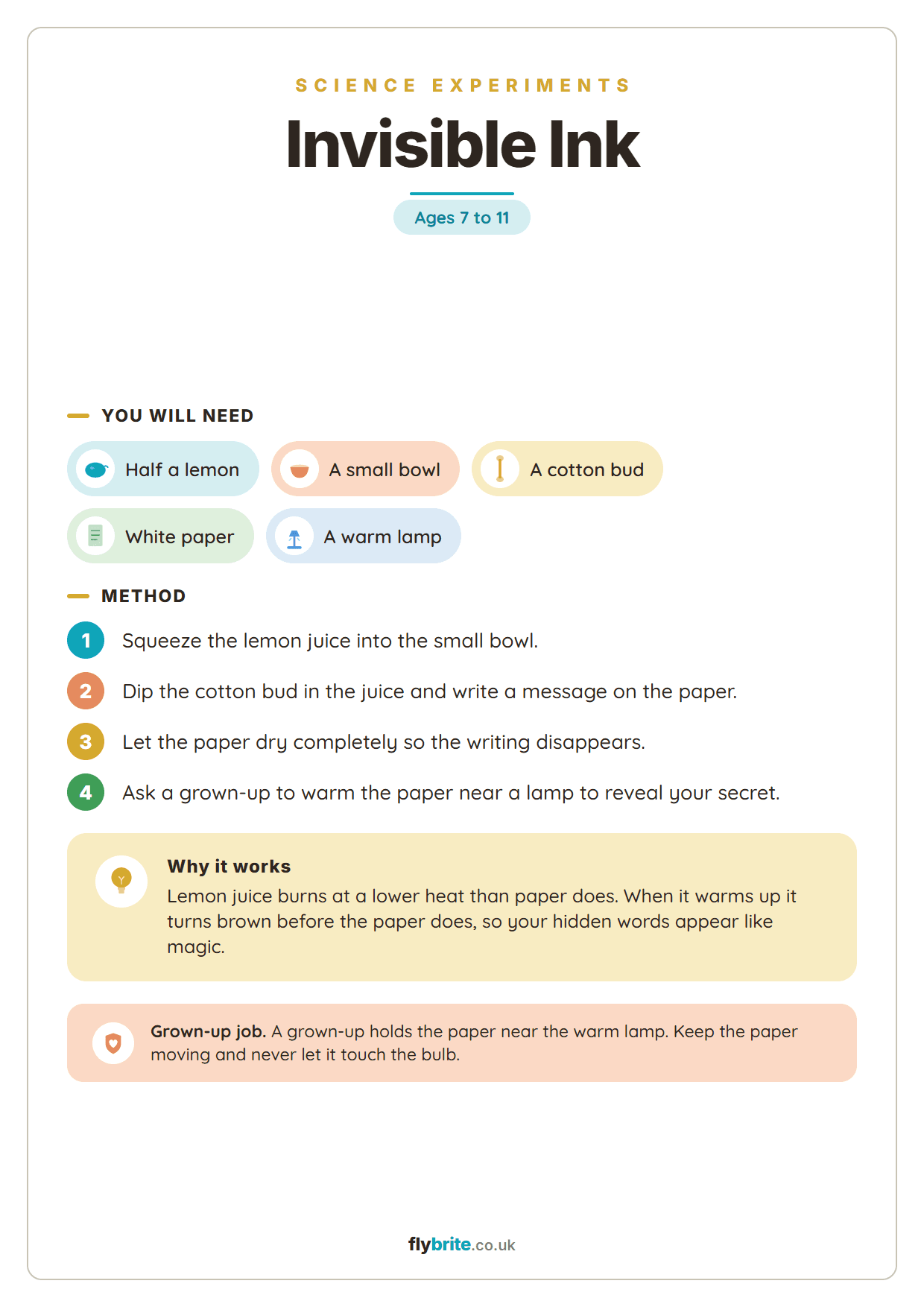
Write a secret message in lemon juice, then reveal it with a little gentle warmth.
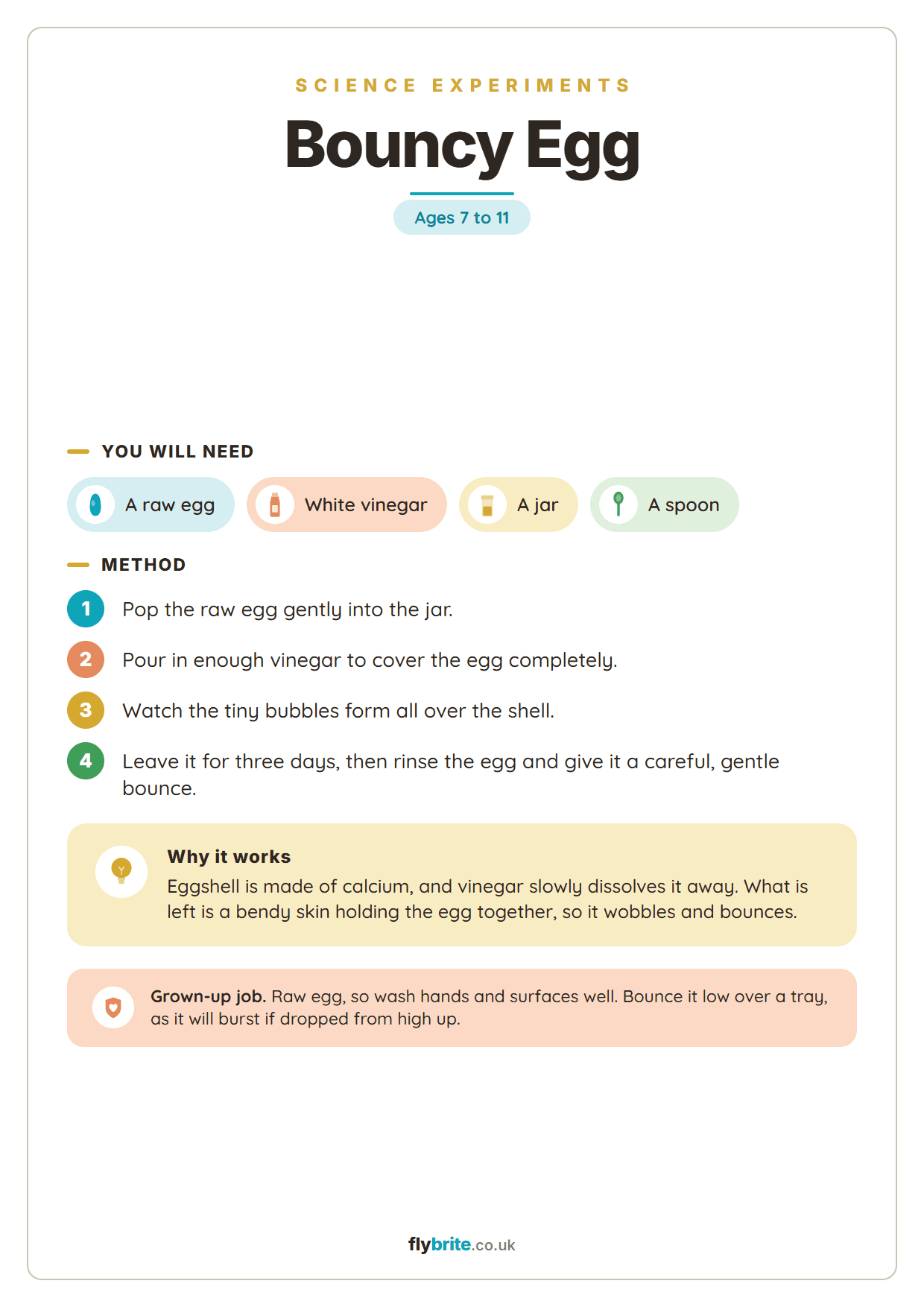
Three days in vinegar dissolves the shell away and leaves a wobbly egg that bounces.
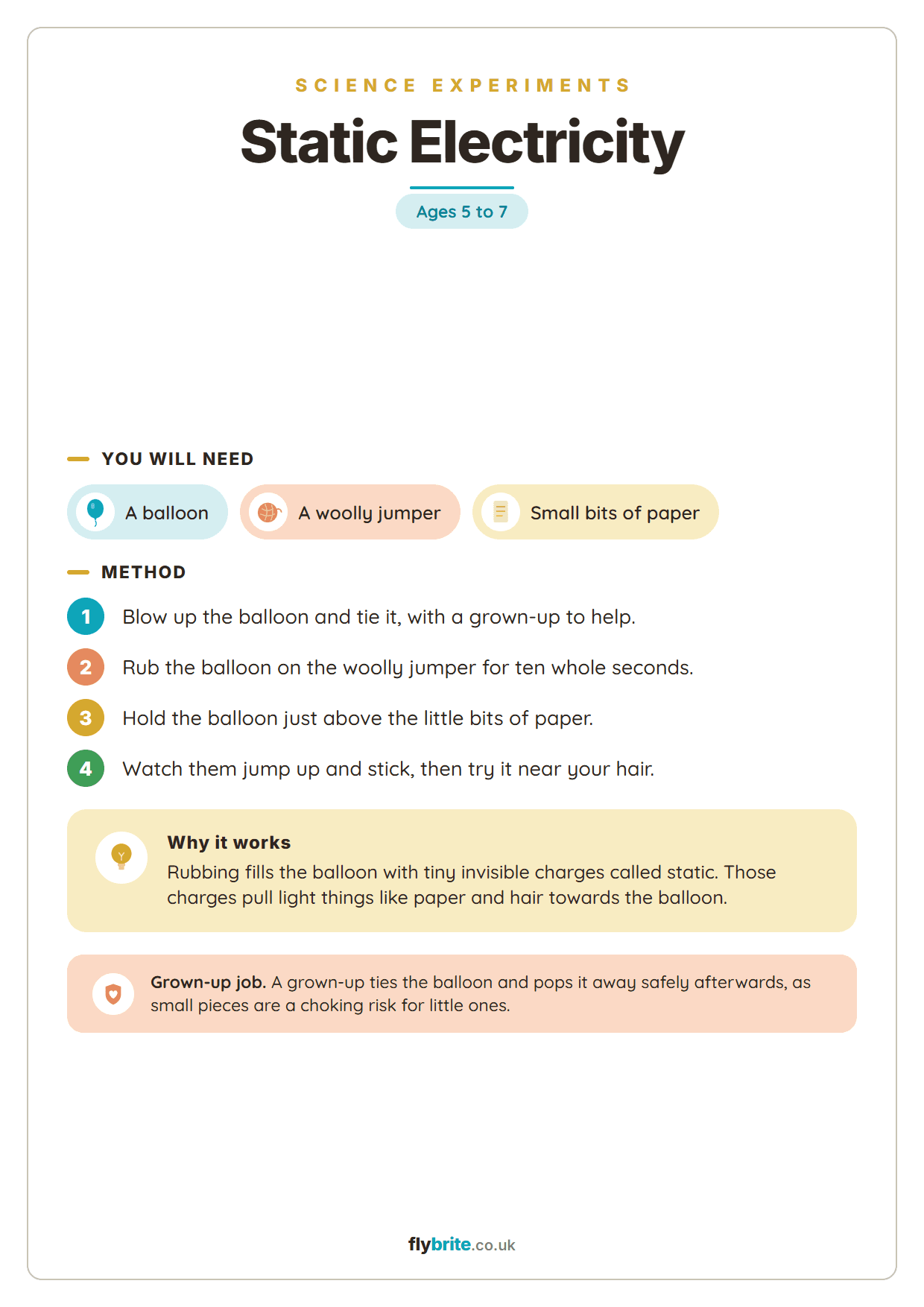
Rub a balloon on a woolly jumper and watch it lift paper, and your hair, all by itself.

Tuck a bean against the glass and watch a whole plant wake up, root and shoot on show.
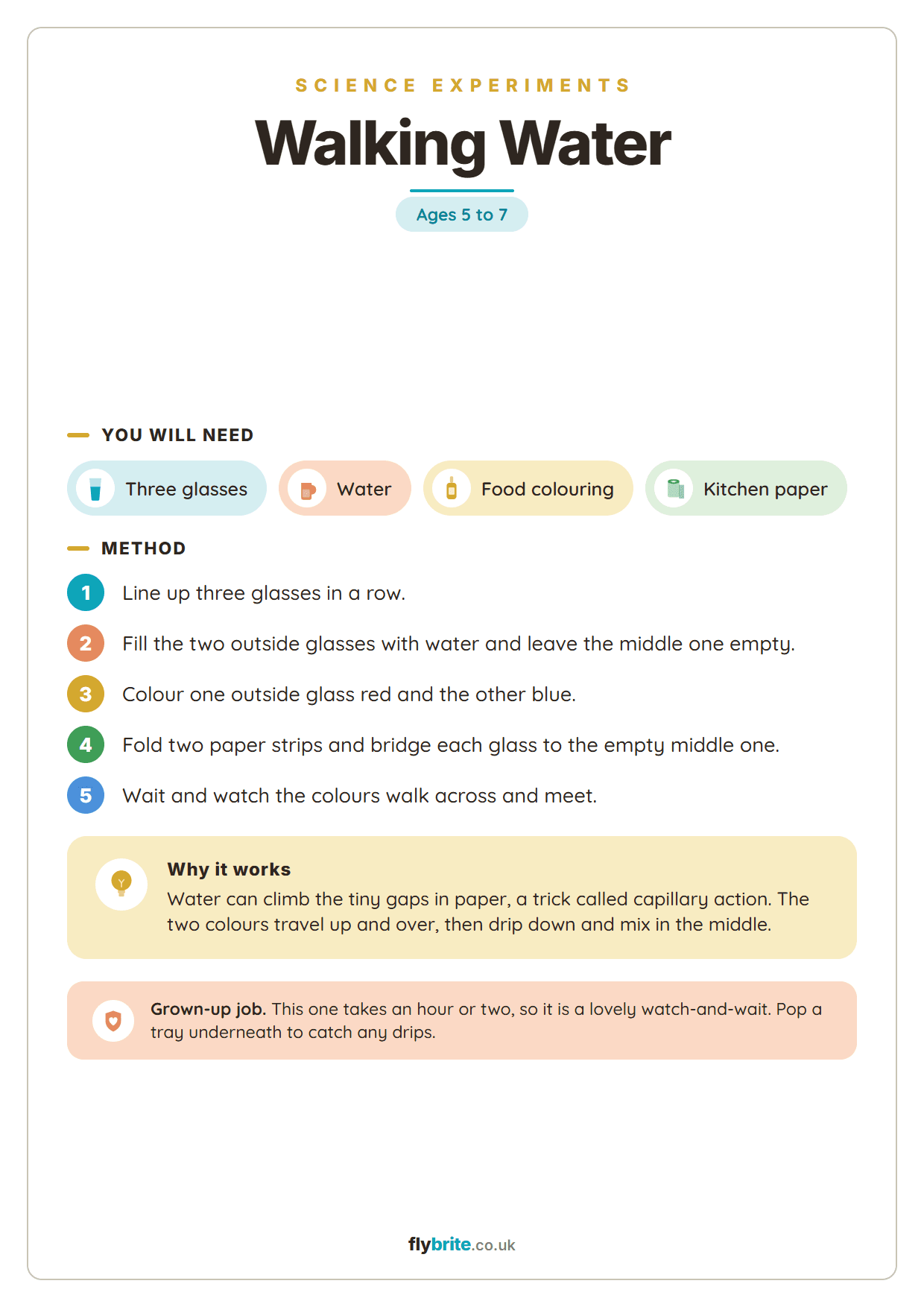
Coloured water climbs up paper bridges and meets in the middle to make a brand new colour.

Warm water, ice and a puff of mist make a real little cloud swirl to life inside a jar.
Timelines and key periods from the Stone Age to today, ordering the story of the past.
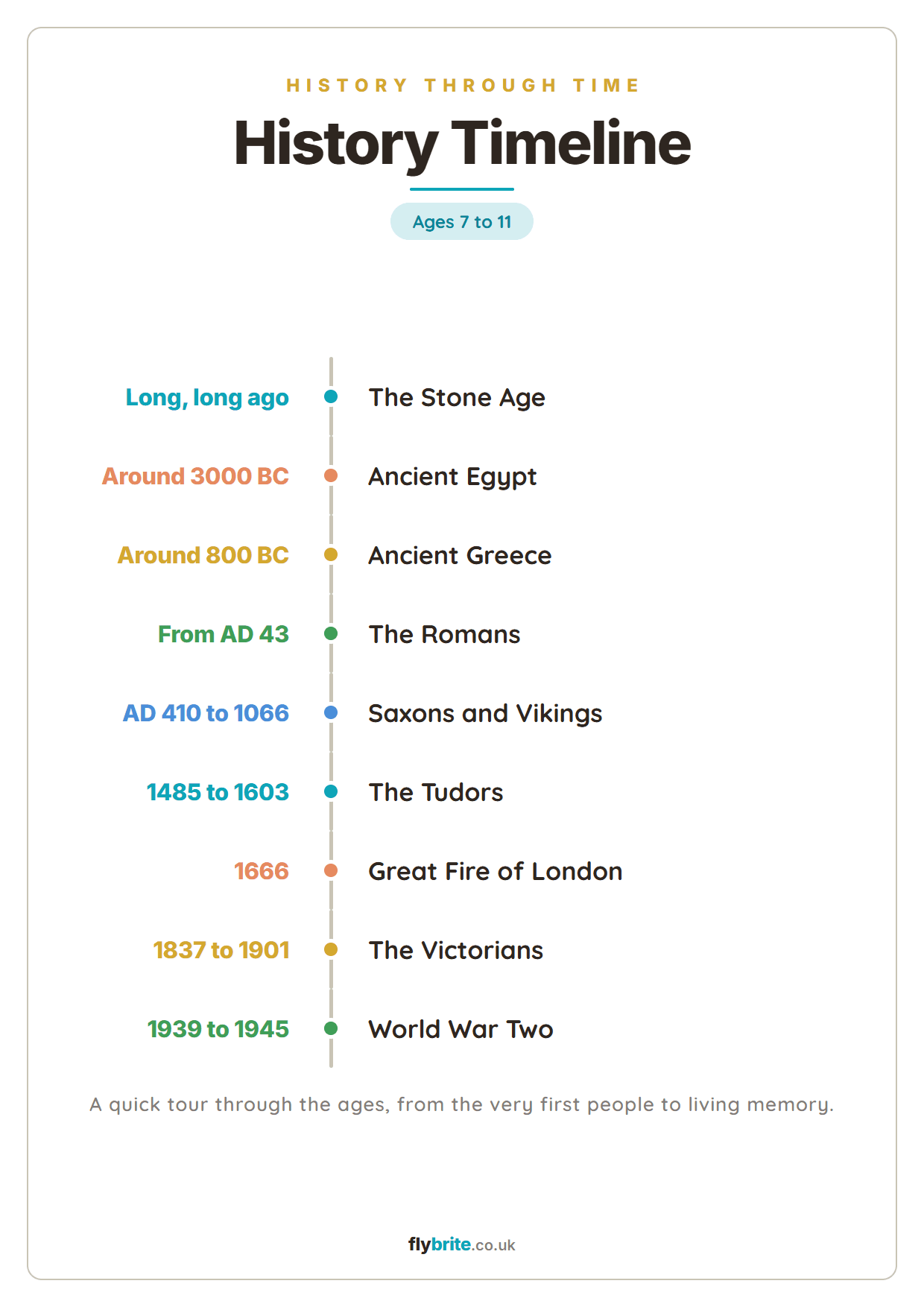
The whole sweep of history on one friendly line, from the first Stone Age people to living memory.
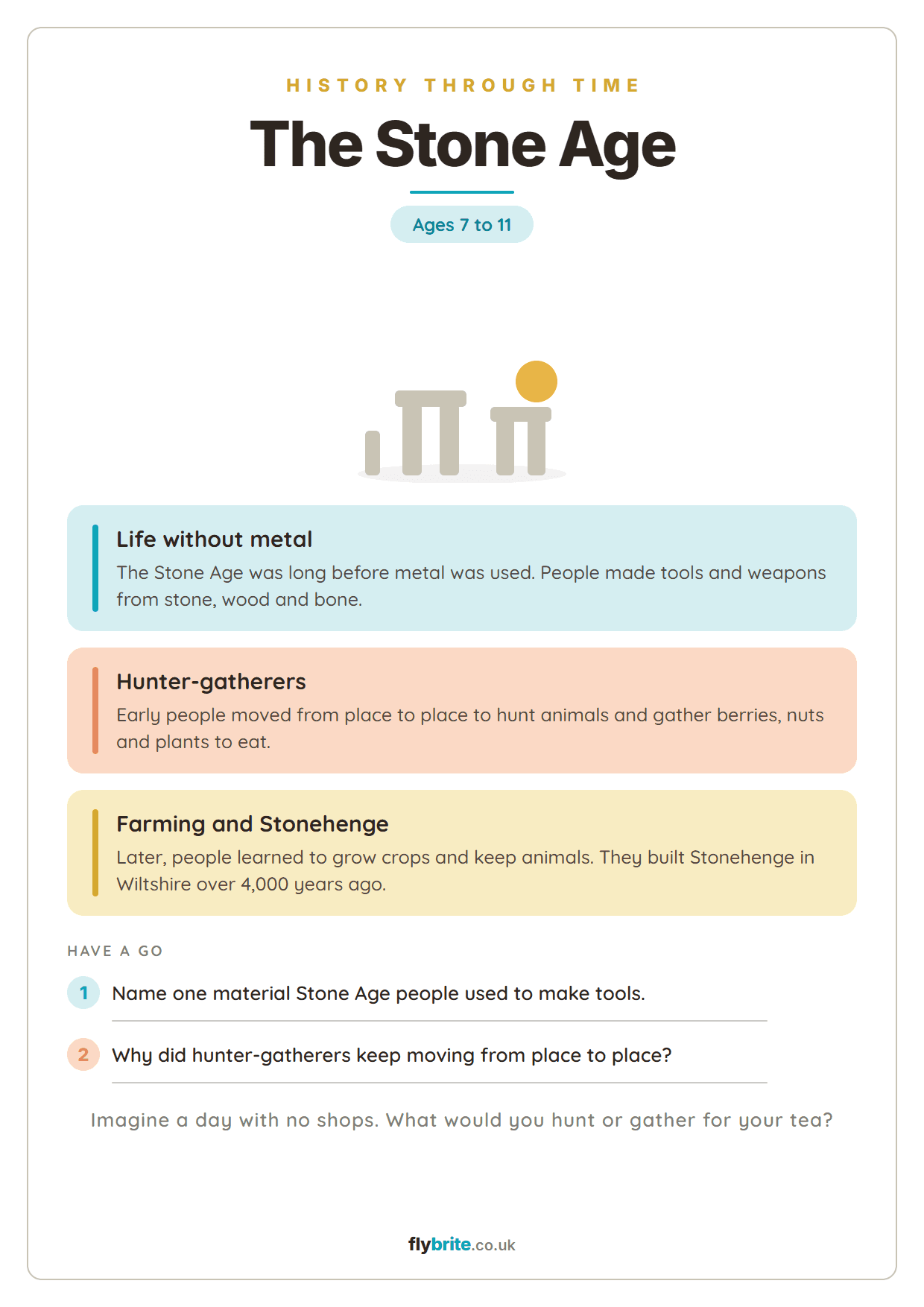
Meet the very first people, from hunter-gatherers to the farmers who raised Stonehenge.
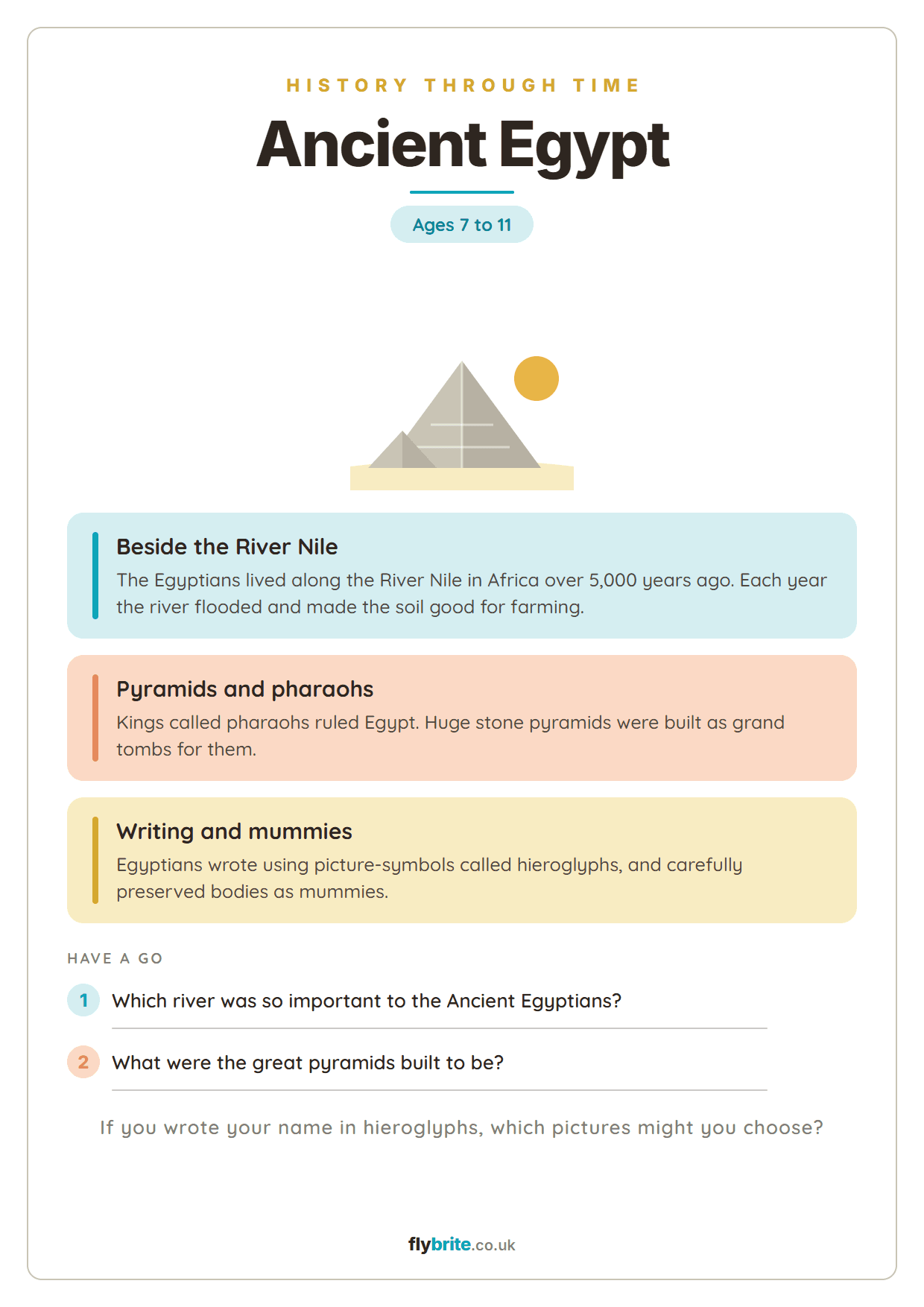
Pyramids, pharaohs and picture-writing, a first look at life beside the mighty River Nile.
Marching legions, straight roads and warm baths, discover how the Romans changed Britain for good.
Thick stone walls, a deep moat and brave knights, a gentle first peek at life in a castle.
Six wives, a famous queen and the first Shakespeare plays, step into the world of the Tudors.
A spark, a bakery and a city of wood, the story of the Great Fire of London in 1666.
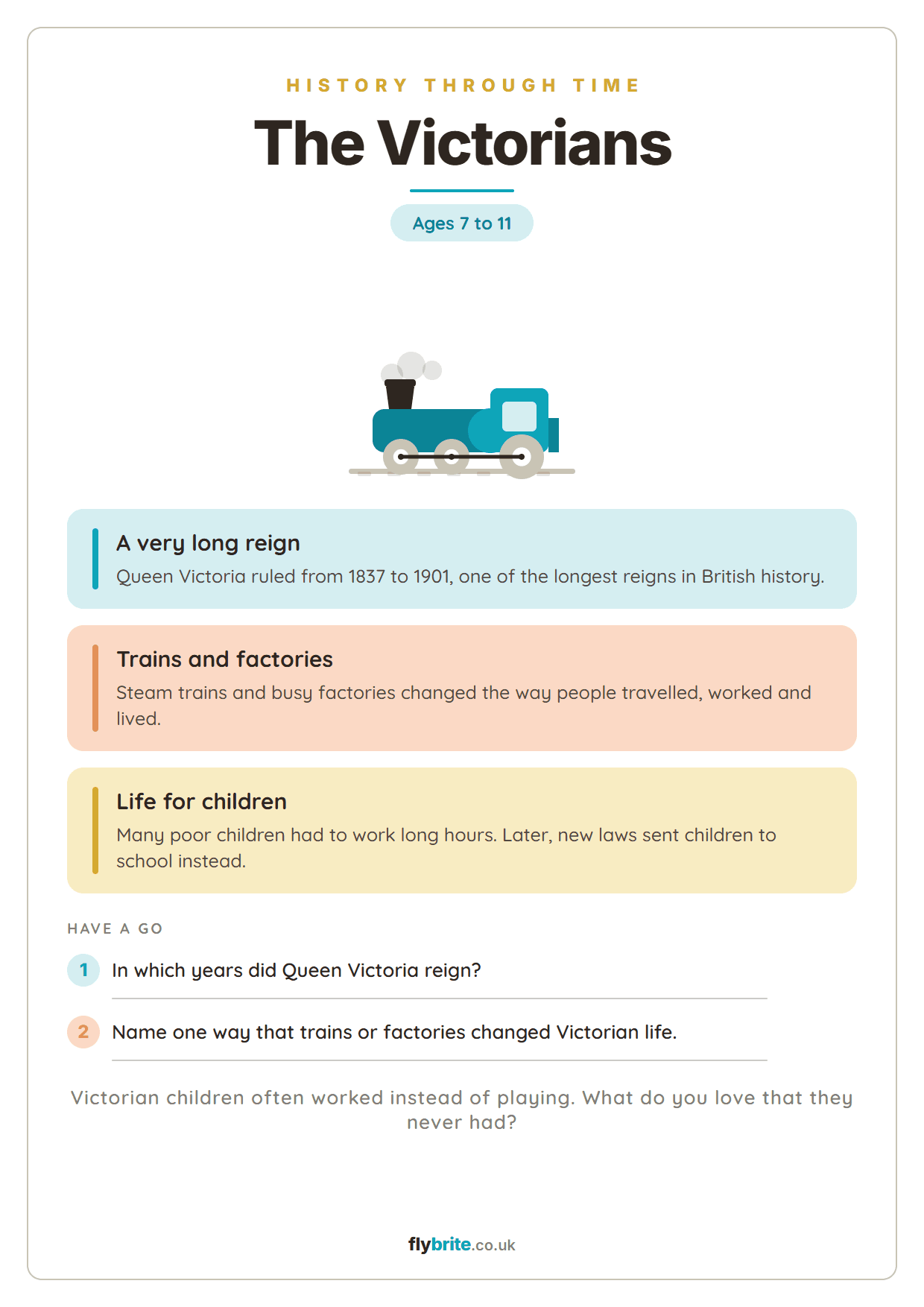
Steam trains, smoky factories and a very long reign, life in Britain under Queen Victoria.
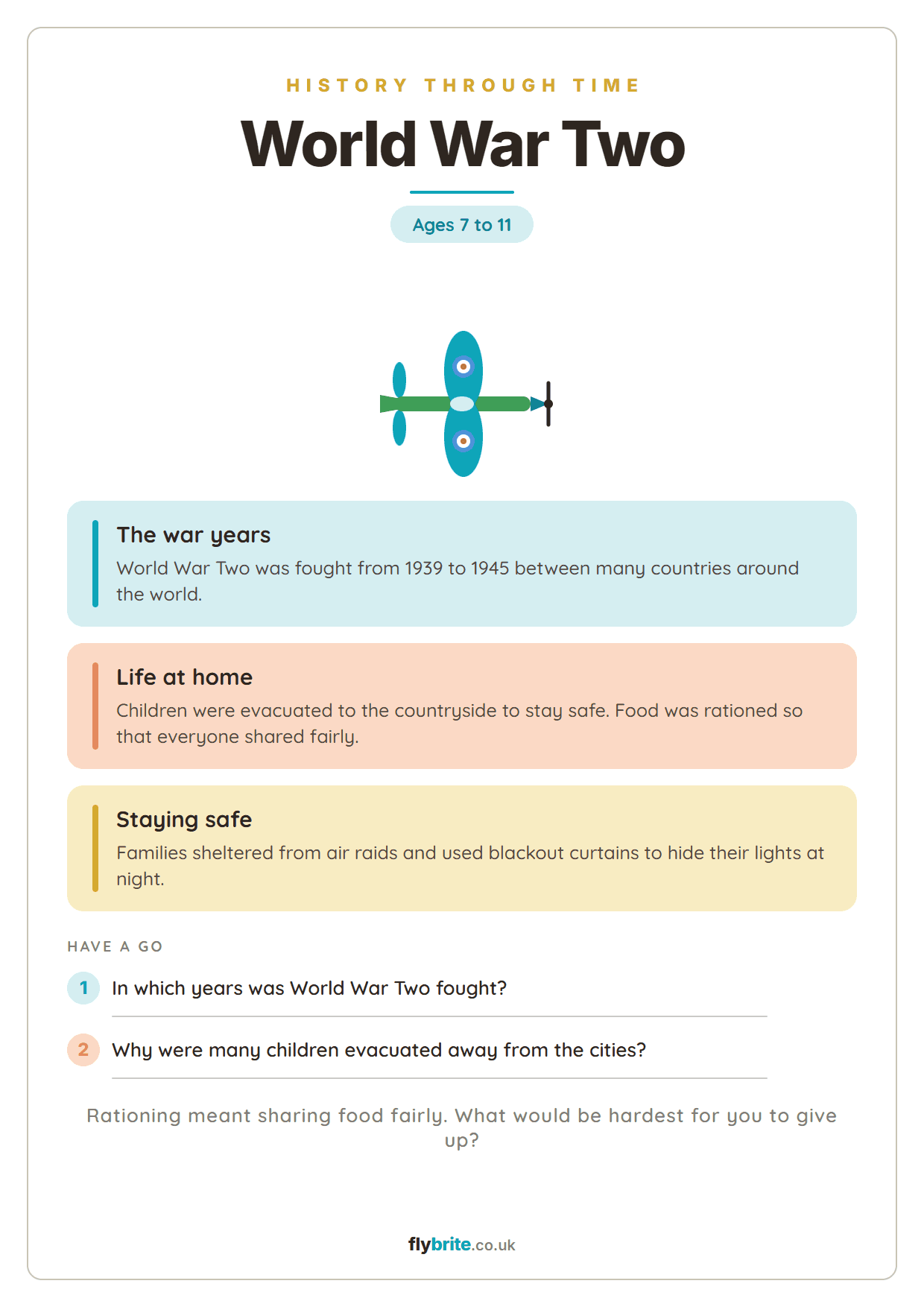
Evacuees, ration books and air-raid shelters, a thoughtful look at life on the home front.
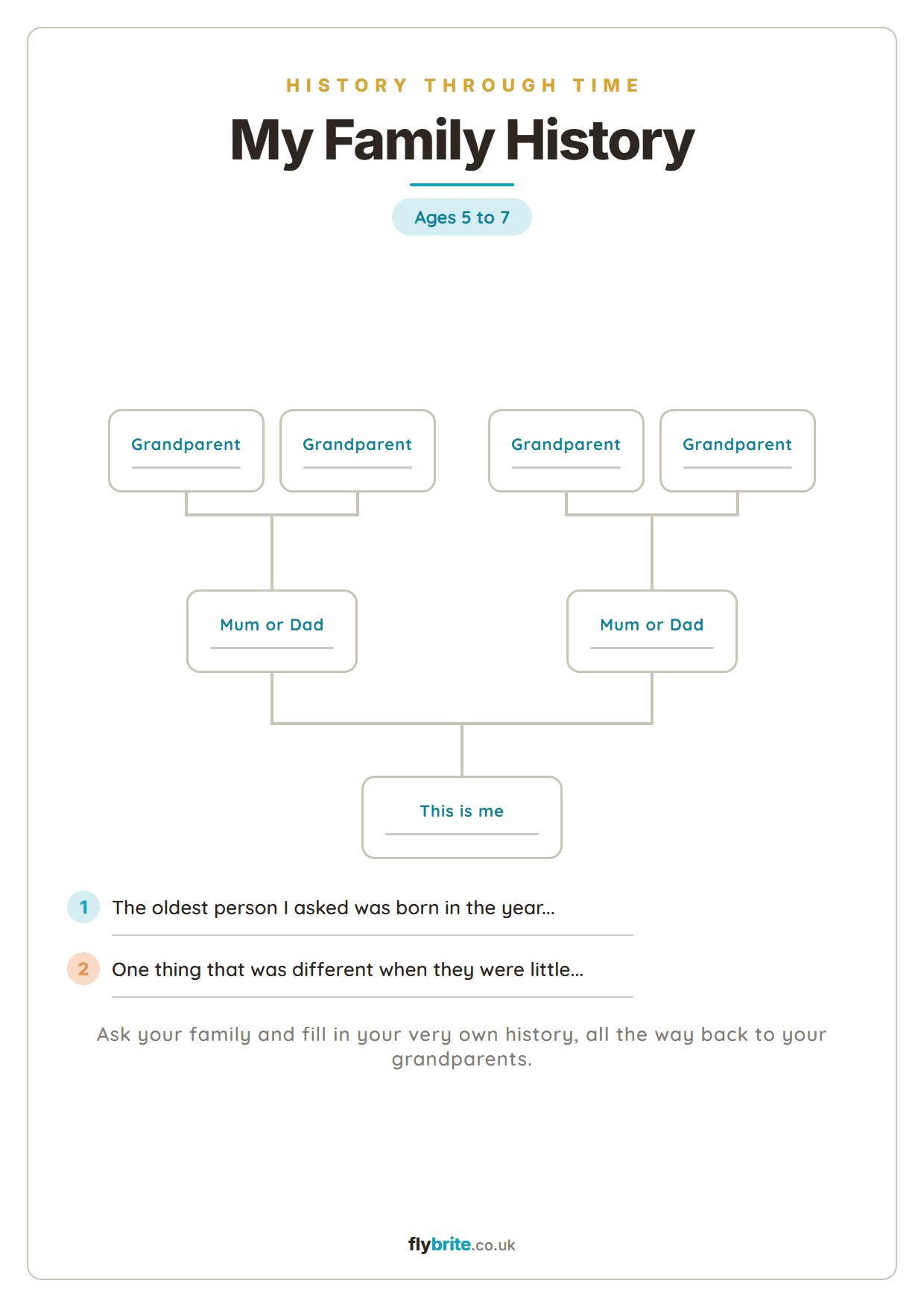 Type or write in
A warm little family tree to fill in together, from grandparents all the way down to you.
Fact-file worksheets on the people who changed the world, from nurses to inventors.
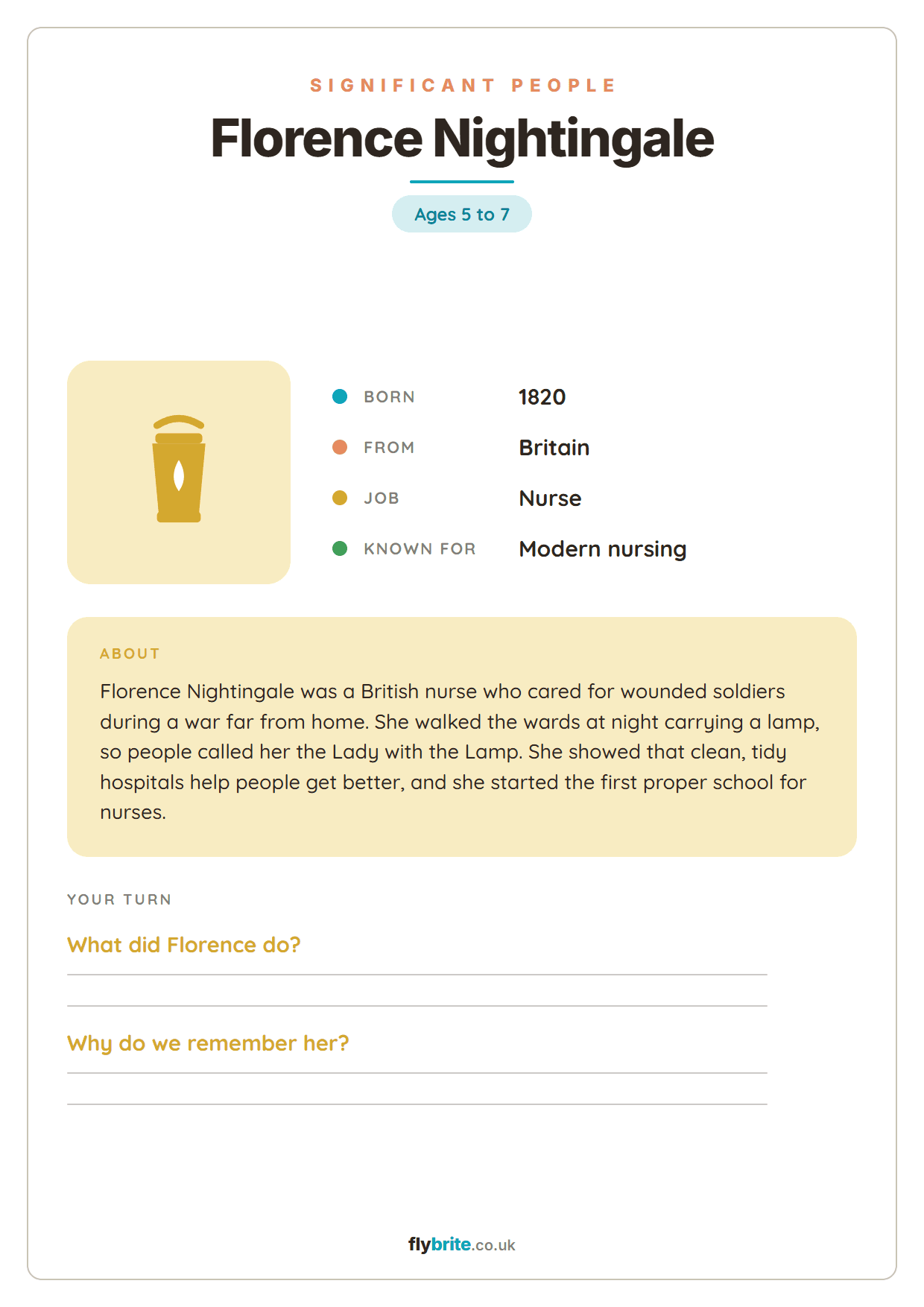
A warm fact file on the Lady with the Lamp, who made nursing kind, clean and safe, with facts to learn and questions to answer.
The story of the first person to walk on the Moon, with key facts and space for young astronauts to write what they learn.
A gentle fact file on the best loved voice of nature, whose films help the whole world care for wild animals and plants.
The brave woman who kept her bus seat and helped change unfair laws, with a fact panel and questions on standing up for fairness.
A fact file on the scientist who discovered radium and won two Nobel Prizes, with key facts and thinking questions.
The leader who spent 27 years in prison yet never gave up hope, and became a symbol of peace and equality for the world.
A fact file on the most famous writer in the English language, whose plays are still performed all over the world today.
The daring pilot who was the first woman to fly solo across the Atlantic, with facts to read and questions to answer.
A fact file on the naturalist whose big idea, evolution, explains how living things change slowly over a very long time.
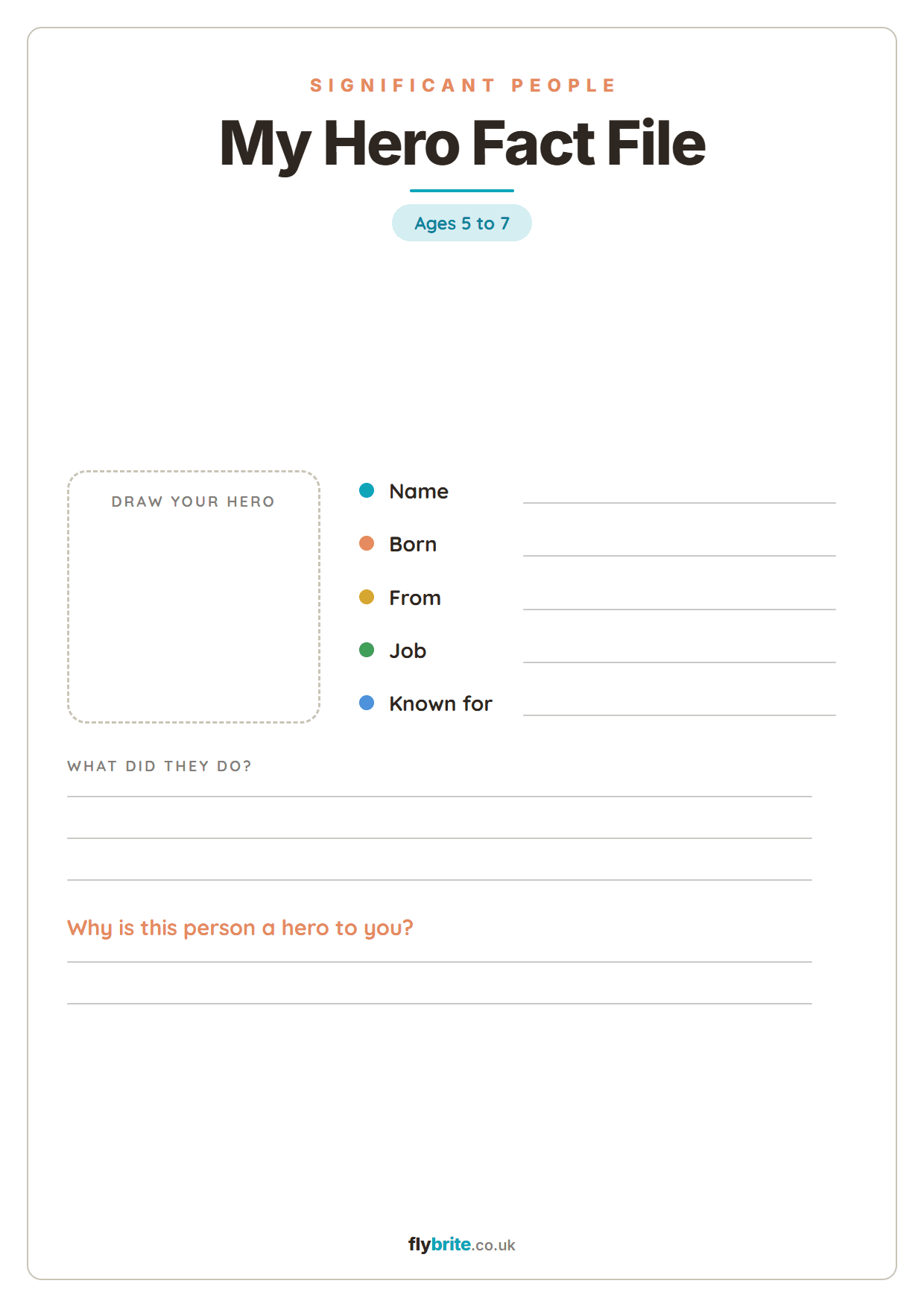 Type or write in
A blank fact file to fill in about a hero of your own, from a famous name to someone special at home, and say why they inspire you.
Festivals, symbols and celebrations across the major faiths, warm first RE for the UK.

A warm, respectful first map of the six major world religions, each with its symbol and what its followers hold dear.
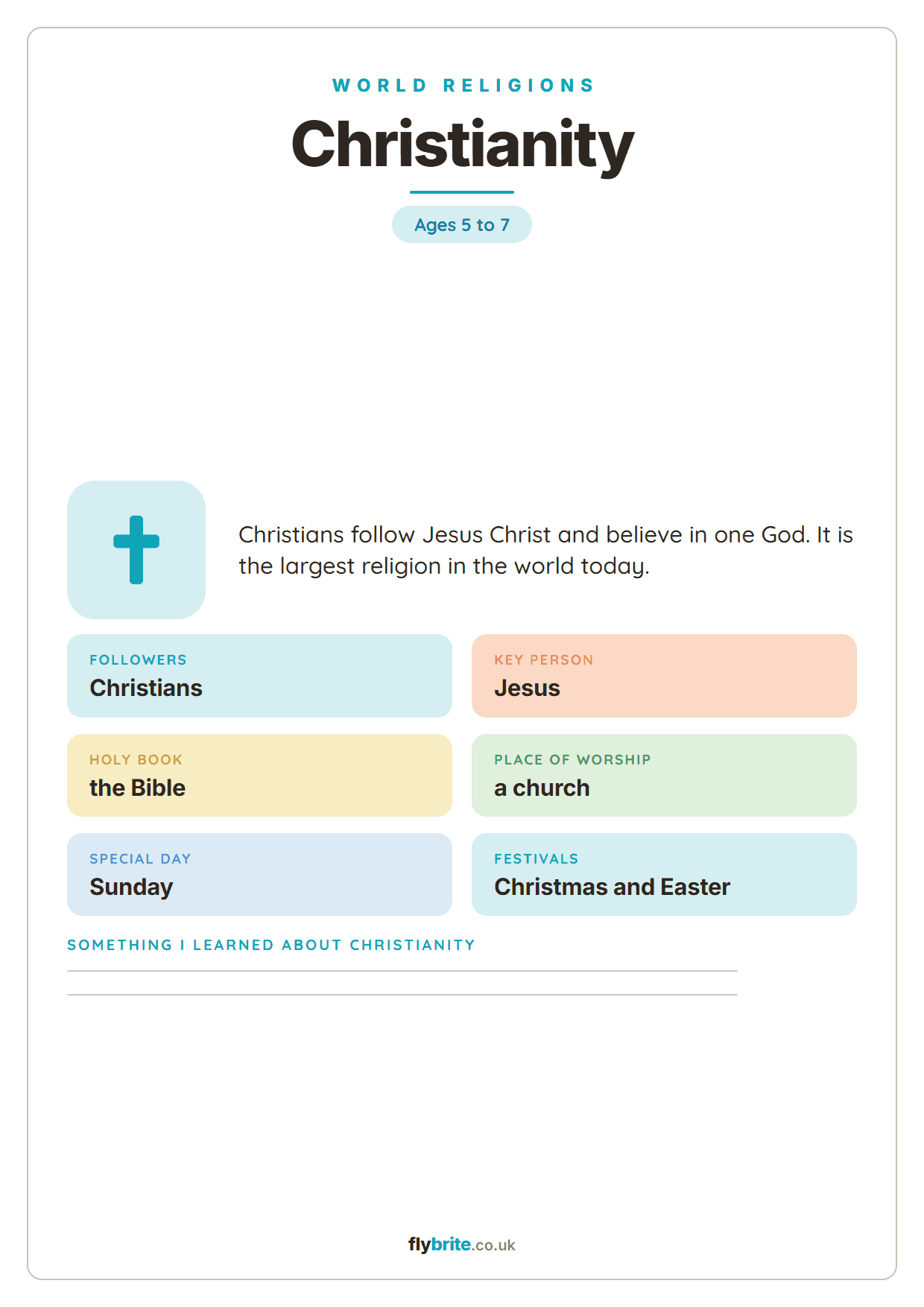
A gentle introduction to Christianity, from the cross and the church to Christmas and Easter.
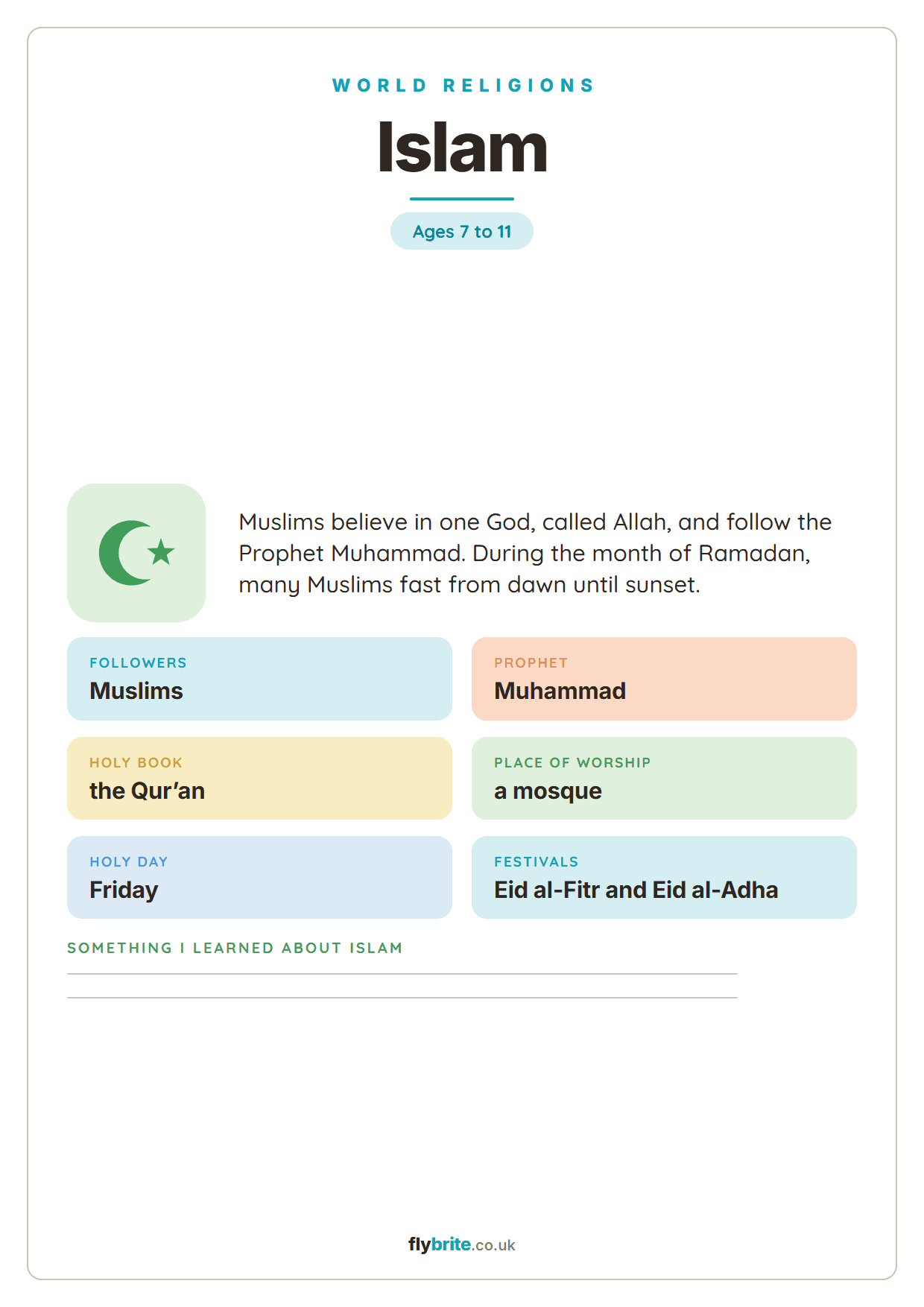
A respectful look at Islam, its star and crescent, the mosque, the Qur’an and the joy of Eid.
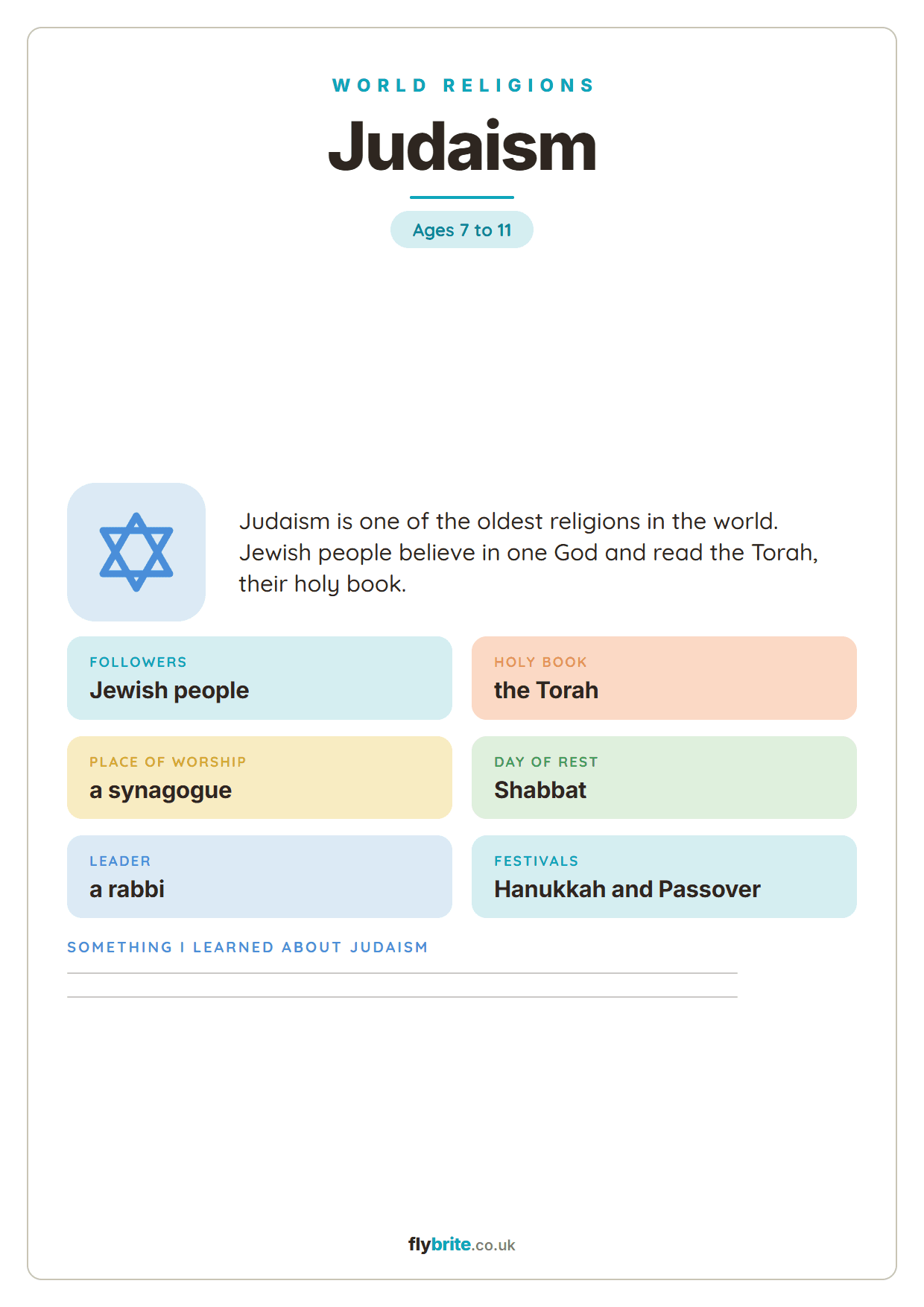
One of the oldest faiths, explored kindly through the Star of David, the Torah and the peace of Shabbat.
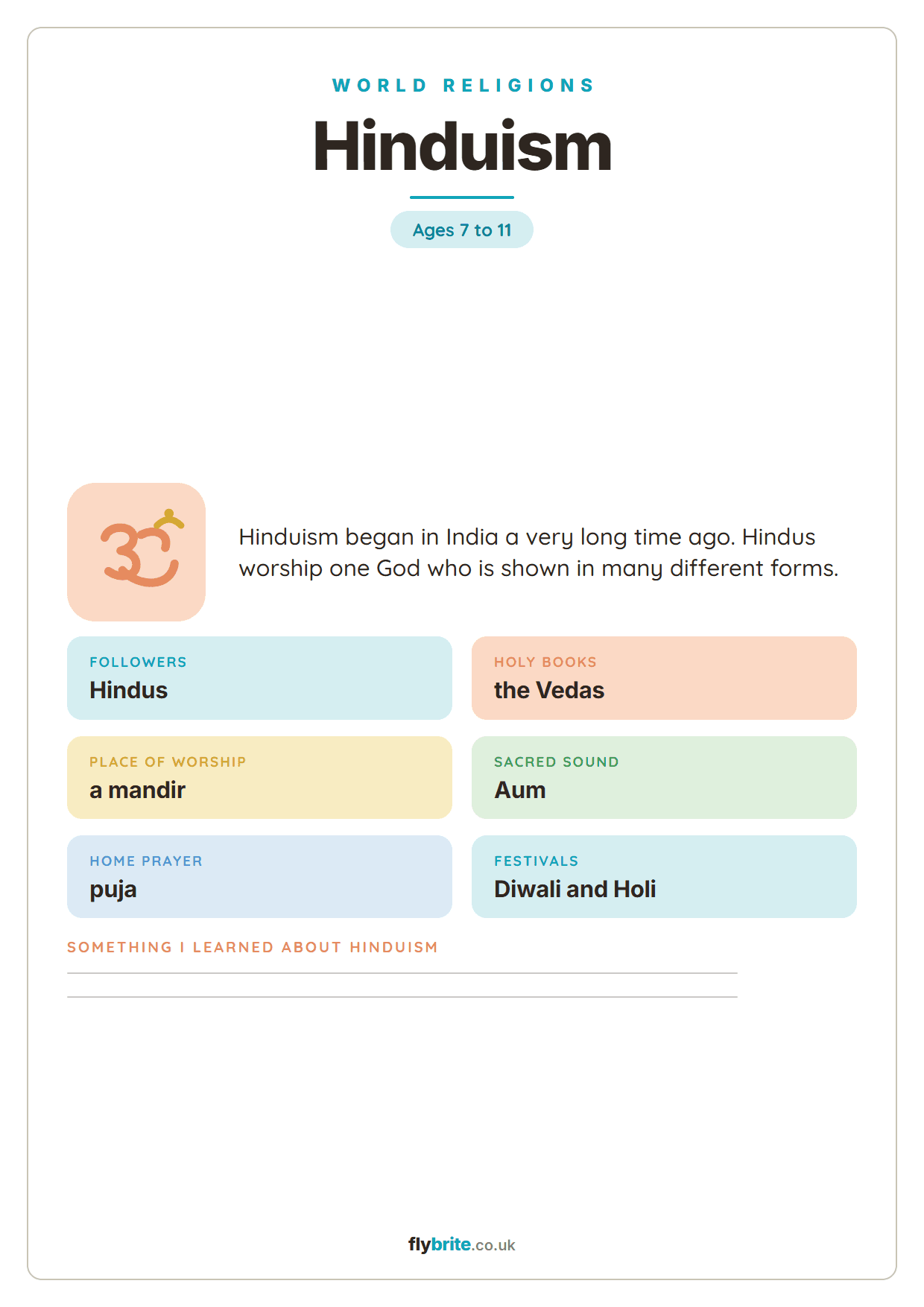
A colourful introduction to Hinduism, the Aum, the mandir, and the bright festivals of Diwali and Holi.
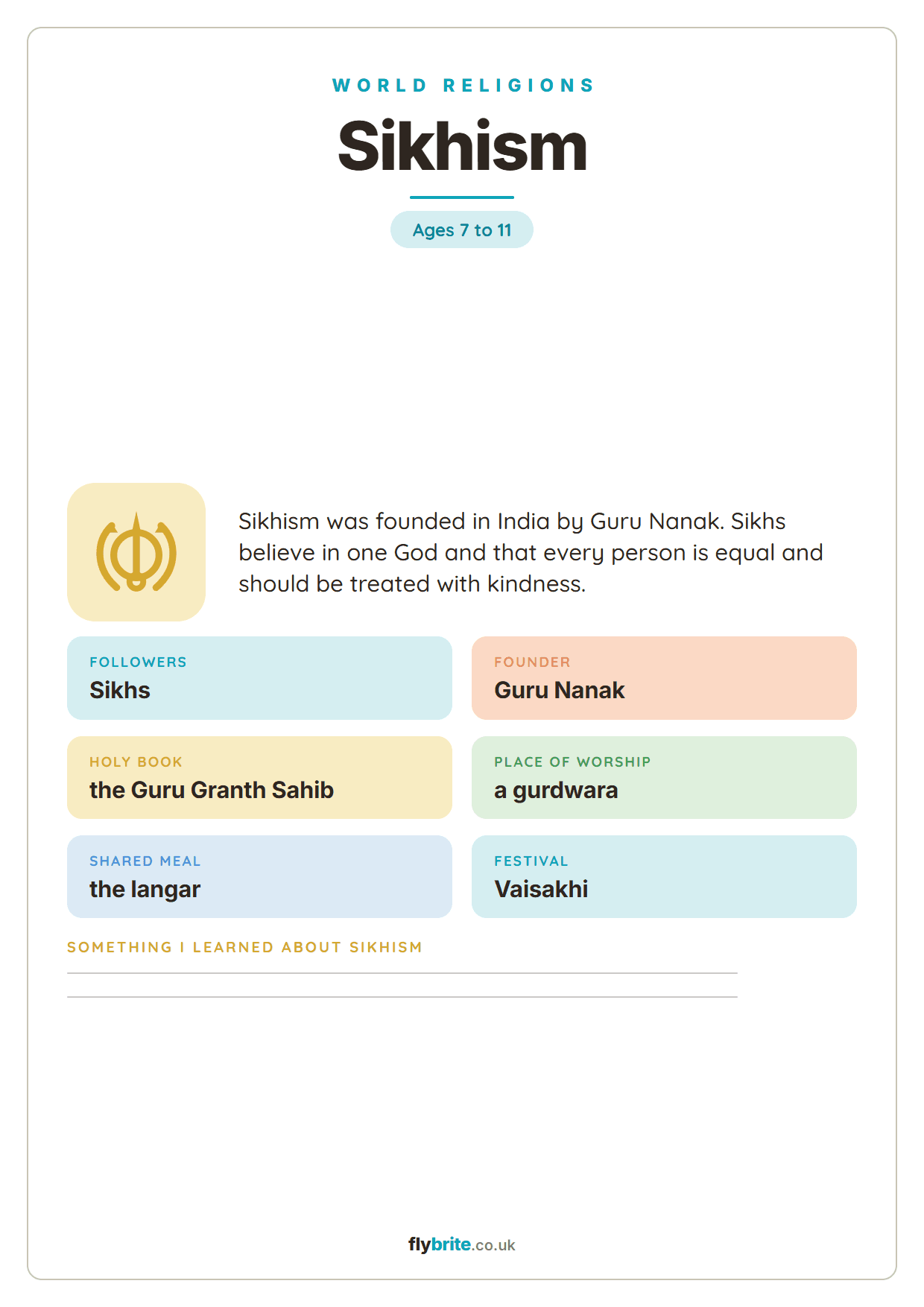
A warm look at Sikhism, the Khanda, the gurdwara, and the shared kitchen that welcomes everyone.
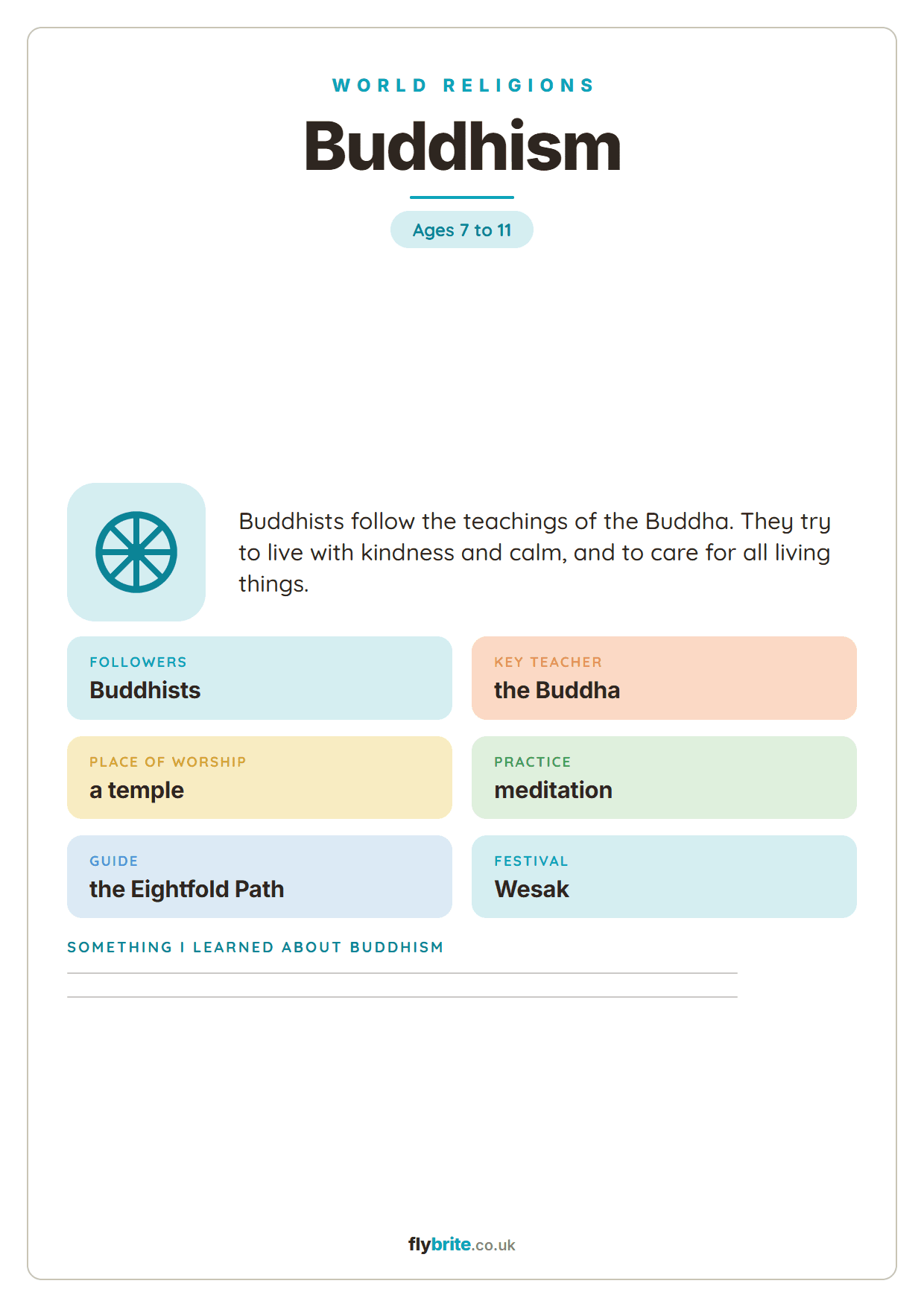
A calm introduction to Buddhism, the Dharma wheel, the Buddha, meditation and the festival of Wesak.
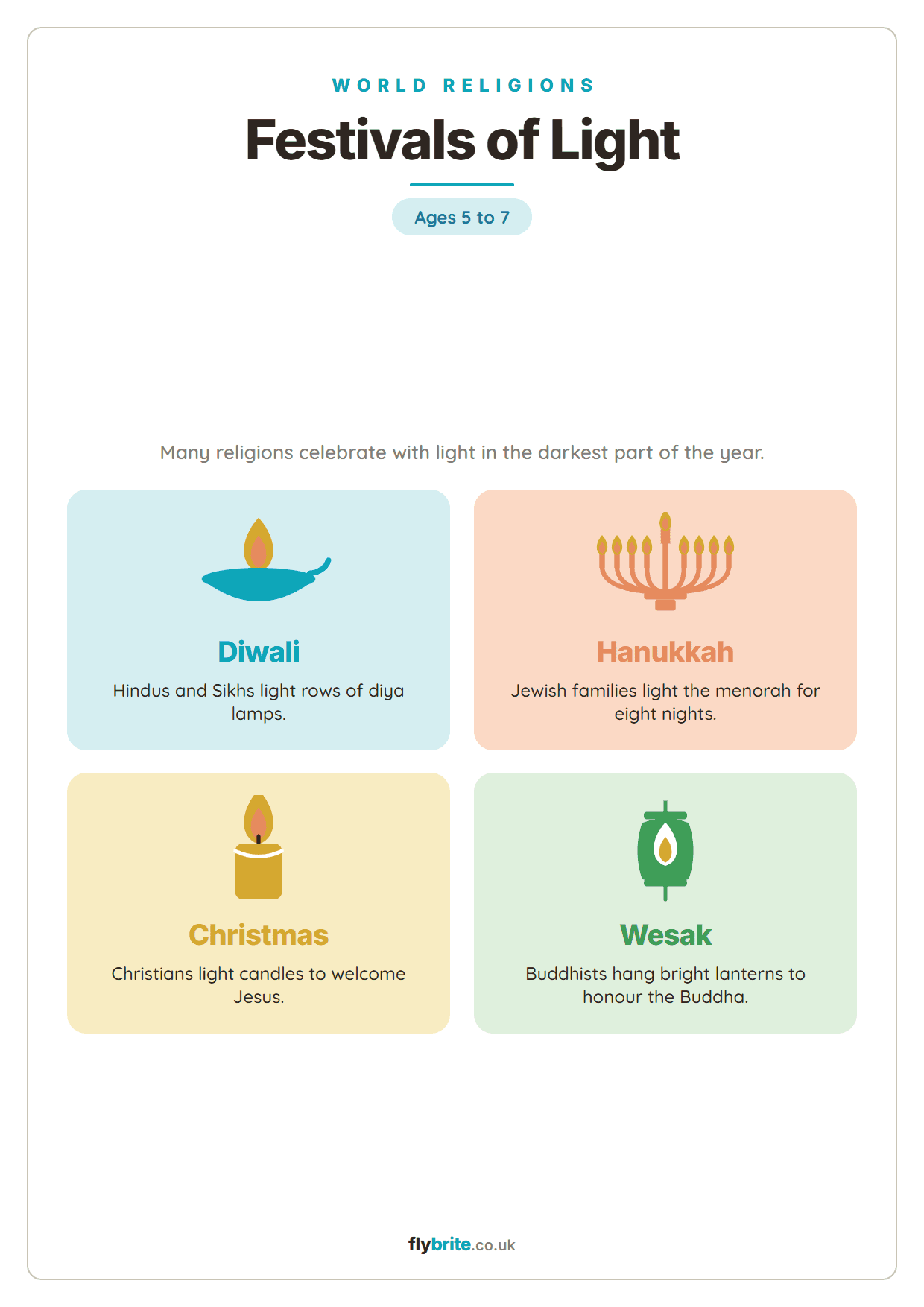
Four glowing festivals from around the world, from Diwali diyas to Hanukkah candles, Christmas lights and Wesak lanterns.
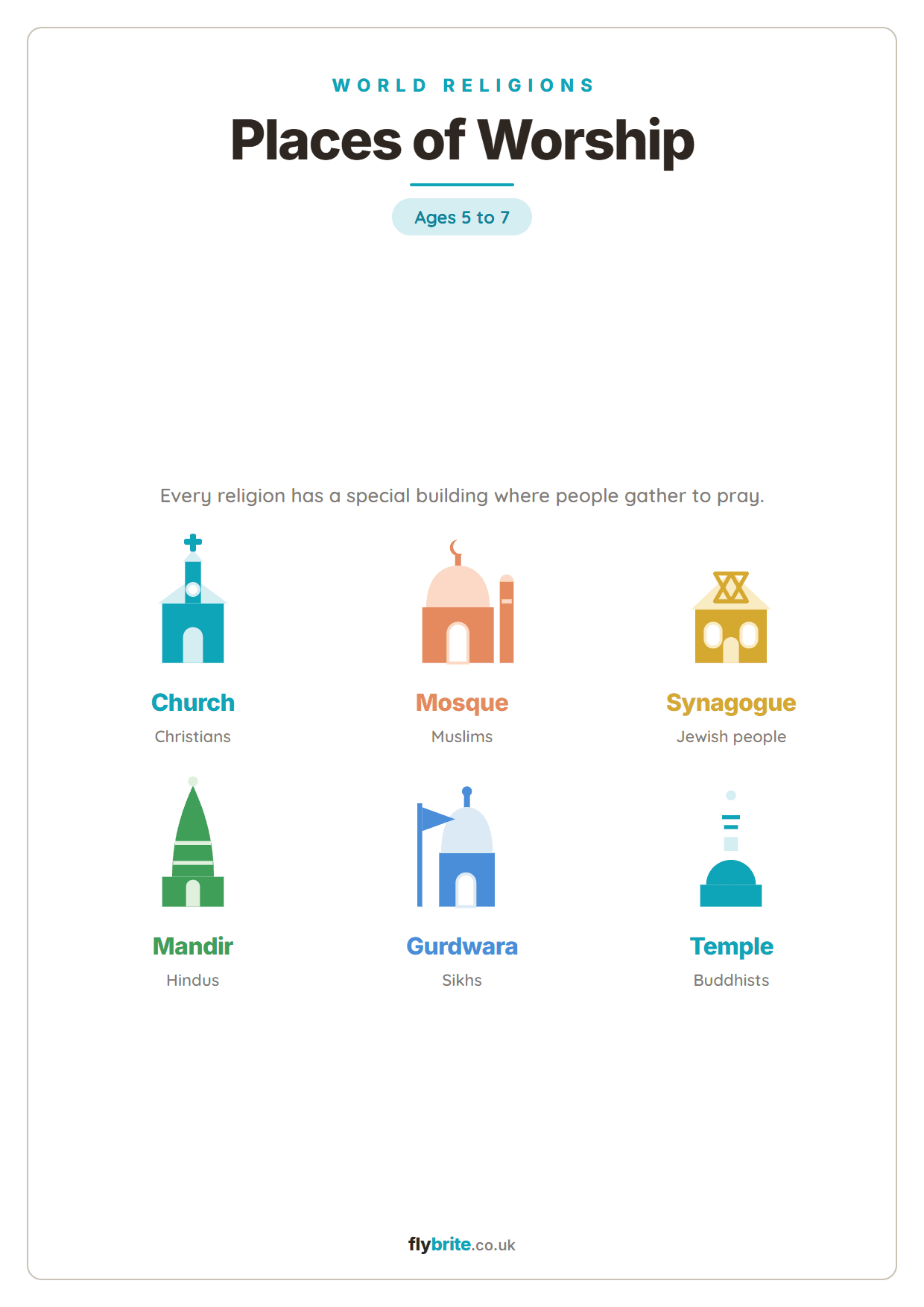
The special buildings where people gather to pray, from church and mosque to mandir, gurdwara and temple.
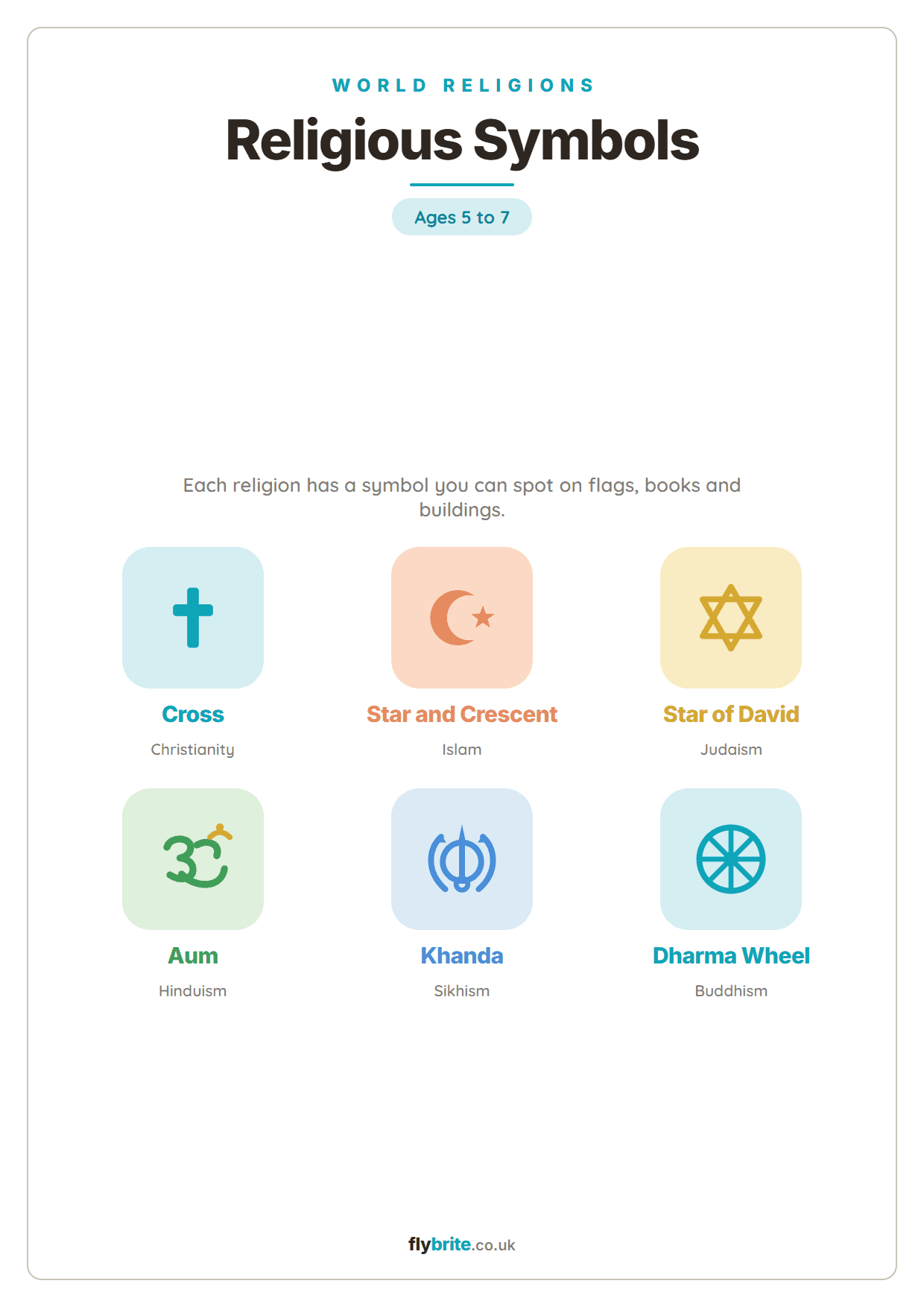
The six great symbols to know and name, from the cross and crescent to the Aum, Khanda and Dharma wheel.
Step-by-step how-to-draw, the colour wheel and pattern play for budding artists.

A gentle five-step build-up to a happy little cat, with a big blank box to have your own go.
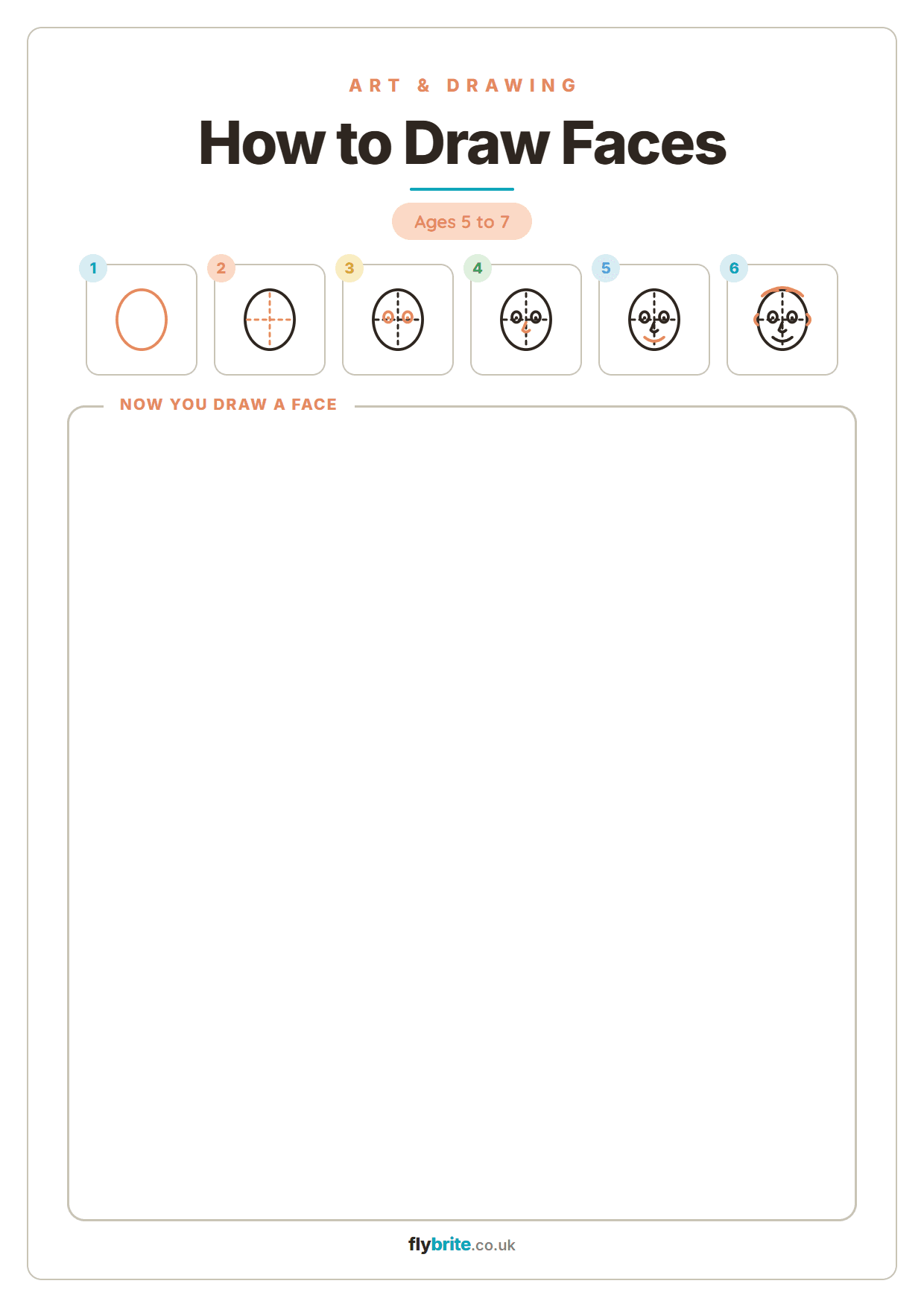
Six friendly stages from a simple oval to a whole face, then a roomy box to draw your own.
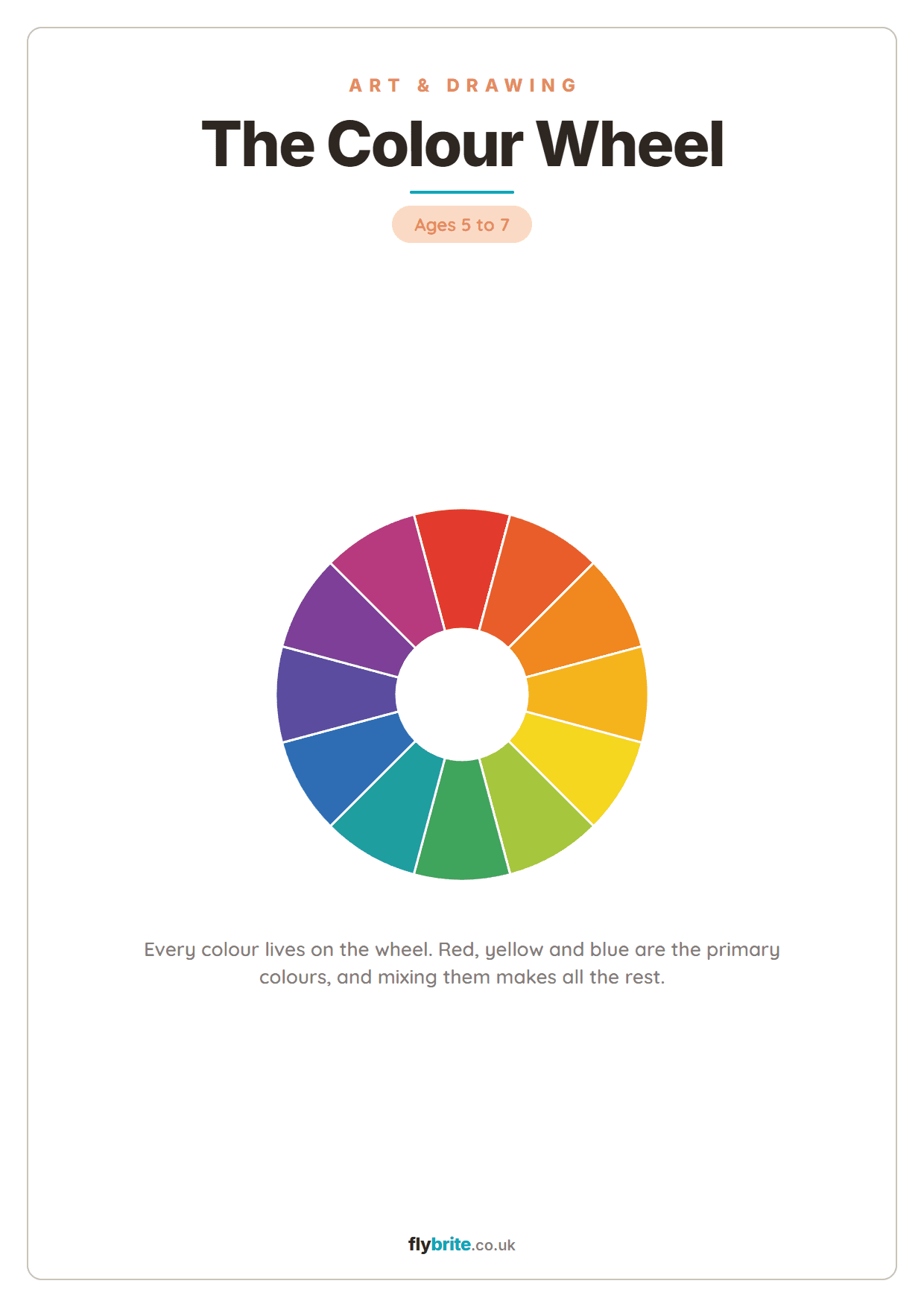
A bright twelve-colour wheel that shows how every shade finds its place around the ring.

See how red, yellow and blue mix into orange, green and purple, one clear splash at a time.
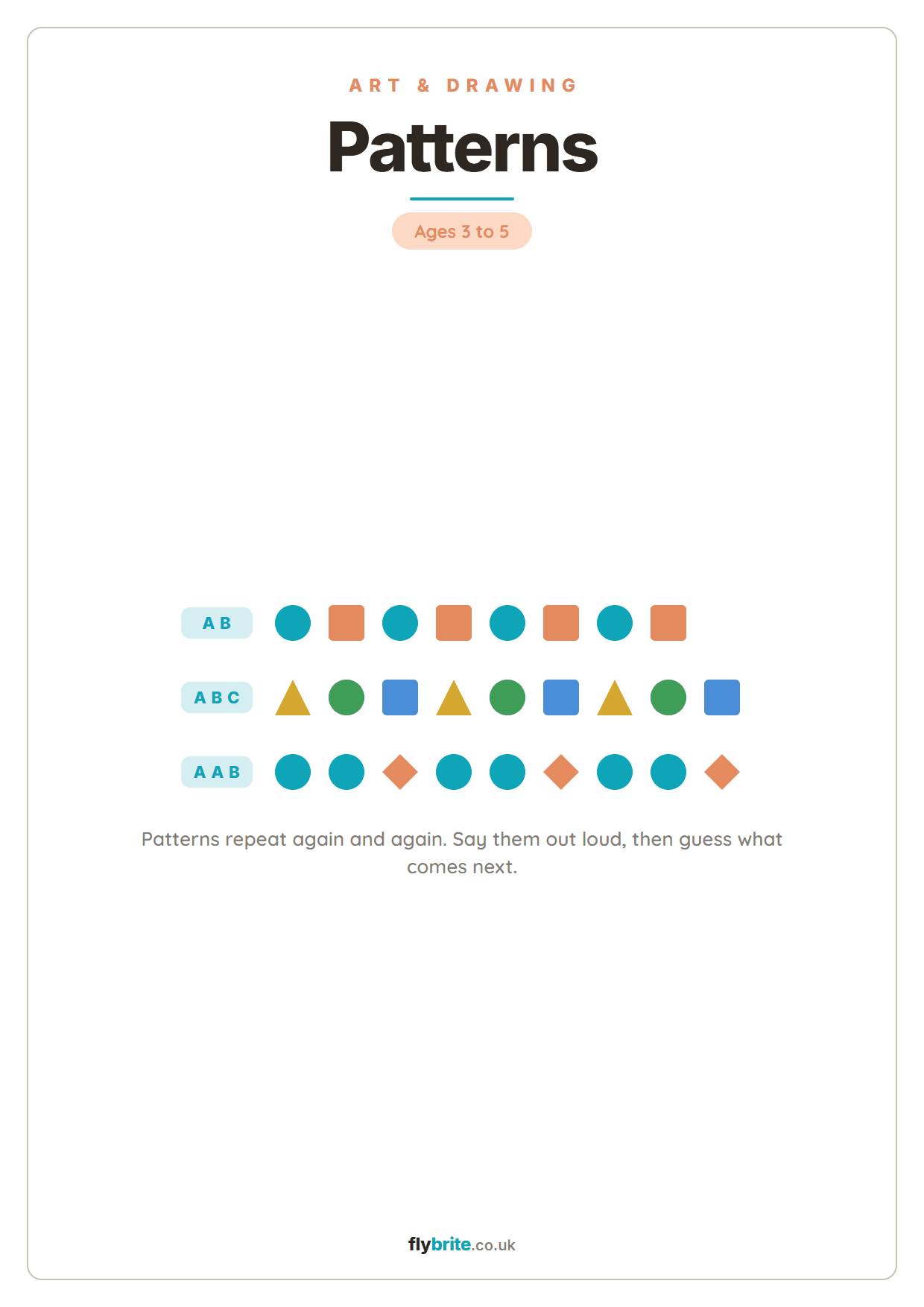
Rows of repeating shapes and colours to spot, say out loud and predict what comes next.
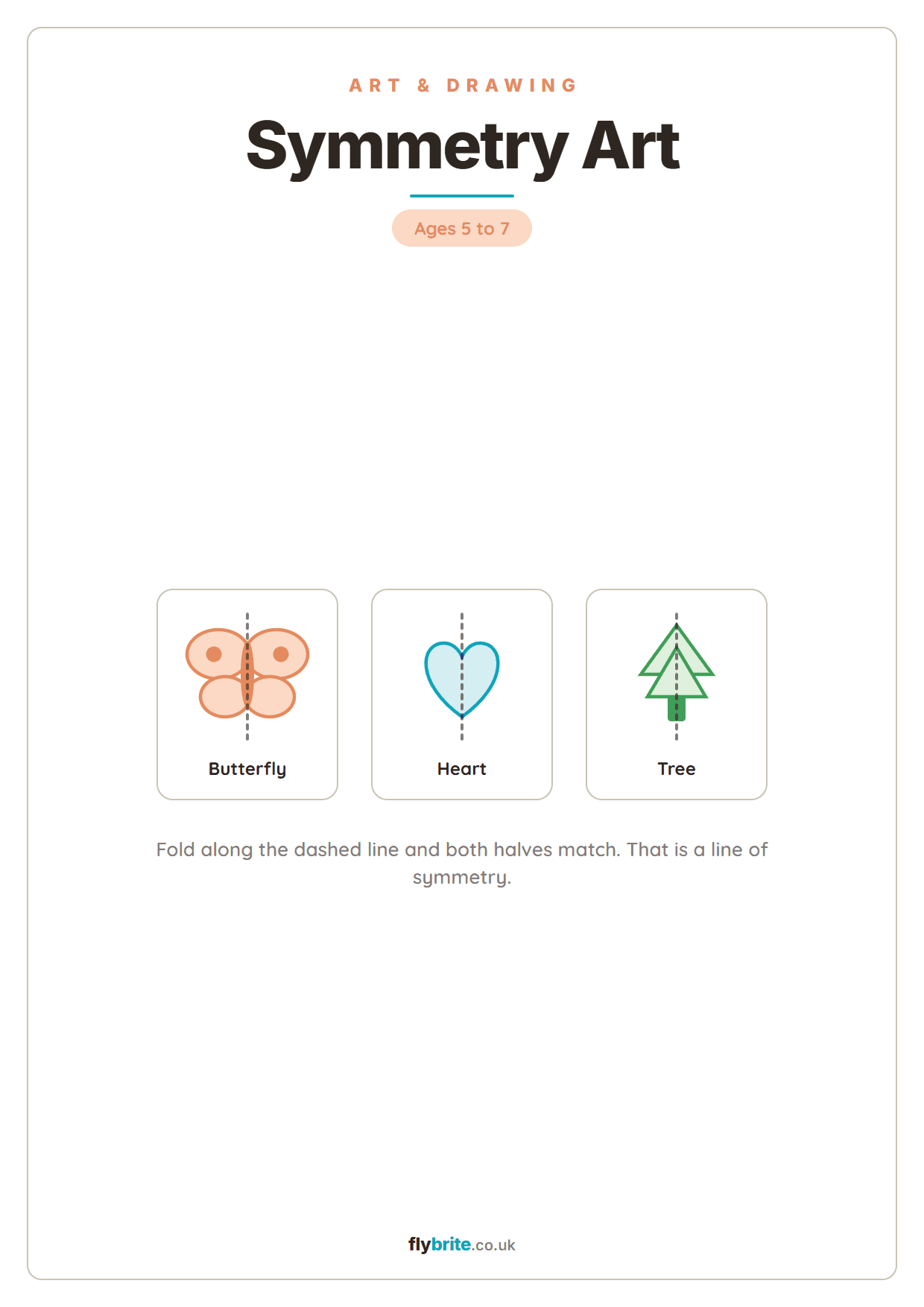
Three tidy shapes that match on both sides, each with its own dashed line of symmetry.
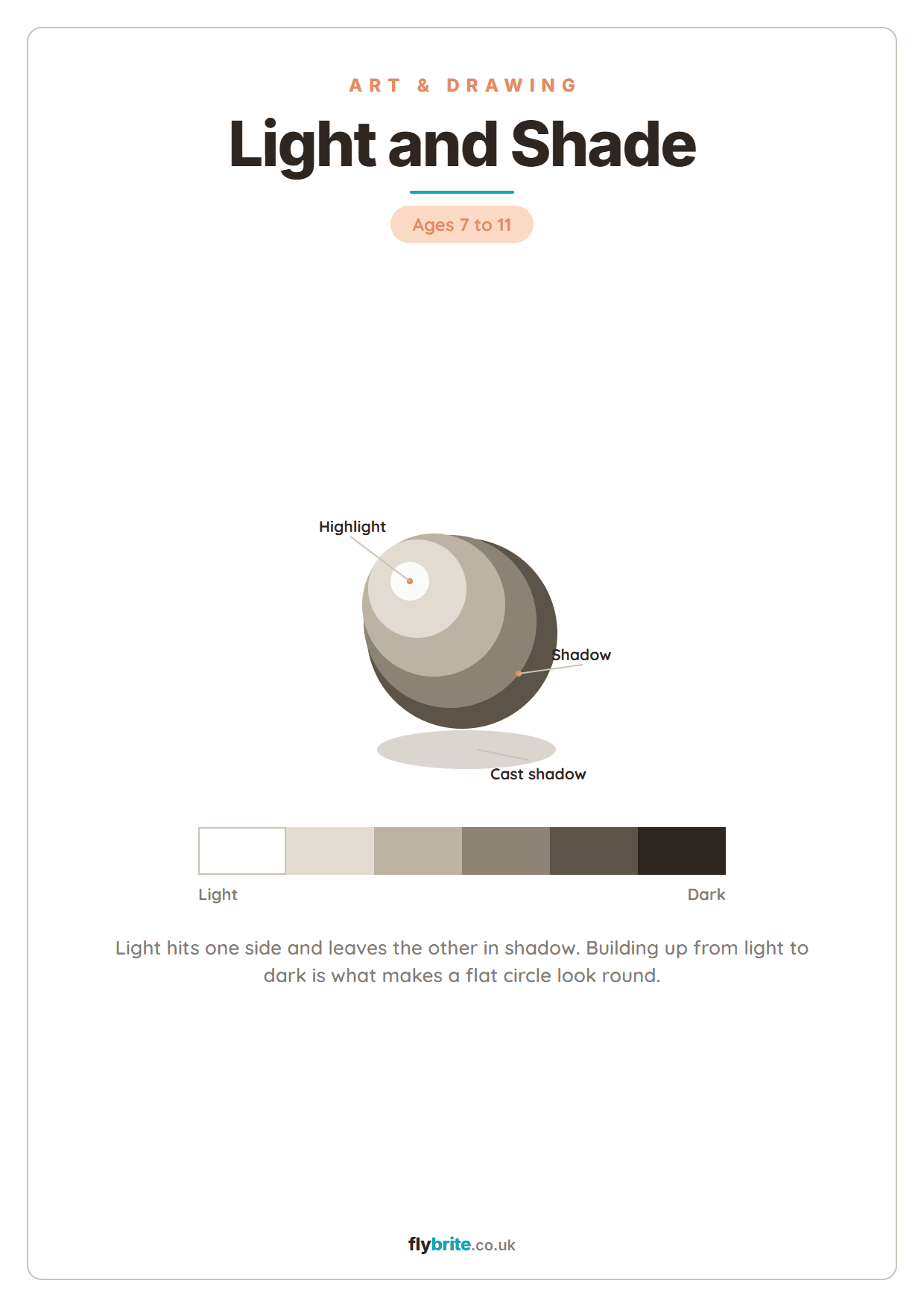
A shaded ball and a tidy tone scale that show how light and dark turn flat shapes solid.
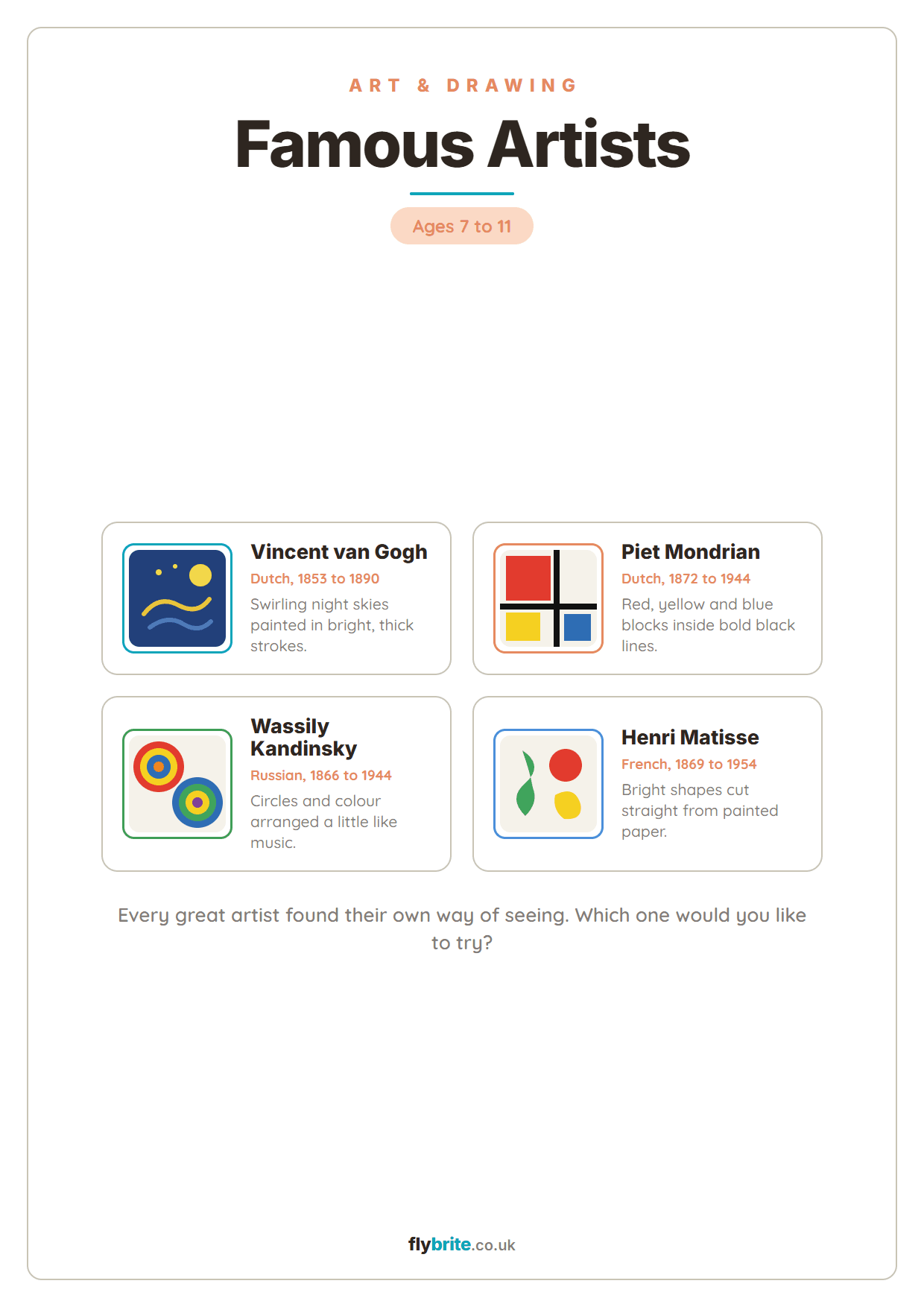
Four great artists and the styles that made them famous, from swirling skies to bold blocks.
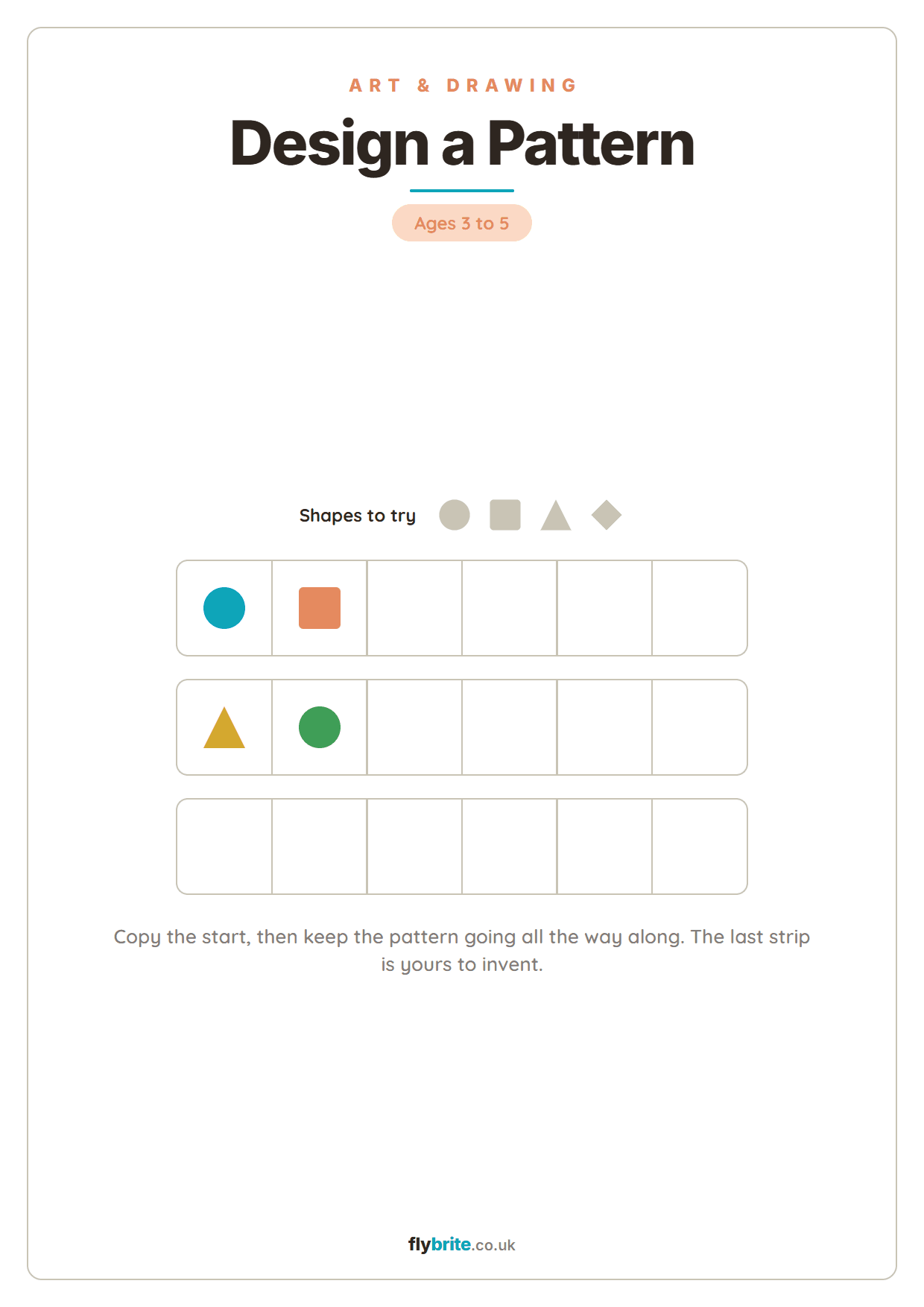 Type or write in
Copy the starter shapes then carry the pattern along, with one whole strip to invent your own.
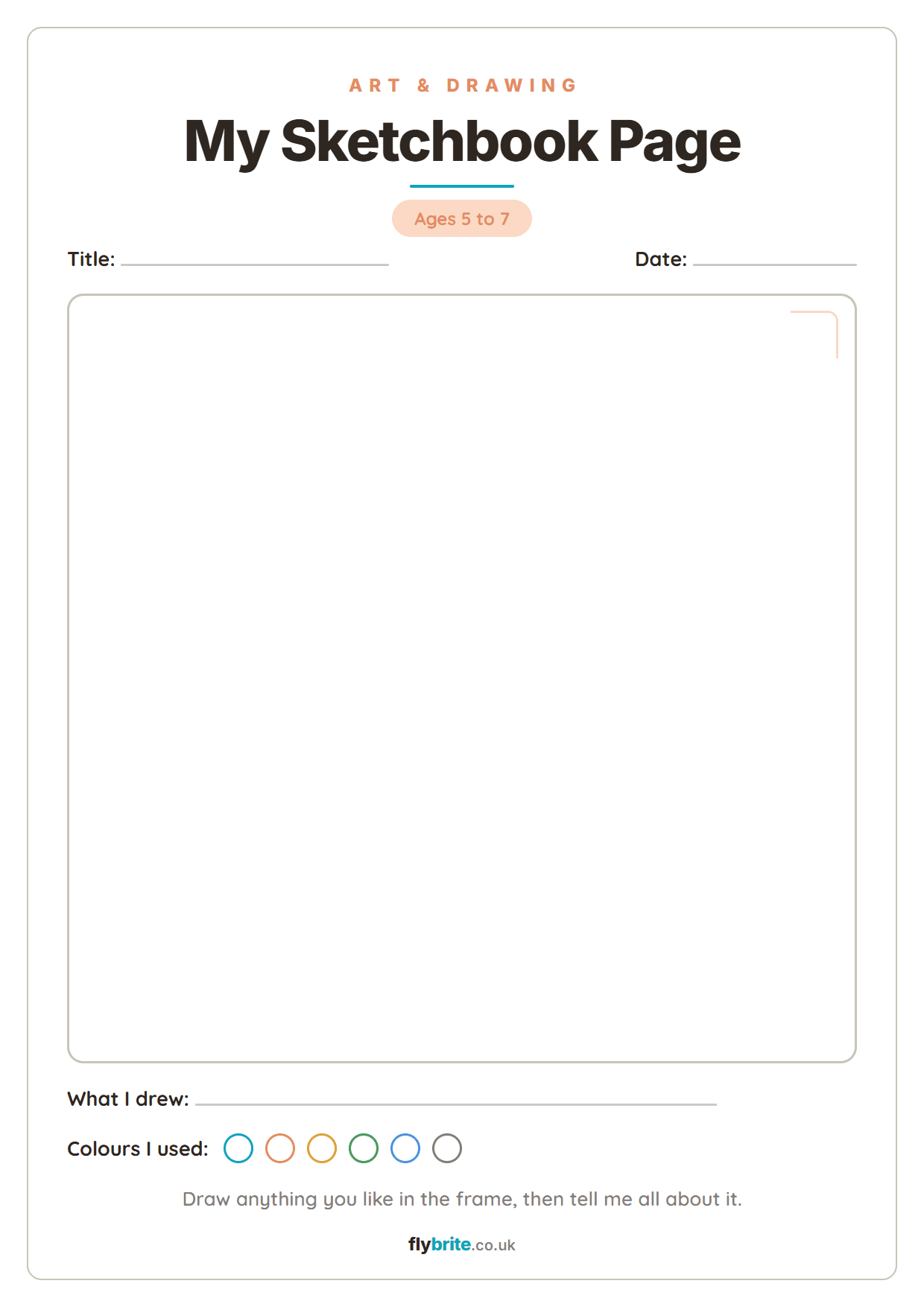 Type or write in
A proper sketchbook page with a big drawing frame and room to name your picture and colours.
Notes, rhythm, instruments of the orchestra and compose-your-own, first music theory.
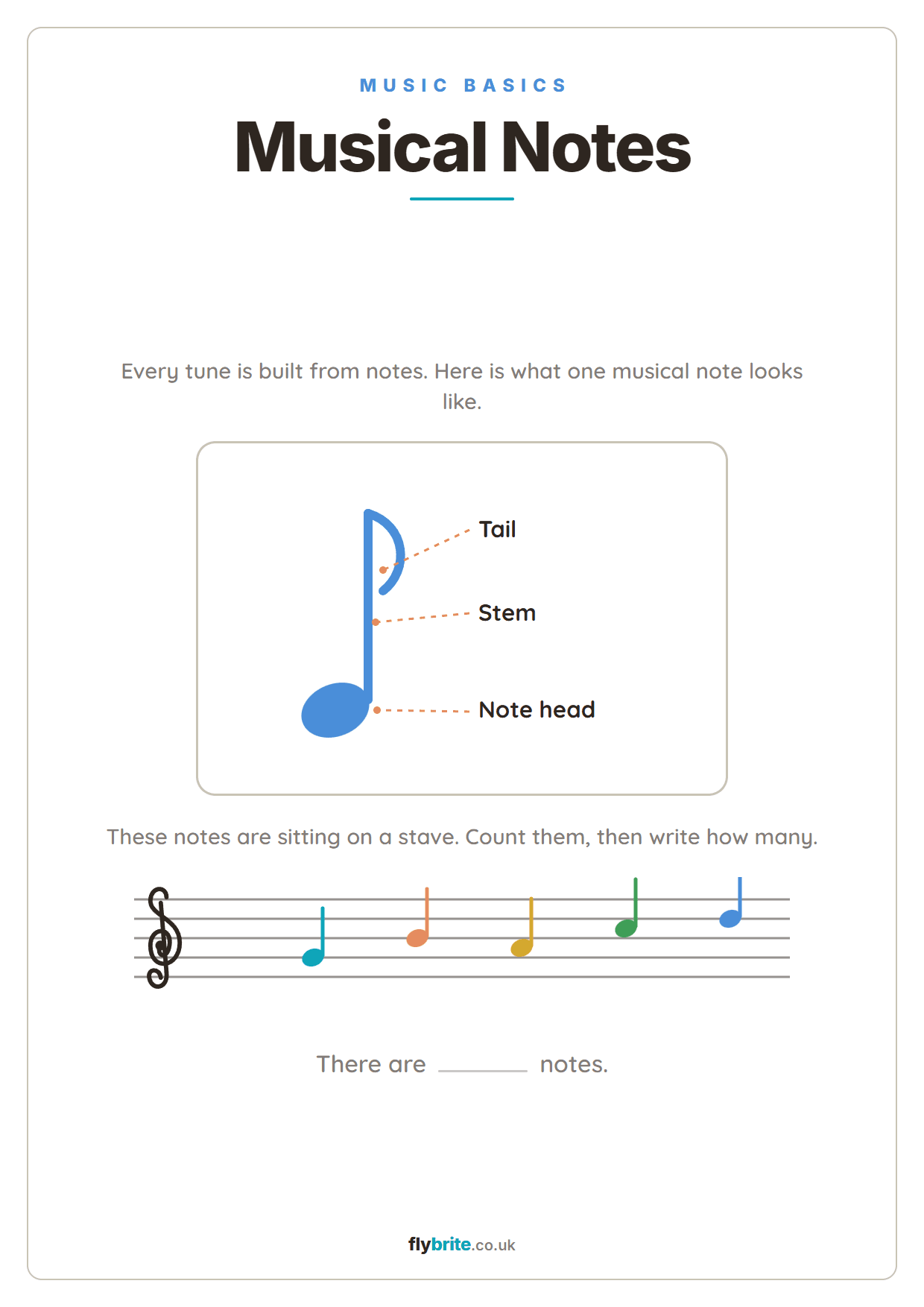
A friendly first look at a musical note, its head, stem and tail, with a stave to count.
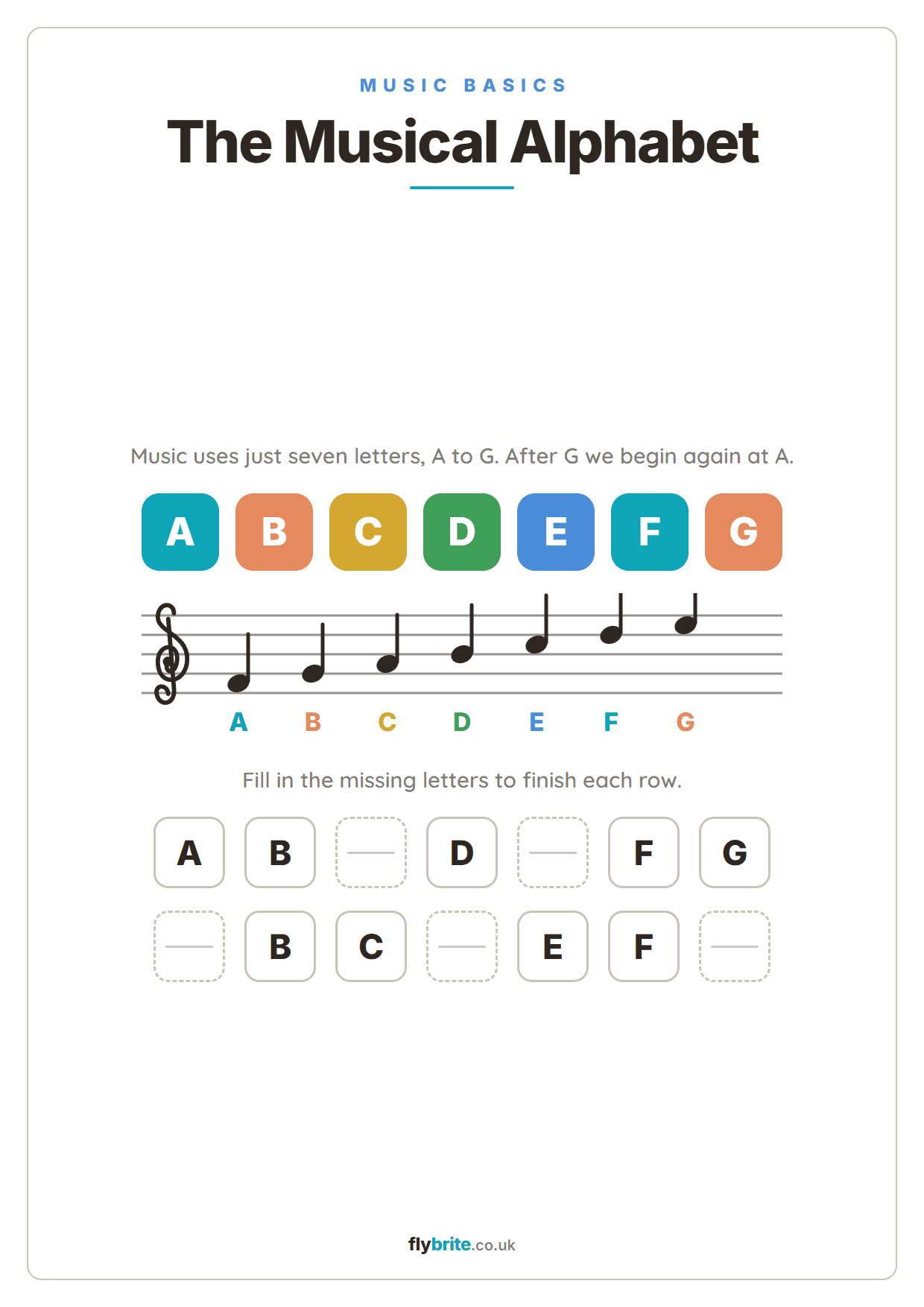
The seven letters of music, A to G, with a note ladder to climb and missing letters to fill in.
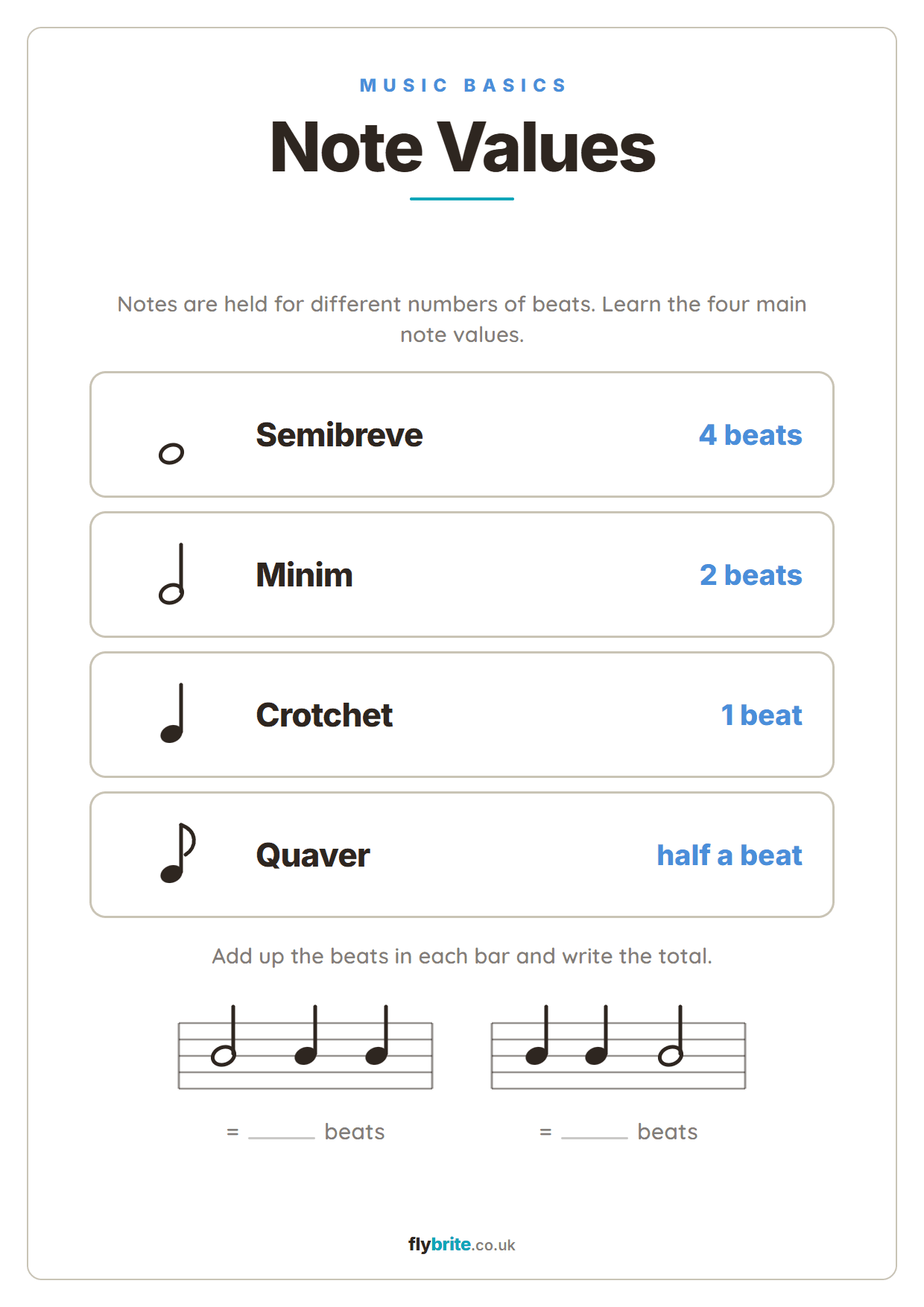
Semibreve, minim, crotchet and quaver, learning how many beats each note is held for.

The four instrument families, strings, woodwind, brass and percussion, in one friendly poster.
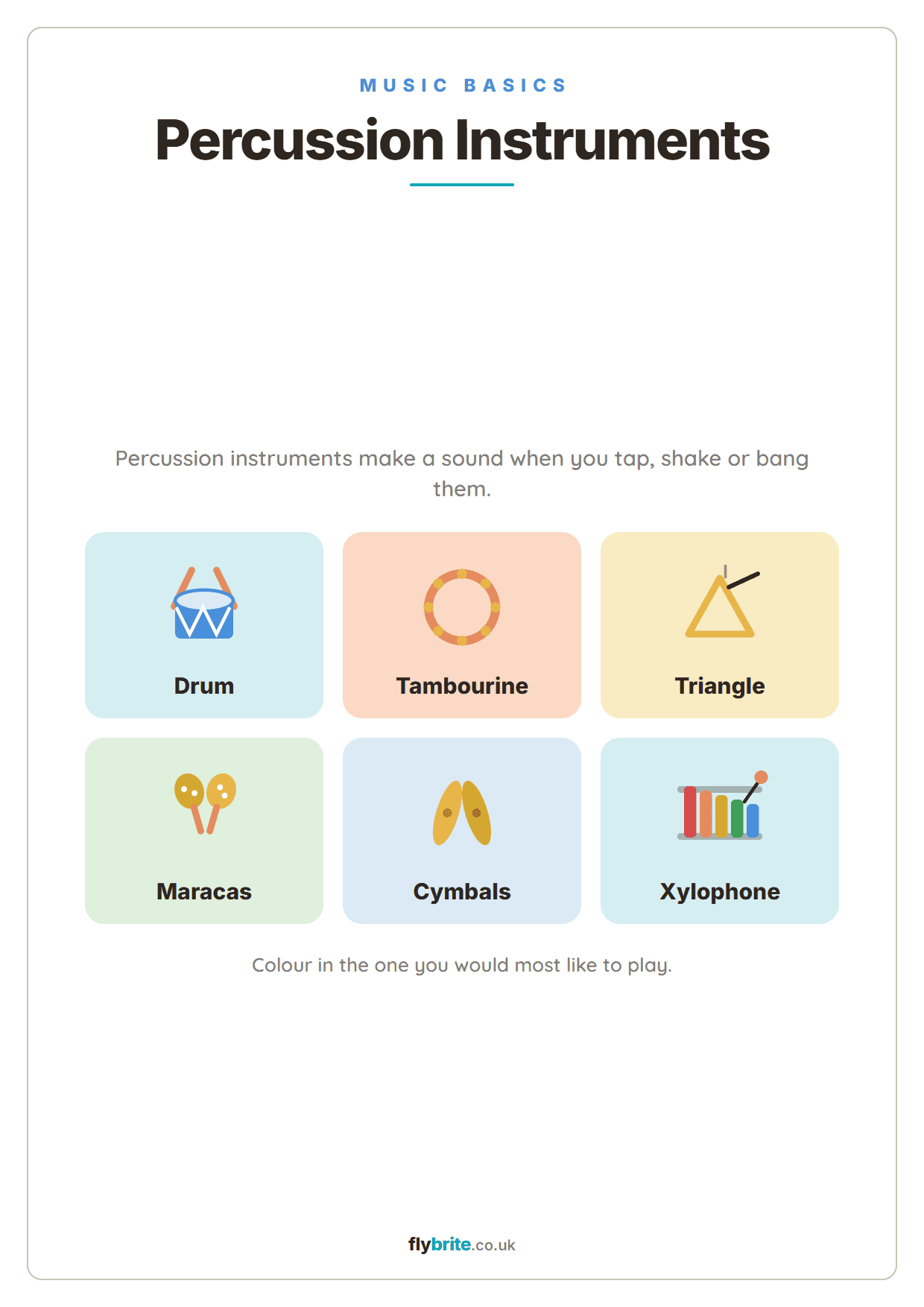
Big bright drums, tambourines and triangles to tap, shake and bang, perfect for little ones.
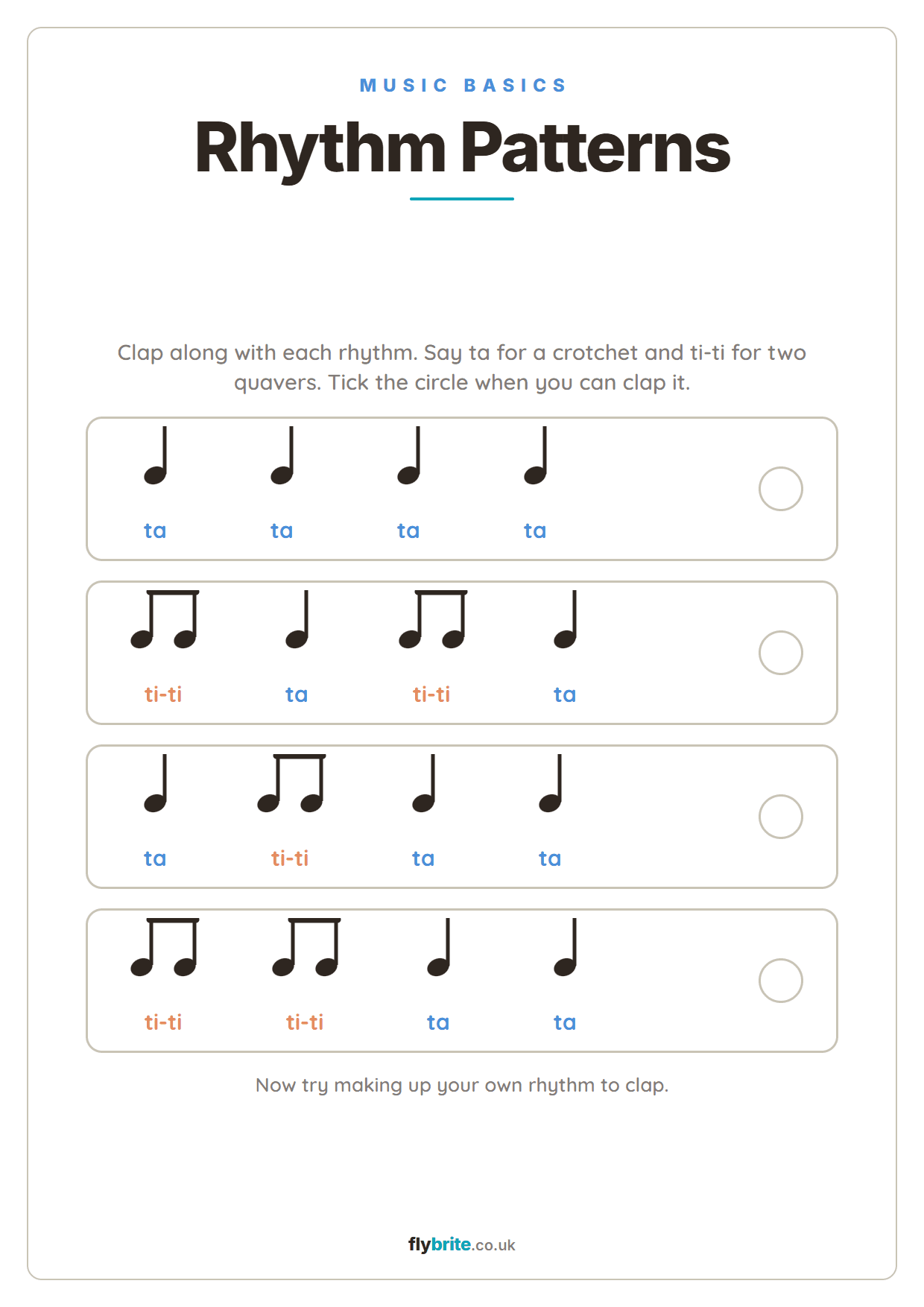
Clap along with ta and ti-ti rhythms, a joyful first taste of keeping a steady beat.
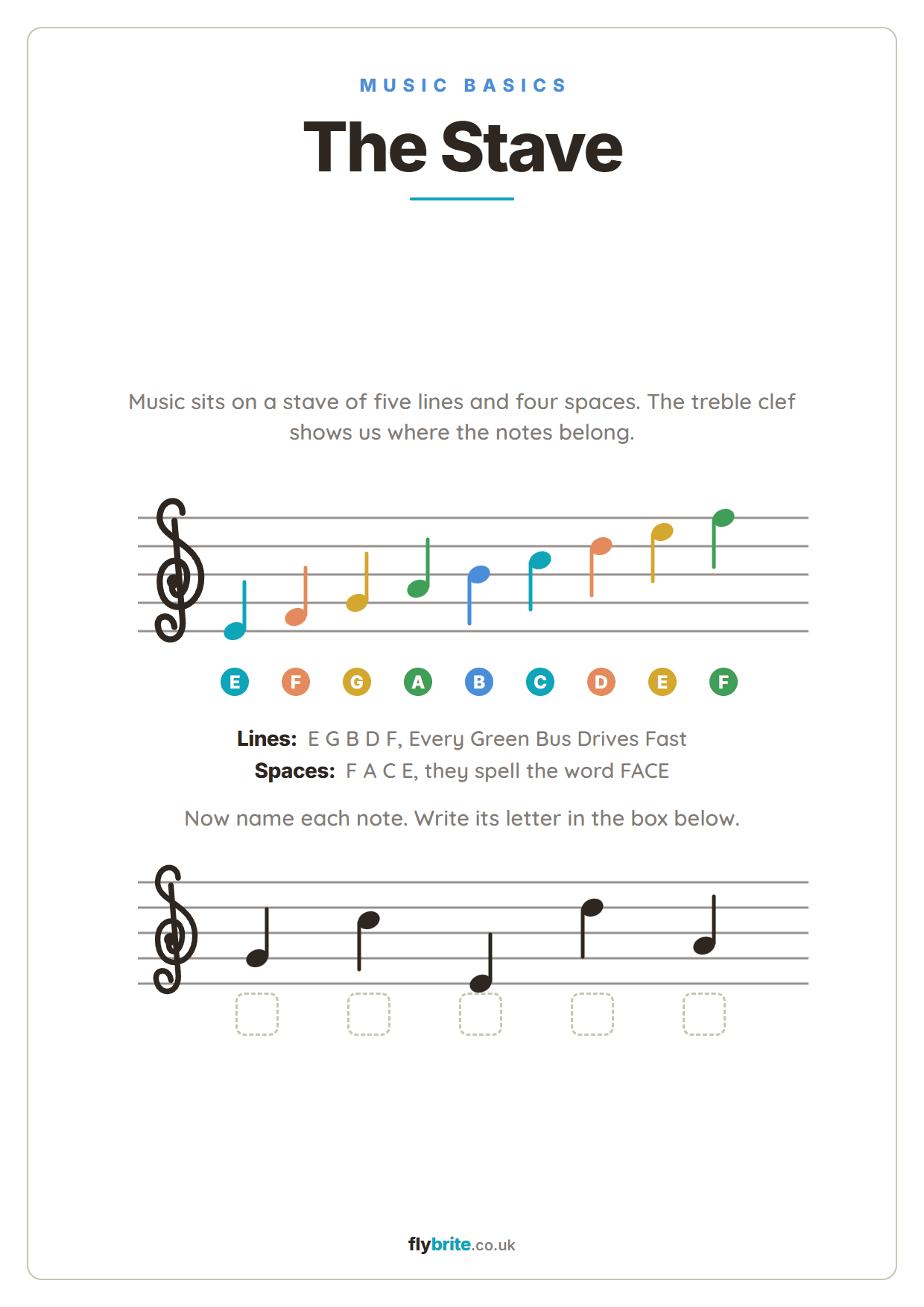
Five lines and four spaces explained, with mnemonics and notes to name for yourself.
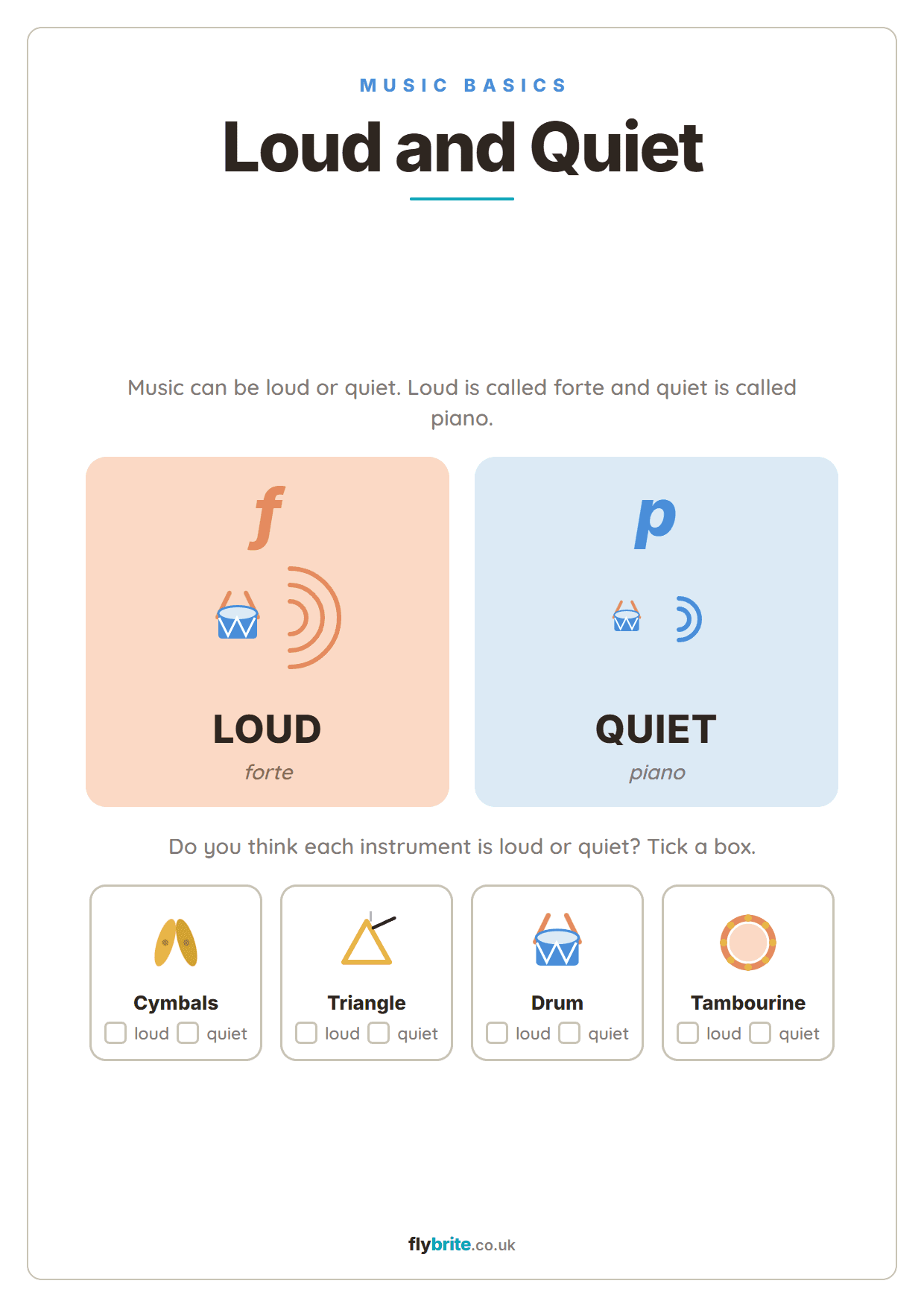
Forte and piano made simple, sorting instruments into loud and quiet with big cheerful icons.
 Type or write in
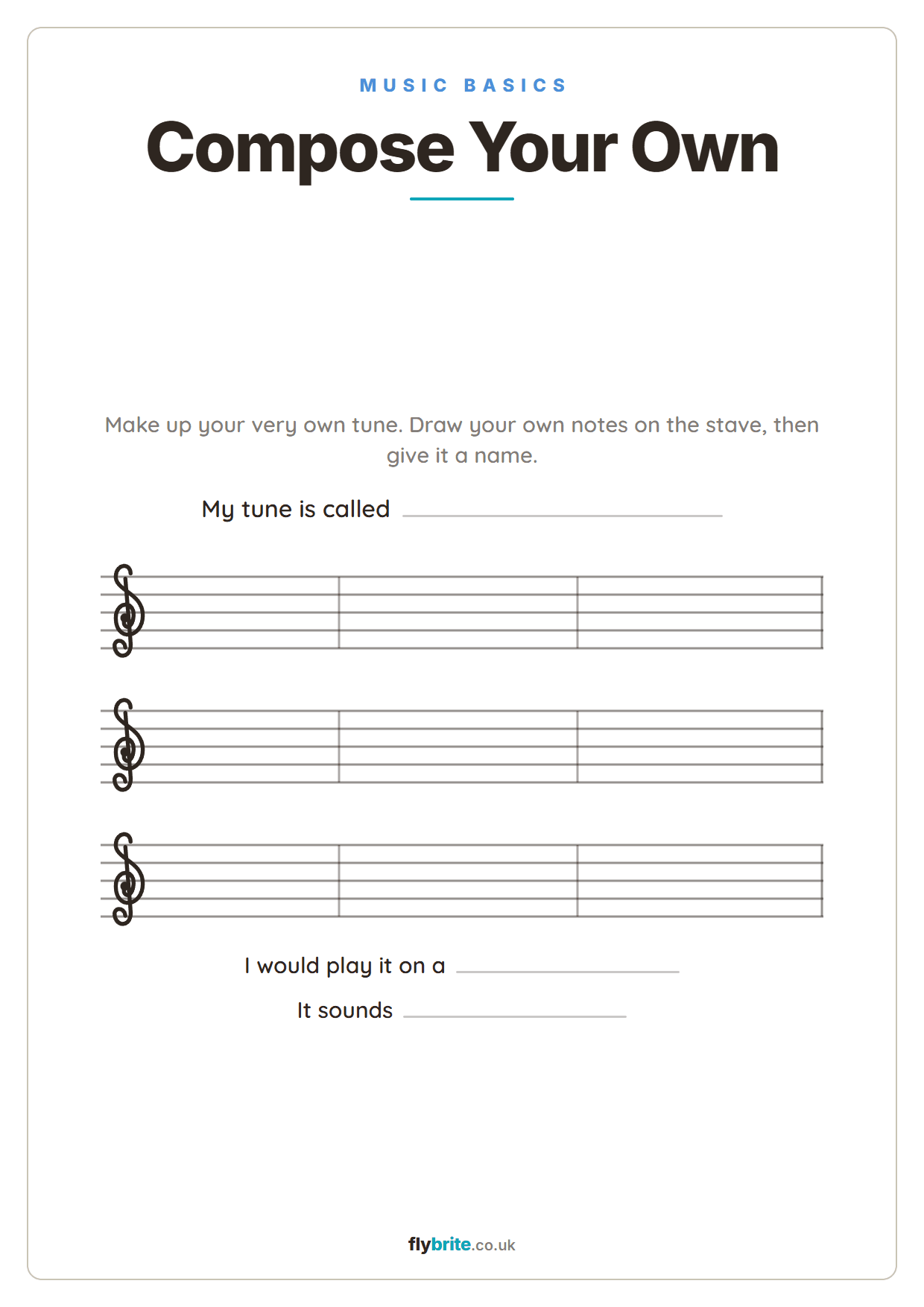
Blank staves with a treble clef, ready for a young composer to draw a tune and name it.
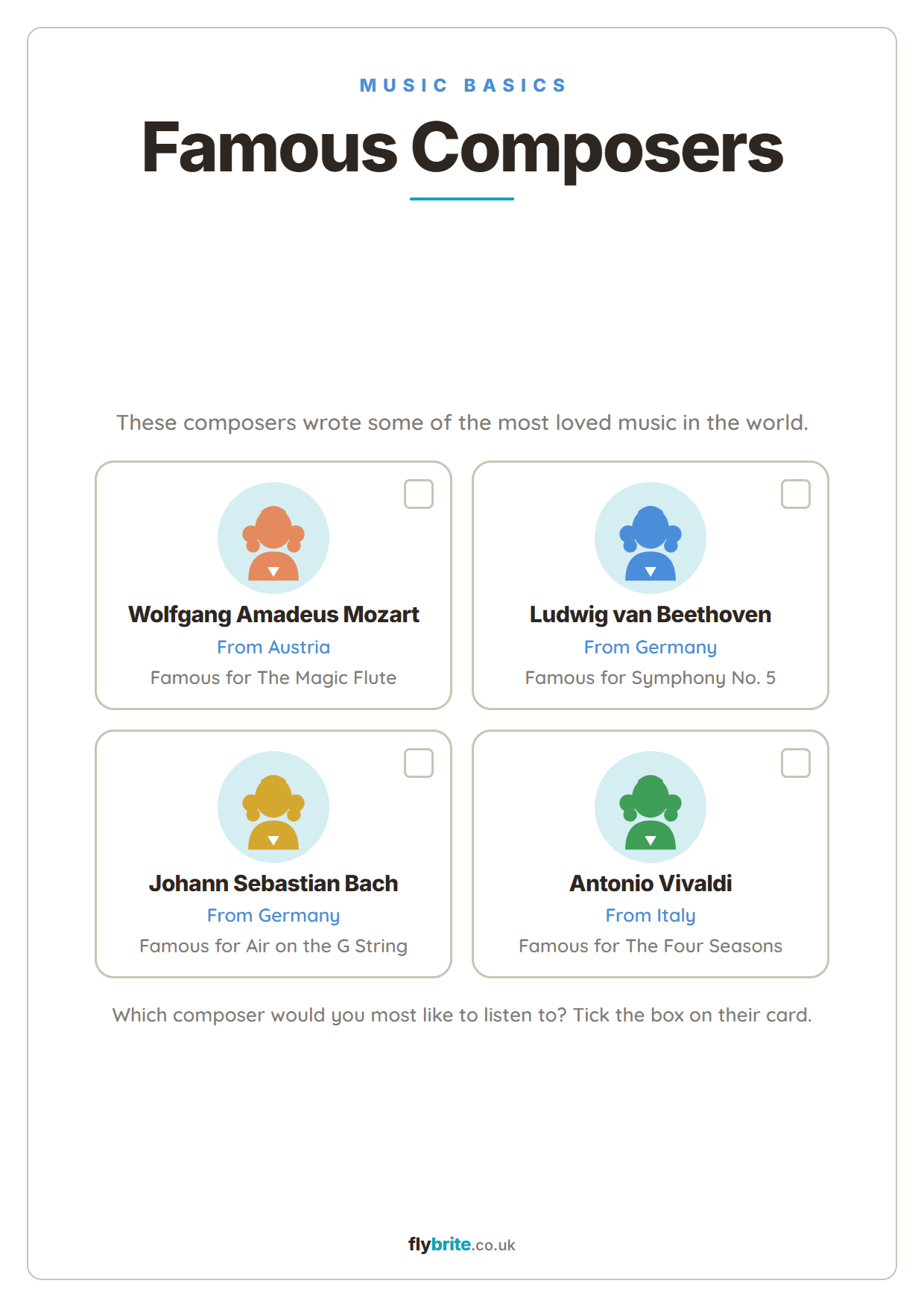
Mozart, Beethoven, Bach and Vivaldi, four great composers and the music they are famous for.
Ten simple, safe recipe cards that build life skills and reading together.
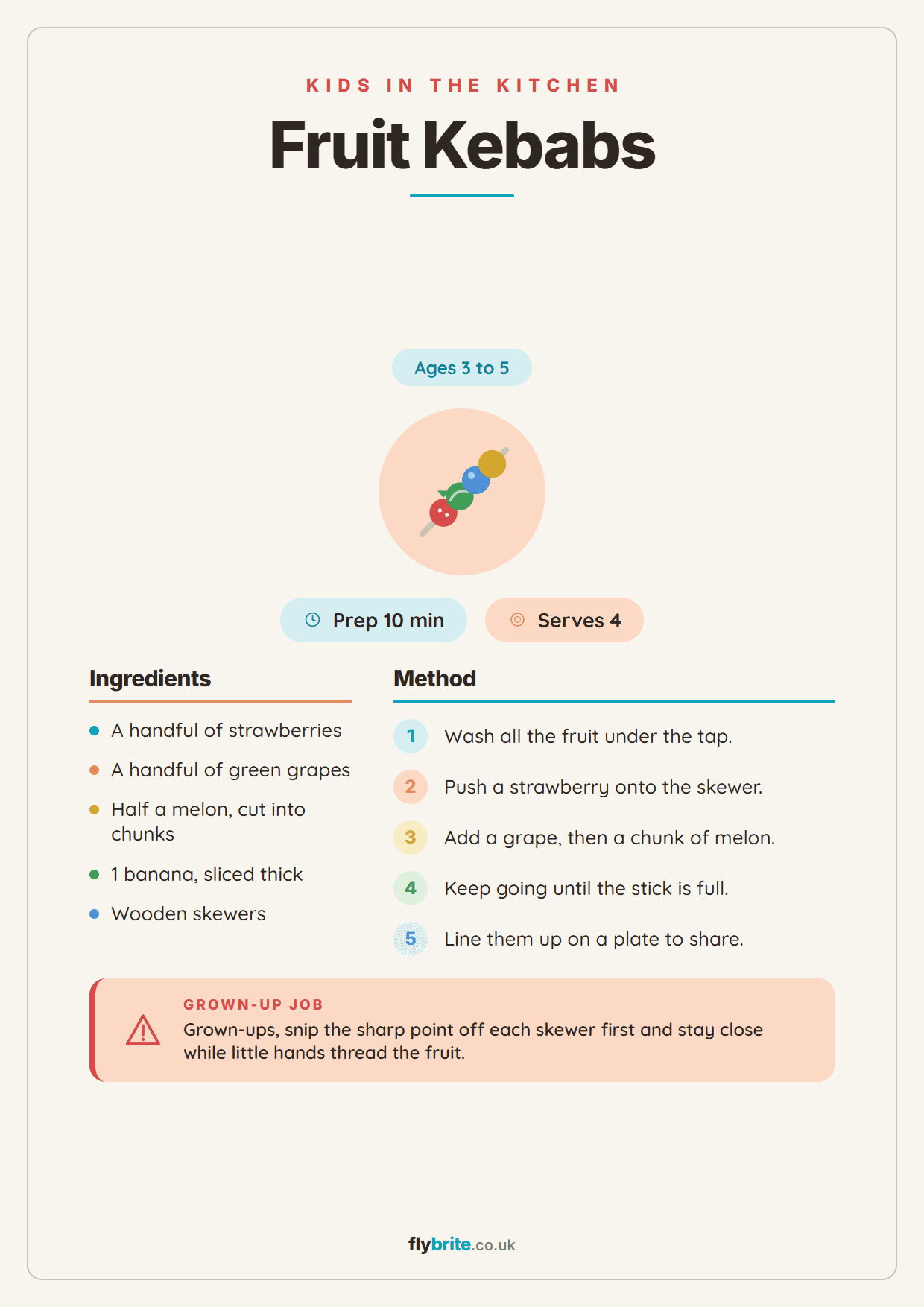
Bright, no-cook fruit sticks little hands can thread all by themselves, the easiest first recipe there is.
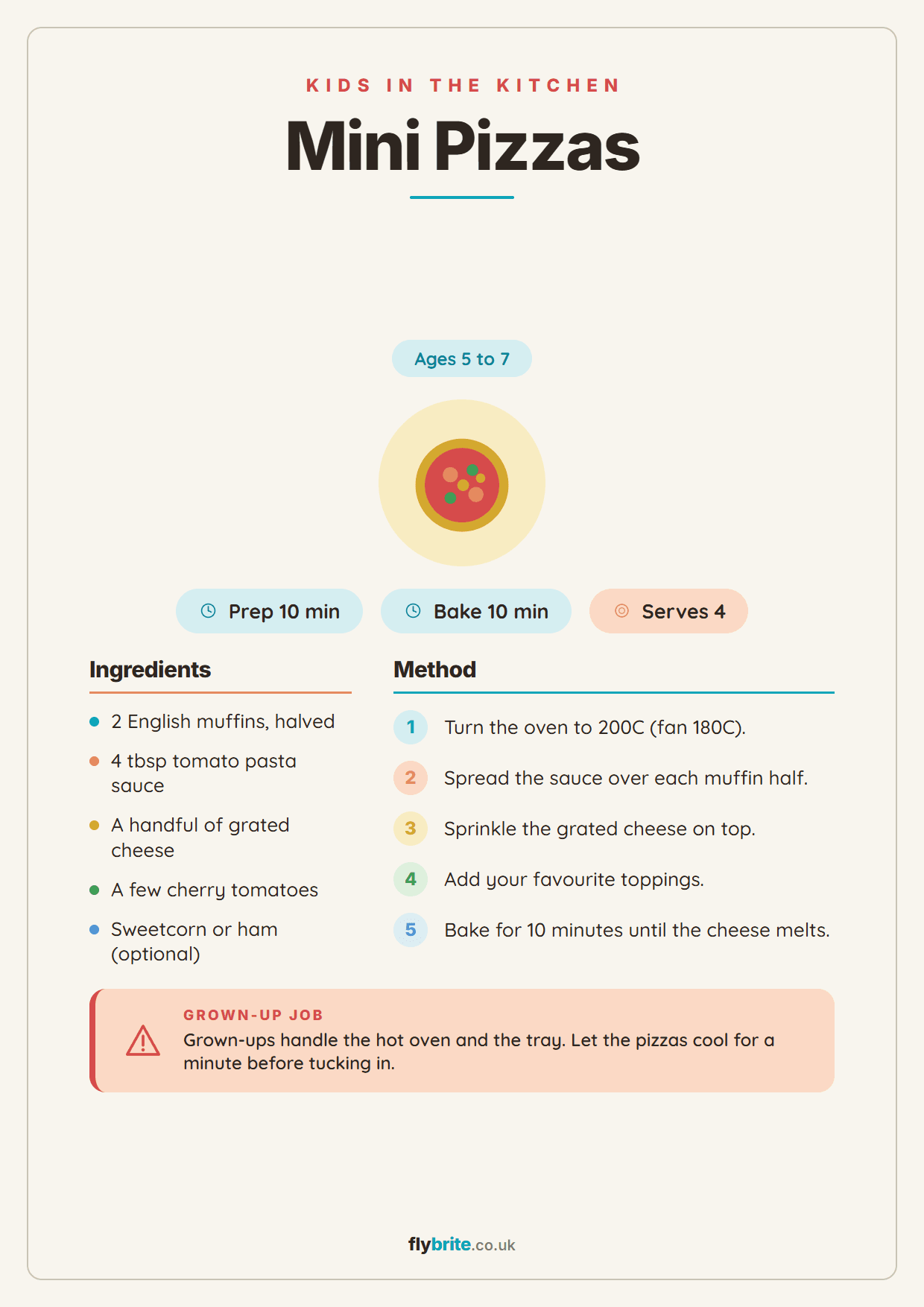
Muffin-based mini pizzas ready in twenty minutes, with toppings everyone gets to choose for themselves.
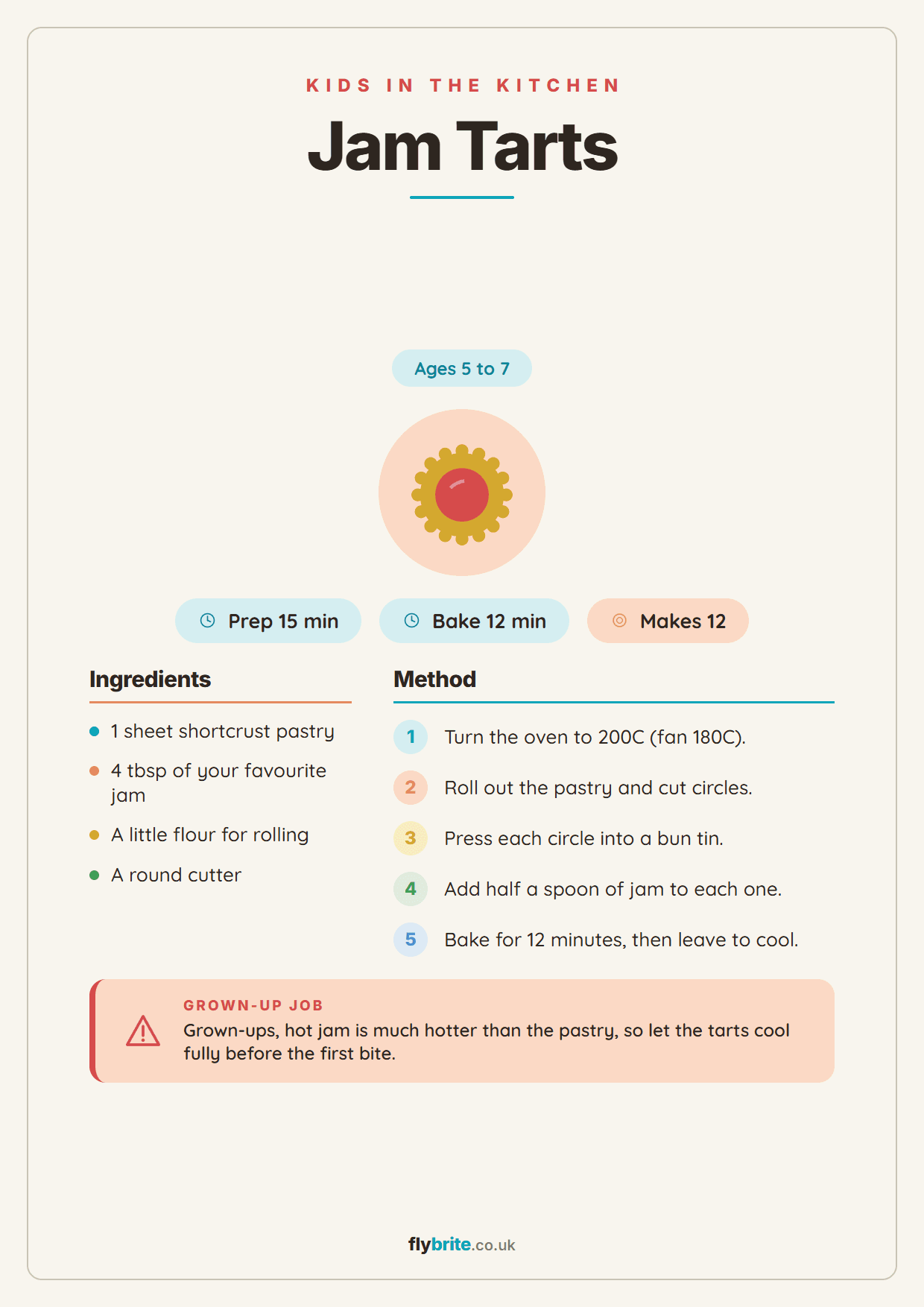
The classic jammy teatime tart, a lovely first bake for learning to roll, cut and fill.
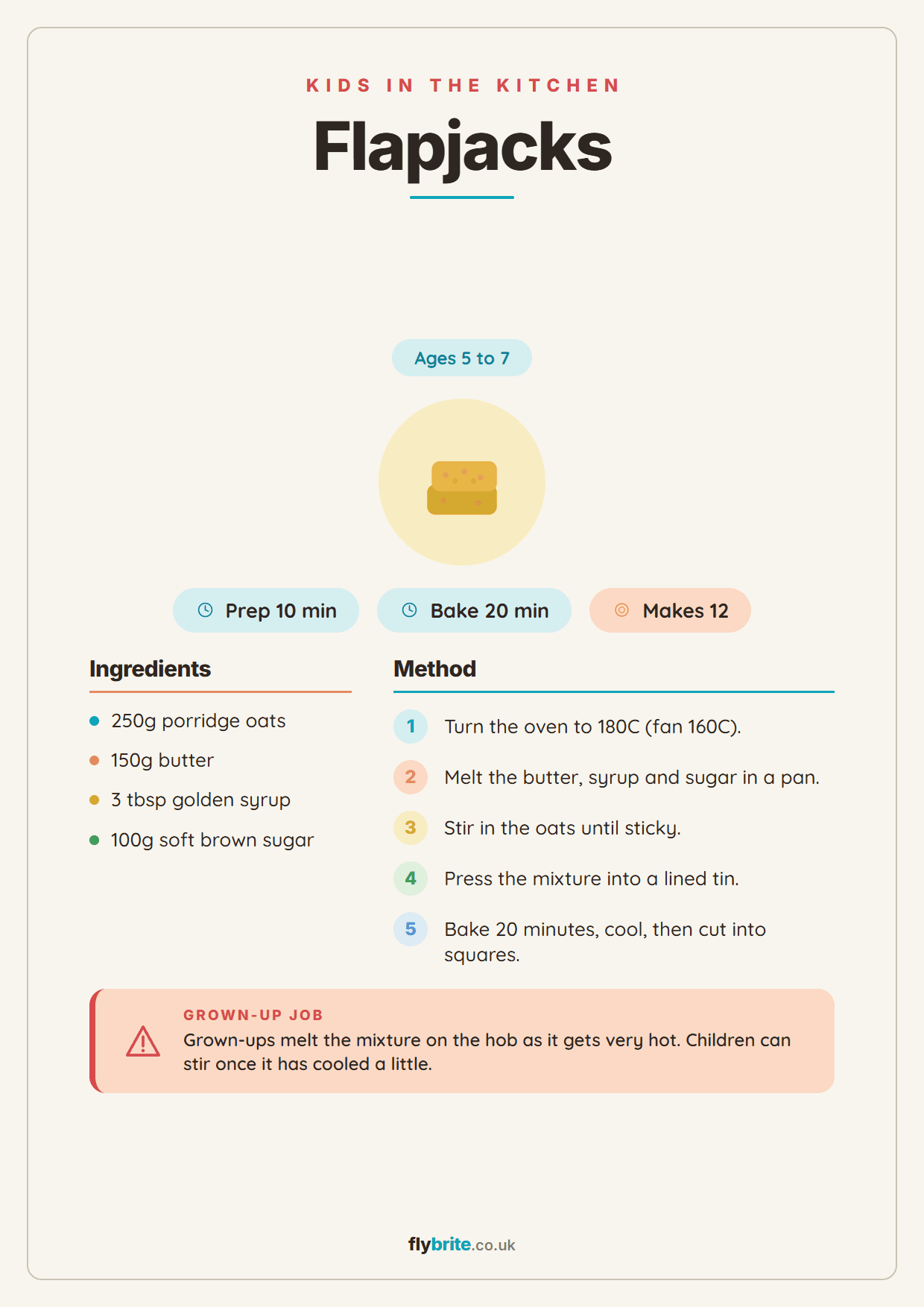
Chewy, golden oat flapjacks made in one pan, perfect for lunchboxes and rainy afternoons.
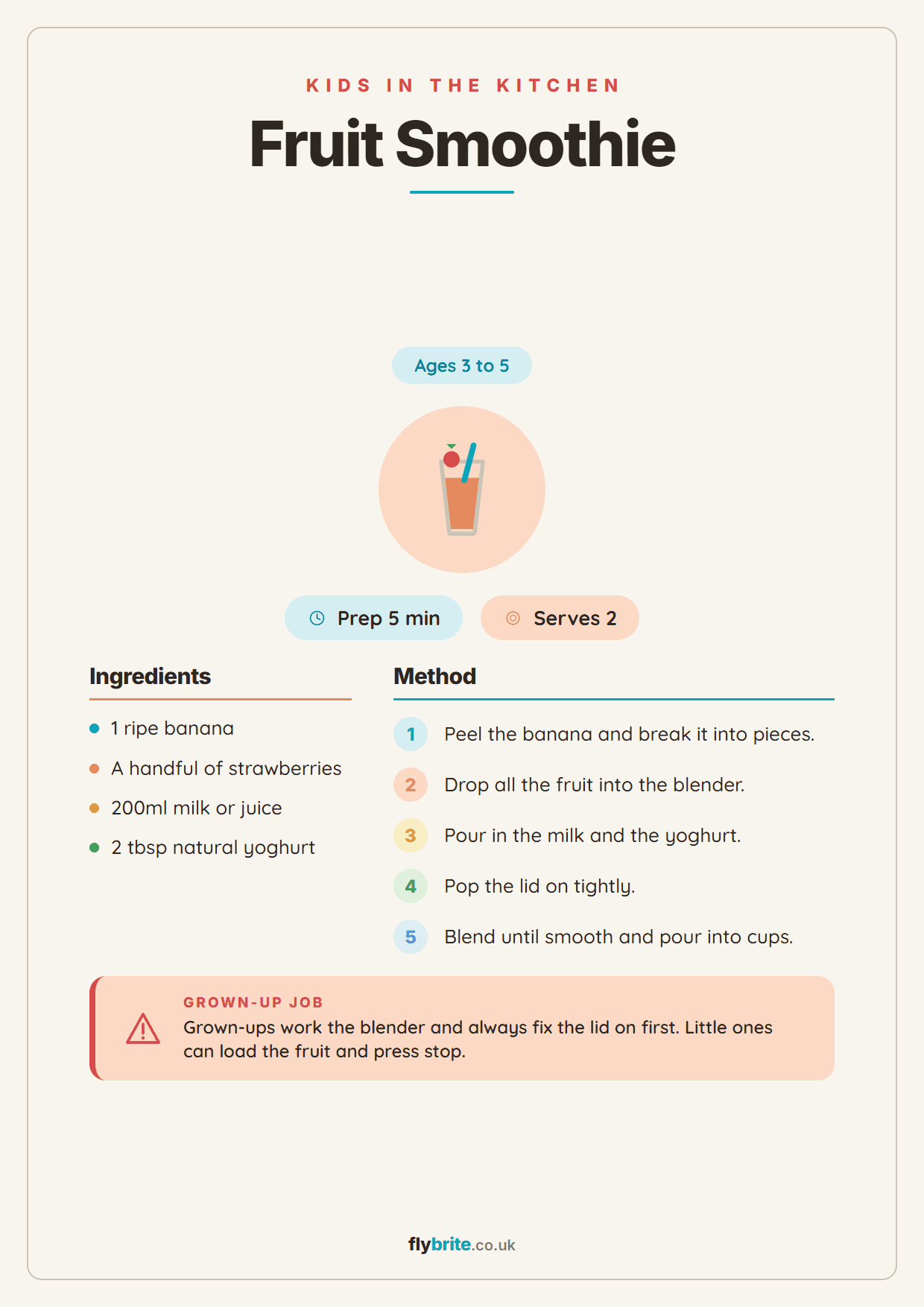
A five-minute fruity smoothie children can load and blend, a fun way to enjoy their five a day.
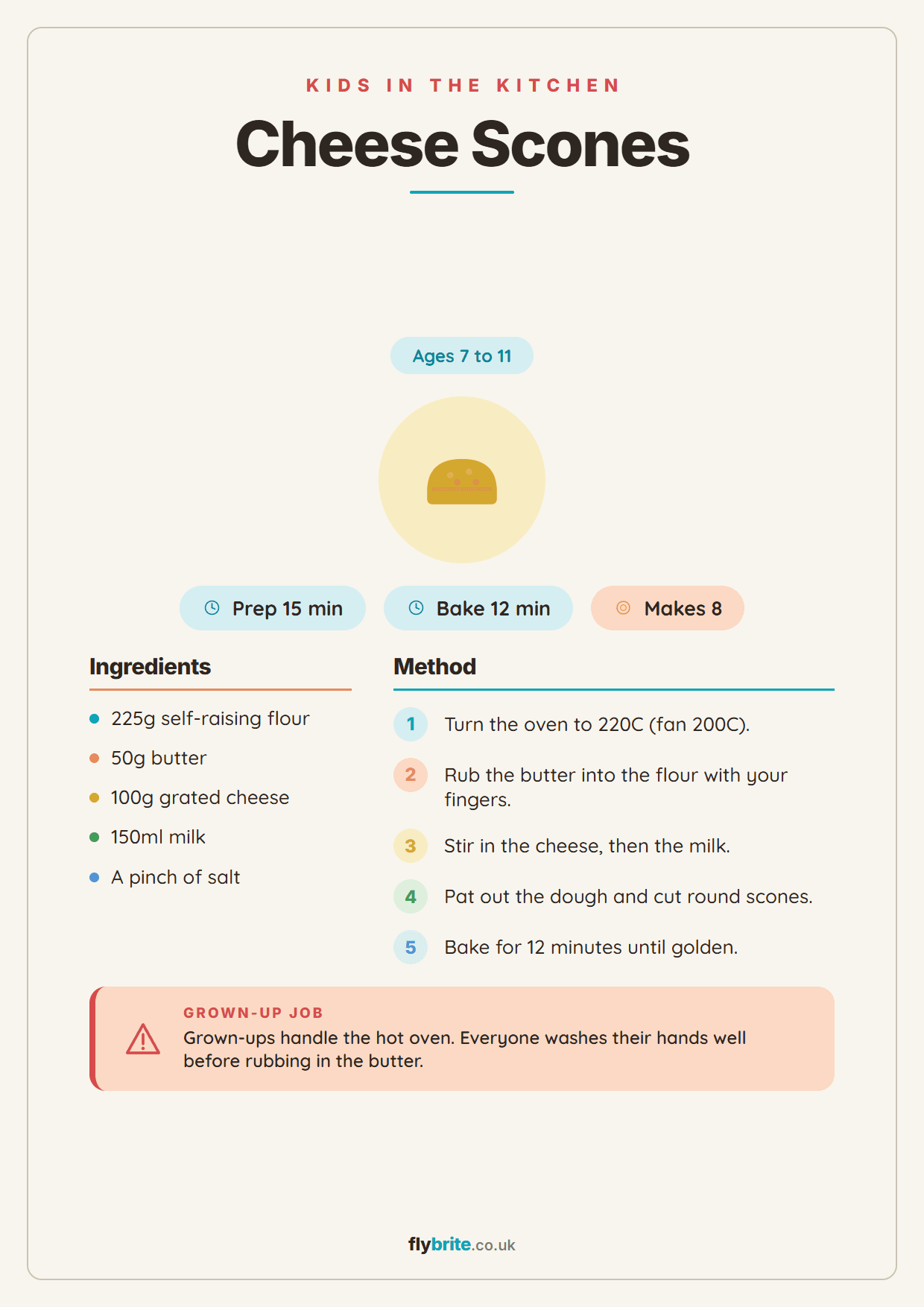
Warm, cheesy scones from scratch, a satisfying bake for older children ready for a bit more.
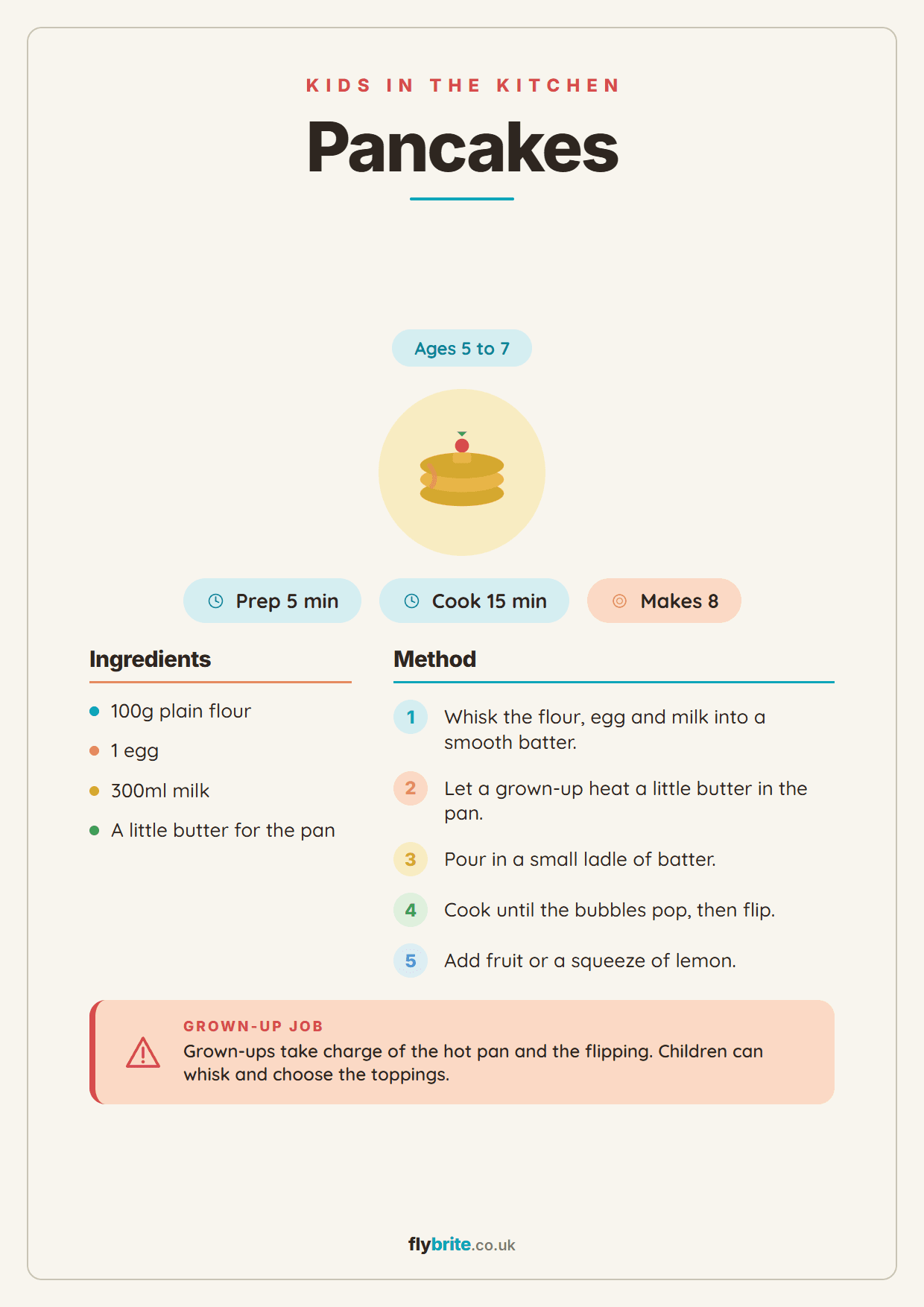
Simple stovetop pancakes for lazy weekend mornings, with space to pick your favourite toppings.
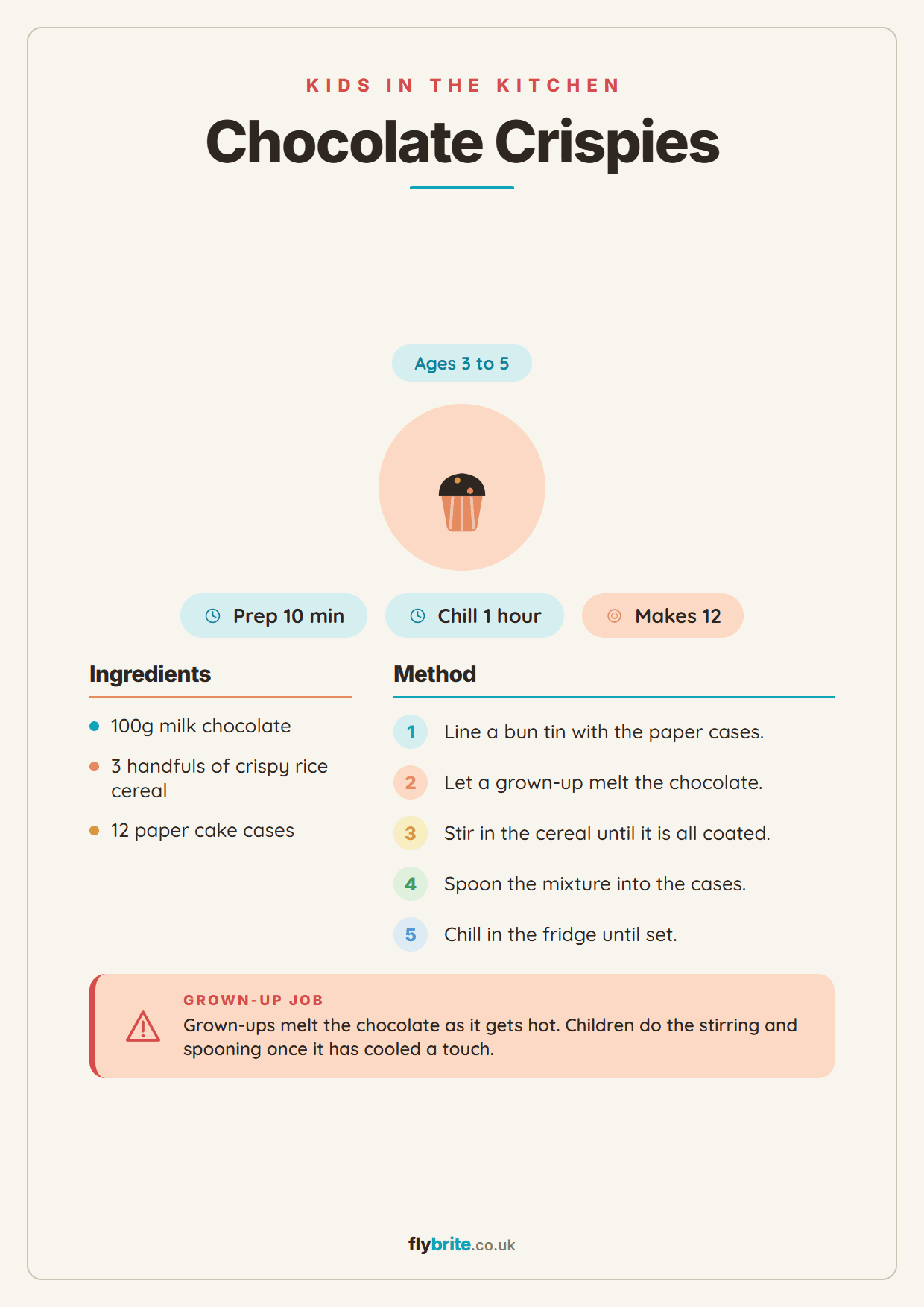
The all-time party favourite, melt, stir and spoon, no oven needed and hardly any mess.
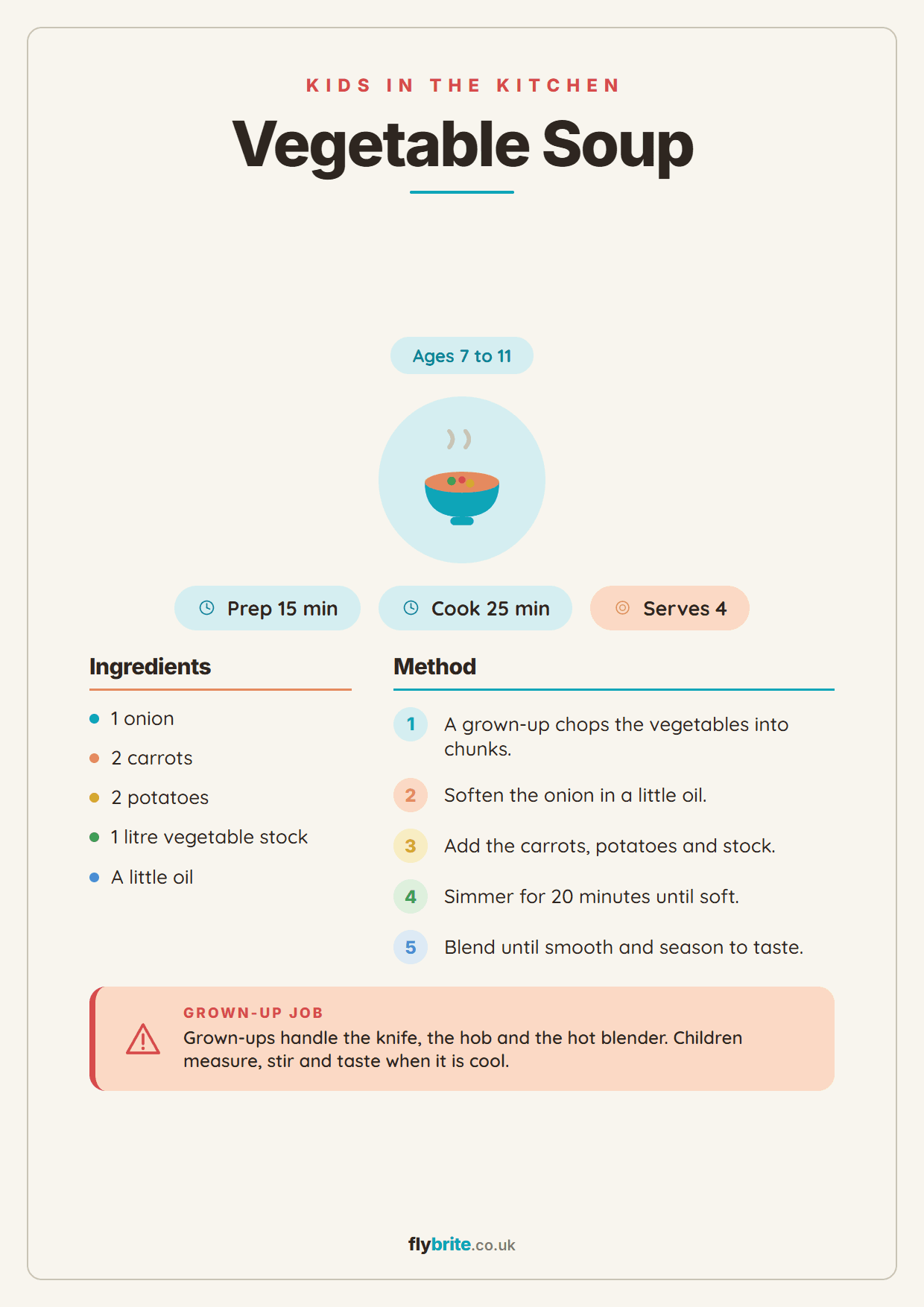
A cosy, blended vegetable soup that teaches chopping, stirring and tasting, ideal for keen older cooks.
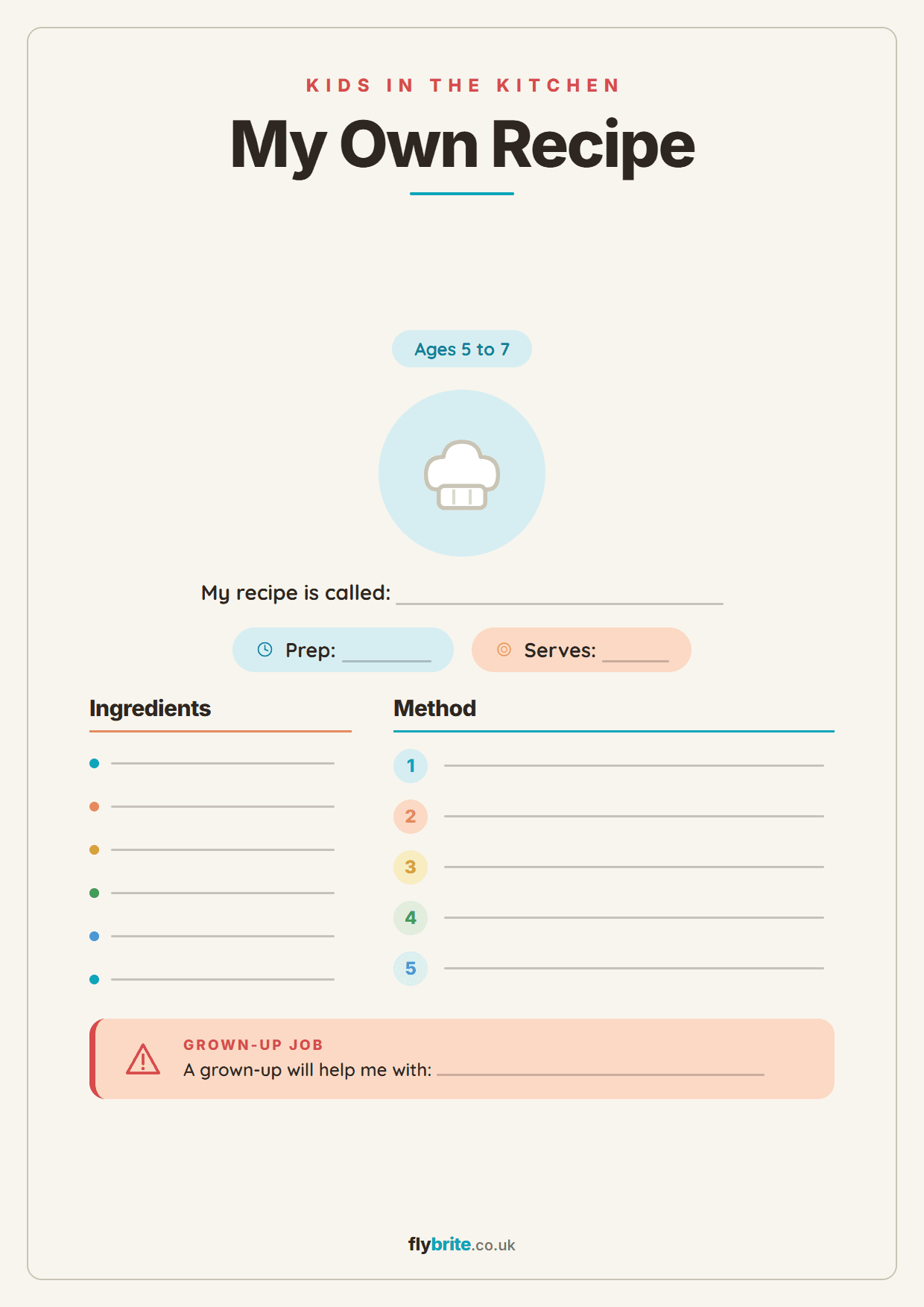 Type or write in
A blank recipe card to fill in together, so children can write up a dish they invented and are proud of.
Number and alphabet dot-to-dots that sneak in counting and letter order as you join.
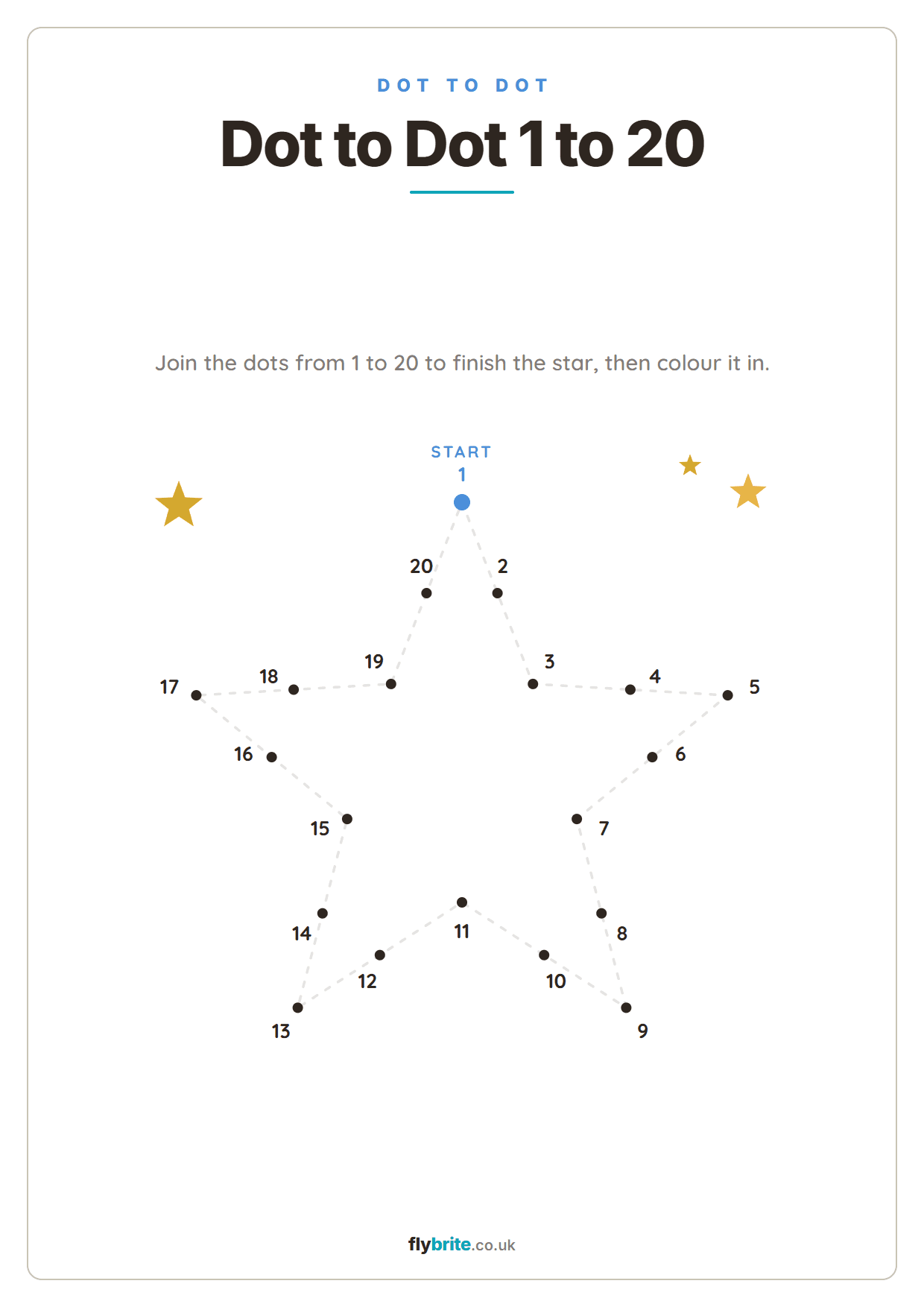
Twenty gentle dots that join up into a big shining star, then wait to be coloured in.
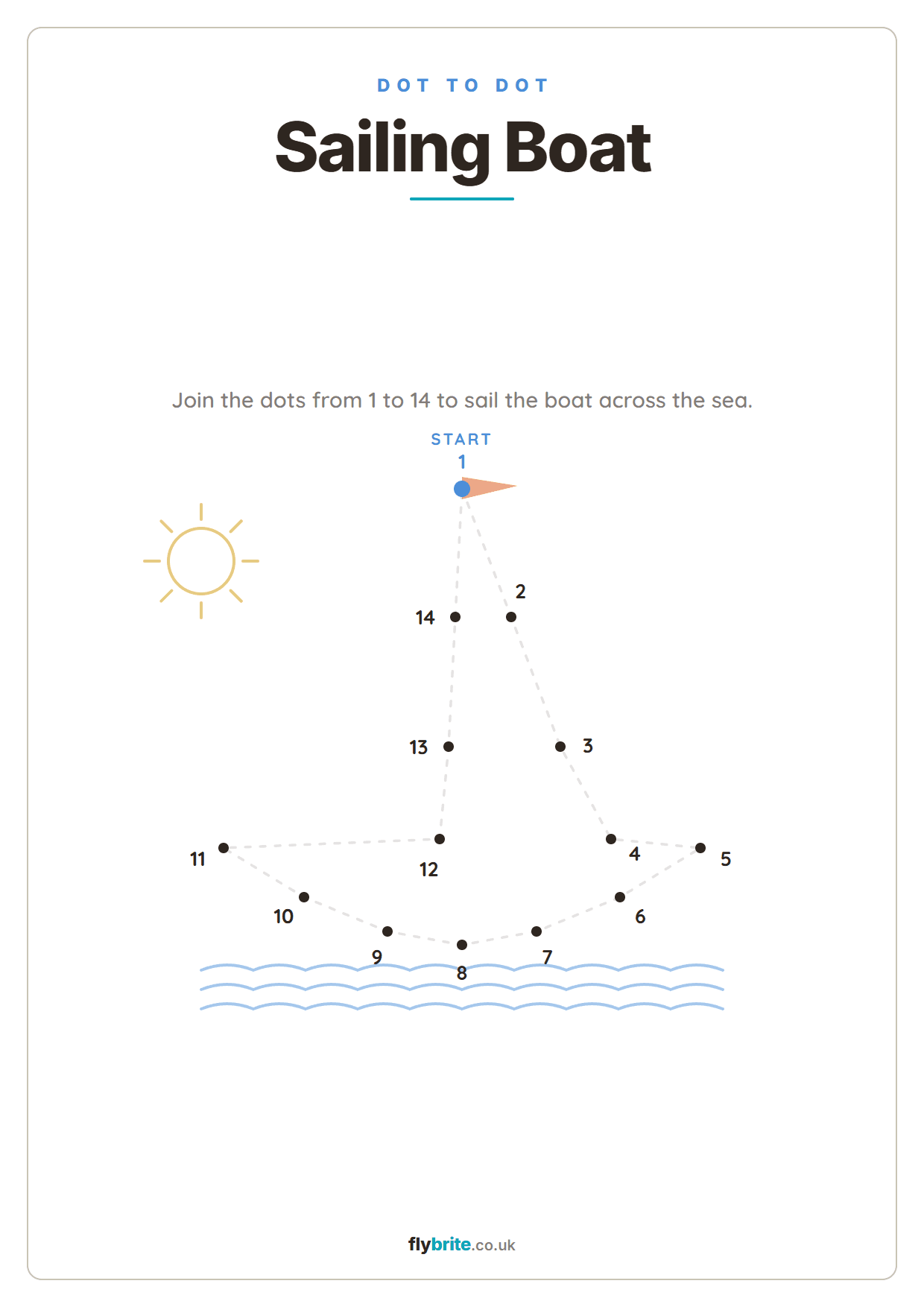
Follow the numbers 1 to 14 to sail a little boat across gentle waves, sun shining overhead.

Join the dots to open a butterfly's pretty wings, lovely pencil control practice.

Count 1 to 14 to build a rocket with fins and flames, ready to blast off among the stars.

A longer 1 to 25 puzzle that wakes up a friendly long-necked dinosaur, dot by dot.

Skip-count in twos, joining 2, 4, 6 all the way to 24 to finish a rosy apple.

Skip-count in fives, joining 5, 10, 15 up to 60 to make a big flower bloom.

Sing through the alphabet, joining A to L in order to finish a friendly heart.

Join 1 to 13 to help a happy fish grow its fins and tail, then swim off blowing bubbles.

A gentle 1 to 10 puzzle that builds a cosy little house with a sunny sky above.
Ten charming scenes with differences to find, quiet-time favourites that sharpen focus.

A sunny day at the park with two nearly matching pictures. Can you find all six little changes?
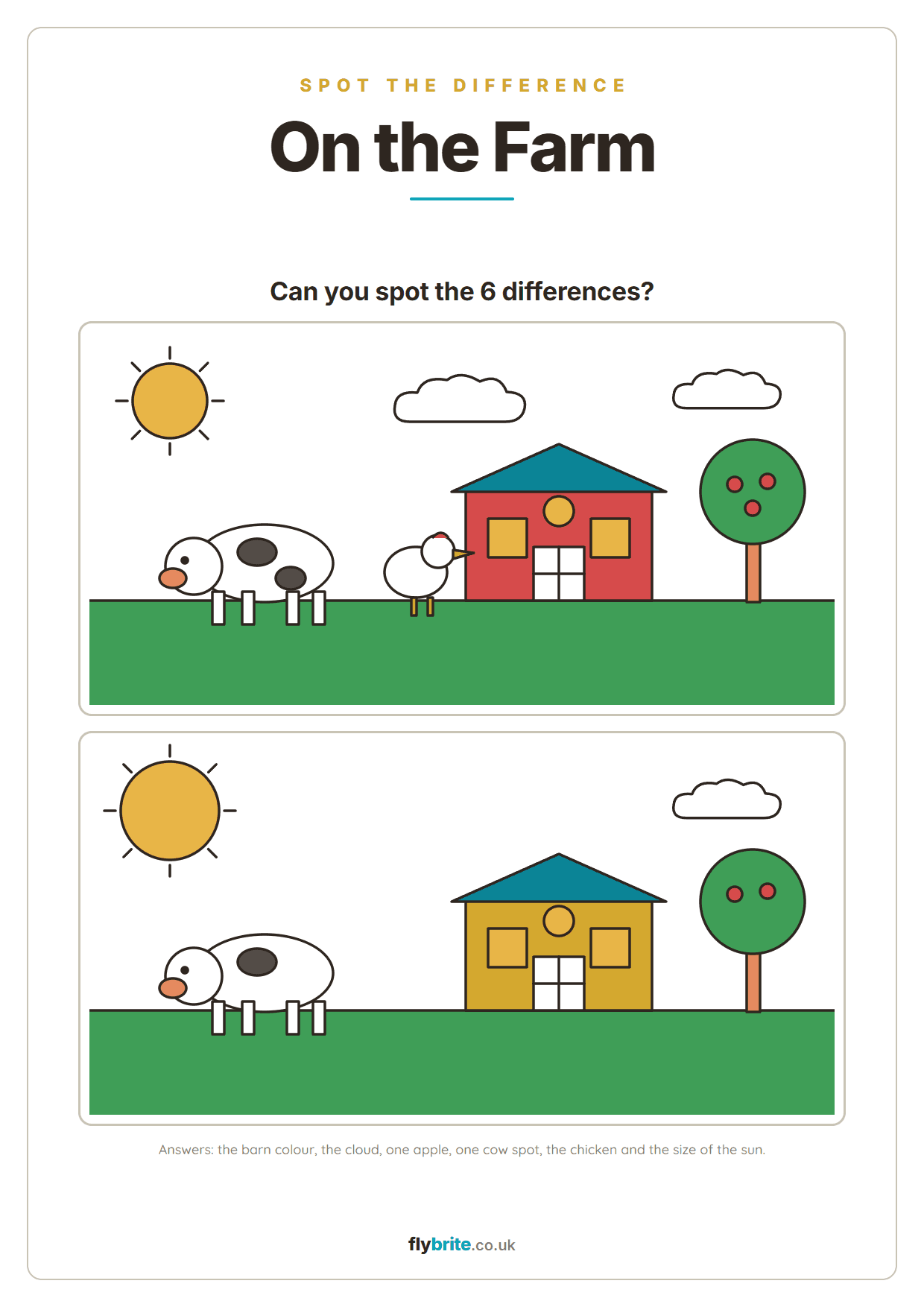
A friendly farmyard with a barn, a cow and a hen. Spot the six things that have changed.

A seaside scene with a sandcastle and a little sailing boat. Can you spot all six differences?

A rocket, a ringed planet and a moon out among the stars. Six things are not the same, can you find them?
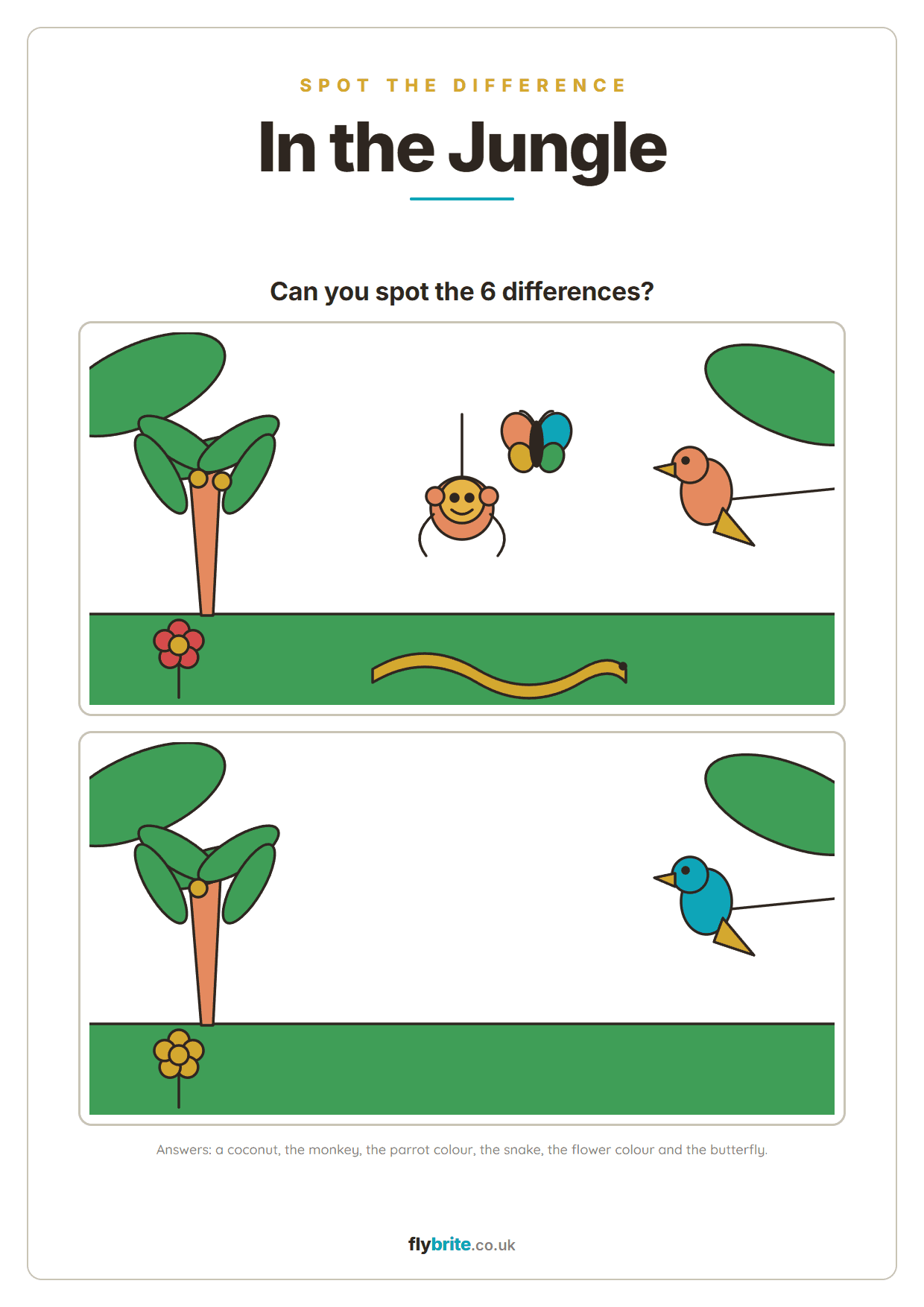
A leafy jungle with a monkey, a parrot and a curly snake. Spot the six sneaky changes.

A busy little high street of shops and houses. Six things have quietly changed, how many can you spot?

A cosy bedroom with a bed, a lamp and a shelf of books. Can you find all six differences?

A deep-sea scene with fish, an octopus and a crab. Spot the six things that are not the same.

A pretty garden of tulips with a butterfly and a snail. Can you spot the six little changes?
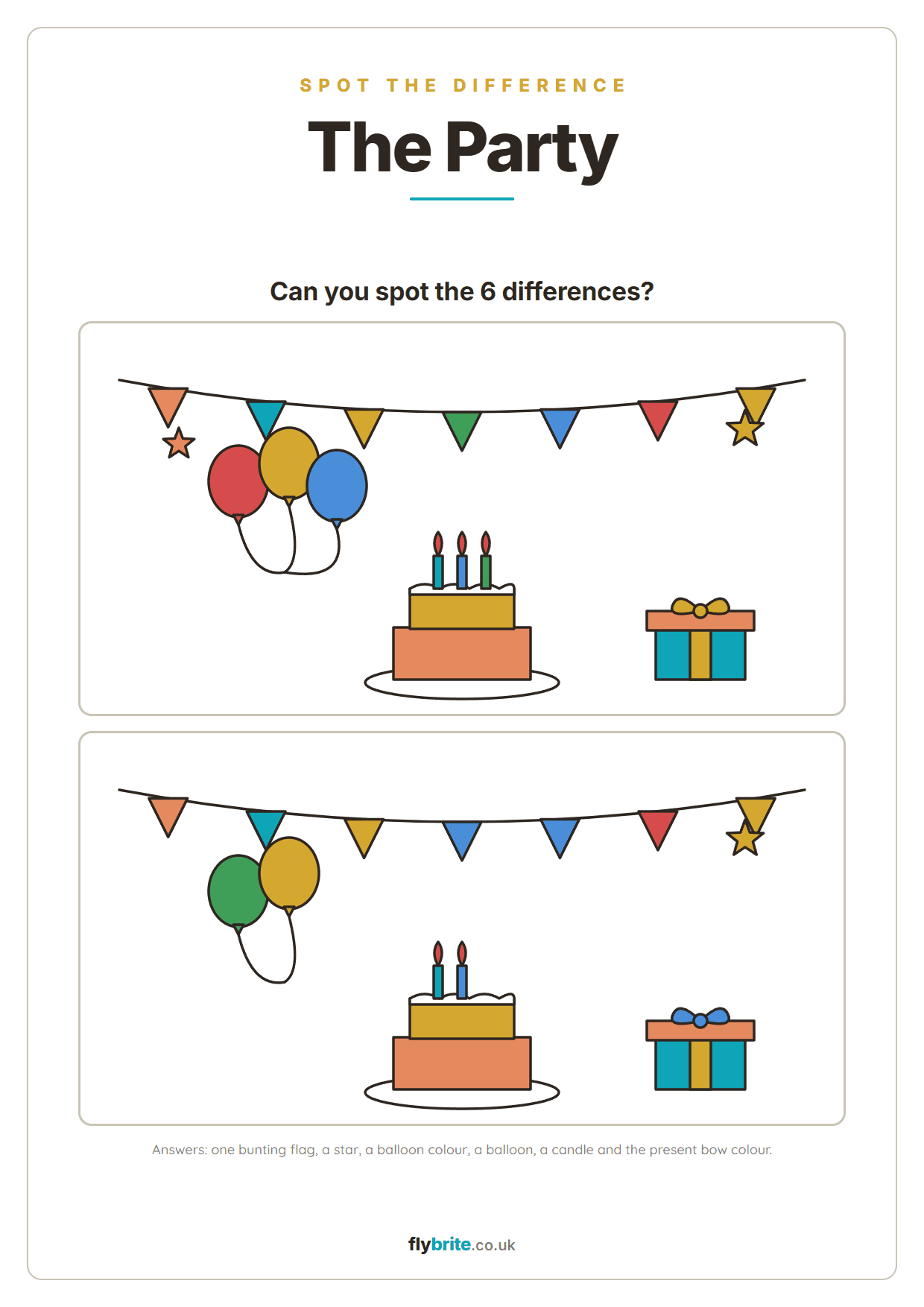
A birthday party with balloons, bunting and cake. Six things have changed, how many can you find?
Matching, sorting, patterns and same-or-different, the very first skills before school.
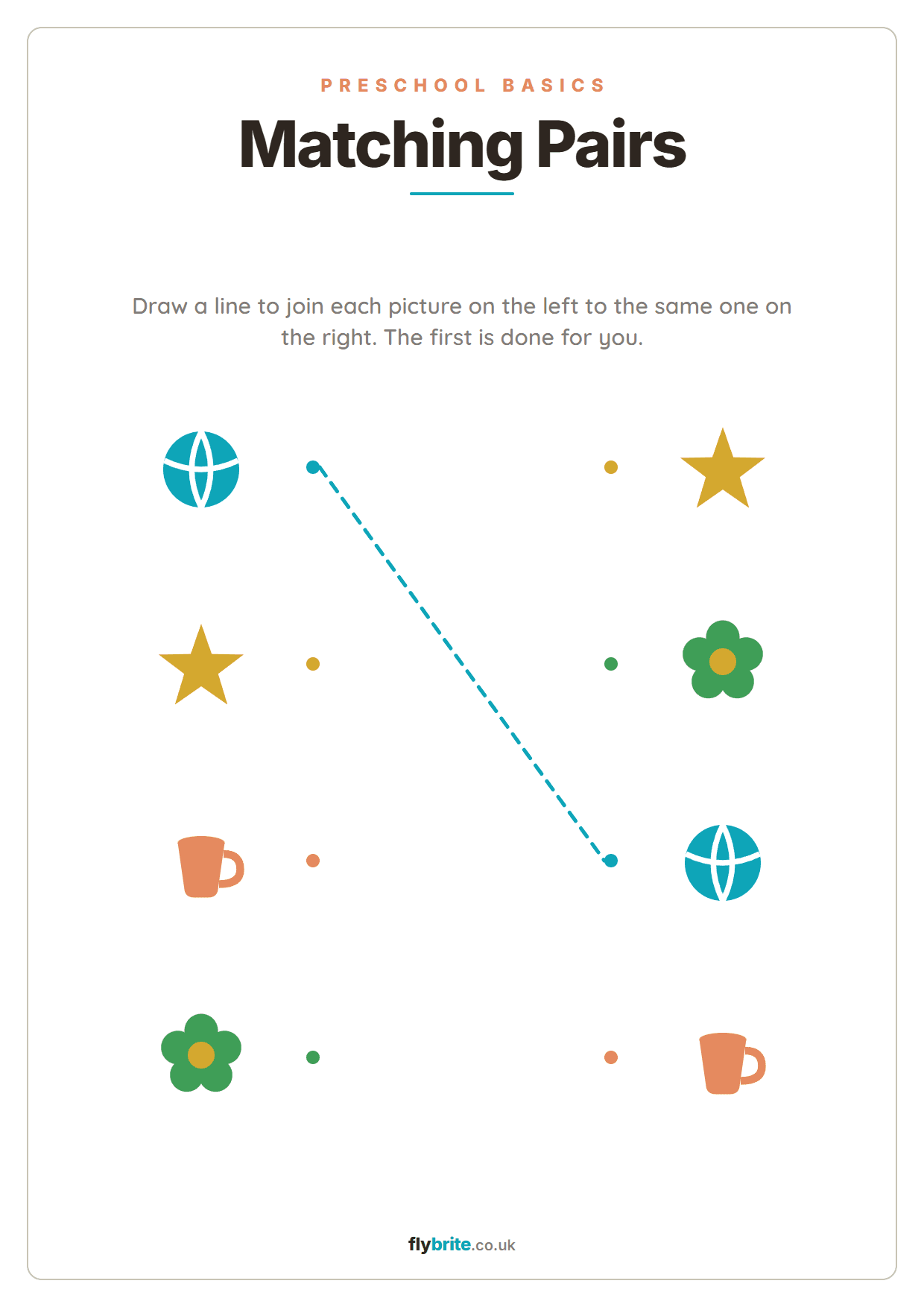
A gentle first matching page, joining each little picture to its twin with a pencil line.
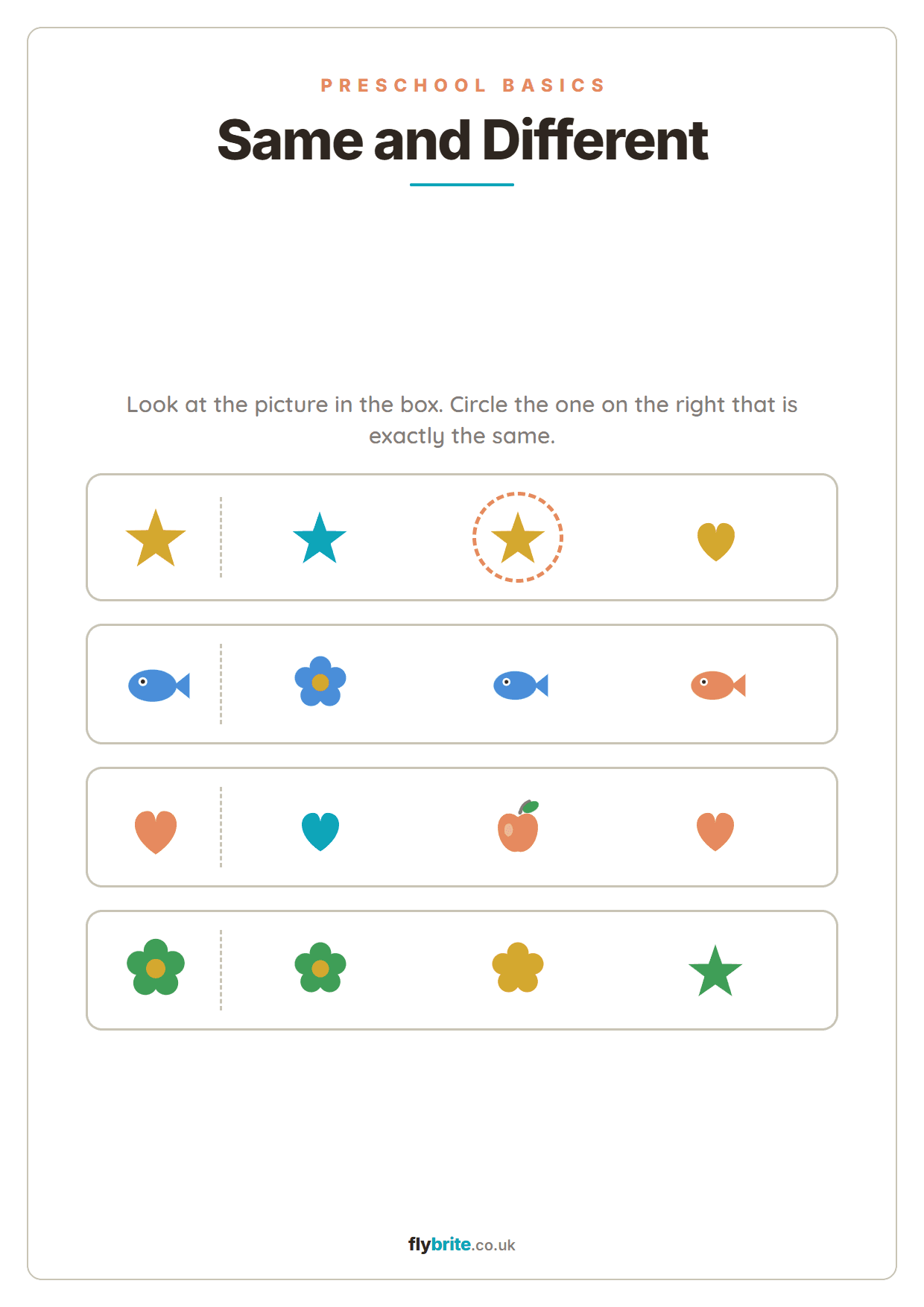
Spot the picture that is exactly the same, a lovely first look at matching by shape and colour.

Two baskets and a jumble of red and blue things to sort, one careful line at a time.
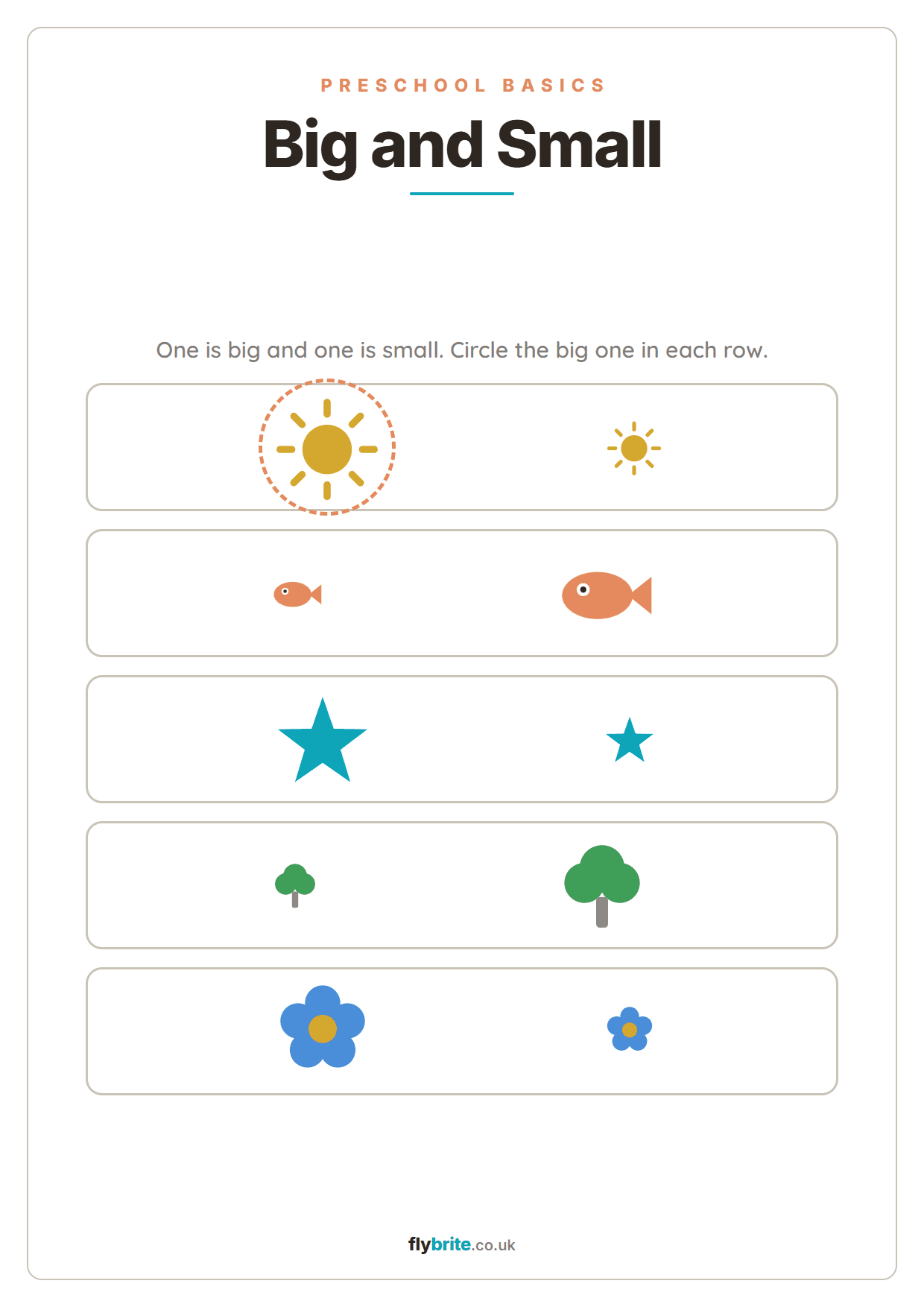
Big or small? A simple size-sorting page that builds early comparing words and confidence.
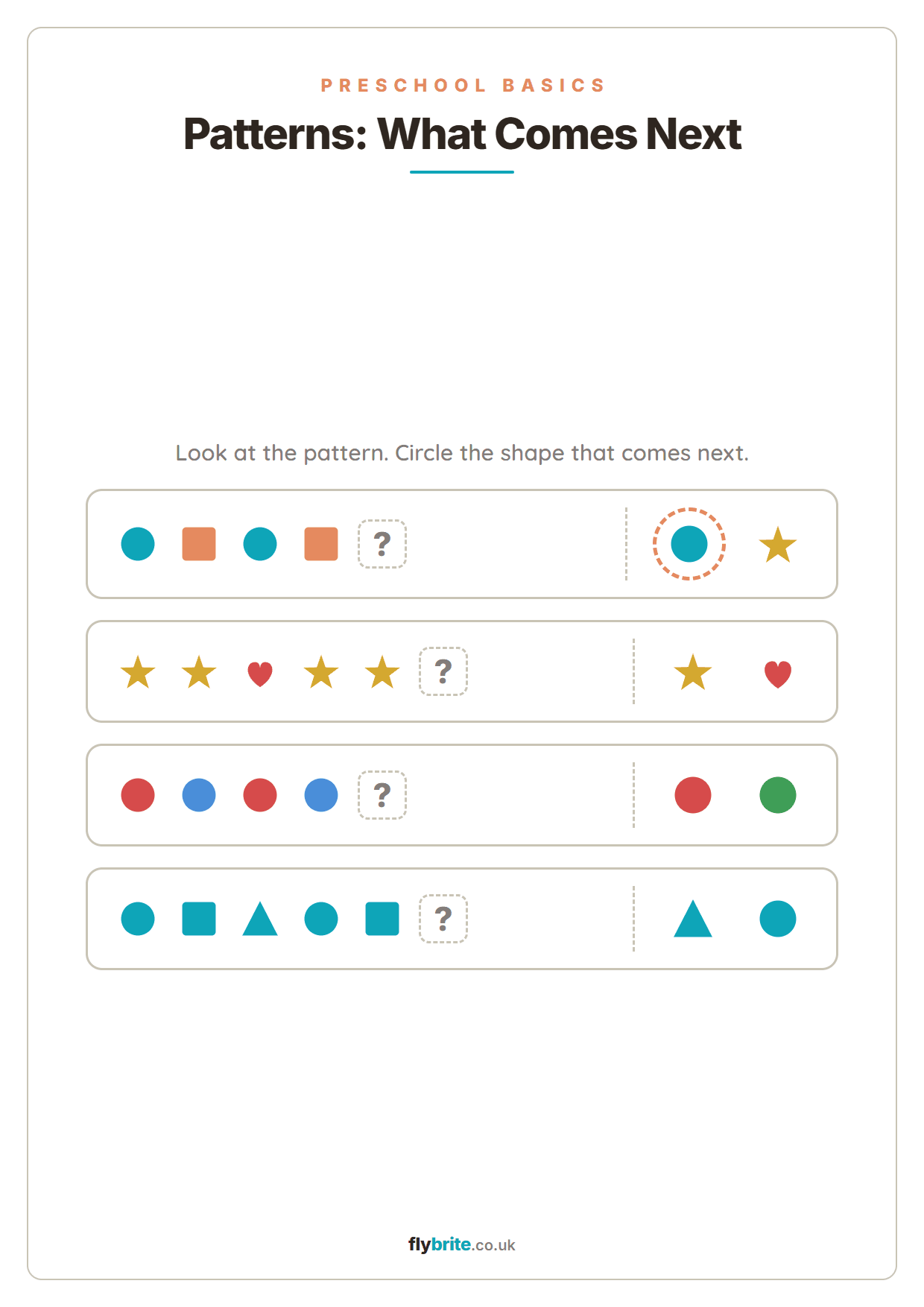
Friendly repeating patterns to finish, an early taste of the maths hidden in shapes and colours.
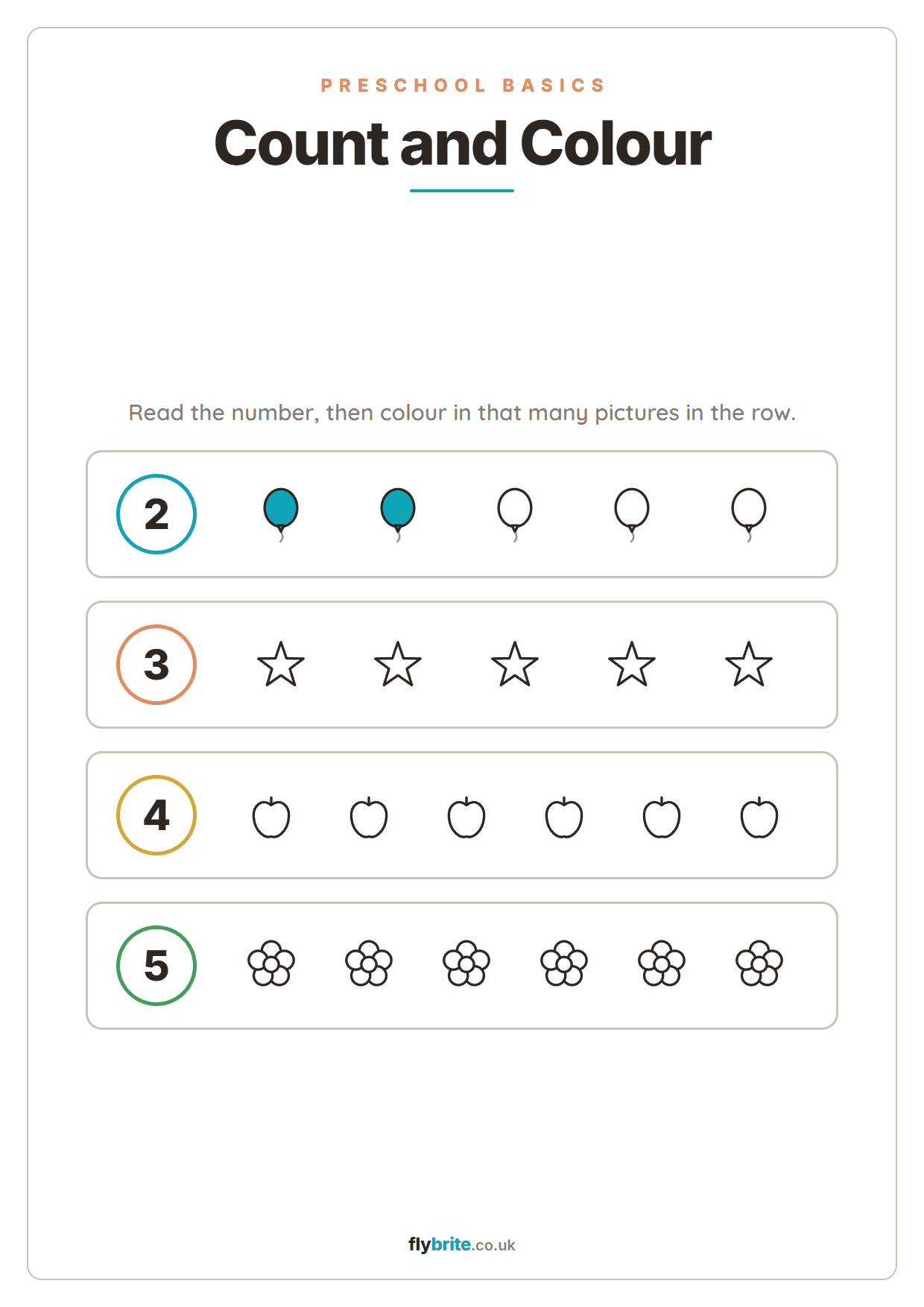
Read the number and colour that many pictures, pairing early counting with a happy crayon.
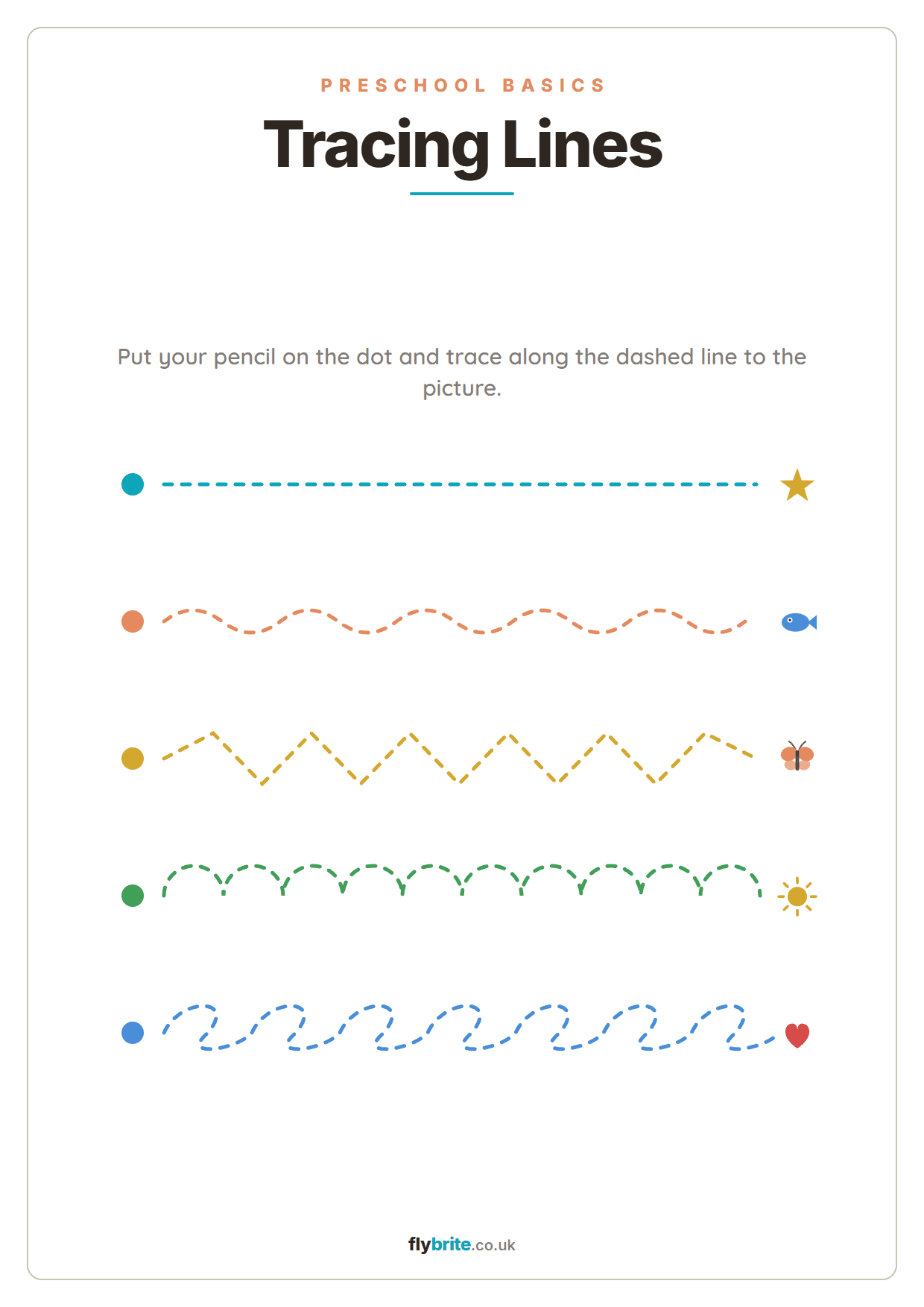
Straight, wiggly and loopy dashed lines to trace, the very first steps towards holding a pencil.
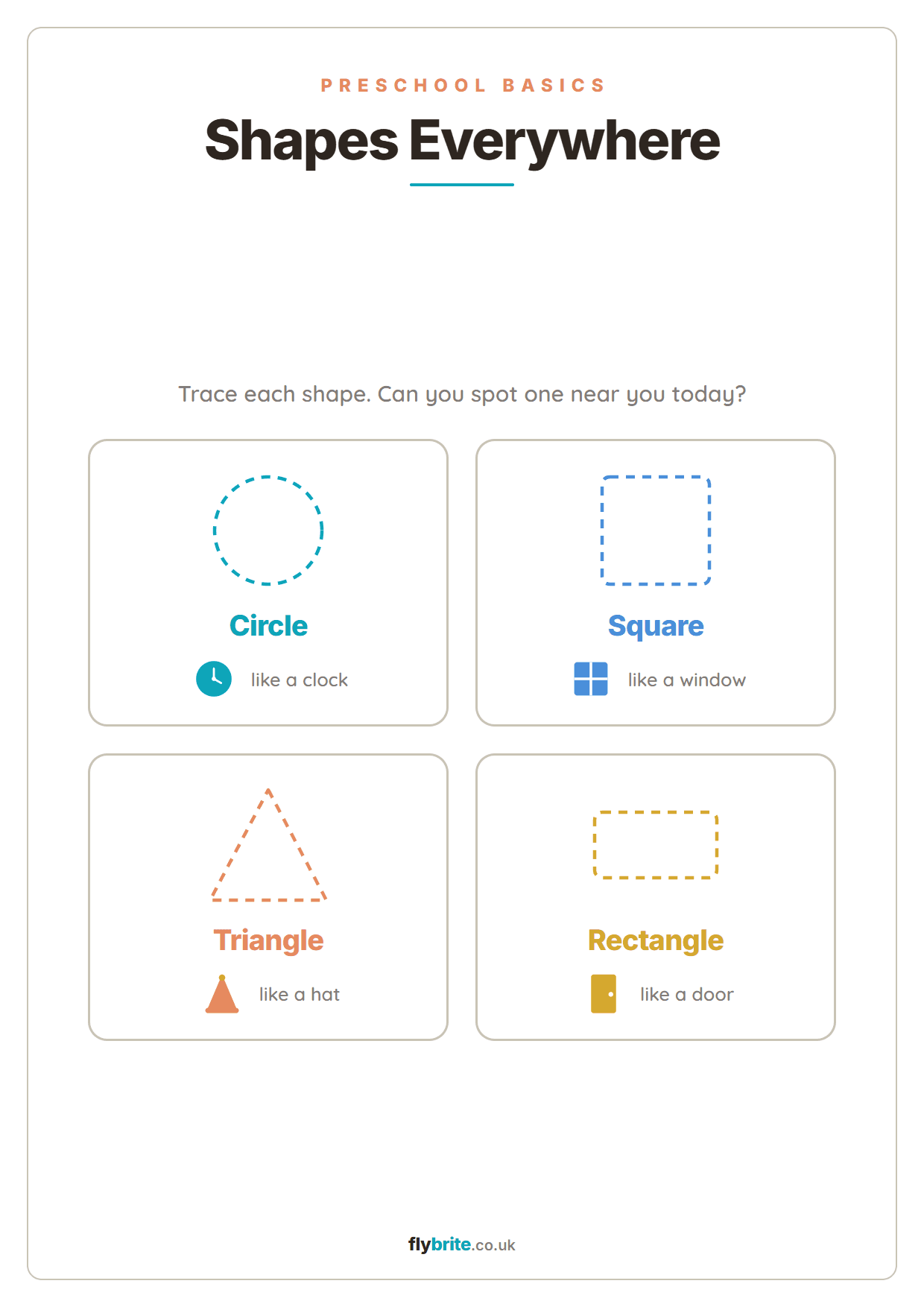
Trace the first four shapes and hunt for them at home, from round clocks to square windows.
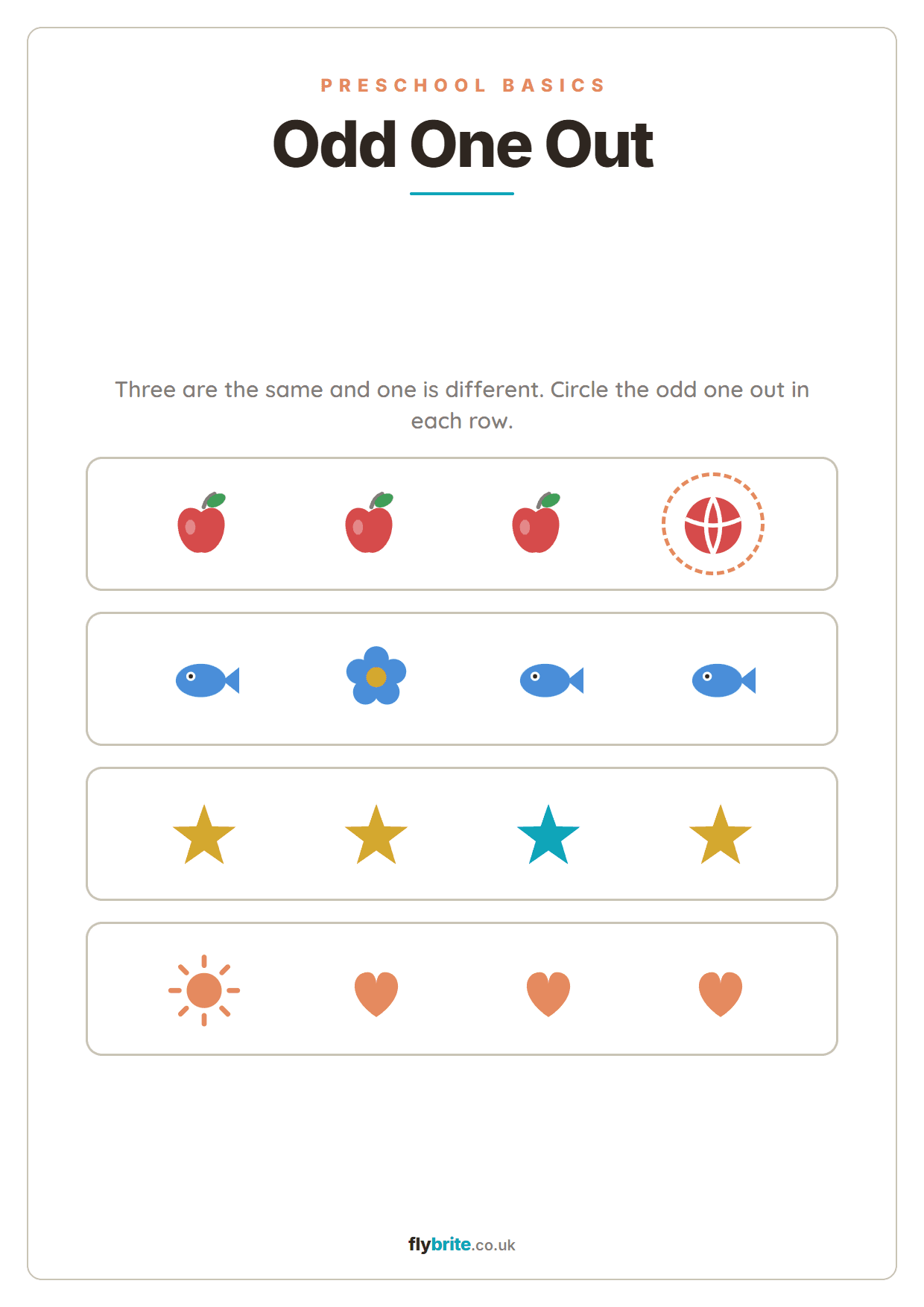
Three the same and one that is different, a playful puzzle for sharp little eyes.
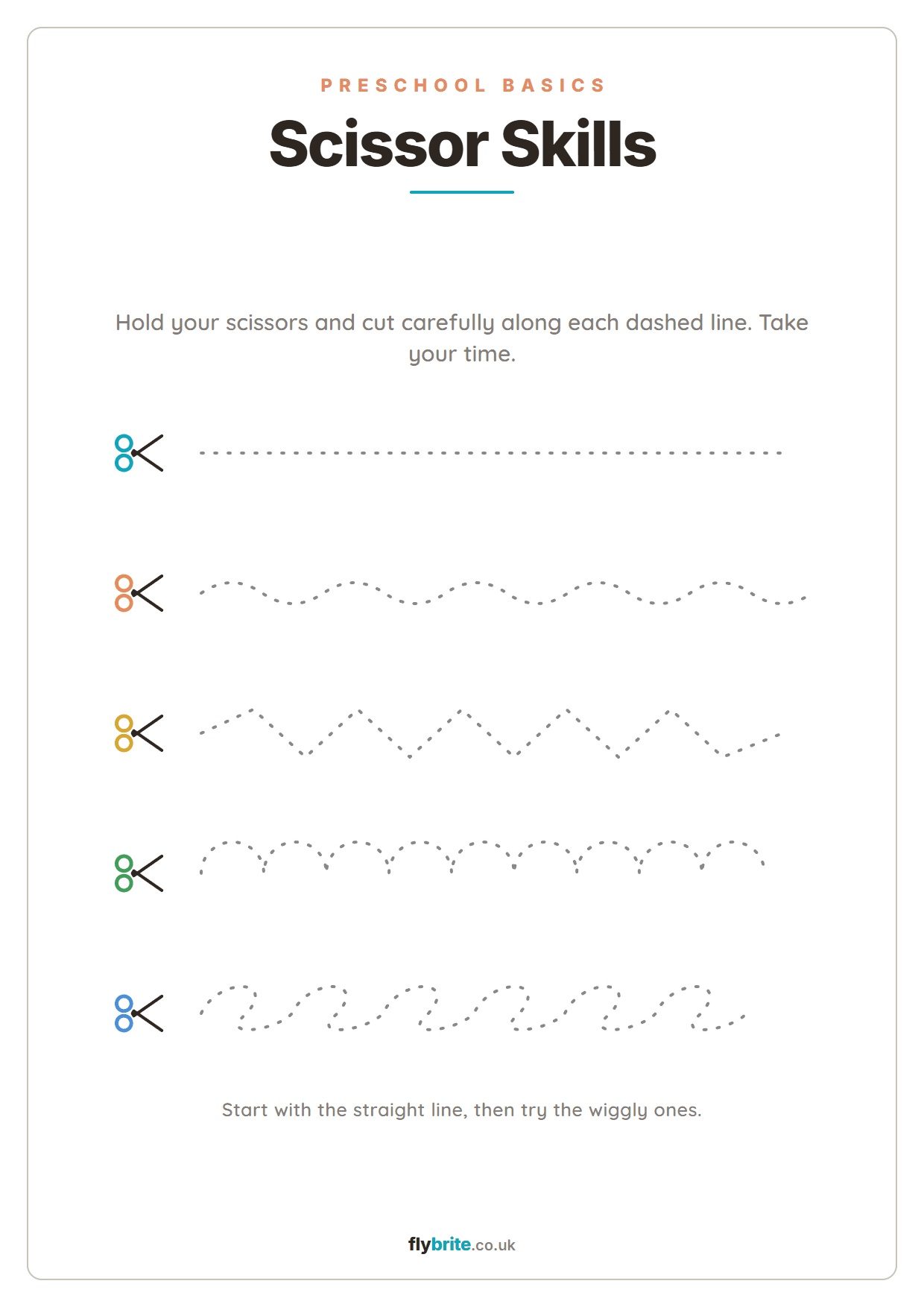
Safe cutting practice along dashed lines, from straight and simple to wiggly and wonderful.
Bonjour! Colours, numbers, greetings and animals, a gentle first taste of French.
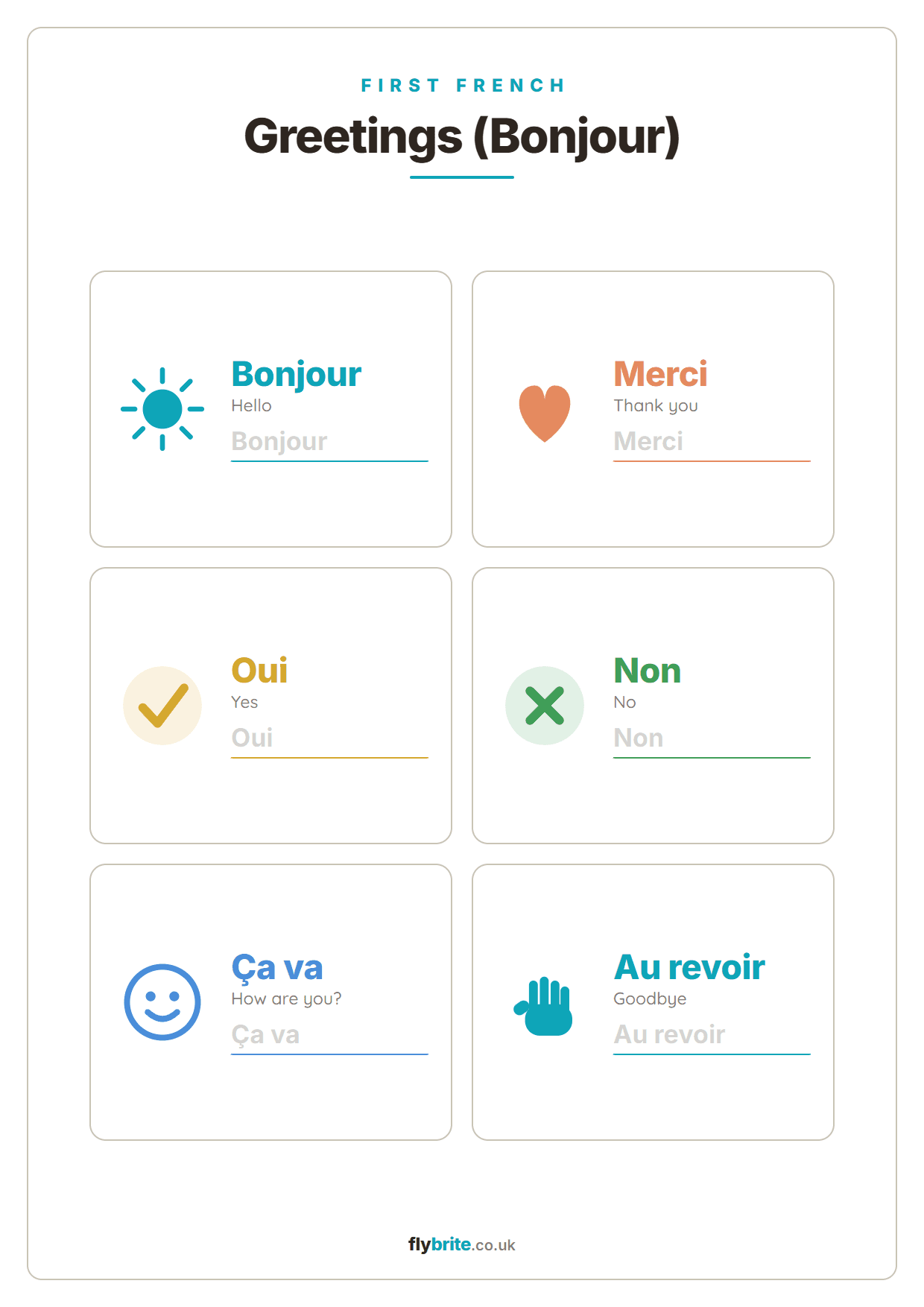
Six friendly French greetings from bonjour to au revoir, each with a picture and a line to write it out.
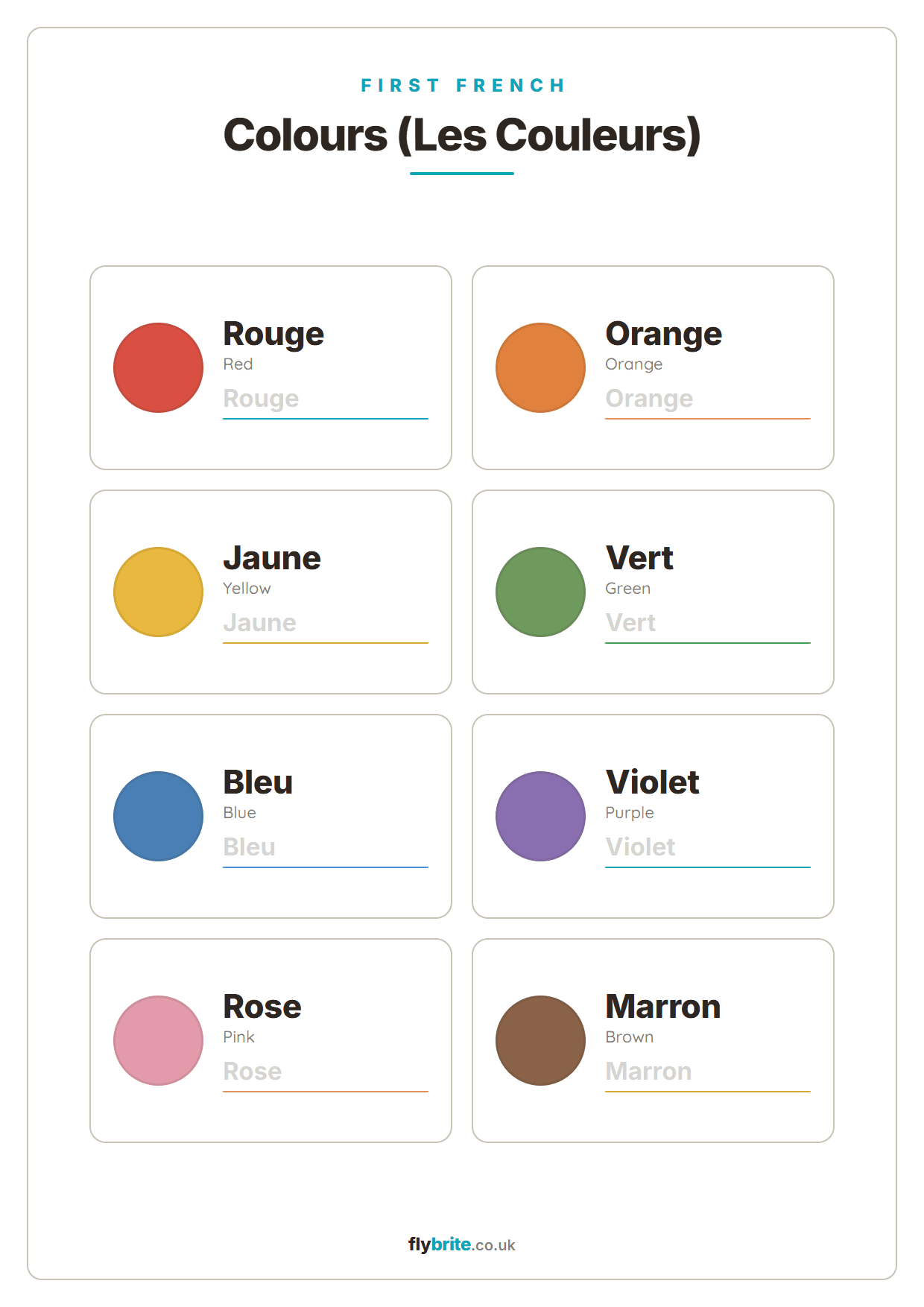
Eight colour words in French, from rouge to marron, each with a bright swatch and a line to copy.
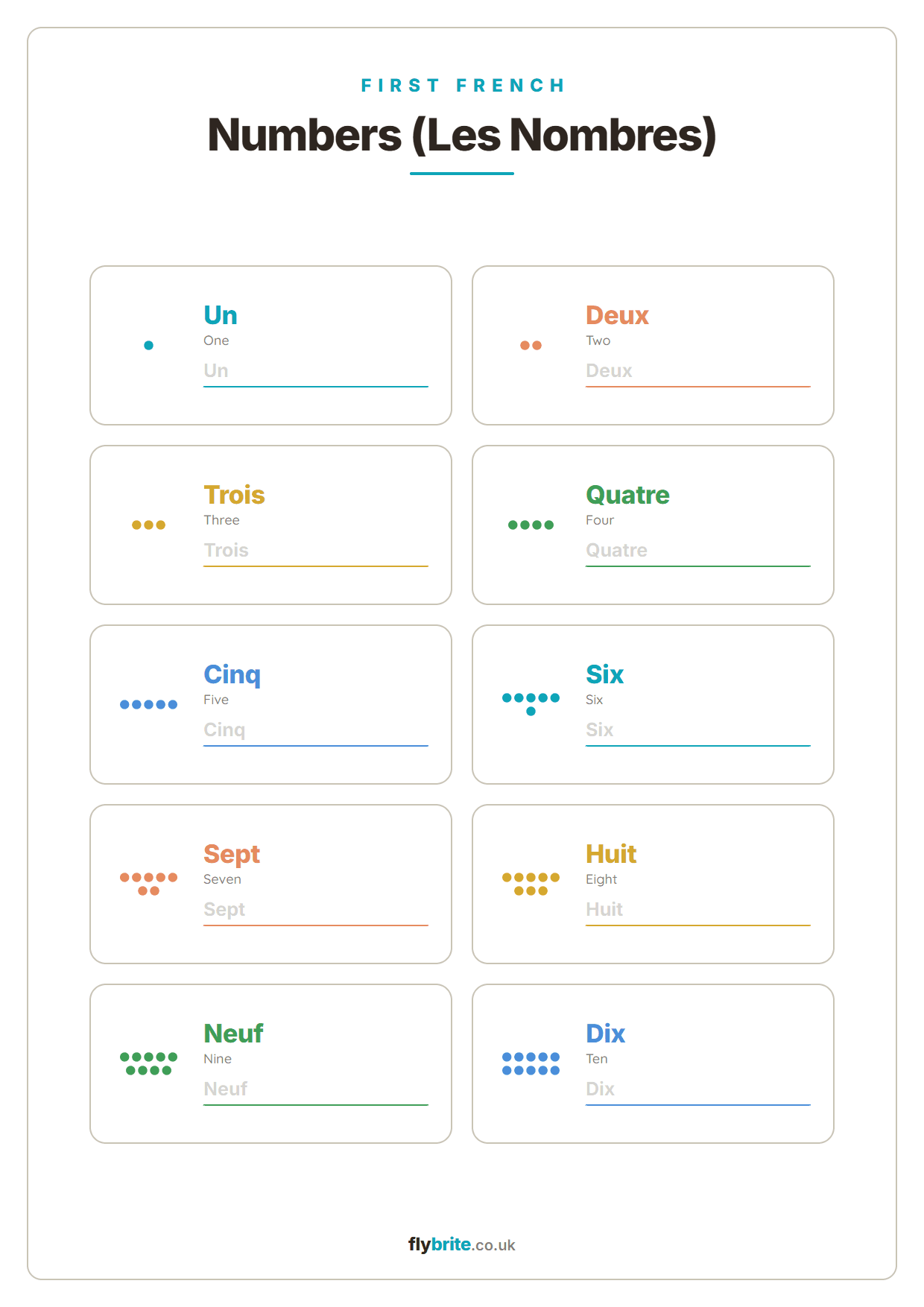
Count from un to dix in French, with dots to match and a practice line for every number.
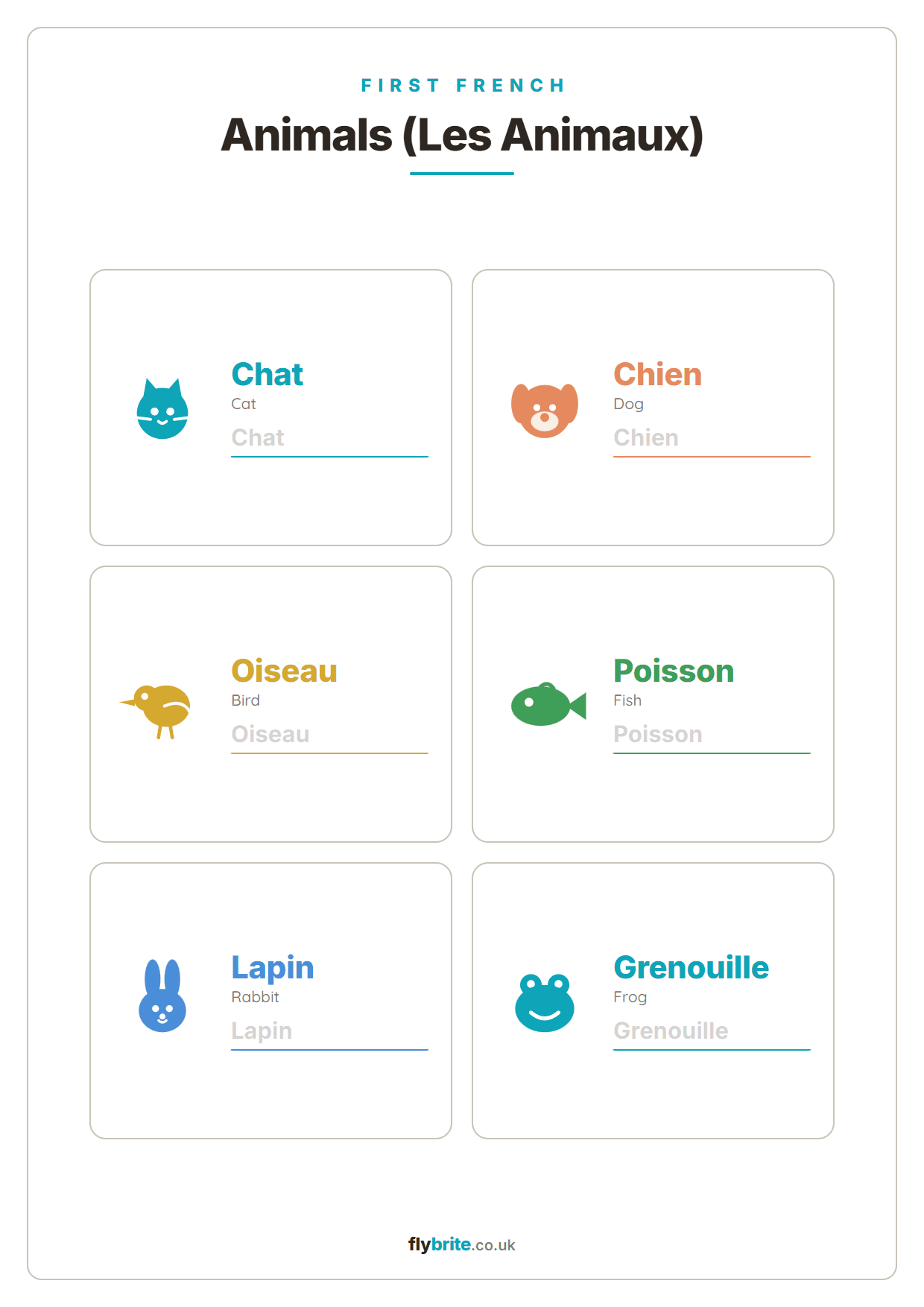
Six favourite animals in French, from le chat to la grenouille, with a picture cue and a writing line.
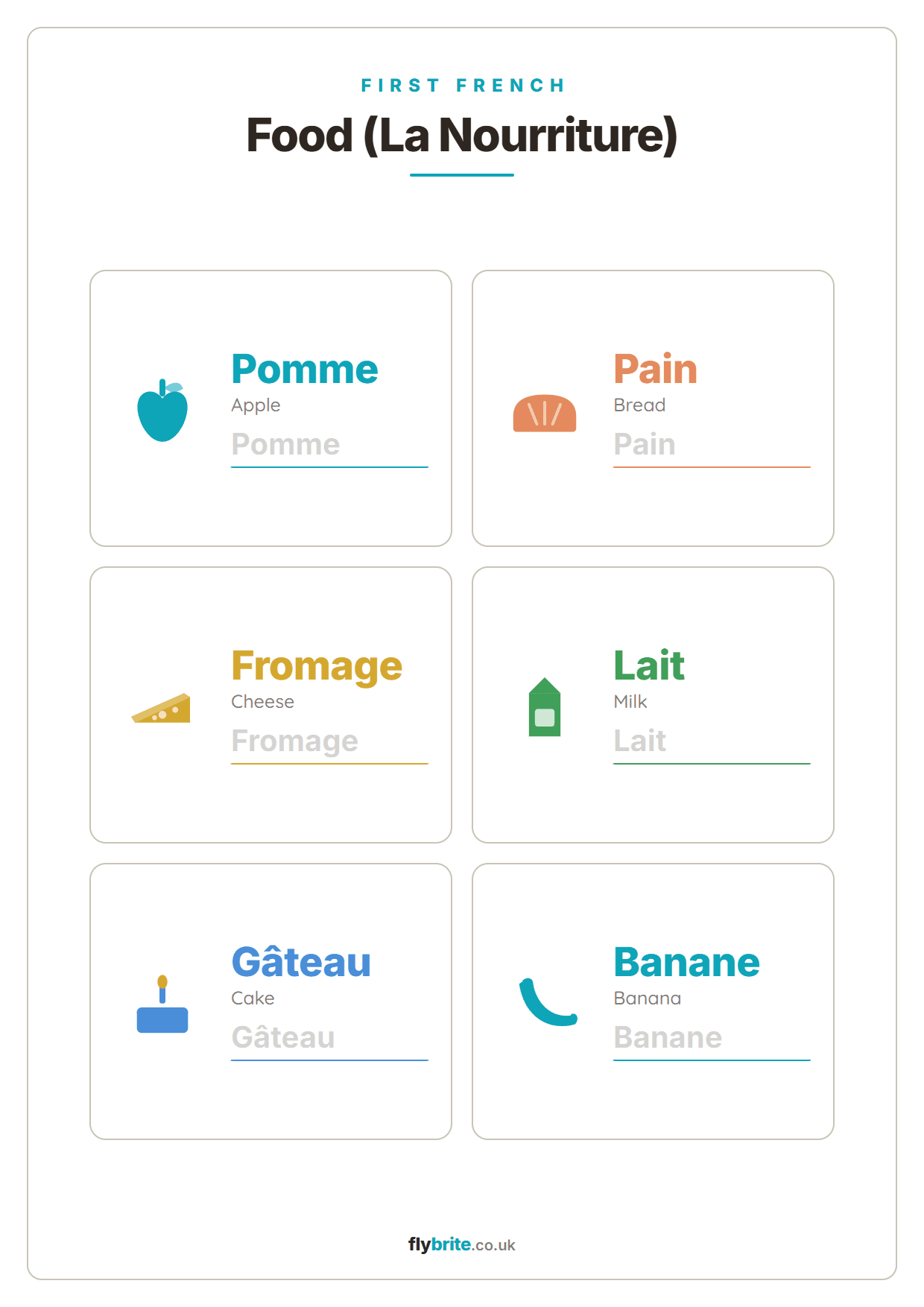
Tasty first food words in French, from la pomme to le gâteau, ready to say, match and write.
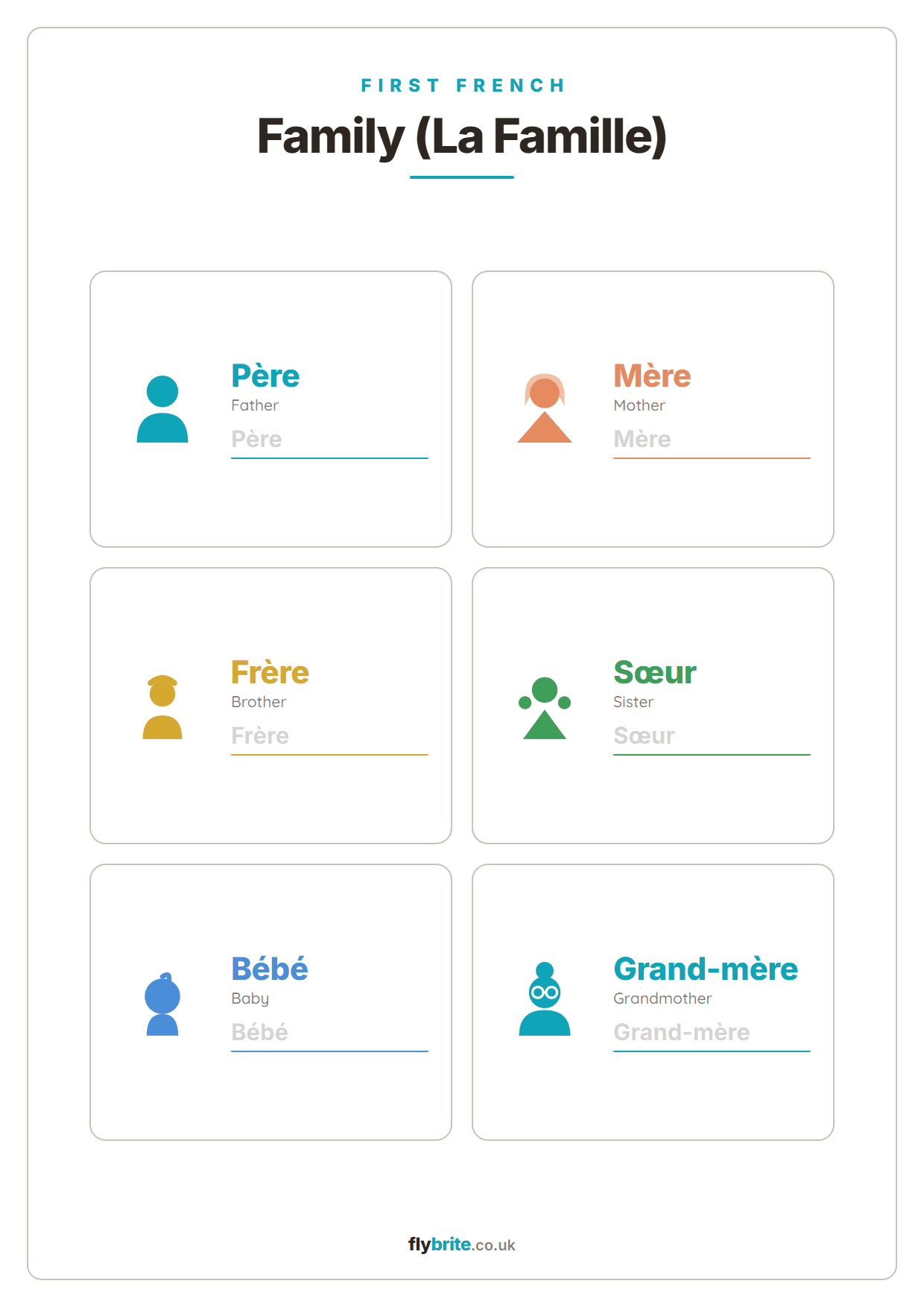
The whole family in French, from père to grand-mère, with a friendly picture and a line to write each word.
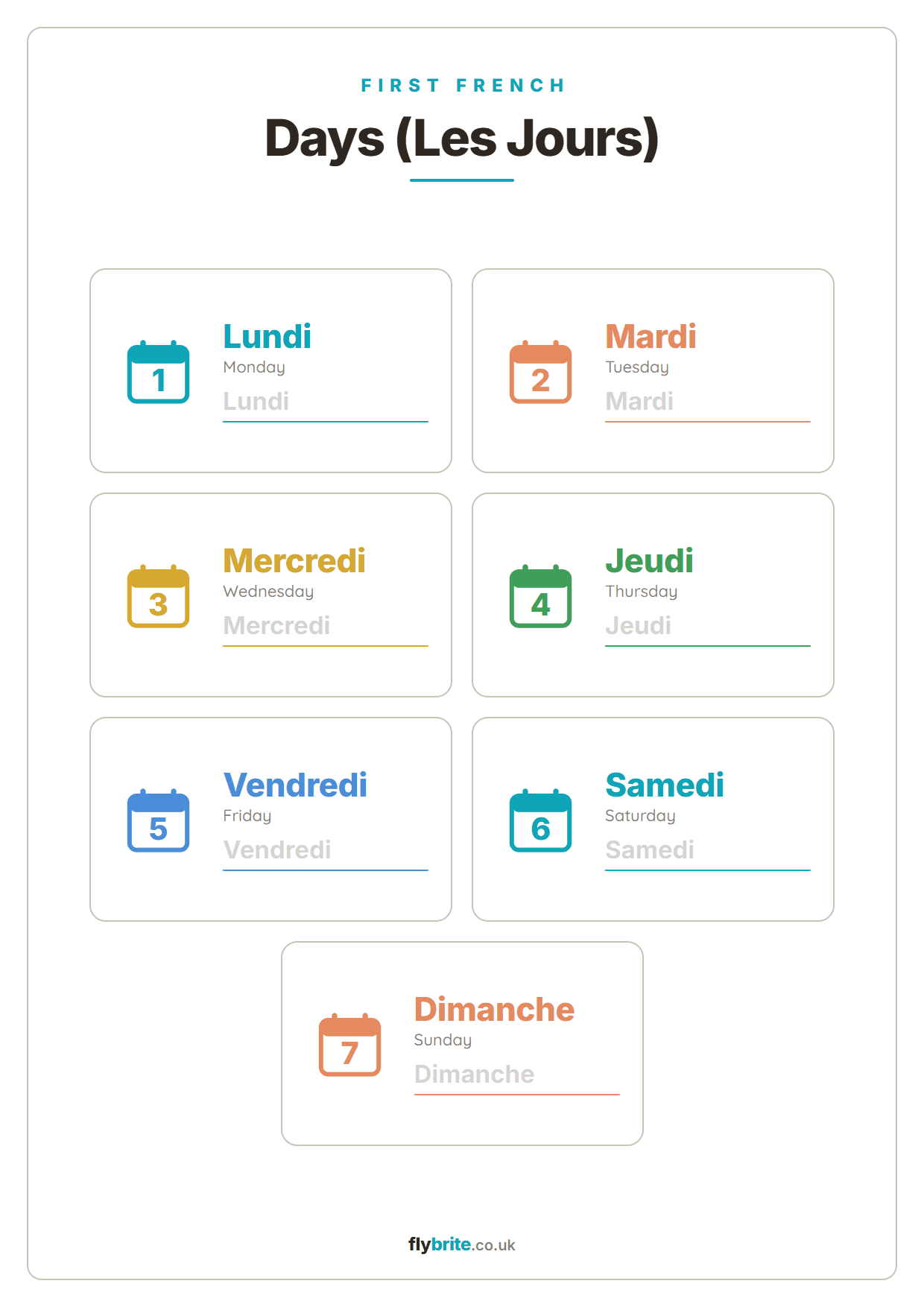
All seven days of the week in French, lundi to dimanche, with a calendar cue and a line to practise.
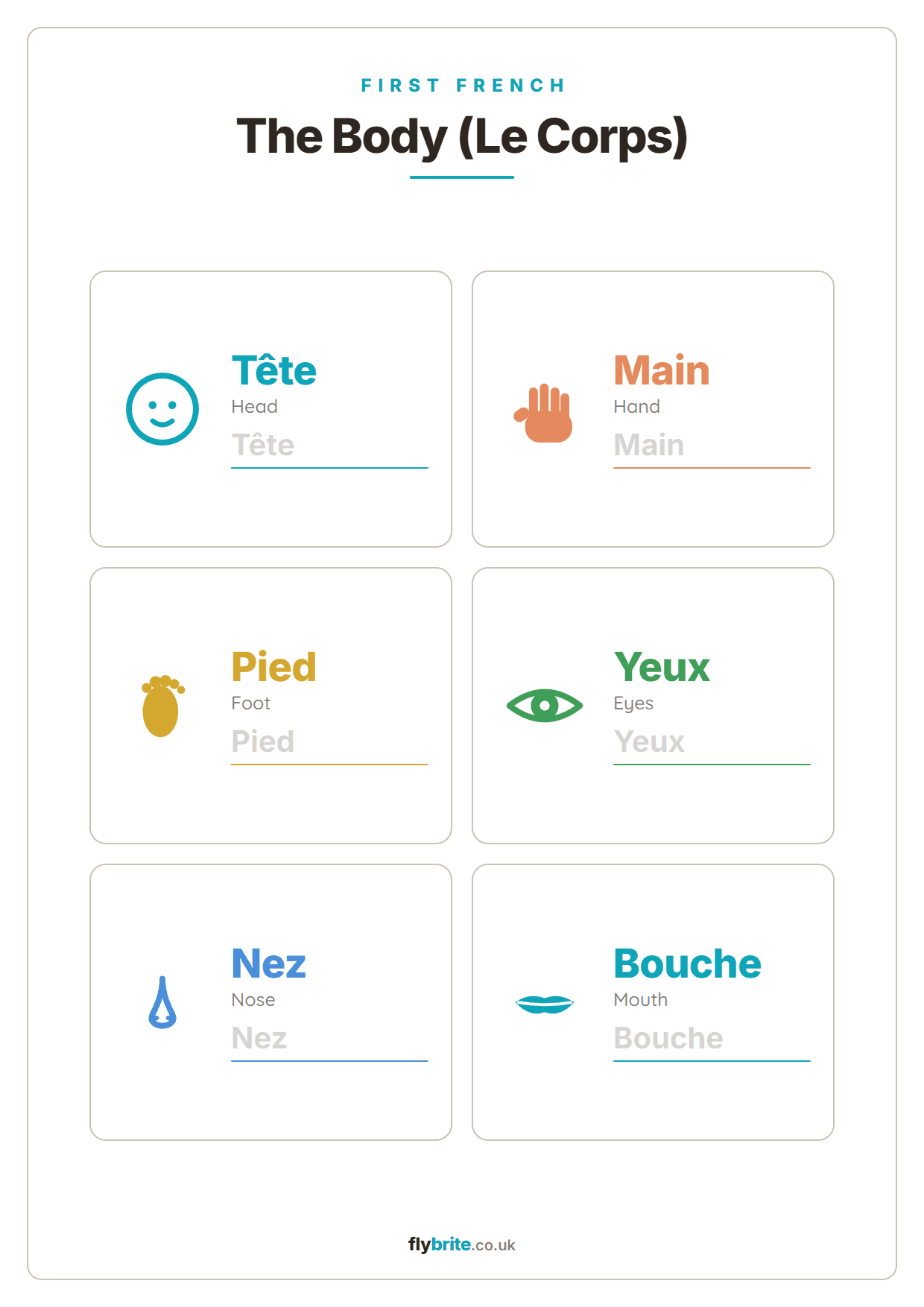
First words for the body in French, from la tête to la bouche, with a clear picture and a writing line.
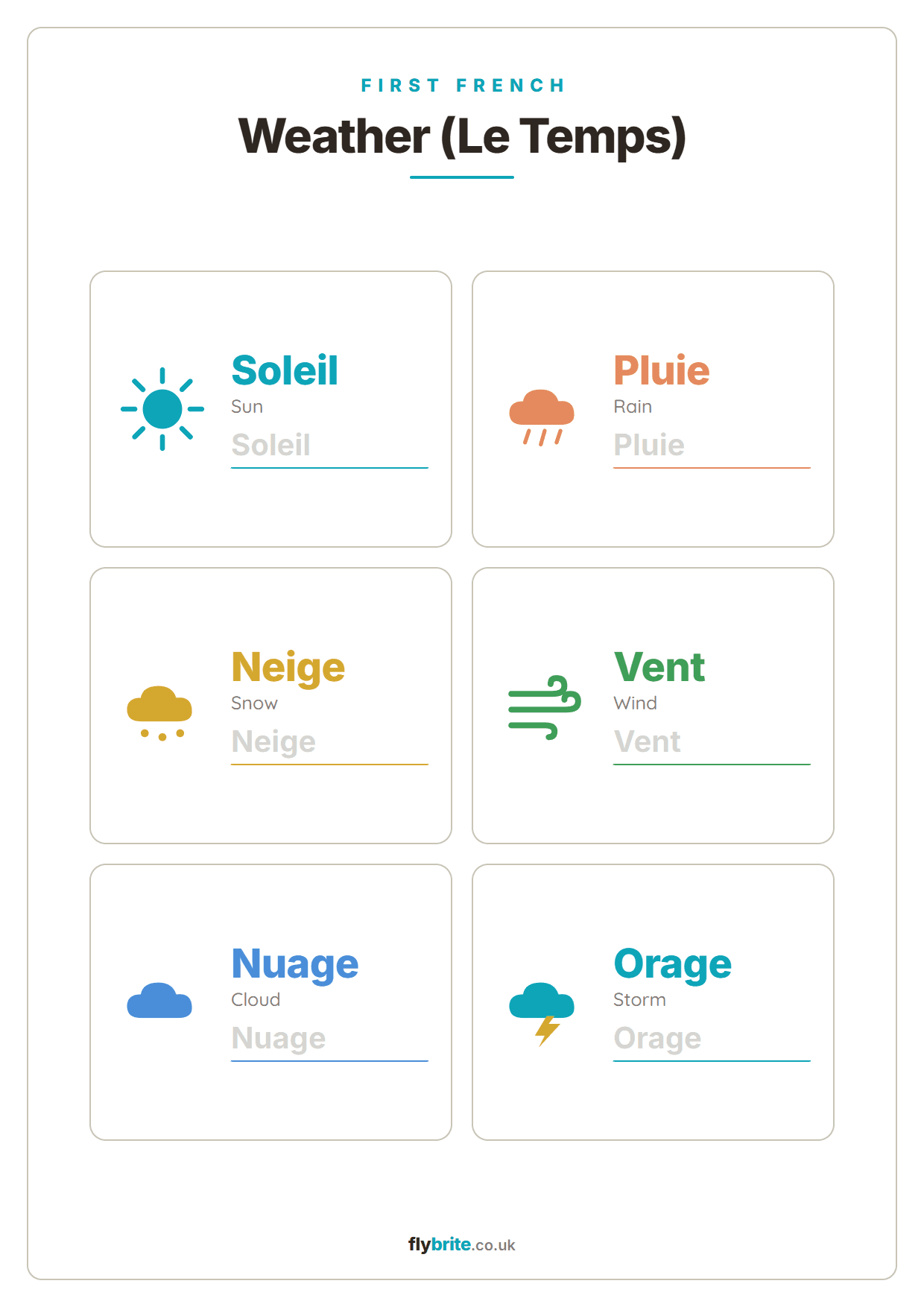
Everyday weather words in French, from le soleil to l’orage, each with a picture and a line to copy.
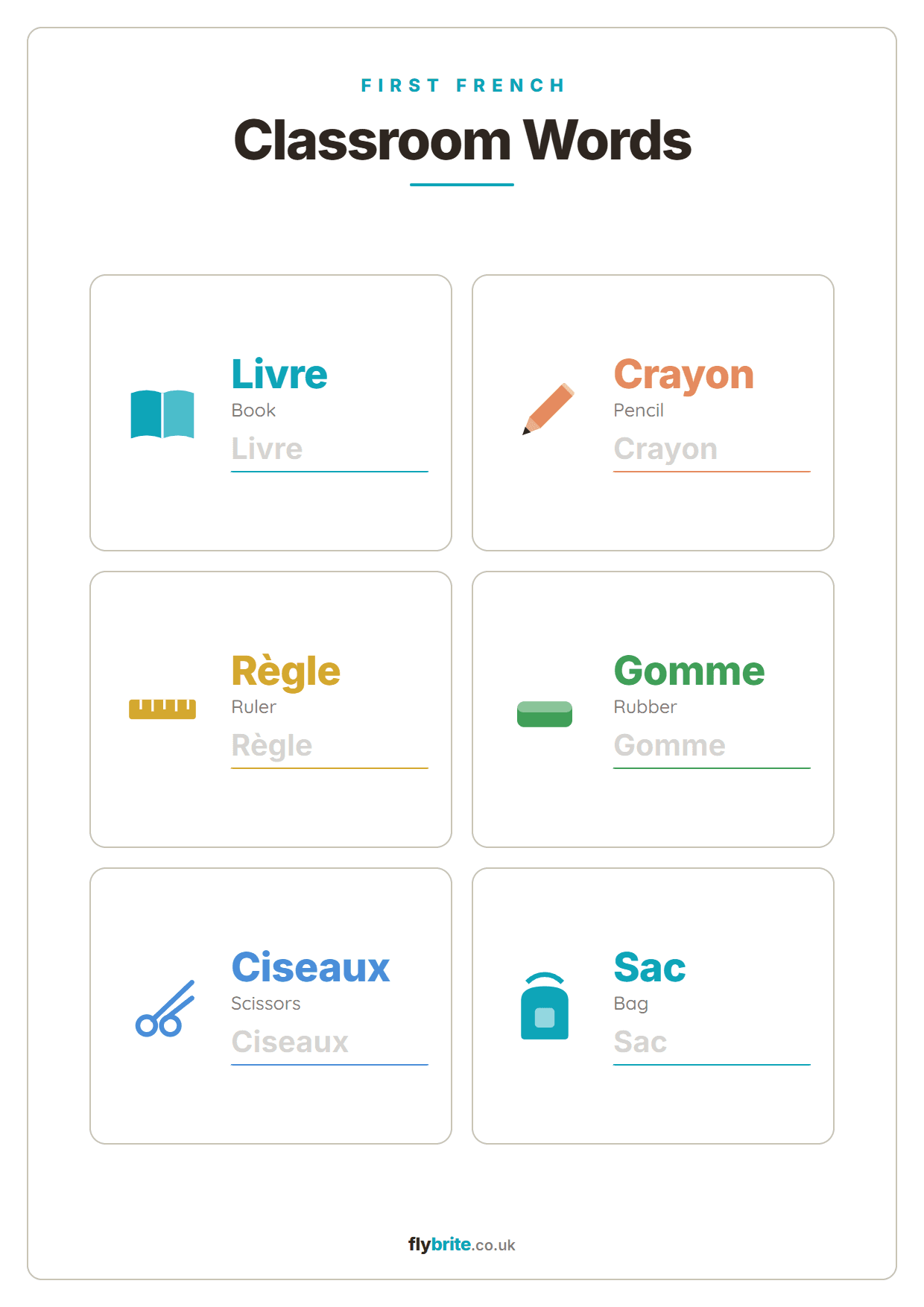
Handy classroom words in French, from le livre to les ciseaux, with a picture cue and a line to write.
Colour by number, mazes, letters to Santa and cut-out cards, festive fun for the whole family.
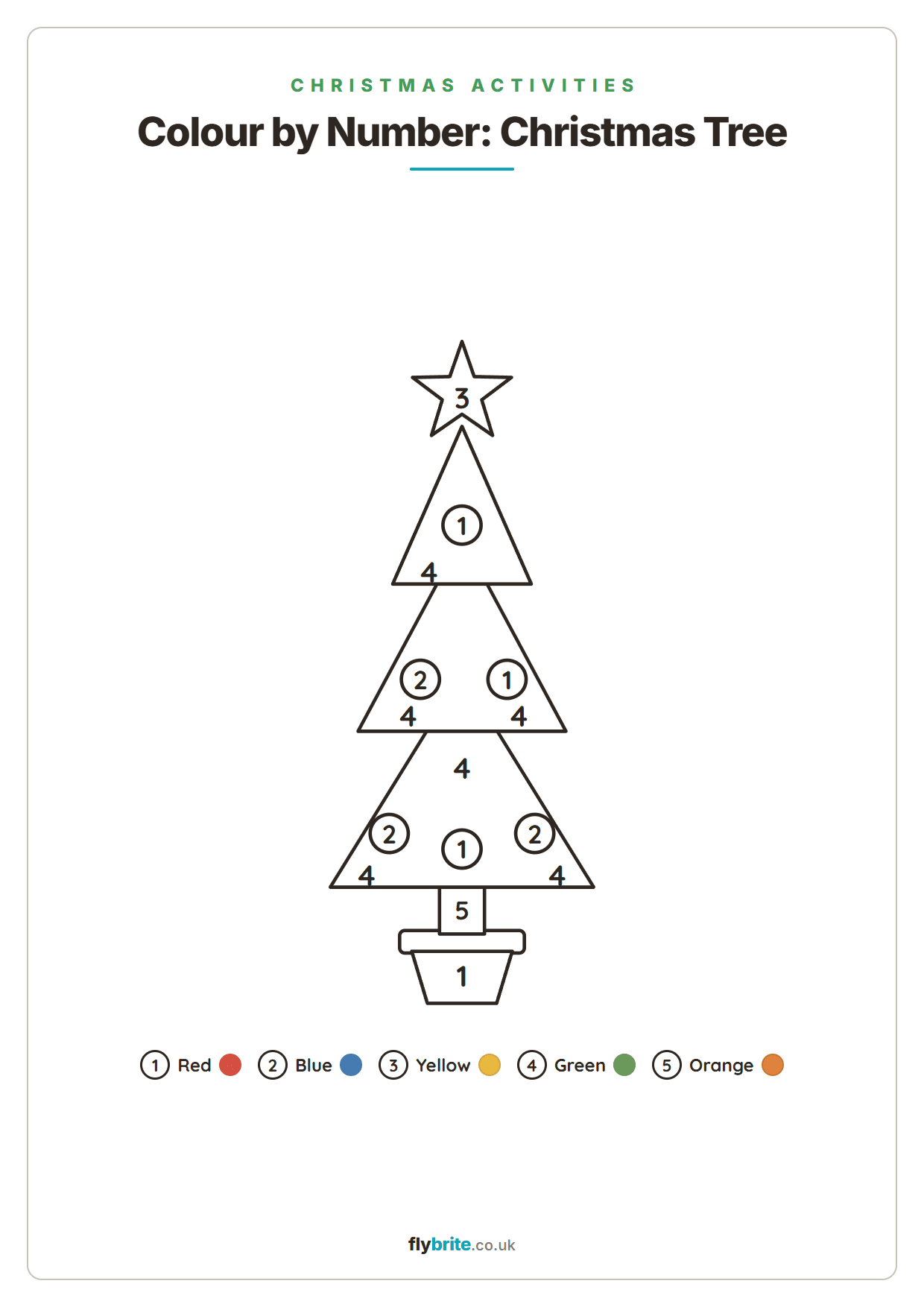
A big friendly Christmas tree with numbered baubles and a golden star, ready for a first splash of colour.
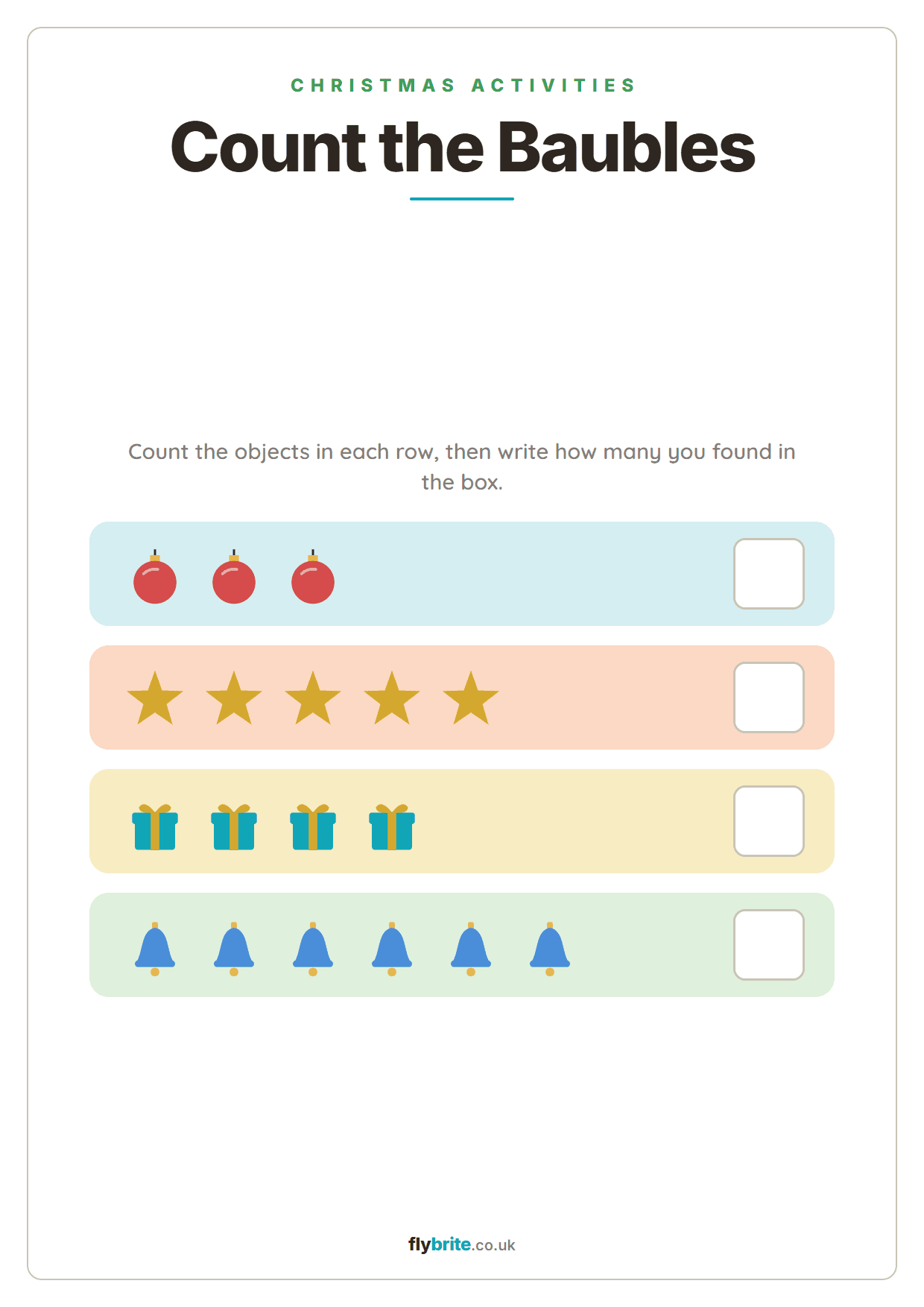
Rows of baubles, stars, gifts and bells to count carefully before writing the number in the box.
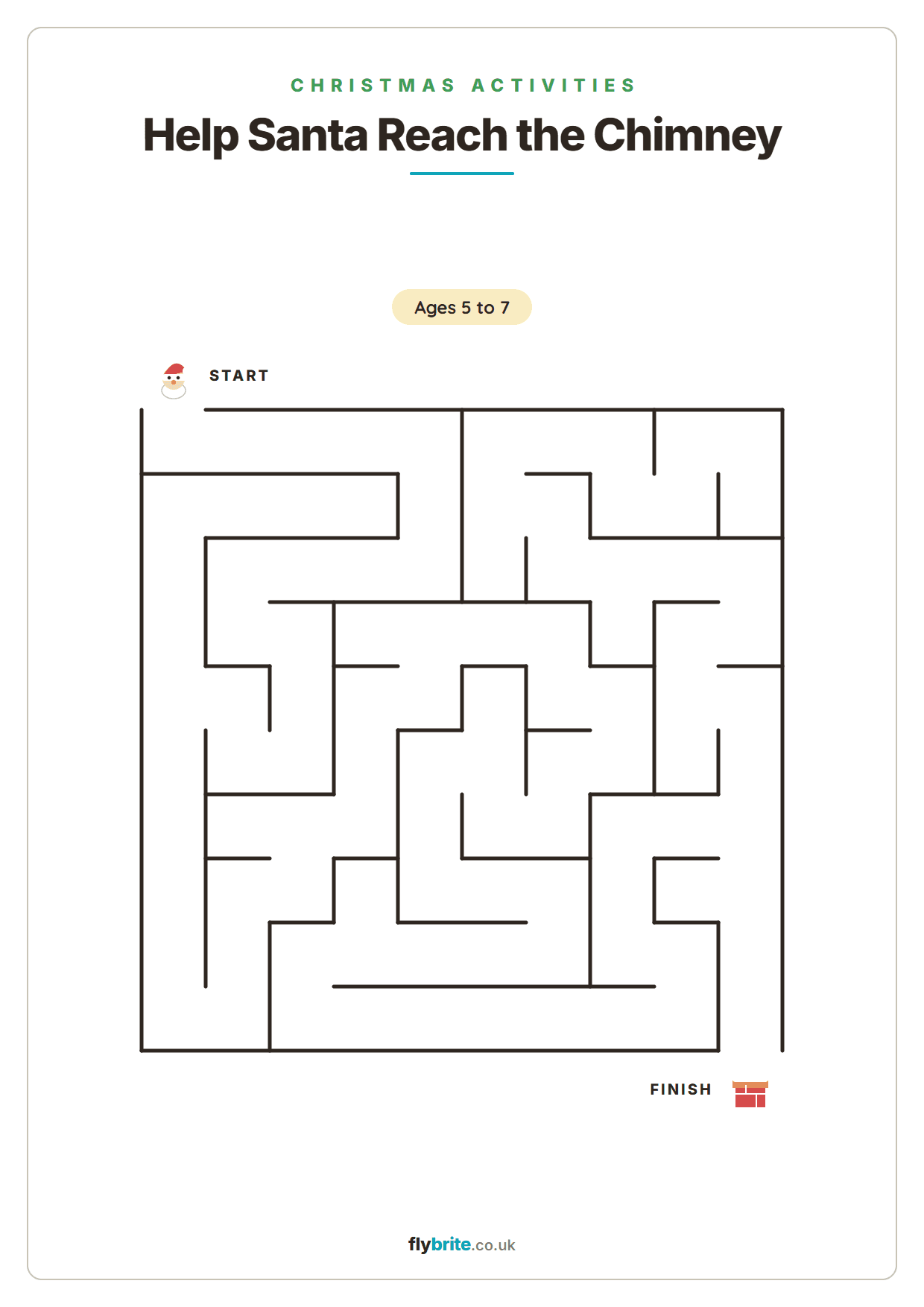
Steer Santa through the twists and turns of a proper maze until he reaches the chimney top.
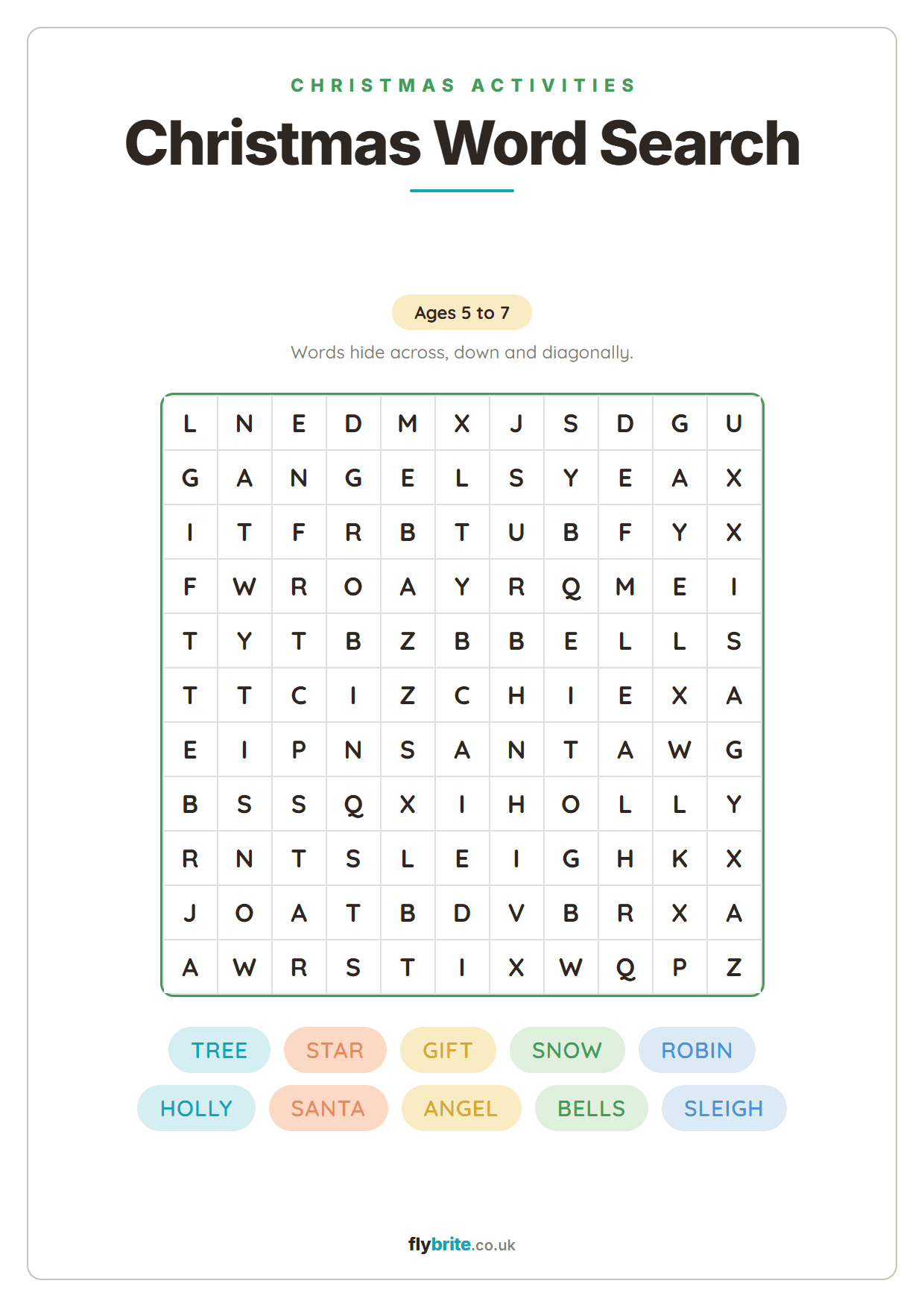
Ten festive words are hiding across, down and diagonally, waiting for sharp young eyes to find them.
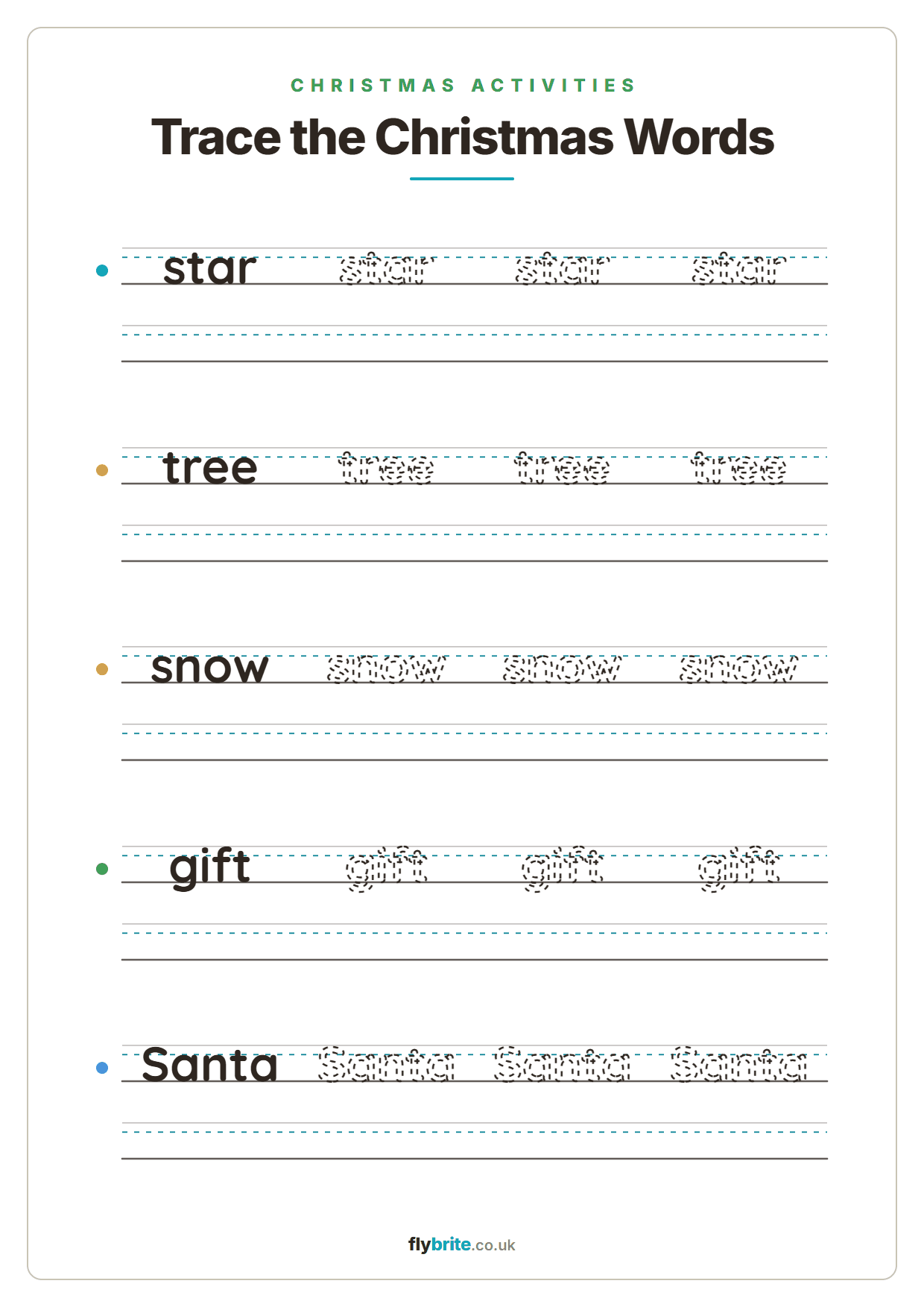
Five favourite Christmas words to trace on proper handwriting guides, from star to Santa.
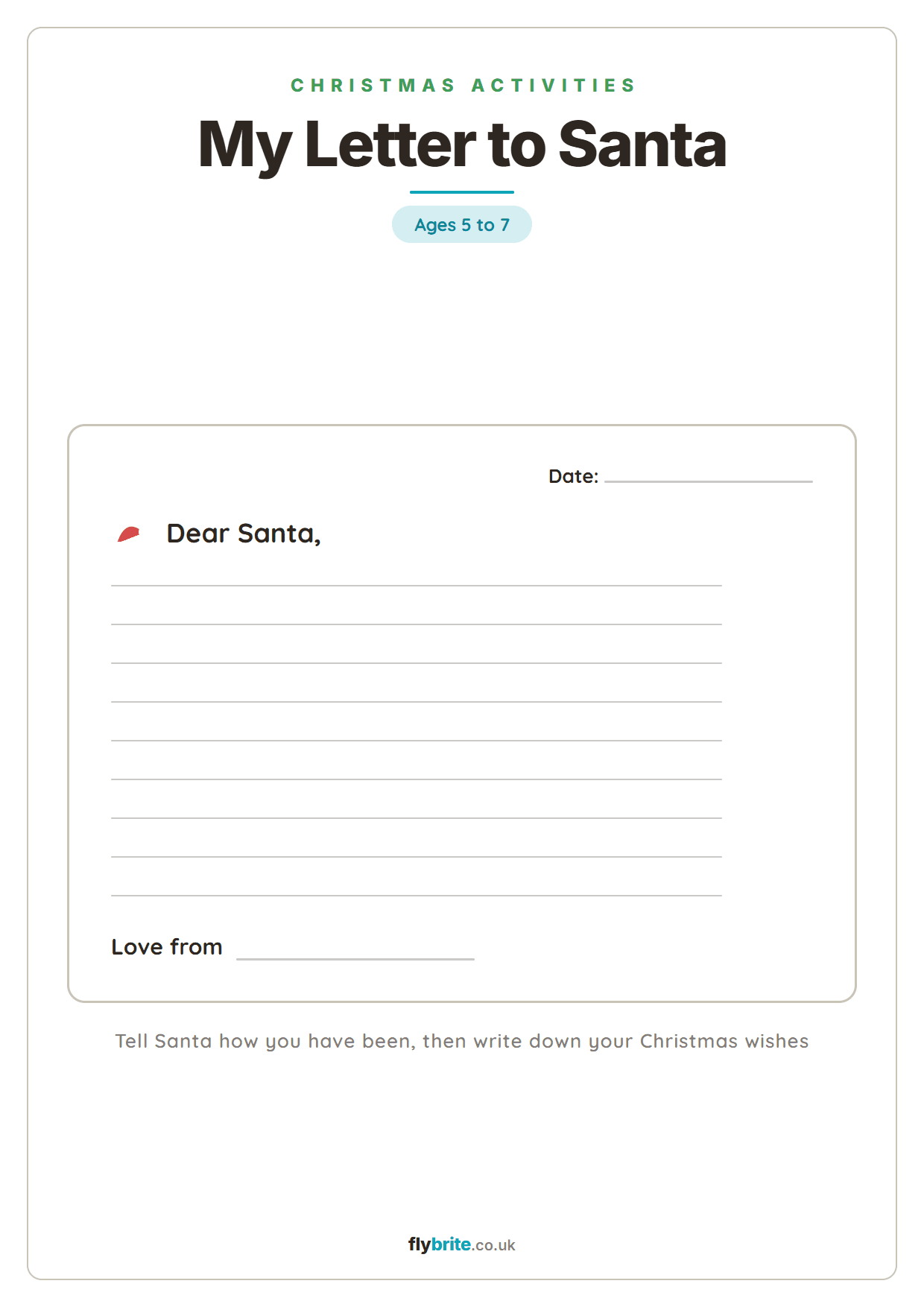 Type or write in
A warm guided frame for a real letter to Santa, from the date at the top to a happy signing off.

A cheerful snowy scene with a snowman and a tree, shown twice. Can you find all six little changes?
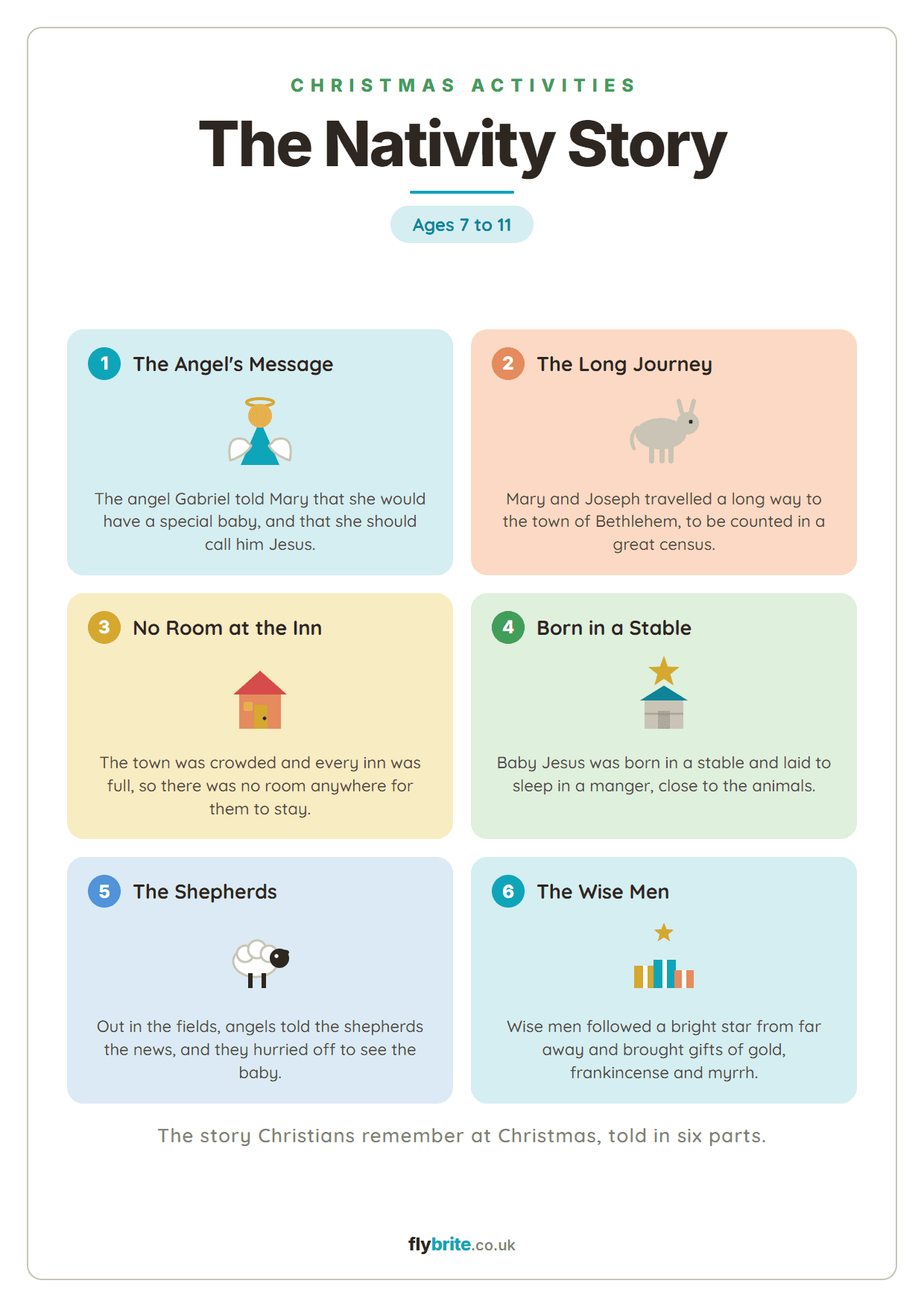
The Christmas story told in six gentle steps, from the angel Gabriel to the gifts of the wise men.

Six countries, six traditions, a friendly tour of the many ways Christmas is celebrated worldwide.
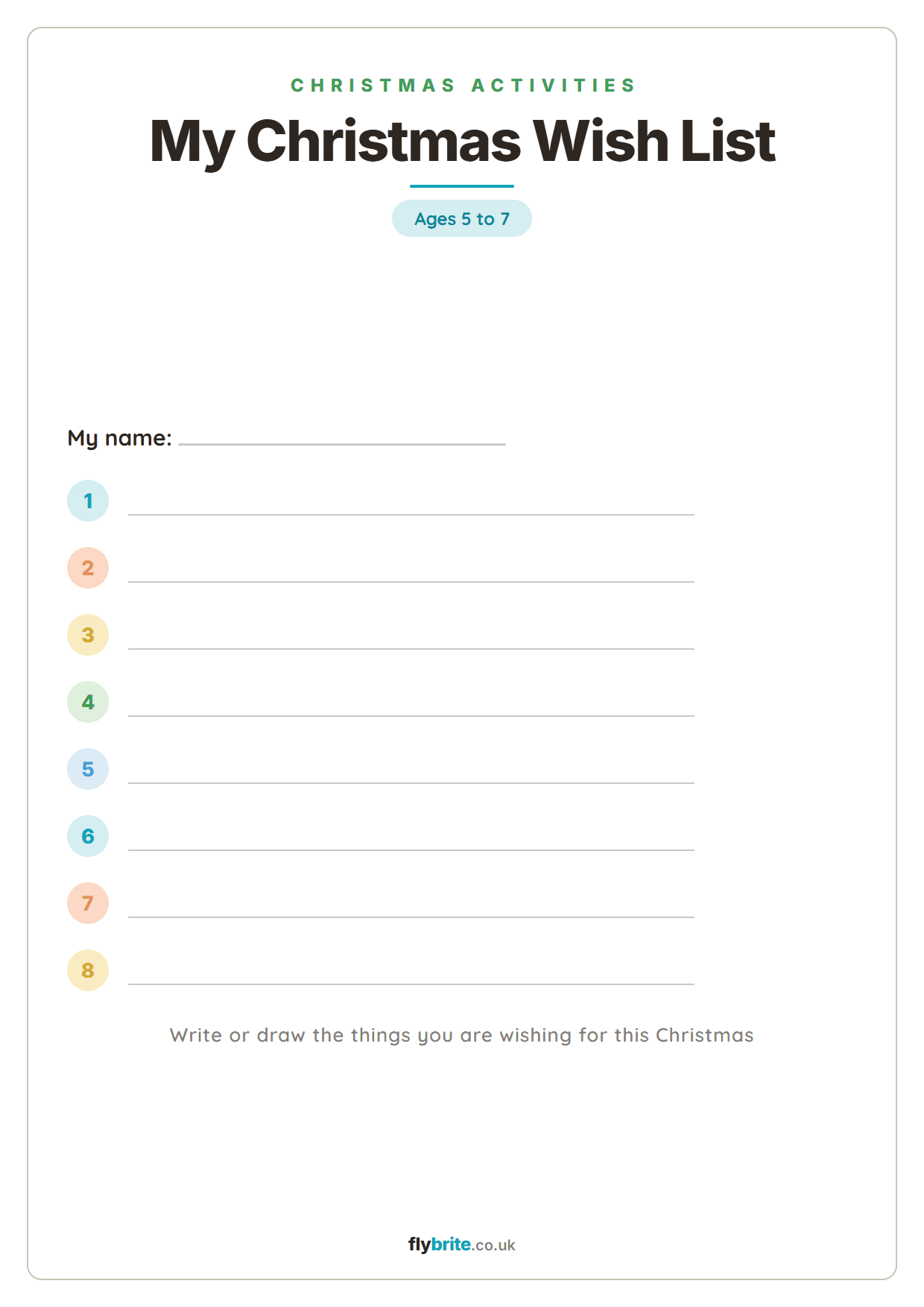 Type or write in
A numbered wish list to fill in, with room to write or draw everything on your Christmas list.
Spooky colour by number, pumpkin mazes, word searches and monster-makers for a happy Halloween.

A big smiley jack-o-lantern under the moon, ready to colour in one number at a time.
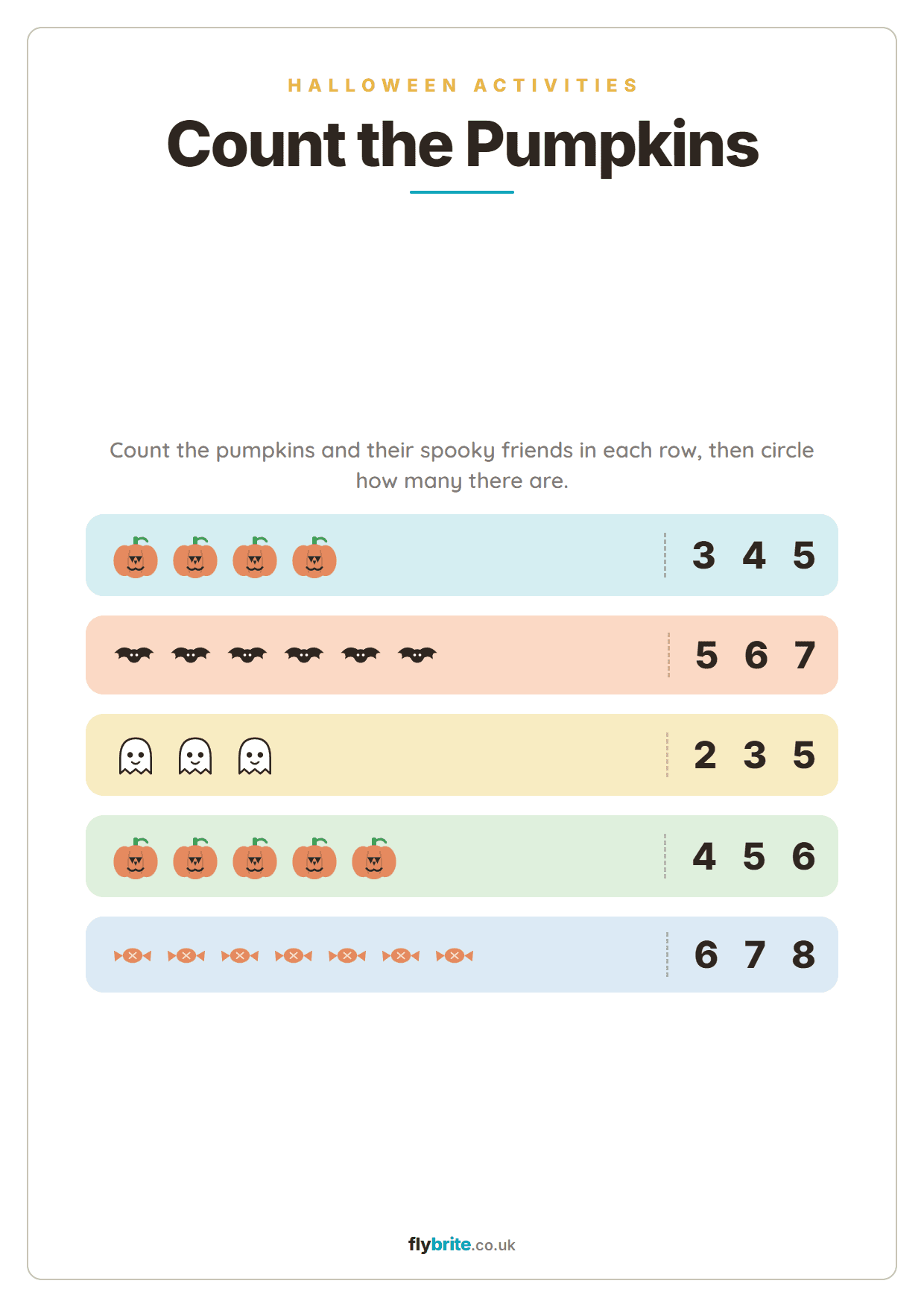
Count the pumpkins, bats, ghosts and sweets in each row, then circle how many you see.
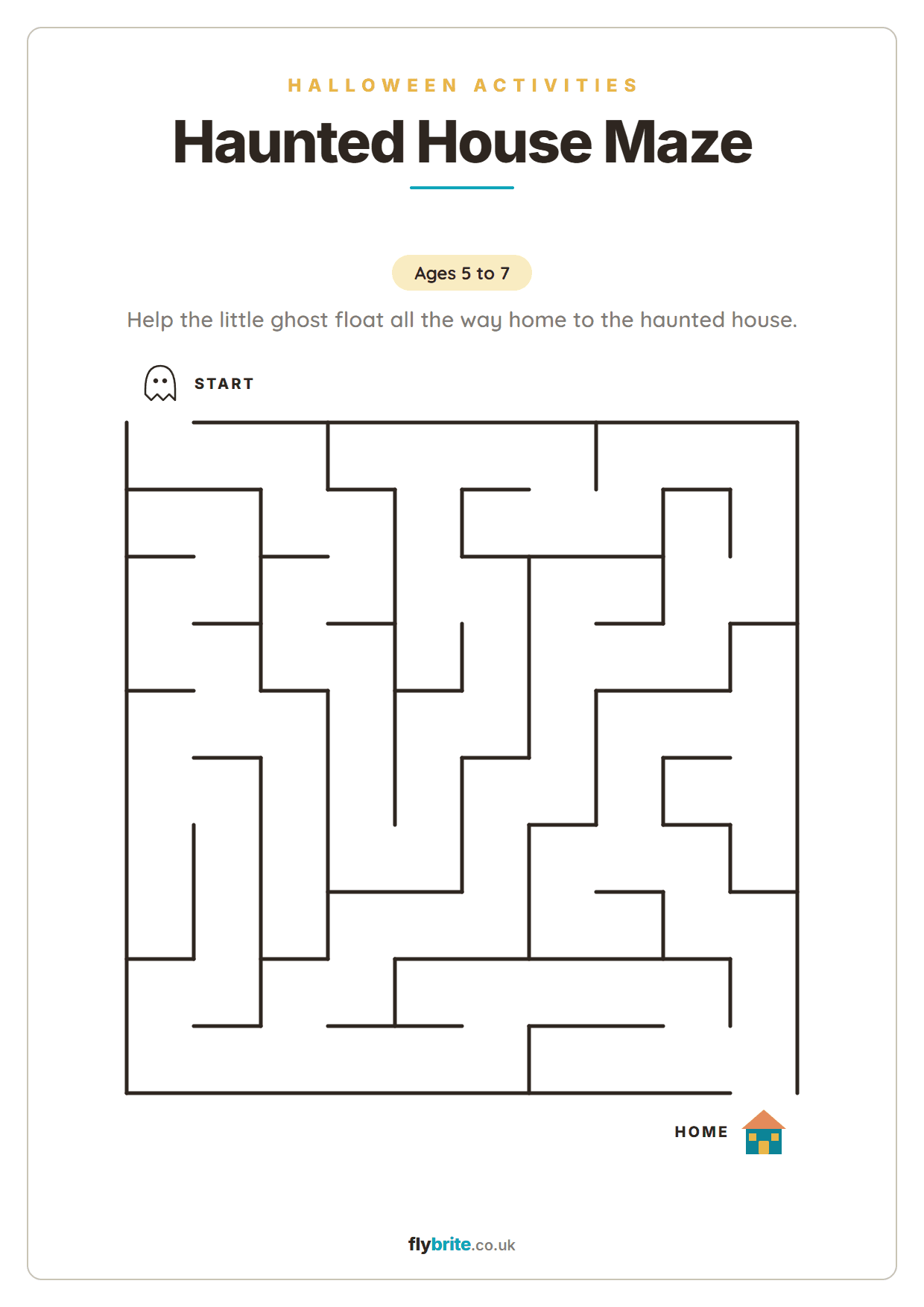
Help the friendly little ghost find its winding way home to the haunted house.
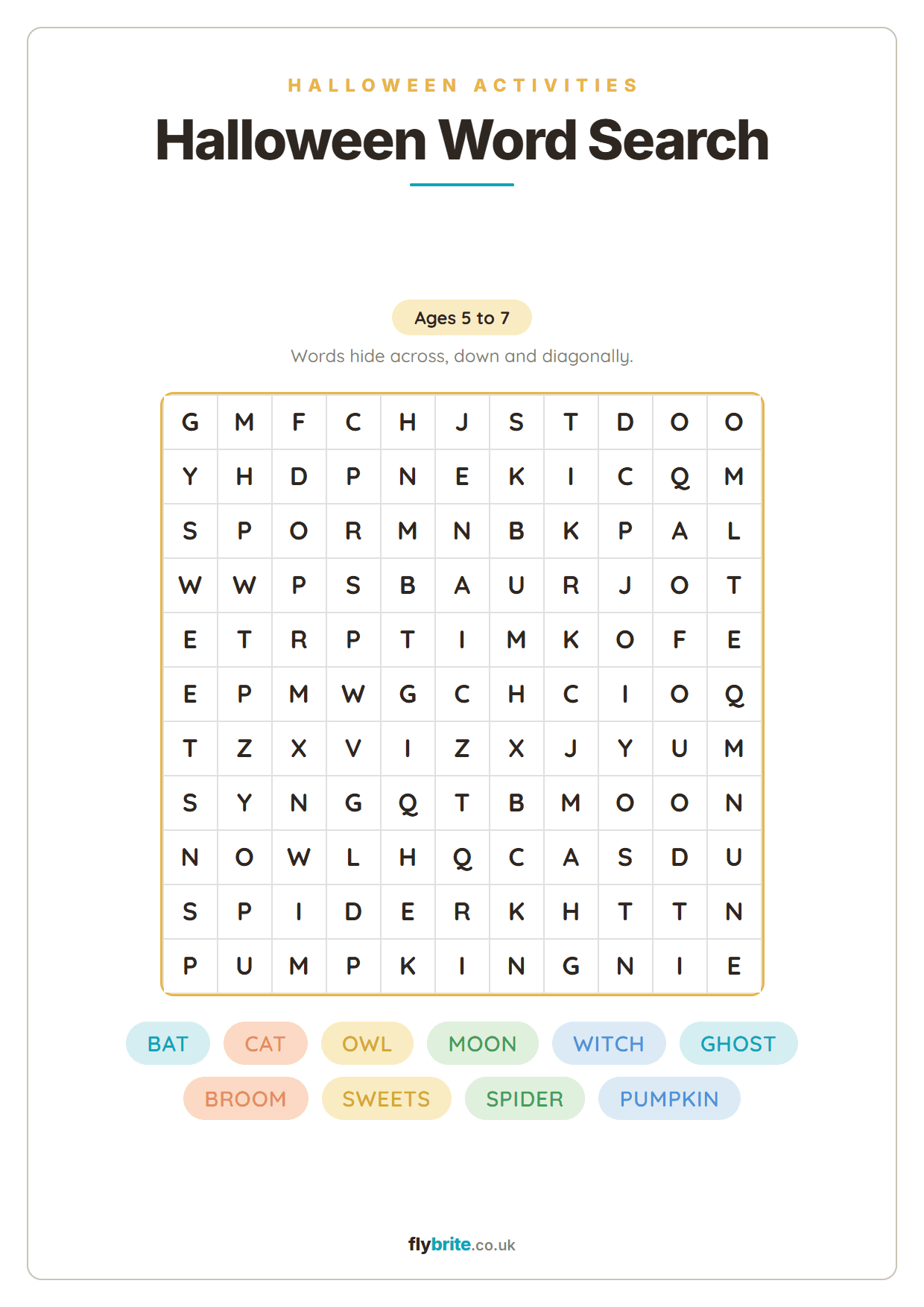
Ten spooky words hide across, down and diagonally, from bat and moon to pumpkin.
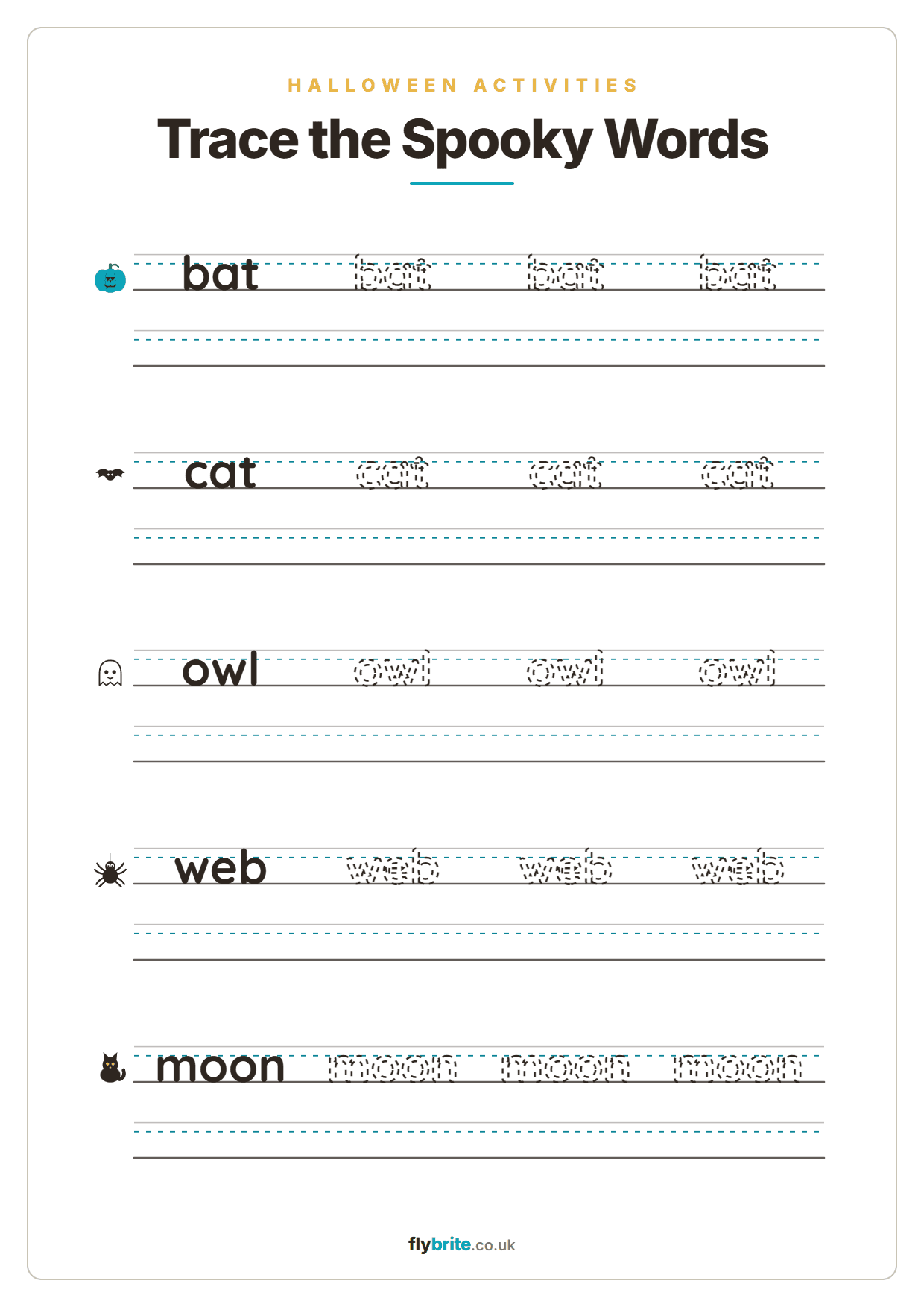
Five friendly Halloween words to trace on proper handwriting guides, bat to moon.
 Type or write in
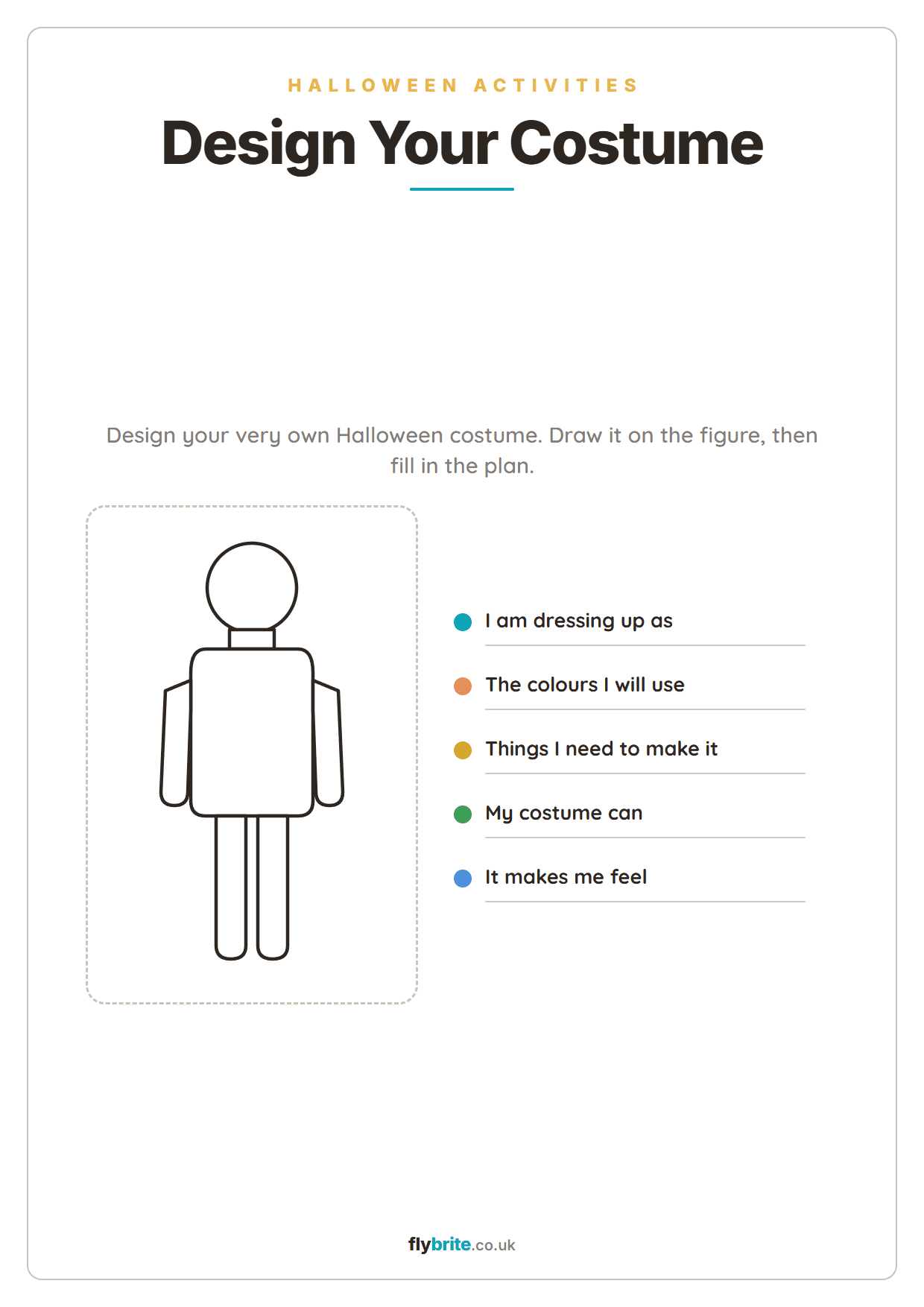
Draw a costume on the figure, then plan it out, from the colours to how it makes you feel.
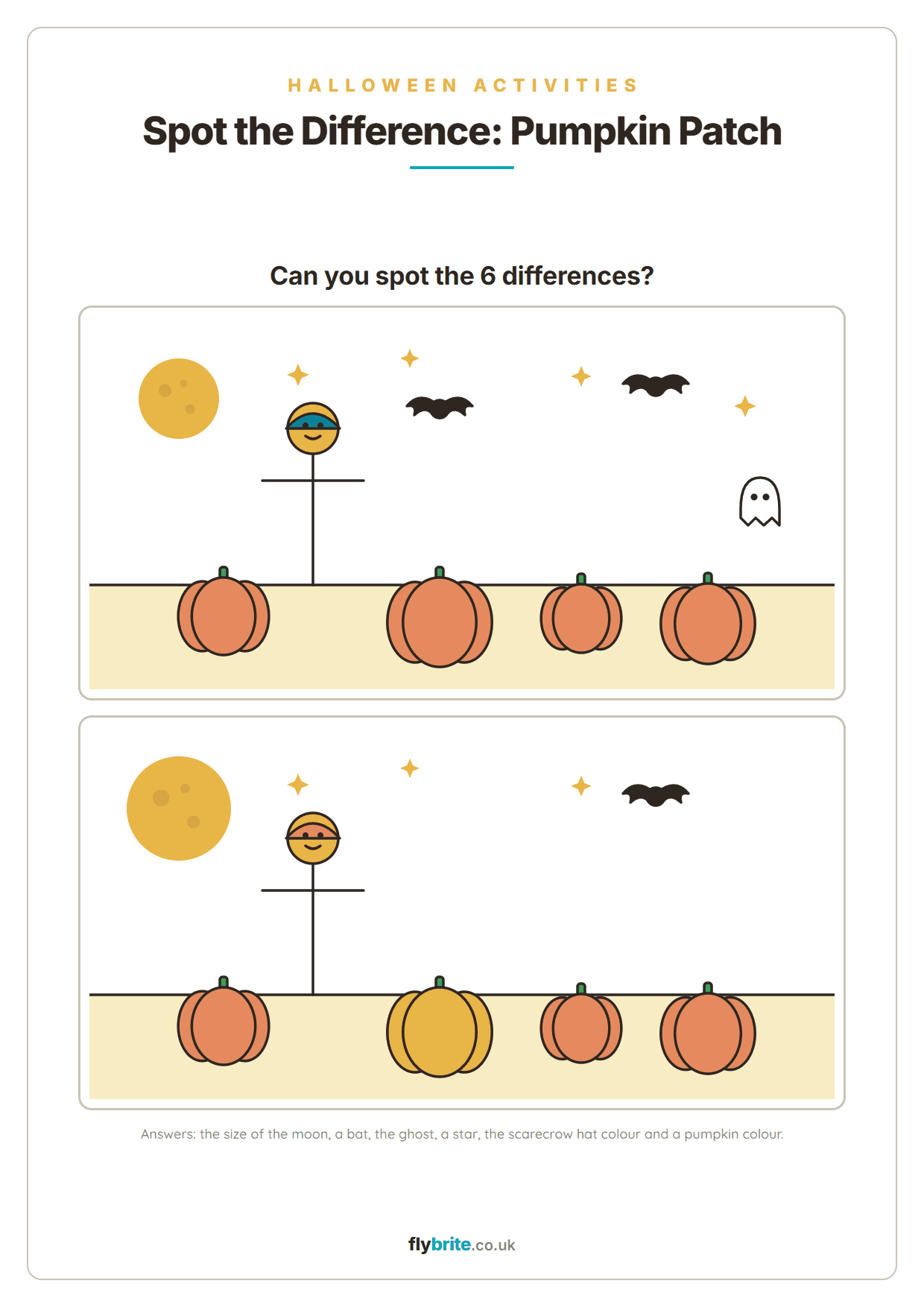
A moonlit pumpkin patch with a friendly scarecrow. Can you spot all six little changes?

Follow a spider from a silky egg sac to a full grown web spinner in four labelled stages.
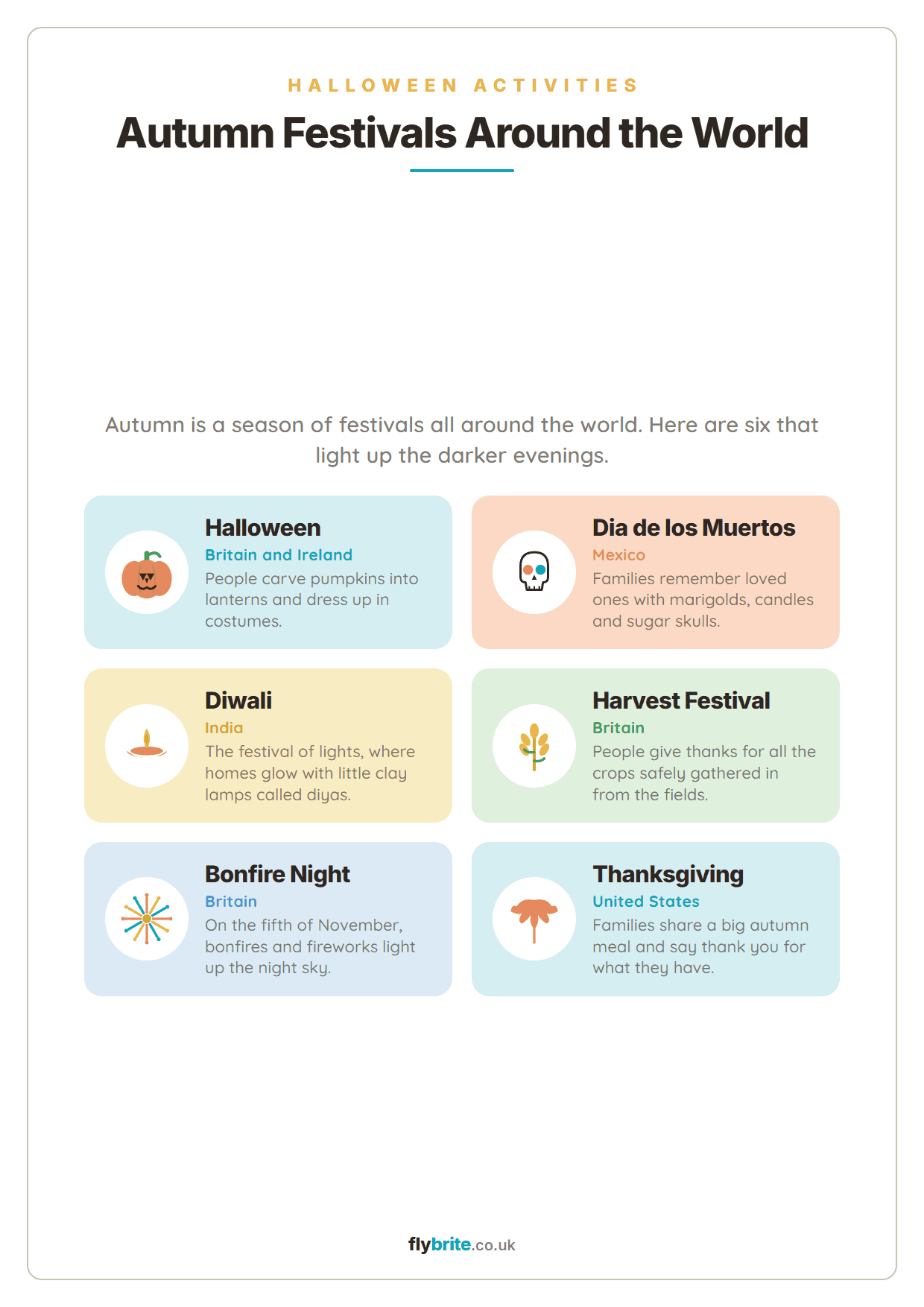
Six autumn festivals from around the world, each with a fact, from Halloween to Diwali.
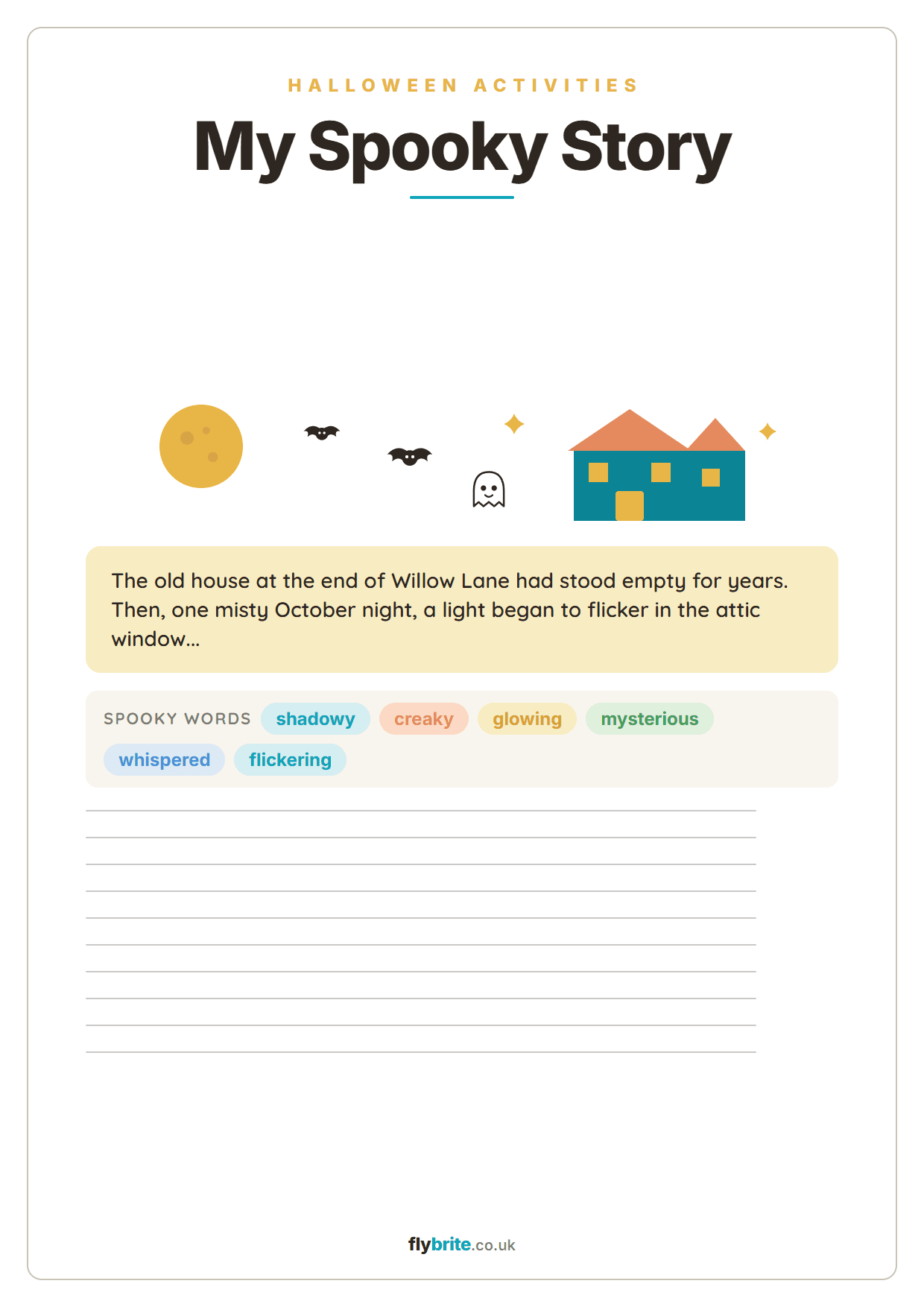 Type or write in
A story starter and a bank of spooky words, with plenty of ruled lines to write a spine-tingling tale.
Egg patterns, bunny mazes, spring colour by number and cut-out cards for a cheerful Easter.

A big decorated Easter egg to colour band by band, following the friendly number key.
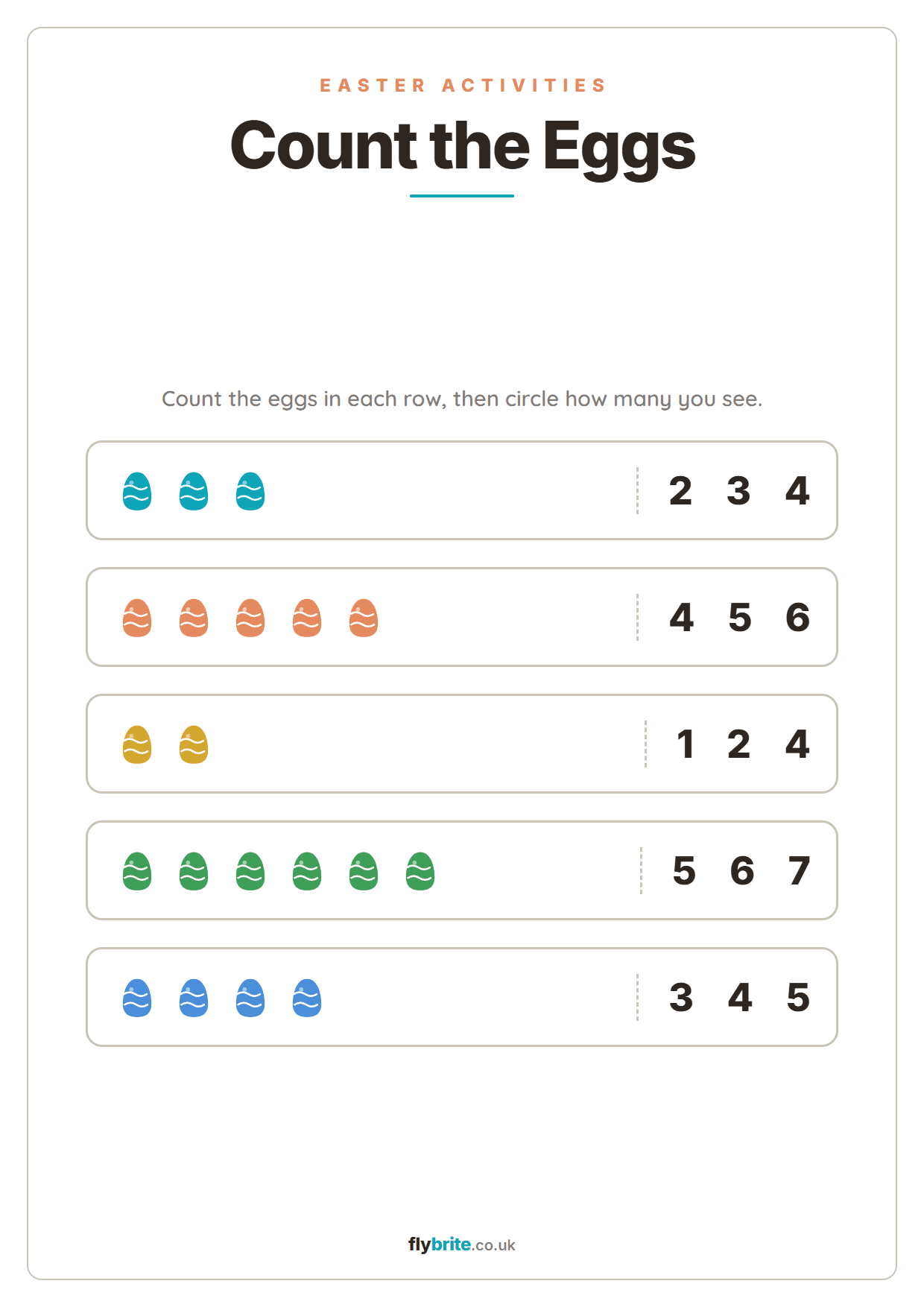
Rows of colourful Easter eggs to count carefully before circling the right number.
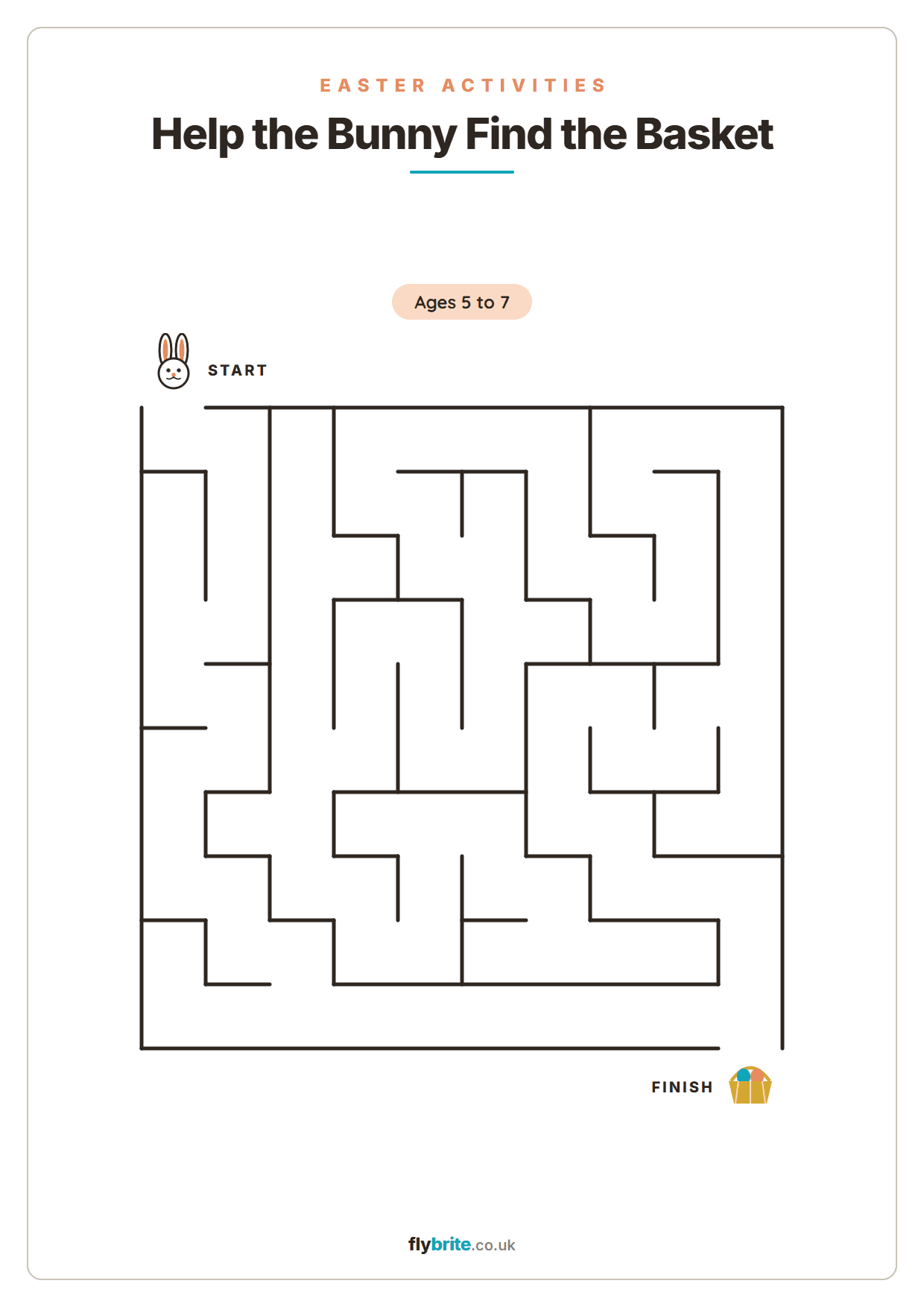
Guide the Easter bunny through the winding maze all the way to the basket of eggs.
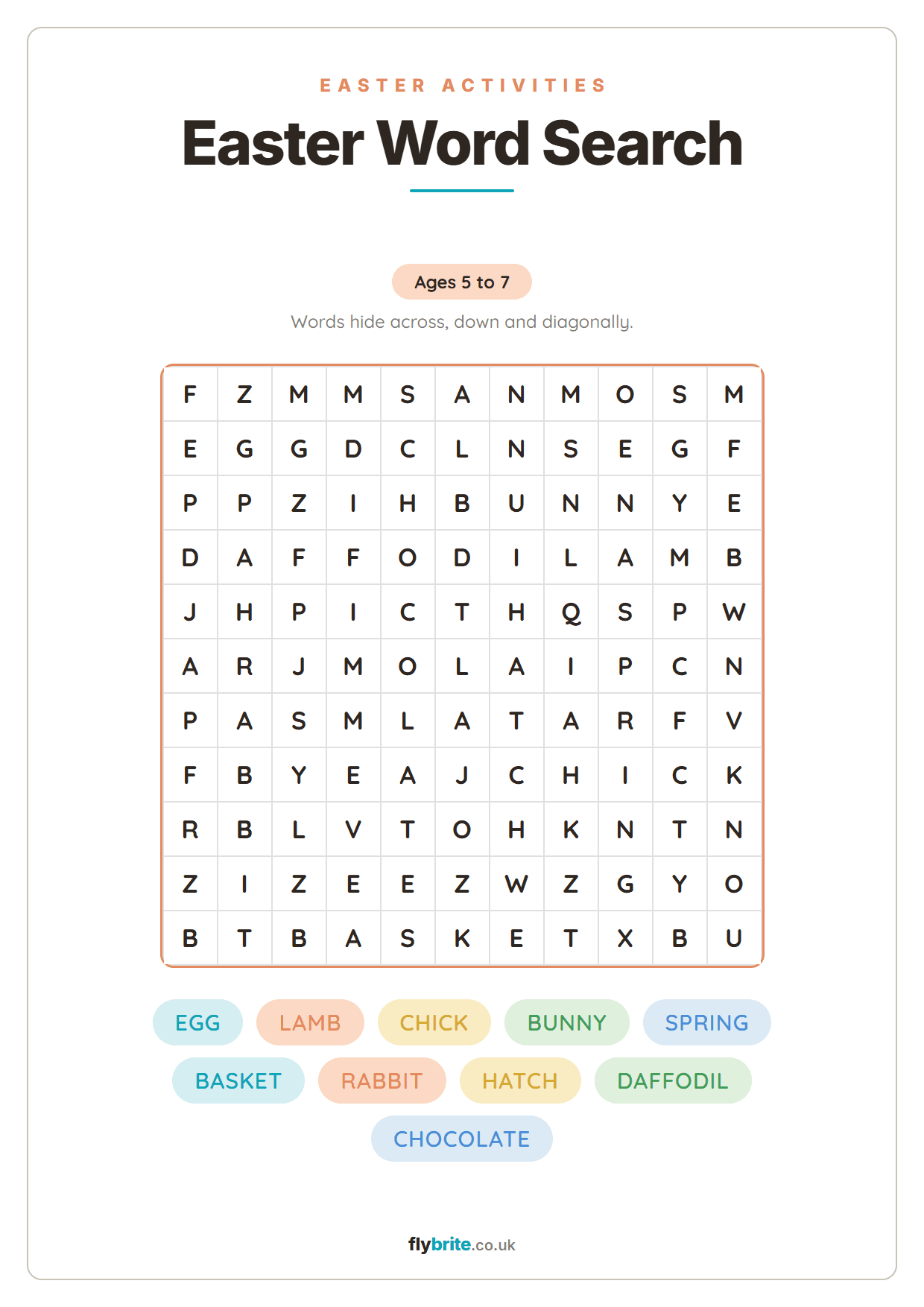
Ten Easter words hiding across, down and diagonally, waiting for sharp young eyes.
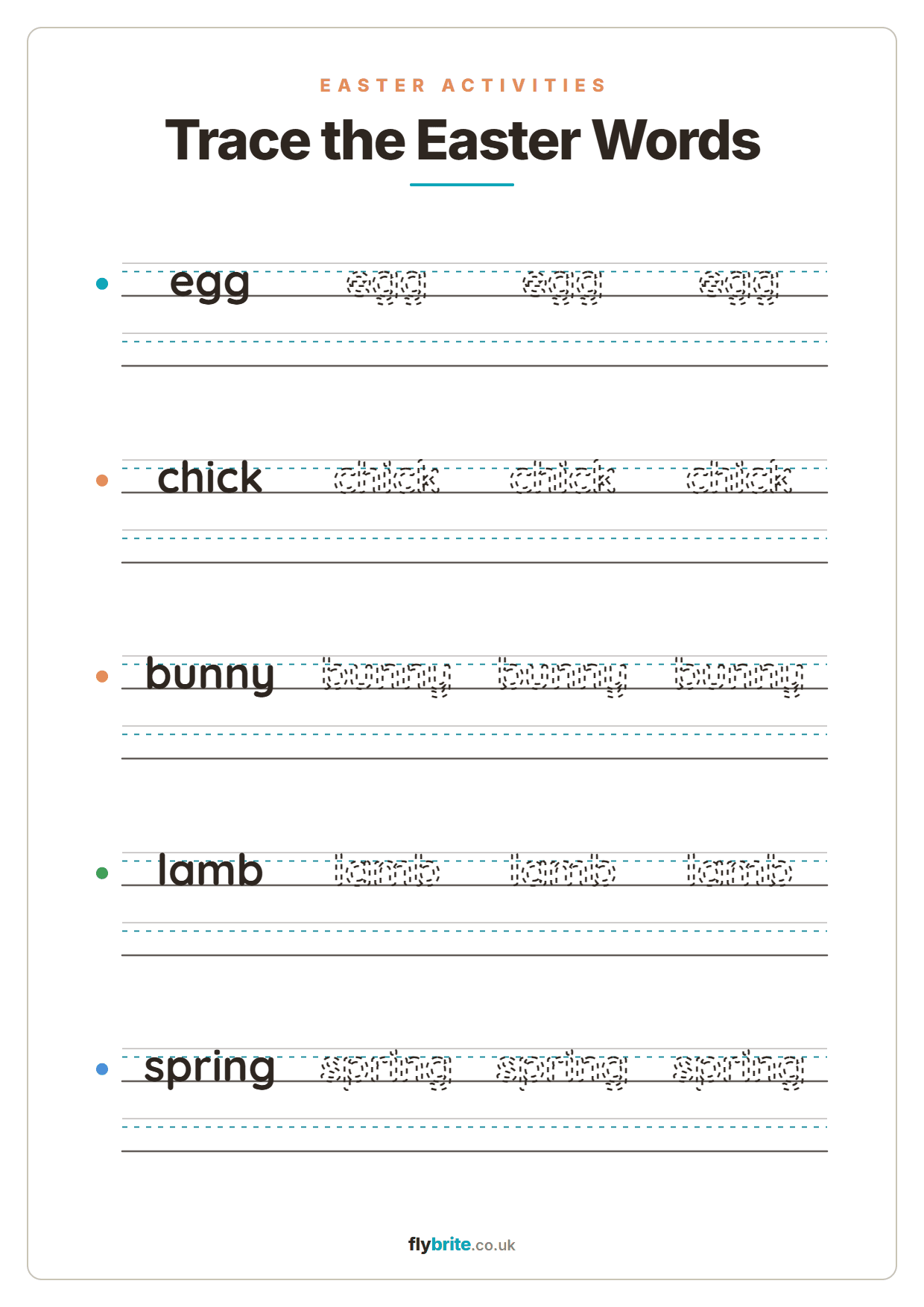
Five favourite Easter words to trace on proper handwriting guides, then write alone.
 Type or write in
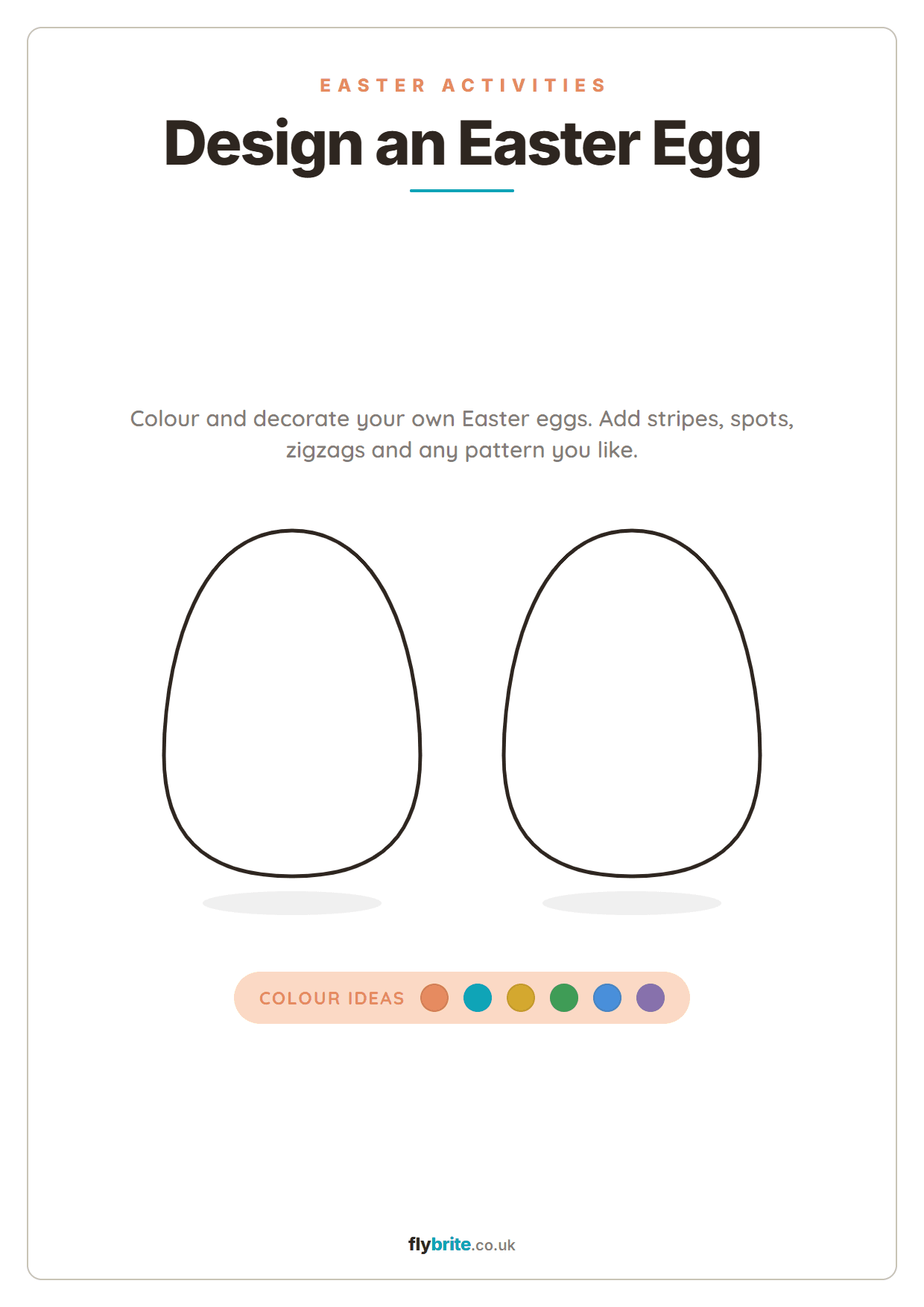
Two big blank eggs to colour and decorate with any stripes, spots and patterns you like.
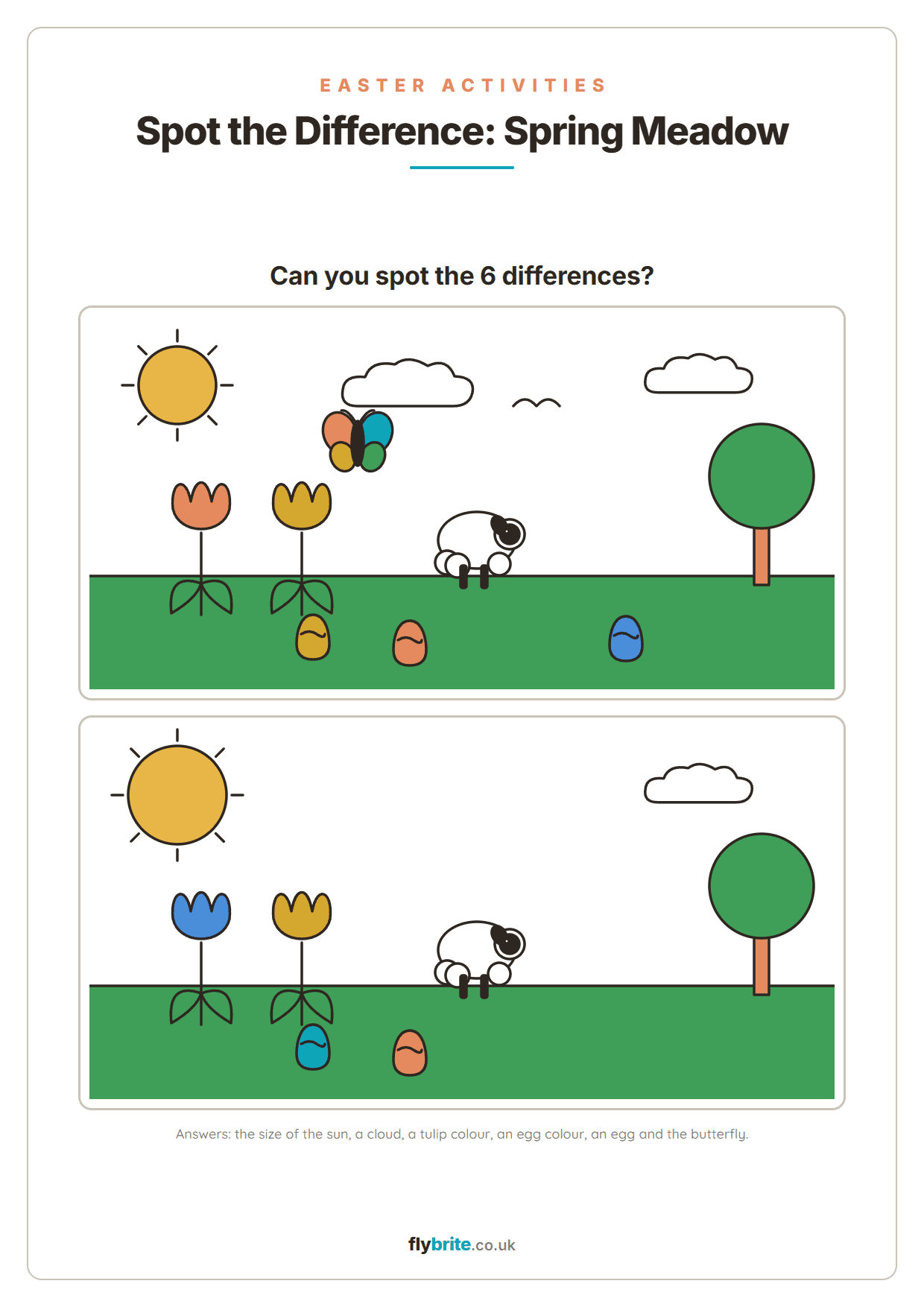
A sunny spring meadow with a lamb and Easter eggs. Can you find all six little changes?

Follow an egg all the way round to a grown hen in four clear, labelled stages.

Six joyful spring festivals from around the world, each with a fact to remember.
 Type or write in
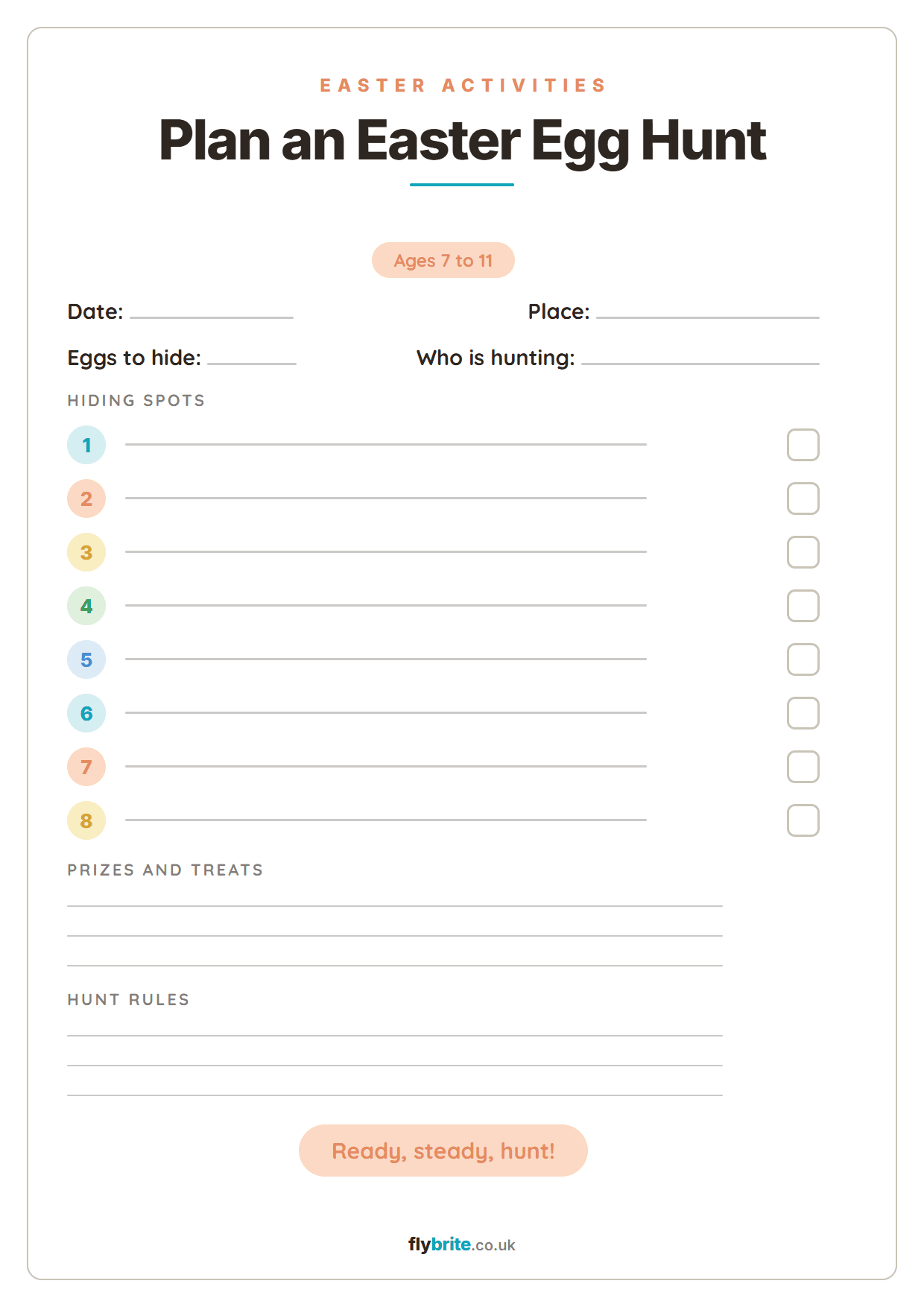
An editable planner to organise a proper egg hunt, from hiding spots to prizes and rules.
Cut-out cards, kindness coupons and heart activities to share a little love.

A bouquet of hearts to bring to life one number at a time, gentle first colouring for little hands.
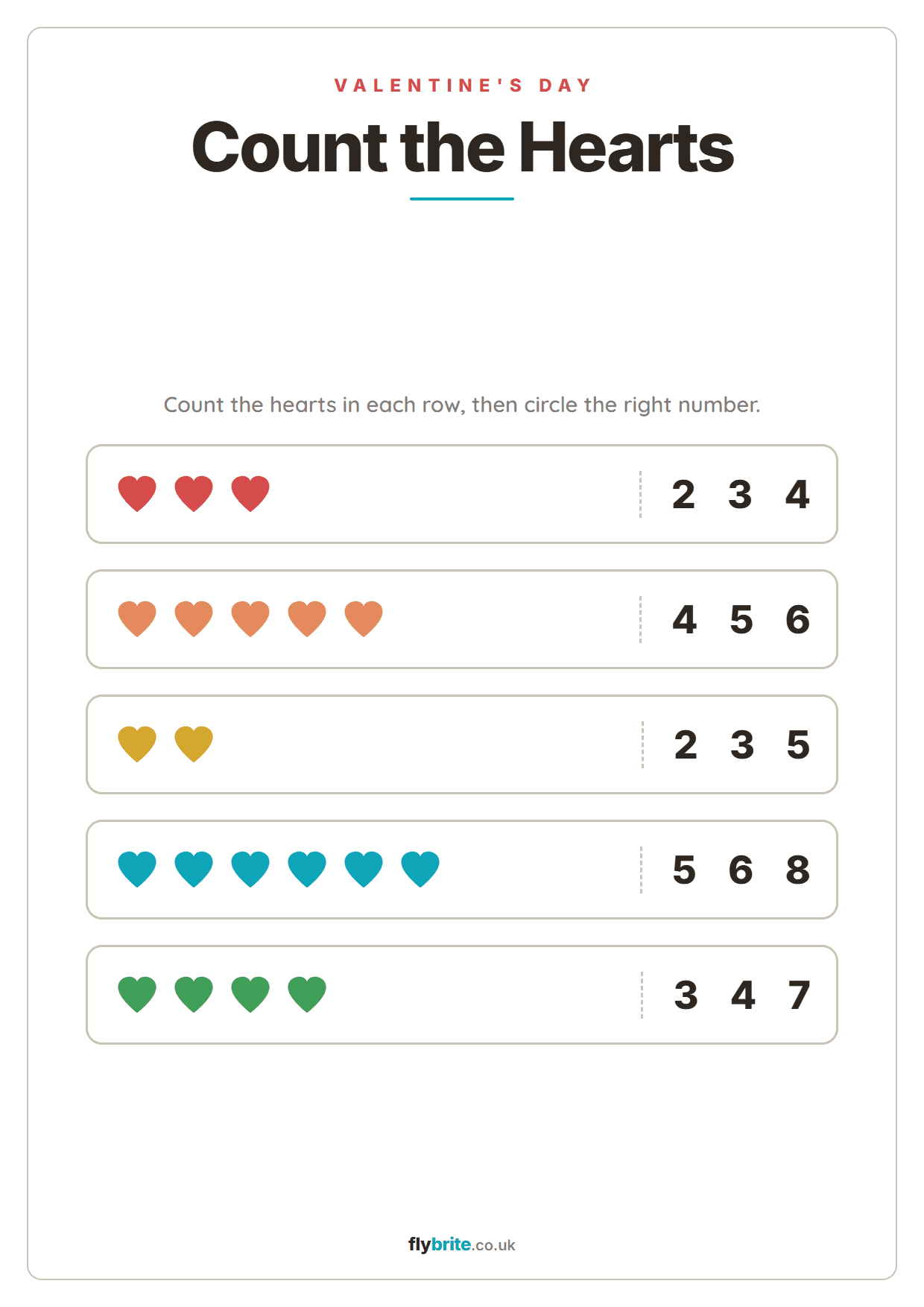
Rows of cheerful hearts to count carefully before circling the right number, lovely early maths.
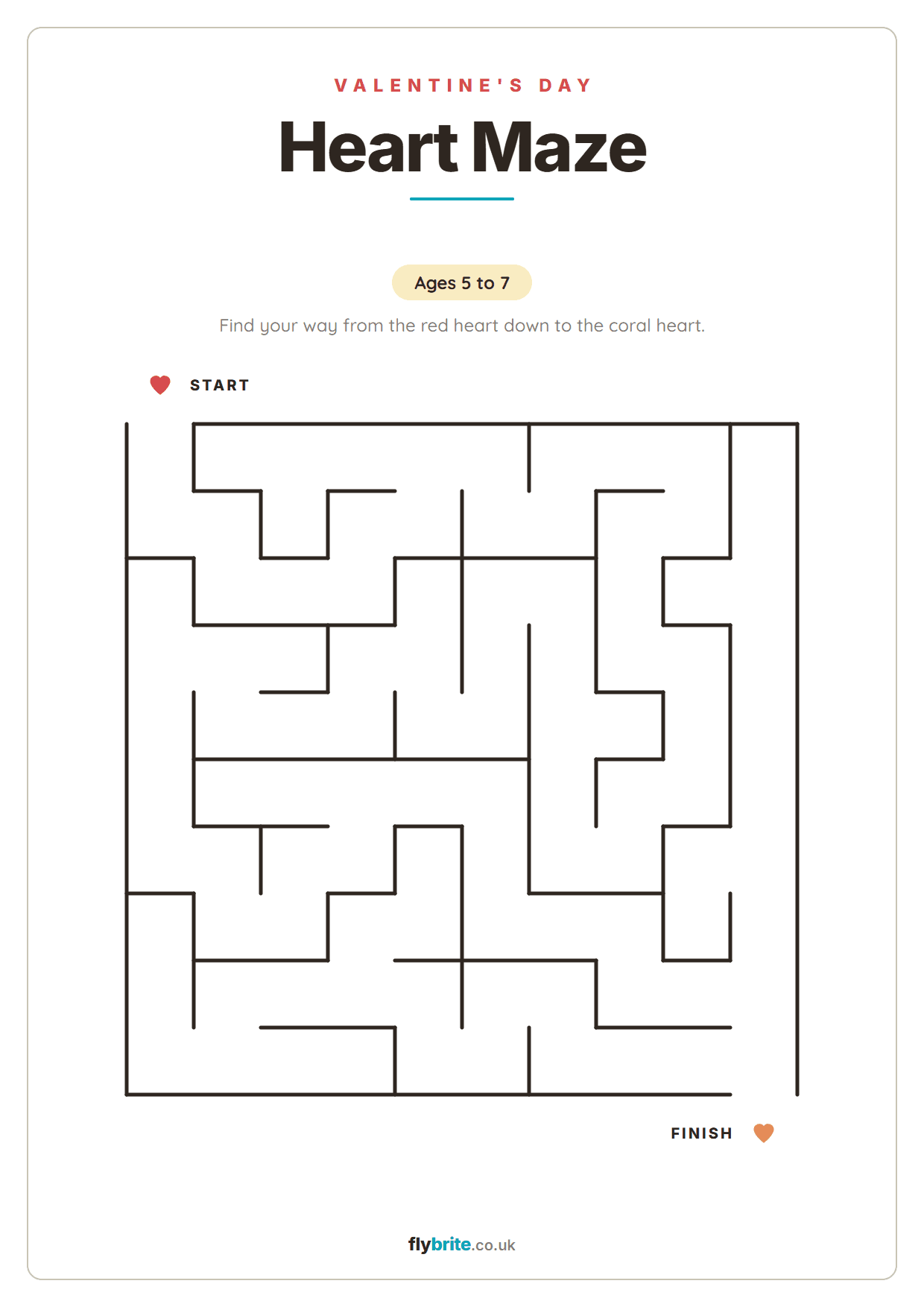
A winding path that leads one loving heart all the way down to another, careful pencil practice.
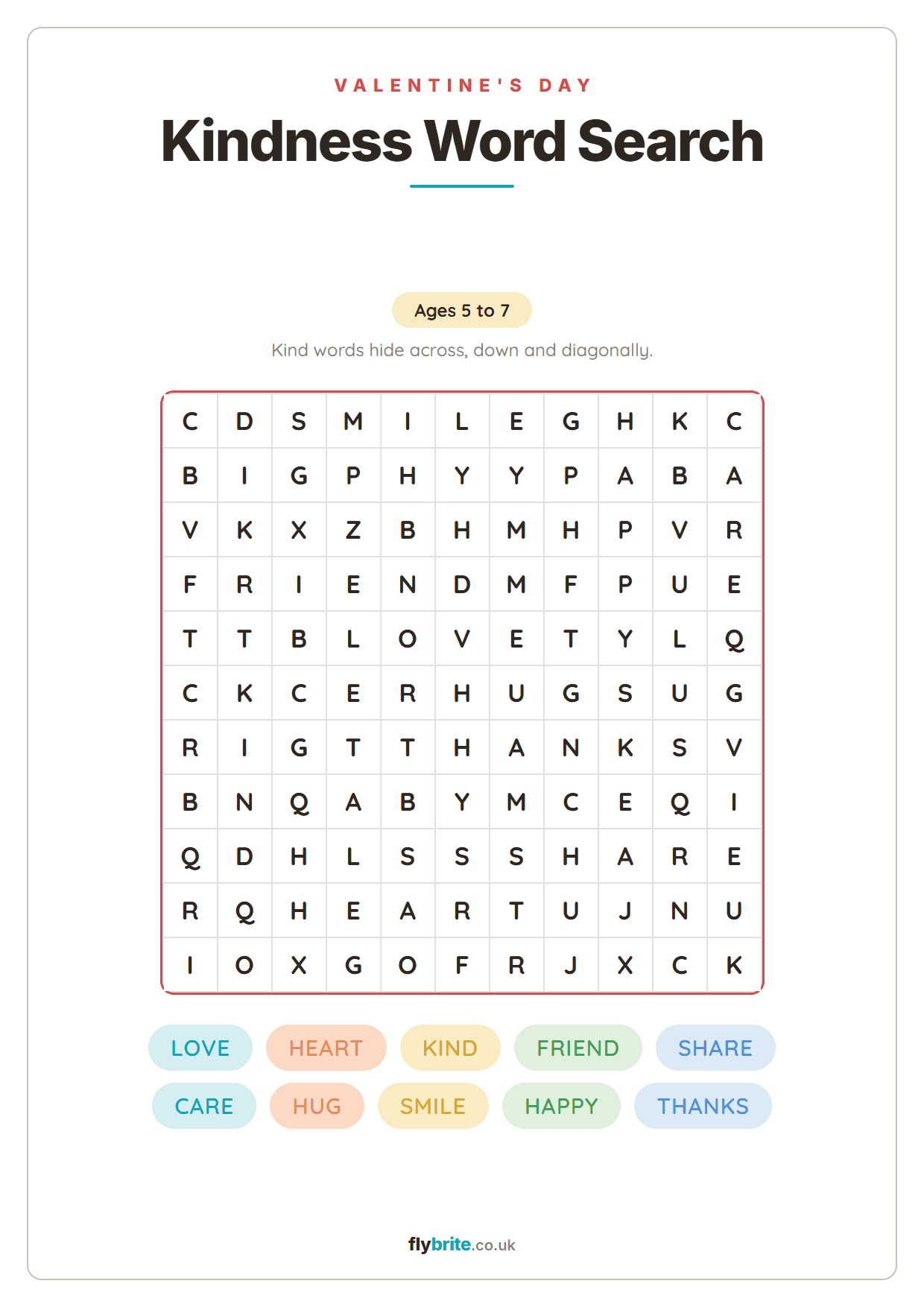
Ten warm-hearted words like love, kind and friend hiding in the grid, waiting to be found.
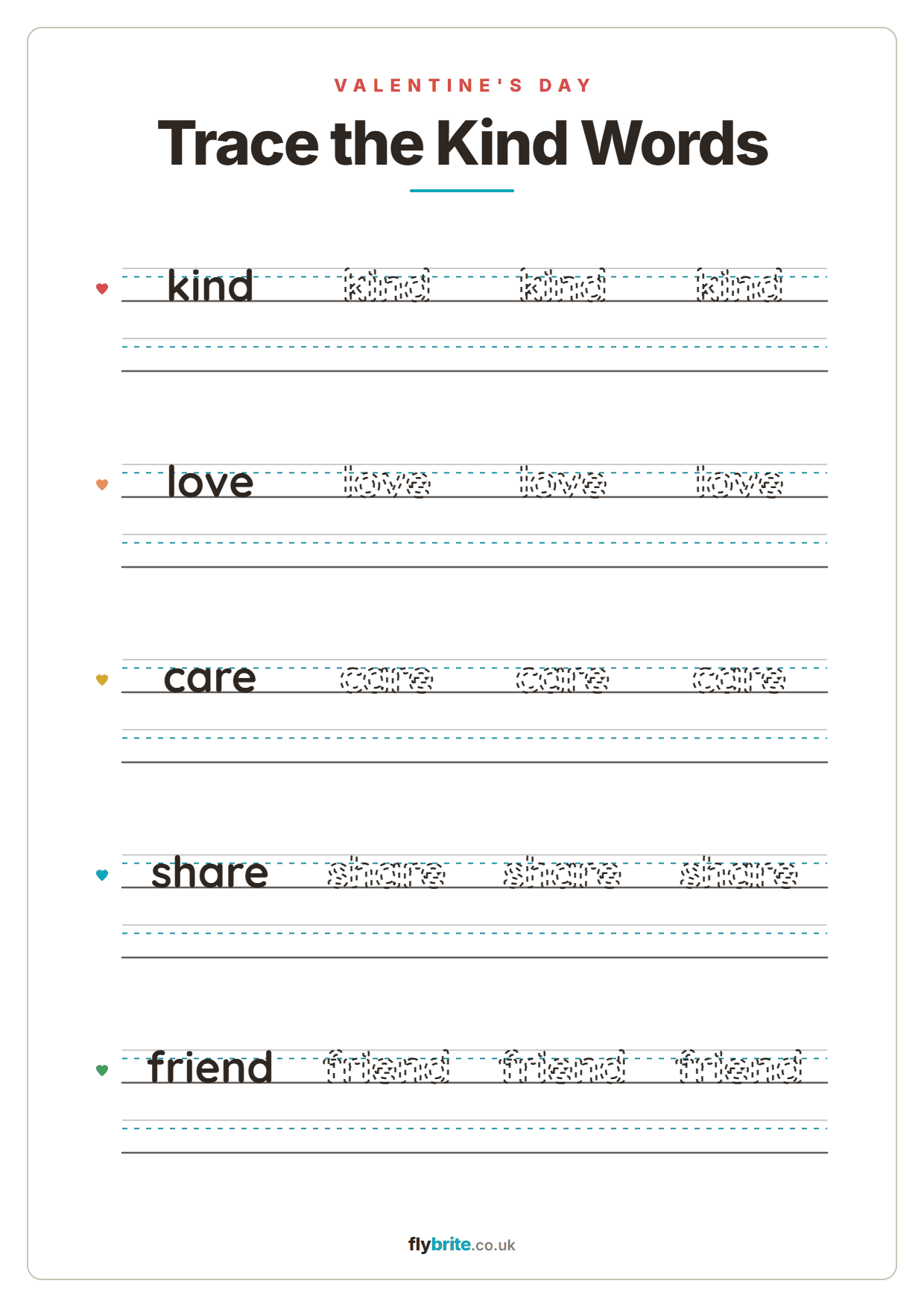
Kind, love, care, share and friend to trace on proper handwriting guides, then write alone.
 Type or write in
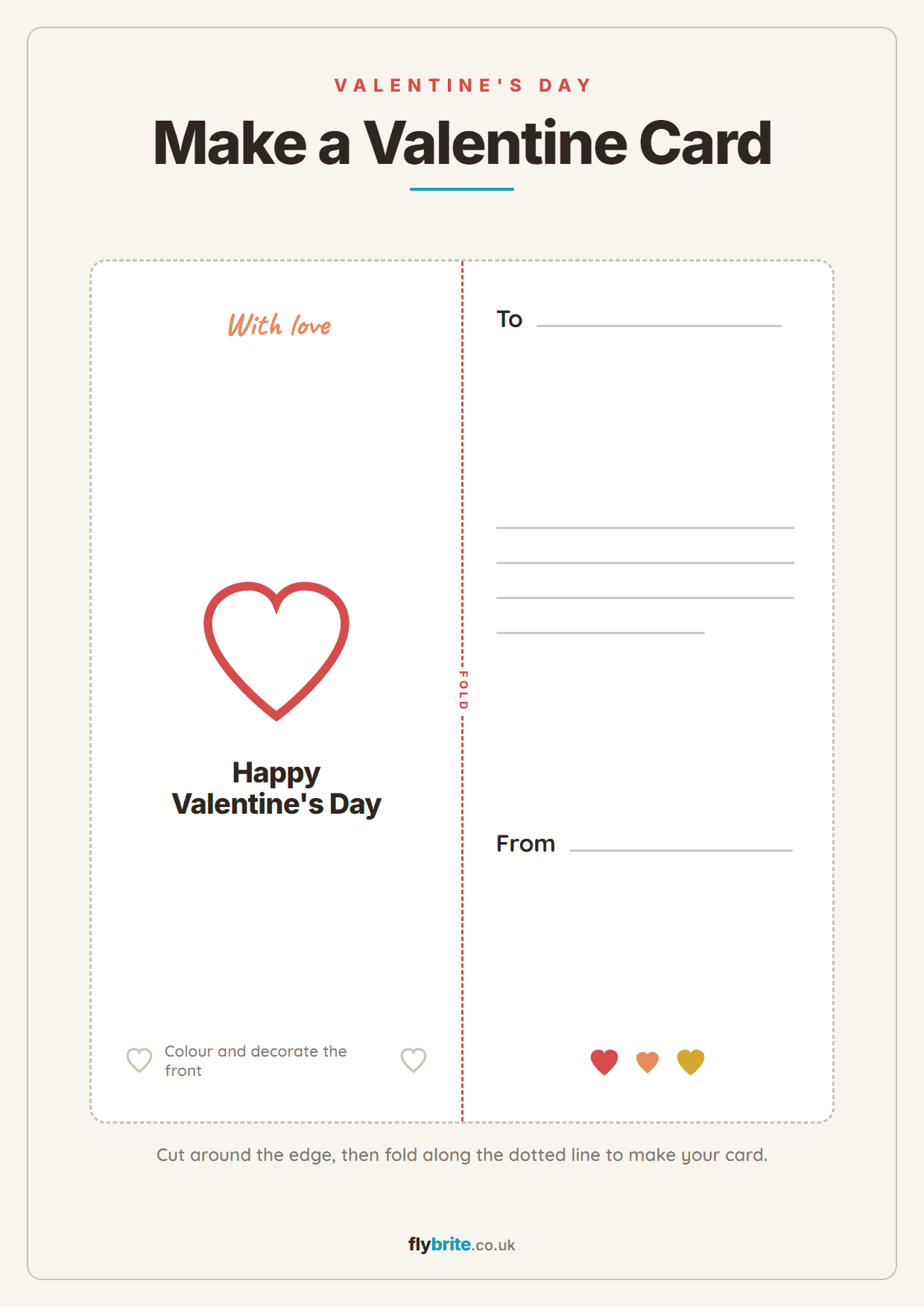
A fold-out card to colour, decorate and fill in, a heartfelt gift to make for someone special.

A pretty garden of heart-flowers with two almost matching pictures. Can you find all six changes?
 Type or write in
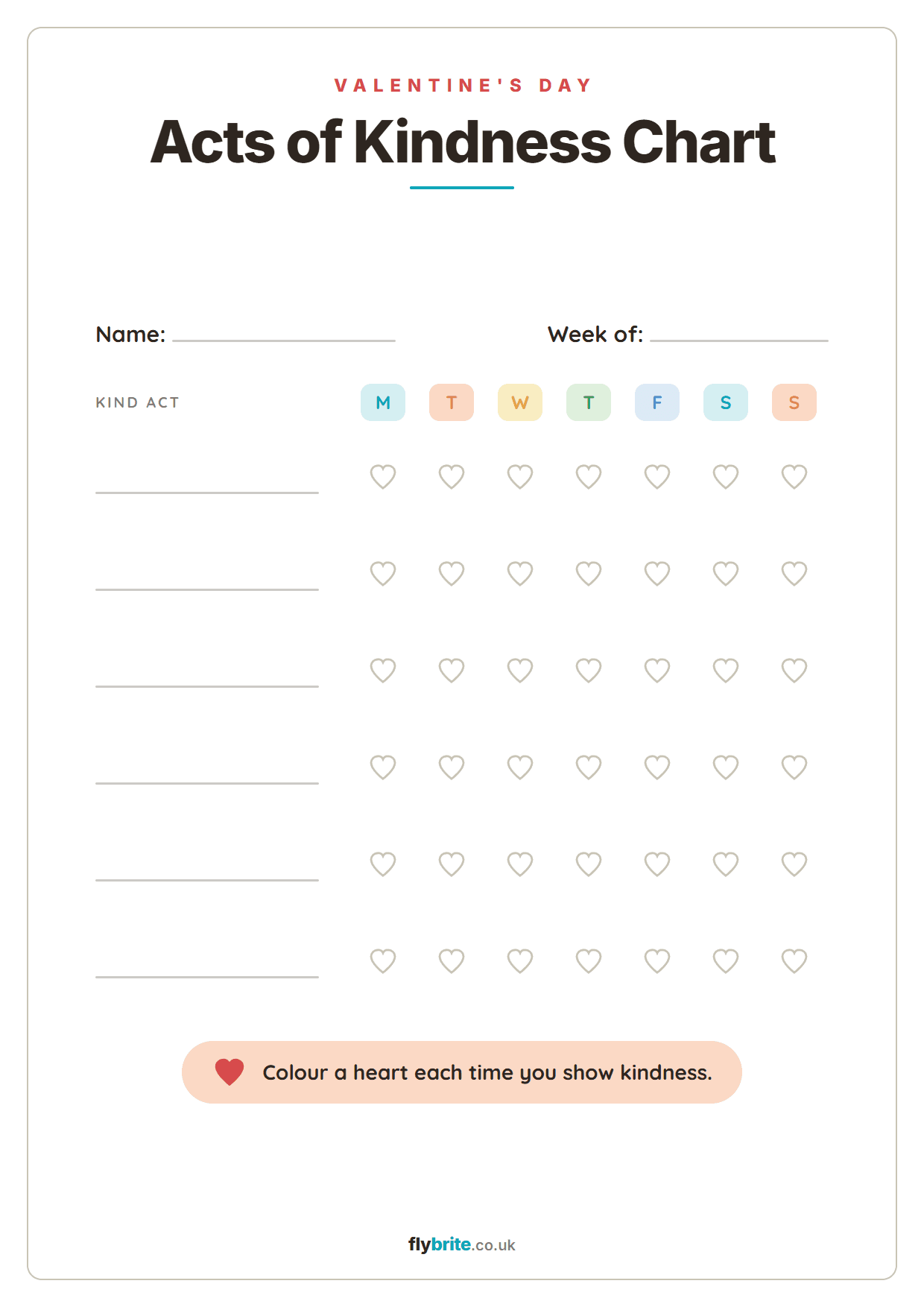
Write in a kind act for each row, then colour a heart every day you manage it, all week long.

The word friend in six languages, each with a simple way to say it, a warm little world tour.
 Type or write in
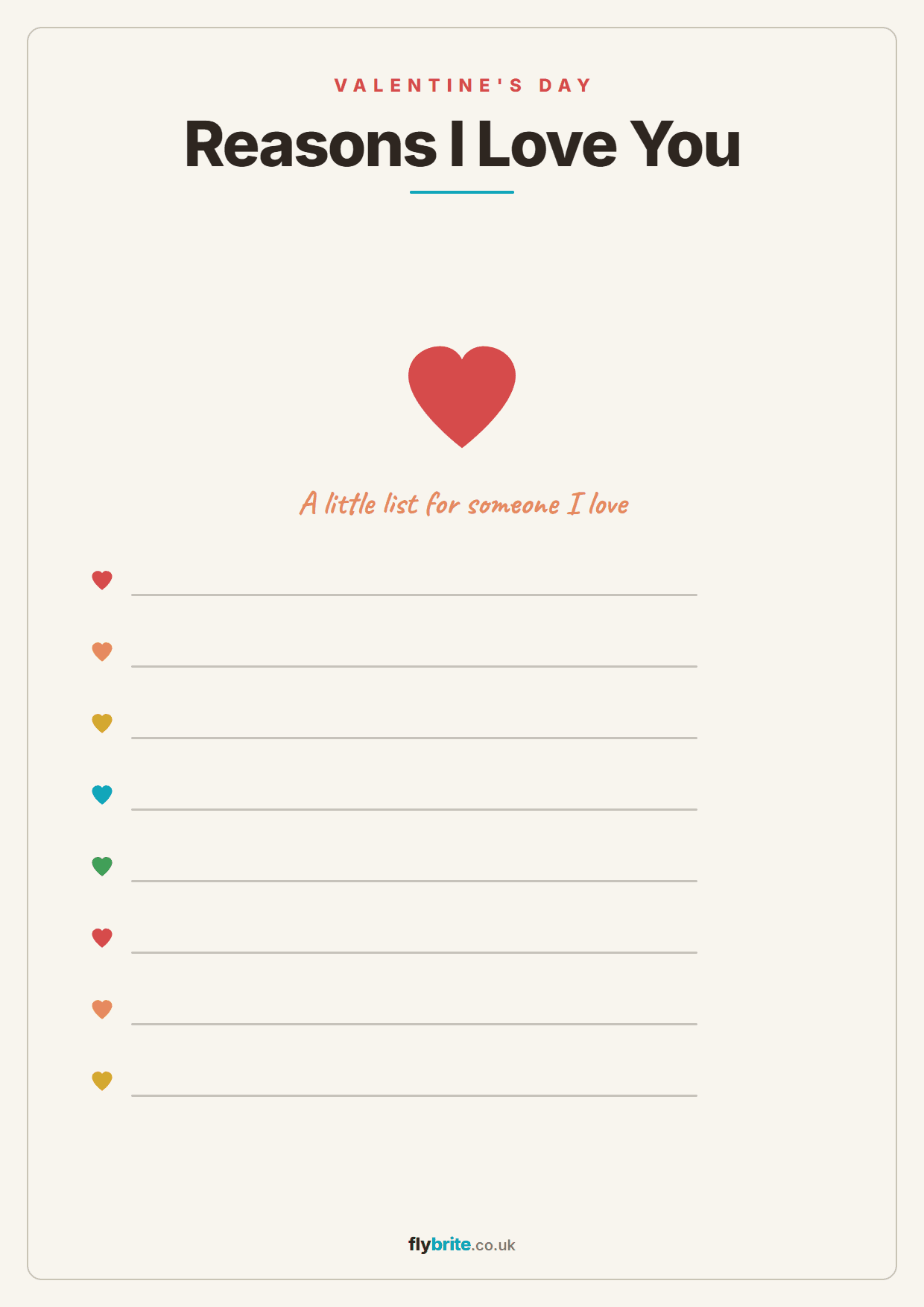
A keepsake heart with eight lines to fill in, one loving reason at a time, to give and to treasure.
Hola! Greetings, colours, numbers and animals, a warm first taste of Spanish.
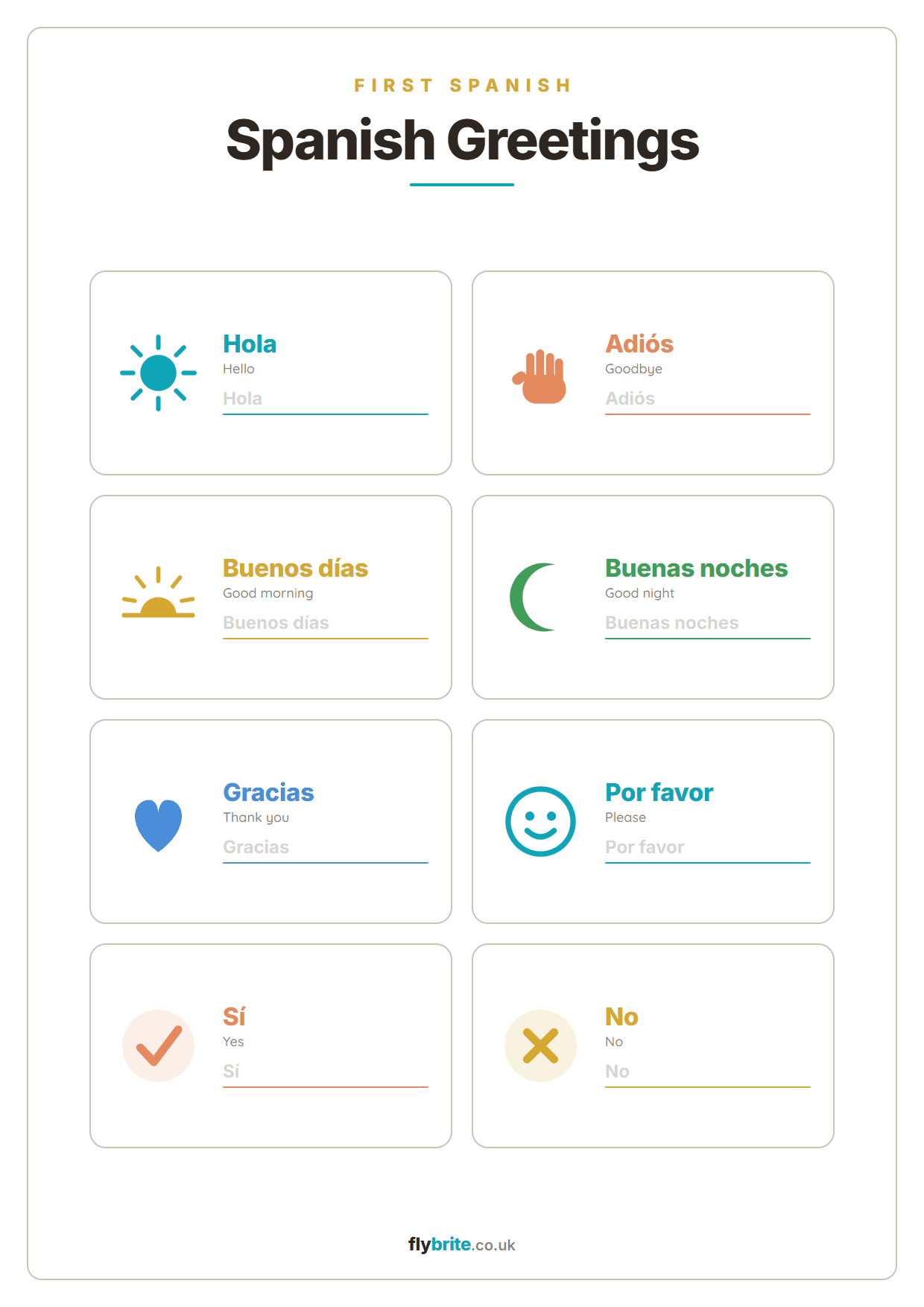
Eight friendly Spanish greetings from hola to buenas noches, each with a picture and the English underneath.

Count from uno to diez in Spanish, with dots to match and the number word on every card.
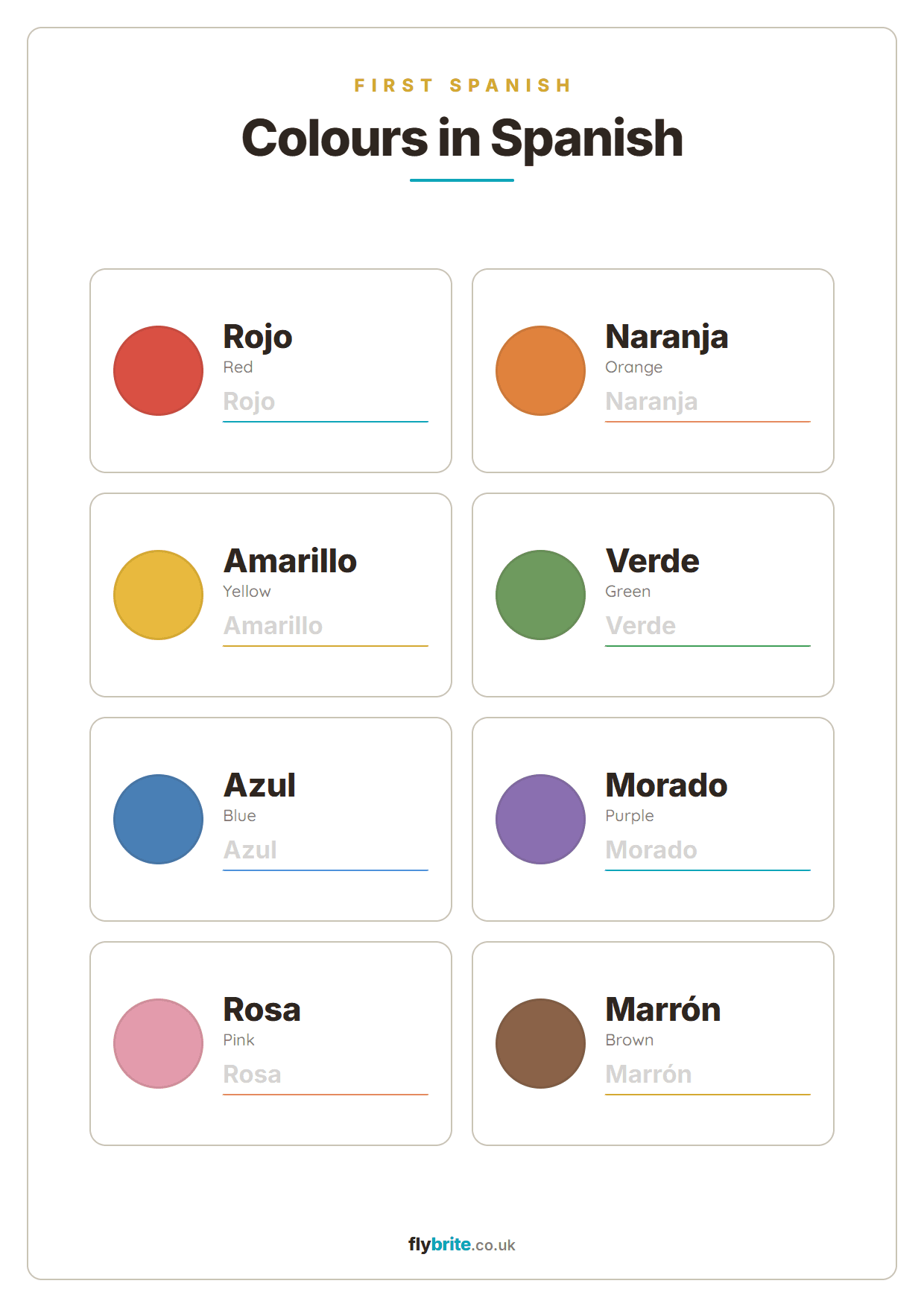
Eight colour words in Spanish, from rojo to marrón, each with a bright swatch to match.
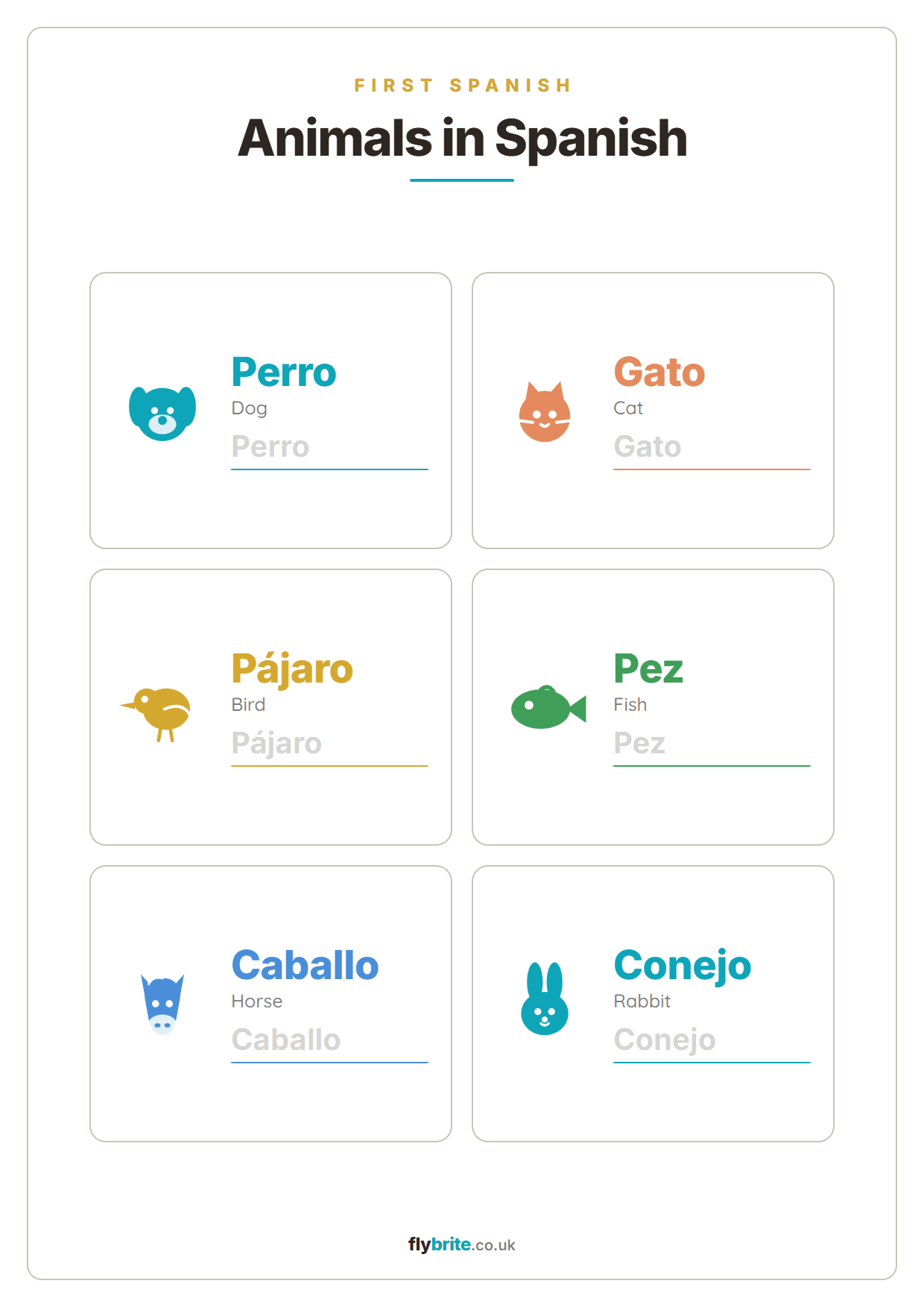
Six favourite animals in Spanish, from el perro to el caballo, with a friendly picture for each.
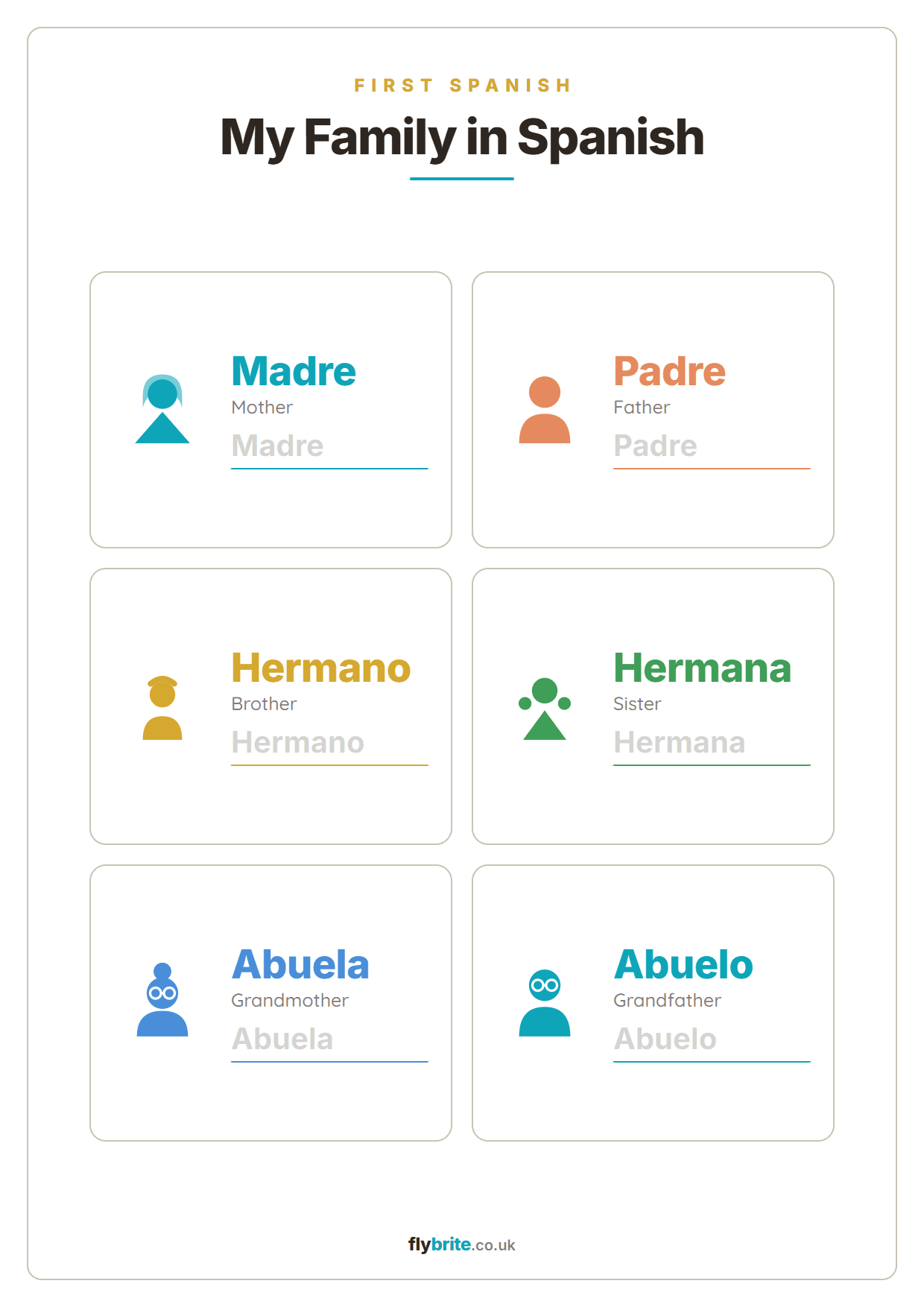
The whole family in Spanish, from madre to abuelo, with a warm little picture for everyone.
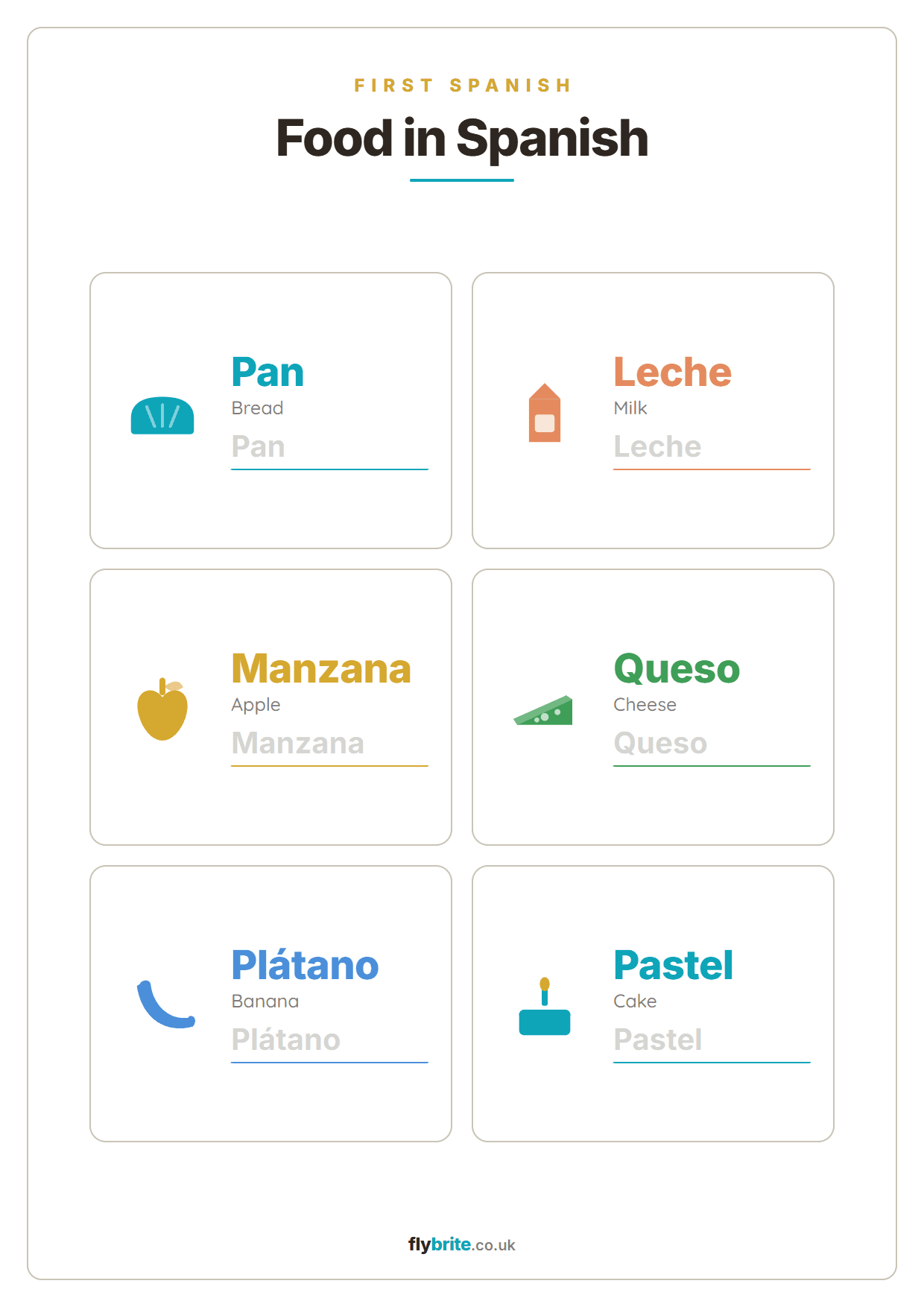
Tasty first food words in Spanish, from el pan to el pastel, ready to say and match.

All seven days of the week in Spanish, lunes to domingo, each with a calendar cue.
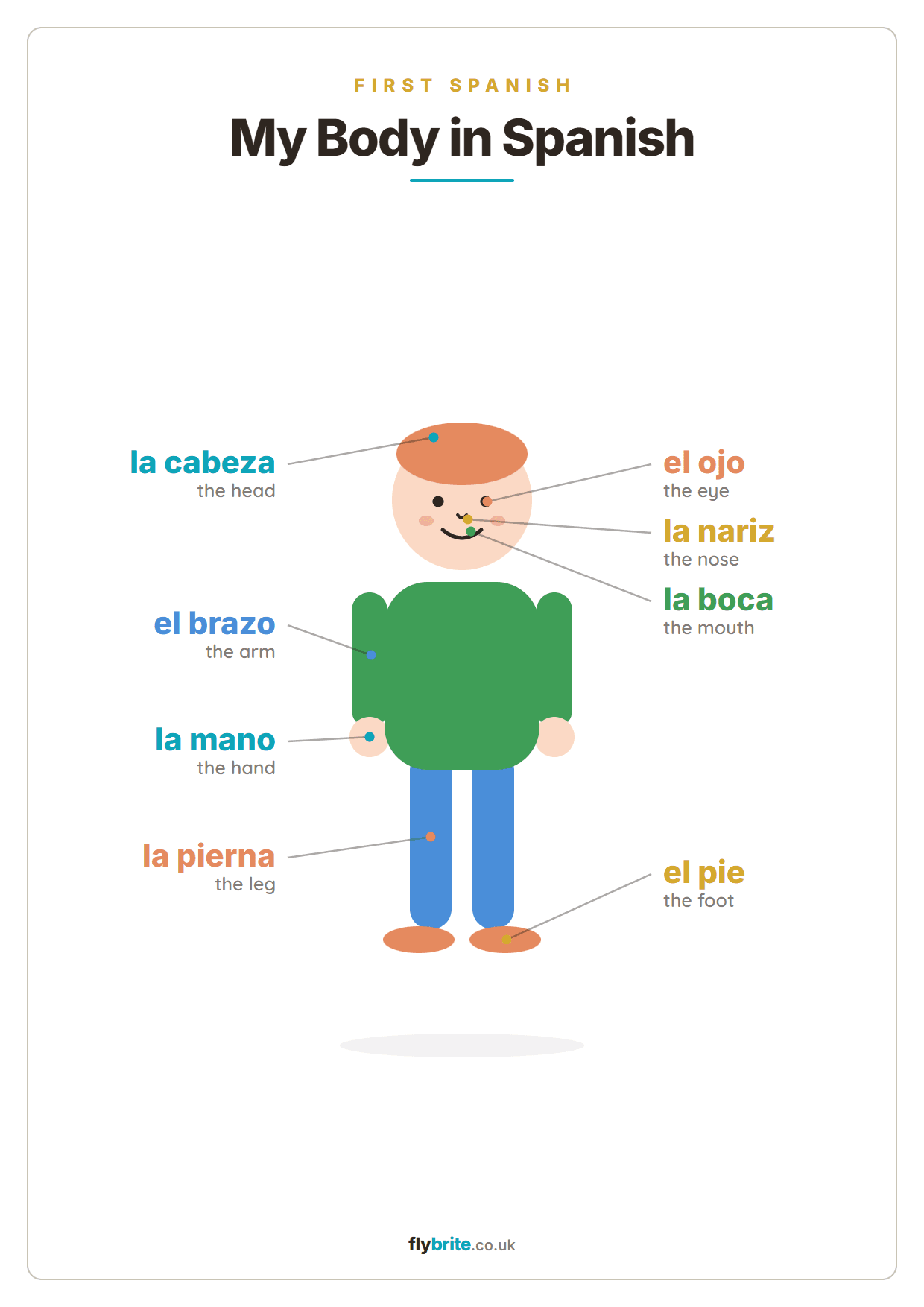
A friendly figure labelled head to toe in Spanish, from la cabeza to el pie.
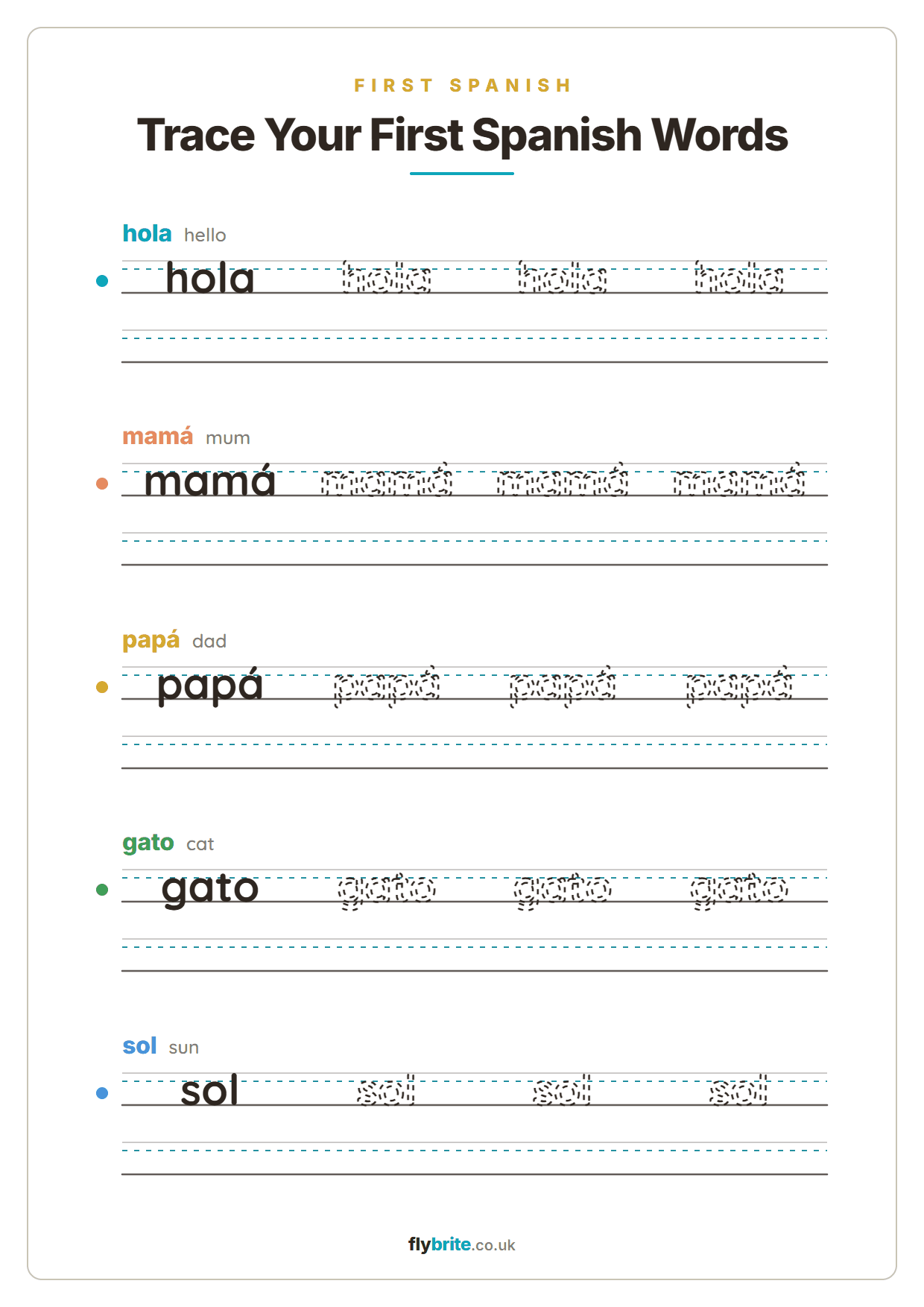
Five core Spanish words to trace over, from hola to sol, on proper handwriting guides for little hands.
 Type or write in
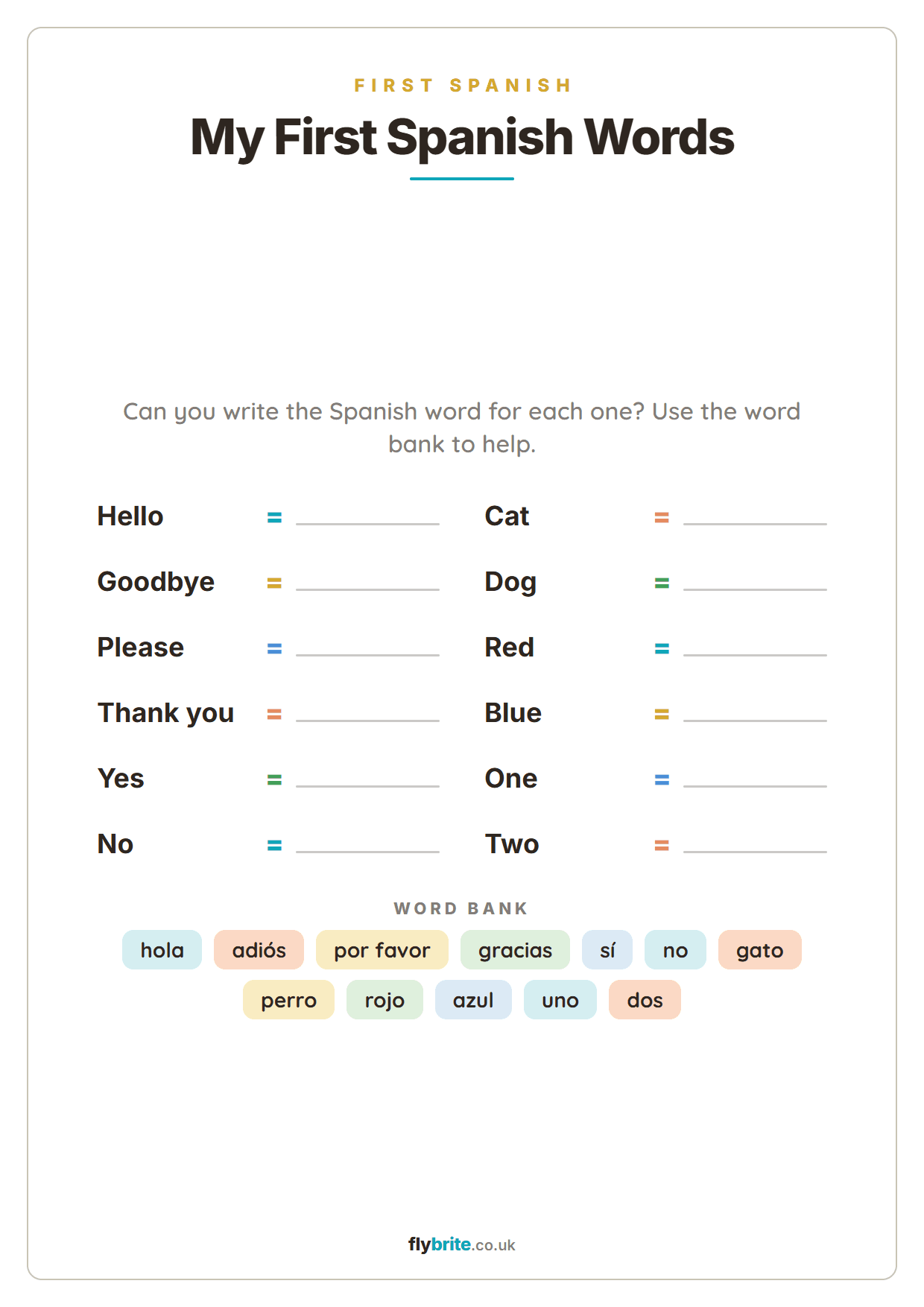
A write-in recap of first Spanish words, with an English prompt and a word bank to help.
Hallo! Greetings, colours, numbers and animals, a gentle first taste of German.
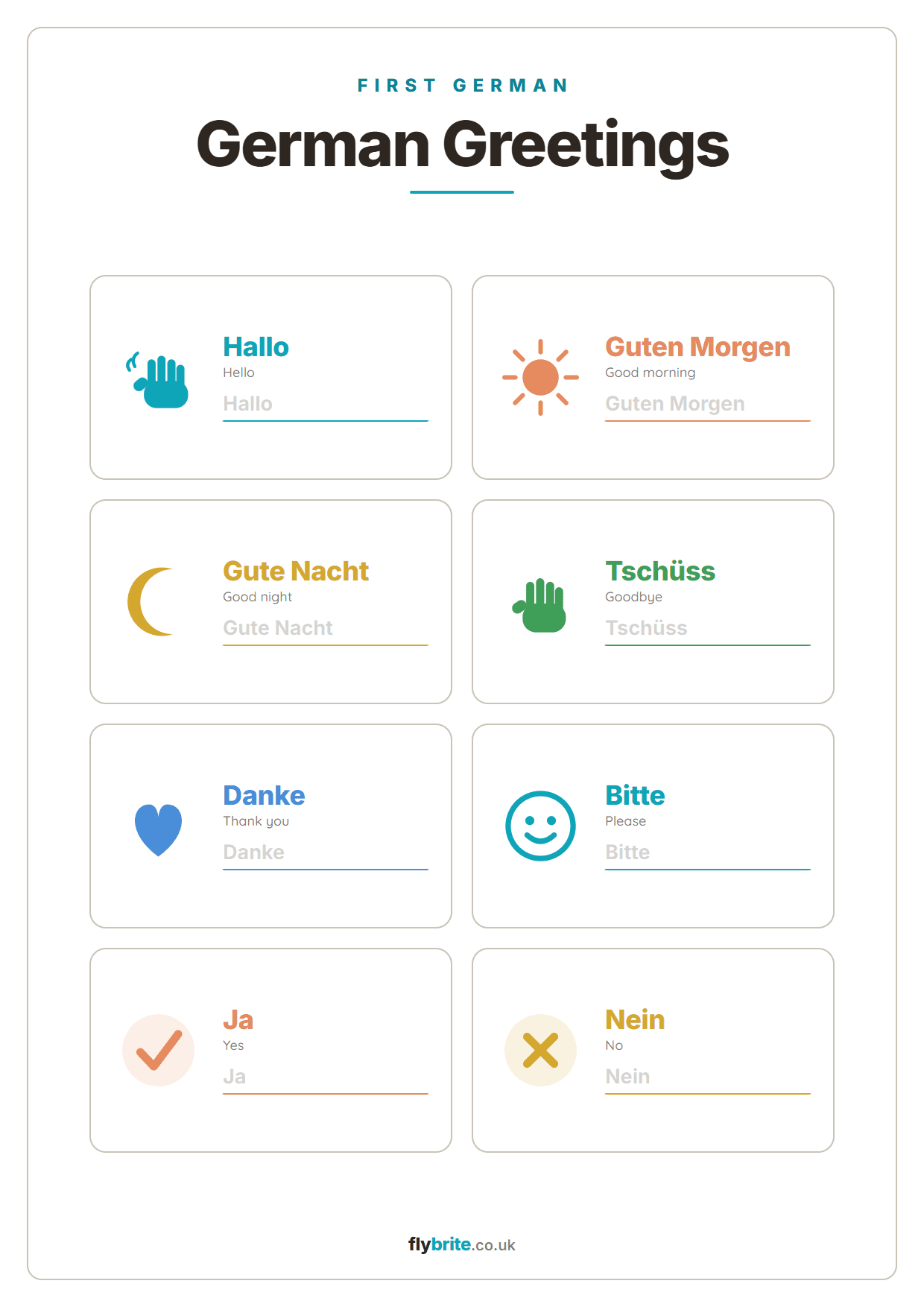
Eight friendly German greetings from Hallo to Tschüss, each with a picture and a line to write it out.

Count from eins to zehn in German, with dots to match and a practice line for every number.
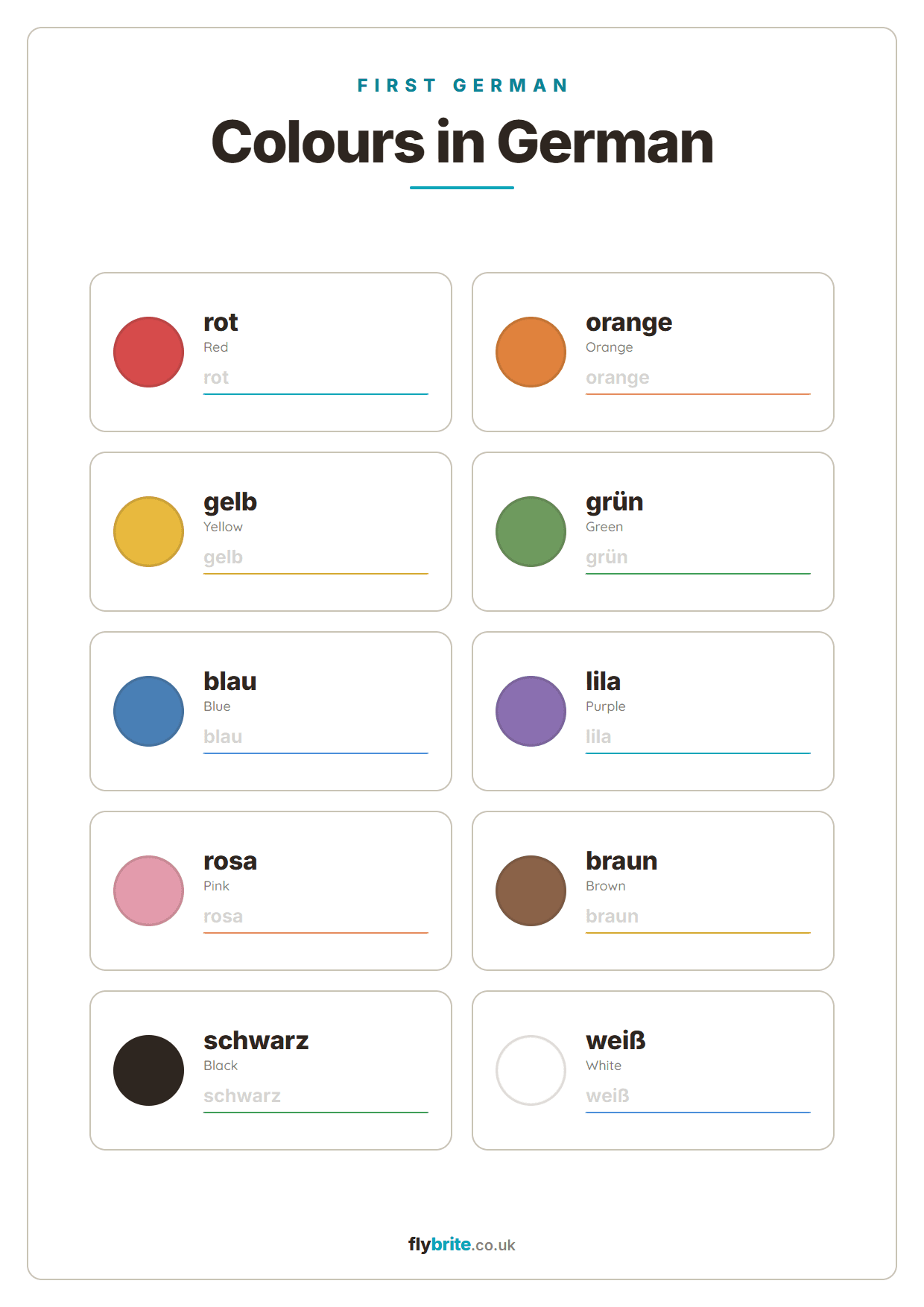
Ten colour words in German, from rot to weiß, each with a bright swatch and a line to copy.
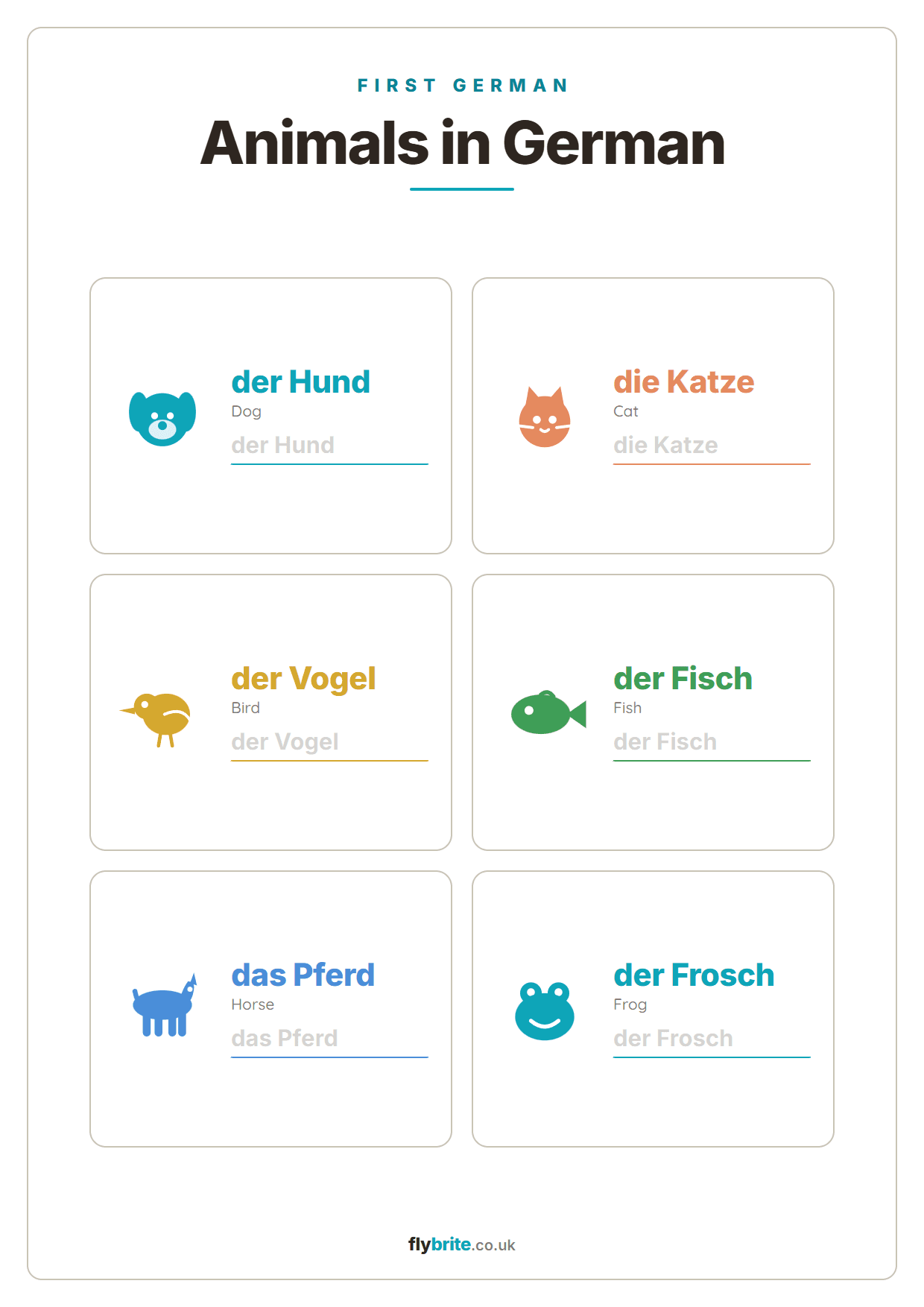
Six favourite animals in German, from der Hund to der Frosch, with a picture cue and a writing line.
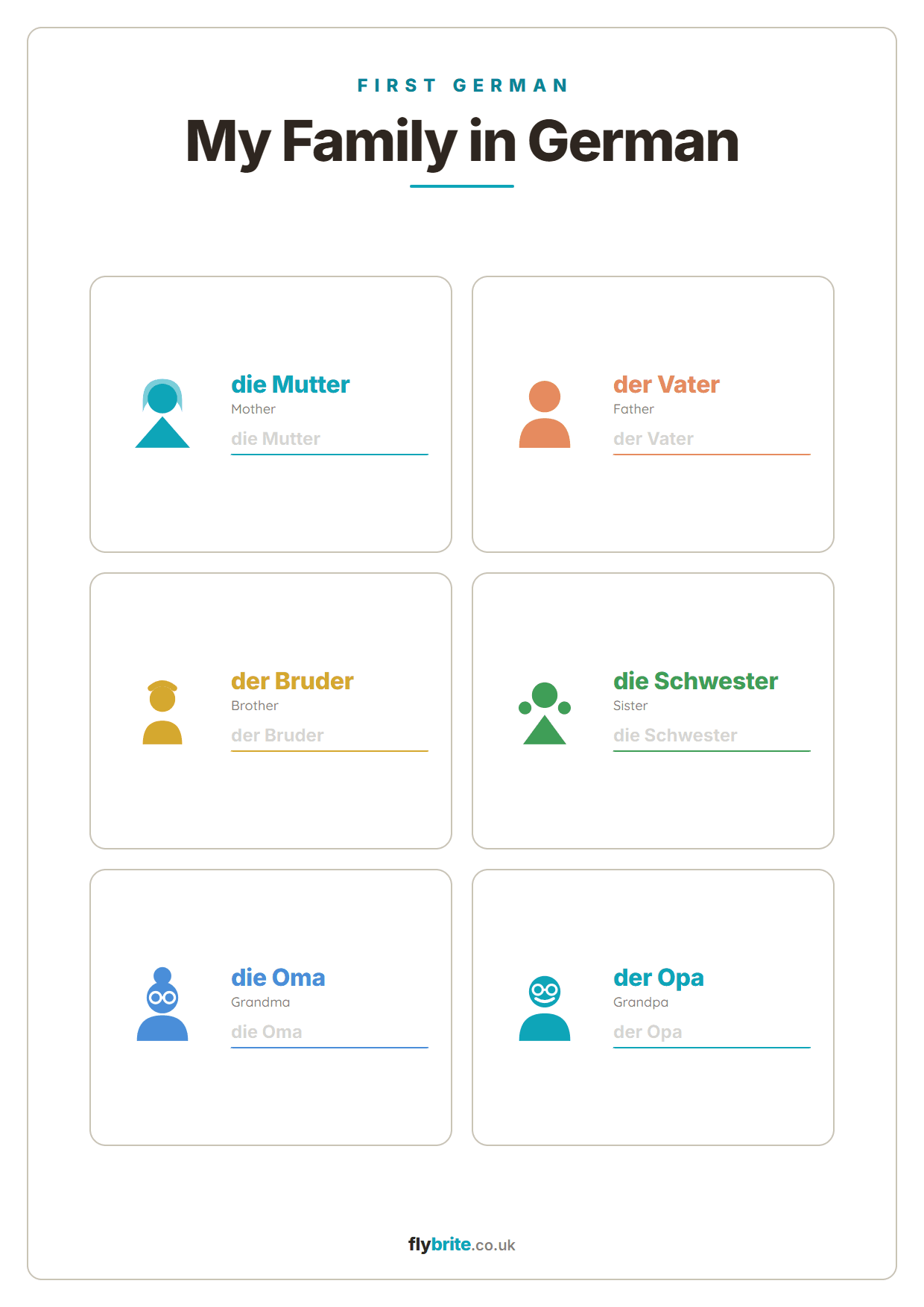
The whole family in German, from die Mutter to der Opa, with a friendly picture and a line to write each word.
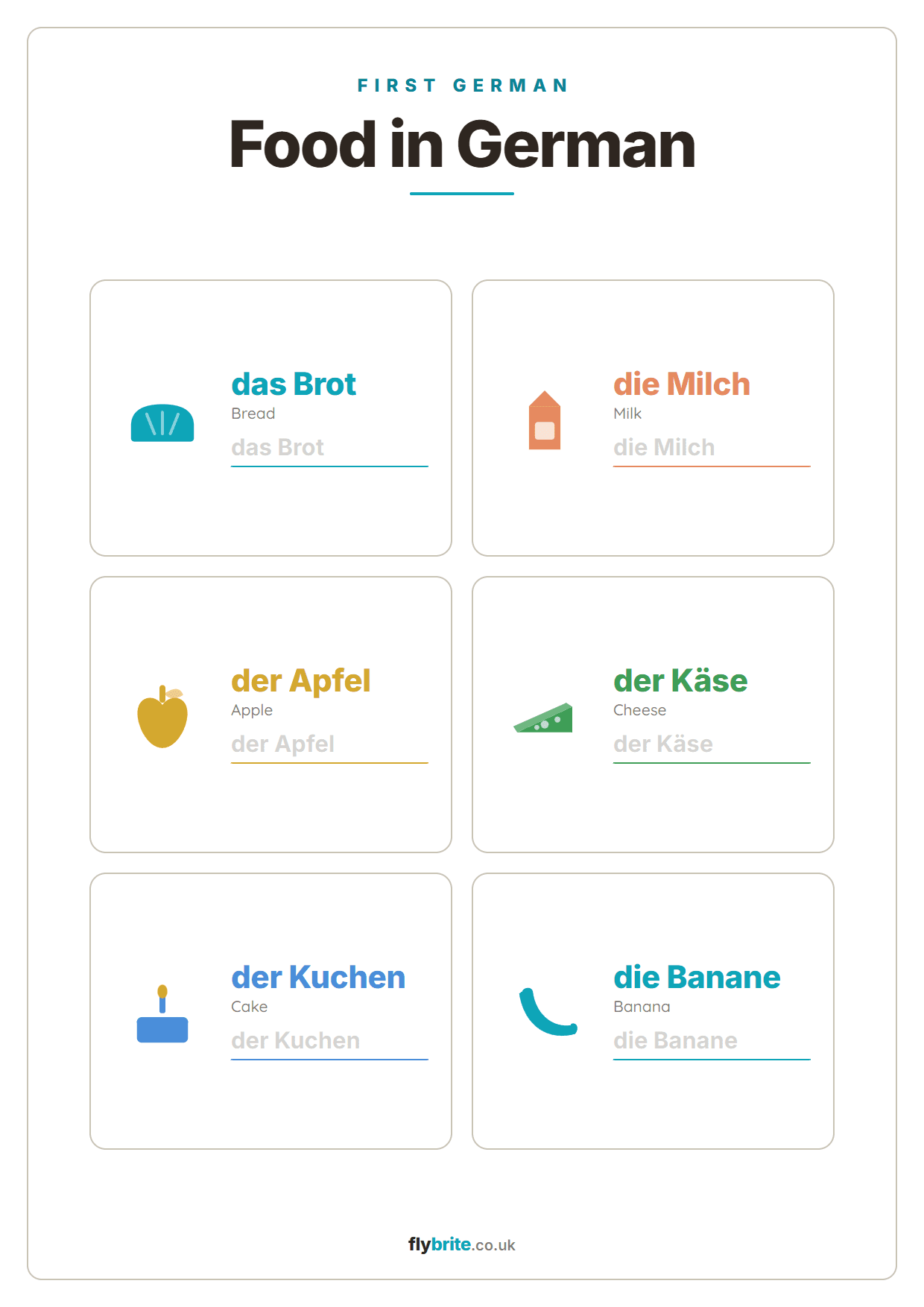
Tasty first food words in German, from das Brot to der Käse, ready to say, match and write.

All seven days of the week in German, Montag to Sonntag, with a calendar cue and a line to practise.
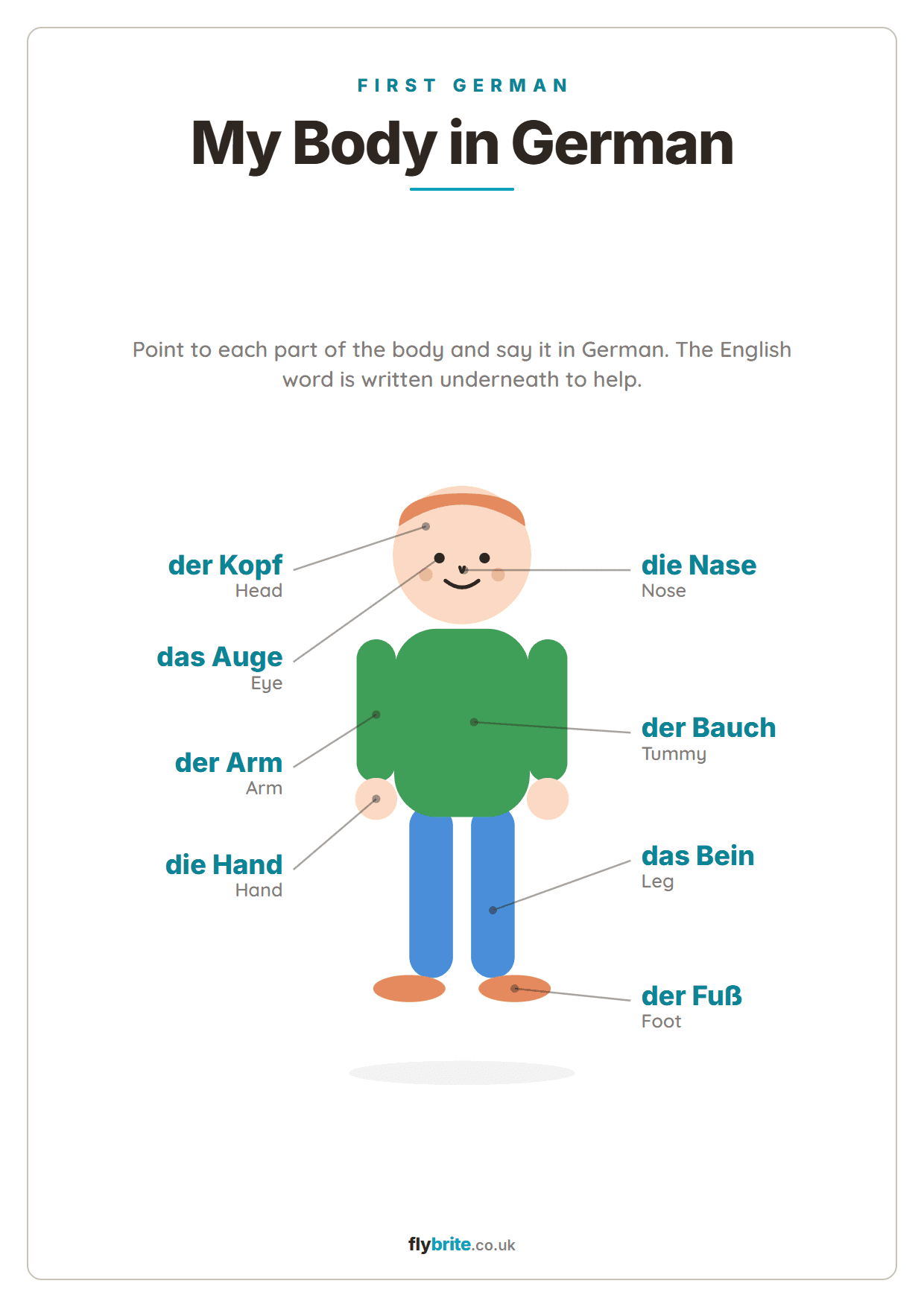
A friendly figure labelled part by part in German, from der Kopf down to der Fuß, with English underneath.
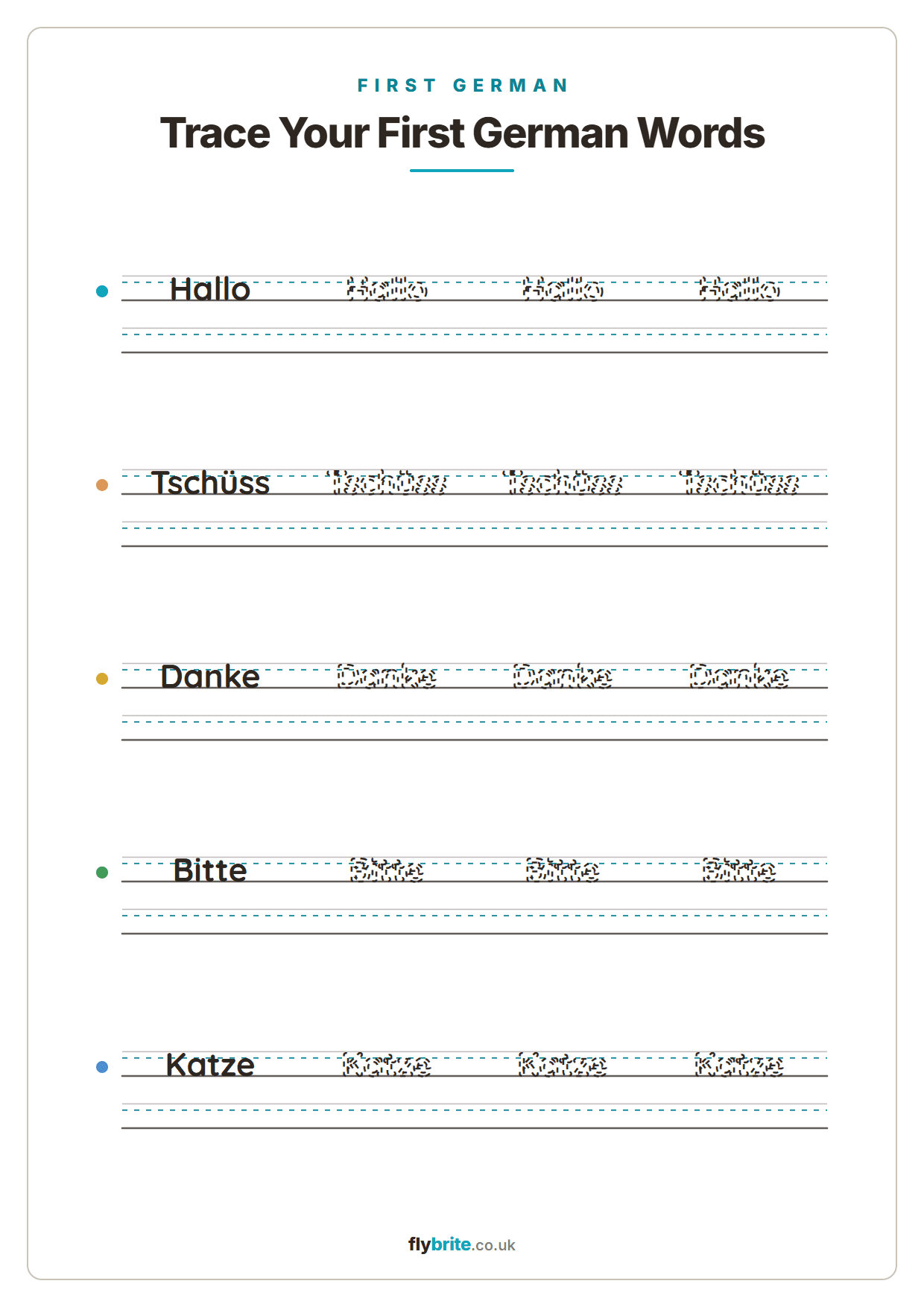
Five core German words to trace on proper handwriting guides, from Hallo to Tschüss.
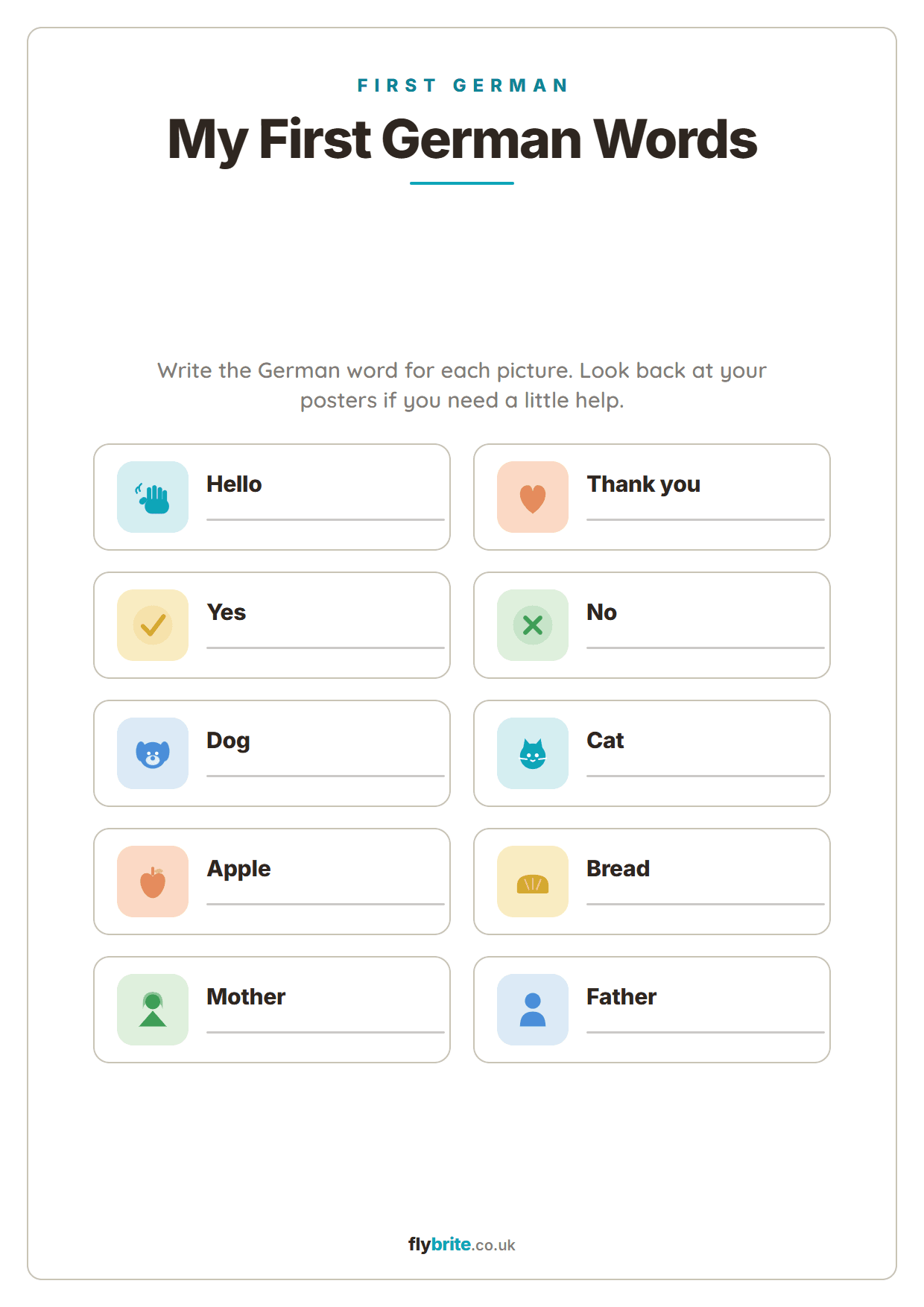 Type or write in
A write-in review of ten first German words, one picture at a time, to fill in and keep.
Correct letter and number formation with directional arrows and rhymes, handwriting from the very start.
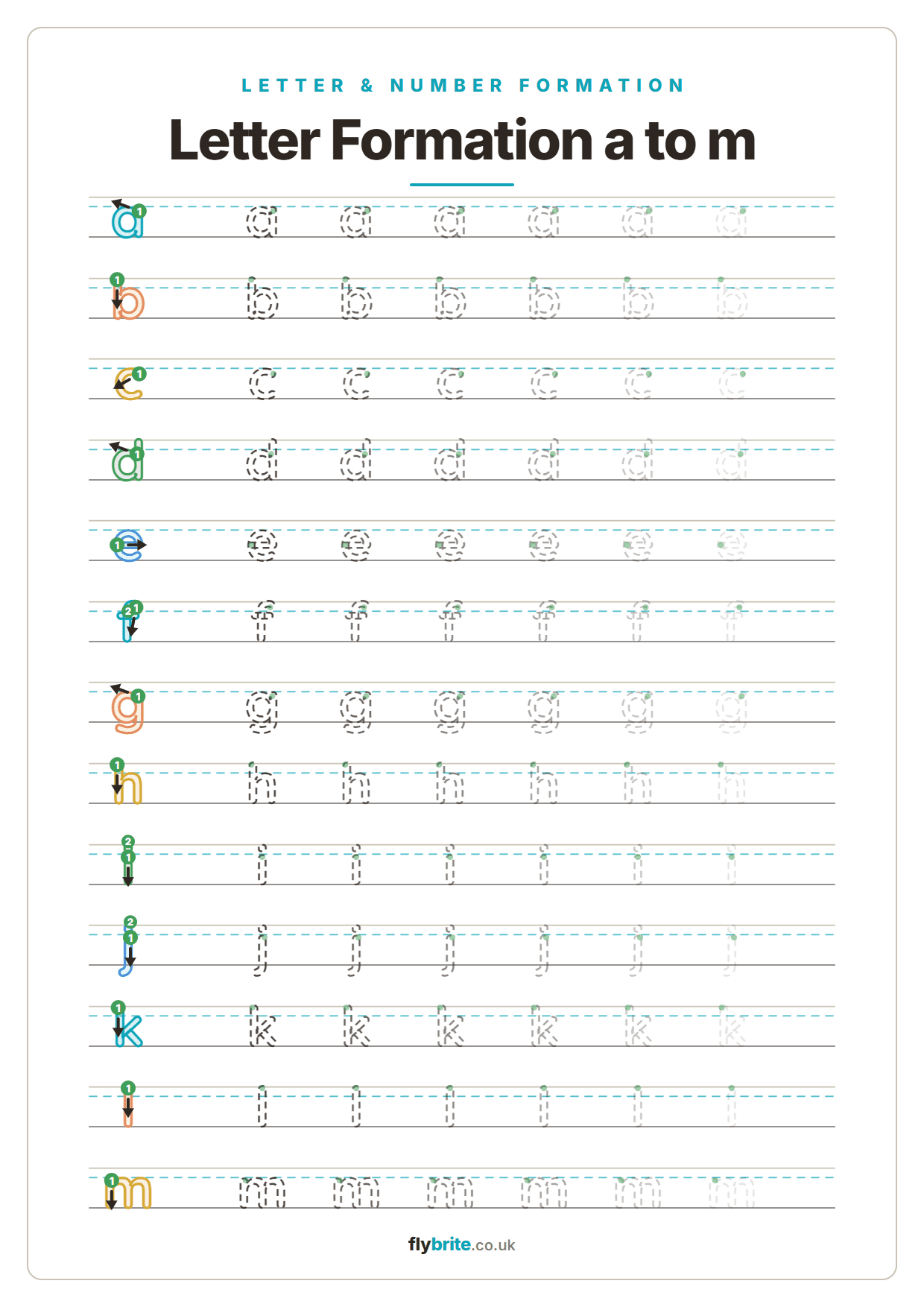
Learn to form lowercase a to m the right way, with a start dot, arrows and dotted letters to trace.

Finish the lowercase alphabet, n to z, each with its own start dot, direction arrow and tracing row.
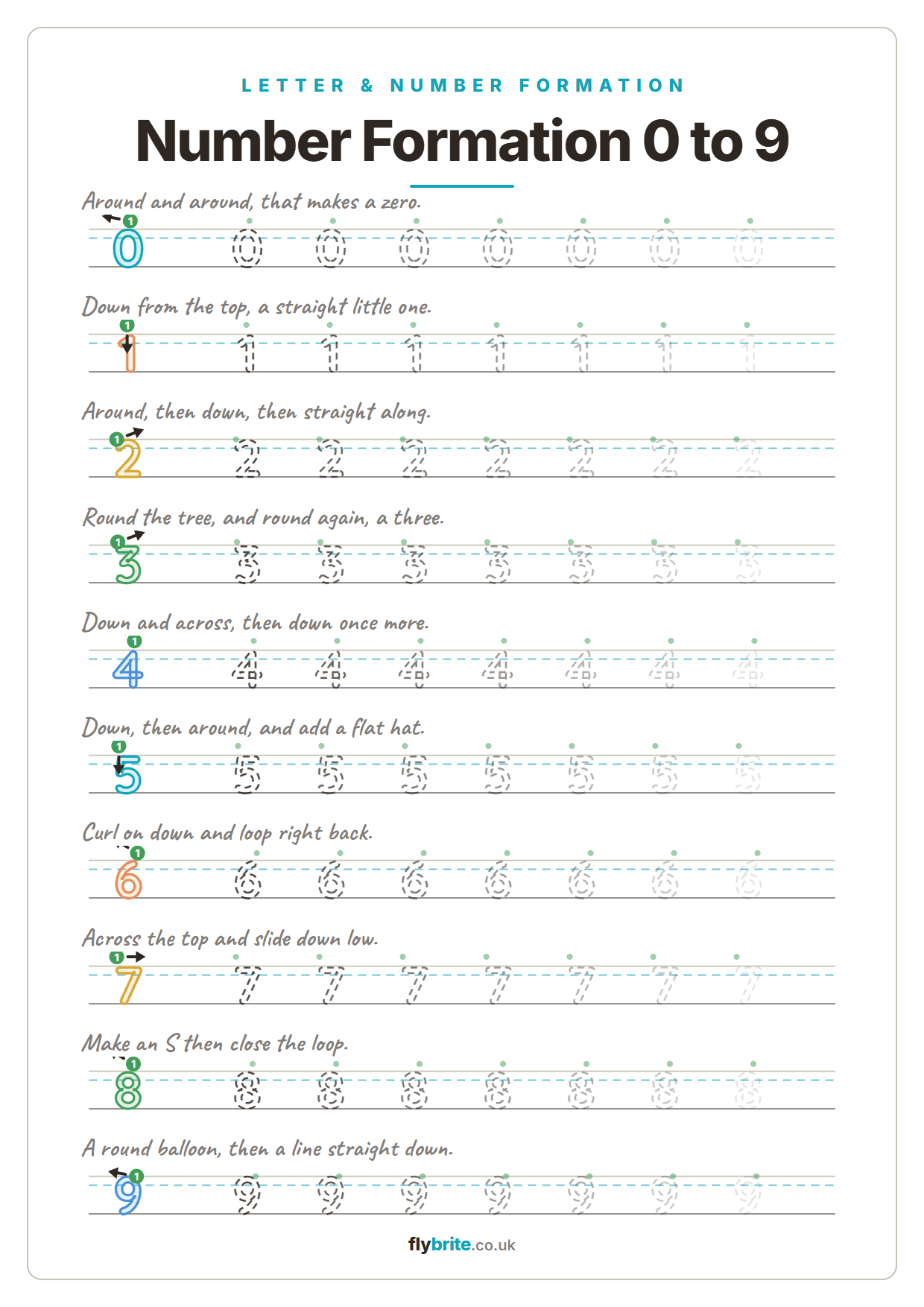
Form every number from zero to nine, with a start dot, arrow and a little rhyme to say as you write.
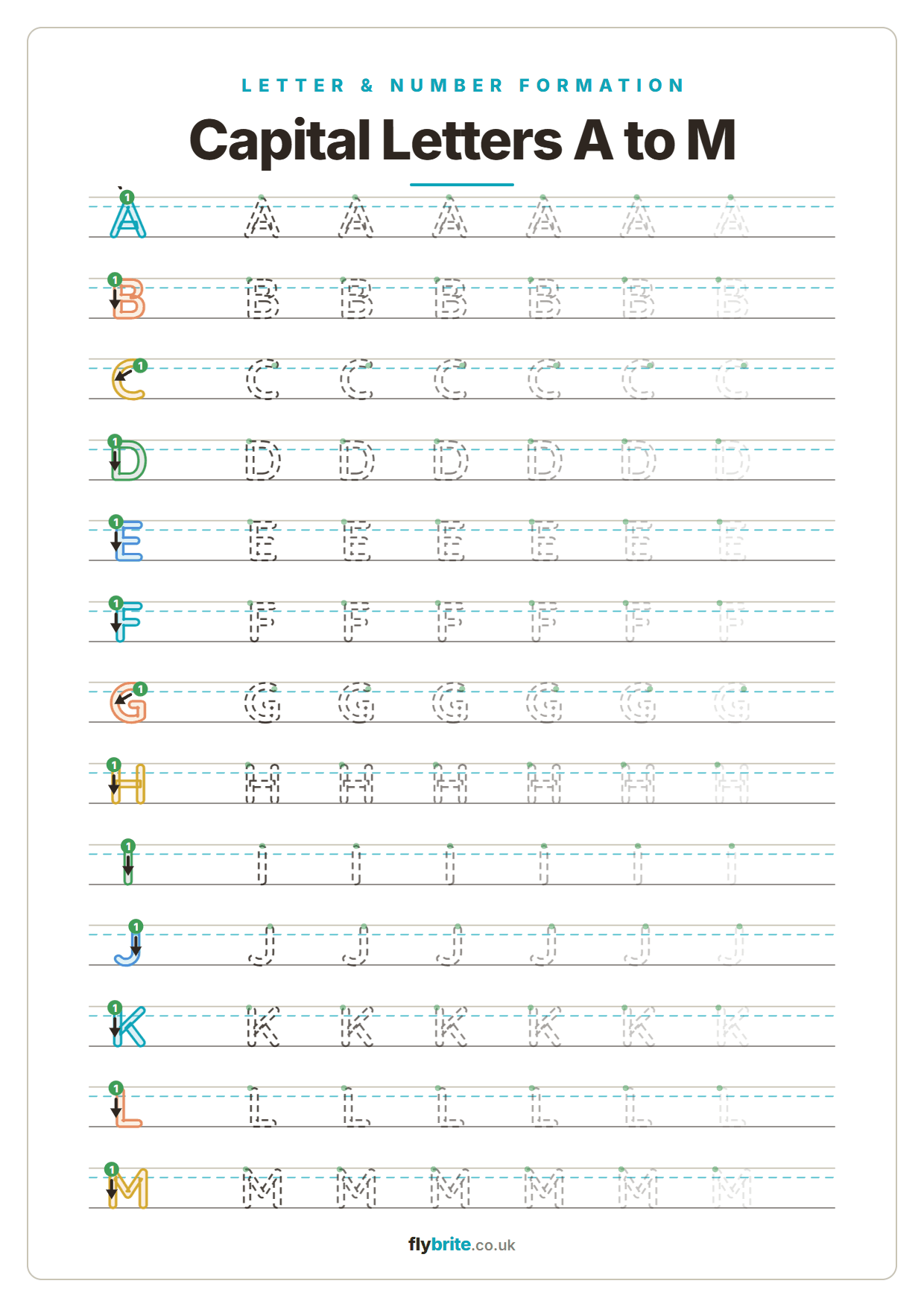
Form the capital letters A to M correctly, following the numbered start dot and stroke arrow each time.

The rest of the capitals, N to Z, with a clear start dot and arrow then dotted letters to trace.
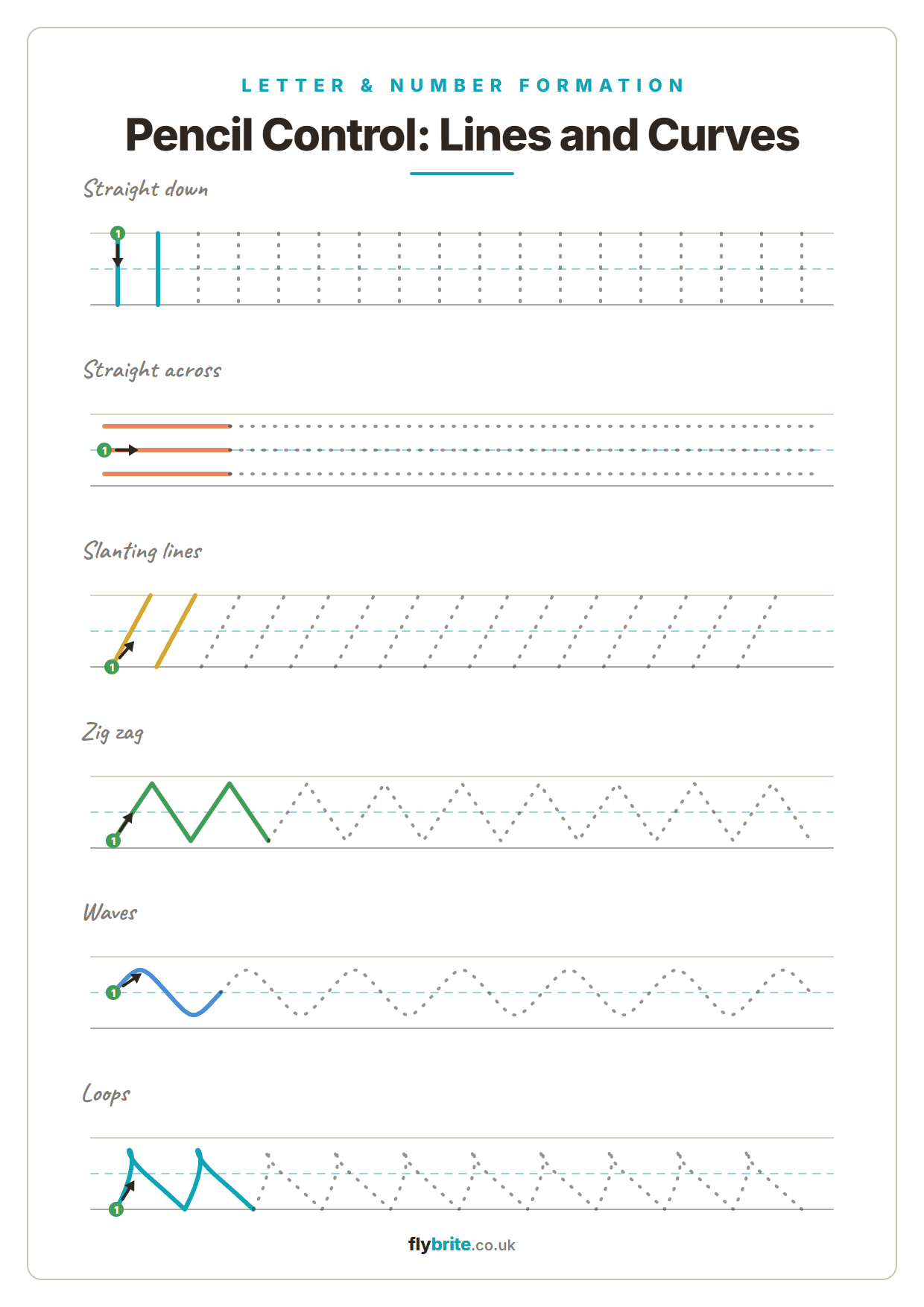
Warm up little hands with straight lines, zig zags, waves and loops to trace before letters begin.
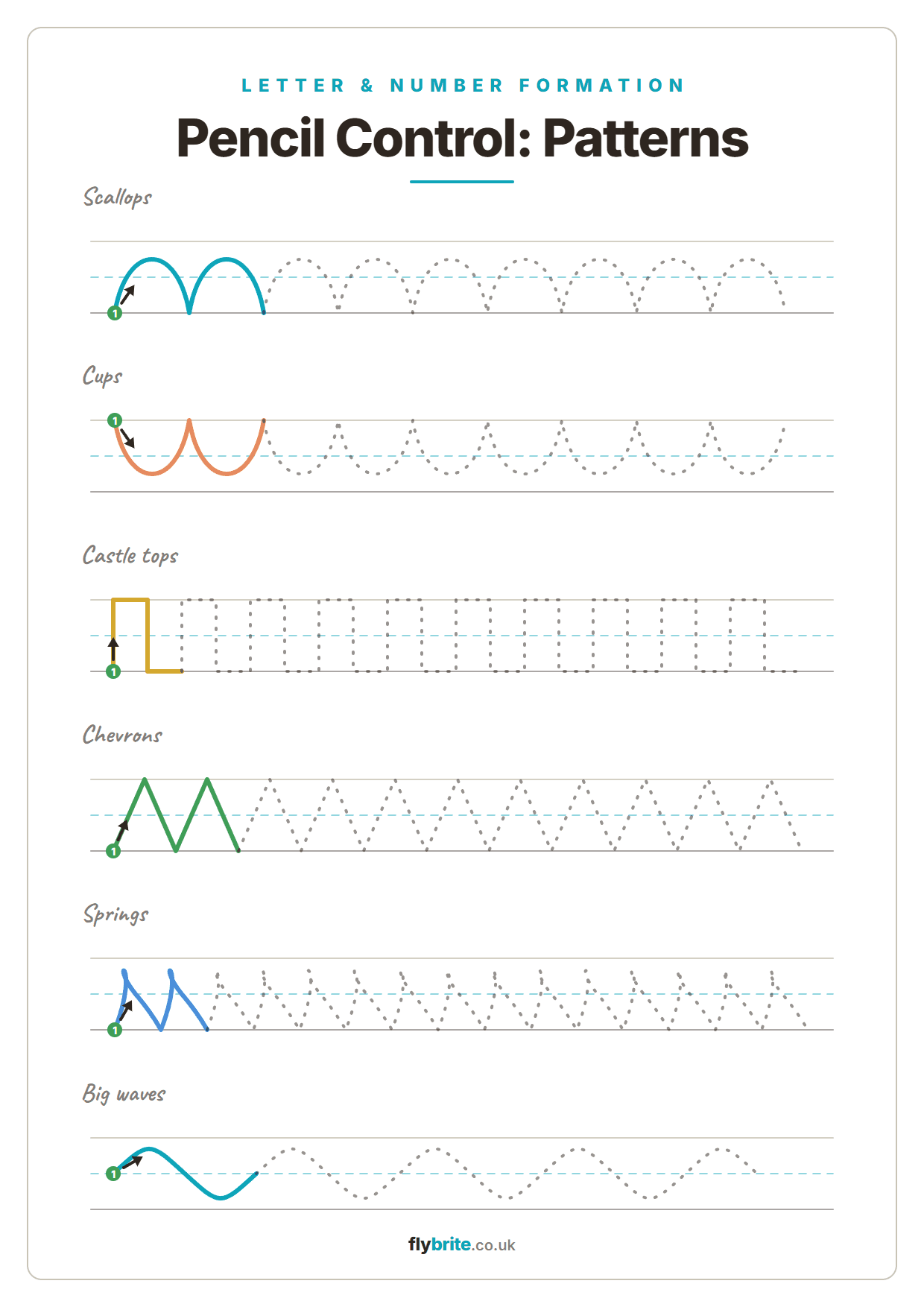
Repeating pattern rows, scallops, cups, springs and more, to build a smooth and steady pencil hand.
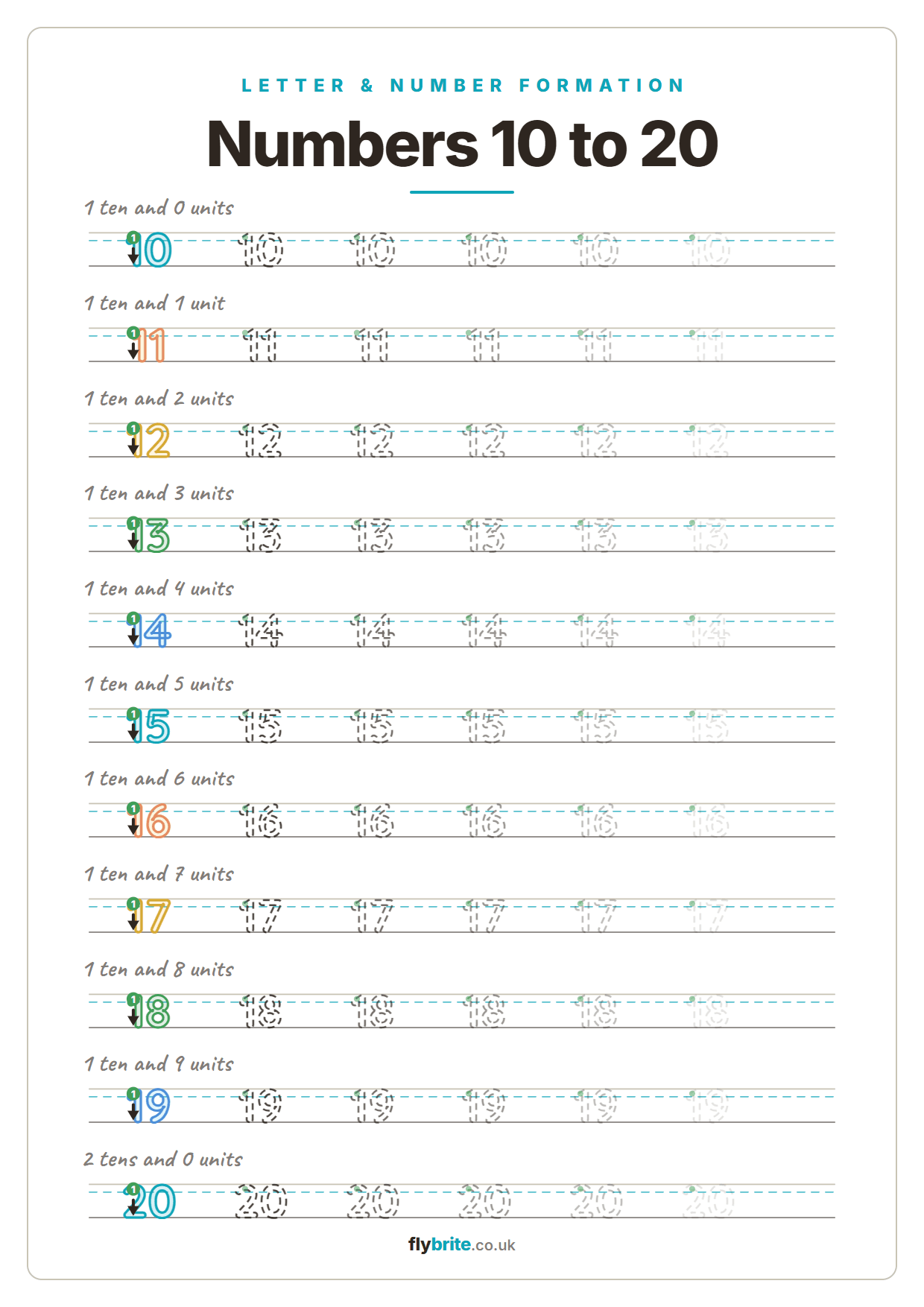
Form and trace the two digit numbers ten to twenty, with a tens and units reminder on every row.
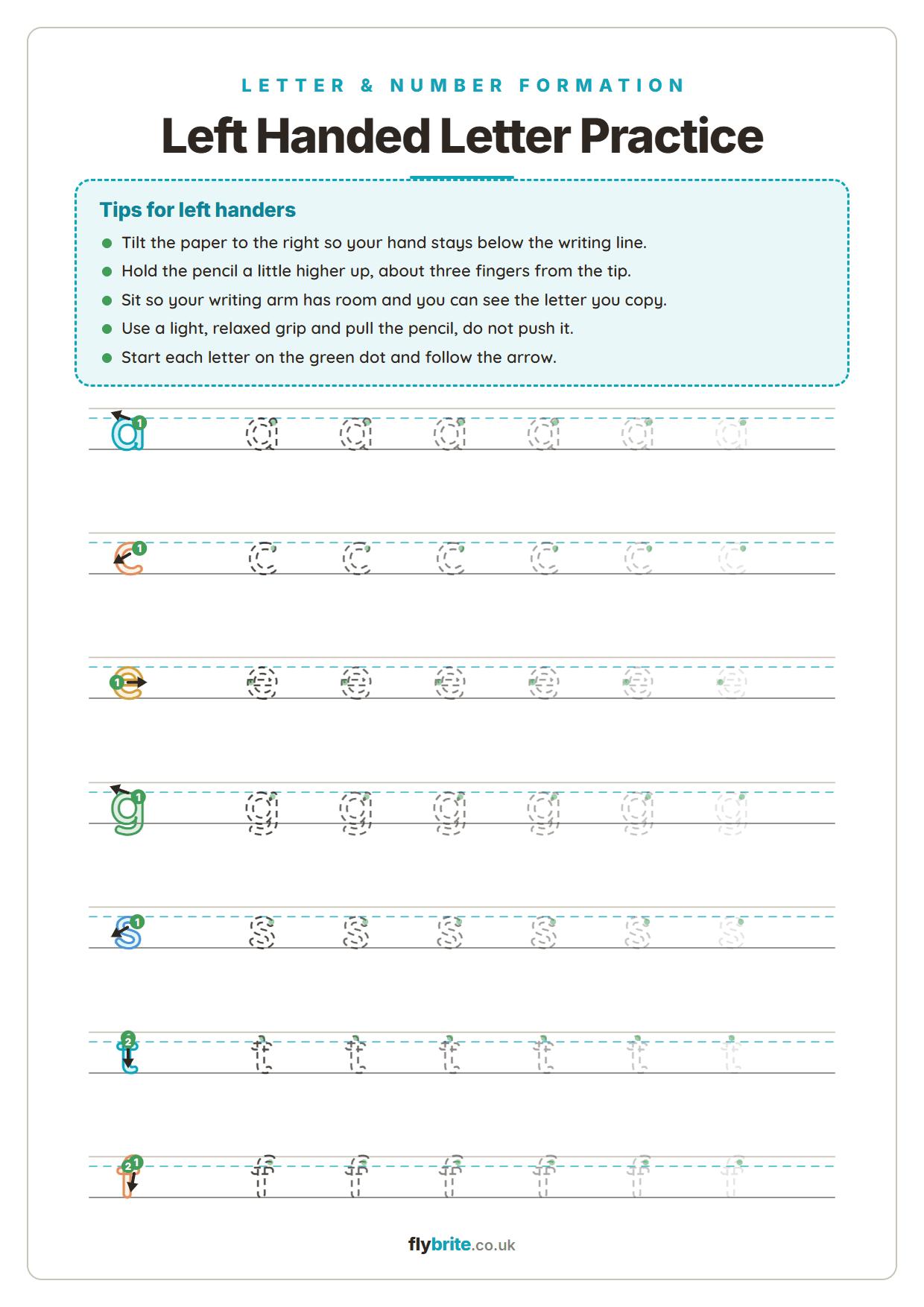
Friendly handwriting tips for left handers, with tracing rows set out so the model stays in view.
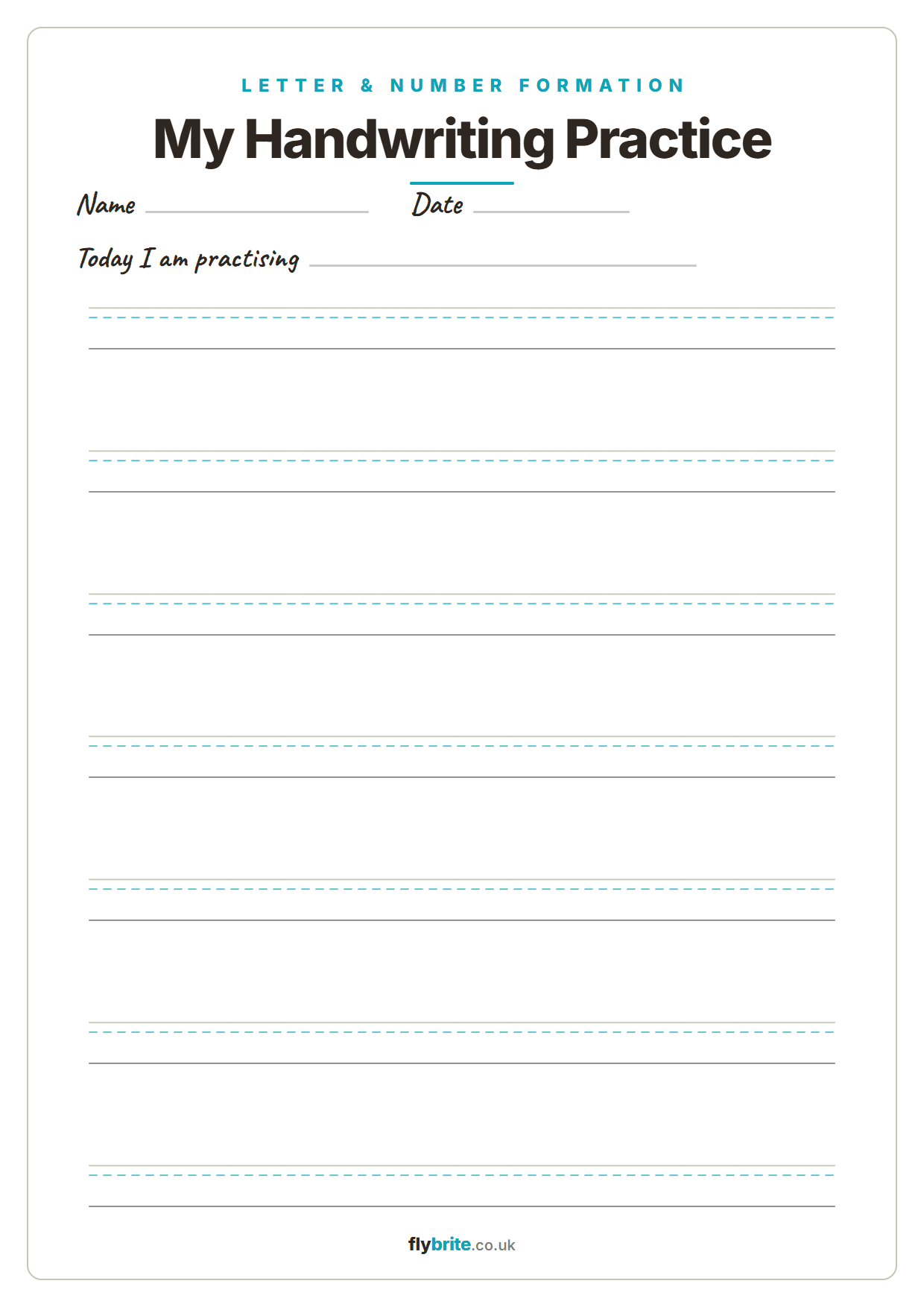 Type or write in
A blank guide lined sheet with a dashed midline, ready for whatever letters or words you like.
Algorithms, debugging, loops, binary and online safety, computing you can teach unplugged.
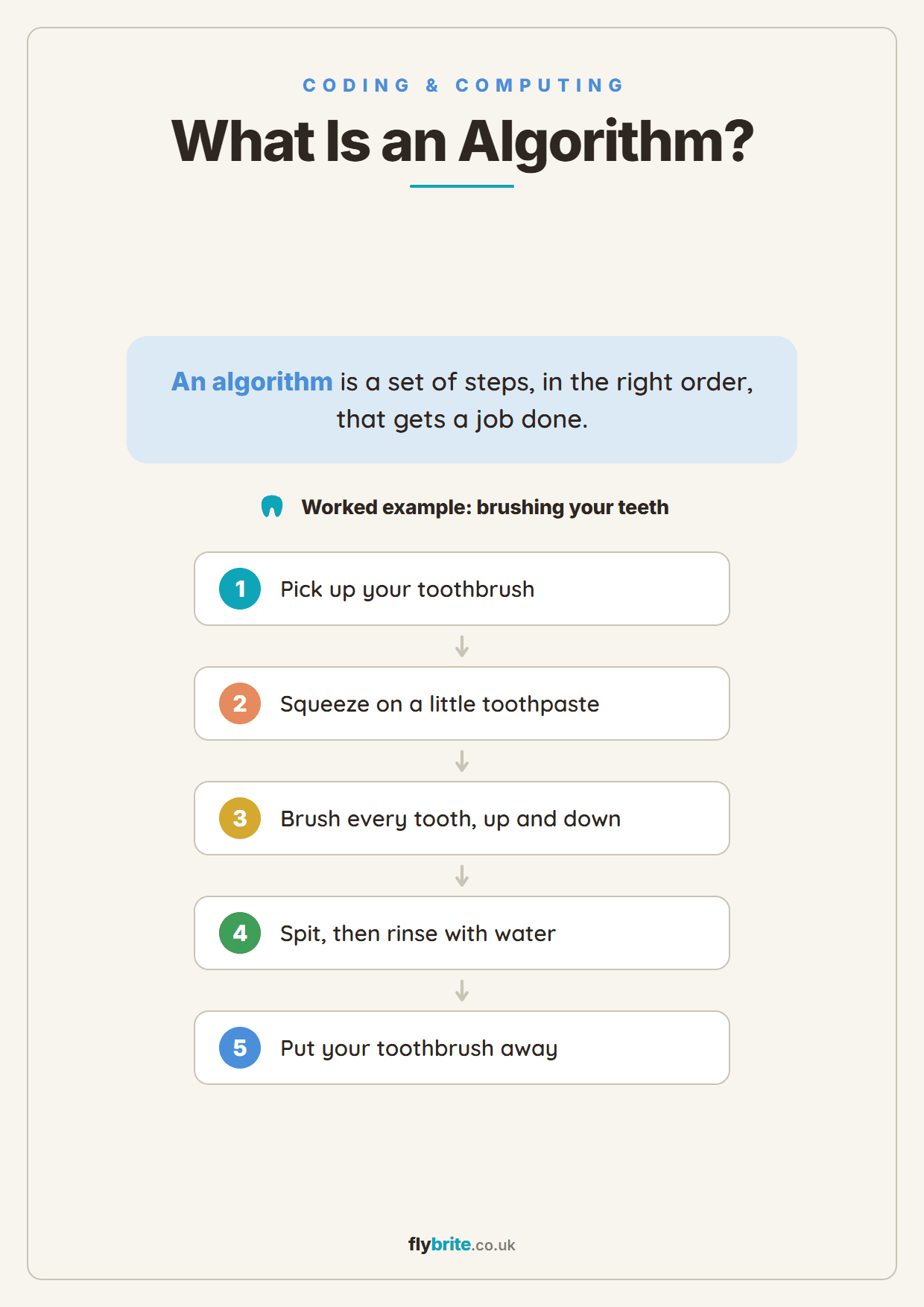
The big idea made simple, an algorithm is just clear steps in the right order, shown with a friendly brushing your teeth example.
 Type or write in
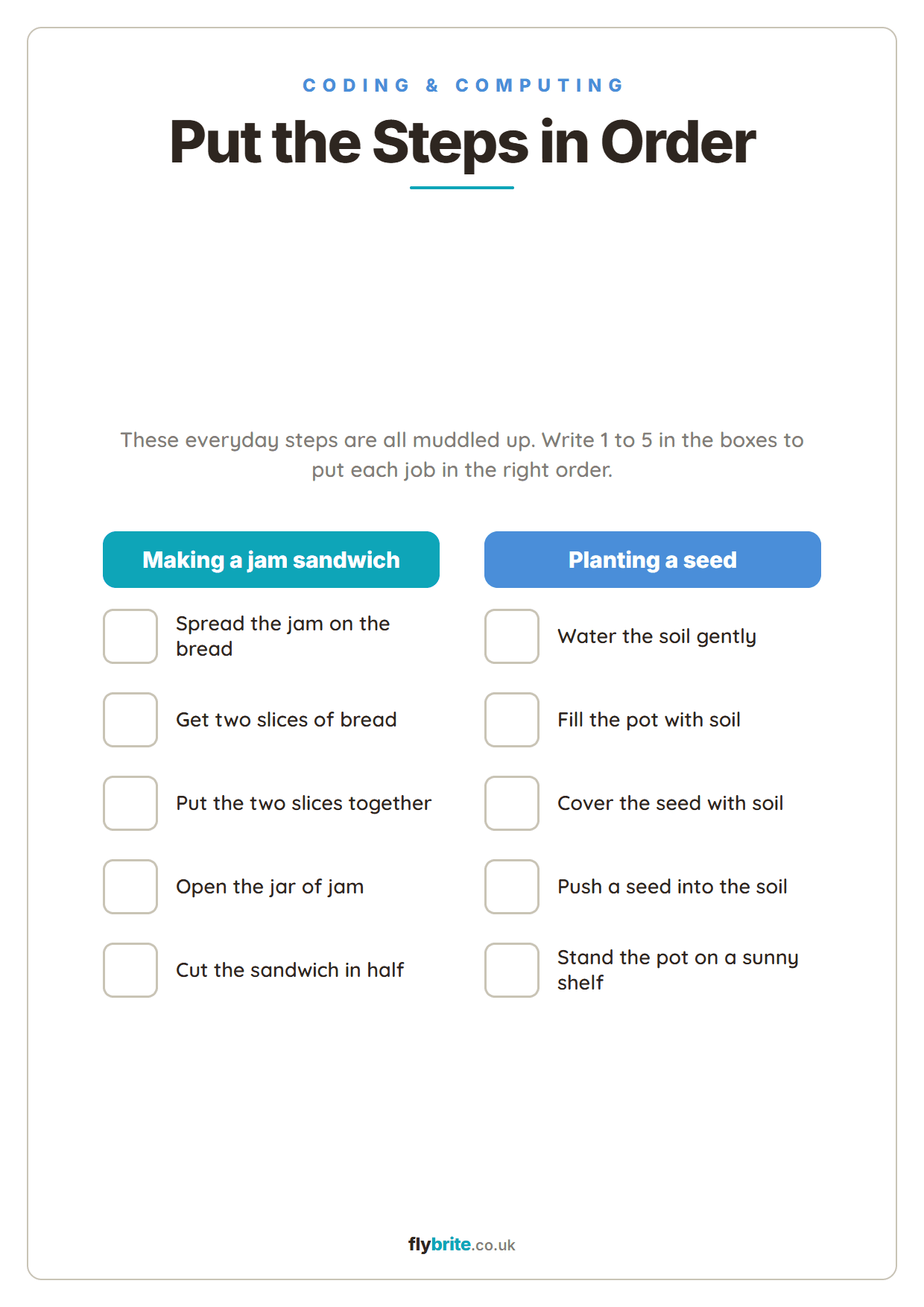
Two muddled up jobs to sort out, little coders write 1 to 5 to put every step in the right order.
 Type or write in
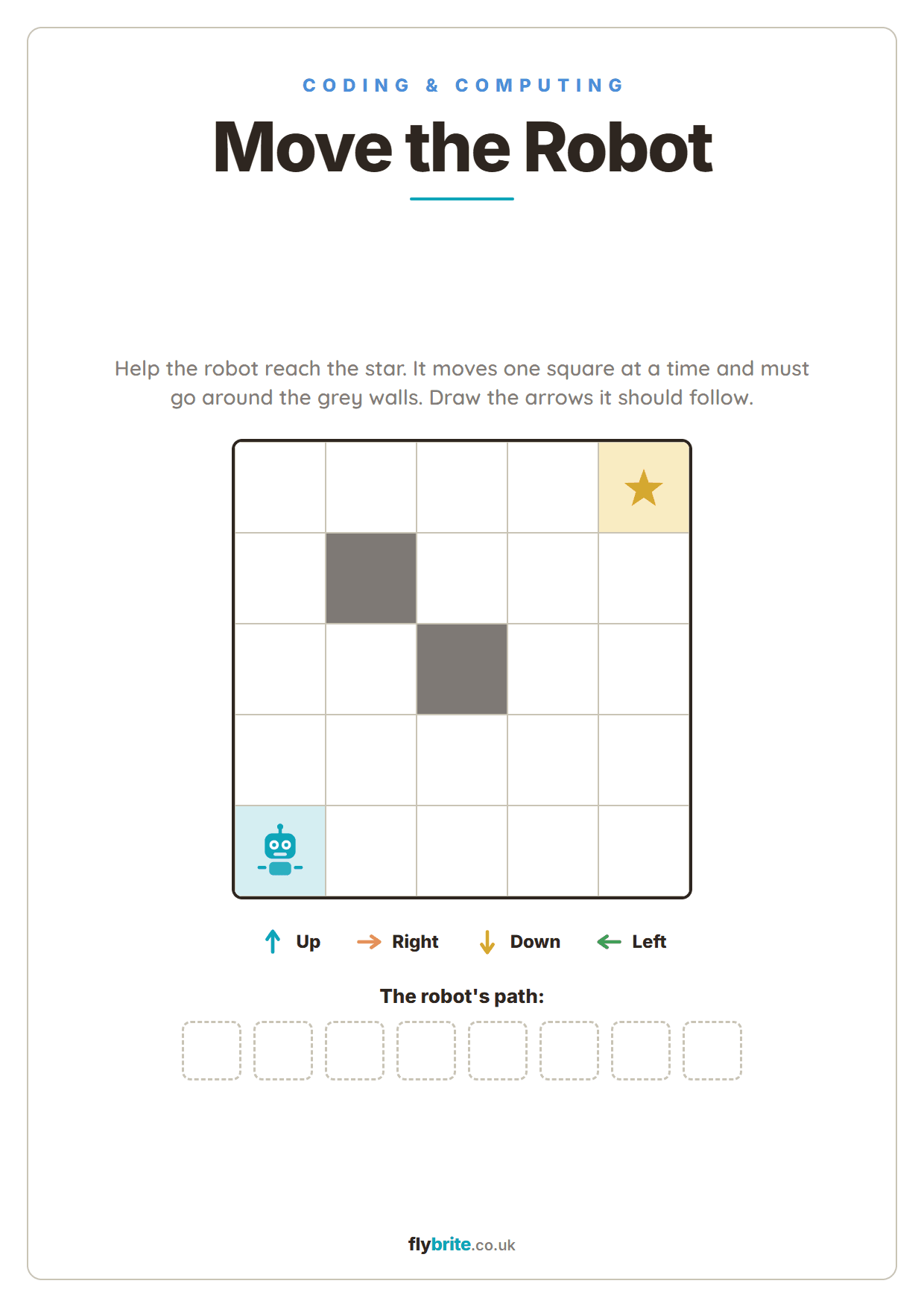
A first taste of grid programming, draw the up, down, left and right arrows that steer the robot around the walls to the star.
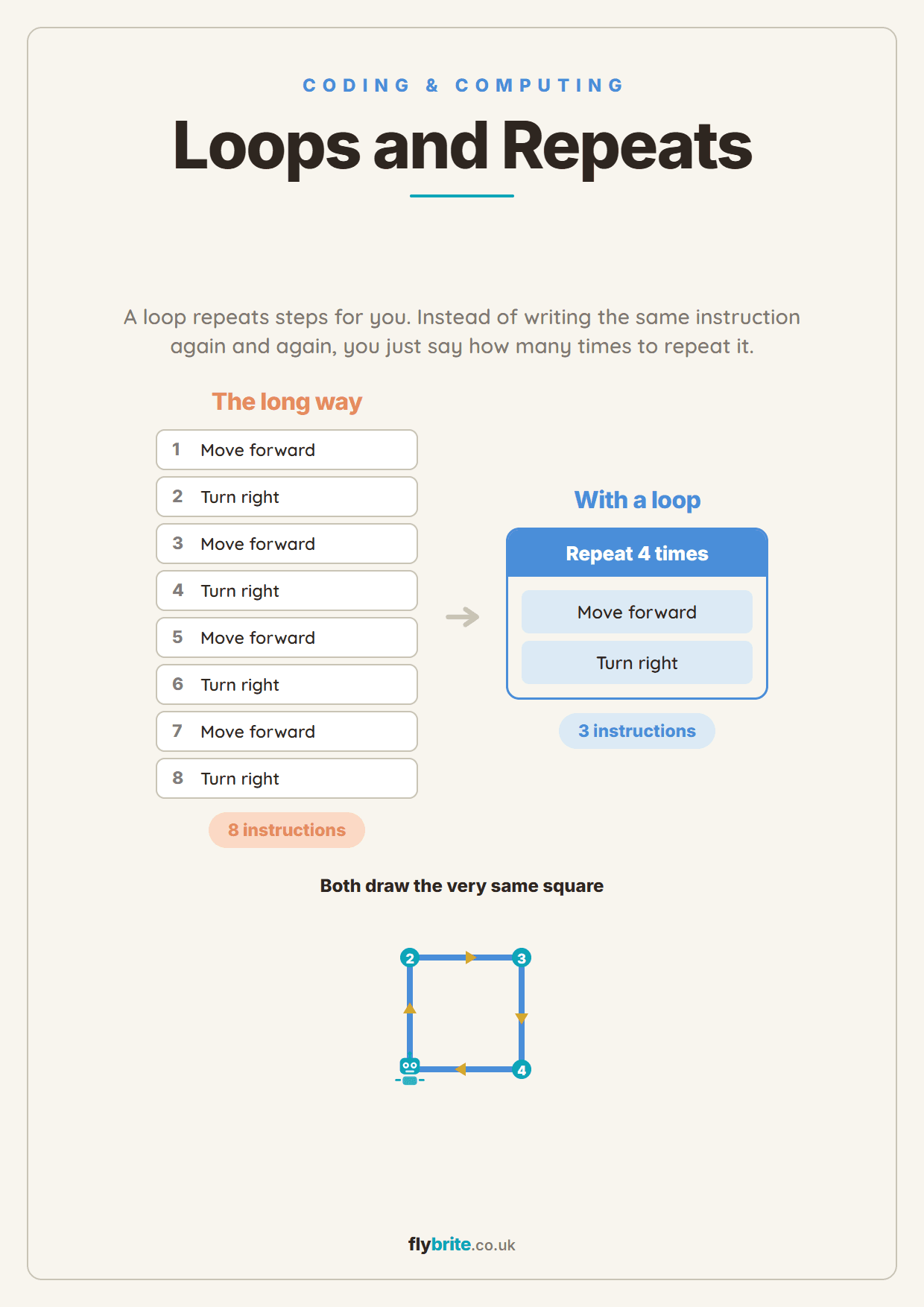
See how one little loop replaces a long list of steps, with a robot drawing a perfect square by repeating just two instructions.
 Type or write in
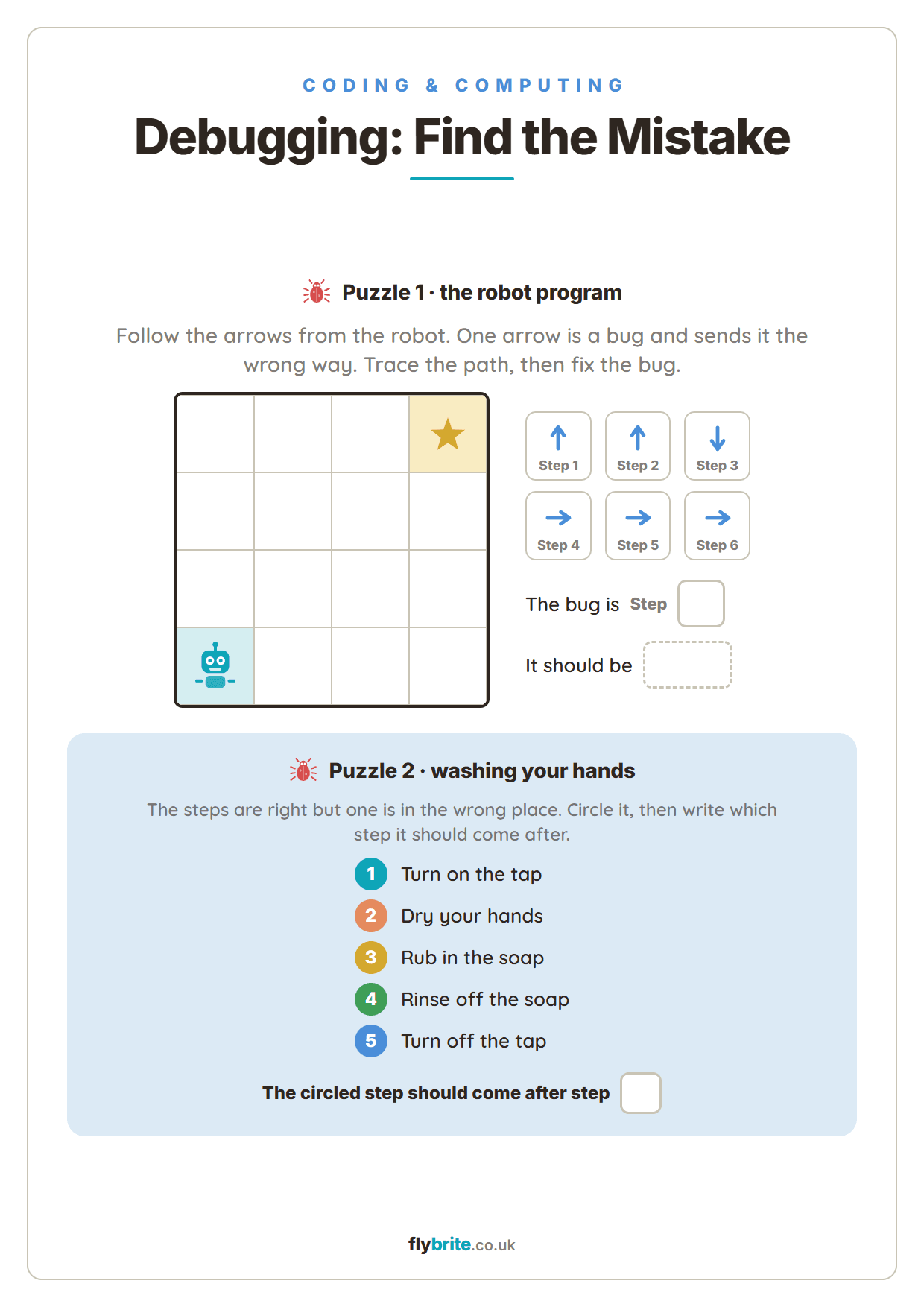
Every coder finds bugs. Trace two programs, spot the instruction that goes wrong, and write the fix.
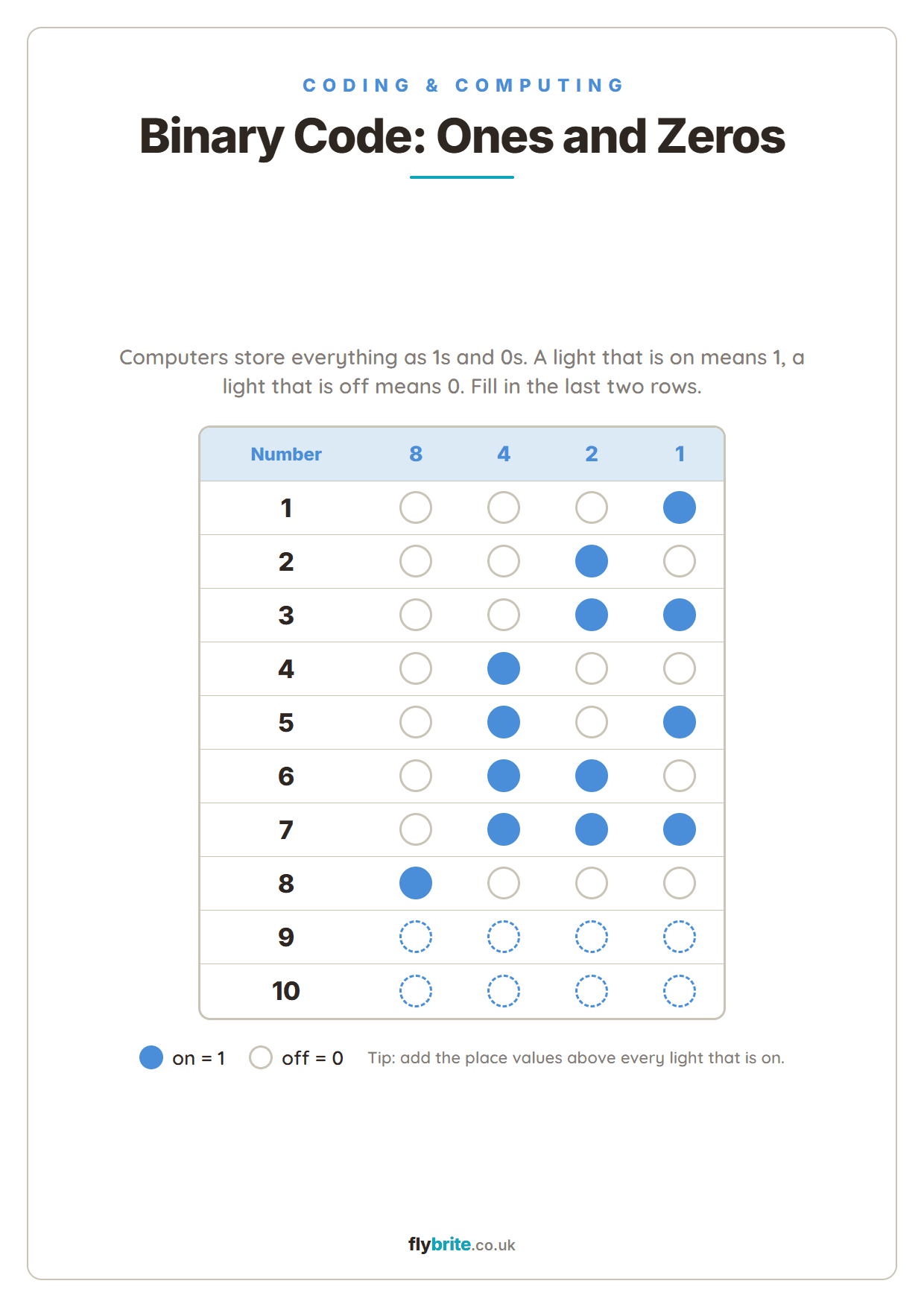 Type or write in
The secret language of computers, lights that are on or off show the numbers 1 to 10, with the last two rows to fill in.

A clear labelled diagram of a desktop computer, the screen, keyboard, mouse and the clever brain inside.
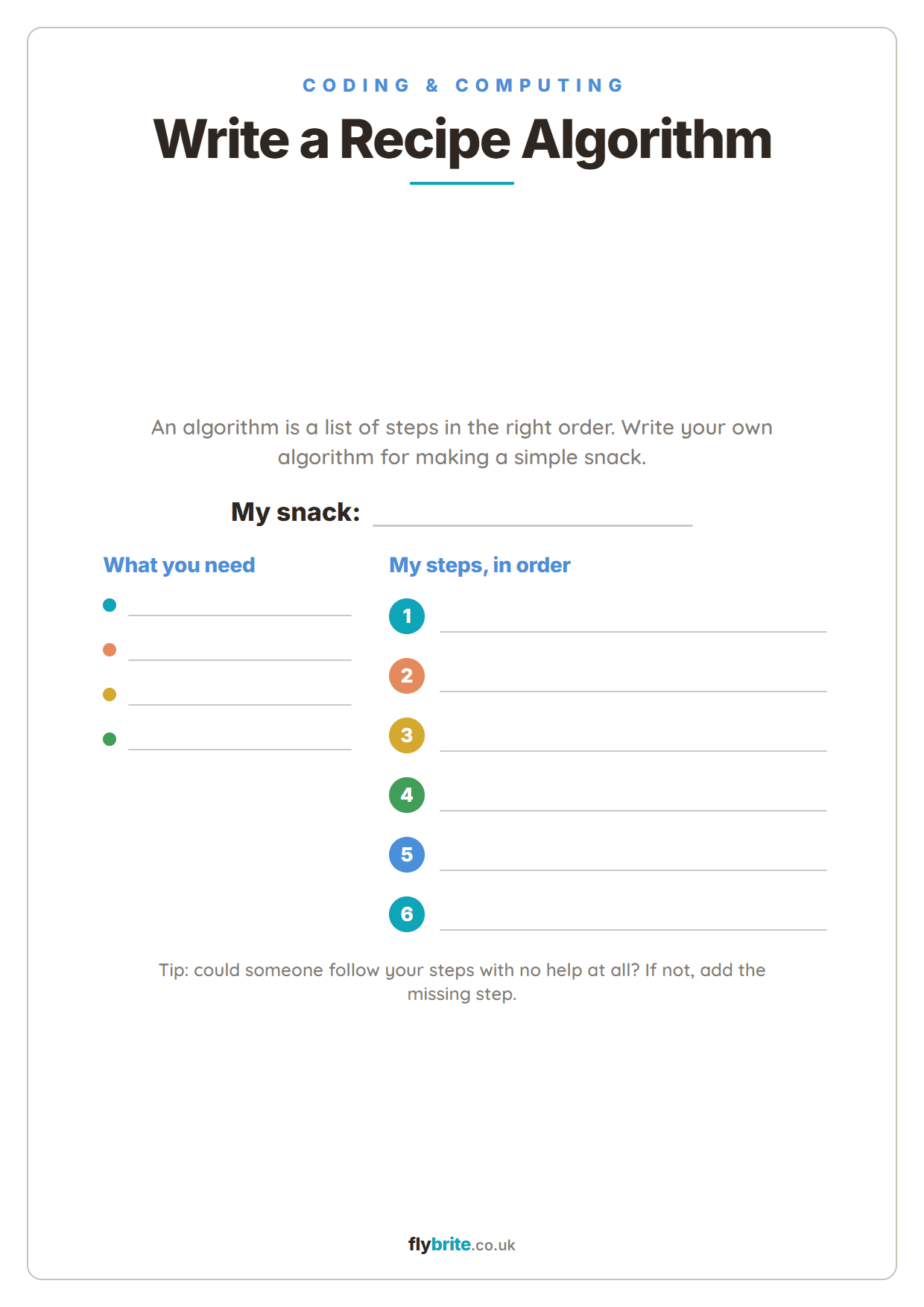 Type or write in
Turn a favourite snack into code, list what you need then write the steps in the right order so anyone could follow them.
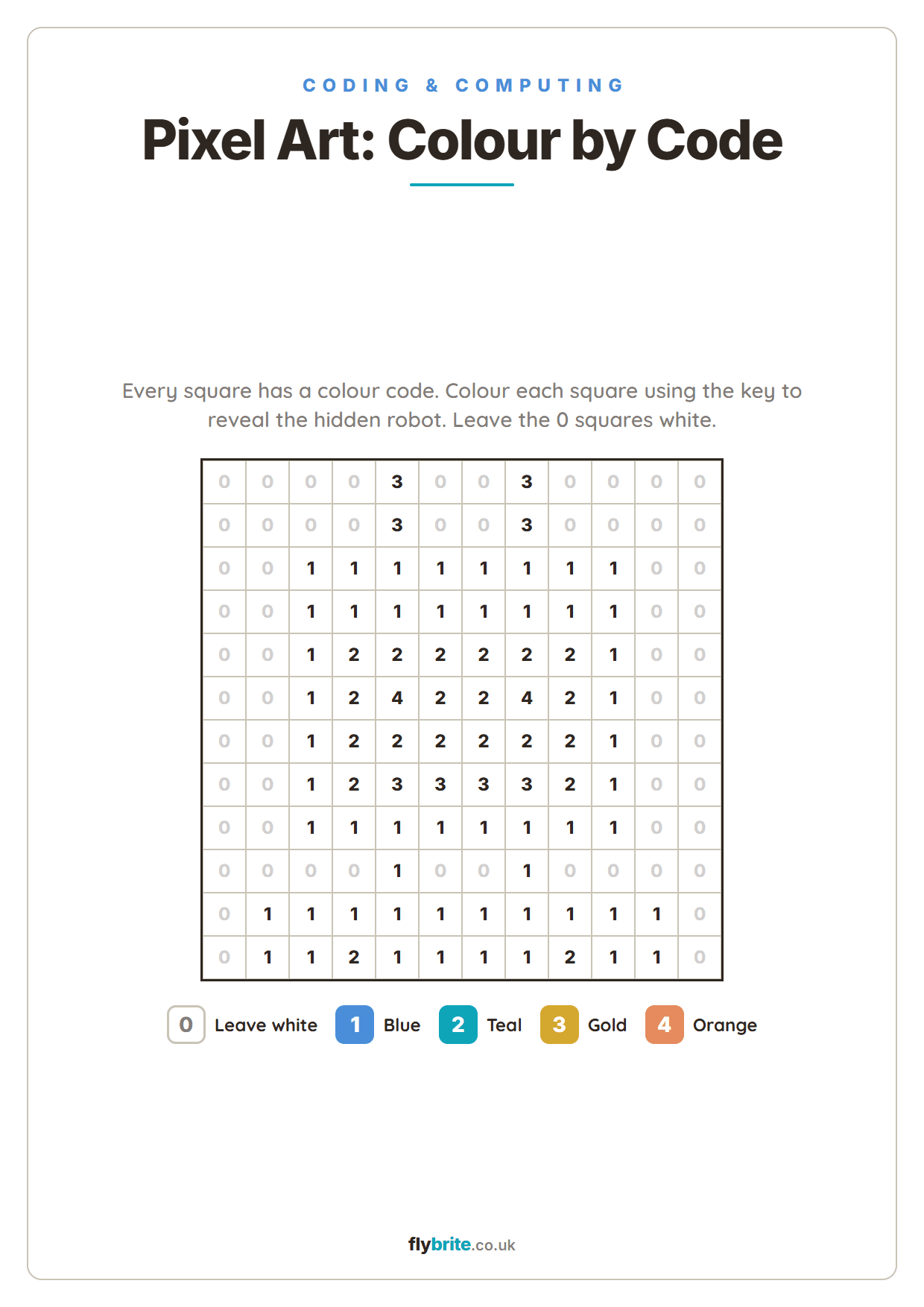
How screens make pictures from tiny squares, follow the colour code across the grid to reveal a cheerful hidden robot.
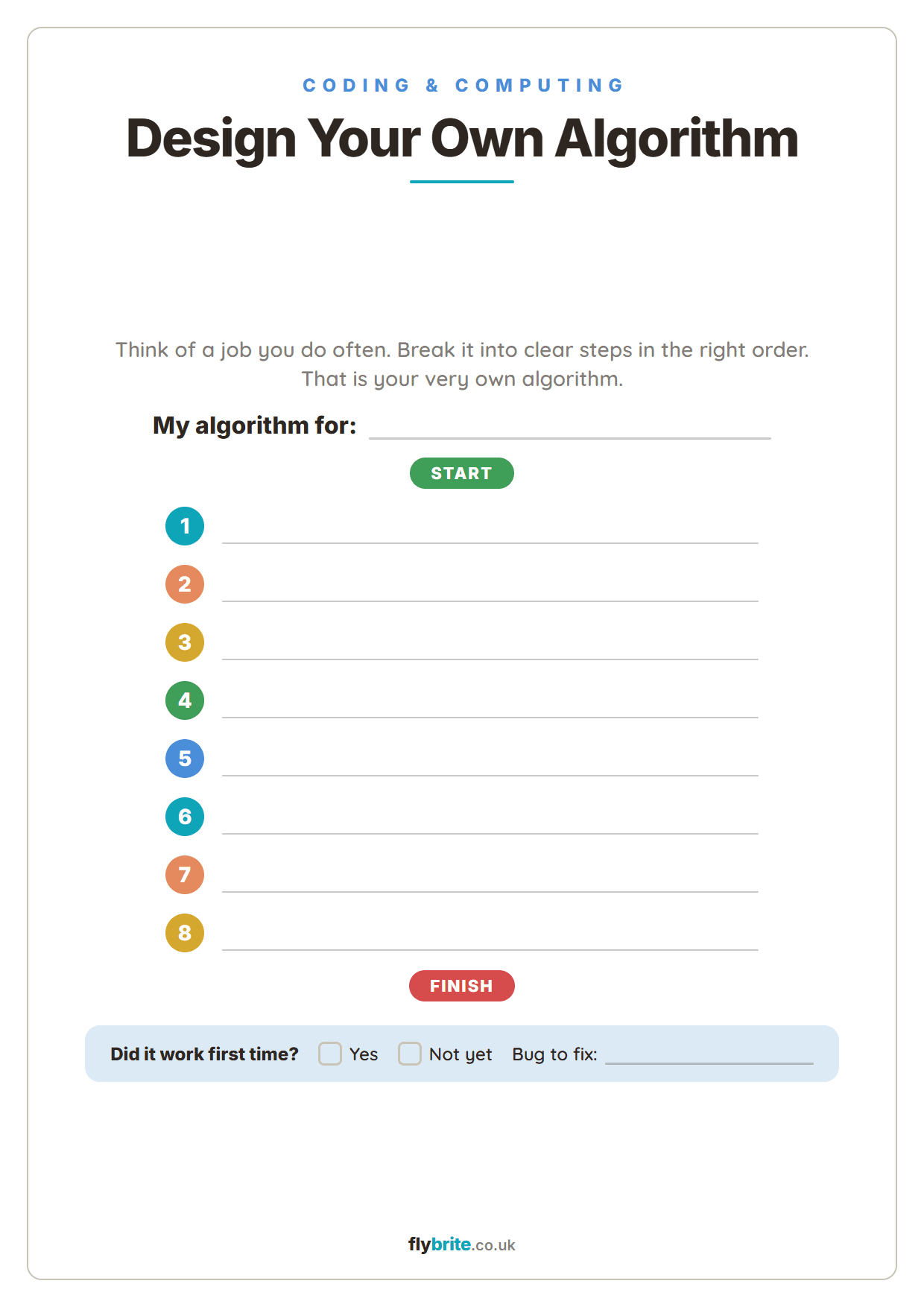 Type or write in
A blank framework for a young programmer, break any everyday job into numbered steps from start to finish, then test it for bugs.
Snakes and ladders, bingo, dominoes and more, printable board games for learning together.
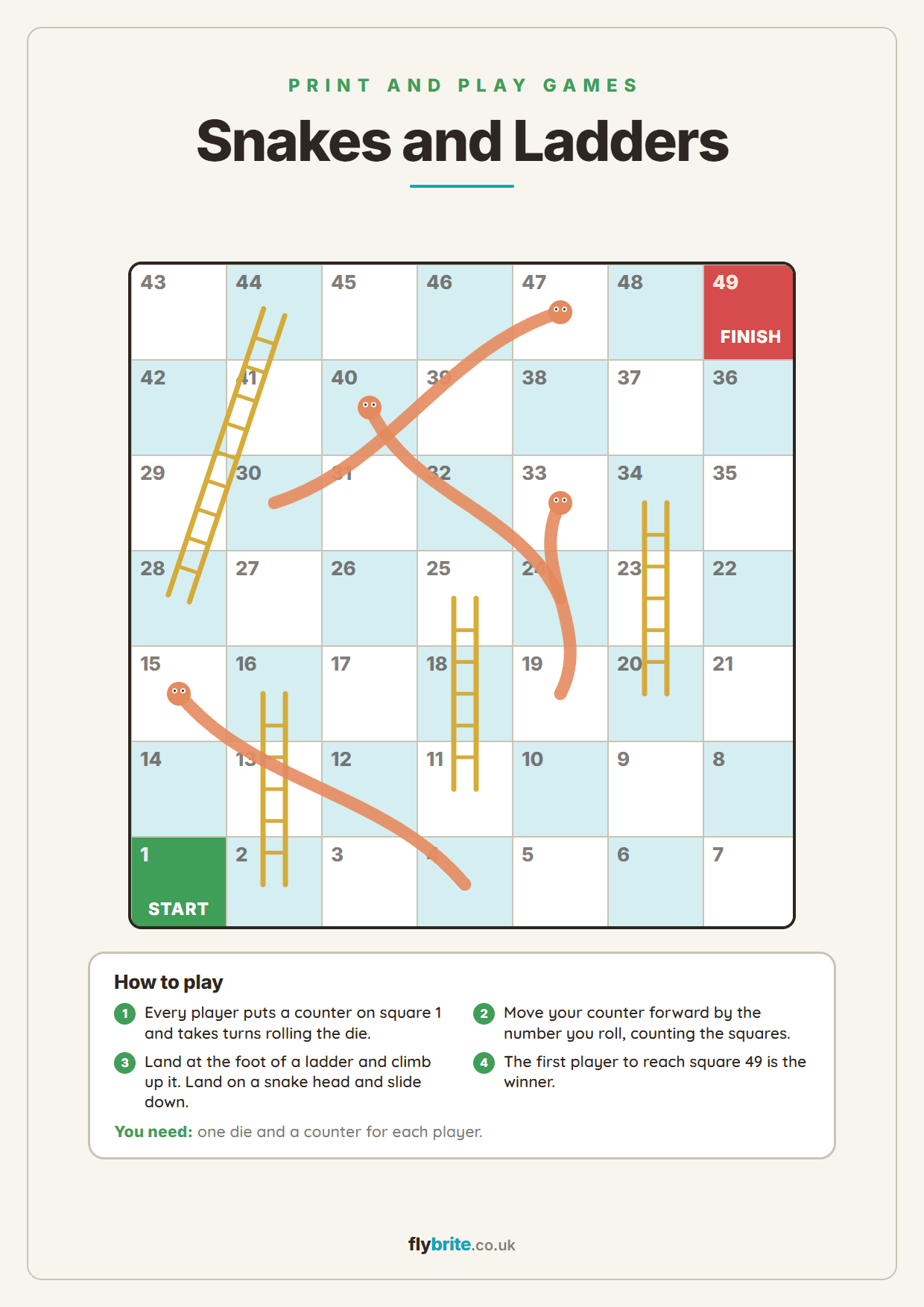
A bright 49 square snakes and ladders board, ready to print, grab a die and play.
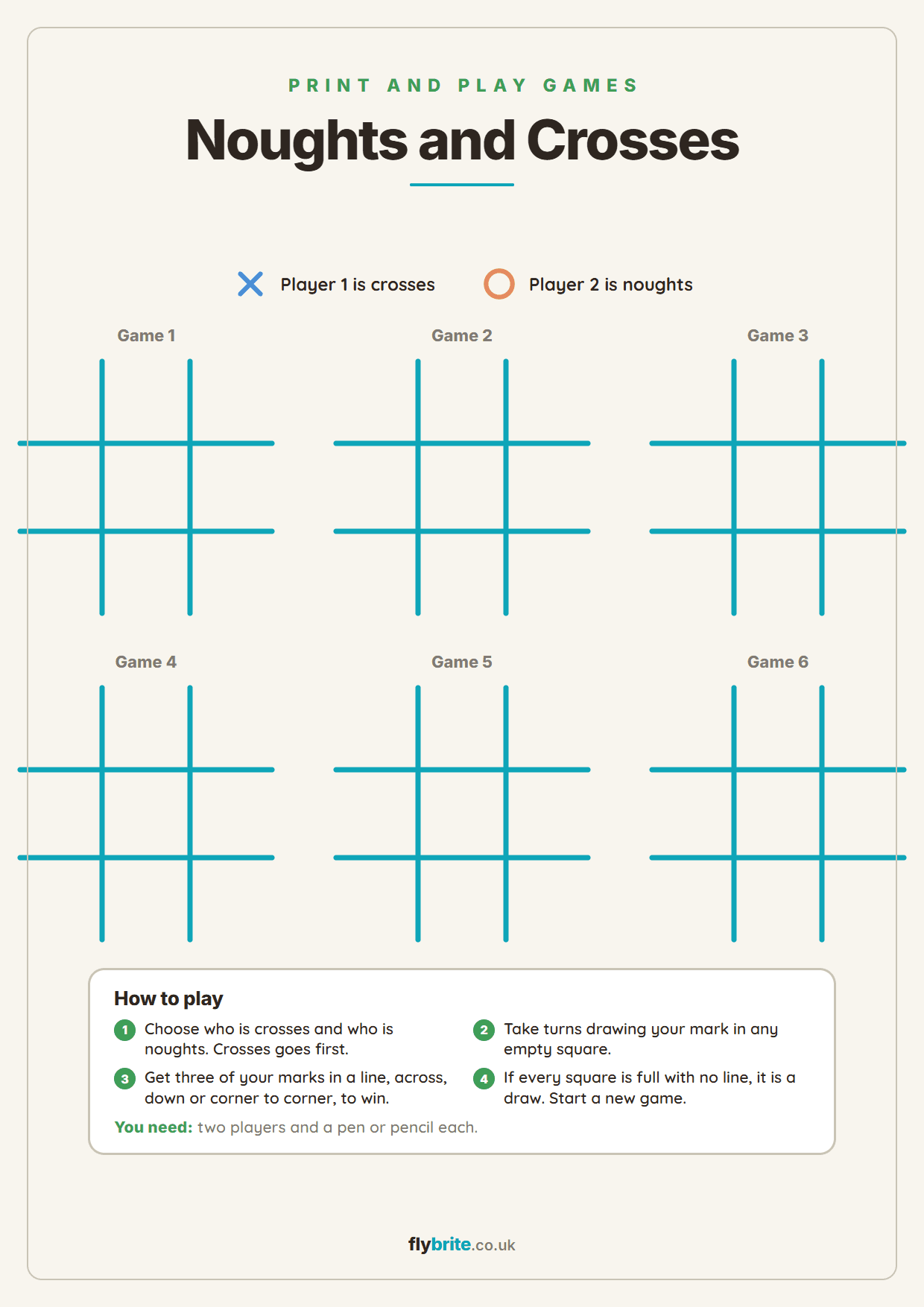
Six noughts and crosses grids for quick two player games, with the rules to hand.
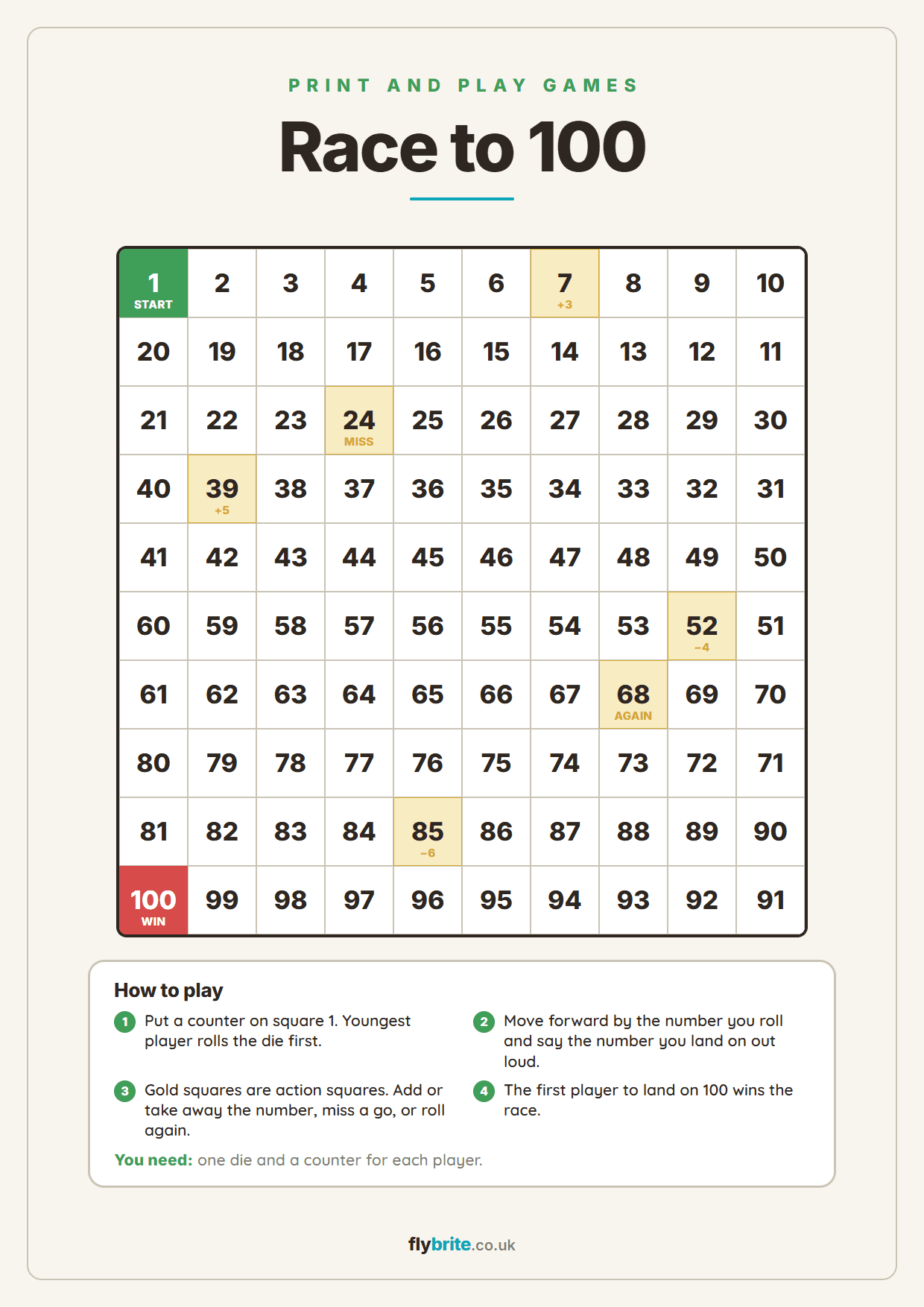
A one to one hundred race track. Roll, count and move your way to the finish.
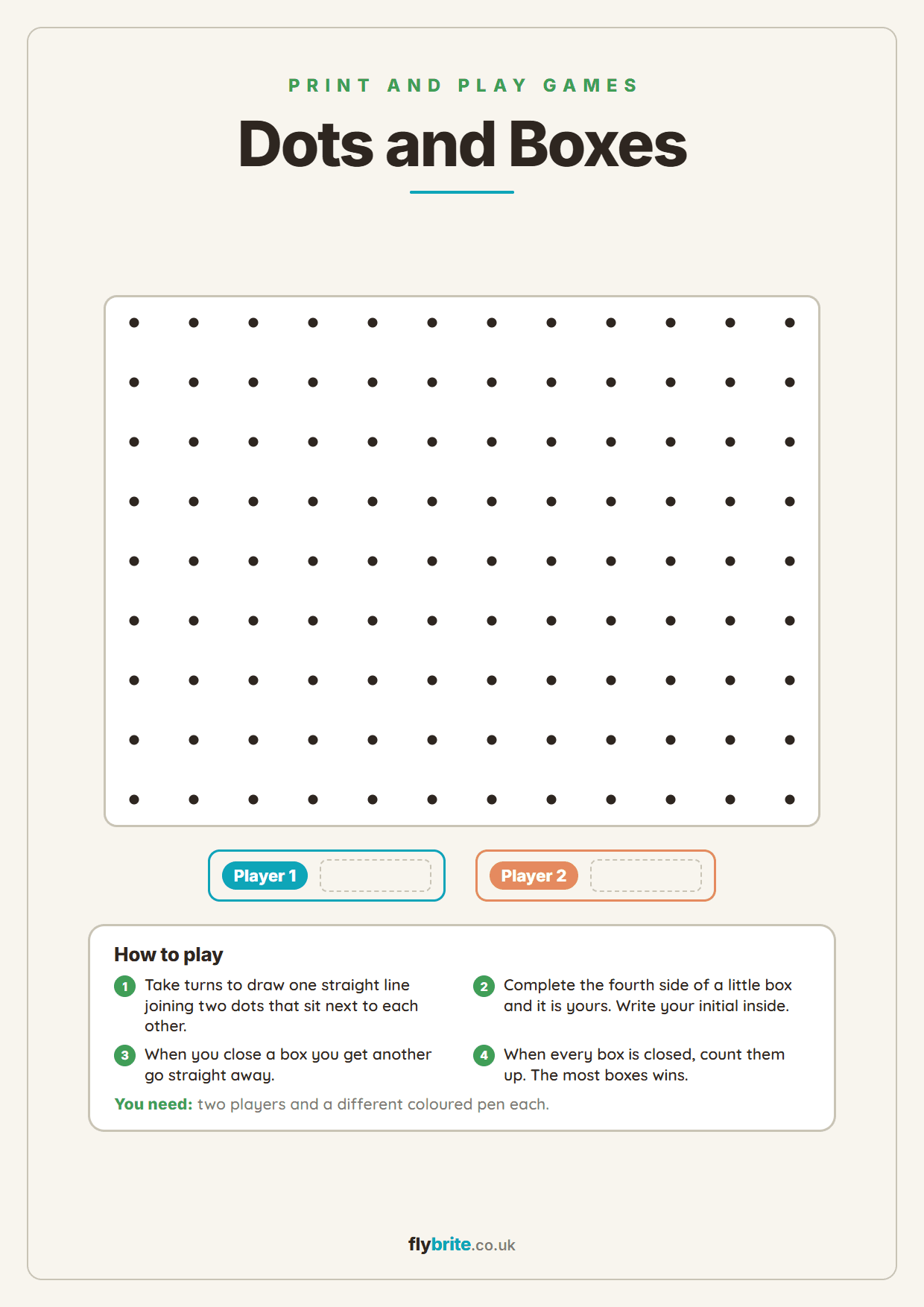
A big dots and boxes grid. Join the dots, close a box and claim it as yours.
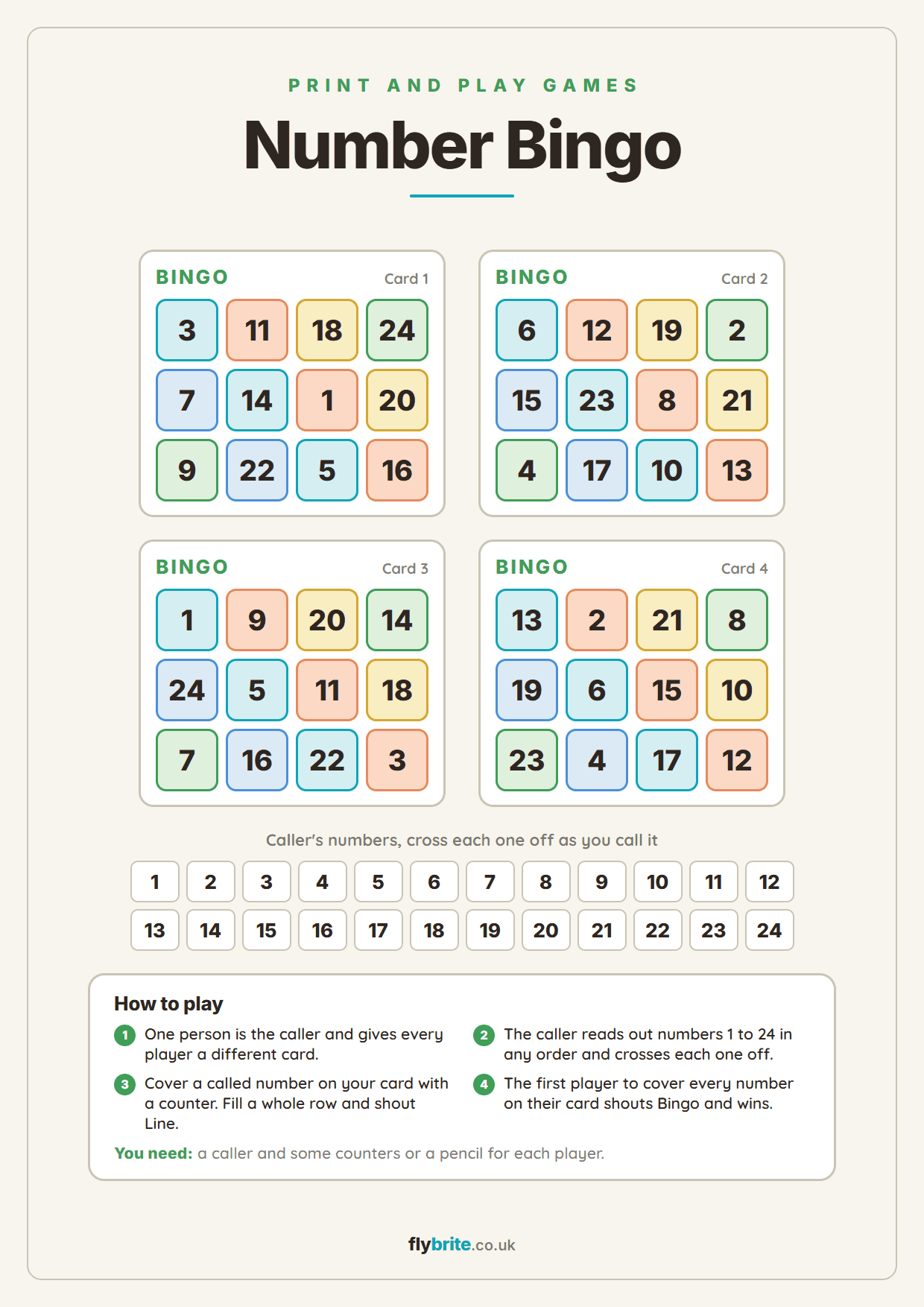
Four number bingo cards and a caller strip for a jolly family game.
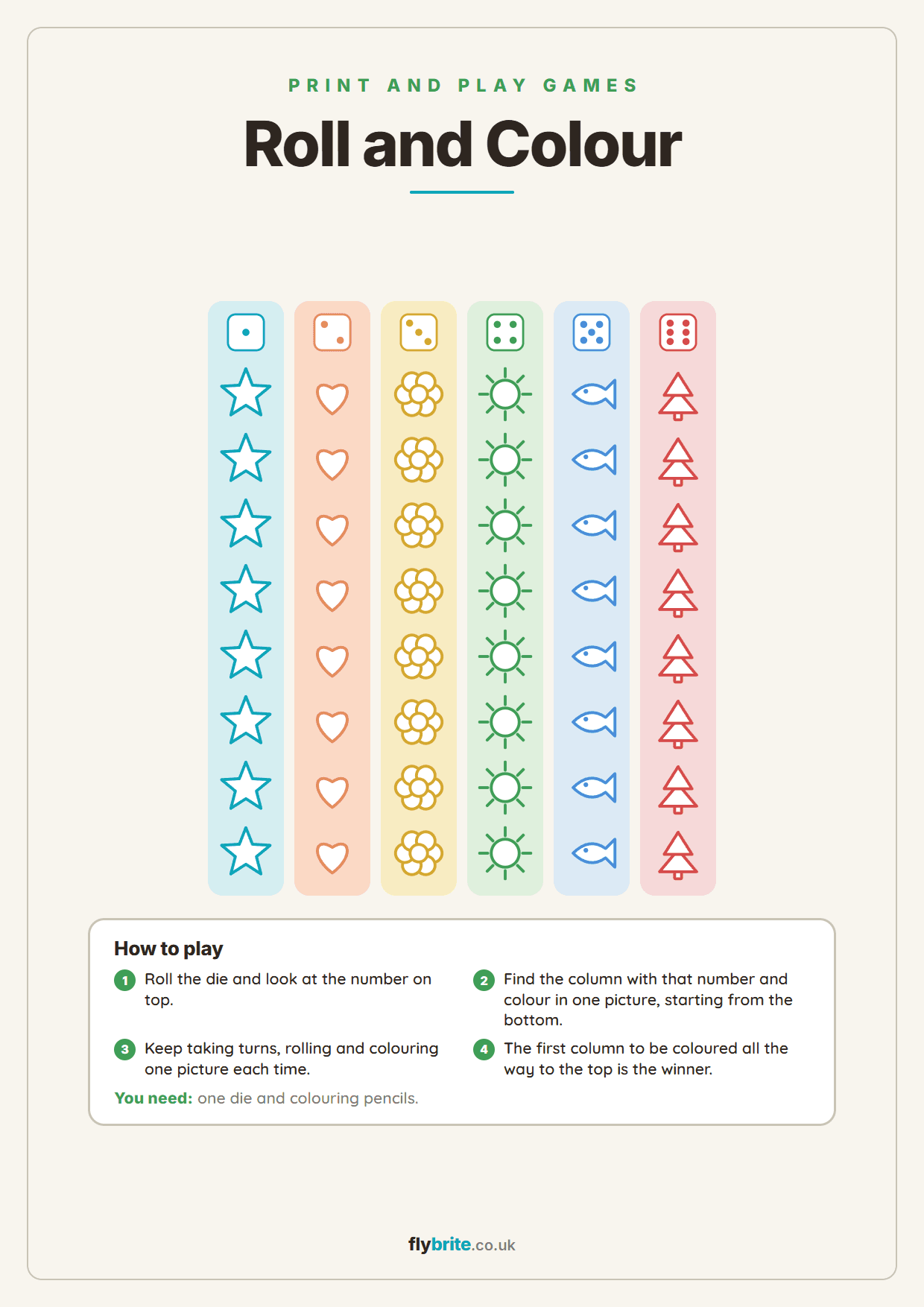
Roll the die and colour your way up the chart in this first graphing game.
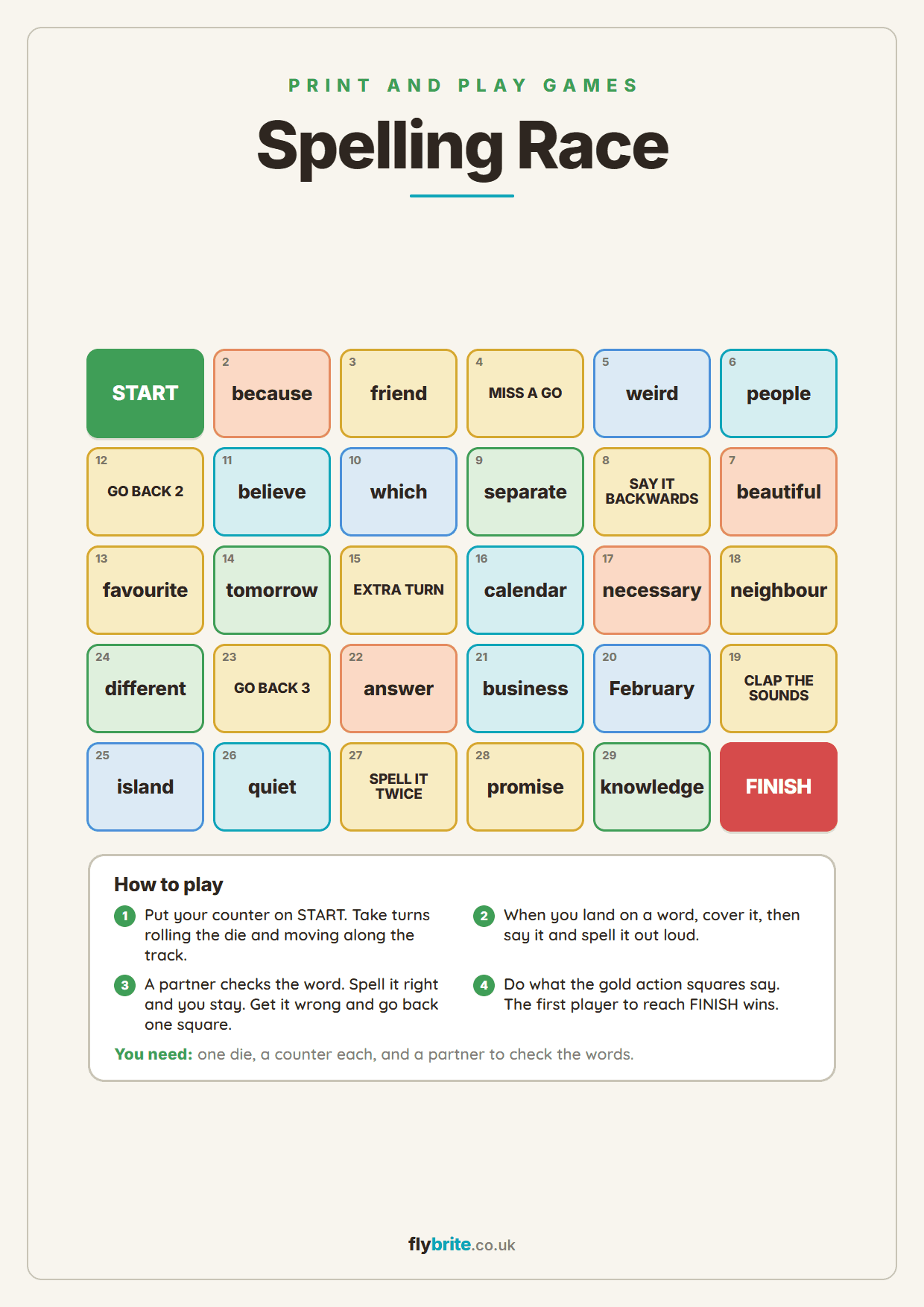
A winding spelling race board packed with tricky words to read and spell.
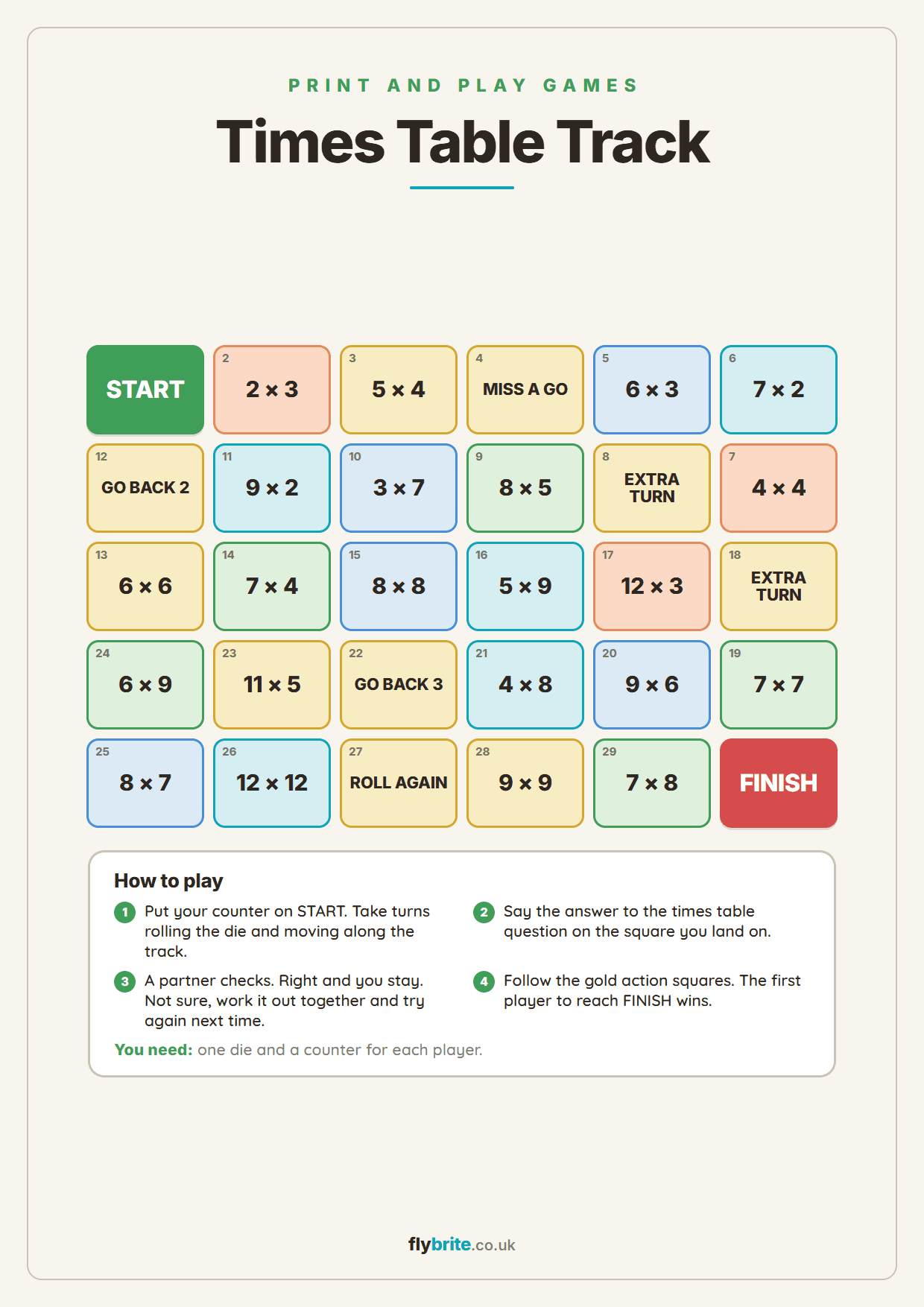
A times tables track where every square is a quick multiplication to solve.
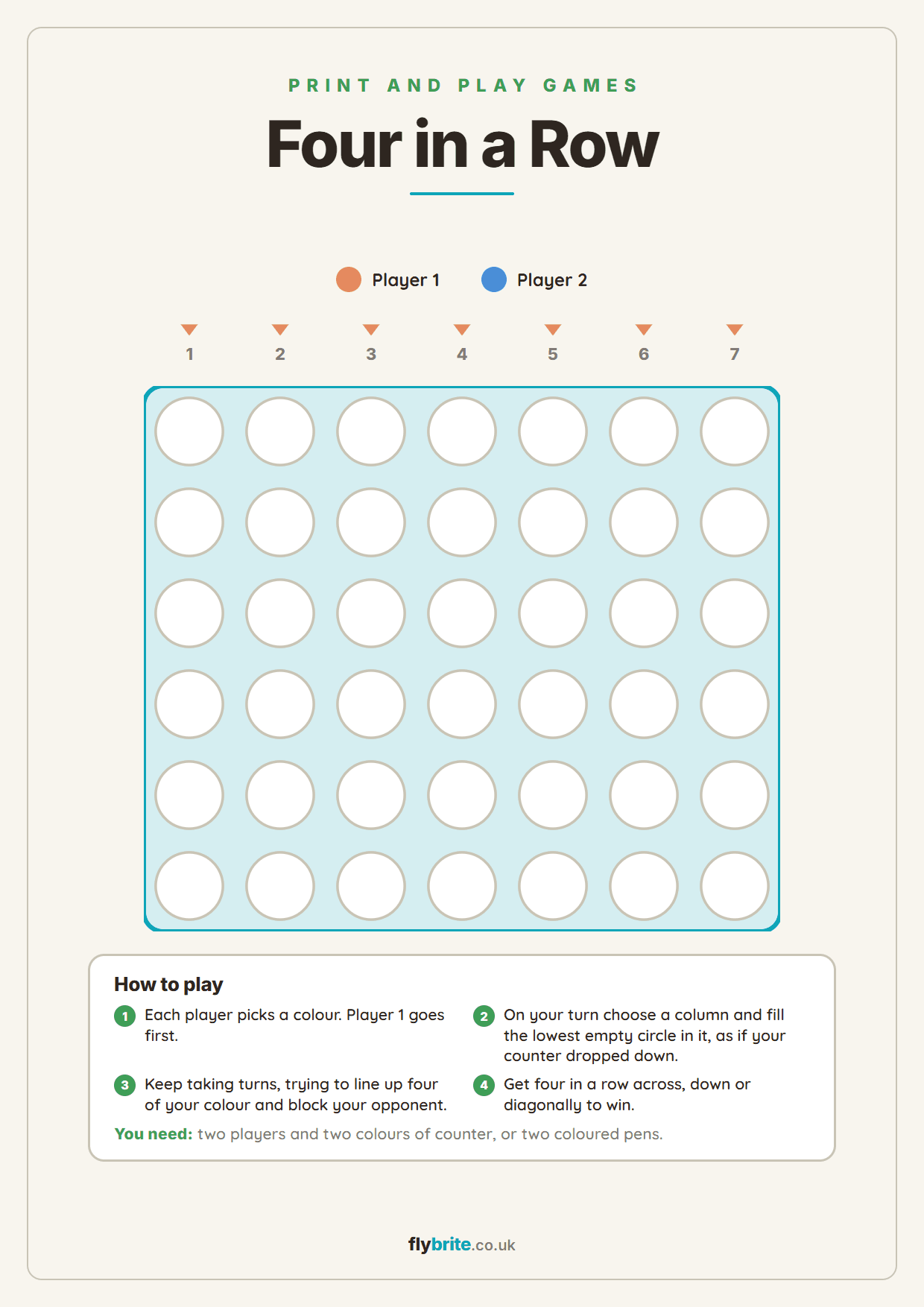
A four in a row grid for two players. Line up four of your colour to win.
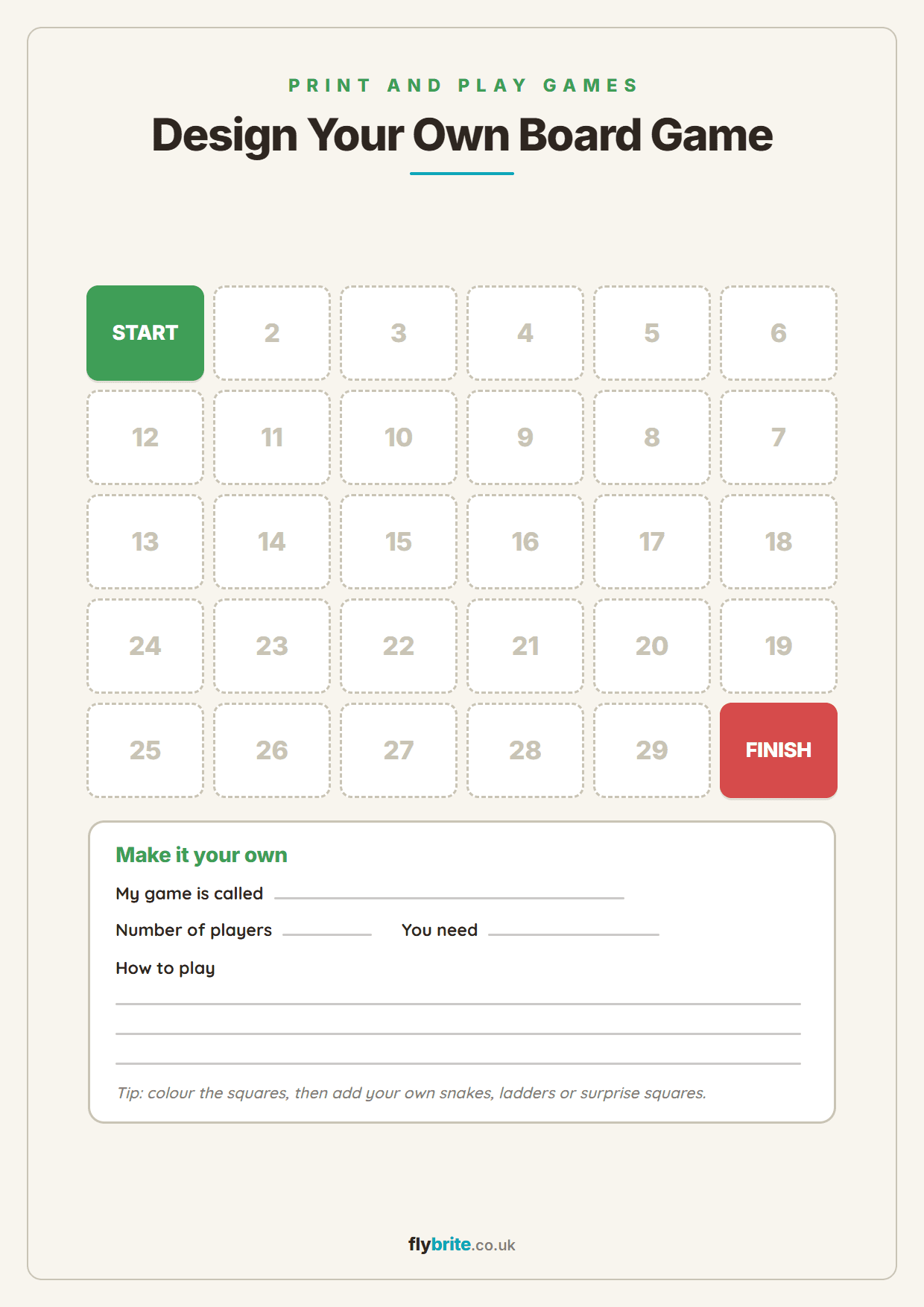 Type or write in
A blank board game track to fill with your own squares, rules and surprises.
Road, water, fire, sun and online safety plus first aid, the important stuff made friendly.
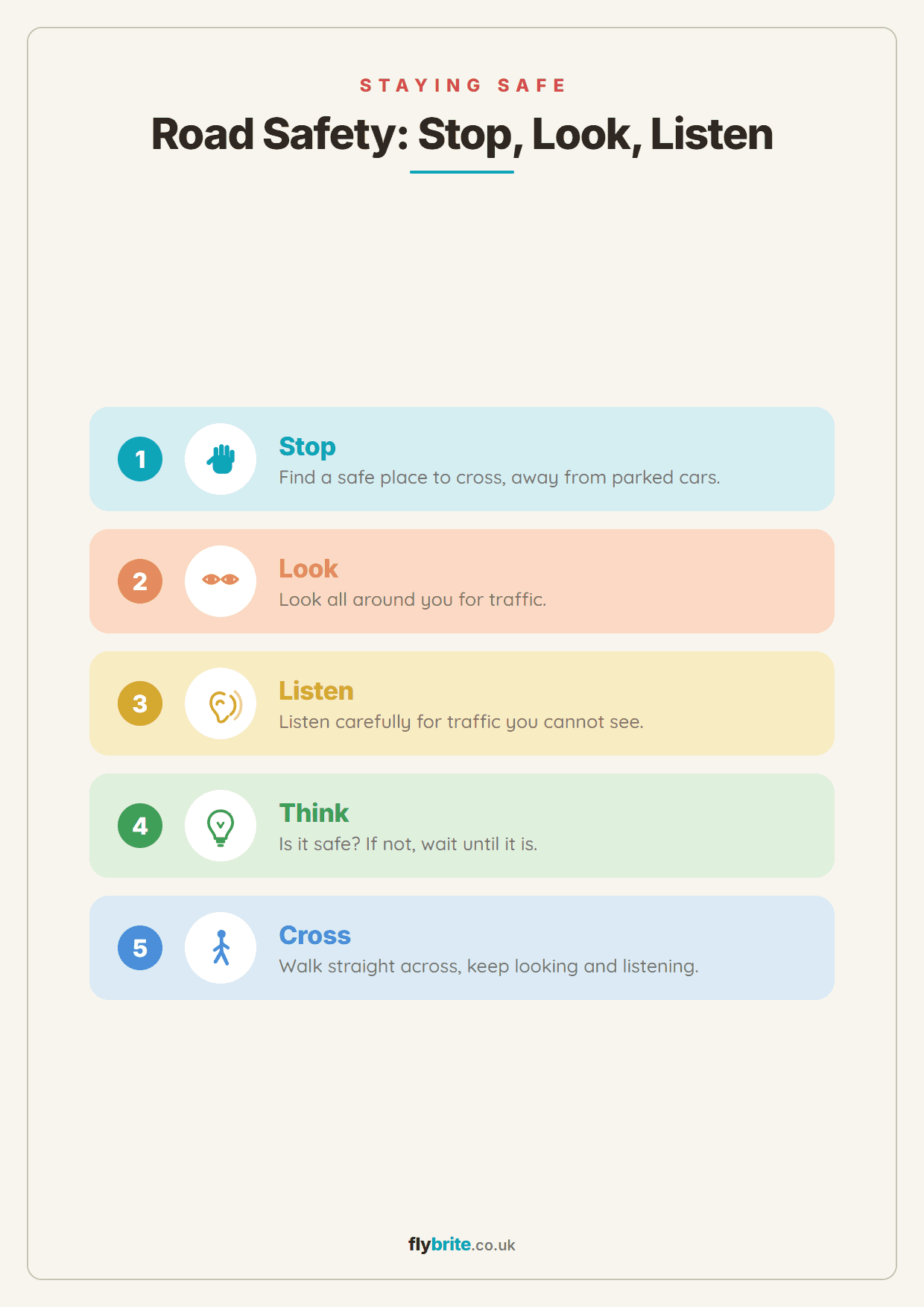
The Green Cross Code in five calm steps, so crossing the road becomes second nature.
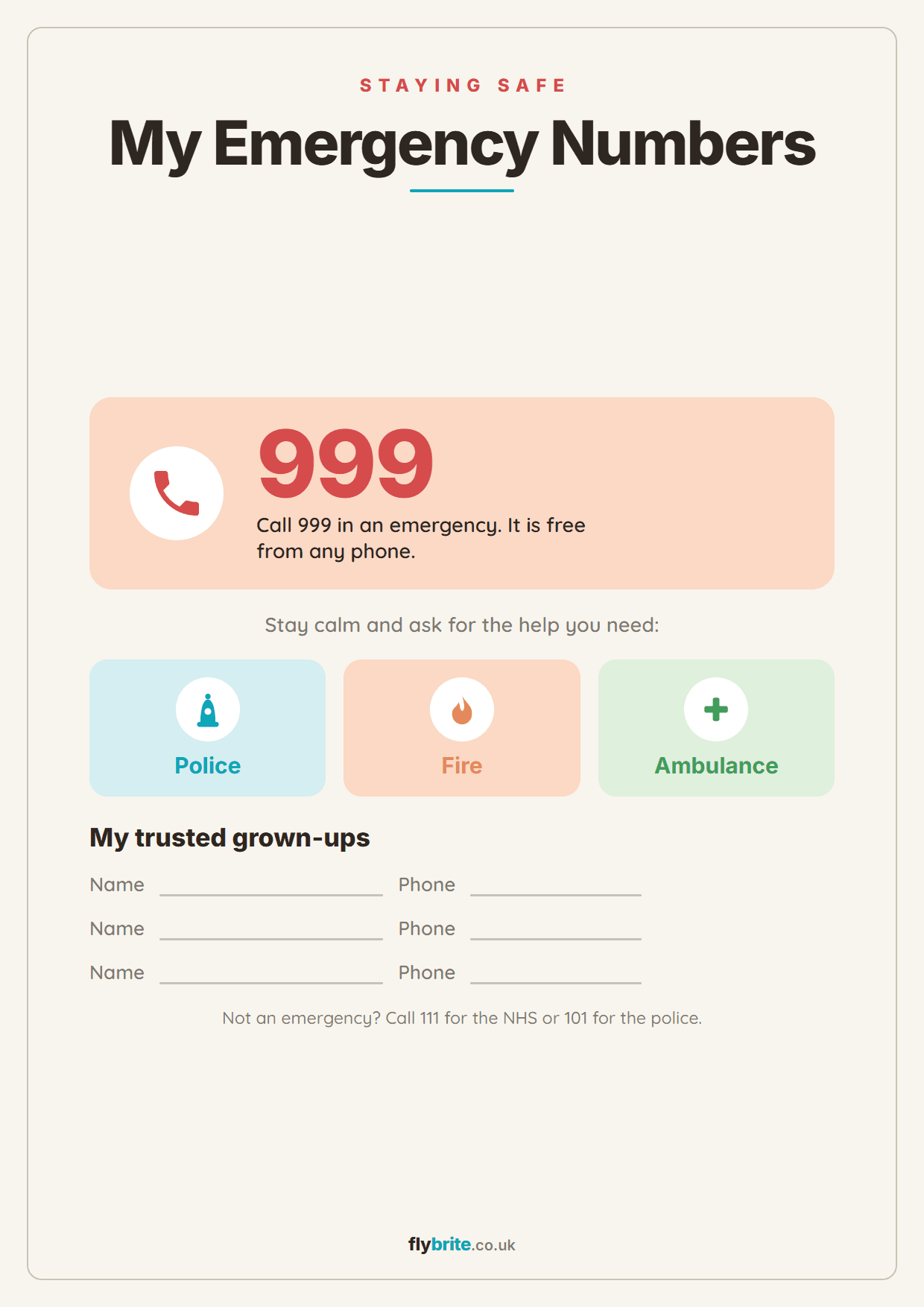 Type or write in
What 999 is for, plus write-in space for the trusted grown-ups your child can call.

Five friendly faces of the emergency services and what each of them does for us.

Smoke alarms, get out and stay out, and a simple family fire drill in five steps.
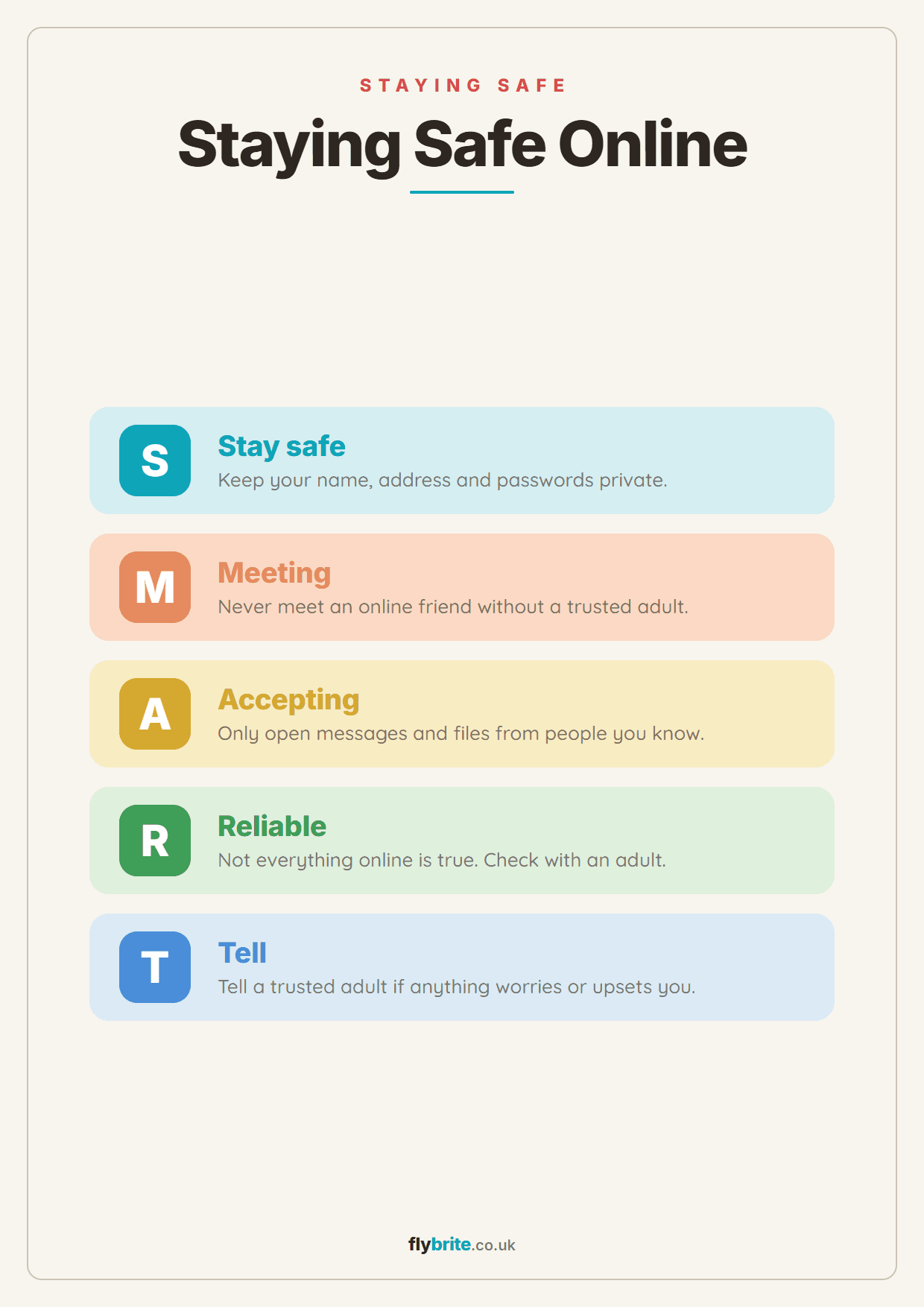
The five SMART rules that keep older children safe, kind and careful on screens.
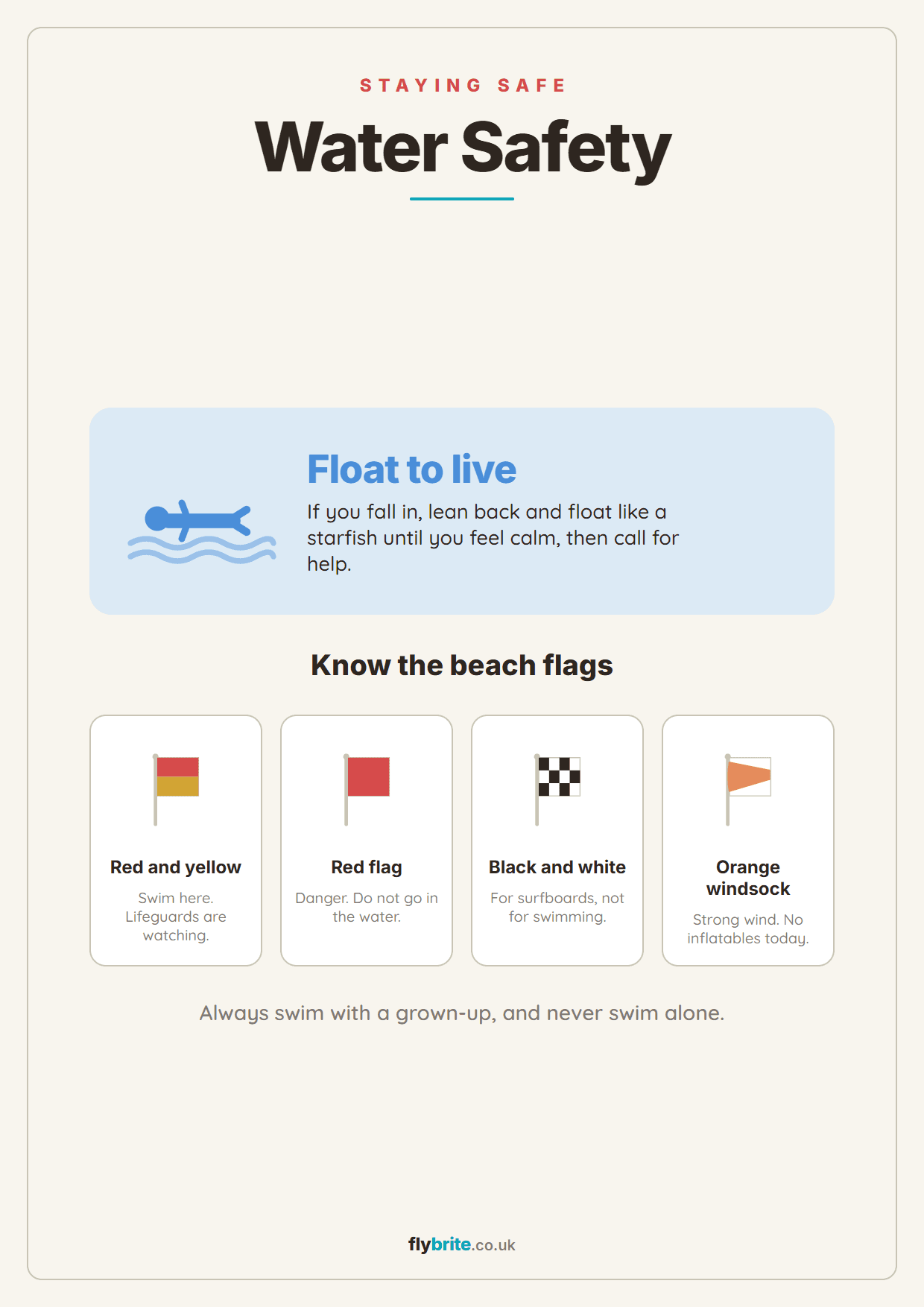
Float to live, plus a clear guide to the beach flags for pool, river and seaside days.
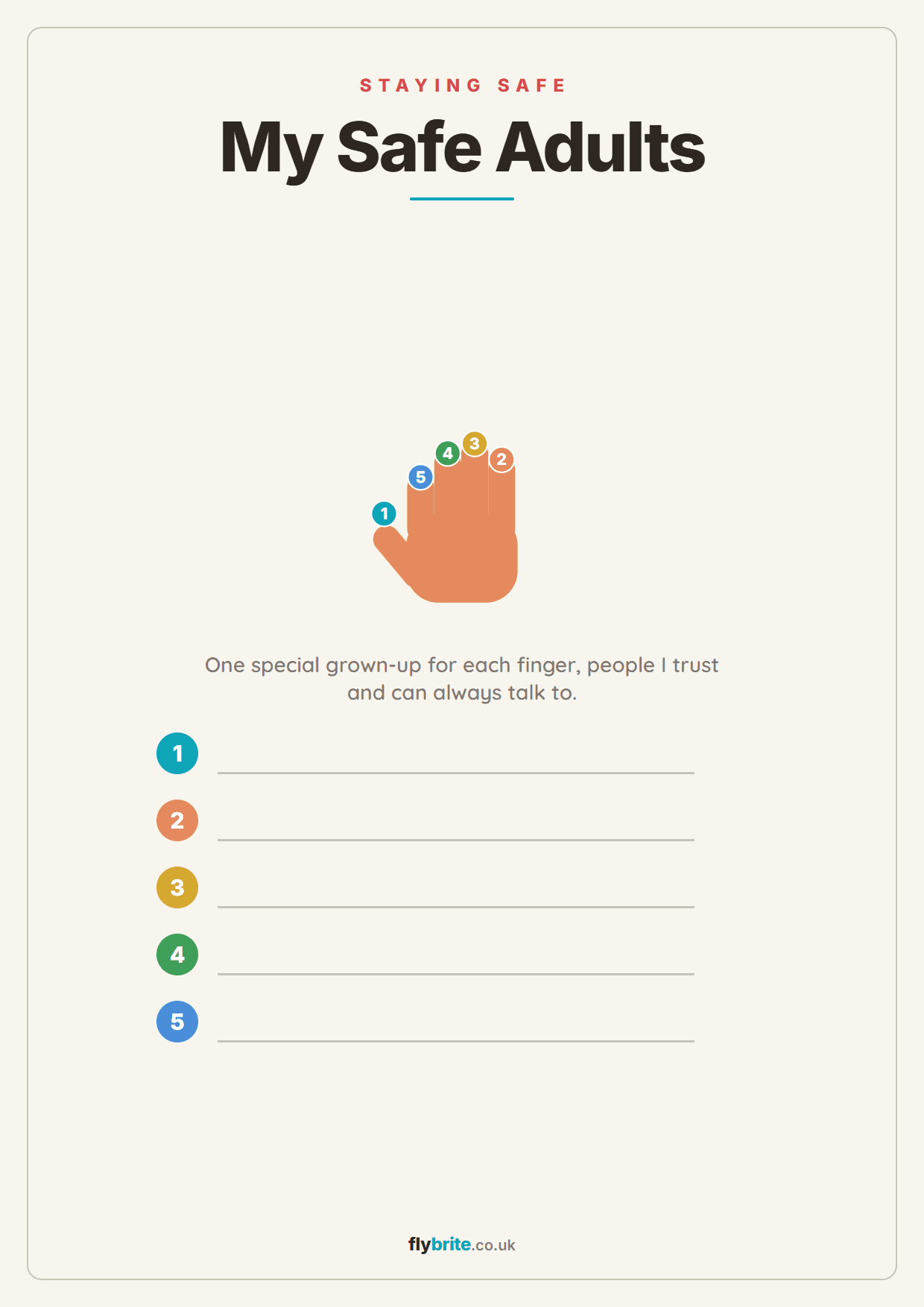 Type or write in
A friendly handprint with room to name the five grown-ups a little one can always talk to.
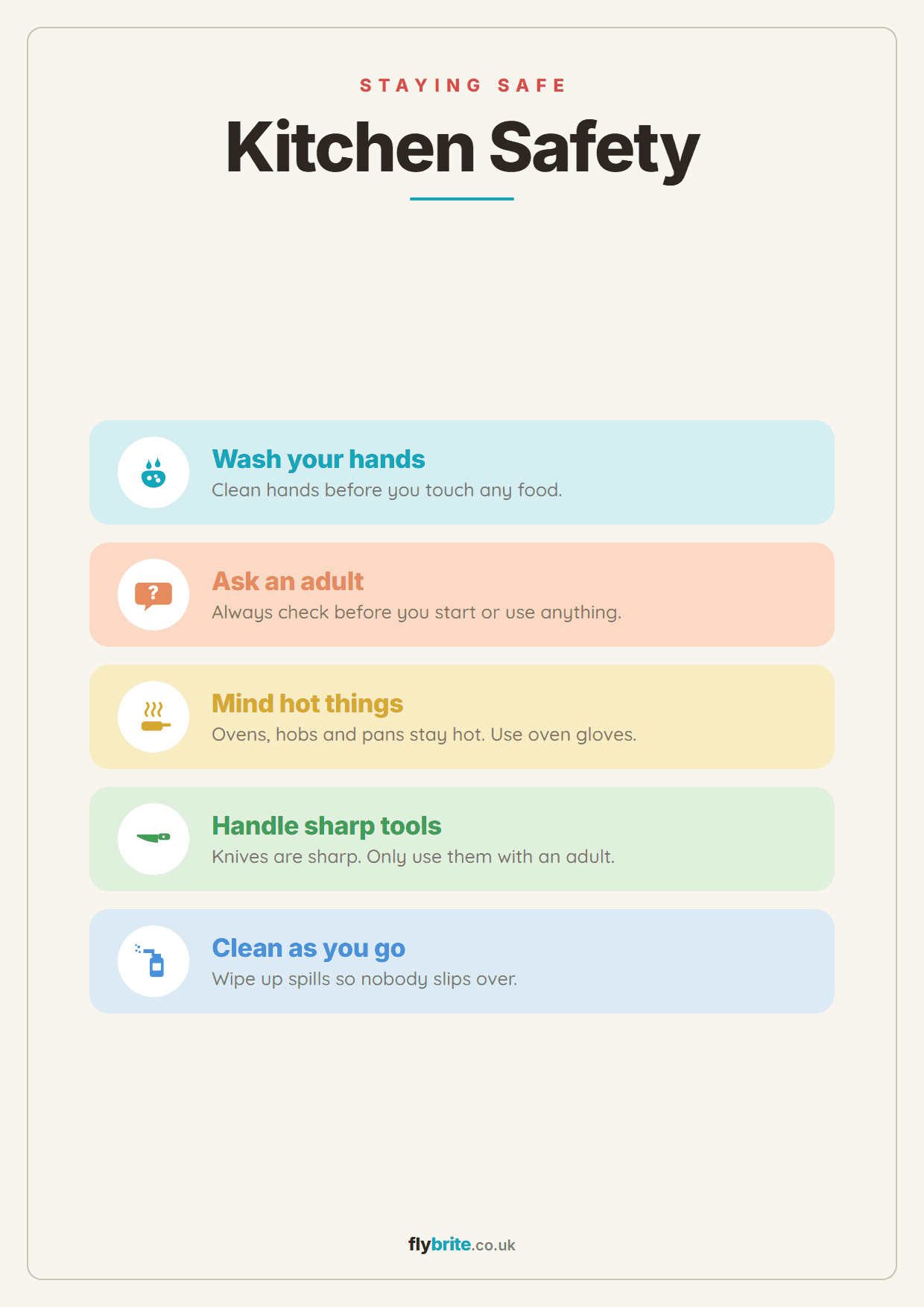
The five golden rules for young cooks, from washing hands to handling hot pans and sharp tools.
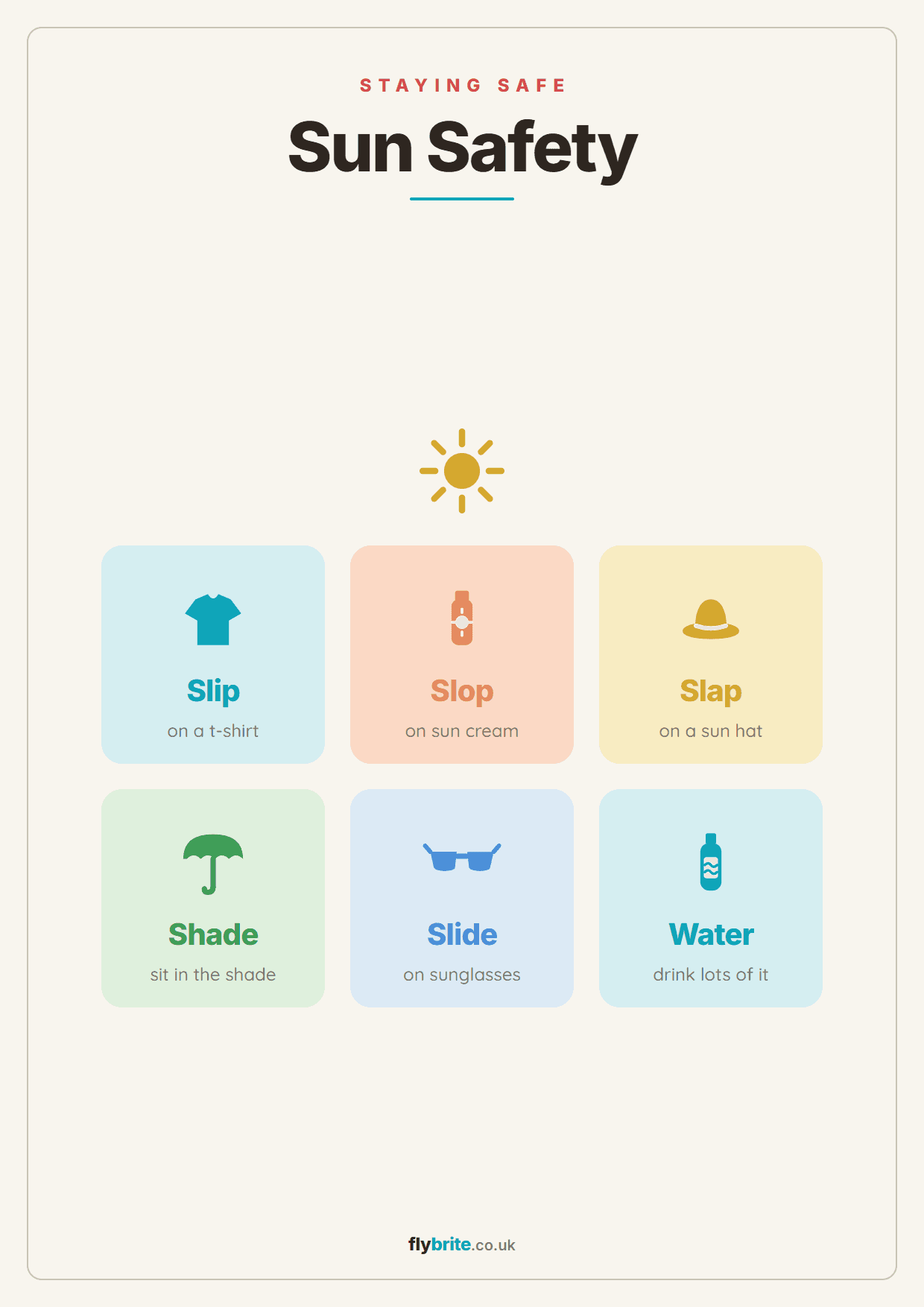
Slip, slop, slap and more, six sunny reminders to stay safe and cool on bright days.
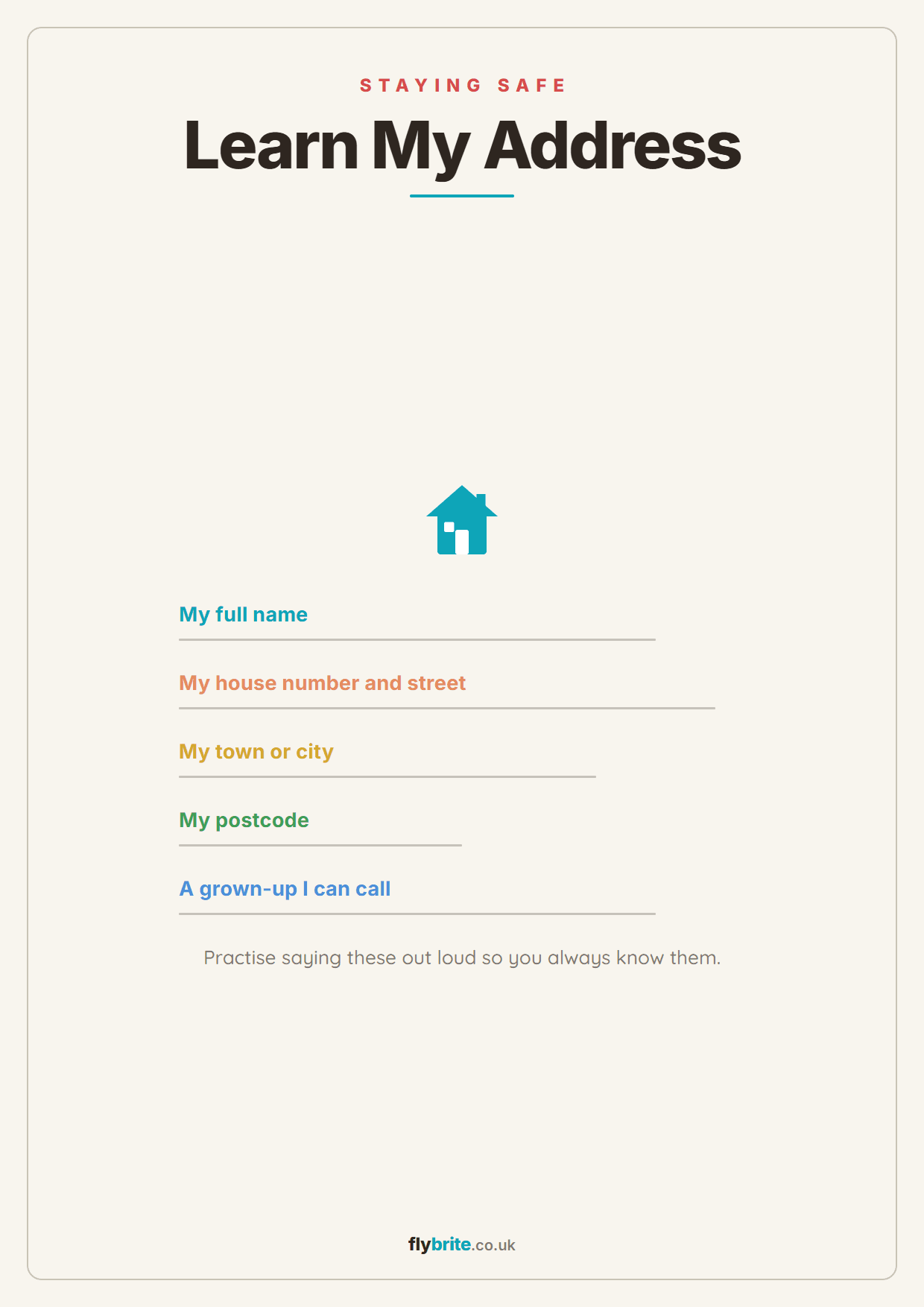 Type or write in
A gentle fill-in sheet for the details every child should know off by heart.
KS3 algebra for age 11 plus: expressions, substitution, solving equations and straight-line graphs.
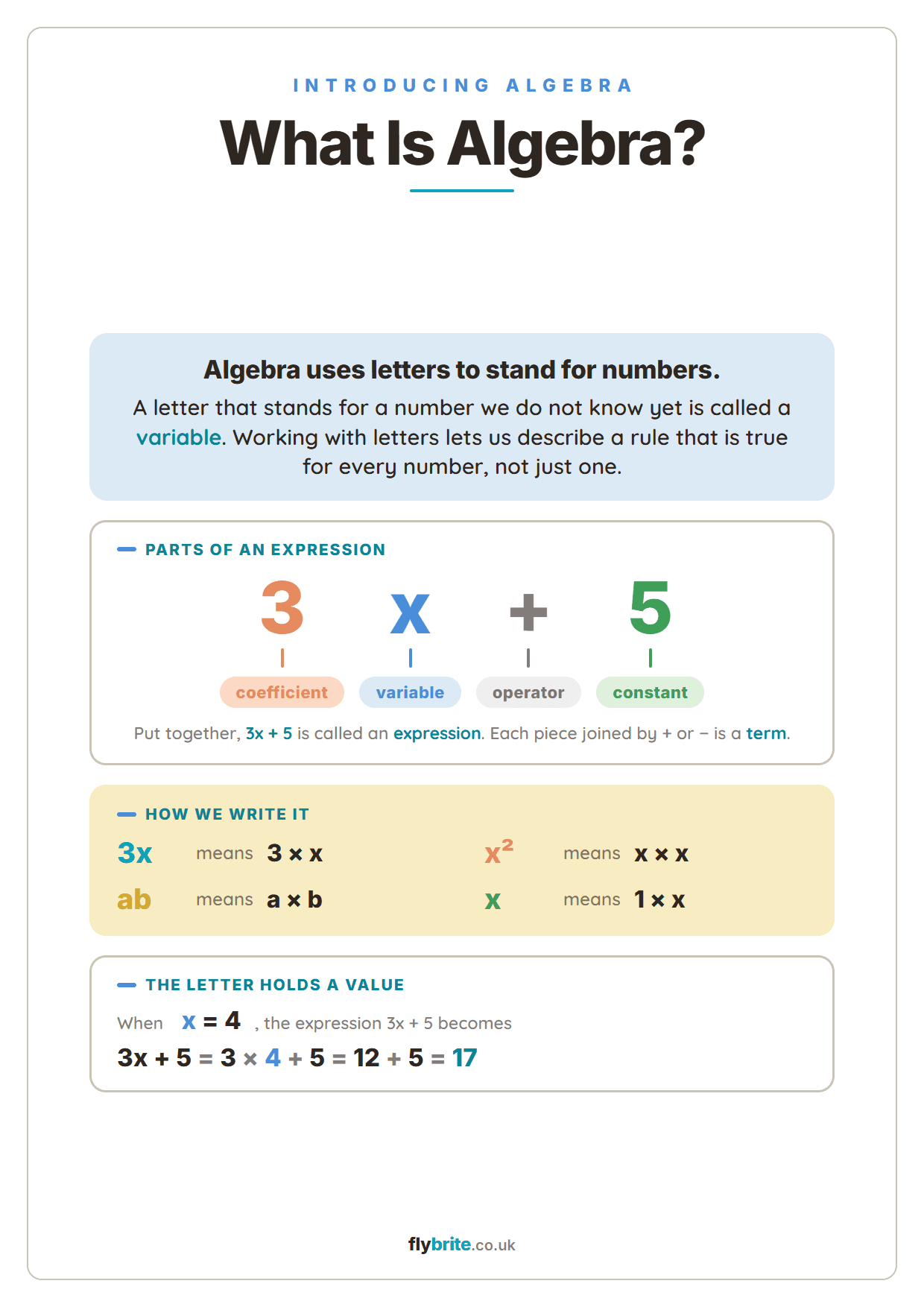
Letters standing in for numbers, with the parts of an expression labelled and the notation that trips people up made plain.
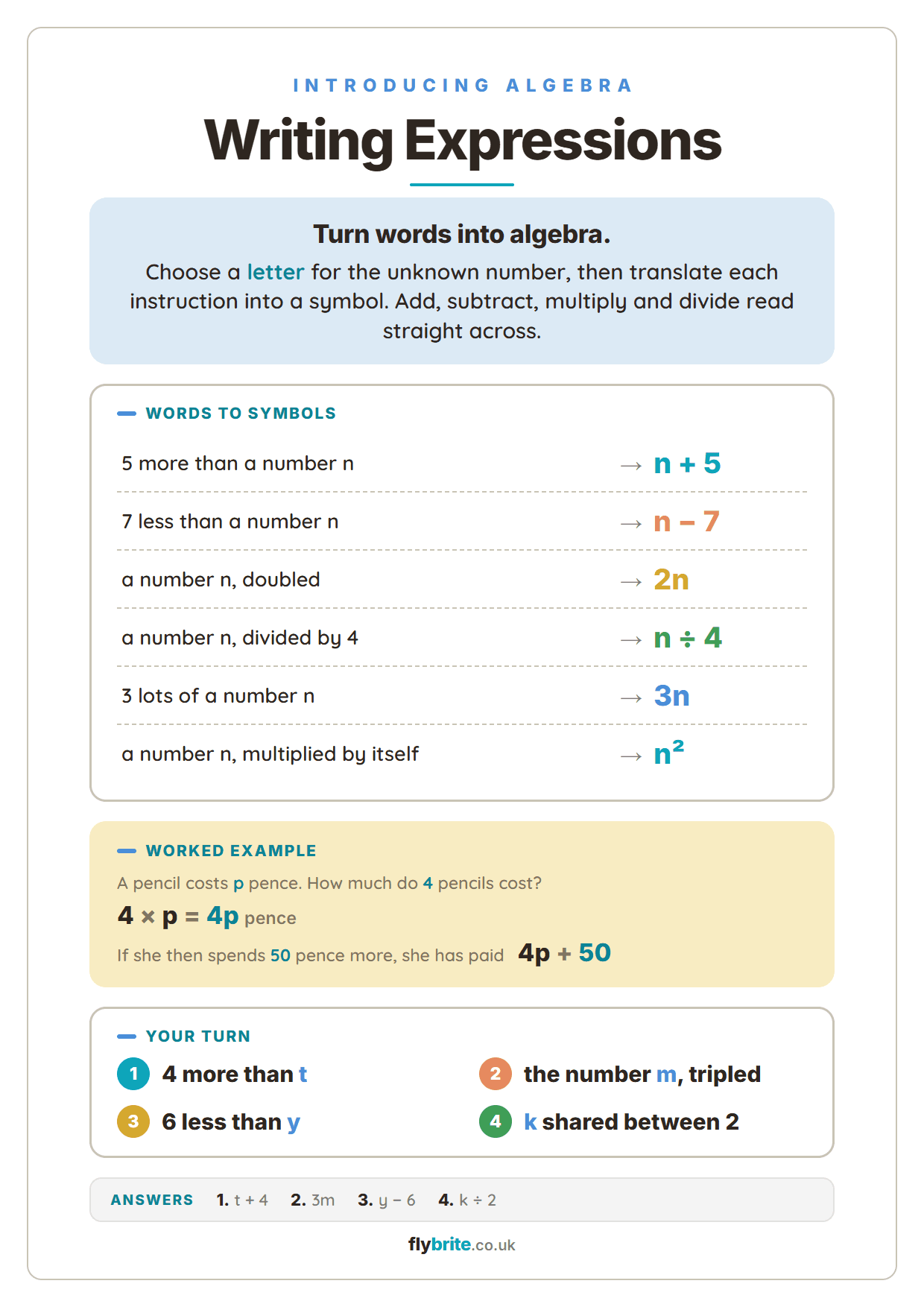
Turning everyday phrases into algebra, from five more than a number to a number multiplied by itself, with practice.
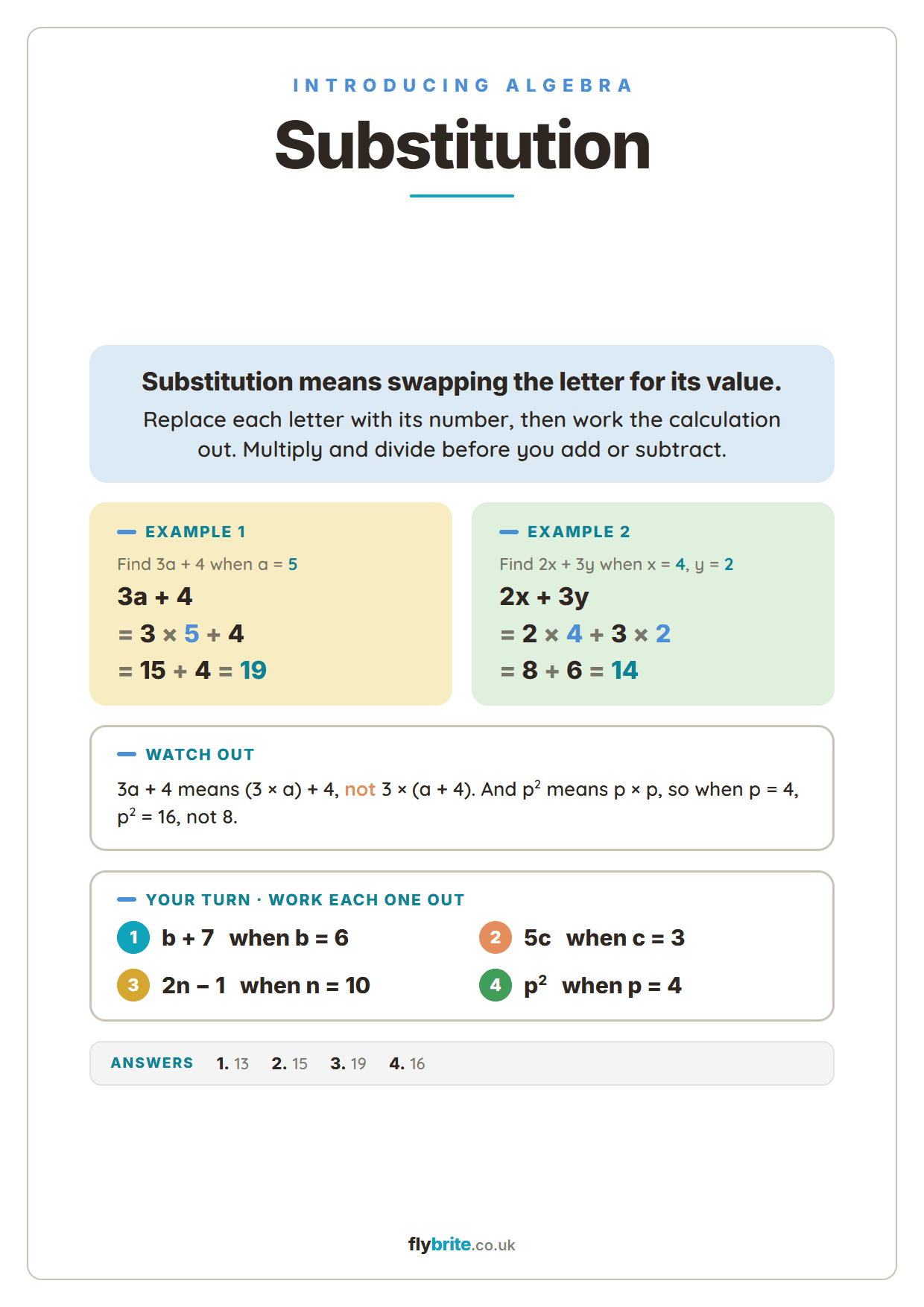
Swap each letter for its value and work it out, with two worked examples and four questions to try.
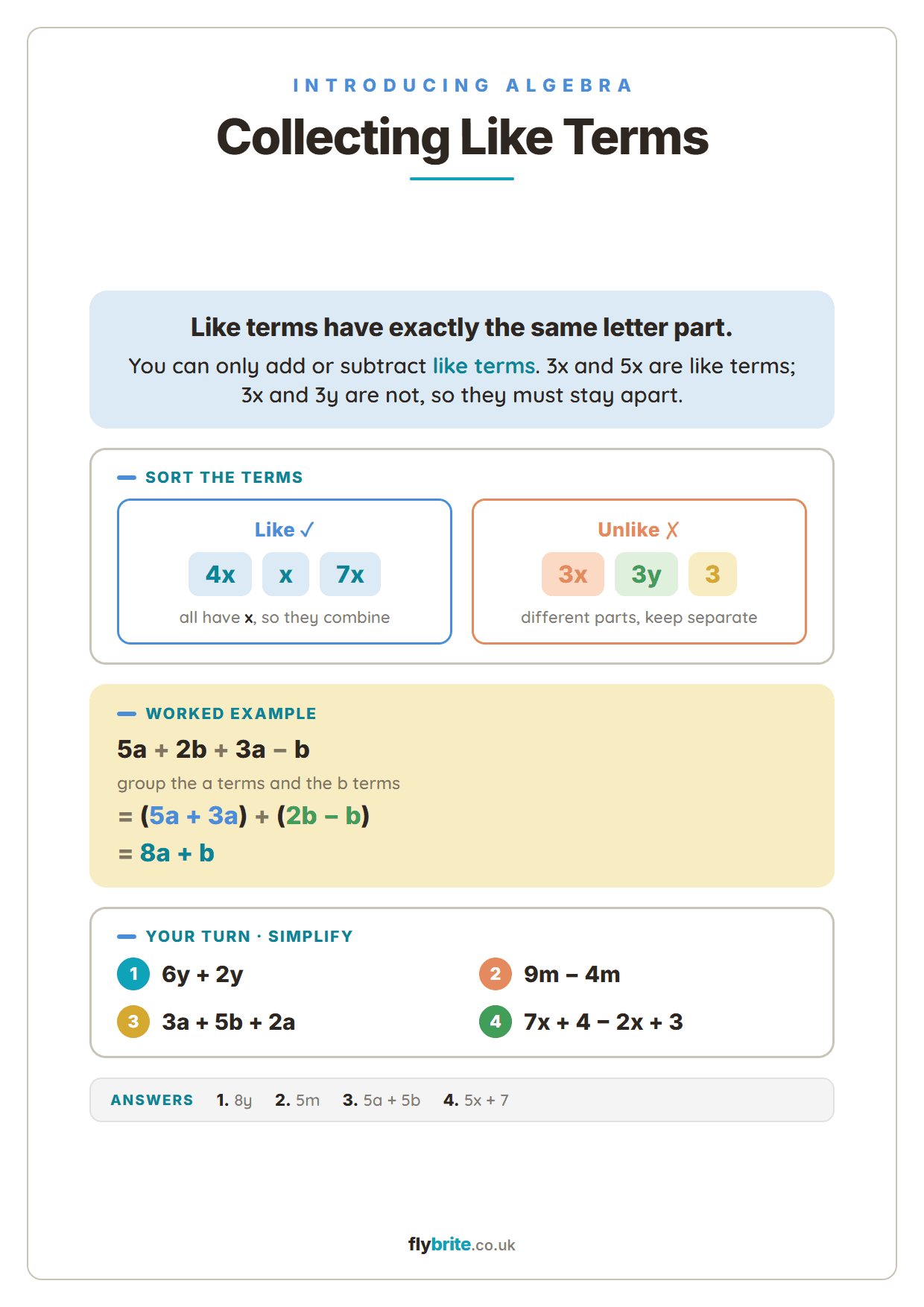
How to simplify by adding the terms that share a letter, with a sorted example and four to simplify yourself.
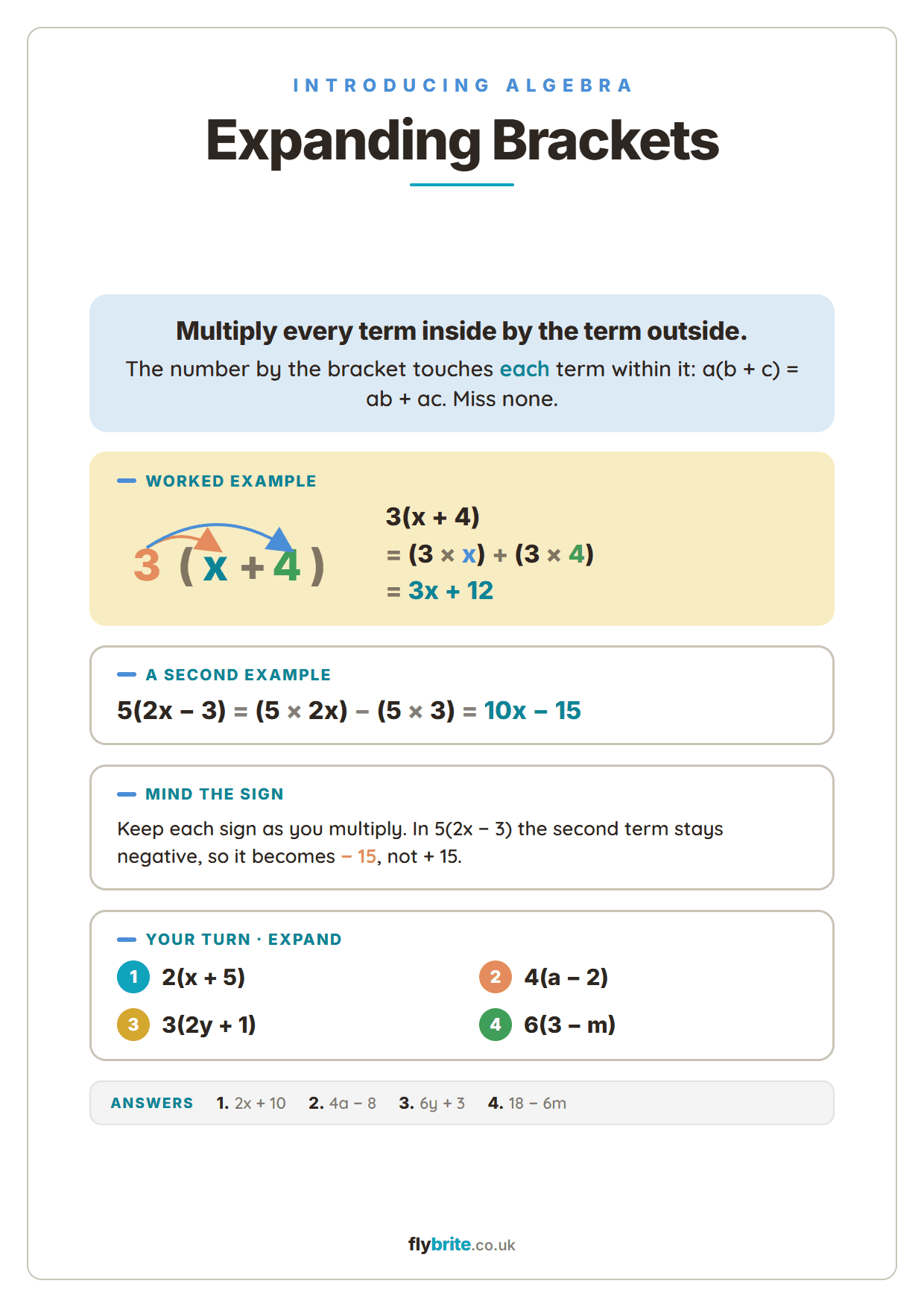
Multiply everything inside the bracket by the term outside, shown with clear arrows and four questions.
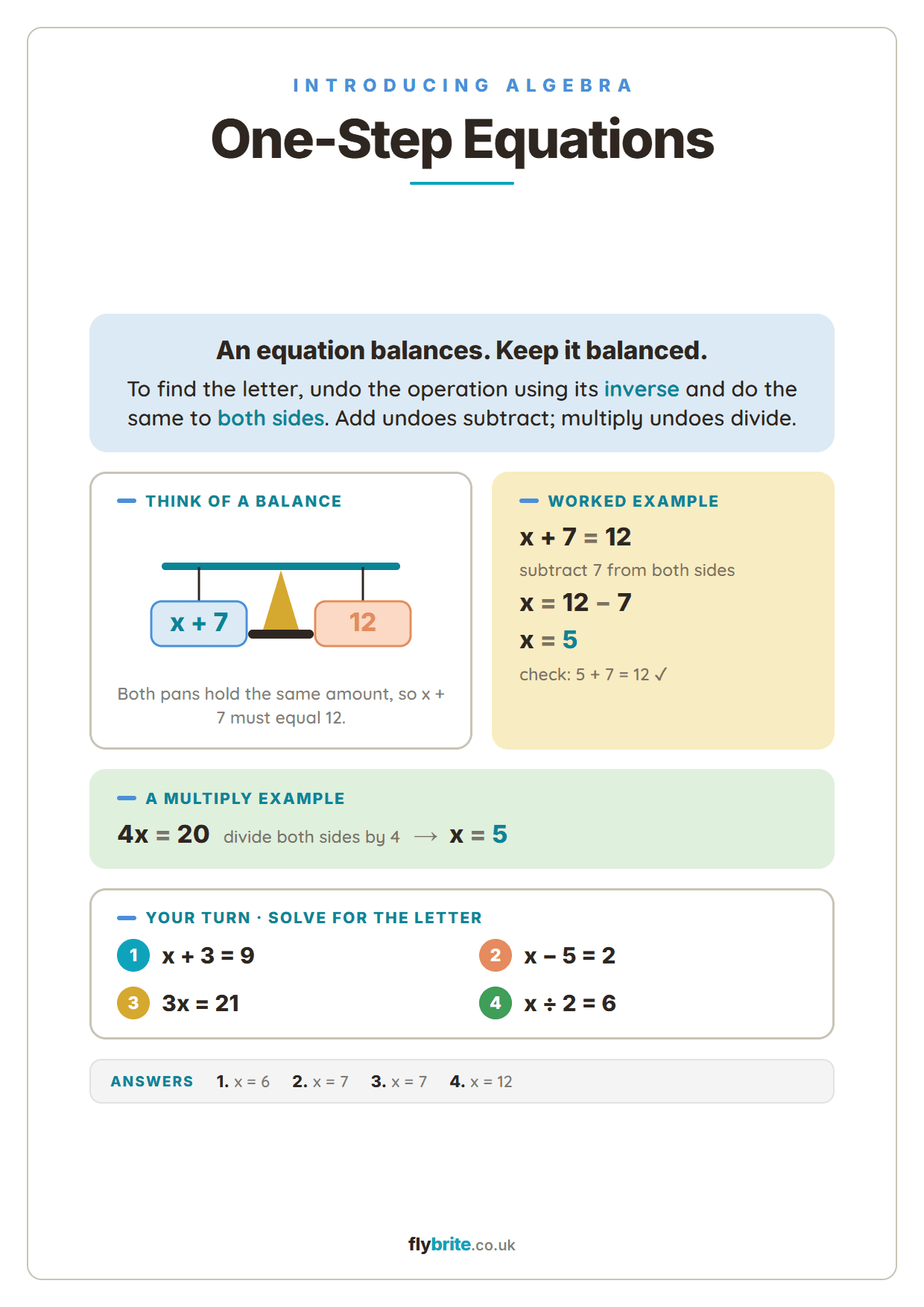
Solving with inverse operations and a balance you can picture, keeping both sides equal all the way to the answer.
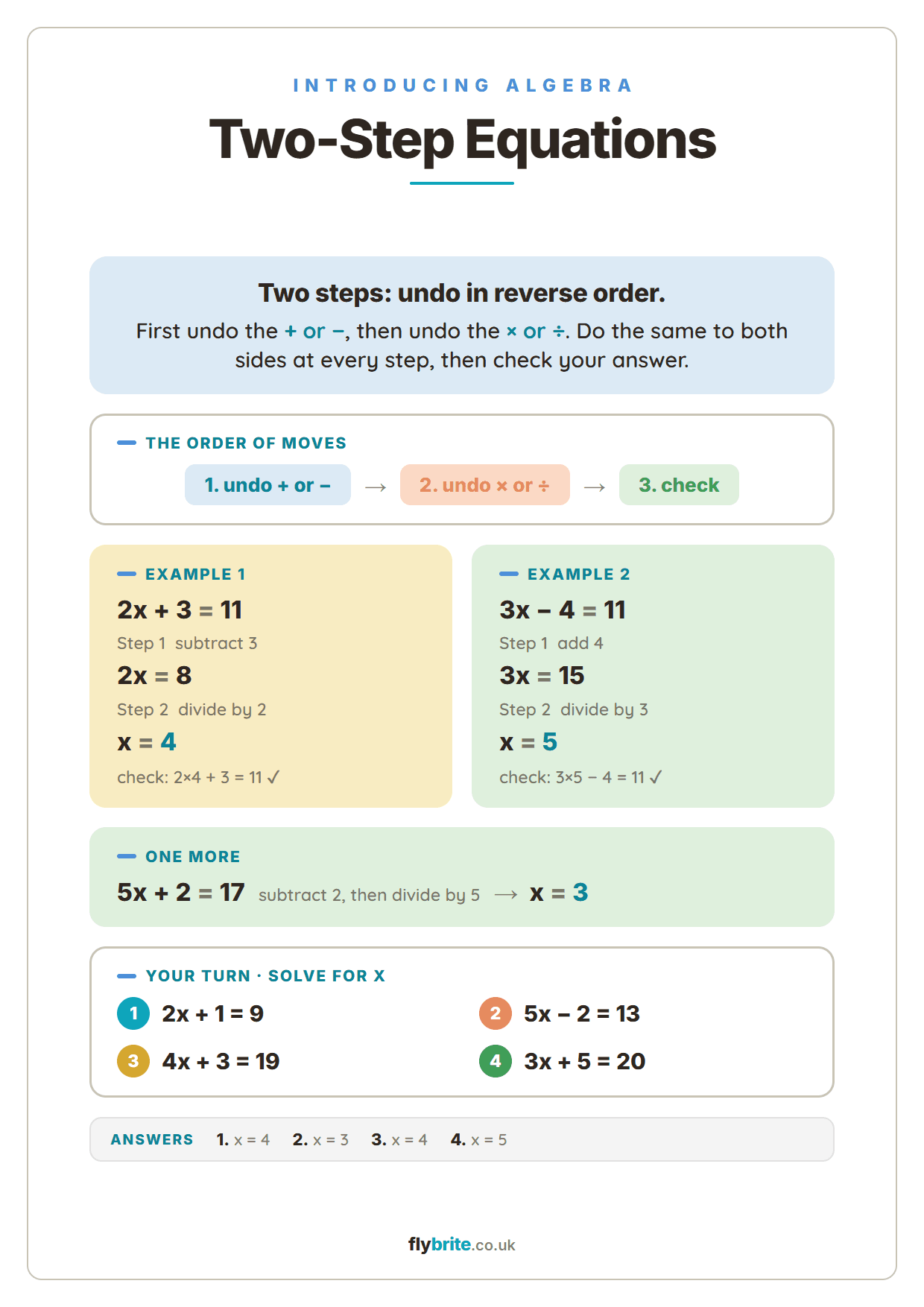
Undo the plus or minus first, then the times or divide, with two fully worked examples and four to solve.
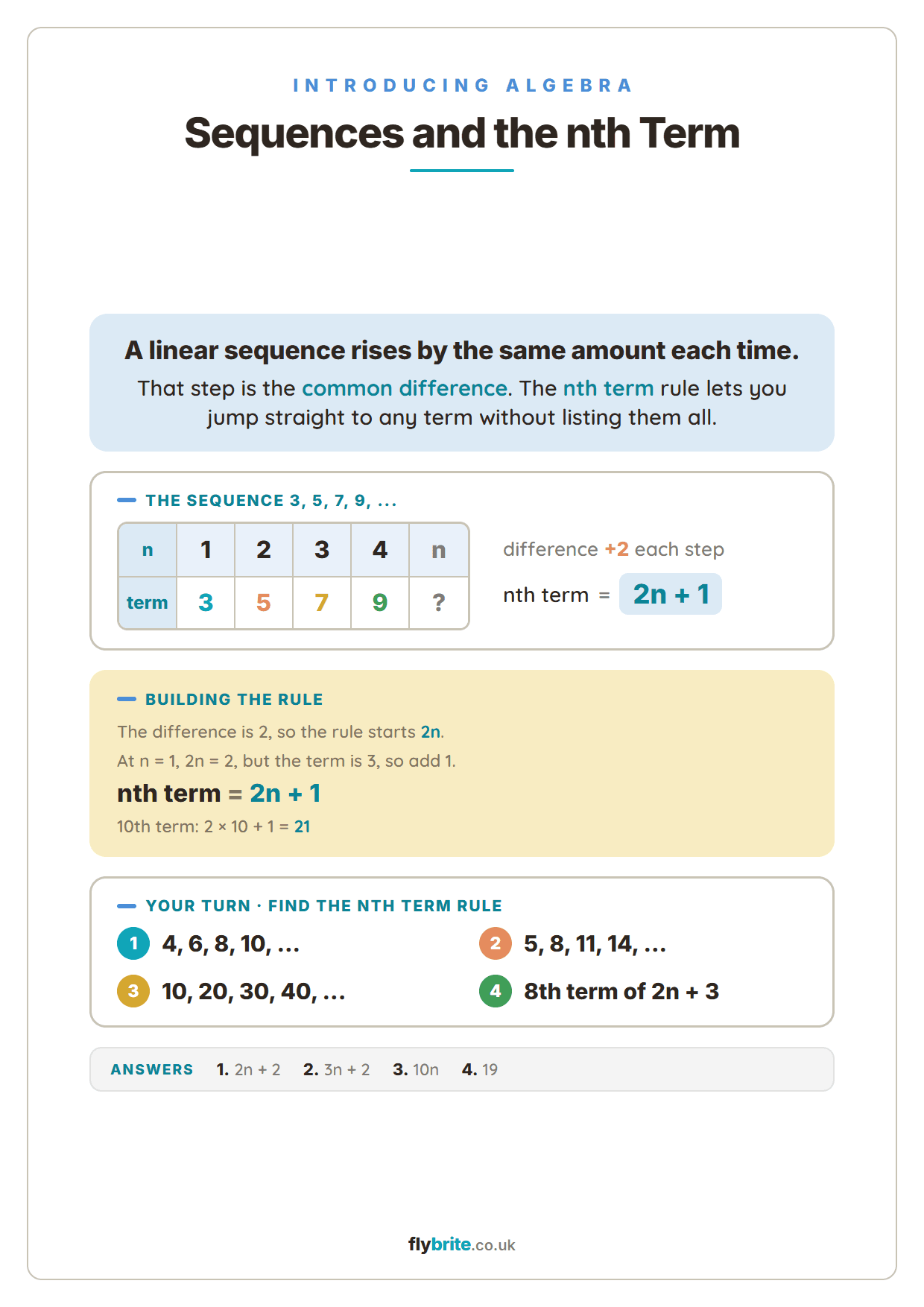
Spot the common difference, build the nth term rule, and jump straight to any term in a linear sequence.
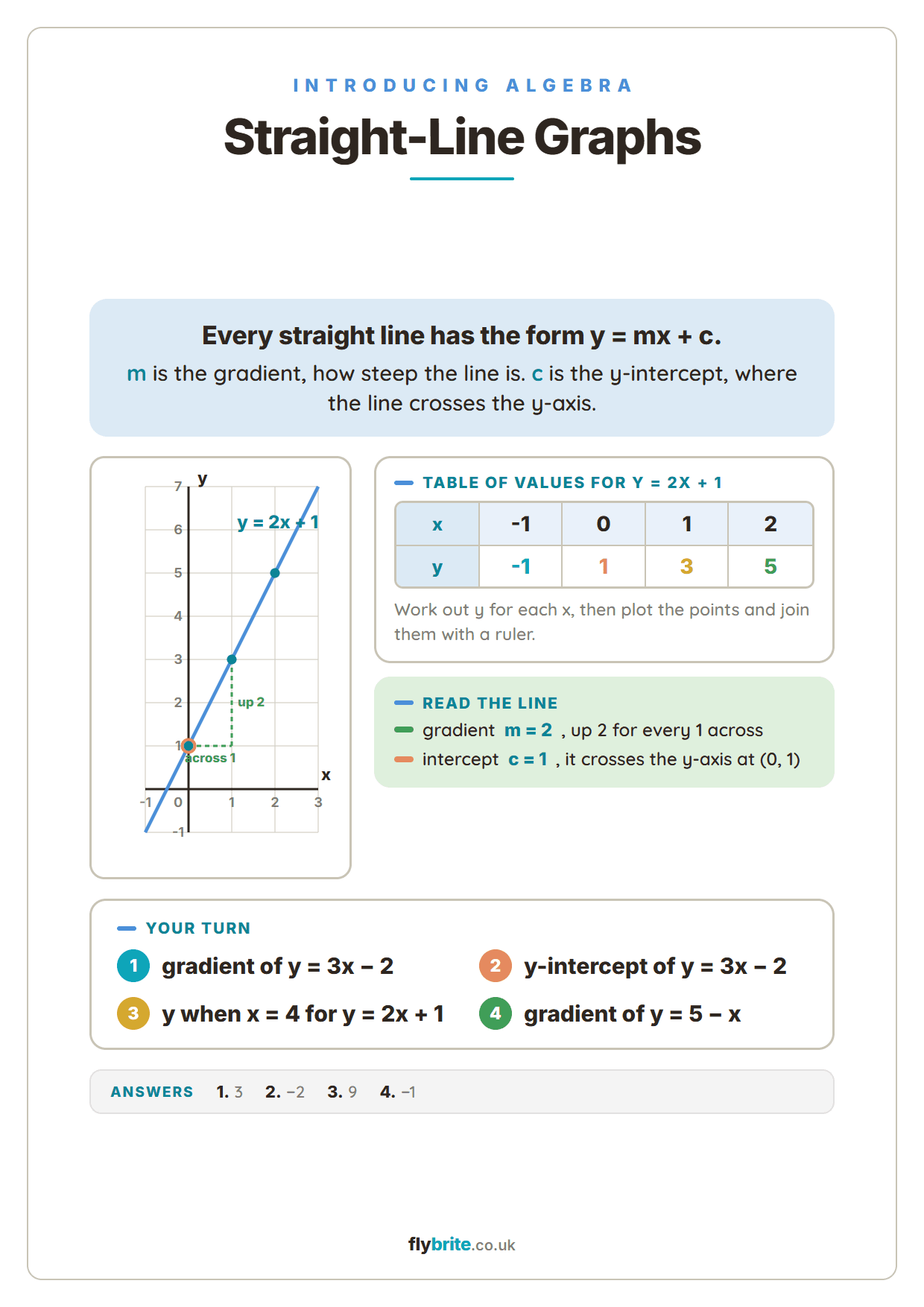
Reading y = mx + c off a plotted line, with a table of values, gradient triangle and labelled axes.
 Type or write in
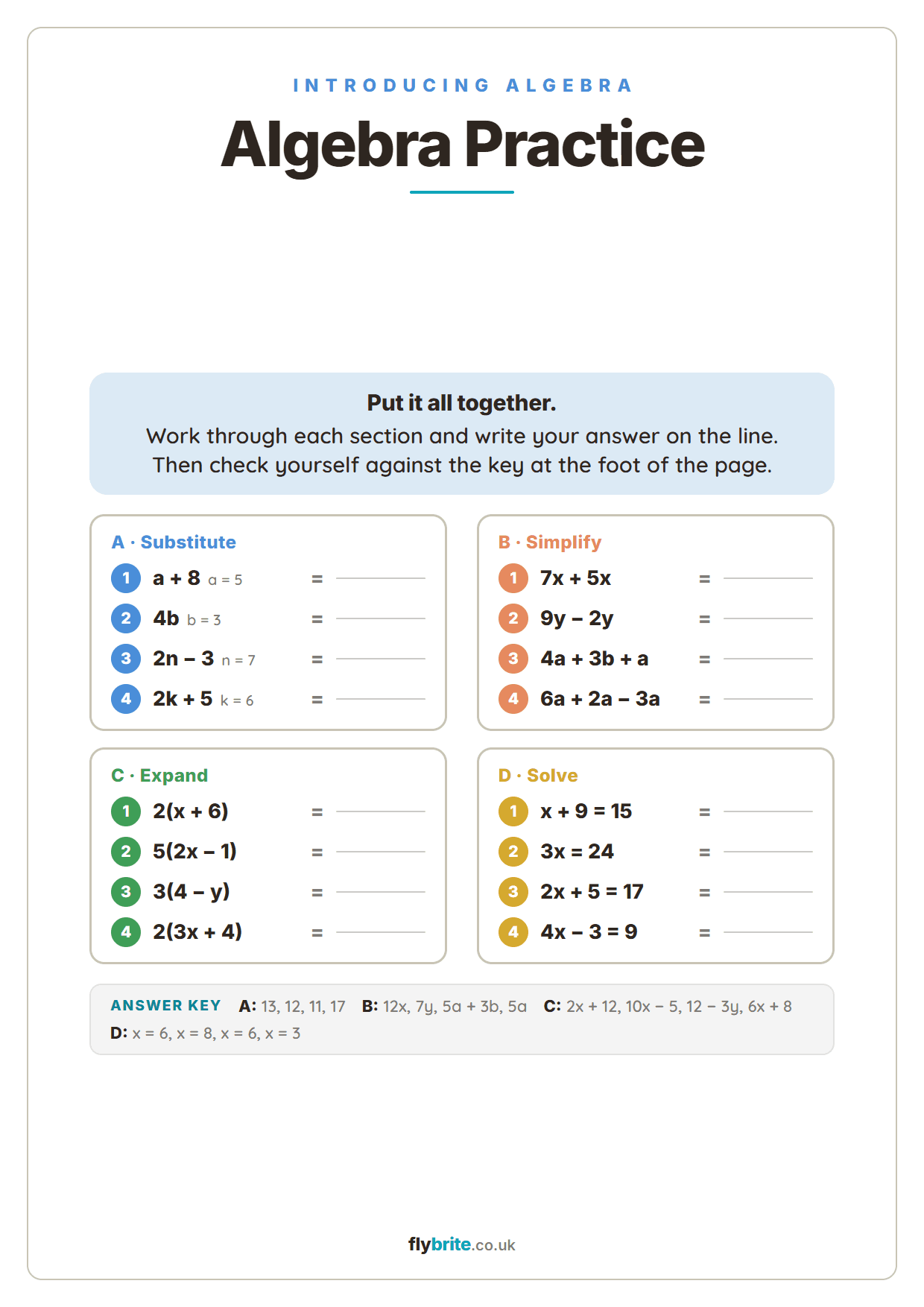
A mixed write-in worksheet across substitution, simplifying, expanding and solving, with a full answer key.
KS3 geometry: angle rules, triangles, polygons, area, circles and the theorem of Pythagoras.

Acute, right, obtuse and reflex angles shown at a glance, with clear diagrams and a quick classifying task.

The two rules that unlock missing angles, on a straight line and all the way around a point.

Why every triangle adds up to 180 degrees, with a worked example, the four triangle types and angles to find.
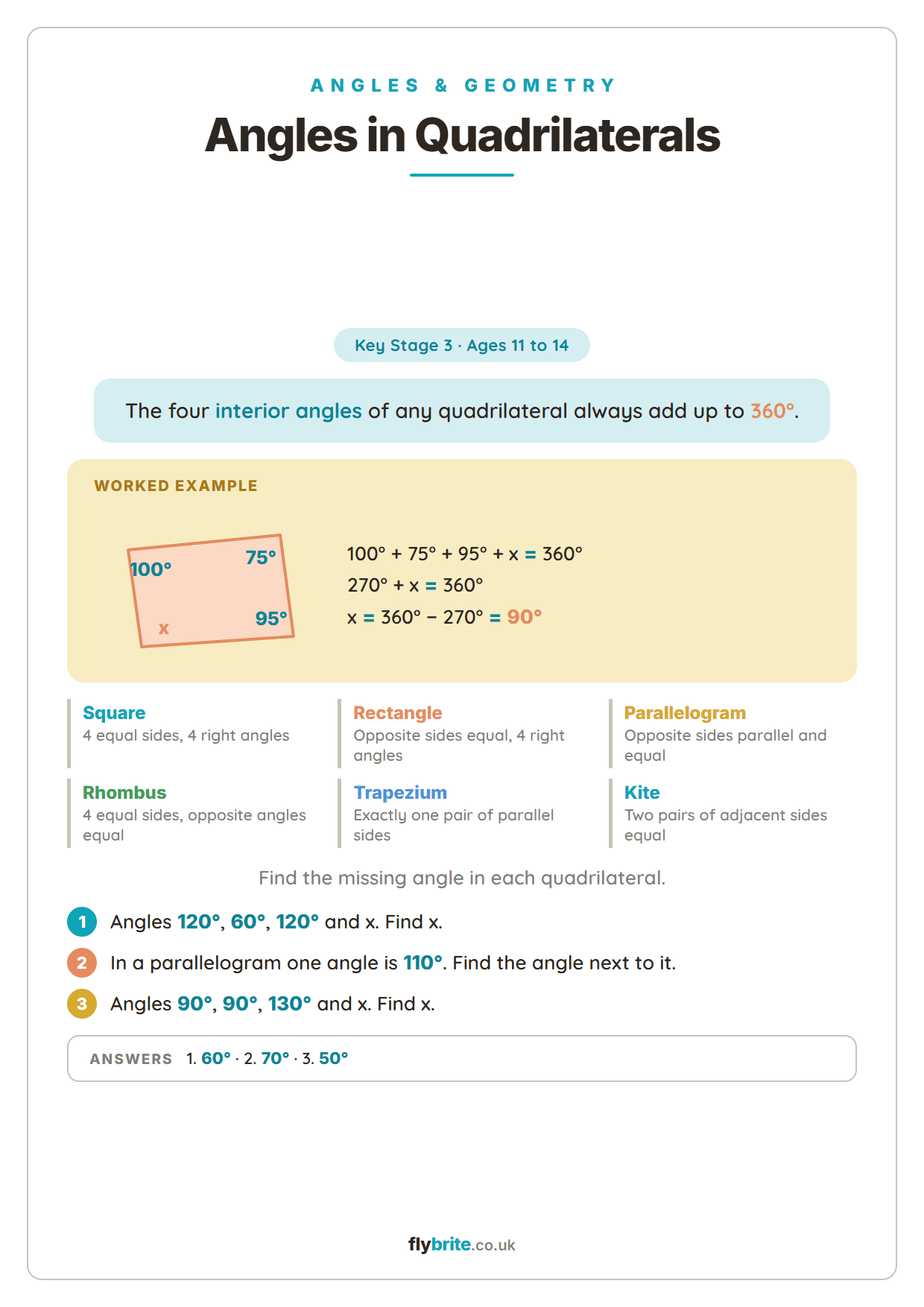
Every quadrilateral totals 360 degrees, plus the special shapes and the properties that define them.
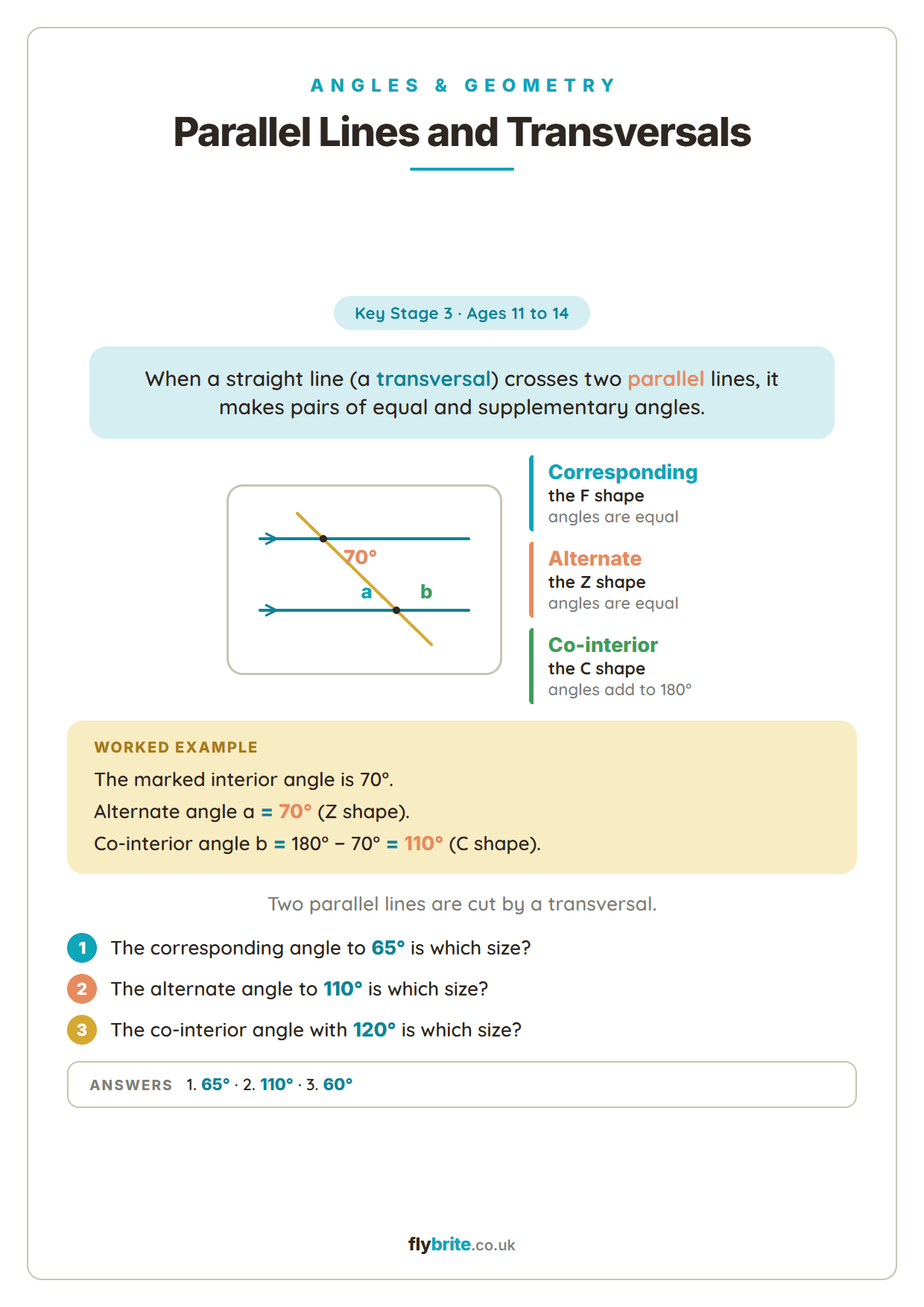
Corresponding, alternate and co-interior angles made simple with the F, Z and C shapes.
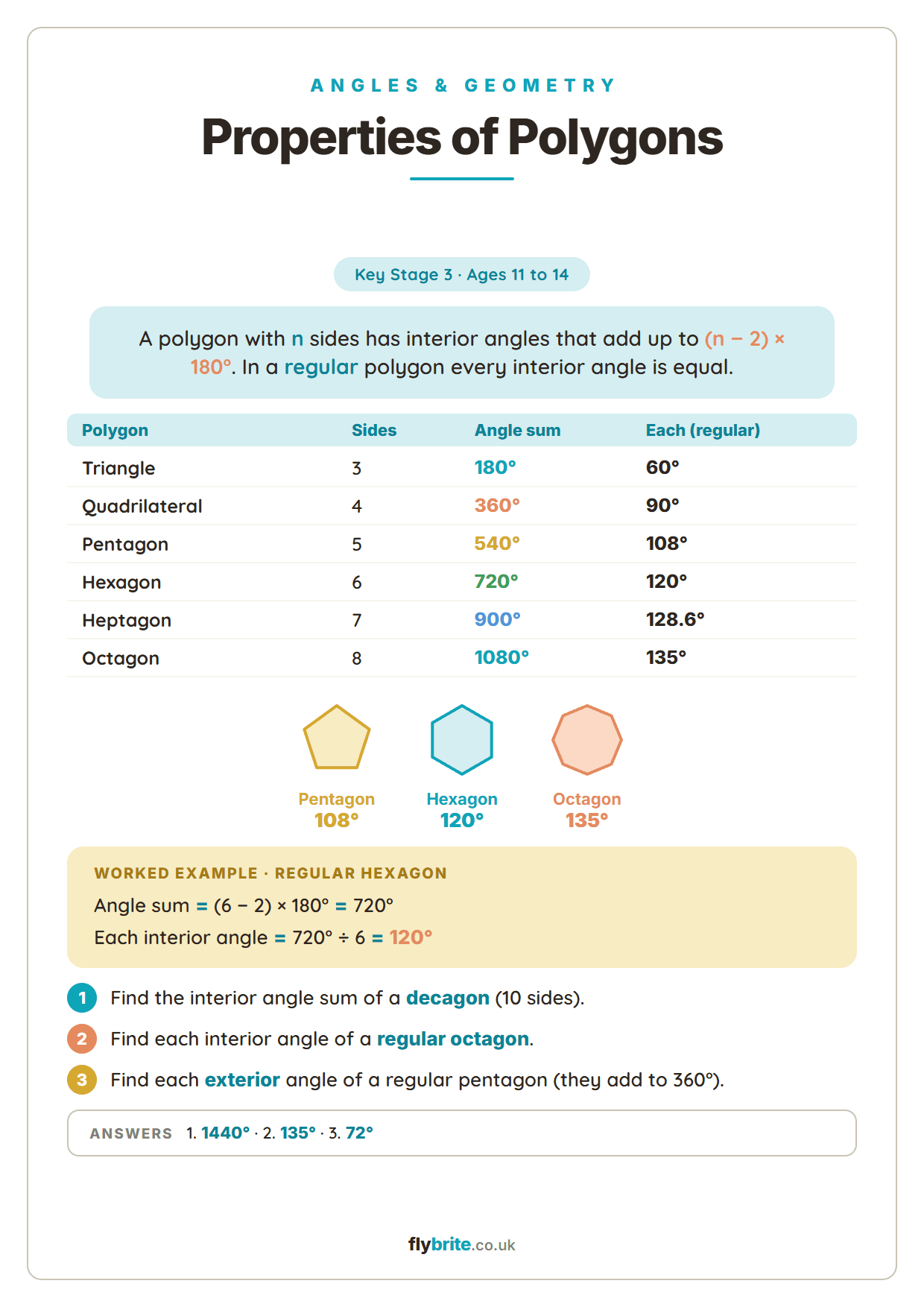
The interior angle sum formula, a tidy polygon table and regular shapes worked right out.

The five area formulae a Year 8 needs, each with a labelled shape and a worked sum.
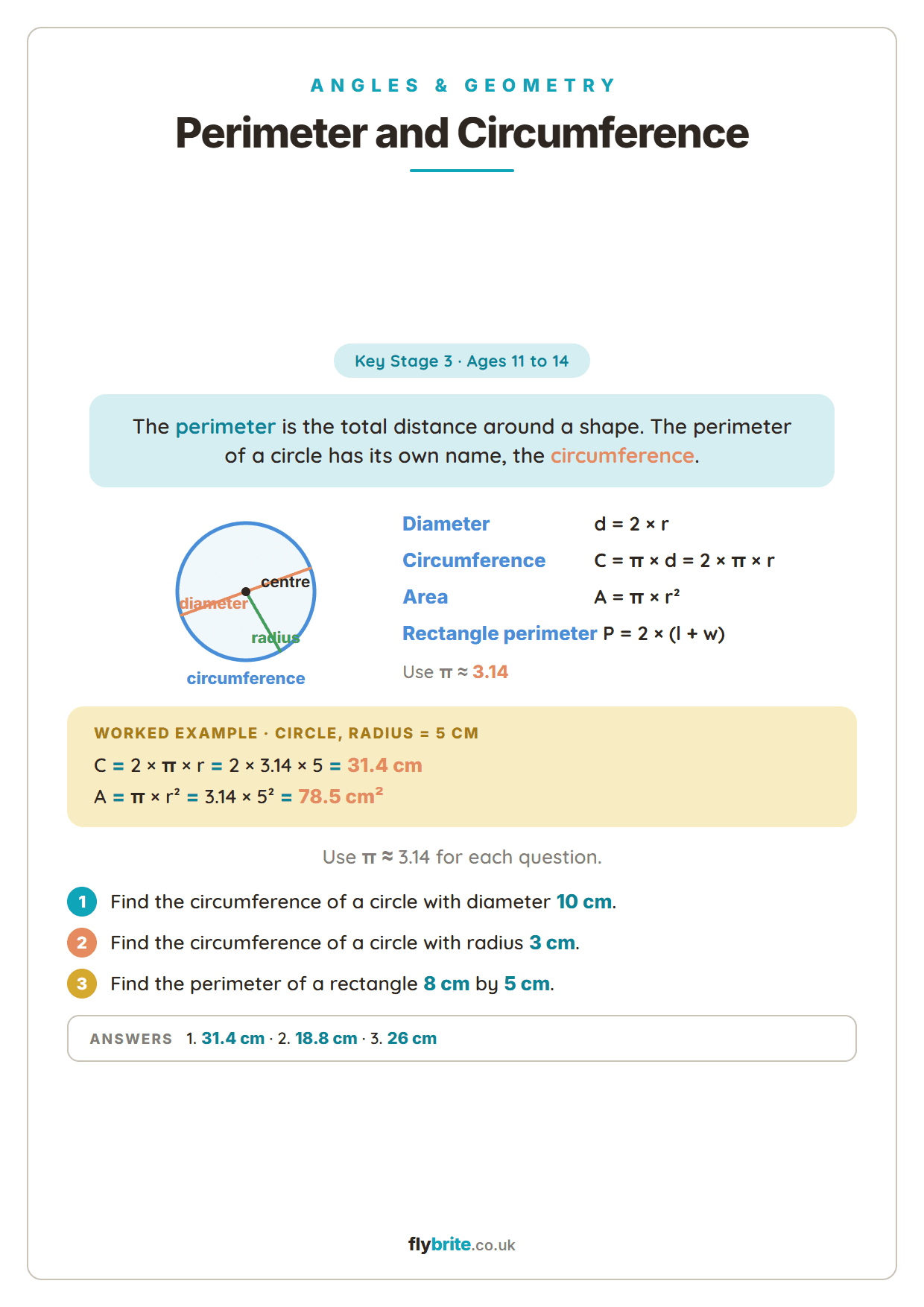
Radius, diameter and circumference explained, with pi and the formulae you actually use.
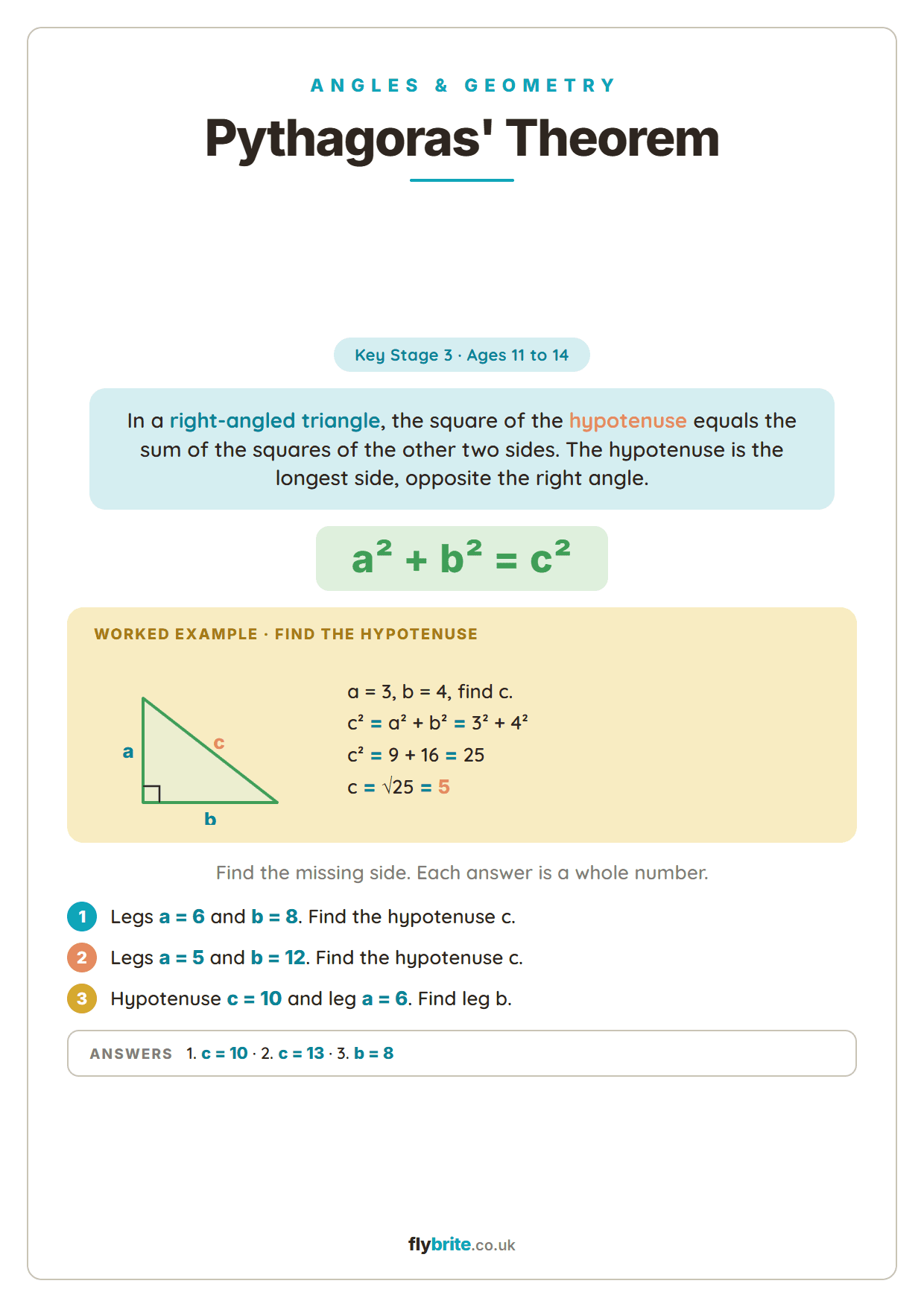
The rule for right-angled triangles, a full worked example and neat Pythagorean triples to practise.
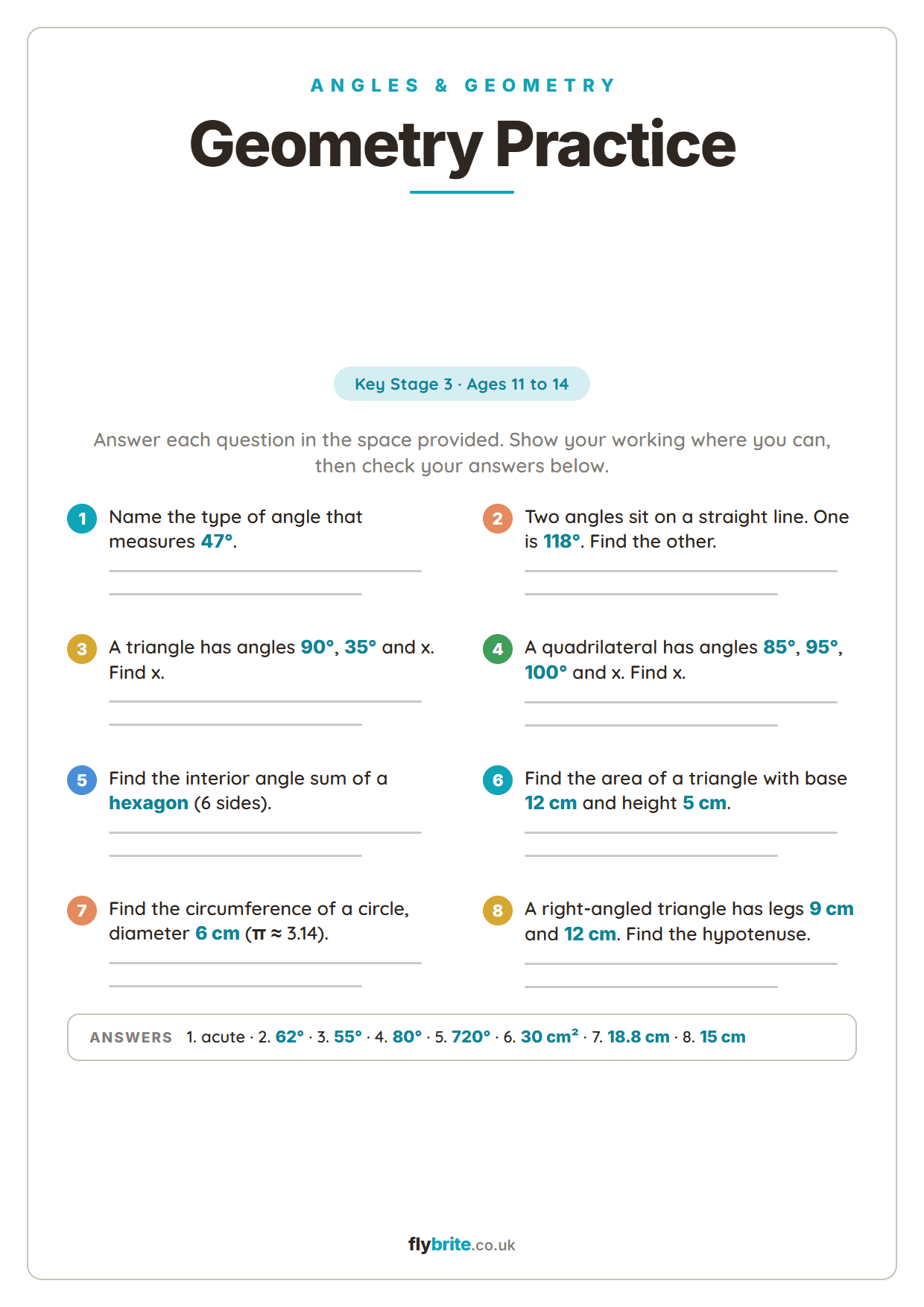 Type or write in
A mixed page of geometry questions with write-in space and a full answer key.
KS3 data handling: averages, range, tables, bar charts, pie charts, scatter graphs and probability.
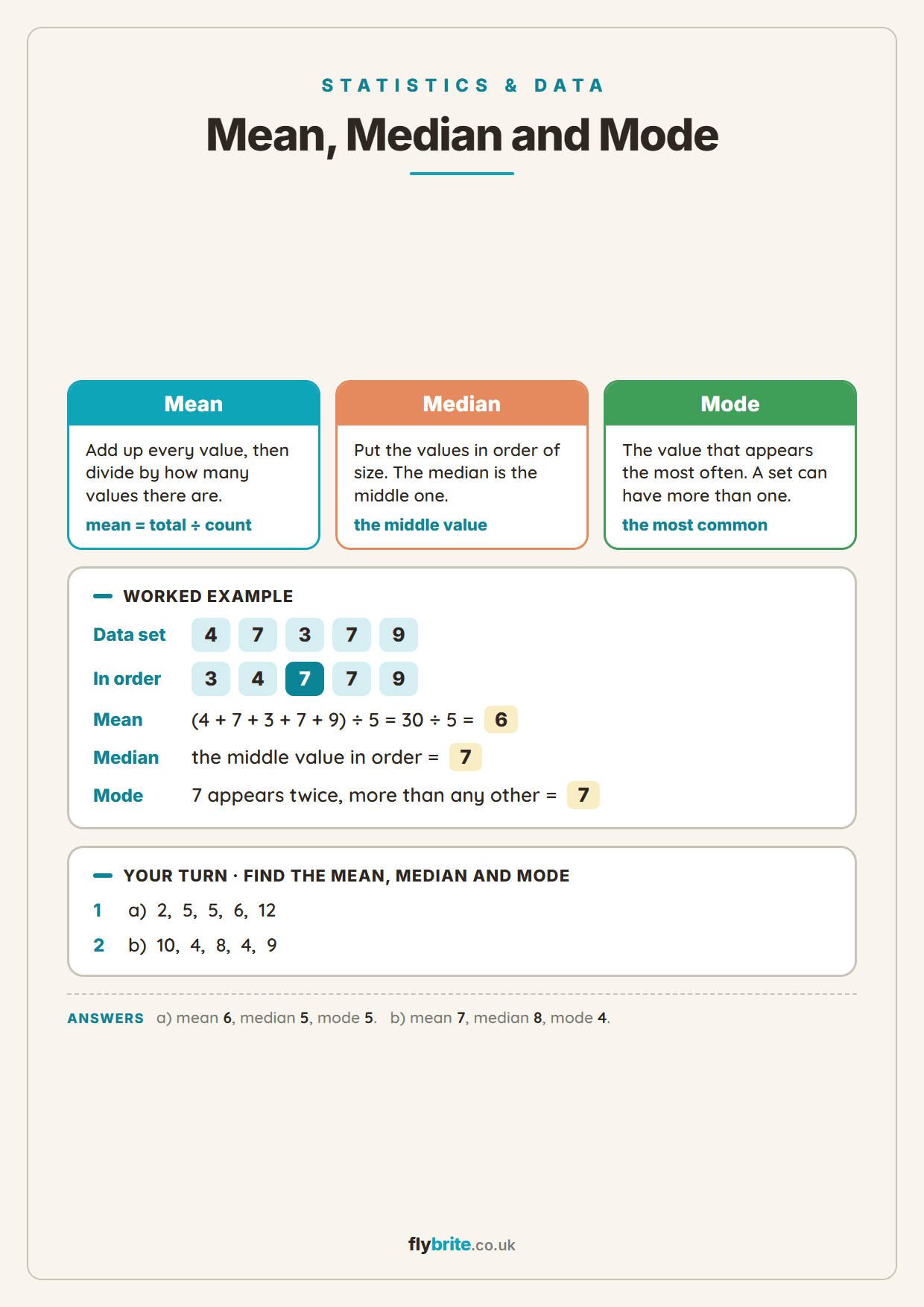
The three averages side by side, mean, median and mode, with a clear worked example and practice to try.
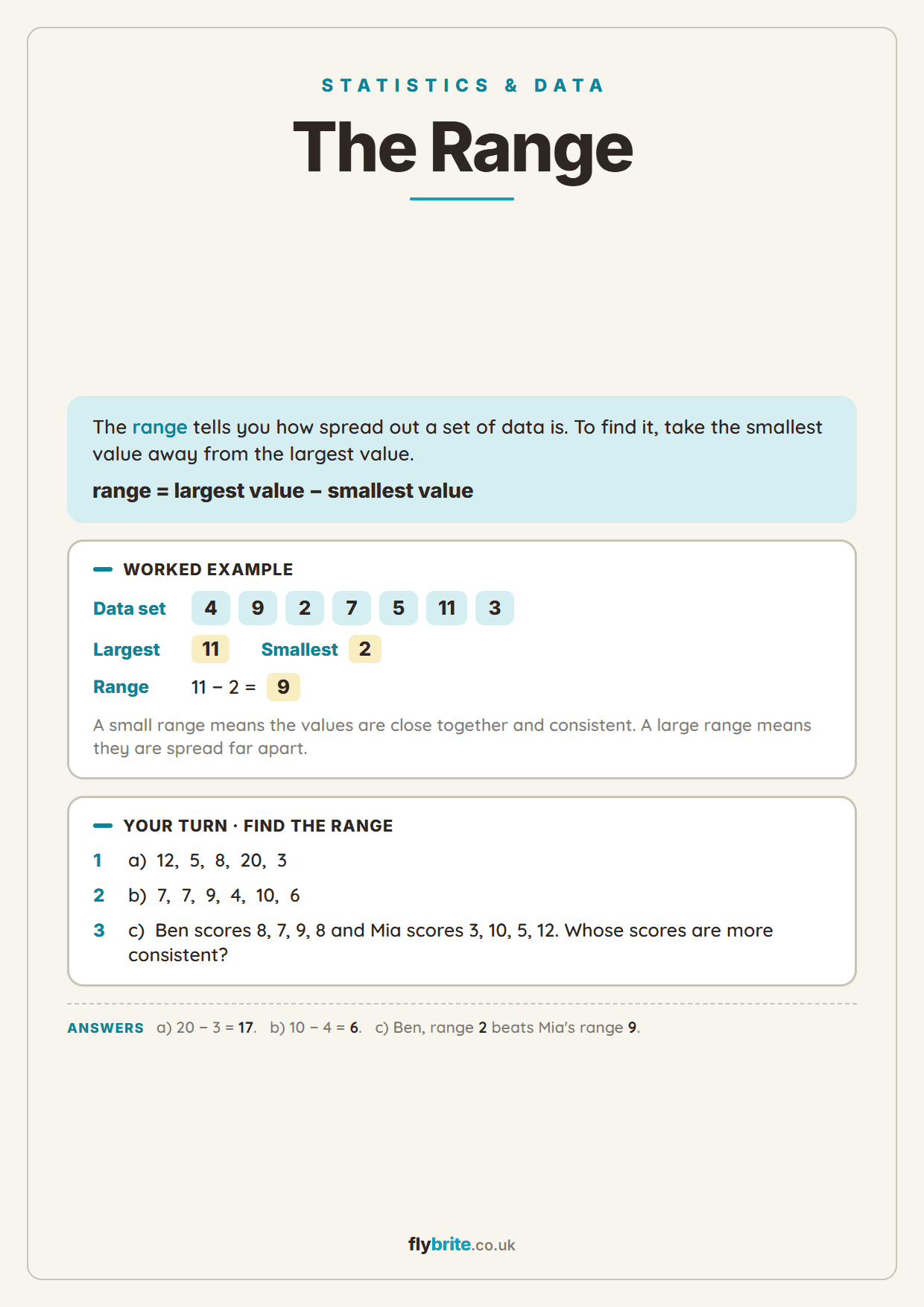
How to measure the spread of a data set, largest take away smallest, with worked examples and answers.
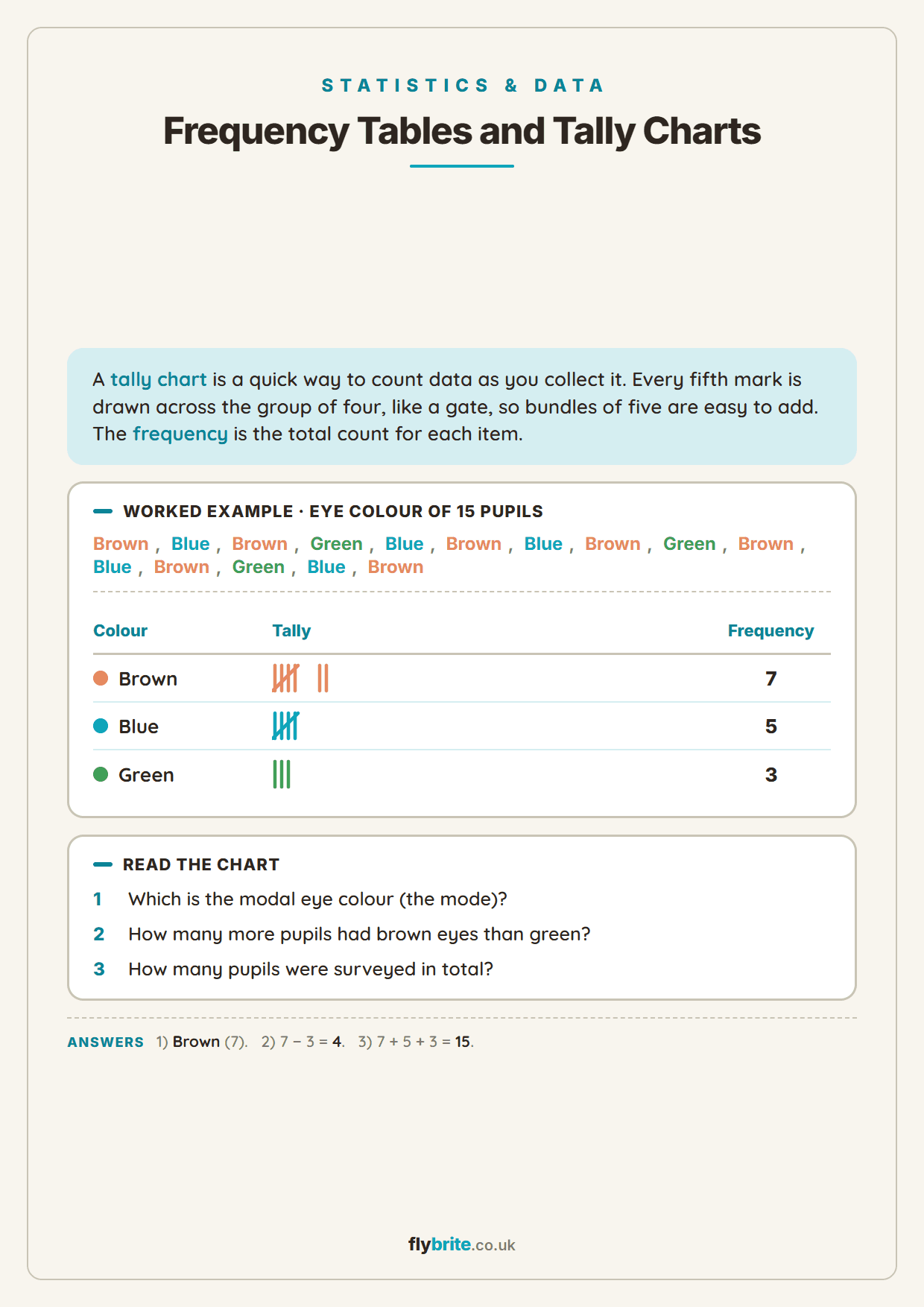
Turn a list of data into a tidy tally chart and frequency table, the first step in every survey.
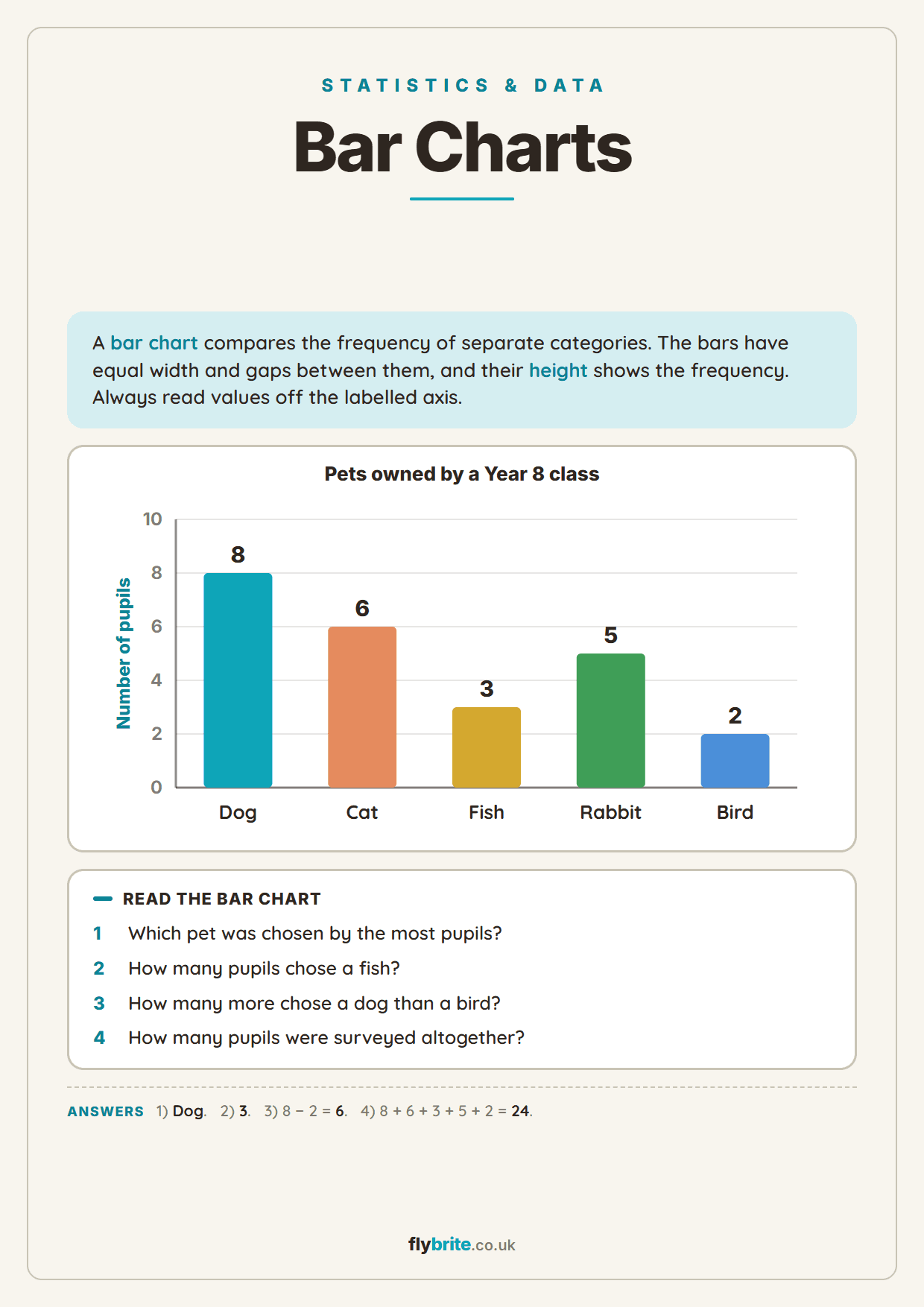
Read and interpret a bar chart with confidence, from the labelled axis to comparing the bars.
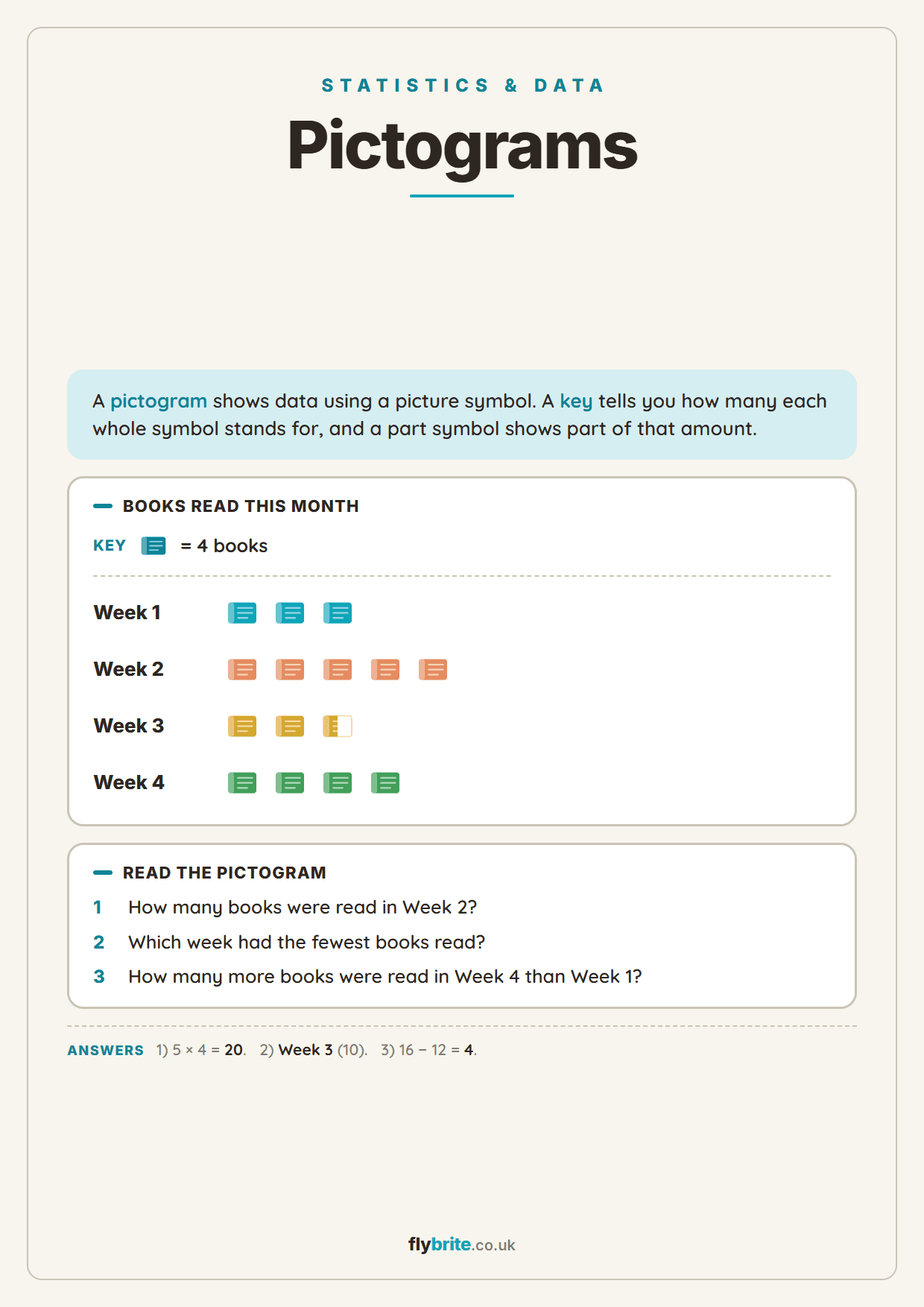
How a pictogram uses a symbol and a key to stand for many, including half symbols, with reading practice.
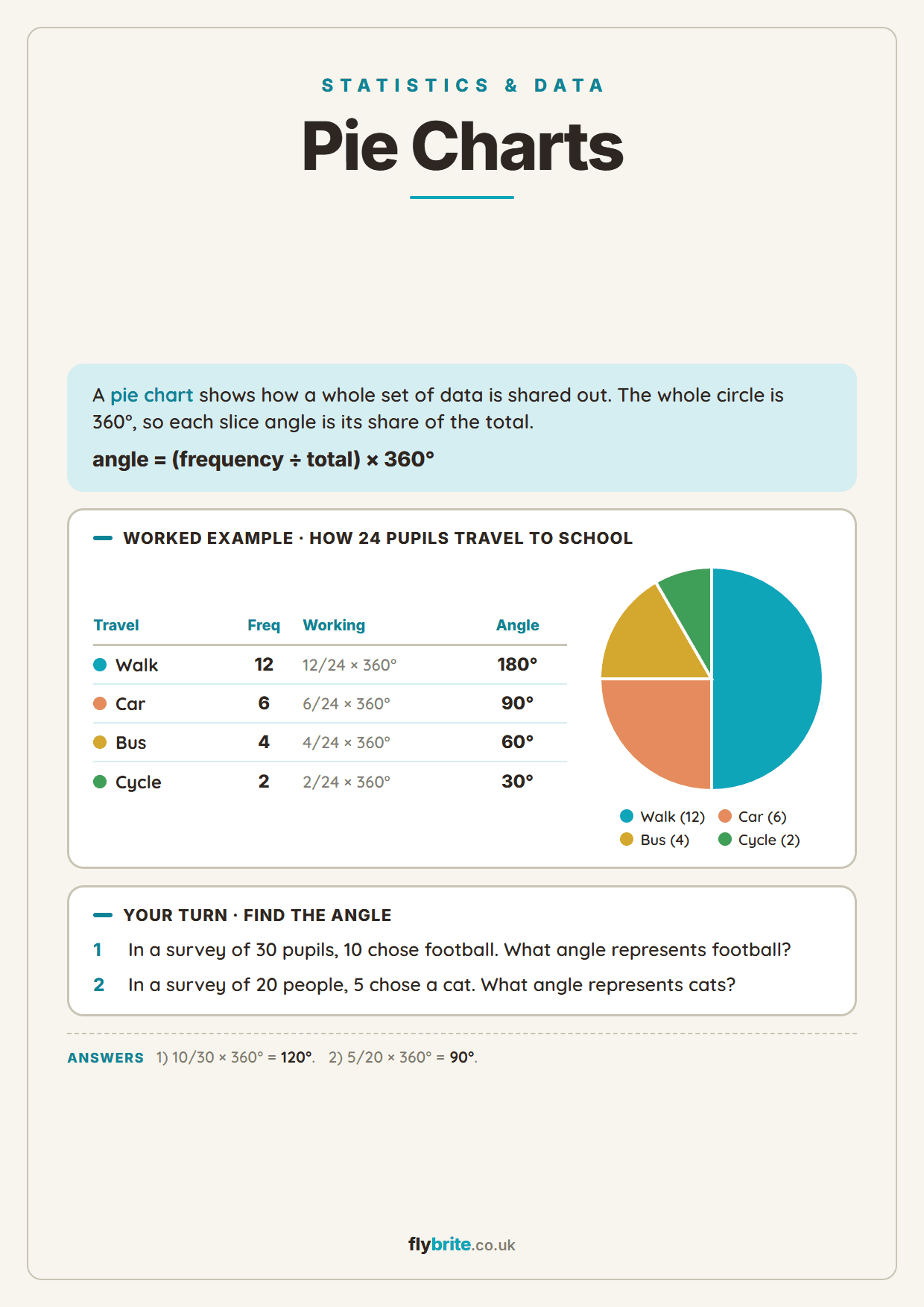
Share a whole data set around a circle, with a fully worked pie chart example using angles out of 360 degrees.
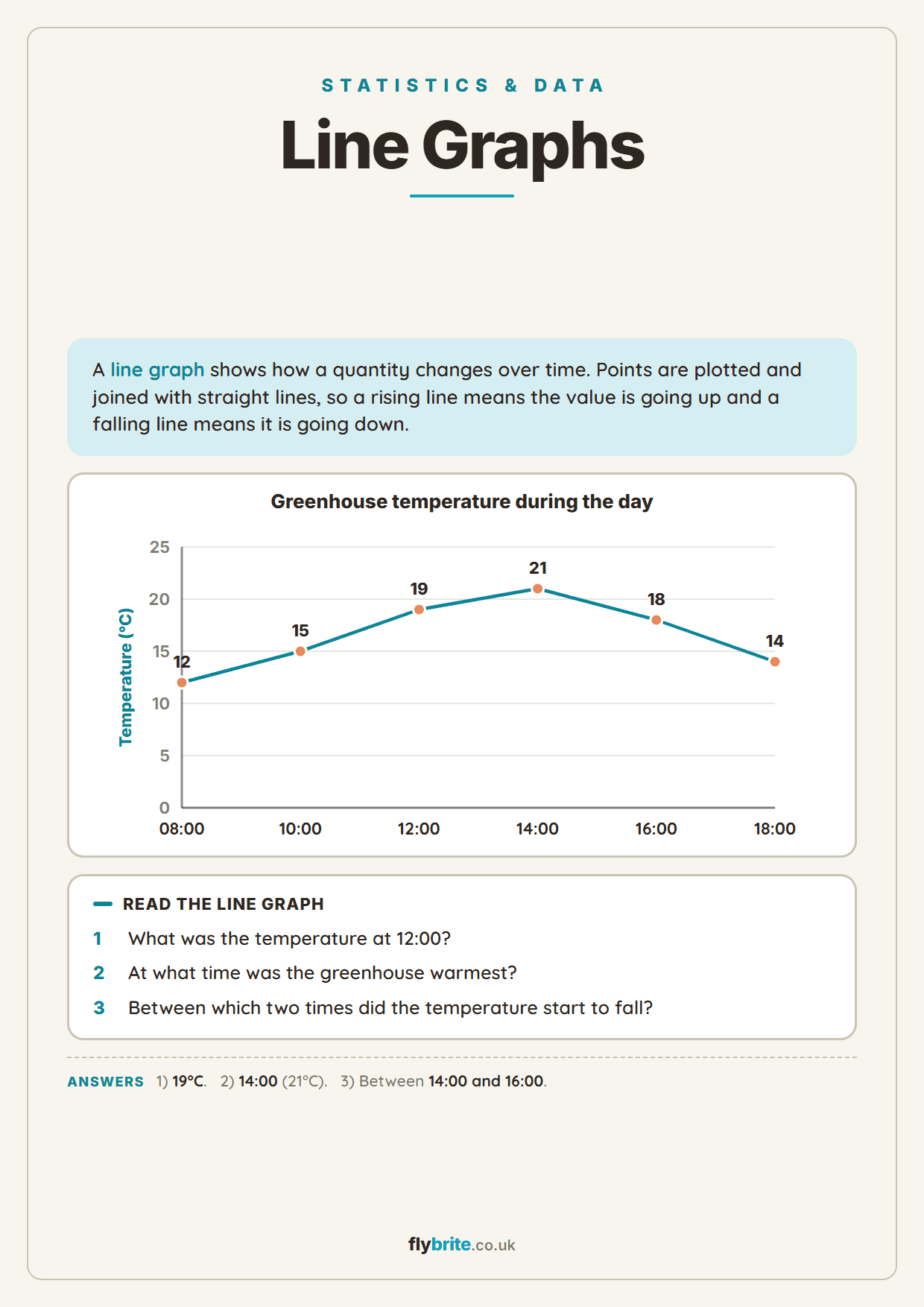
Plot and read a line graph over time, spotting when values rise, fall and reach their highest point.

Positive, negative or no correlation, plus the line of best fit, shown on three clear scatter graphs.
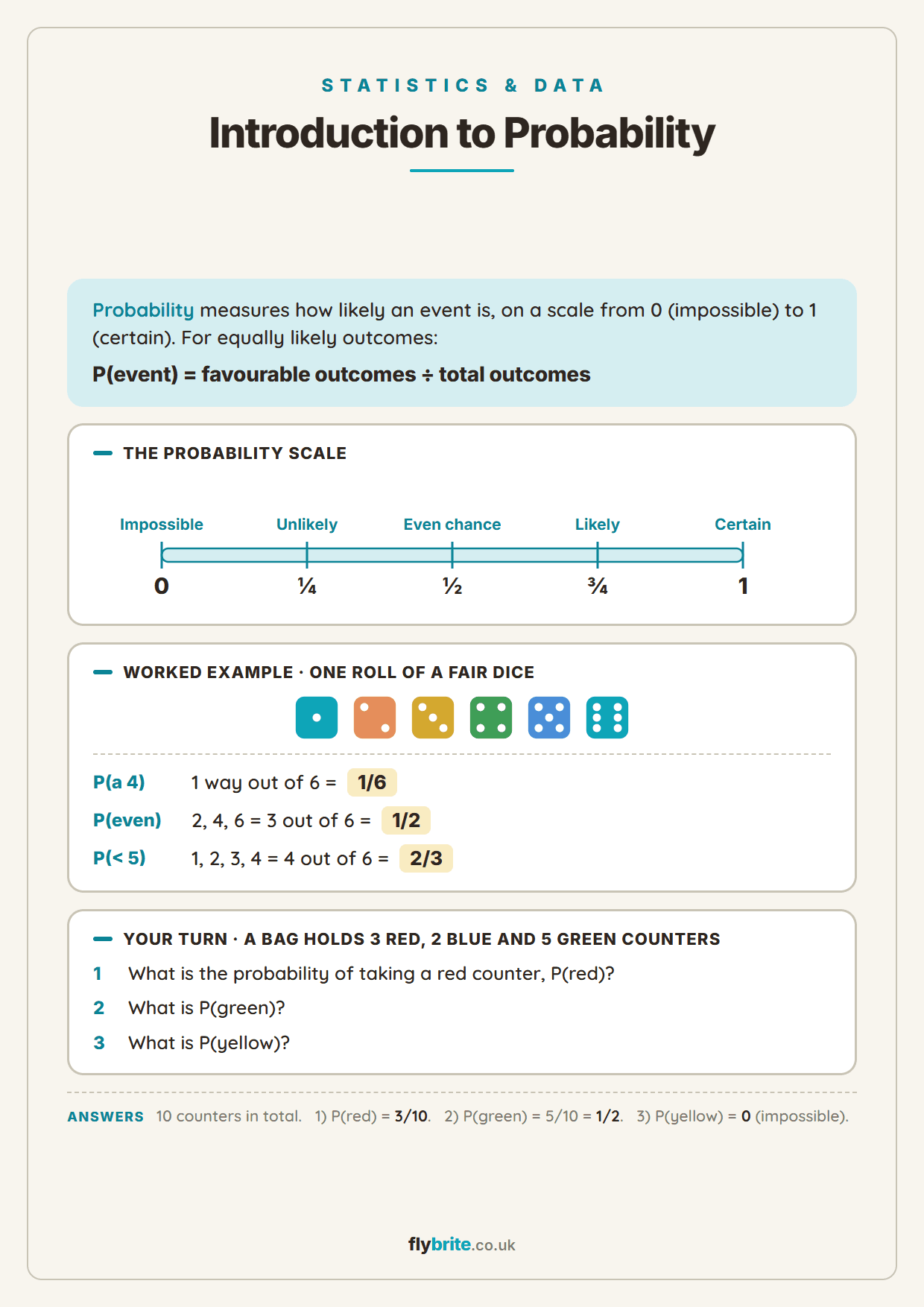
The probability scale from 0 to 1, from impossible to certain, with dice and counter examples worked through.
 Type or write in
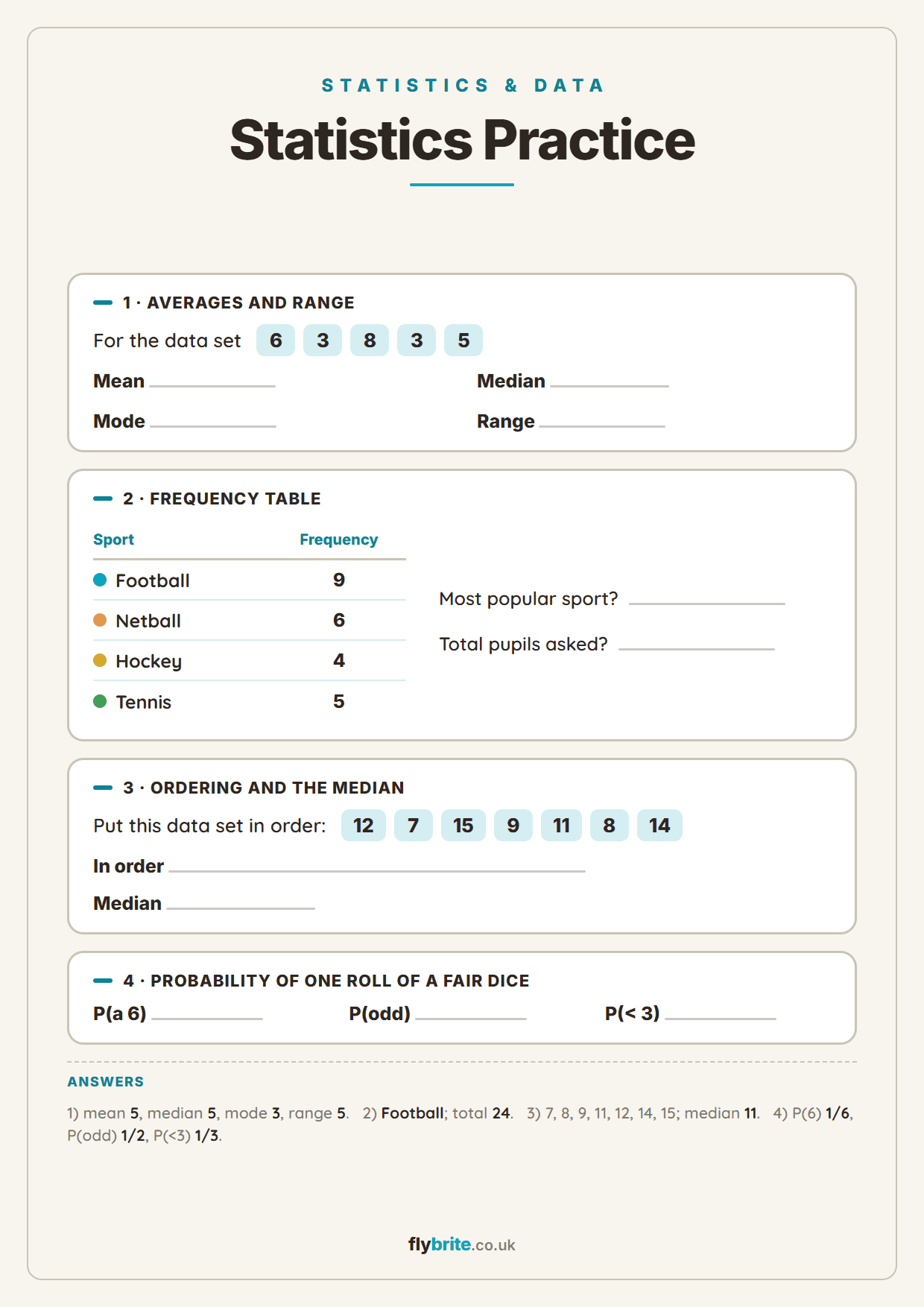
A mixed statistics worksheet covering averages, tables and probability, with write in space and a full answer key.
KS3 ratio, proportion, percentages, best buys and scale, the number sense secondary maths leans on.
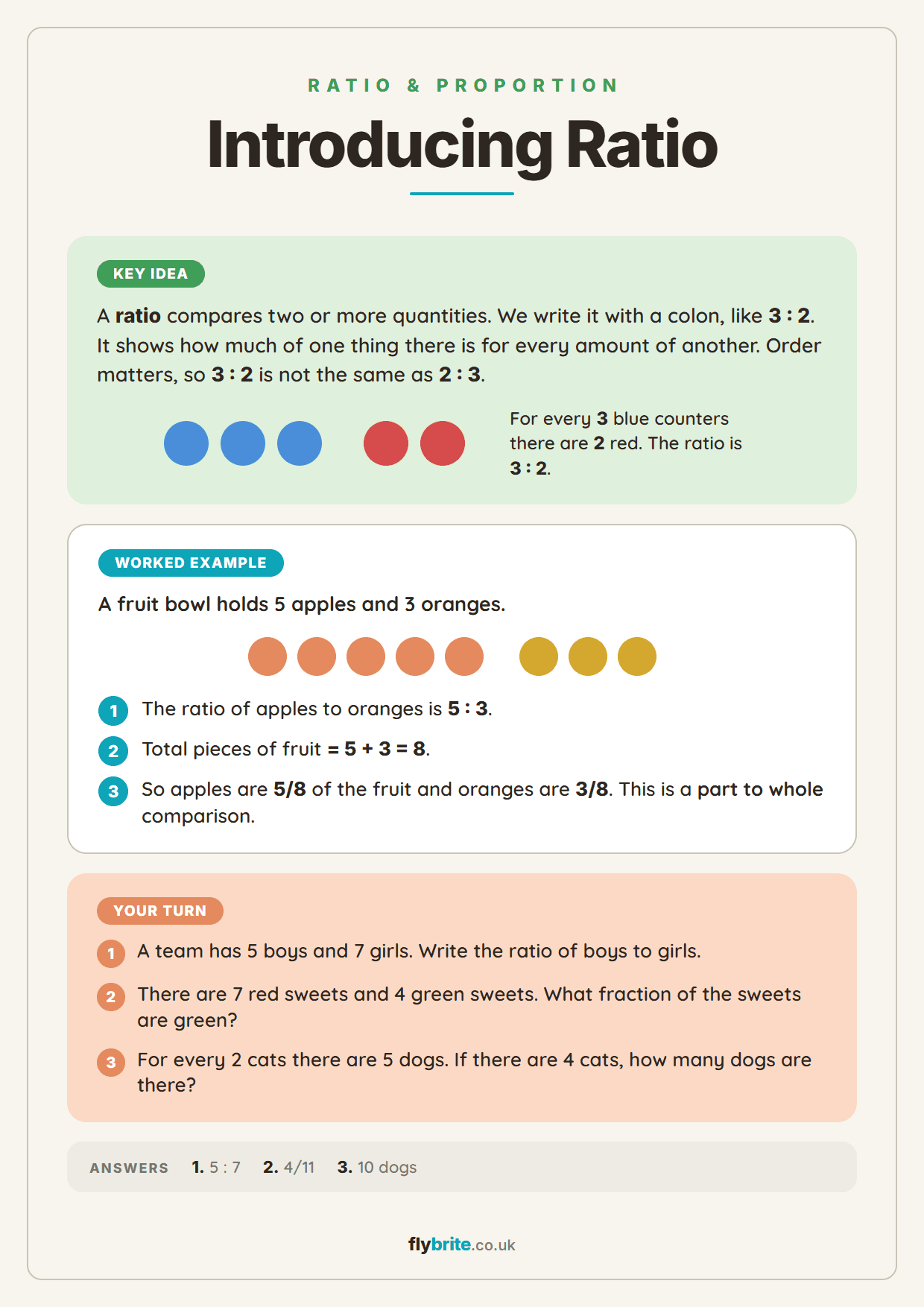
What a ratio is, how to read the colon notation, and the difference between part to part and part to whole.
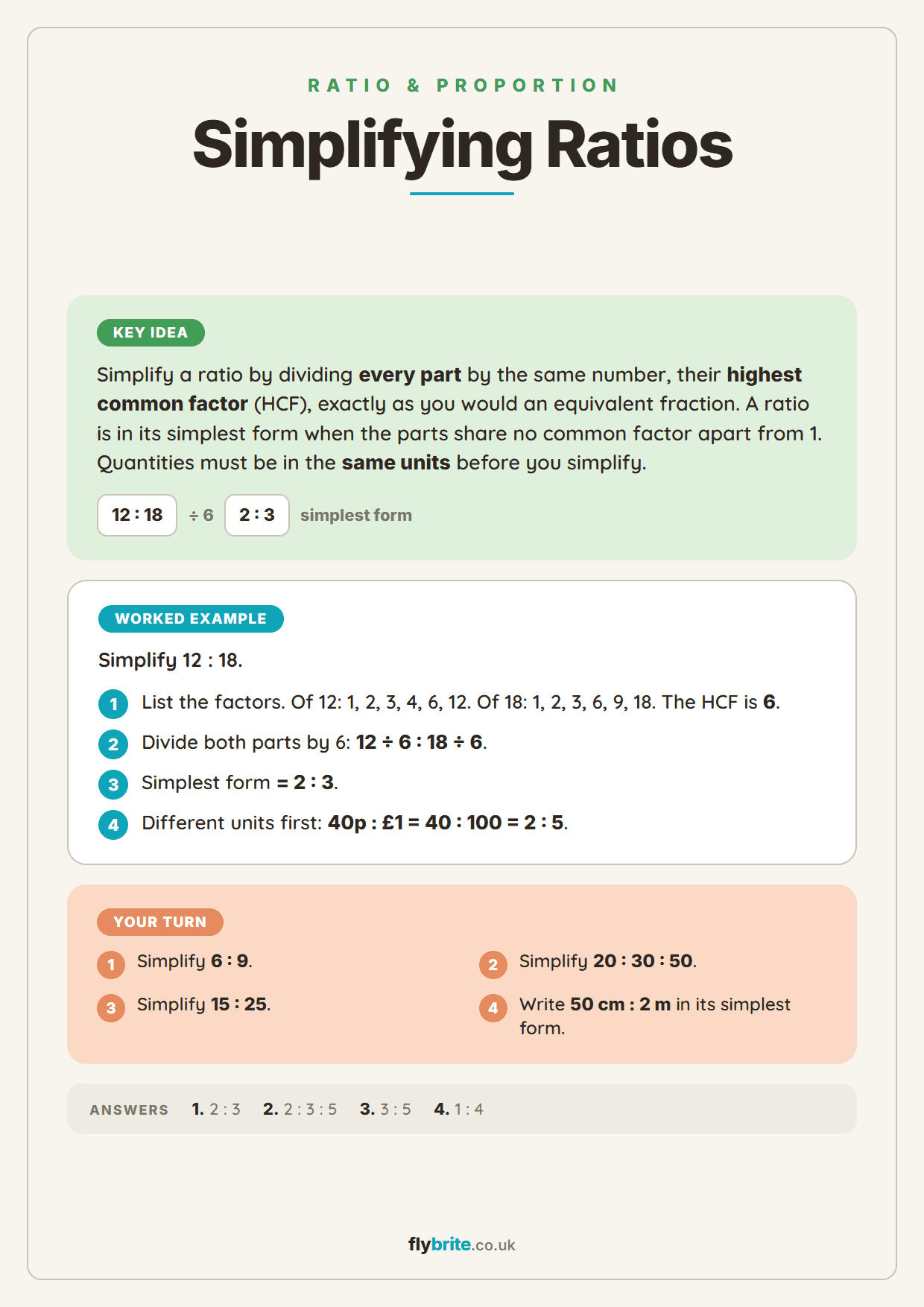
Divide by the highest common factor to write any ratio in its simplest form, converting units first.

The parts method for splitting an amount in a given ratio, shown with a clear bar model.
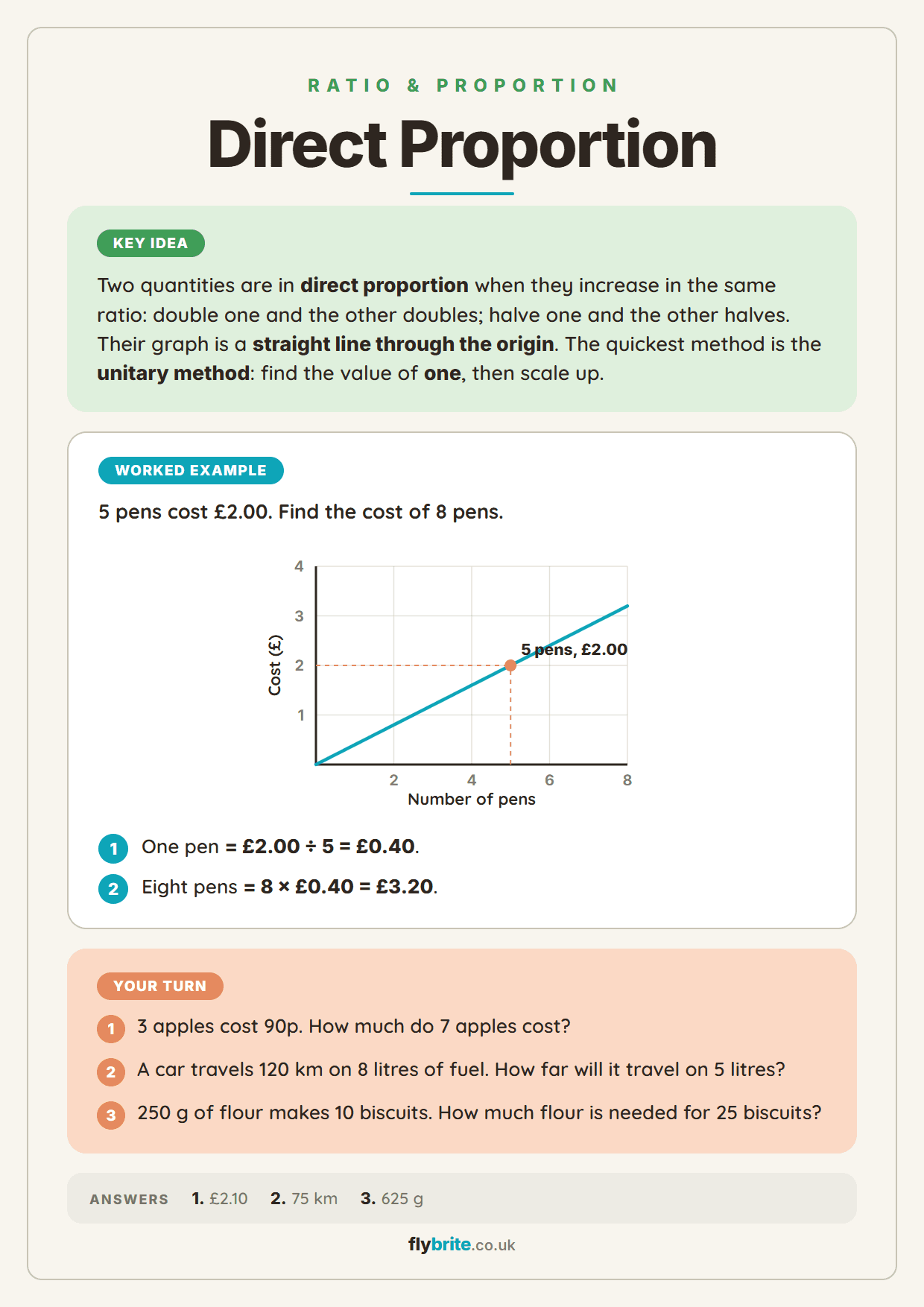
The unitary method and the straight-line graph through the origin that defines direct proportion.
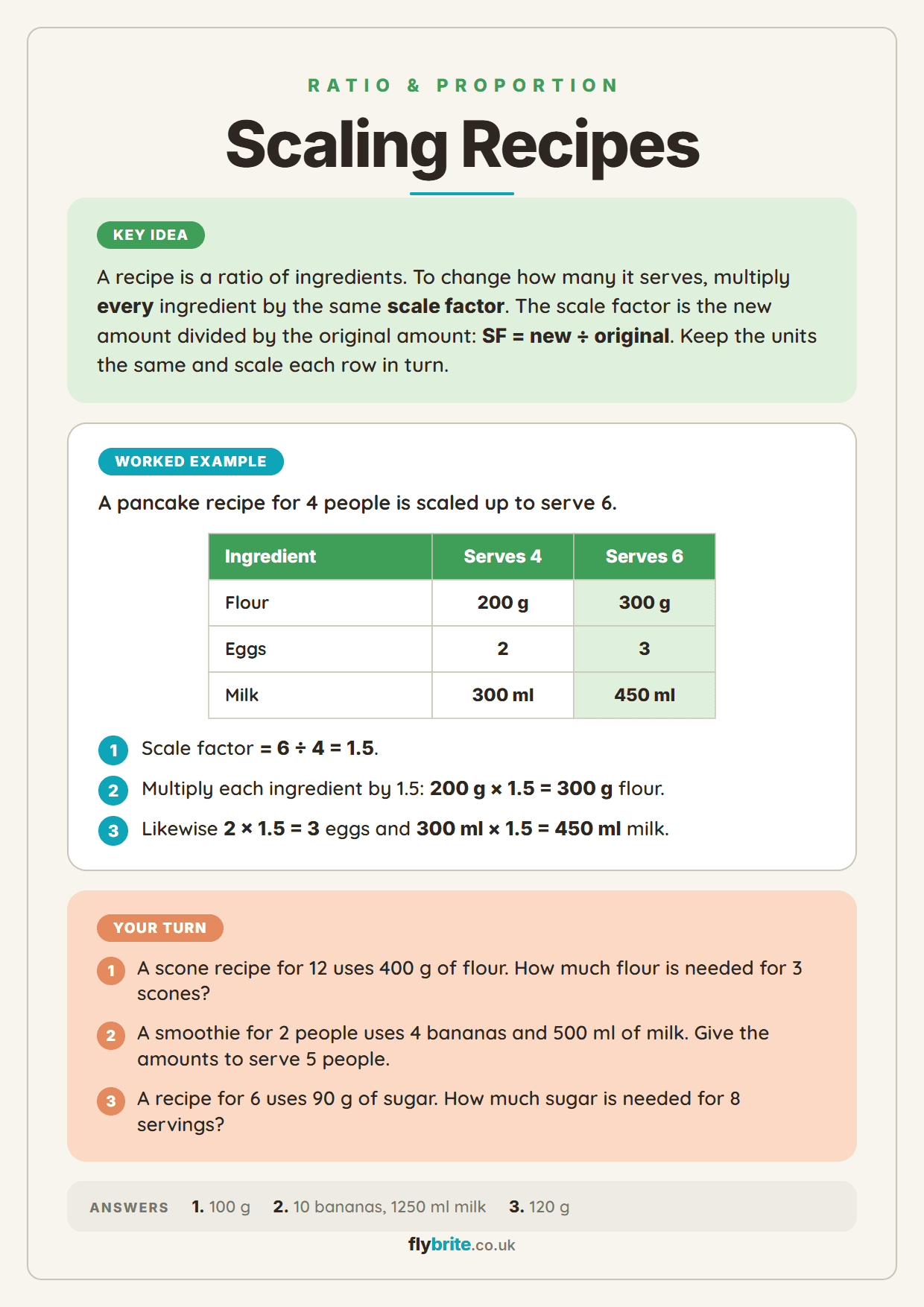
Use a single scale factor to grow or shrink a recipe, a friendly real-world use of proportion.
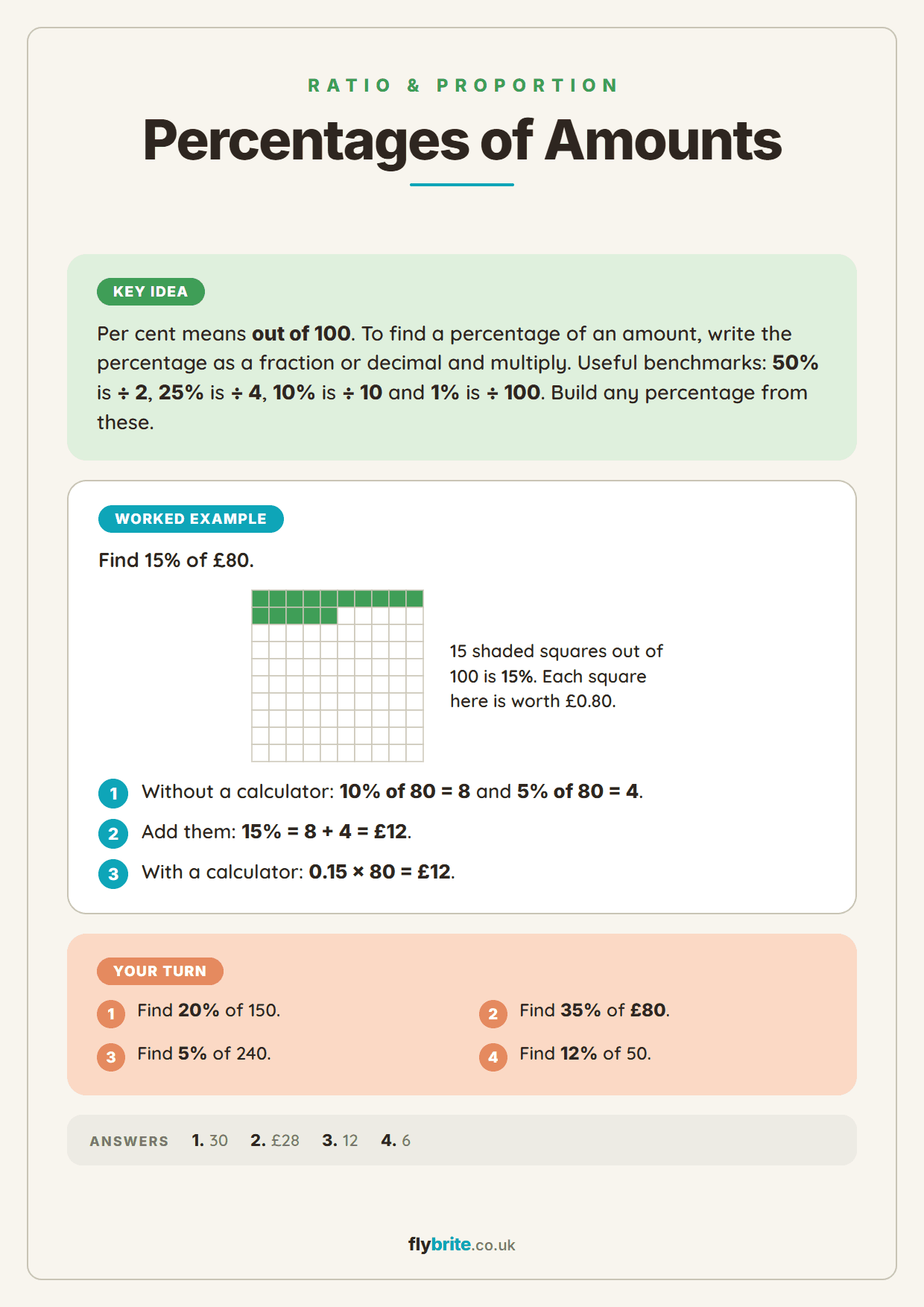
Benchmark methods and the decimal multiplier for finding any percentage of an amount.
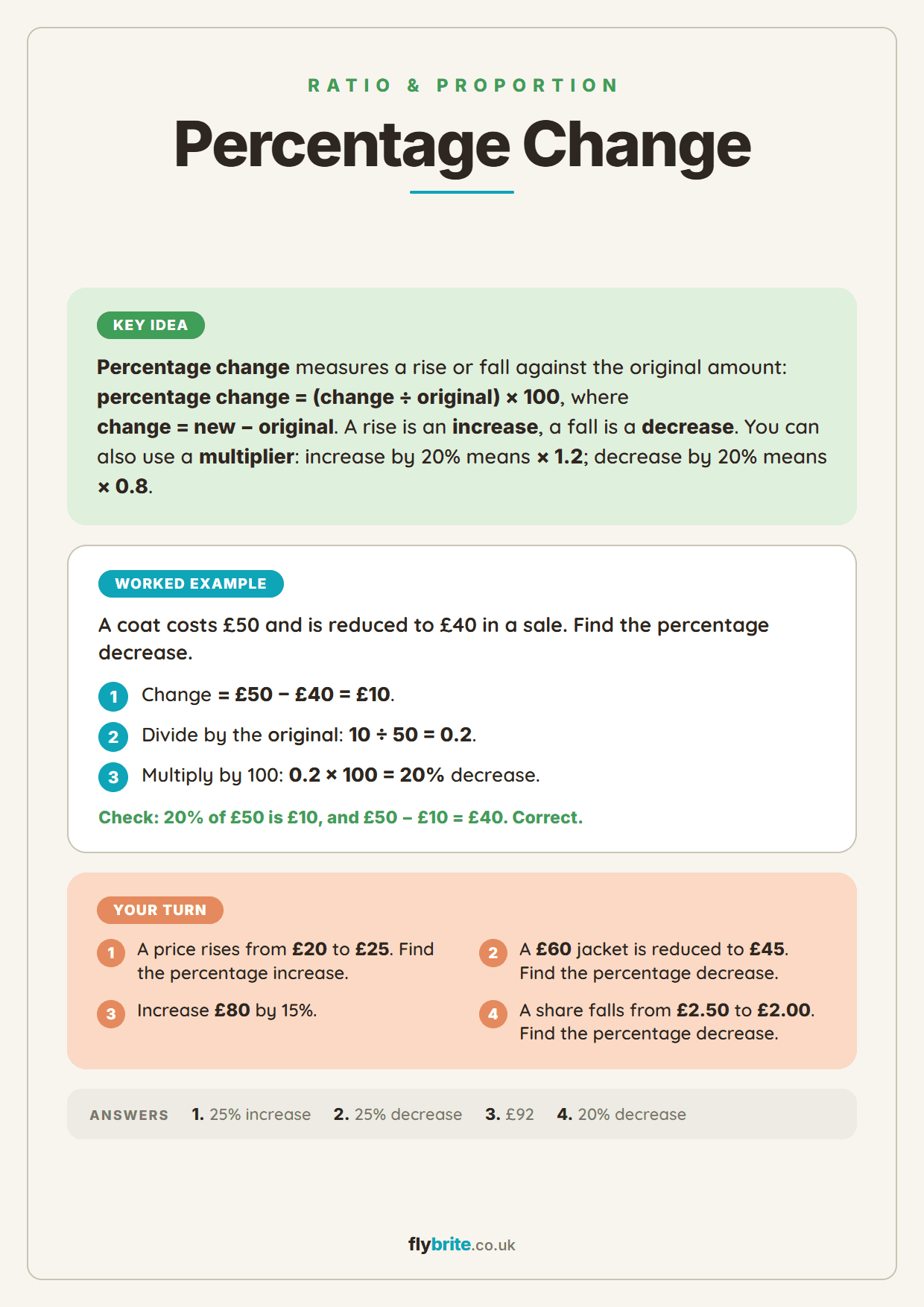
Increase and decrease as a percentage of the original, plus the multiplier shortcut.
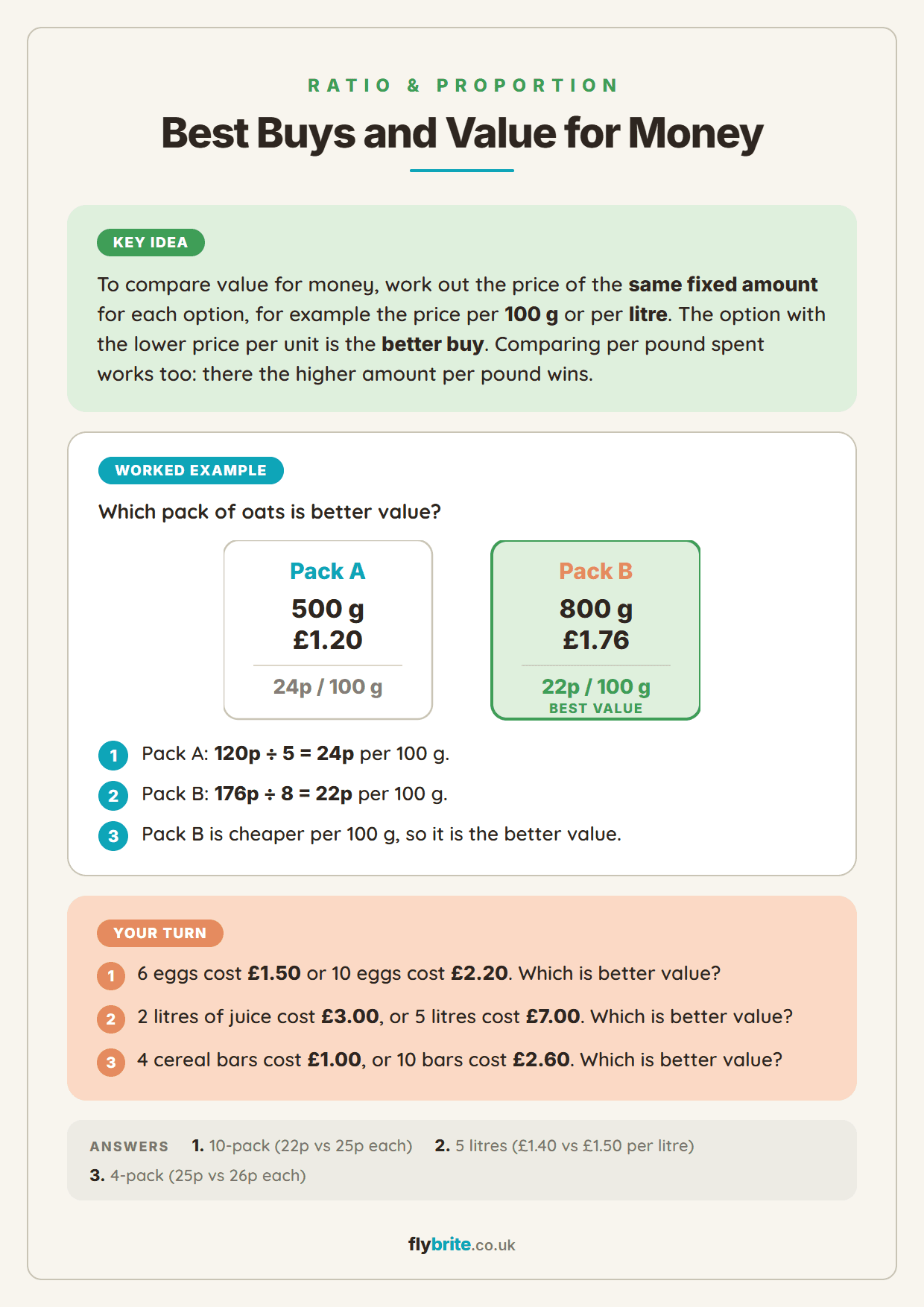
Compare price per unit to decide the better buy, a proportion skill for every shopping trip.
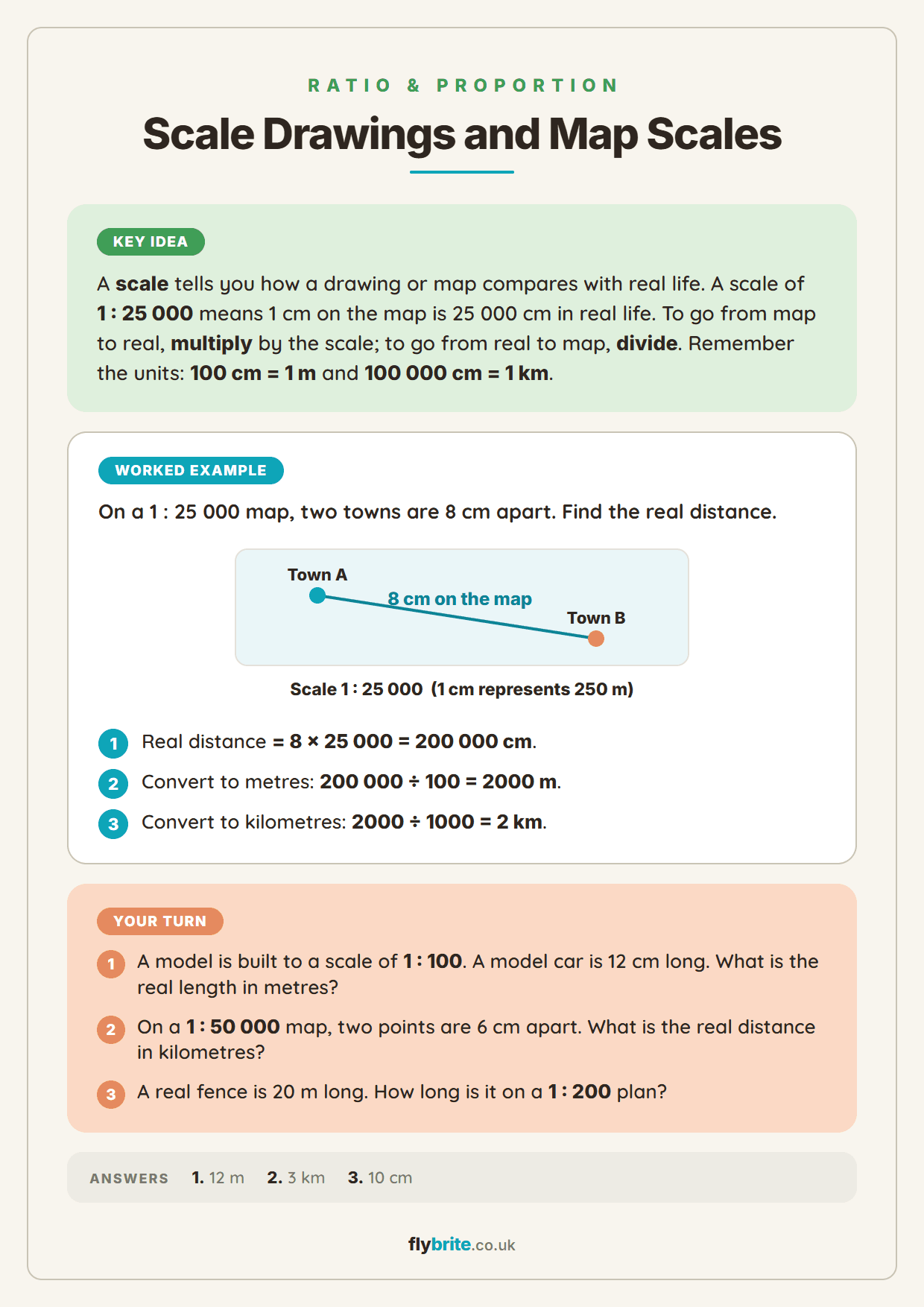
Convert between map and real distances using ratio scales, with the unit conversions you need.
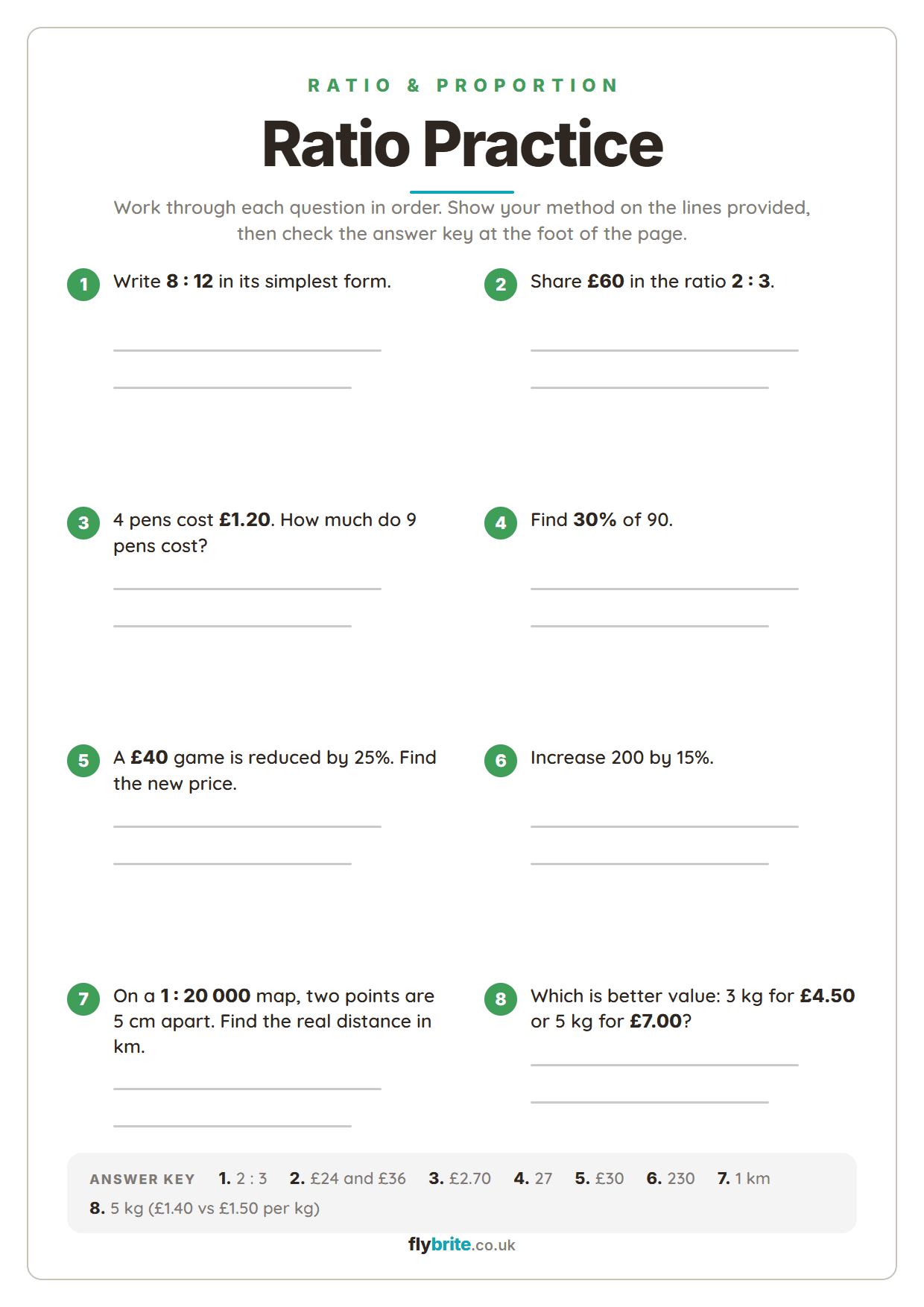 Type or write in
Eight mixed questions across the whole pack with write-in space and a full answer key.
KS3 integers: the number line, adding, subtracting, multiplying and dividing with negatives.
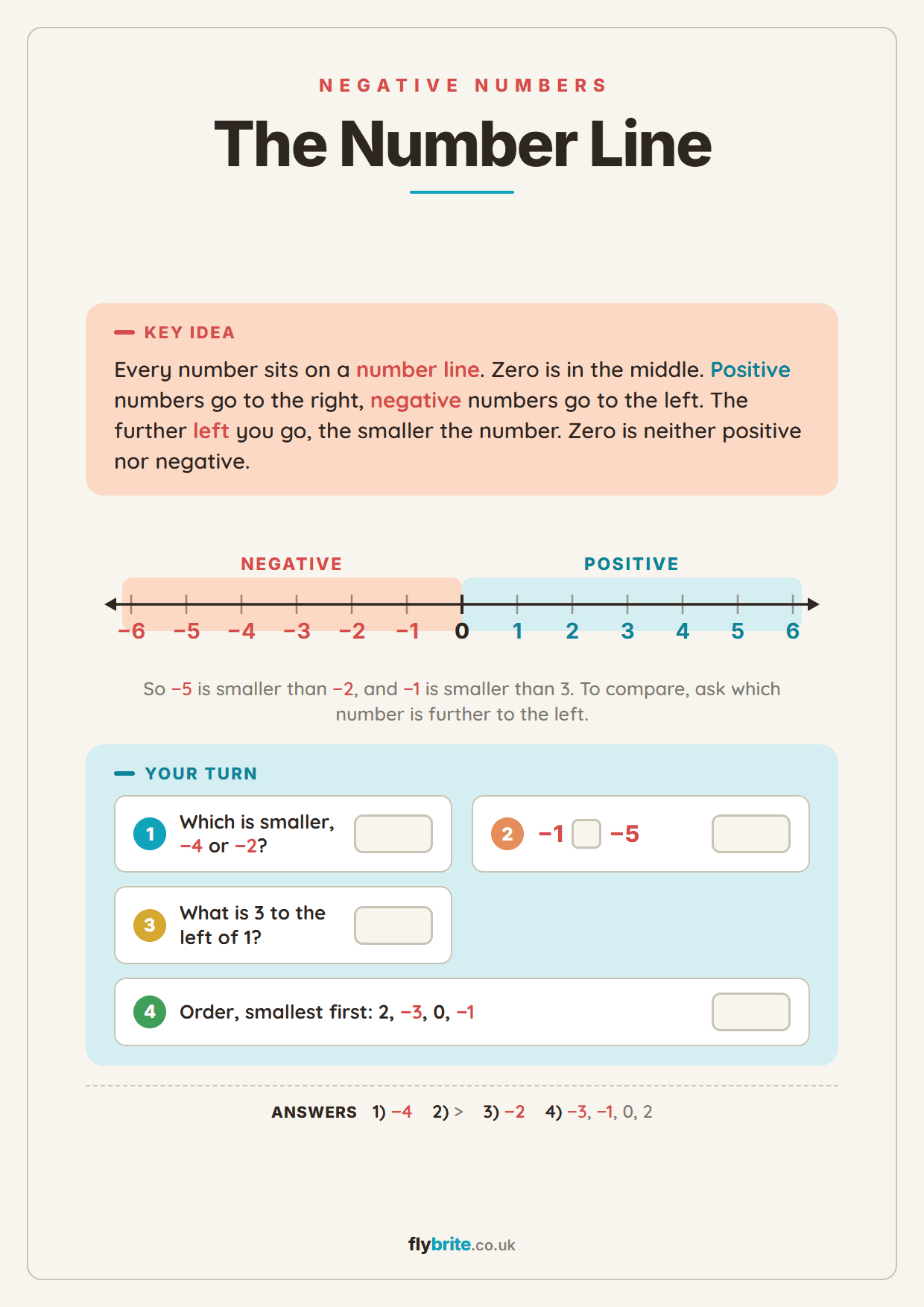
Where negative and positive numbers live, with zero in the middle and everything in its right order.
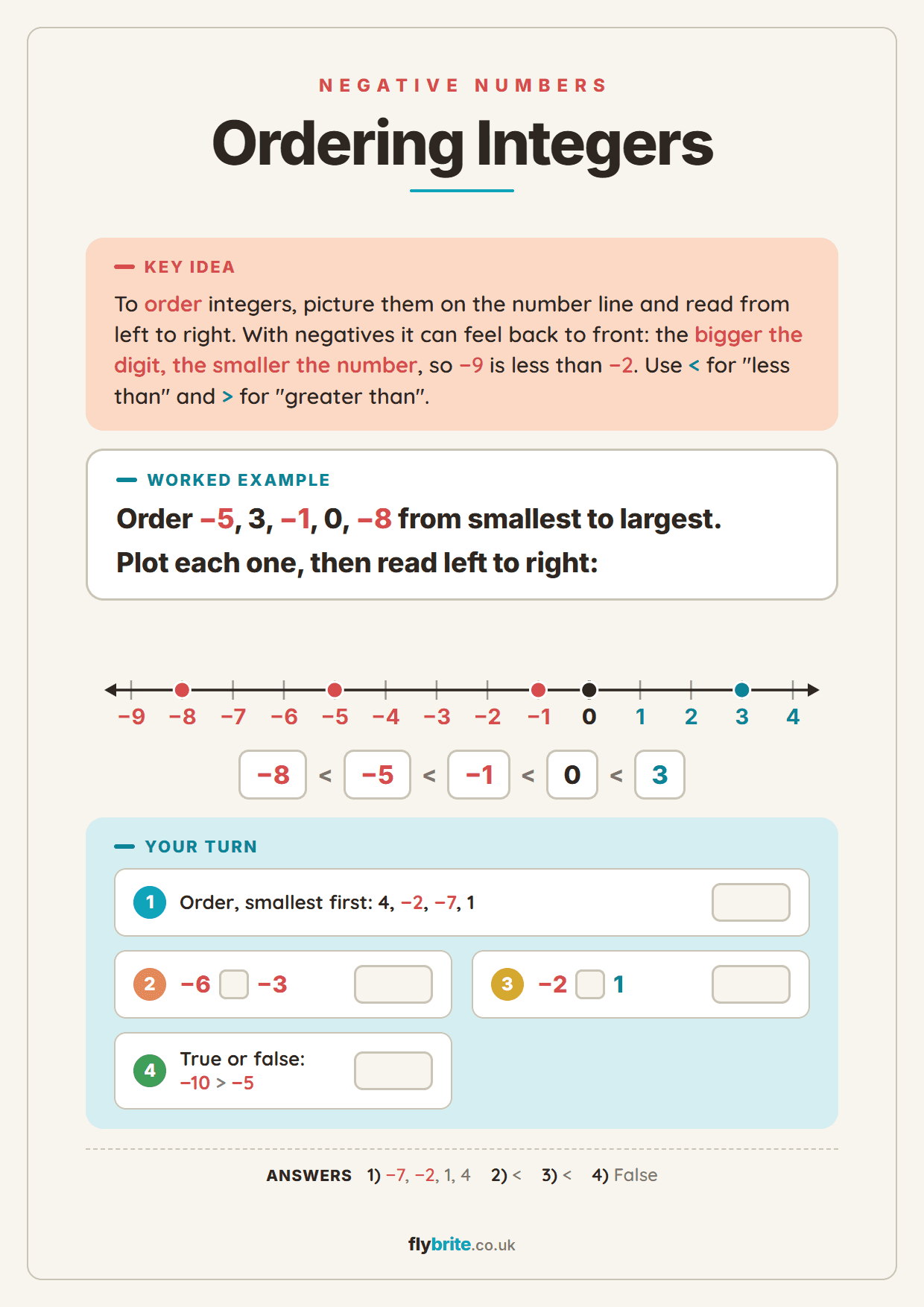
Put positive and negative whole numbers in order using the number line and the less-than and greater-than signs.
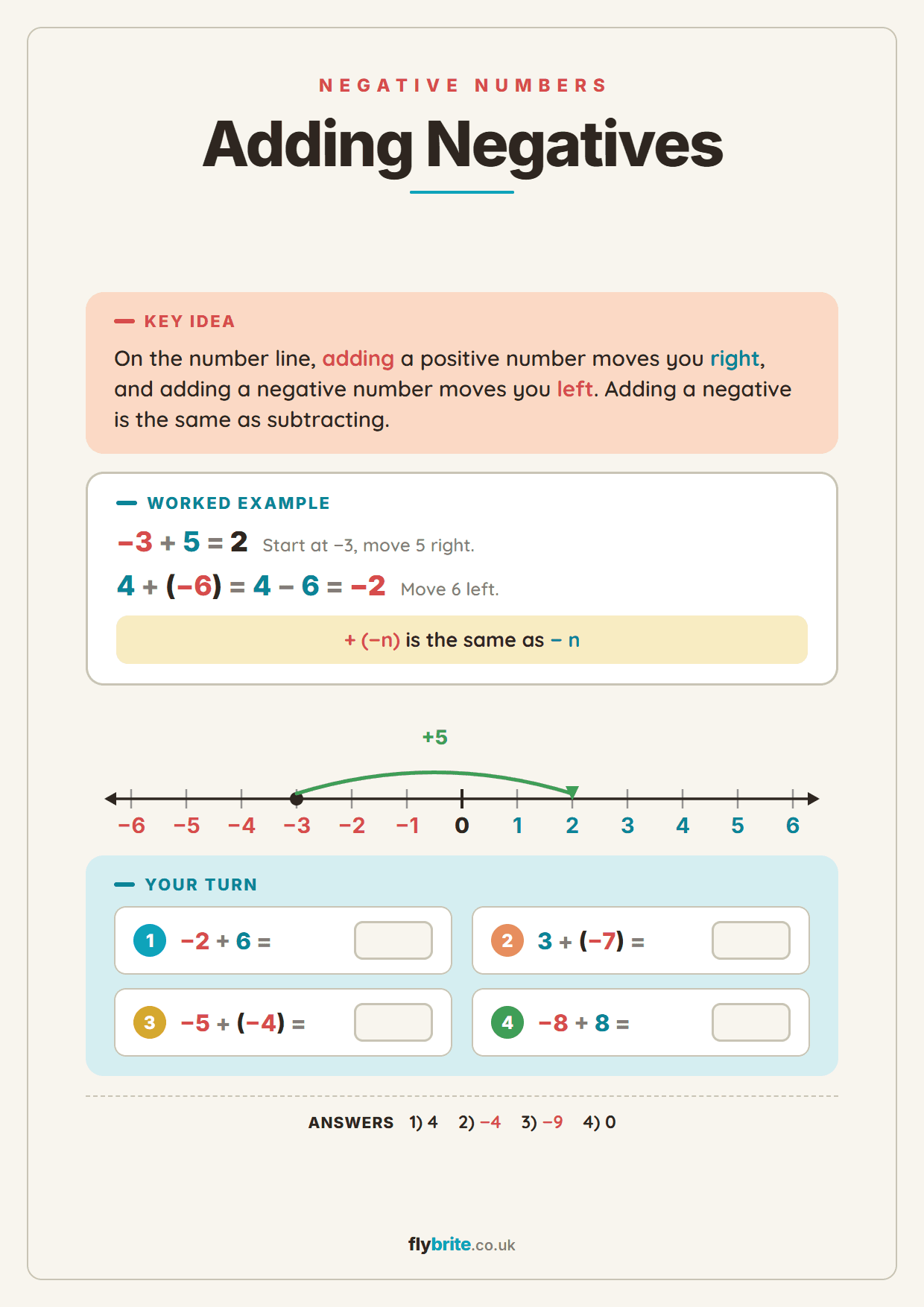
Add positive and negative numbers by moving along the number line, and see why adding a negative subtracts.
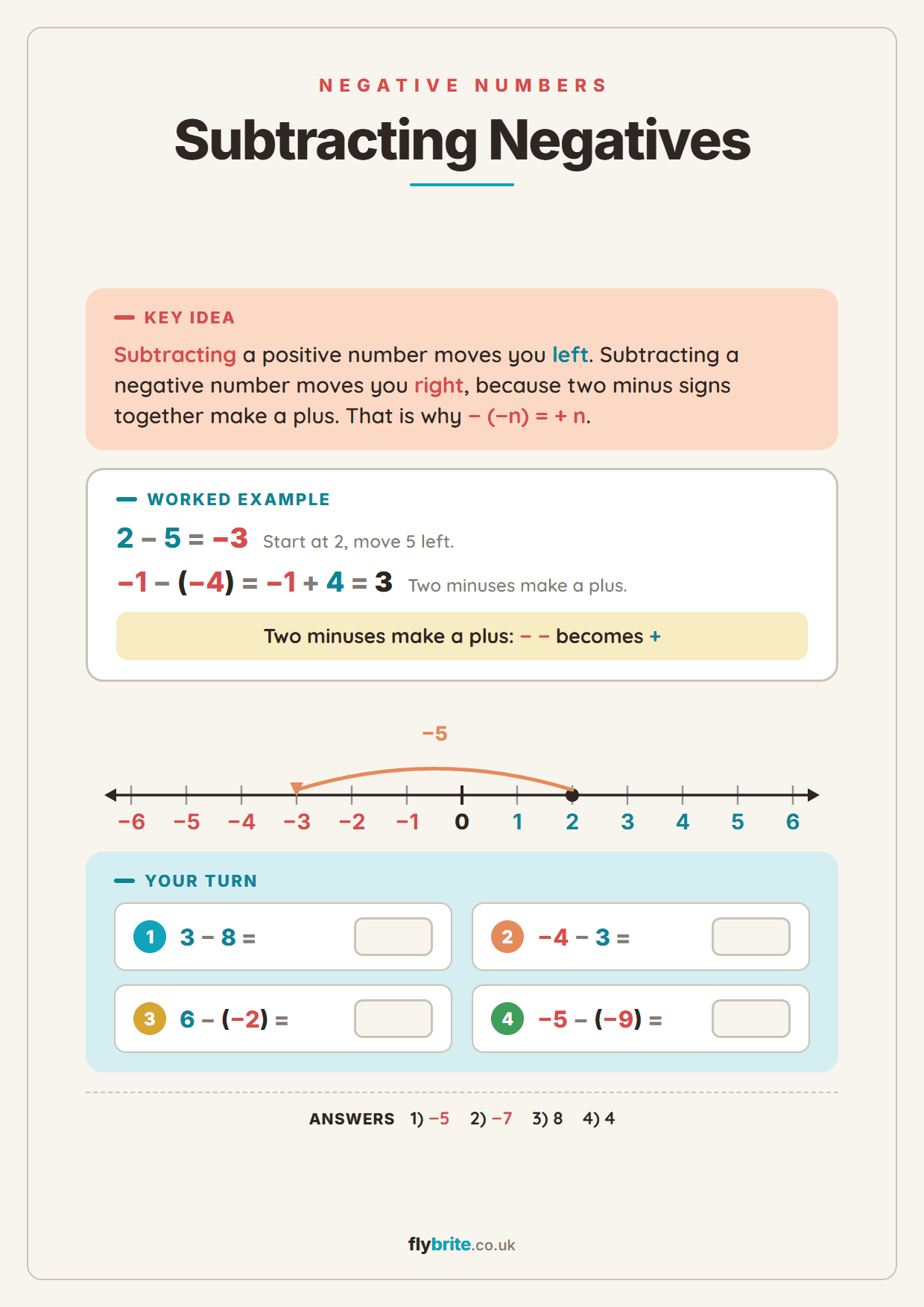
Subtract with negative numbers and learn the golden rule that two minus signs together make a plus.
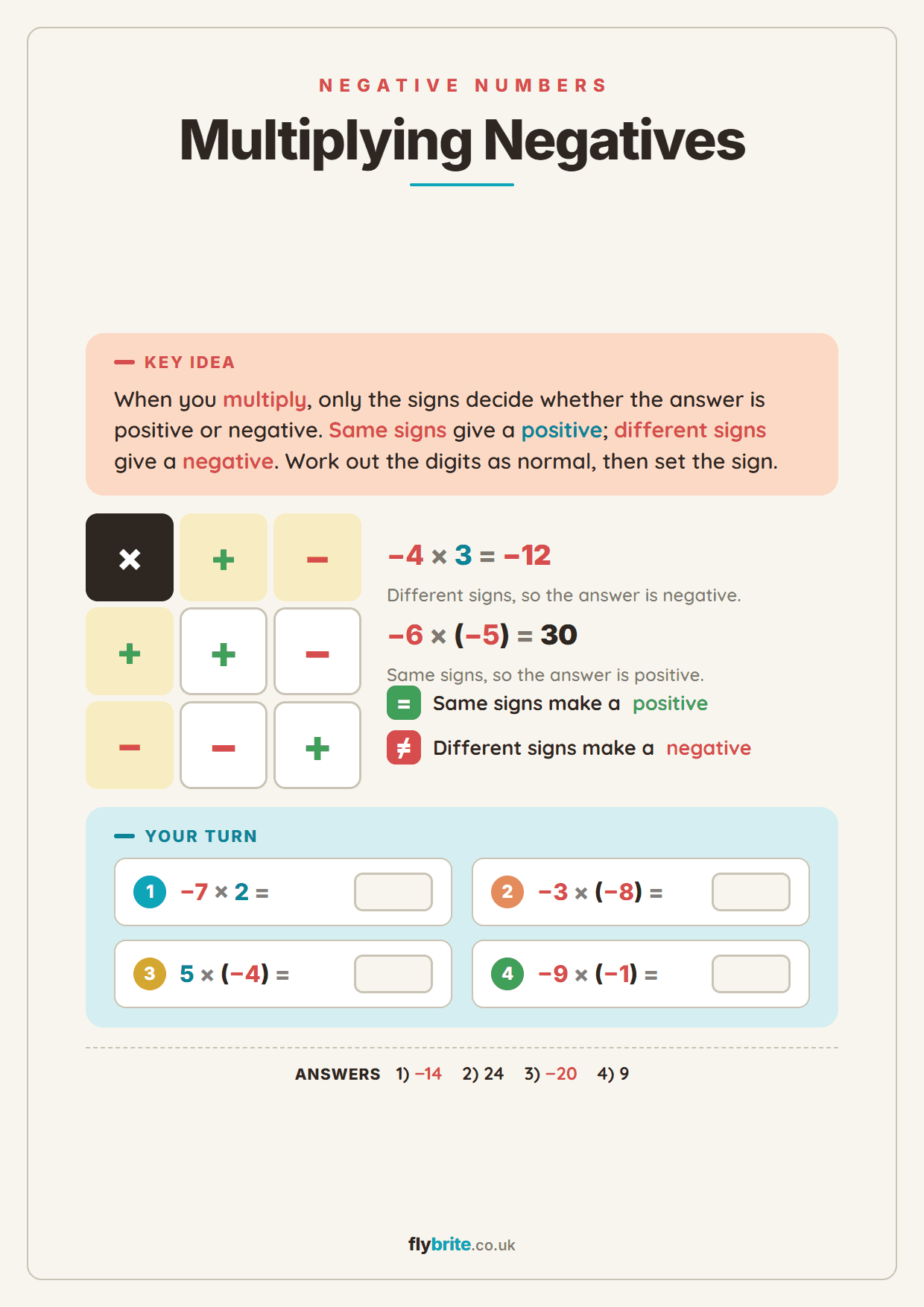
The sign rules for multiplication, with a clear table: same signs make a positive, different signs make a negative.
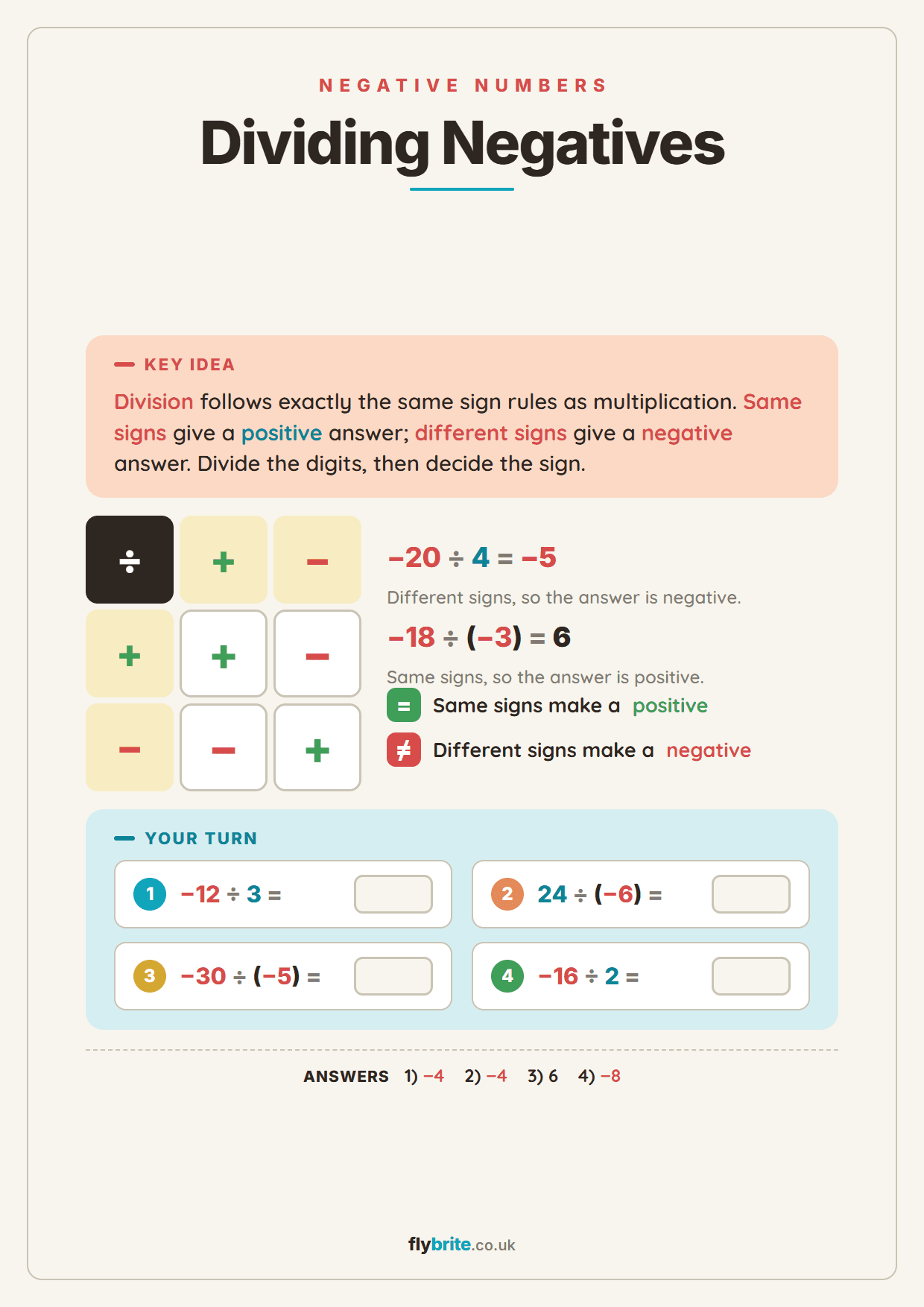
Division follows the very same sign rules as multiplication, shown with a table and worked examples.
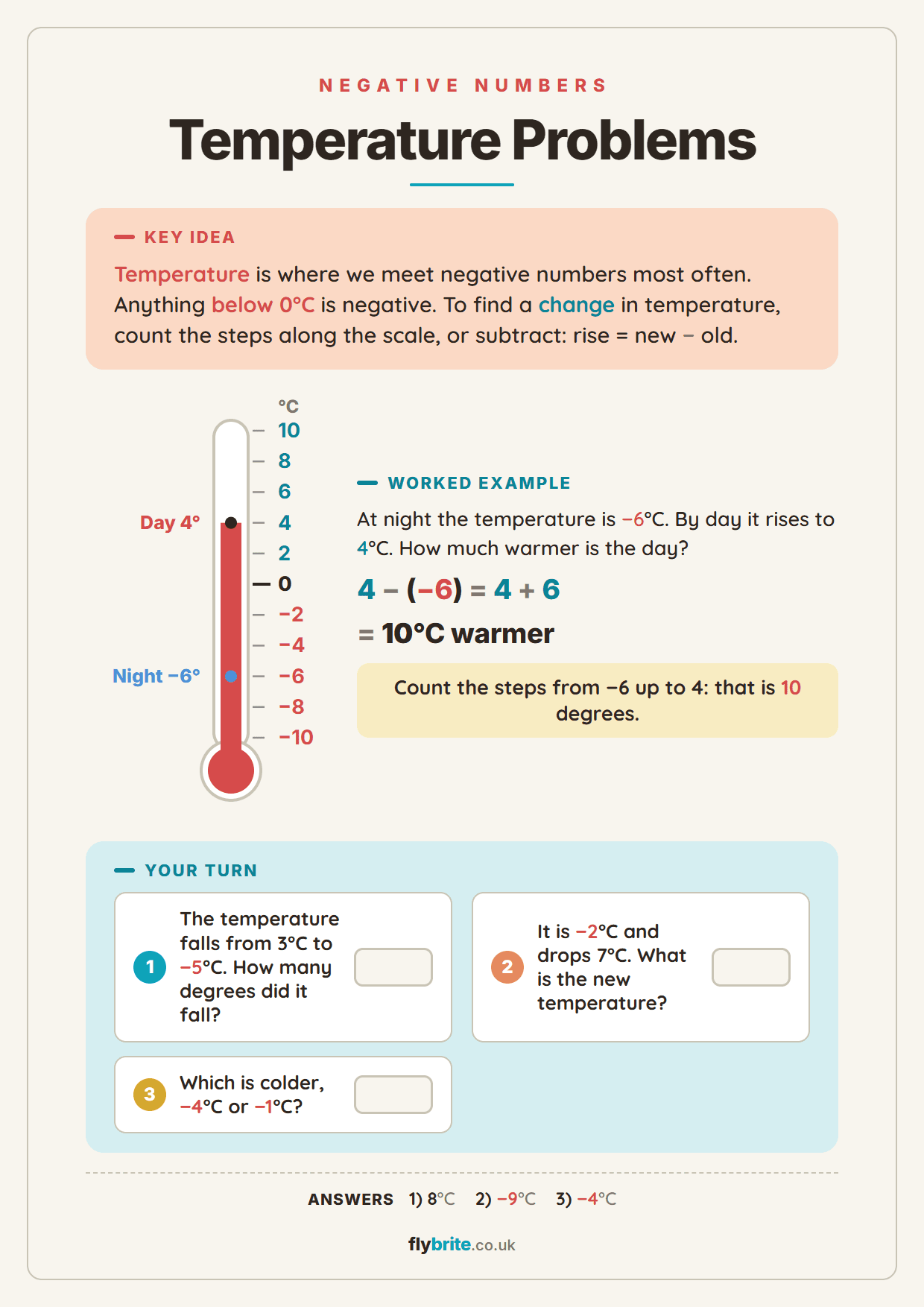
Read a thermometer through zero and work out changes in temperature with negative numbers.
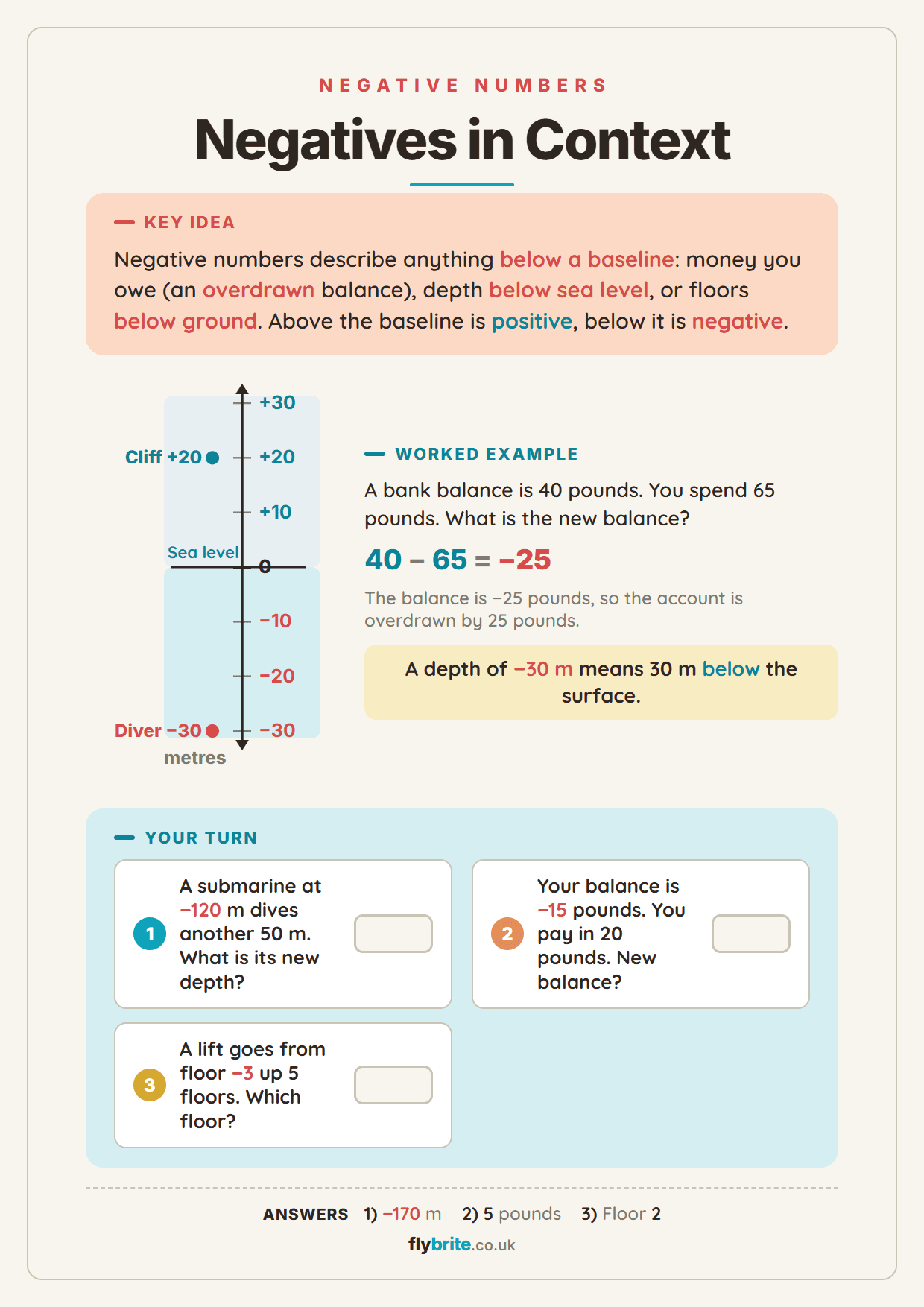
Money owed, depth below sea level and floors below ground, all everyday homes for negative numbers.
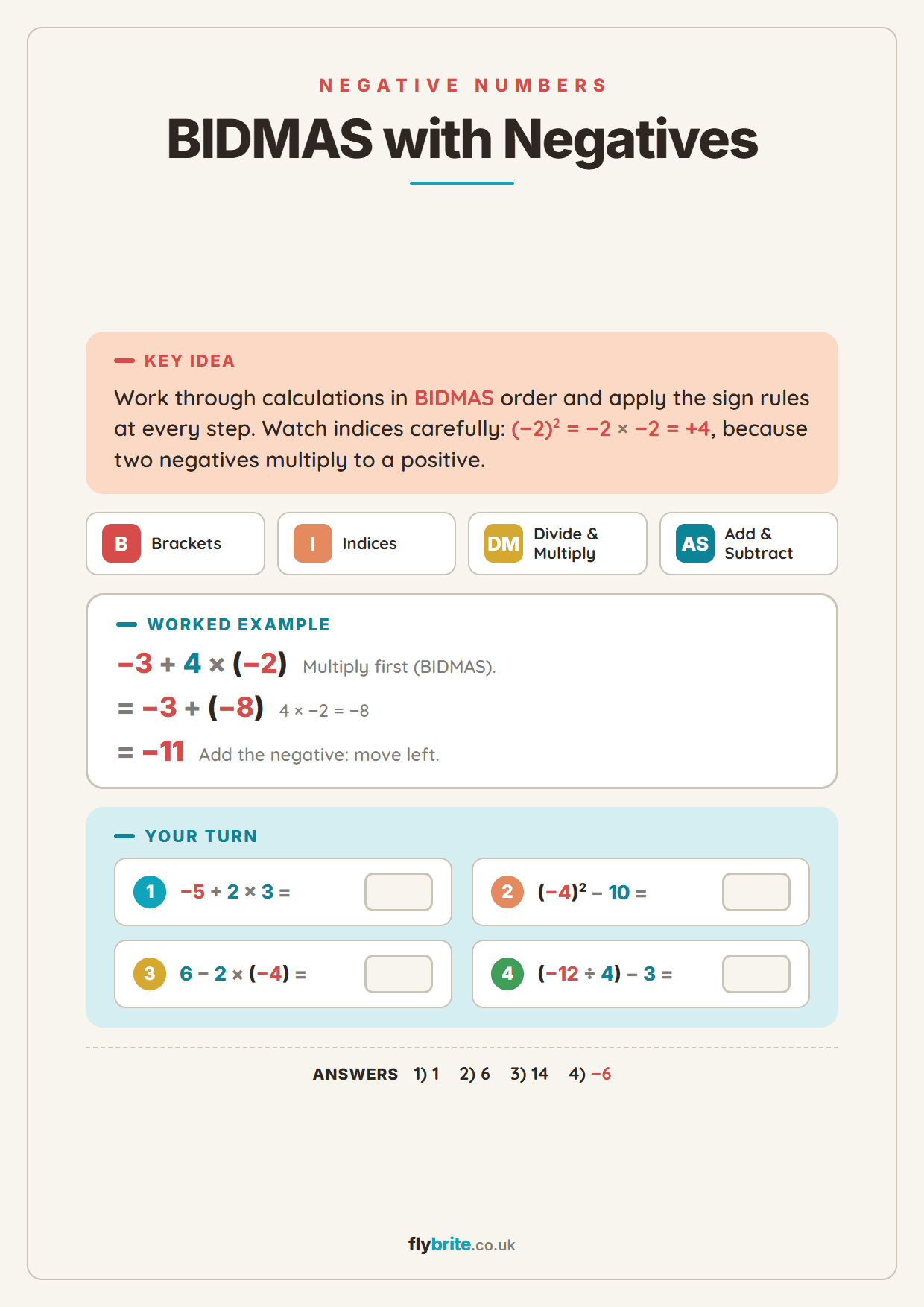
Use the BIDMAS order of operations with negative numbers, taking special care over indices.
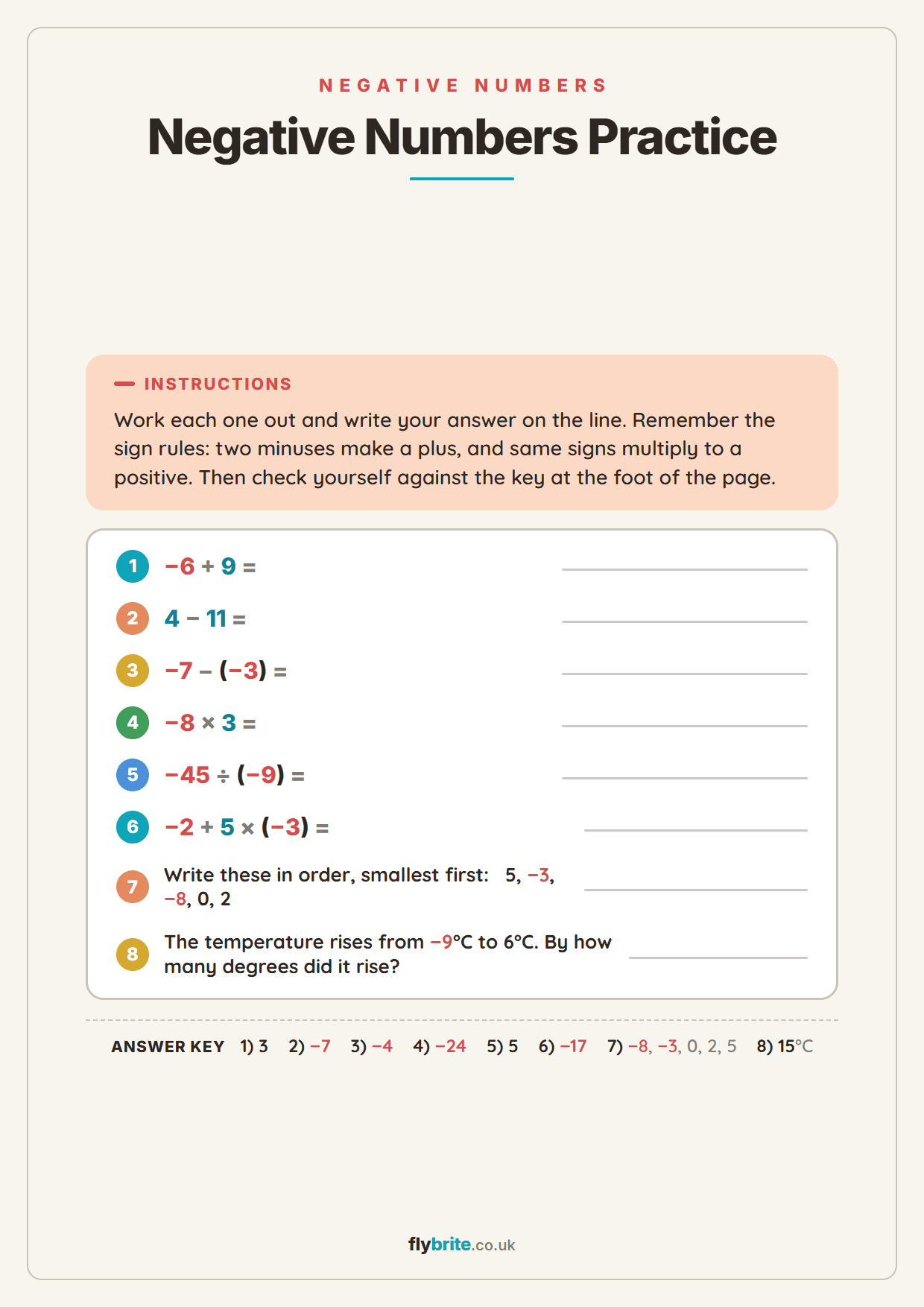 Type or write in
A mixed write-in workout across the whole topic, with a full answer key at the foot of the page.
KS3 biology: animal and plant cells, specialised cells, microscopes and the organisation of life.
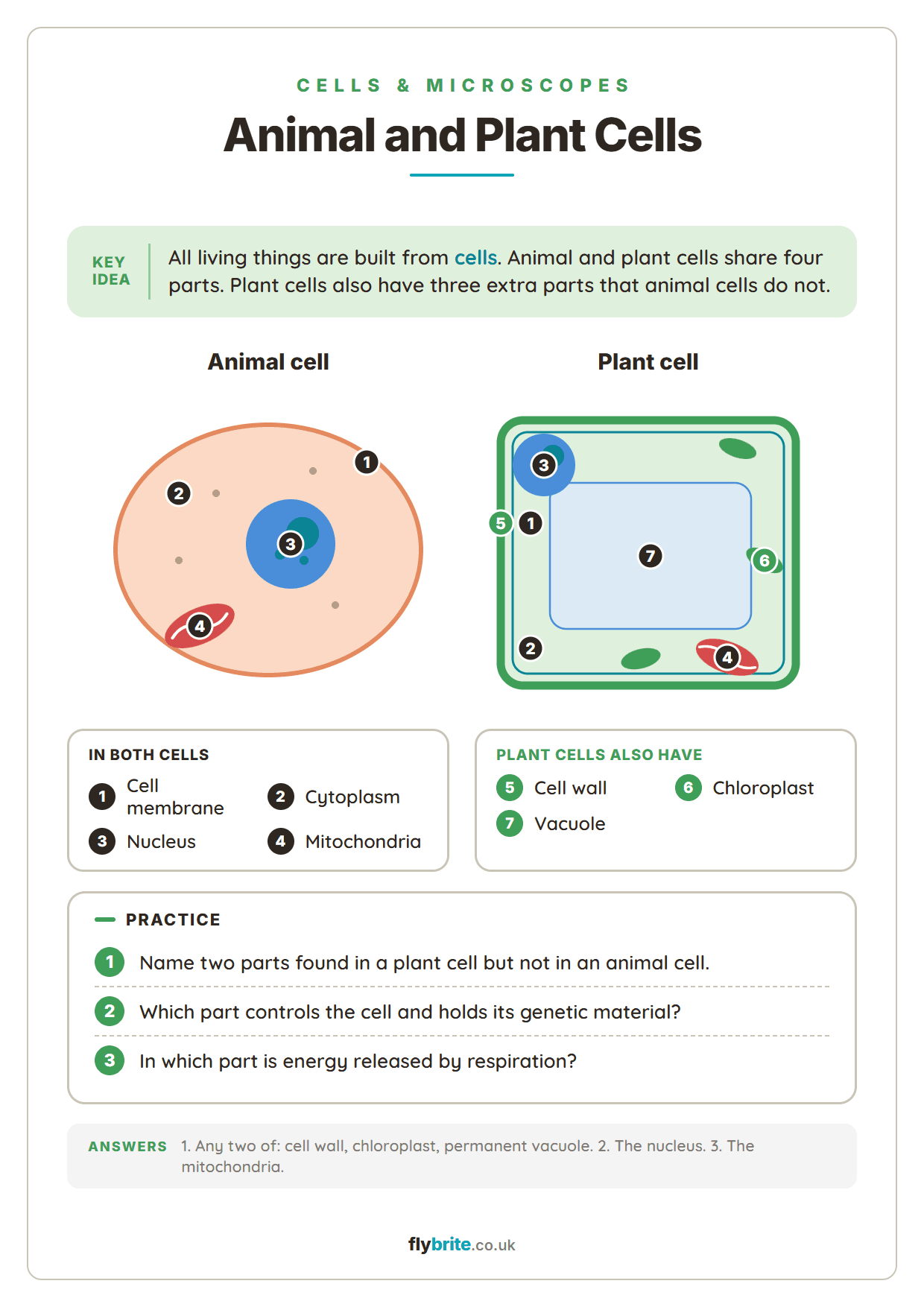
Two labelled cells side by side, with the four parts they share and the three a plant cell adds.
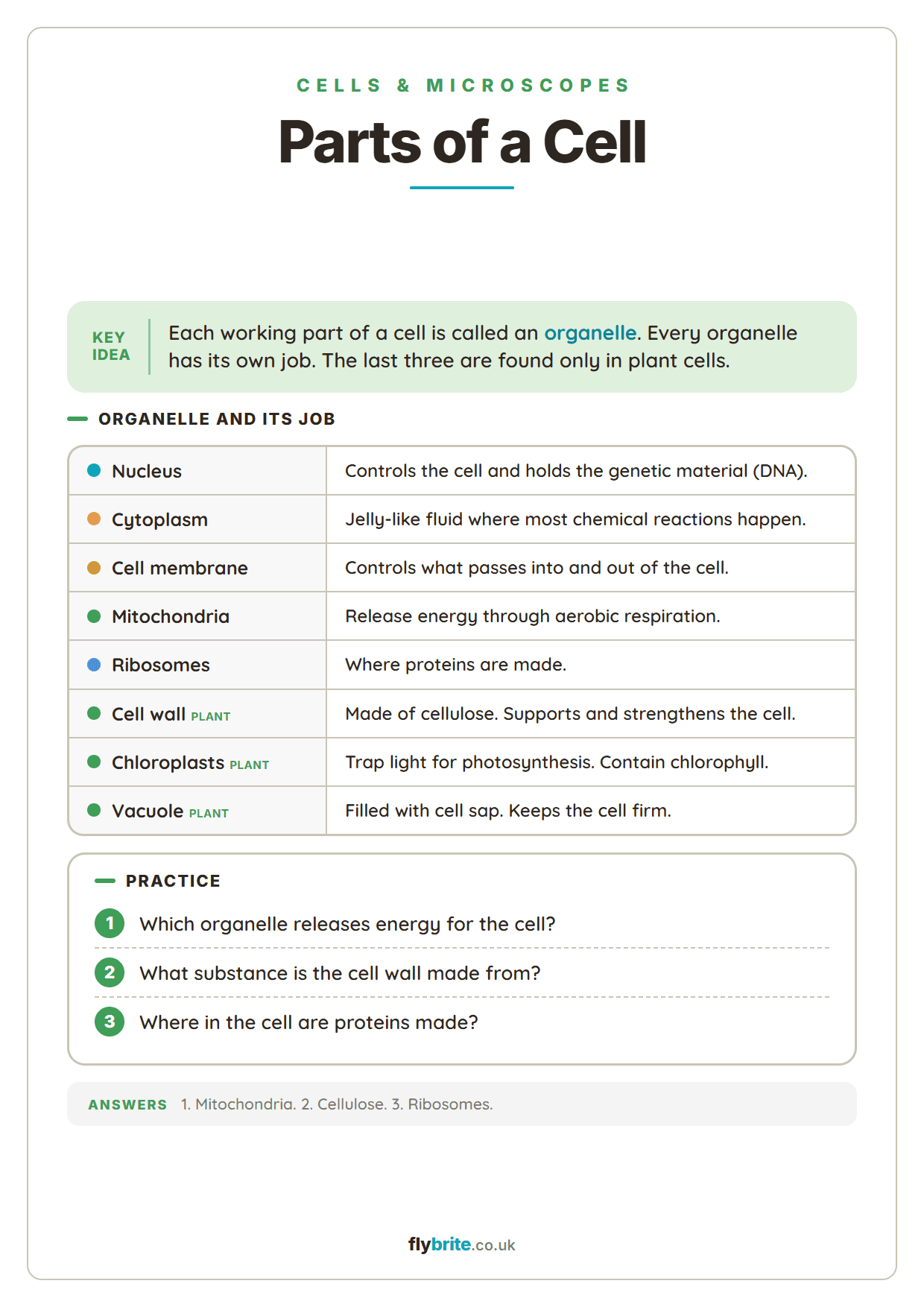
Every organelle and the job it does, from the nucleus to the chloroplast, in one clear table.
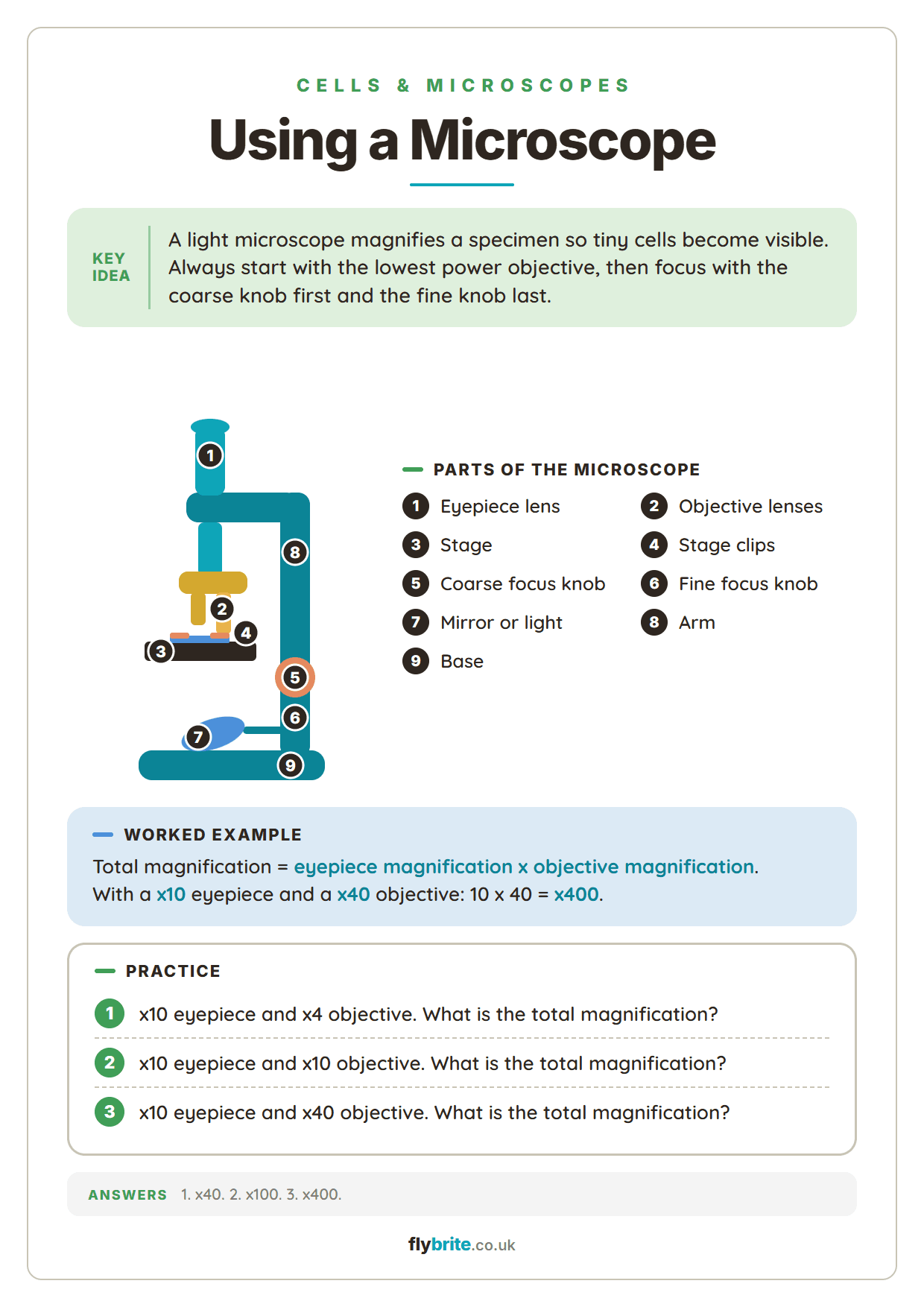
A labelled light microscope plus the magnification formula, worked through with practice sums.
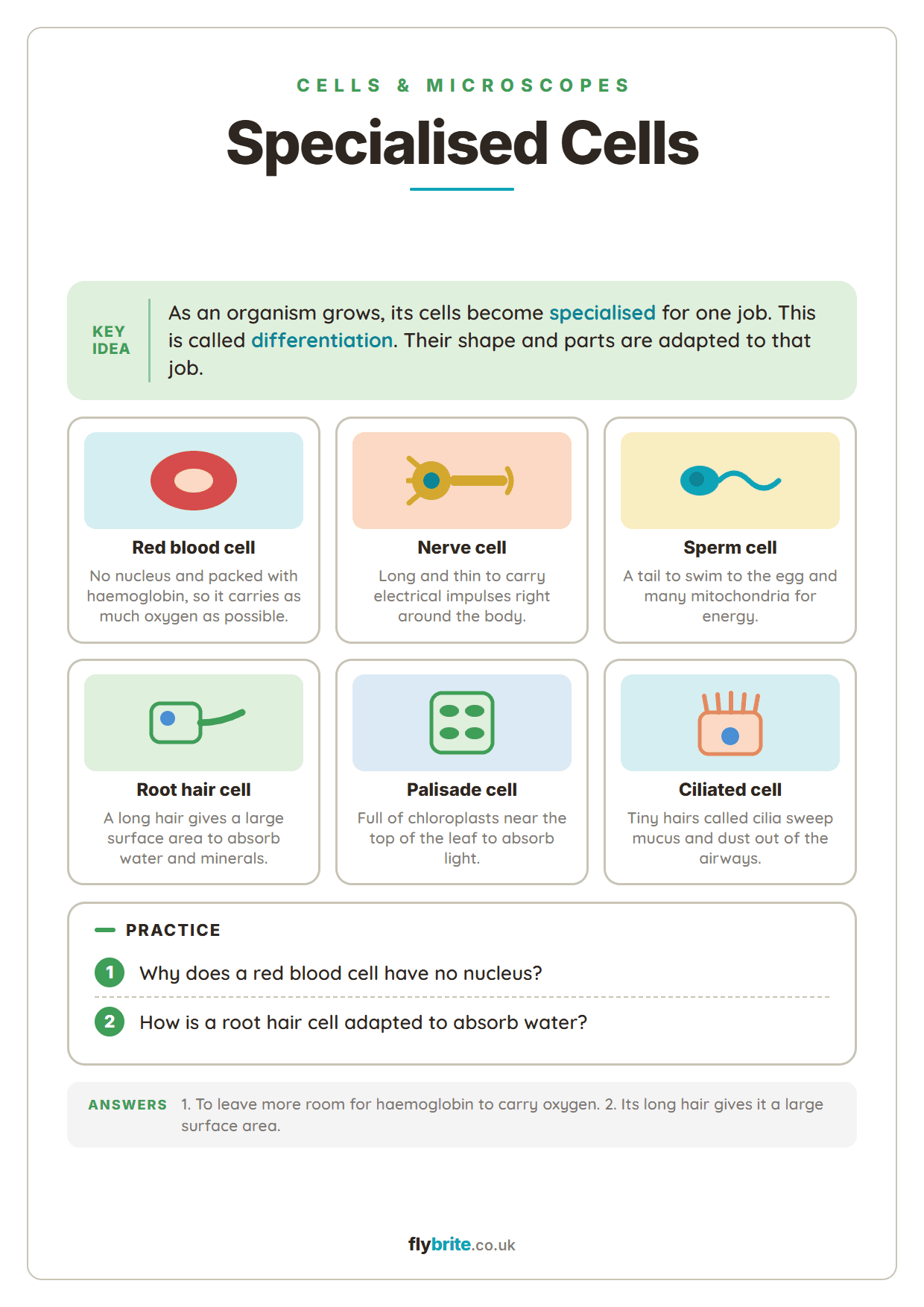
Six cells built for one job each, from the biconcave red blood cell to the swimming sperm cell.
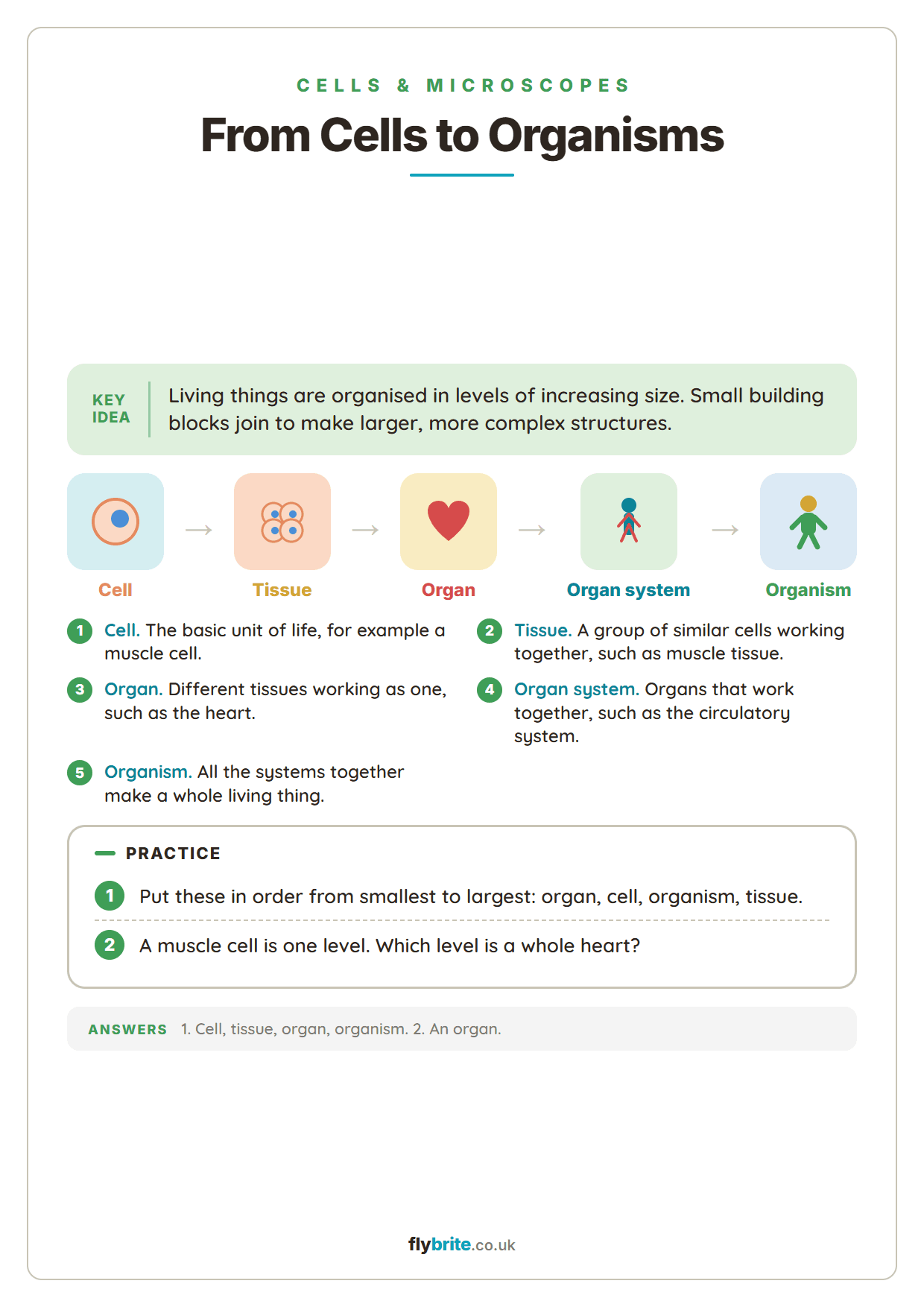
The five levels of organisation, from a single cell up to a whole organism, with a worked example.
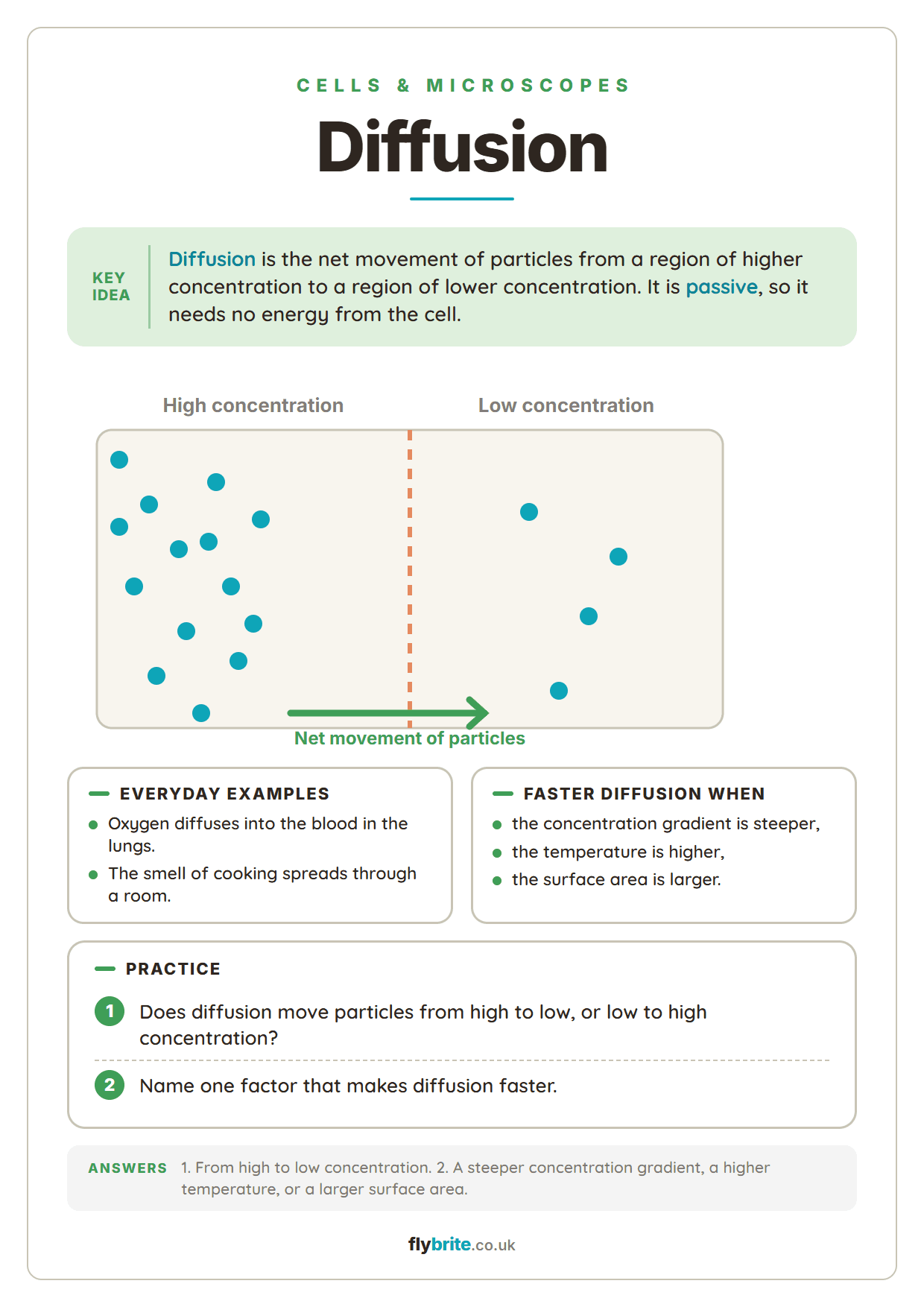
How particles spread from high to low concentration, with a clear diagram and the factors that speed it up.
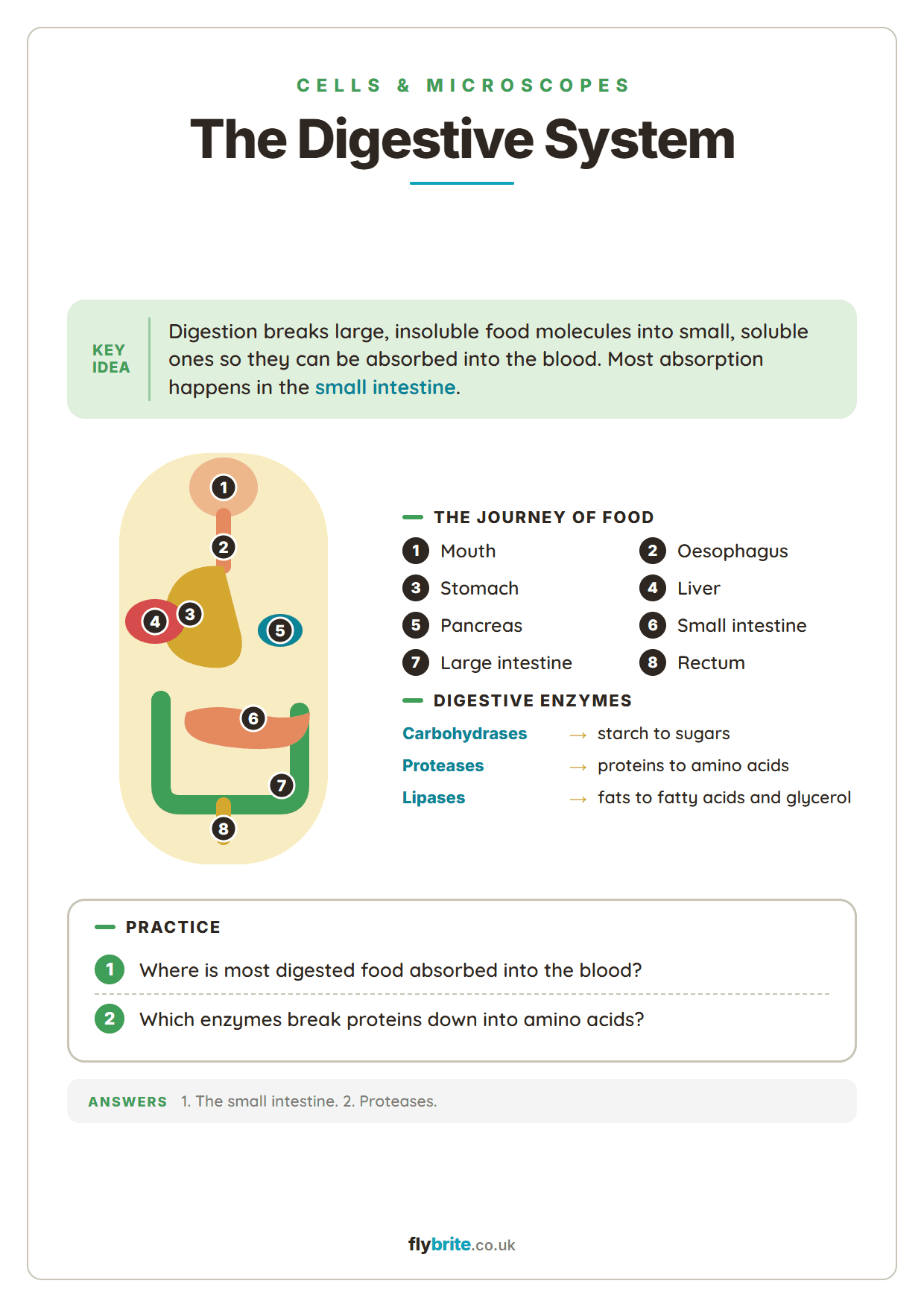
The journey of food labelled organ by organ, with the enzymes that break each food group down.
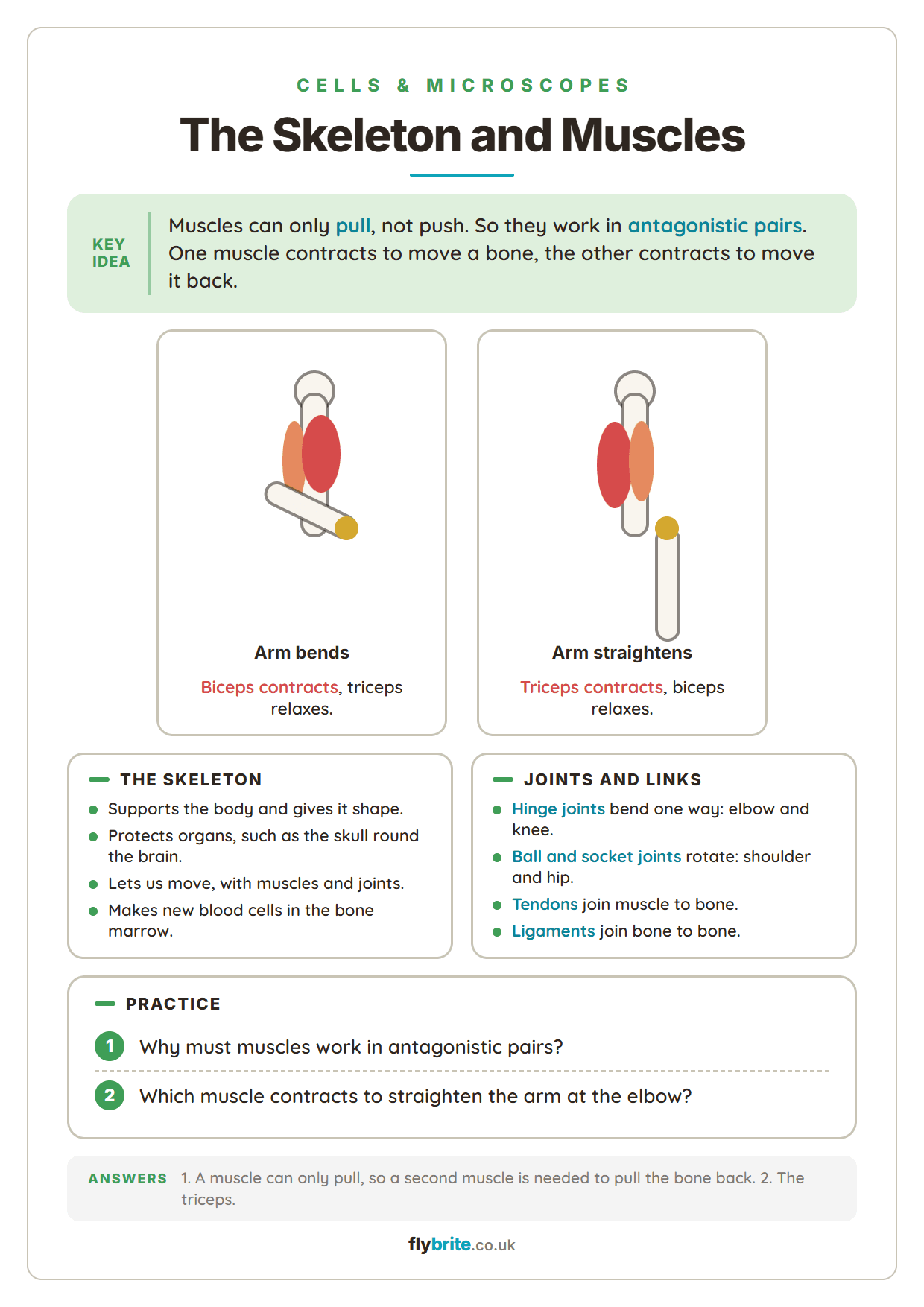
Antagonistic muscle pairs shown at the elbow, plus the jobs of the skeleton and the main joints.
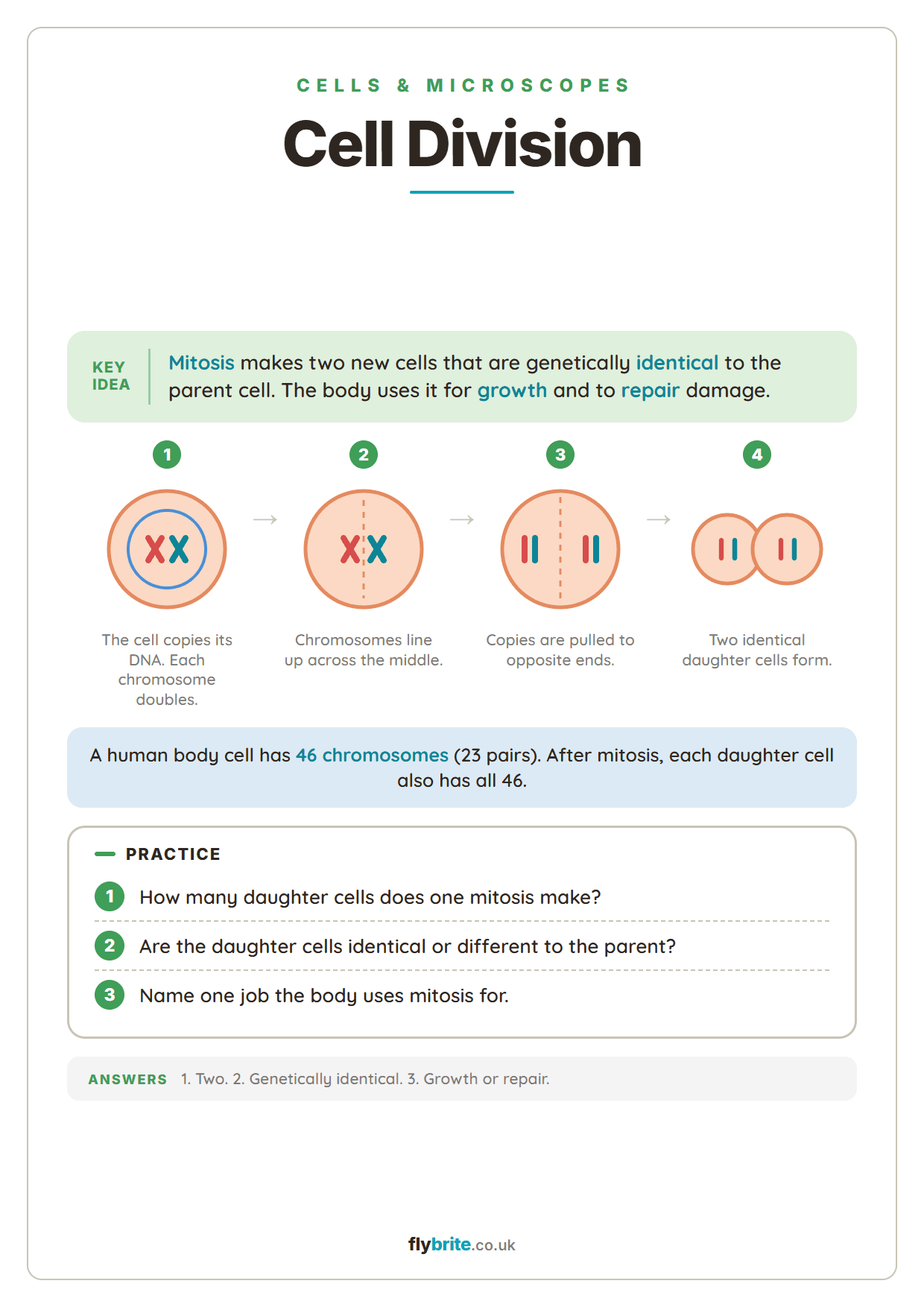
An introduction to mitosis in four clear stages, from copied chromosomes to two identical cells.
 Type or write in
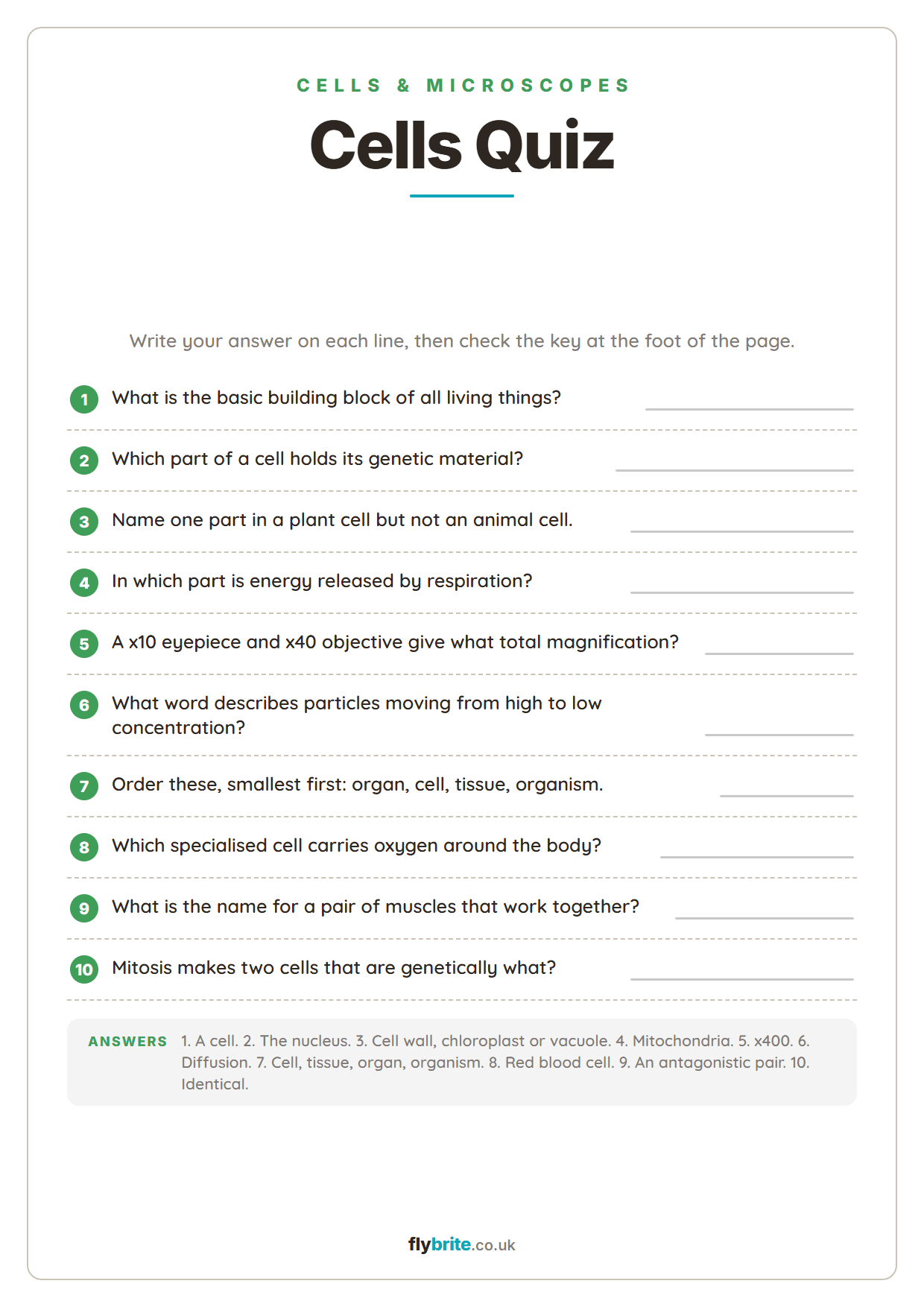
Ten write-in questions covering the whole pack, with a full answer key at the foot of the page.
KS3 chemistry: atoms, elements, compounds, the particle model and reading chemical formulae.
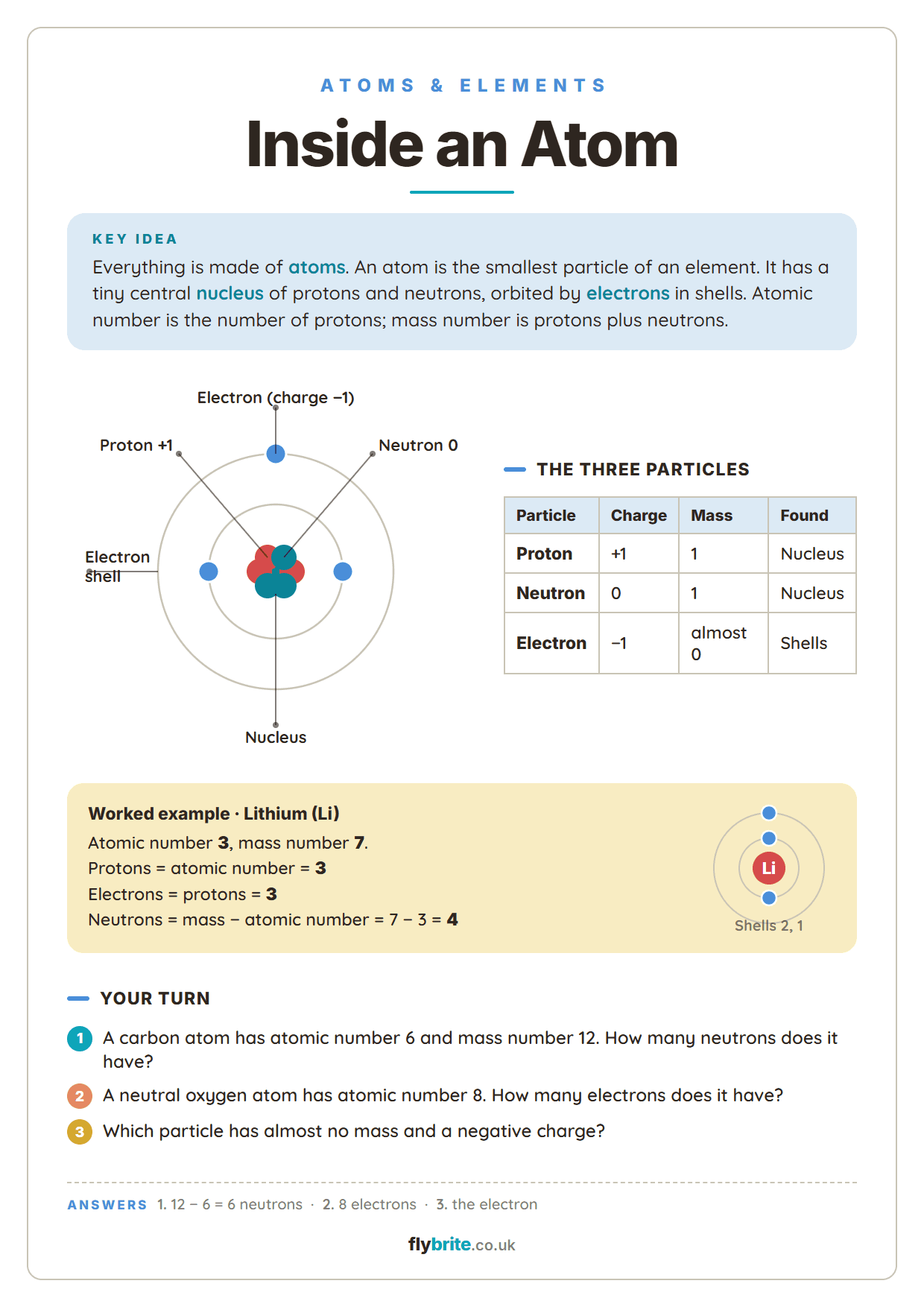
The protons, neutrons and electrons that build every atom, with a labelled diagram and a worked example.
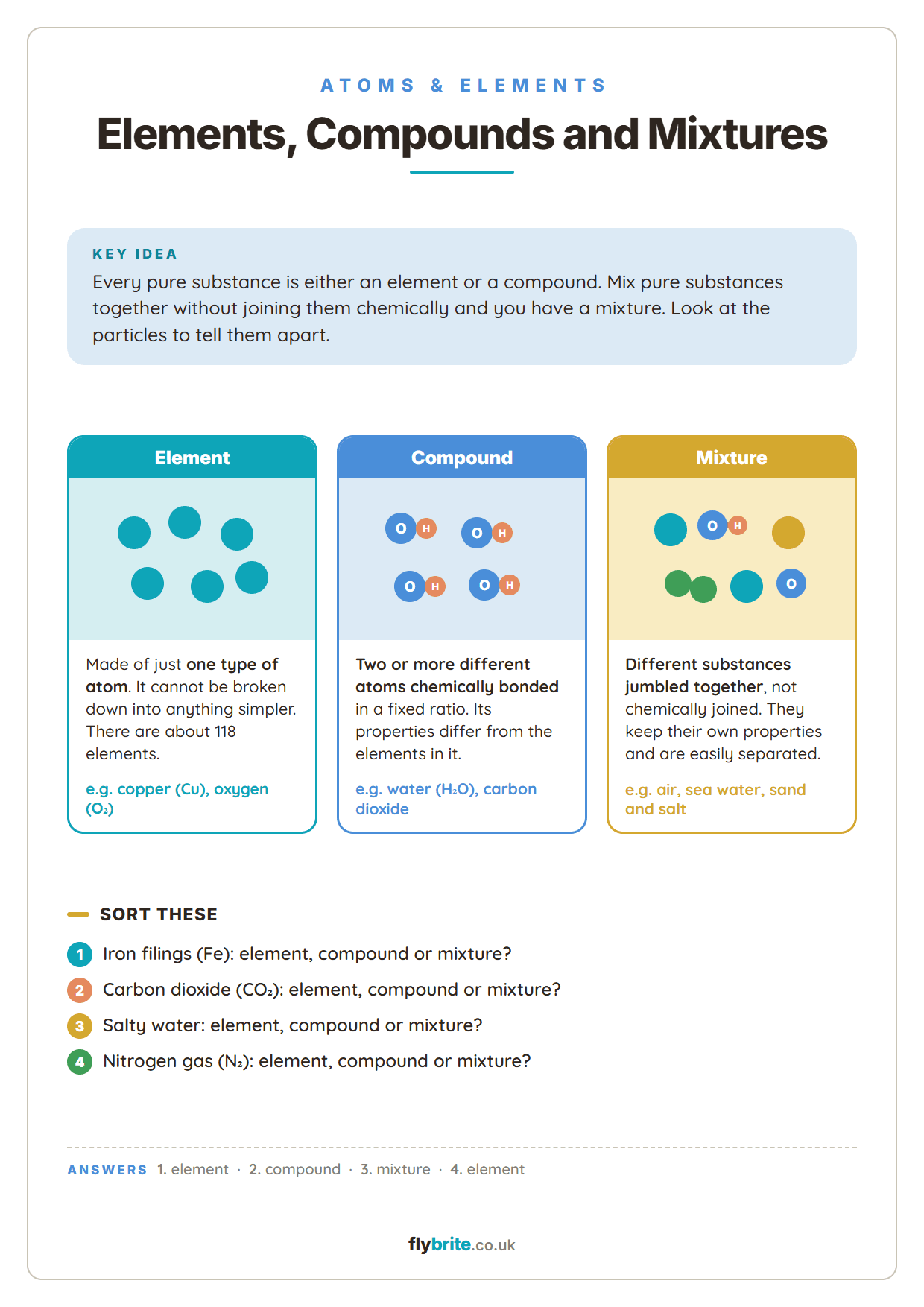
Tell the three pure and impure substances apart by looking at their particles, then sort real examples.
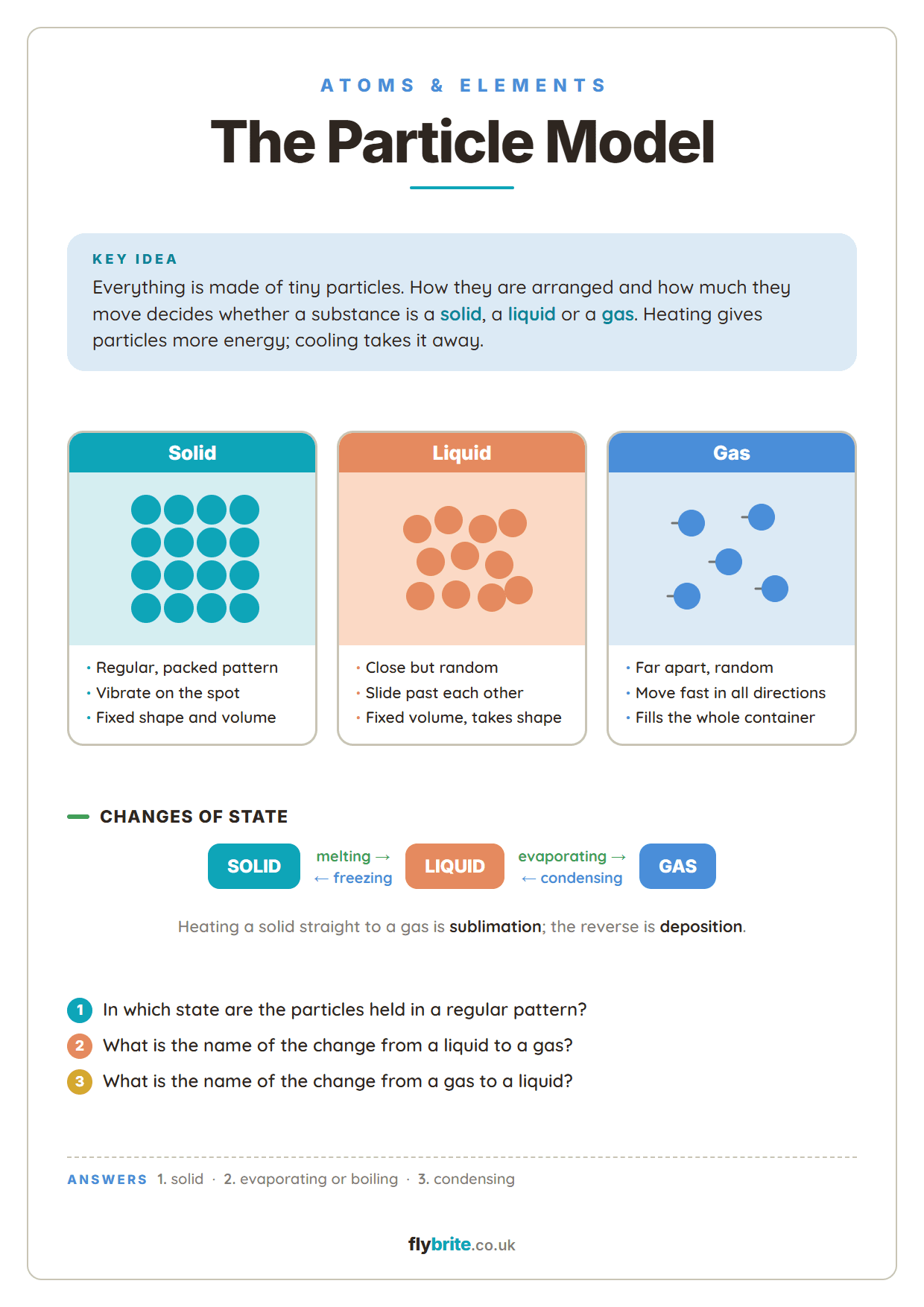
How particles are arranged in solids, liquids and gases, plus every change of state between them.
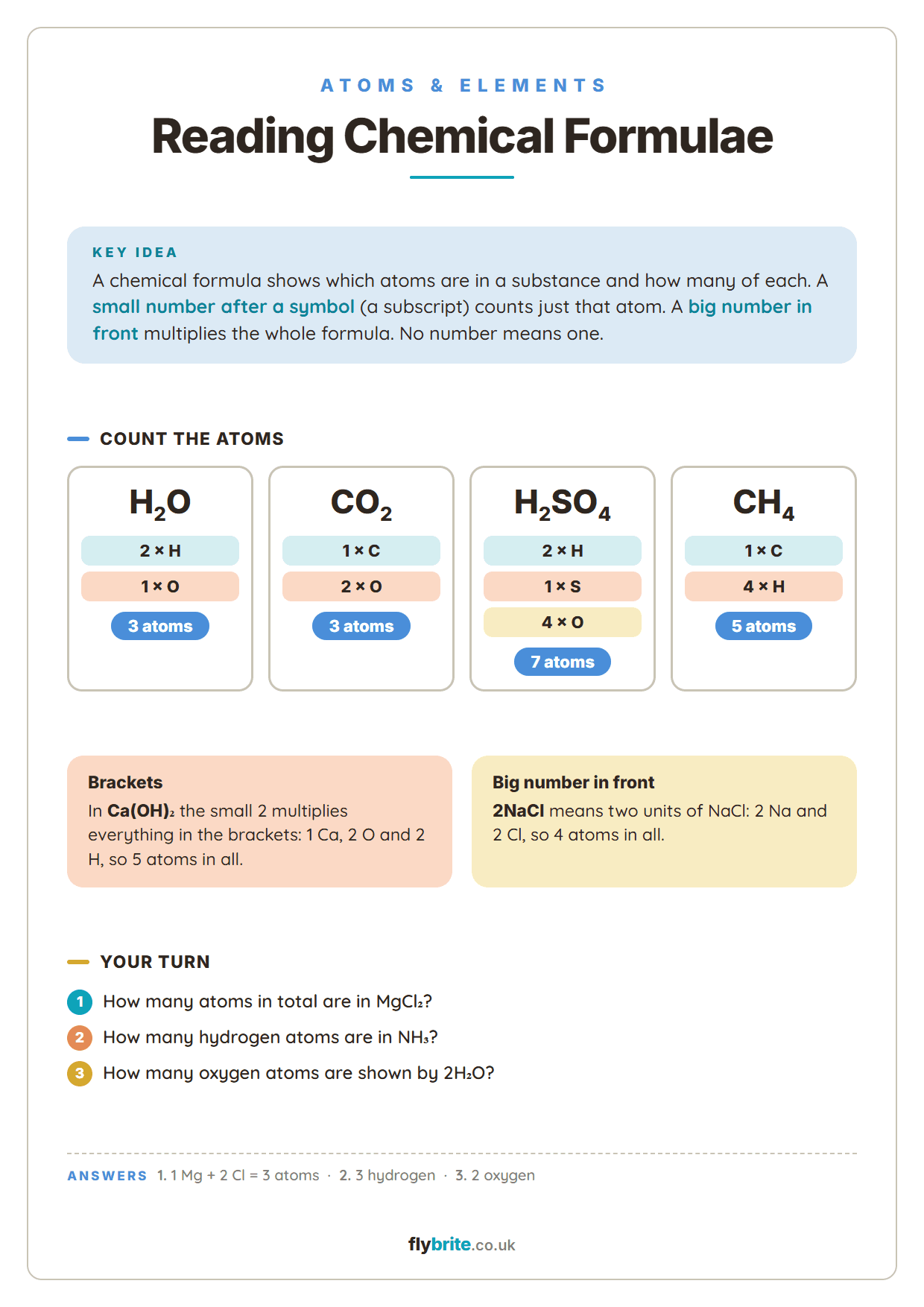
Read subscripts, brackets and big numbers to count exactly how many atoms are in any formula.
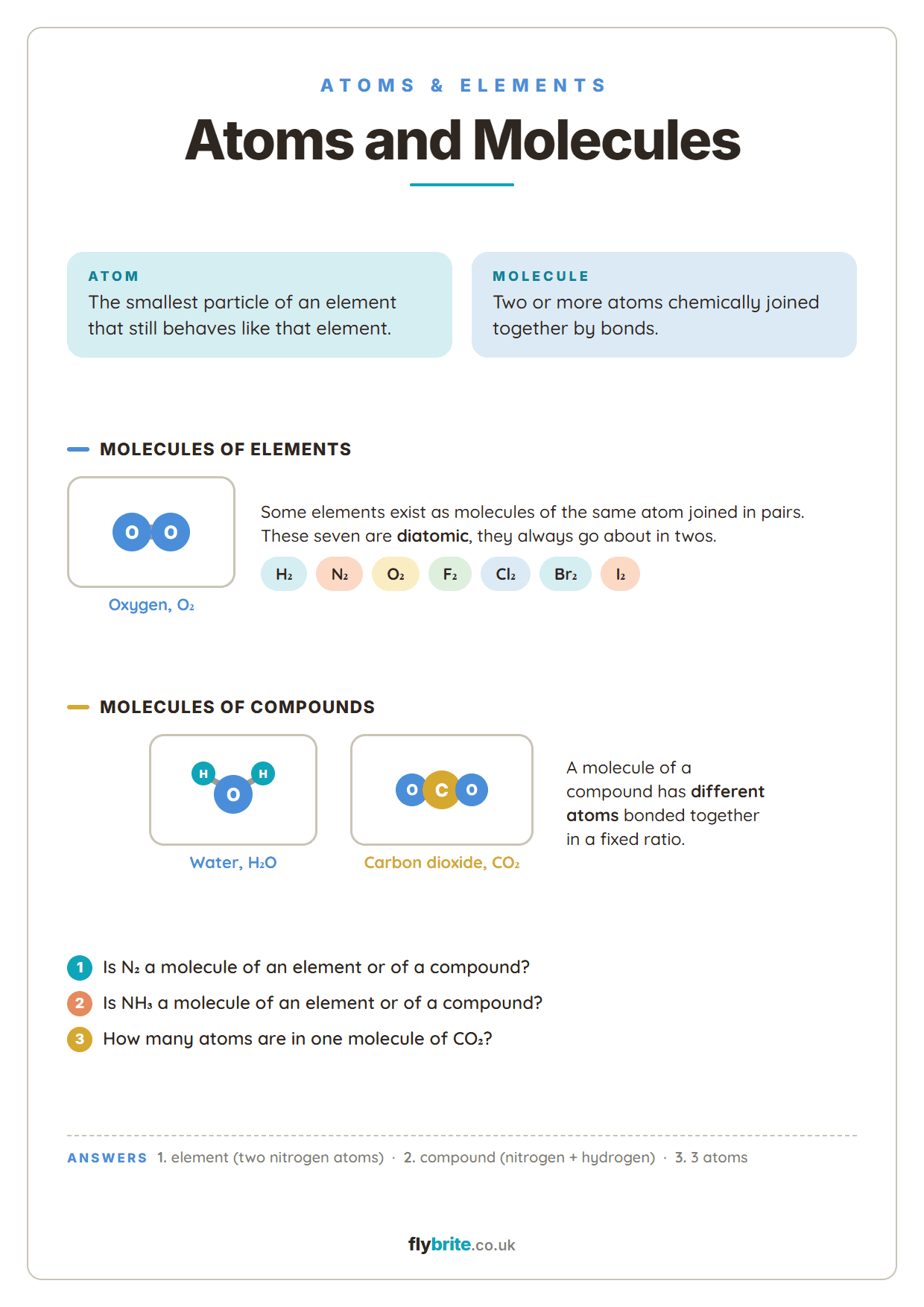
The difference between atoms and molecules, the seven diatomic elements, and molecules of compounds.
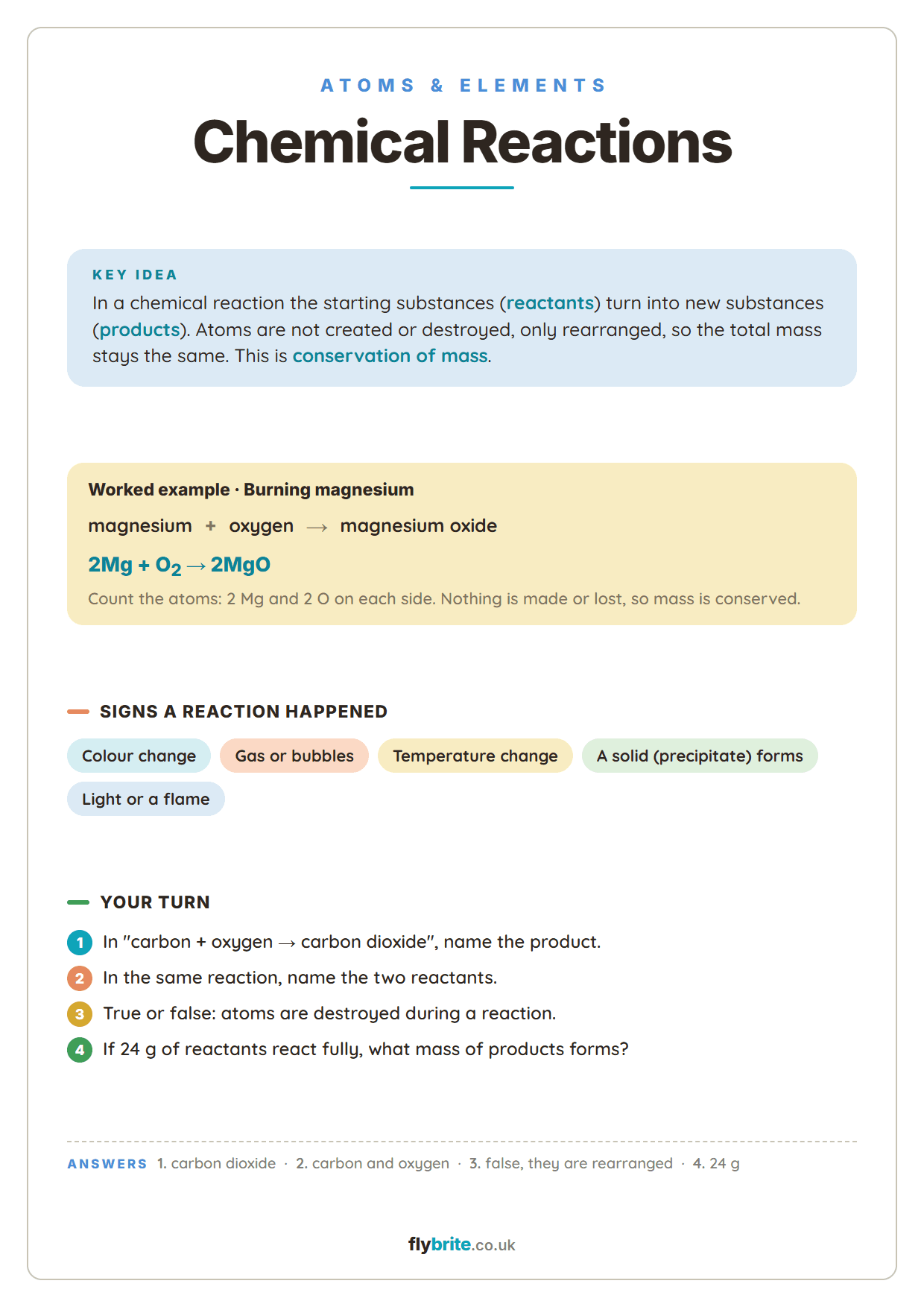
Reactants become products, atoms rearrange and mass is conserved, shown by burning magnesium.
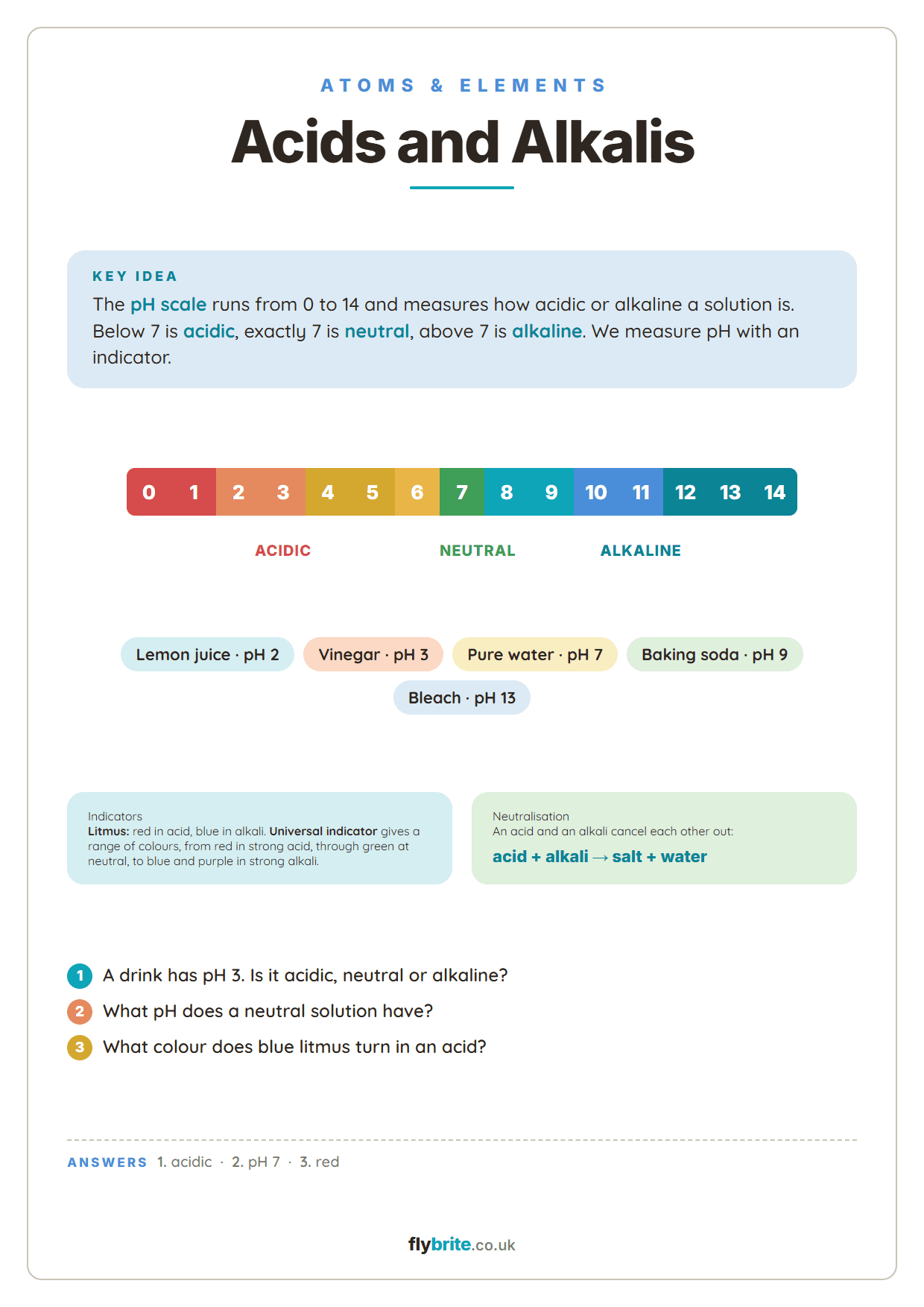
The pH scale from 0 to 14, the indicators that measure it, and how neutralisation works.
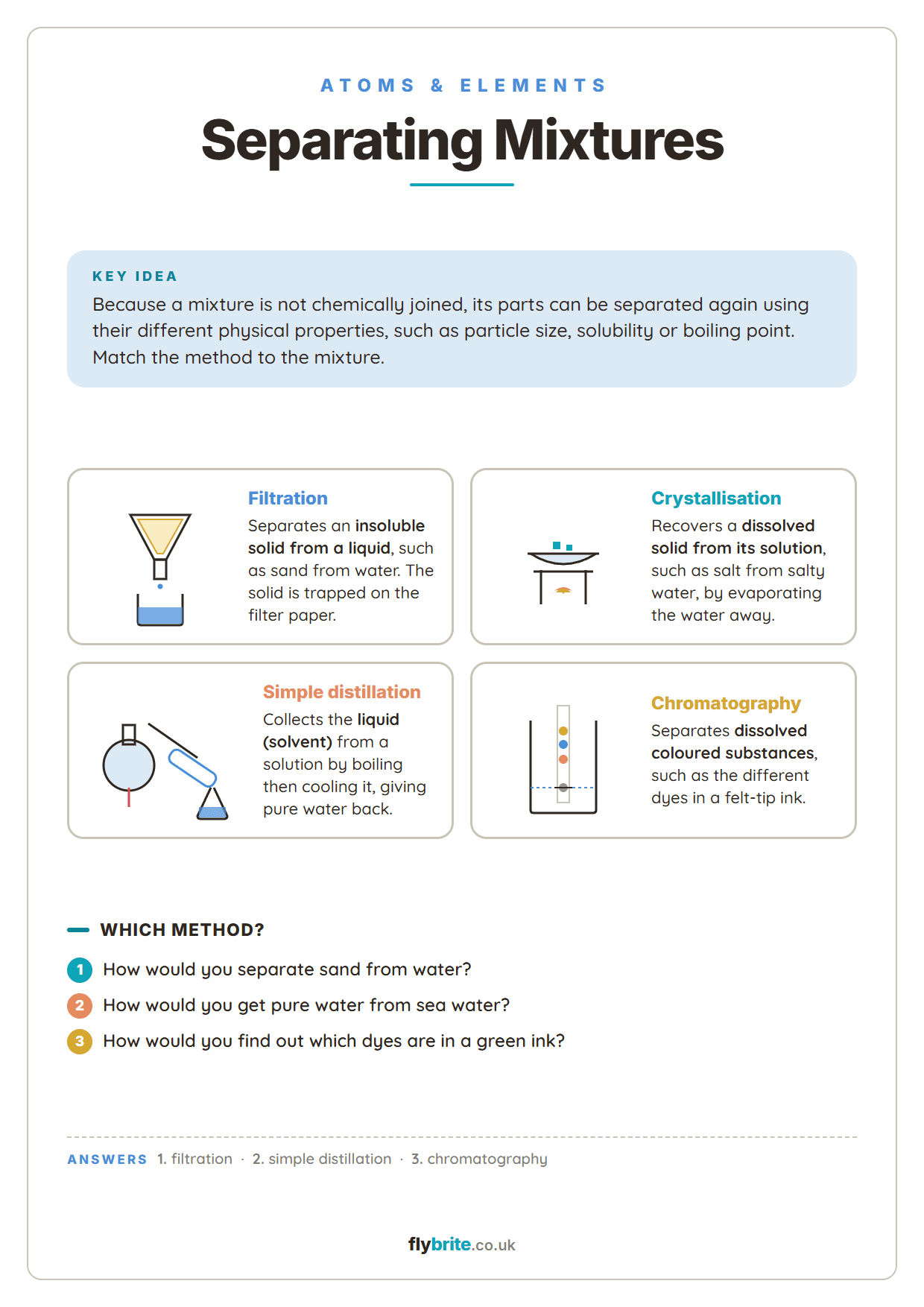
Filtration, crystallisation, distillation and chromatography, with the mixture each one is made for.
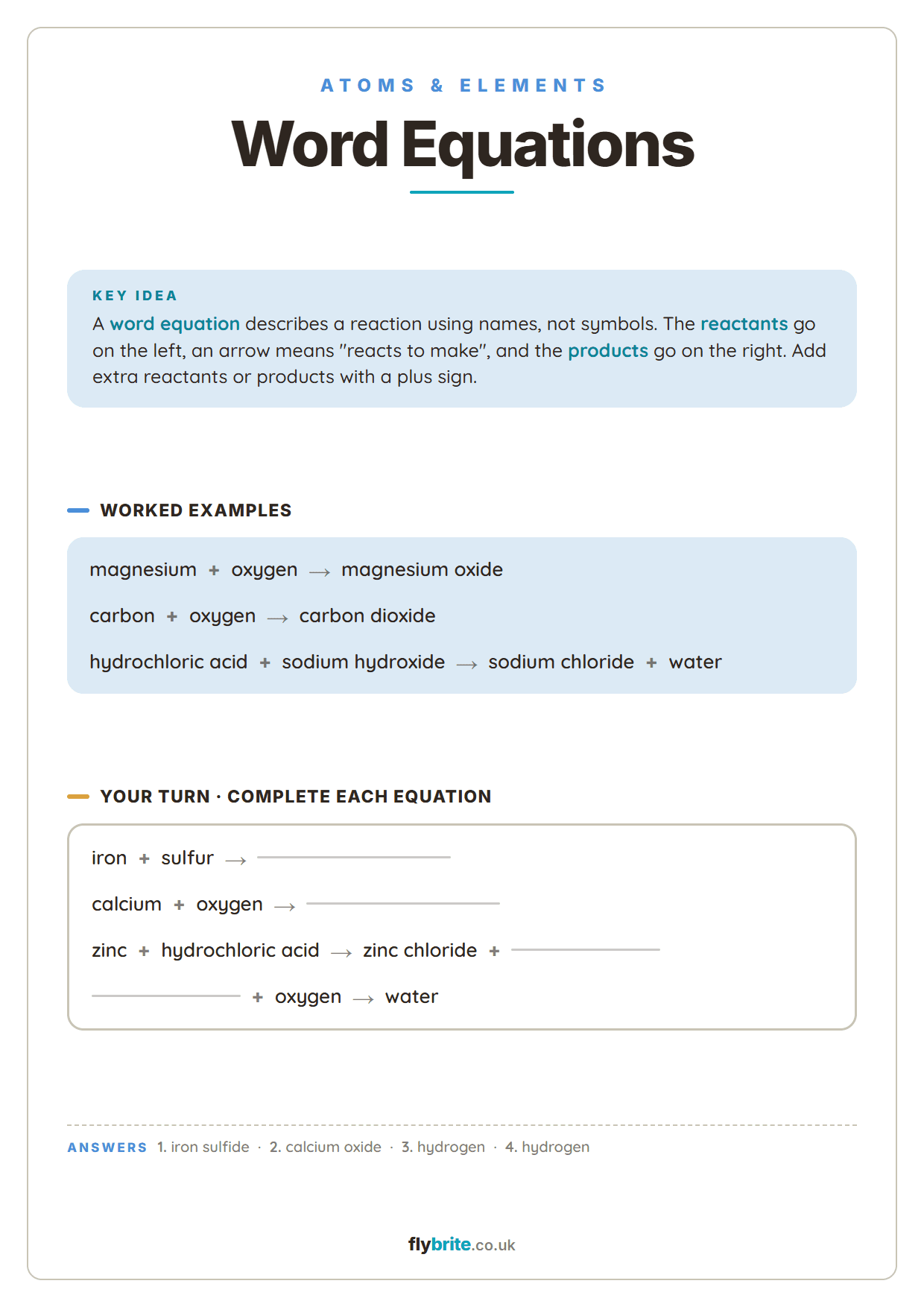 Type or write in
Learn to write reactions in words, then complete four equations of your own. Answer key included.
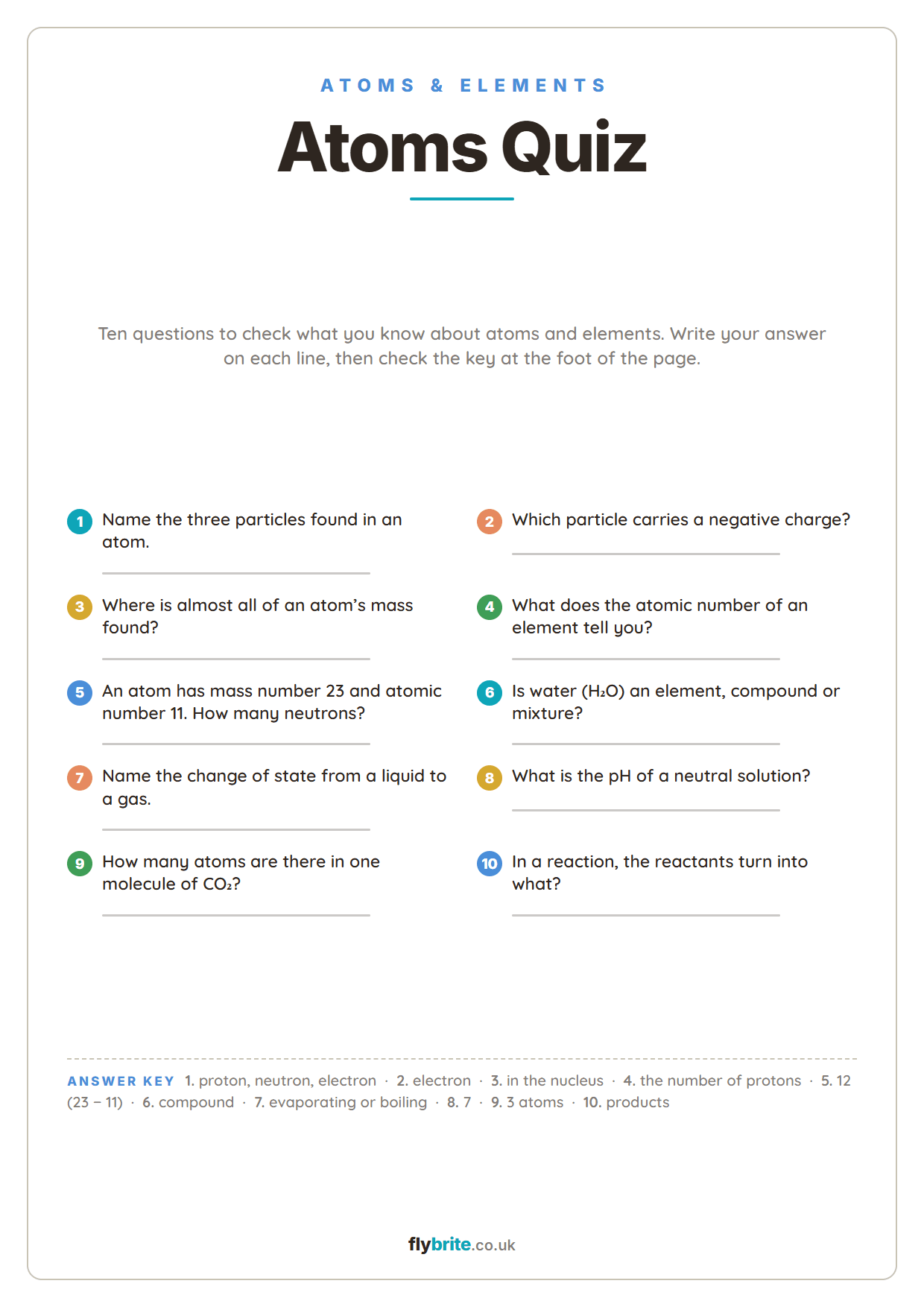 Type or write in
Ten write-in questions covering the whole pack, from subatomic particles to pH, with a full answer key.
KS3 physics: forces, friction, gravity, speed and simple machines, with force diagrams to complete.
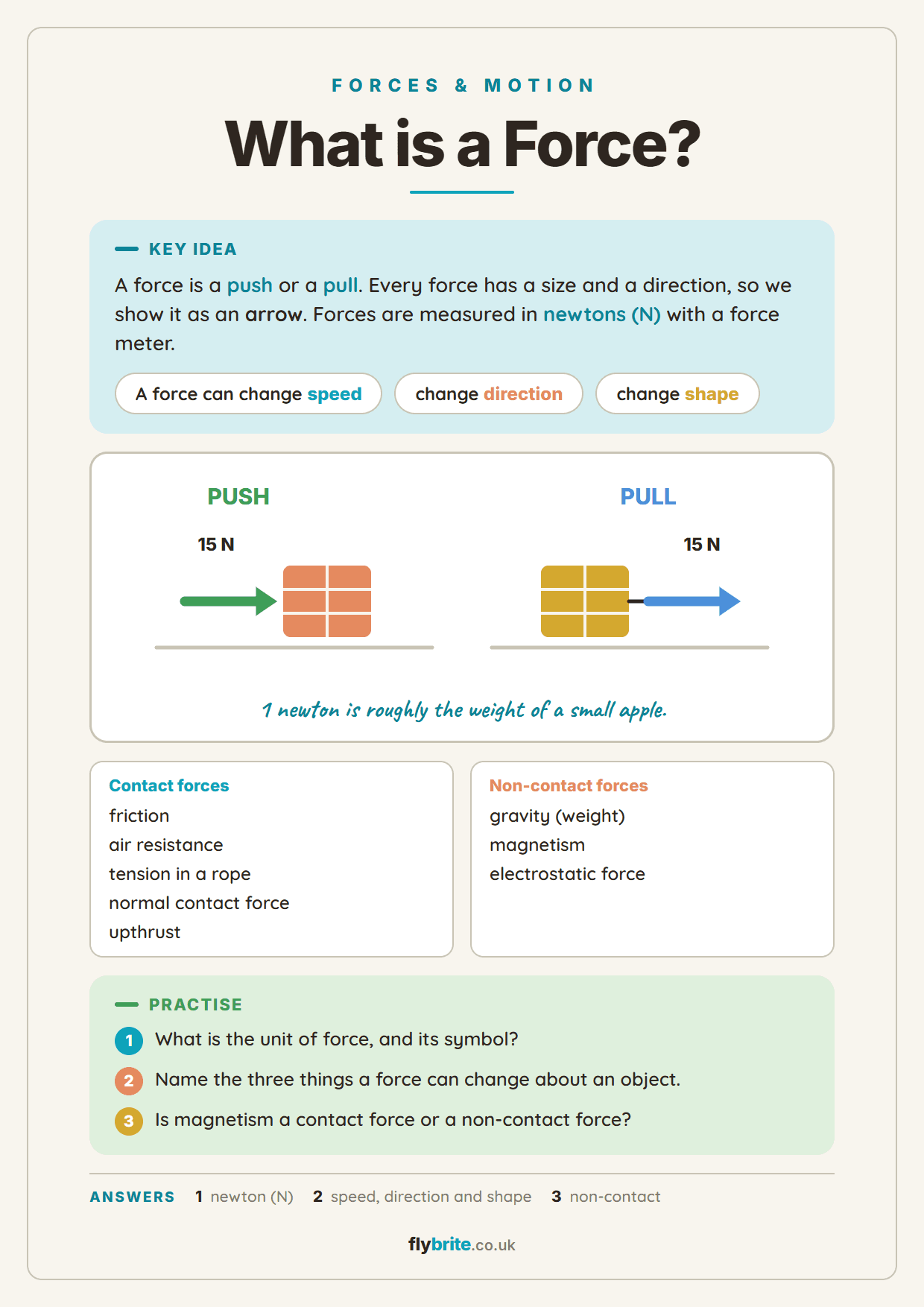
Pushes, pulls and newtons: the KS3 starting point, with contact and non-contact forces and quick practice.
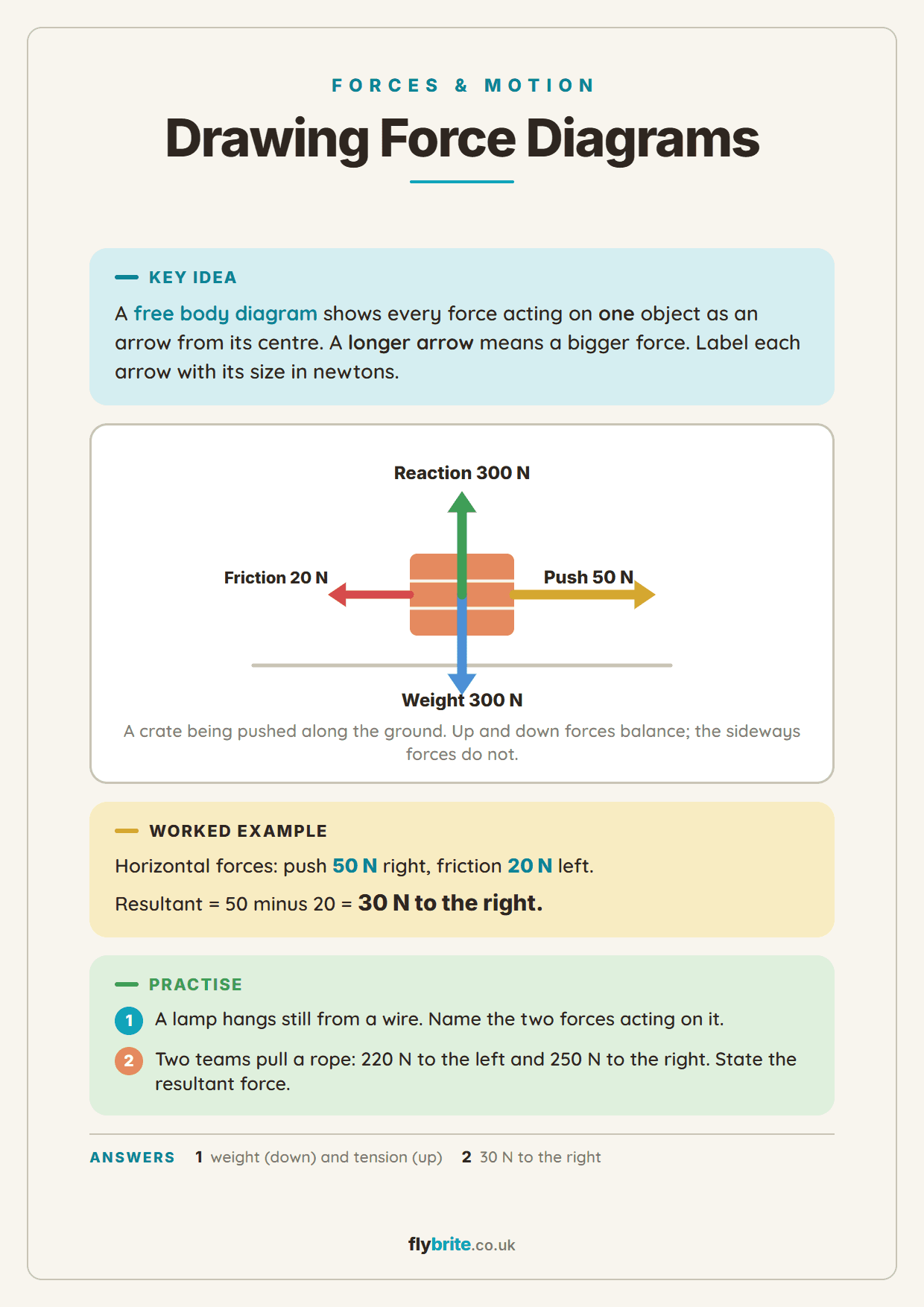
Free body diagrams done properly: arrows for every force, labelled in newtons, with a worked resultant.
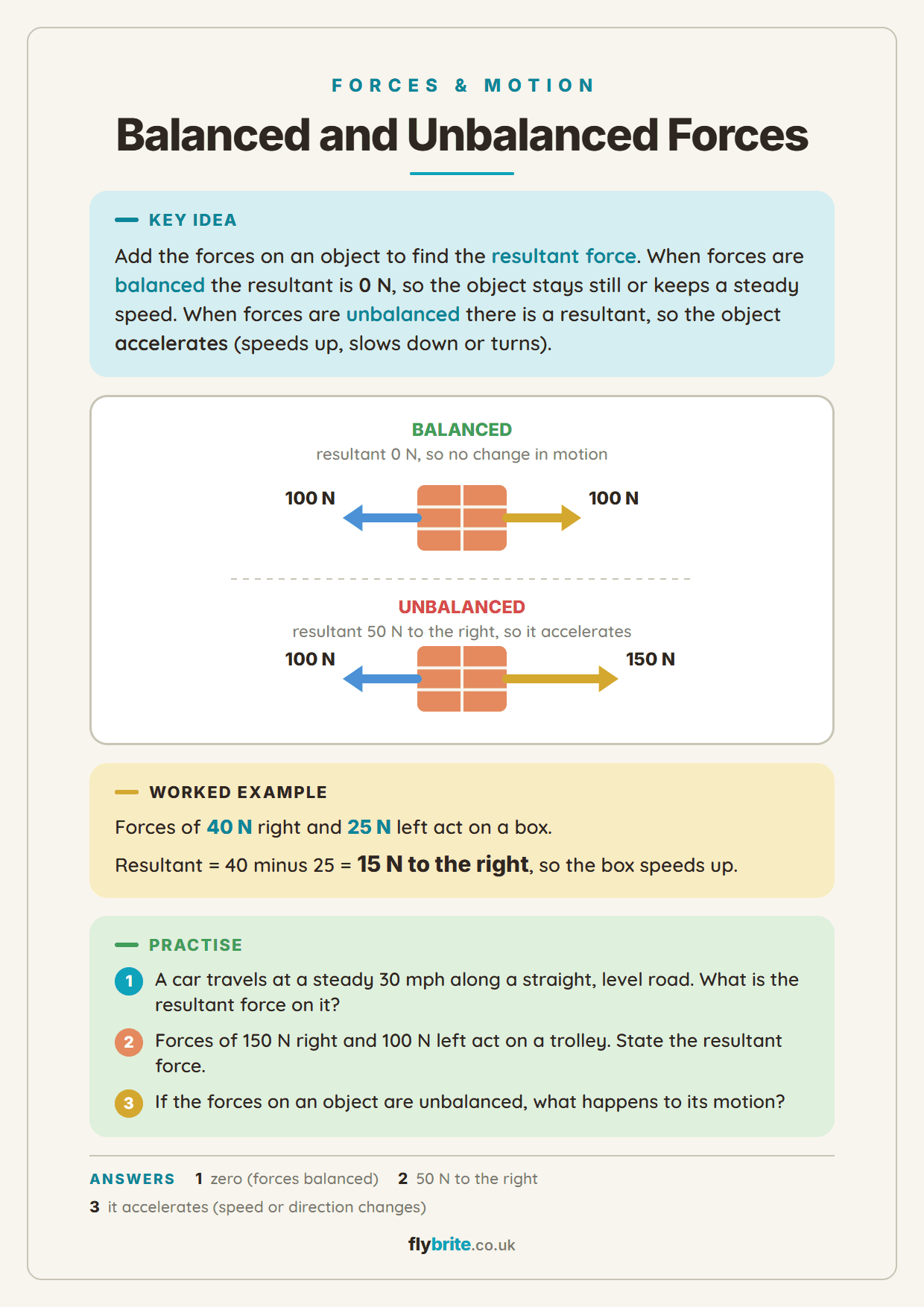
Resultant forces explained: when motion stays steady, when it changes, and how to work out the difference.
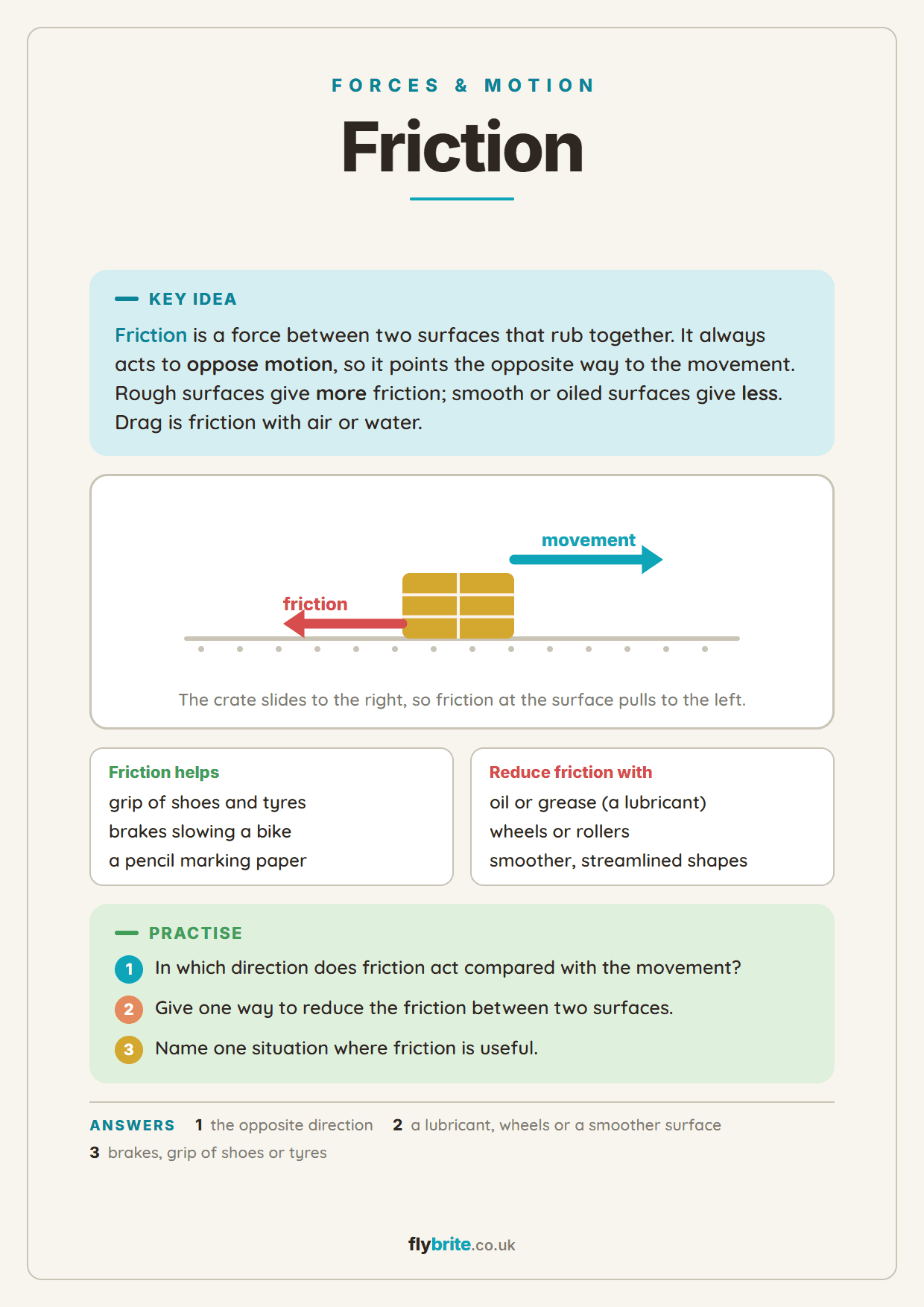
The force that opposes motion: where it helps, where it hinders, and how to reduce it, with a labelled diagram.
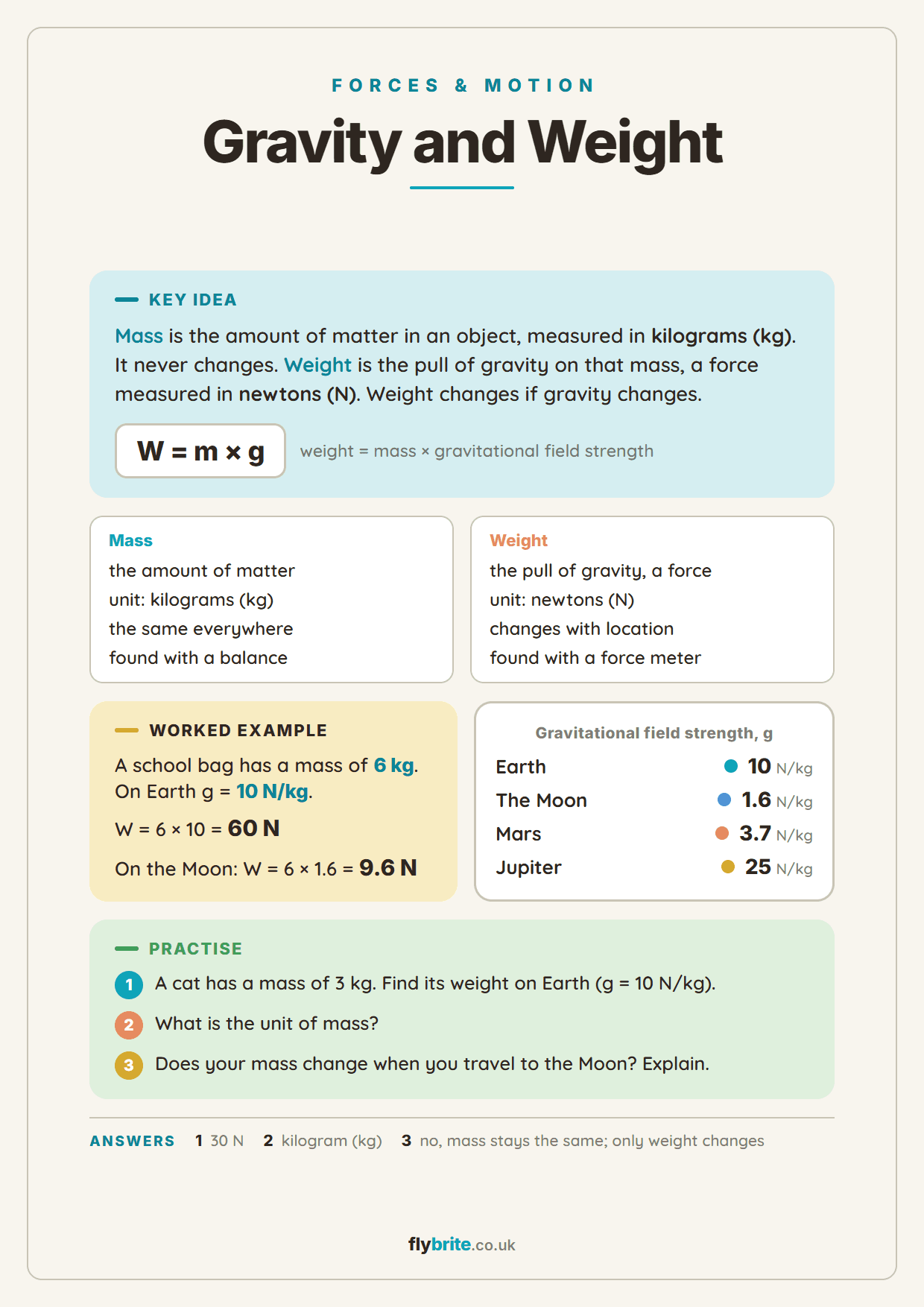
Mass versus weight, the formula W = m g, and gravity across the solar system, with worked examples.
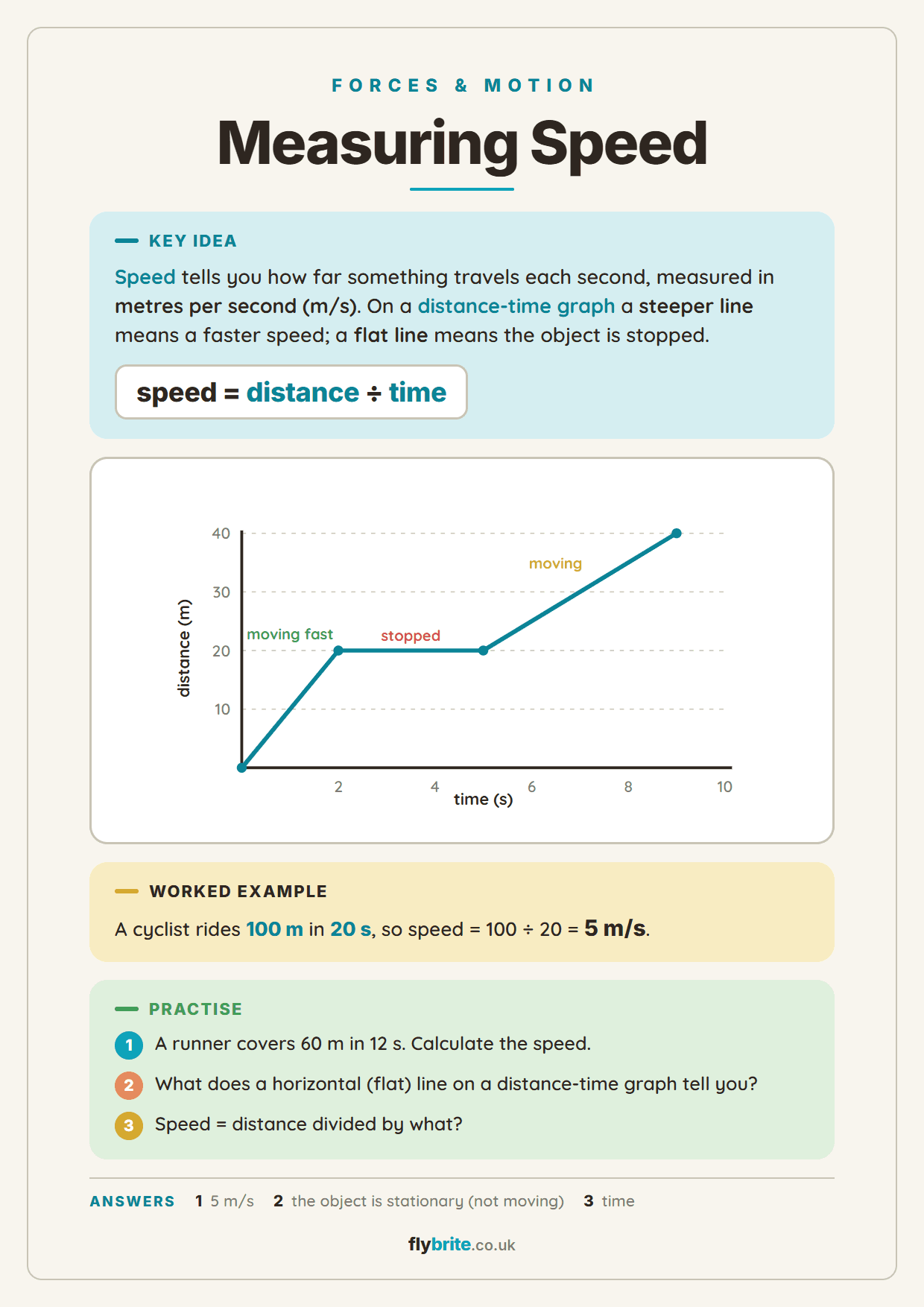
Speed = distance / time in metres per second, read straight off a real distance-time graph.

Extension proportional to force, the limit of proportionality, F = k e, with a graph, a data table and practice.
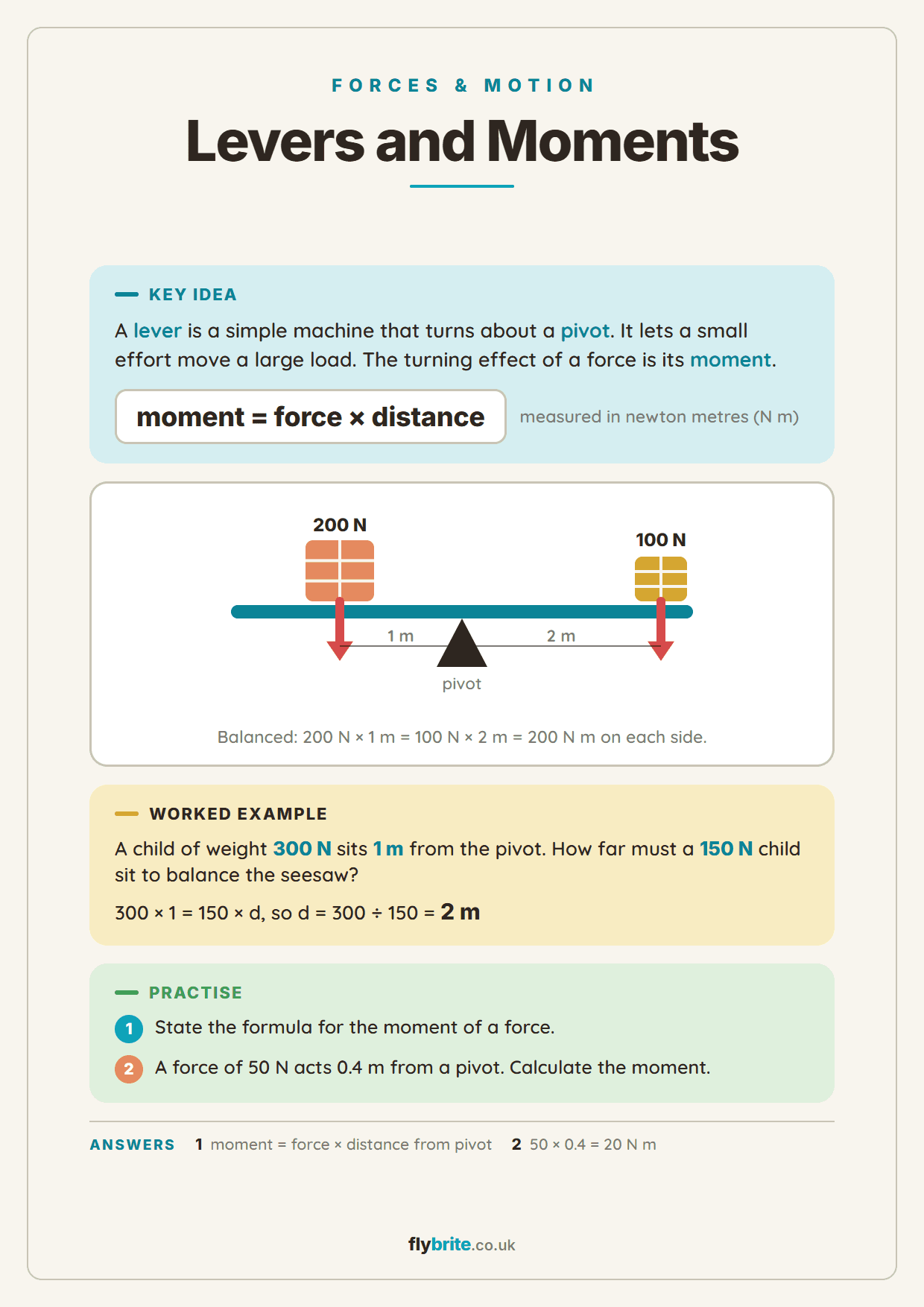
The simple machine that multiplies force: moment = force x distance, and balancing a seesaw with the maths shown.
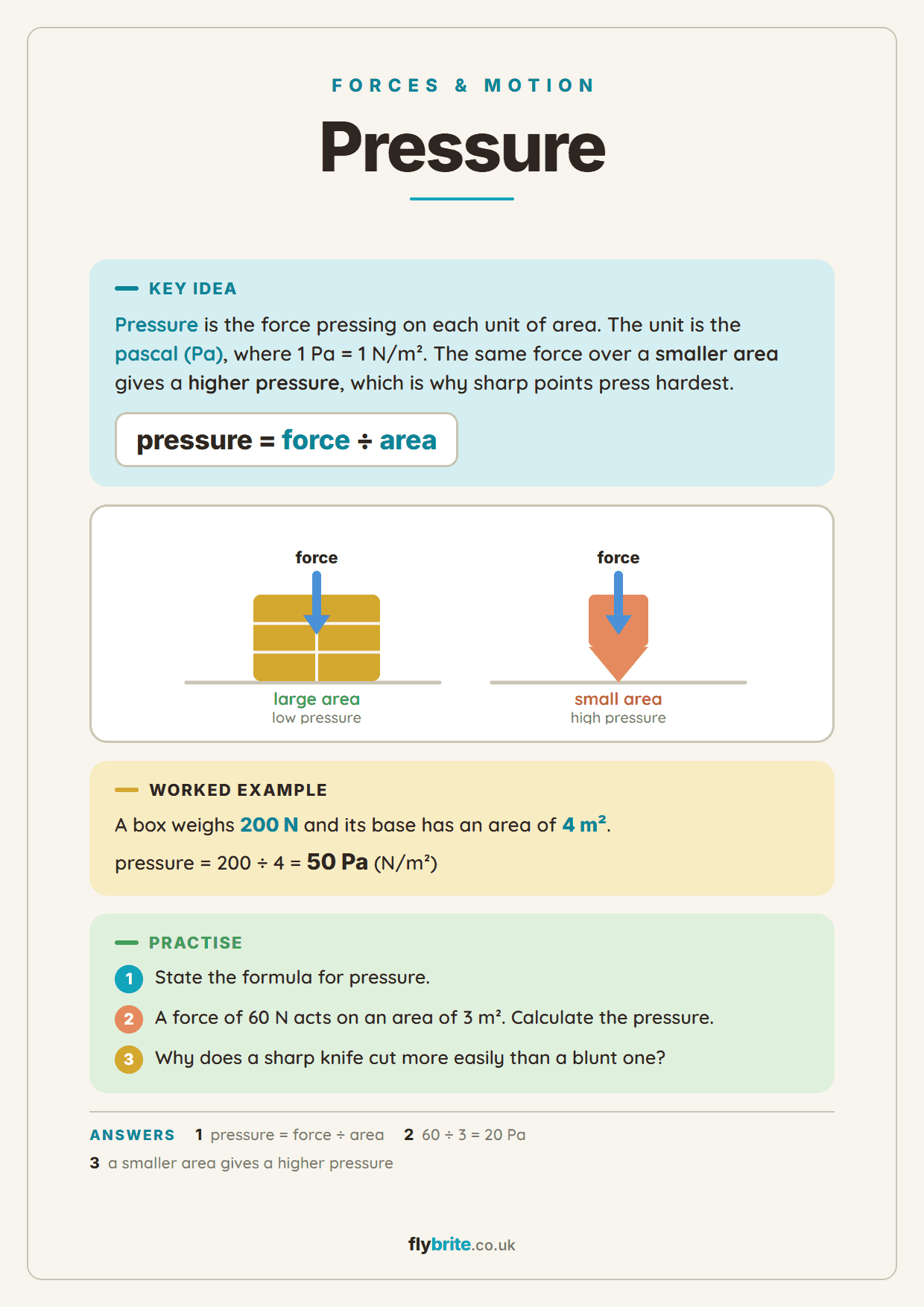
Force spread over area, measured in pascals, with the sharp-point rule and clear worked examples.
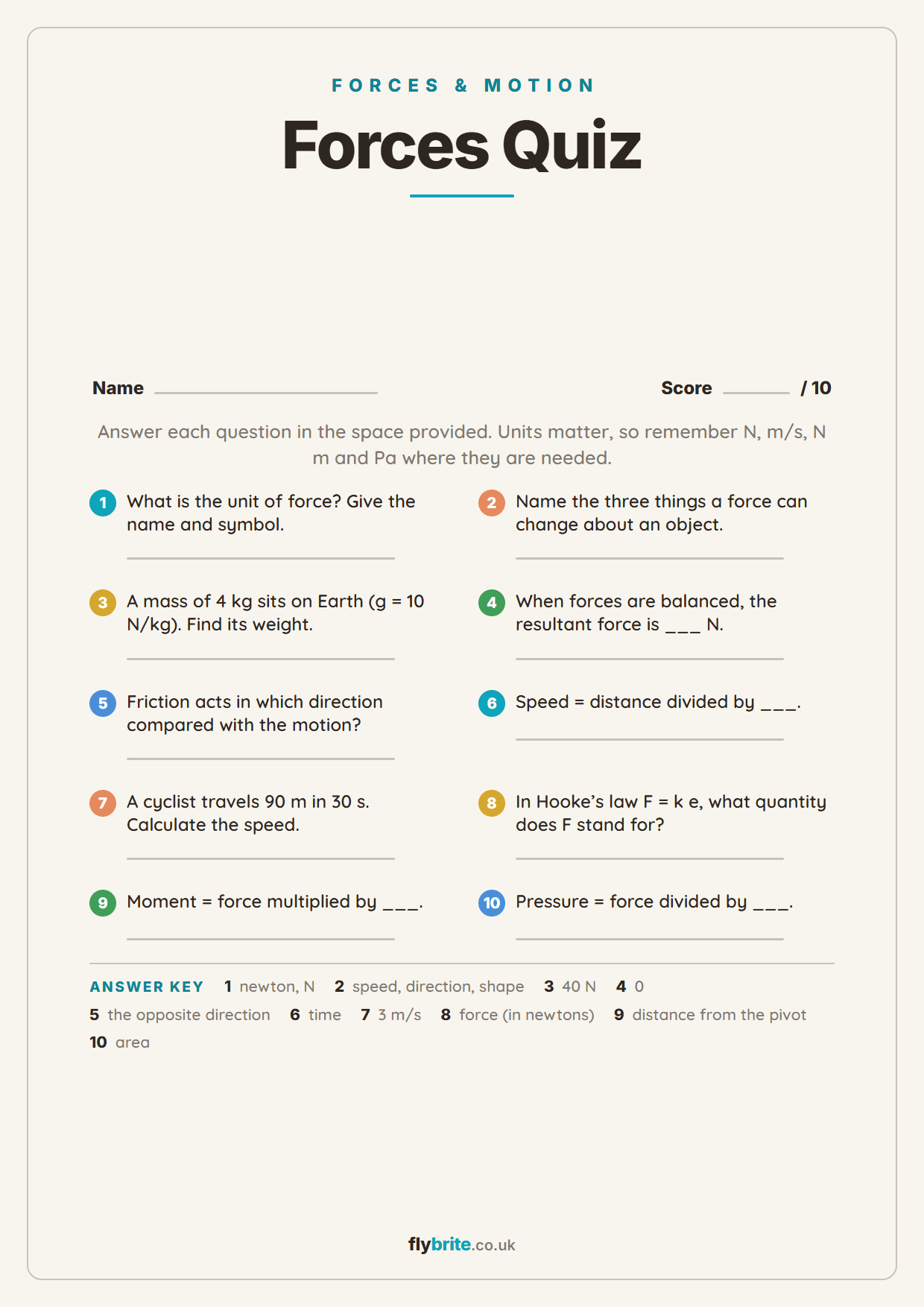 Type or write in
Ten write-in questions covering the whole pack, with a full answer key for easy marking.
KS3 physics: circuit symbols, series and parallel, current, voltage and staying safe with electricity.
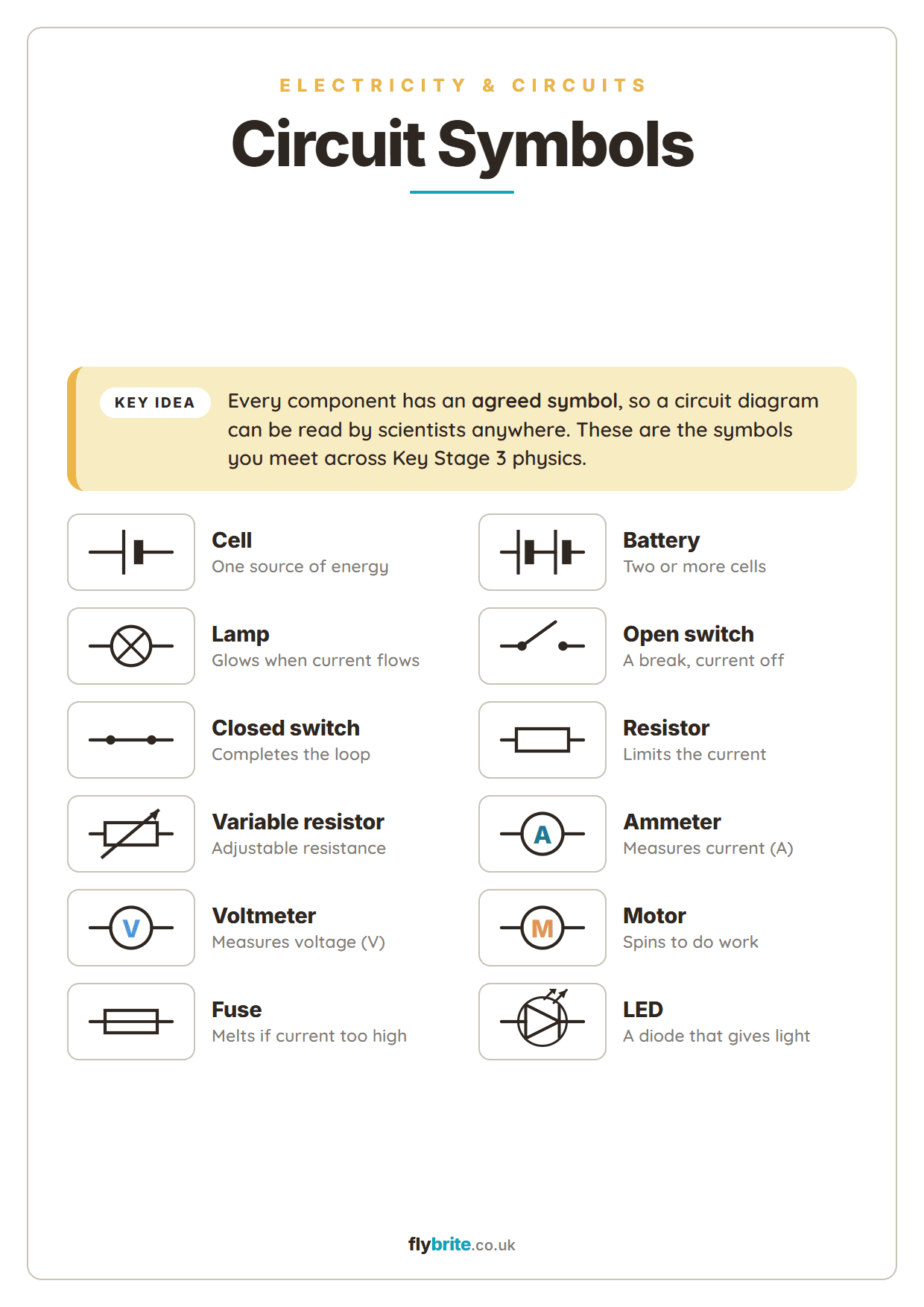
The standard circuit symbols of Key Stage 3 physics, drawn as one clear reference chart.
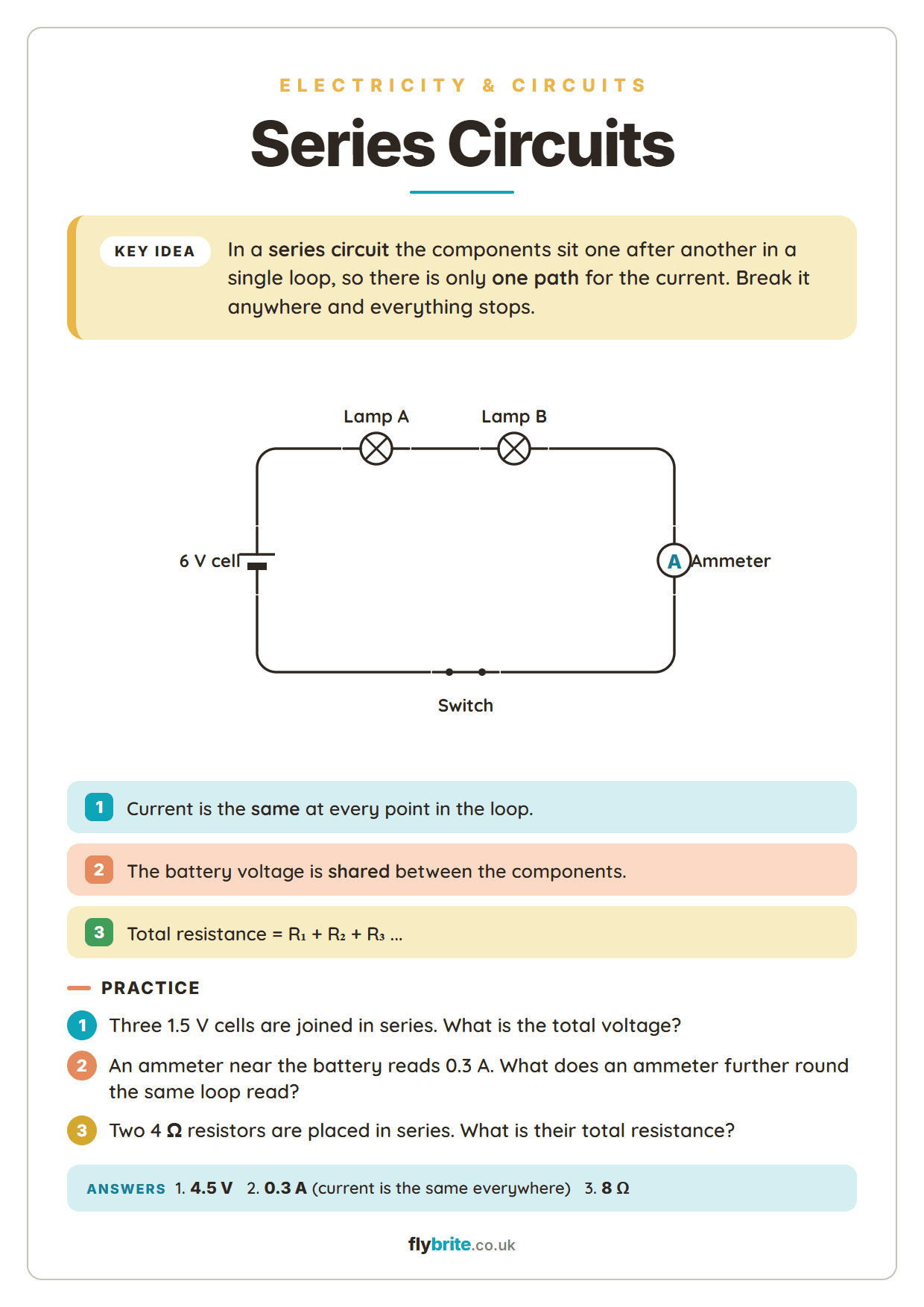
One loop, one path: how current, voltage and resistance behave when components sit in a line.
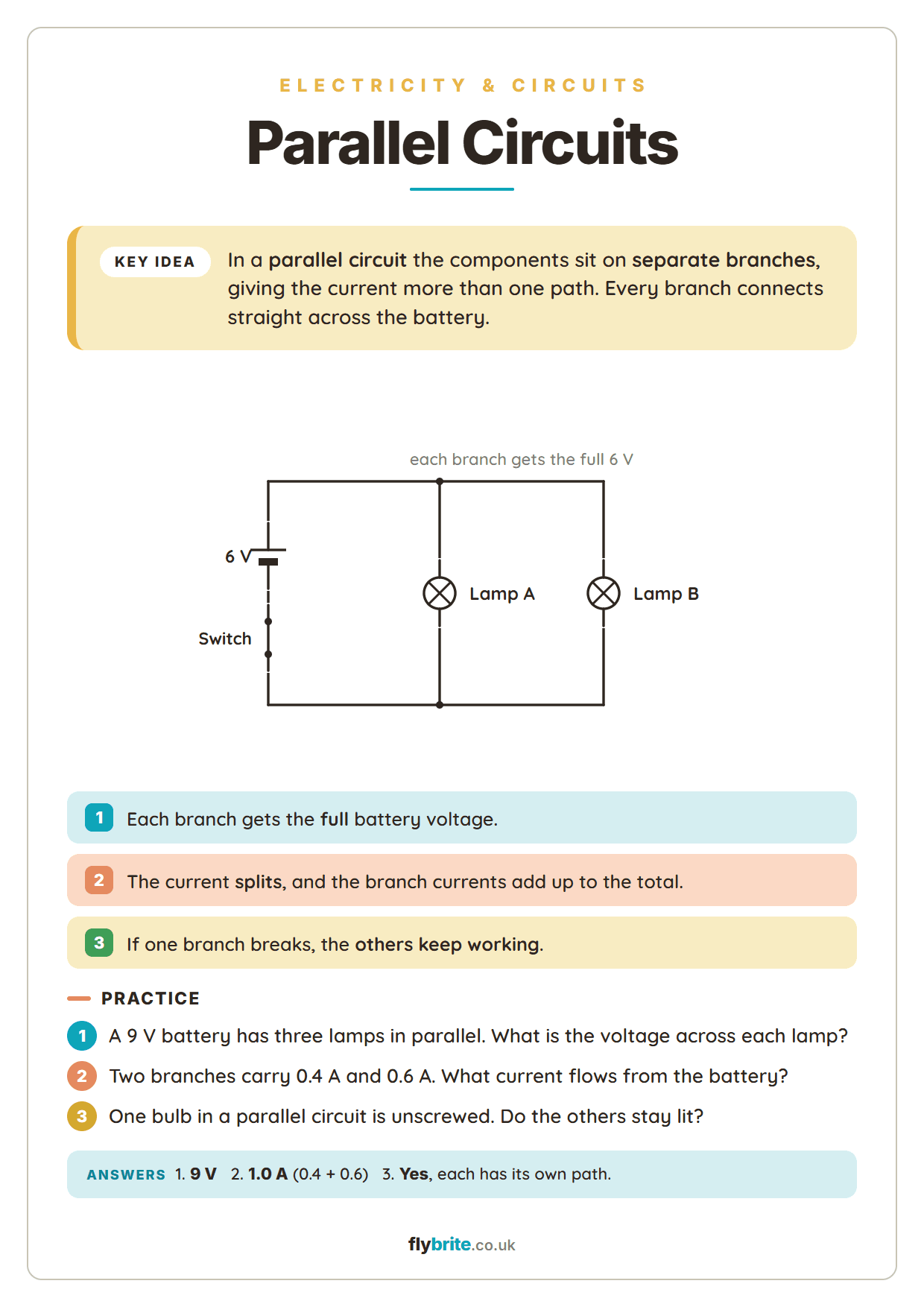
Separate branches across the battery, with the current splitting and every branch on full voltage.

Amperes and volts, ammeters and voltmeters, and the charge equation Q equals I times t.
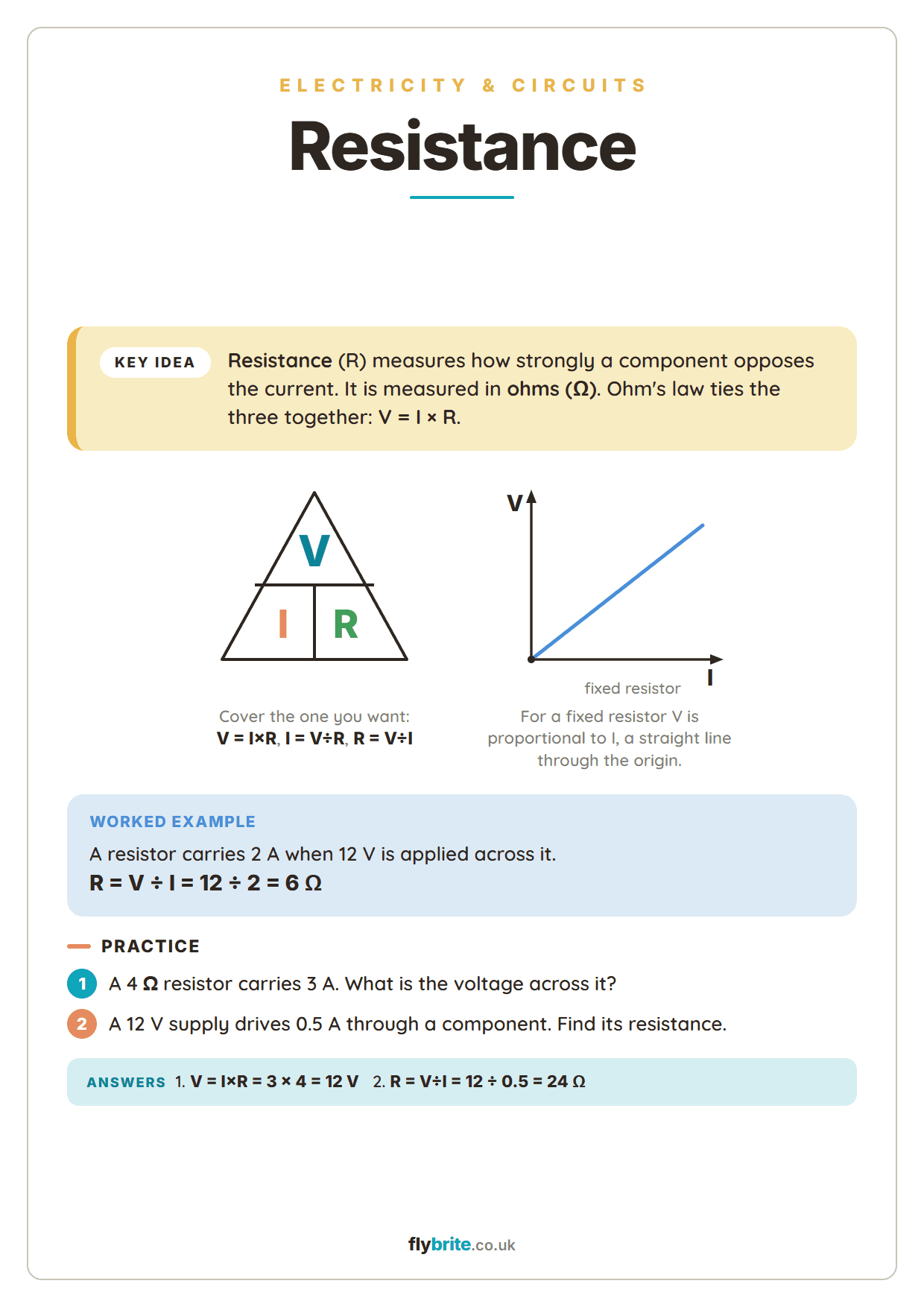
Ohm’s law made clear, with the V I R triangle, a current voltage graph and worked examples.
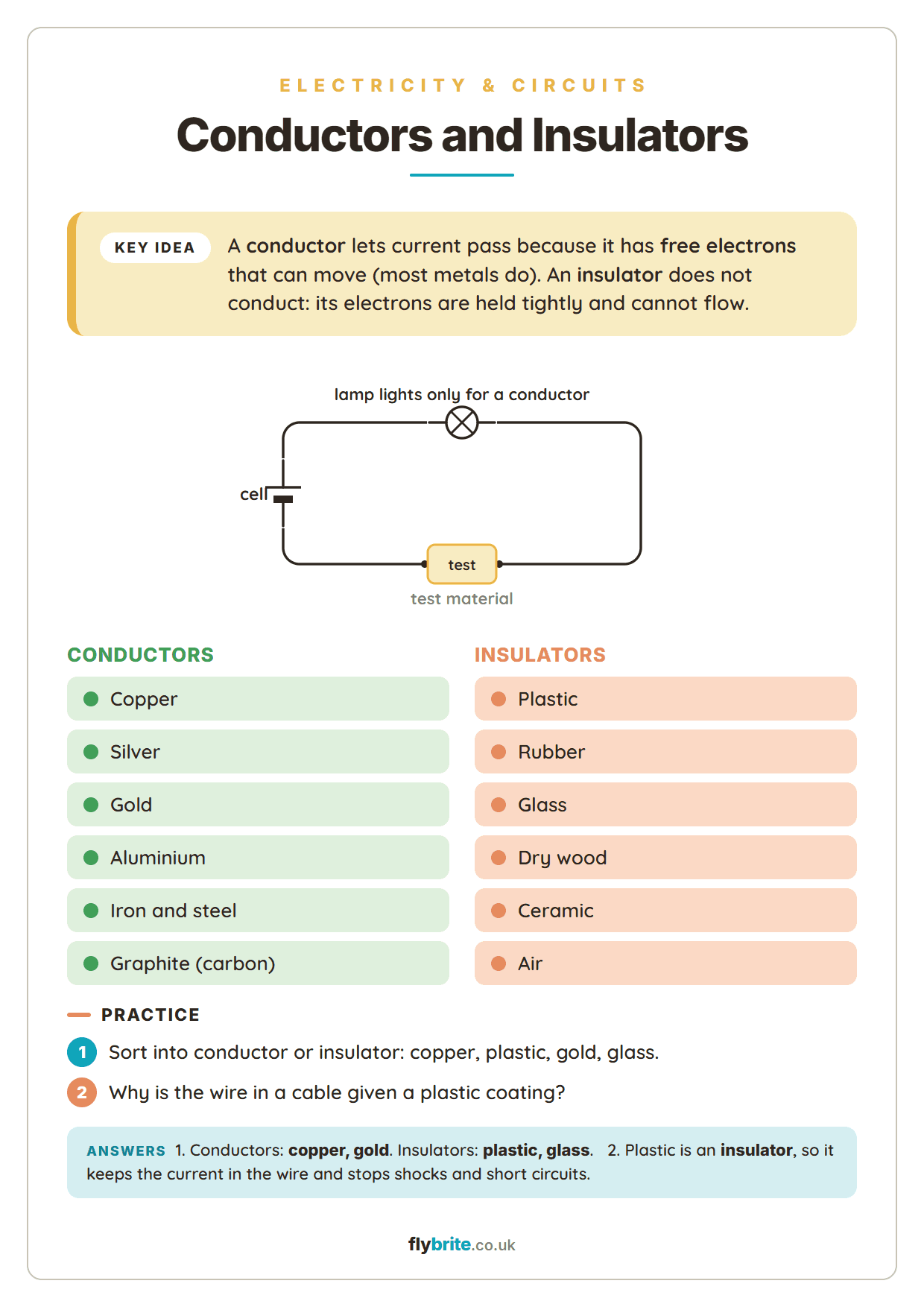
Why metals carry current and plastics do not, with a test circuit and sorted example lists.
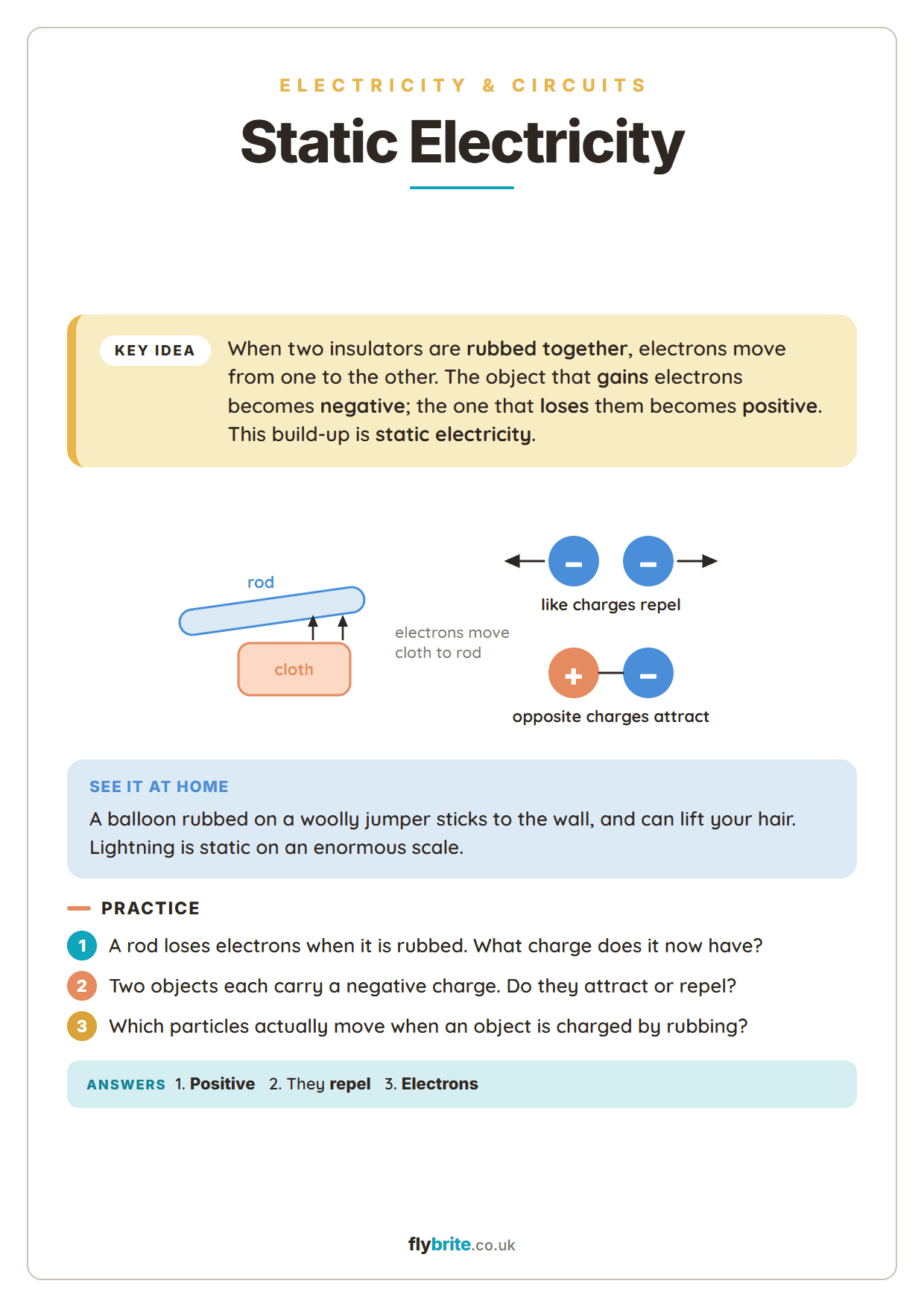
How rubbing moves electrons to build up charge, and the rule that like charges repel.
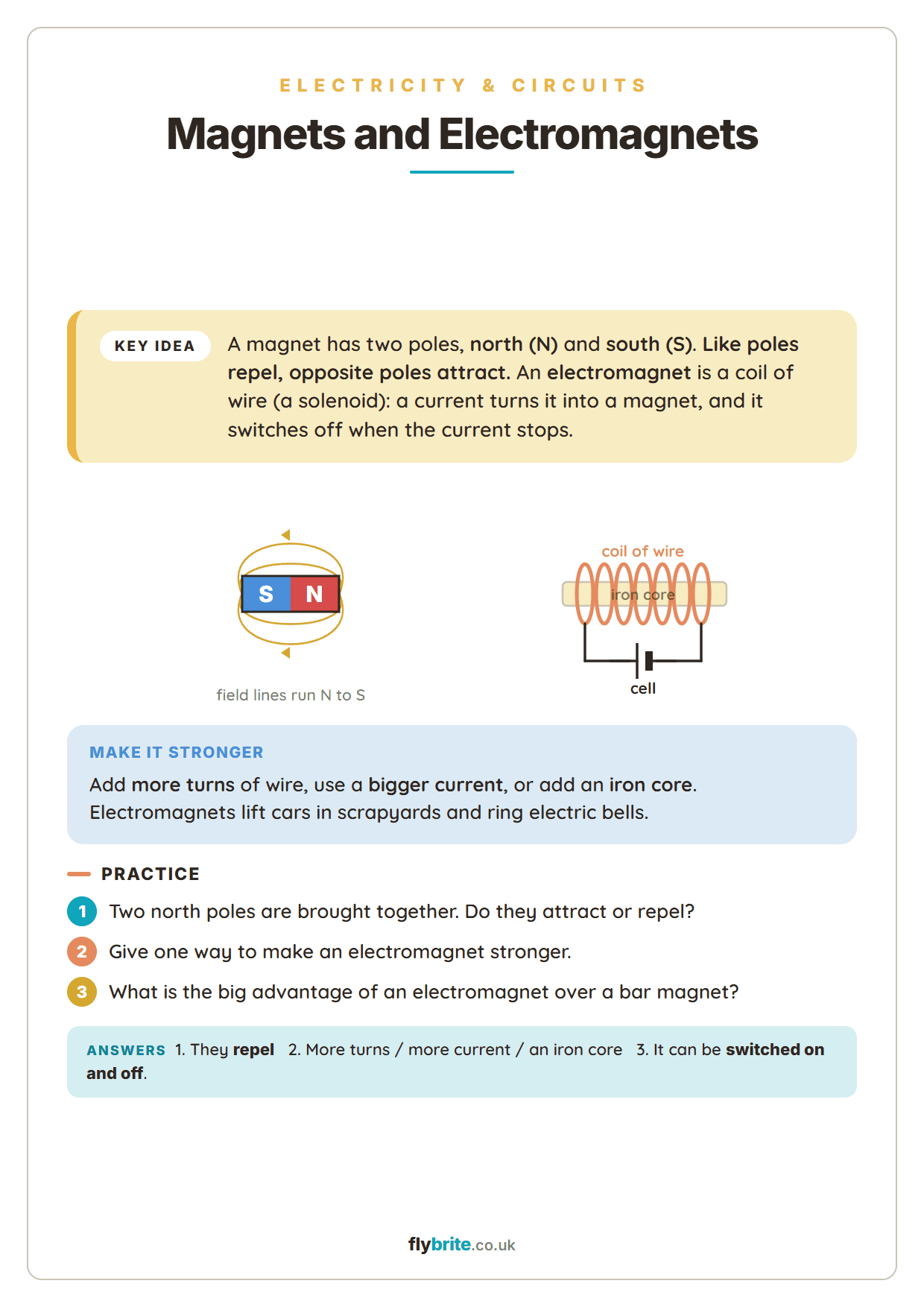
Poles and field lines, plus the coil and core of an electromagnet you can switch on and off.
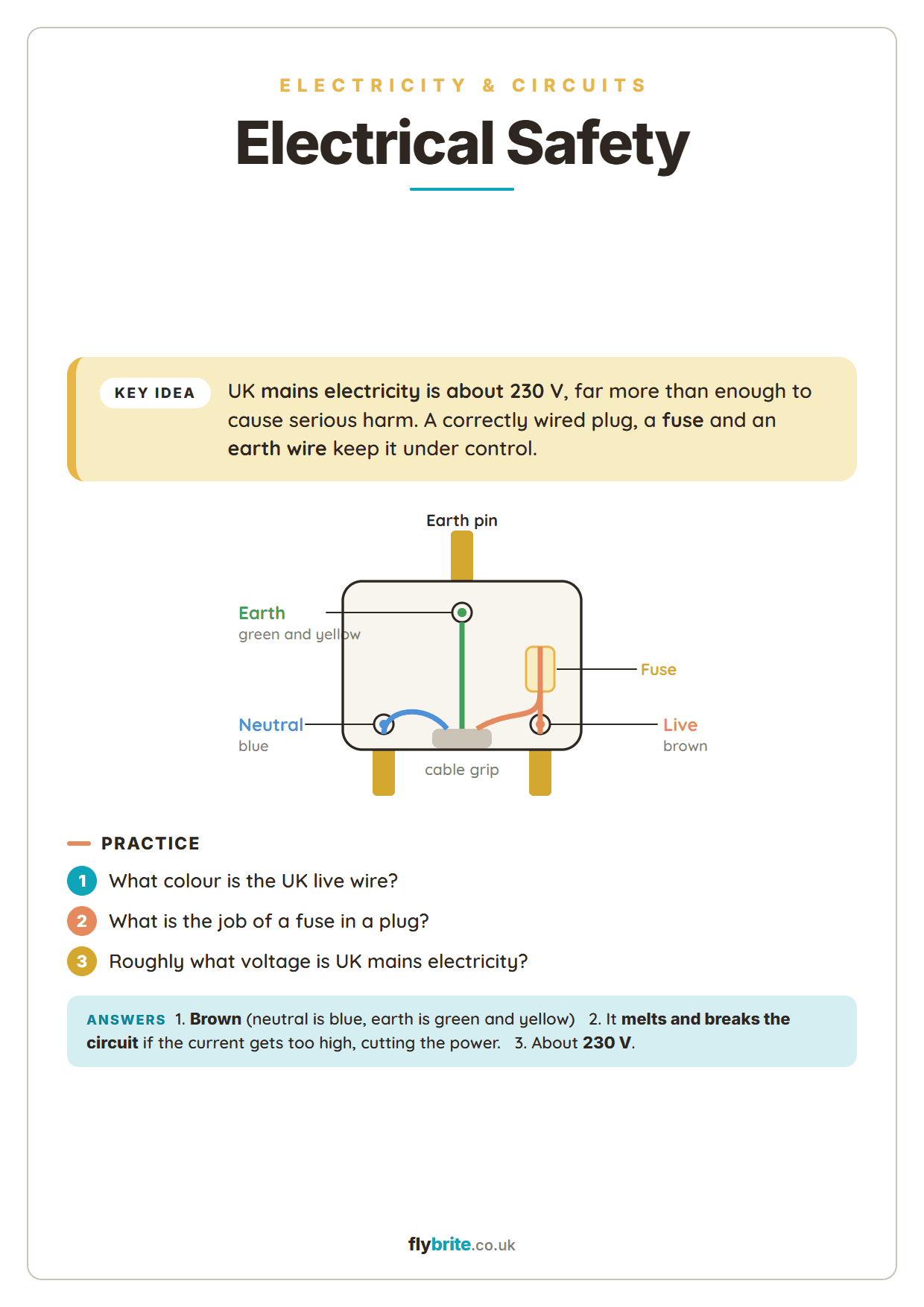
The 230 V mains, a correctly wired UK plug, the fuse and the earth wire that keep it all safe.
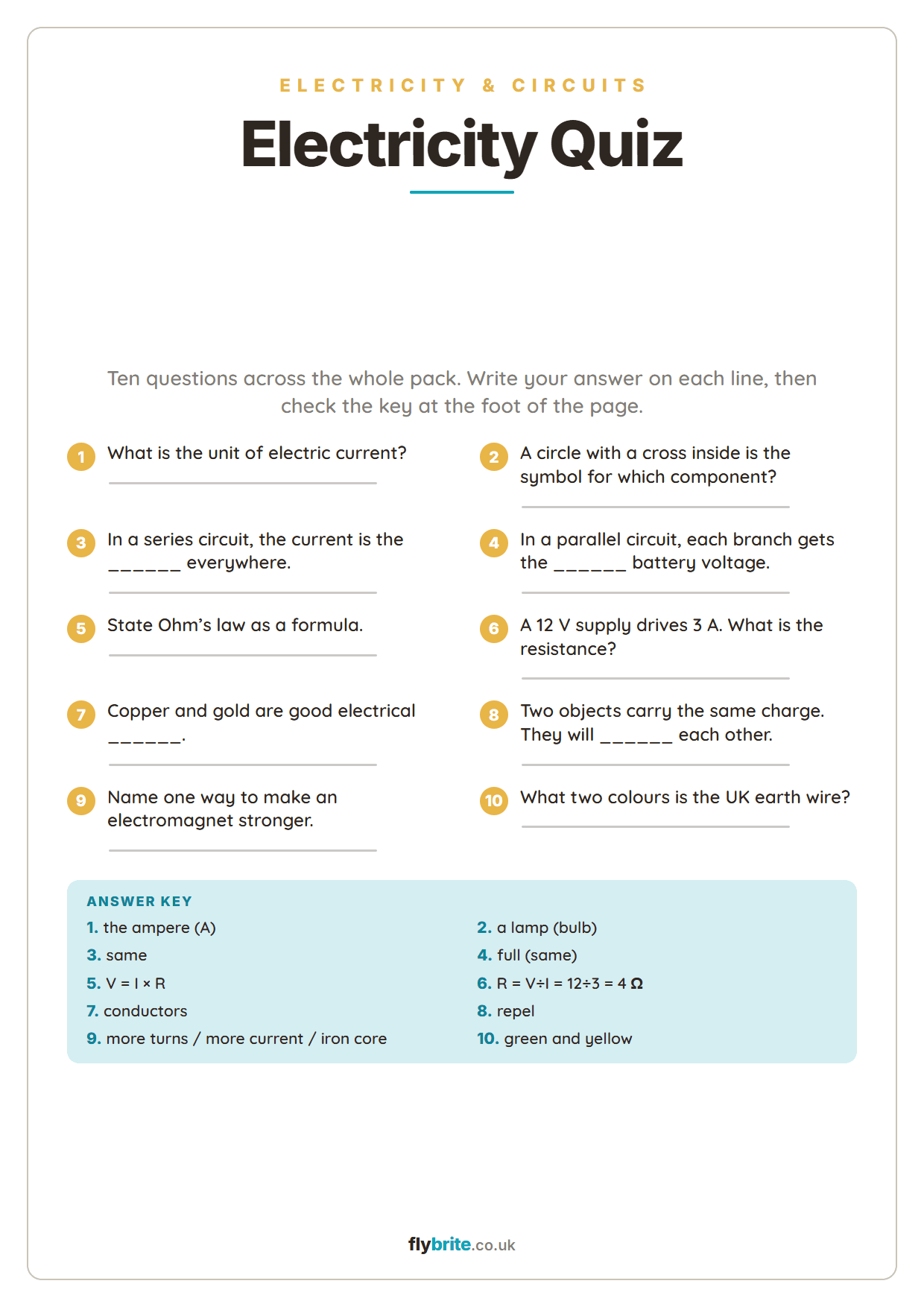 Type or write in
Ten write-in questions covering the whole pack, with a full answer key at the foot of the page.
KS3 chemistry: groups, periods, metals and non-metals, and how the periodic table is organised.
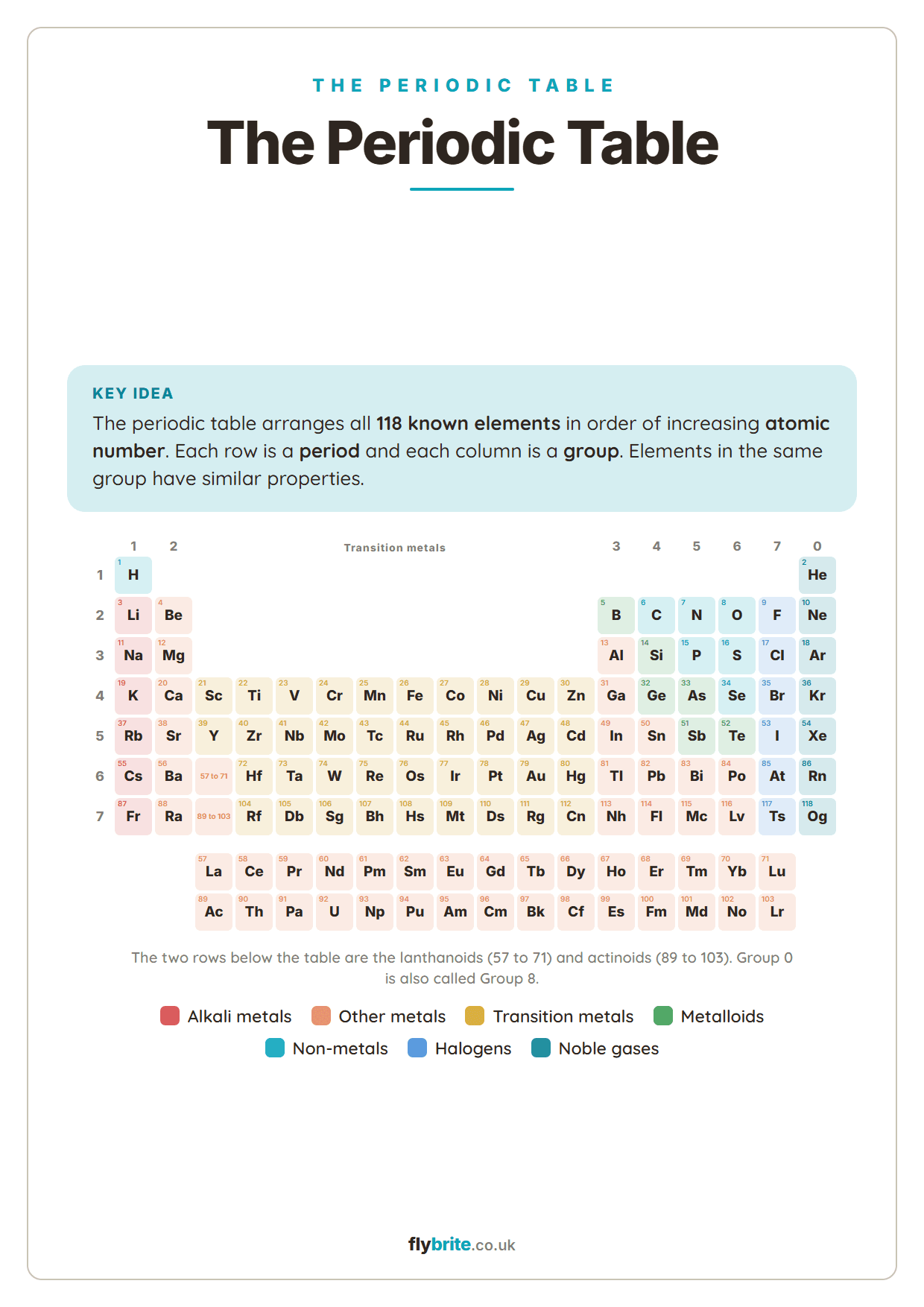
The whole table of 118 elements, colour coded by type, with a clear key to metals, metalloids and non-metals.
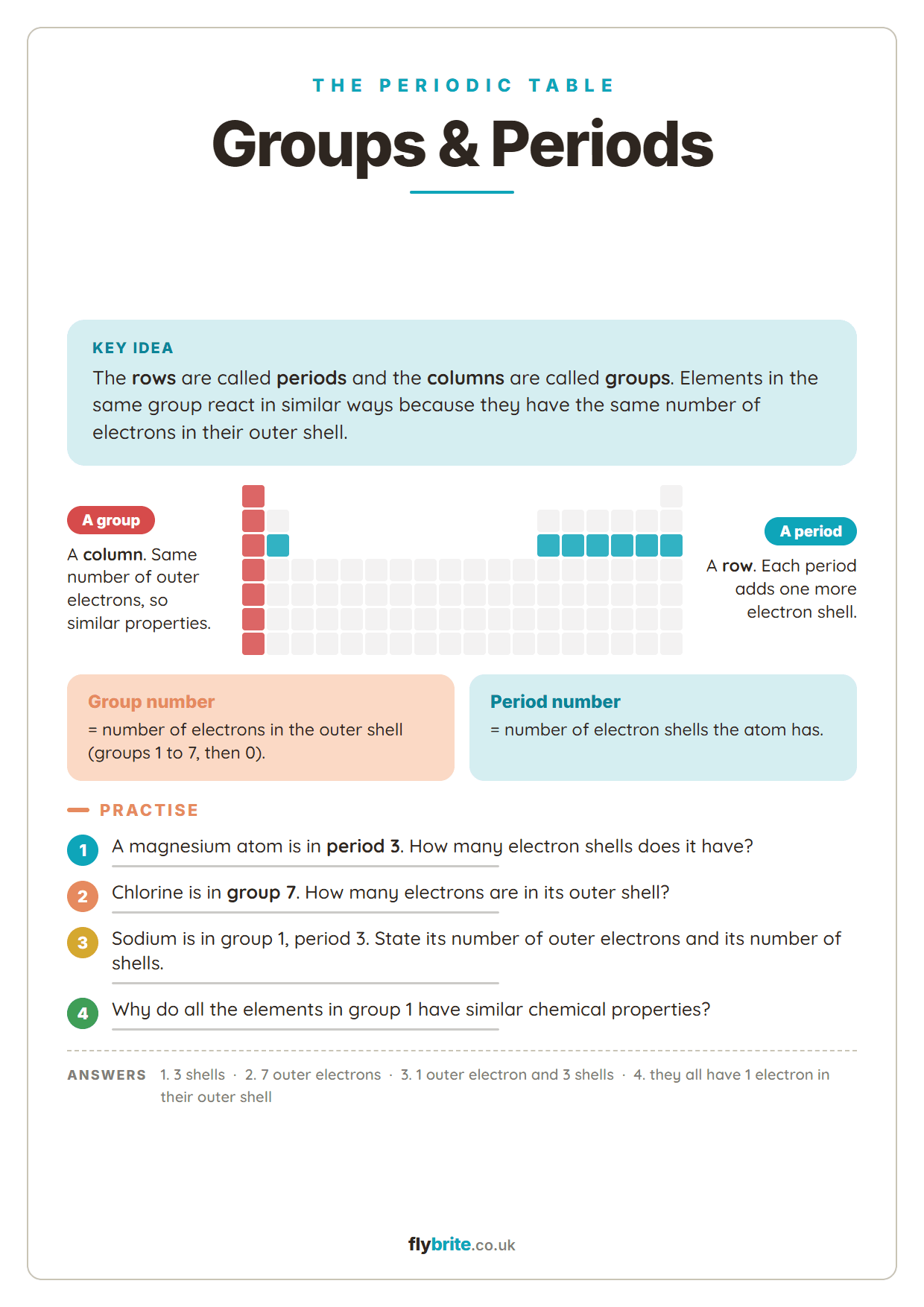 Type or write in
How the rows and columns work, why a group shares properties, and what the numbers tell you about electrons.
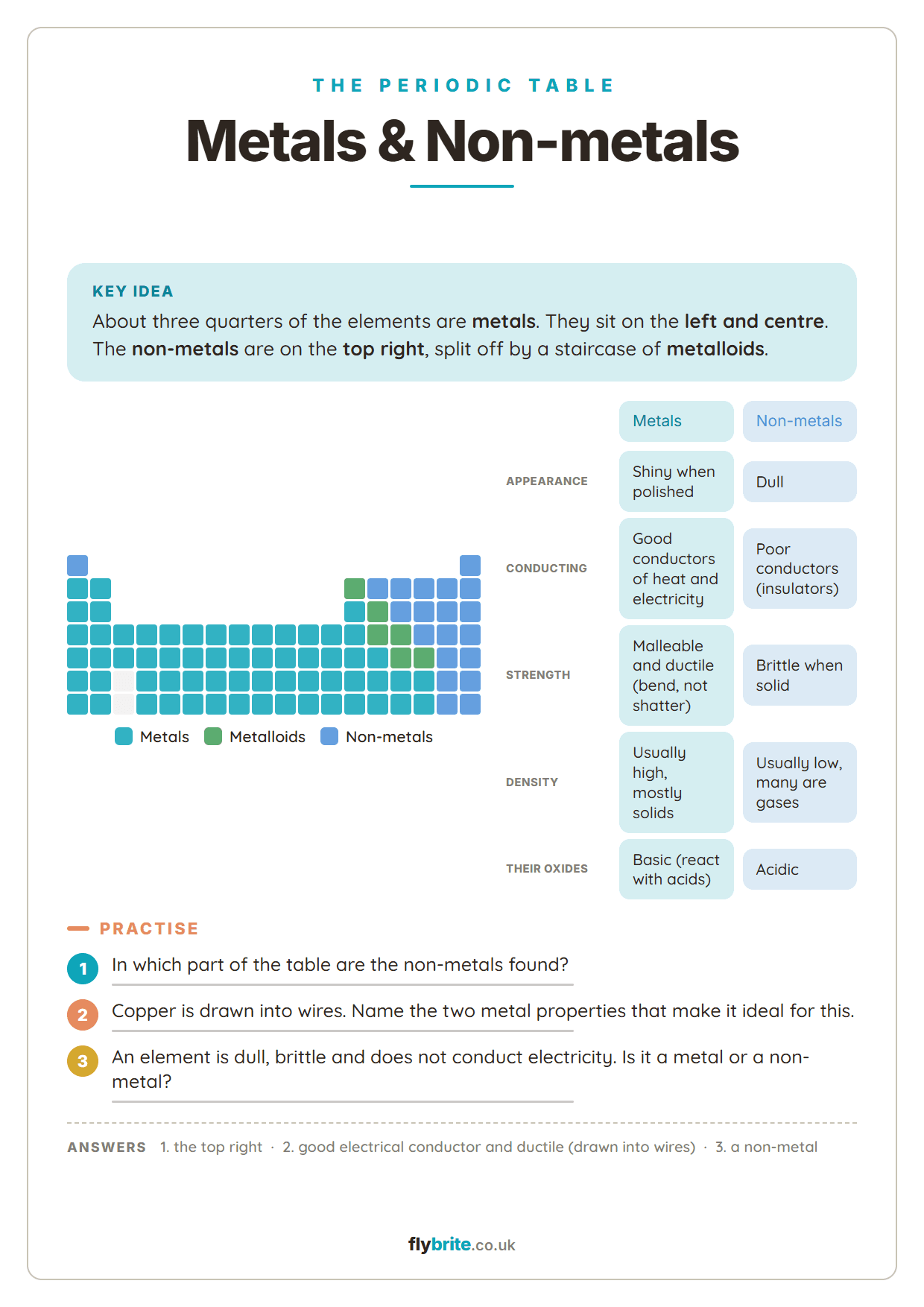 Type or write in
Where each type sits on the table and a side by side comparison of the properties that set them apart.
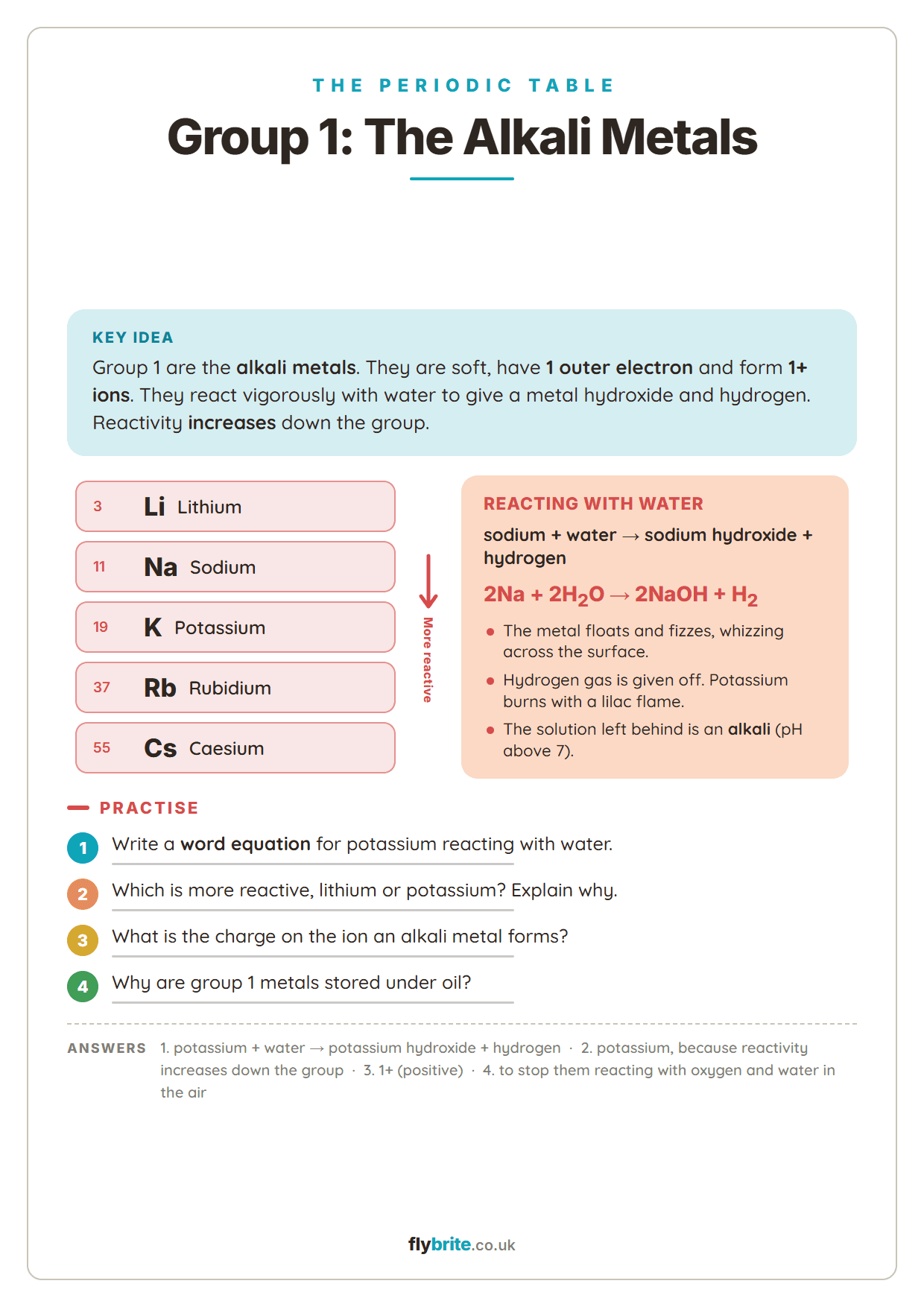 Type or write in
The soft, reactive metals of group 1, their reaction with water and the trend that runs down the group.
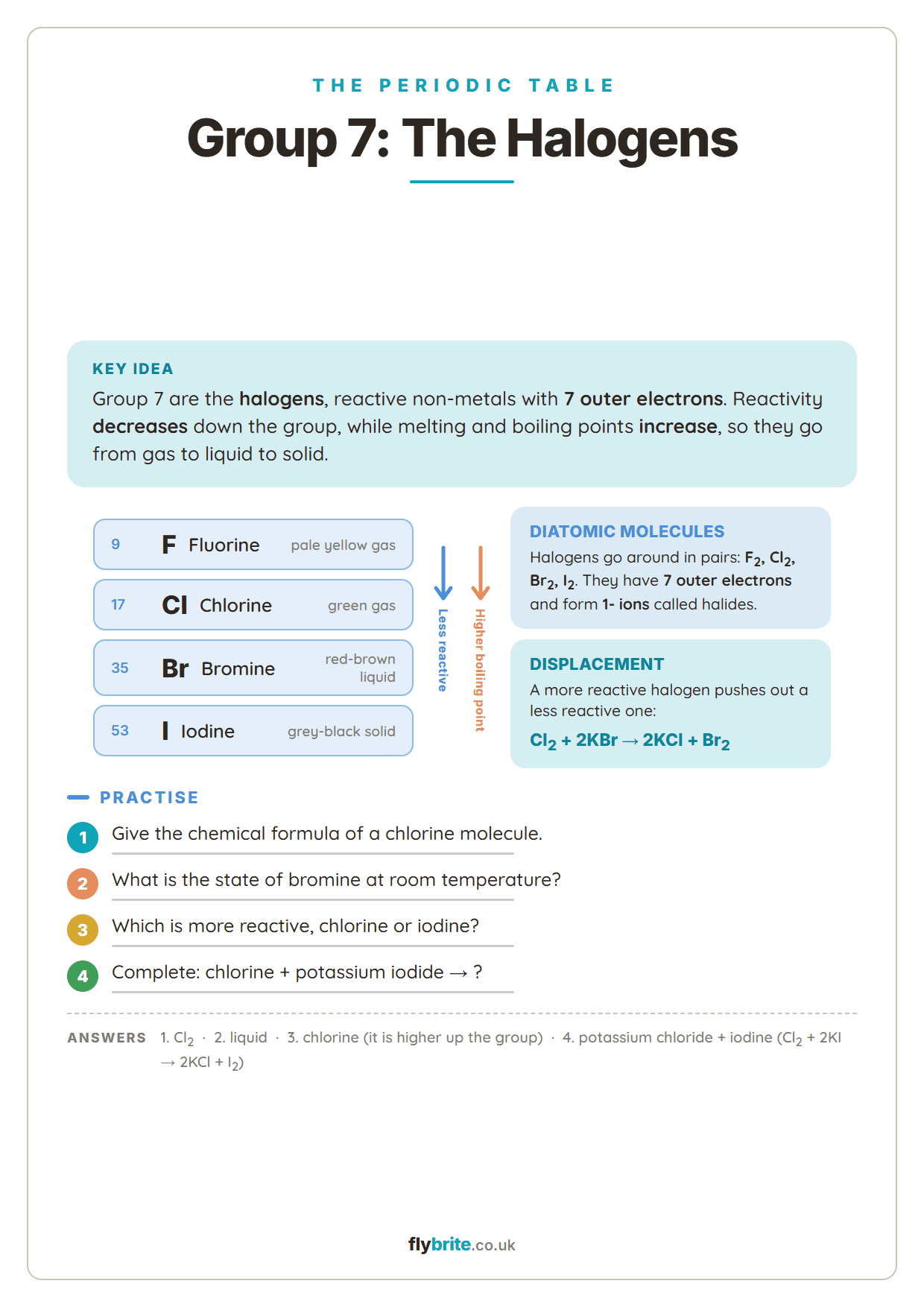 Type or write in
The reactive non-metals of group 7, their colours and states, and how a stronger halogen displaces a weaker one.
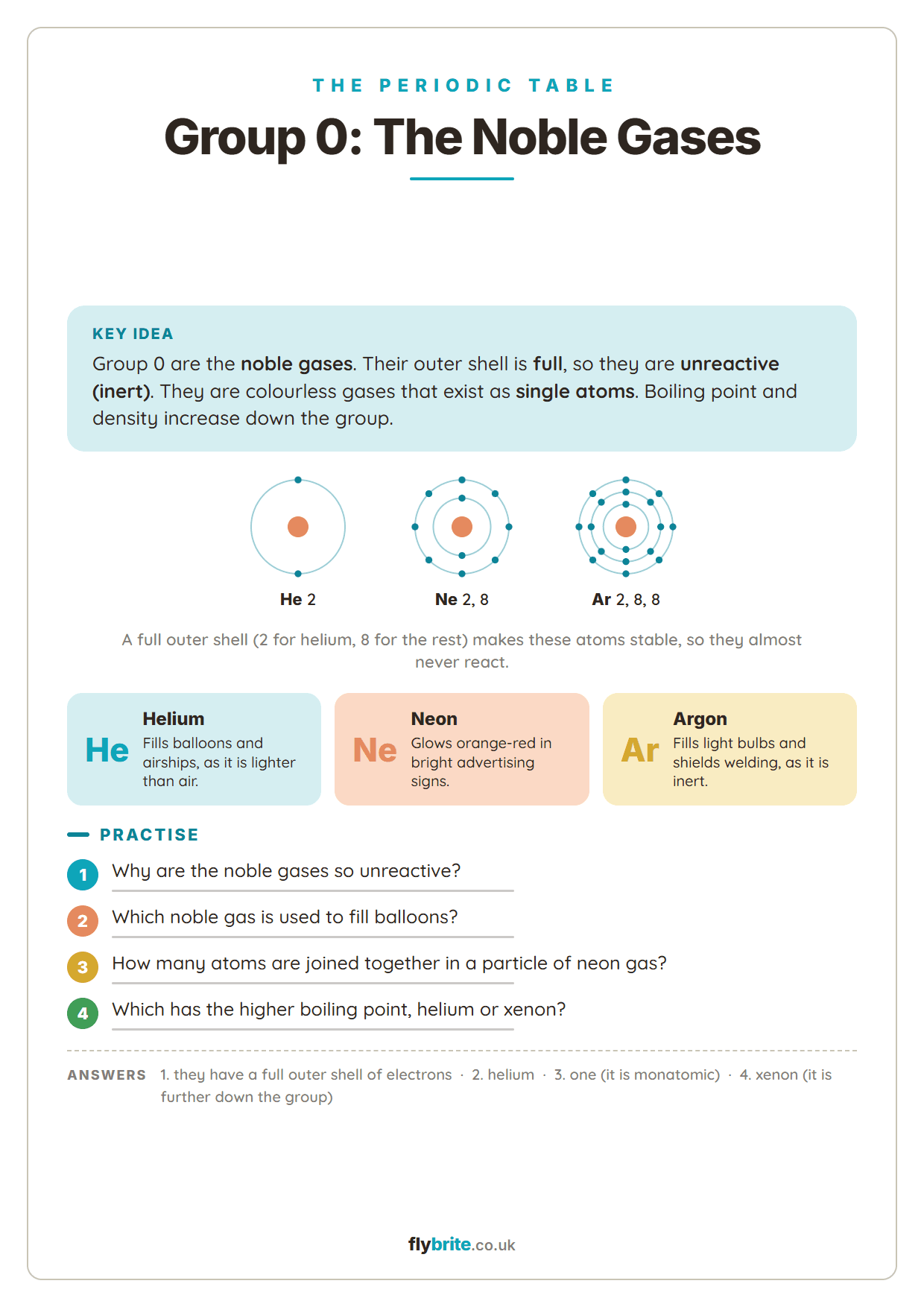 Type or write in
Why a full outer shell makes the noble gases so unreactive, shown with electron diagrams and everyday uses.
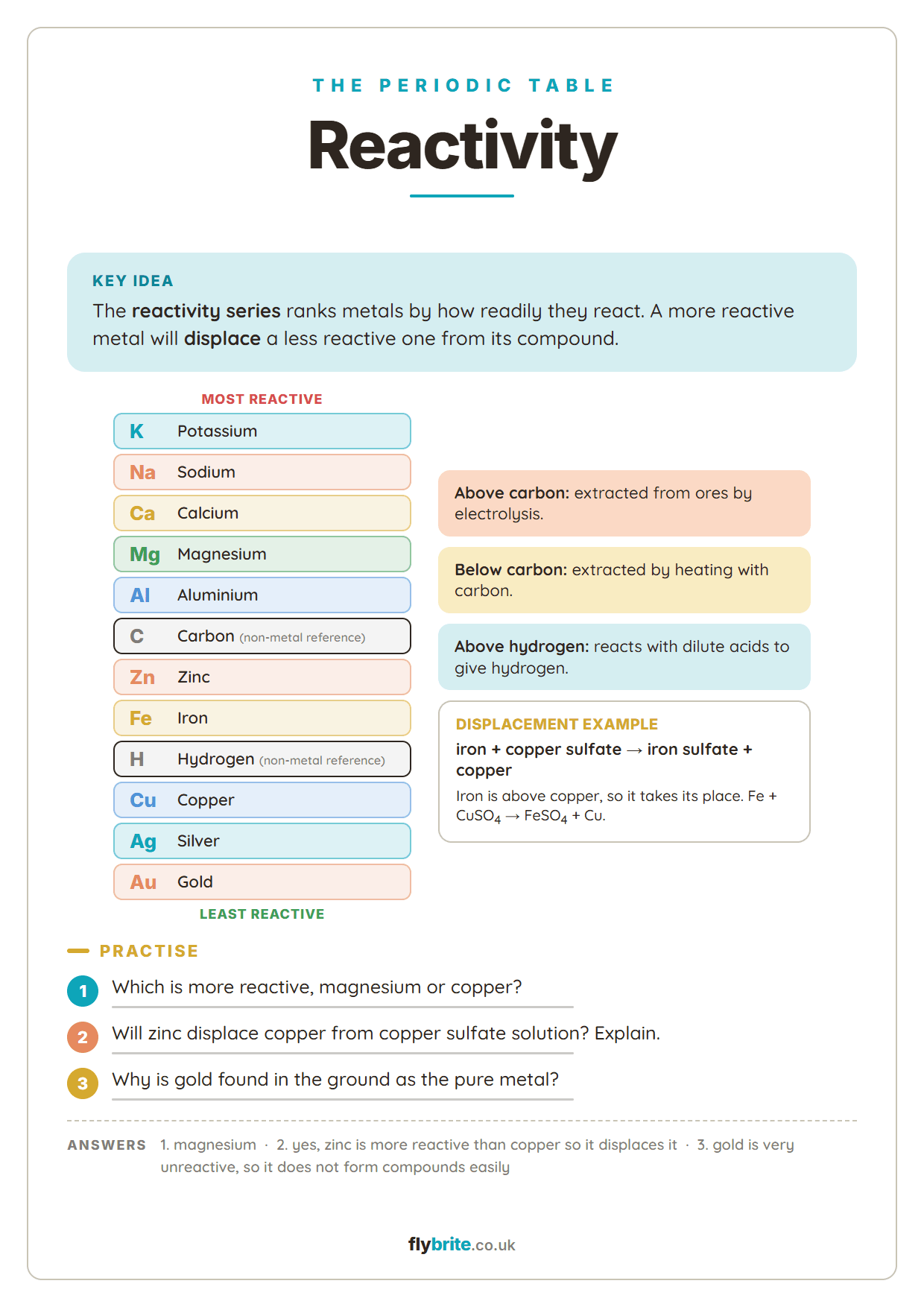 Type or write in
The reactivity series from potassium to gold, with displacement, extraction and a worked example.
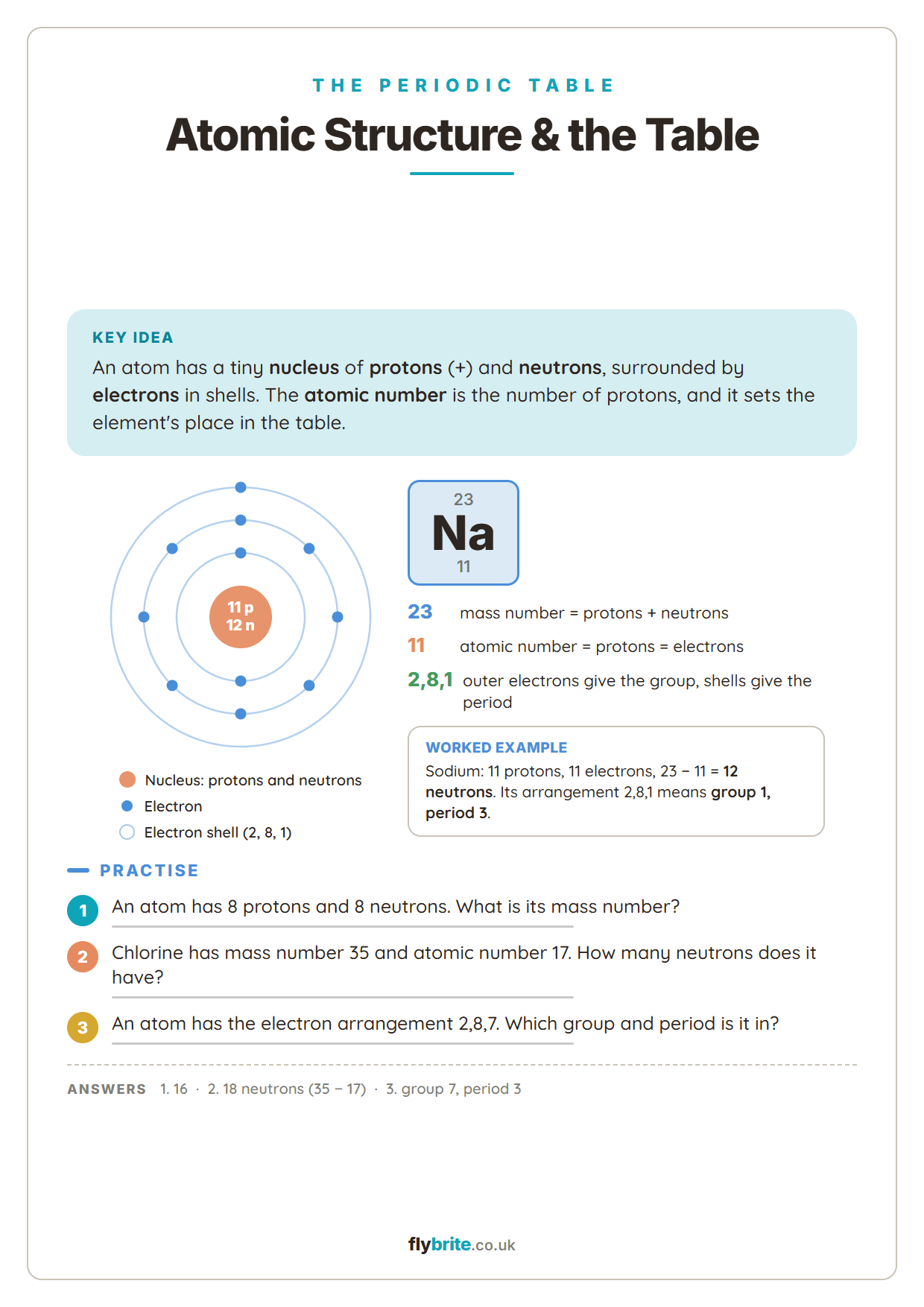 Type or write in
Protons, neutrons and electrons, and how atomic number, mass number and electron shells map onto the table.
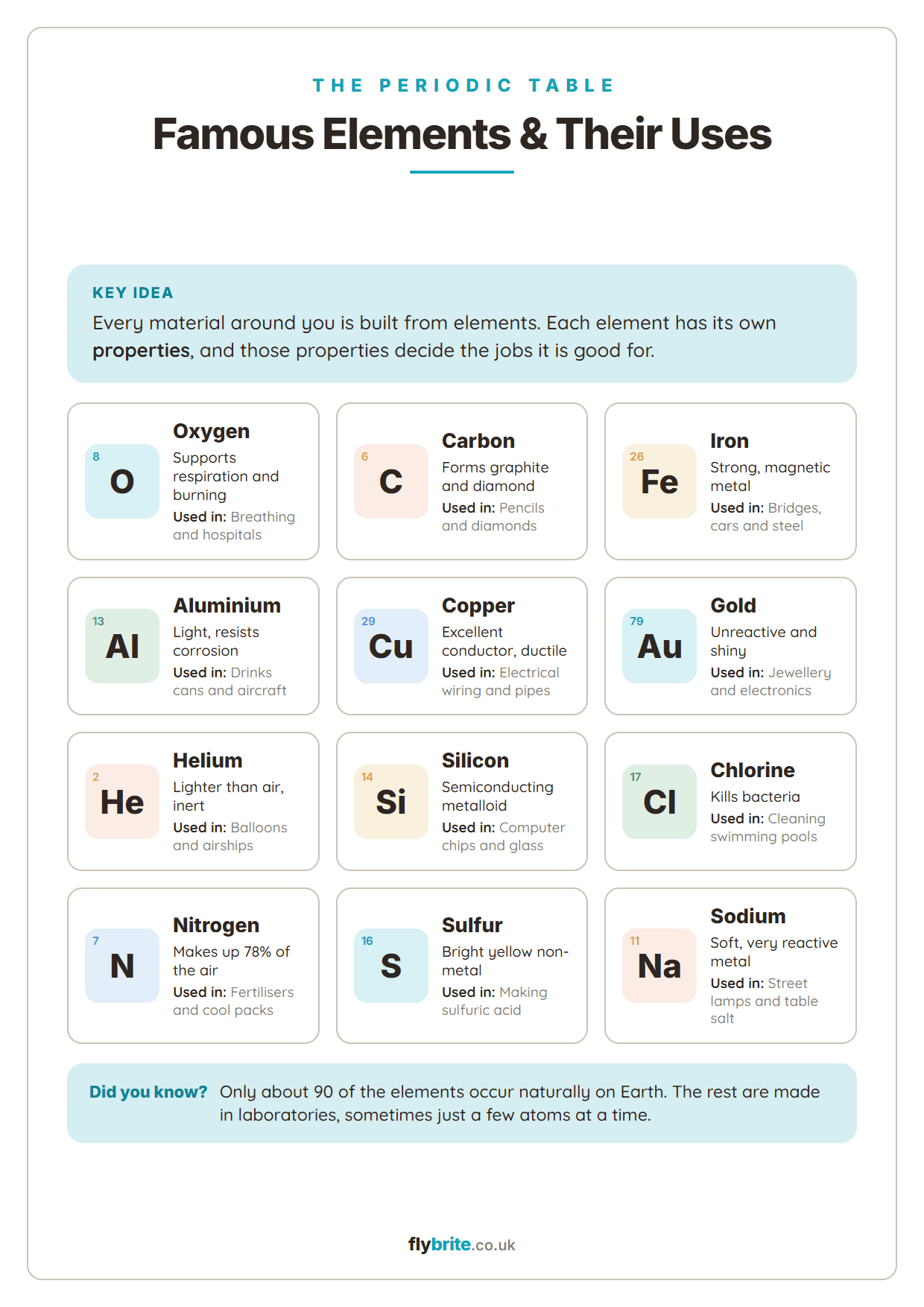
Twelve everyday elements with the property that makes each one useful and where you meet it in real life.
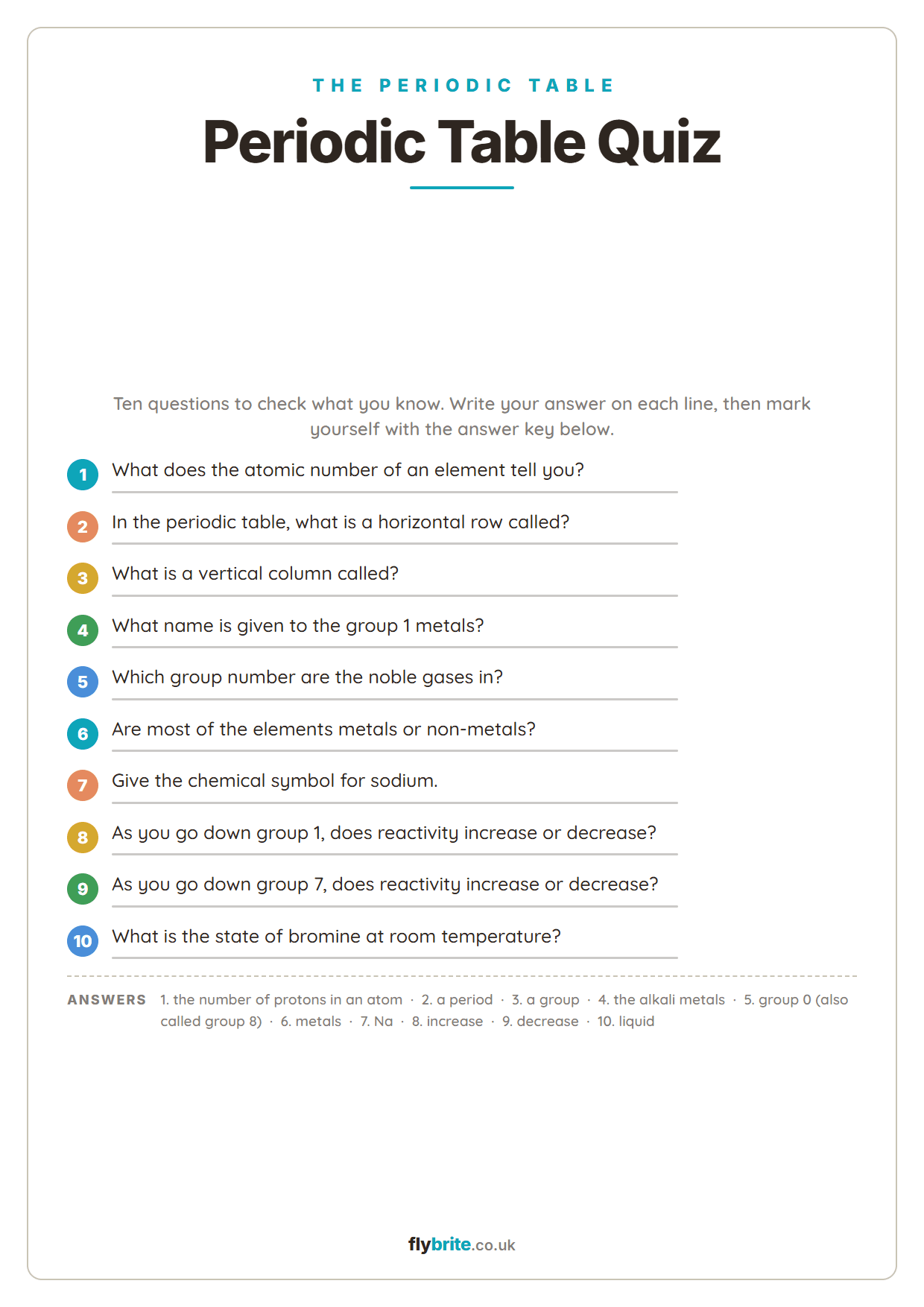 Type or write in
Ten write in questions covering the whole pack, with a full answer key to mark your own work.
KS3 English: the Globe, key plays, famous quotations and the language of Shakespeare made approachable.
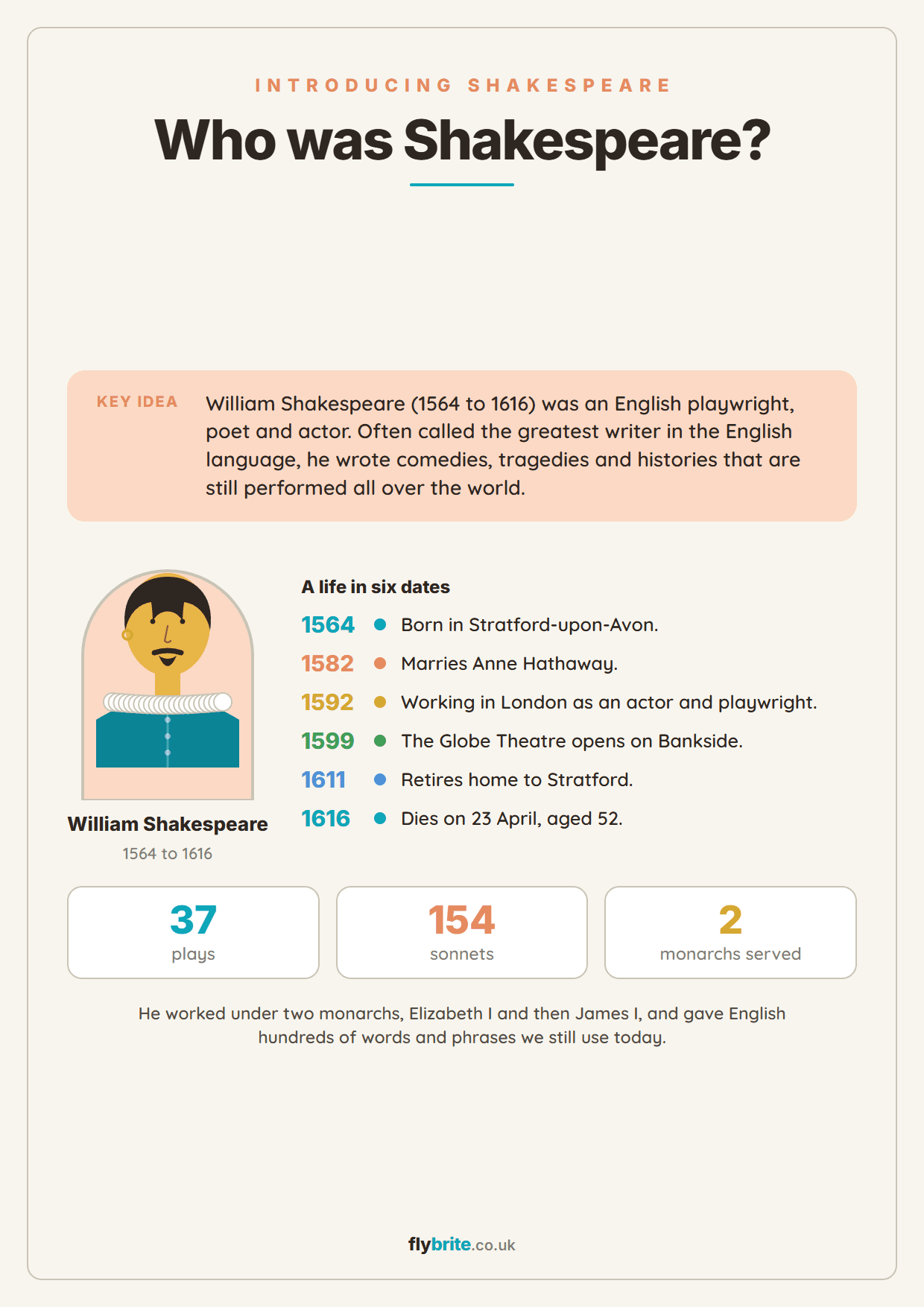
The life and times of William Shakespeare, from Stratford to the Globe, with a six-date timeline and the numbers behind the legend.
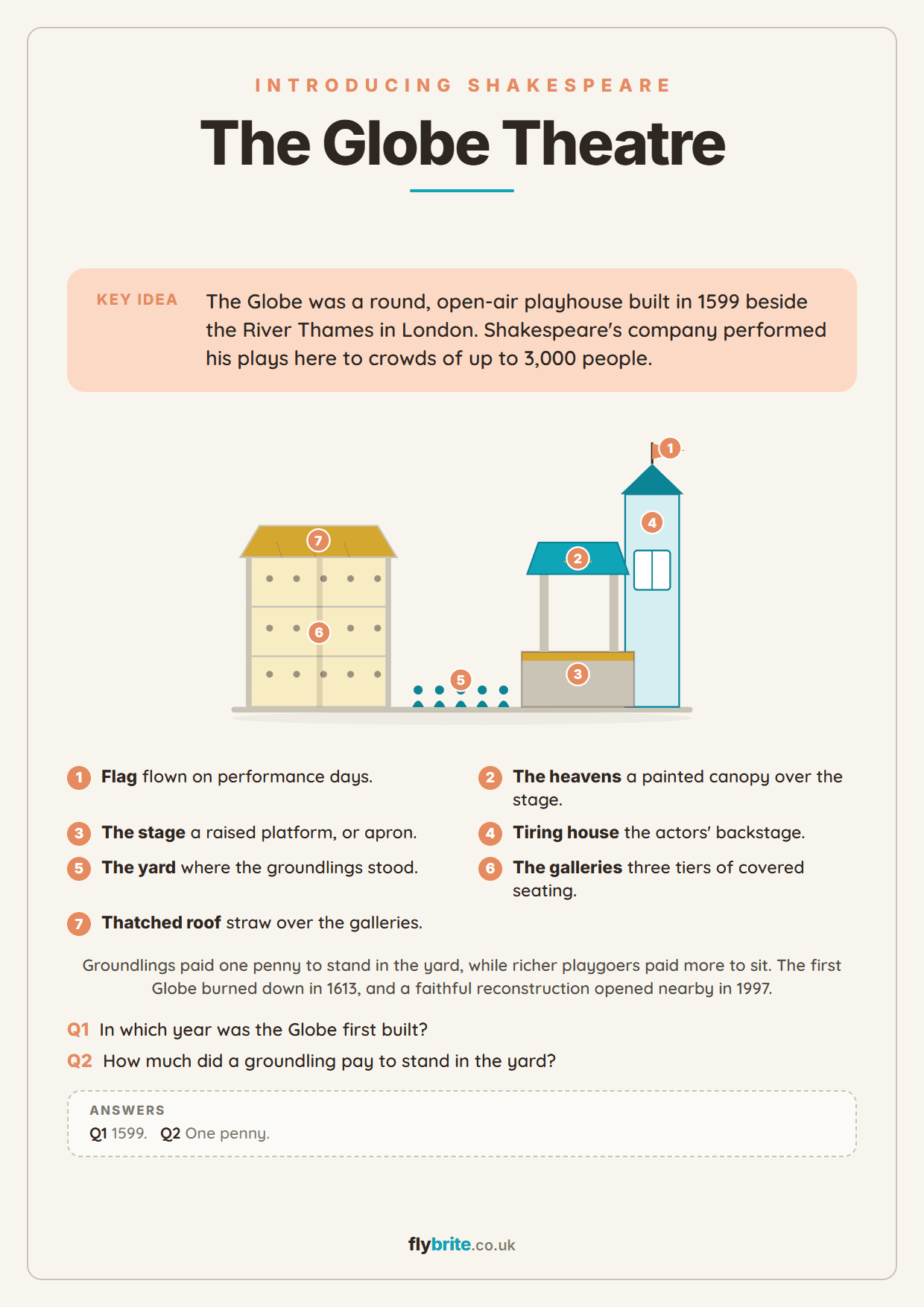
A labelled cutaway of Shakespeare's famous playhouse, from the heavens and the stage to the yard where the groundlings stood.
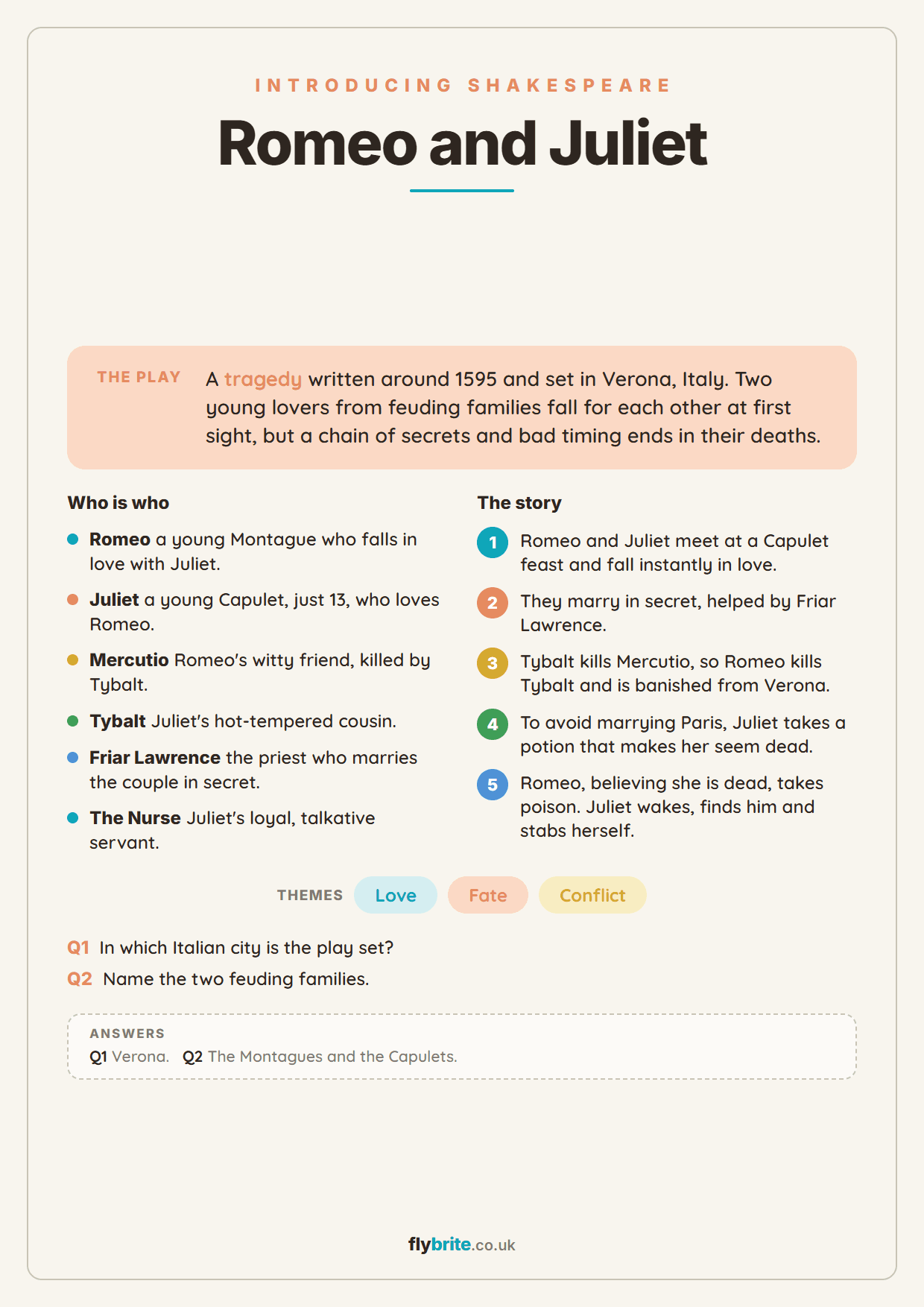
The plot and characters of the great tragedy of Verona, laid out beat by beat with a who is who and its central themes.
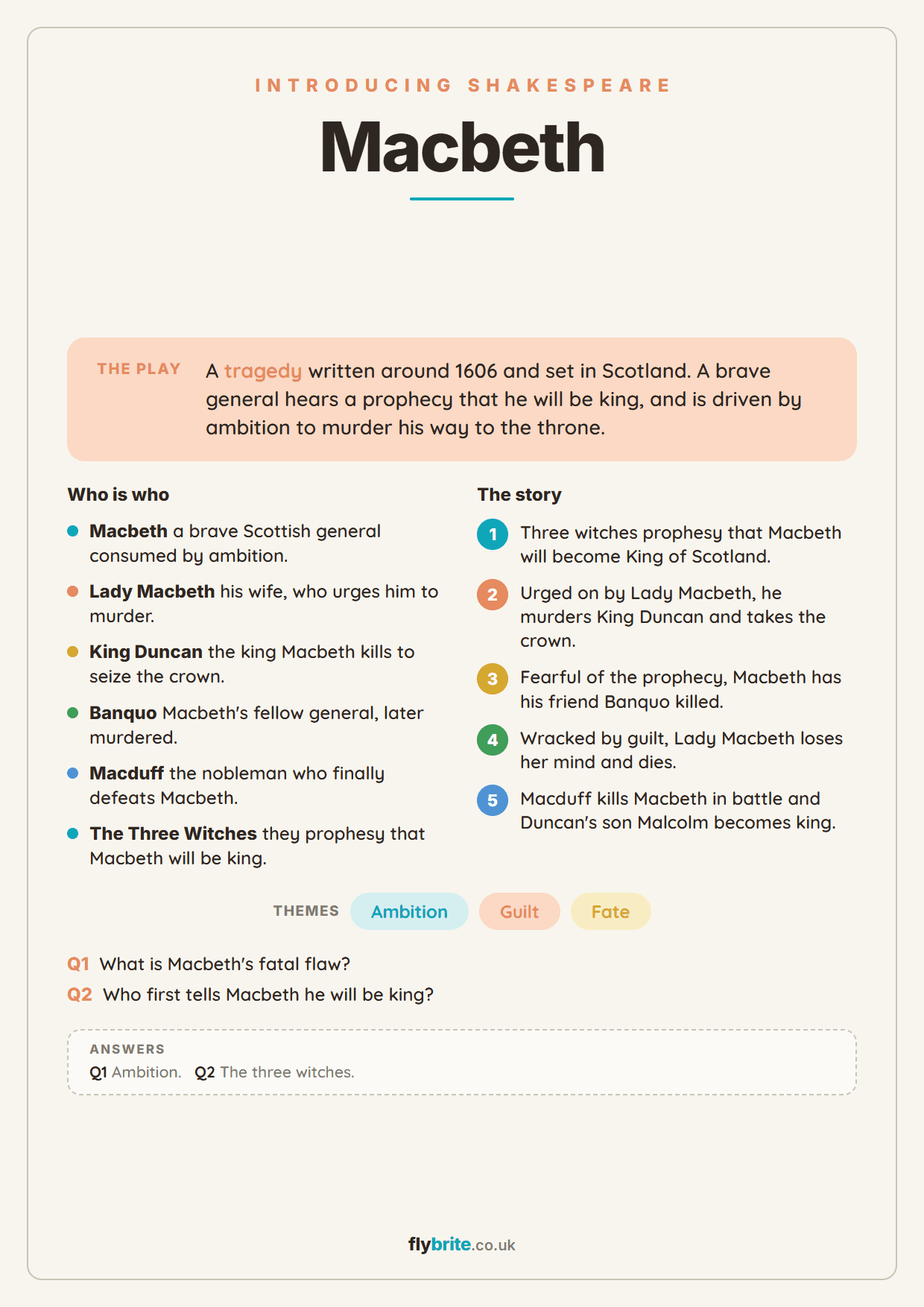
Ambition, prophecy and guilt in Shakespeare’s Scottish tragedy, with the cast, the story in five beats and the key themes.

Fairies, love potions and a donkey’s head in Shakespeare’s best loved comedy, mapped out with characters, plot and themes.
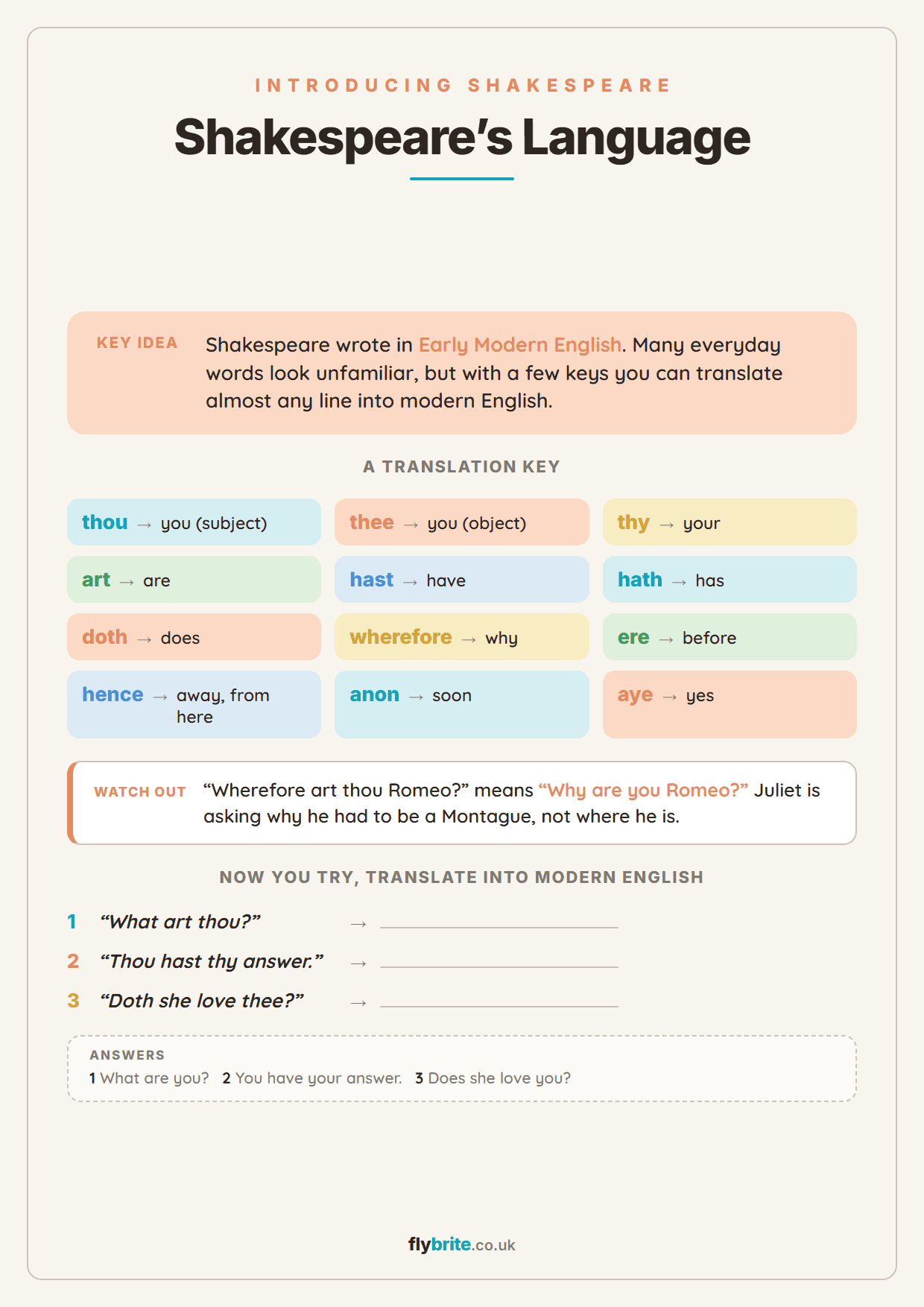 Type or write in
A translation key for thee, thou and art, a worked example and three lines to turn into modern English, with answers.
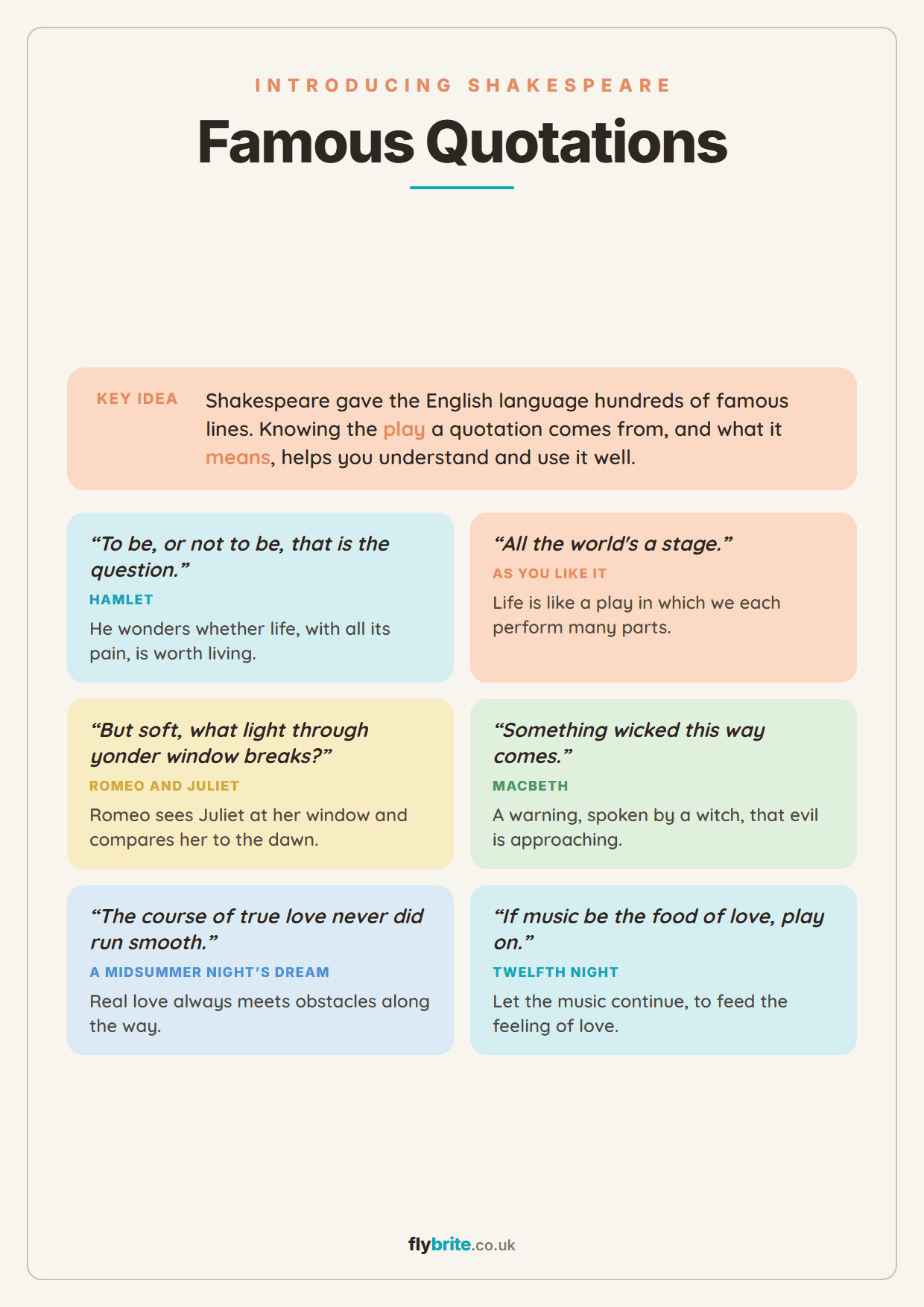
Six of Shakespeare’s most quoted lines, each with the play it comes from and a plain explanation of what it means.
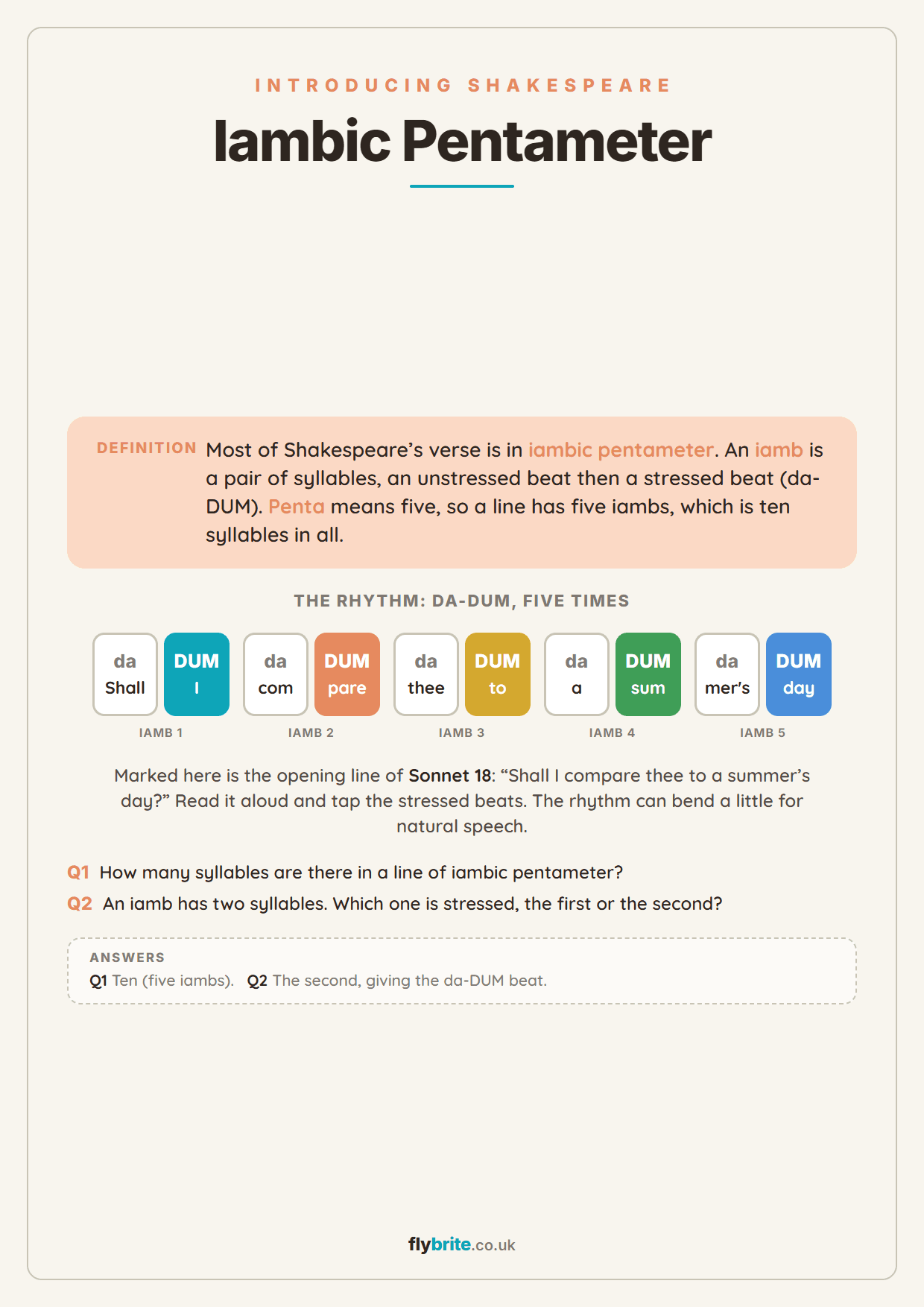
The da-DUM heartbeat of Shakespeare’s verse explained and scanned, five iambs to a line, with practice questions and answers.
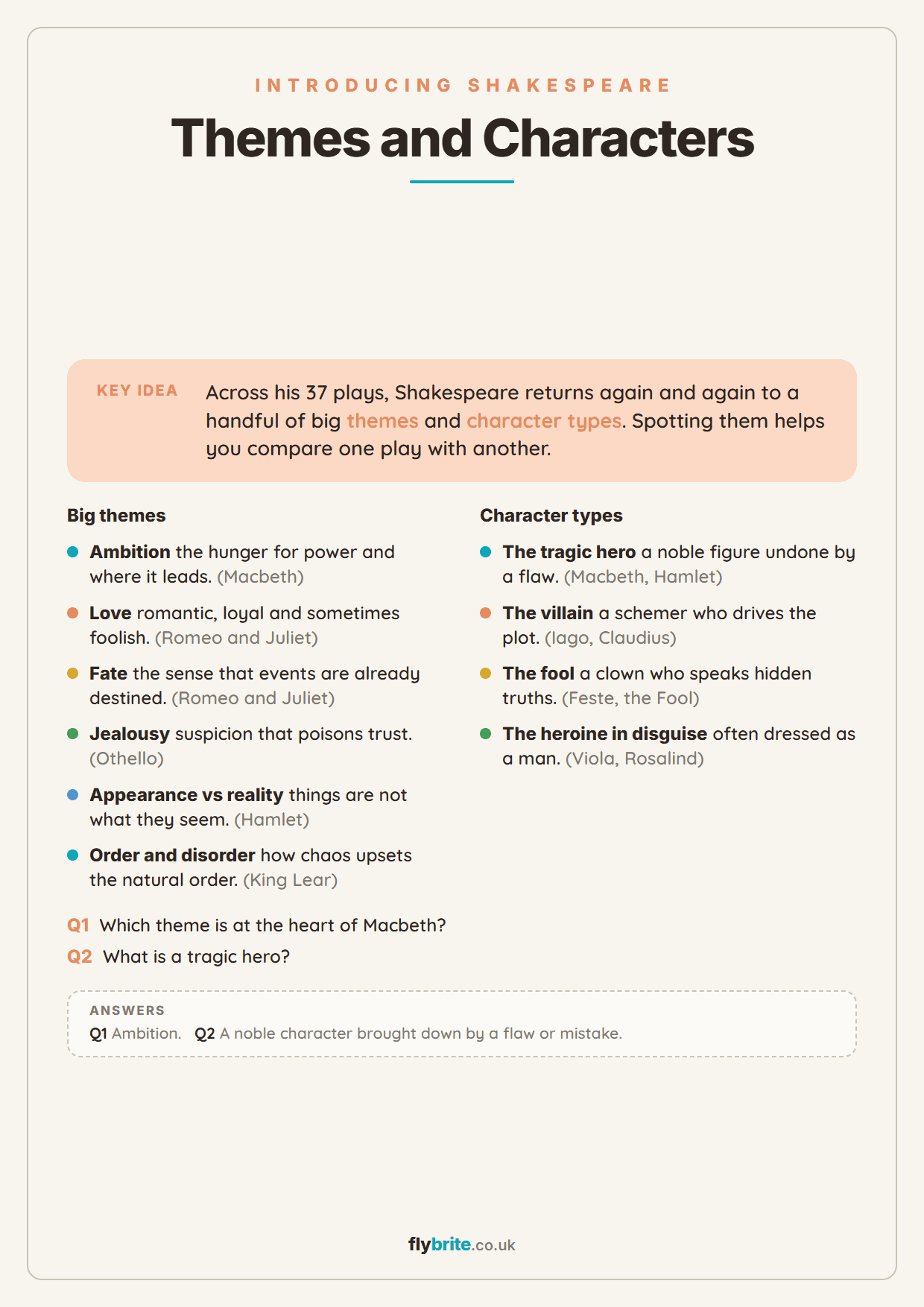
The big themes and stock character types that recur across the plays, so you can compare one Shakespeare play with another.
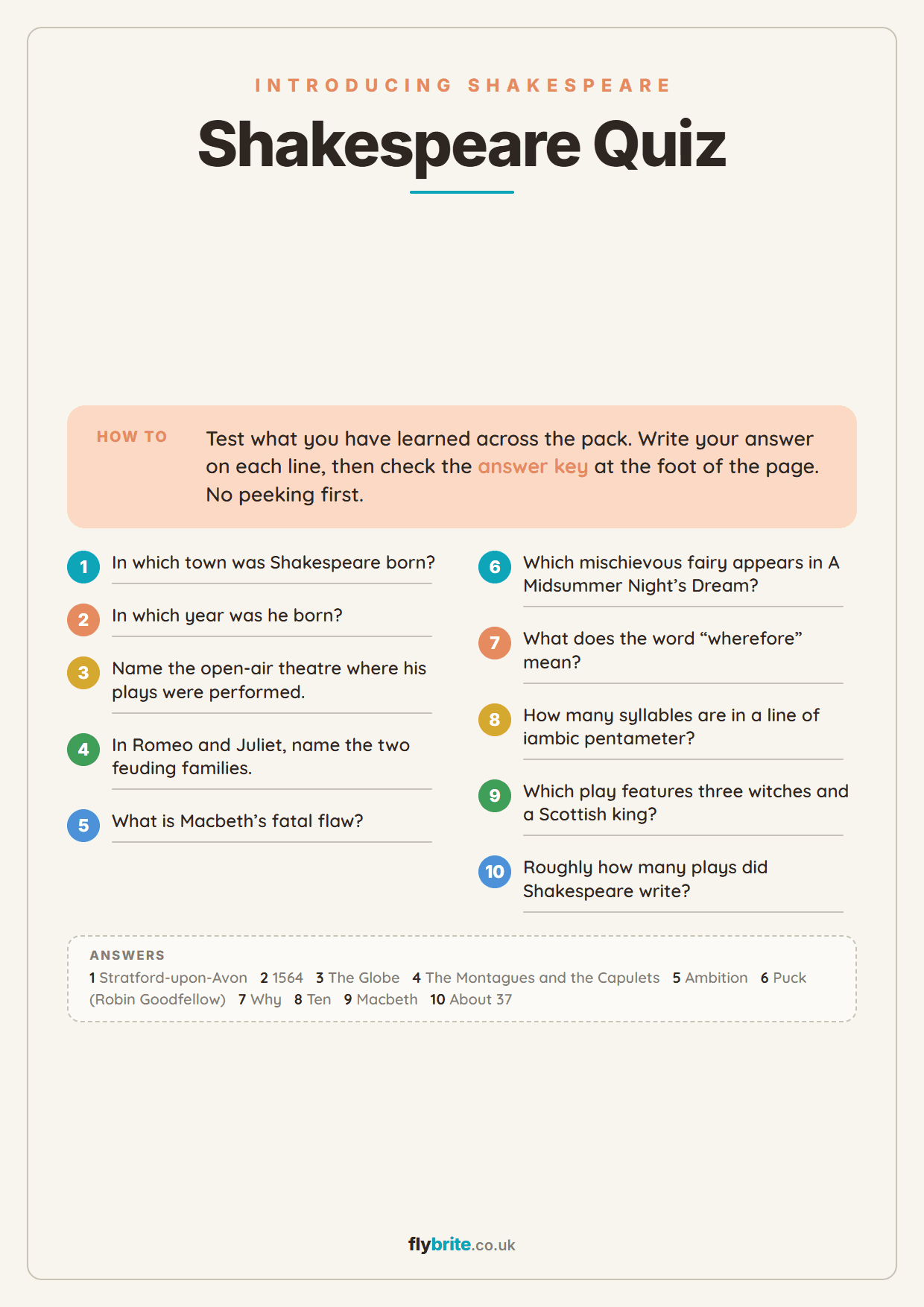 Type or write in
Ten write-in questions covering the whole pack, with a full answer key at the foot of the page. An ideal end-of-topic check.
KS3 English: planning, PEE paragraphs, introductions, conclusions and structuring a clear argument.
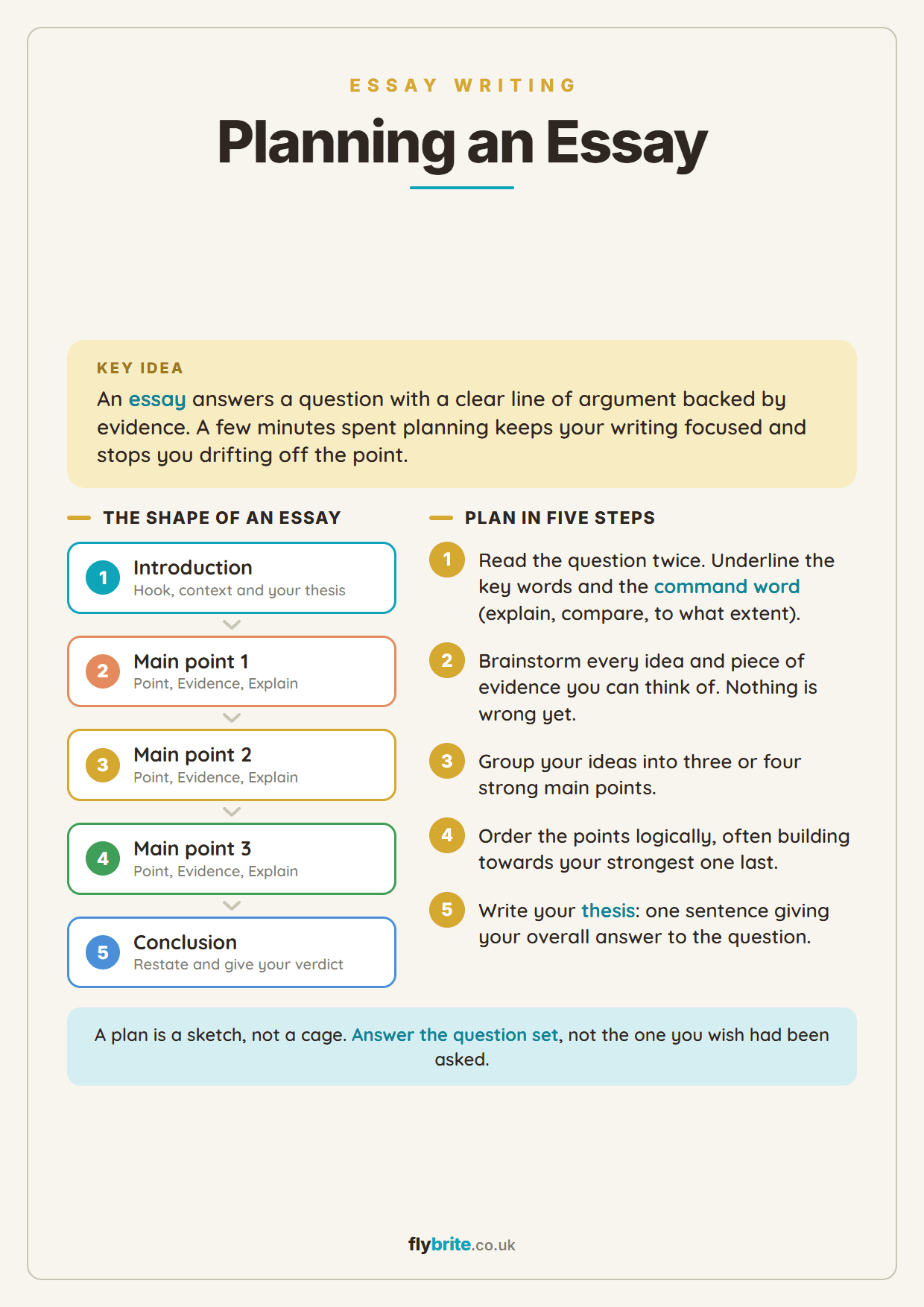
The shape of a strong essay and a clear five step plan, so every piece of writing starts with a focused argument.
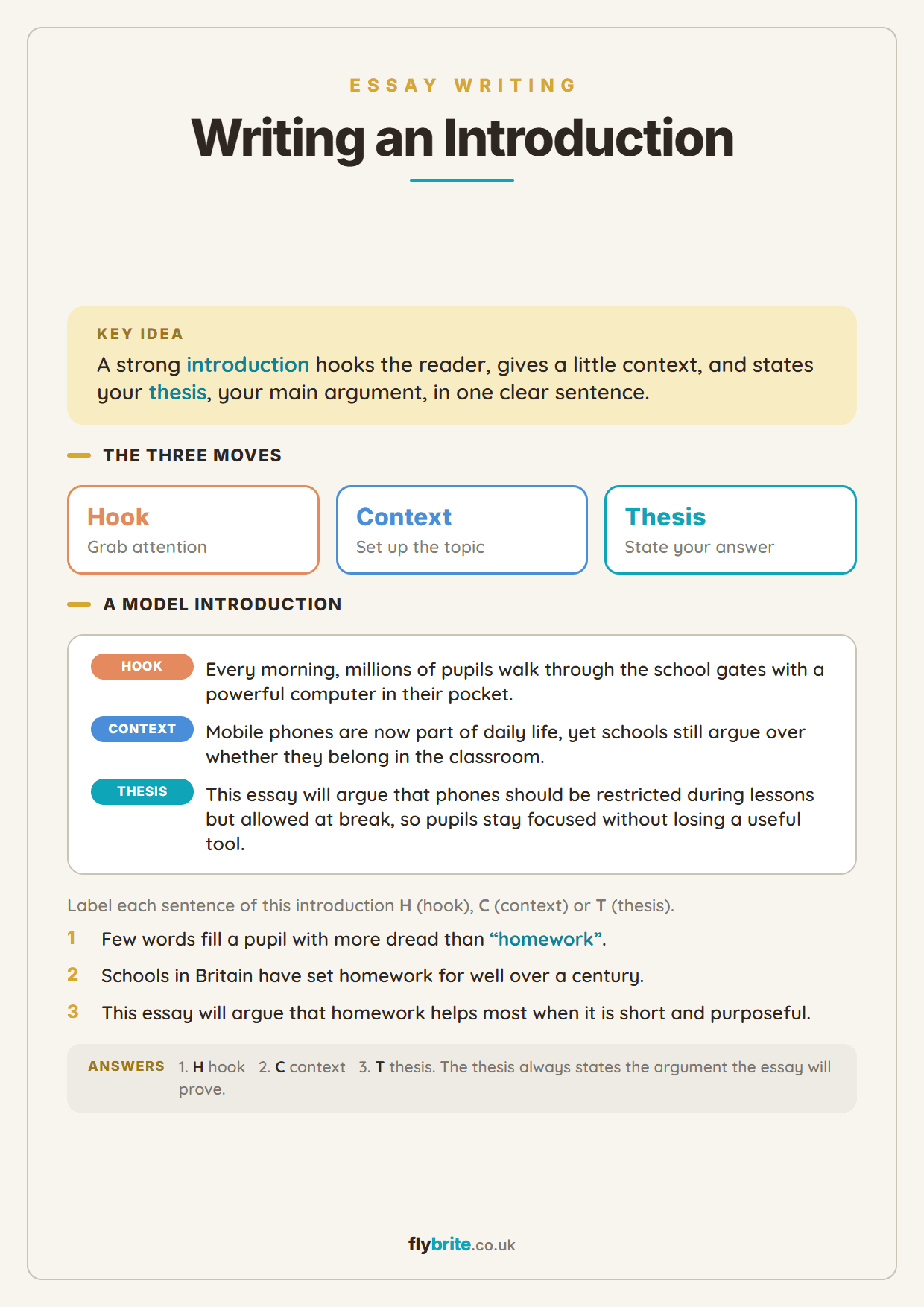
Hook, context and thesis explained with a colour coded model opener and a labelling task, answers included.
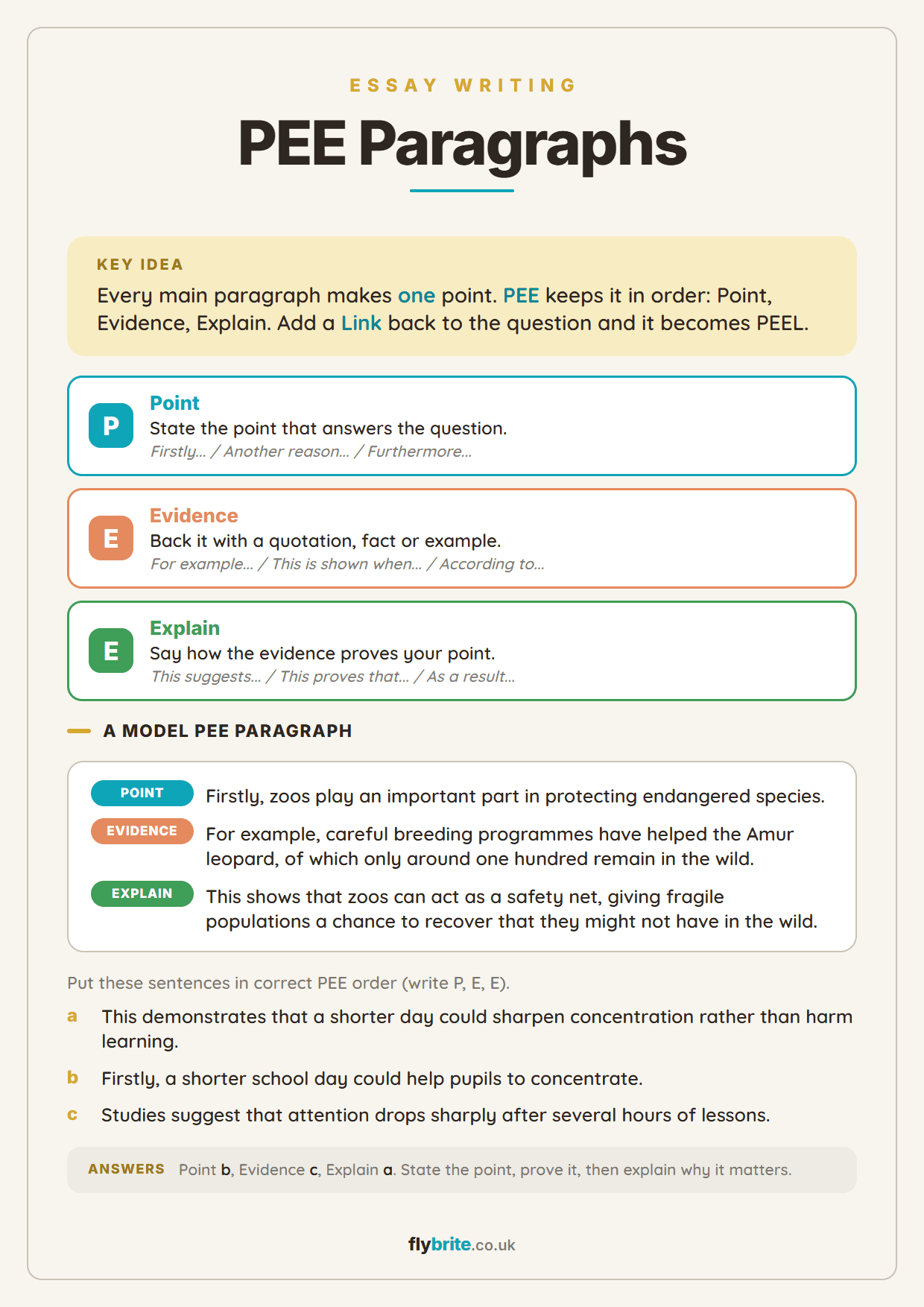
Point, Evidence, Explain broken down with sentence starters, a worked paragraph and a sorting task with answers.
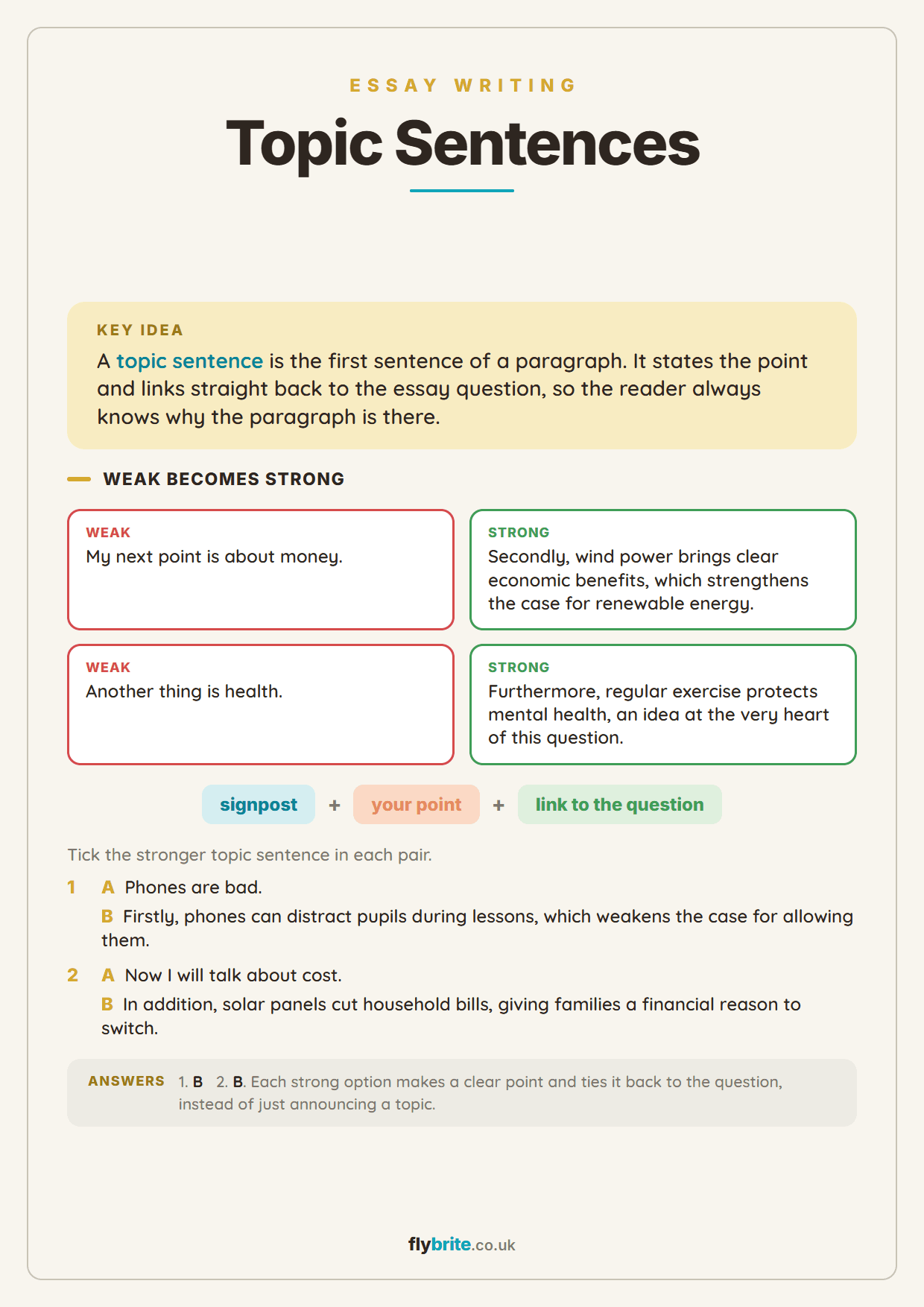
How to open a paragraph with a point that links to the question, with weak versus strong examples and a quiz.
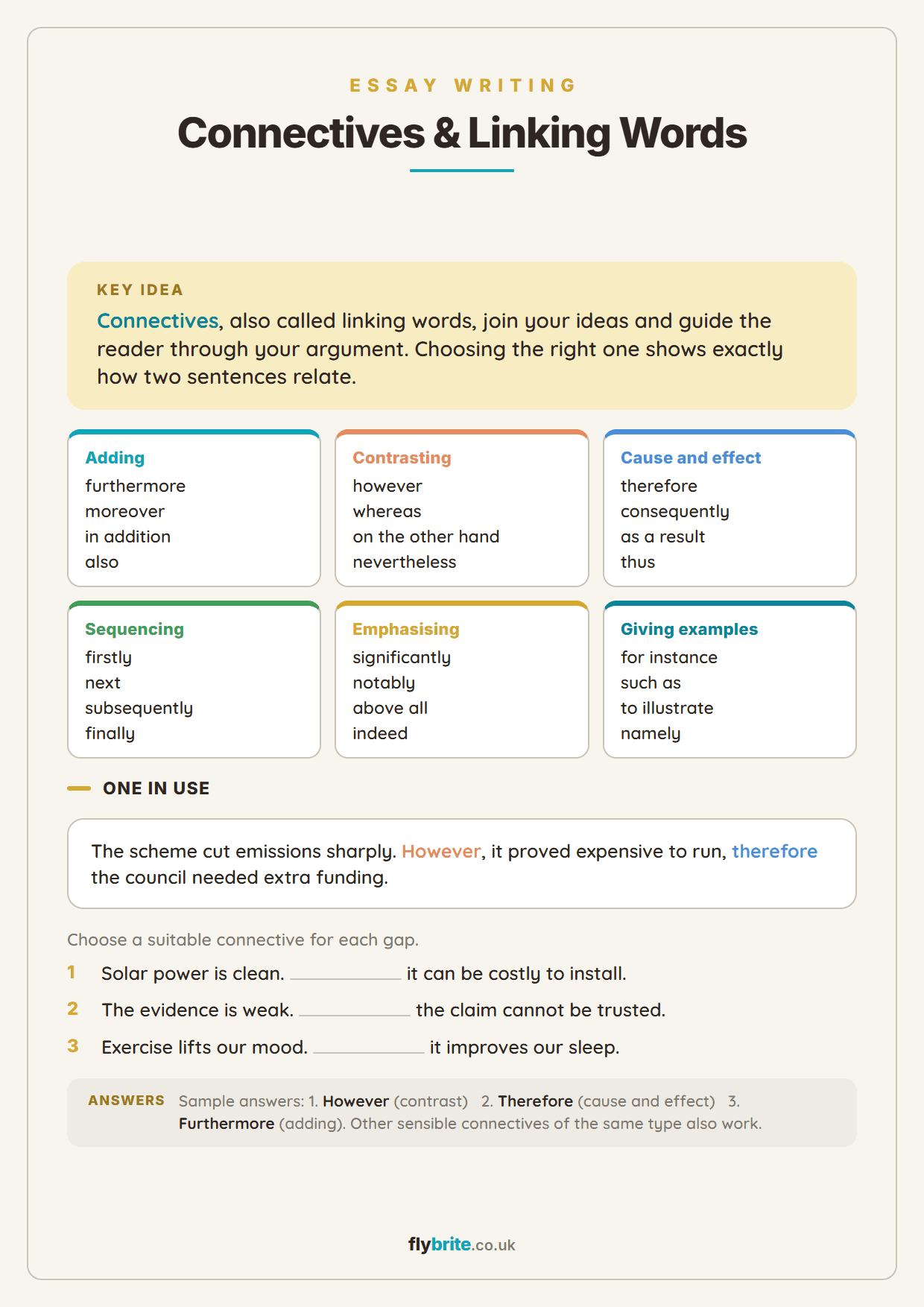
Six banks of linking words sorted by purpose, from adding to contrasting, with gap fill practice and answers.
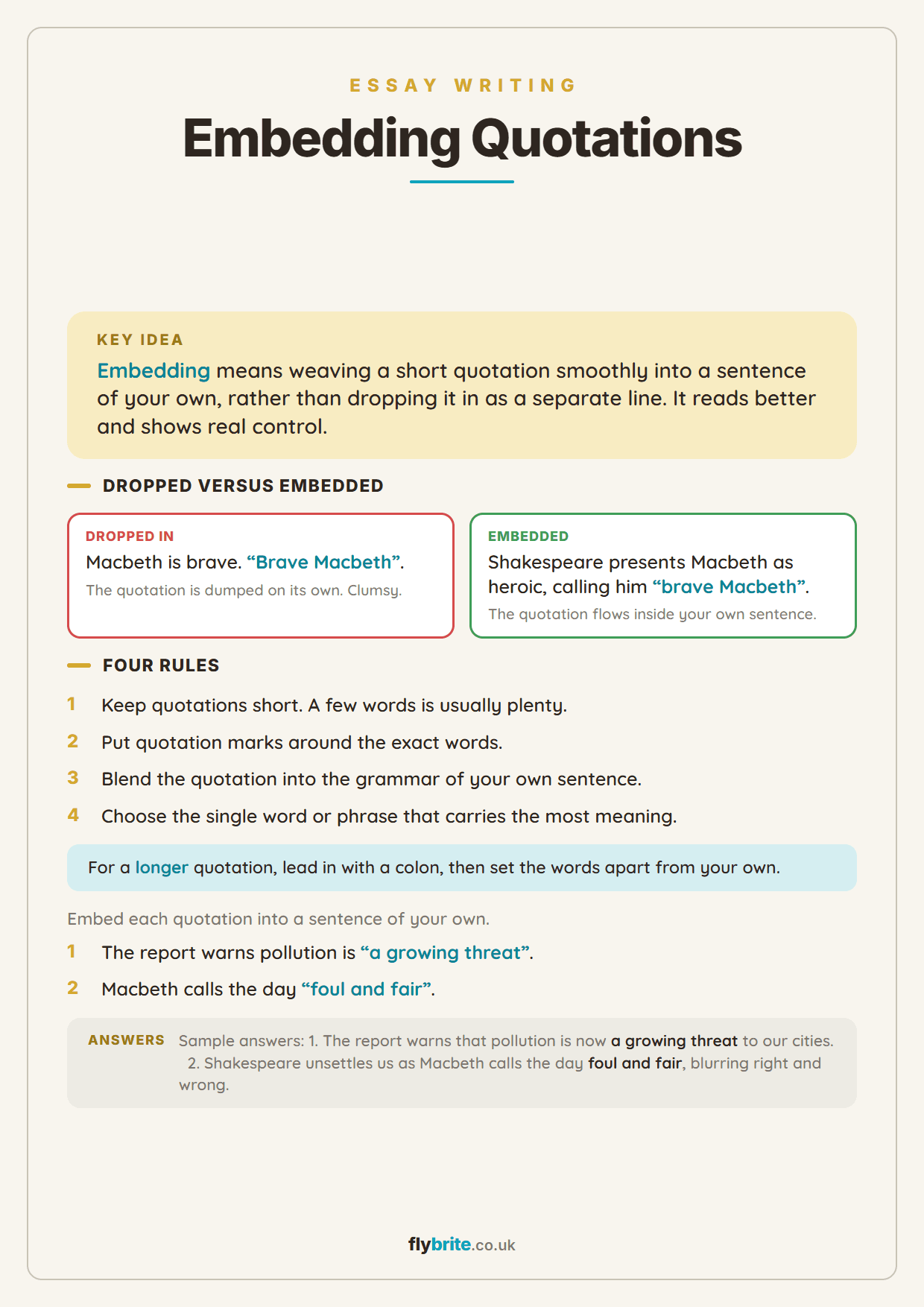
The GCSE skill of weaving short quotations into your own sentences, with dropped versus embedded examples.
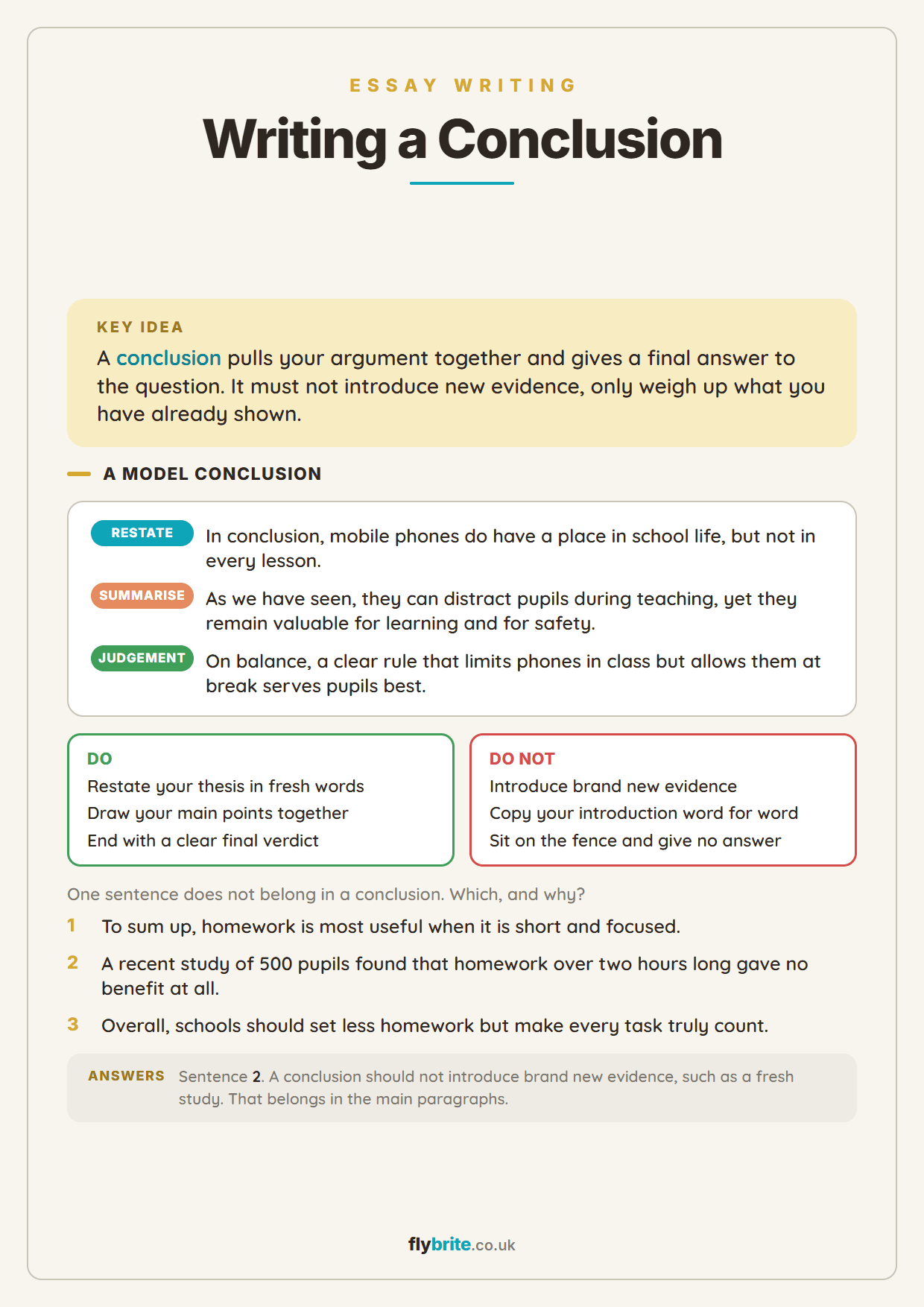
Restate, summarise and judge, with a model conclusion, a do and do not list, and a spot the mistake task.

The register essays expect, with an informal to formal translation table and rewriting practice, answers given.
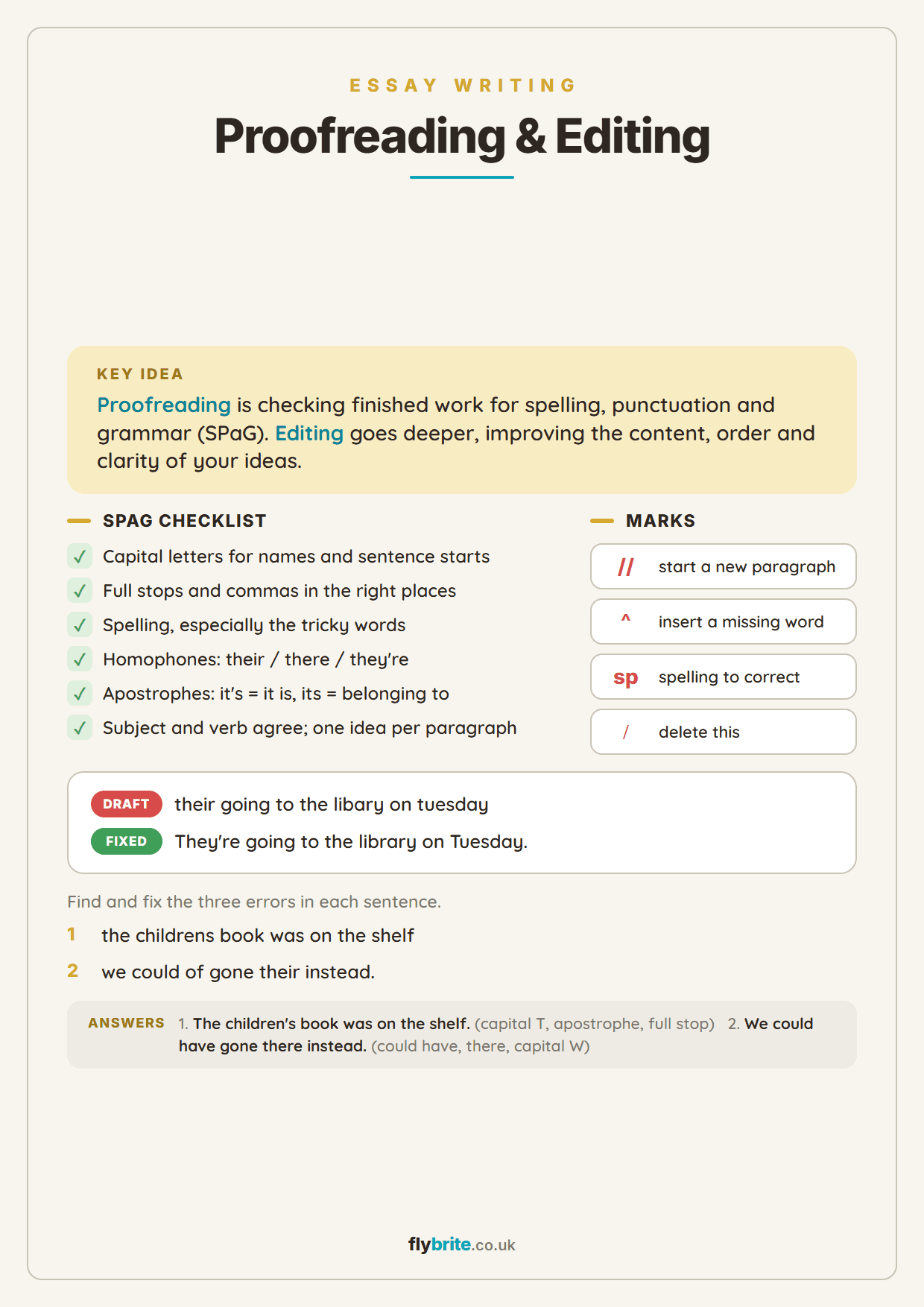
A SPaG checklist, four proofreading marks and find the error practice, so final drafts read clean and clear.
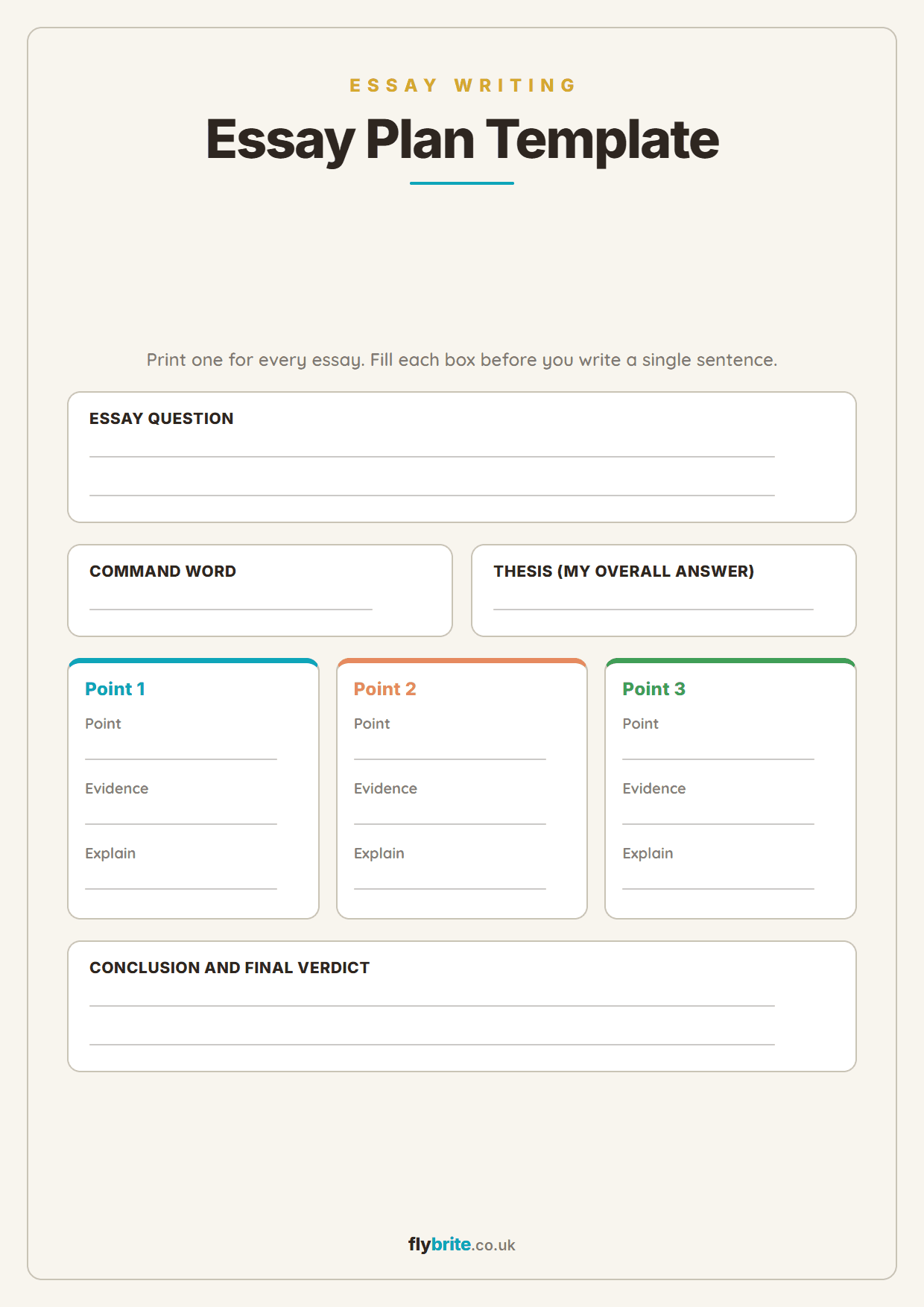 Type or write in
A ready to print planner with room for the question, thesis, three PEE points and a conclusion. Fill and write.
KS3 English: reading poems, imagery, rhyme and rhythm, and analysing what a poet is really doing.
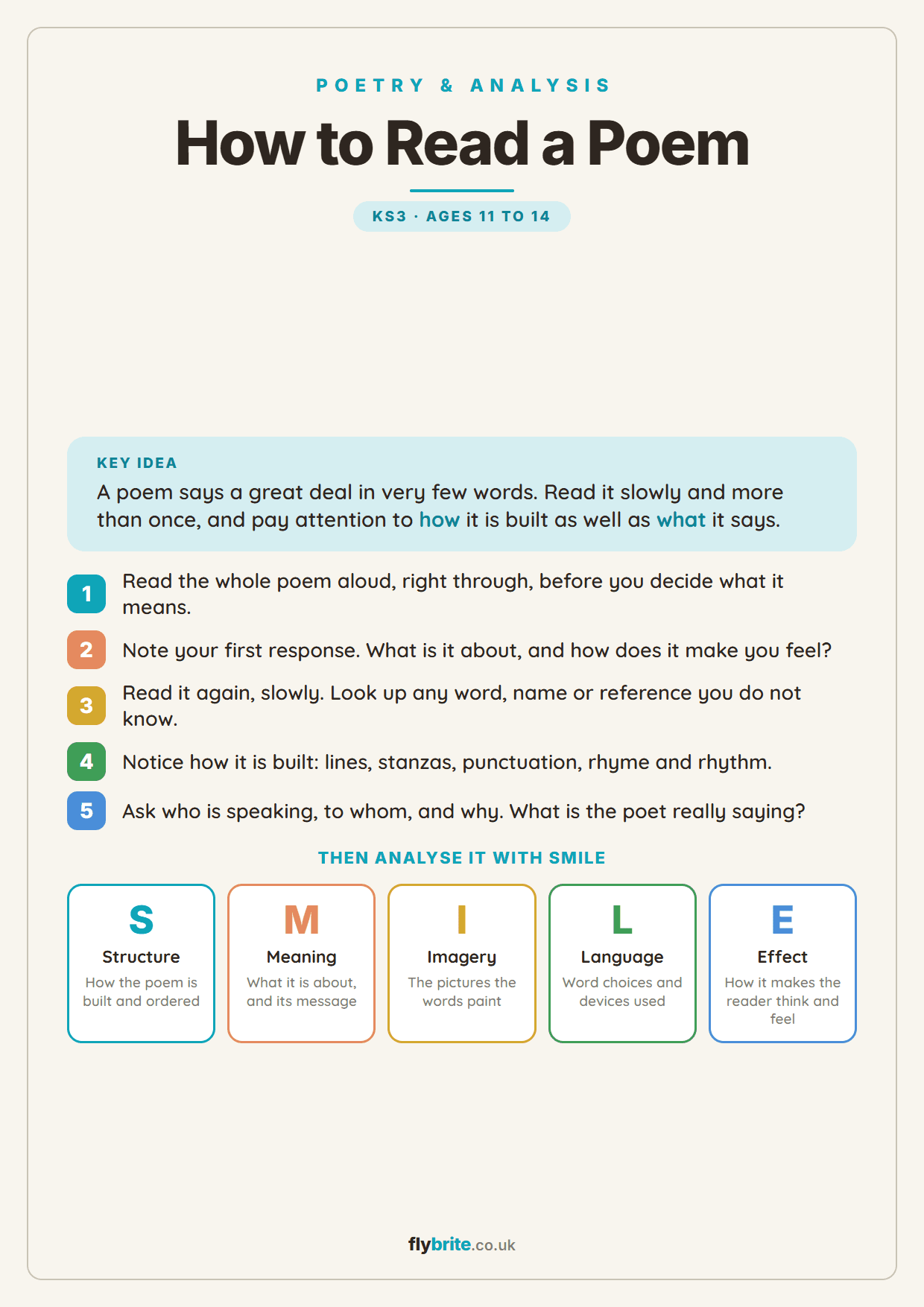
A calm five step method for reading any poem closely, plus the SMILE framework for analysis. The perfect opener for KS3 poetry.
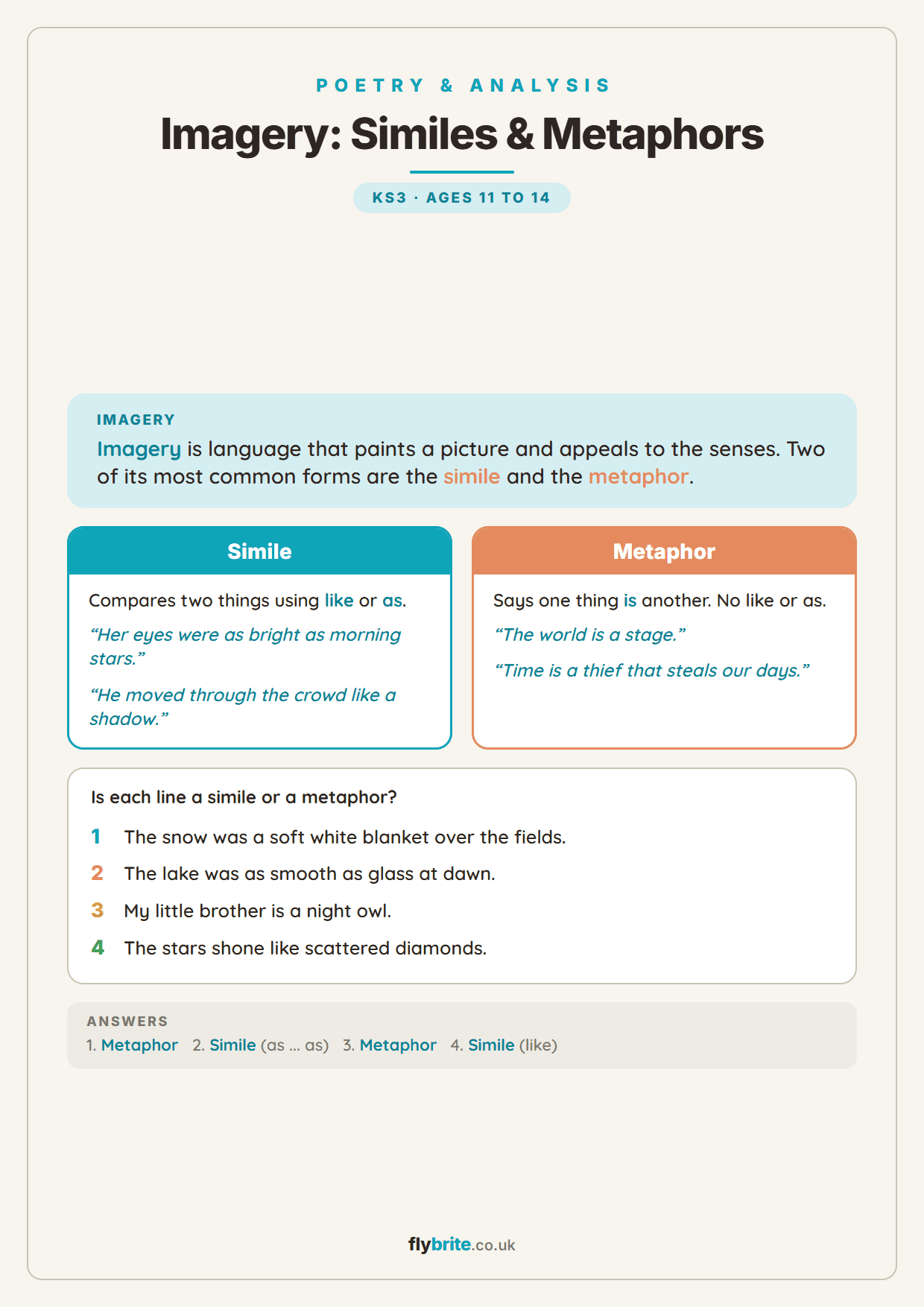
The two workhorses of poetic imagery, side by side with clear rules, examples and four practice lines to sort. Answers included.
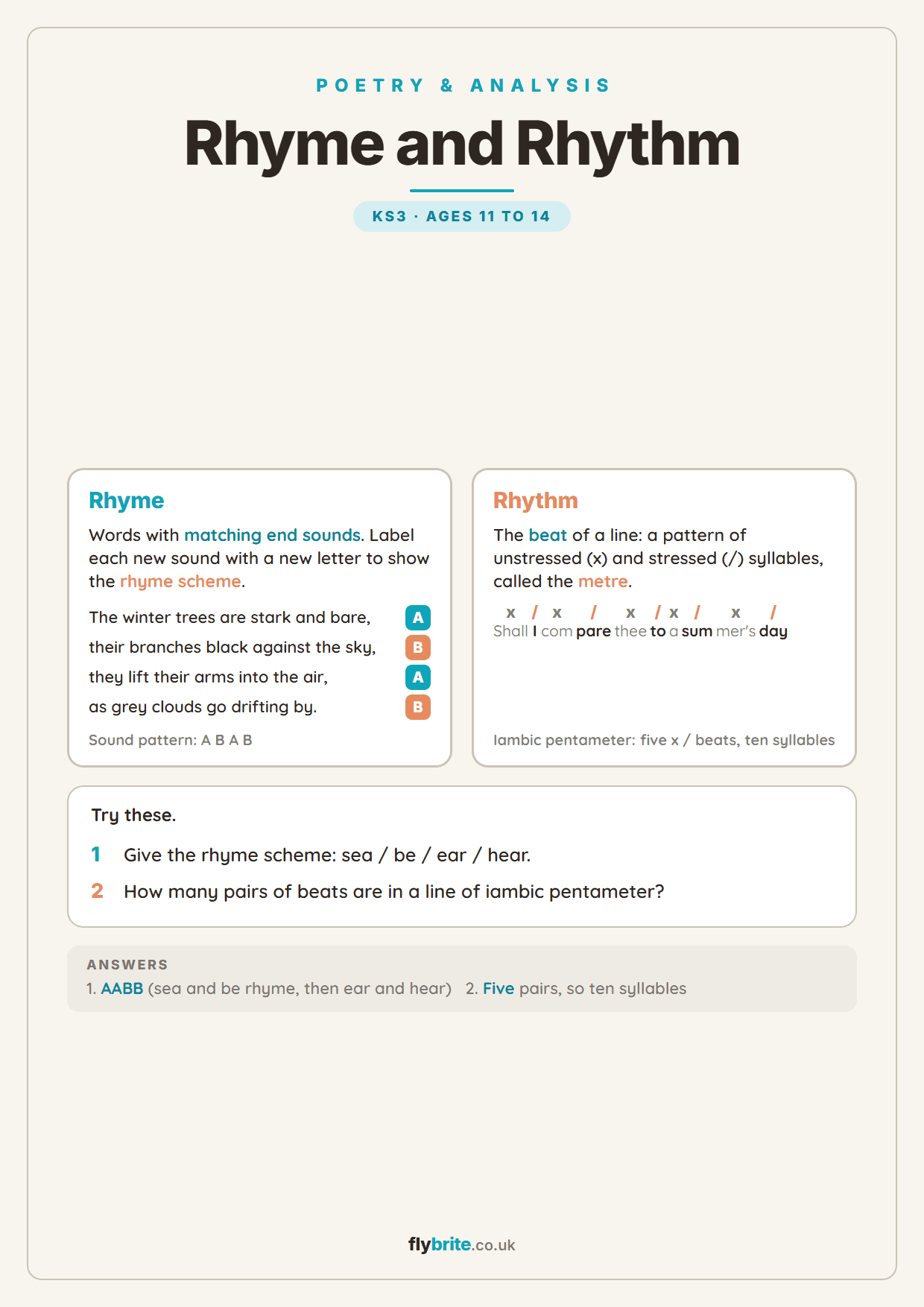
Rhyme schemes labelled A, B, A, B and a line of iambic pentameter scanned beat by beat, with practice and answers.
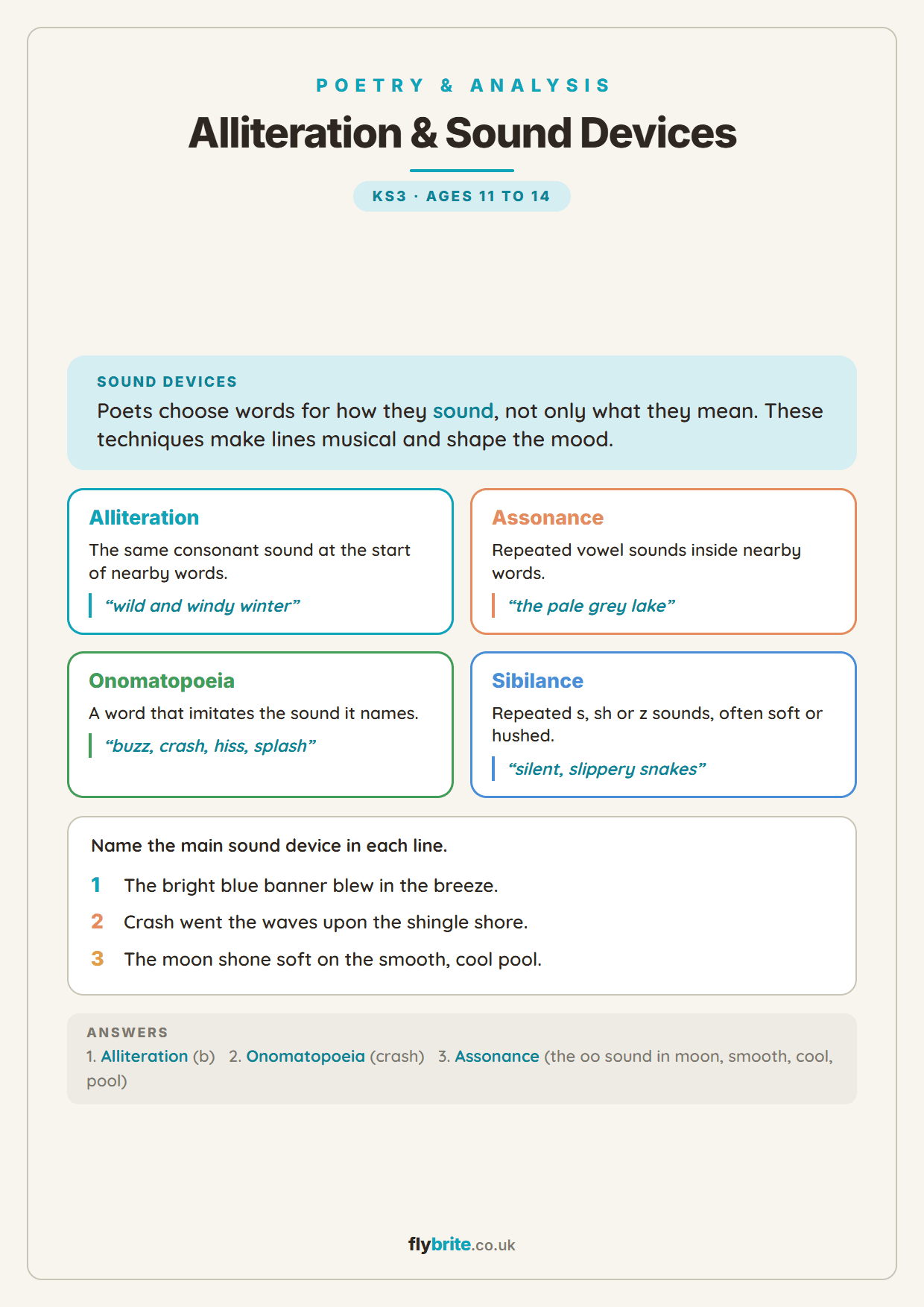
Alliteration, assonance, onomatopoeia and sibilance explained with examples, then three lines to name. Answers included.
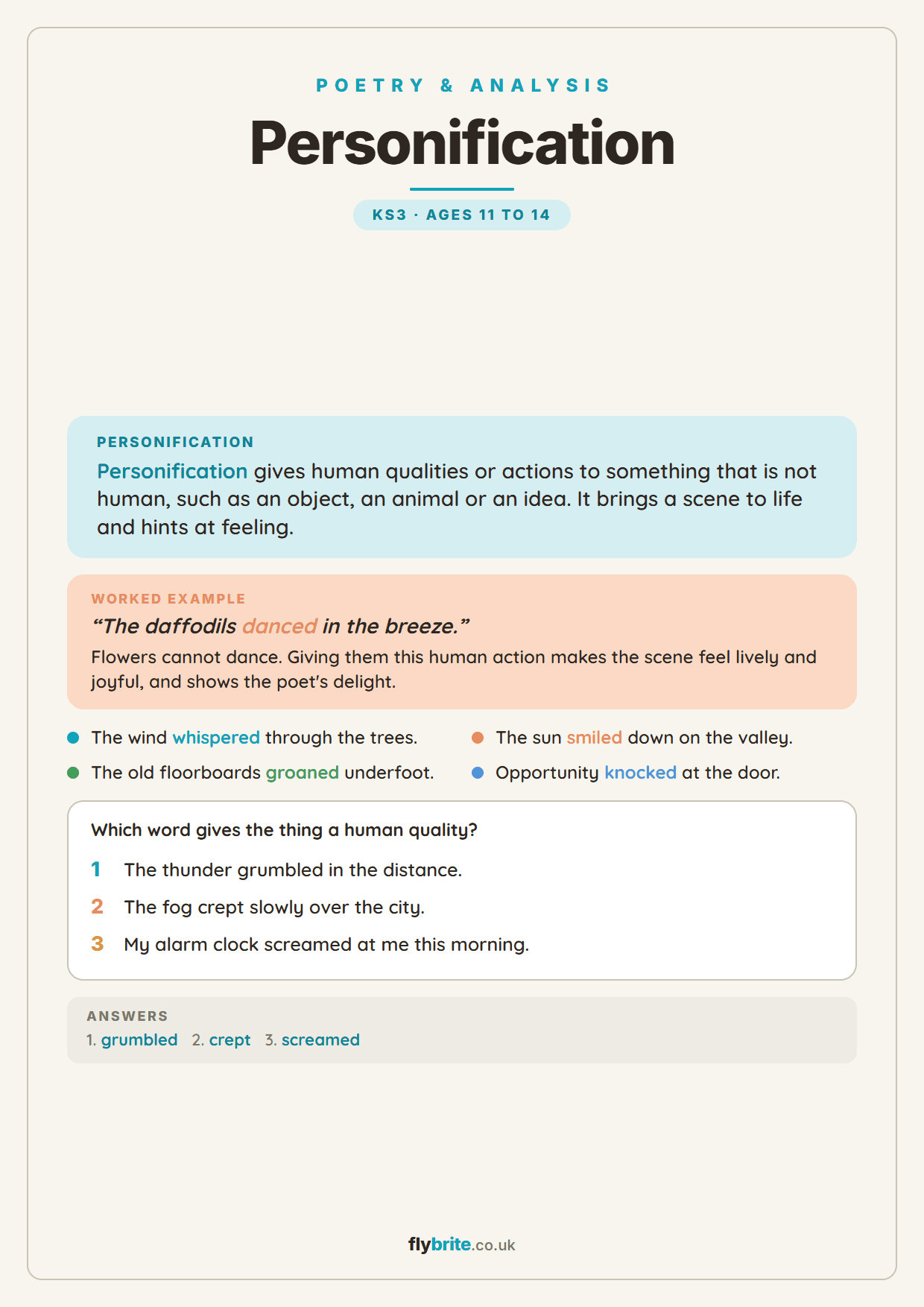
Giving human life to objects, weather and ideas, with a worked example, four illustrations and a spot-the-word practice with answers.
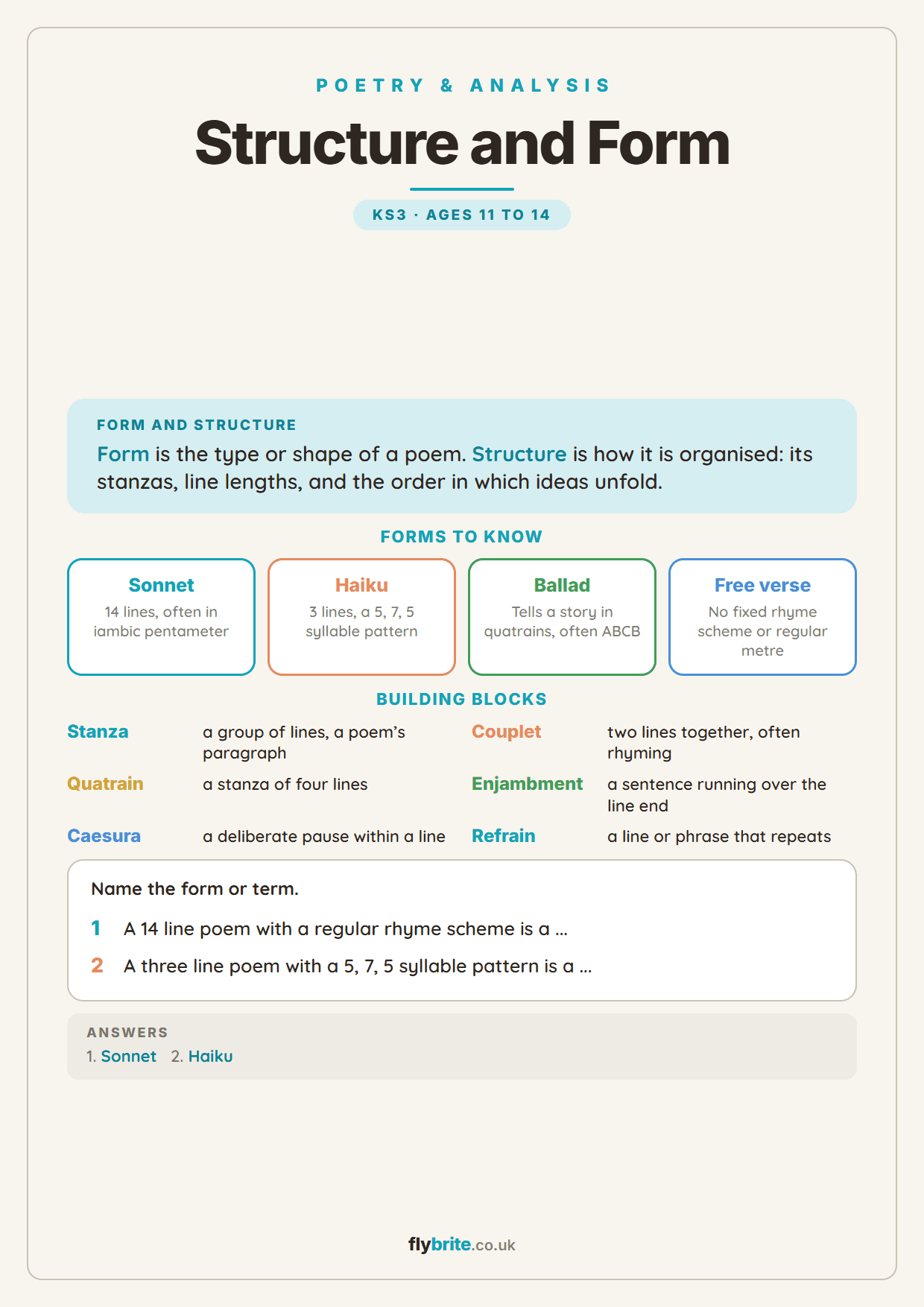
Sonnet, haiku, ballad and free verse, plus the building blocks from stanza to caesura. A tidy reference with practice and answers.
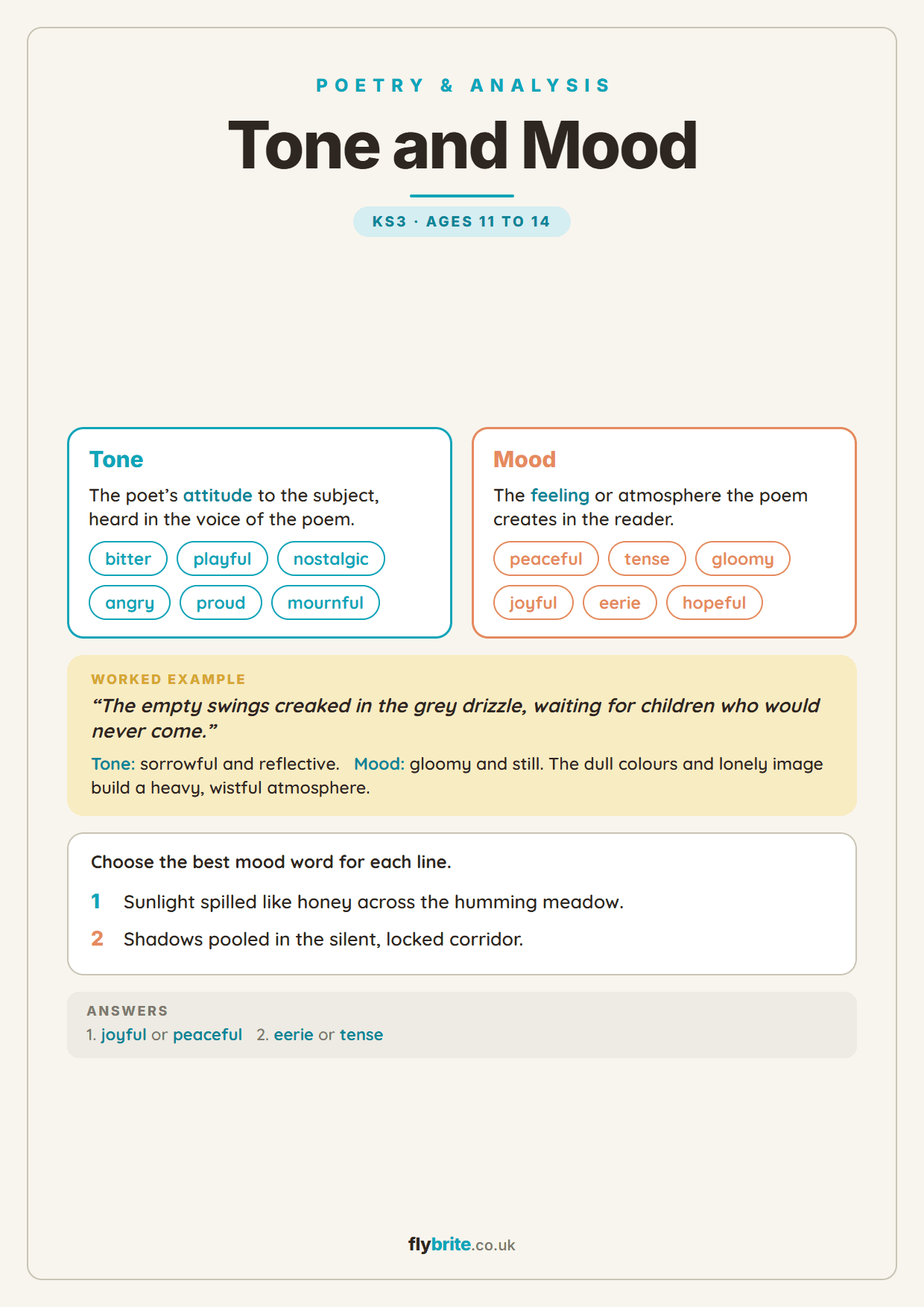
The difference between the poet’s tone and the reader’s mood, with word banks, a worked example and practice with answers.
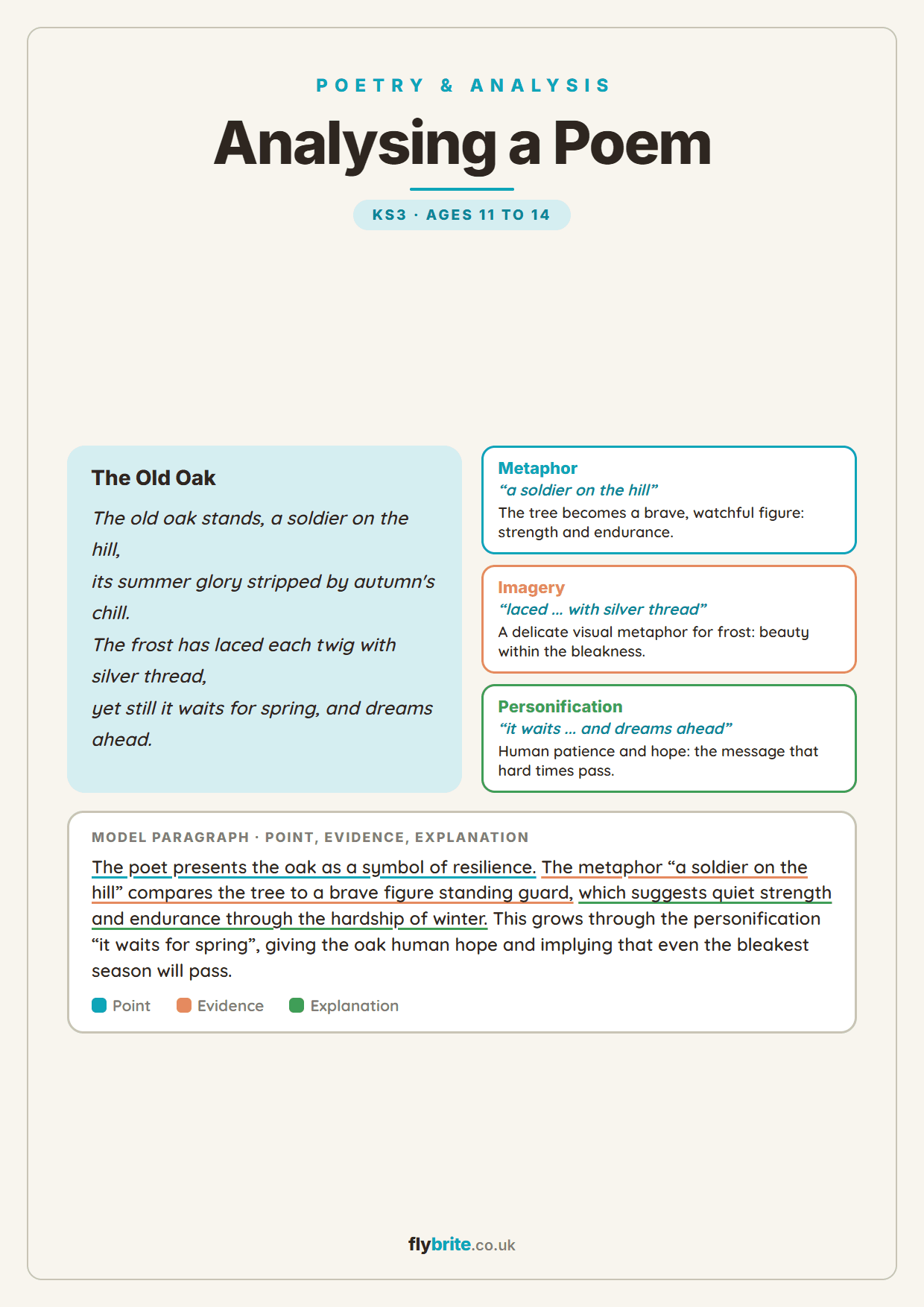
A full worked analysis of a short original poem, with device annotations and a model Point, Evidence, Explanation paragraph.
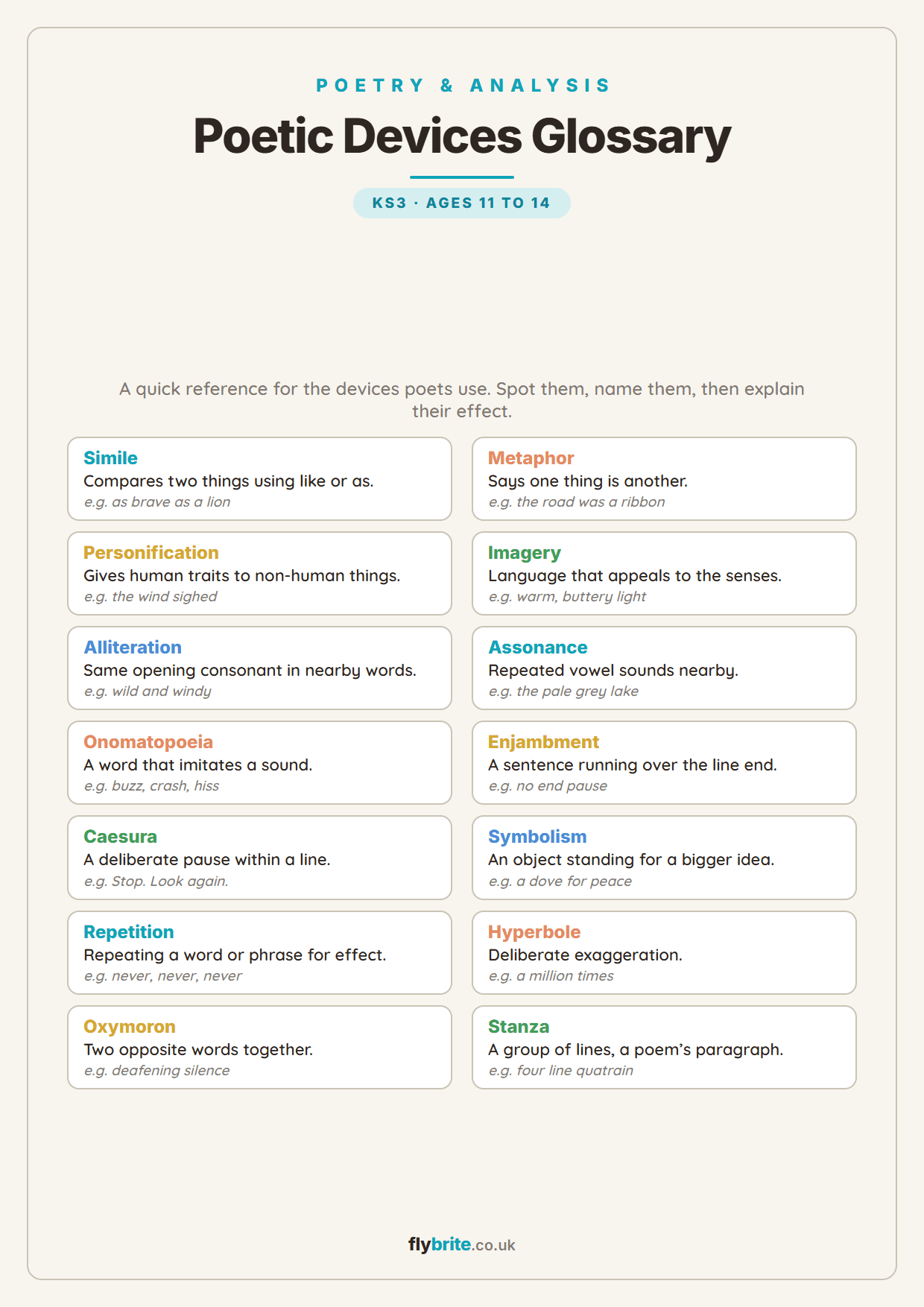
Fourteen key poetic devices from simile to oxymoron, each with a concise definition and a mini example. A KS3 wall reference.
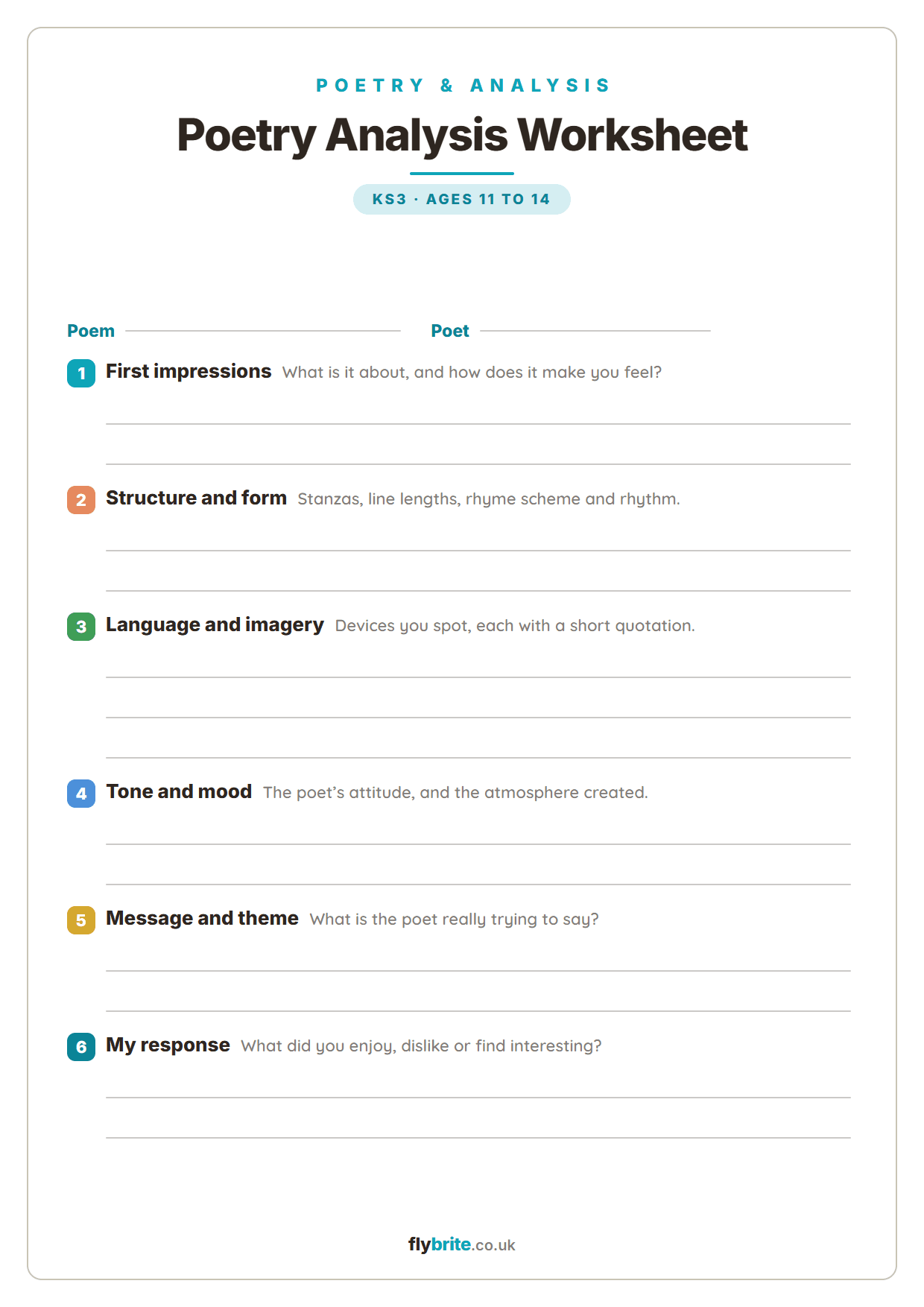 Type or write in
A reusable write-in template for analysing any poem, from first impressions to theme, with room for quotations and your own response.
KS3 English: clauses, phrases, punctuation, active and passive, and writing in Standard English.
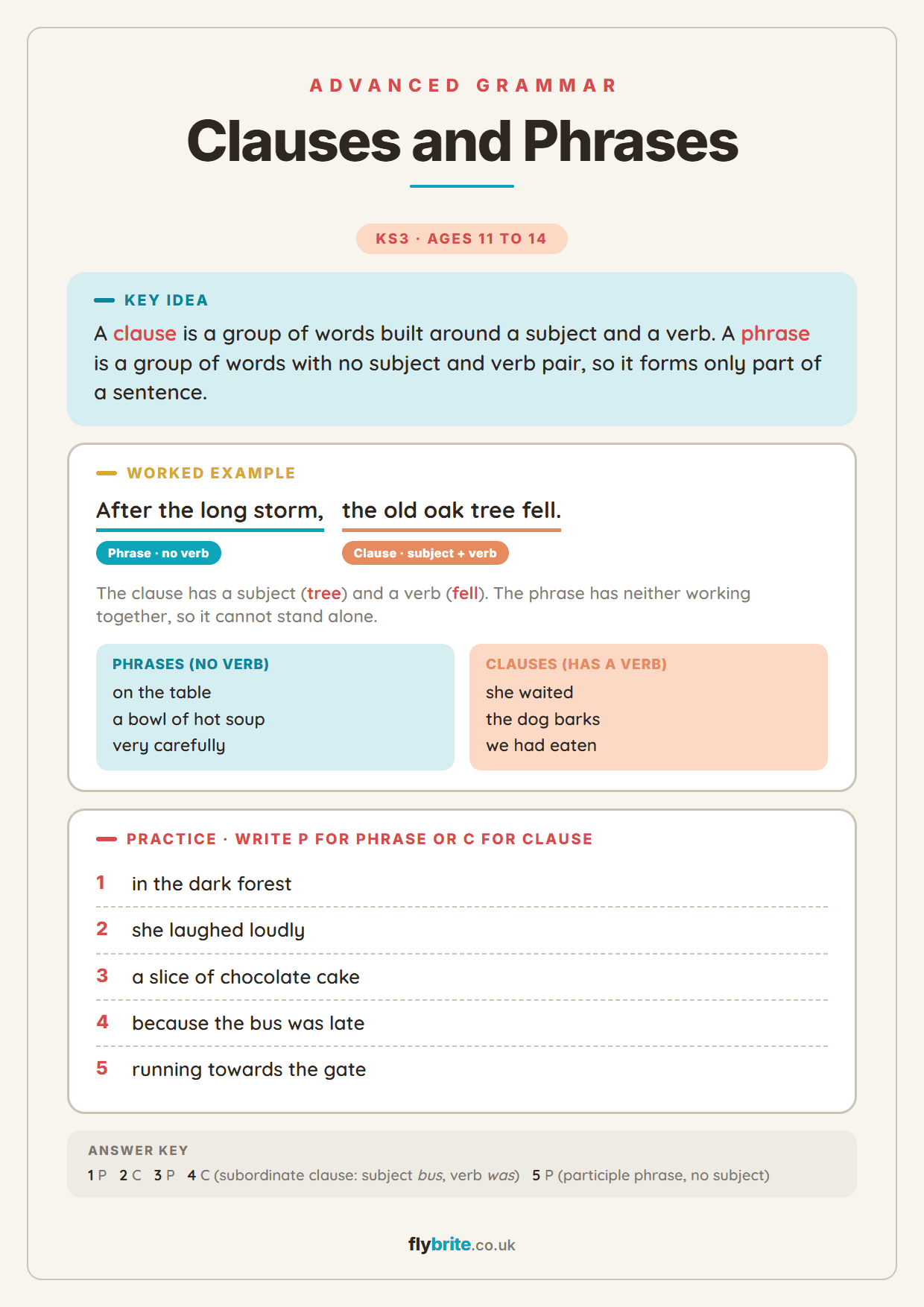
The building blocks of every sentence, with a labelled breakdown showing how a clause carries a verb and a phrase does not, then practice to sort each one.
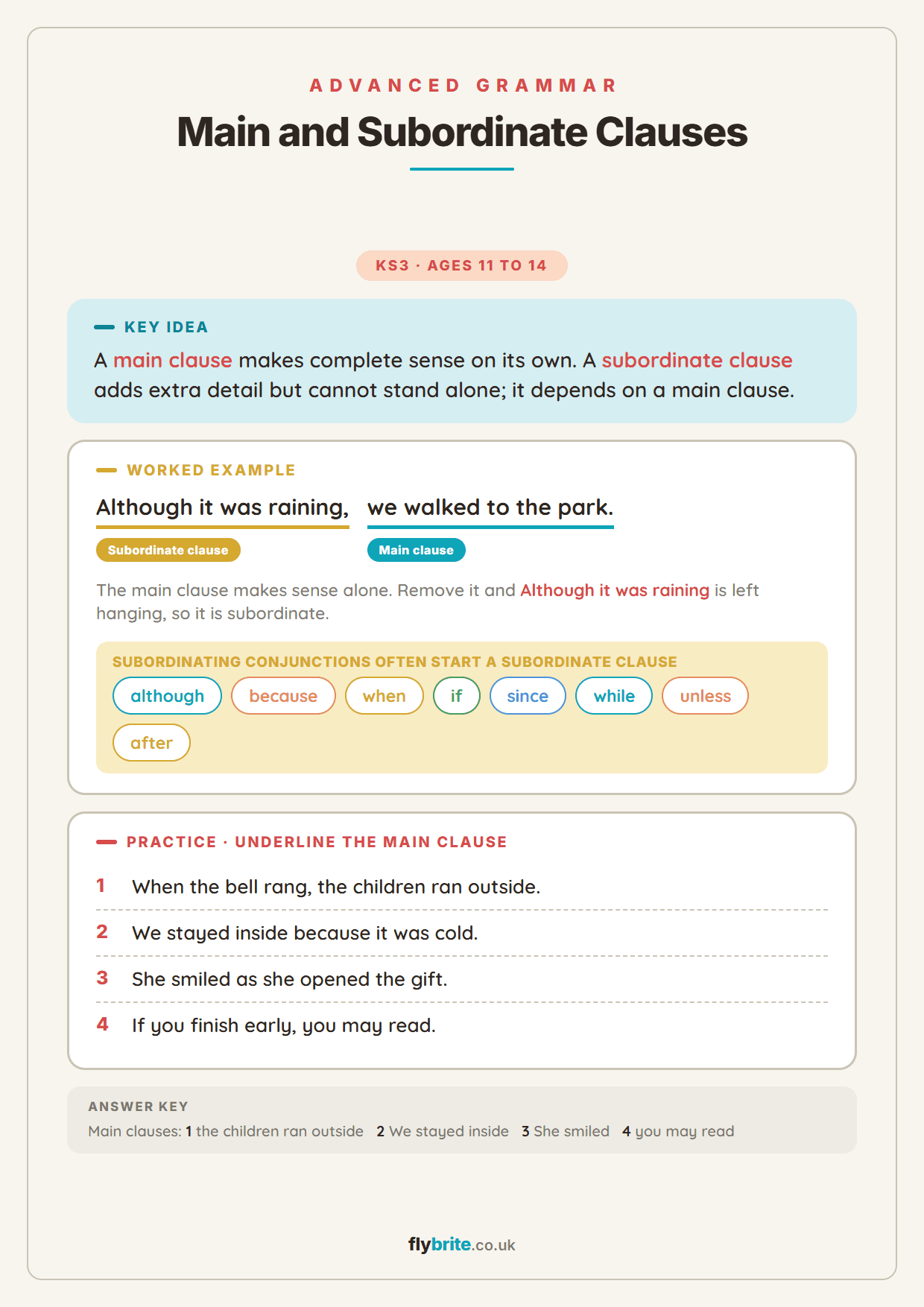
How a main clause stands alone while a subordinate clause leans on it, shown with a colour-coded sentence and a bank of subordinating conjunctions.

Simple, compound and complex sentences laid out side by side with worked examples and the FANBOYS conjunctions, then five to classify.
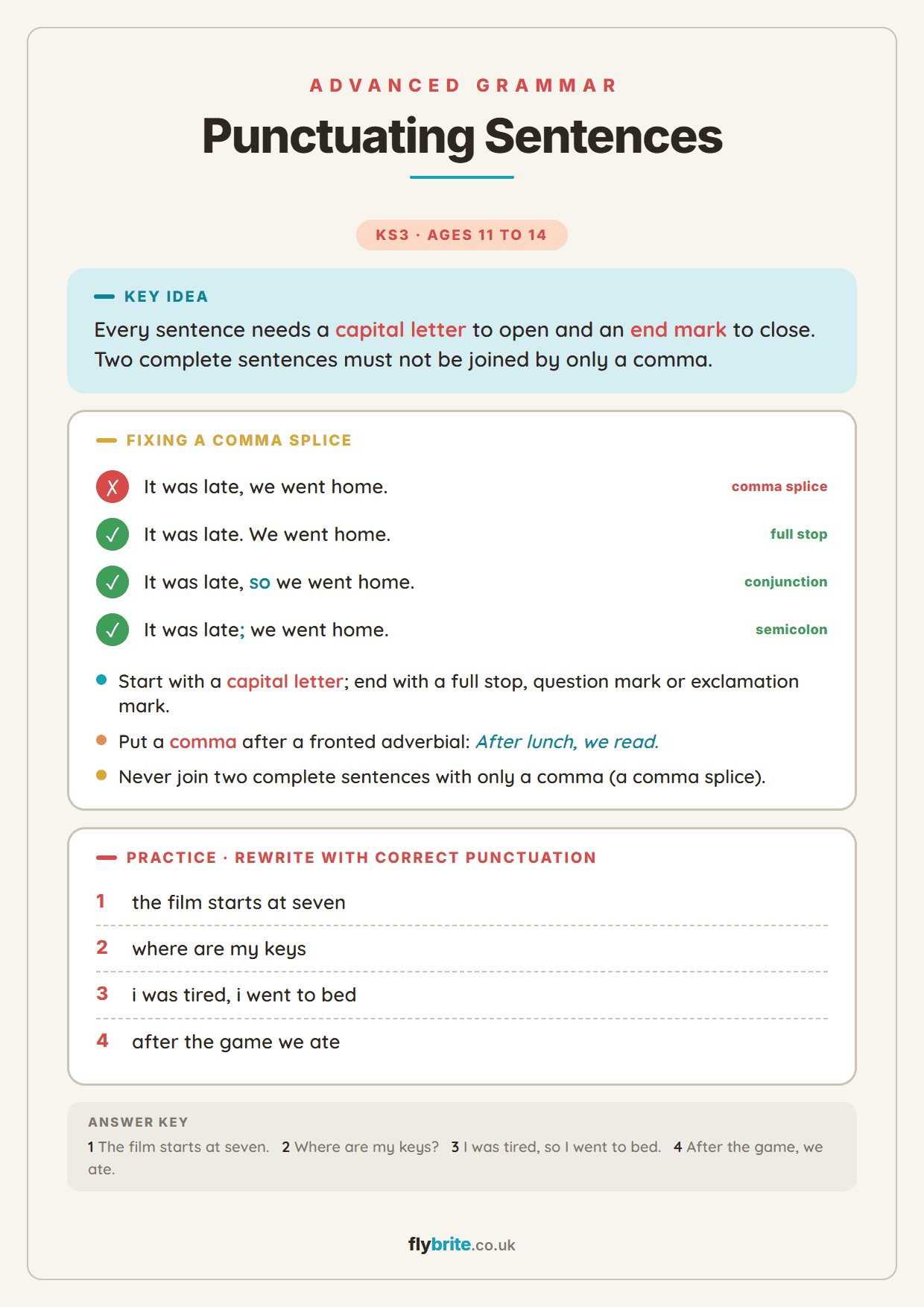
Capital letters, end marks and the comma splice error, with three tidy ways to fix two sentences wrongly joined by a comma.
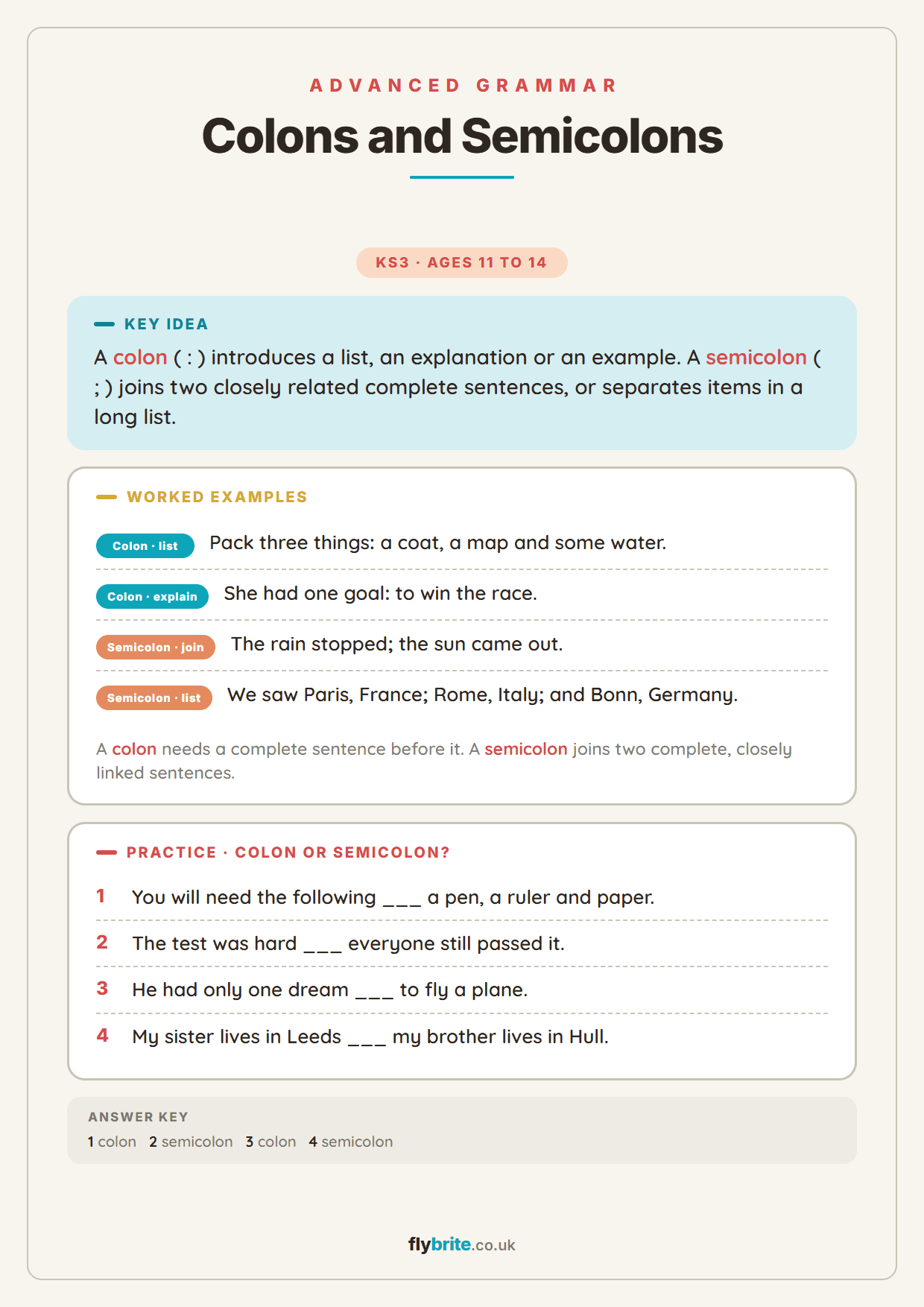
When to reach for a colon and when a semicolon fits better, with clear worked examples for lists, explanations and joined sentences.
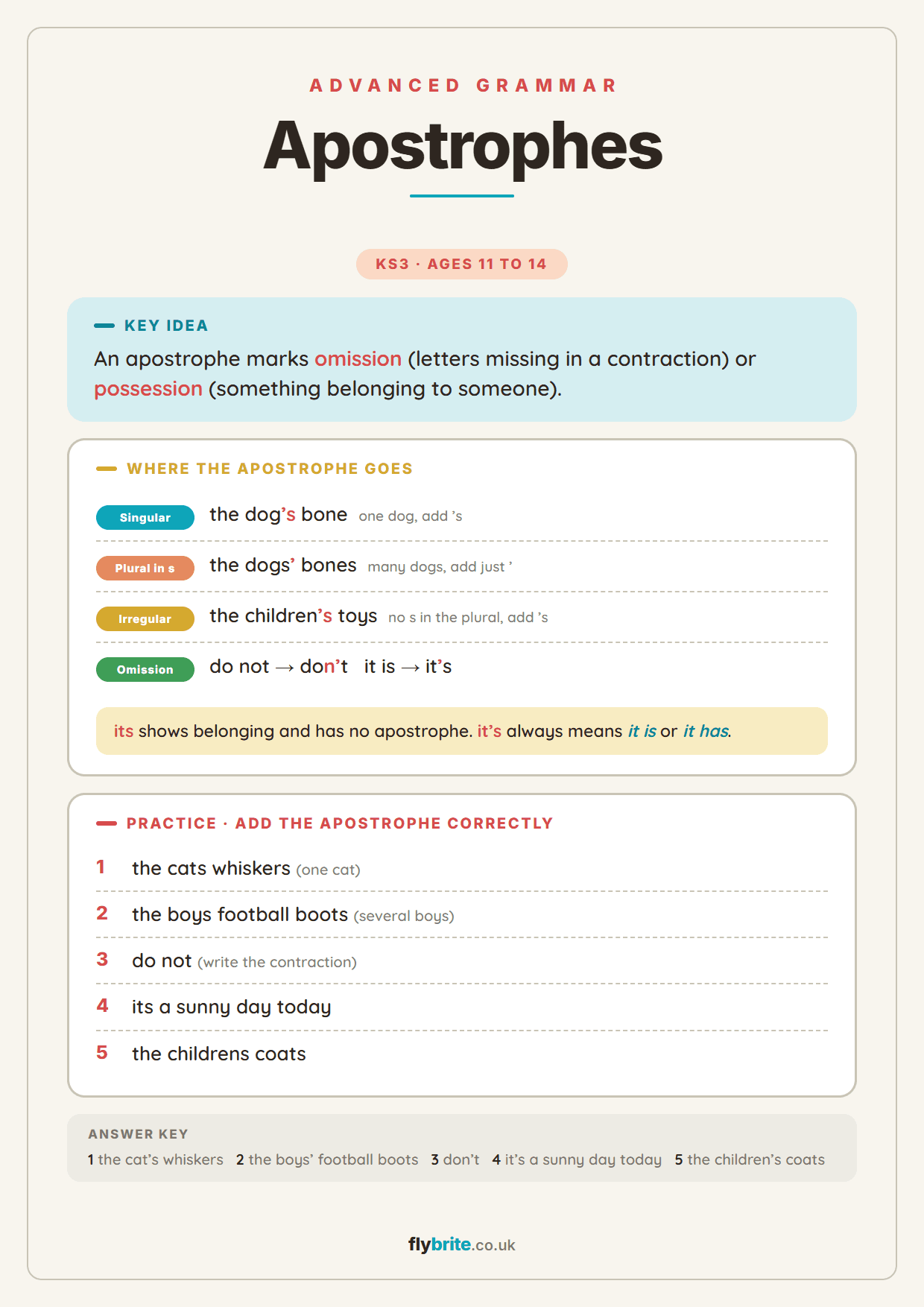
Possession and omission made simple, from the singular dog to the plural dogs and the tricky its versus it is, with practice to place each mark.
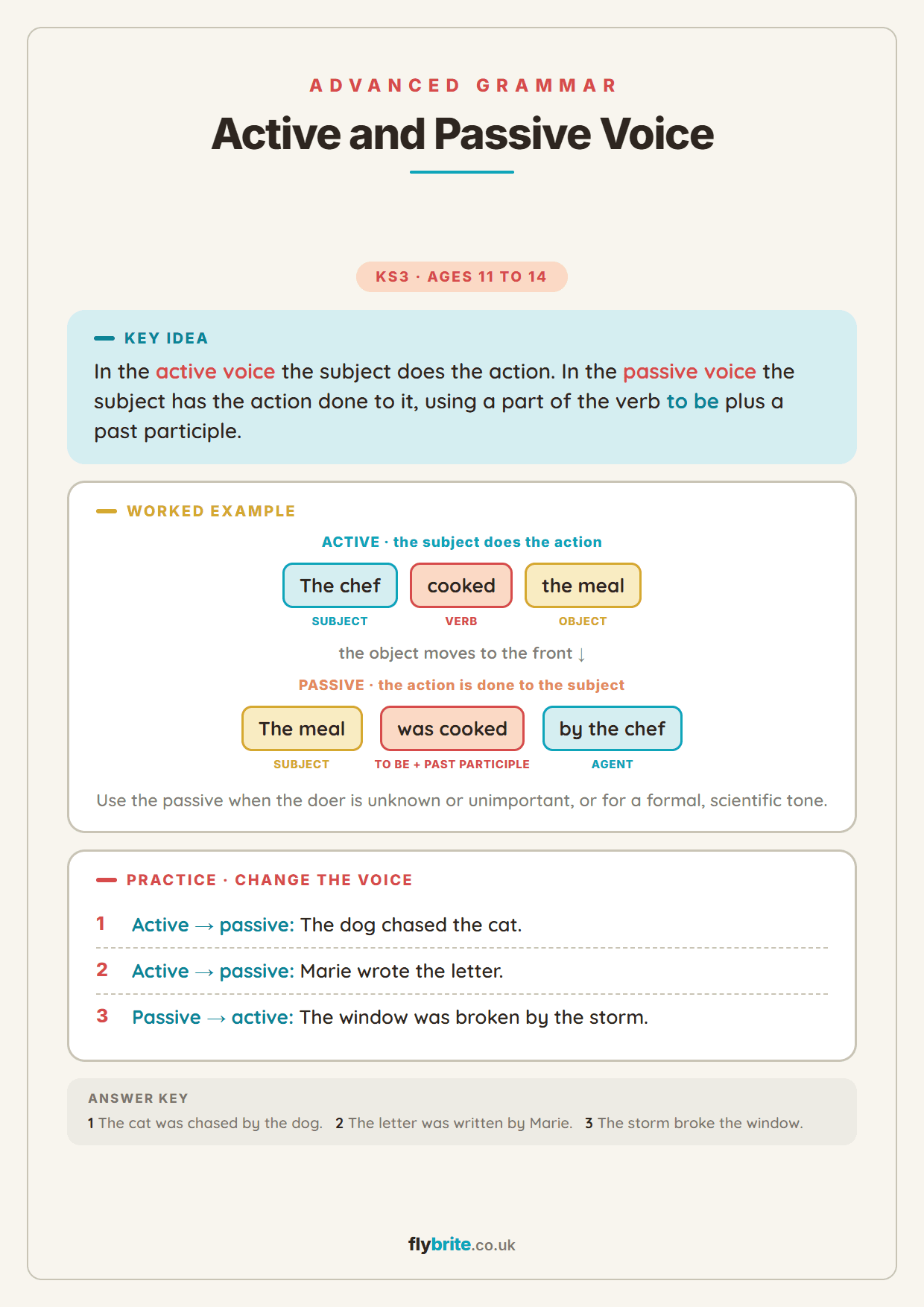
The subject, verb and object swap that turns an active sentence passive, shown with labelled role chips and practice both ways.
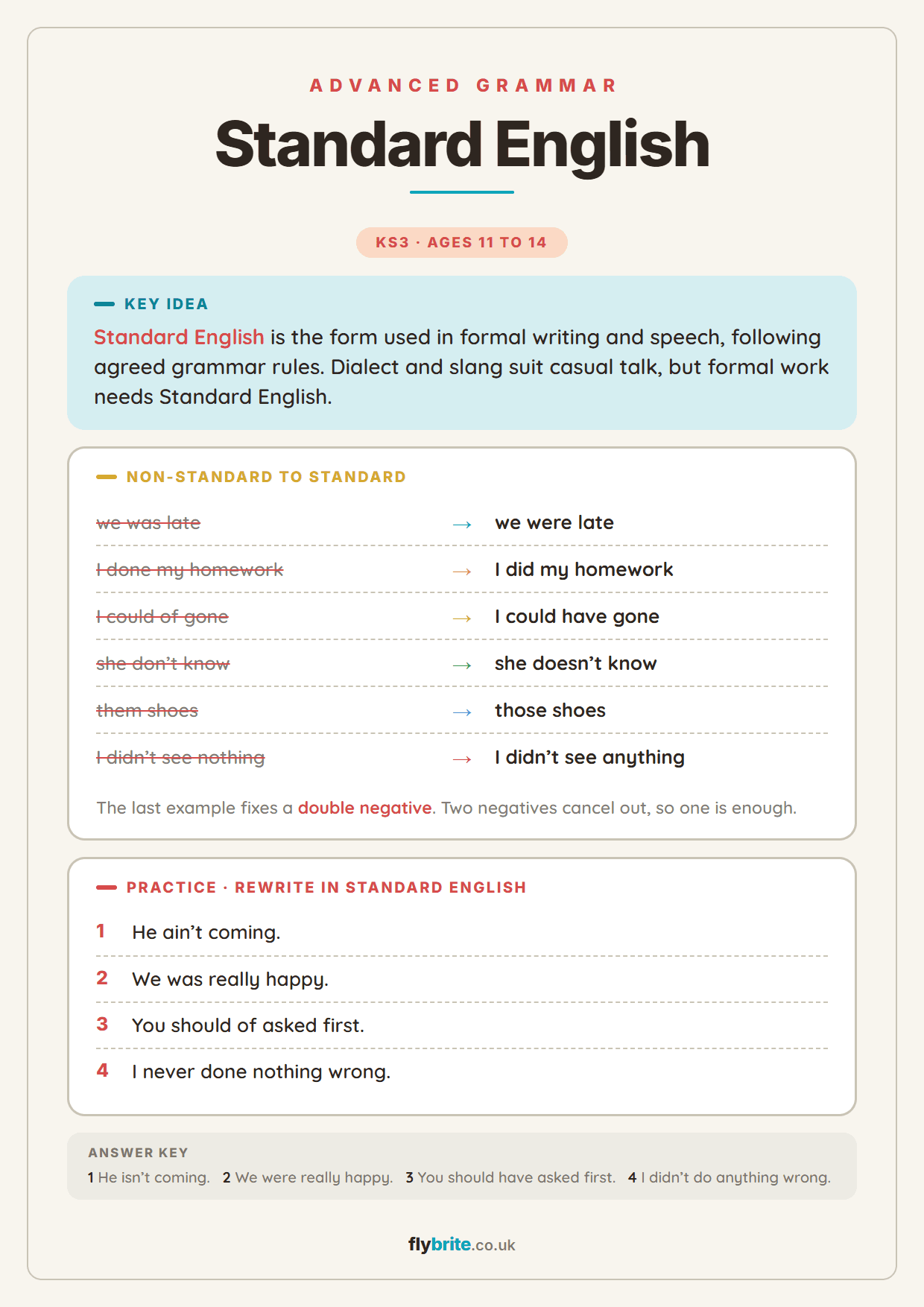
The formal form of English every exam expects, with a correction table for the most common slips including double negatives.
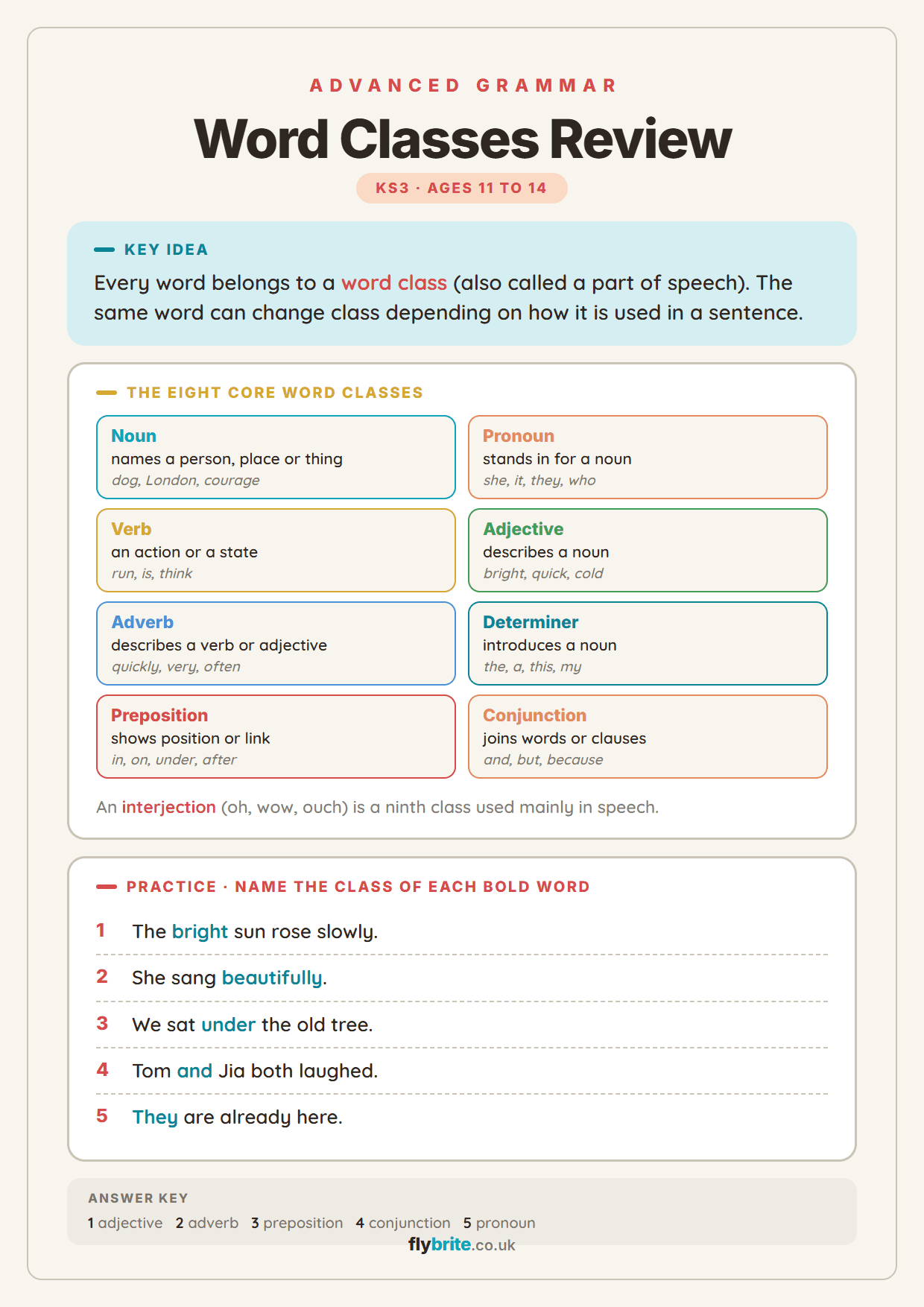
The eight core parts of speech in one reference grid with definitions and examples, then a sentence to label word by word.
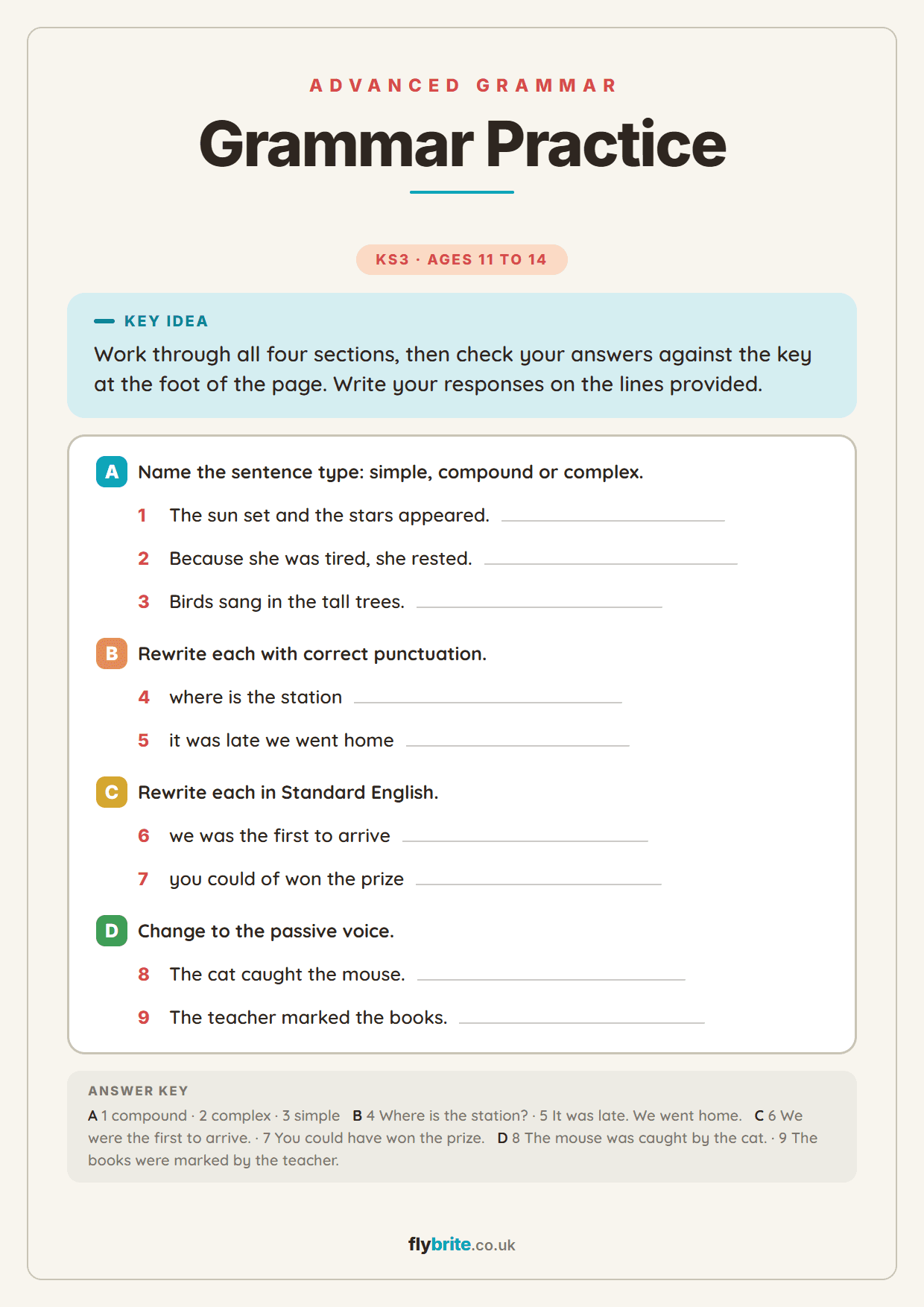 Type or write in
A mixed write-in worksheet across sentence types, punctuation, Standard English and the passive voice, with a full answer key to mark it.
KS3 English: rhetorical devices, tone, audience and structuring persuasive speeches and letters.
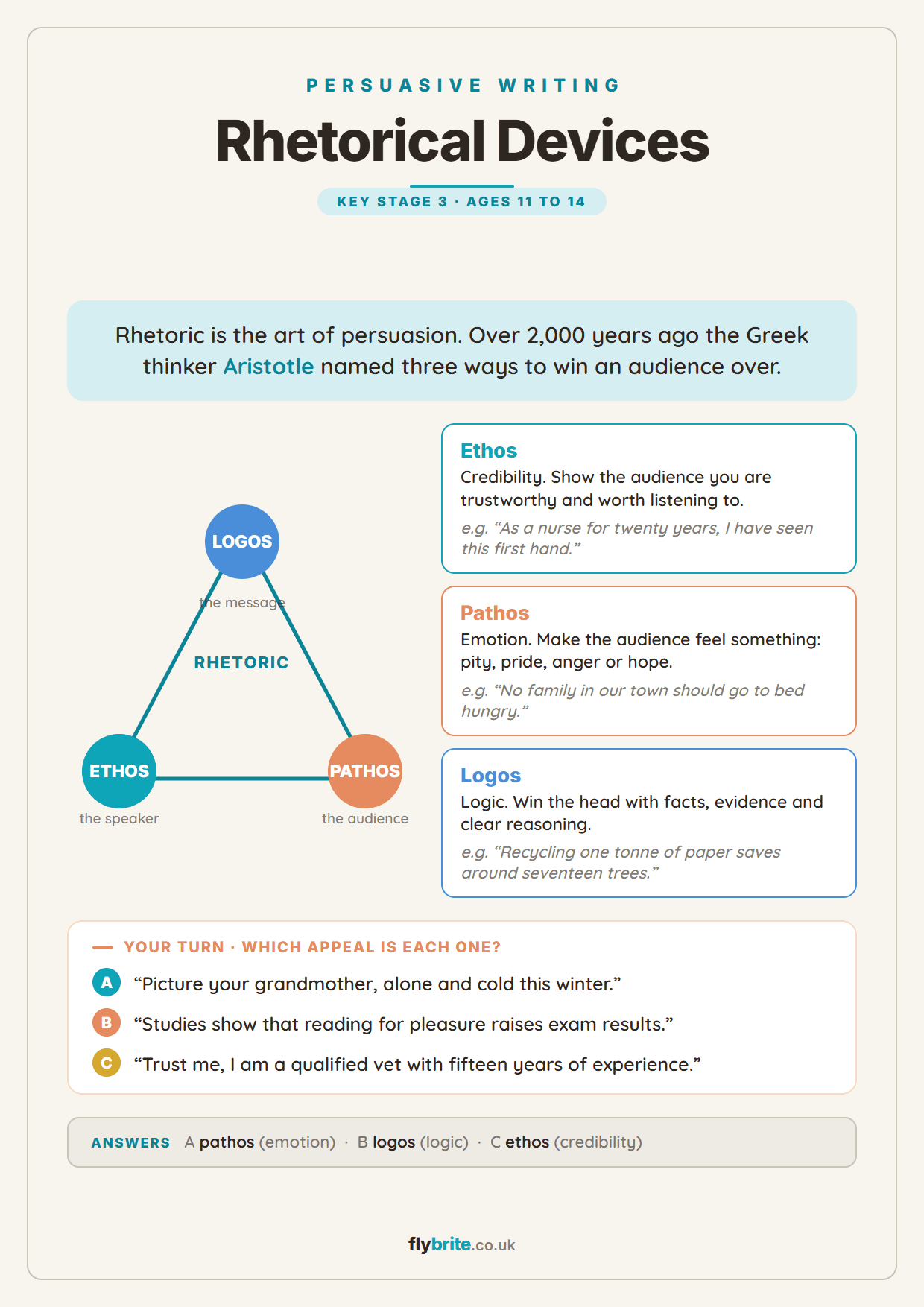
The three appeals at the heart of persuasion, ethos, pathos and logos, with Aristotle’s rhetorical triangle and quotes to sort.
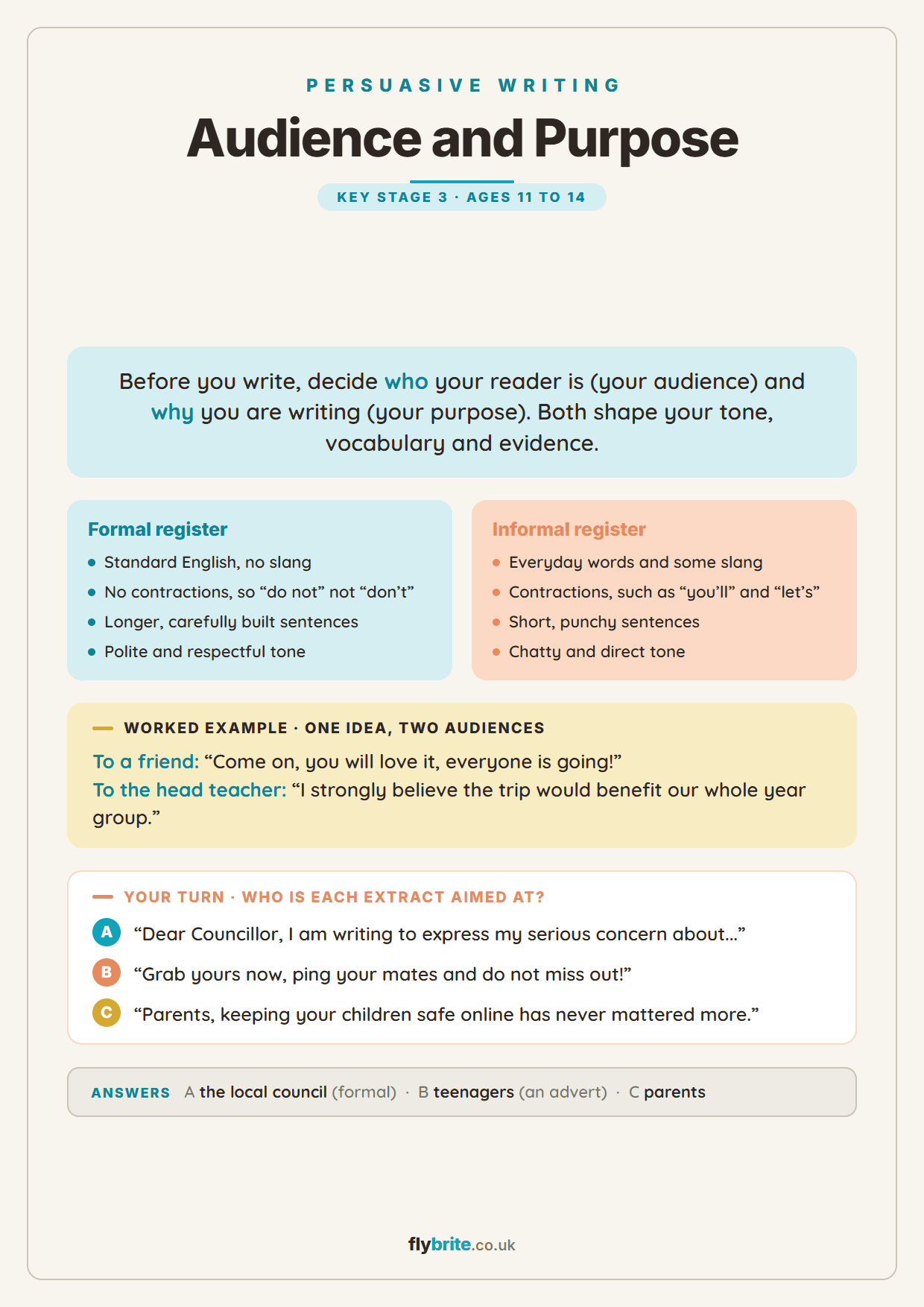
Who you write for and why, with formal and informal register side by side and extracts to match to their reader.
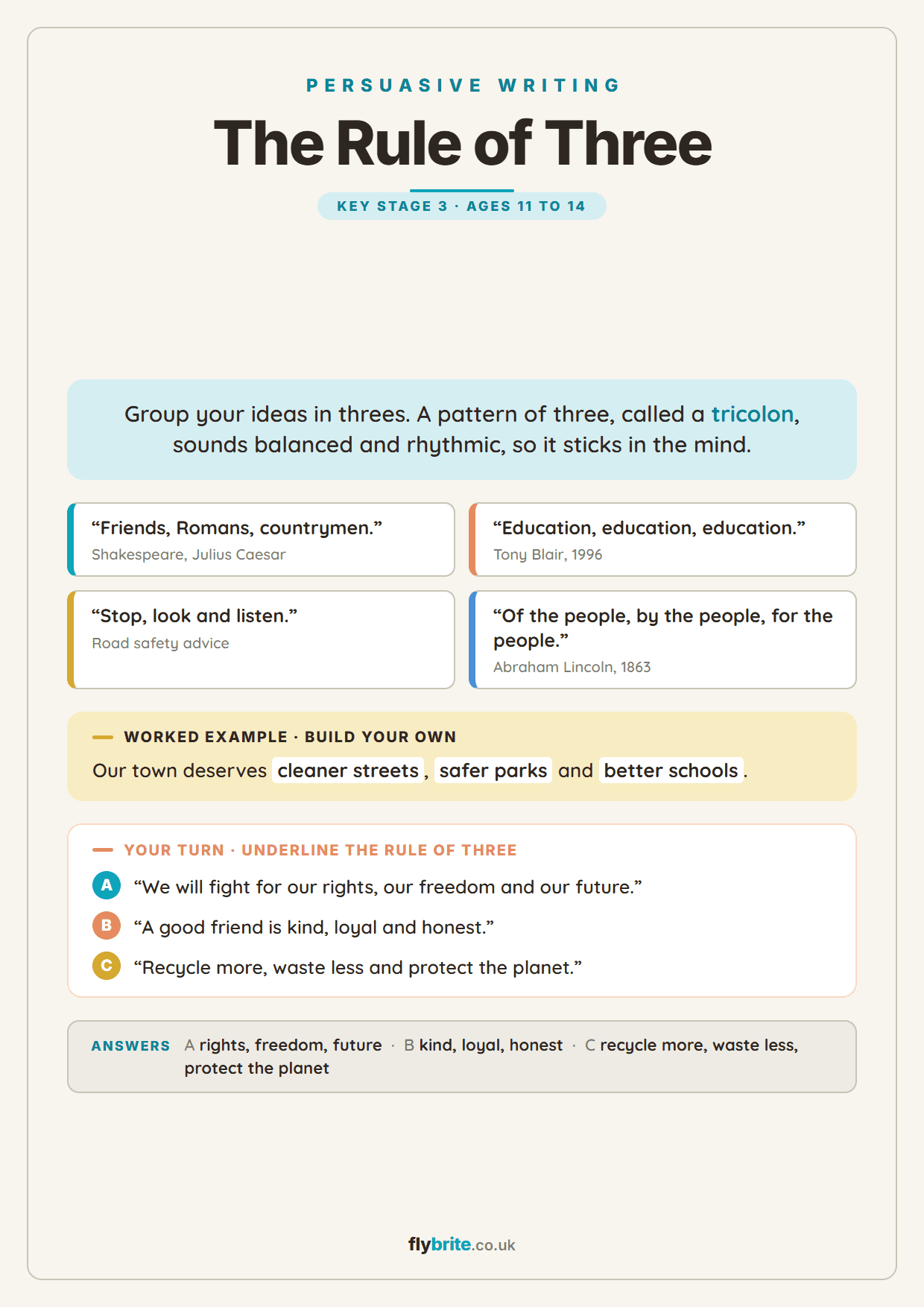
Why ideas grouped in threes stick, with famous tricolons from Shakespeare to Lincoln and sentences to unpick.
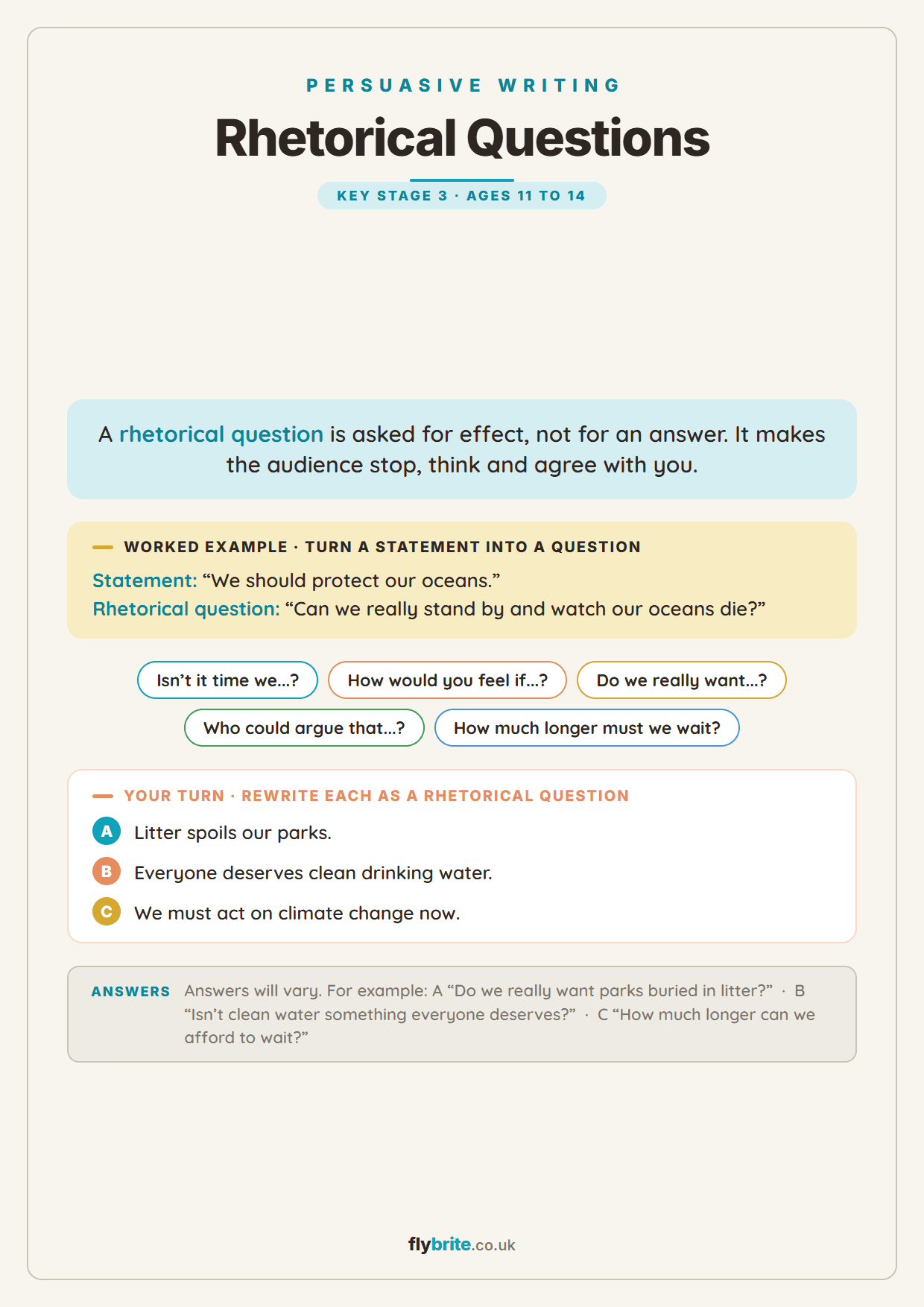
The question asked for effect, not for an answer, with sentence starters and statements to rework into questions.
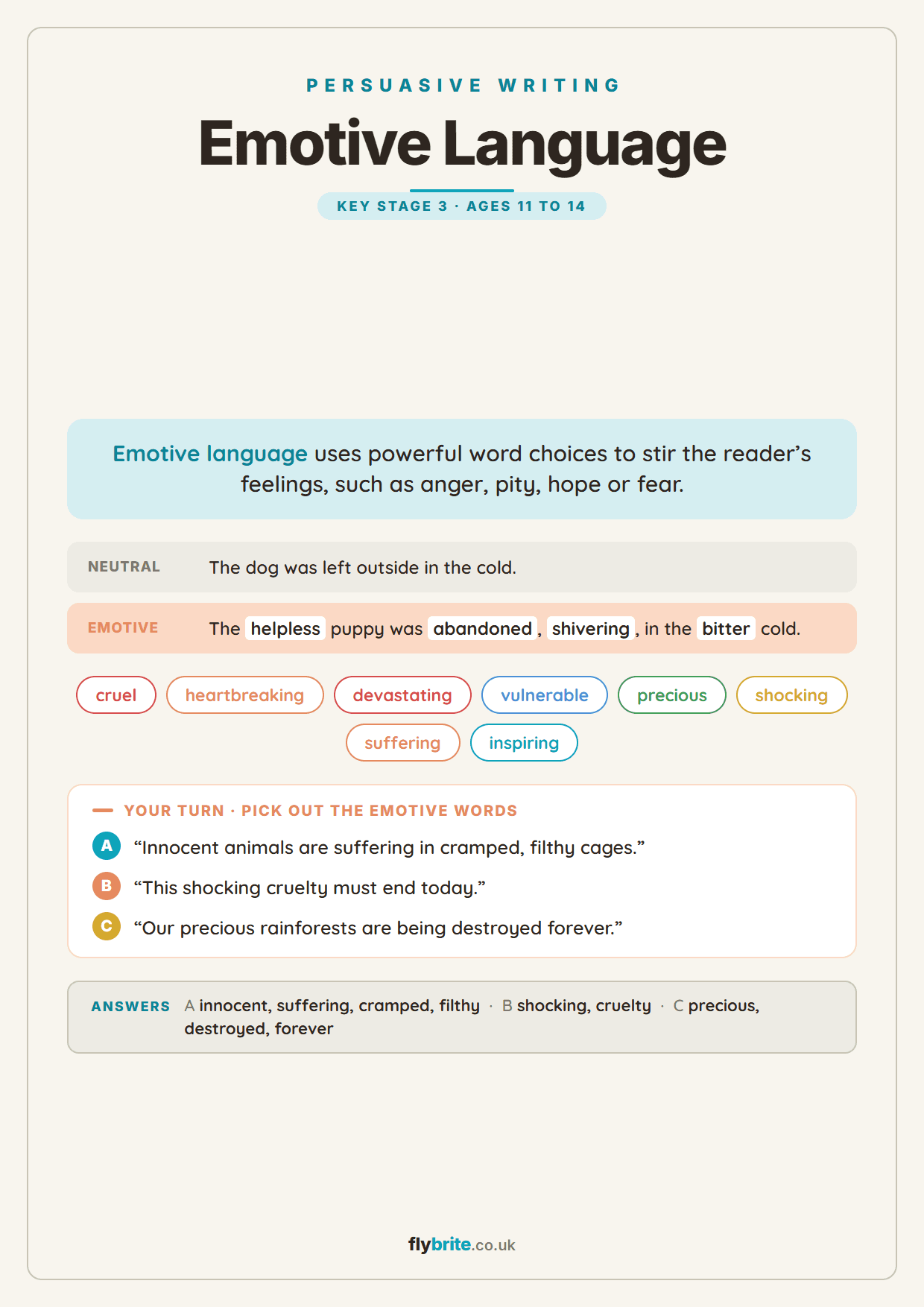
Word choices that stir feeling, neutral against emotive, a vocabulary bank and lines to mine for powerful words.
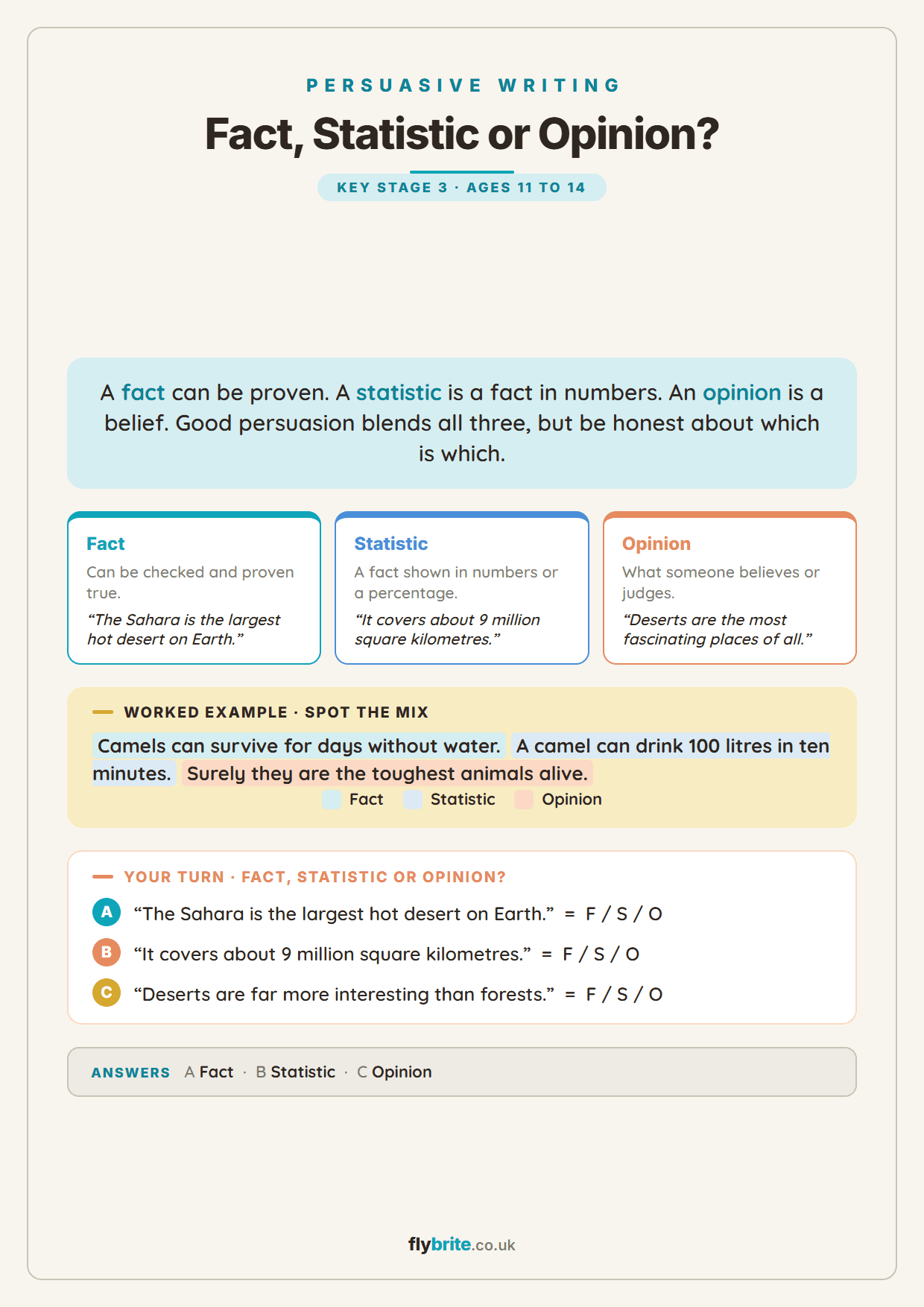
Telling proof from belief, with clear definitions, a colour-coded example and statements to classify.
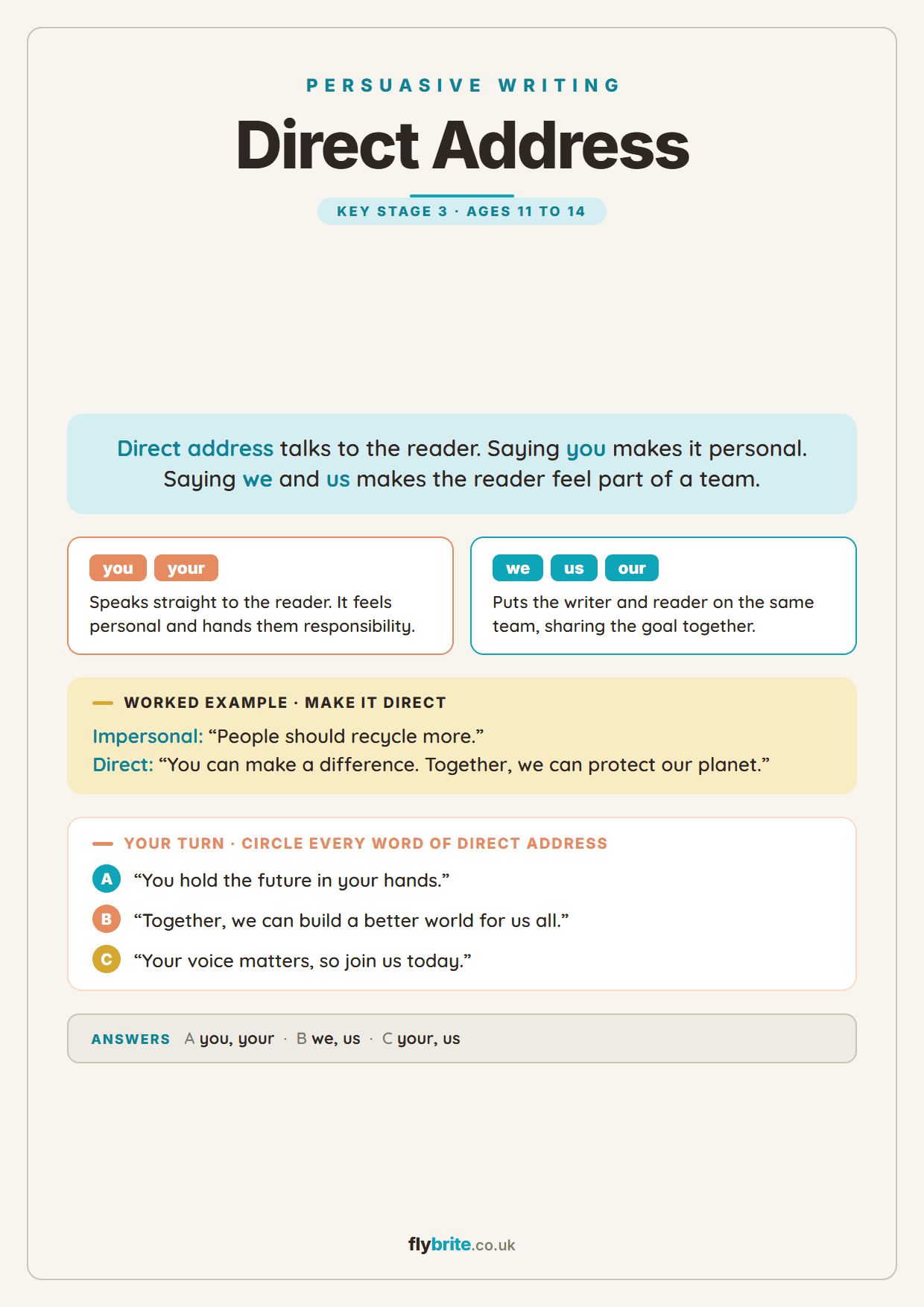
Speaking straight to the reader with you, we and us, with the pronouns explained and lines to hunt through.
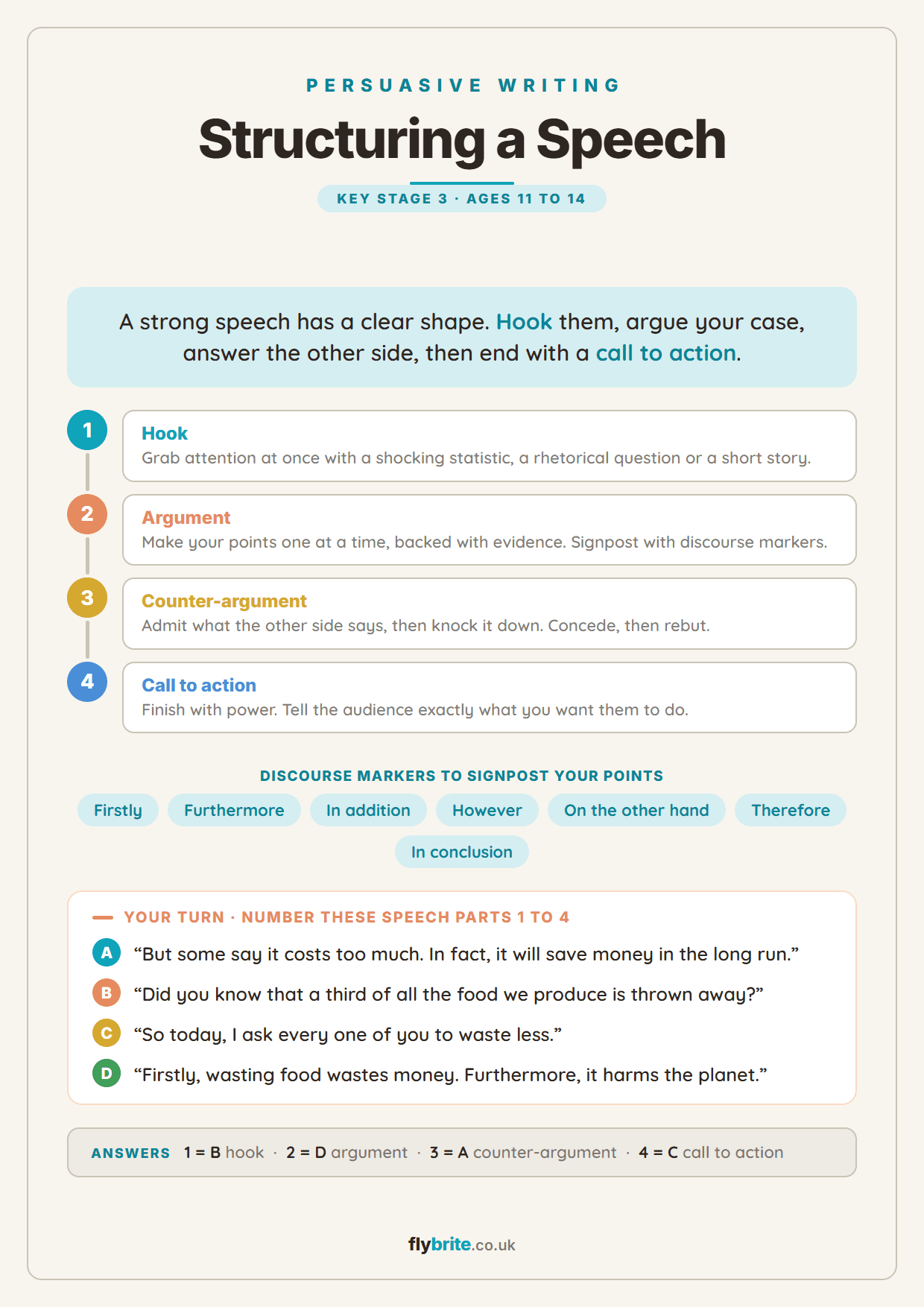
The shape of a winning speech, hook to call to action, with discourse markers and parts to put in order.
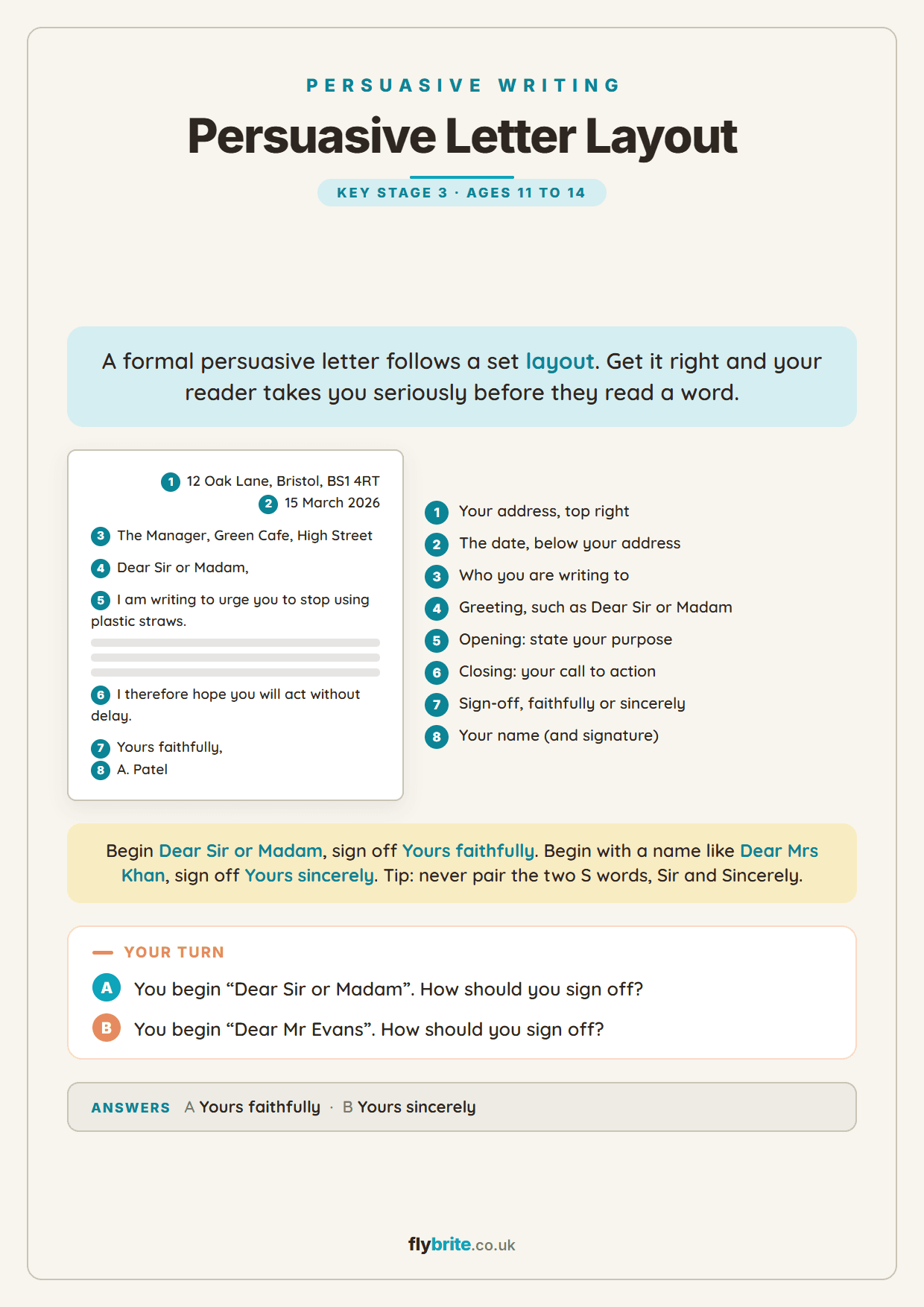
A labelled formal letter with all eight parts, plus the UK rule for Yours faithfully against Yours sincerely.
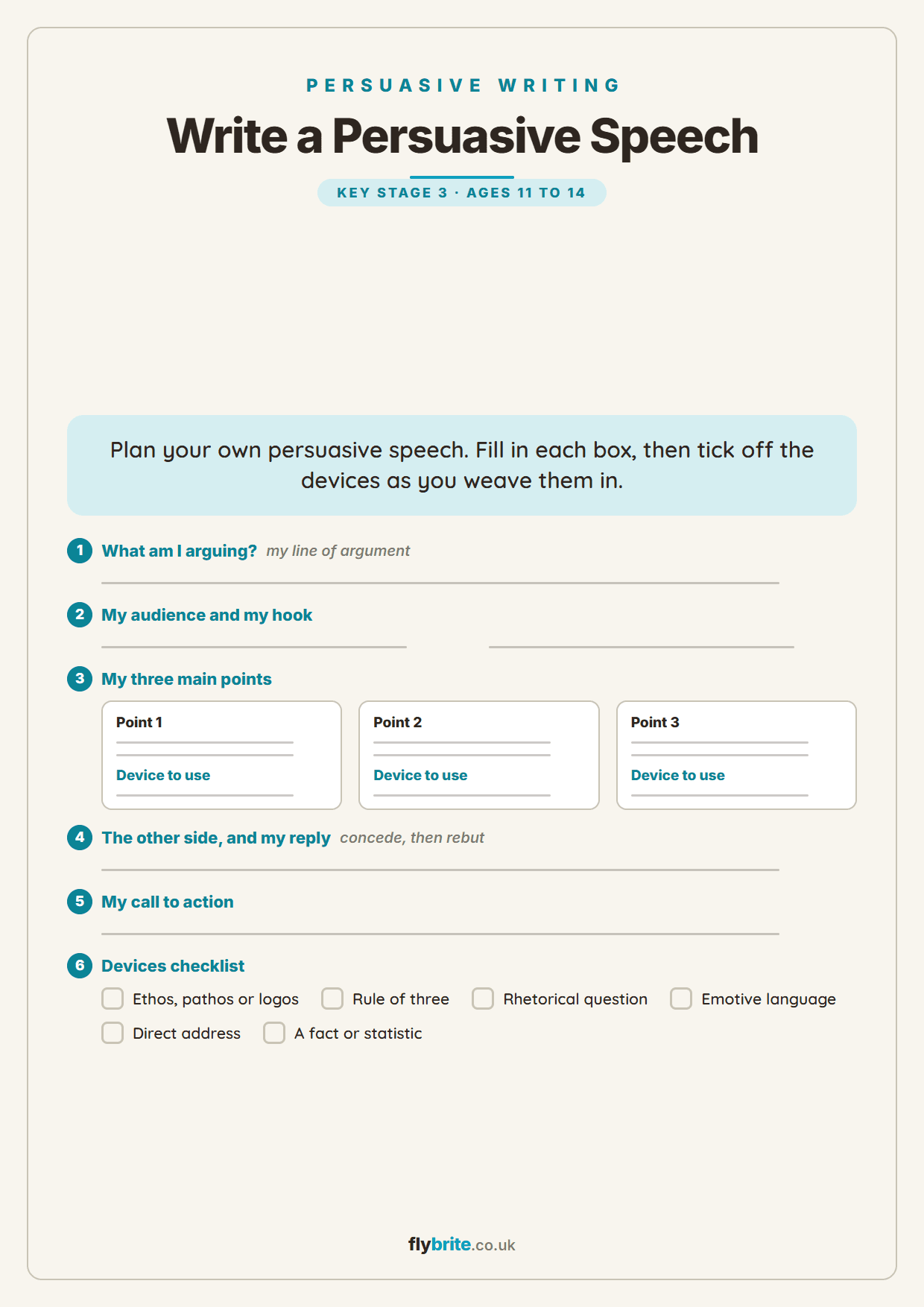 Type or write in
A ready-to-fill planner that walks you from line of argument to call to action, with a devices checklist to tick off.
KS3 history: causes, key events, the home front and the legacy of the First and Second World Wars.
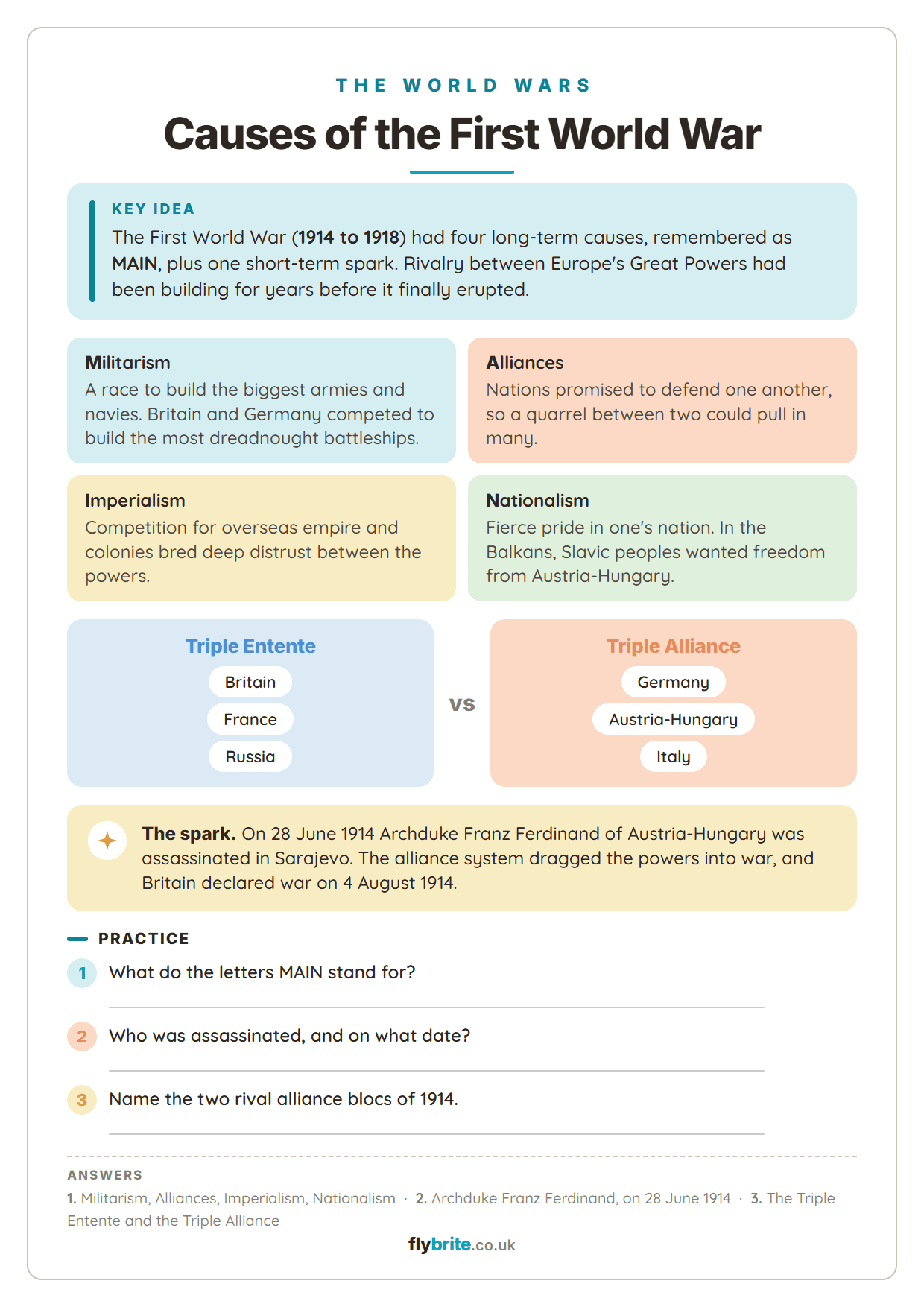 Type or write in
The four MAIN causes of the First World War and the spark that lit it, with a rival alliances diagram and practice questions.
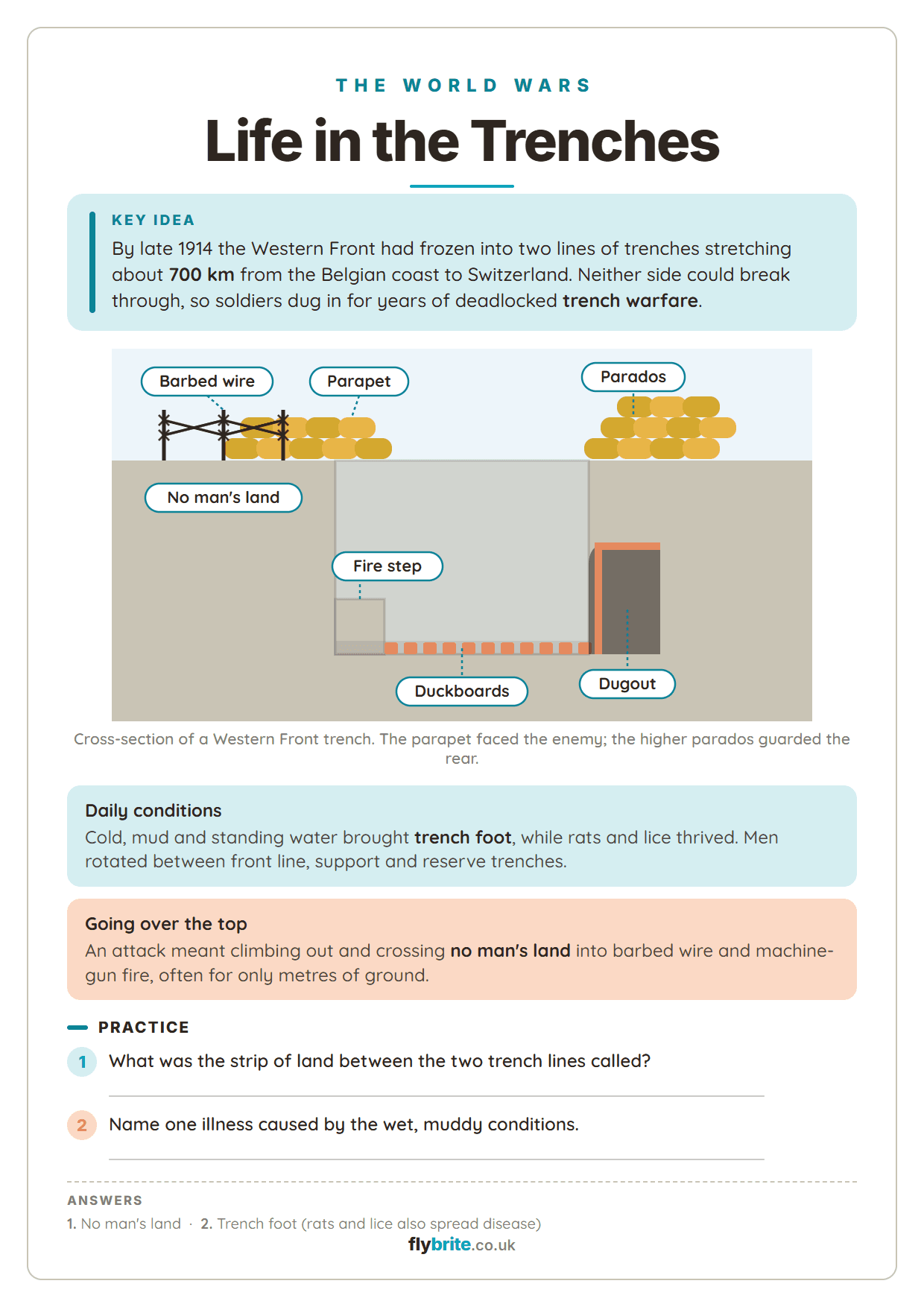 Type or write in
A clearly labelled cross-section of a Western Front trench, plus what daily life was really like and questions to test recall.
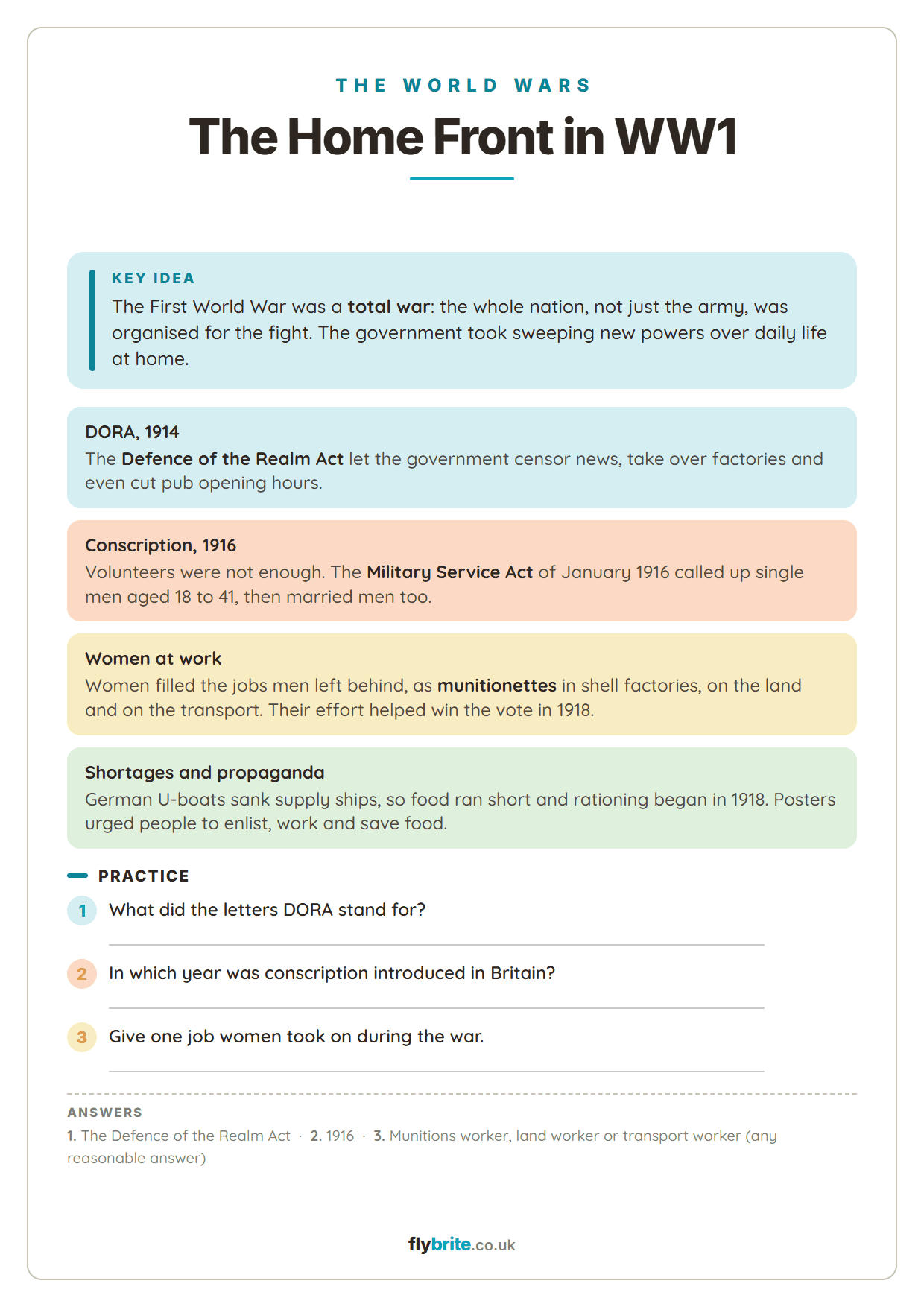 Type or write in
How total war reshaped Britain at home, from DORA and conscription to the women whose war work helped win the vote.
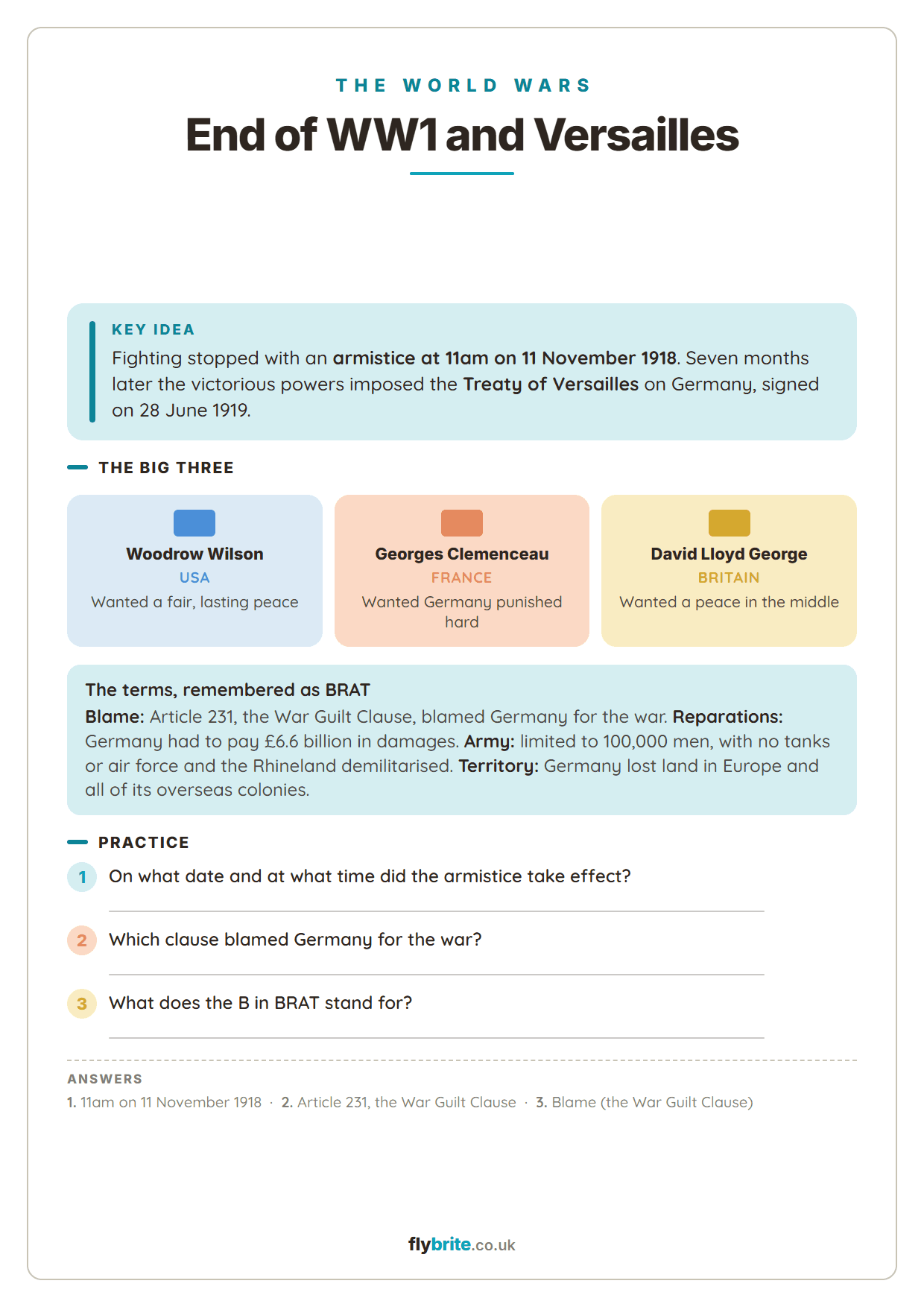 Type or write in
The armistice, the Big Three and the harsh terms of the Treaty of Versailles, broken down with the BRAT memory aid and answers.
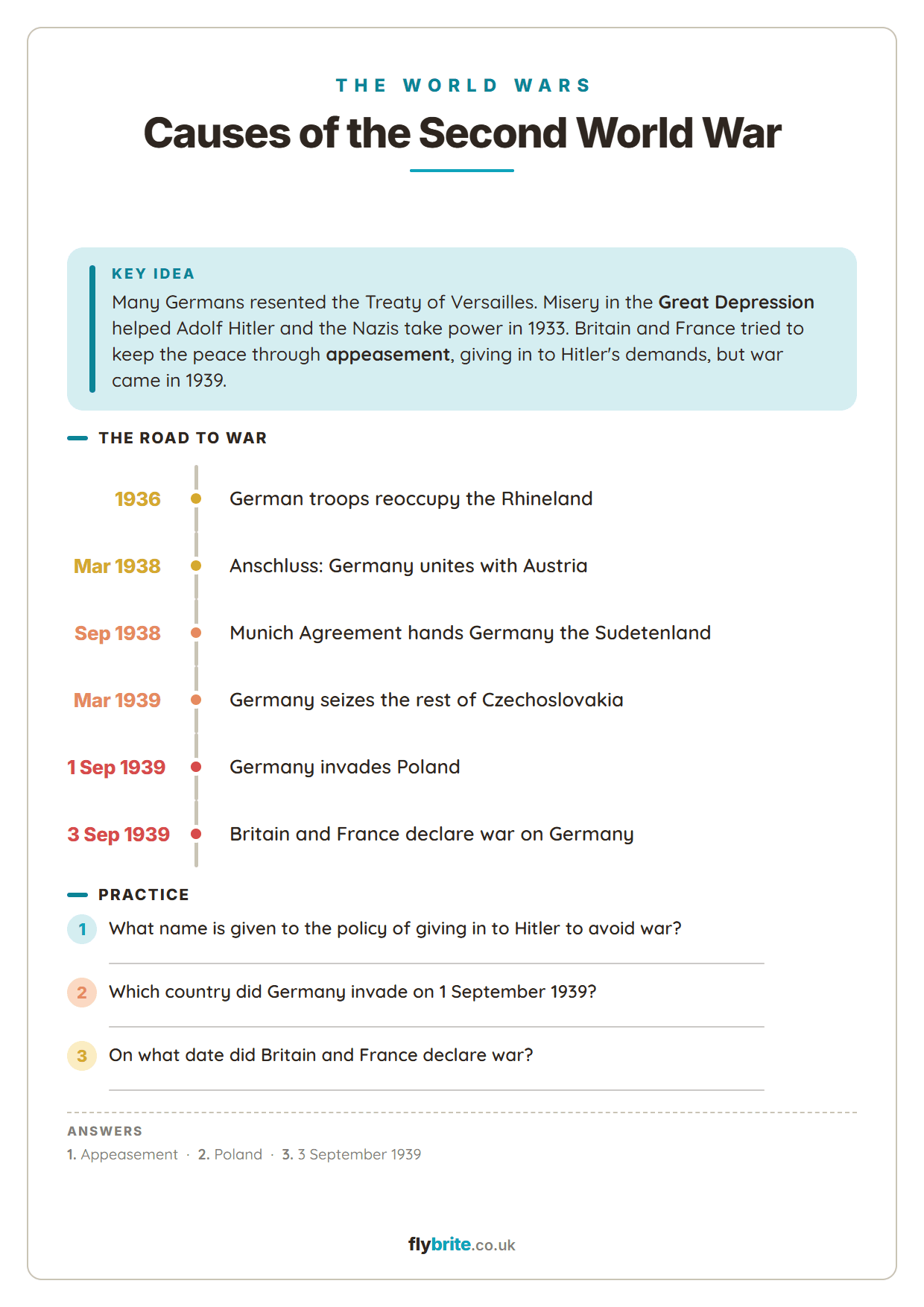 Type or write in
From resentment at Versailles to appeasement and the invasion of Poland, the road to 1939 on a clear timeline of aggression.
 Type or write in
The bombing of Britain's cities and the great evacuation of children, with a labelled Anderson shelter diagram and practice.
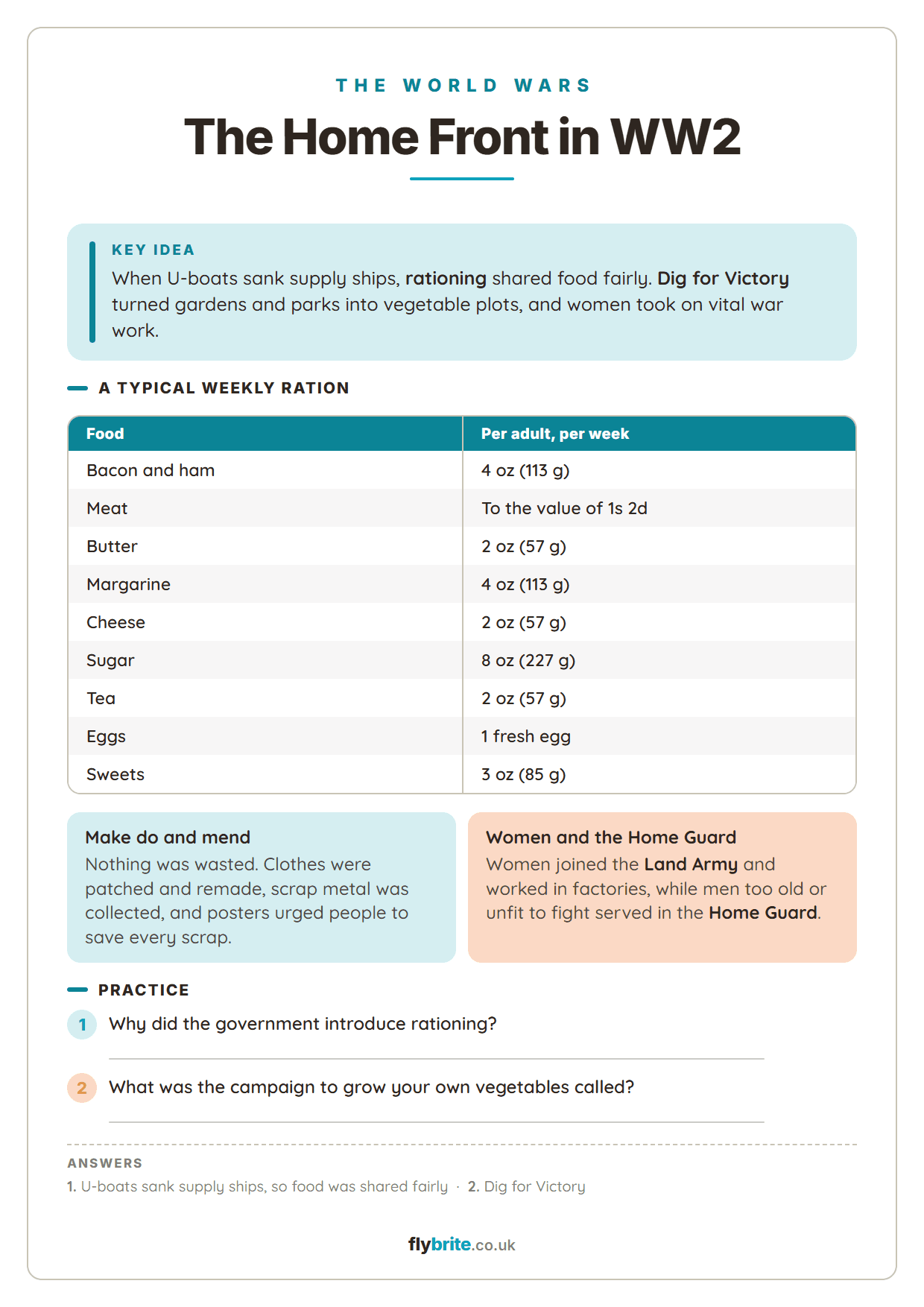 Type or write in
Rationing, Dig for Victory and the war work of women, including a real weekly ration table for one adult.
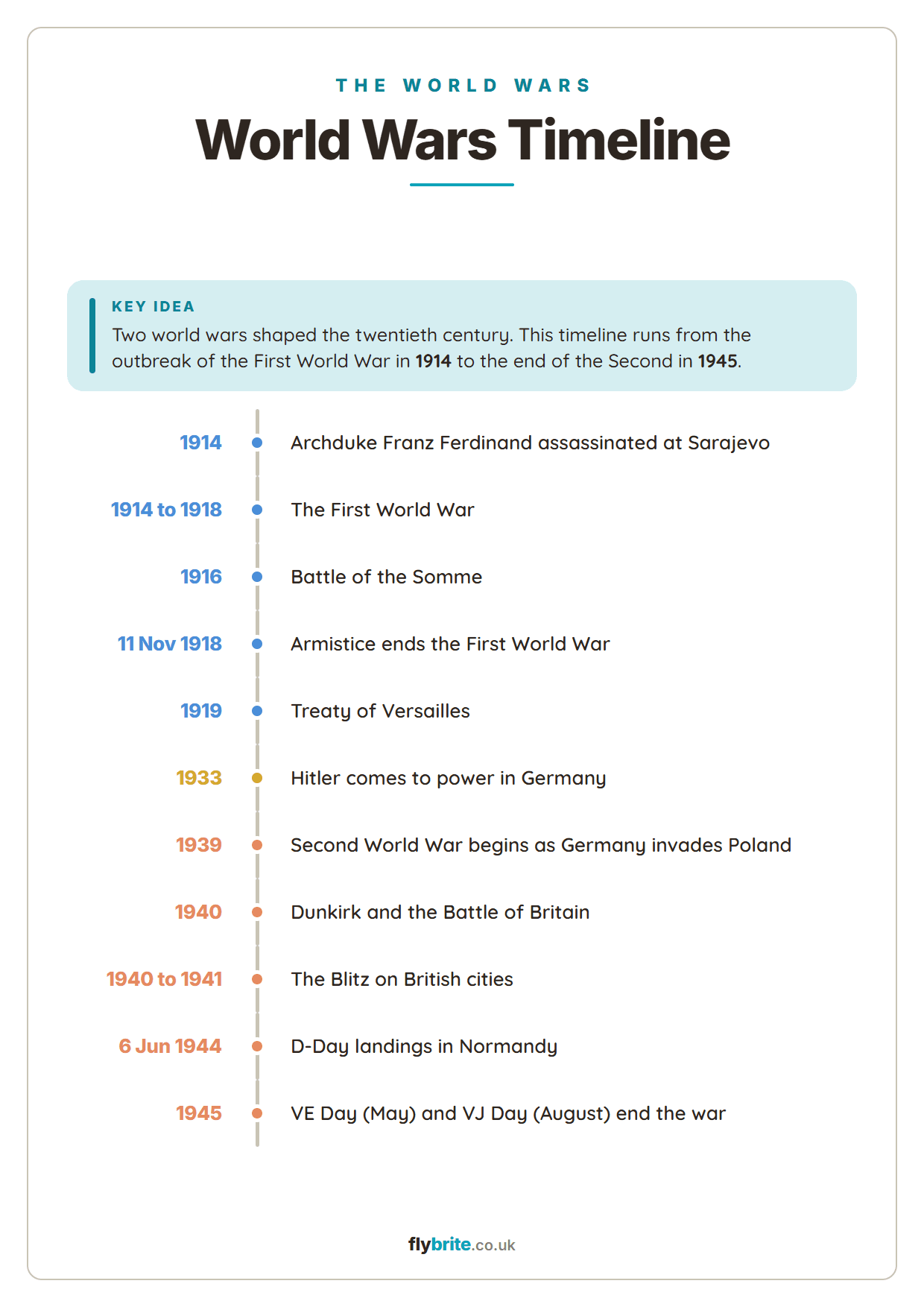
Three decades on one timeline, from the shot at Sarajevo in 1914 to VE and VJ Day in 1945.
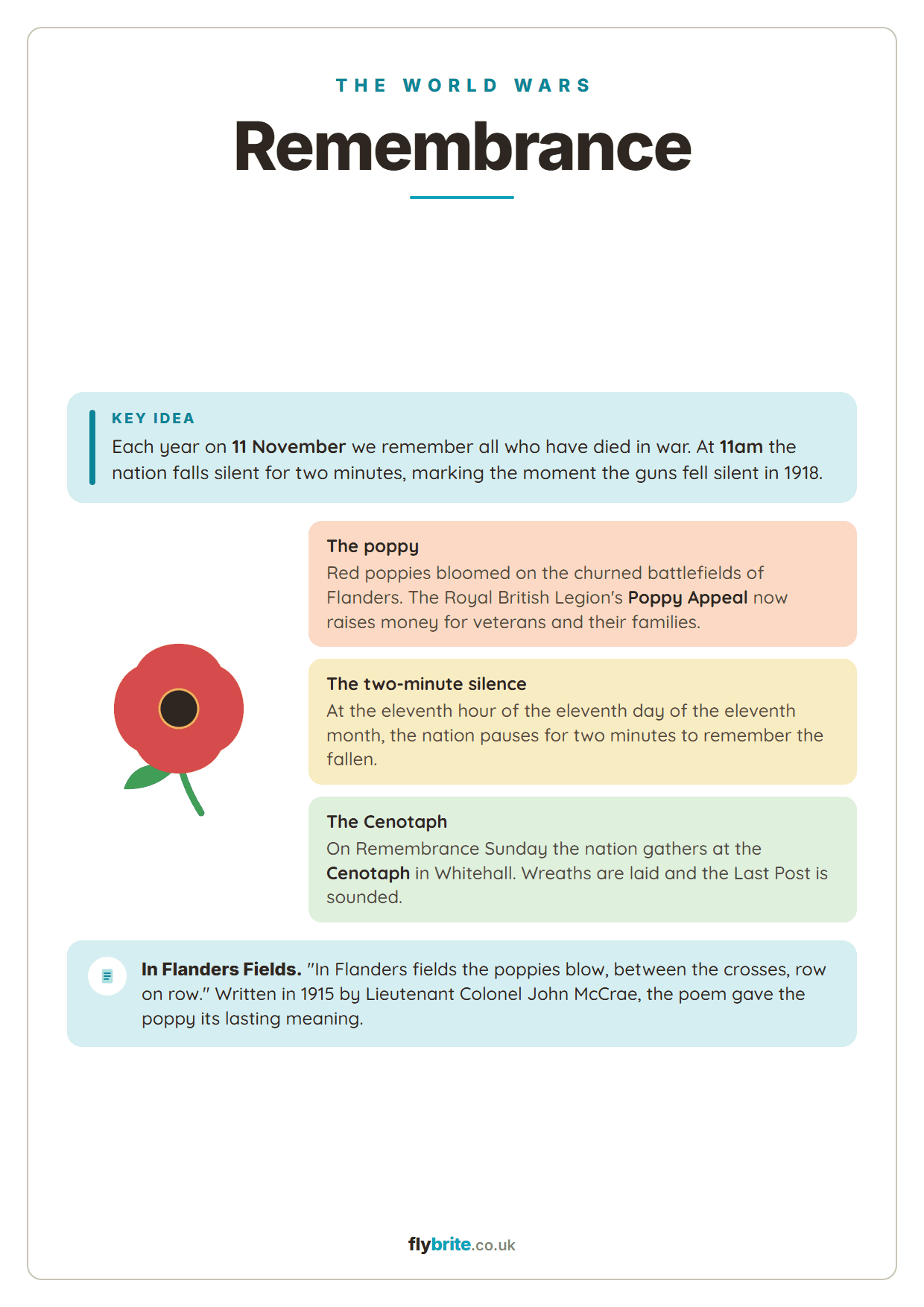
Why we wear the poppy and fall silent at 11am on 11 November, with the story of In Flanders Fields.
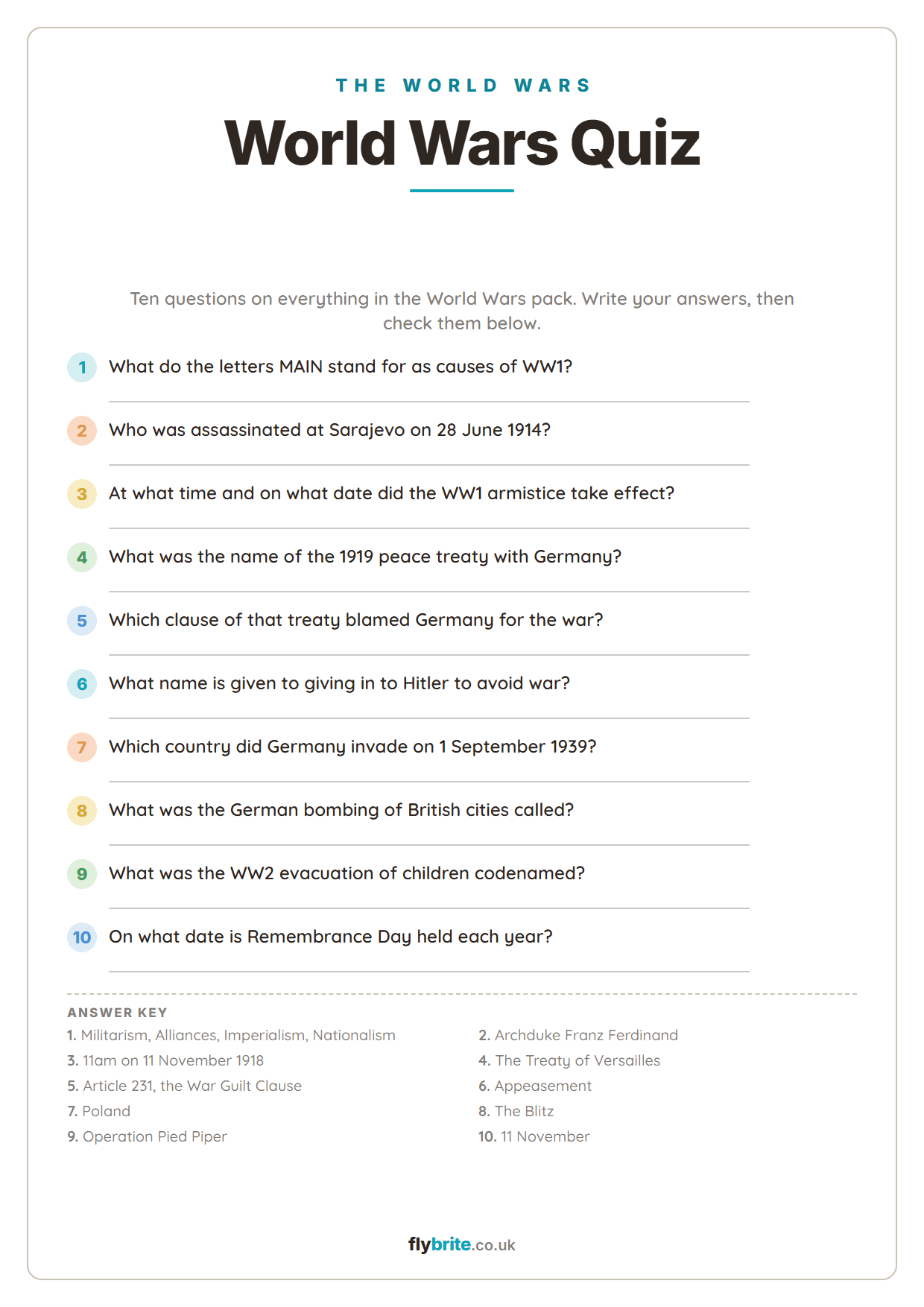 Type or write in
Ten questions covering the whole World Wars pack, with write-in space and a full answer key.
KS3 history: the Republic and Empire, daily life, the army, Roman Britain and why Rome fell.
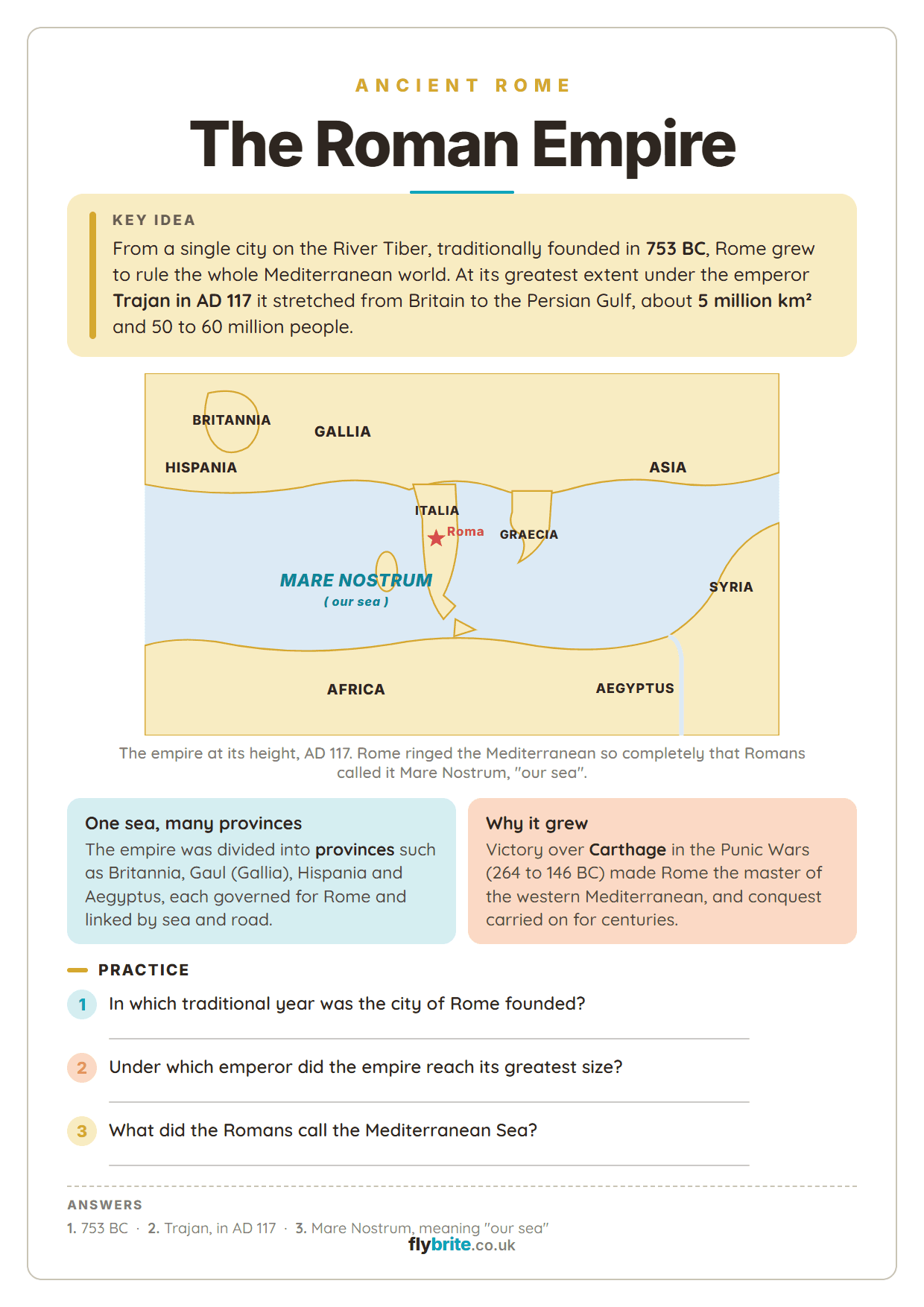 Type or write in
A clear map of the empire at its height in AD 117, ringing the Mediterranean, with how and why Rome grew and practice questions.
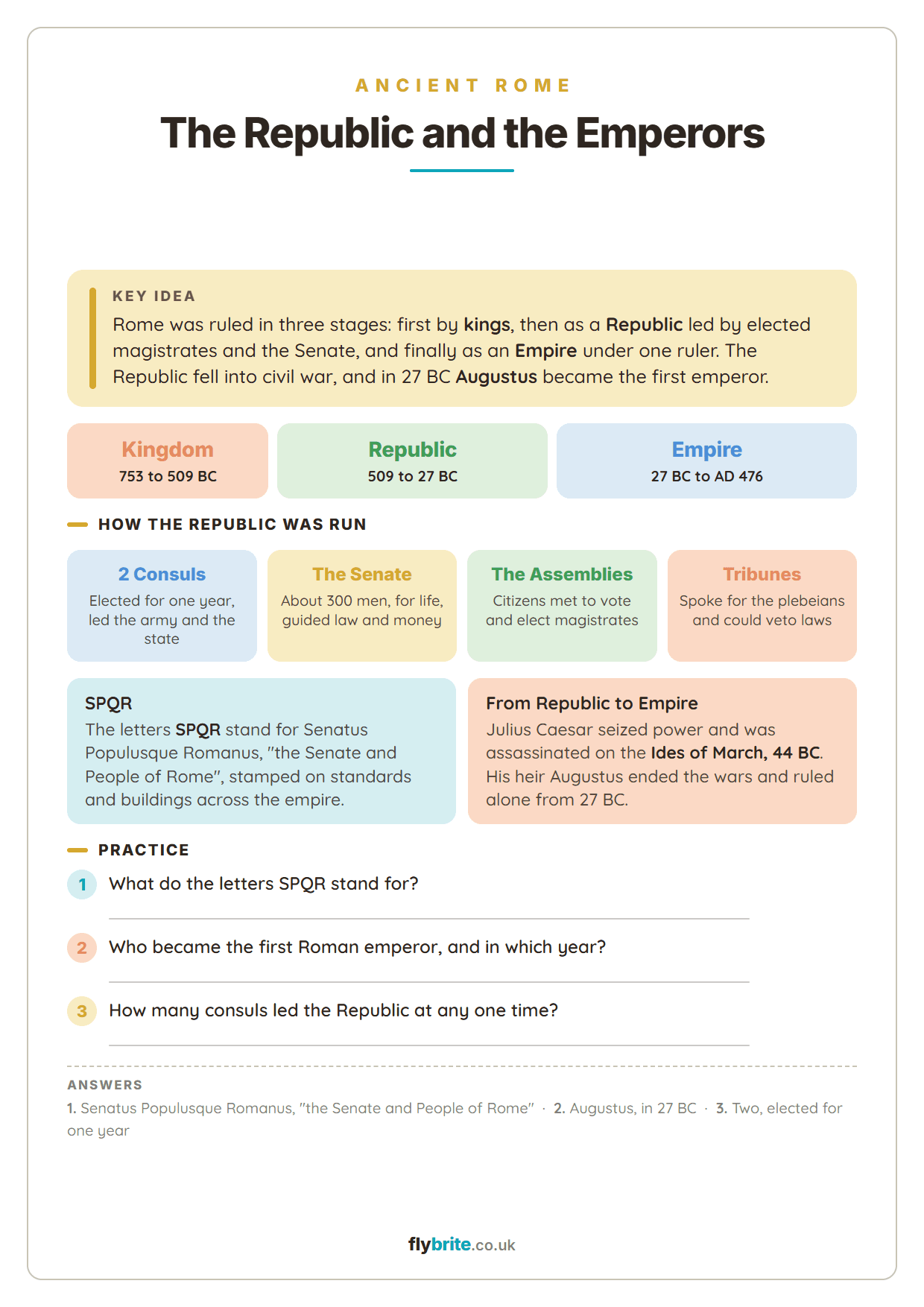 Type or write in
Kingdom, Republic and Empire on one band, how the Republic was governed, SPQR and the rise of Augustus, with answers.
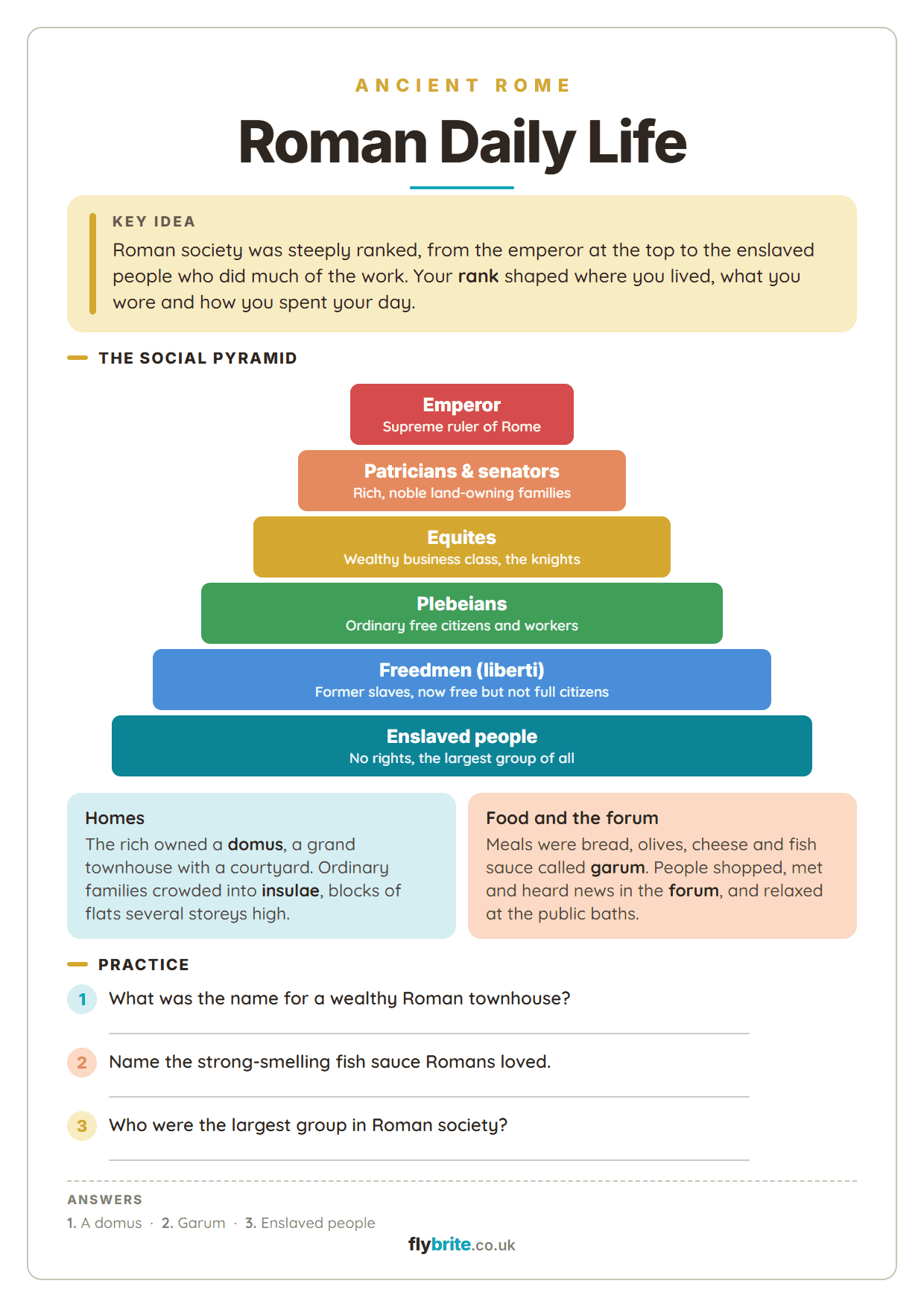 Type or write in
The steep social pyramid from emperor to enslaved people, plus homes, food and the forum, with practice questions.
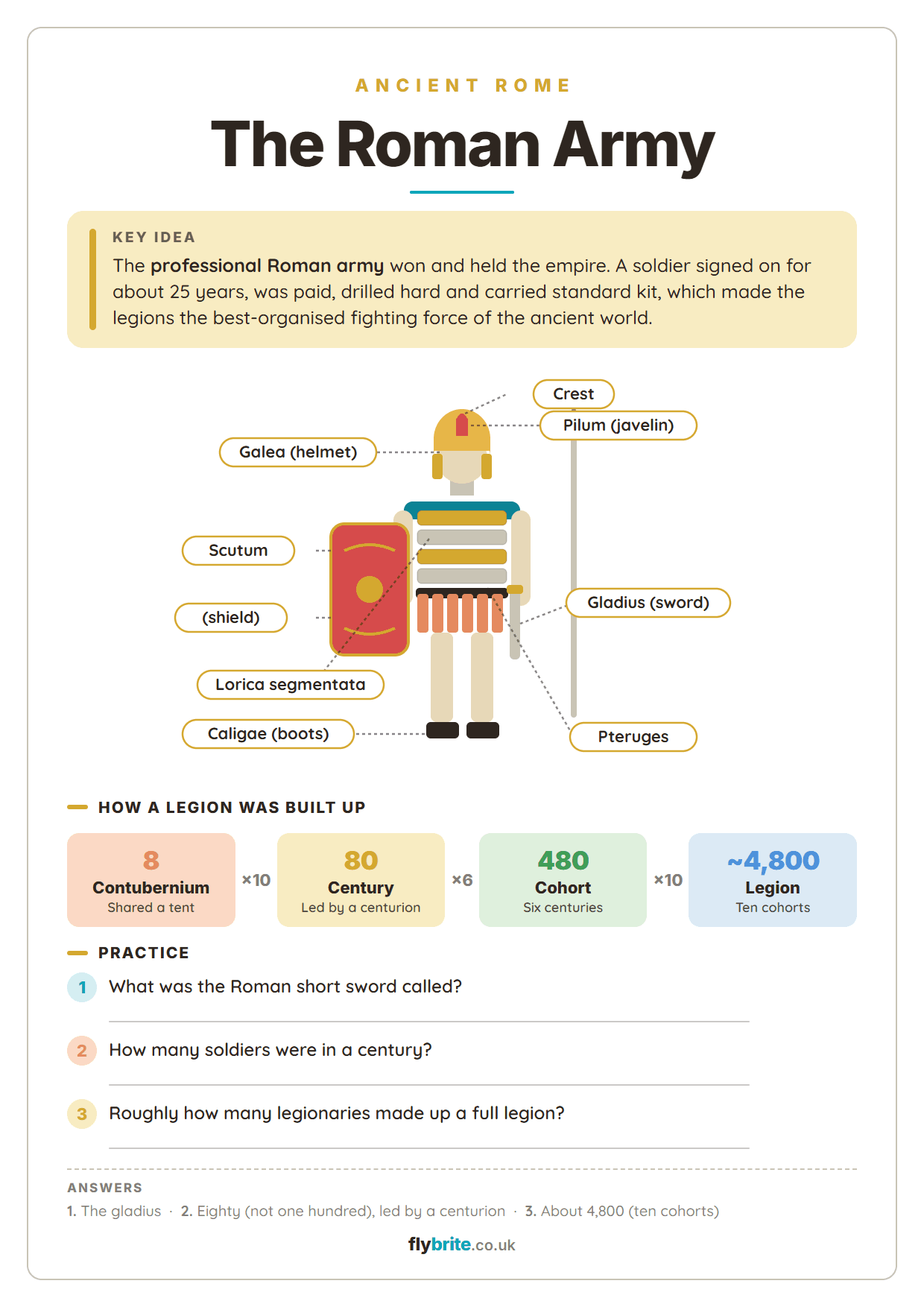 Type or write in
A fully labelled legionary and his kit, and how a legion was built from the contubernium up, with answers.
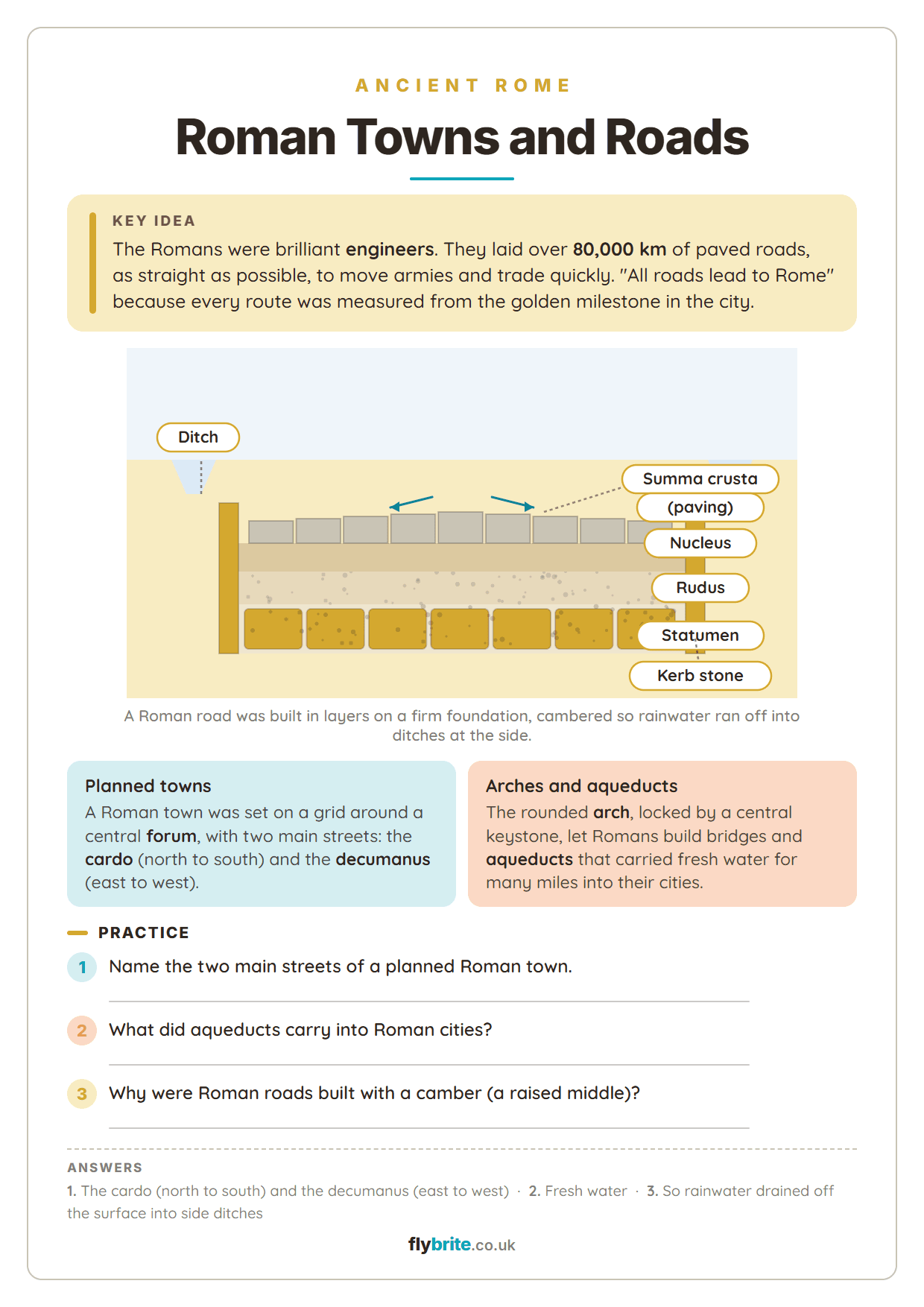 Type or write in
A labelled cross-section of a Roman road, plus the town grid, arches and aqueducts, with practice questions.
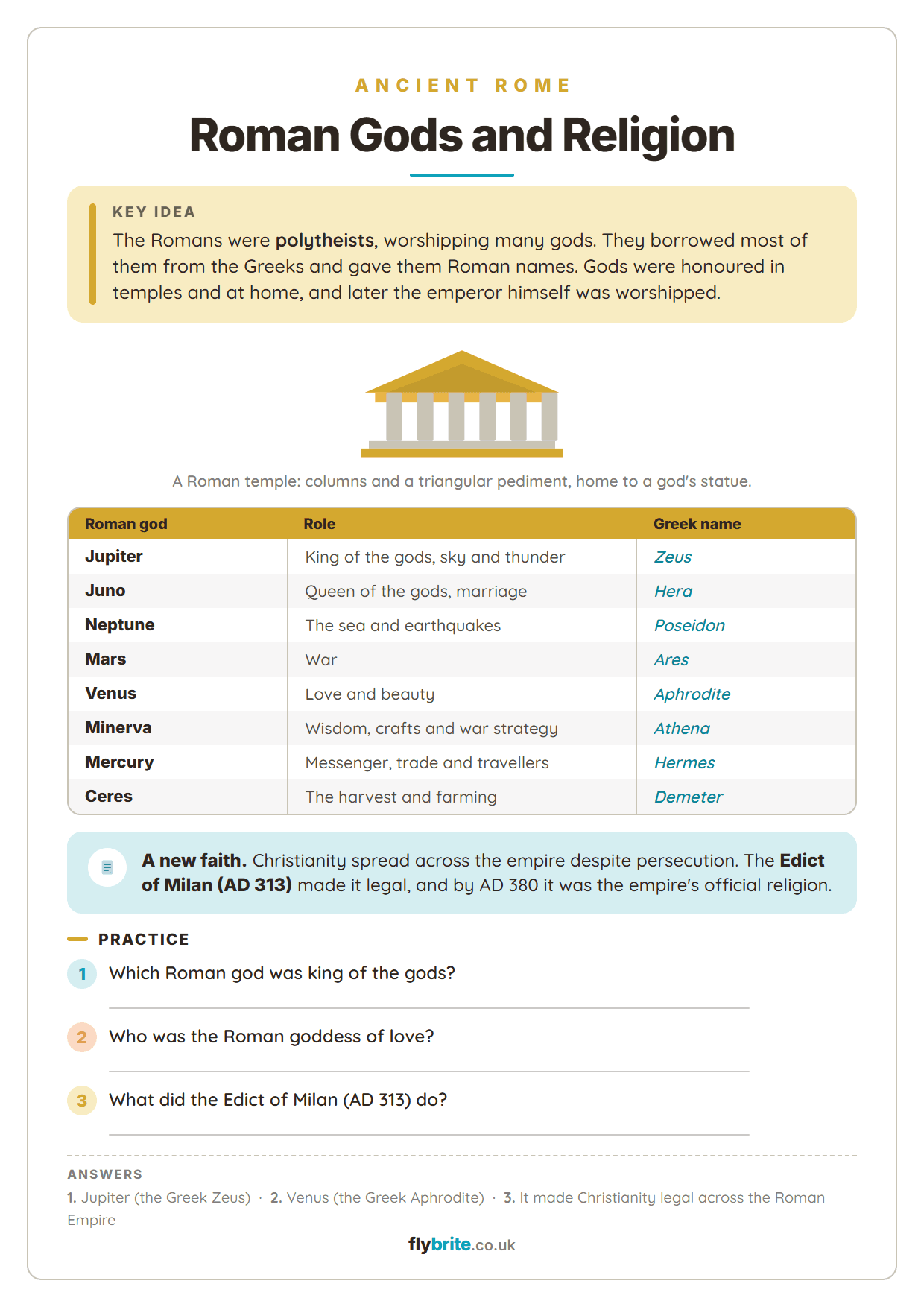 Type or write in
The chief Roman gods and their Greek names in a clear table, temples and the rise of Christianity, with answers.
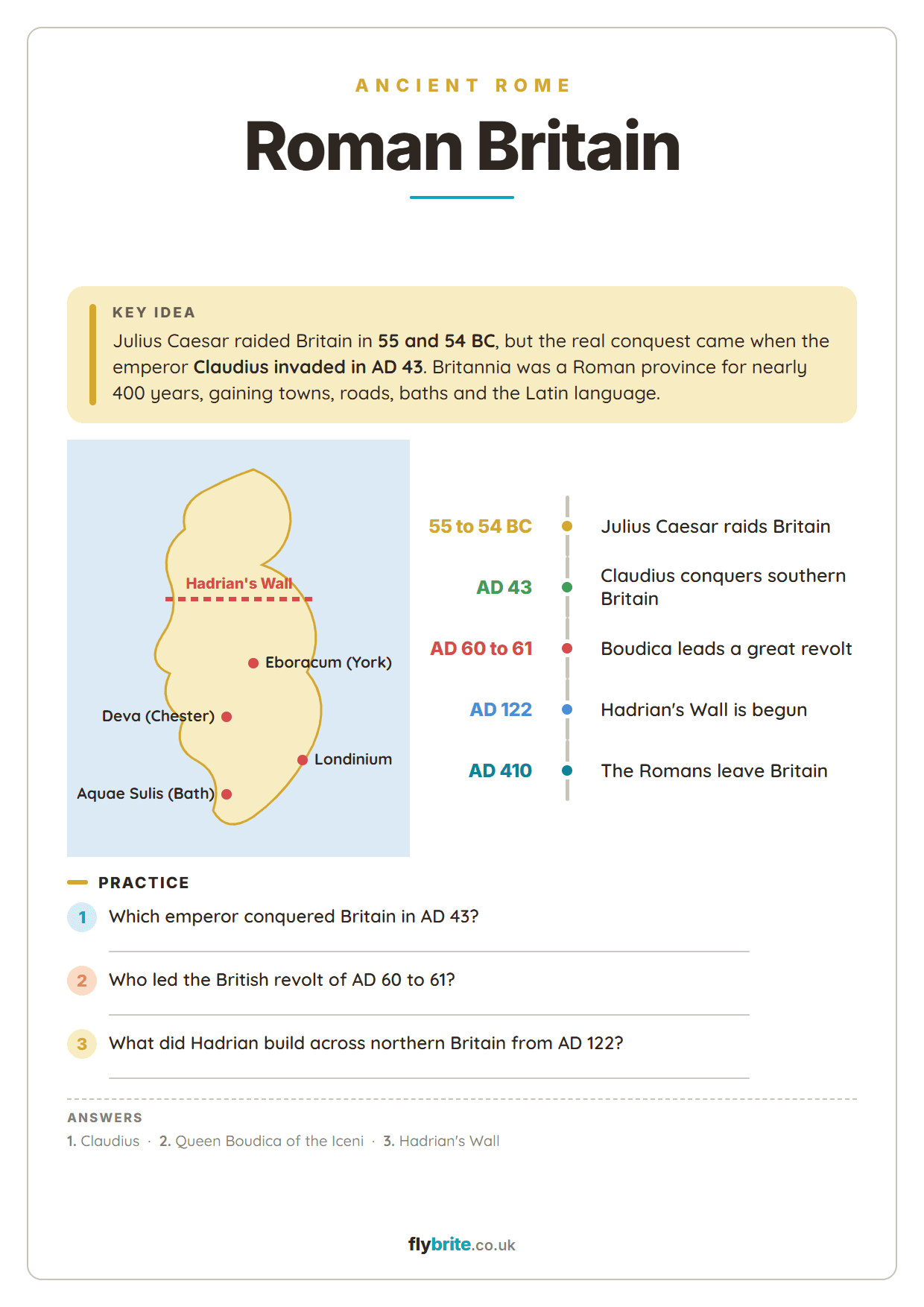 Type or write in
A map of Britannia with Hadrian's Wall and its Roman towns, plus a timeline from Caesar to AD 410, with answers.
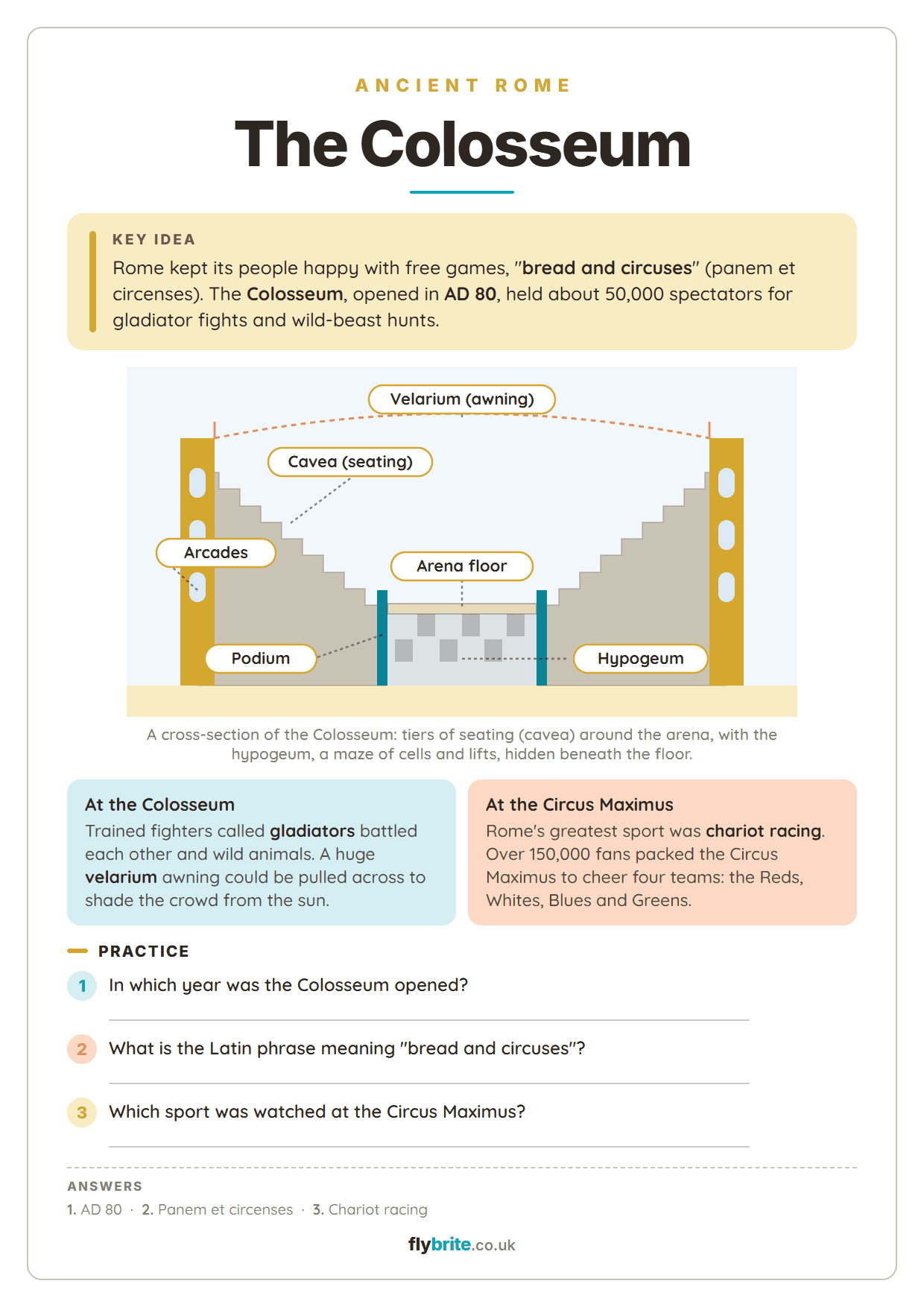 Type or write in
A cutaway of the Colosseum with its arena and hypogeum, plus gladiators and chariot racing, with practice questions.
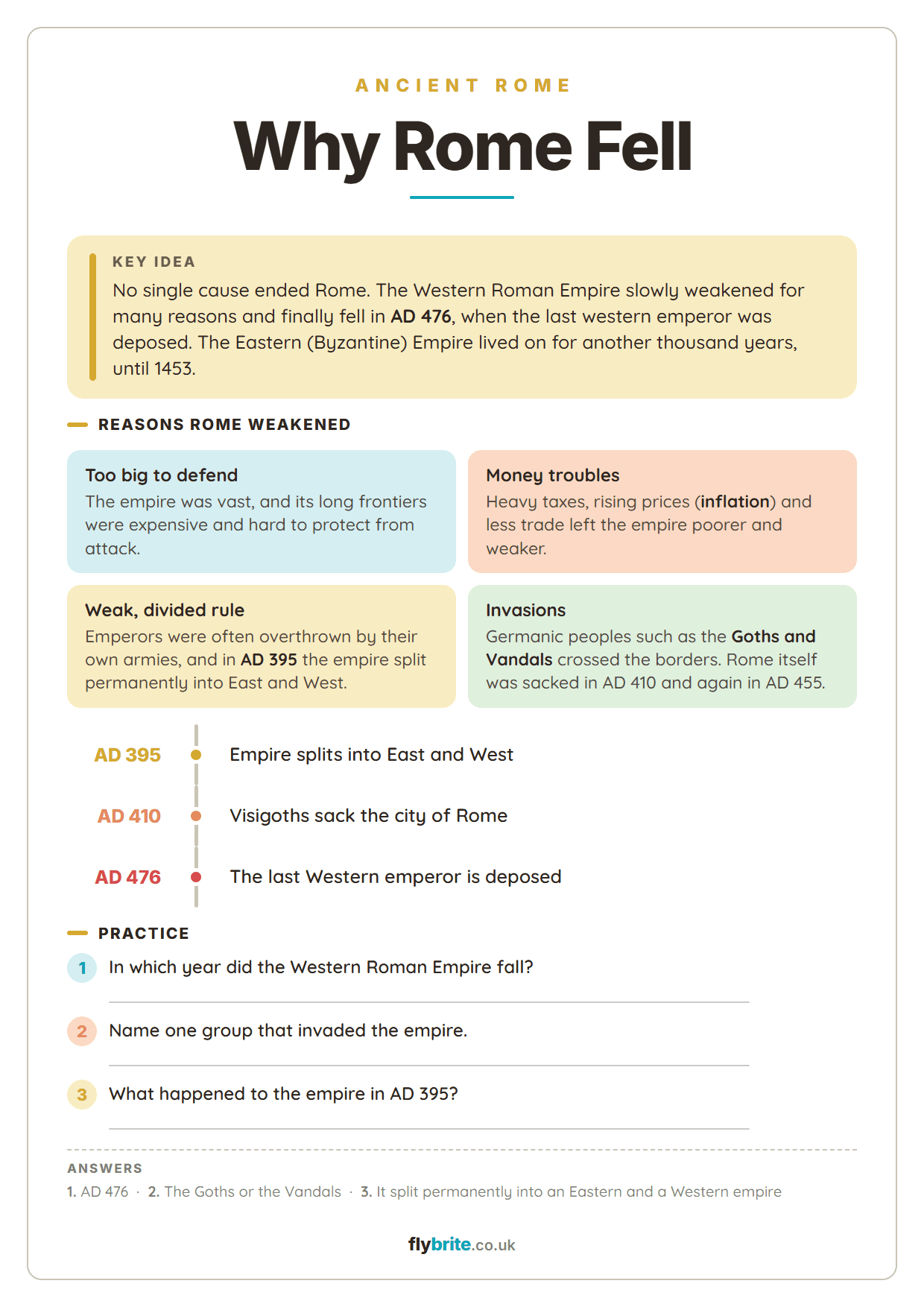 Type or write in
The many reasons the Western Roman Empire weakened, a decline timeline to AD 476, and how the East lived on, with answers.
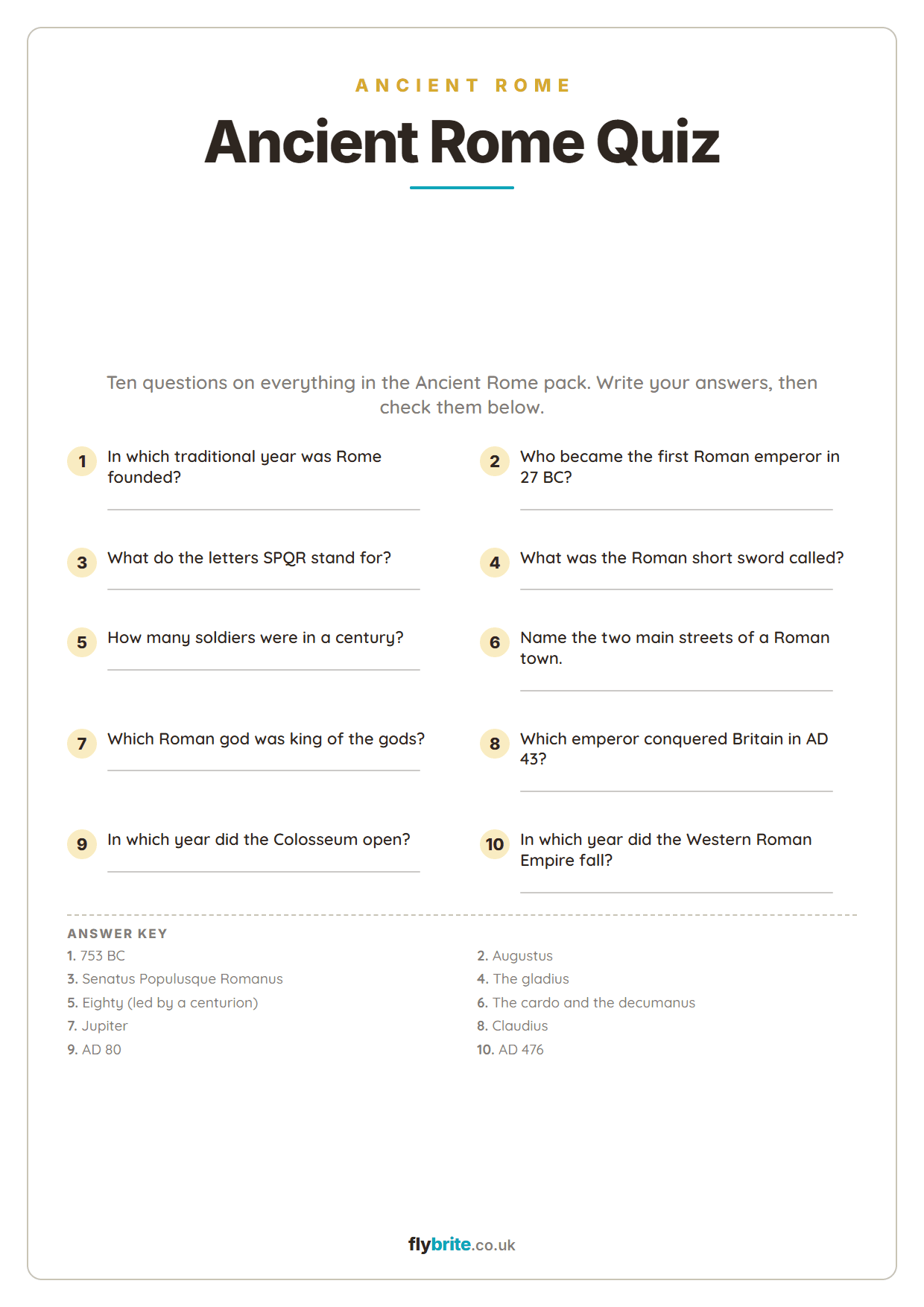 Type or write in
Ten questions covering the whole Ancient Rome pack, with write-in space and a full answer key.
KS3 history: the Nile, pharaohs, gods, pyramids, mummification and reading hieroglyphs.
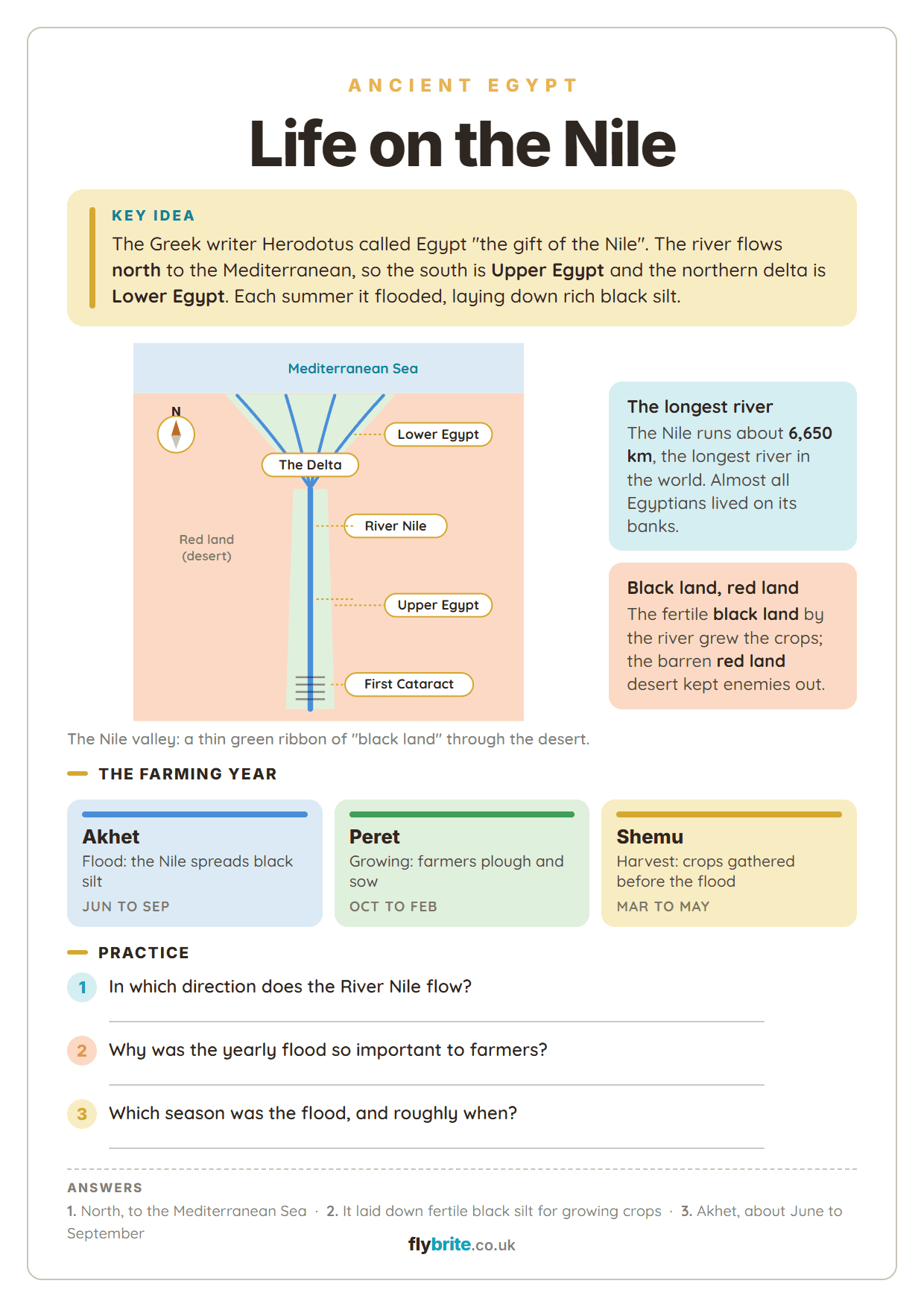 Type or write in
Why Egypt was "the gift of the Nile", with a labelled map of the valley and delta and the three seasons of the farming year.
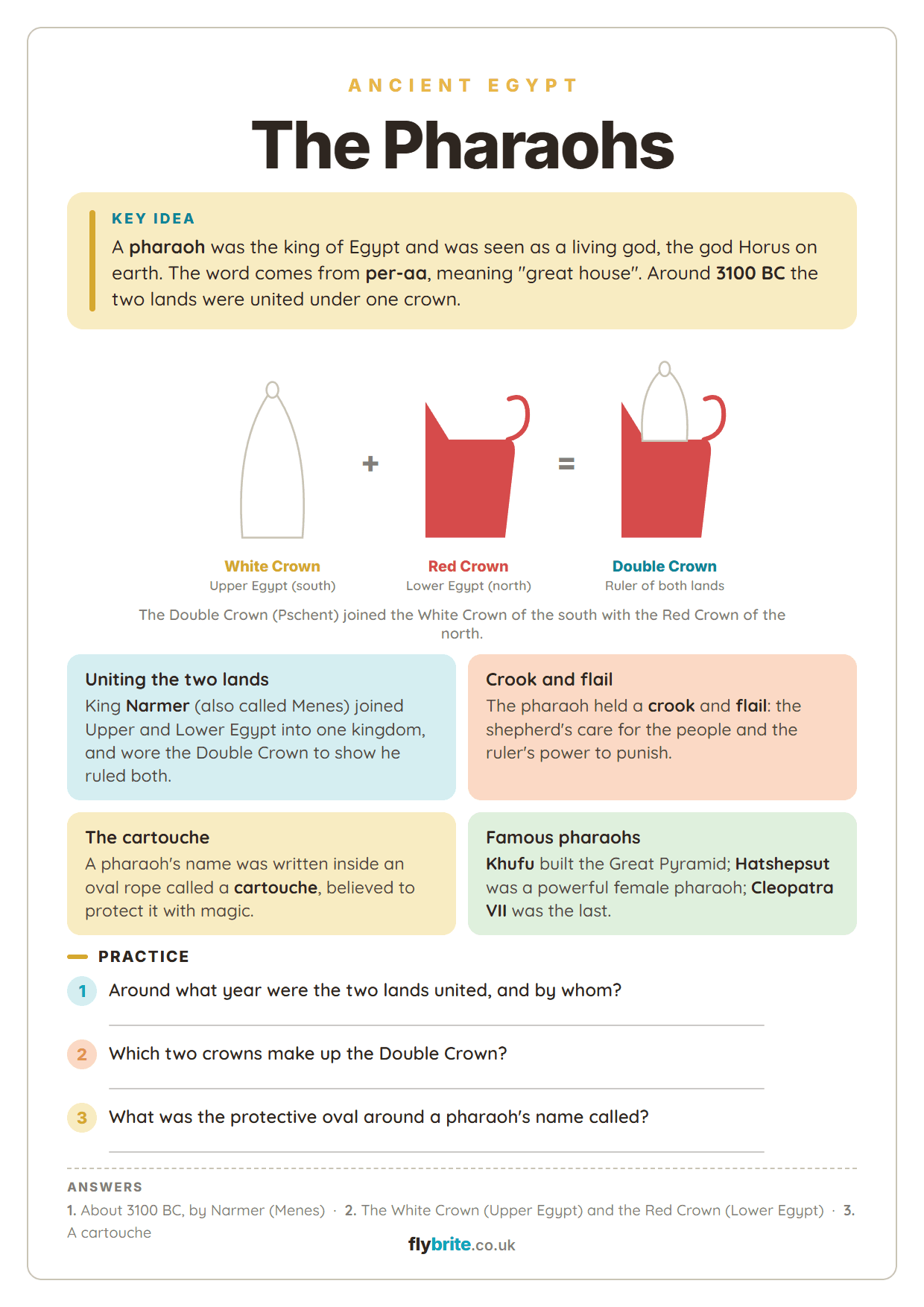 Type or write in
The god-kings of Egypt, the White and Red Crowns that united two lands, and the crook, flail and cartouche of royal power.
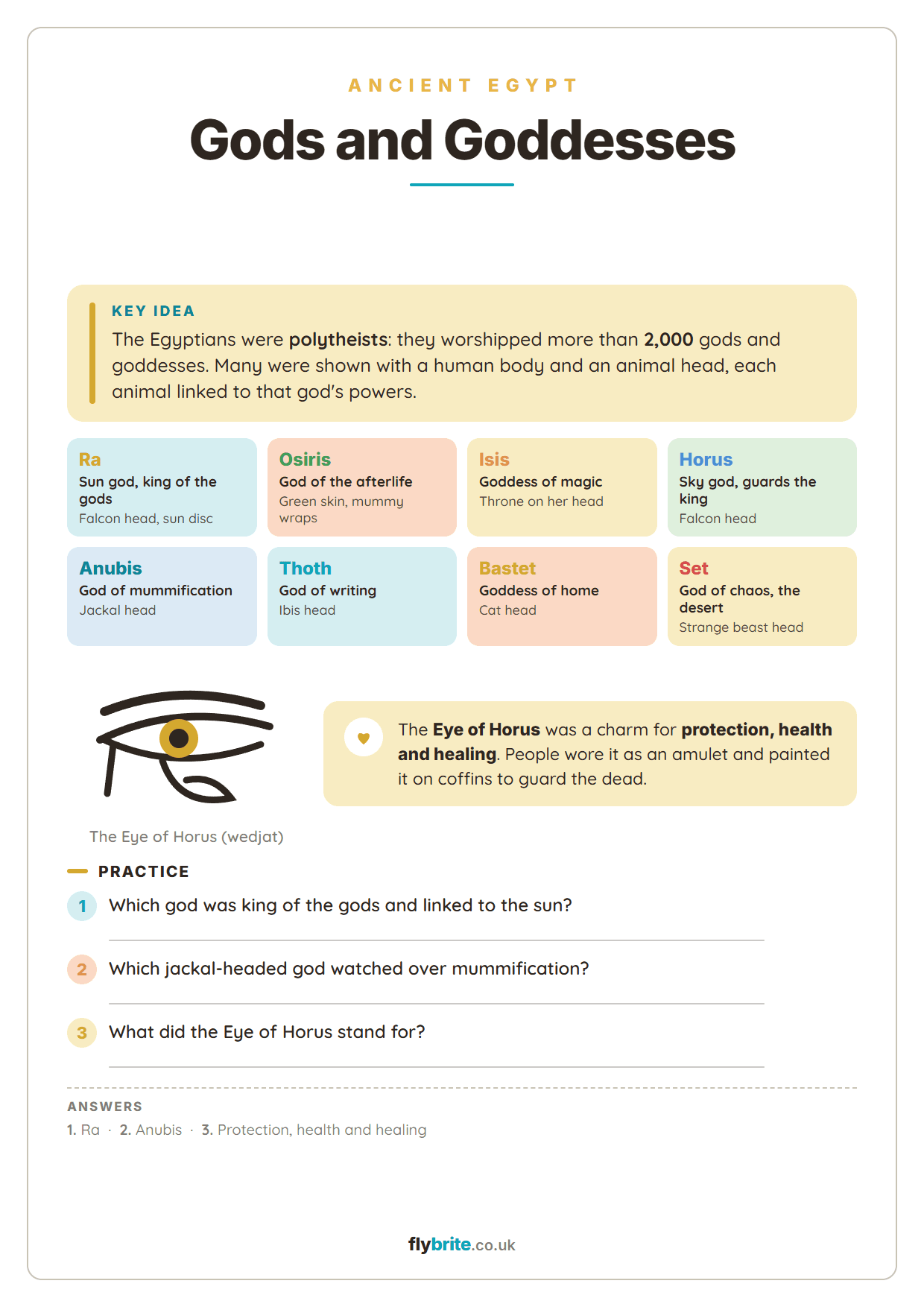 Type or write in
Eight of the many Egyptian gods and the animals that marked them, plus the meaning of the Eye of Horus.
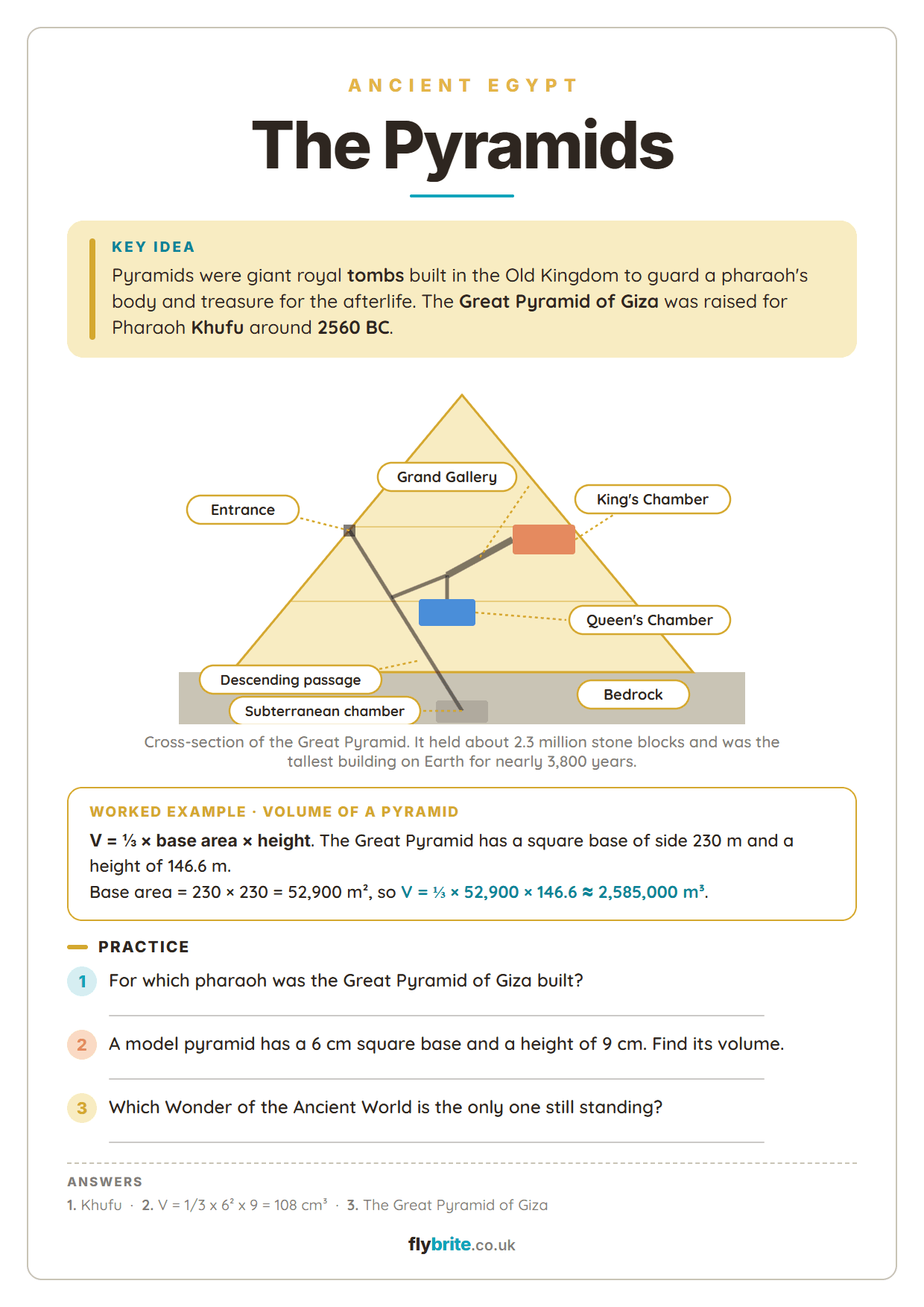 Type or write in
A labelled cross-section of the Great Pyramid and a worked example for the volume of a pyramid, with practice and answers.
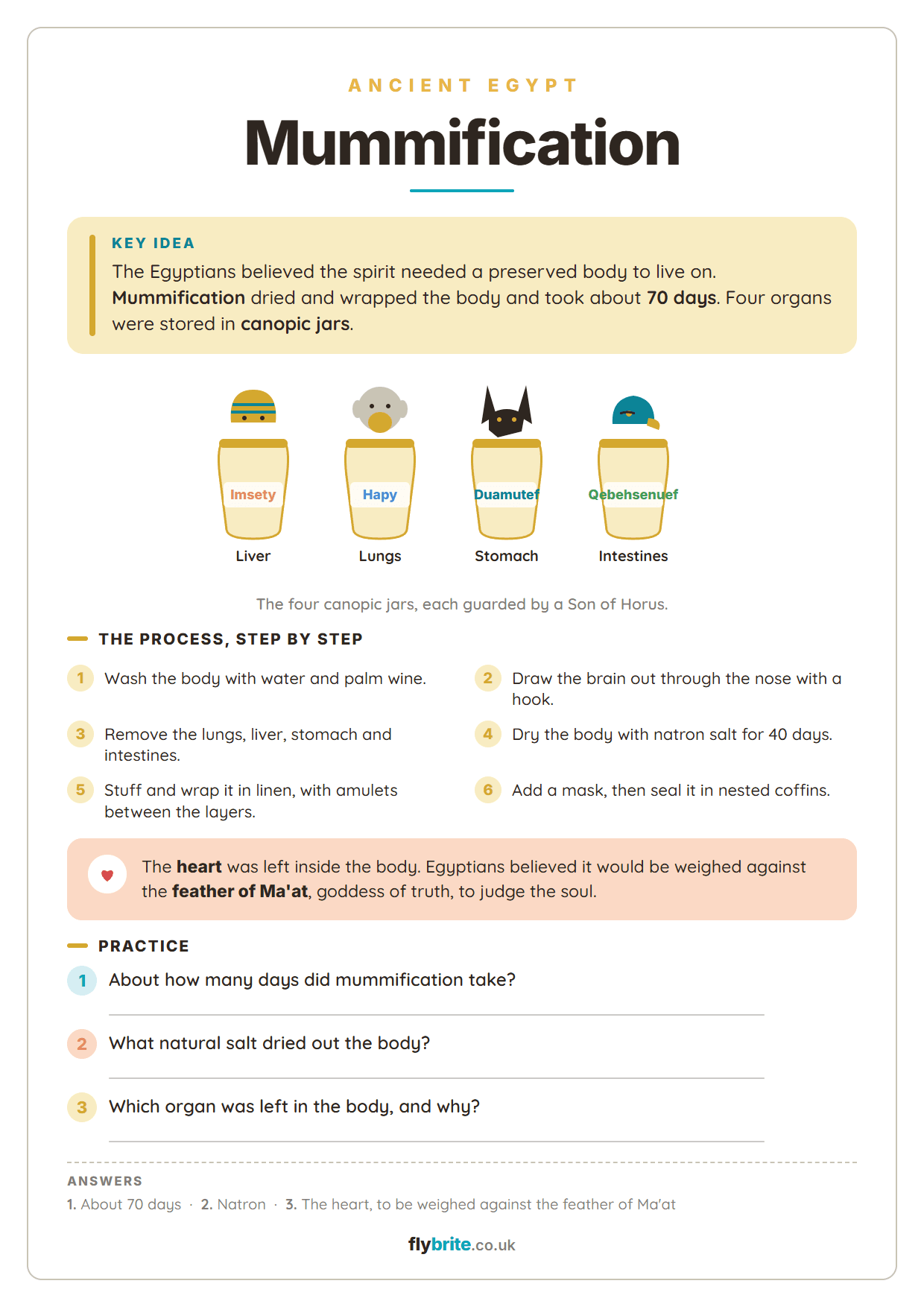 Type or write in
How and why the Egyptians preserved the dead, the four canopic jars and the 70-day process, step by step.
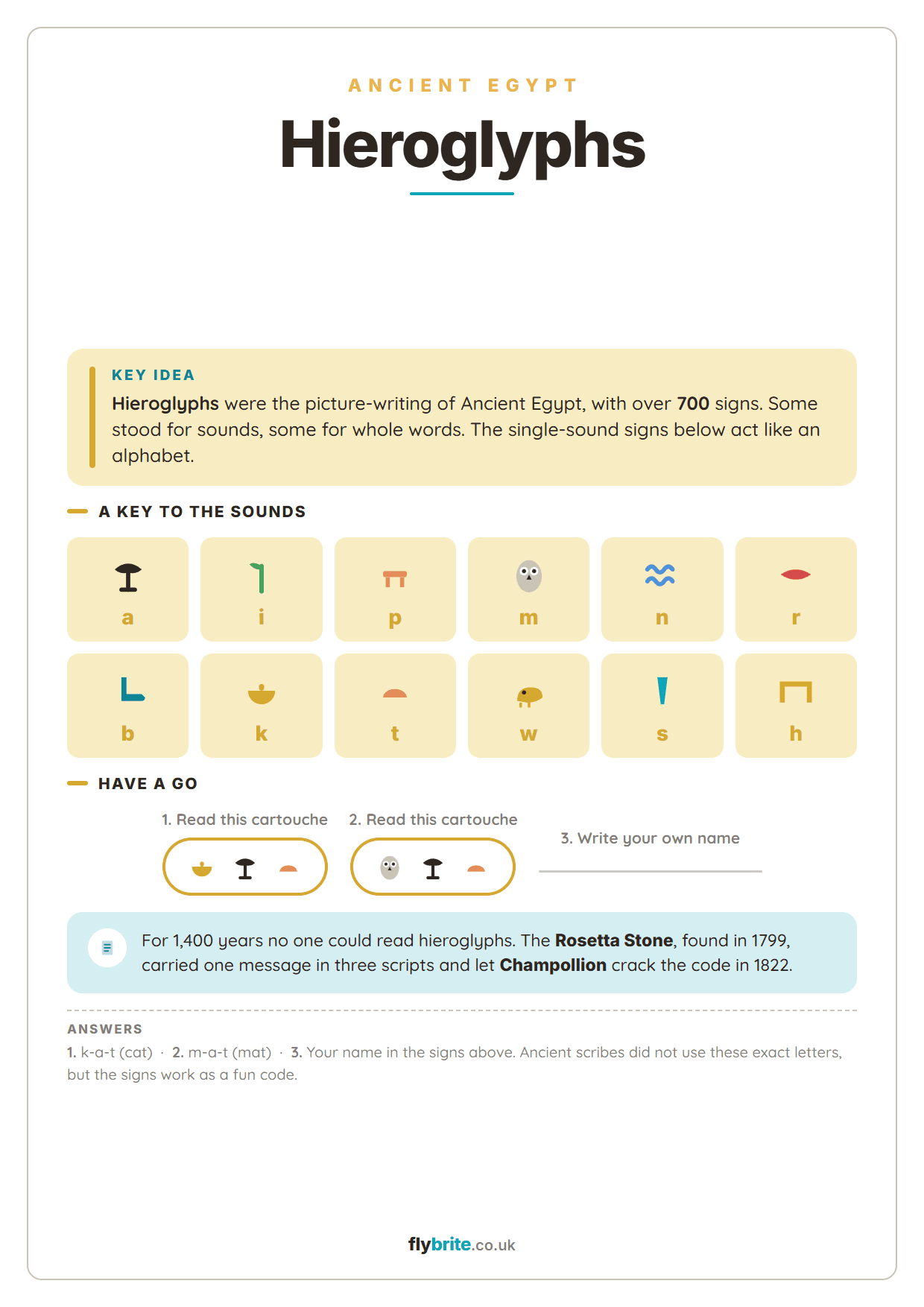 Type or write in
A picture-writing key of single-sound signs, two cartouches to decode and space to write your own name, with answers.
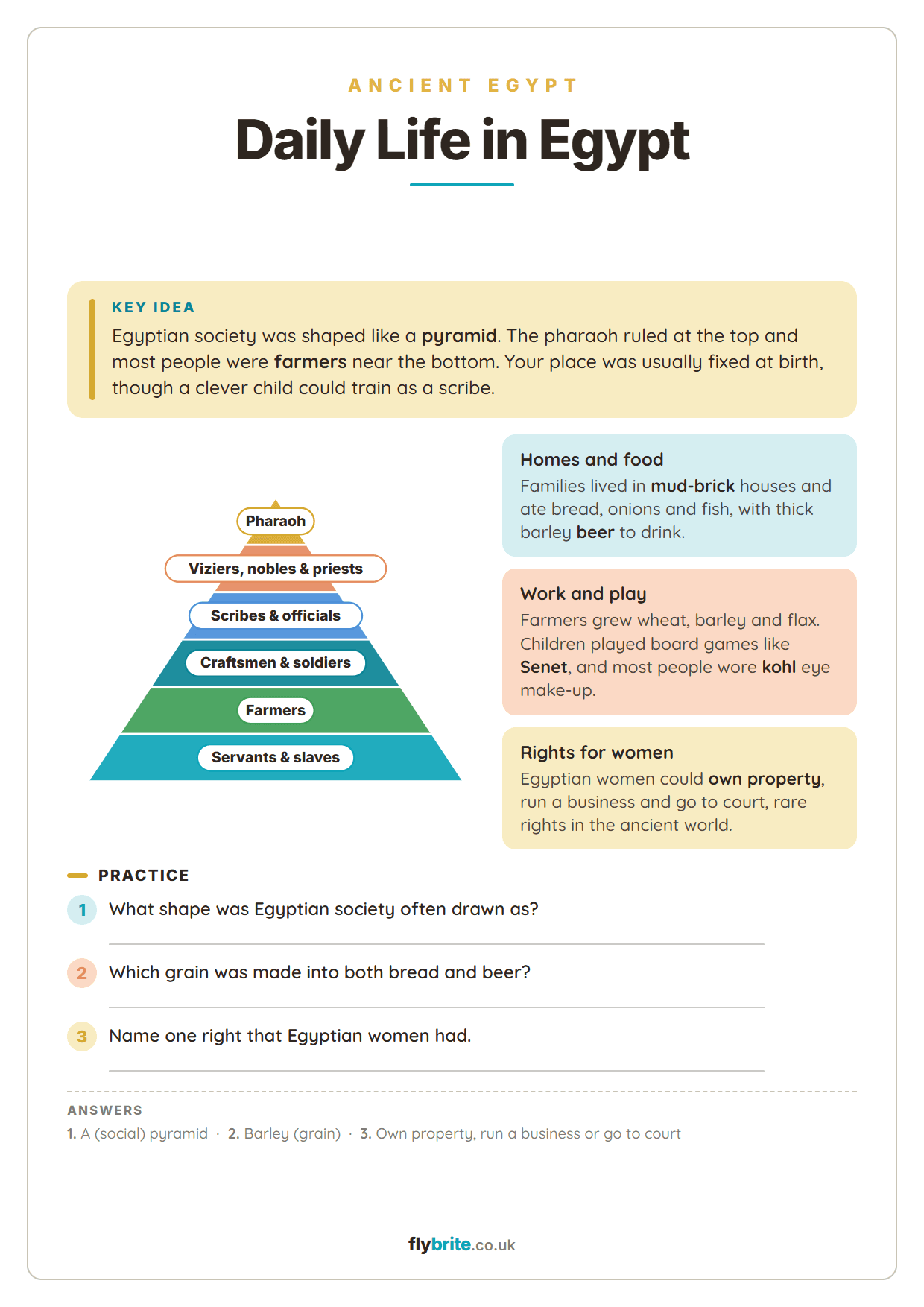 Type or write in
The social pyramid from pharaoh to farmer, plus homes, food, work and the surprising rights of Egyptian women.
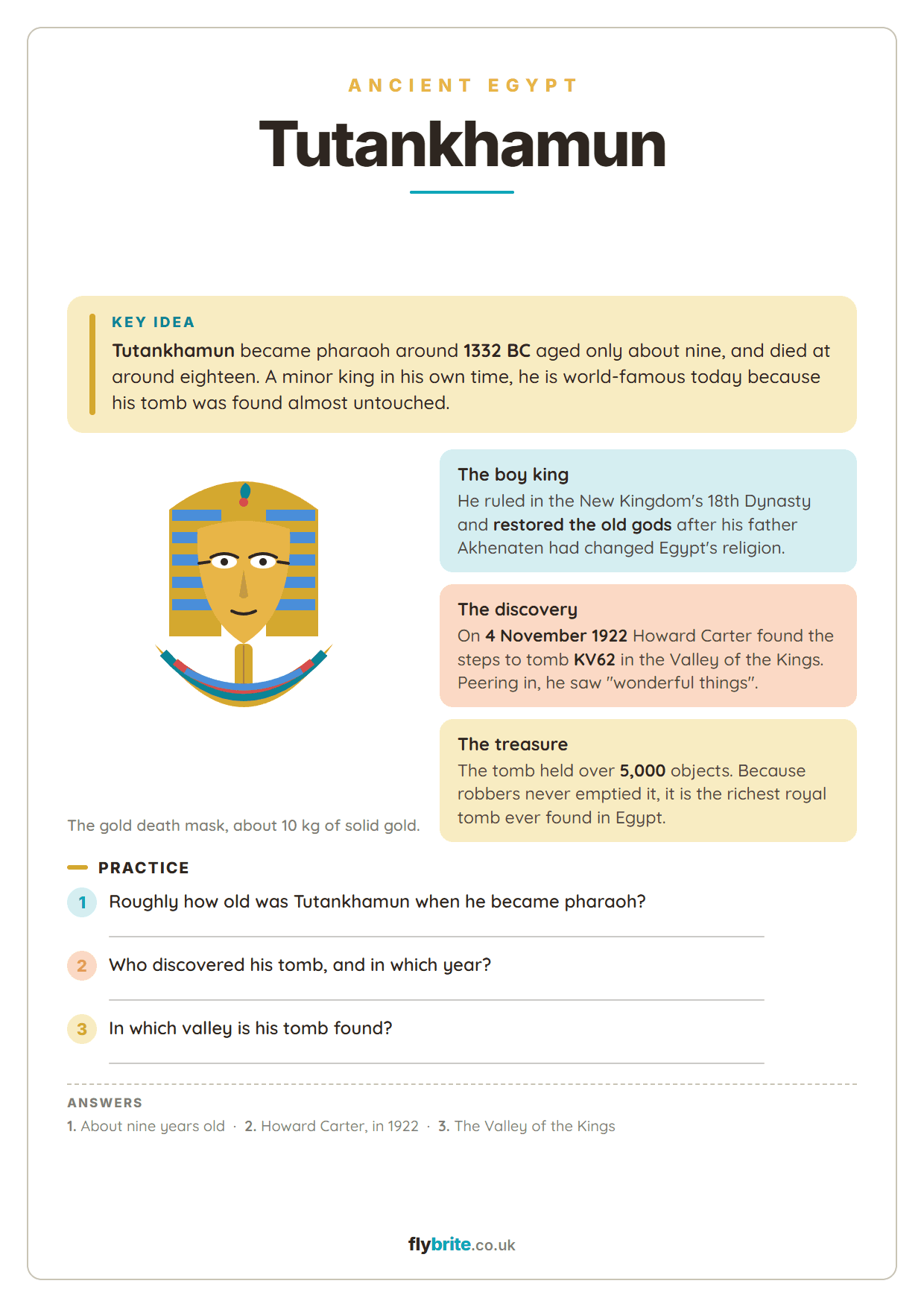 Type or write in
The boy king and his golden death mask, and the story of how Howard Carter found his tomb almost untouched in 1922.
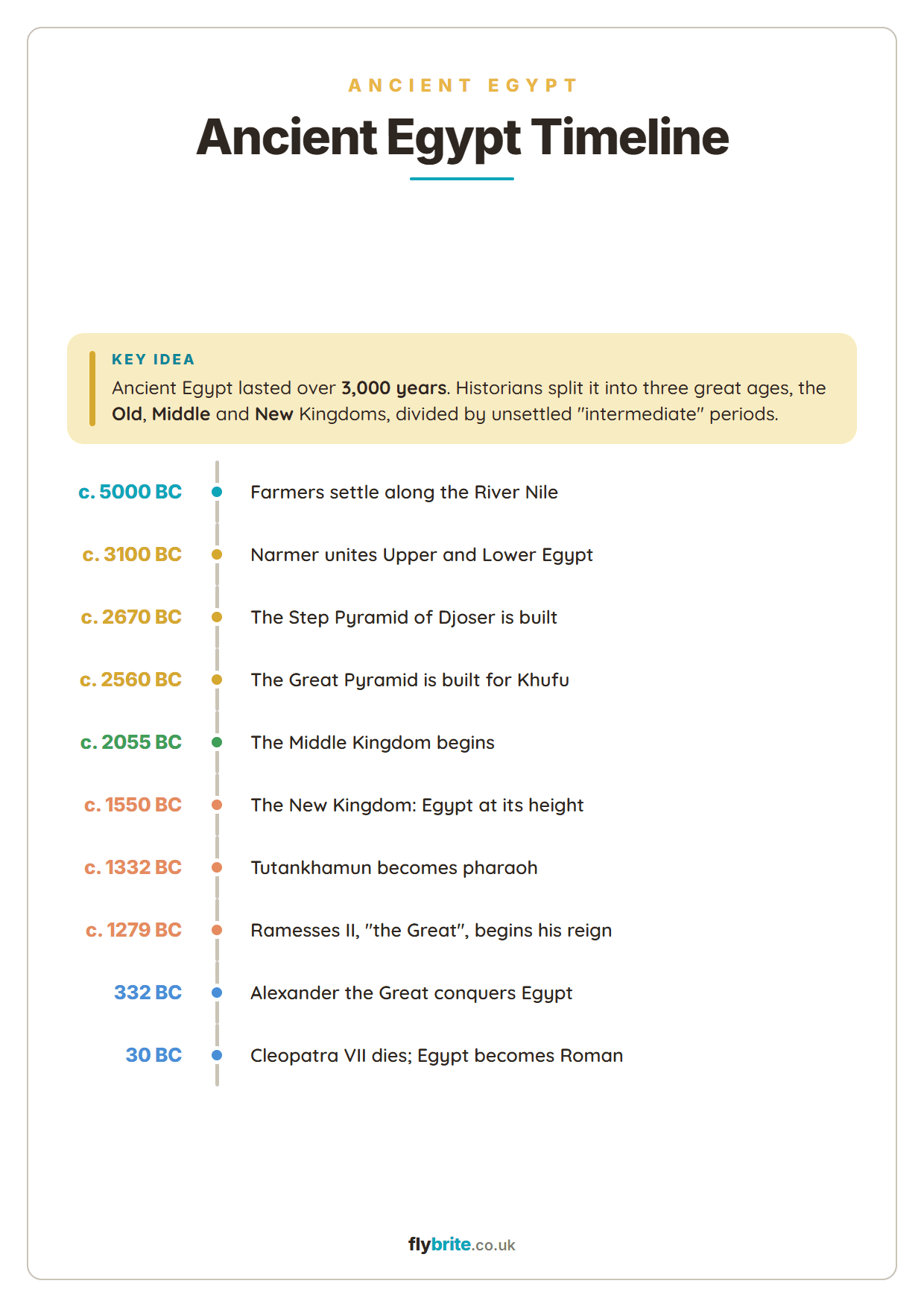
Three thousand years on one line, from the first Nile farmers to Cleopatra and the Roman conquest of Egypt.
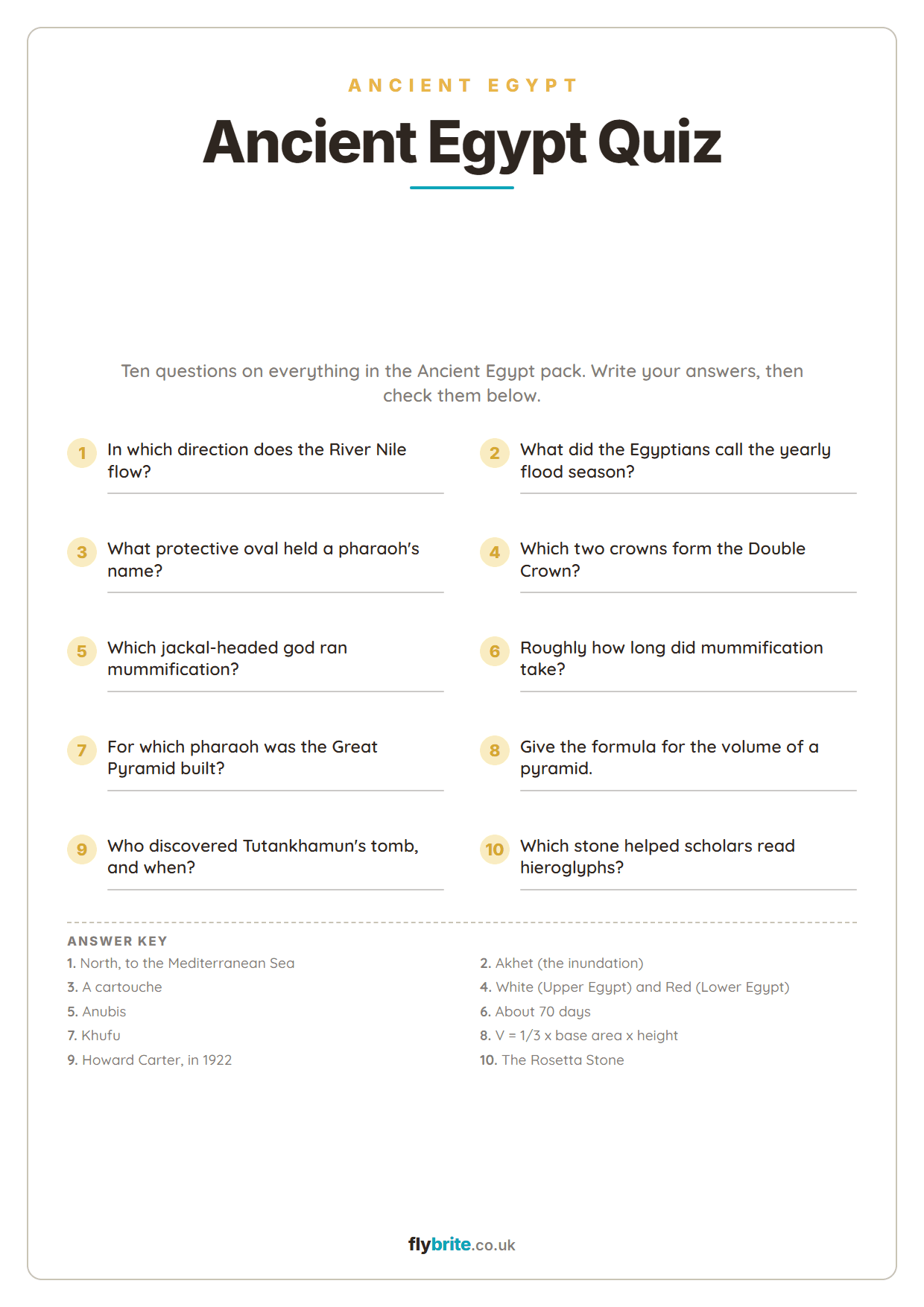 Type or write in
Ten questions covering the whole Ancient Egypt pack, with write-in space and a full answer key.
KS3 geography: tectonic plates, rivers, biomes, population and reading maps like a geographer.
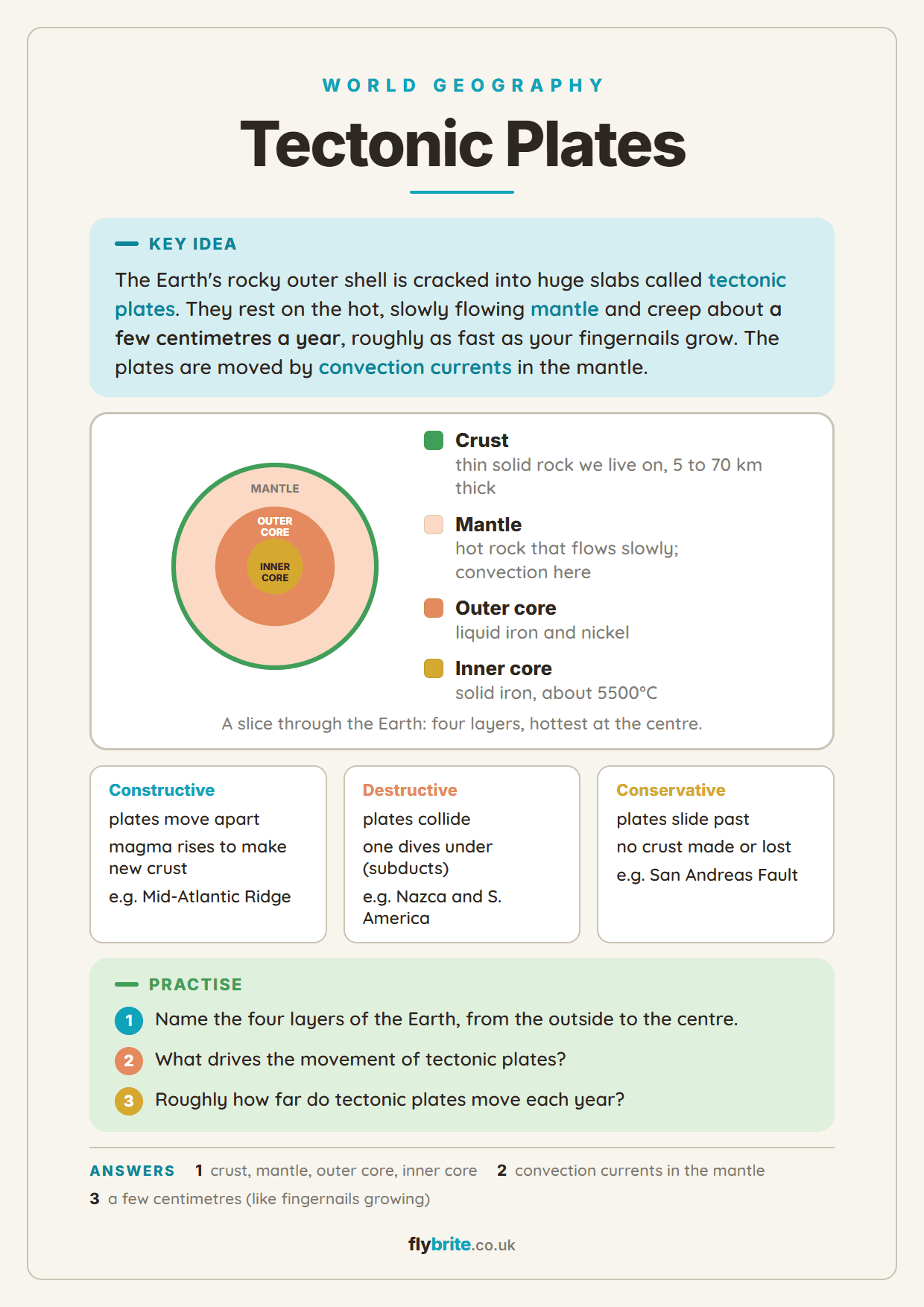
The Earth’s layers, the plates that ride on the mantle and the three kinds of plate boundary, with a cutaway diagram and practice.
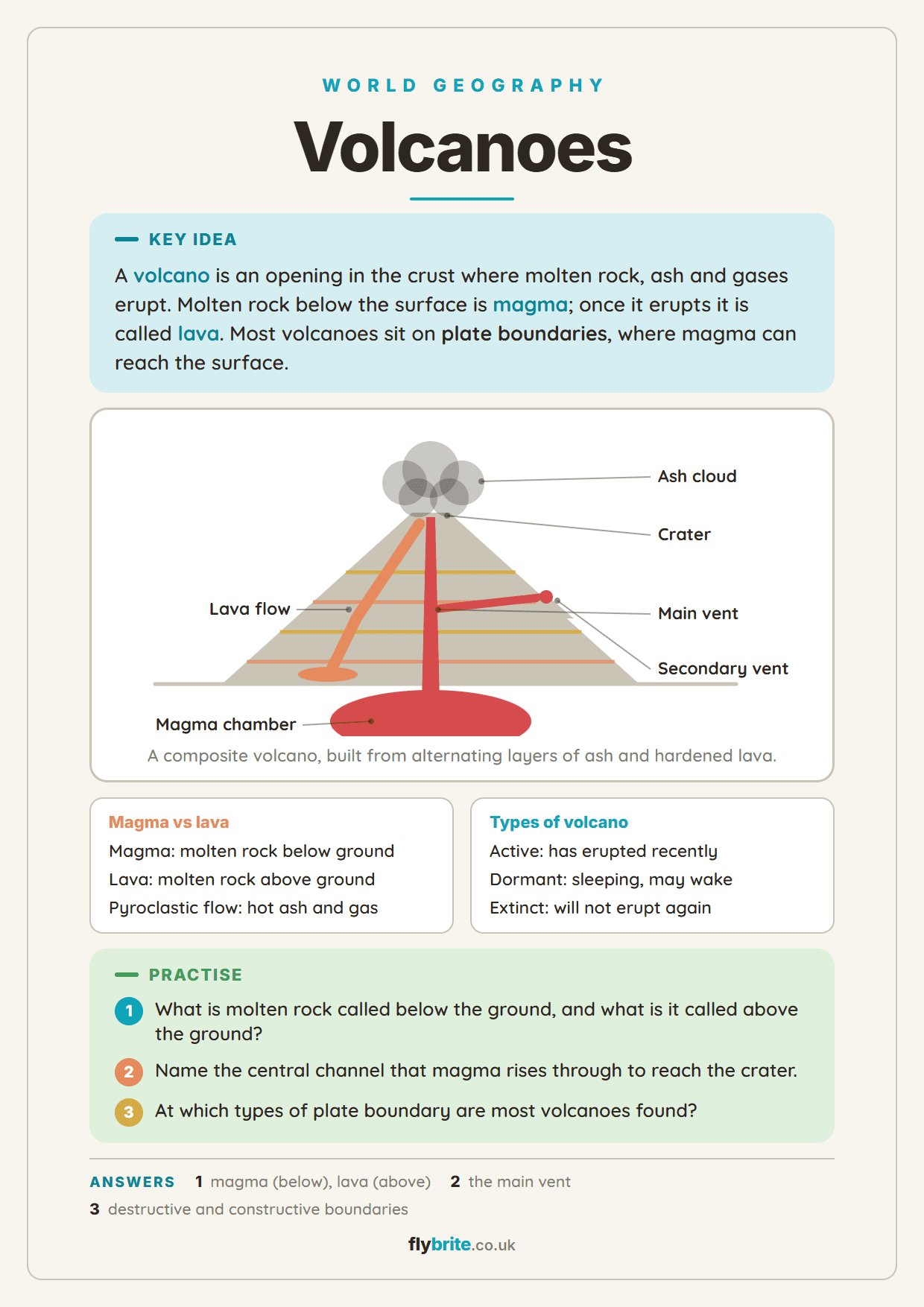
A fully labelled cross-section of a composite volcano, from magma chamber to ash cloud, with key terms and questions.
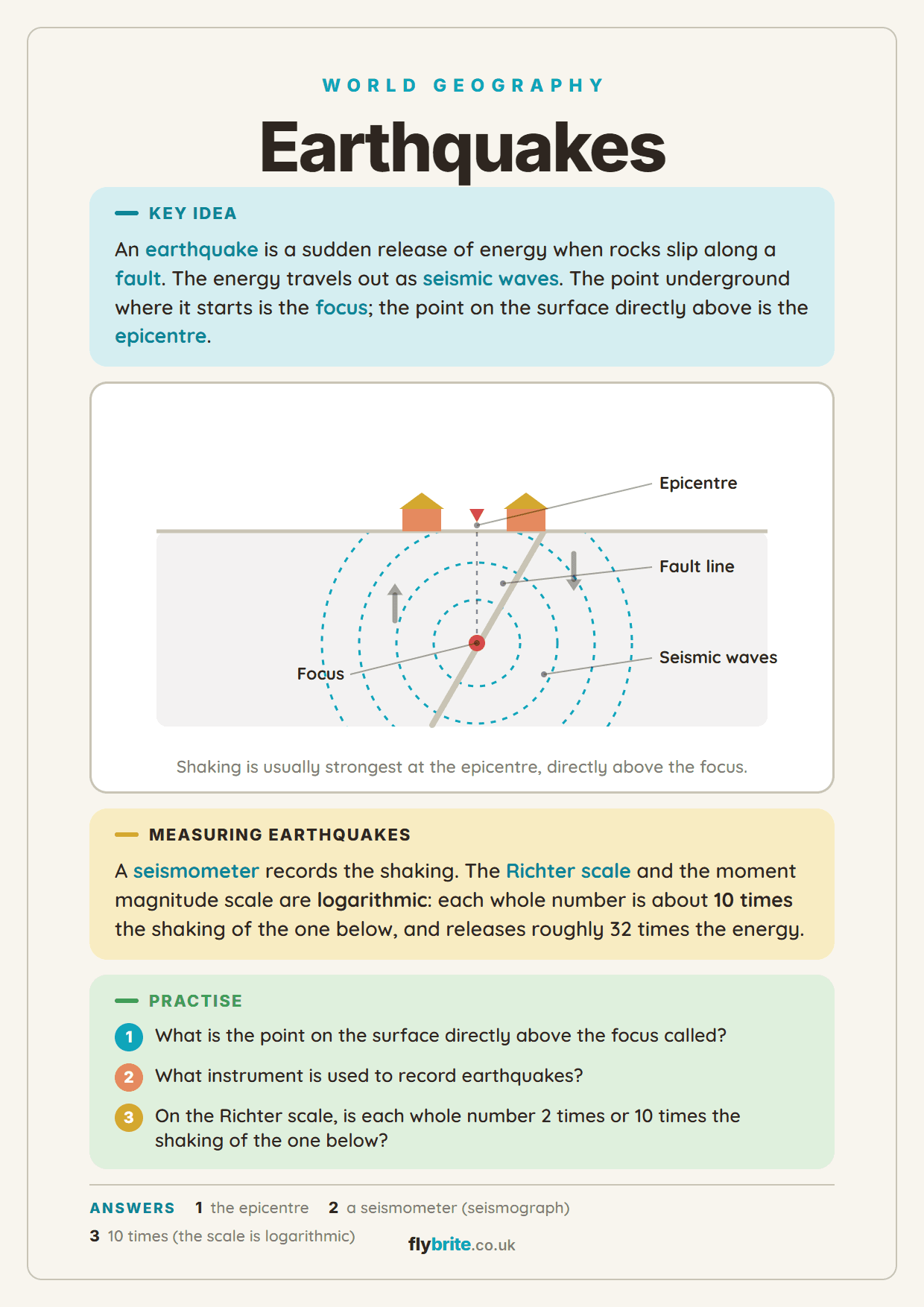
Focus, epicentre, faults and seismic waves explained, plus how the logarithmic Richter scale really works.
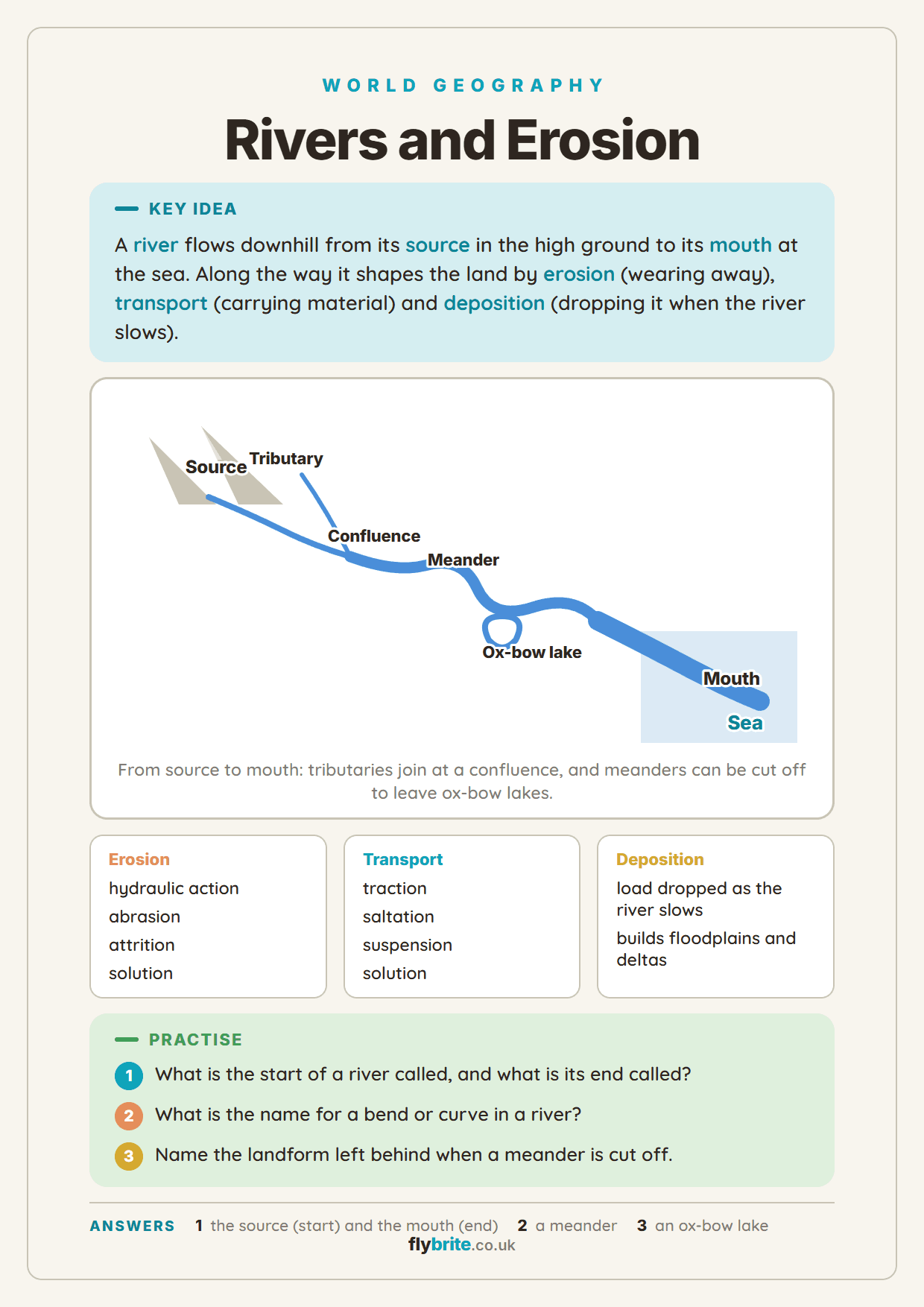
From source to mouth: the features of a river and the processes of erosion, transport and deposition, with a labelled diagram.
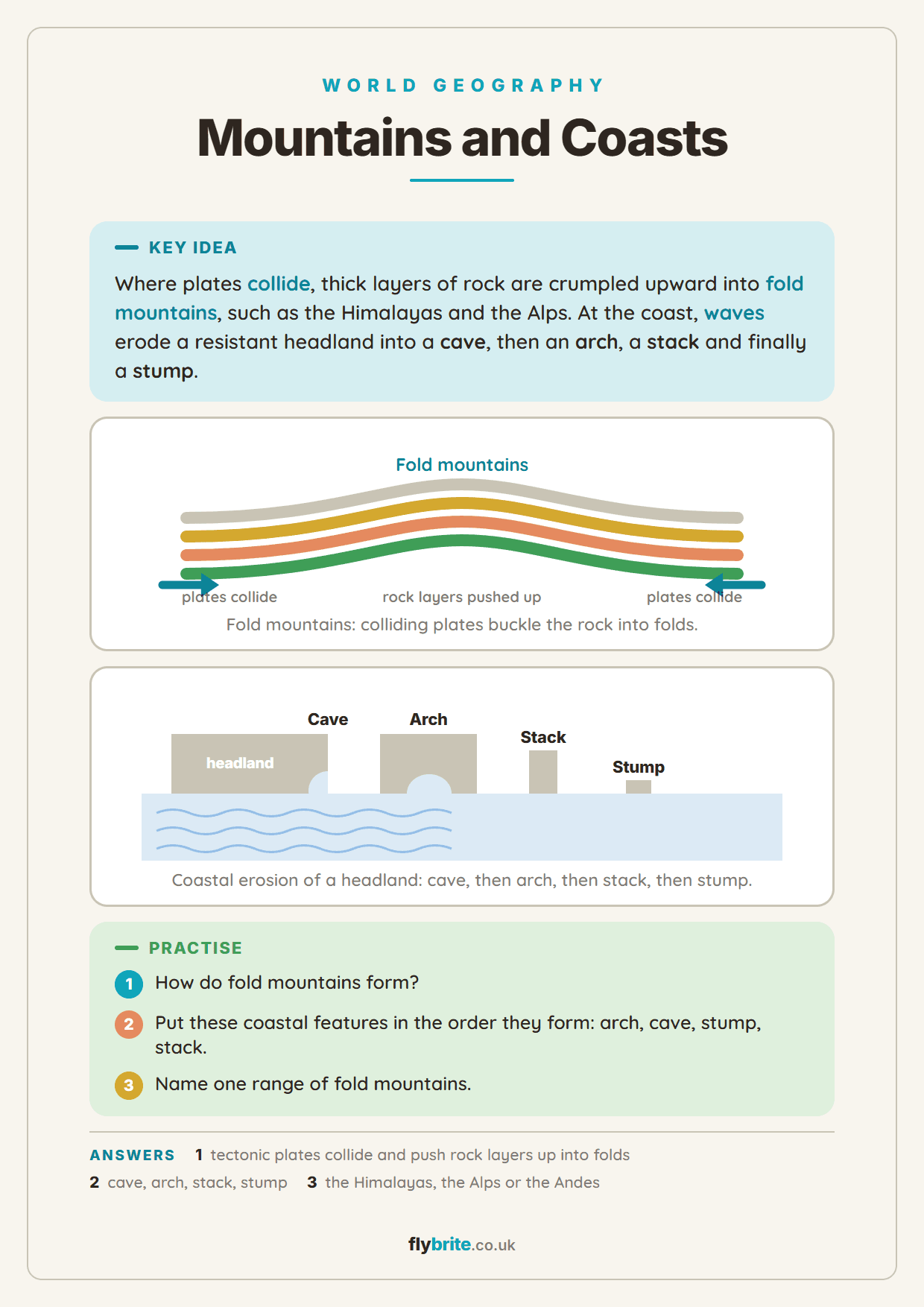
How colliding plates build fold mountains, and how waves carve a headland into a cave, arch, stack and stump.
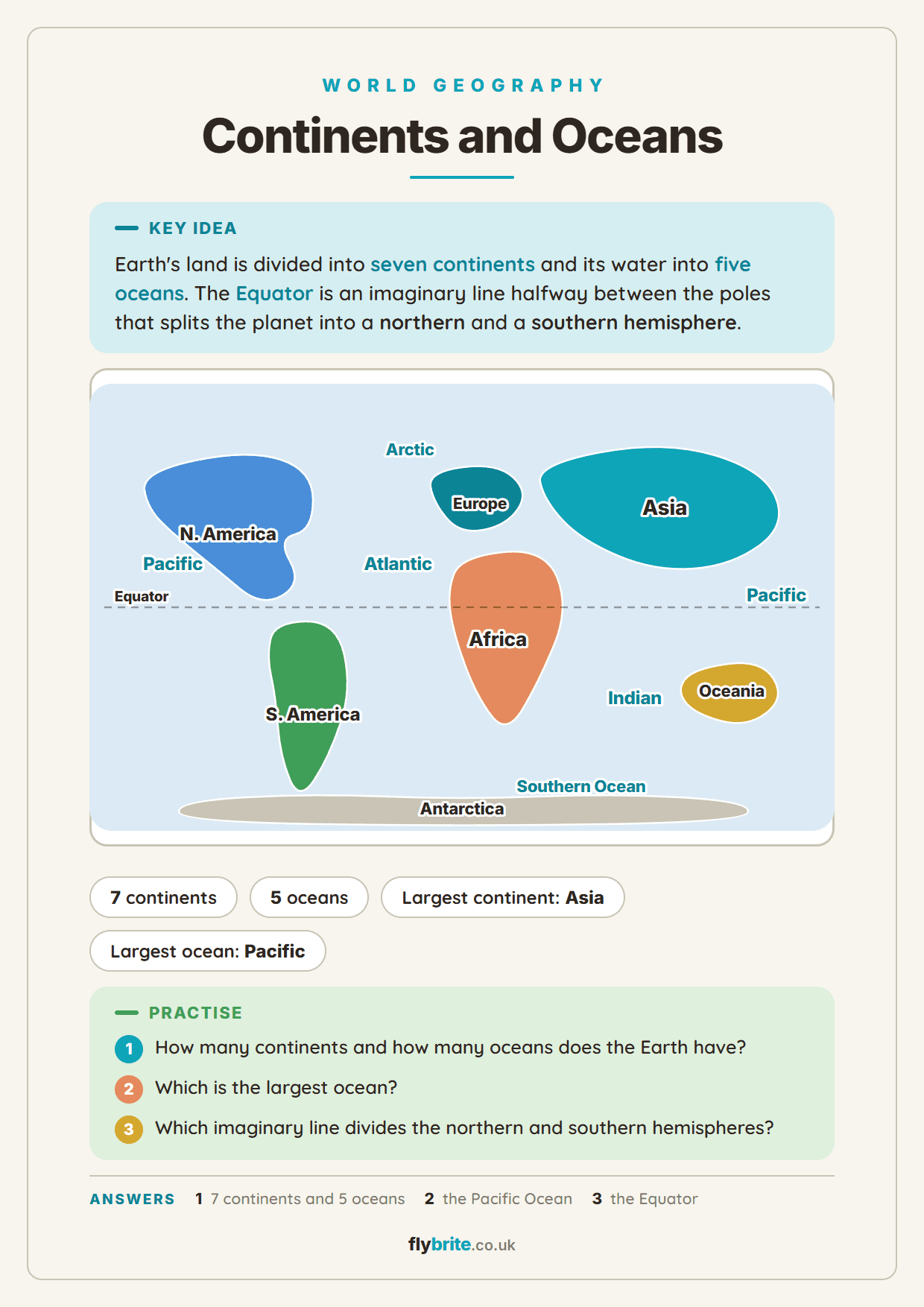
A clear world map naming all seven continents and five oceans, with the Equator and the key facts to remember.
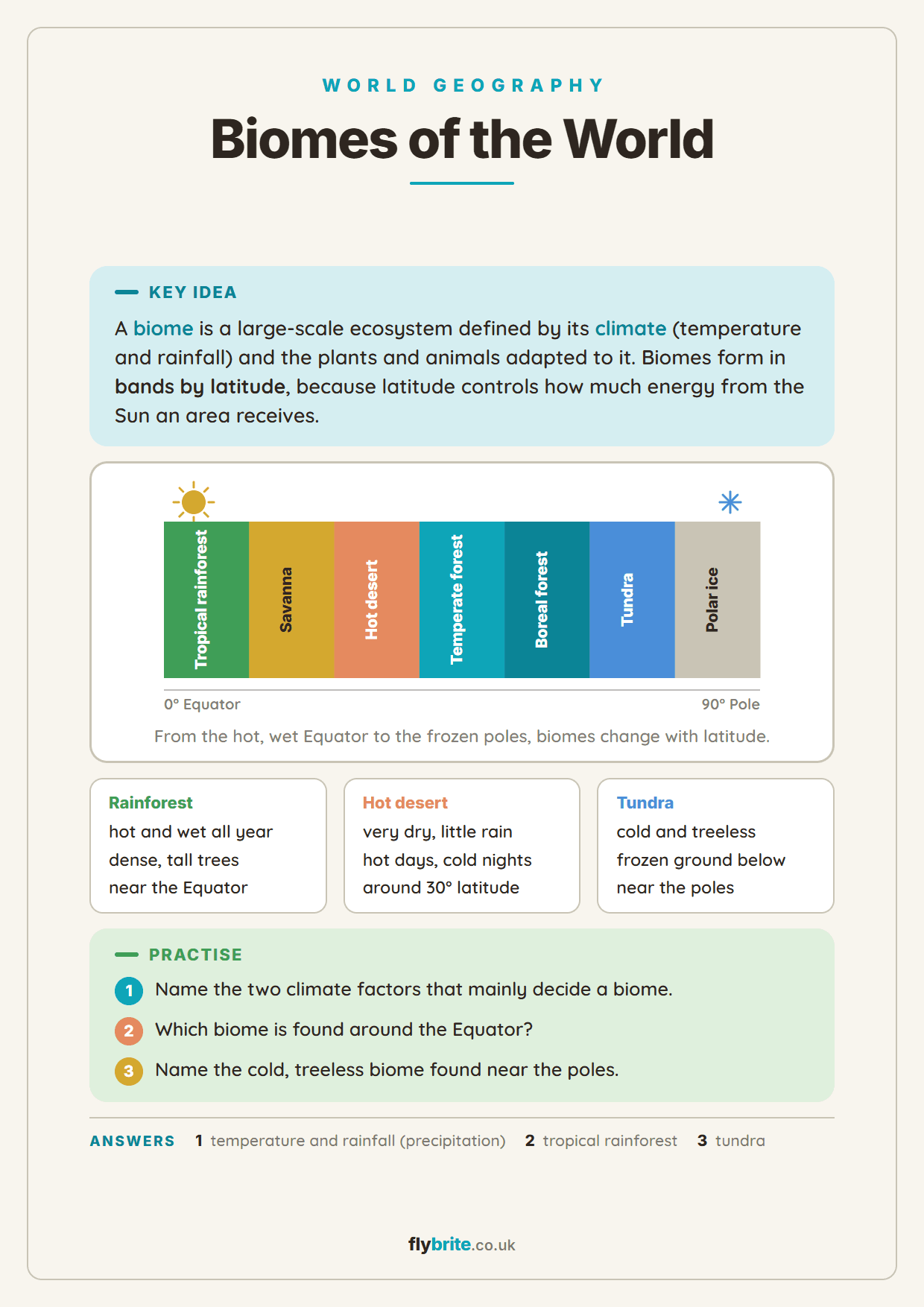
Why the great biomes fall into bands by latitude, from tropical rainforest at the Equator to tundra near the poles.
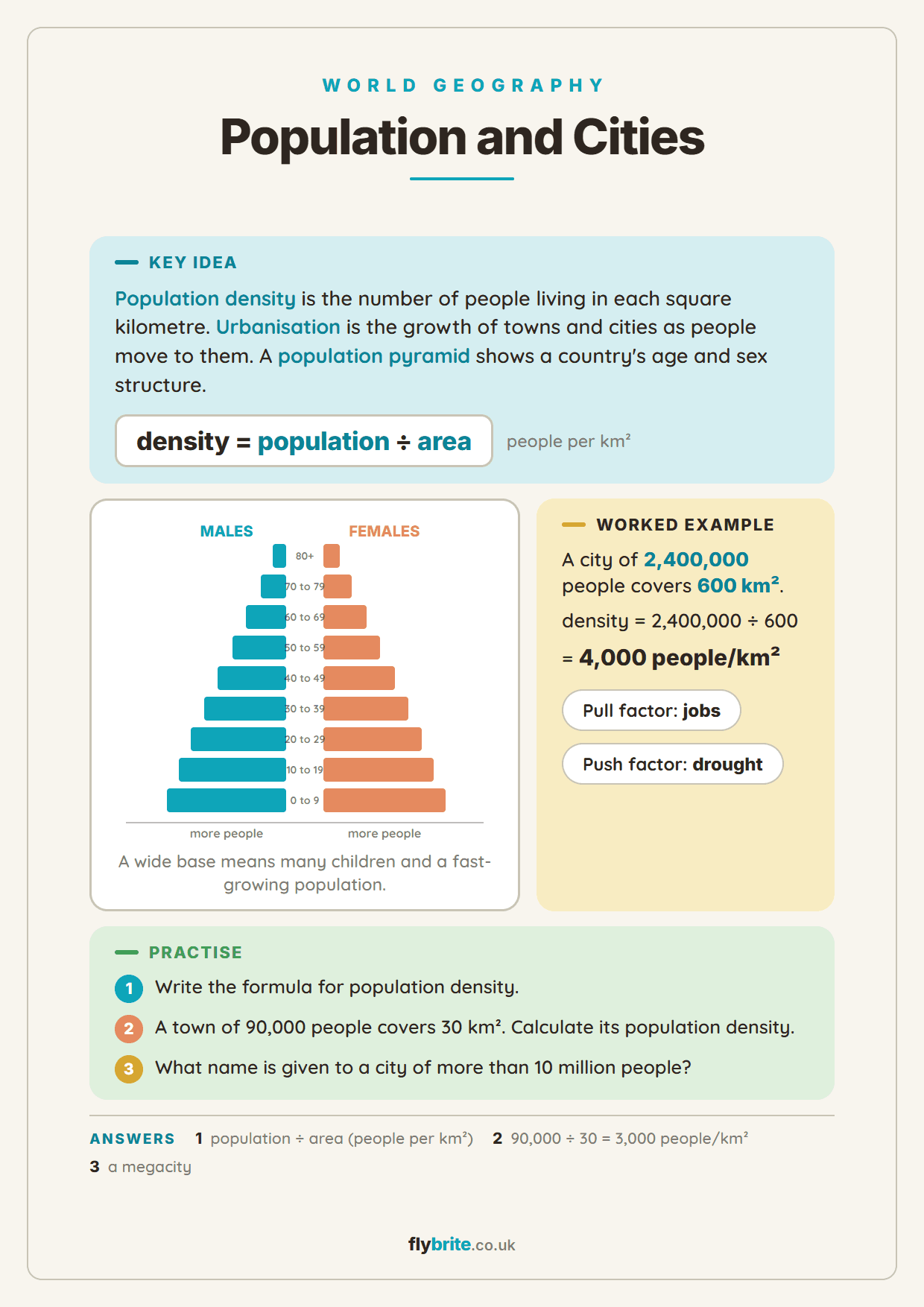
Population density, urbanisation and a real population pyramid, with a worked density calculation and practice.
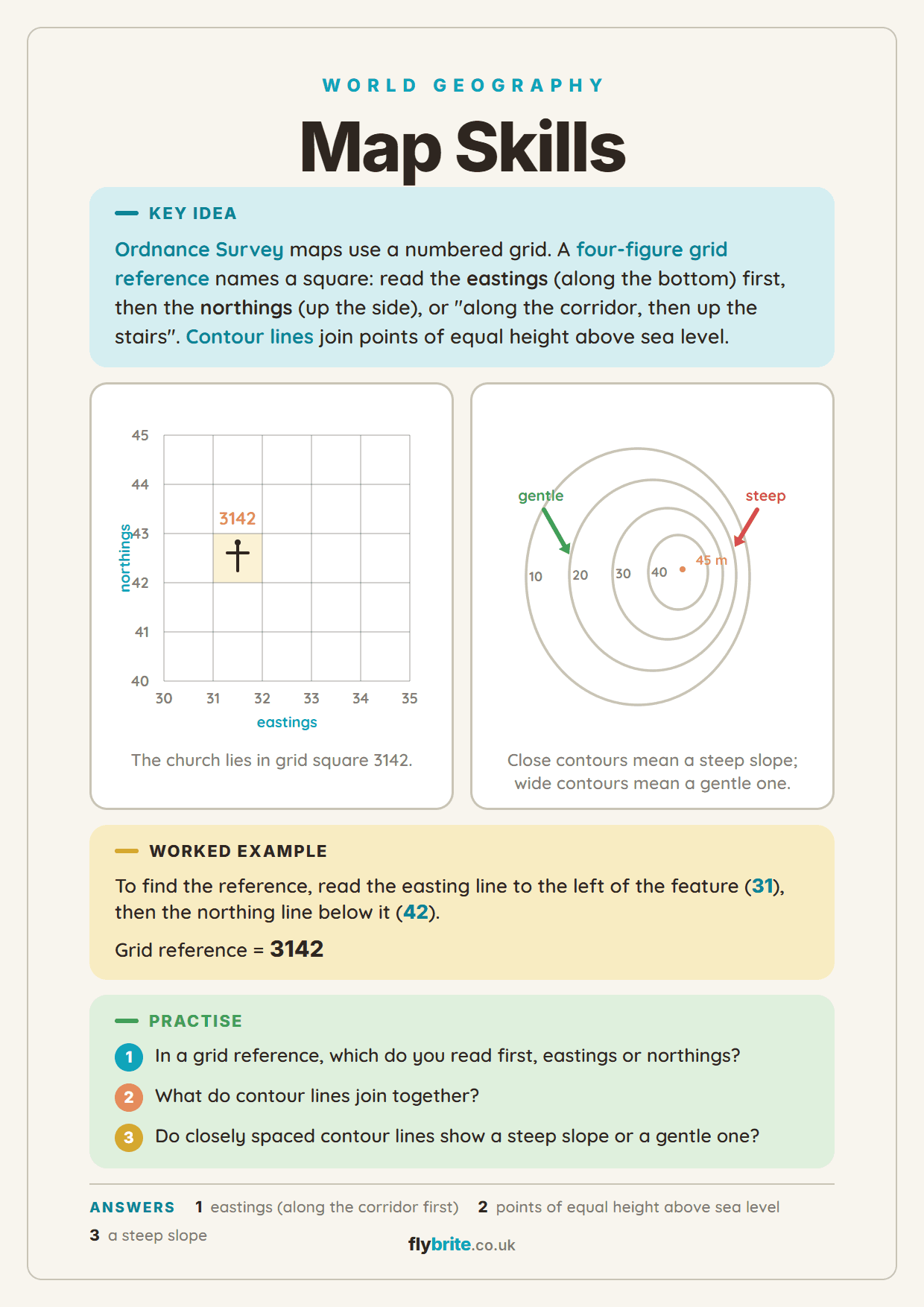
Four-figure grid references and contour lines made simple, with a worked example and an OS-style grid to read.
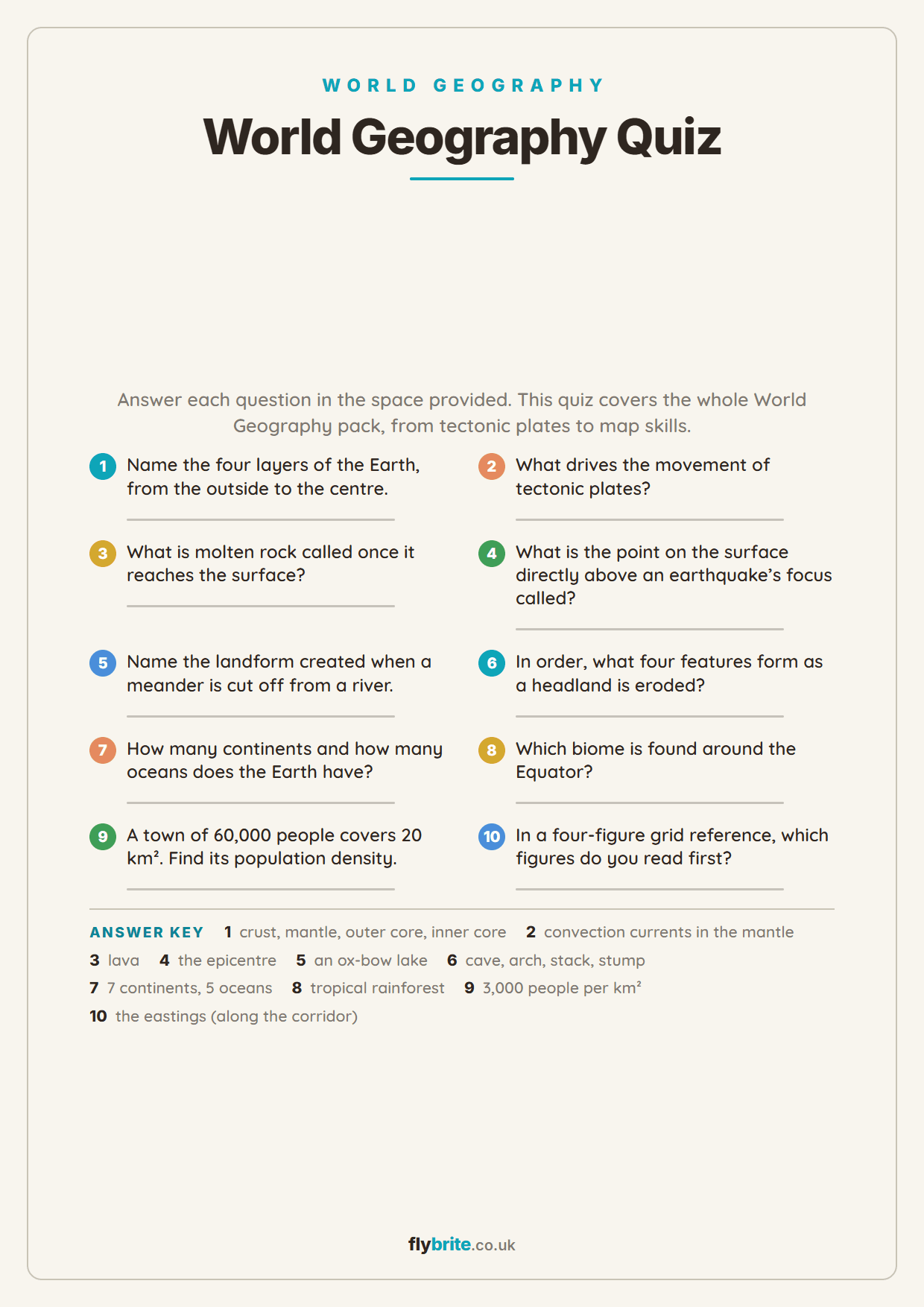 Type or write in
Ten write-in questions covering the whole pack, from plate tectonics to grid references, with a full answer key.
KS3 geography: the water cycle, climate zones, food webs, climate change and sustainability.
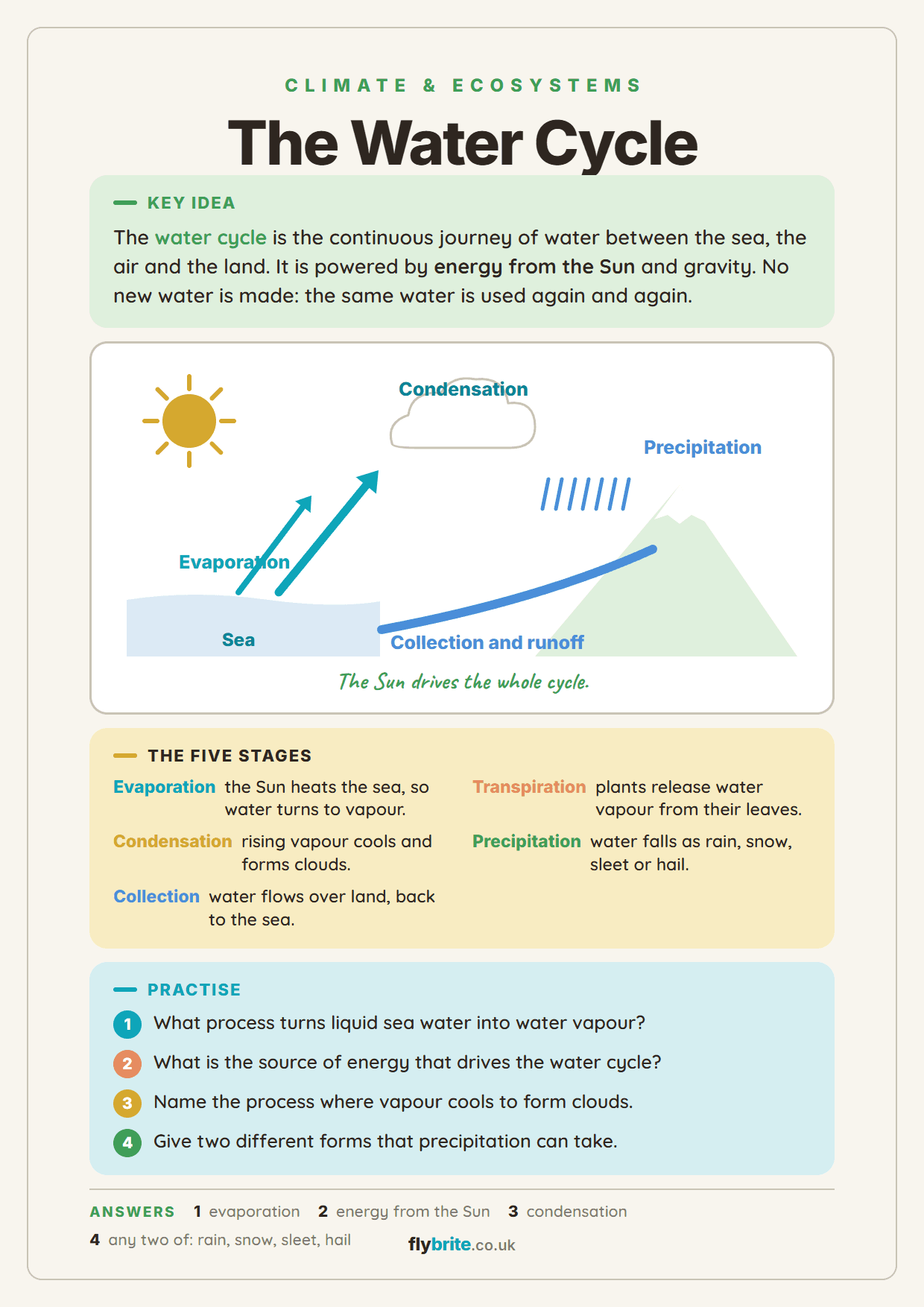
The Sun-driven journey of water, as a fully labelled diagram, with the five stages defined and quick practice.
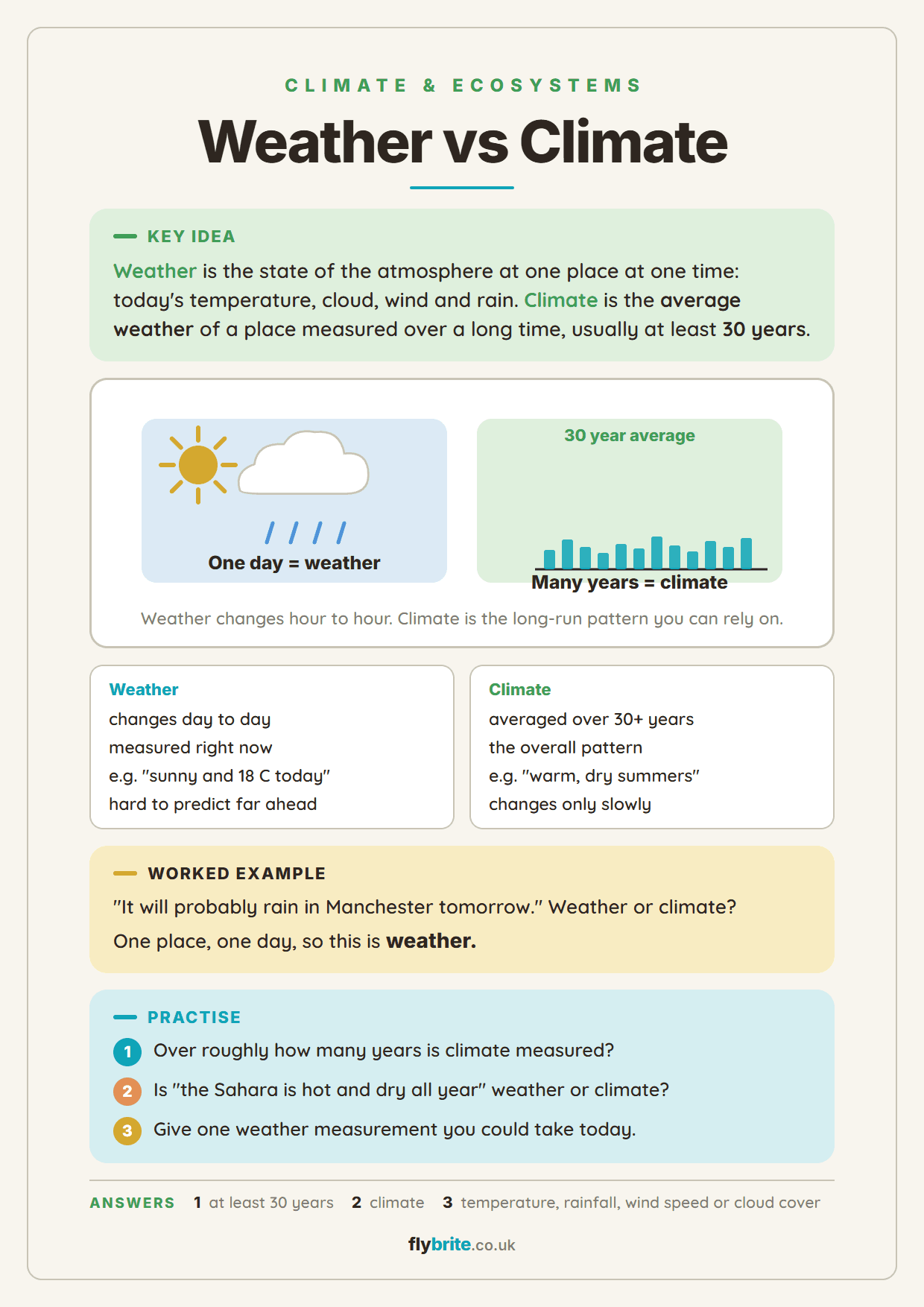
The key KS3 distinction: today’s weather versus the 30-year average, with a worked example and practice.
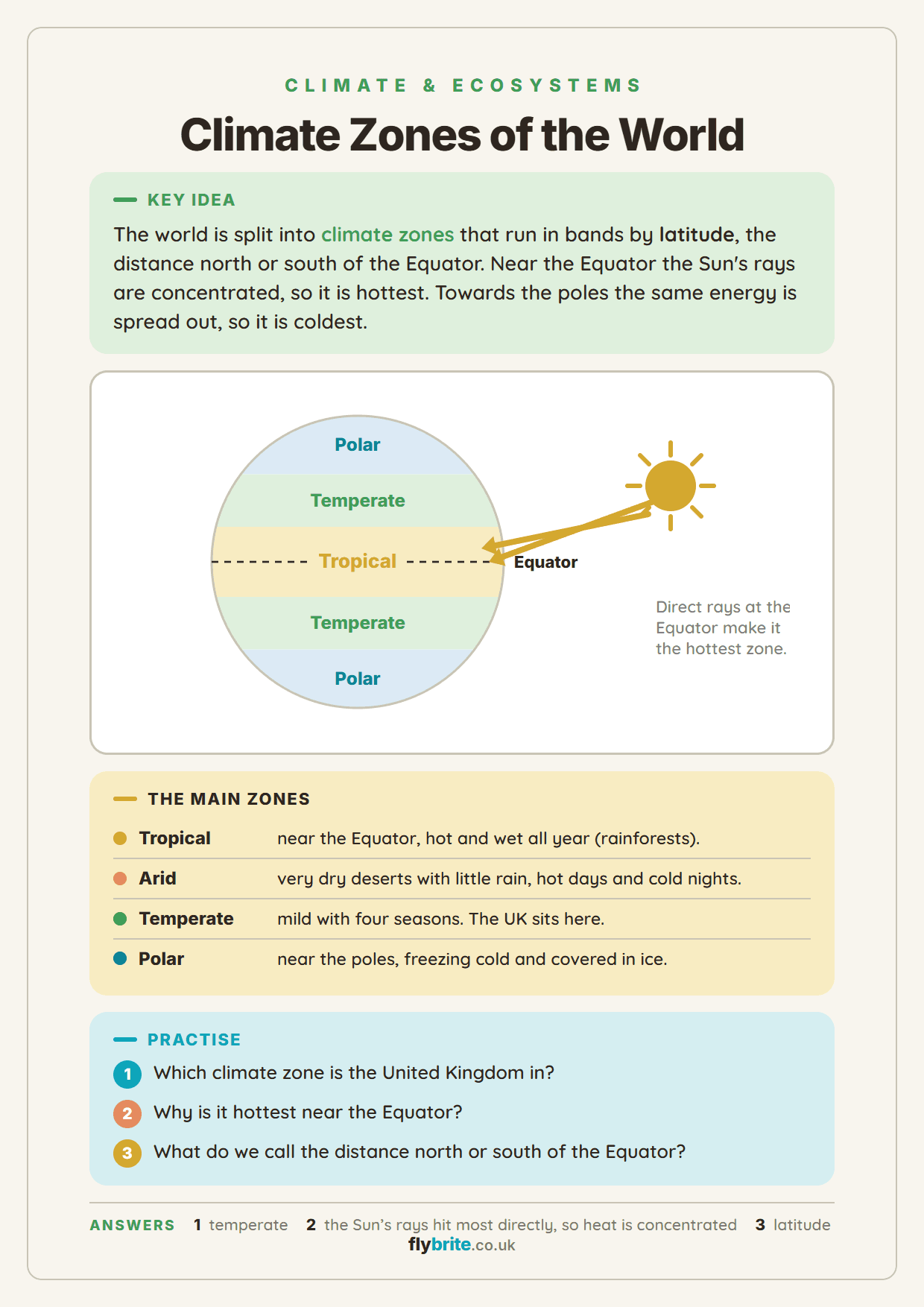
Tropical to polar bands by latitude, shown on a labelled globe, with why the Equator is hottest.
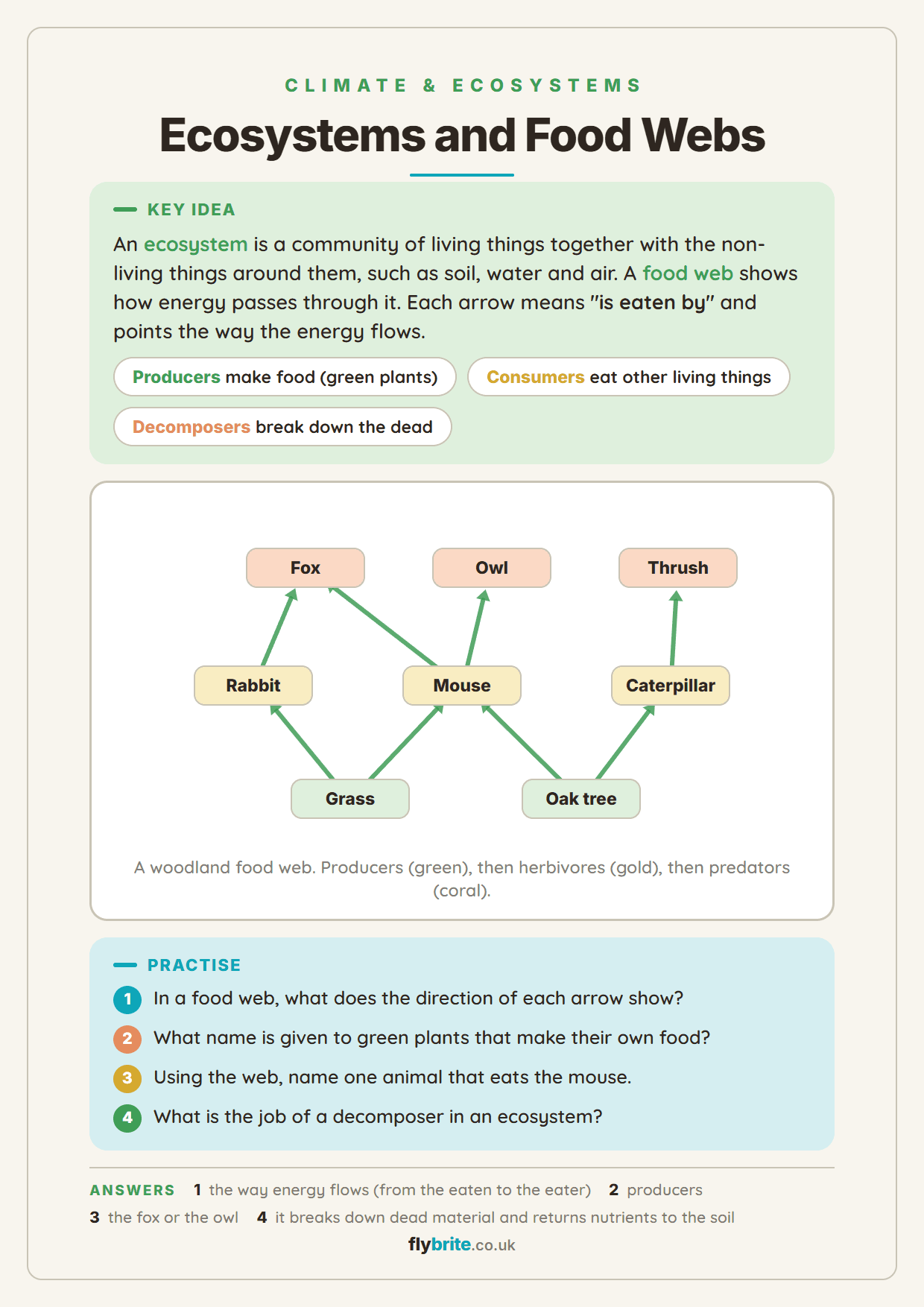
Producers, consumers and decomposers linked in a woodland food web, with arrows showing how energy flows.
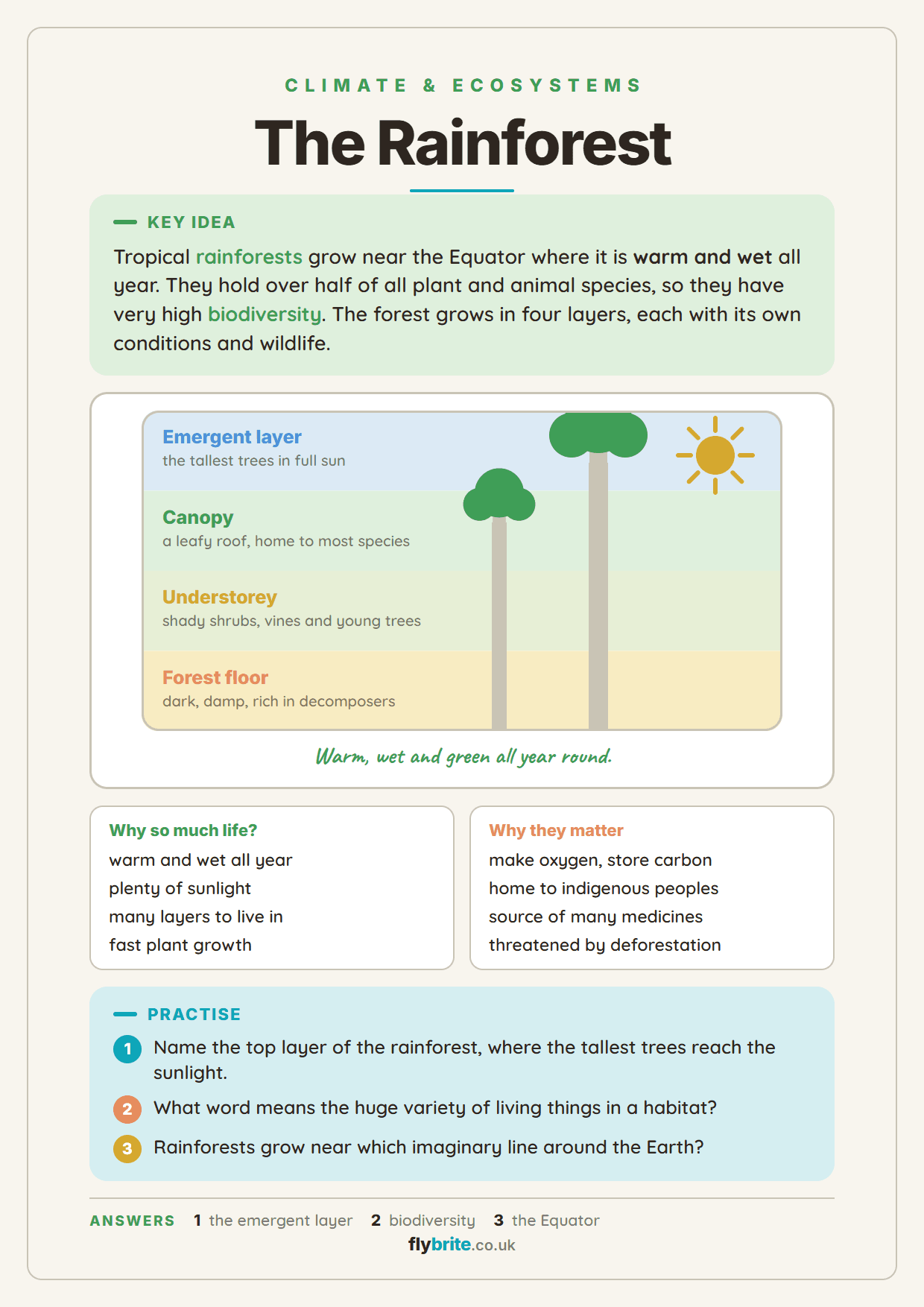
The tropical rainforest biome and its four layers, its rich biodiversity, and why it matters.
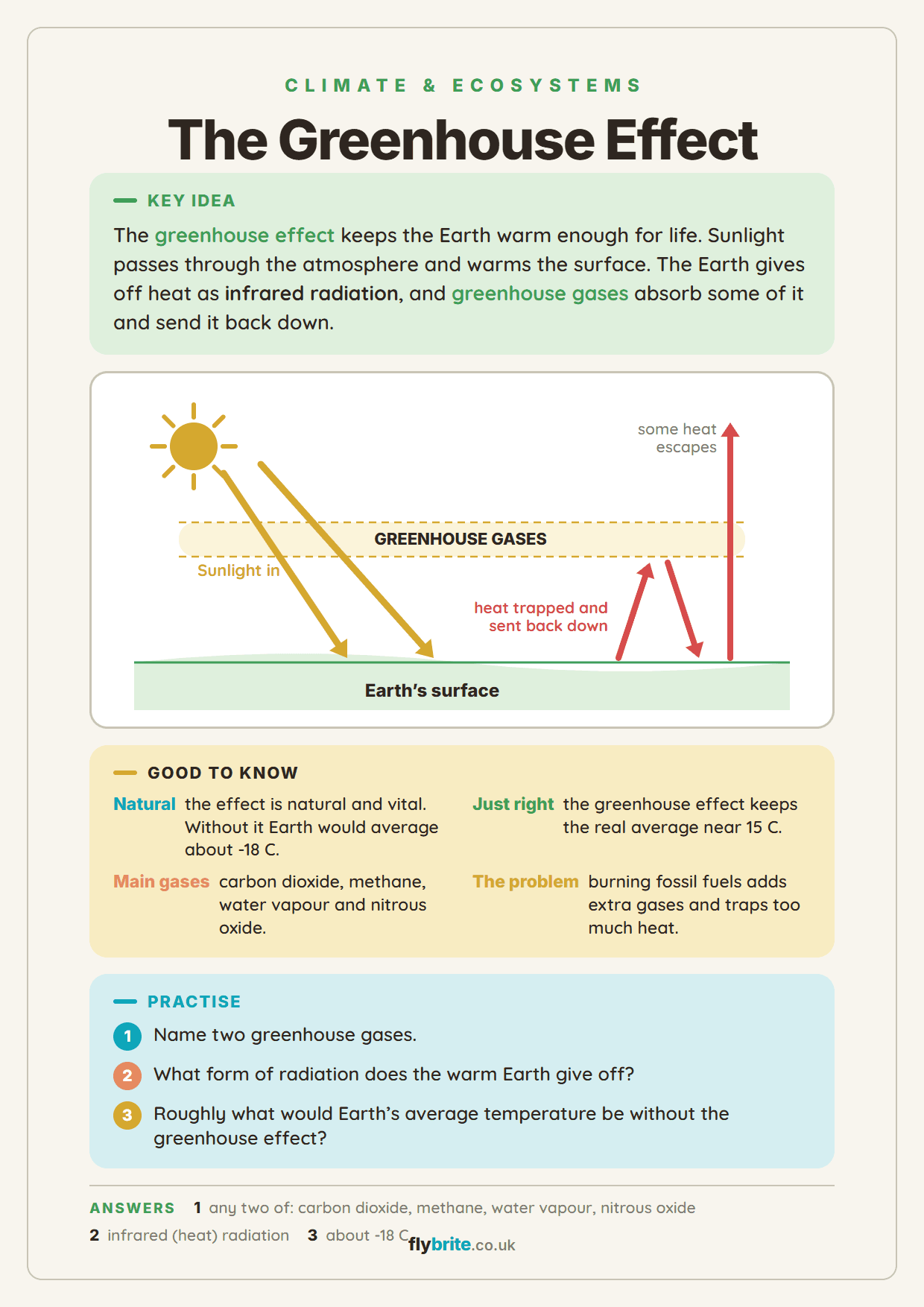
How greenhouse gases trap heat and keep Earth warm enough for life, as a clear labelled diagram.
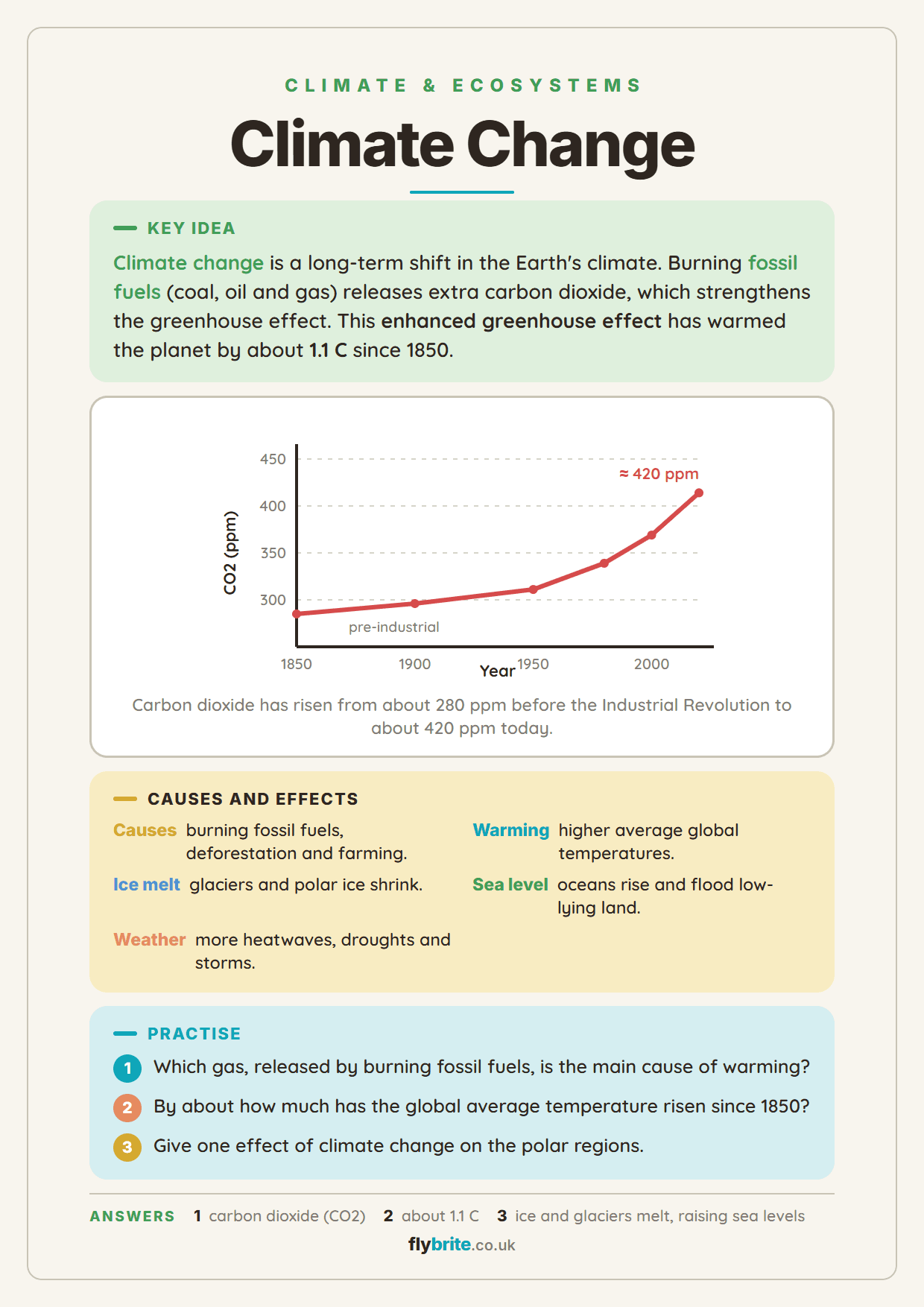
The enhanced greenhouse effect, a real CO2 graph, and the causes and effects of a warming world.
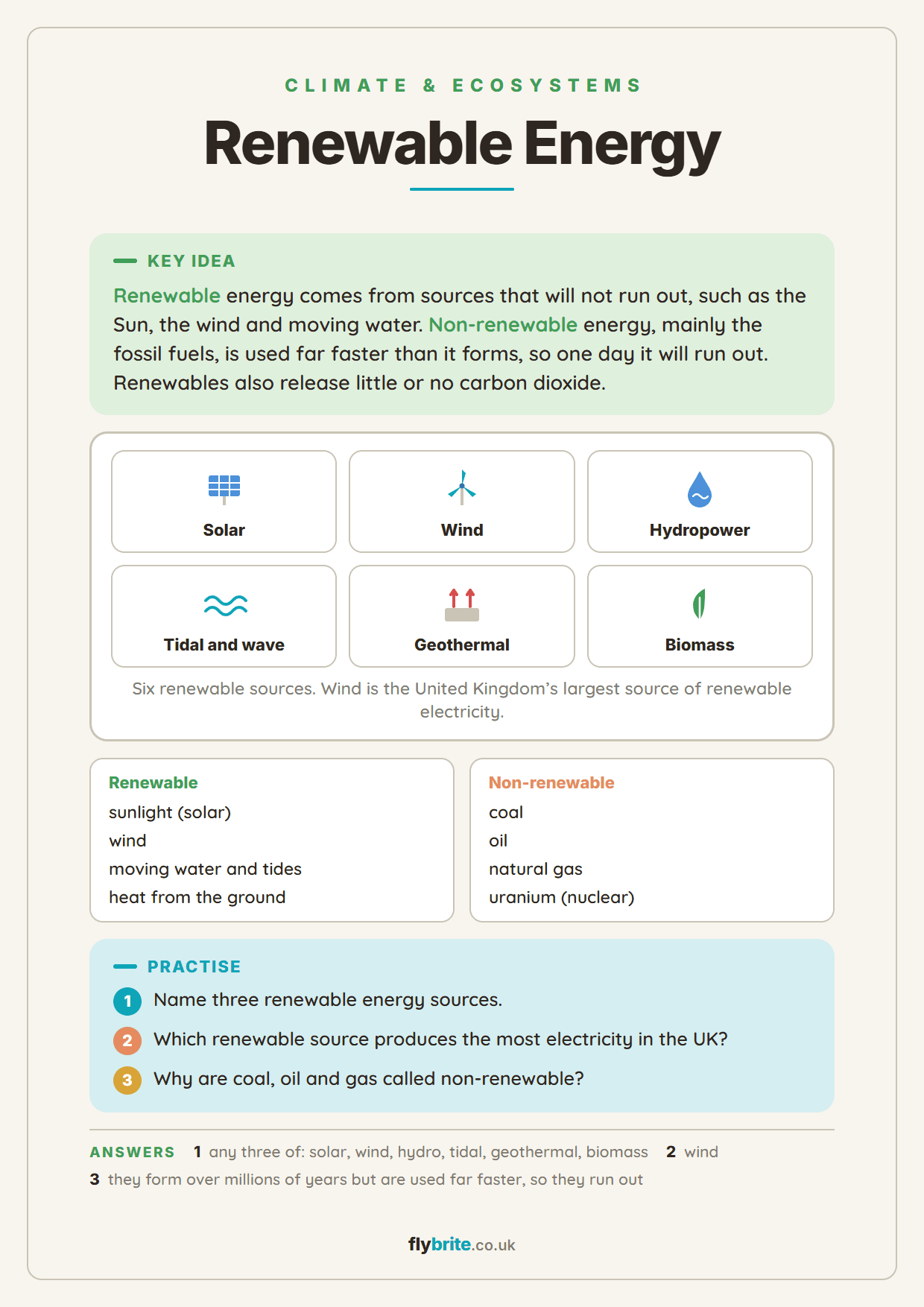
Six renewable sources versus the fossil fuels, why renewables matter, and a UK-focused fact or two.
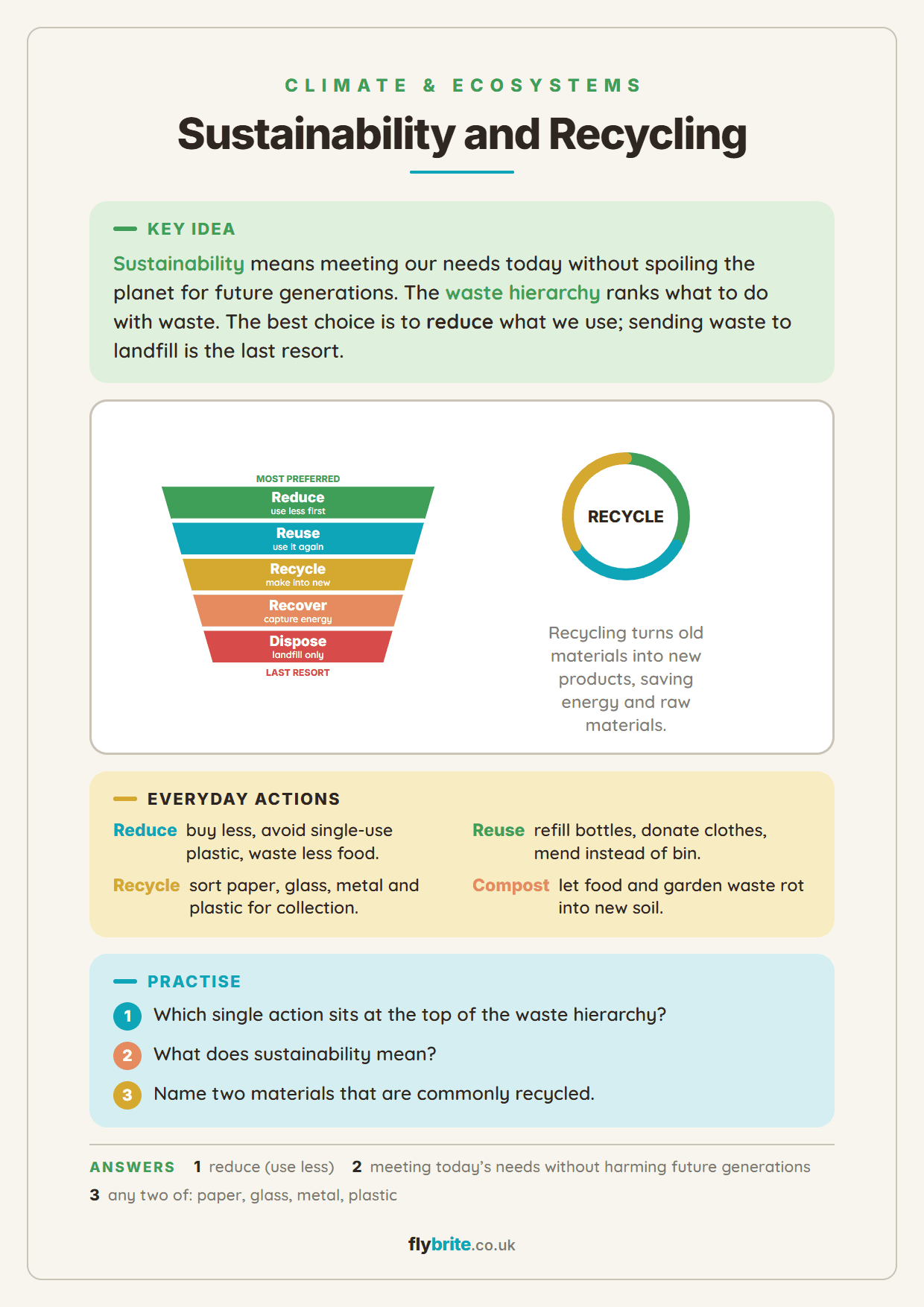
The waste hierarchy from reduce to landfill, the recycling loop, and everyday actions that add up.
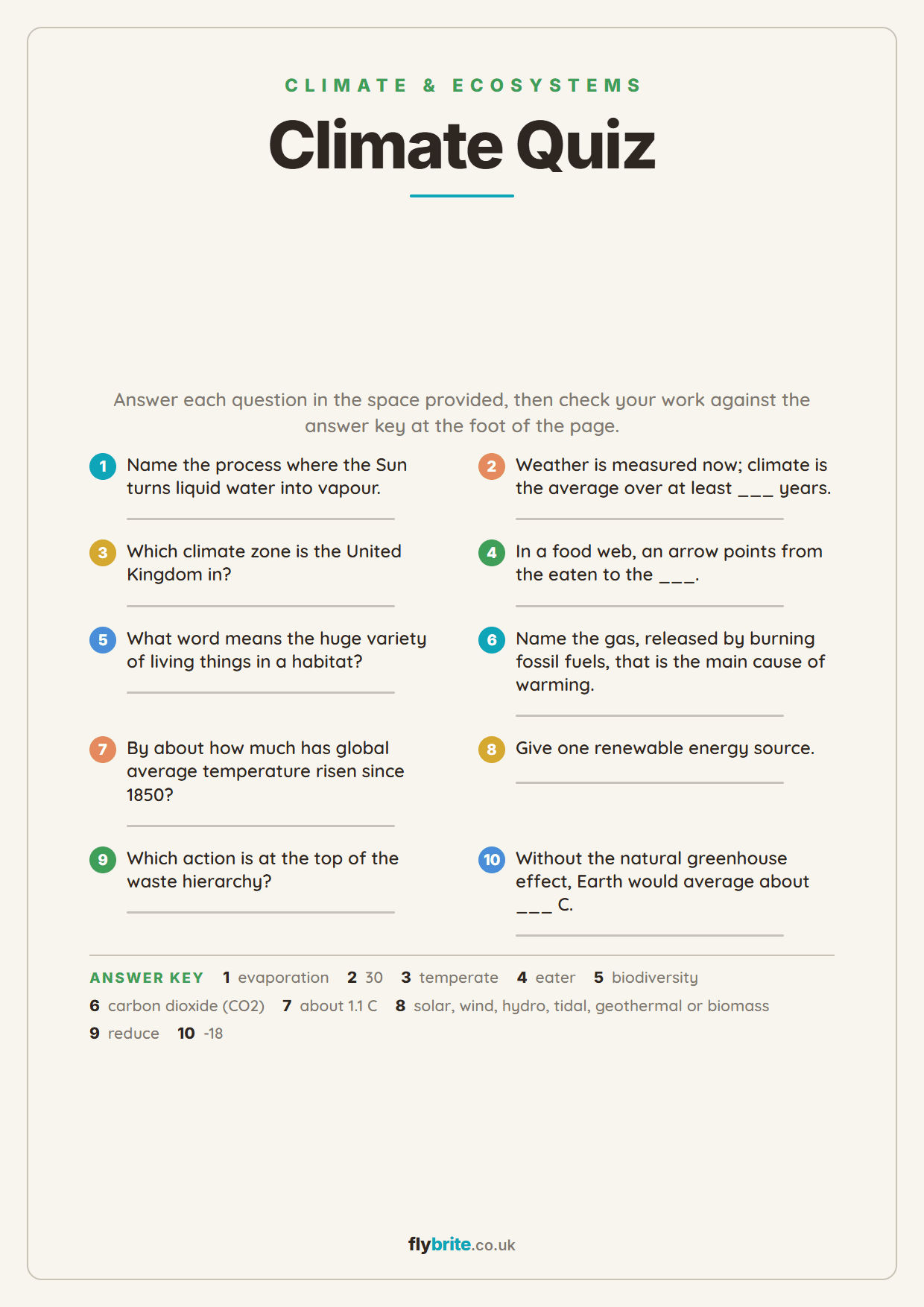 Type or write in
Ten write-in questions covering the whole pack, with a full answer key for easy marking.
KS3 life skills: budgeting, saving, interest, tax, payslips and the money maths of real life.
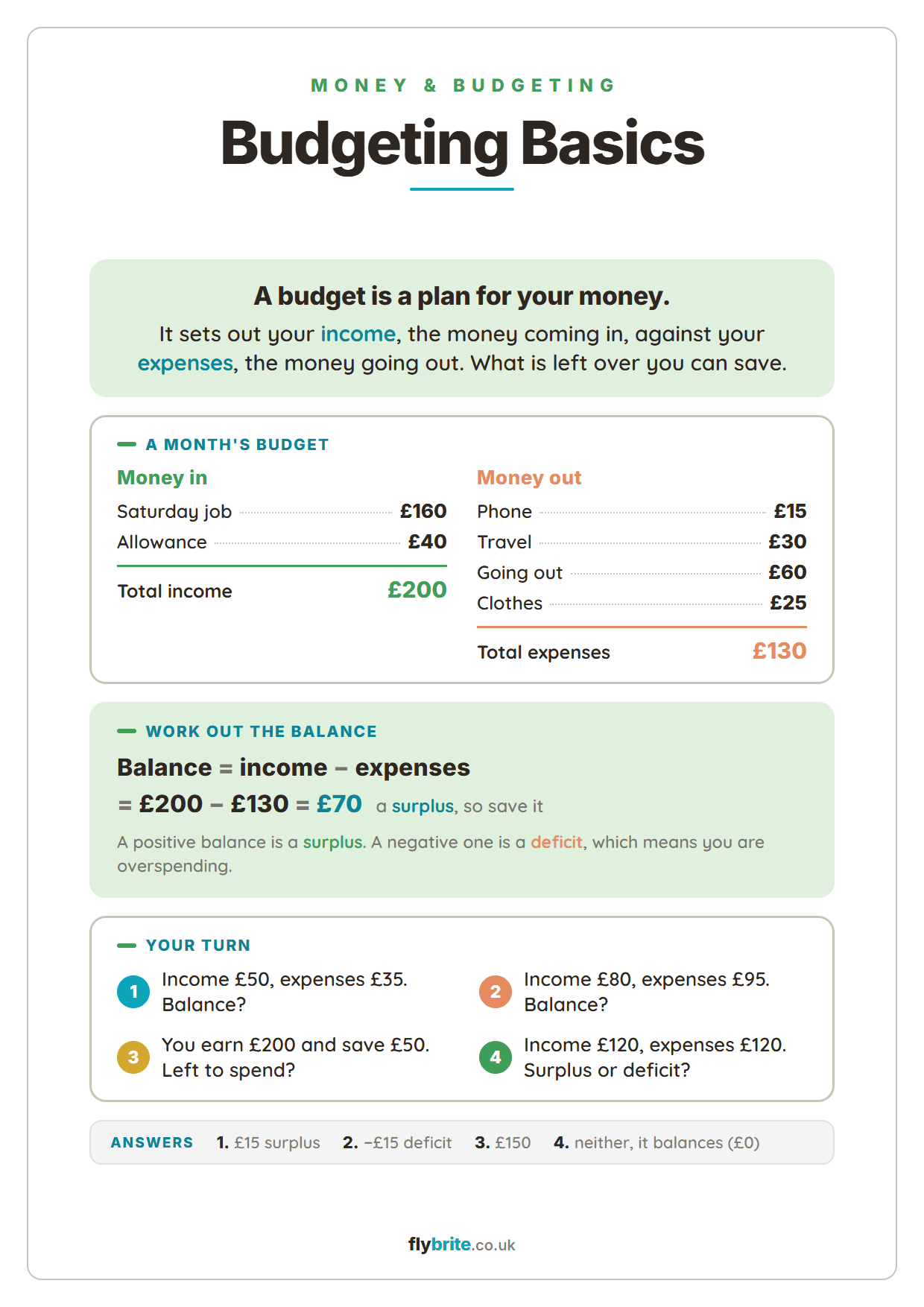
Income against expenses in a real monthly budget, working out the balance and whether it is a surplus or a deficit.
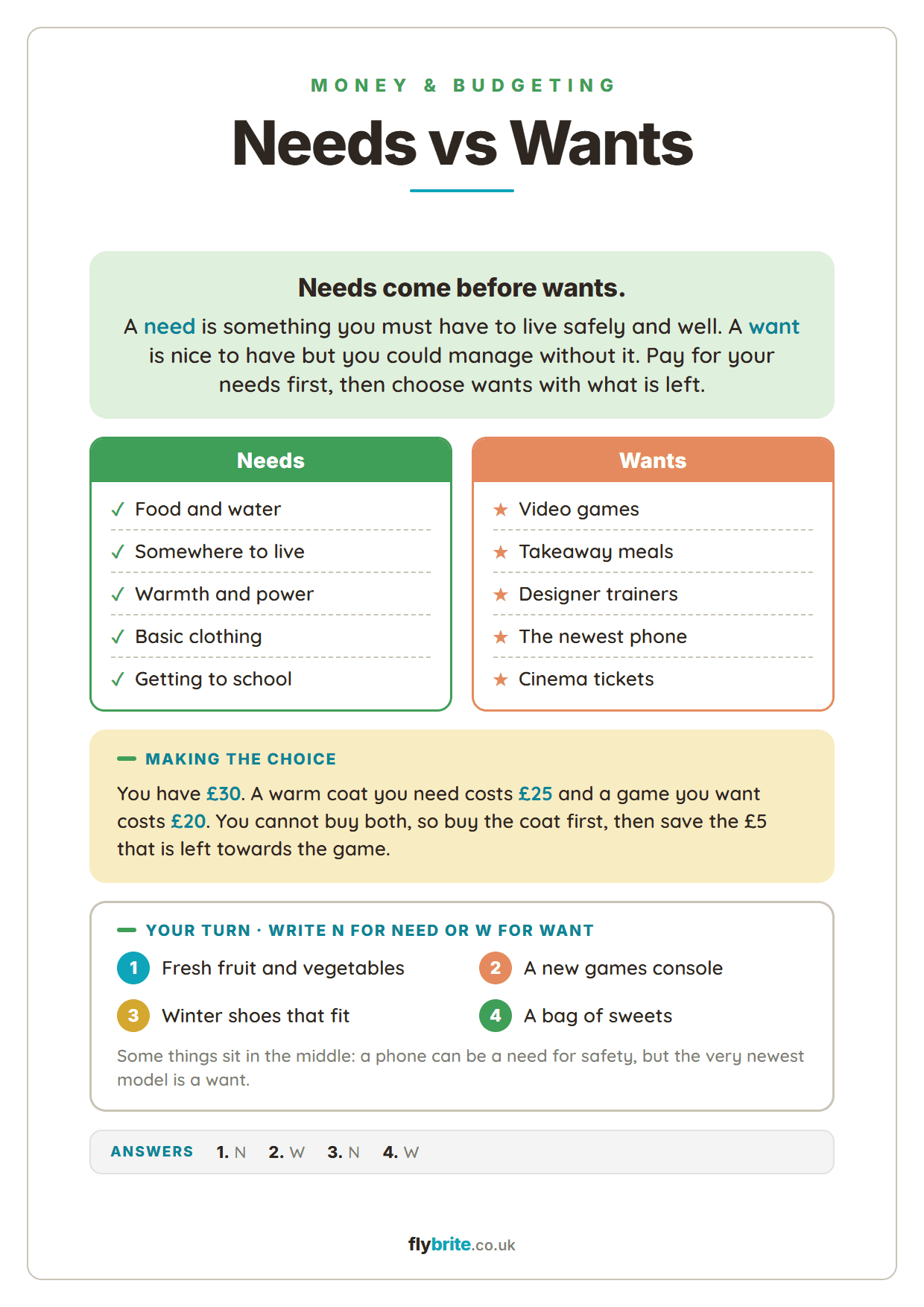
Sorting the things you must have from the things that are nice to have, and why needs get paid for first.
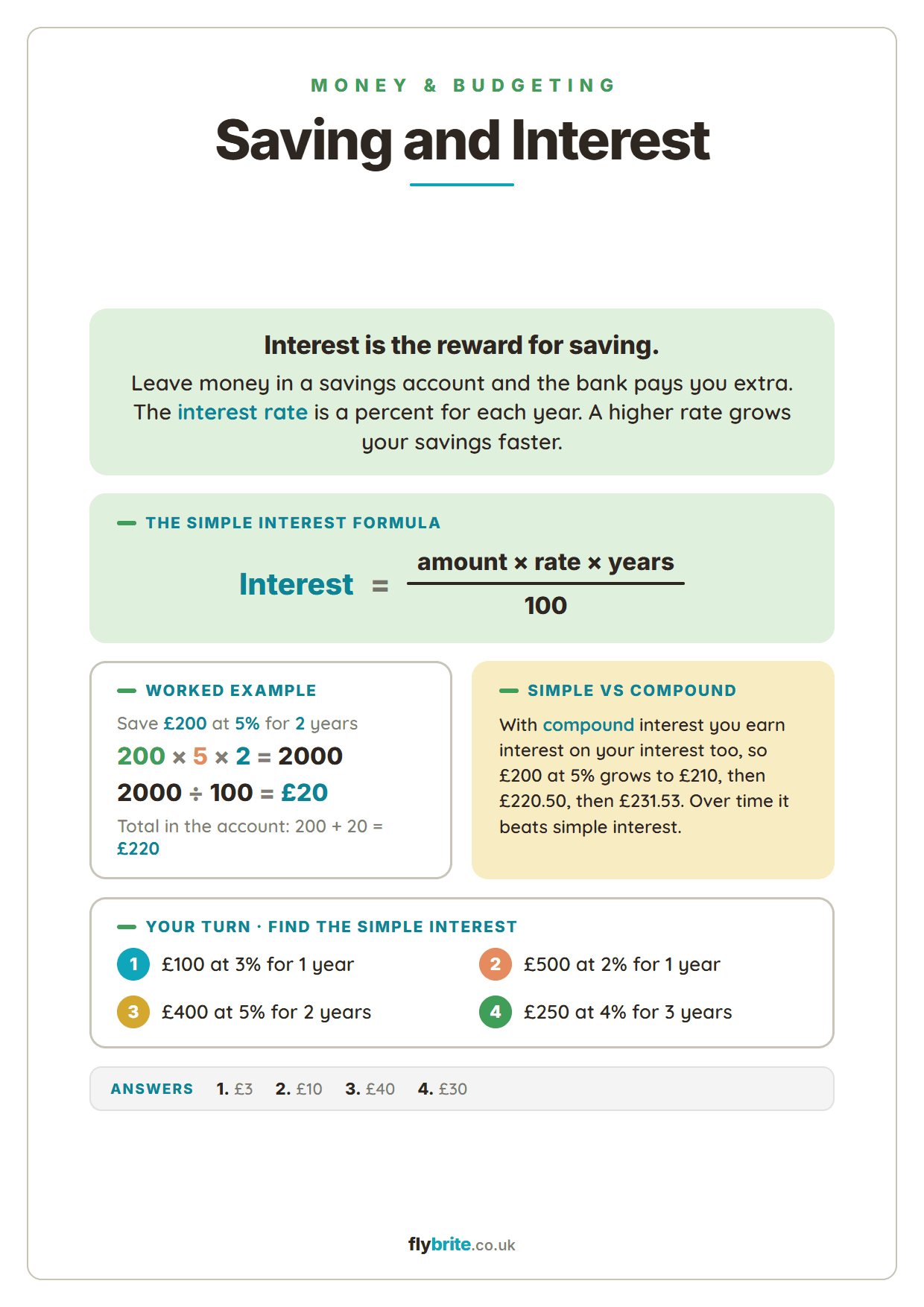
How the simple interest formula works, plus a look at why compound interest grows savings faster over time.
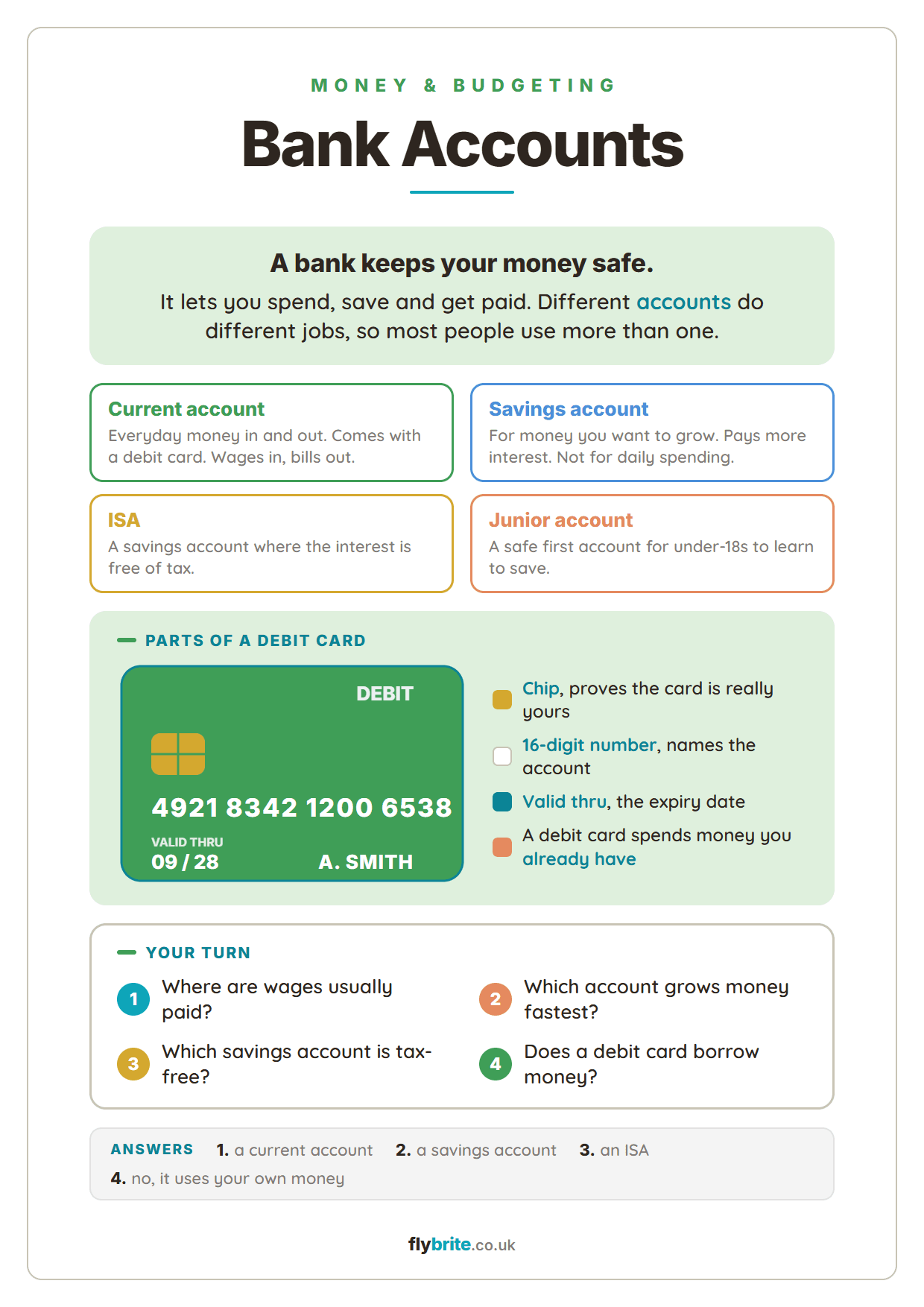
Current, savings, ISA and junior accounts compared, with a labelled debit card and what each part is for.
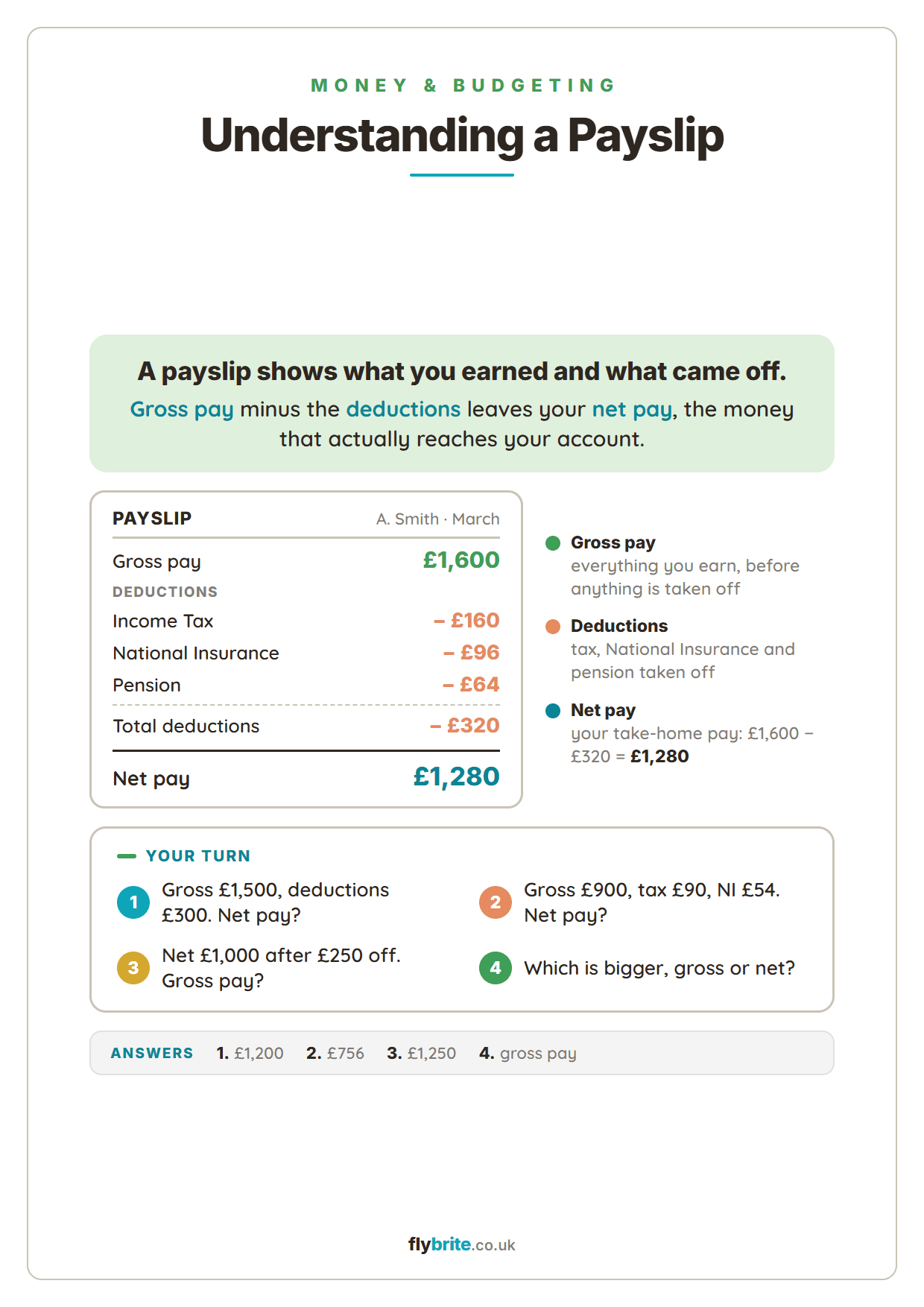
Reading gross pay, deductions and net pay off a real payslip, and working out take-home pay.
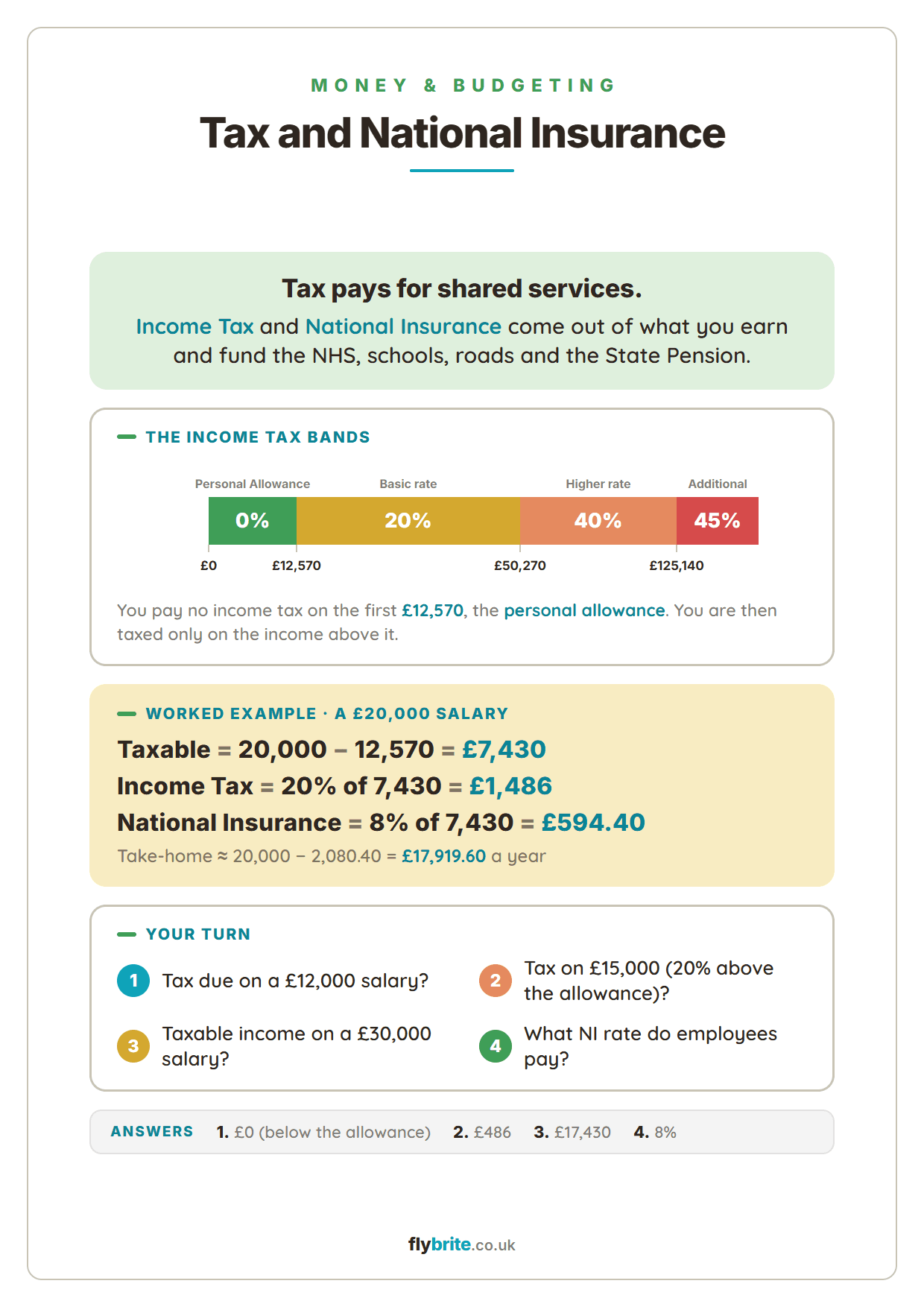
The personal allowance and income tax bands shown on a chart, with a worked example on a £20,000 salary.
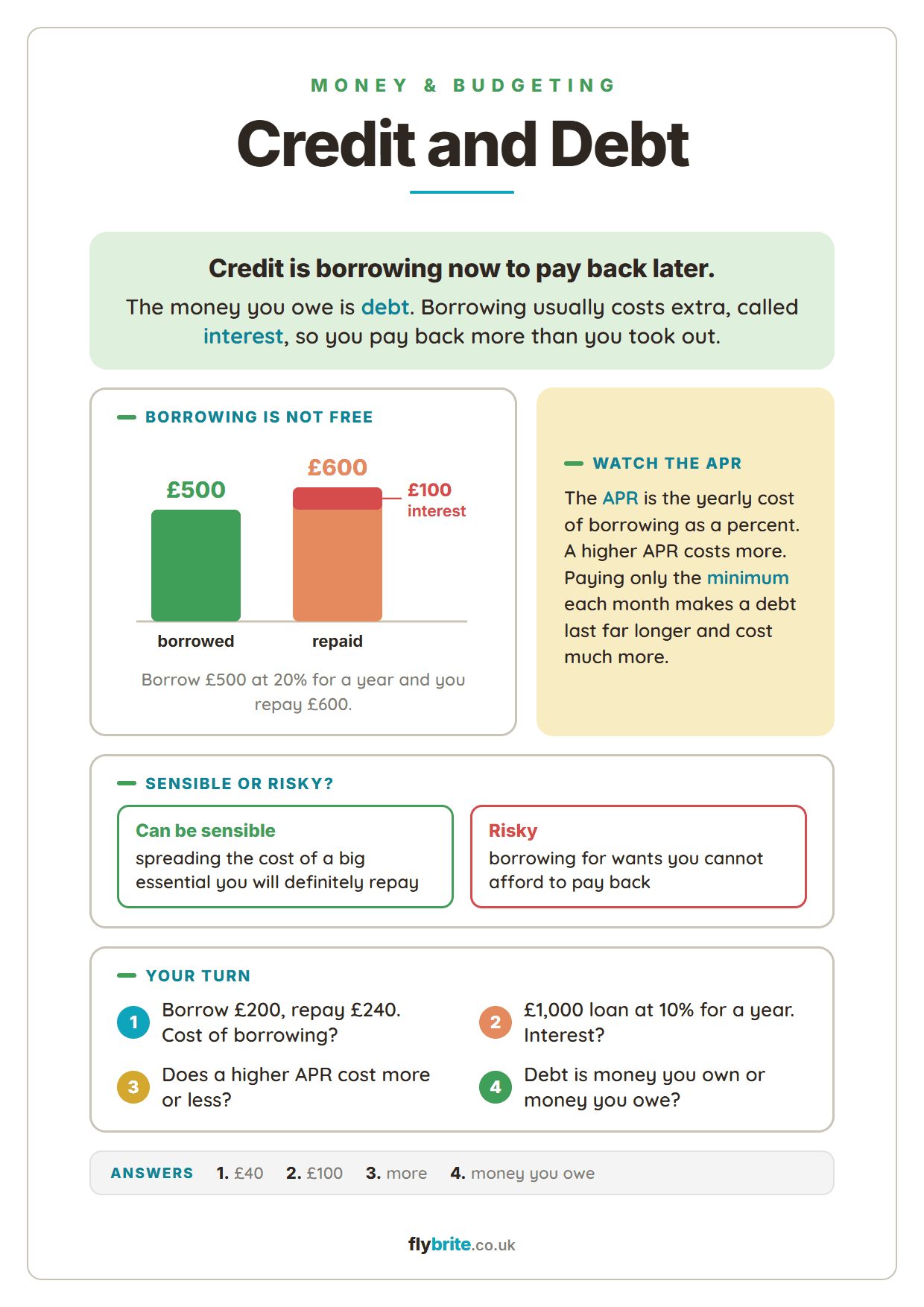
What it really costs to borrow, why APR matters, and the danger of paying only the minimum each month.

Working out the price per unit so you can spot the best value, even when the bigger pack is not the cheapest per gram.
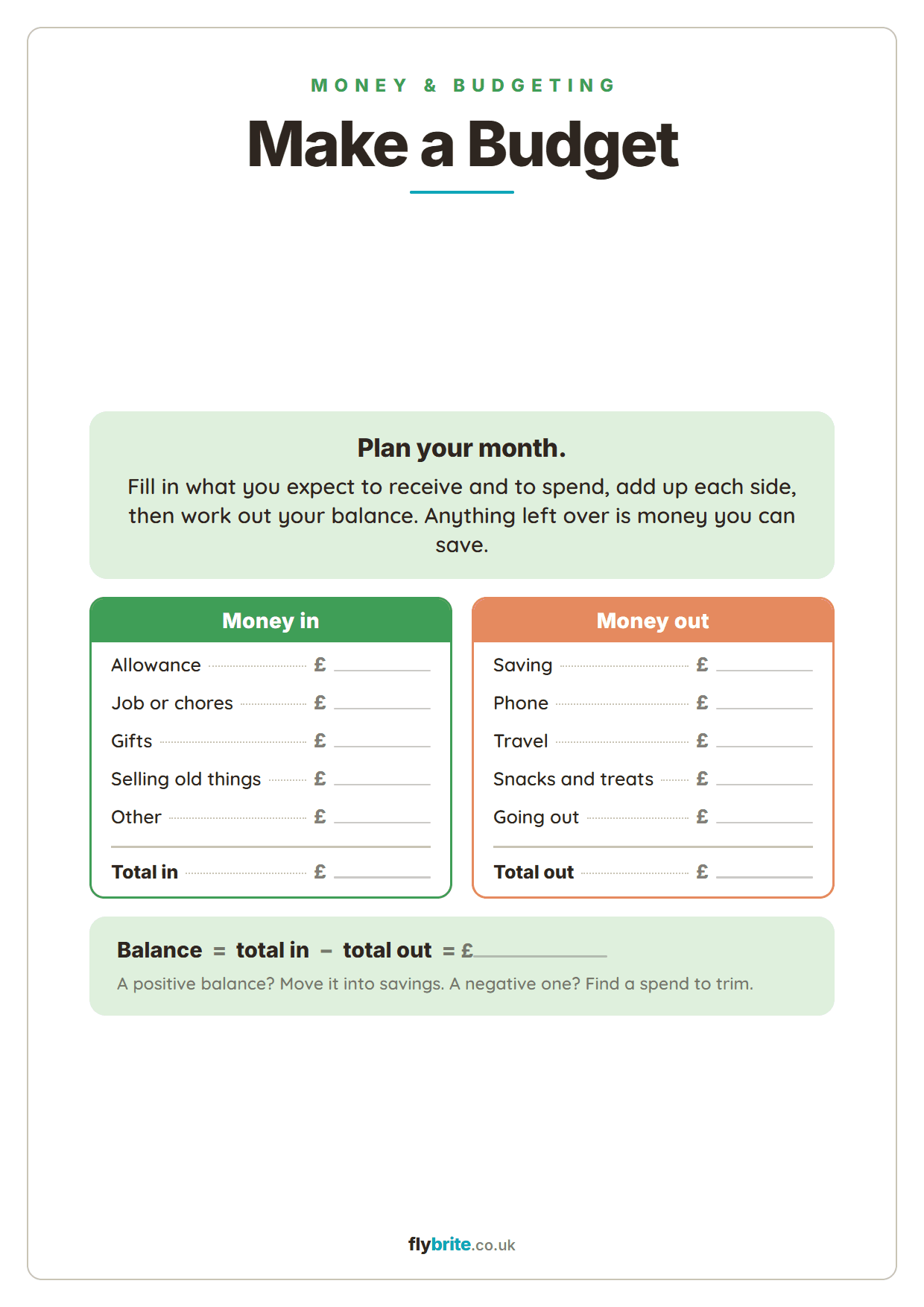 Type or write in
A write-in monthly planner for money in and money out, with space to total each side and find the balance.
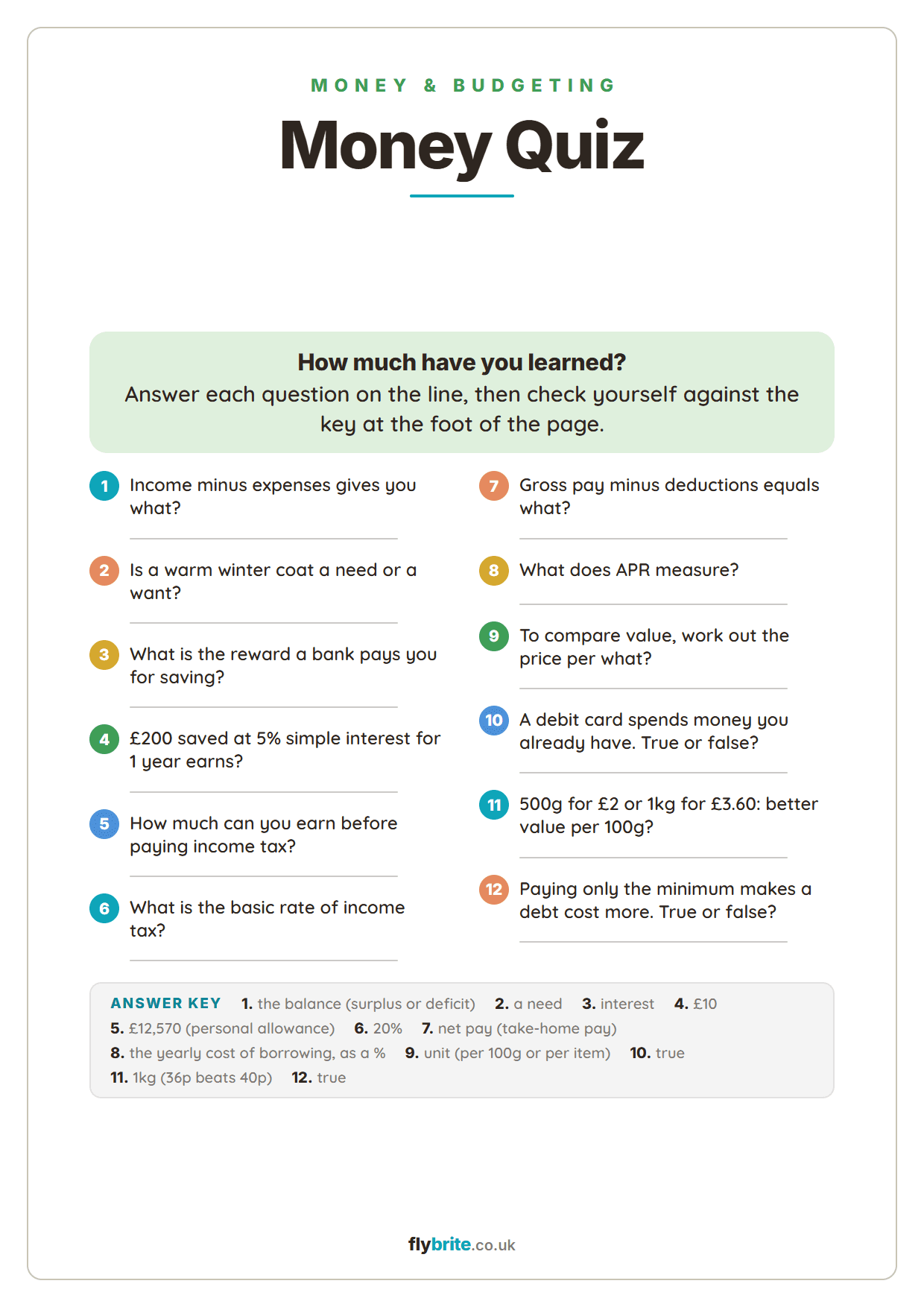 Type or write in
Twelve write-in questions across the whole pack, with a full answer key to mark yourself against.
KS3 life skills: revision timetables, mind maps, flashcards, active recall and beating exam nerves.
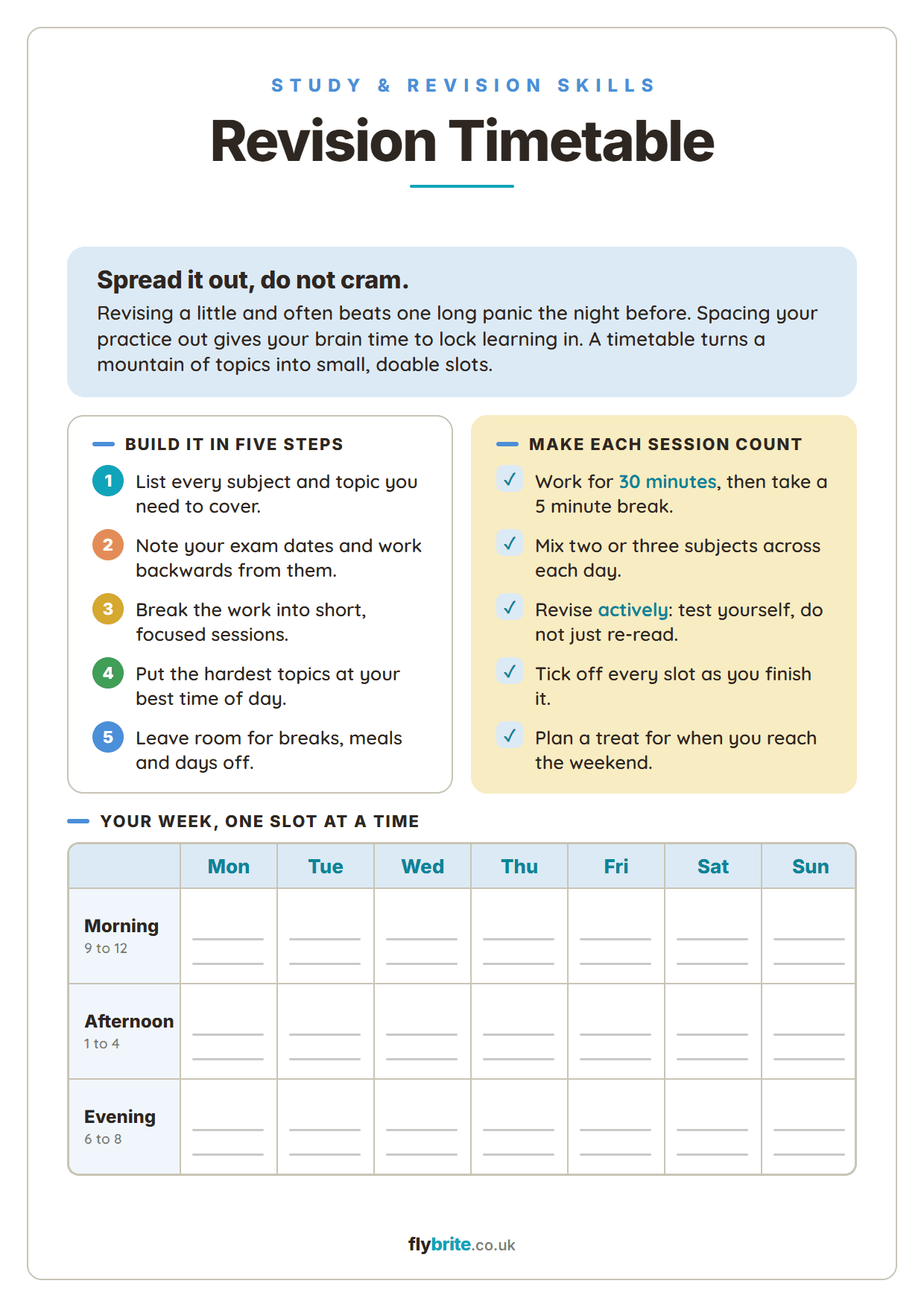 Type or write in
Why spaced revision beats cramming, how to build a timetable in five steps, and an editable weekly grid to fill in.
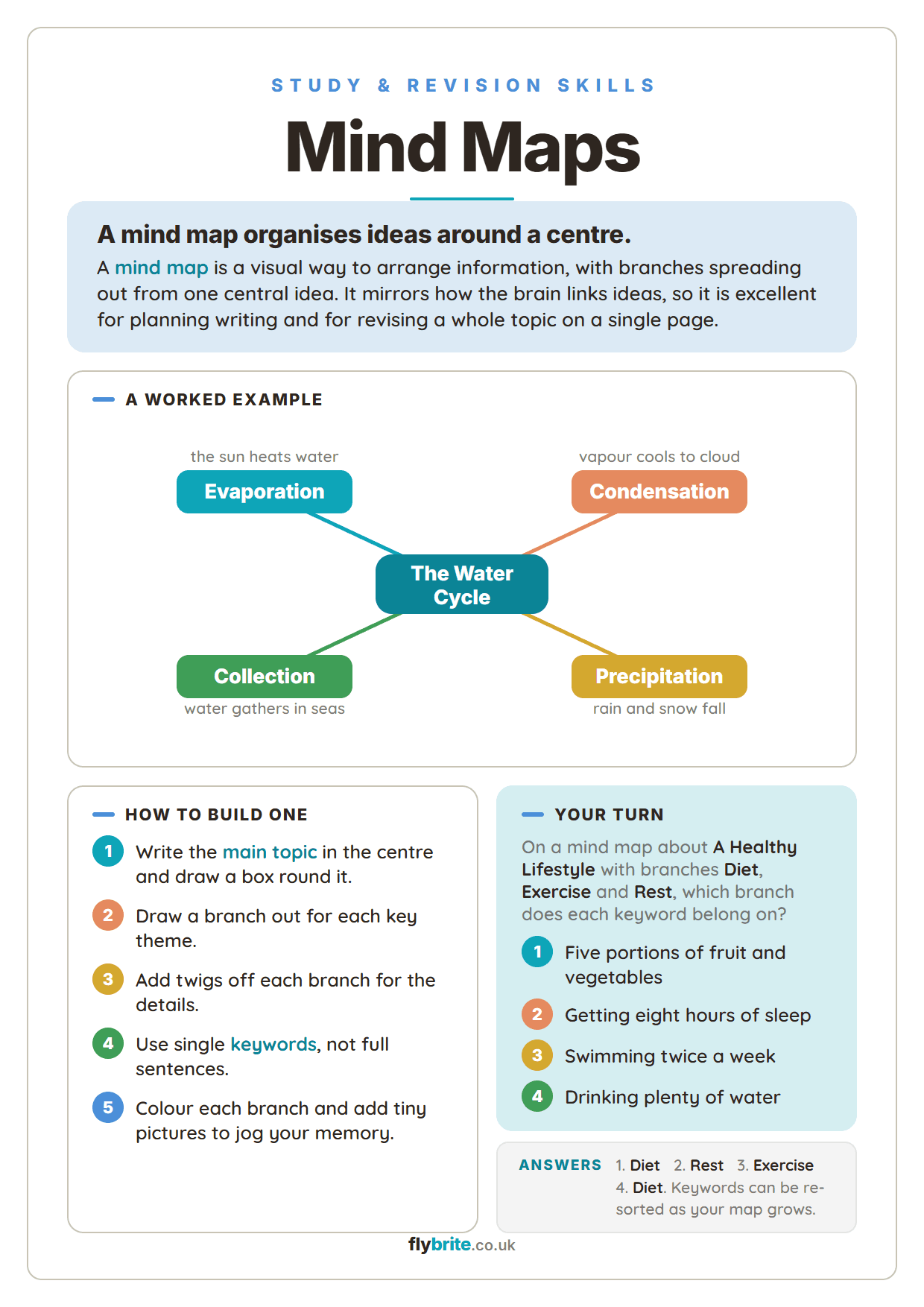
How to organise a topic visually, with a worked water-cycle map, a how-to guide and a sorting task with answers.
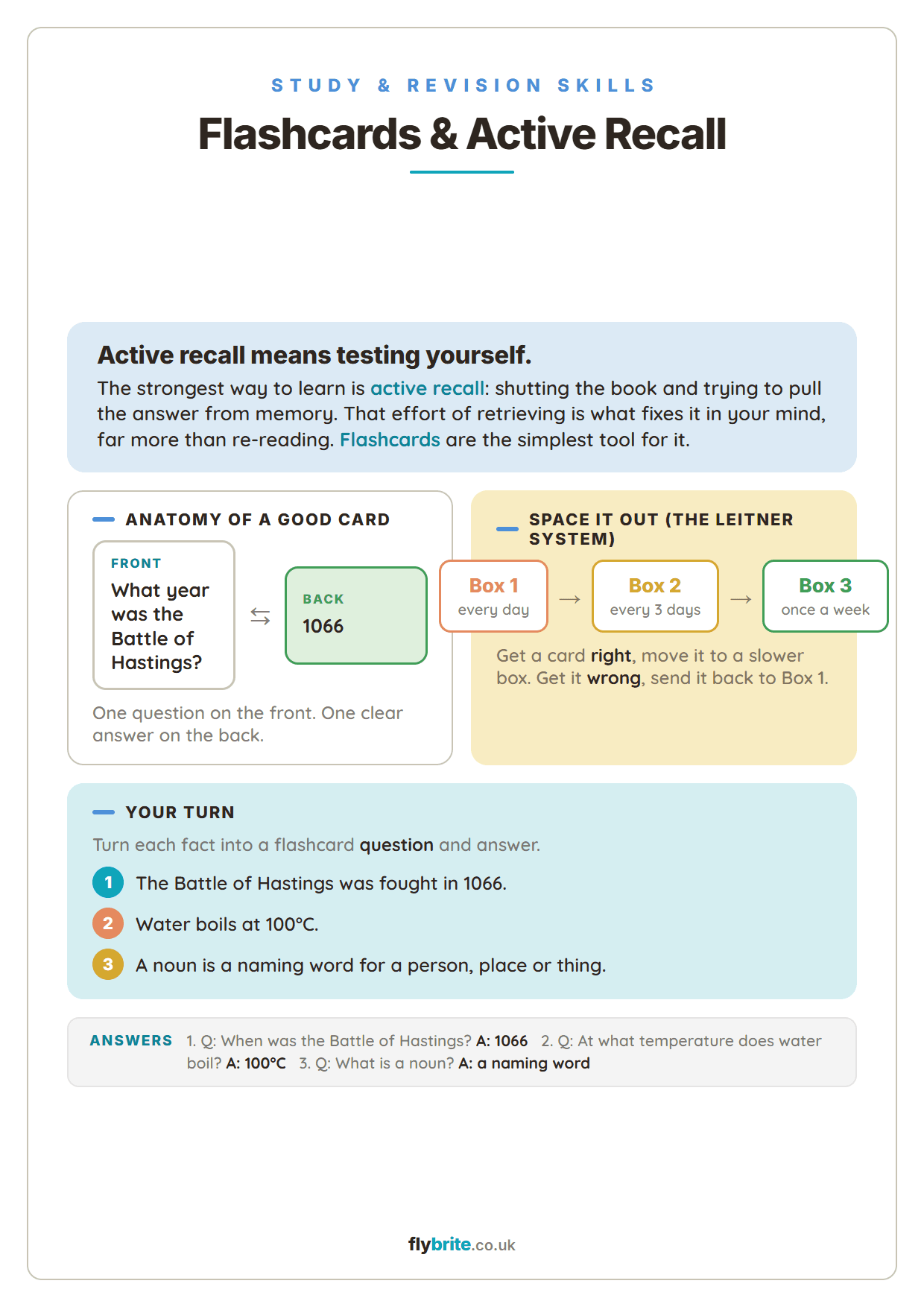
The testing effect explained, the anatomy of a good card, the Leitner system, and turning facts into flashcards.

The three-zone Cornell page shown as a labelled diagram, with what goes where and a which-zone task with answers.
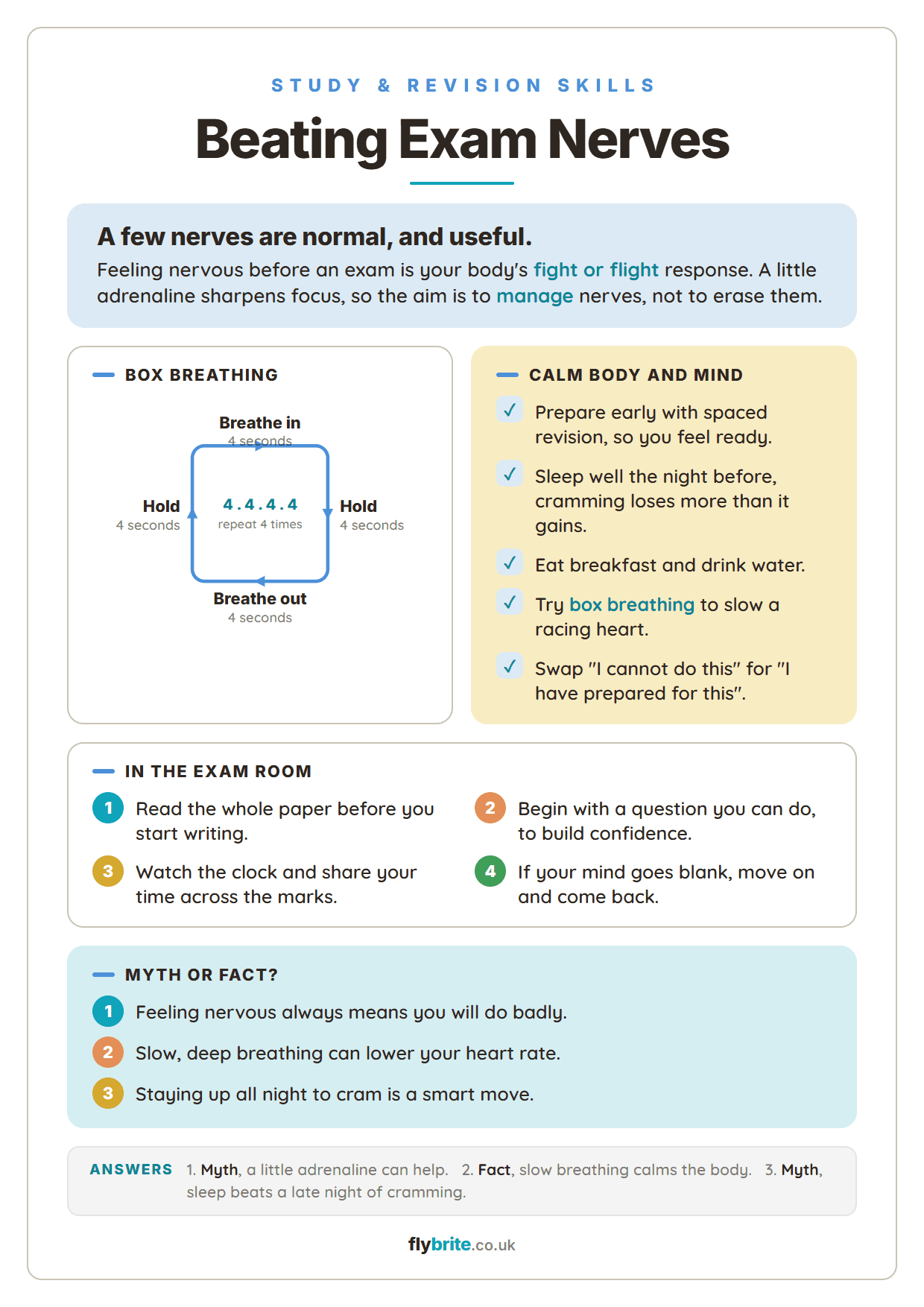
Why nerves happen, a box-breathing diagram, a calming toolkit, exam-room tactics and a myth-or-fact check.
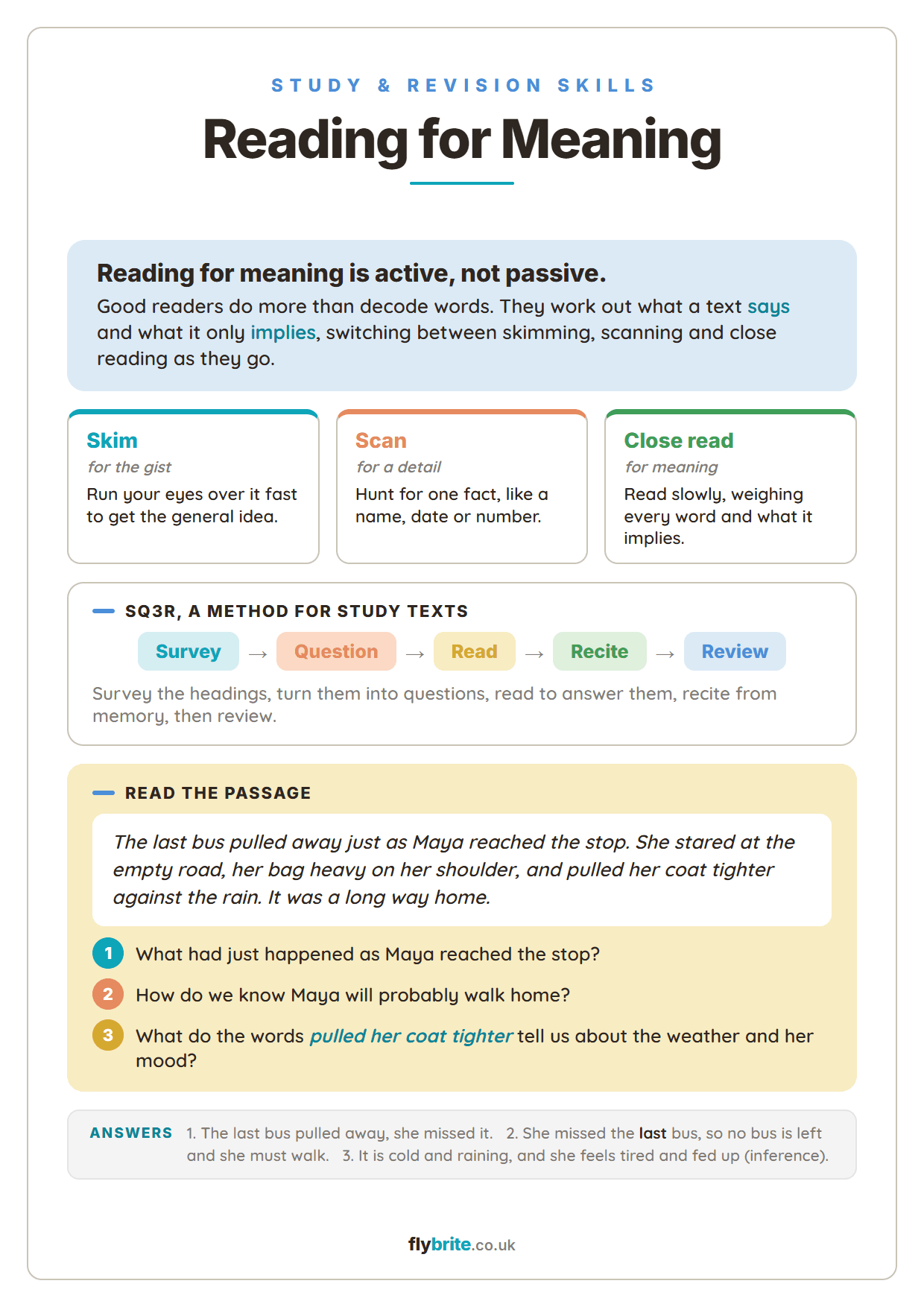
Skim, scan and close read, the SQ3R method, and a short passage with retrieval and inference questions plus answers.
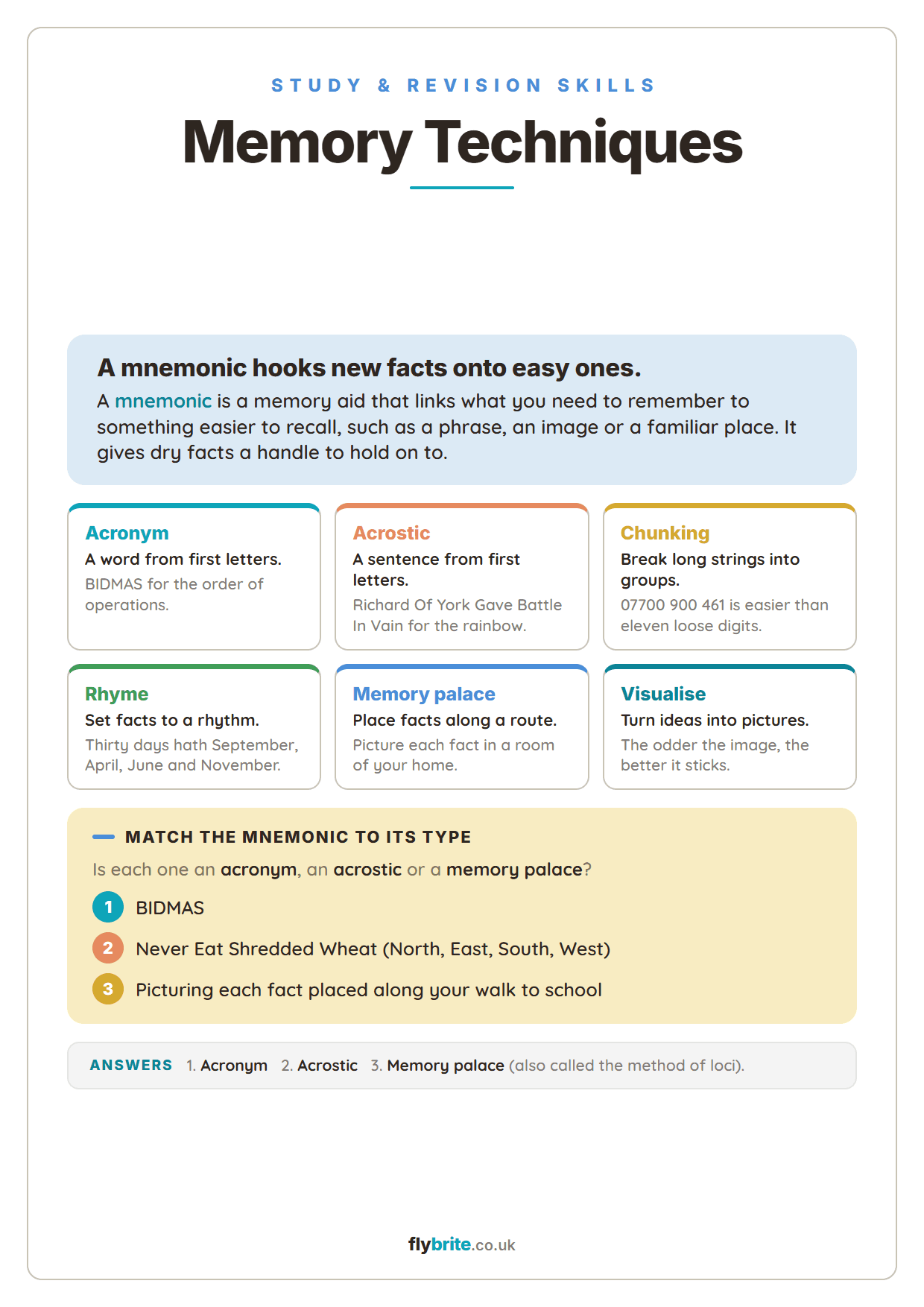
Six mnemonic tricks from acronyms to the memory palace, each with a real example, and a match-the-type task.
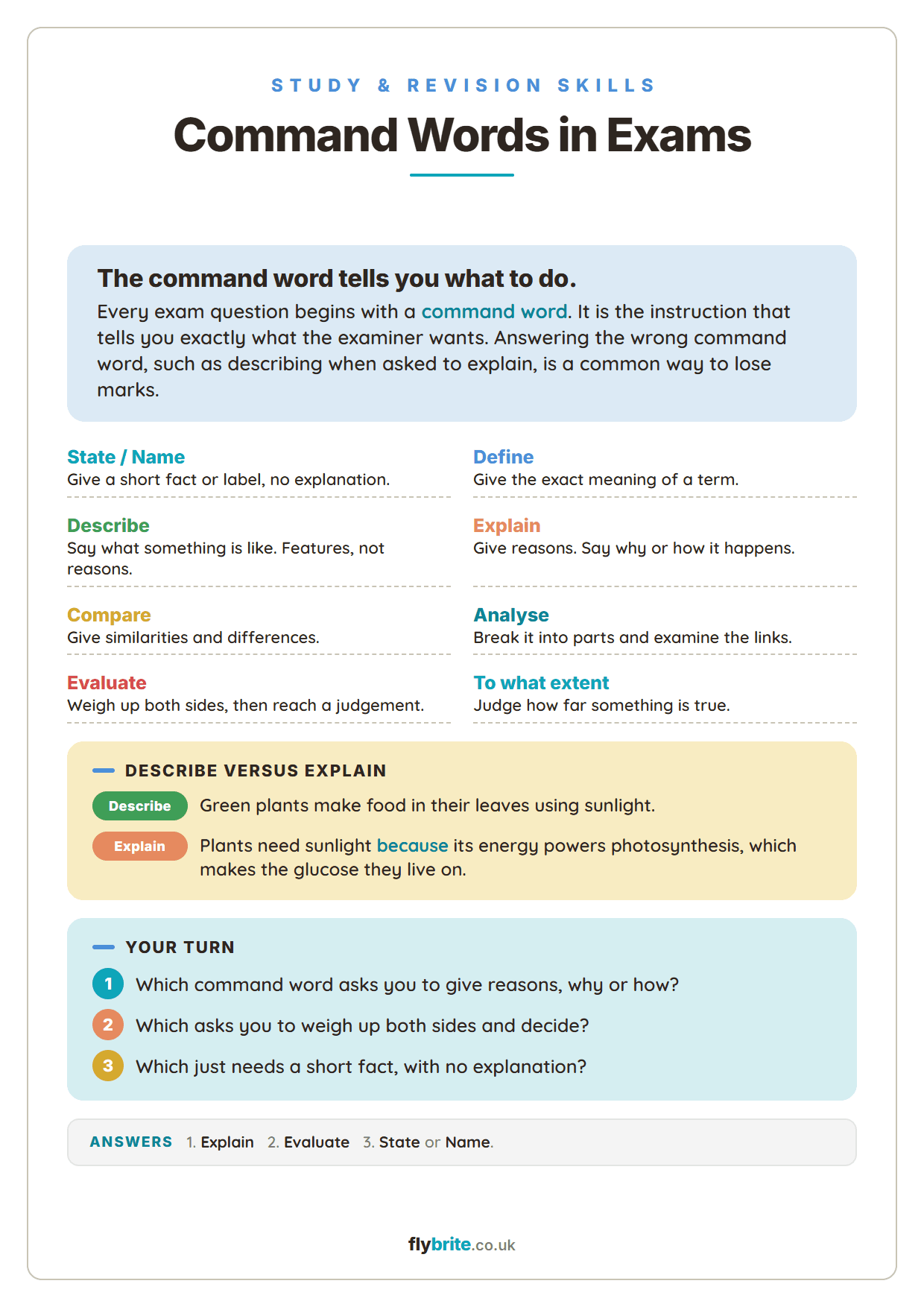
What the instruction words really ask for, a describe-versus-explain worked example, and a matching task with answers.
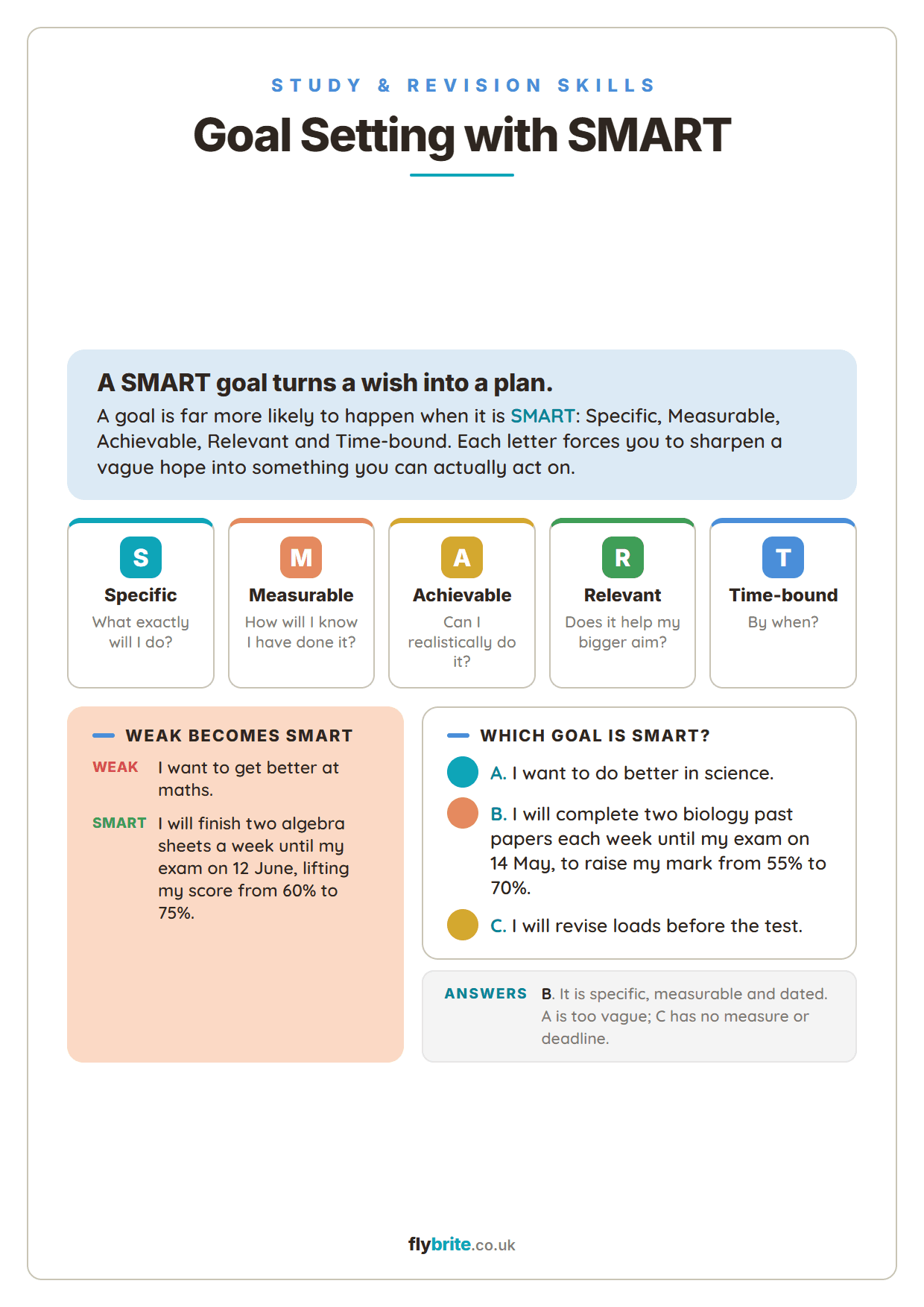
The five SMART criteria as prompts, a weak-versus-SMART rewrite, and a spot-the-SMART-goal task with answers.
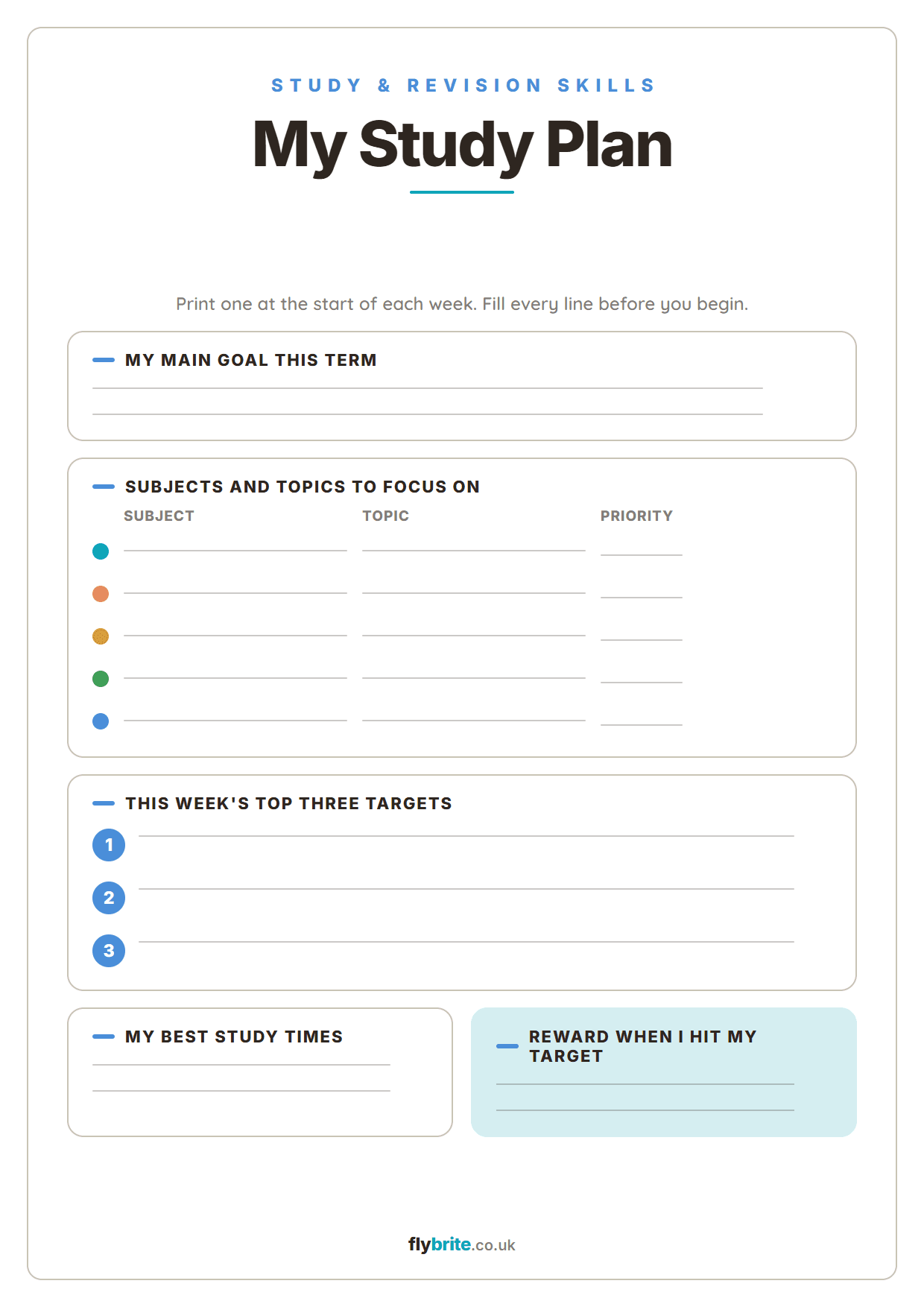 Type or write in
A ready-to-print weekly planner with room for your goal, subjects and topics, top three targets and a reward.
KS3 skills: fact and opinion, bias, evidence, logical fallacies and thinking through a problem.
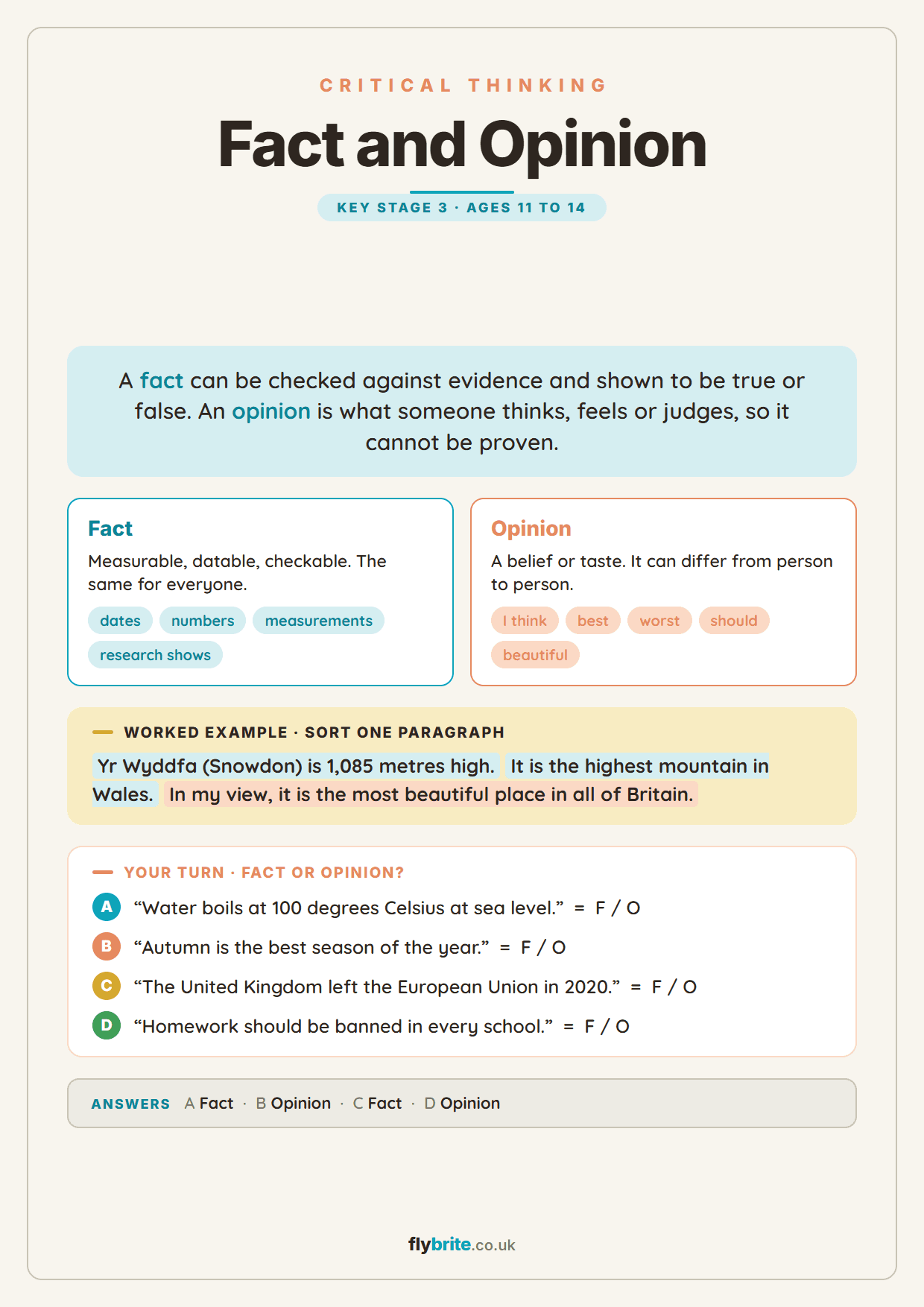
Telling what can be proven from what someone believes, with signal words, a colour-coded paragraph and statements to classify.
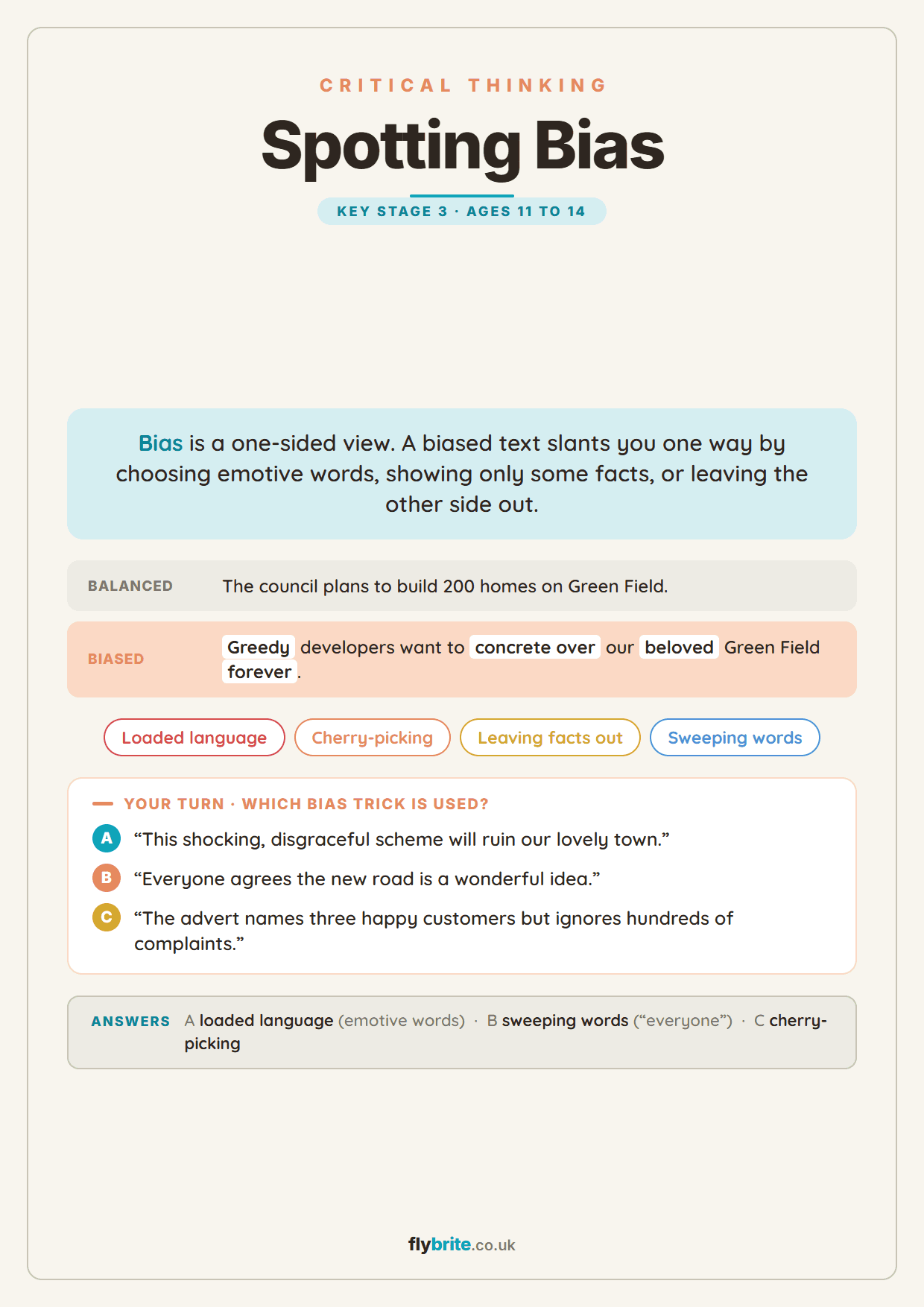
How a one-sided text slants you, balanced against biased, with the common tricks and lines to unpick.
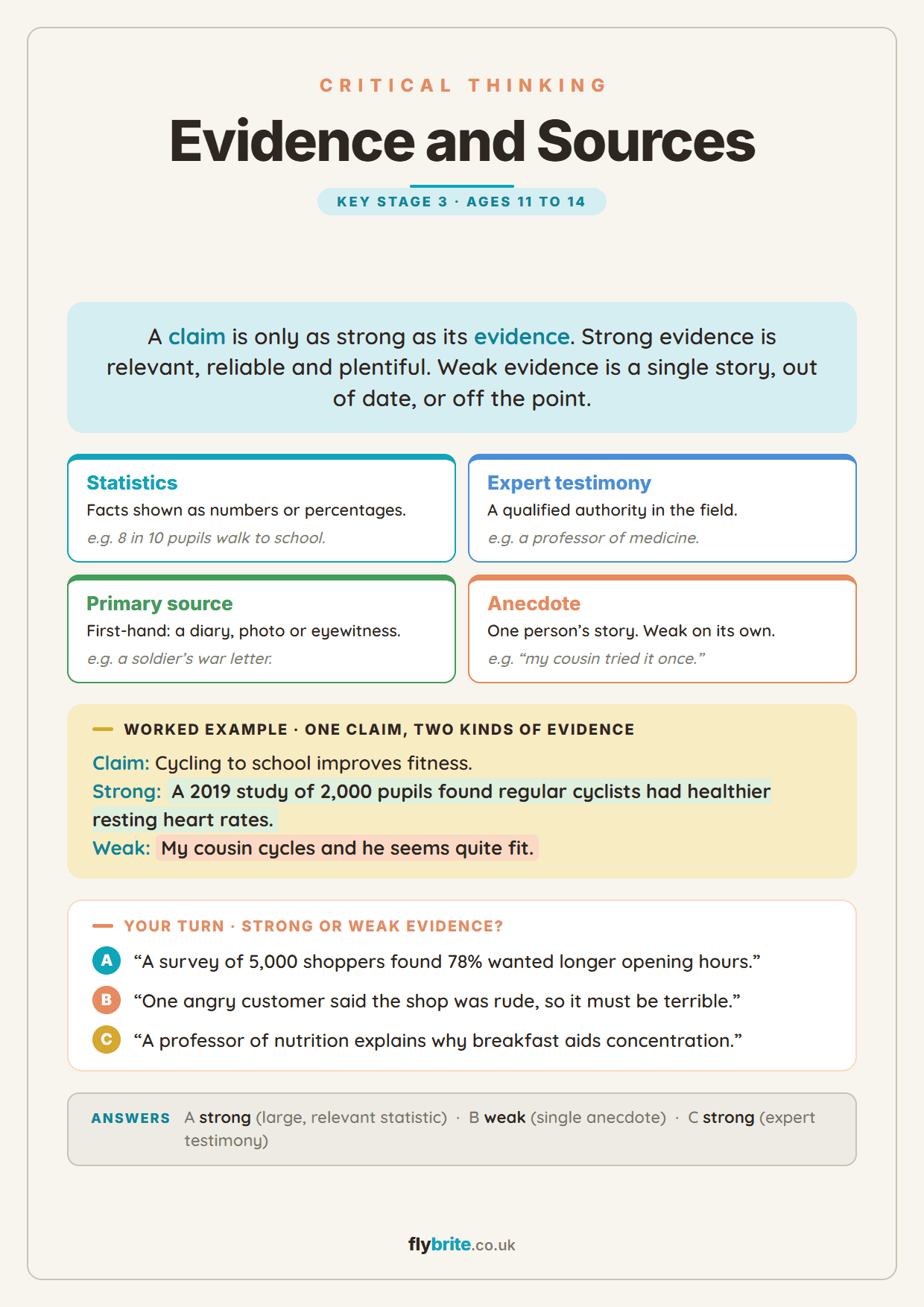
What makes a claim stand up, with four kinds of evidence, strong against weak, and pieces to weigh.
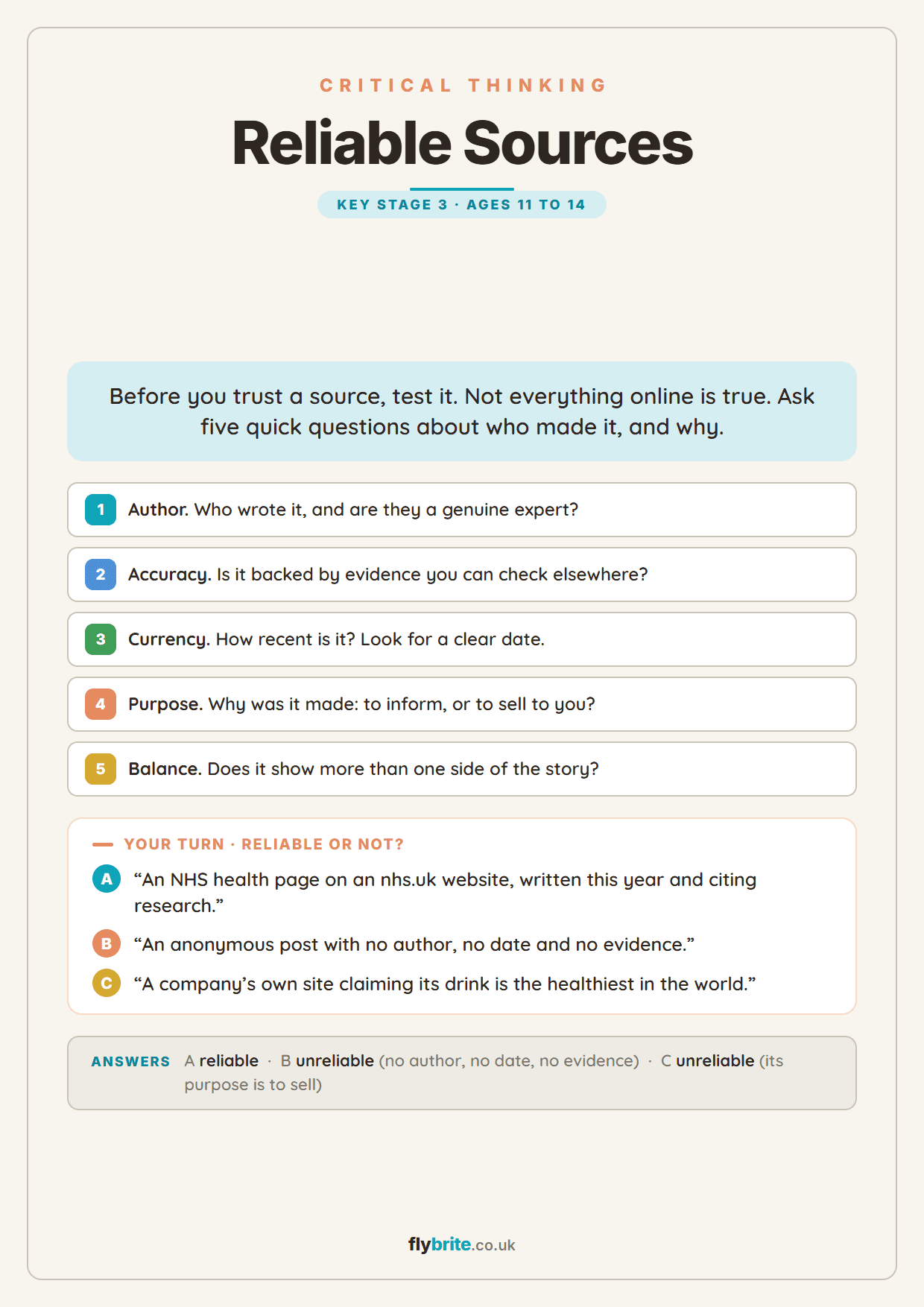
Five quick tests for trusting a source, author to balance, with sources to judge as reliable or not.
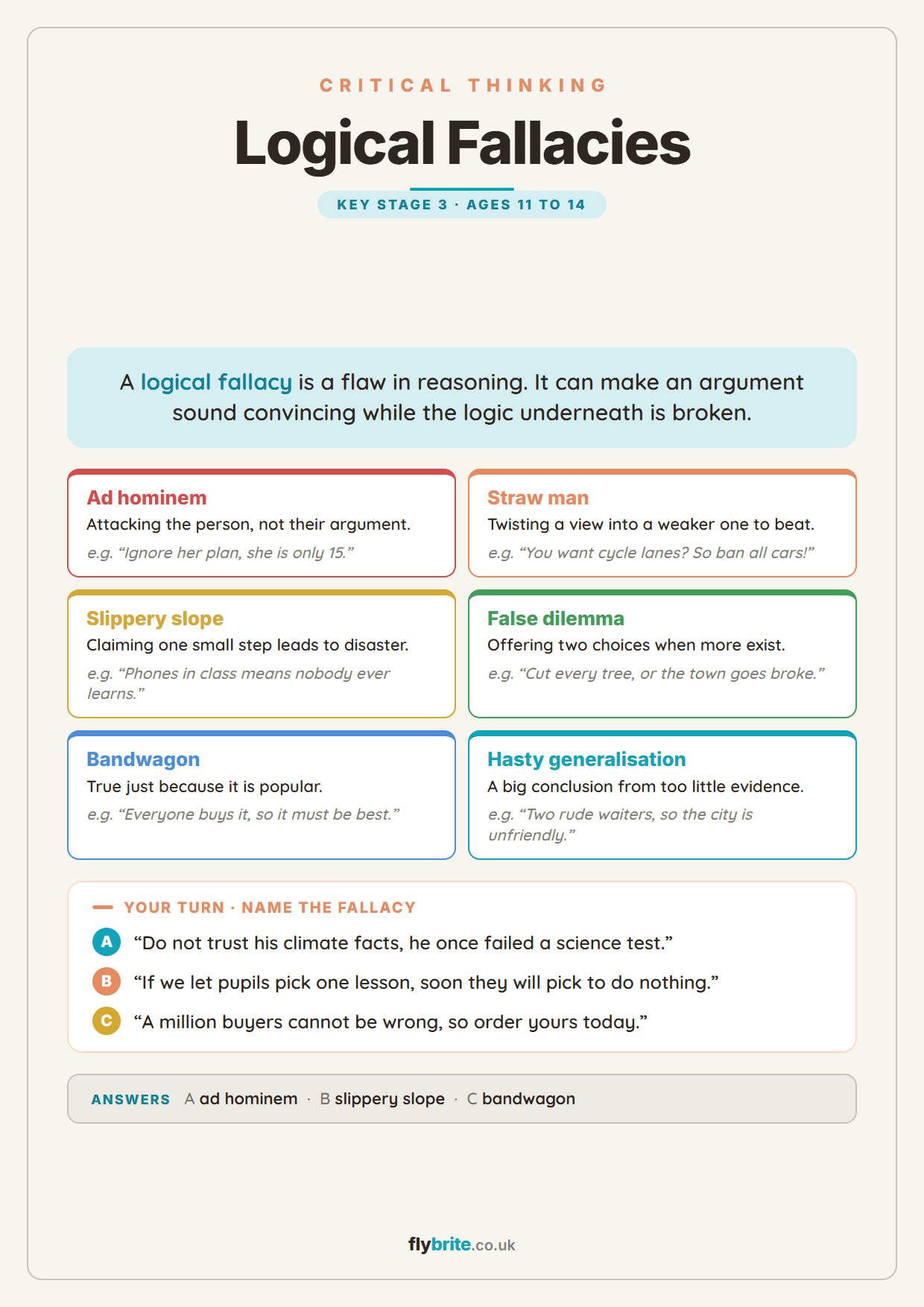
Six flaws in reasoning that sound convincing, from ad hominem to bandwagon, each with an example to name.
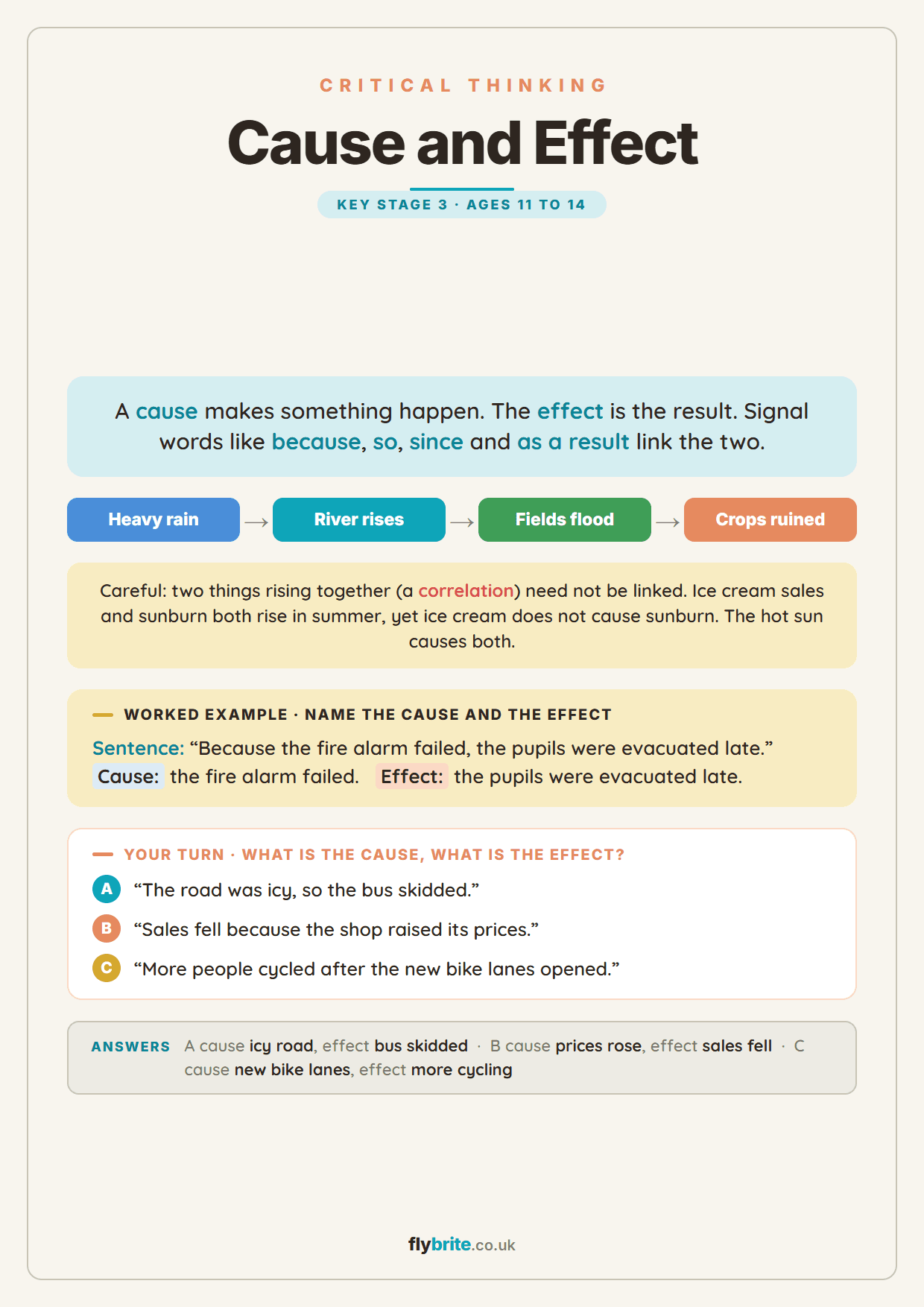
What makes something happen and why correlation is not causation, with a labelled chain and sentences to unpick.
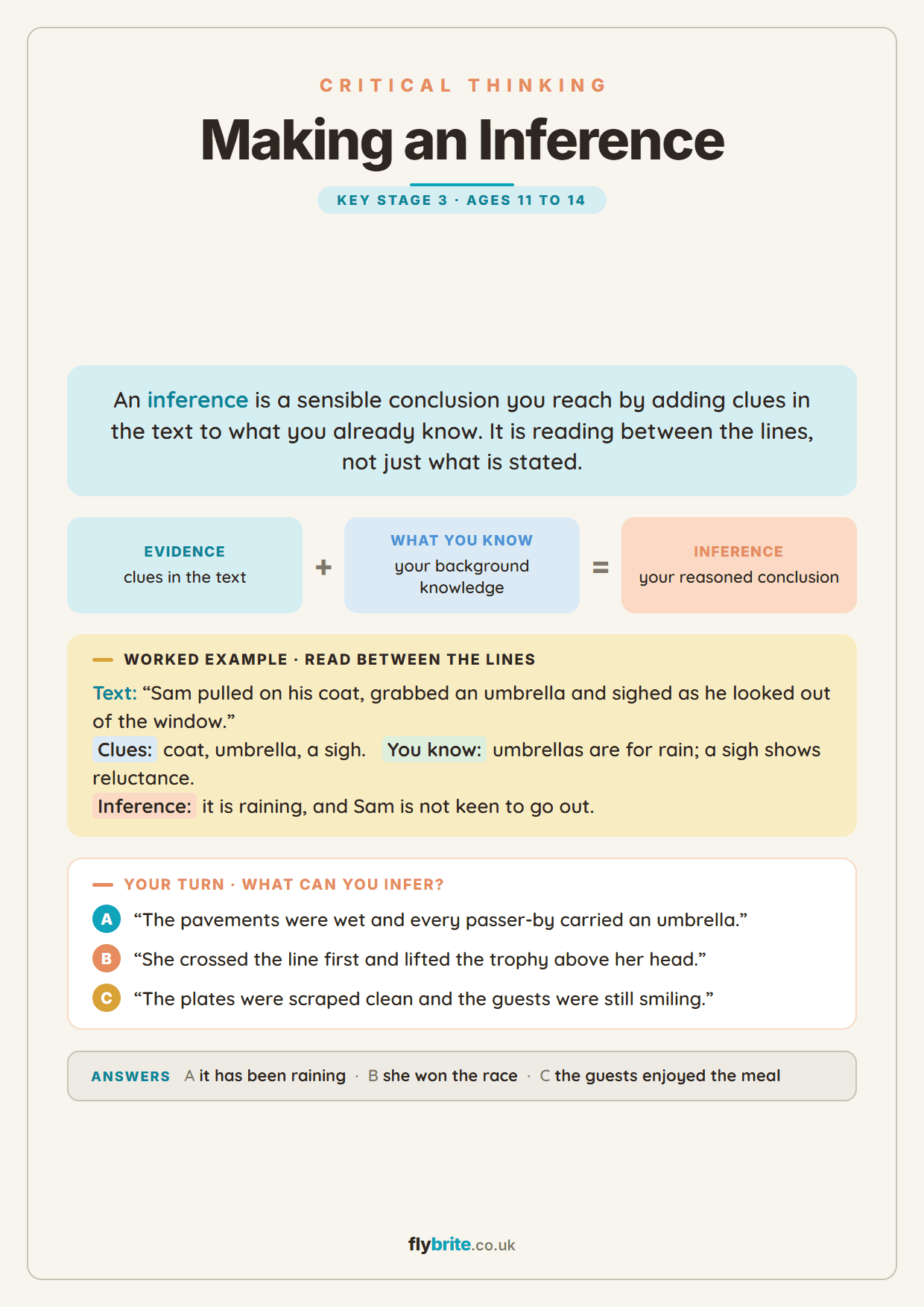
Reading between the lines, with the evidence plus knowledge formula, a worked example and clues to interpret.
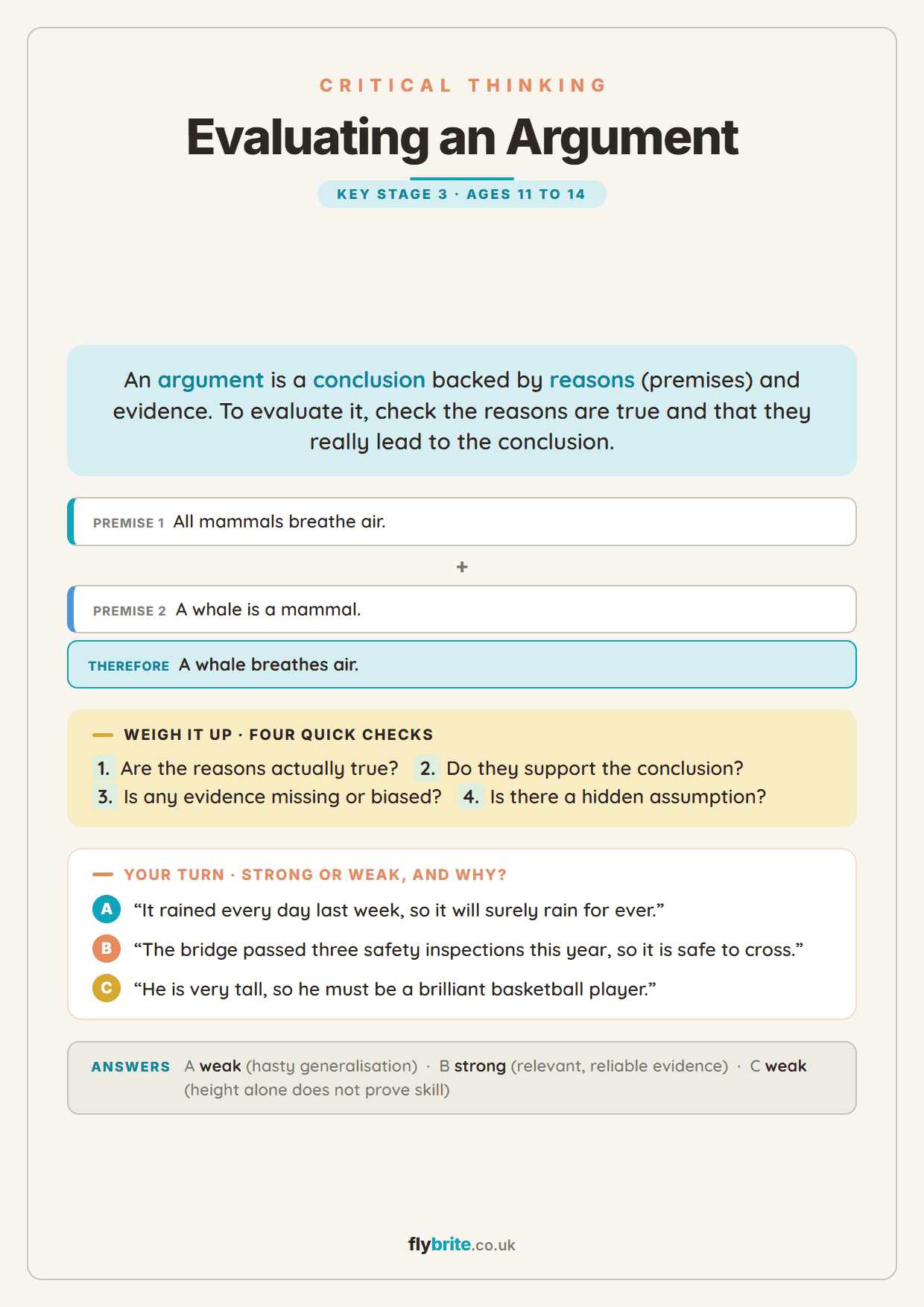
Premises, conclusion and four quick checks, with a clear worked syllogism and arguments to rate strong or weak.
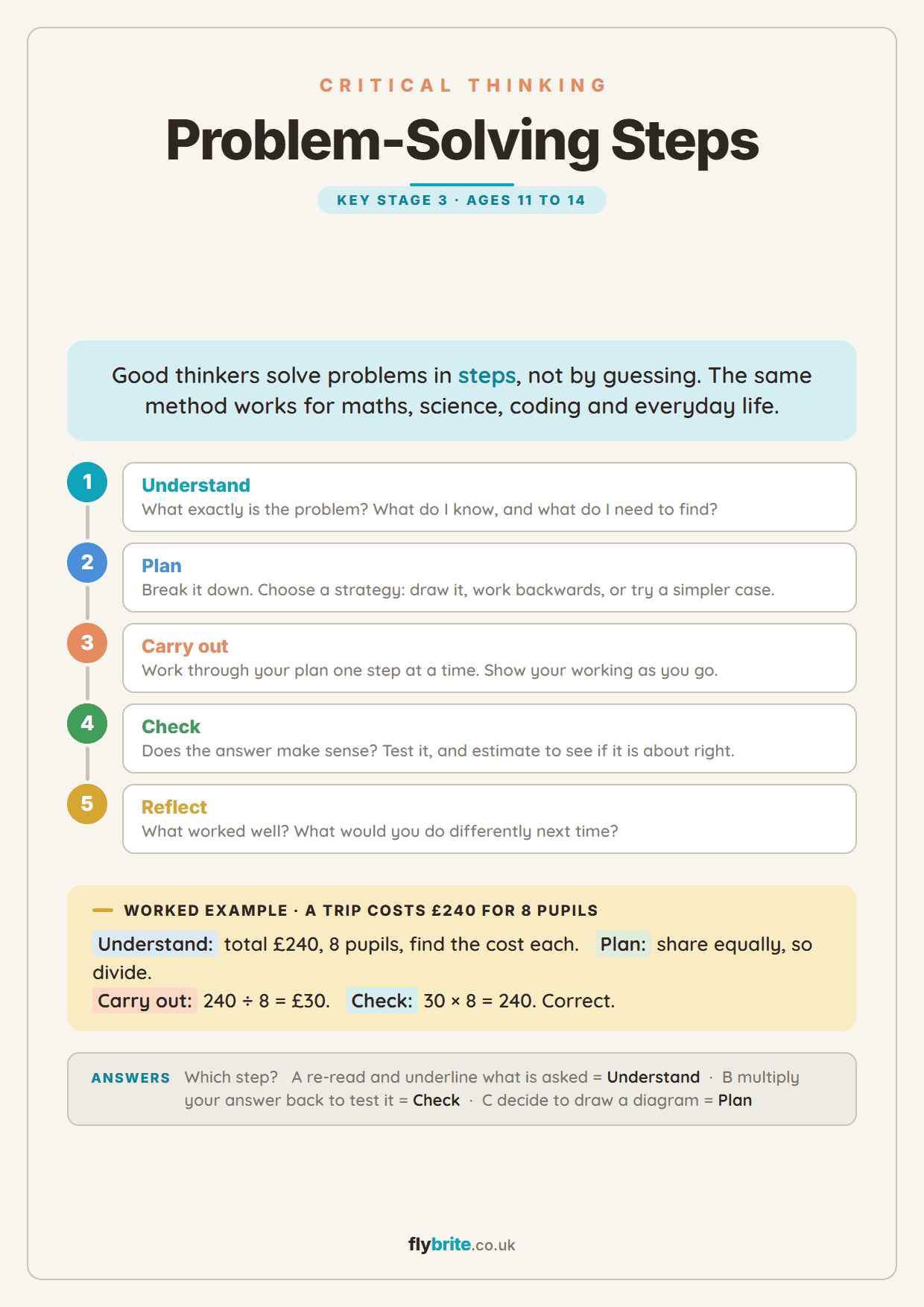
A five-step method for any problem, understand to reflect, with a worked money example to follow.
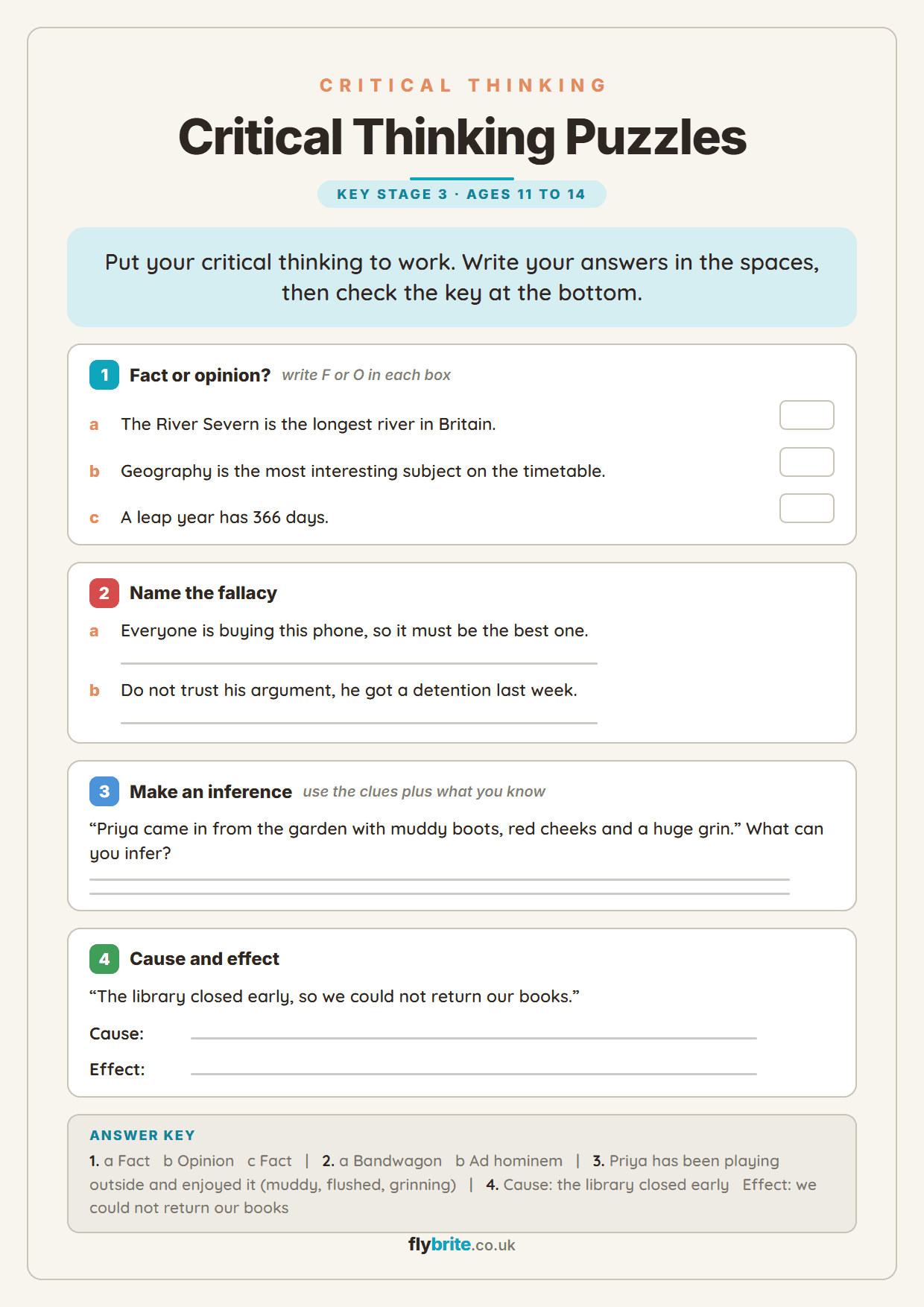 Type or write in
A mixed worksheet pulling the pack together, fact or opinion, fallacies, inference and cause and effect, with a full answer key.
KS3 computing: variables, input, loops, conditionals and tracing your first Python programs on paper.
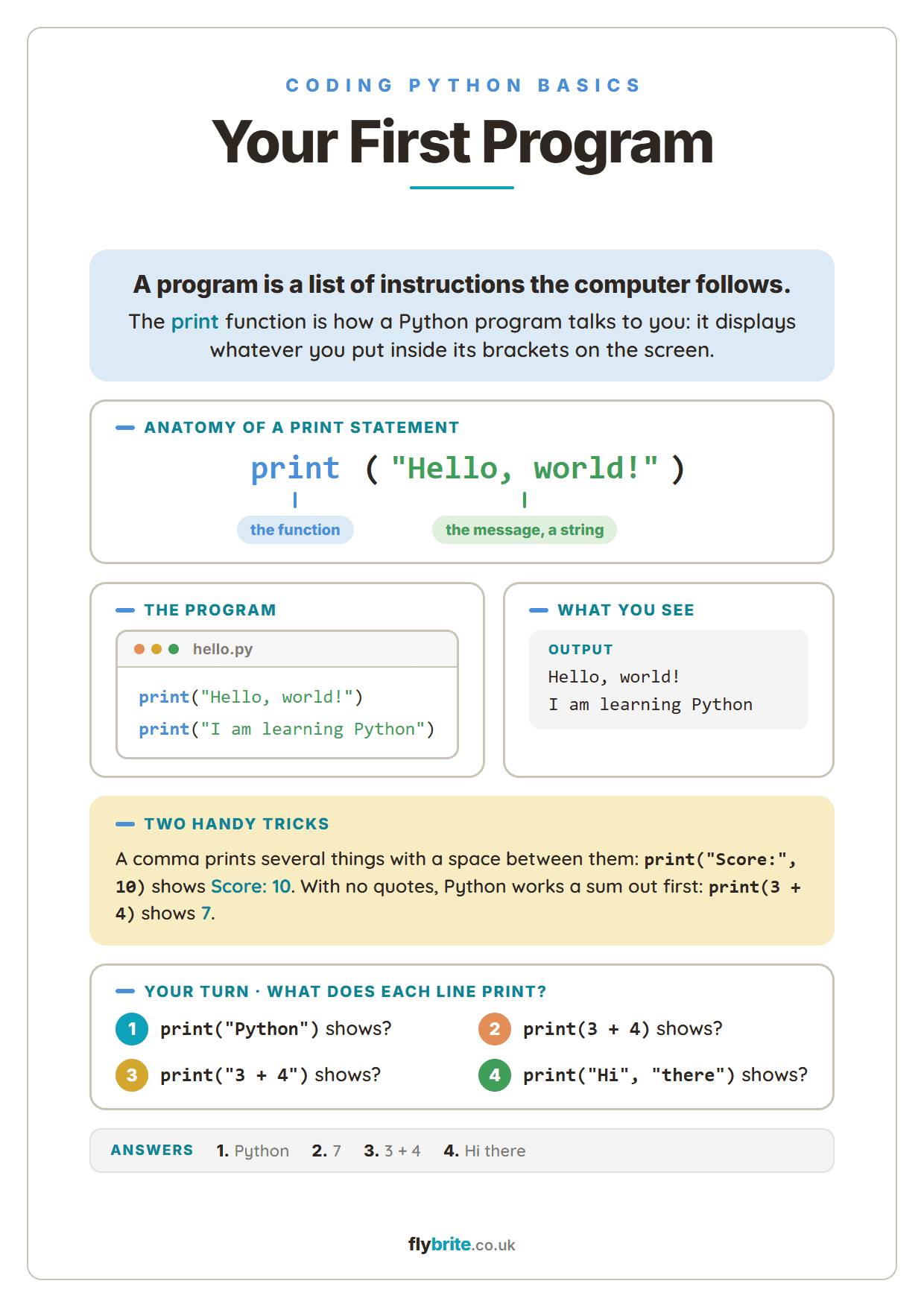
How print() puts words on the screen, taken apart piece by piece, with a first program, its output and predict-the-result practice.
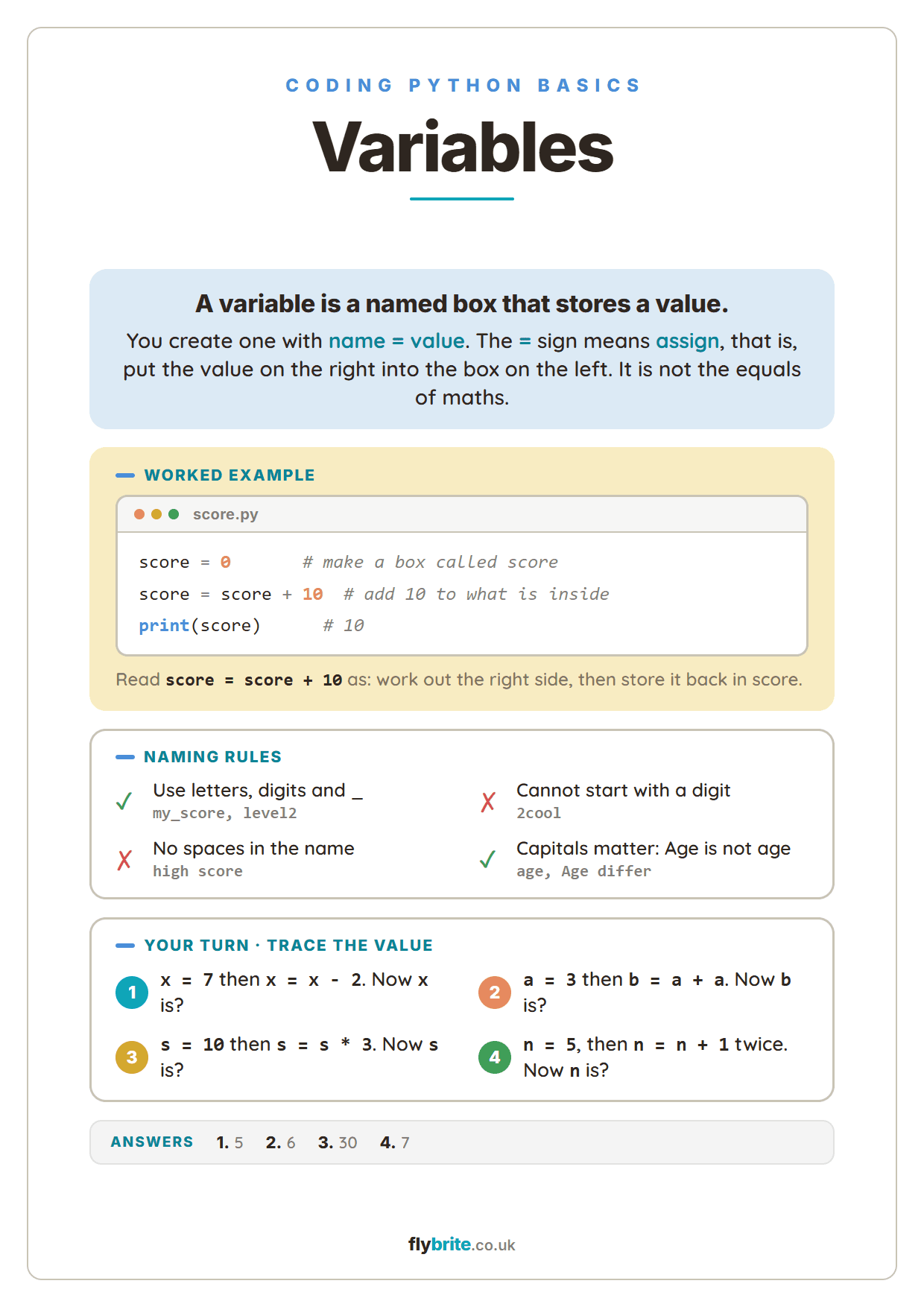
Named boxes that store values, the difference between assign and equals, the naming rules, and four trace-the-value questions.
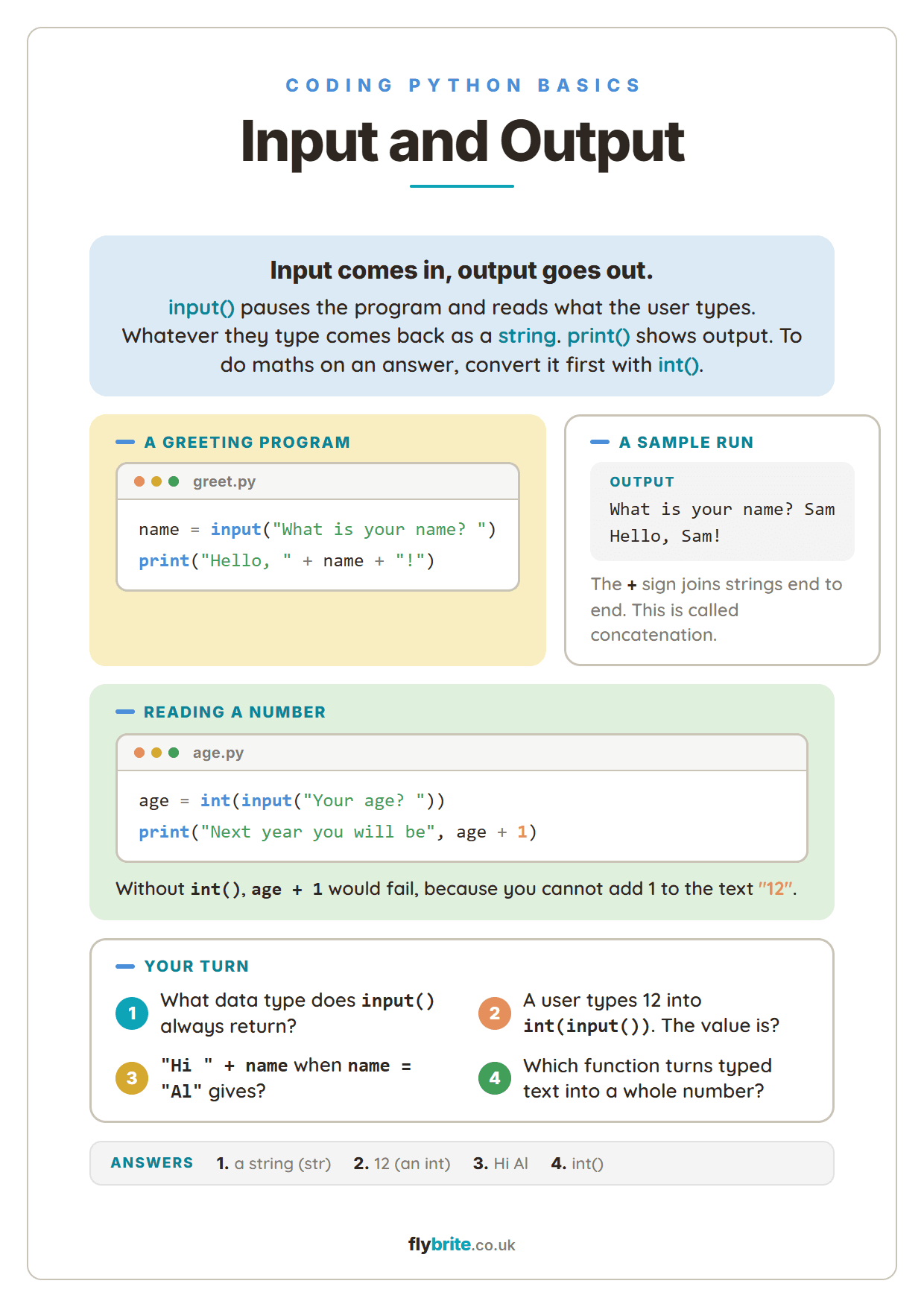
Reading what the user types with input() and why it always comes back as text, plus converting with int() to do maths.
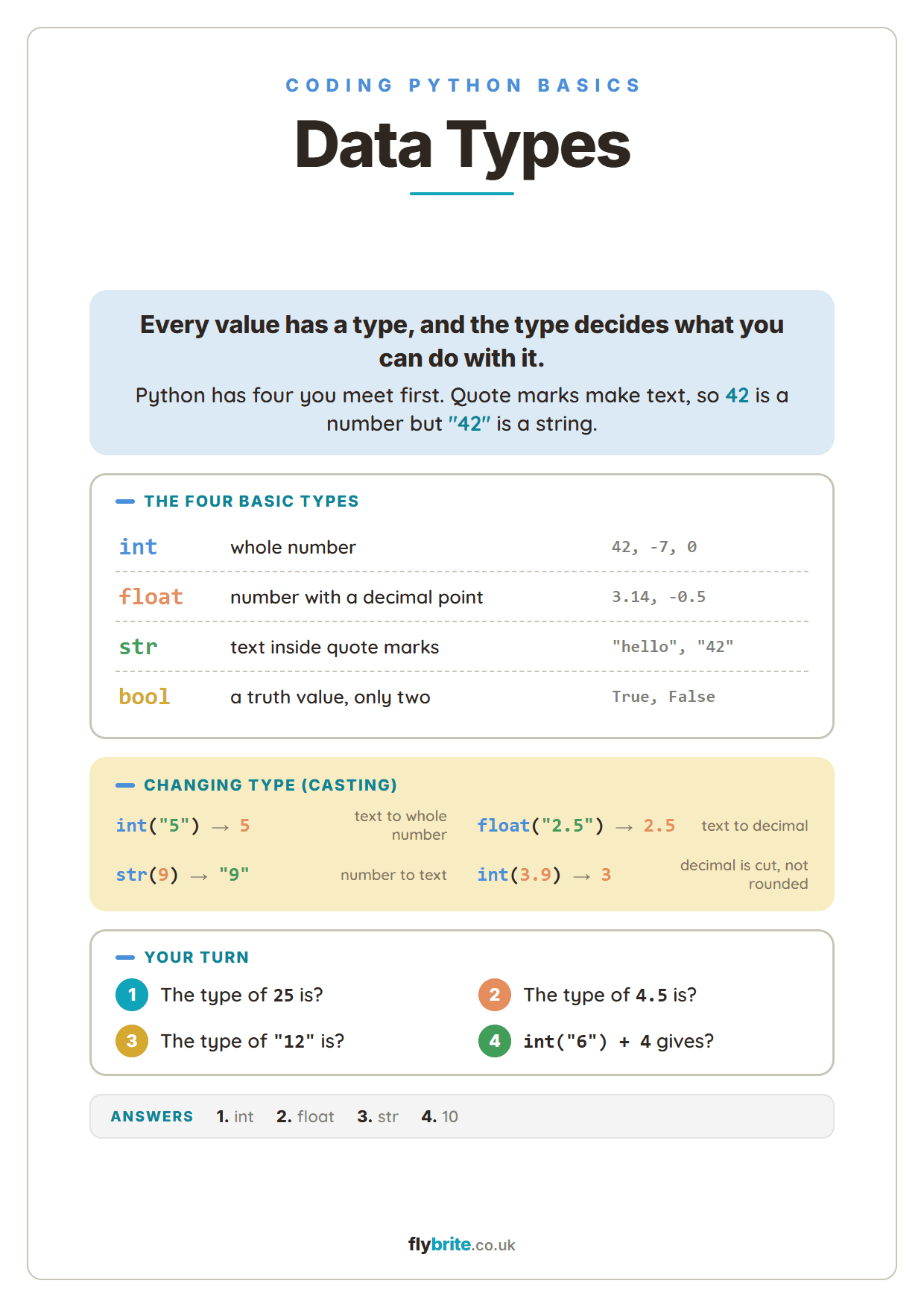
The four types you meet first, int, float, str and bool, with a casting table and why 42 and "42" are not the same thing.
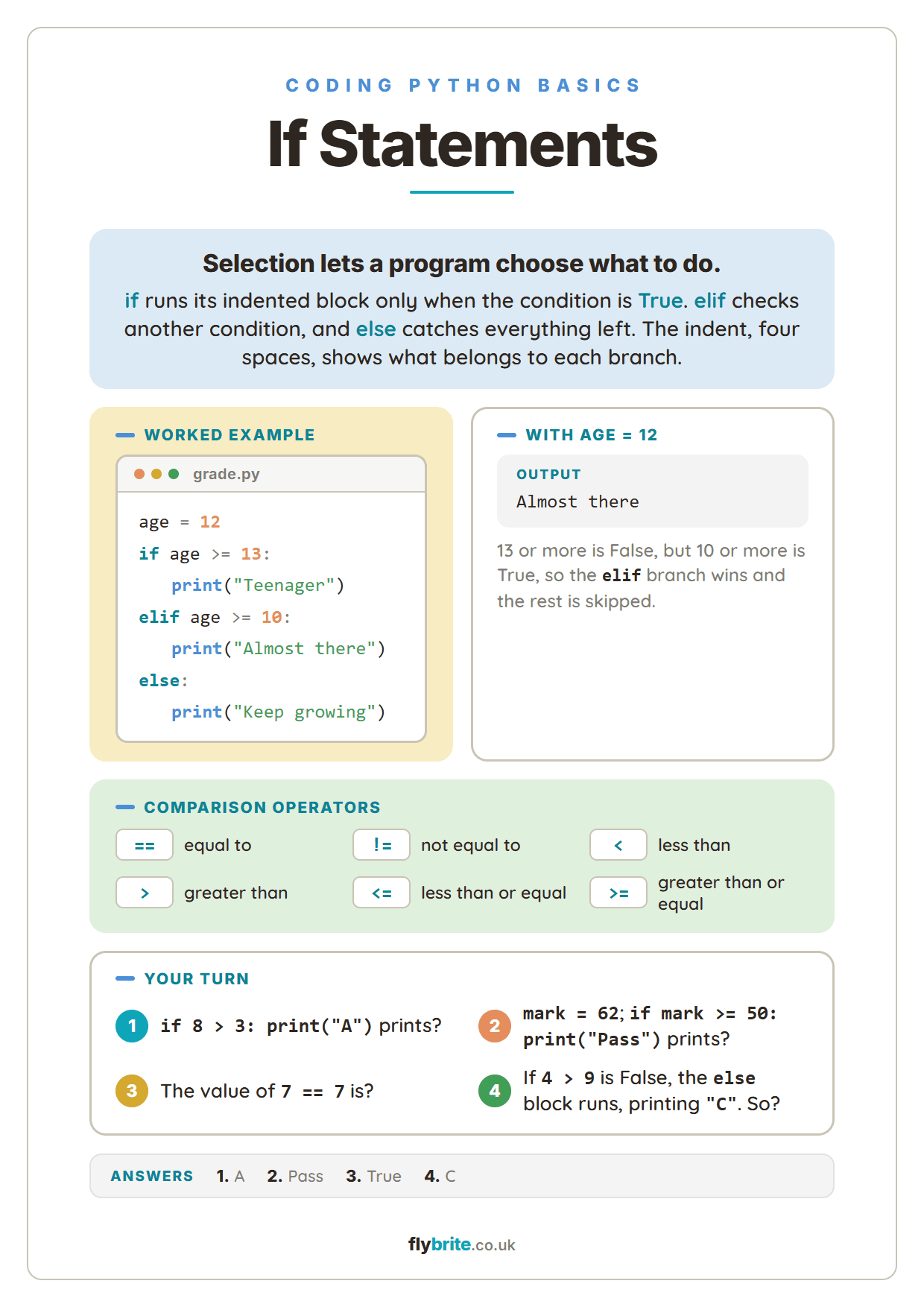
Selection with if, elif and else, the comparison operators, and how indentation decides what belongs to each branch.
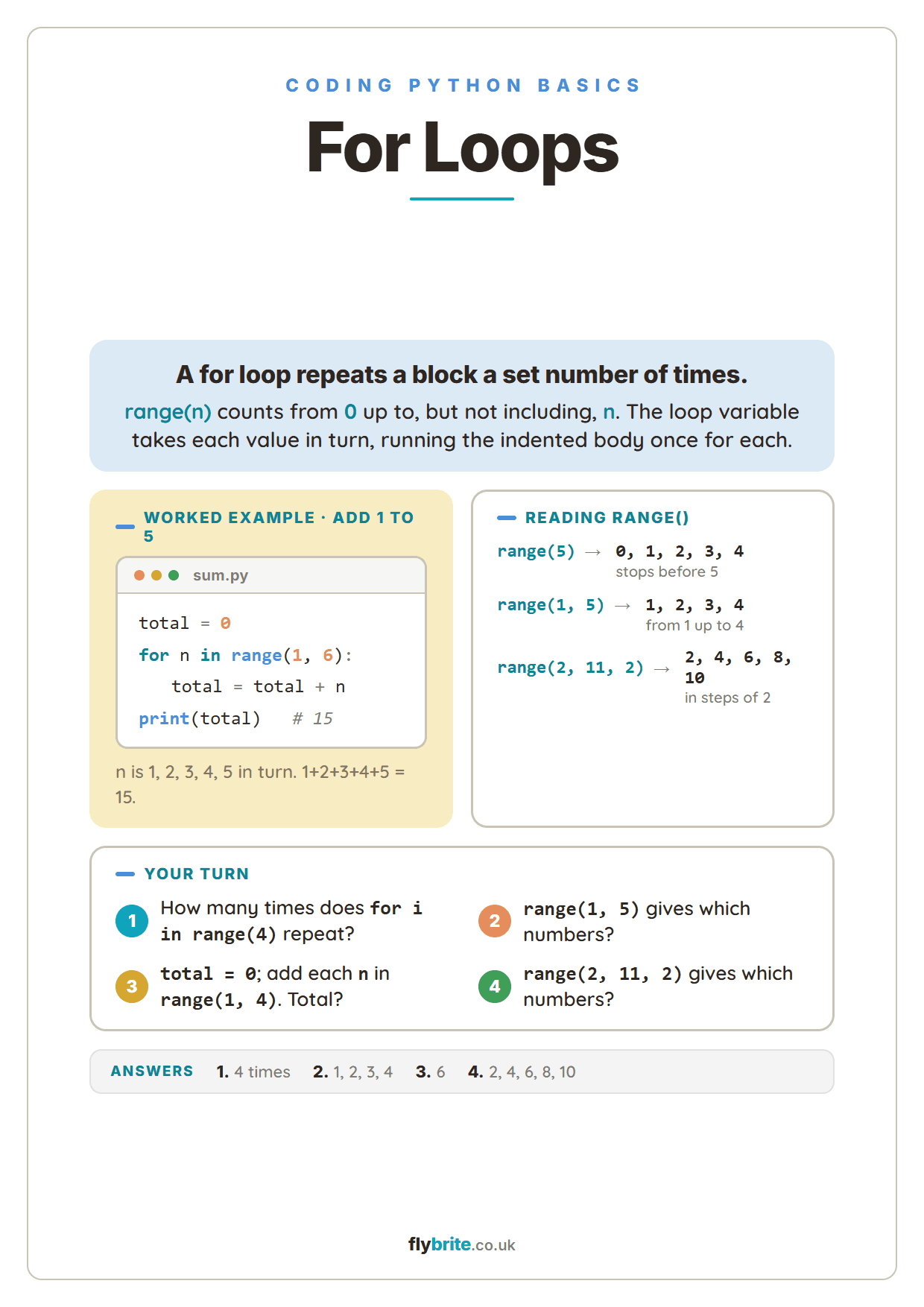
Repeating a set number of times with for and range(), a worked total, and how to read range() including its step.
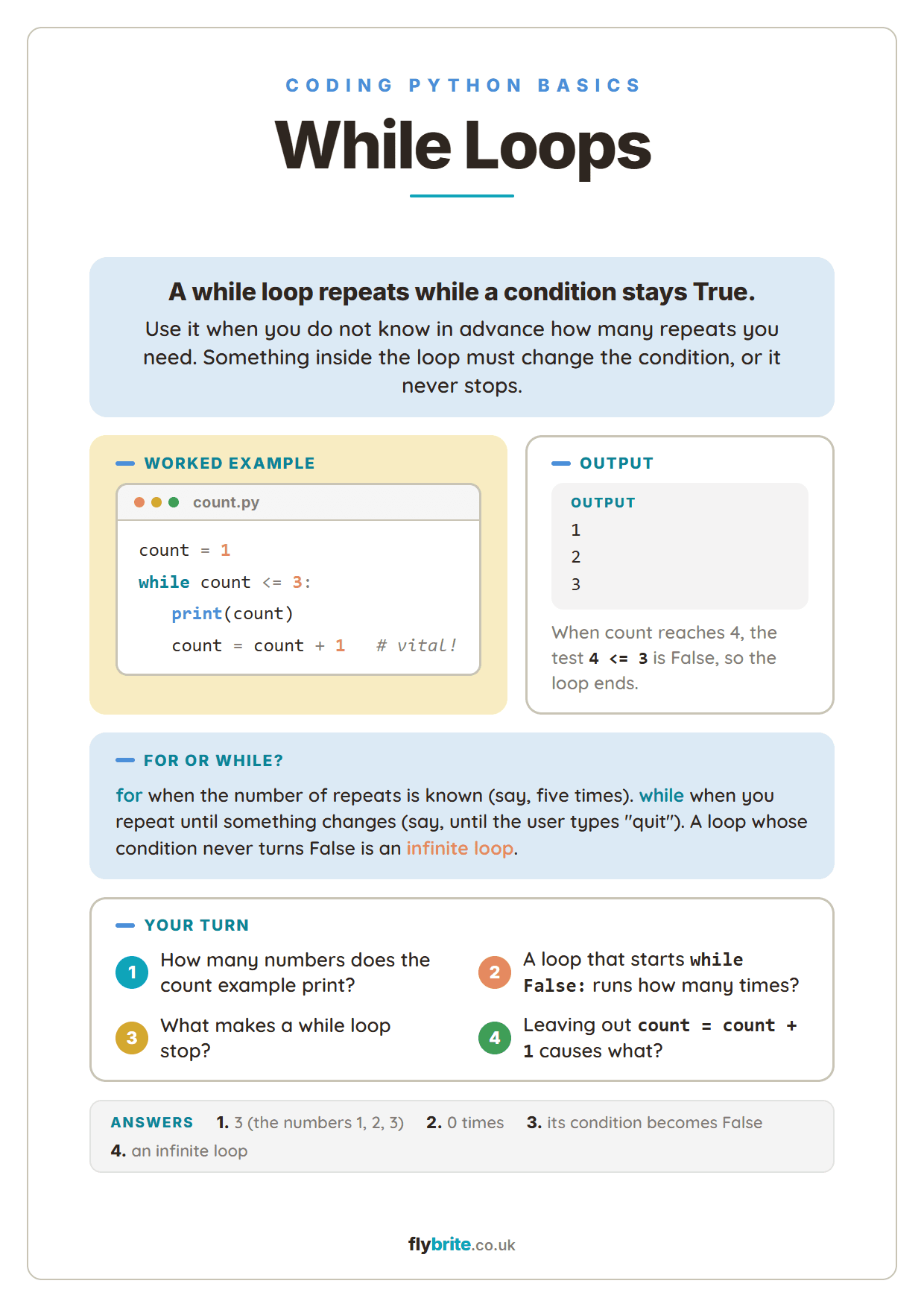
Repeating while a condition holds, when to choose while over for, and the infinite loop that a missing update creates.
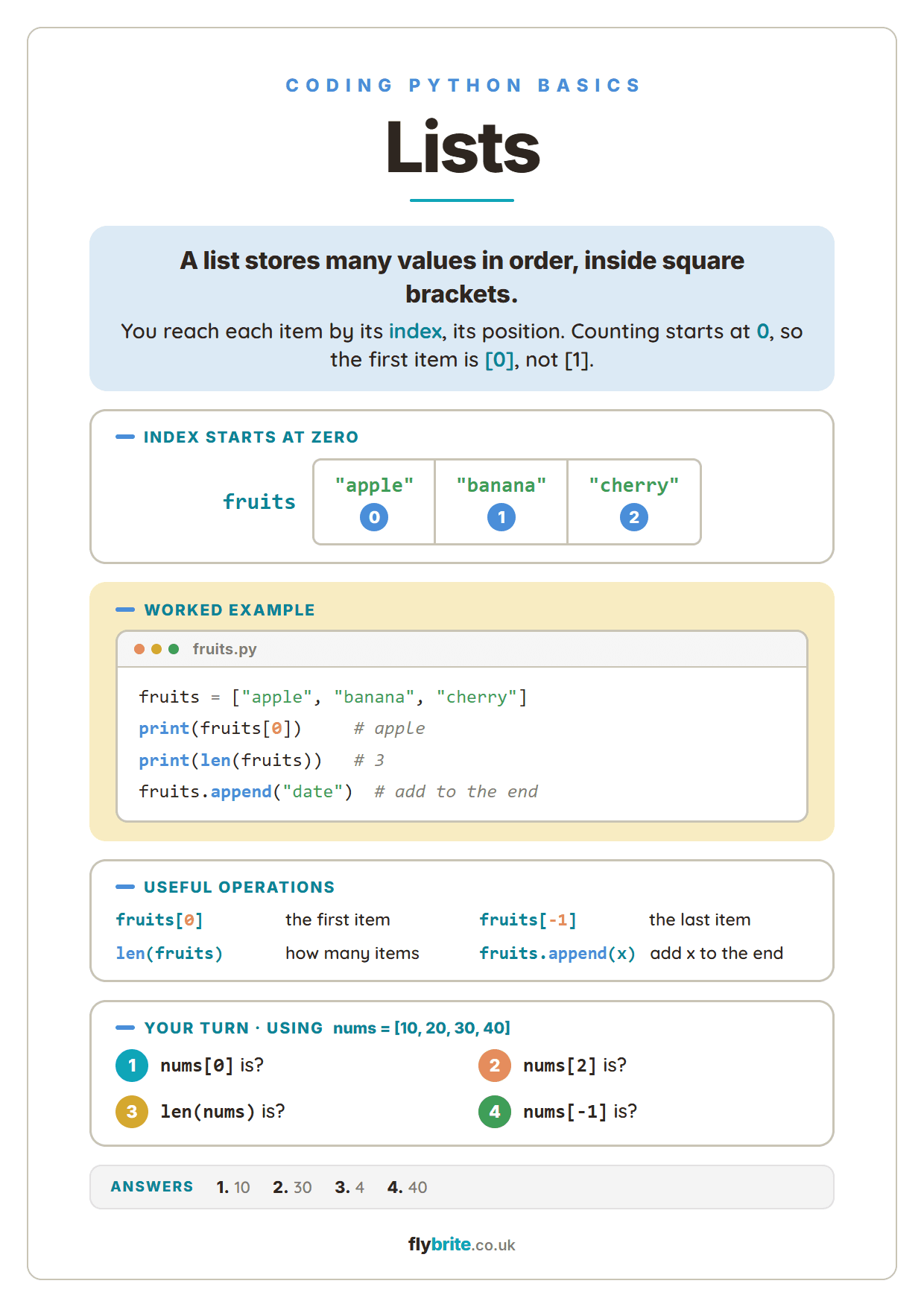
Storing many values in order, why indexes start at zero, and the everyday operations len, append and negative indexing.
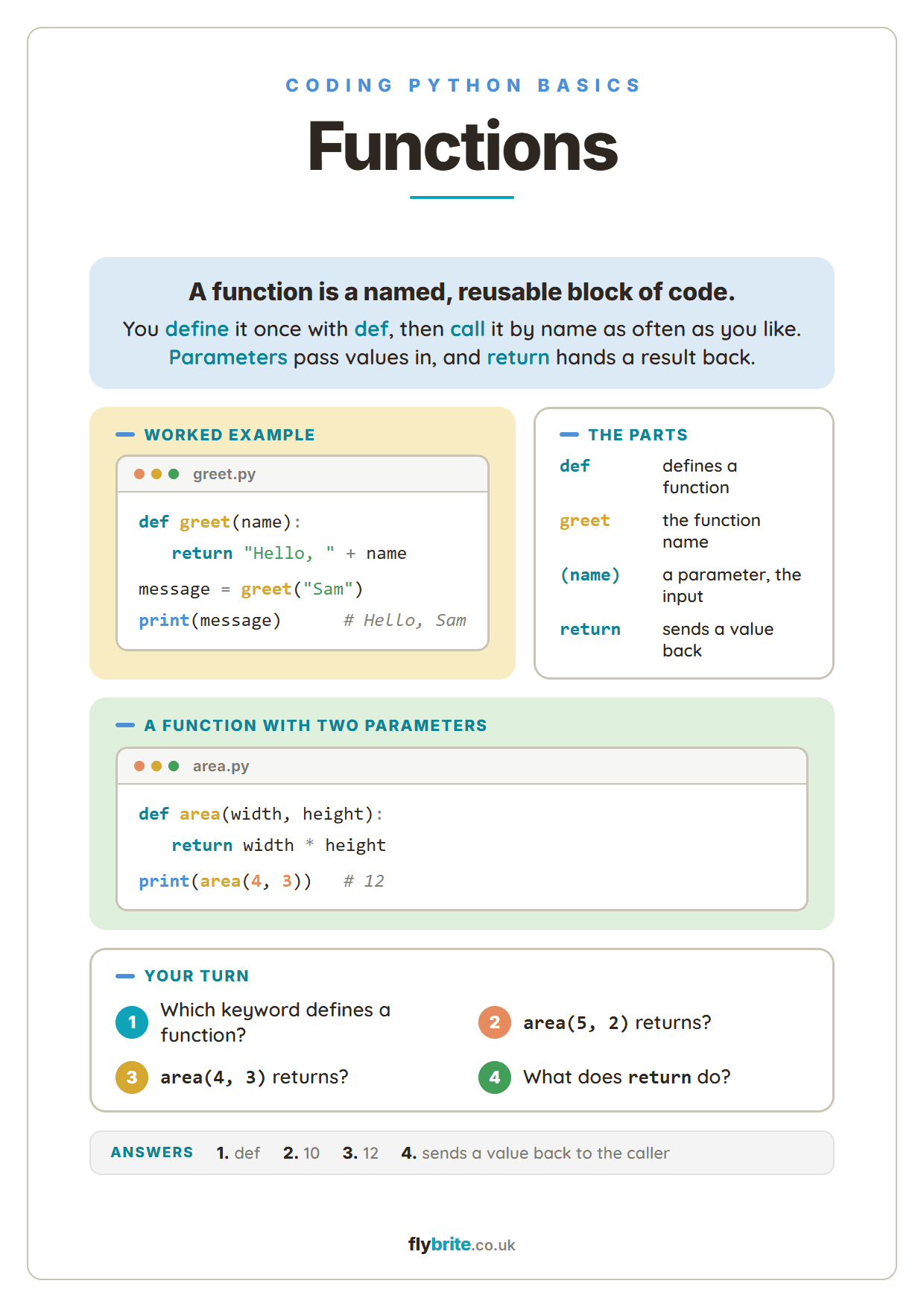
Defining reusable blocks with def, passing values in through parameters, and handing a result back with return.
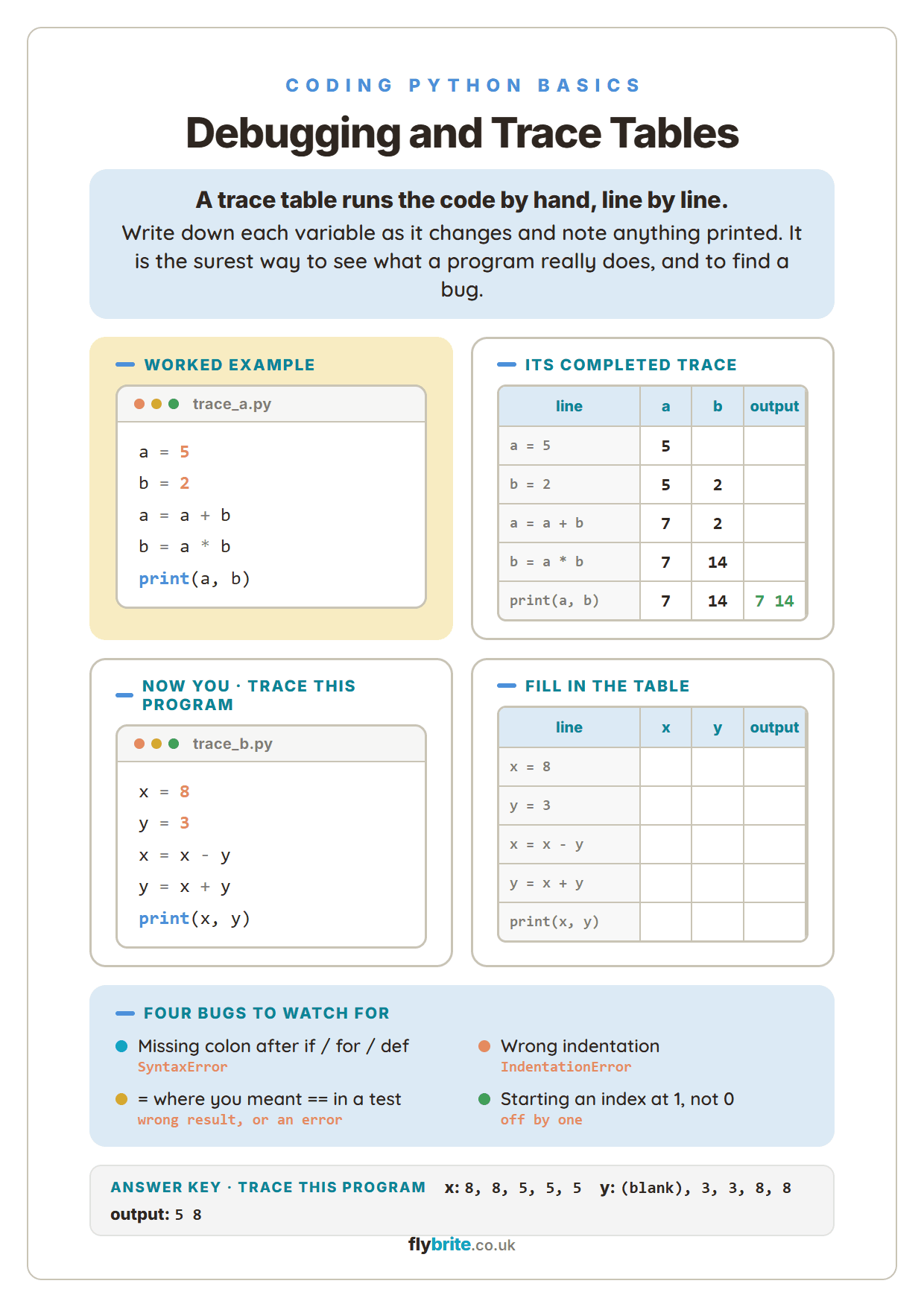 Type or write in
Run code by hand in a trace table to see exactly what it does, with a worked example, a write-in table and a full answer key.
KS3 oracy: building an argument, rebuttals, speaking with confidence and structuring a debate.
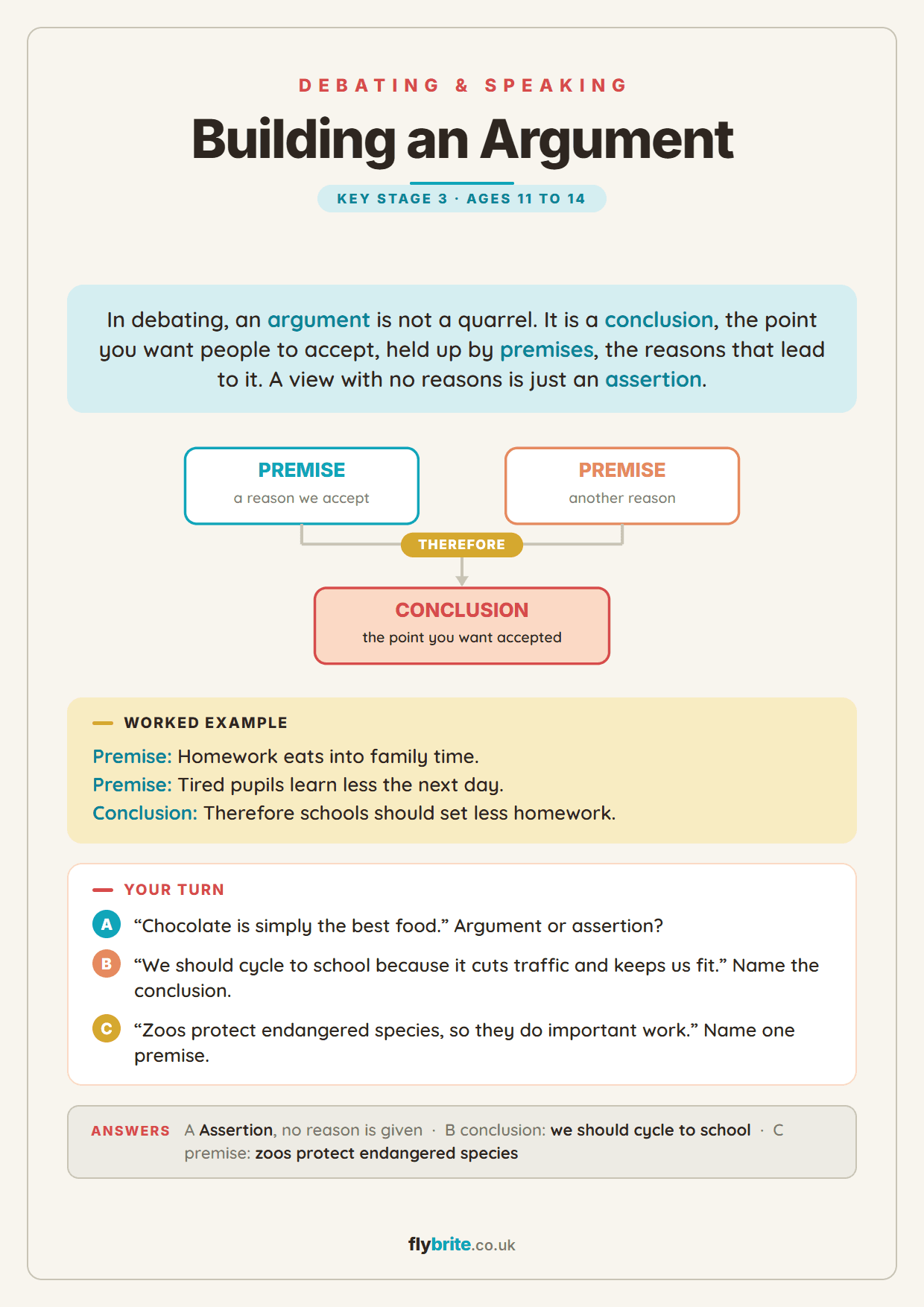
The logical skeleton of every argument, premises leading to a conclusion, with a labelled argument map and lines to sort from assertion.
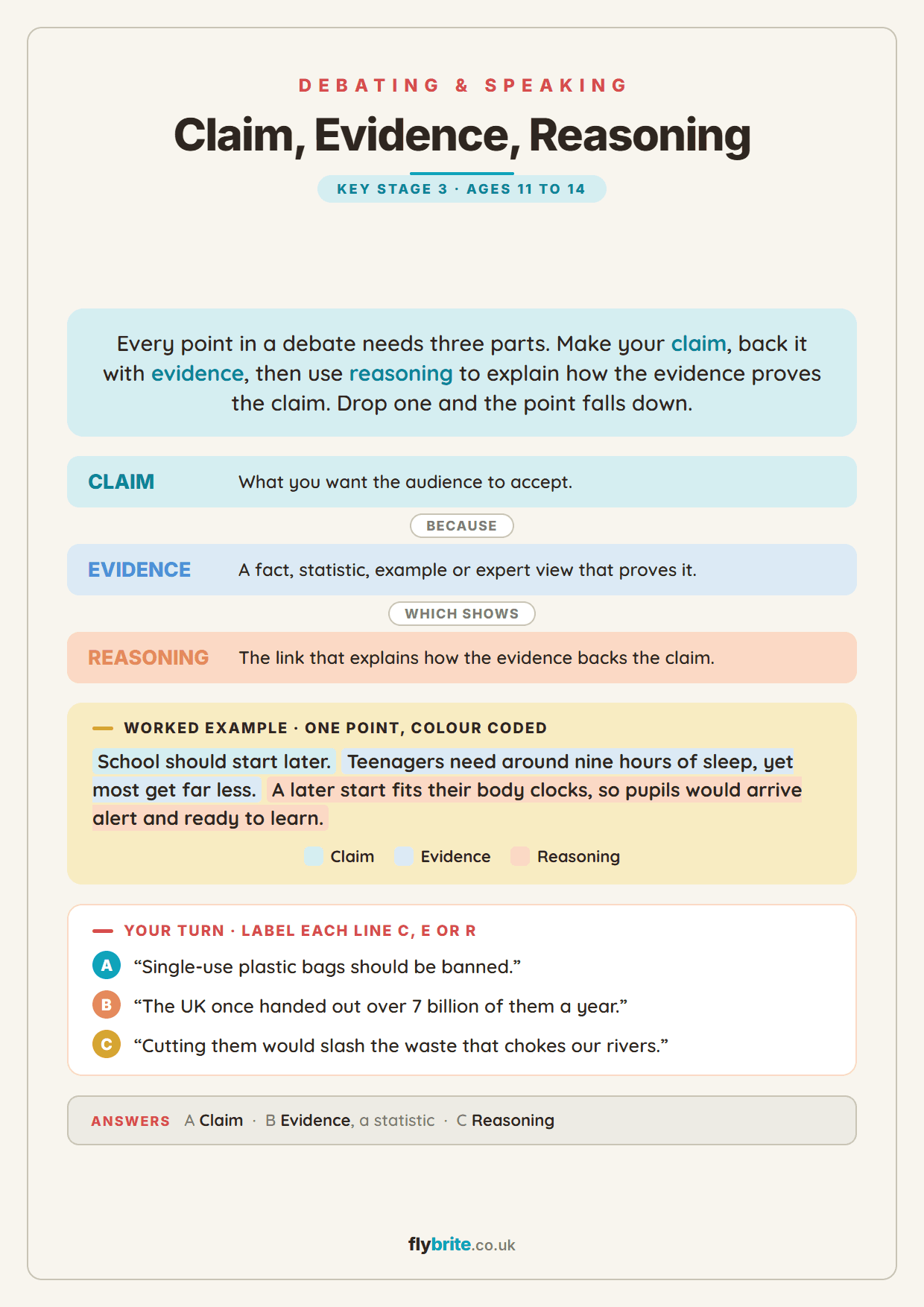
The three parts of a watertight point, with a colour-coded example paragraph and sentences to label C, E or R.
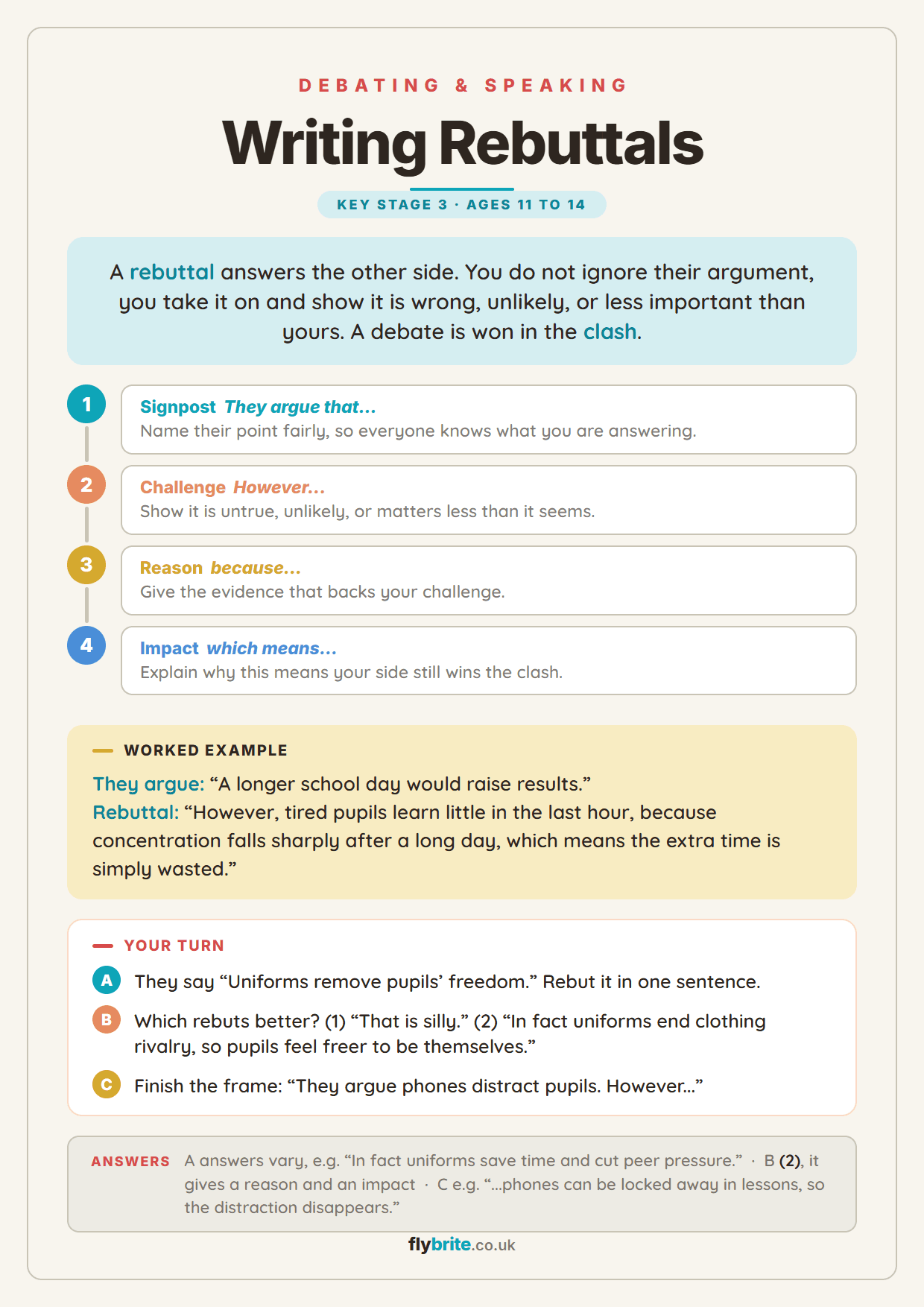
How to answer the other side and win the clash, with a four-step rebuttal frame, a worked reply and arguments to knock down.
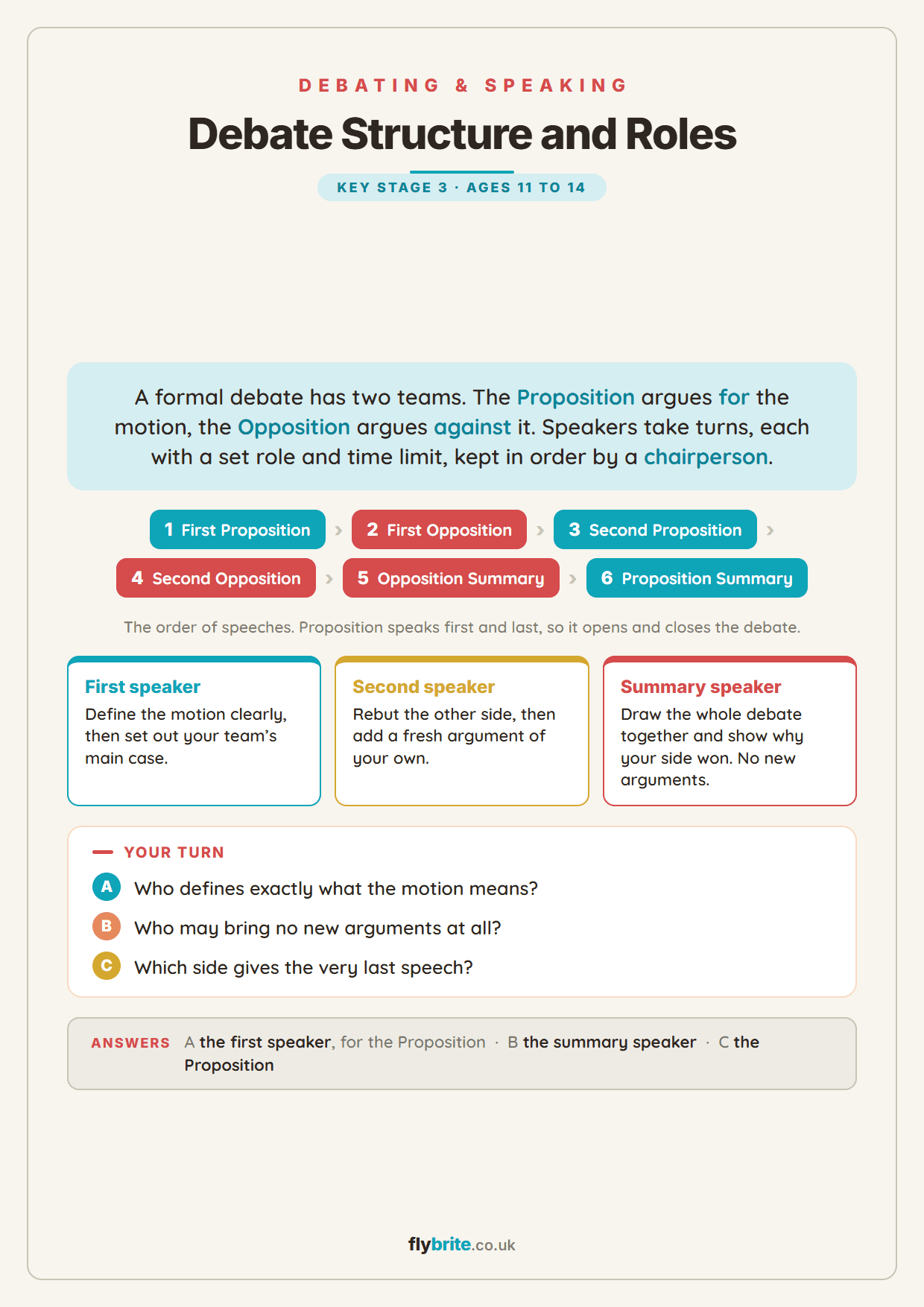
Proposition against Opposition, the order of speeches and each speaker’s job, with a whose-role quiz to test it.
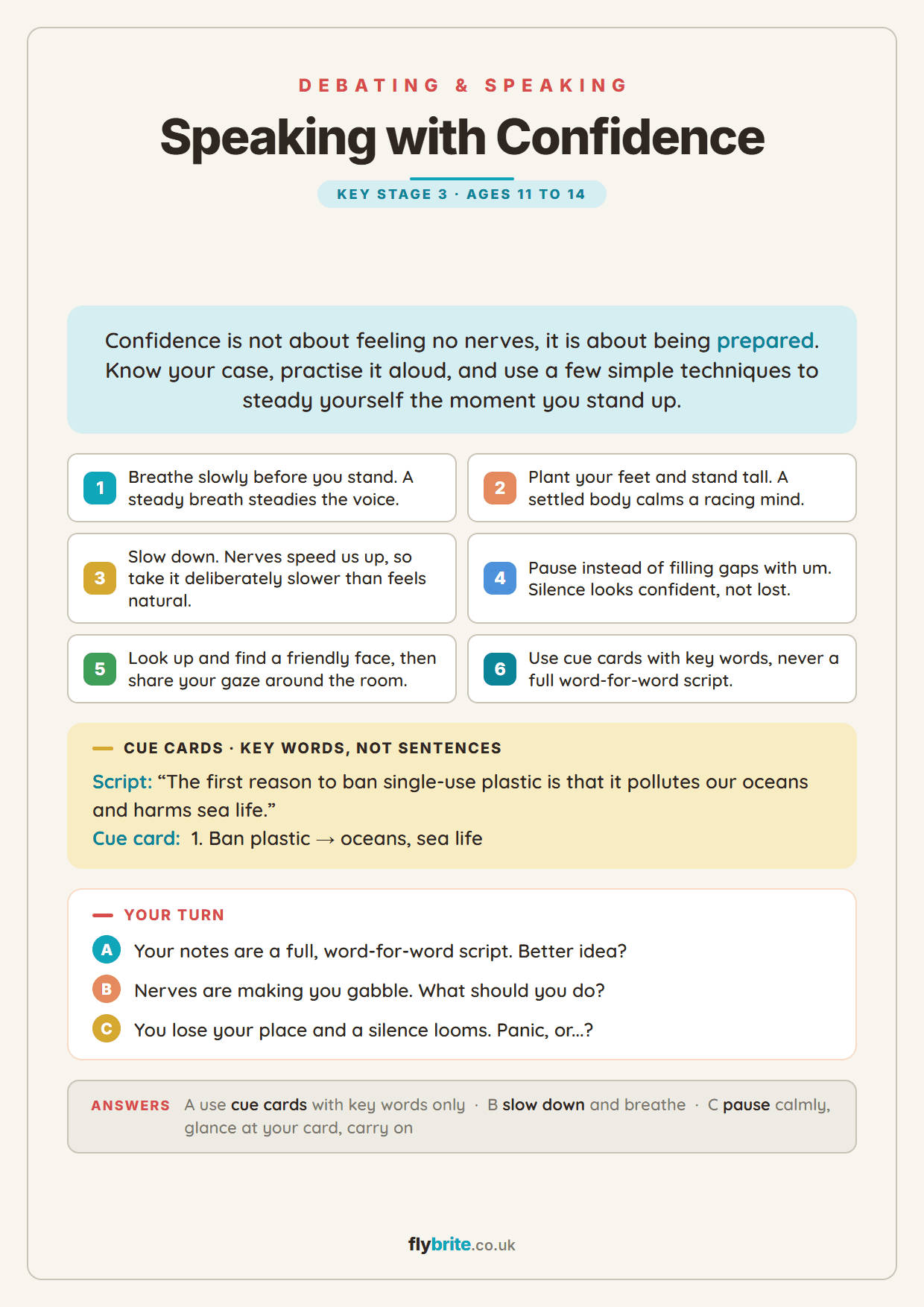
Six ways to steady the nerves and hold a room, from breathing to cue cards, with situations to solve.
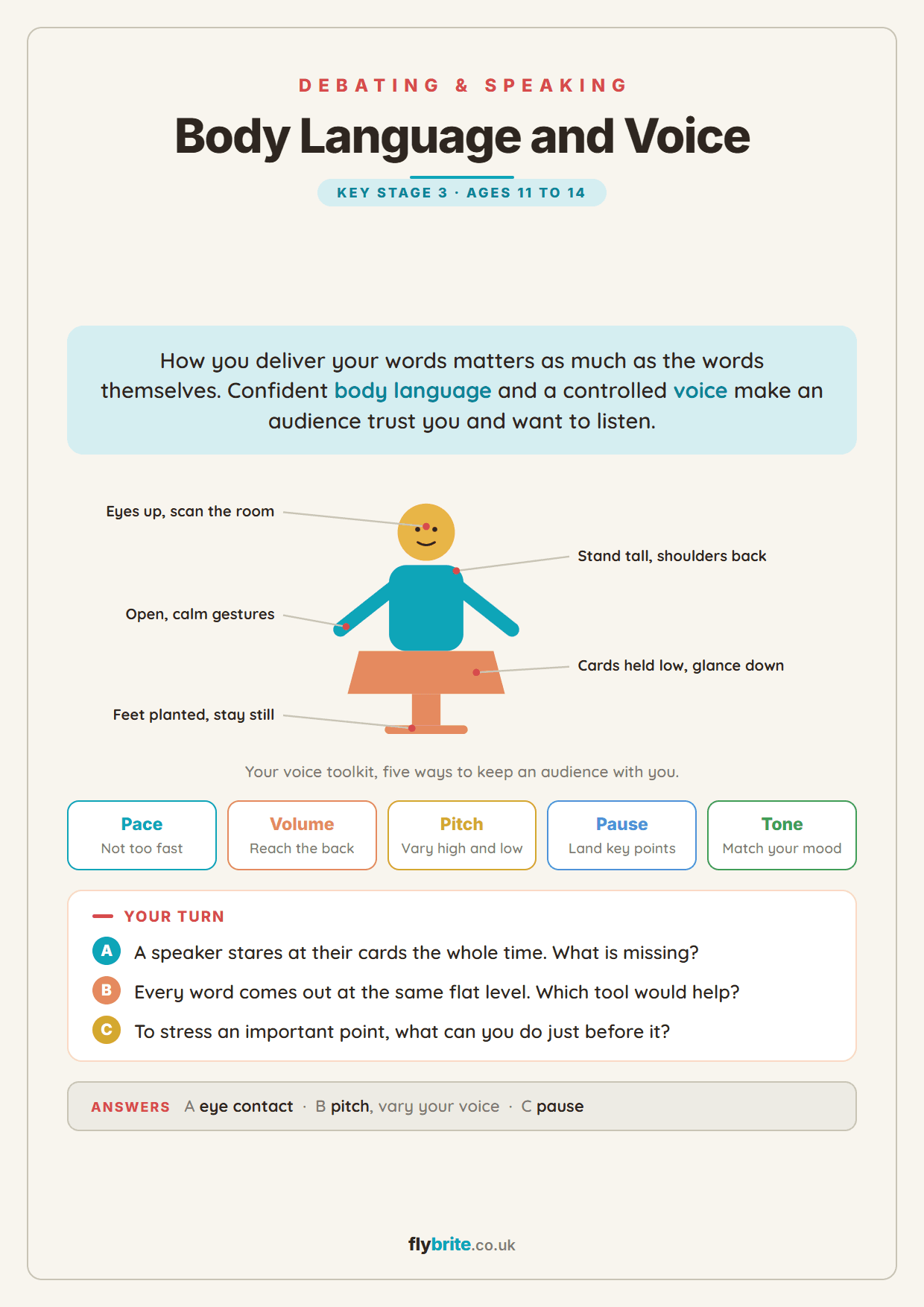
A labelled speaker showing confident body language, plus a five-part voice toolkit and habits to fix.
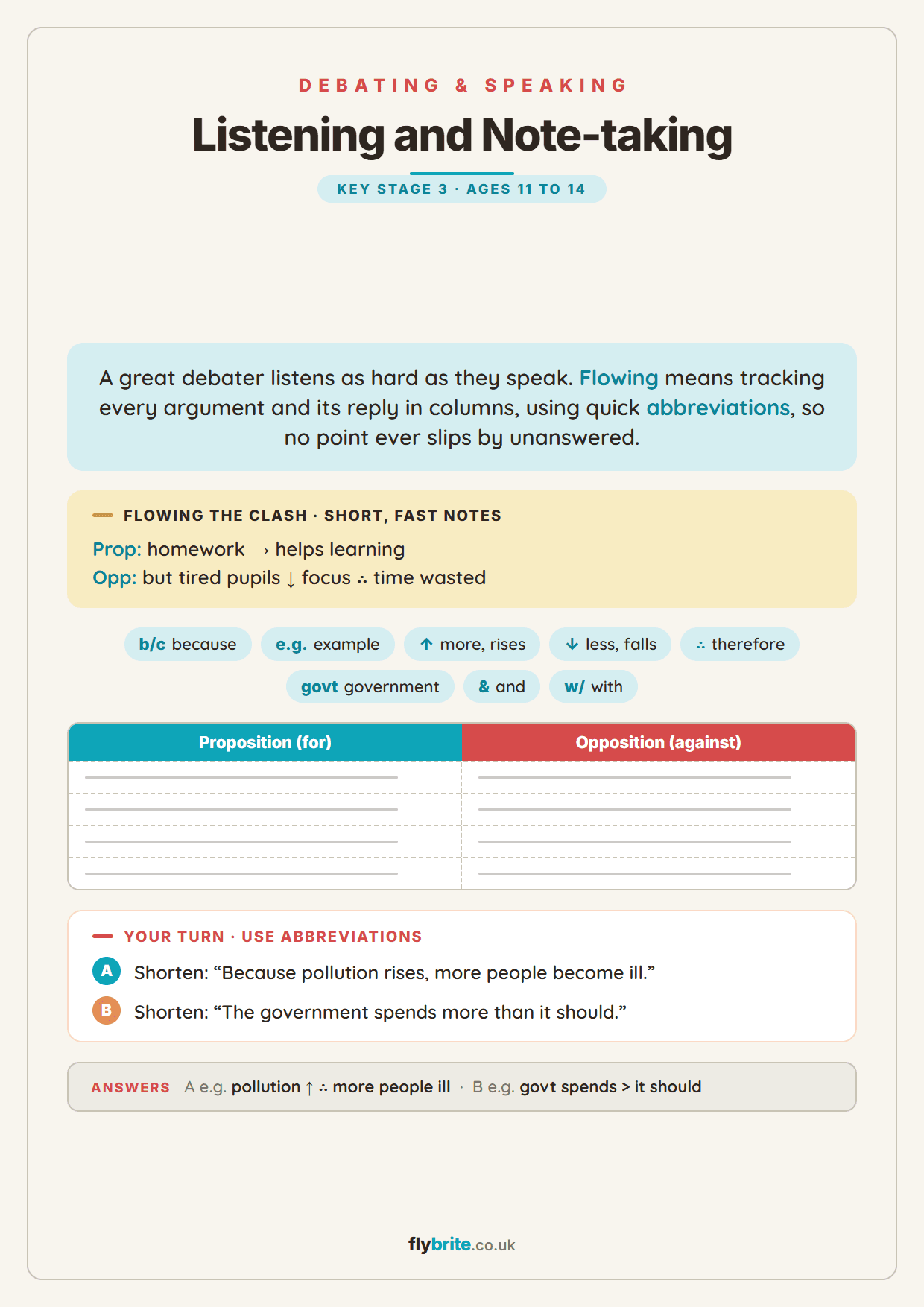 Type or write in
Flowing a debate in columns with quick abbreviations, a worked clash and a blank grid to fill in as you listen.
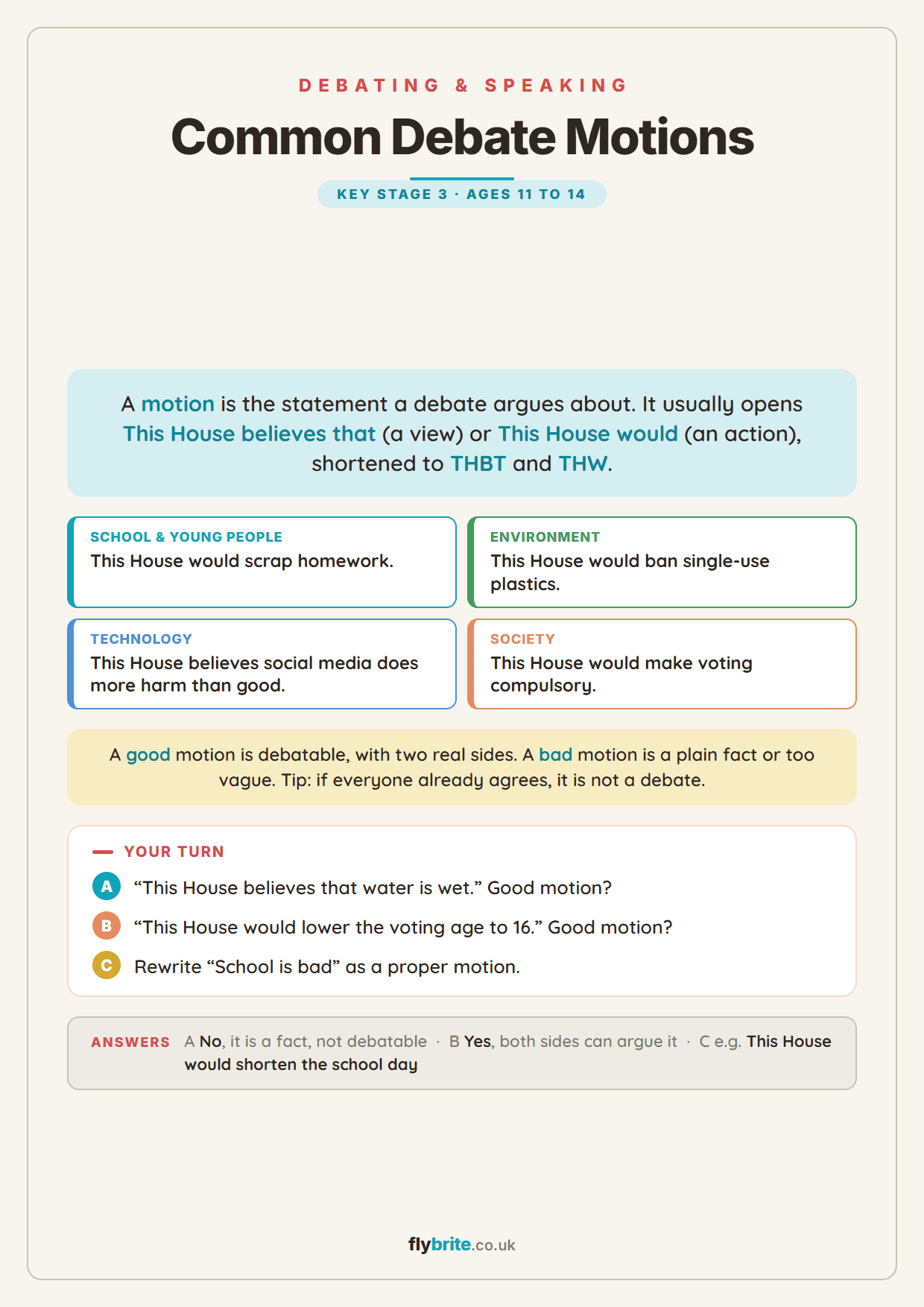
What makes a good This House motion, with example motions across four themes and statements to judge.
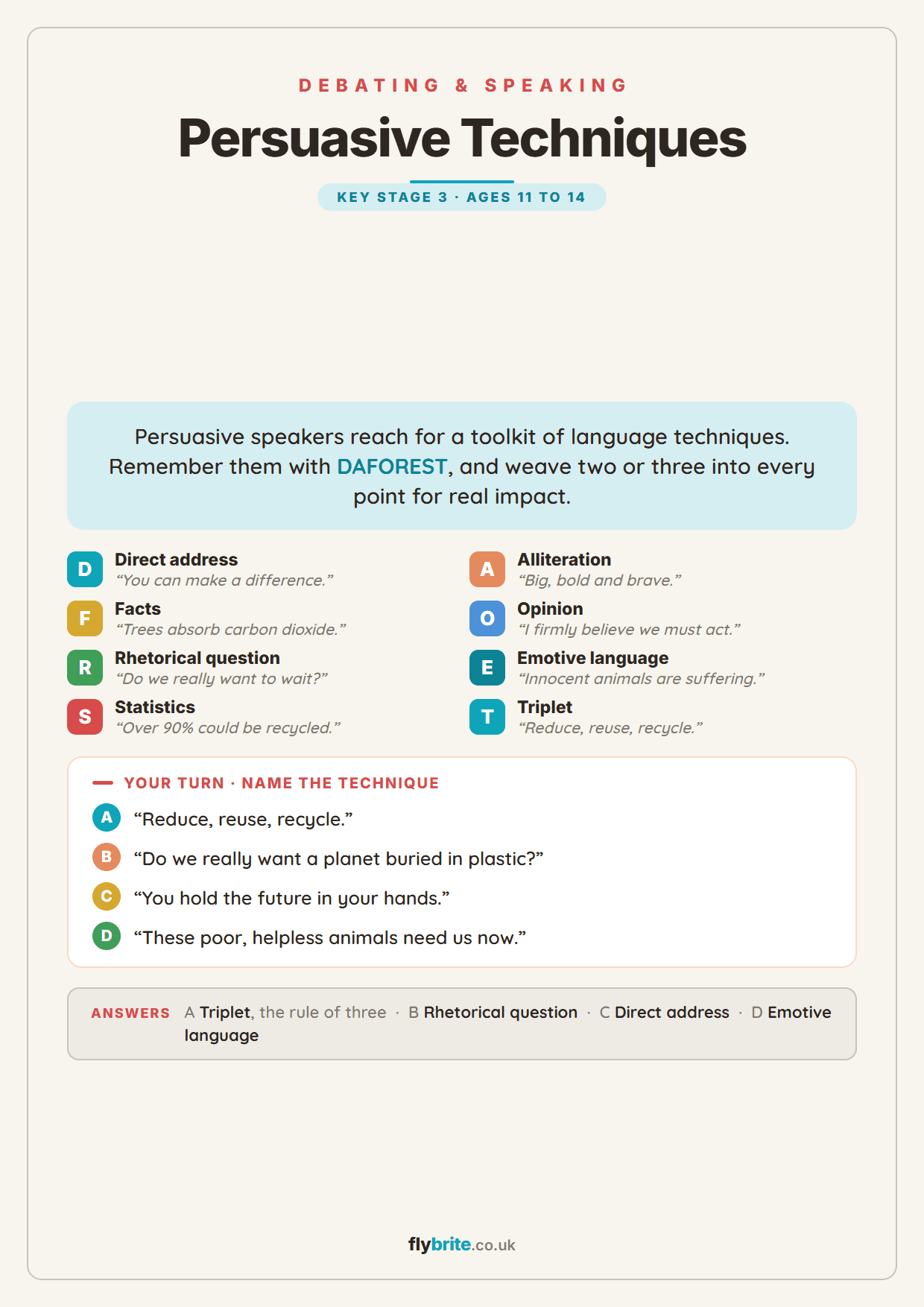
The DAFOREST toolkit of language techniques, each with a snappy example, then lines to name the technique.
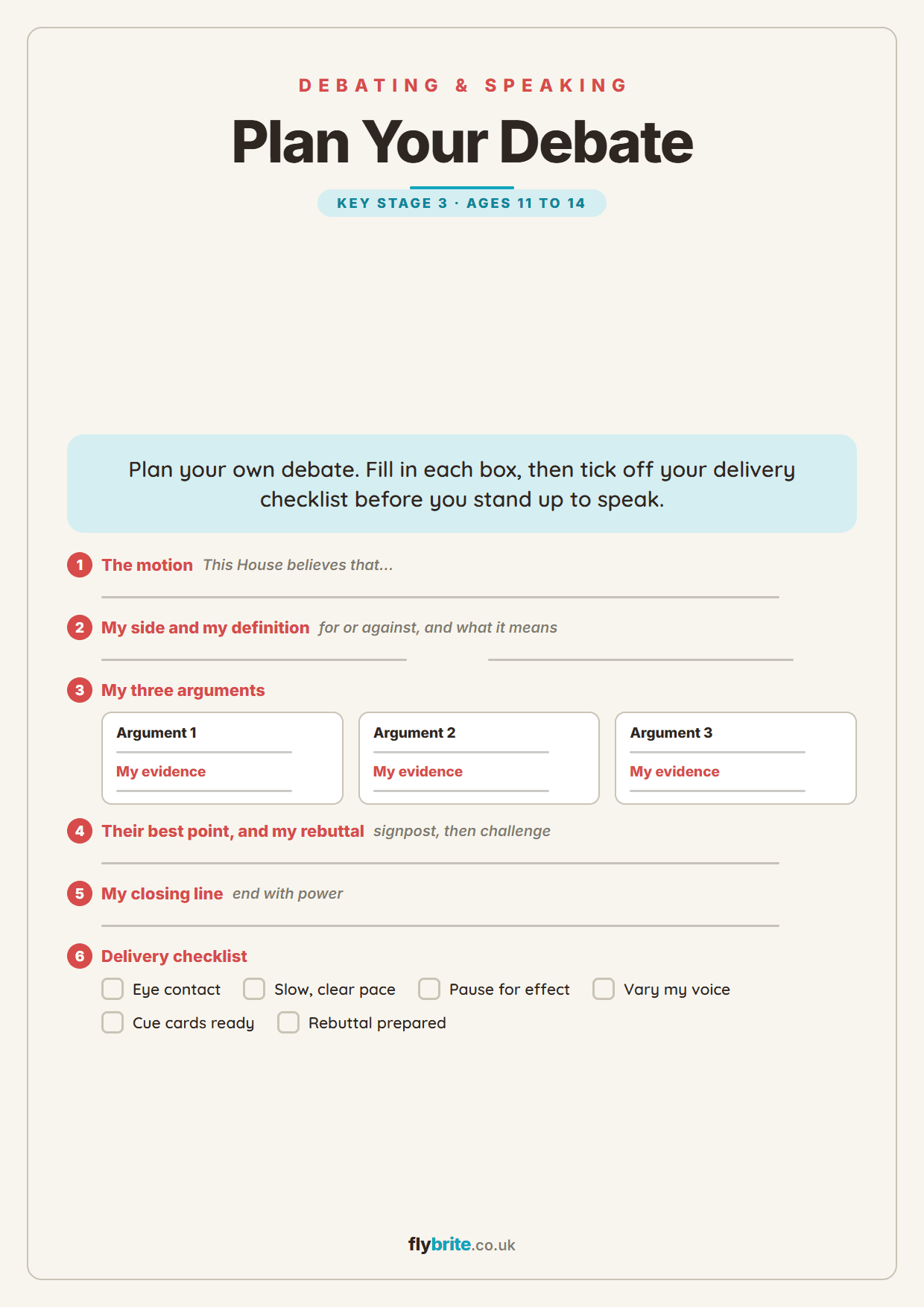 Type or write in
A ready-to-fill planner that walks you from the motion to your closing line, with a delivery checklist to tick off.
A single pack of 10, or the whole collection of 50 in one go.
Stripe checkout with card, Apple Pay or Google Pay. No account needed.
Your PDFs are ready the moment you pay. A4 at home or any print shop.
Good to know
High-resolution A4 PDF files, ready to print at home or at any print shop. You download them the moment you buy, there is nothing posted to you. They also scale cleanly to US Letter.
All the chore charts plus the reward chart, weekly planner, reading log and certificate are designed to be filled in: type into the PDF in most readers, or print and write by hand. The rest are ready to print as they are.
When your basket includes My Name Pack (on its own or inside a bundle), the Stripe checkout asks for your child's first name. Your download then arrives with extra name sheets made just for them: a name display page, tracing rows and rainbow writing. Leave the field blank and you simply get the standard pack.
Right here. Checkout is handled securely by Stripe (card, Apple Pay or Google Pay), no account needed. The moment you pay, your download is ready on the thank-you page, and you can come back to that page any time for a fresh link. You can buy a single pack of 10 or the whole collection in one go.
Yes, the licence covers your own home, childminding setting or small group. Please do not resell or share the files themselves.
Deregistration letters, LA replies, planners and checklists are all in our free templates, no purchase needed. And Flybrite itself turns your everyday moments into a warm, evidence-rich record of your home education. 7-day free trial, no card to start.